Ce week-end, Marine le Pen lance officiellement sa campagne dans le Loiret. L’occasion pour elle de faire une démonstration de forces – 10 000 sympathisants sont attendus. Ses opposants se sont également donné rendez-vous sur place. Entre 20 000 à 30 000 personnes, représentant tous les partis de gauche, devraient défiler sur place, selon le gouvernement. Que va dire Marine le Pen dans son discours ? Doit-on s’attendre, en marge de l’événement, à des débordements ? Pour tout commentaire, écrivez-nous sur Whatsapp au +32 49 07 69 41
**Un message de GSK : Prévenir, soigner, innover : GSK appelle à investir dans la santé des Français pour accélérer l’accès aux innovations et atteindre un objectif : zéro perte de chance pour les patients, en renforçant la recherche et les investissements industriels en France.**
he world is starting to understand that there is no way to fully and lastingly protect itself from President Donald Trump.
The man just can’t let things go — and he’ll get creative to get what he wants.
The latest blowup over Ukraine is emblematic of Trump’s wily persistence, and it suggests a challenging two years lie ahead for the international set even if Democrats gain some power in the midterm elections.
Not that long ago, Trump seemed to have patched up ties with Ukrainian President Volodymyr Zelenskyy as Kyiv made gains against Russia. Trump signed legislation last month that was championed by his late friend, Sen. Lindsey Graham (R-S.C.), to impose heavy new sanctions and tariffs to punish Russia for its war on Ukraine.
This month, the original Trump — the one who fawns over Russian leader Vladimir Putin and despises Zelenskyy — roared back. He waived many of the legislation’s penalties on Russia, moved to buy Russian diesel and signaled he’s more interested in doing business with Moscow than seeking justice for Kyiv. Ukrainians suspect the U.S. has pressured them by throttling its satellite connections and intelligence-sharing. (The Trump administration disputes much of this.)
“Russia, frankly, has been fine on Ukraine,” Trump said Monday as he welcomed the idea of an arms control summit with Putin and Chinese leader Xi Jinping that might include talks about Ukraine.
The lesson, foreign officials and others steeped in diplomacy tell me, is that you cannot truly change Trump’s mind or stop his overall trajectory. Even if Trump seems briefly chastened or stages a tactical retreat, he will eventually return in new, often-surprising modes to push his original views and goals. He will try to exhaust you into submission.
Imagine how startling it is to be Ukrainian these days as Trump pressures you to make concessions to Russia by blaming you for a global energy crisis he caused by launching a war on Iran. Or what it’s like for officials across European capitals trying to craft a response, knowing there’s never an end to the process.
“There is no immunity to Donald Trump. He makes a deal in order to make a better deal the next day,” one senior European official mused, having been granted anonymity because the topic involves sensitive diplomacy.
It’s hard to blame world leaders who think they’ve learned to manage Trump only to be bewildered by a sudden left hook on his part. Foreign policy is often driven by hope when you lack good options. And Trumpology is a confounding, but still a relatively new, subfield.
Besides, Trump’s messaging is inconsistent, incoherent and nonstrategic — characteristics that can obscure his single-minded pursuit of his goals. So the global actors dealing with him — whether it’s the Gulf Arab states who shower him with gifts or the Canadians furious over his trade and territorial threats — sometimes think they’ve come to terms with him only to find they’re fighting on a newly configured plane.
A Supreme Court ruling that gutted many of Trump’s tariffs earlier this year was good news in many capitals. But since then, the so-called Tariff Man has moved to impose the import taxes under pretexts not considered by the court, including turning to accusations involving forced labor.
The White House doesn’t dispute Trump’s aggressive tactics.
“There is no greater fighter for America First interests than President Trump — and he is willing to look anyone in the eye to deliver wins on behalf of the United States,” spokesperson Anna Kelly told me in a statement.
The Greenland saga shows the limits of trying to mollify Trump.
In his first term, Trump wanted to buy the frozen island. The idea was shelved amid global laughter, but authorities in Greenland and Denmark made it clear to Trump that they welcomed more U.S. investment in the Danish territory.
In his second term, Trump huffed and puffed about an all-out U.S. takeover of Greenland, only to agree in September to an expanded U.S. military footprint that he could have gotten anyway under existing, decades-old diplomatic accords without all the drama. The whole affair has led to lingering anger in Europe about what Canada’s leader called a “rupture” in the global order — but many European officials hoped that the saga had faded away.
Yet, it’s far from certain that Trump has given up on possessing Greenland. Just days ago, he touted on social media plans to start oil, gas and mineral exploration in “our new and beautiful Greenland.”
The use of “our” is more than a little suggestive.
Defying Trump, too, can get you only so far.
Brazilians effectively told Trump to take a hike when he used tariffs and sanctions to punish the country for charging its former president, Jair Bolsonaro, in a coup attempt.
A few months later, as Bolsonaro was about to start his prison sentence, Trump seemed to admit defeat in his effort to help his political ally. “That’s too bad,” he said in November 2025, with little emotion. (“Brazil Defied Trump and Won,” The New York Times declared.)
World leaders are doing what they can to make their countries Trump-resistant, if not all-out Trump-proof.
That has meant everything from diversifying their sources of trade and security alliances to joining Trump on ventures that, on the surface at least, can be helpful to them. (Then there are the many countries, especially in Africa, that diplomats privately tell me are happy to be off Trump’s radar.)
My takeaway from watching all of this, though, is that it’s not enough to stay one step ahead of Trump. You have to stay several steps ahead, and you have to be wildly imaginative about the lengths to which Trump and his devoted aides are willing to go to complicate your life.
The second Trump administration is filled with people who have turned to unique, bizarre and clever interpretations of law and reality to push his agenda. It’s not always clear who is behind which move, but it’s hard to imagine Trump isn’t fine with most of what’s happening.
It’s why a teenager is being held in immigration detention for the actions of his grandmother decades ago. It’s why Congress can scream and shout about its spending orders yet Trump ignores it.
Sen. Chris Murphy (D-Conn.) said other nations should not hope that the Republican Party will shed Trump’s worldview, including his disdain for allies, once Trump’s out of power.
“I would love for our allies to know that we have consistent common adversaries that we’re going to work together to fight. I just don’t know that you can make that guarantee,” Murphy, a frequent Trump critic, told me. “That’s painful to say, but given the state of the Republican Party right now, it’s true.”
I understand why Ukraine and the European Union are trying to diversify their sources of intelligence and military industrial bases as Trump keeps chasing love from Russia.
Despite Secretary of State Marco Rubio’s claims, the reality is that the United States can no longer be trusted for such security assistance.
But it’s not enough to find new intelligence partners or weapons manufacturers. You have to ask bigger questions, like, “What are the untapped streams of intelligence that no one knows are out there? What’s a potential weapon no one has considered? How can I acquire what I need before Trump stops me?”
Governments need to have plans — now — for scenarios that seem completely crazy. Better to be wrong than unprepared.
Still, even if you do all of that … “I don’t think it’s possible to stay two or three steps ahead of Trump,” said Charles Kupchan, a former senior national security official during the Obama administration who apparently enjoys raining on parades.
“He acts on impulse,” argued Kupchan, who has a new book out on the crumbling world order. “We need to try to limit the damage he’s causing and ride him out.”
A Democratic win in November’s midterms — one or both chambers of Congress — is unlikely to do much to rein in Trump’s actions abroad during his final years, current and former U.S. and foreign officials tell me.
He still has the veto and has been willing to ignore congressional demands. There’s also the fact that presidents have significantly more power to act in unilateral ways overseas than they do domestically.
Ukraine, the European Union, the world — all will be dealing with a politically wounded Trump who’s likely to double down on what he feels he must have.
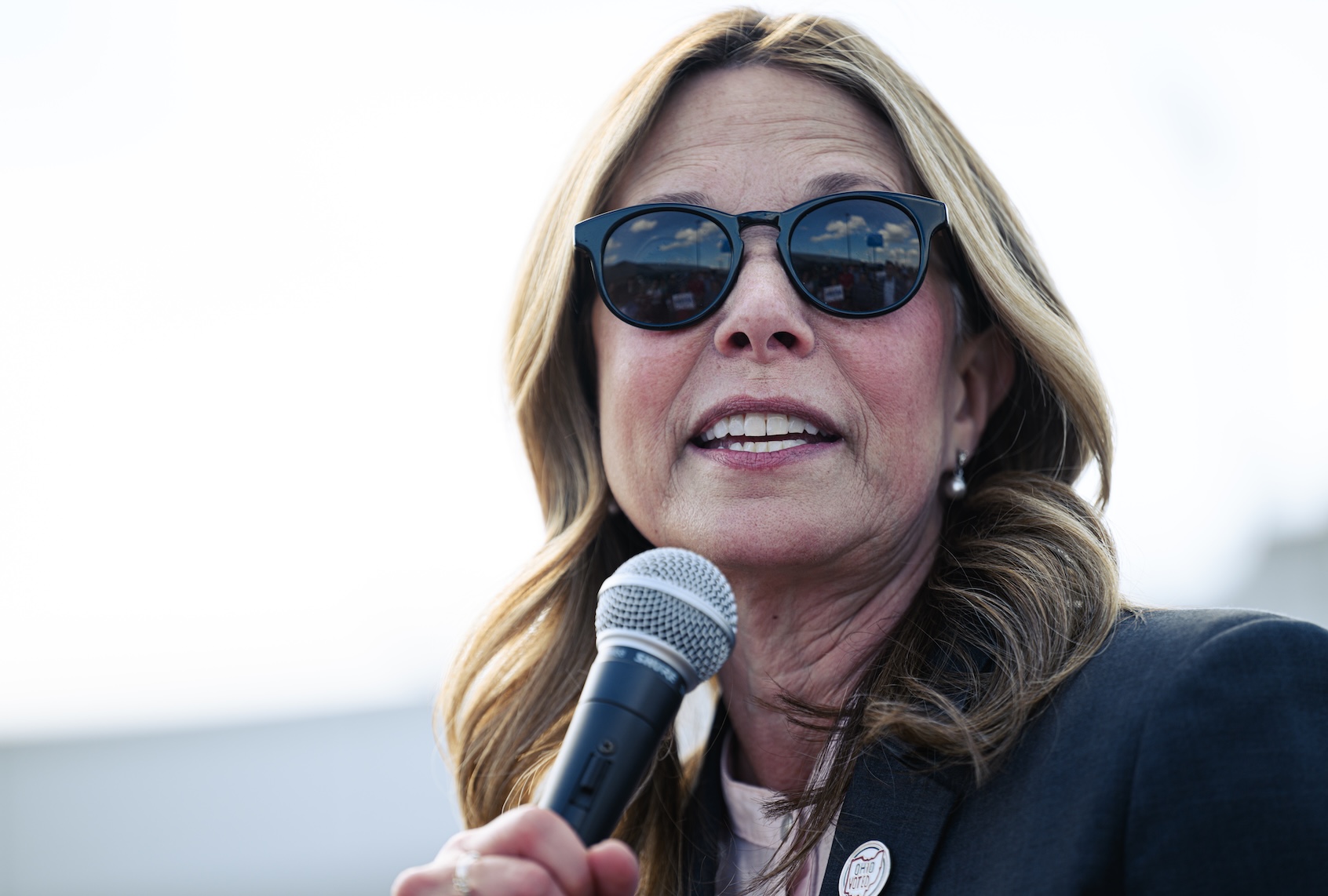
Republican Vivek Ramaswamy is closing out one of the nastiest races of the 2026 cycle by suggesting that Democrat Amy Acton, his opponent in the Ohio governor’s race, has lied about the well-documented childhood sexual abuse she experienced for political gain.
In a contest marked by sharp personal attacks and partisan rancor, Ramaswamy’s latest attempt to paint Acton as unfit for office came in the form of a minute-long ad that began circulating Monday night featuring Donna Arthur, Acton’s estranged mother. It was widely condemned on both sides of the political aisle. President Donald Trump and Vice President JD Vance, however, both defended the ad as an appropriate one to run in the closing days of a campaign.
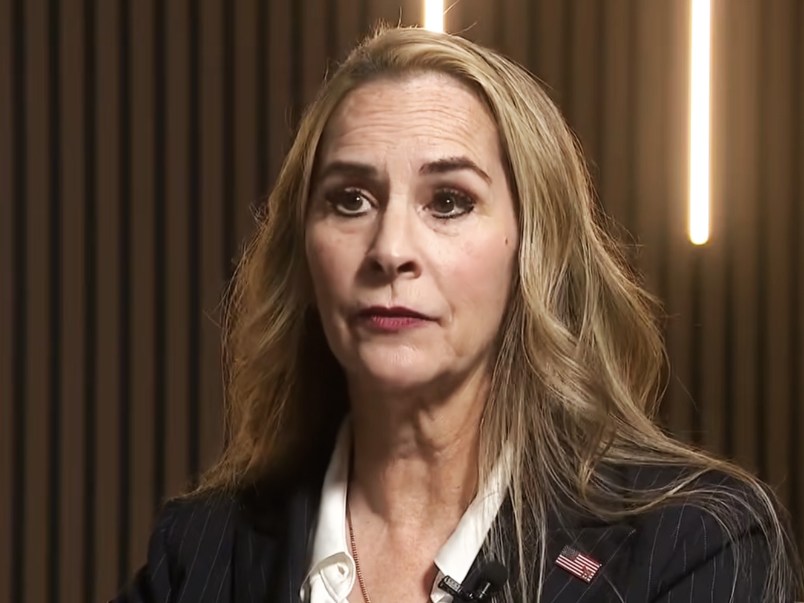
Arthur lost custody of Acton and her younger brother in 1978 after her second husband, Cledith Arthur, was arrested, charged and indicted for raping then 12-year-old Acton. In the ad, Donna Arthur said her daughter has “lied her entire life.”
“Amy has a serious problem, she is a liar, she lies about her past. She says she grew up living in a tent, none of that is true. She’s lied her entire life. My daughter needs help. And she can’t help you if she needs help herself,” Arthur said.
Acton, a pediatrician and former health director under Ohio’s current Republican Gov. Mike DeWine, has spoken openly during her campaign about facing abuse and neglect as a child, while in her mother’s custody. Acton has said that for a time the family lived in a tent before she and her brother moved in with their biological father.
Court records and local media reports at the time confirm key details of Acton’s story and contradict Donna Arthur’s suggestion that her daughter lied about the abuse.
“My birth mother did nothing to protect me. I’ve always known that she was deeply sick and unwell,” Acton wrote on Tuesday in a Facebook post responding to the ad. “It’s sad to see Vivek Ramaswamy exploit her all for his own political gain.”
Cledith Arthur did not show up for a court hearing following his 1978 indictment. He and Donna Arthur left the state, and there were warrants out for his arrest. The Arthurs remained married until Cledith Arthur’s 2004 death in Pennsylvania.
Acton has said the last time she saw her mother was in the courtroom after her stepfather was charged, when her mother rebuffed her kiss. “That was the last time I ever saw her,” Acton told the Vindicator, her hometown newspaper in Youngstown, when she was selected by DeWine as the state’s health director.
Ohio’s gubernatorial race is one of the most competitive in the country despite the Midwestern state solidly backing Republican Trump in all three of his White House bids. Acton is vying to be the state’s first elected woman governor and the first Democrat elected to the office since 2006.
The most recent reliable nonpartisan polls show her with a 4-to-9 point lead over Ramaswamy, a biotech entrepreneur and failed Republican presidential candidate.
The contest has been notably light on policy. Though Acton and Ramaswamy have staked out different positions on everything from reproductive rights to data centers, neither candidate faced a competitive primary that compelled them to outline their policies in detail. Acton has tightly controlled media access at her events and declined to debate Ramaswamy in the general election.
The ads blanketing the battleground state have therefore largely been personal attacks. Acton has suggested Ramaswamy is an out-of-touch billionaire and a biotech fraud. Ramaswamy and others in his orbit have sought to portray Acton as unfit to lead Ohio, zeroing in on a 2019 incident when Acton’s daughter called police and said her mother and stepfather were arguing — and that Acton had been drinking.
The disagreement had ended by the time police arrived. Acton’s husband has taken responsibility for starting the argument and said that his wife had a single drink. Ohio’s Republican Party nevertheless posted a computer-generated image of Acton’s Jeep with the license plate: “Drunk Mom.”
Previous Ramaswamy-aligned ads have suggested that the childhood abuse Acton experienced — and her response to it — should be disqualifying.
Childhood abuse is common. At least one in seven children in the country experience abuse or neglect each year, according to the Centers for Disease Control and Prevention, and rates of child abuse and neglect are higher among families experiencing poverty or economic insecurity.
Ramaswamy in April shared a video on the social media site X of a speech in which he said Acton had no positive vision to lead Ohio, “other than to complain about what someone else did to her,” seemingly referring to her childhood abuse.
Ads run by the Ramaswamy-aligned V-PAC — the name stands for Victors, not Victims — highlighted Acton’s disclosure on her medical licensing application that she sought therapy to process childhood abuse. V-PAC is funded by a group of out-of-state billionaires that includes Elon Musk, the owner of X, Tesla and SpaceX.
“I won’t normalize somebody who said my childhood is just something I’m complaining about,” Acton said in a Tuesday appearance on Spectrum News.
Acton added that Ramaswamy has shown a “pattern” of using his opponents’ family dynamics for political attacks. She pointed to Ramaswamy’s comment directed at Nikki Haley in a 2016 Republican presidential primary debate that she should “take care of your family first” during an exchange over TikTok and her adult daughter’s use of the video-sharing platform.
When the video with Acton’s estranged mother initially surfaced on social media Monday night, it did not state who paid for it or which candidate it supported, as is legally required for a political ad to air on television. By Tuesday evening, Ramaswamy confirmed to an ABC affiliate in Columbus that his campaign was responsible for it and defended its contents. Axios reported early Wednesday that Ramaswamy’s campaign will drop $4 million to get the ad in front of Ohio voters in the final stretch before Election Day.
His Tuesday night campaign event was interrupted when an attendee attempted to confront him over the ad. Television personality Meghan McCain, the daughter of late GOP senator and Republican presidential nominee John McCain, wrote on X that the Ramaswamy spot was a “dastardly ad” that “never should have been created.” Democrat Sherrod Brown, who is vying to reclaim his former U.S. Senate seat representing Ohio, called the ad “disgusting.” The conservative National Review obtained court records that corroborated Acton’s account. A Republican member of DeWine’s cabinet denounced the advertisement.
Trump told ABC News on Wednesday that he wasn’t aware of the ad’s specifics, but he didn’t “think that has anything to do with Vivek,” after being informed at least twice that the ad had been made by Ramaswamy’s campaign. Vance, campaigning in his hometown of Cincinnati on Wednesday, told reporters that Republicans should “stop whining about an advertisement and go win the race.”
“Whether the ad was appropriate or not is not really my concern,” Vance added.
Acton’s campaign released a response ad featuring her younger brother, Phil Stearns, who has said that Acton shares their childhood abuse not to complain but because it is “something that informs who she is and builds this core of strength that she has.”
“She was 11- and 12-years old, and to think that’s somehow a talking point? Shame on Vivek. It’s the contempt he has for Amy, it’s the contempt he has for Ohio. He’s not fit to lead,” Stearns said in the ad.
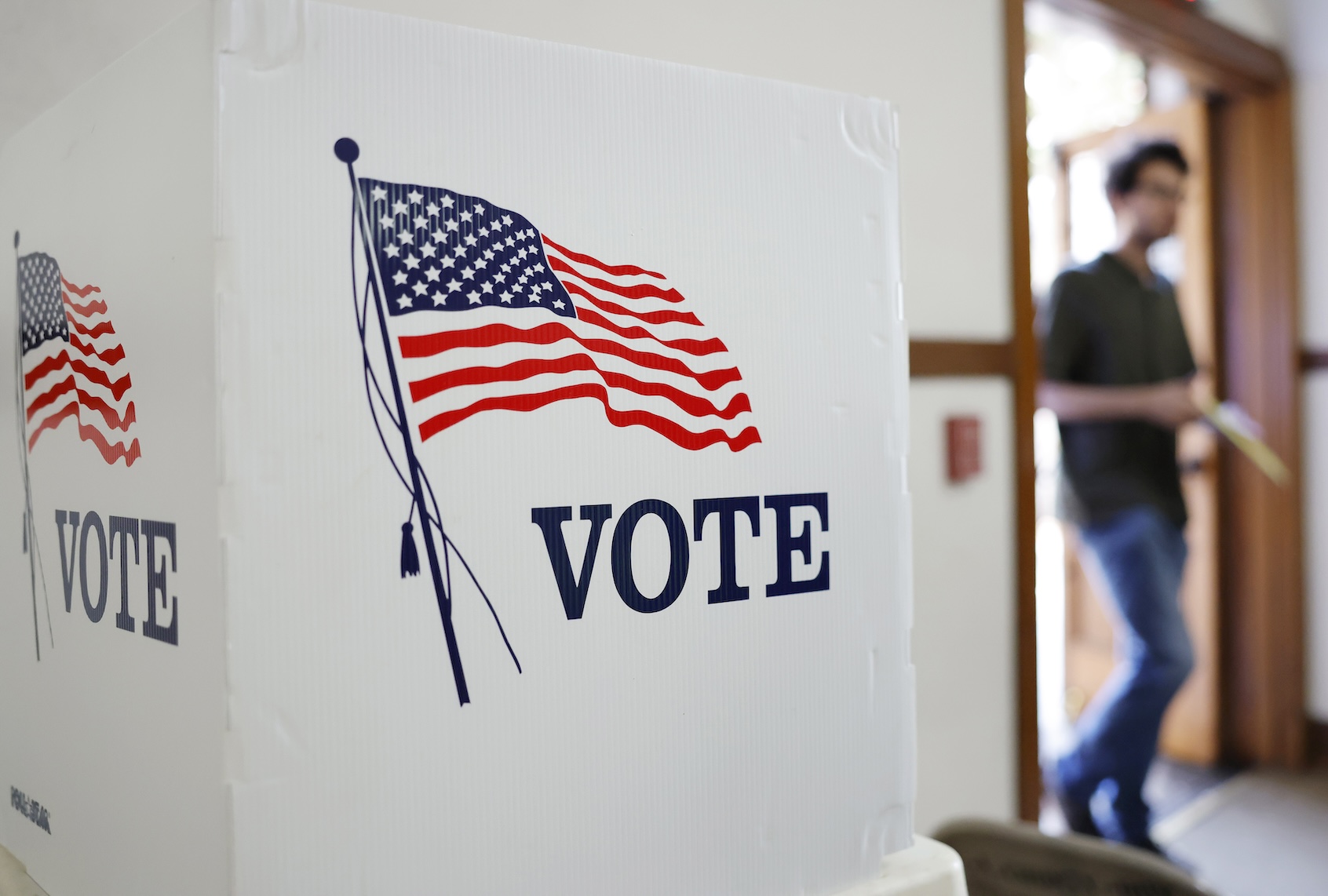
To check your voter registration status or to get more information about how to vote and what’s on your ballot, visit vote.org.
ROME — Former paratrooper General Roberto Vannacci portrays himself on social media as a Roman legionary and charioteer. He has declared he prefers women “without skirts” and posted an AI-generated image of a female junior minister with exaggerated cleavage.
None of these projections of masculinity and anti-woke culture are clumsy gaffes. The insurgent far-right star of Italian politics is making a deliberate play to the so-called manosphere to transform himself from an internet provocateur into a heavyweight political force.
For Italy’s first female prime minister, Giorgia Meloni, Vannacci now poses a serious problem as she needs to decide whether he is an asset or a liability. With elections expected next spring, his National Future party is polling at about 8%, making him a potentially crucial factor in building a right-wing coalition.
“It is disgusting to think you can manipulate the image of a woman for such deplorable propaganda,” the center-right junior minister in Meloni’s coalition whose image was manipulated, Matilde Siracusano, told POLITICO. “I don’t think we have ever sunk this low, especially from someone aspiring to be a national political leader.”
Vannacci’s provocations may look like familiar trolling from a politician who has built his reputation on saying the unsayable. But behind them lies a broader political project, tapping into the grievances of young men who feel alienated by feminism and progressive culture.
Emanuele Pozzolo, a National Future parliamentarian who defected from Meloni’s Brothers of Italy, believes young men have become increasingly constrained in their relationships with women.
“I think young Western men are very often almost castrated in their instinct for dealing with women,” he said, arguing that even legitimate romantic approaches risk being treated as aggression.
“The cultural problem is that sometimes everything seems to be harassment, everything abuse, everything violence,” he added, while stressing that genuine abuse must be punished.
Mediterranean patriarchy
Vannacci combines inflammatory online messaging and an alpha-male persona with a political program that promises to restore traditional roles for men and women. National Future even has a name for its preferred social order: “Mediterranean patriarchy.”
Its political program calls for the formation of “strong men” capable of controlling their emotions and passions, protecting women and sacrificing themselves for society. It opposes the recently introduced crime of femicide, condemns feminism, and declares the defense of life “from conception to natural death” and the “natural family” among its non-negotiable values.
The architect of this vision and principal author of the program is Lorenzo Gasperini, a conservative Catholic philosophy teacher from Tuscany, who has opposed vaccines and abortion rights on social media and blamed feminism for violence against women.
The result is a political offering that combines different traditions: conservative Catholic ideas about family and sexuality, older Italian ideas of virility and the much newer online politics of male grievance.
Giorgia Meloni speaks at a press conference in Prague on Sept. 29, 2026. | Milan Kammermayer/AFP via Getty Images
The manifesto seeks to put traditional family values into practice with proposals to pay parents who leave work to raise children, and reward parents of large families with tax exemption and public sector jobs.
Some proposals echo Benito Mussolini’s fascist-era “Battle for Births,” which offered similar incentives while promoting motherhood as a patriotic duty.
Luca Sforzini, a former Vannacci ideologue who has since broken with him, said the Mediterranean label was a clever piece of marketing.
“It’s like talking about the Mediterranean diet,” he told POLITICO. “You think of Italian food, mozzarella, tomatoes, olive oil.” The result, he said, was to conceal a patriarchal model with men above women behind “bucolic, positive images. It’s monstrous,” he said.
Pozzolo rejected the suggestion that the program advocates for male supremacy.
“It is exactly the opposite,” he said. “When we talk about Mediterranean patriarchy, the main idea is to recover, preserve and pass on the responsibilities of being a man within the family and society.” Men, he argued, had a duty to show women respect, love and protection, while rejecting violence or coercive control.
He defended the “without skirts” remark as “extremely funny” — picking up on a reference to Deputy Prime Minister Antonio Tajani advocating long skirts — and not remotely offensive, comparing Vannacci’s ability to connect with ordinary Italians to Silvio Berlusconi’s.
At a recent rally in the Umbrian city of Orvieto, Vannacci defended the Mediterranean patriarchy concept as not “oppression and possession” but “duty, fidelity, sacrifice,” and said it was the family model that had allowed “us to prevail over the last 2,000 years.”
Elisa Ercoli, president of the women’s rights organization Differenza Donna, condemned the program as “a return to the supremacy of the white, cisgender alpha male, and the woman as his handmaiden.”
Appealing to alphas
Vannacci, who served in Iraq and Afghanistan, became a media sensation in 2023 with the self-published book “The World Upside Down,” a broadside against immigration, feminism and homosexuality. In it, he told gay people: “You are not normal, get over it.”
Lionized by fans as a defender of common sense against progressive politics, he received more than half a million votes as a candidate for the anti-immigration League in the 2024 European elections, before founding National Future in February.
Polling analysis suggests that about 62% of National Future’s prospective voters are male, including strong support among manual workers and the unemployed.
Vannacci speaks during the National Future’s constituent assembly in Rome on June 14, 2026. | Filippo Monteforte/AFP via Getty Images
Pozzolo denied National Future was deliberately targeting male voters, insisting the party’s ambition was to reach Italians of all backgrounds who felt unrepresented.
Federica Formato, a lecturer at Brighton University in the U.K., who studies gender and the far right, said Vannacci was “testing the waters” to see whether he can reach a younger male audience, tapping into what she described as the “aggrieved entitlement” of young men.
A career soldier, he has repeatedly portrayed himself through images of physical strength, competition and military prowess. On social media, AI-generated versions proliferate of Vannacci as an ancient Roman in scenes recalling the Ridley Scott epic Gladiator.
For Formato, the Roman imagery projects “virility and hyper-masculinity,” while Vannacci’s army background itself helps construct the image of an “alpha male.”
Humor, memes and deliberate provocation are particularly effective with a younger online audience, Formato said, allowing relatively complex ideological messages to be reduced to instantly comprehensible images. “He is not naive,” she said. “He says things to provoke and get more attention.”
That presents Meloni with a headache. Vannacci’s party is drawing voters from her Brothers of Italy and Matteo Salvini’s League, while offering a more uncompromising platform on immigration, social issues and foreign policy.
Yet Vannacci has opened the door to an alliance with Meloni if she needs his votes. He has described National Future as a natural partner for the center-right, while insisting that any deal must respect his party’s principles. With Italy’s new electoral law offering a parliamentary majority bonus to coalitions winning at least 42 percent of the vote, those votes could matter.
That presents Meloni with an uncomfortable choice: Keep Vannacci outside the coalition, or bring into her government a movement whose appeal rests partly on the grievances of men who believe feminism has gone too far.
For Formato, Vannacci is exploiting a space in Italian politics that has so far lacked a figure capable of turning those grievances into an organized political constituency.
Vannacci, with his promises to restore traditional masculinity, appears determined to occupy it.
BERLIN — Friedrich Merz has tried to move on from his conservatives’ historic defeats to the far right in eastern Germany, but his biggest test as chancellor — and of his grip over his own party — may still lie ahead.
The Alternative for Germany is pushing to deliver its biggest blow yet to the chancellor’s weakened coalition government by installing the country’s first far-right state premier since World War II in the eastern state of Saxony-Anhalt when lawmakers vote on the post in December.
Merz’s fellow Christian Democrats in Berlin fear regional members of their own party will help the AfD do this, creating a nightmare scenario for the chancellor. That concern stems from accusations that a group of Saxony-Anhalt conservatives already broke ranks by voting in a secret ballot for the AfD’s candidate for state speaker earlier this month, outraging national conservative leaders.
“The behavior of the CDU parliamentary group in Saxony-Anhalt with regard to past and upcoming elections is completely unacceptable,” Thomas Röwekamp, a CDU lawmaker who chairs the Bundestag’s defense committee, said. The AfD “wants to annihilate the CDU in Germany” by “forcing us into a debate about how to deal with it in order to divide the party,” he added. “We must not allow that to happen.”
Under pressure from conservatives in Berlin, Saxony-Anhalt CDU leader Sven Schulze announced a plan last week to have his party’s lawmakers leave the chamber during the initial two rounds of secret voting in December, ensuring none can vote for the far-right candidate — or be suspected of doing so. It’s unclear what the party would do in a potential third round, when the AfD would only need a majority of votes cast.
AfD leaders have openly said they are seeking defections from conservative ranks, a strategy designed as much to sow division among conservatives as to win the premiership. That approach seems to be working, at least partly.
Sven Schulze, outgoing Premier of Saxony-Anhalt and member of the German Christian Democratic Union, attends the first session of the Saxony-Anhalt state parliament since state elections on October 6, 2026 in Magdeburg. | Sean Gallup/Getty Images
State conservatives have faced intense criticism for appearing so divided and vulnerable to aiding the AfD that their leaders apparently have no choice but to avoid the vote altogether. “It’s about taking a stand and assuming responsibility, rather than shirking a decision,” Röwekamp said.
Local CDU lawmakers, however, say their approach is tactically necessary. “We have always drawn a clear line between ourselves and the AfD,” CDU state lawmaker Chris Schulenburg said. “We adhere to the principle of distinguishing ourselves on the basis of substance, but not excluding them [the AfD], because, after all, the party is not currently banned, and its parliamentarians were also democratically elected.”
AfD leaders, meanwhile, have rejoiced in the CDU’s disarray.
“This is nothing less than the CDU’s capitulation,” AfD national co-leader Tino Chrupalla said after the state conservatives announced their plan to leave the chamber. “They’re afraid of elections.”
Centrists flirting with radicals
For Merz, whose approval ratings are at historic lows, his party’s conduct in Saxony-Anhalt — and the prospect of a politically explosive AfD victory in December — are complicating efforts to move past last month’s humiliating election losses in eastern Germany and project renewed control as he attempts to focus on core priorities: backing Ukraine and reviving the economy.
Already, center-left lawmakers have attacked parts of Merz’s party as having failed to learn the lessons of Germany’s history, drawing parallels with the Nazis’ rise to power with conservative help.
The co-leader of the far-right Alternative for Germany (AfD) party Alice Weidel delivers a statement on October 6, 2026 at the Bundestag in Berlin. | John MacDougall/AFP via Getty Images
After local conservative lawmakers appeared to back the AfD’s candidate for the Saxony-Anhalt speaker earlier this month, Social Democratic Party (SPD) lawmakers in Berlin marched in protest past the Brandenburg Gate to a square where the Nazis carried out book burnings. SPD Defense Minister Boris Pistorius sang the national anthem and called the episode the breaking of a taboo that “we haven’t seen in this form for more than 90 years.”
Conservative lawmakers have retorted in recent weeks by attacking the SPD and Greens for letting their Berlin branches enter coalition talks with the Left — a far-left party rooted in the East German communist party— which won first in the city in last month’s election.
But for Merz and his coalition government, the stakes of the December vote in Saxony-Anhalt are far greater.
How the December vote will unfold remains highly unpredictable. Ultimately, the AfD’s candidate for the premiership, Ulrich Siegmund, could win the post with support from Alliance Sahra Wagenknecht, a small, populist-left party that has expressed openness to working with the AfD and shares its Kremlin-friendly views.
Merz is clearly alarmed by the prospect of CDU lawmakers covertly assisting the AfD — an outcome that could trigger his chancellorship’s greatest political crisis yet.
“People who do things like that — members of parliament who extend a hand — there is no place in the CDU for such a choice, and that will not change,” Merz said earlier this month. “The CDU will never elect extremists to public office or government positions anywhere in Germany.”
The founder, Paul Renshaw, created this midterms page that shows prediction market odds from Polymarket and Kalshi on who is likely to control Congress. — Read the rest
LONDON — Water firms and campaigners are set to wait until next year to see the full details of Andy Burnham’s plans to overhaul the sector in England.
Britain’s new prime minister has promised greater “public control” of the water industry as a centerpiece of his domestic agenda, partly reversing a wave of privatization that began in the 1980s. Ministers are due to unveil more detail in a “10-year plan for Britain” that is currently expected in December.
However, while this 10-year plan will contain a high-level vision, priorities and principles for the industry’s future, much of the granular detail of how future ownership models will work in practice is only expected later, said two people with knowledge of the discussions.
Some of these key details will be laid out in Chancellor John Healey’s multi-year spending review at some point in 2027, added the two people, who were granted anonymity to discuss evolving policy. One said the spending review — a date for which has not been decided — was where the full details would be “nailed down.”
These include any fiscal implications for the Treasury, which could have to find billions of pounds if ministers decided to transfer privately-owned shares to the public purse.
This appears to mirror an approach Burnham has taken to policymaking for decades, first as a Cabinet minister and then mayor of Greater Manchester before he took over 10 Downing Street in July. He is known for setting out a broad direction which his officials can later use to pin down detailed policy, while also seeking buy-in from private industry.
With a general election due by summer 2029, however, any wait will compress the prime minister’s window to enact far-reaching reform before he goes back to the electorate.
‘£40 being added to every single water bill’
England’s privatized water firms also argue that uncertainty over the sector’s future is damaging investor confidence.
The industry trade association Water UK has said the entire industry risks being downgraded by the credit ratings agency Moody’s, which would add £40 to customers’ annual bills.
Water UK Chief Executive David Henderson urged the government to move ahead with reforms suggested last year by former Bank of England Deputy Governor Jon Cunliffe, before ministers decide the overall path of how the sector is owned.
The Cunliffe report “was given to the government 15 months ago and the credit rating agencies are watching,” Henderson told POLITICO. “If the government doesn’t pretty soon decide what it wants to do with that report, then we risk a downgrade, as Moody’s has indicated. And if there’s a downgrade, that would sadly see £40 being added to every single water bill across England and Wales. That’s the last thing anybody wants.”
He added: “We still have no idea how [a proposed] new regulator will look, what status it will have, what its duties will be, which parts of the Environment Agency will stay in the Environment Agency, and which parts will go into the new regulator. That is causing uncertainty … an important consideration for any investor.”
One government official insisted the 10-year plan would contain some finer details of plans to overhaul the water industry, though they accepted that fiscal implications were always dealt with in fiscal events such as the spending review.
Environment Secretary Angela Eagle is also due to bring a water bill to parliament before Christmas with separate policy, such as closing what Burnham has called “loopholes used to pay excessive bonuses” to water company executives. It will also contain scrutiny powers for regional mayors.
Burnham announced last month that the bill would lift a ban on the government owning more than 3% of shares in any English water firm. But he has also long made clear that he would not fully nationalize the industry, a move the government previously estimated would cost £100 billion for England and Wales together.
First Secretary of State Louise Haigh, one of Burnham’s most powerful allies in government, is leading three task forces including one on public control of water alongside housing, energy and transport.
Officials have been working through a “spectrum of options” for how public control in the water sector will look, a second government official said. They added that ministers are due to begin deciding which option — or combination of options — will be taken forward before the 10-year plan.
PARIS — French President Emmanuel Macron on Wednesday hit out at the “unacceptable and stupid comments from many foreign leaders” in the aftermath of unrest which rocked several French cities over the weekend.
“Some people have claimed that we’ve been overrun by hordes of migrants and Islamists, which is completely false,” Macron told reporters during a trip to Qatar. His comments were a clear swipe at U.S. President Donald Trump, who this week railed that France is “being conquered, looted, and burned to the ground by migrants, jihadists, and Communists.”
While hundreds of thousands of protesters in France demonstrated peacefully over the cost of living and school conditions at the weekend, the mayhem — including public buildings being set on fire, stores being looted and clashes with riot police — sparked widespread condemnation in France and abroad, including in the U.S., where Trump is using the French unrest to rally voters ahead of November’s midterm elections.
There is no evidence tying last weekend’s incidents in France to immigration.
Macron said Trump is “among” a group of political leaders who are campaigning “off of France’s back,” adding, “it’s at times like these that you can tell who loves France and who doesn’t.”
Right-leaning leaders in other European countries like Hungary and Poland also tried to pin the unrest in France on immigration to justify their countries’ hard-line policies on the divisive issue. Hungarian Prime Minister Péter Magyar said on X that the chaos that engulfed several French cities makes it “clear to everyone why Hungary advocates the strictest possible approach to migration.”
French Foreign Minister Jean-Noël Barrot responded by offering to “assist the countries concerned in understanding the situation, to prevent them from spreading or relaying false information.”
“Foreign leaders who comment on or exploit recent events in France for electoral purposes or to harm us — without understanding anything about them — should show at least a basic measure of restraint,” he added.
BRUSSELS — The EU is preparing to try and persuade Canada and the U.K. to increase their support for Ukraine as part of efforts to plug the €70 billion funding gap Kyiv faces next year.
The EU-Canada summit on Oct. 29-30 and the EU-U.K. summit on Nov. 20 will give Brussels a chance to make the case at the highest level. With Kyiv’s financing needs rising and U.S. backing uncertain, Brussels is increasingly looking to non-EU allies to contribute more, five EU officials, including two from the European Commission, and two EU diplomats told POLITICO.
The EU and its member countries provide 80 percent of Ukraine’s external aid, Commission President Ursula von der Leyen said Friday. “We urgently need other partners to step up.”
European Council President António Costa told the European Parliament on Wednesday morning that “international partners have to intensify and step up financial support to Ukraine.”
The EU has committed to a €90 billion loan for 2026 and 2027, intended to cover about two-thirds of Ukraine’s needs. Brussels had expected other partners — including Canada, Japan, South Korea, Australia and Norway — to provide another €45 billion, but much of that money has been slow to arrive as other governments have yet to firm up or disburse the support Brussels expected.
While calls to help Ukraine defend itself are not new, the projected 2027 bill has grown as Russia intensifies its assault, the U.S.-Israeli war with Iran drives up costs and Washington shifts toward positions more favorable to Moscow — leaving Europe and other allies to shoulder more of the cost of keeping Kyiv afloat.
Brussels is heading into negotiations about closer economic and defense ties with London and Ottawa. Diplomats and EU officials said they do not expect a formal bargain, but that support for Kyiv from the EU’s partners is likely to shape the political climate around the talks. Like others in this article, they were granted anonymity to speak about the sensitive diplomacy.
European Council President Antonio Costa, Ukraine president Volodymyr Zelenskyy and European Commission President Ursula von der Leyen at the European Council Summit in Brussels on Oct. 16. | Nicolas Maeterlinck/Belga/AFP via Getty Images
The EU has also raised Ukraine’s 2027 financing needs at meetings of the International Monetary Fund, the G7 and the G20, as well as with Gulf Cooperation Council countries.
“During my meetings in Bangkok, the need to secure financial support for Ukraine in 2027 was a prominent topic,” European Economy Commissioner Valdis Dombrovskis told POLITICO, referencing last week’s IMF and World Bank Group meetings. He said he called for “broad burden sharing and stressed the importance of international partners each doing their part as Ukraine continues fighting Russian aggression.”
All the EU officials and diplomats stressed that the push was not a criticism of the U.K. or Canada, both of which are strong supporters of Ukraine. The point, they said, is that Kyiv’s needs have grown.
The U.K. says it has committed a total of £25 billion for Ukraine and Canada has promised the equivalent of €5.4 billion in military assistance and €8.2 billion in direct financial support.
The EU and its member countries say they have contributed over €231 billion since Russia’s full-scale invasion, including military aid, budget support and guarantees, support for Ukrainians hosted in the bloc, and proceeds from immobilized Russian assets — an amount one senior EU diplomat described as already “over and above.”
How to meet Ukraine’s financial needs has become “a central discussion in every single meeting” with partners supporting Kyiv, a Commission official said.
The push to secure Ukraine’s financial needs comes as support for Kyiv will be tested in a series of elections across Europe next year. In France, far-right front-runner Marine Le Pen has vowed to end aid if elected president in 2027, while in Italy, Prime Minister Giorgia Meloni faces a challenge from Russia-friendly Roberto Vannacci ahead of next year’s election.
The looming votes, combined with the unpredictability of Washington’s backing for Kyiv, mean European countries need to look beyond their own budgets, the senior diplomat said. “We need to think wider and broader.”
The EU is also urging the Ukrainian government to secure more support from non-EU backers. “This is the first next step that they need to secure from their partners,” the Commission official said.
Not ‘pulling a Trump’
EU ambassadors are set to talk about the upcoming Canada and U.K. summits tomorrow, with Ukraine funding expected to form part of the discussions, the two diplomats said.
Brussels, “without pointing the finger,” wants to use the run-up to the meetings to press for broader support, the senior diplomat said. But the EU “won’t be pulling a Trump” and explicitly linking favorable treatment to contributions to Ukraine, they added.
The Commission has not set out what it will ask partners for or how any request might connect to trade and defense talks. The diplomat said the EU still needed to work out “how much will translate in joining those dots.”
Ukraine’s Foreign Affairs Minister Andrii Sybiha greets British Prime Minister Andy Burnham upon his arrival by train in Kyiv for indepence commemorations on Aug. 24. | Henry Nicholls/WPA Pool/Getty Images
Von der Leyen proposed making Canada the EU’s first “associate member” in her State of the Union speech last month. The October summit in Montreal is an opportunity to develop the idea.
Ottawa will participate in the EU’s SAFE program, which finances joint defense procurement, giving Canadian companies preferential access to SAFE-funded contracts. Closer defense cooperation and industrial access could form part of the wider conversation about support for Kyiv, one of the diplomats said.
In a statement to POLITICO, Kathryn Serieux, a spokesperson for Canada’s Privy Council Office, said Ottawa “is and has been a steadfast supporter of Ukraine,” with Canada committing nearly C$26 billion in military, financial development and humanitarian assistance.
“Canada continues to stand by Ukraine and remains engaged with international partners on Ukraine’s needs,” Serieux said.
The U.K. summit is expected to advance Prime Minister Andy Burnham’s promised reset with the bloc, including agreements on youth mobility, food and emissions trading. Burnham has said the status quo is “not good enough” and wants Britain to move closer to the EU.
London wants U.K. companies to count as European under the proposed Industrial Accelerator Act, which would give preference to goods made in Europe in public contracts and industrial support. British officials worry U.K. firms could lose out despite close links between British and European supply chains.
Three U.K. officials said Tuesday they had not heard of a request for Britain to provide more support for Ukraine in exchange for letting its companies qualify under the act. A fourth EU official said Ukraine was expected to feature in the summit declaration with the U.K., but that it would reflect both sides’ efforts to help Kyiv, rather than a Brussels demand for more support.
The EU is also pressing Japan to increase its contributions, with one senior EU official saying it was lagging in 2026. A person familiar with the thinking in Tokyo pushed back on the idea that Japan was not pulling its weight, saying Tokyo had already given around $20 billion in support to Kyiv — but there could be room for more if Ukraine requested it.
Tokyo is also seeking assurances that Japanese companies will retain access to the EU market, following concerns the Industrial Accelerator Act’s “Made in Europe” preferences could put its firms at a disadvantage.
The Mission of Japan to the EU didn’t respond to a request for comment.
Australia says it has not yet received a request for more funding for Ukraine for 2027. Canberra is likely lower on the list, if it is on it at all, because its prime minister and foreign minister met Ukrainian President Volodymyr Zelenskyy at the U.N. General Assembly last month and announced additional funding and a security agreement, an Australian official said.
Dan Bloom contributed reporting from London. Amanda Copp contributed reporting from Canberra. Mike Blanchfield contributed reporting from Ottawa. Gregorio Sorgi contributed reporting fromBrussels.
BRUSSELS — Center-right lawmakers in the European Parliament are intensifying efforts to weaken two EU climate laws, a campaign that could undermine the bloc’s push to cut planet-warming emissions.
The European People’s Party, the largest group in Parliament, will this week push for a three-year delay to rules on emissions of the climate pollutant methane, a change the fossil fuel sector and the U.S. government have lobbied hard for.
A growing number of EPP lawmakers now also want to delay — or scrap altogether — a new carbon price on transport and heating, known as ETS2, according to a document obtained by POLITICO. That puts them in line with several EU member countries, including Italy and Poland, which pushed for a delay to the new carbon price at a meeting of EU leaders in Brussels last week.
Both policies are central pillars in the EU’s effort to reduce its planet-warming emissions. A successful repeal of ETS2 in particular would be a blow to EU climate goals, as it covers around 40% of the bloc’s greenhouse gas emissions.
But it would also be a major victory for conservative and pro-business lawmakers and national governments that have been campaigning for less stringent EU climate laws in the name of industrial competitiveness.
Ax the tax
The EU Emissions Trading System, launched in 2005, requires power plants and factories in sectors like steel, chemicals and cement to acquire carbon allowances for every ton of carbon they emit. The total number of allowances is reduced each year, eventually reaching zero.
ETS2 applies the same idea to suppliers of fuel for transport and heating from 2028.
The cap-and-trade scheme will be a powerful tool for reducing emissions from these highly polluting activities. But many policymakers worry it will raise the cost of gasoline, diesel and natural gas and add to voters’ cost-of-living pressures.
Nine national delegations of the EPP — the Polish, Spanish, Italian, French, Romanian, Croatian, Slovenian, Slovak and Estonian — are now calling for ETS2 to be repealed, according to draft amendments obtained by POLITICO. “ETS2 should be deleted,” the amendment, sponsored by Polish EPP lawmaker Adam Jarubas, argues.
Another amendment in the same draft, backed by 10 national delegations, takes a softer approach and asks for ETS2 to be “postponed until 2031.”
EU legislators are already reviewing a proposed reform of the EU’s original Emissions Trading System, which makes amending ETS2 — which is contained in the same legislation as the first ETS — much simpler.
No majority in Parliament or among member countries currently supports delaying or repealing ETS2, but a string of elections next year raises the likelihood that more right-wing governments will be in power before ETS2 comes into force, adding momentum to the push to scrap or delay it.
Methane delay
Last week, the European Commission, the EU’s executive arm, proposed a year-long delay to rules that will require oil and gas importers to monitor, report, and eventually reduce emissions of the potent greenhouse gas.
The delay — which affects monitoring requirements and later obligations on methane intensity — followed months of lobbying from industry and member countries, which claimed the Commission provided insufficient clarity on how to comply. The U.S. government also pushed to delay the rules, which are currently due to come into force on Jan. 1, 2027.
But the proposed delay requires support from both governments and lawmakers, some of whom want to go well beyond the Commission’s revised timeline.
On Tuesday, European lawmakers voted to fast-track parliamentary discussions around the Commission’s proposed delay, laying the groundwork for a fresh vote Thursday. At that vote, the EPP is expected to campaign for a three-year delay of the rules, as well as possible further adjustments, according to one lawmaker familiar with the matter.
Dimitris Tsiodras, a European lawmaker, echoed industry concerns that compliance risks could deter cargoes from Europe if left unaddressed. “We cannot afford to put our energy supplies at further risk,” he told lawmakers.
Right-wingers against the rules will still face opposition from left-leaning lawmakers. Jutta Paulus, a German Greens lawmaker who steered the parliament’s position on the legislation in 2024, announced on Tuesday that her party would table an amendment to reject the delay altogether.
However, the EPP could reach an outright majority if it joined with right-wing and far-right groups.
The party is already exploring a deal with those groups if the Socialists and Democrats — the Parliament’s second-largest group — don’t cooperate with its push for a longer postponement, according to two people familiar with the matter. S&D lawmakers opposed extending the delay earlier this month, but a group spokesperson said the party has yet to adopt a formal position in negotiations.
A parliamentary push for a three-year delay could also invigorate member countries’ efforts to delay the rules further.
Member countries are currently divided, though many, including heavyweight France, support the one-year delay proposed by Brussels, according to two diplomats briefed on the matter.
Poland, Slovakia and Czechia, meanwhile, would prefer a three-year delay, but their luck in campaigning for an extension may depend on where Germany lands, the people said. Berlin is currently split between its socialist-controlled environment ministry and its center-right-controlled energy ministry, leaving countries uncertain whether they can formulate a joint position tomorrow, they added.
Italy is also trying to decide whether to opt for one year or more, two diplomats familiar with the matter said.
In a throwaway comment this week, Donald Trump made clear that he does not regard the war in Ukraine as a conflict with fault on both sides. “Russia frankly has been fine on Ukraine,” the U.S. president said. “They have not been doing that much.”
To residents of Kyiv — who have endured weeks of intensifying bombardment — and Ukraine’s allies across Europe, the remark confirmed a growing impression that the U.S. is taking Russia leader Vladimir Putin’s side in the war.
“American negotiators have been trying to push Ukraine into surrender for already almost two years,” the EU’s top diplomat Kaja Kallas told the European Parliament on Tuesday. The reason Ukraine hasn’t “surrendered on Putin’s terms” so far is because Europe has been providing so much support, she added.
As they scratch their heads for explanations for Trump’s latest turn against Ukraine, some European officials and diplomats think it comes down to the president’s personal preferences, as much as his country’s political aims.
“I do think it’s a personal thing,” said former British Cabinet minister David Lidington, now distinguished fellow at the Royal United Services Institute, a leading security think tank in London. “Trump is self-centered — his personal predilections for dictators and autocrats, his desire to give opportunities to U.S. businesses … are very important parts of his motivation.”
In private, EU officials agree. “Trump doesn’t like [Ukrainian President Volodymyr] Zelenskyy. He just doesn’t like him,” said one government official who has observed both men closely. “That makes it harder to get the U.S. to help on peace. Everything is a rational business deal with Trump, until it’s not.”
A diplomat from an EU country — granted anonymity, like others in this report, to discuss sensitive matters — said the inconsistent Trump could change his mind again and reverse recent moves against Ukraine. The U.S. president has chopped and changed on many issues, “except one thing,” the diplomat said. “He seems to be supportive of the Russians.”
“He’s been critical of Ukraine, the EU, NATO, but hardly ever said anything critical about Putin. It is striking. We have to deal with an administration that seems to be more pro-Russian than anything else,” the diplomat said.
The White House didn’t immediately respond to a request for comment.
Mounting losses
For Ukraine and its European allies, the idea that nothing can or will change Trump’s feelings about Zelenskyy is a bleak one. After four-and-a-half years of war, Kyiv is running low on funding, air defenses and — amid swelling support for Europe’s populist right — facing a potential loss of political support in the months ahead.
Trump’s envoy Steve Witkoff met the Ukrainian president and the leaders of Norway and Finland for talks in Oslo on Tuesday, and will head to St. Petersburg to discuss peace proposals with the Russian leadership on Wednesday as the White House pushes hard for a ceasefire. One option Putin will be offered is a three-way leaders’ summit with Trump and Zelenskyy.
Previous efforts to get the Russian president to attend such a meeting have failed, however, and EU diplomats do not believe Putin is showing any genuine desire for a ceasefire. That is partly what makes Trump’s hostility toward Zelenskyy so problematic.
“There is a clear consensus across Europe that Putin does not want peace,” a second EU diplomat said. “He will need to be forced into peace.”
U.S. President Donald Trump greets Russian President Vladimir Putin as he arrives for talks at Joint Base Elmendorf-Richardson in Anchorage, Alaska, on Aug. 15, 2025. | Andrew Harnik/Getty Images
But instead of making demands of Putin, Trump has ratcheted up his pressure on Zelenskyy, even amid escalating Russian attacks on Ukrainian cities this month. Ukraine’s leader is feeling the strain, as he told his EU counterparts in private meetings in Brussels last week, according to the first diplomat.
In a succession of highly critical comments in recent days, Trump has said Zelenskyy “doesn’t care” and “doesn’t want to end this war;” and should be replaced as leader or as Ukraine’s negotiator. “President Putin would like to see a settlement,” Trump said. “President Zelenskyy could have solved this war, or he could have made a deal, many times.”
The Oval Office beating
Trump’s animosity may date back to an incident during his first term in 2019, when he urged the Ukrainian leader to help with an investigation into Joe Biden, who eventually defeated Trump in the following presidential election, Lidington said. A succession of hostile encounters in the years since — including in the Oval Office in February 2025 — have reinforced the impression, he said.
“It was clear that in the infamous meeting in the White House that Trump and [Vice President JD] Vance had planned that public beating-up of Zelenskyy and it struck me then that there was a strong personal element to this,” said Lidington.
“I think there’s another element, which is that if you look at the people Trump tries to court, it tends to be autocratic strongman — and it is ‘man’ — leaders,” Lidington said.
He recalled attending a dinner with world leaders in 2018 to mark the centenary of the end of World War I in Paris. French President Emmanuel Macron and the German chancellor at the time, Angela Merkel, were playing joint hosts “at the top table,” but Trump was not interested in making small talk with either of them, Lidington said.
“It was pretty obvious from the body language that Trump was impatient with them and one of the people he really wanted to talk to was [Turkish leader Recep Tayyip] Erdoğan and other people who were a bit more in that strongman image that he likes to portray himself,” he observed.
‘Strange stories’
A senior official from a European country familiar with the Ukraine talks said Trump’s motives were partly political, partly about calculating what would be profitable and partly about personalities.
“They are currently in an election cycle and need someone to blame for rising prices,” the official said. “In general, Trump tends to like various types of people and leaders. He actually has a fondness for successful and cheerful people.”
In recent days, Zelenskyy has warned his country is suffering more civilian casualties because the U.S. has cut back on support, including Starlink and Starshield services that help Ukraine defend itself against Russian attacks and plan operations. “We still have no explanation for this, just different strange stories,” Zelenskyy told U.S. congressmen on Monday.
This month, the advanced warnings of incoming Russian missile attacks from U.S. partners have failed to come through as normal. Ukraine is also running low on Patriot missile interceptors, he said.
The Pentagon has not issued an official comment on the Ukrainian complaints. The U.N. Human Rights Monitoring Mission in Ukraine said 328 civilians were killed and more than 2,000 wounded across Ukraine last month, an 85% increase compared to September 2025. The U.N. said that the first two weeks of October were among the deadliest for civilians in Ukraine in years, driven by increased missile and drone strikes.
The first EU diplomat quoted above said many European governments were irritated that Trump had cut them out of his conversations with Putin so far. “There is probably much more dialogue between the Americans and the Russians than we might know,” the diplomat said.
Tuesday’s meeting with Witkoff in Norway raised the possibility that direct engagement with Putin might be back on the cards, for Zelenskyy at least.
“Today was a good day for peace,” Finland’s President Alexander Stubb said after attending the talks in Oslo. “On a substantive and technical level we have actually made a lot of progress under the radar in the past week or so,” Stubb said.
The process is now going in the right direction again, he added. “Hopefully, we don’t do any backtracking.”
PARIS — The first publicly available poll following the violence that rocked France over the weekend showed little change in voter intentions in next spring’s presidential election.
While even some of far-right front-runner Marine Le Pen’s adversaries expected her to get a boost from the rioting and looting that took place on the sidelines of peaceful protests on Saturday, the survey published by Ifop and Fiducial found little change in her support levels.
Nor was there much change in voting intentions toward far-left candidate Jean-Luc Mélenchon, whom the government has repeatedly blamed for stoking the violence. Mélenchon and his allies have repeatedly and forcefully denied the accusation.
The poll was conducted online from 8 p.m. Saturday — after rioting and looting had begun — until Monday.
Le Pen remains well ahead of the pack with 34% to 38% of the vote in the various scenarios tested. Given France’s presidential election moves to a two-person runoff if no candidate obtains a majority of votes on the first round, the battle for second place is shaping to be the most crucial story of the election.
That fight looks like it will be a tight one.
Mélenchon’s position remains similar to what it was before Saturday, despite the attempt by the government and his opponents to tie him to the unrest. The Ifop Fiducial survey has him either in sole possession of second place or tied for it in the various scenarios tested, though his lead on his nearest competitors — center-right former Prime Minister Edouard Philippe and center-left MEP Raphaël Glucksmann — is in some cases within the margin of error.
“The first feedback we’ve had from the ground — including from areas where we’re not held in high regard — is that the tactic of blaming us for everything isn’t working,” said a high-level Mélenchon campaign operative, granted anonymity to discuss internal campaign analysis.
Paris prosecutor Laure Beccuau told broadcaster TF1 on Monday that she “absolutely [could] not confirm” the government’s analysis based on the profiles of those arrested and placed under investigation in the French capital so far.
The government, meanwhile, continues to fend off critics who allege that it has mismanaged the affair, which they are concerned could snowball into a sustained movement like the Yellow Vest demonstrations of 2018.
Calls for more protests this coming Saturday have emerged online, prompting Prime Minister Sébastien Lecornu to order what he called on Tuesday a “massive” police apparatus to avoid more scenes of vandalism, arson and mayhem. Interior Minister Laurent Nuñez said elite tactical police and a military unit normally deployed on French soil for counterterrorism operations would be mobilized as well.
After localized curfews were established throughout the country Monday, Lecornu said it would be up to local and regional authorities to renew them Tuesday night.
Romania ended five months of political paralysis Tuesday with its parliament voting in Luca Niculescu as prime minister after three failed attempts to form a government — but the deal comes with a six-month deadline for the parties to strike a more lasting agreement.
The threat of snap elections, which would likely see the populist right-wing Alliance for the Union of Romanians (AUR) party surge, helped push the center-right National Liberal Party (PNL) and the center-left Social Democrats (PSD) to agree on a government led by independent Niculescu, a former journalist and diplomat who was nominated as prime minister by moderate President Nicușor Dan earlier this month. The socialists will join the cabinet, but the liberals will stay out.
Romania has the sixth-largest population in the EU and plays a critical role in NATO’s defense of southeastern Europe as home to a major military base and a U.S. missile shield site. The country has been plagued by political instability and a mushrooming budget deficit in recent years, fueling a surge in support for hard-right nationalist politics.
The new deal keeping the government afloat expires in six months, and parties will need to renegotiate the pact with no agreement yet on what comes next.
During this period, the Social Democrats will try to pass an investment-focused 2027 budget by the end of November, steering Bucharest away from austerity, party leader Sorin Grindeanu told POLITICO Playbook Capitals in an interview.
“Romania needs an economic recovery plan, not austerity,” he said. “Our priorities are protecting purchasing power and supporting business, restarting public investment, and improving essential public services.” Grindeanu added that he aims to revise the 2026 budget by the end of October and to fast-track implementation of EU projects to unblock funds.
The Social Democrats in May teamed up with AUR to topple the coalition government led by centrists and centre-right liberals, as unpopular debt-cutting reforms drove Social Democrat voters toward the populist right. PNL and USR have refused to govern with the Social Democrats again.
The formation of the new government makes snap elections harder to trigger once the six-month deal expires, as Romania’s constitution requires two failed attempts to install a government before Parliament can be dissolved.
Grindeanu hopes to persuade his former coalition partners to reunite in six months, but with a different economic program. Fearing an uptick in support for the far right, he wants to avoid further cuts.
But the pivot away from austerity puts him at odds with the PNL, which has defended fiscal restraint. The PNL refused to sign a detailed coalition program, Grindeanu said, forcing the administration to cobble together support vote by vote over the next six months.
Grindeanu distinguished between parliamentary votes and lasting alliances, and said he won’t seek a pact with AUR, citing deep disagreements over Europe and national security. He said he rejected an offer from AUR to back a €300 million social spending package during negotiations over the 2026 budget, after the far-right party demanded PSD’s support on another, unspecified issue in return. Instead, he waited to find a compromise with PNL.
“Until I will stay in this position, PSD will not have any agreement with AUR,” he vowed.
Bernadette Greene-Placentia would like you to know the story of her rape is not an “October Surprise.”
She did not conspire with the media to publish the graphic details of her sexual assault on the same day early voting ballots were sent out to voters in Arizona. Her harrowing account of being bludgeoned and violated by two men in the middle of the night in a suburban parking lot is not a “hoax” she concocted to win over voters’ sympathies. Her fragmented memories of the attack, and her initial reluctance to go to authorities, are not evidence of an elaborate lie, nor of a nefarious Democratic plot to wrest control of Congress, as some right-wing influencers have suggested. It was hard enough coming forward to say she was raped, she told TPM. Now she has to contend with all these men, with millions of followers online, loudly asserting that maybe she wasn’t. She can’t help but remember that these men publicly trying to poke holes in her story have mothers. “Is this really how you were raised?” she wants to ask them.
Remember when billionaire Elon Musk and President Donald Trump were supposedly enemies? At the start of Trump’s second term, the world’s richest man, was busy ripping through nearly every level of the U.S. government with the Trump-approved Department of Government Efficiency. But by June 2025, the Wall Street Journal reported the pair had “torched” their relationship, which amounted to a lot of social media slapfights and accusations about who was in the Epstein files. But the truth is, the two men have a storied on-off relationship that seems to fluctuate based on who’s grabbing the check.
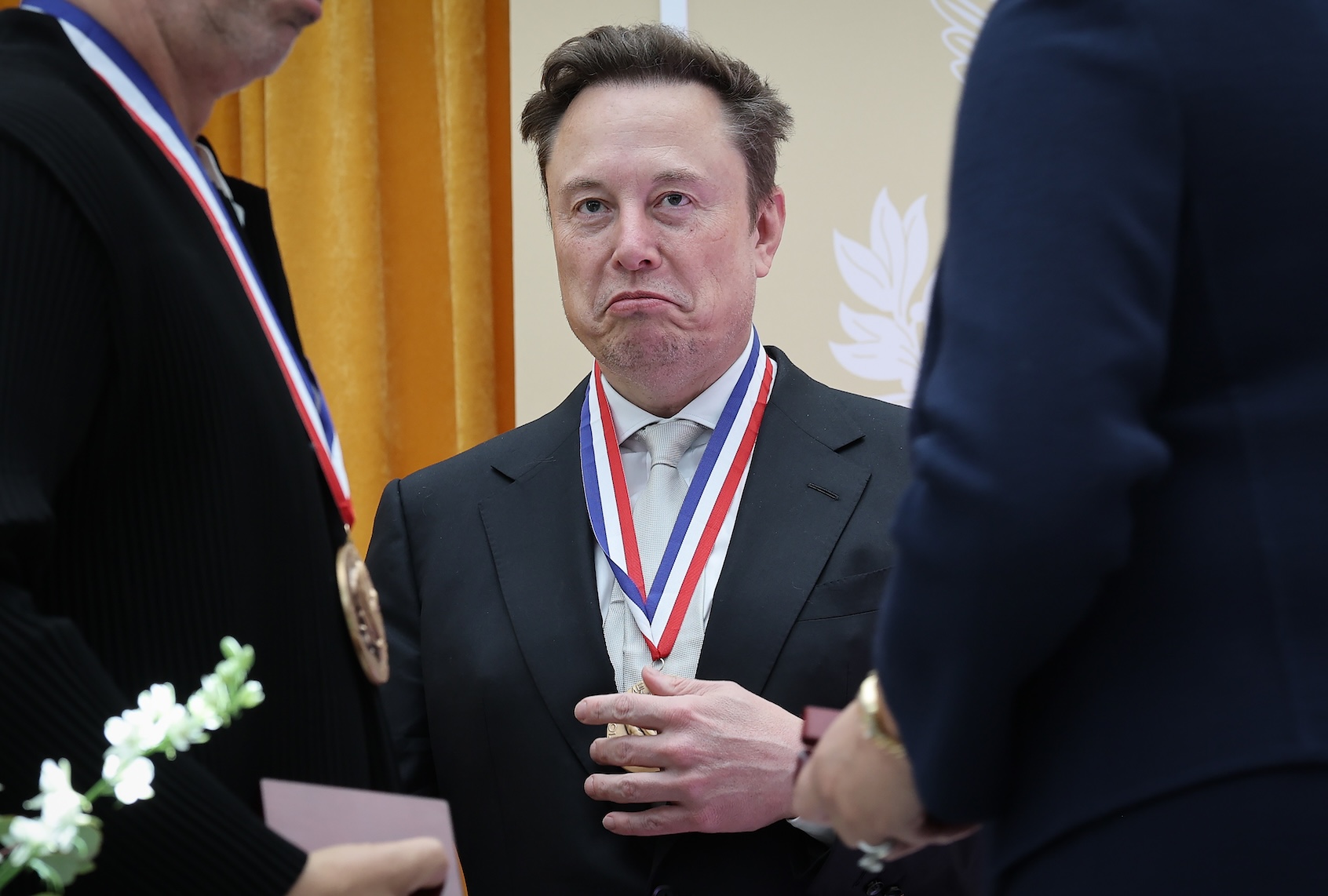
Lately, Musk and Trump are back to acting like close pals. It was hard not to cringe watching the president award Musk the National Medal of Science on Oct. 8, the highest honor the U.S. can bestow on a scientist or engineer. I was probably reading too much into it, but I sensed some awareness on Musk’s part that it was an empty gesture, unless inflating stock prices is a scientific achievement. But maybe the pageantry is meant to distract from how many government grants Musk has been awarded. According to multiple reports, Tesla and SpaceX basically would not exist without the government giving Musk’s companies wads of cash.
At any rate, Musk is now stepping in to try to save Trump’s allies in the midterms, dumping hundreds of millions into races, with Axios reporting he is “single-handedly keeping the Republican Party afloat in some of its most vital races.” So far, he’s spent some $366 million in pro-GOP midterm TV spots and other campaign efforts, with $276 million donated since July alone. No other known donor comes close to dishing out more funding. But for Musk that’s a relatively trivial amount, even though his fluctuating trillionaire status is currently hovering below the threshold for designation.
Some of Musk’s money went to his own super PAC, but a good chunk also to the Senate Leadership Fund and the Lone Star Liberty PAC, both of which are backing Texas GOP Attorney General Ken Paxton’s endangered campaign for the U.S. Senate against state Rep. James Talarico. Right now polling indicates that statewide election results in the Lone Star State are going to be extremely tight, with new data from the University of Texas/Texas Politics Project released Wednesday indicating Democrats are statistically tied in key races. It’s not just Talarico, who leads Paxton 50% to 47%, but Democratic state Rep. Gina Hinojosa holds a one-point lead over Republican Gov. Greg Abbott, which is effectively a tie. Trump is reportedly already searching for someone to blame if Democrats pick up their first Senate seat in Texas since 1988.
Across the country, other races indicate a high likelihood that Democrats will retake the House, while the Senate still looking like a tossup. With these numbers, Musk is likely to dump even more cash into the election before Nov. 3, but it increasingly smells like desperation. As Alex Gibney, director of the new documentary “Musk,” recently told Salon’s Melanie McFarland, Musk is “literally paying for political advantage.”
“He’s spending way more now than he did for the presidential campaign in 2024, and in part that’s to get more money for himself in the form of military contracts,” Gibney said. “But also, he knows that a reckoning is coming for him if the Democrats take over the House and the Senate, and there’s going to be a lot of investigations into him for corruption and abuse of power, taking our information, particularly possibly relating to DOGE, and doing God knows what with it.”
It remains to be seen if this midterm meddling will pay off for Musk. He got what he wanted out of the 2024 presidential election by propping up Trump’s campaign, but his attempts to financially sway results in other races haven’t worked. In 2025, Musk dumped more than $18 million into a Wisconsin Supreme Court race, hoping to suborn the state’s redistricting efforts and regulations of car manufacturers and dealers. His influence made it the most expensive judicial race in U.S. history, but that still didn’t get him the outcome he wanted.
Last Thursday, Musk settled a class action lawsuit alleging that his PAC had engaged in fraud in the 2024 presidential election by falsely telling voters they had a chance to randomly win $1 million when the winners were actually predetermined. He also dodged bribery charges in August for trying the same stunt in the Wisconsin Supreme Court election.
In the end, the results will all come down to voter appetites, and there are increasing indicators that the majority of Americans are fed up with the ultra-rich meddling in government. A recent Fox News poll indicates that corruption is the top concern among both Democratic and Republican voters, with 60% extremely concerned, a figure that outpaces inflation (58%), gas prices (50%), government leadership (49%) and healthcare (48%). Data from a Washington Post-ABC News-Ipsos poll released Sunday found roughly two in three Americans believe Trump is using the presidency to enrich himself, with most of the increase over the past year coming from people who lean Republican.
These numbers may indicate that people are starting to see through Musk’s ruse. He could probably pour even more money into politics, and probably will anyway, but there’s a glimmer of hope that it won’t accomplish much.
With Election Day 2026 just weeks away and control of Congress hanging in the balance, the results will almost certainly hinge on voter turnout, just as they did in 2024.
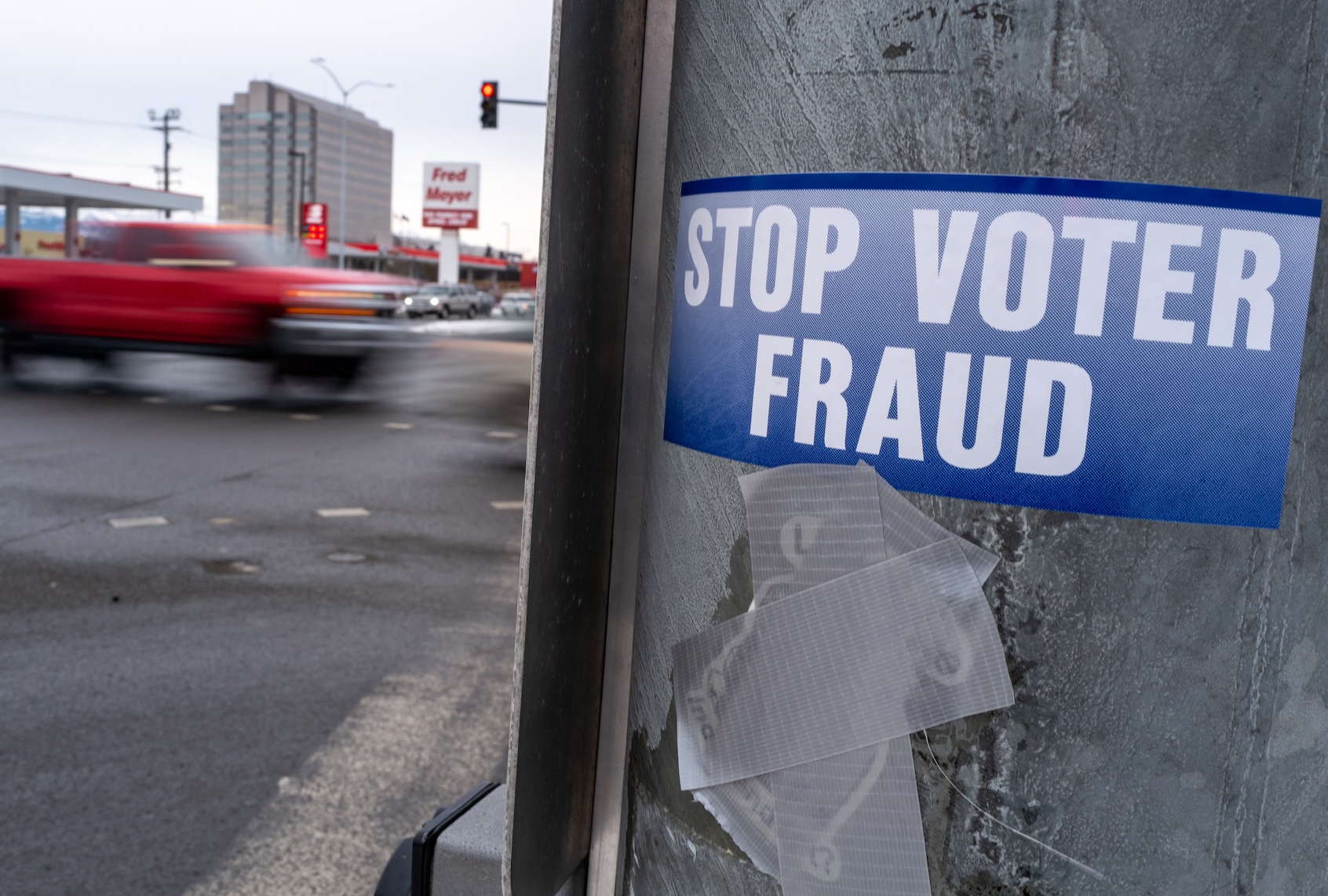
As a scholar of U.S. politics, I see this as a high-risk strategy for Republican candidates and American democracy. That’s because reduced trust in election integrity can reduce motivation to vote – even if based on flawed information. But it’s not at all clear which Americans are most likely to stay home in November.
Nonetheless, rhetoric from the Trump administration about voter fraud has been pervasive. Consider the recent claim by Homeland Security Secretary Markwayne Mullin that Nevada had nearly 16,000 noncitizens on its voter rolls – a number reduced to 185 when state authorities pressed for details, and reduced to zero when the state investigated the names provided.
There is comparable behavior from Congress. My own research on political communication has shown that a substantial number of members of Congress, strongly skewing Republican, make frequent use of rhetoric that undermines democratic norms and delegitimizes political institutions.
How does this uncertain political environment influence voters?
There is clear data showing that voter confidence in elections has fallen across party lines: Only 65% of Republicans, 64% of Democrats and 57% of independent voters are very or somewhat confident that the 2026 vote count will be reliable. Conventional wisdom suggests such discouraging numbers would depress turnout.
Any campaign’s quest to mobilize additional voters, therefore, must find them among citizens without a strong sense of civic duty. But among these people, diminished trust in democratic processes can play out in counterintuitive ways.
Recent research on German voters is relevant to the U.S.: It shows that among more passive voters – those following cues from political elites – reduced trust in elections can depress motivation to vote. That’s because there’s no trustworthy result that voters are seeking to affirm.
Conversely, among voters with greater skepticism about elite messaging, reduced trust can motivate increased turnout as an attempted corrective for a flawed system.
What does this mean for potential voters in the U.S.? Among Republicans, it appears that the party’s strategy carries a strong risk of backlash.
Findings from MIT’s Election Lab confirm that cues from political elites are a powerful factor in voter behavior. Specifically, cues setting expectations of a disappointing or untrustworthy result will reduce motivation. Why vote if you don’t expect it to help achieve the desired result?
The same study finds Republican voters broadly inclined to believe GOP leaders’ cues about voter fraud and to frame their expectations accordingly. And once they’ve made that shift, they cling firmly to the belief, even in the face of contrary empirical evidence or messaging from within the party.
In the current election cycle, 50% of Republicans surveyed distrust mail-in voting, and 51% fear voting by noncitizens. They expect election results to be fraudulent. This likely won’t mobilize them, as there’s no positive result they can expect to affirm. The Republican Party’s messaging has painted its voters into a corner.
Democrats, meanwhile, are less inclined to believe claims of voter fraud. But they are more inclined to be concerned about attempts to undermine the midterms by political elites making such claims. Examples include the Trump administration’s efforts to sow doubt about voting by mail and about alleged noncitizen voting.
These efforts increase motivation to vote among Democrats. Unlike GOP voters, they see the capacity to correct for the system’s vulnerabilities – the potential and urgency to overwhelm attempts at voter suppression through higher turnout.
An election integrity officer, in red, trains poll watchers at the Orange County Registrar of Voters in Santa Ana, Calif., on Nov. 1, 2022. Television monitors display what each employee is looking at on their desk for observers to watch. Paul Bersebach/MediaNews Group/Orange County Register via Getty Images
Truth and trust
Opponents of Trump and the GOP may find these diverging effects encouraging. No matter the results this November, however, we’re left with a precarious dynamic. Increasing numbers of voters lack trust in elections and make their decisions to vote – or not – based on limited or flawed information.
Fortunately, there are signs of hope.
Although voters in general are poorly informed about how elections are conducted, they can and do respond to clear information familiarizing them with election processes.
I’ve seen this myself over the years, working with nonpartisan efforts to register young adults and train them as poll watchers. And in the current election cycle, there have already been widespread efforts to broaden public awareness about the fact that state officials, not federal ones, have authority over voter rolls and election security.
Looking beyond November, what Americans can hope for is a cycle in which clear election outcomes provide an opportunity to inform voters of how and why the system works. That’s the way to motivate more political engagement and voter turnout in the future.
The leader of Spain’s conservative People’s Party, Alberto Núñez Feijóo, confirmed Tuesday that he is negotiating with the far right ahead of the Nov. 29 snap election to secure a majority in the Senate.
“Vox knows how far we can go; they know we have a sense of state,” Feijóo said Tuesday morning in an interview on Spanish radio station COPE, alluding to an alliance with the far-right party. “It would be a mistake to hand control over to Sanchismo,” he added, in reference to Pedro Sánchez’s Socialist government.
Feijóo, who is eyeing the premiership, said he was negotiating with Vox to coordinate Senate lists and counter a potential coalition between the governing socialists and other left-wing parties.
“We are going to continue talking to Vox with discretion and respect. If Vox is up to the task, the PP will also be up to the task,” he said, adding that the two parties were working on a deal to not compete with each other in key areas to ensure a conservative majority in the upper house of the Spanish parliament.
Feijóo’s comments echo those of Vox leader Santiago Abascal the day before: He said in a statement Monday he would negotiate with the People’s Party to prevent Sánchez from “stealing the elections,” accusing him of sowing “coercion and violence” to influence the vote.
“Sánchez’s alliance with the far left demands sacrifices from the opposition parties, and we remain willing to reach some kind of agreement that protects the Senate from the deals Sánchez has struck with the far left,” he said.
In a blow to the Socialist prime minister, the left wing has failed to unite ahead of November’s election, with prominent party Podemos opting out of a broad, joint ticket except in the Canary Islands and the Valencia region.
PARIS — Looting and rioting across France over the weekend are threatening to reshape the contours of the French presidential race.
Far-right front-runner Marine Le Pen is seizing on the crisis to cast herself as the candidate of law and order, but there are risks for her too. Many voters see her as a highly divisive leader whose 2027 victory would only deepen the societal fault lines exposed by the riots.
Far-left firebrand Jean-Luc Mélenchon, widely tipped to challenge Le Pen in the second round next year, is also treading carefully as rivals accuse him of encouraging the rage on the streets that has morphed into pillaging and arson.
For the flailing centrists, there is now an opportunity to finally make an impression in the contest — but only if they can distance themselves from President Emmanuel Macron, who is seen as fluffing his response to the nationwide wave of vandalism.
Overall, it’s pushing the election into uncharted waters.
“If there’s a real crisis, you don’t know where it could lead,” said one conservative who holds regular talks with officials from the far-right National Rally and was granted anonymity to discuss the subject.
Where does that leave the candidates? POLITICO takes a look at the strategic calculus for the leading runners across the political spectrum.
Marine Le Pen, on the up
Le Pen is receiving an immediate boost. Even her rivals admit it.
This Saturday’s unrest “benefits the far right,” said center-right European Member of Parliament Nathalie Loiseau. “They are circling around the violence like vultures,” she said in an interview.
Le Pen has already cast herself as the alternative president, delivering a sober address to the nation Sunday and pitching herself as the candidate of a “pacified France.”
Jordan Bardella, president of her National Rally party, upped the ante on the protests and pitched his party as the only one able to restore order, dialing up fears about the pillaging. The rioters “will soon be breaking into people’s homes,” he said at a press conference in Paris. “The authorities are collapsing.”
But excessive, prolonged chaos could backfire on a party long seen as instigating civil unrest. And the topic is already becoming a talking point inside the National Rally.
Marine Le Pen holds a press conference on the sidelines of a meeting of the Patriots for Europe in Brussels on Oct. 14, 2026. | Nicolas Tucat/AFP via Getty Images
“Some say that this shows that there will be riots if the National Rally comes to power,” said Charles-Henri Gallois, one of Bardella’s advisers. “But I don’t believe it.”
According to the conservative quoted above, periods of instability can lead the French to turn their backs on anti-establishment figures and prefer traditional veterans.
“You could end up with [Charles] De Gaulle on the Champs-Elysées,” the official said, referring to how the first president of the Fifth Republic emerged with extra powers after the 1958 crisis that roiled the nation.
Jean-Luc Mélenchon, on the defensive
Far-left leader Mélenchon is in a bind as he walks a tightrope between supporting protesters and distancing himself from violence.
The France Unbowed party supported the school protests in the run-up to last weekend’s riots, and far-left elected officials have played a prominent role in the blockades, either in decrying alleged police violence or in support of the protesters.
In the battle for leadership between Mélenchon and center-left MEP Raphaël Glucksmann, the former grabbed the limelight.
Jean-Luc Mélenchon is pictured during a demonstration in Paris on Oct. 17, 2026. | Augustin Pasquini/Hans Lucas/AFP via Getty Images
But the violence this weekend could end up marginalizing the far left, especially with the government and political rivals accusing them of fueling the unrest. “They tried to aggravate the situation,” Loiseau said.
On Monday, Mélenchon tried to turn the tables, firing back at the government, saying the prime minister was fomenting “disorder” with his accusations that ultra-left groups were trying to disrupt the election.
Edouard Philippe, looking for a reset
For the center-right presidential hopeful Philippe, the riots aren’t good news either. He has to work hard to distance himself from his old boss, President Emmanuel Macron, who is seen as failing to respond sufficiently to the crisis. (Philippe was Macron’s first prime minister.)
But the protests could also be his opportunity to show some character, and rebut critics who think his campaign lacks energy and panache. Philippe, the best-placed centrist candidate to beat the far-right, has seen his poll ratings stall in recent months and has struggled to cut through the campaign noise.
Edouard Philippe gives a speech in Paris on Oct. 14, 2026. | Dimitar Dilkoff/AFP via Getty Images
A break with Macron might just be what he needs.
Philippe came out hard against the president after he failed to announce any measures during his primetime television address Sunday. “I would have preferred… decisions and initiatives to restore order,” he wrote online. “This country needs someone in command.”
But the former PM will need to stick his neck out more if he’s going to make an impact.
“He’s very presidential, and it’s a posture that suits him,” said one of Macron’s ministers, who, like others cited here, was granted anonymity to speak candidly.
“But he’s not saying anything. What’s his measure? Why doesn’t he say we need to call a state of emergency? “
Raphaël Glucksmann, on the offensive
For the MEP Raphaël Glucksmann, the protests are a trial by fire after he won the Socialist Party primary contest earlier this month and became the center-left’s presidential candidate.
On Monday, Glucksmann tried to strike a very different note from Mélenchon, telling reporters that “it’s unbearable … that hordes of looters should attack symbols of the state.”
Raphaël Glucksmann speaks in Paris on Oct. 11, 2026. | Benjamin Vodant/Hans Lucas/AFP via Getty Images
Sensing a chink in the far-left leader’s armor, he accused the leader of France Unbowed of being “a springboard” for Le Pen, who would be “the beneficiary of the chaos.”
Glucksmann has seen his poll ratings go up since he won the Socialist Party primary outright, reaching 15% to 16.5% according to a recent Elabe poll — in a similar territory to Mélenchon and Philippe.
But the minister quoted above expected Glucksmann to peak soon.
“He can only take voters away from Mélenchon,” the minister said. “A left-wing voter may vote for the right, but a right-wing voter won’t vote for the left anytime soon,” the person said.
Emmanuel Macron, on the skids
Macron is being roasted for going on television to address the nation and announce … absolutely nothing.
On Sunday, Macron promised that rioters who “destroyed” things would have to pay the price and called for “clear answers” on why the protests turned violent.
“Fucking hell, it’s rubbish,” said one former senior government official.
Macron has cultivated an image of being above the fray and went on a trip to the Middle East on Monday. But his failure to respond to the violence risks damaging his final months in power. “It’s out of touch,” a regional official said.
According to the minister quoted above, Macron should have let his prime minister do the talking but instead was encouraged to make “a speech to calm” the situation.
On Monday, Prime Minister Sébastien Lecornu tried to get a grip on the situation, announcing localized curfews, movement restrictions, and bans on public demonstrations.
But another day of demonstrations has already been announced for next Saturday, sparking fears the protests will snowball into sustained protests similar to the Yellow Vests movement in 2018 and 2019.
If so, this chaos will be a defining element of the 2027 campaign.
The Trump administration is ramping up its efforts to flush out noncitizen voters with next month’s midterm elections approximately two weeks away. On Monday, the Department of Justice filed criminal charges against more than two dozen green card holders in California, accusing them of illegally registering to vote or casting fraudulent ballots. The 28 defendants are lawful permanent residents with legal status in the country but are not citizens permitted to vote.
Noncitizen voting is incredibly uncommon, according to data on the issue, and has not been shown to influence the results of races. Not only does the practice create a paper trail, it carries steep penalties. “Federal law prohibits non-U.S. citizens from registering and voting in Federal elections; violators are removable and face up to five years in prison,” Citizenship and Immigration Services acknowledged in an October 2024 letter. “The evidence is clear that these laws are working as intended — it is extremely uncommon for noncitizens to vote in Federal elections.”
That hasn’t stopped members of the Trump administration from upholding the recent DOJ arrests, dubbed Operation Protect the Vote, as evidence of cheating in the midterms. “This causes real damage to real elections and real damage to American citizens,” Trent McCotter, the acting deputy attorney general at the DOJ, said during a Los Angeles news conference.
The arrests come less than a week after the DOJ sued California and sent officials a list on an USB drive and a handwritten password, demanding to know who on the list was a citizen or not with only a 48-hour window to respond. Dean Logan, the Los Angeles county clerk and recorder, told The Guardian his office refused to review the list, in part because they didn’t consider the USB drive to be secure. “The Department of Justice has not provided the underlying evidence, source, or methodology supporting its assertions that individuals identified in its records are ineligible to vote,” Logan said in a statement.
“If the regime truly believed California had an illegal voting problem — no such problem exists — they would have taken this action a long time ago, not as Californians are literally casting votes,” State Sen. Scott Wiener, a Democrat, posted on X. “This is all a political stunt to trick people into voting for Prop 39 (which will make it harder for citizens to vote) and to lay groundwork for a coup on January 3 by refusing to seat House Democrats based on bogus “voter fraud” claims.”
Prop 39, also known as the “Voter Identification, Citizenship Verification, and Registered Voter List Administration Initiative,” is basically a voter ID law. If passed, it would, among other things, require voters to present a government-issued ID for in-person voting or provide the last four digits of a government-issued ID designated during voter registration for mail-in voting.
Claims of voter fraud and noncitizen voting are not new to the Trump administration. It was a strategy that Donald Trump explored in his 2024 presidential campaign, but it was largely dropped once he defeated Vice President Kamala Harris and it became unnecessary to use. David Becker, the executive director of the Center for Election Innovation and Research. “You can absolutely bet if Trump loses, he will claim there was widespread noncitizen voting without any evidence whatsoever,” Becker told NPR in September 2024. “And that is going to incite anger and potentially violence.”
PARIS — French Prime Minister Sébastien Lecornu said he has instructed local authorities to enact “partial curfews” Monday evening to prevent scenes of rioting and looting like those seen on the sidelines of mass protests over the weekend.
The measure is intended to “protect people, as well as property and businesses,” Lecornu said. The curfews should be “partial” and “localized,” he added, since the destruction is taking place in specific areas and not at a nationwide scale.
Junior minister Jean-Didier Berger told French broadcaster BFM that this could mean restricting nighttime access to specific streets or areas with a high concentration of businesses. A “special support fund” will be set up to provide financial assistance to the estimated 3,000 local businesses affected by the weekend’s unrest, according to France’s minister for small business, Serge Papin.
Lyon, Nice and Lille issued curfews on Monday evening, while Paris instituted a partial curfew and a ban on protests, both of which affected only some neighborhoods. Coulaine issued a curfew affecting only minors.
Those announcements came after an emergency meeting at the French interior ministry following scenes of widespread chaos that played out across France on Saturday. While President Emmanuel Macron attempted to reassure a worried public with a primetime address Sunday night, the speech was widely panned across the political spectrum as insufficient. Interior Minister Laurent Nuñez submitted his resignation in the aftermath of the weekend’s unrest, but Macron refused to accept it.
The government is now scrambling to bat down allegations that it has mismanaged the affair and stop it from snowballing into a sustained movement like the Yellow Jackets of 2018 ahead of the spring presidential election, which far-right leader Marine Le Pen is favored to win.
Saturday’s demonstrations saw teachers and students, who have been blockading schools for weeks demanding more funding for schools, join forces with those upset about the rapidly rising cost of living — and while hundreds of thousands of people marched peacefully, violent incidents were observed in some of France’s largest cities, including Paris.
A website claiming to represent the Yellow Jacket movement launched calls for more protests this coming Saturday, and the country’s main unions are organizing strikes and protests on Nov. 5 in opposition to the government’s proposed budget, which includes €43 billion in savings.
While high schools are currently closed for holidays, some students are still protesting. The Louvre museum was closed due to a strike movement from students at an art history university located inside the palace.
Exactly who was responsible for the weekend’s destruction remains a point of debate. While foreign leaders like U.S. President Donald Trump and Hungary’s Péter Magyar have, without evidence, pinned the rioting on immigrants, Lecornu and the government have pointed the finger at so-called “ultra-left” movements, citing analysis by French intelligence services. Paris prosecutor Laure Beccuau told TF1 on Monday that she “absolutely [could] not confirm” the government’s analysis based on the profiles of those arrested and placed under investigation in the French capital so far.
Lecornu and right-wing politicians have also accused far-left presidential candidate Jean-Luc Mélenchon, who is popular with young voters and vying for second place behind Le Pen in the polls, of playing an “important role” within a “far-left network” driving the unrest.
Mélenchon has repeatedly supported student protesters and denied allegations of responsibility for violence, blaming the government for the current situation and accusing the security services of deploying disproportionate force against minors. He and representatives of other left-wing parties participated in Saturday’s peaceful protests and condemned the widespread looting. He challenged Lecornu to provide proof of his accusations, “otherwise, let him apologize, shut up, and stop stoking disorder as he is doing.”
Lecornu also said he will convene a meeting with party leaders and presidential candidates to discuss how to ensure campaign activities, such as rallies and visits across the country, can take place safely — and also hear their proposals for reforming French policing tactics, which have come under increased scrutiny.

 Login