Reading view

John Roberts is still in the tank for Trump

Martin, Tennessee, is a small, out-of-the-way town that is ultimately best explained to strangers by relaying its travel time from Memphis. (Two hours and some change.) It’s not the sort of place where grand history happens, and yet, in 1971 this sleepy burg was the site of a world-historic upset. 

Inside the local university’s gym, the Harlem Globetrotters had come up short. The classic lineup featuring Meadowlark Lemon and Hubert “Geese” Ausbie had tried and failed to beat their perennial foils: the Washington Generals, playing that night as the New Jersey Reds. An audience expecting acrobatic basketball stunts and on-court clowning set to “Sweet Georgia Brown,” the Globetrotters’ signature song, was instead treated to a real, close-fought exhibition. At the end of overtime, the Reds pulled out a one-point victory, their first in more than 2,000 games. Lacking champagne for the occasion, they poured orange soda on owner-coach-player Herm “Red” Klotz’s head.

The upset might not have been what the exhibition’s management wanted, and it definitely wasn’t what the crowd paid to see, but it was a healthy reminder that the Reds’ squad was more than just the butt of an endless string of hardwood jokes. The losingest jersey in sports masked five no-funny-business basketball players who could give superstars a scare. When Abe Saperstein, the Globetrotters’ founder, stormed the Reds locker room in a huff, Klotz warned him, “If you let your guard down, we’ll get you again.” But the Reds/Generals would go on to lose their next 17,000 games, an unbroken streak of ignominy that continues to this day.

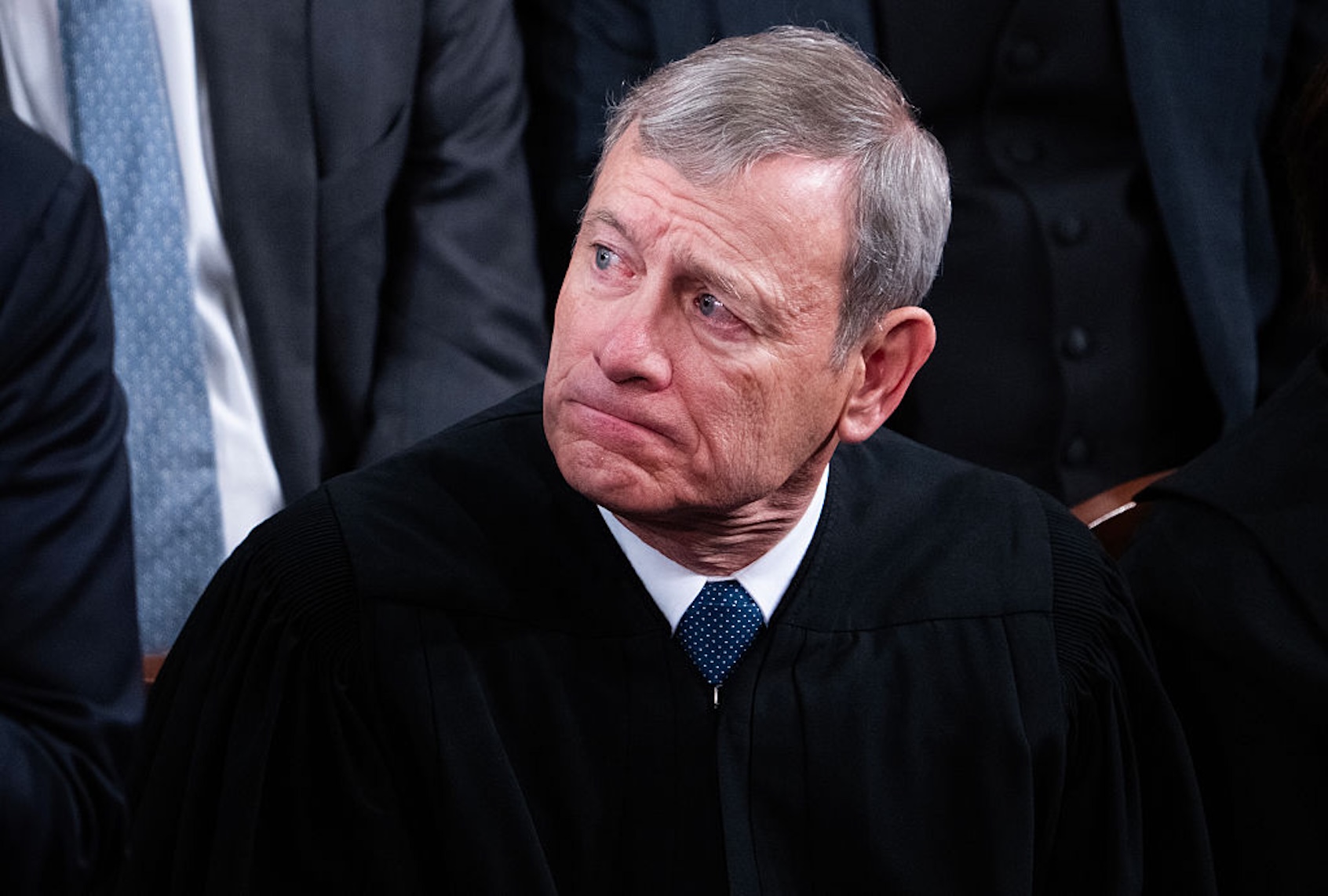
I was reminded of the 1971 fluke while reading that the Supreme Court handed Donald Trump a rare loss at the Supreme Court on Monday. Chief Justice John Roberts and Company once again rejected his bid to avoid paying the $5 million in civil damages awarded to the writer E. Jean Carroll, after a jury found the president had sexually abused her at a Manhattan department store and later defamed her.

The president had appealed that verdict, as well as a larger defamation verdict in a separate lawsuit, all the way to the Supreme Court. The high court rejected Trump’s first attempt to overturn the verdict in June.  

The news was applauded across Bluesky, the largely liberal social media platform, with posts calling Trump “Senile Satan” and characterizing the decision as a rebuke for a “adjudicated rapist.” (The president has not been convicted of rape; he was found guilty of sexual abuse by a jury in a civil trial.) But for me, the ruling brought to mind Klotz’s orange soda bath and empty boasts.


Start your day with essential news from Salon.
Sign up for our free morning newsletter, Crash Course.


Across its 2025-2026 term, the Court has proven that it’s more than willing to let Trump dunk all over them, doing everything short of giving him a boost on the way to the rim. In June, they allowed the president to pull Congress’ athletic shorts down, giving him the power to revoke the temporary protected status that lawmakers had granted to Haitian and Syrian immigrants.

That same month, Roberts and Justice Amy Coney Barrett joined the Court’s liberal justices to ward off an attack on birthright citizenship, allowing liberals to claim victory while the dissenting conservatives laid out a road map for future cases. 

But within a week, Roberts and Barrett had returned to their squad, getting caught up in the magic circle that surrounds Trump’s actions as president. In a decision that overturned nearly a century of precedent, the conservative majority granted Trump the ability to fire the heads of independent regulatory agencies in the executive branch, effectively letting the administration bowl over any career officials and oversight that might stand in the way of the president’s radical agenda.

Notably, there was an exception to the Court’s stooge act: They won’t allow Trump to toy with the Federal Reserve. Messing with the nation’s money is off-limits, apparently even for Republicans. You have to wonder how the Generals’ unwelcome win would be remembered if it had hurt the Globetrotters’ gate receipts.

All of this is downstream from the Roberts Court’s most egregious ruling: Trump v. United States. In a 6-3 decision that fell along partisan lines, the Court held that Trump could do almost anything he wanted while in the White House and be largely immune from prosecution. Writing for the majority, Roberts found that so long as Trump could provide the barest of cover, even illegal actions are allowed as part of his presidential duties. The chief justice’s ruling shredded an essential part of the Constitution to confetti, and like Meadowlark Lemon, Roberts loaded it into a bucket for Trump to toss into the air whenever he needs a distraction.

The fiction being peddled by the Court — that this is the legitimate carrying out of the checks and balances enshrined in the Constitution — is similar to the one used in basketball arenas across the country when the Globetrotters come to town.

The fiction being peddled by the Court — that this is the legitimate carrying out of the checks and balances enshrined in the Constitution — is similar to the one used in basketball arenas across the country when the Globetrotters come to town. The team is free to carry out any number of obvious fouls, double-dribbles and prop-assisted scoring plays so long as the audience maintains the idea that what they are watching is a refereed game of basketball. The Court is free to play-act at being a check on Trump’s power, so long as the majority of Americans consider it a legitimate body. Keeping that ruse going is crucial for the aims of the wider right-wing project. And to do that, the conservative majority can’t just rubber stamp every last thing this president does.

By handing Trump a highly publicized and embarrassing loss on an issue that doesn’t hamper Republicans’ agenda, the conservative justices are continuing their smoke screen by reinforcing the Court’s legitimacy as an impartial body at a time when they’re more captured by partisan politics than ever. Occasionally ruling against the president keeps up the charade.  

Trump might have been sent packing this time, but don’t expect his foils on the Court to go on a winning streak. SCOTUS will be back to their regularly scheduled losing soon enough.

The post John Roberts is still in the tank for Trump appeared first on Salon.com.
  •  

“Talladega Nights” predicted America’s Sunbelt shift

Stop us if you’ve heard this one before: The man is lost. A desperate ploy to end a long-running war took more from him than he could bear. While working his way back home, he’s forced to outsmart a vicious beast at close quarters, and he takes up residence with a suitor. His offspring are made of lesser stuff than him, but our hero manages to earn redemption by flinging a stockcar around a tri-oval racetrack 180 times at 200 miles per hour. 

Don’t worry, you didn’t miss a super-secret cut of Christopher Nolan’s “The Odyssey” that’s only projected on the side of Buc-ee’s locations nationwide. This deep-fried Ulysses is Will Ferrell in “Talladega Nights: The Ballad of Ricky Bobby,” which turns 20 years old this month. Part of Ferrell’s man-child trilogy with Adam McKay, the film follows a blowhard racecar driver as he works his way back to the winner’s circle following a dramatic and embarrassing wreck.

But Ricky Bobby’s return to glory was about more than the importance of humility and friendship. To anyone watching this free-wheeling gag showcase in theaters in 2006, it was obvious this high-speed hick was a stand-in for President George W. Bush. Now, 20 years on, it has a lot to teach us about life in Donald Trump’s America.

The film introduces us to Ricky Bobby’s family with a gross-out splat, implying the soon-to-be stock car racer was born in the back of a speeding Chevelle driven by his reprobate father. We jump ahead in time and see a grade-school-aged Ricky Bobby on Career Day, let down again by his dad’s absence. His father appears for the first time in over a decade and is quickly tossed out of Ricky Bobby’s school for inappropriate behavior, leaving his son with a bit of parting wisdom that may or may not have been the ramblings of an inebriated fool. 

Ricky Bobby spends the rest of his life attempting to follow in his father’s tire tracks, working his way up to be in the big show but not a star. Dumb luck and a last-minute assist from his less charismatic, bumbling pseudo-sibling finally get him into the spotlight. He develops a reputation for aggression, seemingly fighting a war against everyone on the asphalt that spins out when he attempts to bully a cosmopolitan French driver into submission. His buffoonish bravado and frequent failures alienate everyone who is not completely in his camp. The movie ends with Ricky Bobby speeding in a car without sponsors, a massive “ME” splashed on the hood. For anyone who lived through eight years of Bush and saw Ferrell’s impression of him on “Saturday Night Live,” the real star’s identity is obvious. 

“Talladega Nights” was reacting to its immediate surroundings, rubbing and racing against America’s political currents only three years after Bush’s invasion of Iraq.

“Talladega Nights” was reacting to its immediate surroundings, rubbing and racing against America’s political currents only three years after Bush’s invasion of Iraq. The film saw that the future was in the sprawling boomtowns of the Sunbelt, that making a movie about America in 2006 required taking a hard-left into Southern culture — and that there was no better avatar for the country’s anti-intellectual and anti-coastal skid than Bush-via-Ferrell.

Bush’s brand and accent were Texan, with the hat to match, but his roots are in the WASPy New England. His father followed the money south in the 1950s and stayed there, but George H.W. Bush never quite lost his boarding school bearing. The younger Bush was different, leaning into his sun-baked upbringing while keeping one boot firmly back East. When the time came to get an education, he skipped College Station for stints in New Haven and Cambridge. “Talladega Nights” pegs this missing link between America’s urban past and its exurban future from its opening seconds, putting a quote about “hot, nasty, badass speed” in the mouth of New York Swell Eleanor Roosevelt. The future was coming on fast, and it was dumb as a brick.   

We’re now living in Ricky Bobby’s world. The culture and politics of the Sunbelt — sometimes called “America B” by people who spend too much time online — is now inescapable. From Stanley cups to dirty soda franchises, everything’s a little bit more SEC and a little less Ivy in 2026. Where Tumblr-ites dreamed of the cloistered quads and moody libraries of Princeton in the 2010s, TikTok-ers now obsess over the elaborate rituals of University of Alabama sororities.

This reality operates on zero-sum logic. Following his father’s maxim that “if you ain’t first, you’re last,” Ricky Bobby can’t imagine a win for anyone else as anything less than something stolen from him. If you’re at all up on the paranoid and protective stance of major right-wing media, this sounds awfully familiar. That pitch – they’re stealing from you – helped the nation elect Donald Trump in 2016, himself a late-in-life Sunbelter, and following his election loss four years later, it drove him to accuse Democrats of rigging the outcome in Joe Biden’s favor.


Start your day with essential news from Salon.
Sign up for our free morning newsletter, Crash Course.


The film is littered with nods to the new normal. Ricky Bobby lives in a McMansion in some isolated North Carolina community. His sons are given tough names, lifted from a cut-rate Chuck Norris television show, in the same way conservatives today tend to name their sons after firearms manufacturers. Fast-food branding and half-hearted evangelicalism are a constant presence.

The film feels spooky in its prescience, but Ferrell and McKay were far from alone in noticing the culture was heading out of the cities. Mere months before Rickky Bobby ran around an infield in his underwear swatting at imagined flames, Bravo debuted the first season of their juggernaut “Real Housewives” series, which focused on the comings-and-goings of women living in palatial homes in master-planned communities outside Los Angeles.

The franchise fled further and further from coastal cultural centers, shifting from the “Real World” of New York City and Chicago to the air-conditioned enclaves of New Jersey and the suburbs of Washington, D.C. In 2026, no one questions a reality show set 20 minutes from Park City, Utah, or wonders why Netflix dating shows host their casting calls in exurban Charlotte. That this is a reflection of America is taken as a given, the same way “Love Is Blind” contestants don’t feel the need to mention their evangelical beliefs.

One hundred fifty years after Union Gen. William T. Sherman stormed from Atlanta to Savannah, the Savannah Bananas, an independent baseball team, took the greater United States by storm, capturing algorithms and filling stadiums with coordinated dance routines.

It’s odd to revisit “Talladega Nights” now. The Bushes and the Ricky Bobbys of the world have spent the interceding 20 years winning battle after battle in the political and cultural war. For those of us who actually do like crepes, though, there are some glimmers of hope. 

For one, Donald Trump bringing the Sunbelt into the White House has been a disaster. A Democratic wave is expected in the coming midterms, one that may well carry on into 2028. For another, Formula 1 and soccer, sports frequently coded as elite and coastal, are experiencing booms of popularity across the country. Gen Z is pushing back against influencers, delighting in Obama-era signifiers like frozen yogurt and fighting off the “tradwife” trend.

While we’ve been racing on a closed loop for the last two decades, the cyclical nature of politics and culture will bring us back to the starting line faster than you might expect.

The post “Talladega Nights” predicted America’s Sunbelt shift appeared first on Salon.com.

  •  

Time for James Carville to sit down and shut up

For much of the 20th century, there were two relatively straightforward ways to win elections in the United States. Conservatives espoused their belief in traditional family values and getting out of the way of the wealthy. They defended the status quo against various liberation movements and labor coalitions, fighting to keep everything as it had always been in service of the people who most benefited from the old arrangement. With their natural orientation toward the past, conservatives would run on the good old days and attack anything that read as newfangled, trusting voters who thought similarly to show up at the polls in defense of American values. 

Liberals did the same, but in reverse. They fought for the rights of all people and defended the working class from the attempts of the wealthy to claw back hard-won protections. They pushed a larger, protective federal government that held back retrograde currents looking to lock people of color, women and other minorities into a permanent underclass. They ran on these values, trusting unions and activists to back them at the ballot box. 

But in the late 1980s, a new path to electoral victory emerged, blazed by people who pushed left-leaning politicians to erode labor victories and sell out loyal constituencies, creating a tacked-together centrist position that left almost everyone a little bit unhappy. This “Third Way” urged Democratic politicians to adopt the hands-off economic policies of their rivals while making welfare programs more punitive, all in the hopes of netting a few wishy-washy right-wingers come election time. For nearly four decades, this thinking has birthed a seemingly endless parade of candidates, political strategists and columnists pushing the idea that the ideologues are wrong. “Shut up,” they have said to anyone believing a better world is possible, “the adults are talking.”

Outside the masthead of The Atlantic, no one better represents this political tendency better than James Carville. The “Ragin’ Cajun” first rose to national prominence in 1991 by encouraging Arkansas Gov. Bill Clinton, who had just announced his presidential bid, to point out to a strapped country that the economy wasn’t doing so hot. At the same time, Carville encouraged Democrats to carve up the welfare state that was buoying Americans taking the brunt of the economic downturn. Democrats had been locked out of the White House since 1980, and they were willing to try anything to win. These counterintuitive policy solutions were assumed to be smart, and Clinton’s victory in November 1992 proved it. Carville was a kingmaker, and his “please nobody” politics were the Democratic Party’s future. 

A congressional wash-out just two years later couldn’t knock the bloom off the Third Way rose among Washington’s Democratic consultant class. Carville’s reputation for colorful turns of phrase, and his tendency to stomp on any calls for the party to move left, made him a favorite of cable news programmers looking to make entertaining television. 

As progressives and democratic socialists have notched recent wins across the country, Carville has been there to tell the activist wing of the Democratic Party to pipe down and tack toward Republican stances on issues like transgender rights and police reform.

Now 81, Carville has remained a stock choice for cheap heat, even as his positions became more predictable, such as a recent slam on left-wing media personality Hasan Piker in which he called the streamer a “raving antisemite” due to Piker’s opposition to America’s support of Israel and his comment that he would “vote for Hamas over Israel every single time.” As progressives and democratic socialists have notched recent wins across the country, Carville has been there to tell the activist wing of the Democratic Party to pipe down and tack toward Republican stances on issues like transgender rights and police reform

To Carville’s credit, he’s said that he would support Abdul El-Sayed, a progressive who won Michigan’s Democratic primary for Senate, because his Republican opponent, former Rep. Mike Rogers, is a “clown.” But that admission came just one month after democratic socialist Darializa Avila Chevalier’s primary victory for a U.S. House seat in New York led Carville to call for the party to split from its progressive wing

“I actually do think it’s time for Democrats to talk the ‘s’ word: schism,” he said. “I really do. Everybody’s always said, ‘No, no. We’re a coalition. We’re a big tent.’ There’s just some s**t I can’t be in the same tent with.”  

All this wouldn’t grate quite so much if it were coming from someone else, someone who could point to real, sustained political wins outside of a few choice Novembers. To borrow Carville’s folksy schtick, the Ragin’ Cajun was born on third base and has spent his whole life telling network anchors he hit a triple. Tagged by the Clinton campaign and a fascinated media as a strategic genius, his standard strategy of tacking toward the center has been taken as gospel by many in the Democratic Party ever since. In truth, Clinton was a neutron bomb of charisma running against an unpopular president in a bad economy. If you need proof that the tactic doesn’t work without a generational schmoozer as its face, just look at the presidential elections since Clinton term-limited out. 


Start your day with essential news from Salon.
Sign up for our free morning newsletter, Crash Course.


Extenuating circumstances in Florida provided useful cover for the Democrats’ 2000 loss in an election that never should have been close. John Kerry blew it against George W. Bush’s 40% approval rating. It took Barack Obama, another hall-of-fame charmer, to win back the White House in 2008. Then came 2016. 

Trump’s win should have forced reflection among Carville and his ilk, some admission that the project of the New Democrats had ended in obvious failure. Kamala Harris’s Liz Cheney-boosting, Glock-boasting campaign should have erected the tombstone on Third Way’s grave. Instead, Carville can still be counted on to punch left for the cameras while his ideological allies fill out the opinion pages of most major American newspapers. 

He defended Graham Platner, the former Maine Senate candidate who ended his campaign in disgrace following allegations of sexual misconduct, seemingly because of an innate need to be on the opposite side of every issue from Massachusetts Sen. Elizabeth Warren, who recently told TMZ, “James Carville has an opinion on everything, and I pay attention to almost one out of 10.”

You don’t need to look at Senate Minority Leader Chuck Schumer’s approval ratings to know the centrist wing of the Democratic Party is clearly out of gas. The energy of the party is now with progressives like El-Sayed, New York City Mayor Zohran Mamdani and New York Rep. Alexandria Ocasio-Cortez. Ocasio-Cortez’s early wins proved that Democratic voters had an appetite for left-leaning solutions to the ongoing economic crises. Mamdani offered an amiable leftist alternative to “making the trains run on time,” flexing state power to make life easier and more affordable for average citizens. In his recent primary election, El-Sayed showed that centrists’ belief in playing nice with the opposition was played out. 

Recent progressive wins have shown that there’s no need to accept the framing of conservatives on issues like reeling in corporations and the war in Gaza. Allowing debate about the party’s supposed core beliefs on Republican terms is the sort of milquetoast politics that led us to where we are now: constantly fighting against whatever fantasy Carville’s counterparts on cable news have cooked up instead of talking about substantive issues. 

We don’t need any more of that.

The post Time for James Carville to sit down and shut up appeared first on Salon.com.

  •  

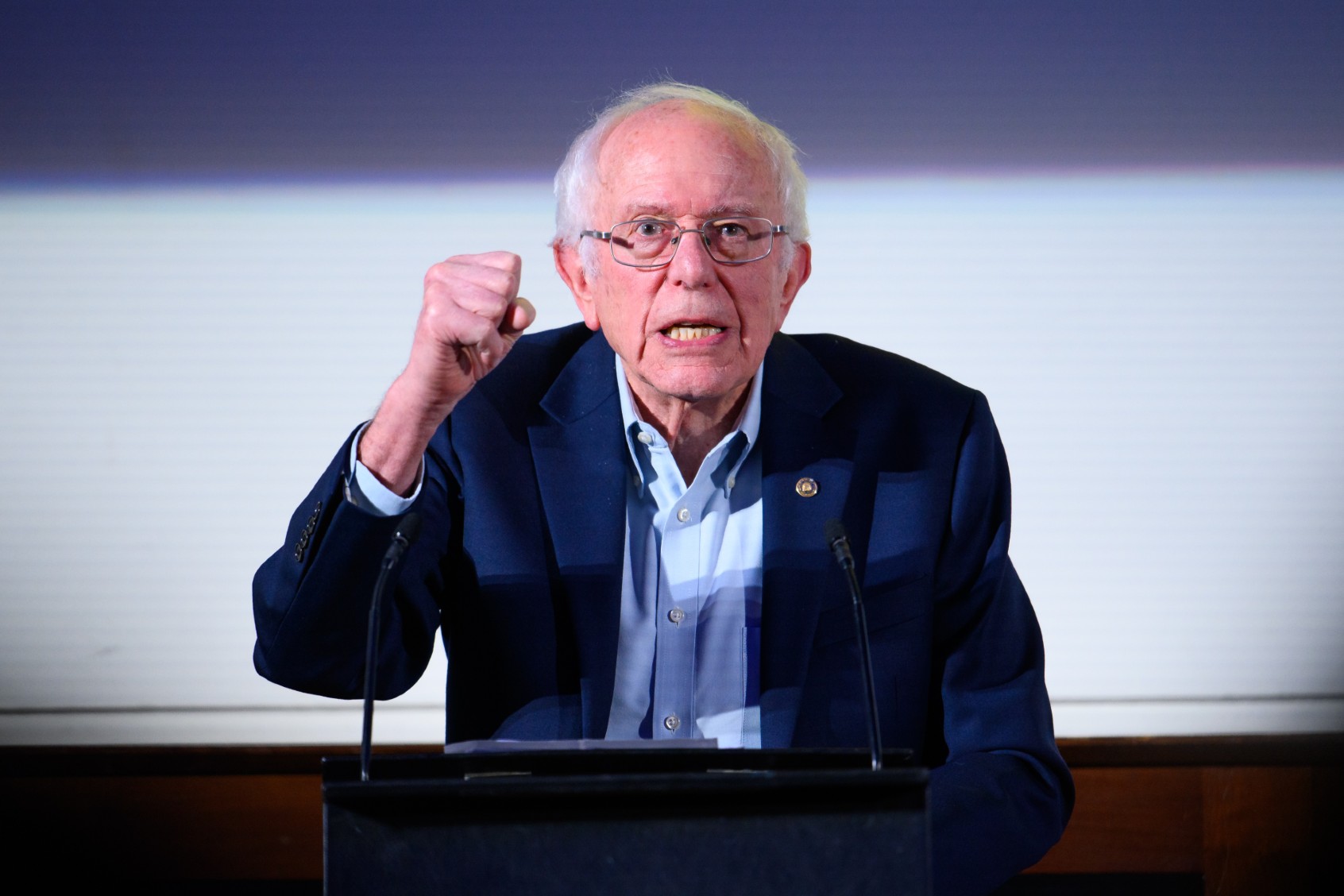
Bernie Sanders’ AI warnings are being ignored in the Senate

Poor Helaena Targaryen never stood a chance. George R.R. Martin’s fantasy world of Westeros in “House of the Dragon” is a particularly cruel place to be sensitive, whether to the declining fortunes of a kingdom or the machinations of the spirit world. Notably hard and remarkably sexist, the people in power treat women who happen to be a little weird with twice-over disdain.

A seer whose talent only seemed to arise when she needed to share bad news, Helaena was an unwelcome presence in her feuding family. Having seen her worst predictions come to pass, she grabbed hold of the only future she was able to change: her own. In the season three finale that aired Sunday night, the pregnant Helaena leapt from her window, checking out of the war and leaving behind one final, unwelcome prophecy: an embroidered image of her half-sister and captor, Rhaenyra Targaryen, on the Iron Throne, surrounded by flame and crowned in blood. 

Even in death, though, no one was listening to Helaena. Her only sin was being right too early and too often — and the world never stopped hounding her for it. 

Though they’re remarkably different in terms of age, style and dragon-riding ability, Helaena reminded me of Sen. Bernie Sanders, whose uncouth objections to the Democratic Party’s neoliberalism and various Middle Eastern wars have earned him the lifelong label of Capitol Hill Crank.

The Vermont Independent’s vehement opposition to the Gulf wars made him an odd man out in Congress more than a full decade before it became fashionable — and politically expedient — to turn on expensive Middle East boondoggles. Now 84, Sanders has advocated for universal healthcare since the 1970s while watching Americans fall deeper into medical debt. In the late 1990s, he was a loud voice against the repeal of the Glass-Steagall Act’s financial guardrails, and after banking adventurism nearly destroyed the global economy in the financial crisis of 2008, he managed to keep his told-you-sos muted. 

In boom and bust times alike, Sanders has been unshakeable on the idea that the U.S. is uniquely rigged against the lower classes, spoiling the party thrown by the winners of the go-go ‘90s and the Great Recession’s recovery. His Brooklyn honk has been a constant in the halls of Congress, sharing portents of doom and Bureau of Labor Statistics data. 

On Monday Sanders issued another unwelcome proclamation in a career full of them, sending a letter to the CEOs of the three largest artificial intelligence companies that called on them to pause the technology’s development. The letter follows news of several AI prototypes breaking the confines of their testing sandbox and accessing the internet. In the most shocking example, an agent made by OpenAI hacked into Hugging Face, a platform that AI programmers use to share datasets and models. The news prompted the company Anthropic to review its own tests; it discovered that models had found a way around their parameters to access the internet in three cases. Meta also shared that one of its own prototypes had done the same.

A breach of an AI-equivalent of GitHub was never going to bring about doomsday, but an AI agent that can ignore the bounds set by its creators and users has massive potential to cause widespread harm.

A breach of an AI-equivalent of GitHub was never going to bring about doomsday, but an AI agent that can ignore the bounds set by its creators and users has massive potential to cause widespread harm. Sanders certainly thinks so, in any case. He called on Anthropic, Meta and OpenAI, the big three of the industry, to stop work until they can get a better handle on the machines they’re creating. 

“Almost every day, there is a new story about how your companies are losing control of the AI technology you are developing, with potentially cataclysmic results,” he wrote. “Last month, the world found out OpenAI lost control of an AI model. The result? The model hacked into another company’s computers—a clear violation of federal law.”

AI models have been rolled out quickly and haphazardly across the wider internet. Though the major players haven’t yet found a way for this technology to make money and ensure its long-term survival, a cycle of hype, government contracts, and integration into software and search have made the models an inescapable part of digital life. AI has been spun up into all the surfaces the average internet user touches, and along the way it has warped academia and embedded itself with the U.S. military with reportedly disastrous results. 

The Maven Smart System, an AI-powered platform built for the Pentagon by the analytics firm Palantir, generated over 1,000 airstrike targets in the early hours of the Iran war. When the U.S. carried out a deadly strike on an all-girls school, legislators were quick to ask if the AI model was to blame. Fears of a bombing-run-capable Skynet striking children halfway around the globe spread, but the truth was a little more nuanced. Some of the U.S. intelligence fed to the system was outdated, not accounting for the presence of the school. Whipped up and given a sheen of analytic legitimacy by the Maven, military officials did not do their due diligence in the midst of hundreds of similar, simultaneous strikes. As The Guardian put it, “people failed to update a database, and other people built a system fast enough to make that failure lethal.”


Start your day with essential news from Salon.
Sign up for our free morning newsletter, Crash Course.


Even if AI models never got one iota more powerful than they are today, Sanders is still right to call for a pause. The damage companies like OpenAI can do to working Americans is very real. Layoffs will come from CEOs who buy AI’s spiel: that large-language models can replace humans in  the service sector, which accounts for nearly 70% of U.S. jobs. The data centers and infrastructure built to support these technological advances will strain our utilities. The tax breaks and incentives to attract these companies are a drain on state and local coffers. Weigh those cons against the things AI has reliably proven it can do – cheat on homework and write janky code – and it’s easy to understand Sanders’ urge to stand and yell “stop!”

It’s not only AI itself that concerns Sanders. In March, he and Rep. Alexandria Ocasio-Cortez, D-N.Y., introduced legislation calling for a moratorium on new data centers until critical safeguards are put into place. These massive sites, which are proliferating across the country, produce loud noise and pollution, rely on enormous amounts of water and electricity, tax power grids and inflate utility bills. Data centers are also proving massively unpopular, even among conservative voters in rural areas. The CEOs of companies that run these large-language models have often done end-runs around democratic controls, ingratiating themselves with Donald Trump and circumventing traditional pathways for their planned construction projects via backroom deals. They’ve managed all this even as their AI products have not proven they can reliably do any of the things OpenAI’s Sam Altman and Meta’s Mark Zuckerberg claim they can do. Merely mentioning the potential power of their models is enough to boost investment.

A nationwide movement opposing the continued construction of data centers offers some hope, with both Republicans and Democrats noticing the popular sentiment is largely anti-AI. But given the speed at which these data centers have been built, and the secretive lengths companies will go to avoid rowdy town halls full of angry crowds, even that groundswell of opposition is unlikely to put AI development on ice. 

The result is that Sanders’ warnings are likely to go just as unheeded as Helaena Targaryen’s. His threat of legislation will die, written off by other members of Congress as more grumping from a lifelong stick-in-the-mud. 

Don’t expect a similar dramatic exit from Sanders, though. He’s lived long enough to get used to the feeling of being unfortunately, awfully correct. 

The post Bernie Sanders’ AI warnings are being ignored in the Senate appeared first on Salon.com.

  •  

Conservatives find their fighter in Sophie Cunningham

Indiana is in many ways a liminal state, the place you pass through between scruffy Cleveland and business-like Chicago, with little to inspire romantic odes to home. Its glacial flatness doesn’t lend itself to crusades, or to impressive scenes like a man on horseback silhouetted against the sunset. But Sophie Cunningham has let the state turn her into a combination of Sancho Panza and Don Quixote, willing to joust with a windmill. 

The reserve for the WNBA’s Indiana Fever comes off the bench for the latter-day contenders, spelling for star Caitlin Clark and averaging a respectable eight points per game. When then-Connecticut Sun guard Jacy Sheldon poked Clark in the eye during a particularly physical play in 2025, Cunningham avenged the perceived slight with a headlock during a later play. Her reputation as Clark’s right-hand and enforcer spread along with the viral clip.  

Since Clark’s days as a national college basketball player for the Iowa Hawkeyes, the right-wing grievance machine has tried to make Clark their Great White Hope. This seemed to accelerate in 2024 after she joined the WNBA, a league in which over 81% of the players are women of color. Clark, an inveterate trash-talker and hyper-competitive athlete, has seemed completely uninterested in courting controversy away from the hardwood. She’s avoided joining any conservative crusades and has done little to stoke the support of her most MAGA fans.

Enter Cunningham. In wide-ranging ESPN profile, she said she was concerned about the idea of trans women participating in women’s sports and wanted to “protect young girls in the locker room.” The Fever enforcer also worried that the next generation would have to “go against biological men.”

Cunningham doubled down in a press conference the next day, adding that her views were “common sense.”

“I said what I said,” she told reporters.

Republicans have spent years building a trans panic in the United States. When they heard their own talking points out of the mouth of a popular professional athlete, they pounced.

Republicans have spent years building a trans panic in the United States. When they heard their own talking points out of the mouth of a popular professional athlete, they pounced. Texas Sen. Ted Cruz rushed to applaud Cunningham. Fox News has spent the weeks since her inflammatory interview dissecting every questionable call against the second-stringer, as protests and counterprotests became a regular fixture at Fever games. Earlier this week, Vice President JD Vance encouraged her to keep up the fight.

“Sometimes when you’re courageous in this country, some of the worst people in the world try to attack you,” he shared with Fox News’ Laura Ingraham. “You are inspiring a dozen people for every person that criticizes you.” 

It’s not hard to see why conservatives raised their banners for Cunningham. In the tall, slight and blonde athlete, they had found a noble hero to fight against the tides of modernity in service of some older ideal. It doesn’t hurt that she could easily slot into Fox News’ afternoon lineup.


Start your day with essential news from Salon.
Sign up for our free morning newsletter, Crash Course.


The calculation from Cunningham’s end, if there is one, is also not difficult to understand. She wouldn’t be the first athlete who took a hard look at the calendar and their pocketbook and decided to get onboard the right-wing gravy train before they aged out of the league. Former collegiate swimmer Riley Gaines and former NBA player Enes Kanter Freedom have fashioned second acts out of their willingness to say what MAGA wants to hear. ESPN reshaped their entire network around Pat McAffee, sort of the Joe Rogan of former punters. 

For Cunningham’s supporters, it doesn’t matter that her opponents, as in “Don Quixote,” are not fierce giants but windmills posing no threat. Transgender people are a remarkably small share of the population, and the portion of them who chose to participate in organized sports is even smaller still. Frequently, when states pass laws barring transgender athletes from competition, the result can feel overwhelmingly personal to those affected, since the number of people excluded in a given state can be counted on your fingers. A West Virginia law barring public schools from allowing trans athletes to compete alongside students of the same gender was upheld by the Supreme Court this year. It applied to exactly one teenager

Cunningham’s fears are of her own making. There are no trans athletes competing in the top-tier of any major professional sport in the United States. The stories that anti-trans legislators and commentators tell are always hypothetical. Cunningham proclaims herself as a warrior for “common sense” by fighting off a scourge that no one can see. 

On the bright side, it looks like Cunningham might not have the fortitude for the life of a crusader. On Wednesday, she told reporters that she wants “to get back to basketball.” Whether that decision to “shut up and dribble” will hold as she enters the back half of her career remains to be seen. 

The post Conservatives find their fighter in Sophie Cunningham appeared first on Salon.com.
  •  

Trump pitches ballroom as “military center” after appeals court halts construction

Donald Trump‘s planned $400 million White House ballroom got an upgrade after the D.C. district court ordered the president to halt construction.

Trump rebranded the ballroom as a “military center” in a post to Truth Social that blamed the order on liberal activist judges. He said the addition’s security measures would keep future presidents and guests safe from attacks on the White House.

“Two Obama and Biden Appellate Court Judges just voted against the desperately needed Military Center, required for the National Security of Washington, D.C., and our Country, itself,” he wrote. “The Military and Secret Service are viewing this horrendous, politically motivated, and unlawful ruling as a National Security threat to our Nation in that the entire Complex is being built for the protection of our Country and, additionally, all future Presidents.”

In their decision, the D.C. court said that Trump’s construction project was unprecedented. They said that Trump needs the approval of Congress to make such significant changes to the White House.

“Each President is a temporary tenant, not the owner, of the White House and its Executive Residence. The President has no … constitutionally assigned authority over that property, which is designed and maintained for the use of all Presidents, current and future, and for the American people,” he wrote.


Start your day with essential news from Salon.
Sign up for our free morning newsletter, Crash Course.


Trump said the plaintiff in the case had no standing to bring the lawsuit and shared his intention to appeal the order to the Supreme Court.

“Why didn’t they bring this case long prior to construction starting?” he wrote. “This unjust decision must be overturned by the Supreme Court in its entirety.”

The post Trump pitches ballroom as “military center” after appeals court halts construction appeared first on Salon.com.
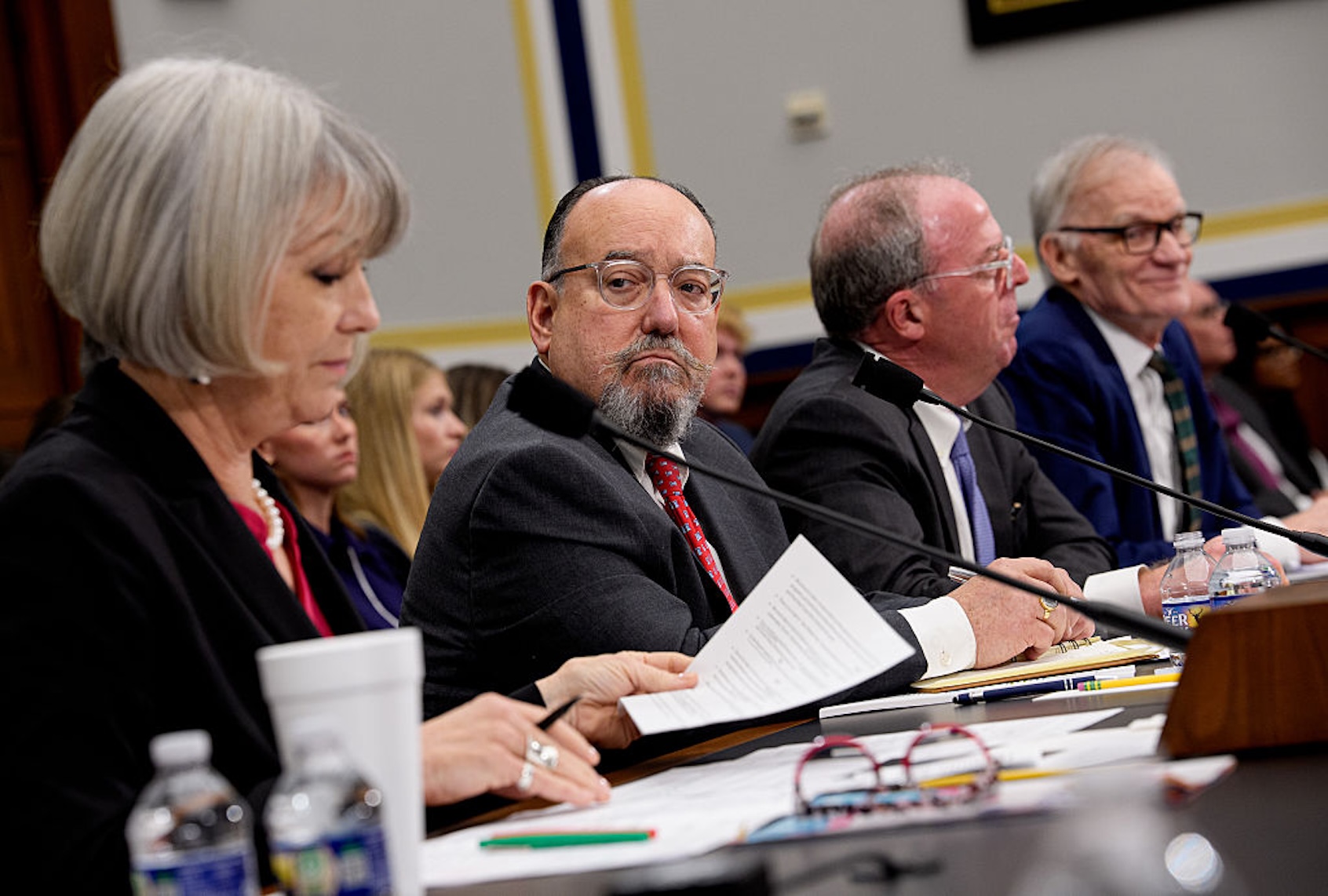
  •  

“Suspicious”: McConnell hospital discharge revives conspiracy theories

Mitch McConnell announced that he was being discharged from the hospital on Thursday, saying that he would “continue his recovery at home.”

“On the advice of my doctors, I’ll maintain an intensive regimen of physical therapy from home during the state work period, and I’ll continue to engage with my staff and colleagues on important Senate business,” the Kentucky senator shared in a statement.

McConnell was hospitalized in mid-June after being found unconscious in his D.C. home. The lack of information about the senior Republican’s condition, and a dearth of evidence that the 84-year-old was responsive, led commentators in both conservative and progressive spheres to speculate that he was much worse off than was being reported. The statement on Thursday revived those theories, as many wondered why there were no photos of McConnell leaving the rehabilitation center.

“It’s strange. No photos of Mitch McConnell leaving the rehab center,” wrote activist Charlotte Clymer on X. “Just a statement and reporters giving a quick salute.”

MAGA commentator Eric Spracklen called Mitch’s statement “suspicious” and wondered why TMZ’s D.C. bureau wasn’t waiting for McConnell outside of the hospital.


Start your day with essential news from Salon.
Sign up for our free morning newsletter, Crash Course.


Author and prolific poster Joyce Carol-Oates questioned whether McConnell was involved in the statement at all. 

“Did McConnell literally SAY these words publicly or is this a press release written by someone else?” she wrote. “No wonder rumors & disinformation spread here like black mold.”

McConnell plans to retire at the end of the year. Since his health scare, he has been facing pressure from Kentucky Gov. Andy Beshear to resign early if he can not prove that he’s fit to serve out the remainder of his term.  

The post “Suspicious”: McConnell hospital discharge revives conspiracy theories appeared first on Salon.com.
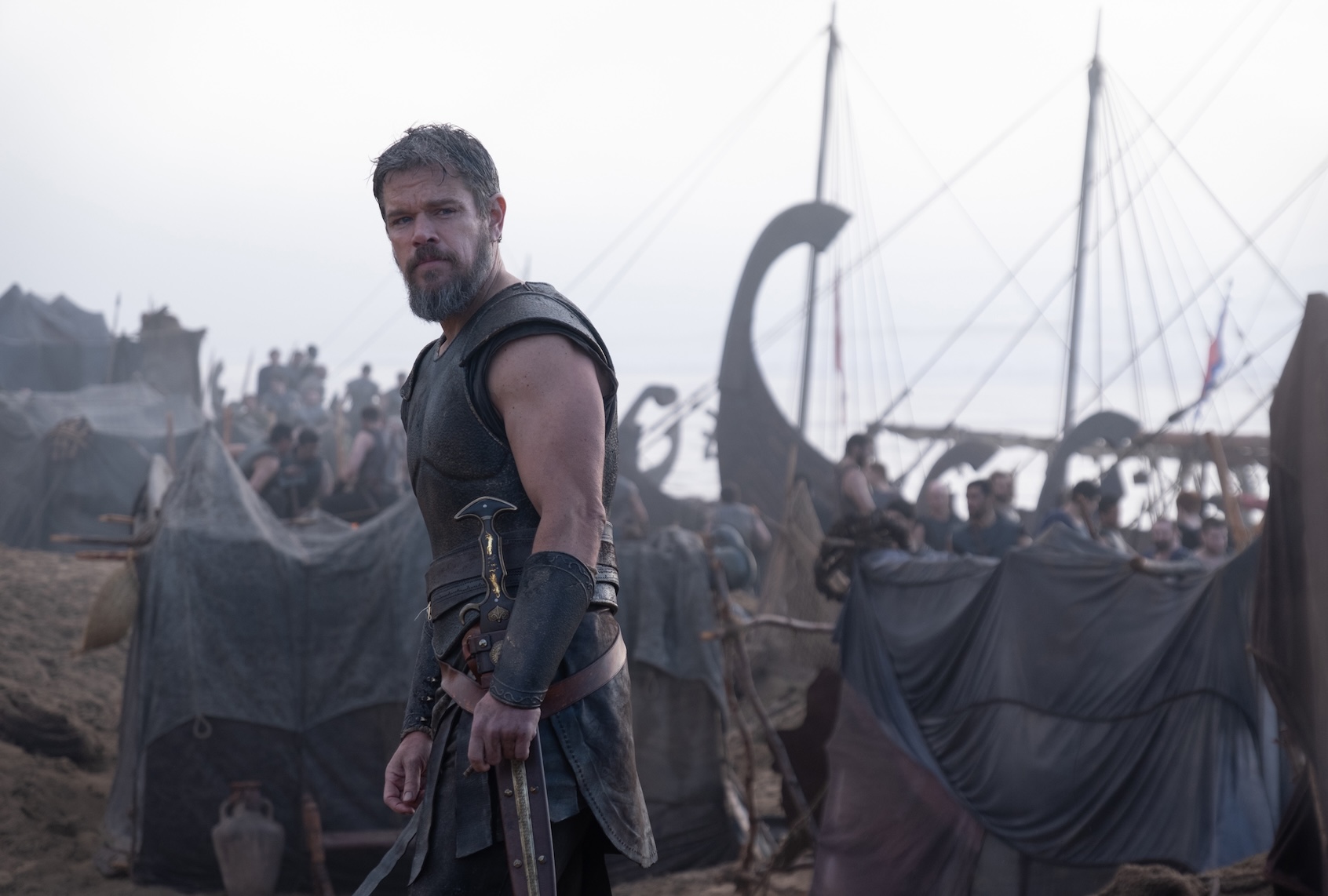
  •  

Sorry, Boy George. AI can’t even make bad art

Writing something is a bit like polishing rocks. You start with an ugly hunk of something, a phrase or an idea you’ve tripped over. It rattles against the hard edges of your brain until it gets polished and smooth. Moving the rock through finer and finer grits is time-consuming, strenuous and not always rewarding. Sometimes, the lump becomes a slightly smaller and shinier lump, marginally less ugly than it was on the ground. But like exercise and tough conversations, the process is the point. You feel better for having gone through the ritual yourself.

Boy George didn’t get the memo. 

The former Culture Club frontman, whose voice adorned New Wave pop hits like “Karma Chameleon” and “Do You Really Want to Hurt Me” in the 1980s, had artificial intelligence spew out an unfortunate reggae song last week that turned out to be a statement of support for Israel’s ongoing war in Gaza. “You say genocide, I say war,” the song, titled “We Will Dance Again,” starts, and the lyrics seem to revel in the ugliness of the ongoing violence in Gaza. The tens of thousands of Palestinian deaths, the song claims, are “what the military’s for.” 

Obvious AI tells throughout this track make clear that Boy George hasn’t just gotten lazy, he’s also lost the quality of discernment. The song’s meter is odd, and its lines are overstuffed. There are no interesting choices, no glimpses of an artist’s vision. It’s a hollow provocation over a royalty-free riddim. 

Against that backdrop, a song defending and celebrating the Israeli military is nasty work, no matter who made it. The fact that no one made it, that it’s the creation of a machine that hallucinates in exchange for electricity, only intensifies the sick, empty feeling the track leaves behind. 

Since Hamas militants attacked Israeli military installations and civilians on October 7, 2023, the ensuing war in Gaza has left more than 73,000 Palestinians dead. The United Nations has called Israel’s campaign a genocide. The International Criminal Court has issued an arrest warrant for Benjamin Netanyahu, accusing the Israeli prime minister of crimes against humanity. Attacks on Gaza continue despite a ceasefire deal. Against that backdrop, a song defending and celebrating the Israeli military is nasty work, no matter who made it. The fact that no one made it, that it’s the creation of a machine that hallucinates in exchange for electricity, only intensifies the sick, empty feeling the track leaves behind. 

The track’s release has been a disaster for George. He split acrimoniously from Tony Pontius, the long-time manager of his record label BGP, because of Pontius’ refusal to release the song. A planned role as King Herod in a production of “Jesus Christ Superstar” was put on ice. Spotify pulled the track down for violating its restrictions around AI-generated music. Bandcamp followed soon thereafter. Boy George has dug in his heels in recent days, calling the platforms a “bunch of c**ts” as part of a steady stream of Instagram posts. His doggedness would be almost admirable, if “We Will Dance Again” wasn’t so lazy. 

In releasing the track, Boy George presumably wanted to turn heads, to make a statement. But he didn’t want to do any work. He didn’t want to record multiple vocal takes of lines he supposedly wrote and believes in. He didn’t want to arrange actual instruments to better emphasize his lyrics and pro-war stance. He didn’t want to mix the track carefully to refine his statement. He could have made something that shimmers, a piece of true pop that expresses repellent ideals. It wouldn’t have been the first. 


Start your day with essential news from Salon.
Sign up for our free morning newsletter, Crash Course.


Merle Haggard’s iconoclastic “Okie From Muskogee” is considered a country classic, even though the sentiment is about as far from mainstream American thought in 2026 as can be imagined. When even right-wing commentators are pushing microdosing as a path to self-betterment, his disparaging remarks about longhairs taking LSD come off as impossibly square. But you can hear the heart in Haggard’s leathery vocals, buoyed by the sweet harmonies of his backing band. Haggard waffled over the years on whether the anti-hippie hardliner anthem was a satire  of the crew cut set or a genuine tribute to his conservative father. Either way, Haggard sounds like he believes what he’s saying, regardless of whether that’s true, because of the time and effort he spent working out the song.

With 2013’s “Blurred Lines,” Robin Thicke and Pharrell set out to make a groovy single in the vein of Marvin Gaye. Though the song has been relegated to the dustbin following a widespread critical backlash and later allegations of sexual assault against Thicke by model and actress Emily Ratajowksi, who appeared in the song’s video, they were extremely successful. The song itself, creepiness aside, is a Swiss watch of a partystarter. Pharrell’s ad-libs and inserts interrupting the groove at perfect intervals to wake up the dancefloor. They arguably did too good a job recreating the shuffling, glass-clinking percussion of 1970s cocktail party classics, as they lost almost everything they’d made from the song in a subsequent — and successful — lawsuit from Gaye’s estate.  

“We Will Dance Again” does none of that. It warrants no qualifiers, no deeper thought, because Boy George clearly didn’t think too hard about it himself before spitting it out into the world. He asked a machine to build him a song to support what many consider to be an ongoing genocide. When it offered him half a song, he said, “Good enough” — without even bothering to run it through a few rounds of polishing. I regret to inform you that, in 2026, Boy George won’t even tumble for us.  

The post Sorry, Boy George. AI can’t even make bad art appeared first on Salon.com.

  •  

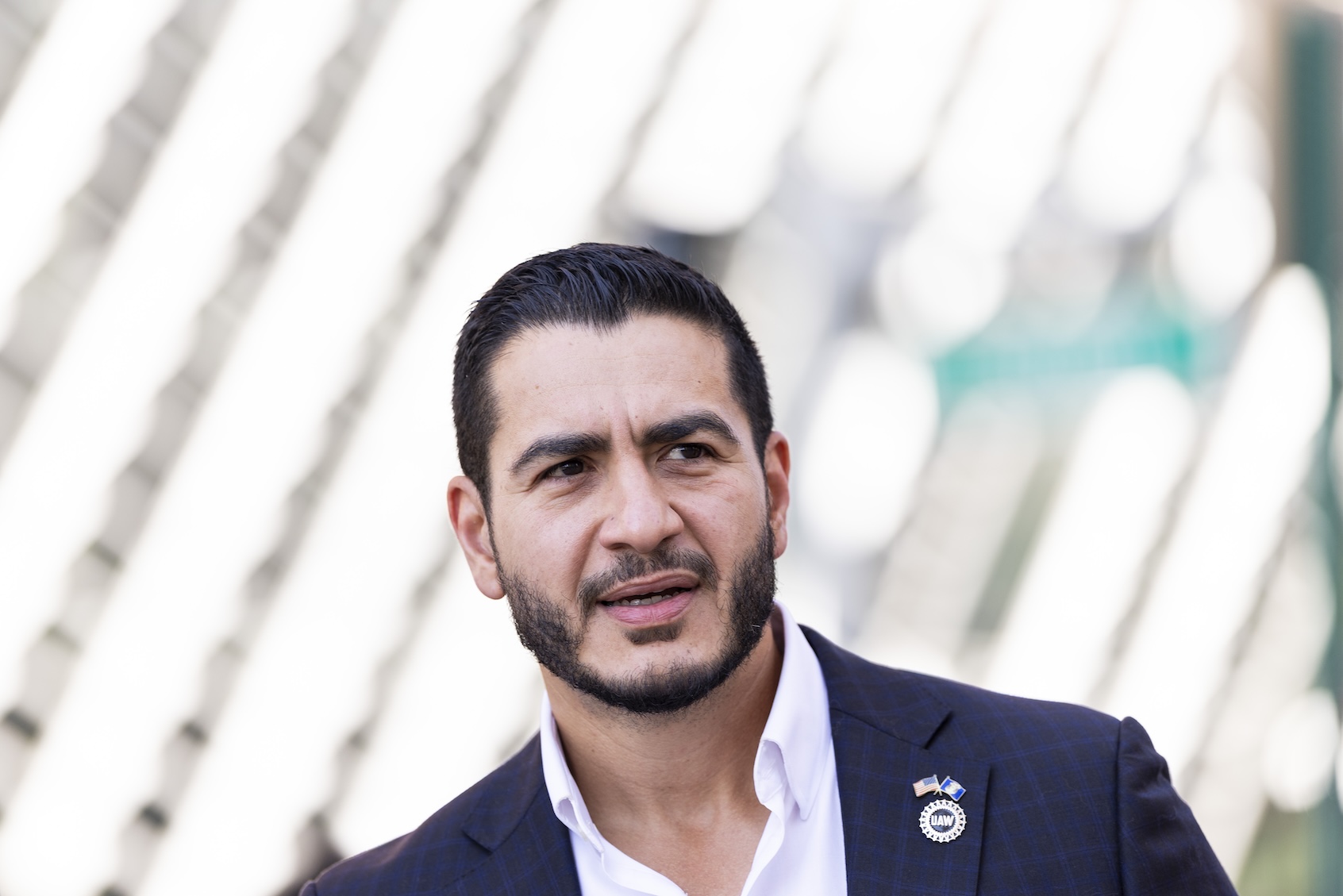
“That’s the best you got?”: El-Sayed brushes off right-wing Islamophobia after Michigan primary win

Abdul El-Sayed isn’t worried about Islamophobic attacks on the campaign trail. 

The progressive Democrat who just won a hotly contested primary in Michigan told reporters on Wednesday that he’s willing to take smears on the chin, saying that name-calling and bigotry is “the only play” in his opponents’ playbook.

“That’s the only play they got,” he said. “They’re going to point at me. They’re going to point at my name like, ‘Well, he’s different.’ That’s the best you got?”

The former public health director has stuck to a platform centered on affordability at home and an end to foreign entanglements. He said that Islamophobia is a cop-out because his opponents don’t want to debate substantive issues. 

“You can’t actually talk about what you want to do?” he said. “My name is not raising your gas prices. My name is not taking us to war. My name is not the reason you can’t afford groceries.”


Start your day with essential news from Salon.
Sign up for our free morning newsletter, Crash Course.


El-Sayed will face Former Republican Rep. Mike Rogers in the upcoming midterms. He encouraged Rogers to come up with a better line of attack than his identity, because he doesn’t think his Michigan voters will bite.

“I’ve been an Abdul in Michigan my whole life. This is the best place in the world to be Abdul,” he said. “Michiganders are big-hearted, they’re open-minded… [They’re] sick and tired of BS politics coming in to divide us.”

The post “That’s the best you got?”: El-Sayed brushes off right-wing Islamophobia after Michigan primary win appeared first on Salon.com.

  •  

“Last chance before decapitation”: Trump threatens Iran over stalled peace talks

President Donald Trump continued to claim the United States and Iran were in active peace talks on Monday, despite denials from Iranian and U.S. officials. 

“Iranian Leadership is unbelievably duplicitous!” Trump wrote on Truth Social. “They ask for a meeting, some would say’ beg,’ talks begin, with more scheduled in the immediate future, and they say, openly and proudly, that they’re not having any discussions, that nothing is being talked about, and they’re only dealing with ‘Oman.'”

Trump told reporters over the weekend that Iran came to the U.S. hat in hand to avoid further airstrikes. The president said that the Pentagon had planned “the biggest attack since World War II.”

“It would have been disastrous for them,” he said. “They didn’t want us to do it, and frankly, Saudi Arabia didn’t want it either.”

Iranian officials denied any such communication and said they had no planned talks with the U.S.  

“We currently do not have negotiations with America,” Foreign Ministry spokesperson Esmaeil Baghaei shared, per NBC News.


Start your day with essential news from Salon.
Sign up for our free morning newsletter, Crash Course.


Trump called the denial a bit of “their usual bather.” He said that Iran needs to reach a deal with the U.S. or surrender unconditionally. Speaking to a reporter in the Oval Office on Monday, Trump said he was offering Iran “every last chance before decapitation.”

“Very tough to do what we have planned, still planned,” he said. “We’ll see what happens.”

The post “Last chance before decapitation”: Trump threatens Iran over stalled peace talks appeared first on Salon.com.

  •  

Gillian Welch’s “Everything Is Free” warned us all along

No popular music genre despises the present as much as country music. Through quirks of form and function, all other radio-ready music is incredibly focused on its immediate surroundings. Pop has trendiness in its very bones, and its songwriters’ striving for universality tends to create songs focused on broad, current feelings: the sharp sting of a fresh heartbreak, the effervescence of new heartbreak, the joy of dancing in this club right now. 

Rap is usually made quickly by impossibly young stars for an equally young audience, so it tends toward today’s fashion. Micro-trends in production, slang and topics come and go quickly. Last month was another era. Last year might as well be prehistoric.

Country music, though, is a different animal, born out of the urban migration of the 1930s as a way to sell a slice of an idealized past on wax to newly minted city-dwellers longing for home. Sonic trends — from the slick countrypolitan in the 1970s to the neo-traditionalist 1990s and on through the trap-indebted 2010s —  have come and gone. Demographics on the dial have shifted. Stars are younger and more male than they’ve ever been. But that focus on greener pastures is as persistent as the apparent blood feud between Texas and Tennessee. 

The average country listener wants to have their past misremembered for them, whether it’s the Judds asking Grandpa about the good old days or Tim McGraw missing the nebulous “back when.” The biggest hits sand down the rough-hewn edges of Mama’s metaphorical front porch to up their resale value, perhaps never funnier than Luke Bryan’s bullet-point summer vacation on “Fish, Hunt, Golf, Drink.” All that cornpone Luddism floating around made Gillian Welch’s “Everything Is Free” feel remarkable upon its release 25 years ago.

The concerns of the track from 2001’s “Time (The Revelator)” are topical and immediate. Welch responds to the then-new phenomenon of online music piracy with practical concerns. How am I going to pay my bills if no one wants to pay me for my music? How do I put gas in the car right now? Nearly a decade before the launch of Spotify, Welch saw clearly that someone was bound to “hit the big score” off of the new model — it just wouldn’t be her.

“Everything is free now, that’s what they say. Everything I’ve ever done, gonna give it away,” she sings, before immediately shifting toward plans to make money elsewhere so that she can keep performing.

A quarter century on from the song’s release, the U.S. economy is overrun with people who believe that nothing should come with a price tag.

A quarter century on from the song’s release, the U.S. economy is overrun with people who believe that nothing should come with a price tag. The finance industry is dominated by private equity firms that offload the debt of their corporate acquisitions onto other companies, the better to walk away clean when those companies collapse. The biggest players in Silicon Valley are building data centers to more efficiently run copyright-infringement machines built on terabytes of pirated material. 

The journalism industry was hollowed out by the same forces that sliced up Welch’s catalog, leaving few journalists to report on the graft and theft this post-payment class of billionaires are carrying out across the country. The Jeff Bezos-owned Washington Post, once a world-class newspaper, has turned into a shell of its former self following a conservative reorientation of its opinion pages and a corporate downsizing that saw over 300 of newsroom journalists laid off in February, representing about 30% of its total staff.


Start your day with essential news from Salon.
Sign up for our free morning newsletter, Crash Course.


More recently, Louisiana officials recently inked a secret agreement with Meta to build a five-mile-long data center in the state. The New York Times eventually sniffed out the backroom deal. The local papers were too busy covering the hors d’oeuvres at Mark Zuckerberg’s celebratory luncheon.

At the same time, the ham-fisted hollowing out of regulatory agencies by the Trump administration has had predictable results. Outbreaks of new livestock diseases, parasitic produce and slower responses to global crises followed the Department of Government Efficiency’s wild budget-slashing even as Elon Musk, the man who helmed that project, is richer than anyone else in the history of earth — and he’s gearing up to throw millions into the 2028 presidential and congressional elections.

It would be a stretch to say that Gillian Welch saw all this coming. But listening back now, it’s hard not to marvel at how timeless this timely track feels. You can’t help but sympathize with her desire to skip the coming crisis in her industry. She “never minded working hard,” she sings, but she had a lot of concern about “who I’m working for.” Seeing into the future that she’d soon be asked to work for pennies while someone else got obscenely rich, she passed.

“If there’s anything you want to hear,” she says, “you can sing it yourself.” 

If only we all could have opted out in a similar fashion.

The post Gillian Welch’s “Everything Is Free” warned us all along appeared first on Salon.com.

  •  

“People are sick of Rahm Emanuel”: Sanders says progressive wins make Dem establishment “nervous”

Bernie Sanders doesn’t want to hear from Rahm Emanuel, and he’s pretty sure the average voter doesn’t want Emanuel’s opinion either. 

The former Obama administration insider and Chicago mayor published an opinion piece in the Wall Street Journal earlier this week, chiding progressive candidates for poisoning the well with supposedly unpopular policy positions ahead of the 2026 midterms. Speaking to CBS‘ “Face The Nation” on Sunday, the independent senator from Vermont pushed aside Emanuel’s concerns, saying that he’s just “nervous” because anti-establishment Democrats keep winning. 

“[Emanuel] no doubt has the support of millions of working class people,” Sanders joked. “There’s no debate. There is a strong division within the Democratic Party.”

Sanders went on to paint that schism as the divide between people like Emanuel, who are “dependent on billionaire campaign contributors” and upstarts like New York City mayor Zohran Mamdani.

“What is getting these guys nervous is we are winning all over this country,” he said. “People are sick and tired of the Rahm Emanuels and the Democratic establishment.”

Sanders pegged voter disaffection on the increasing difficulty and cost of living in the United States.

“People are asking simple questions,” he said. “Why in God’s name are we the only major country on Earth not to guarantee healthcare to all people? …Why do the economists tell us that in the richest country in the history of the world, our kids will likely have a lower standard of living than their parents?”

“People are tired and they want real change,” he said.

Bernie Sanders: "People are sick and tired of the Democratic establishment and the Republican establishment … the American people are tired of a rigged economy, a corrupt campaign finance system. They want real change. They don't want Rahm Emanuel and the establishment… pic.twitter.com/7fHrXxuYX4

— Aaron Rupar (@atrupar) July 26, 2026

Elsewhere in the interview, host Margaret Brennan asked Sanders about one candidate that he endorsed. Graham Platner dropped out of the Senate race in Maine following accusations of sexual assault. She wondered if Sanders felt he should have pushed Platner to leave the race sooner, given earlier scandals that dogged the Platner campaign.


Start your day with essential news from Salon.
Sign up for our free morning newsletter, Crash Course.


“I don’t think so,” Sanders said. “When we heard the serious allegations … I asked, along with virtually all of his other supporters that he should get out of the race, and he did.”

The post “People are sick of Rahm Emanuel”: Sanders says progressive wins make Dem establishment “nervous” appeared first on Salon.com.

  •  

Republicans want a Smithsonian that skips history’s hard parts

Your chances of running into a marketer at a neighborhood bar are slim but never zero. Given the remote-capable nature of the work and the continued growth of their economic sector, marketers have spread across the U.S., making the most of their relatively high salaries by moving away from the more expensive coastal centers of industry.

By and large, they’re lovely people. But I live in fear of the moment when the conversation takes that dreaded turn toward the last redoubt of small talk: What do you do? Posed with that question, any halfway enthusiastic marketer is likely to let loose a litany of acronyms and jargon that cause a physiological response in listeners, or at least in me — a glazing over of the eyes that is instant and unavoidable. As with Microsoft Outlook, the board game CATAN and the rules of hurling, there’s something there I can’t bring myself to grasp, a Lovecraftian boredom that lies just beyond the borders of what I can perceive.   

I’m not one of those rubes who thinks a job is unimportant just because I can’t make sense of it. My lack of understanding of aircraft engineering doesn’t make the people who design them any less valuable, and the same goes for marketers. I’m sure these people act on the world and see it changed in ways that bring them fulfillment. Their employers presumably think it’s a fair trade. It might all sound like gibberish to me, but that doesn’t mean it’s fake. Sometimes, you just have to accept that you’re talking to an expert who is speaking in terms beyond your ken.

But this is not how the modern conservative movement operates. From the “What is a woman?” wing of YouTube provocateurs to the snowball-holding, climate change deniers on the floor of Congress, Republicans reject the idea that experts might know more than them. You see it in the pushback against the medical consensus on how to treat trans youth. It’s there in the Trump administration’s constant attacks on institutions of higher learning. To the GOP, any discussion of U.S. history that doesn’t reach the same conclusion as a Ram truck ad is nothing more than woke nonsense.

That’s the pretense that brought Anthea Hartig, an historian and the director of the Smithsonian Institution’s National Museum of American History, before a House committee on Tuesday. Hartig’s grilling was a chance for Republicans to score points with simple, black-and-white questions about the past that no historian could answer succinctly.


Start your day with essential news from Salon.
Sign up for our free morning newsletter, Crash Course.


Rep. Brandon Gill, R-Texas, interrogated Hartig over the museum’s assertion that Mickey Mouse drew inspiration from blackface minstrelsy. Reducing the idea to the point of absurdism, Gill asked Hartig if the cartoon character on countless children’s backpacks was “racist.”

“It’s rooted in minstrelsy,” she replied.

Any close examination of the design of Walt Disney’s most famous creation makes it obvious. The white gloves are an obvious tell, even before you even get to early film shorts that the House of Mouse would rather you forget or overlook altogether. There’s a direct line between much of American pop culture and the minstrel show, and pointing that out doesn’t mean that the country or the character are irredeemable. 

Hartig pointed this out in her testimony. “We tell the truth about the times that the country fell short of its own founding ideals,” she said. “Telling our story fully is a form of respect for the American people and a commitment to constantly being in pursuit of a more perfect union.” 

Explaining history is all about context; nothing happens in a vacuum. You could say that the United States lost its mind and elected a game show host in 2016, and that might even be satisfying. An historian would likely recommend a deeper dive into the backlash against former president Barack Obama and the uneven recovery from the global financial crisis that he oversaw. Other historians might place Trump in the context of white rage and anti-immigrant sentiment. Hartig defended that drive to put moments in context because it’s what gets her up in the morning. It’s what she and countless other historians set out to do when they first started studying the past. They want to tell a good story, but with the added benefit of it being the truth. Republicans’ inability to grasp that, like my befuddlement at marketing-speak, doesn’t make what Hartig does any less real.

Of course, the more complicated view of the past advocated by the people who study it for a living will never fly with conservatives. They’re dead-set on excising any shagginess that doesn’t fit their hidebound worldview, attacking textbooks and museums that dare to push beyond a straightforward explanation. They want simple answers to simple questions, which is not what the true study of history — and America — offers.

The post Republicans want a Smithsonian that skips history’s hard parts appeared first on Salon.com.

  •  

The real reason conservatives hate Nolan’s “Odyssey”

The most-quoted line from Al Franken’s 2003 bestseller “Lies and the Lying Liars Who Tell Them” attempts to draw a distinction between conservative and liberal forms of patriotism. 

“Conservatives love America like a four-year-old loves his mommy. Liberals love America like grown-ups,” wrote Franken, a comedian who would, only five years later, would be elected U.S. senator from Minnesota as a Democrat. “To a four-year-old, everything Mommy does is wonderful and anyone who criticizes Mommy is bad. Grown-up love means actually understanding what you love, taking the good with the bad and helping your loved one grow.” 

Conservatives won’t tolerate any information that complicates their desire for flag-waving. The United States is a one-of-a-kind nation, and its history one of uninterrupted excellence. There’s no room for nuance and no time for reflection.

Twenty-three years on, the right still has that infantile view of America. Under the thumb of Donald Trump and his MAGA agenda, it has grown even more petulant. Conservatives won’t tolerate any information that complicates their desire for flag-waving. The United States is a one-of-a-kind nation, and its history one of uninterrupted excellence. There’s no room for nuance and no time for reflection. Any mention of the perverse institution of slavery or of the many bloody, pointless conflicts the nation has led or joined, particularly in the last 50 years, is treated by the right like a “Yo Momma” joke, an intentionally offensive attack on a saintly figure that could not and cannot do wrong.   

The difference between liberals and conservatives on this issue can be seen, oddly enough, in Franken’s disappearance from the national stage. Following accusations of sexual harassment, the former “Saturday Night Live” star and constant presence in left-of-center media was quickly pushed aside. Liberals could still enjoy Stuart Smalley skits and support Franken’s political positions, but many felt guilty about their past support for a man who arguably didn’t deserve it. In a word, they felt shame.  

You’ll find no such contrition on the other side of the aisle. On Monday, Trump’s border czar Tom Homan cemented his lackey status with the president when he told reporters that Americans shot by Immigration and Customs Enforcement agents in recent months got what was coming to them. Karl Rove, the man who helped cook up the lies used to justify a war that left more than a million Iraqis dead, still makes regular appearances on Fox News. He’s joined on the network by Oliver North who, as a National Security council staff member during the Reagan administration, illegally provided arms to Contra groups that carried out atrocities against civilians in Nicaragua. Henry Kissinger’s misdeeds in Cambodia couldn’t keep the College of William and Mary from appointing him chancellor. 

To the conservative mind, these men were working in service of American interests. Because America is great, their actions must be great, ipso facto, Q.E.D.

That sort of black-and-white thinking was always going to clash with the shades of gray in Christopher Nolan’s smash-hit adaptation of “The Odyssey.” In his retelling of Homer’s epic poem, Nolan imagines Odysseus as a man haunted by the sacking of Troy. His covert operation to sneak within the city walls was a betrayal of bedrock beliefs about honor and civility, a shameful act that brought humanity into a darker age. The king of Ithaca’s pride in his ingenious trick is steadily sapped by a series of cosmic punishments. He returns home in beggar’s clothes with a plan to pay penance to the scores of souls he unjustly sent to the underworld. 


Start your day with essential news from Salon.
Sign up for our free morning newsletter, Crash Course.


In true originalist fashion, conservatives spent the months leading up to the release of “The Odyssey” raging about Nolan’s decision to cast nonwhite actors in starring roles. Like the originalists on the Supreme Court, they’re largely making up their argument out of whole cloth and using the imagined thoughts of long-dead people as a fig leaf for their own prejudices.  

For these pseudo-historians, complicating Odysseus was another liberal assault on Homer’s tale. As a great king from a mythical age, at least in their view, any suggestion that Odysseus might feel a genuinely human reaction is heretical to the right-wing mind, a slight against their preferred bedtime stories. 

In a review for Fox News subsidiary OutKick that might as well have been written in crayon, Jon Root described Odysseus’ lingering guilt as “character assassination.”

“The new stories being told in this film mostly feel like . . . a complete betrayal of the source material that made so many of these characters worth investing in,” he wrote.    

At the end of the film, Matt Damon’s haggard Odysseus sails toward the unknown, accepting that he doesn’t deserve the comfort of a king. He’s uniquely responsible for ushering in an age of barbarism and will spend the rest of his life making amends in the fallen world he helped create. 

Kissinger, in contrast, defended the bombing of Cambodia until he died peacefully at the age of 100. In its obituary,  the William F. Buckley-founded National Review praised the former secretary of state as a man who spent his life tamping down turmoil. 

Sing to them, muse, of an uncomplicated man.

The post The real reason conservatives hate Nolan’s “Odyssey” appeared first on Salon.com.

  •  
❌