Login
Login
Michael Shannon’s R.E.M. tribute reminded me why I love the band
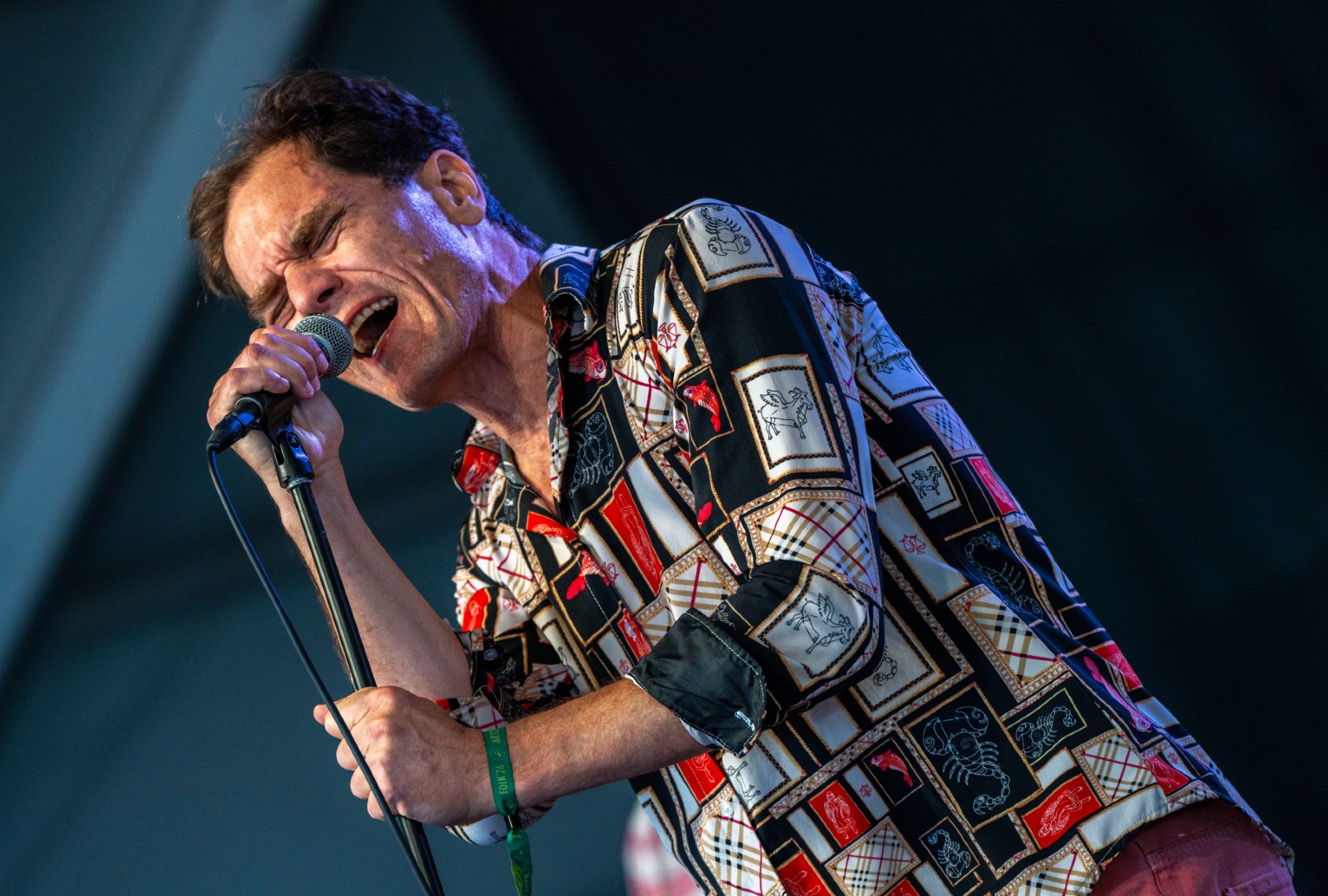
If you stayed up late on Sunday nights to watch MTV’s “120 Minutes,” if you made sure your VCR was correctly set up to record IRS Records’ magazine show “The Cutting Edge,” if your record collection is mostly vinyl because that was the superior format of the three that were available at the time and not because “you’re really into vinyl,” you are probably aware that actor Michael Shannon and guitarist Jason Narducy have been leading a project where they tour the country playing the songs of R.E.M., the former leaders of the original alternative nation. It began with a one-off playing “Murmur,” and they recently finished touring “Lifes Rich Pageant” and came through Detroit at the end of September.
The musicians in front of you are not the humans who originated the music, and that matters because the energy is not the same . . . That might have been part of my personal resistance, that my relationship with the material was based on the people who wrote it, and I’m not big on nostalgia for nostalgia’s sake.
There is no way this story isn’t personal; no telling that can leave out my specific interest in this body of work. I saw R.E.M. for the first time the night I graduated high school in 1981, when I took myself and my fake ID to a club in Mt. Vernon, NY, to see the Gang of Four. Someone standing near me asked who was opening: “R.E.M. They’re from Georgia.” I knew who they were; I’d heard the single on WNYU, maybe for once the opening band wouldn’t suck. They didn’t. In my 20s, I ran up and down the Eastern Seaboard in order to see as many R.E.M. shows as I possibly could. I published one of the first R.E.M. fanzines, sitting at my kitchen table in my third-floor Hoboken tenement walkup with an X-Acto knife and a glue stick. I later ended up posted at a Warner Brothers office overseas where I got to work on the beginning of that era of albums.
And yet I found myself strangely apathetic and at times resistant to participating in any of the hoopla around the Shannon/Narducy ensemble. Every time someone tried to sell me on how great it was, all I thought was some version of: I saw R.E.M., I saw the actual band. Yes, I knew very well that the actual band had given their ringing endorsement to this effort. This was not about that. I wasn’t sure what the reluctance was, but then they announced a Detroit date, and I no longer had the excuse that I wasn’t going to travel to see this.
“Lifes Rich Pageant” opens with “Begin the Begin.” If I were a baseball player, I’d think about using the intro to that song as my walkup music. It’s so immediately distinctive: 0 to 60 in five seconds, instant energy, a handful of guitar notes before all of the instruments rev up. There’s gritty distortion and glorious feedback, and if you, as an audience member witnessing this performance, weren’t sure how this was all going to land in your body 40 years later, those 10 seconds will completely reassure you that you have nothing to worry about. You don’t have to think about it; your subconscious will reconnect those severed wires immediately. Or it’s less severed than simply dormant, temporarily out of use. You react the way you always reacted. It is involuntary.
There was a point in my life where I listened to the entirety of the R.E.M. catalog constantly, when there was always a tape of a live show in my Walkman, when the intro to “Underneath the Bunker” was my outgoing answering machine message. It was the era when you brought the album home and immediately recorded it onto both sides of a Maxell XL-II 90 so that when you got to the end of the album you could just flip the tape and immediately start again and not have to wait to rewind.
I did that with “Lifes Rich Pageant” and remember falling asleep as “Hyena” faded out only to bolt upright the minute I heard Michael Stipe chanting, “I’m so young/I’m so goddamn young,” and it felt like he was standing there hitting a giant gong in my tiny bedroom that had room for a bed and a small shelf for my stereo. Of course that reference is from the B-side of Patti Smith’s “Gloria” 45, the live cover of “My Generation” recorded in Cleveland in 1976, waving the standard of, “WE CREATED IT; LET’S TAKE IT OVER.” We already knew what side R.E.M. were on in the Punk Rock Wars, and we also knew that “Hyena” existed long before we arrived at “Lifes Rich Pageant” because it had been a setlist stalwart since “Reckoning.”
Want more from culture than just the latest trend? The Swell highlights art made to last.
Sign up here
See? We are still working through the first side of the record, and the memories are an avalanche at this point. But the musicians in front of you are not the humans who originated the music, and that matters because the energy is not the same. Which means you have to find your emotional connection, and that’s likely going to generate from whatever synapses are firing up in the memory bank. That might have been part of my personal resistance, that my relationship with the material was based on the people who wrote it, and I’m not big on nostalgia for nostalgia’s sake.
I never pined for a R.E.M. reunion the way I might have (for example) wished for the chance to see The Clash just one more time. I don’t understand people who don’t care if Bruce Springsteen never releases another new record as long as he keeps touring. I saw a handful of those Replacements reunion shows in 2015, but I remember towards the end of that run thinking that unless there was going to be new music, I didn’t need to see any more. But I also know that I might be a little bit of an originalist in this regard.
Shannon and Narducy have built these outings around the R.E.M. catalog, with each tour centering on an album which is performed in full, from start to finish. That’s a tricky decision to make, because the criteria for impactful album sequencing are not at all the same for a live show. (It’s easier for one-offs, but it’s much harder if you’ve committed to doing it night after night.) “Lifes Rich Pageant” is from 1986, so musicians were still thinking about sequencing their records to have two sides, and there’s a “Dinner” and a “Supper” side of this record — which Michael Shannon will make reference to later in the evening, the kind of reference I’d remember in 1986 but definitely did not recall in 2026.
When I came home and pulled the record out and realized what he was referring to, I gave myself a break for not remembering it because I have not been consulting the texts as recently as Shannon (and if you read any of the interviews he has given on this subject, it is very much that for him). That is the level of dedication to this project, which becomes obvious once the ensemble activates their full powers. Because getting up there to simply execute the songs competently would not have been sufficient for this effort, nor would it have attracted the (admittedly deserved) enthusiasm that it has.
Shannon and Narducy have built these outings around the R.E.M. catalog, with each tour centering on an album which is performed in full, from start to finish. That’s a tricky decision to make, because the criteria for impactful album sequencing are not at all the same for a live show.
“These Days” comes next in the track listing, with the beautiful lyric: We are young despite the years/ we are old despite the times. I think Jason Narducy did half a leap or at least a leg kick in the place that Peter Buck would have been kicking his impossibly lengthy daddy long legs (and credit where credit is due, every once in a while second guitarist/Rickenbacker wielder Dag Juhlin did as well). When you go see a band often enough, you know where to look and when to watch, and then the trick is to unlock the next level.
Next level for R.E.M. is trying to sing the Mike Mills harmonies, and it’s not surprising that Narducy, the man who is the definition of an alt-rock journeyman, is spot on. I don’t know what words he is singing, but the notes are correct, and the color is right, and that’s what matters here. There is a certain amount of impressionism that is going on. There’s a certain amount of willing suspension of disbelief to an extent; you can’t be going to see these shows if you are going to be a trainspotter. Or you can, but you’ll miss the point. Of particular note was his amazing imitation of Patti Smith’s vocal part in “E-bow The Letter,” later in the set. It wasn’t identical, but it was still absolutely perfect.
On “Hyena,” again, Narducy has to play guitar and sing the bass player’s vocal harmony, which isn’t a harmony so much as a counterpoint; it is meant as a third dimension, and that is much harder to execute than simple harmony. Also important on “Hyena” is how the rhythm section interacts. I have watched Jon Wurster behind the drums for many, many musical acts, and there is a reason he is in demand: he is very technically accomplished and is some kind of chameleon because he’s never imposing; that’s not often what he’s been hired for, but he isn’t some kind of bland, soulless session dude.
Which absolutely matters in the case of R.E.M. because Bill Berry was an underrated element (and a great songwriter). He was always solid and effortlessly executed these perfect yet almost imperceptibly complex rhythms while also singing harmony vocals. Wurster does not have to sing, but he has to do the rest, and he never ever missed: specifically, I watched as he intricately kept time on “Pilgrimage” later in the set, a song full of beats off the syncopation of the rest of the band, and I knew he’d pull it off, but it was a delight to witness.
We need your help to stay independent.
The bass is covered by Wilco’s John Stirratt, and while Stirratt doesn’t have to also handle Mills’ vocals, he’s not getting off easy. The melody lines of the bass in R.E.M. songs are singularly melodic and distinctive, with a fluidity that makes them seem simple when they are not. It’s not a traditional rhythm section, but if anything were out of alignment, it would throw the entire entity out of order. You’re still having to learn a vast repertoire of another band and accommodate your style as a working professional and acclaimed musician of many years into someone else’s.
“Let’s put our heads together and start a new country up,” Michael Shannon steps out of character briefly to offer additional emphasis to that key line of “Cuyahoga,” but it’s also not exactly inaccurate — It’s a perfectly Stipean ad-lib. At some point when this project was afoot, someone was trying to sell me on it by telling me that “Michael Shannon is a very good Michael Stipe imitator” — which made me recoil in horror because that is the absolute last thing I would ever want to see, and also not at all what is happening.
What Michael Shannon is very good at is acting, and that doesn’t mean that his performance is about artifice or that it’s inauthentic; it just means this project is decidedly not trying to be a cover band; they’re not performing “Lifes Rich Pageant” like a “Rocky Horror” shadowcast. The band is staying true to the songs as they were written and performed without being exactly matchy-matchy on the things that don’t matter but being very certain to land the moments that do. And that’s what will resonate with you if you are an OG. There was a wave of excitement in the crowd when Michael Shannon picked up a bullhorn, one of Stipe’s favored devices. It’s hard to use a bullhorn in rock ‘n’ roll without looking stupid or overly dramatic, and it’s another testimony to Shannon’s presentation that you just nodded: of course there would be a bullhorn.
At some point when this project was afoot, someone was trying to sell me on it by telling me that “Michael Shannon is a very good Michael Stipe imitator” — which made me recoil in horror because that is the absolute last thing I would ever want to see, and also not at all what is happening.
Album sequencing versus live sequencing: “Underneath the Bunker” works to close one side of an album, just like “Flowers of Guatemala” works to open side two, but those songs back to back is a little challenging energetically. Live, R.E.M. used to follow “Guatemala” with its next song, “I Believe,” and that still works a treat: “I believe in coyotes/and time as an abstract,” as the song goes, and it is a certain kind of amazing that this information still resides so robustly within my personal memory banks. Also, let’s shout out the perfect banjo intro courtesy of keyboard player Vijay Tellis-Nayak. It’s the kind of moment where everyone in the room knows what’s next and everyone is eagerly awaiting for the action to commence.
When the band finished with the album, I realized that because I had not paid attention, I had no idea what was next. I can’t guess because it’s not based on known data such as decisions the band had made about what they were and were not interested in playing this tour. This group of musicians could do whatever they wanted to and that’s exactly what they did, veering all around the catalog like a Tilt-A-Whirl. The latter-day “Lotus” went into “Chronic Town’s” “Gardening At Night.” “Harborcoat,” from the sophomore album, segued into “How the West Was Won” from a later era. Shannon made a comment about how the songs were grouped together thematically — plants and flowers and I forget the third element, which struck me as a thoroughly R.E.M. way of doing things.
“Burning Down” (which Shannon correctly attributed to the 1987 outtakes record “Dead Letter Office”) was in the mix, and I wrote “when did they ever DO this” in my notes and after checking, the truth is, not very often. I never saw the song performed live, but everyone knew about it because R.E.M. played it at a 1984 show in Seattle that was recorded for a syndicated radio show called “The Source.” If you didn’t tape a copy off of your local FM station, it wasn’t hard to find somebody that did, and it became one of the first commercial R.E.M. bootlegs.
There was a wave of excitement in the crowd when Michael Shannon picked up a bullhorn, one of Stipe’s favored devices. It’s hard to use a bullhorn in rock ‘n’ roll without looking stupid or overly dramatic, and it’s another testimony to Shannon’s presentation that you just nodded: of course there would be a bullhorn.
That’s a perspective I hadn’t considered, that they’d play songs that many people had never seen performed live. There was a palpable wave of holy sh*t, a sharp collective intake of breath, when “Fretless” began. (I told a friend, “I think I stopped breathing.”) The song was on that stellar example of movie soundtrack sequencing, Wim Wenders’ “Until the End of the World.” It remains one of R.E.M.’s strongest compositions, an entire sonic landscape that morphs instantly into a whole other world. That means it’s an ambitious choice. I did not stop to think, “This is one of my favorite songs and I’ve never heard them do it so please don’t fu*k it up.” They gave us reason to trust them almost instantly.
The one element that seemed slightly off was that Stipe’s vocals have both power and fragility, and towards the end of the set, some of the delicate touches weren’t as sharp; Shannon would apologize during bows, explaining that he was getting over an illness, and that would certainly explain it. But this is also the one critical note I could find. The one.
This outing is, clearly, an homage, but by the end I have concluded that it is simply an art project, which is a fully legitimate reason to do something. No one on the stage is hurting for work; they’re doing this for the joy of it, and probably because it’s a challenge. These are not easy songs to play, nor are R.E.M. songs any kind of simple noise to generate. I think about that aspect later in the evening during “Star 69,” which from the outside seems like a simple rock ‘n’ roll song, very loud guitar matched by breathless, insistent loud vocals. But!
The breakneck pace of the guitar chords is measured and deliberate; the drums are measured, consistent; as usual, the bassline is its own melodic counterpoint. This song was on “Monster.” This wasn’t something they just fell into. Listen to how the band signifies the second verse, how there are separate, neat, clean guitar riffs coming off of the chorus, featuring the accusation: I KNOW YOU CALLED / STAR 69 / gorgeous naked guitar solo continues riffing. And let’s not forget how, in this particular song, what’s happening is that Mills is singing the same lines as Stipe, just a beat or two slower; it’s not an echo, it’s dissonance. And Shannon and Narducy et. al. manifest all of this onstage.
If you’ve never seen R.E.M., I can’t tell you what it will feel like if you decide to go see next year’s recently-announced “Document” outing. But you do have to see the show to understand why this outing is so strongly favored. I believe it is because it is true and earnest and respectful, but it is also hella fun. R.E.M. always had a sense of humor that felt like it got forgotten or overlooked once they were playing stadiums. There is precision here, but there is also abundant joy. And joy is a thing all of us could use right now.
Read more
from music columnist Caryn Rose
The post Michael Shannon’s R.E.M. tribute reminded me why I love the band appeared first on Salon.com.