I often refer to vanilla as the “salt of the pastry world,” since for bakers, vanilla often finds its way into everything we bake. Vanilla is one of the most difficult foodstuffs to grow. Each orchid flower (which only blooms one day a year) is hand-pollinated, and each pod takes months to mature. Then the pods are cured and dried, losing much of their moisture, becoming the remarkably fragrant vanilla beans that bakers love.
The process is extremely labor-intensive, making vanilla the second most expensive spice in the world, after saffron. That’s why savvy buyers stop at G. Detou when they visit Paris, for the best quality vanilla, at good prices.
Benoît Bourleton took over G. Detou a few years ago and gently revamped the shop. Gone is the separate glassed-in cashier, to make more space for customers and to stock a much bigger selection of specialty baking items. (Gone also are the clerks who may, or may not, have wanted to help you.) They also greatly increased the fresh items available in their second store, just a few steps down the block. And the team working there is helpful and friendly.
One thing that hasn’t changed, though, is the variety of vanillas on offer, which includes plump vanilla beans from Tahiti and Madagascar, as well as jars of fragrant vanilla bean paste. The vanilla selection at G. Detou is one of the primary draws for bakers and pastry chefs who shop there. Because Benoît worked as a wholesaler of vanilla, the prices in the shop are lower than elsewhere. That’s also why visitors to Paris make a stop at G. Detou to stock up.
Subscribe to my newsletter to get recipes, videos, Paris stories, and more, sent right to your Inbox!
In the video, I discussed with Benoît how to store vanilla, which vanilla is best for baking, and why using good vanilla matters. I hope you enjoy the video!
If you’ve been watching the news, you know that France has been through a tough few weeks. In mid-October, students who were protesting the poor conditions of their schools were joined by other organizations, such as the CGT, a powerful French worker’s union, and the Gilets jaunes, a grassroots movement that was notable, and responsible, for massive nationwide blockages and strikes between 2018 and 2020.
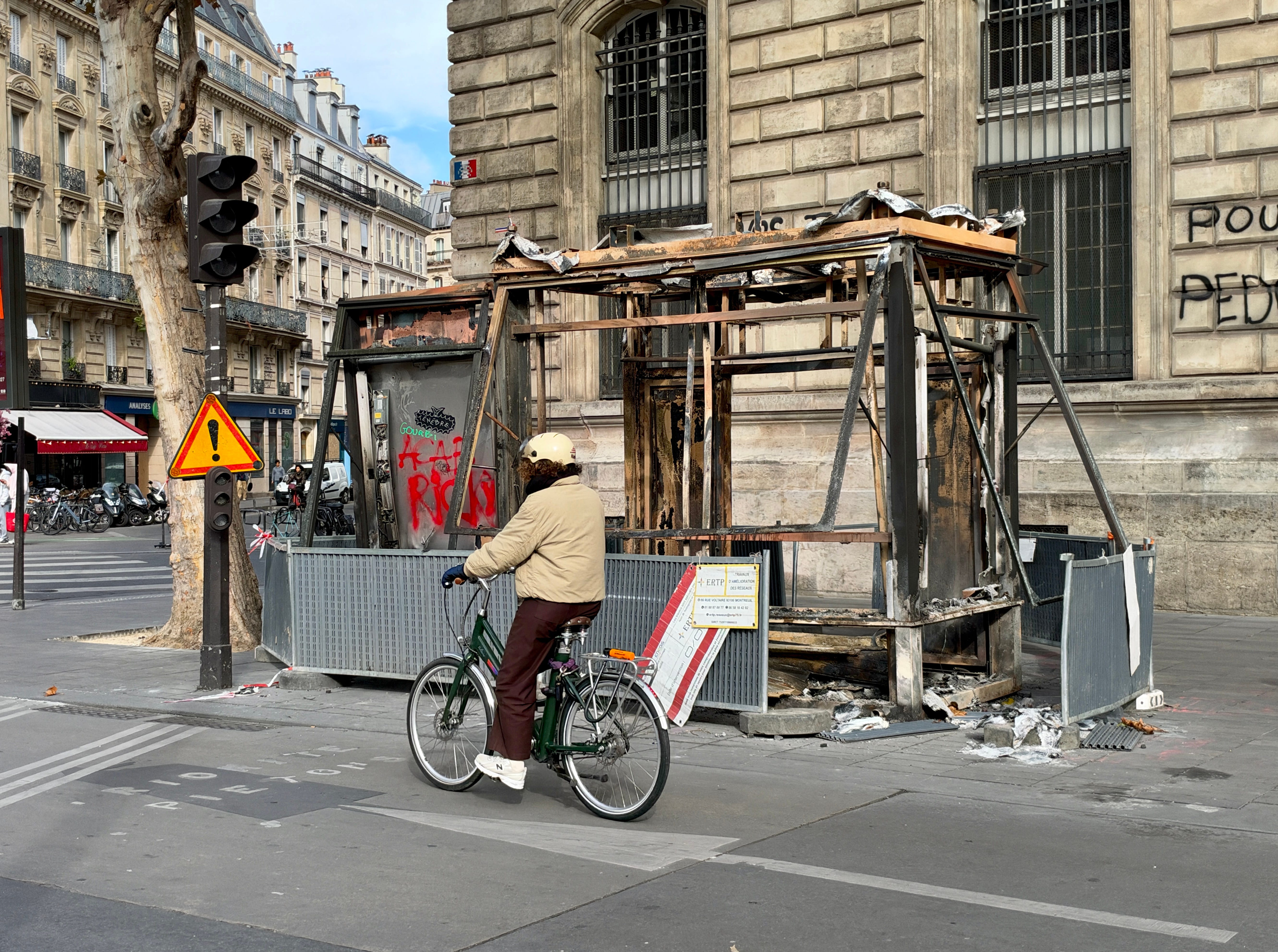
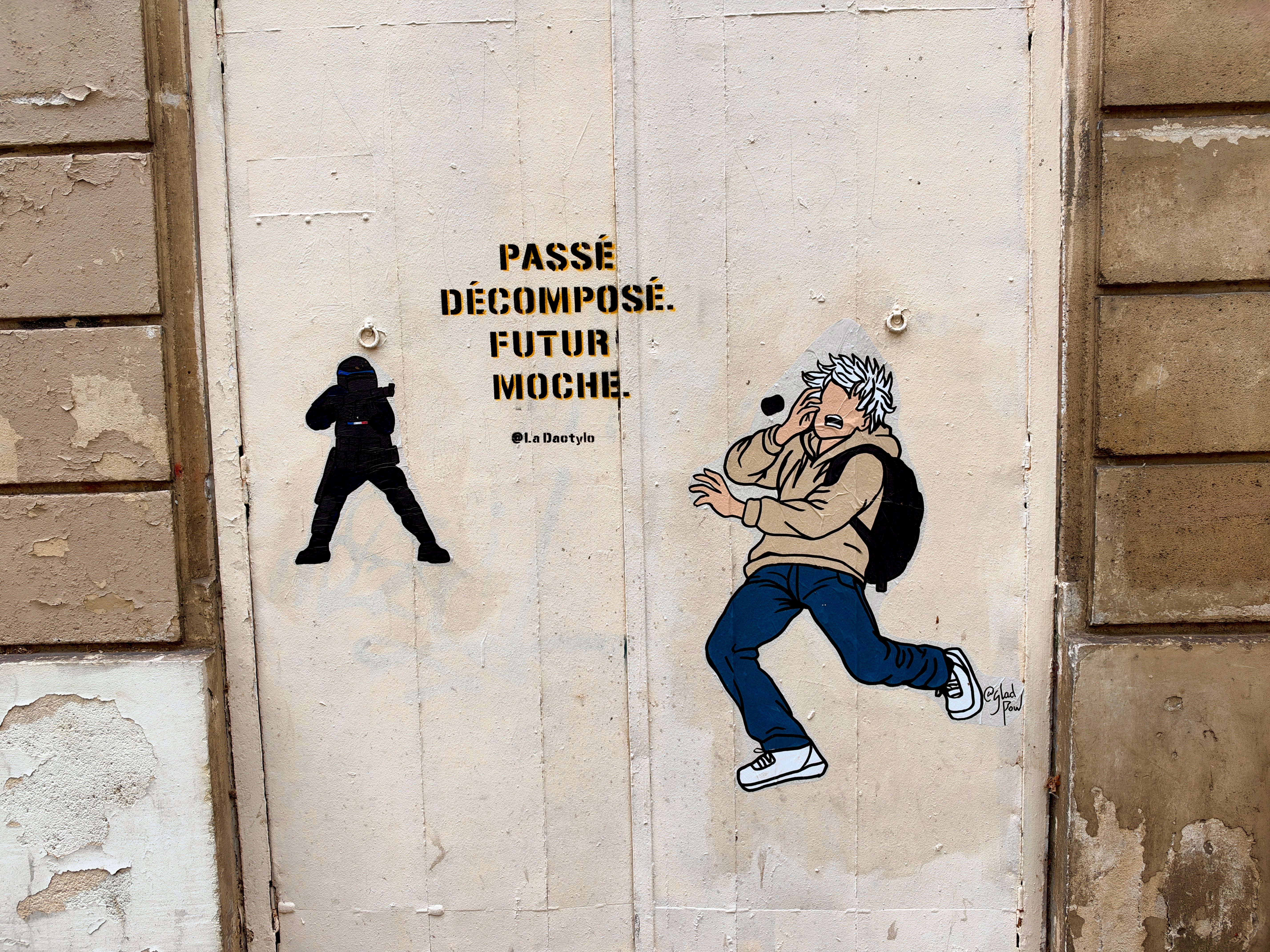
The demonstration on October 17th ended in riots, fires, saccages, and pillages (ransacking and looting businesses) across the country, filled up social media feeds, and prompted a number of people to ask me about them.
(I’ve written a bit here about what’s happening in France 🇫🇷 at the moment since many people have asked me about it. If you don’t want to read a few paragraphs with observations and brief explanations about current events in France, you can scroll down to the picture of a baguette 🥖 ⬇.)
The students have legitimate demands, which aren’t the only problems France is facing right now. I’m not an economist or historian, but is, and he wrote a comprehensive post, Why Europe Is Burning, about some of the root causes of the strife.
I don’t agree with everything that’s been said and written, but most of the violence that’s been broadcast wasn’t perpetrated by students but by casseurs, or vandals, who show up at the end of demonstrations primarily to vandalize. The student protests that I witnessed before October 17th were peaceful.
It’s important to remember that demonstrators in France (not the vandals) are exercising their hard-won right to protest, an integral part of the foundation of France:
While demonstrations and strikes disrupt transit, businesses, and yes, visitors’ vacations, people in France mostly tolerate those inconveniences as they understand that people are exercising their right to assemble and demonstrate. The day after the October 17th events, people were back at the market, doing their shopping, sipping coffee in cafés, standing in lines at the boulangerie, and riding their bikes to work or other appointments.
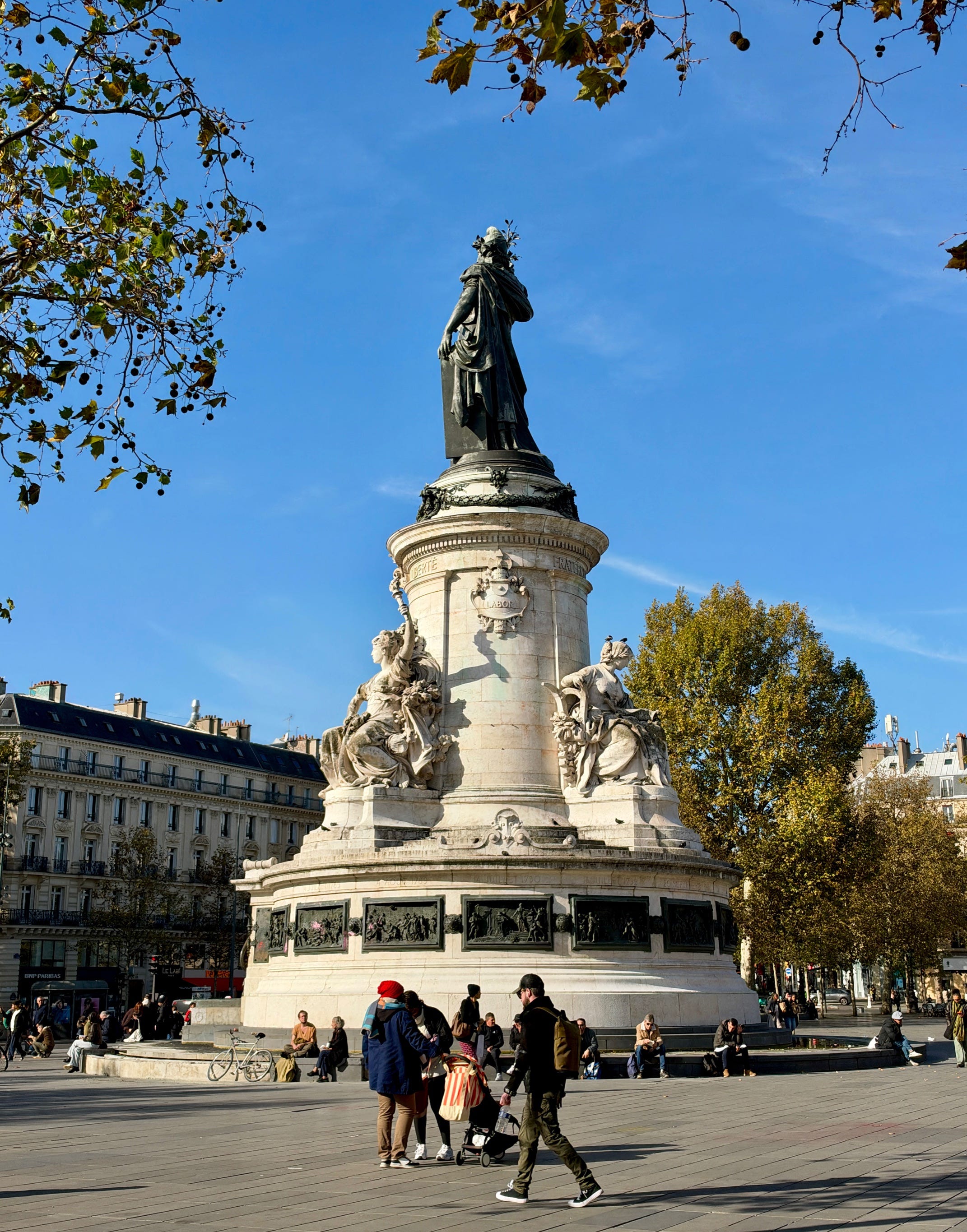
A week after the major demonstration on October 17th in Place de la République, the monument of Marianne, the symbol of the French republic, which was covered with graffiti and partially vandalized, was all cleaned up, and back to herself.
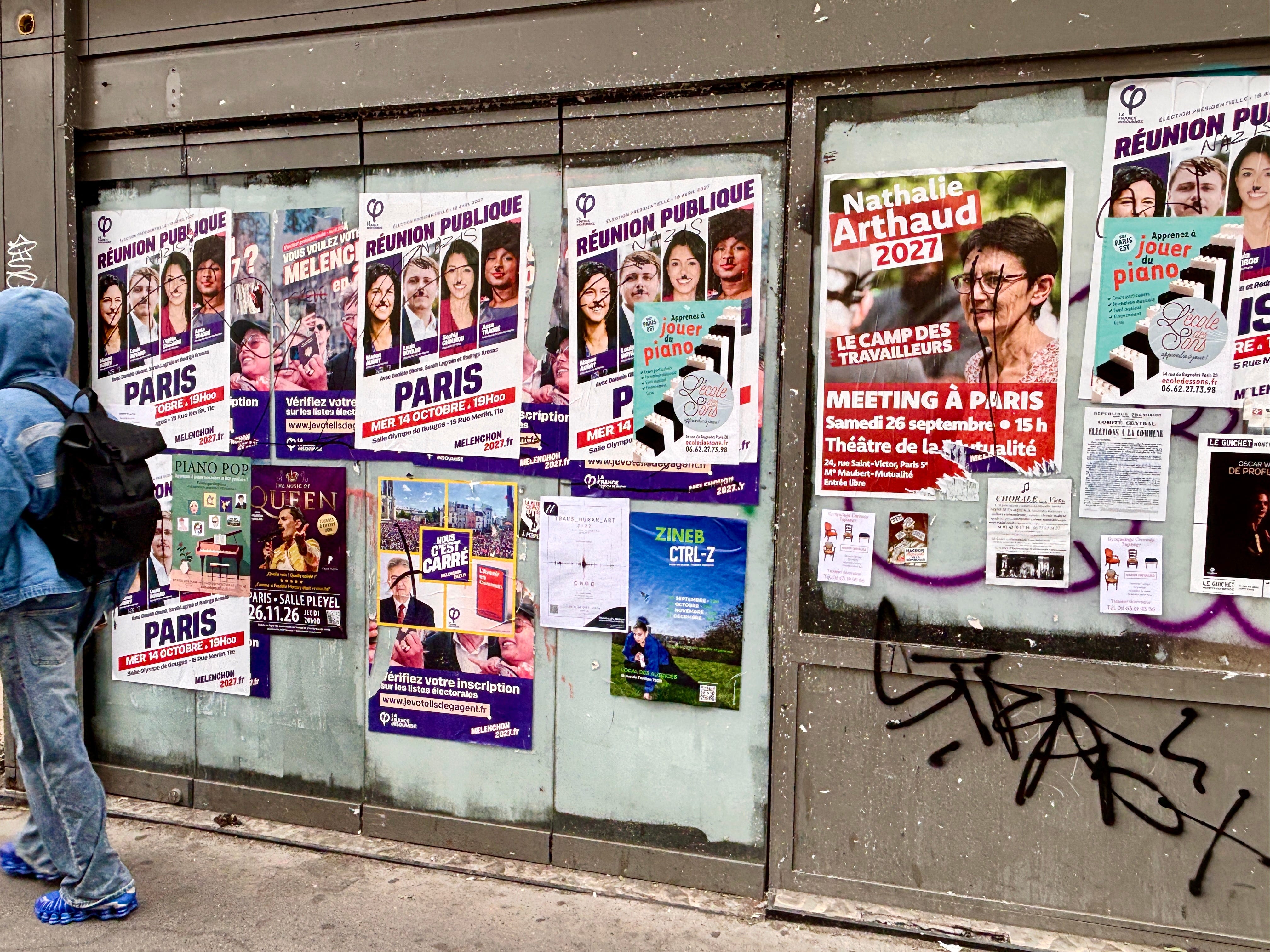
One of the principle problems facing France is that baby boomers are getting older, and the retirement age is lower than in other European countries; it’s 62 in France versus66 to 67 in Germany, and 67 in Italy. Neither presidential candidate in the election this spring, on the right or the left, is in favor of raising it. One candidate wants to keep it at 62 and the other wants to bring it back down to 60. (I’m 67 so am late in the game.)
Many people aren’t too keen on the two leading French candidates; one is far left and the other is far right. My father was in politics, so I grew up around it. But that was a different time and he worked for a senator from a political party who gave their own president the boot. But the lack of discussion, civility, and engaging with the other side that’s endemic nowadays, globally, isn’t a great recipe for our future, nor for future generations.
Which brings me to a question I’ve been asked a lot lately: Is it okay to come to France?
I’m here 24/7 and made it to November unscathed. Last night there was an aggressive confrontation with the police a few blocks away from us, involving Molotov cocktails, fires and tear gas, with helicopters going back and forth more of the event. On the national news this morning, two of the stories in the first hour were an interview with a woman who makes tiny floral arrangements and puts them under glass, and another segment explaining how pimple patches work.
Watching the news last night, while everything was going on, people were sitting in cafés, smoking and drinking, while protesters were clashing with the police around them.
If you’re scared of traveling somewhere, you probably shouldn’t go. On the other hand, if you avoid the hotspots in Paris, where a lot of demonstrations are taking place (they rarely take place in neighborhoods like the 6th, 7th, or the Marais), you may not even be aware of what’s going on. If you've got a trip planned (another day of demonstrations and strikes is planned for November 5th), and you’re coming to France, be prepared for closures.
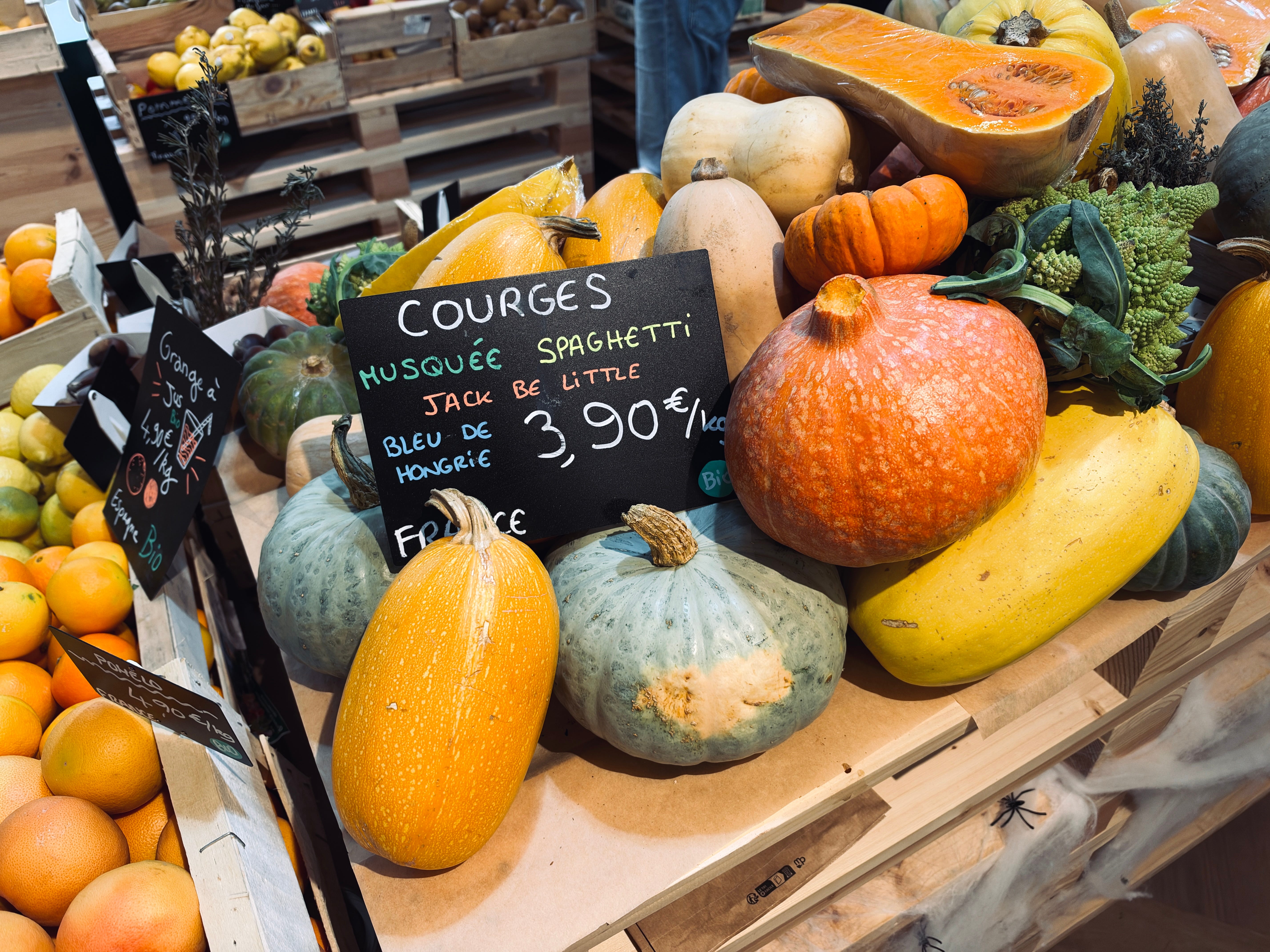
October is traditionally strike season, as well as squash season.
In October, most major museums were closed on the days of demonstrations, and the doors of the Louvre were blocked for several days afterward so the public, including people with tickets, couldn’t get in. Public transit may be disrupted, so best to plan on walking to places and not venturing too far out on days of demonstrations. But transit strikes don’t mean all trains and métros aren’t working. Some lines in Paris, like métro lines (such as lines #1, #8 and #14) are automated, so won’t be affected, but others often run at partial service and often 1 or 2 out of every 3 trains or métros may be running. Paris métro and RER traffic is updated here.
People in your hotel can likely advise you which parts of the city you might want to avoid on those days. So enjoy the restaurants, cafés, markets, and bakeries in the neighborhood you’re staying in, as locals do.
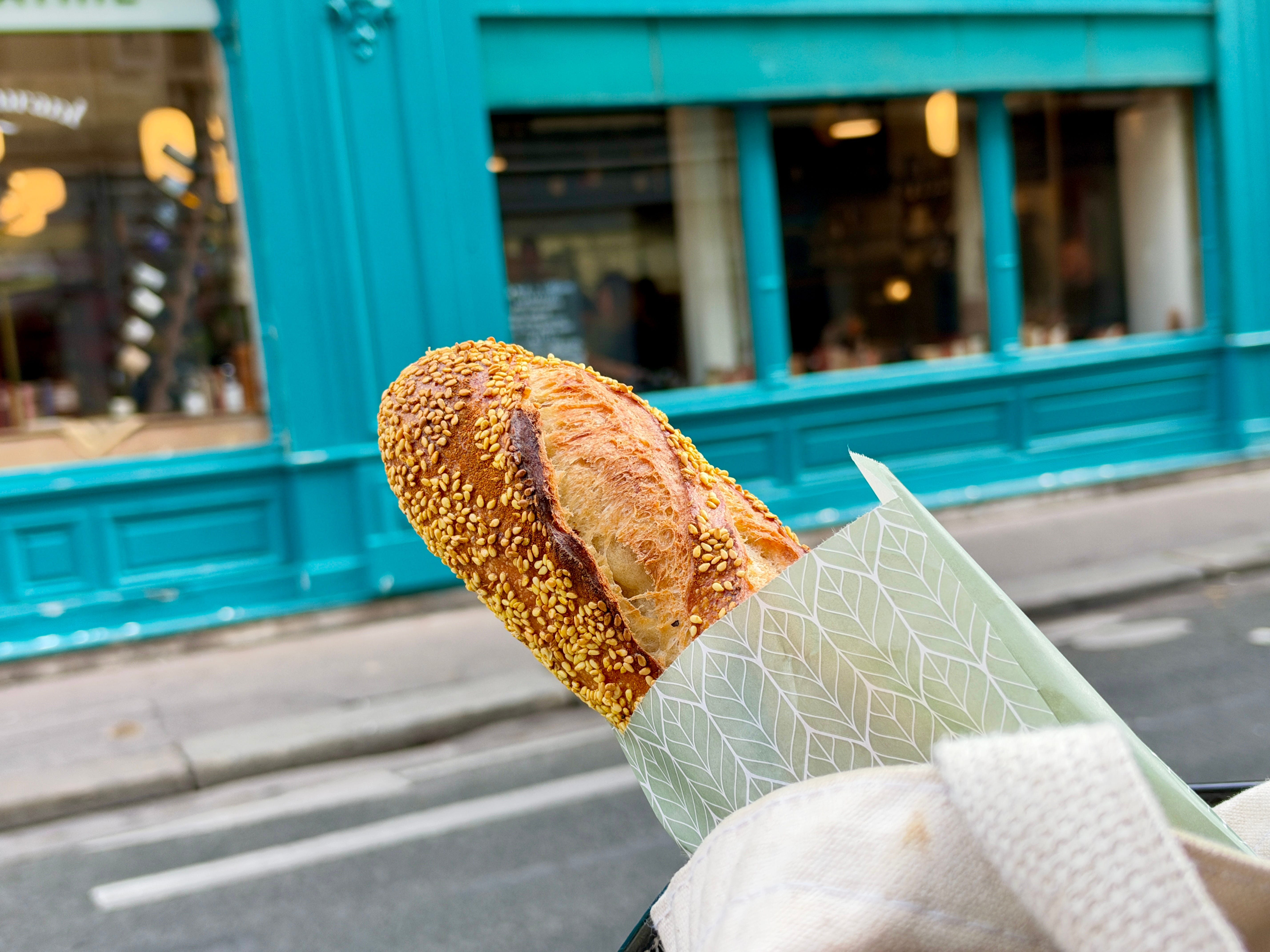
Venturing out for a sesame-curry baguette at boulangerie Utopie.
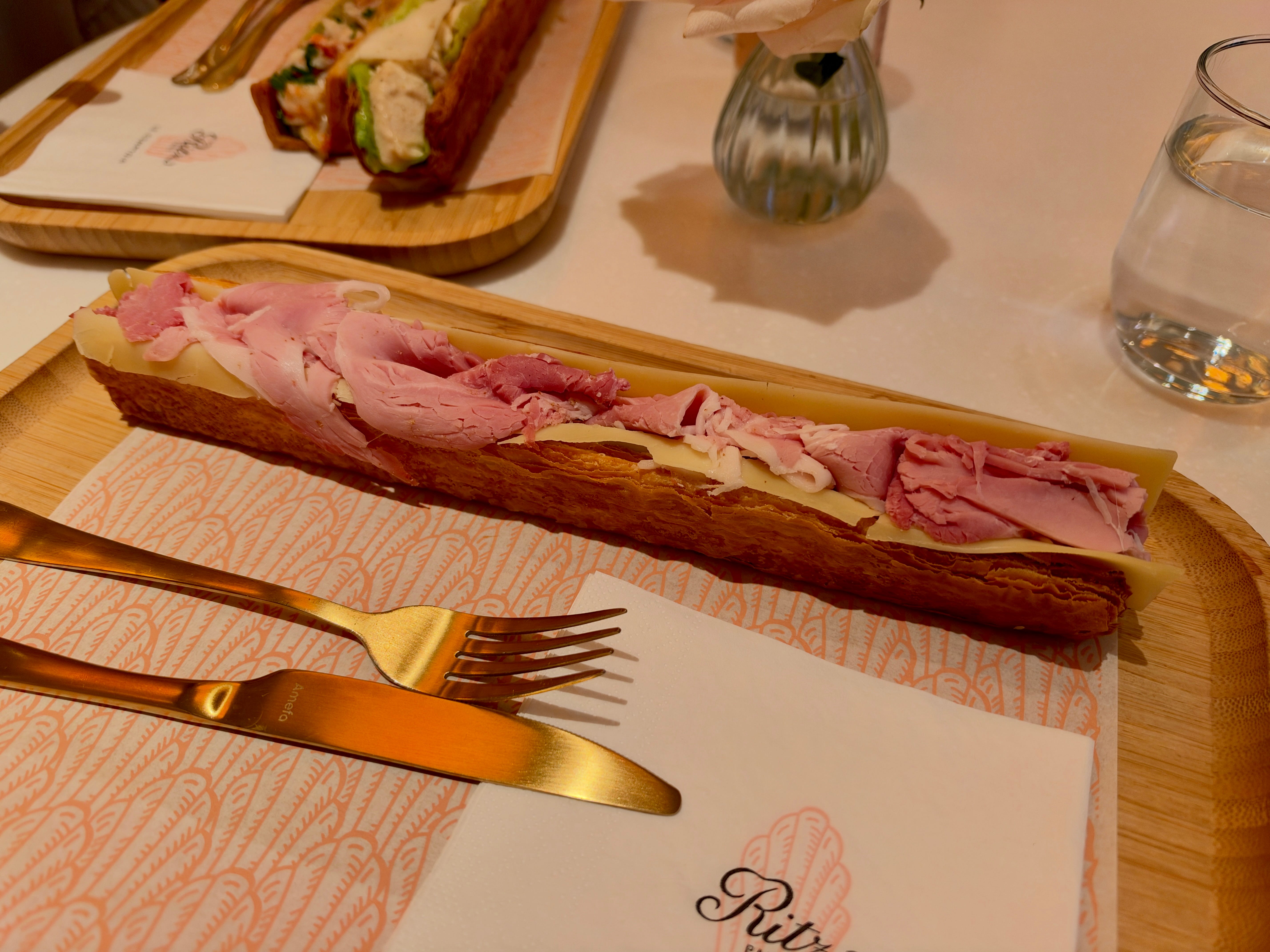
My Marie Antoinette moment was having lunch with a friend at Le Comptoir, the pastry shop of the Ritz hotel. Judging from the length at (now) well-known sandwichshops, everyone who comes to Paris seems to be waiting in line for a jambon-beurre or jambon-fromage sandwich, and Le Comptoir is no exception.
I’d tried a jambon-Comté sandwich from Le Comptoir a few years ago. It was bitterly cold that day and because the sandwich is served in a cradle of butter-rich puff pastry, as soon as I got outside, the pastry seized up and practically froze.
So it was nice to sit inside, where it was warm, and enjoy one, where the crust hadn’t petrified. My friend wanted to try all the sandwiches, including the Homard (lobster) and César. In France, a César salade almost always has chicken on it, which I’ll give them a pass on. At least they didn’t put some of the crazy stuff that you find on César salads here, such as tomatoes (!), shrimp (!), eggs (!), fried chicken tenders (!), and even ham (!) But I’ll admit the César sandwich with chicken was pretty good, too.
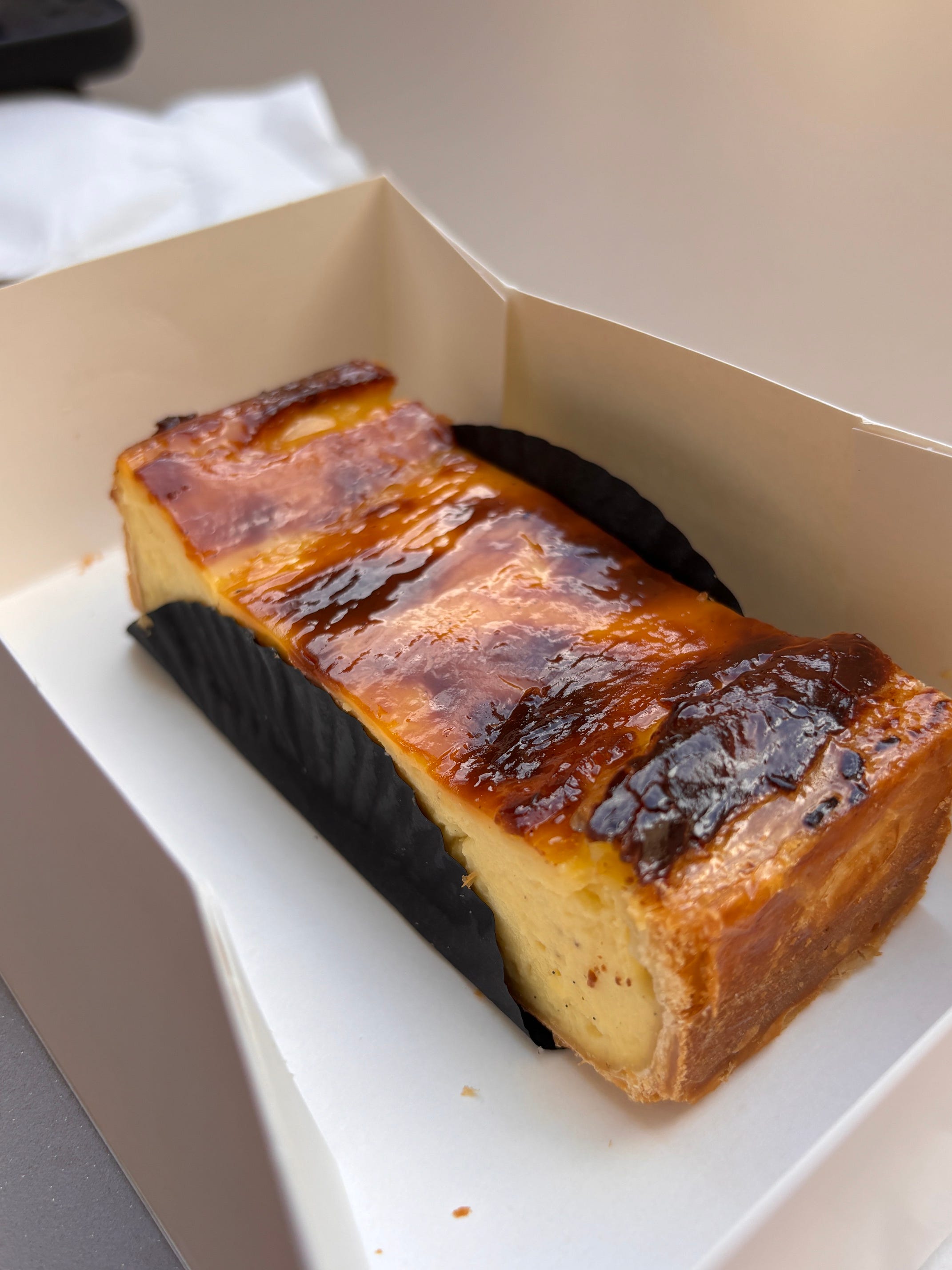
Trompe l’œil pastries are still trending in Paris and the Flan pâtissier (above) by pastry chef Joris Theysset, which resembles a palmier, was filled with rich vanilla cream. Chef Theysset’s Chocolate peanut butter tart was delicious, but sooo rich that the two of us only ate half of it, and I took the other half home, which I shared with Romain. Also trending in Paris: very large pastries, big enough to feed 2 to 4 people. So when someone tries to tell you that the French practice portion control, all bets seem to be off when it comes to desserts these days. I think with the stiffer prices at places likeCédric Grolet, where a cookie will run you €15 and a pastry costs €20, they want to give you your money’s worth.
A world away, I spent the first part of October in Nepal, which was quite an adventure. I’ve always associated the country with trekking, so it was never on my radar, but I was so glad I went. While I was there, several people wrote to me to “Be careful of earthquakes!” It was nice that people cared, but I wasn’t sure what one does to avoid an earthquake when you are already somewhere. They have them in San Francisco and Japan, two places I also traveled to this year, but no one warned me about them when I was there. Thankfully, I survived.
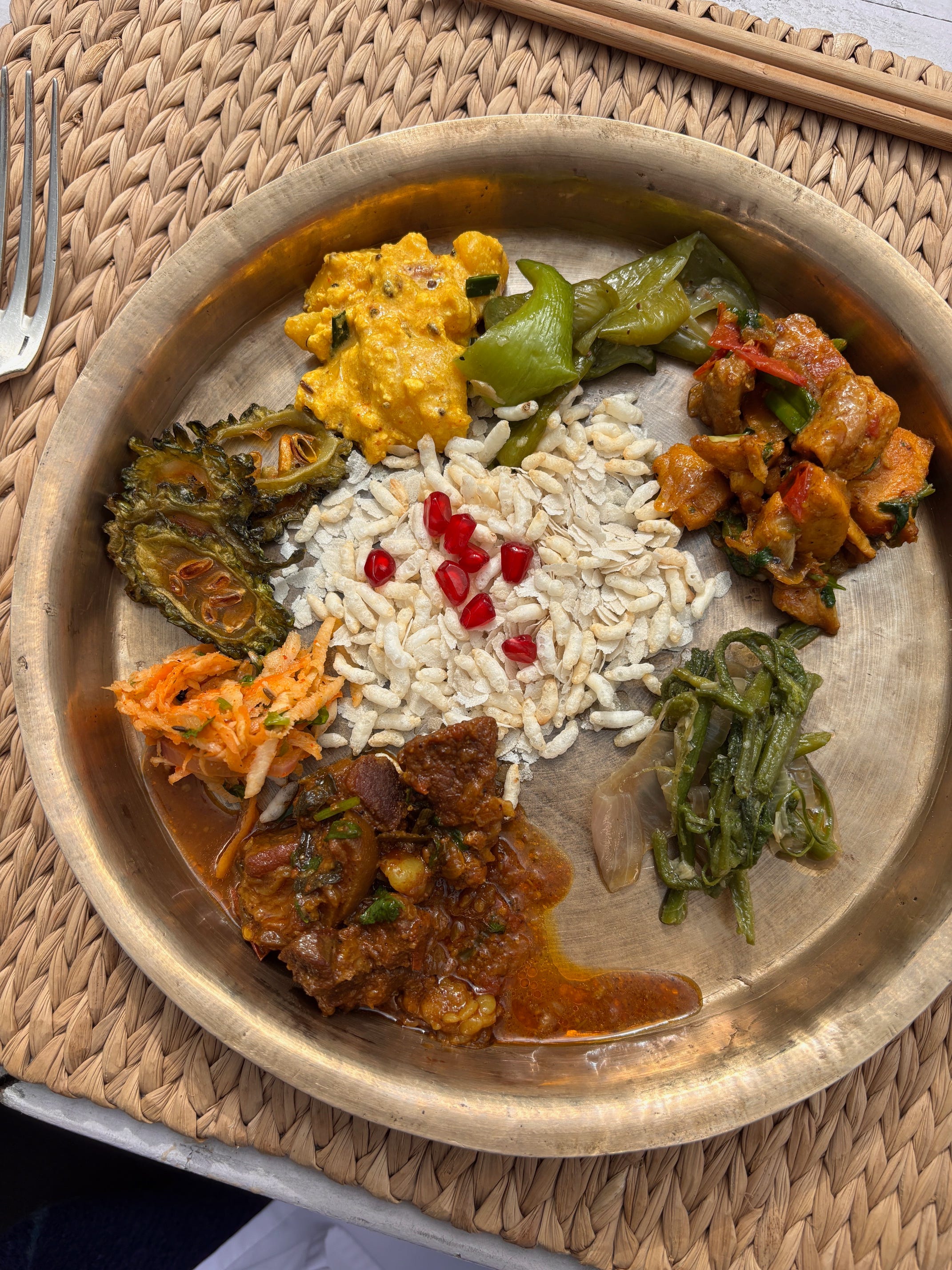
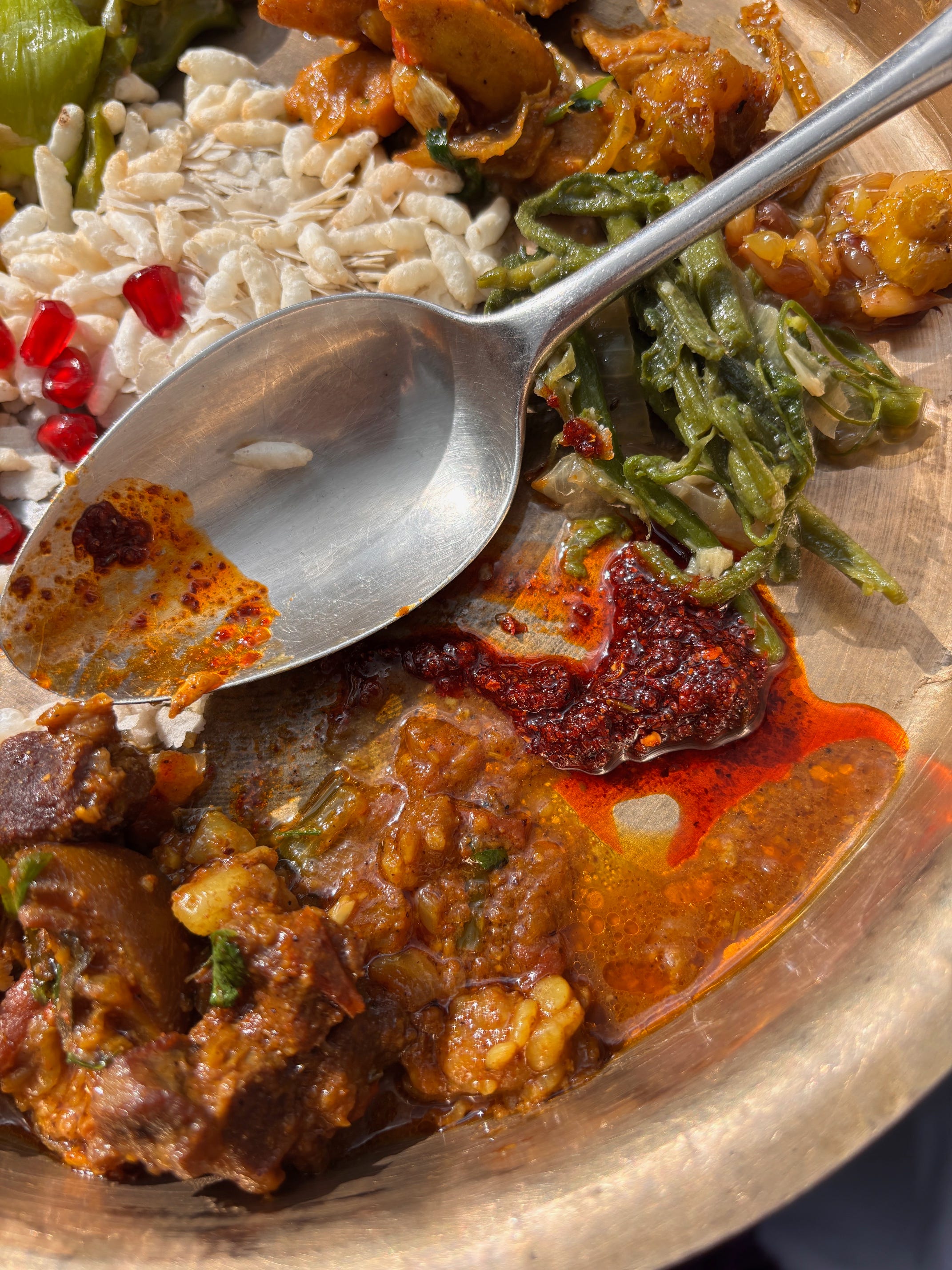
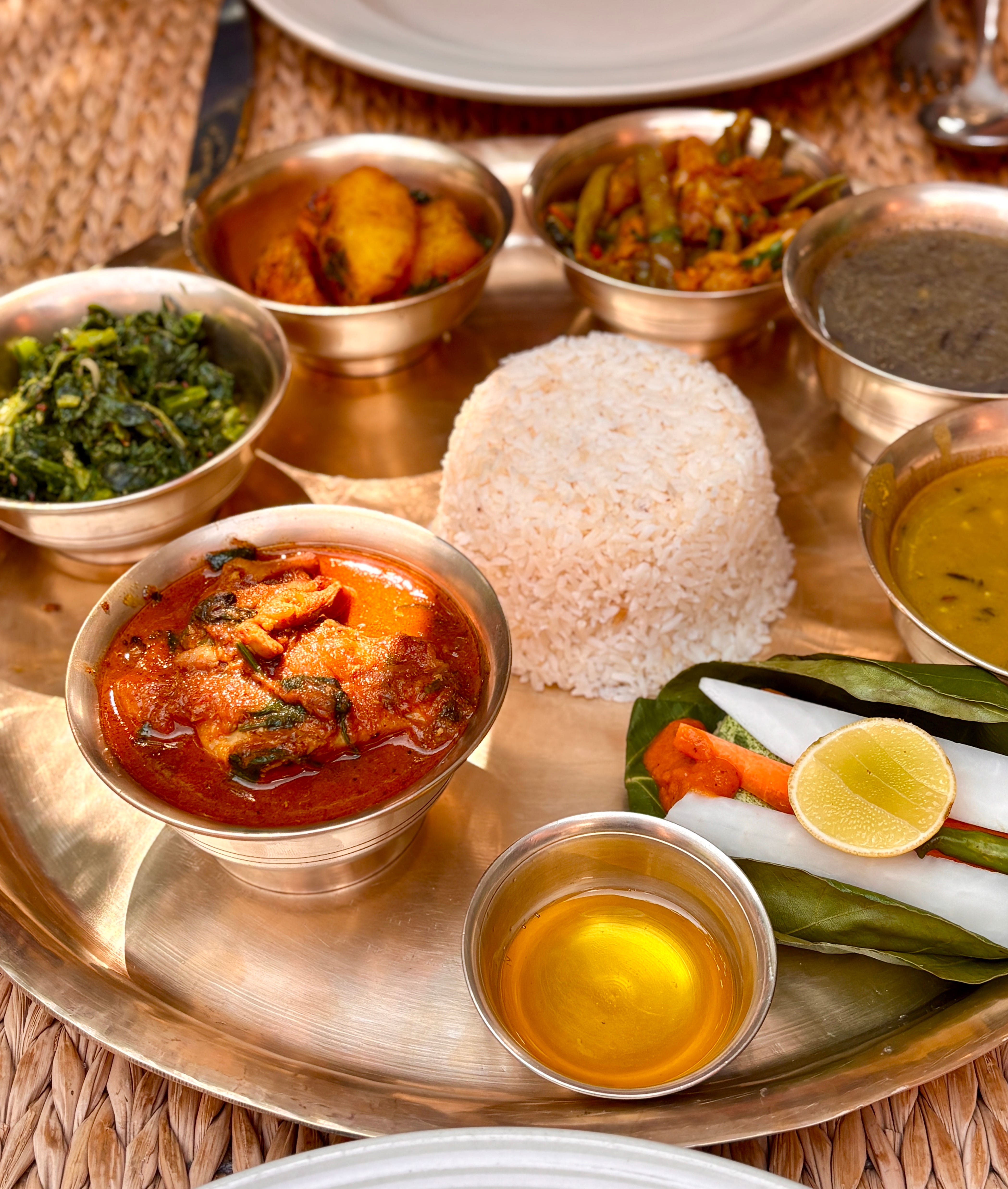
I had some beautiful food in Nepal, such as the Thakali Thali below, a composed plate that can vary, but this one had vegetables (including deep-fried bitter gourds), pickles, spicy potato curry, and a soup of lentils that people often douse over rice, if it’s steamed. But the rice is sometimes puffed, or flattened, rendering each grain completely flat, dry, and very crisp.
I wrote about other foods and the farmer’s markets I went to, here and here. Our tour of the Asan market in Kathmandu was with Alter_nativelife, which you can book through a DM on their Instagram page. I wasn’t thrilled when they said we should meet at the early hour of 7am, but by 8am the vendors were packing stuff up.
Some readers asked me about Nepalese recipes and the best book I’ve seen is Timmur, which is in English and available globally. At a cooking demonstration I attended, the cook explained that Nepalese food has fewer spices than in India, which makes dishes easier to replicate at home. Commonly used spices, such as cumin, coriander, turmeric, garlic, and ginger, are pretty easy to get, even in Paris, so that’s a book I may be adding to my collection.
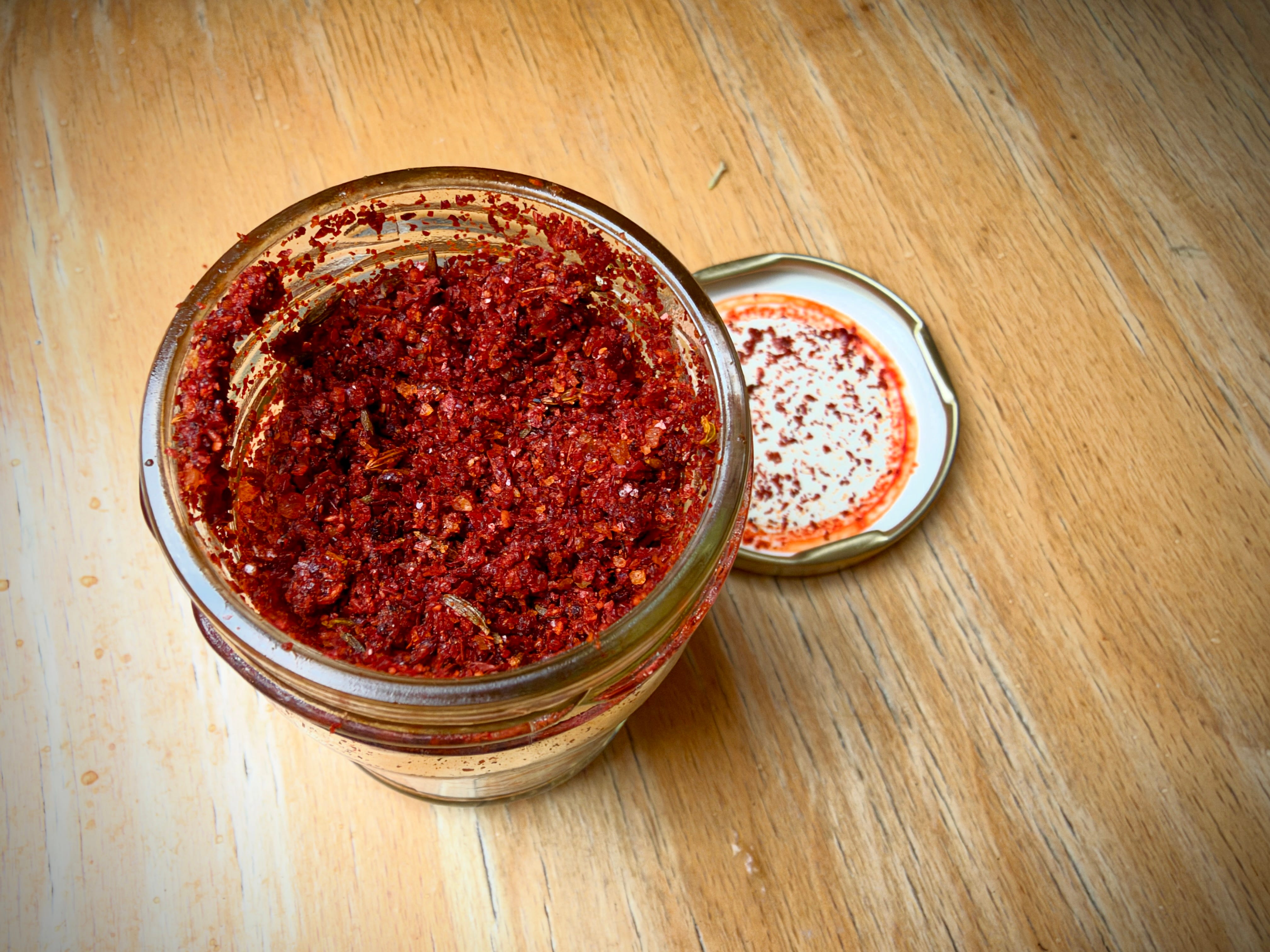
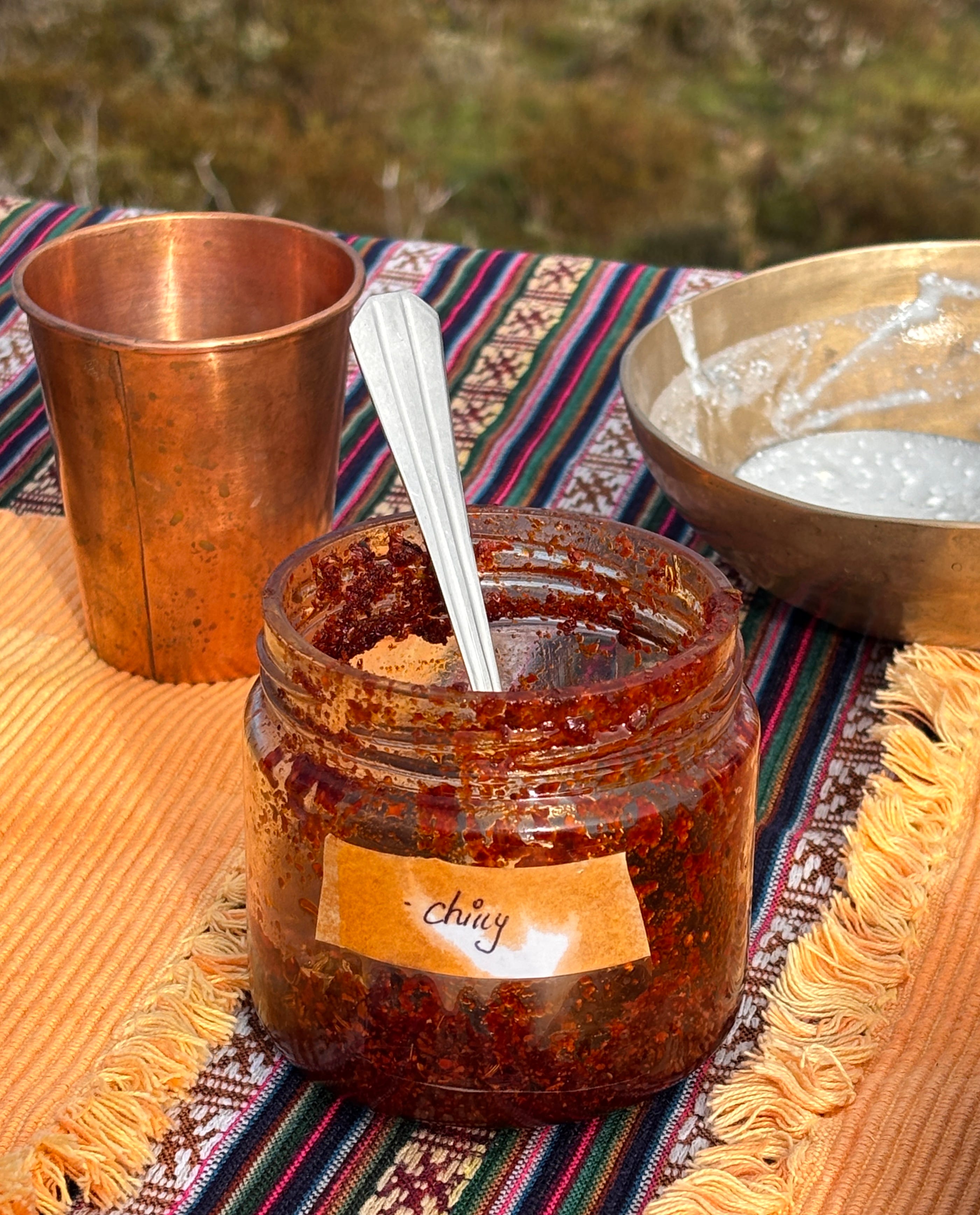
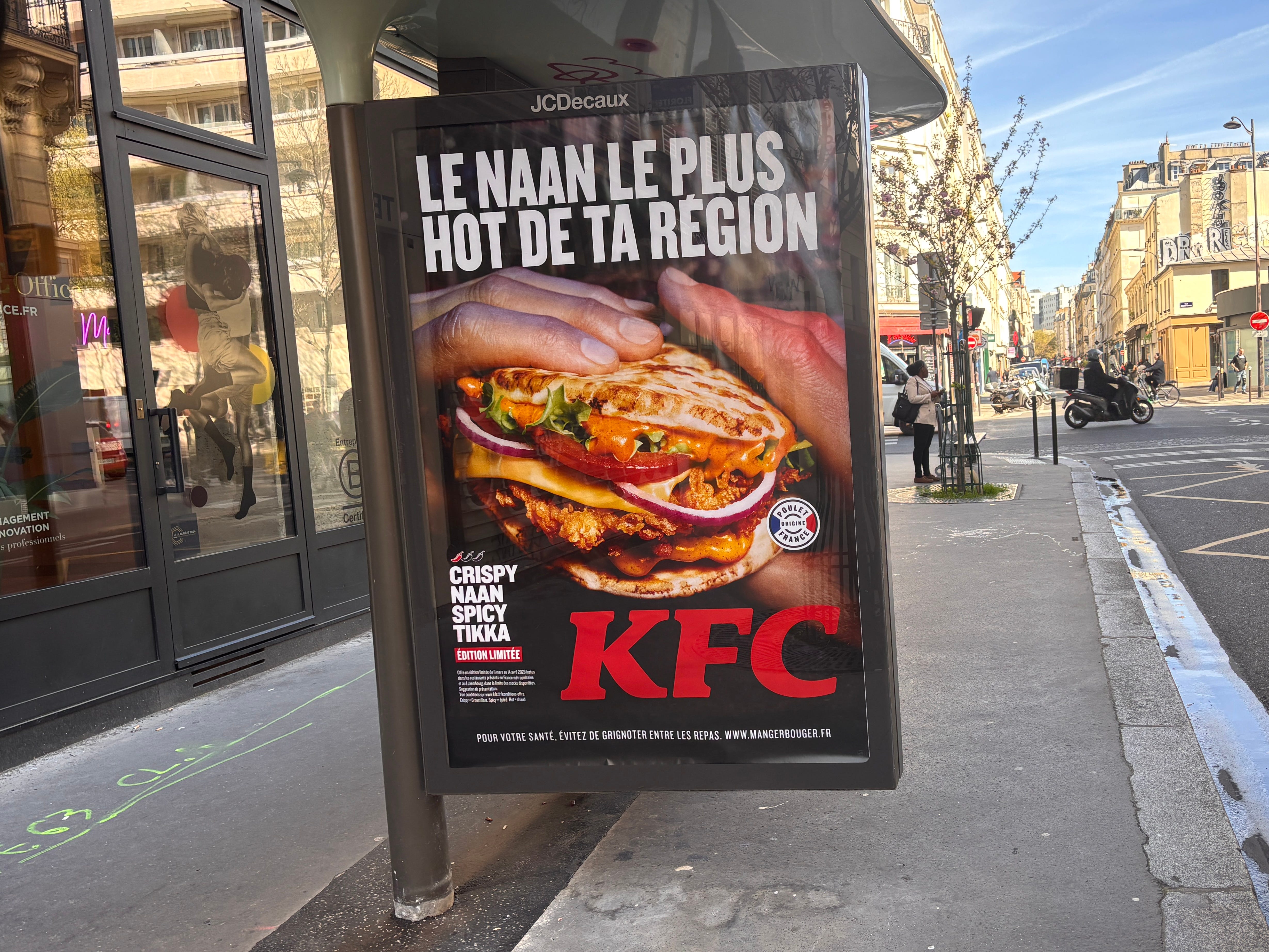
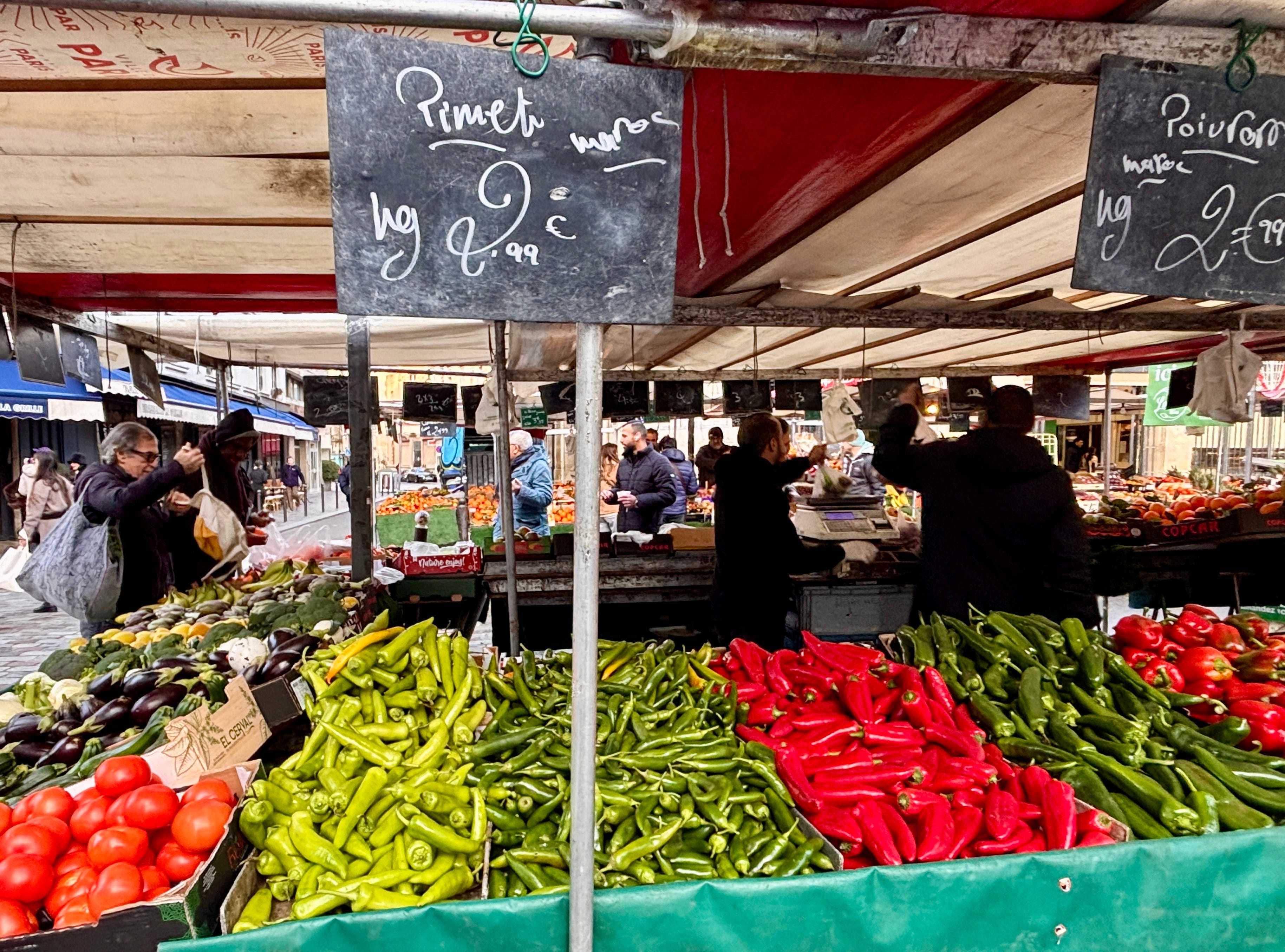
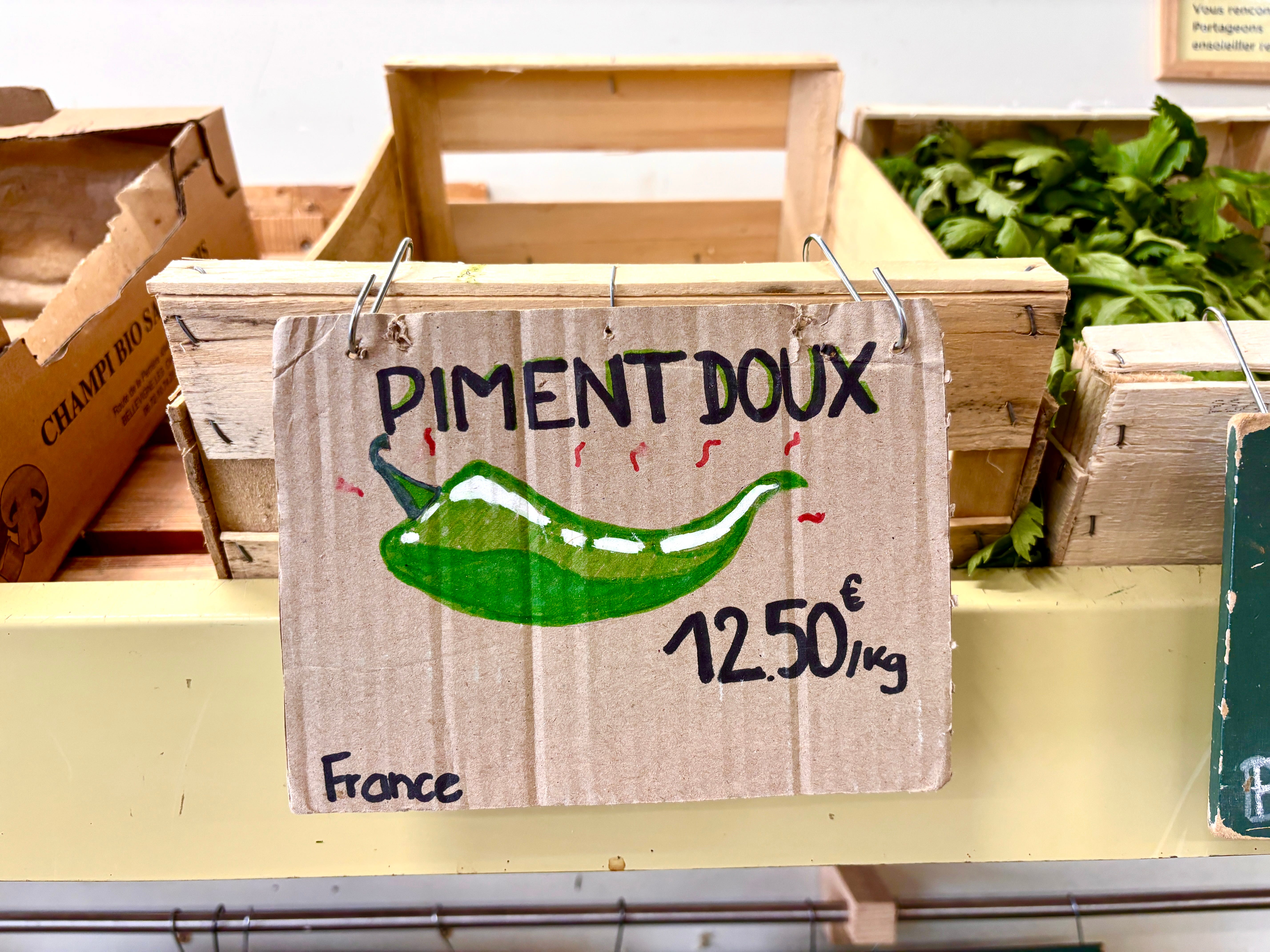
What I really fell for was the red chile sauce that’s served with just about everything in Nepal, at breakfast, lunch, and dinner. It’s no slouch in the spicy department but had a slightly fruity finish, which perked up everything it touched. With hot sauce taking over Paris…
…it might be appreciated here, especially since Romain has discovered, and loves, chili crisp.
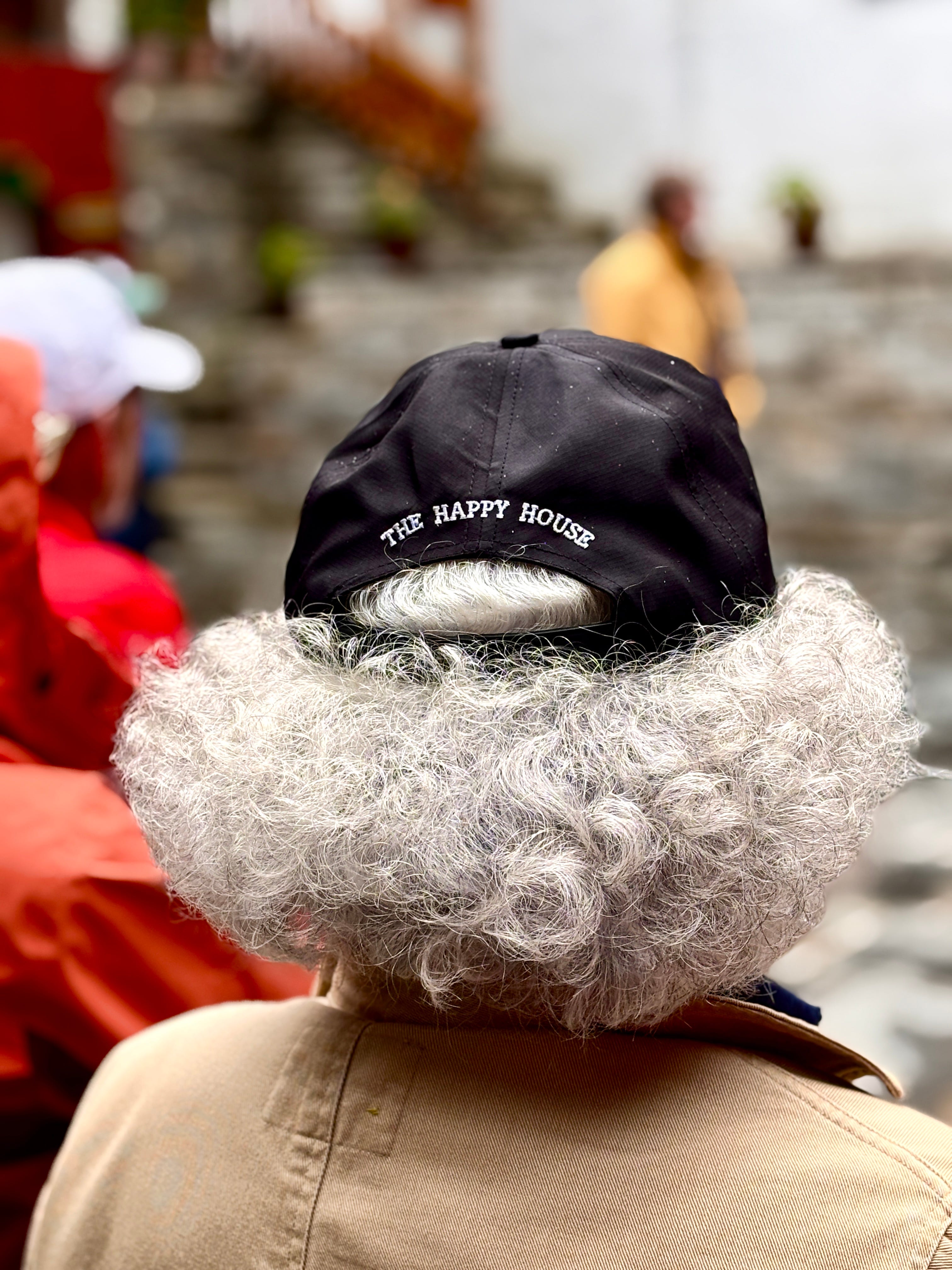
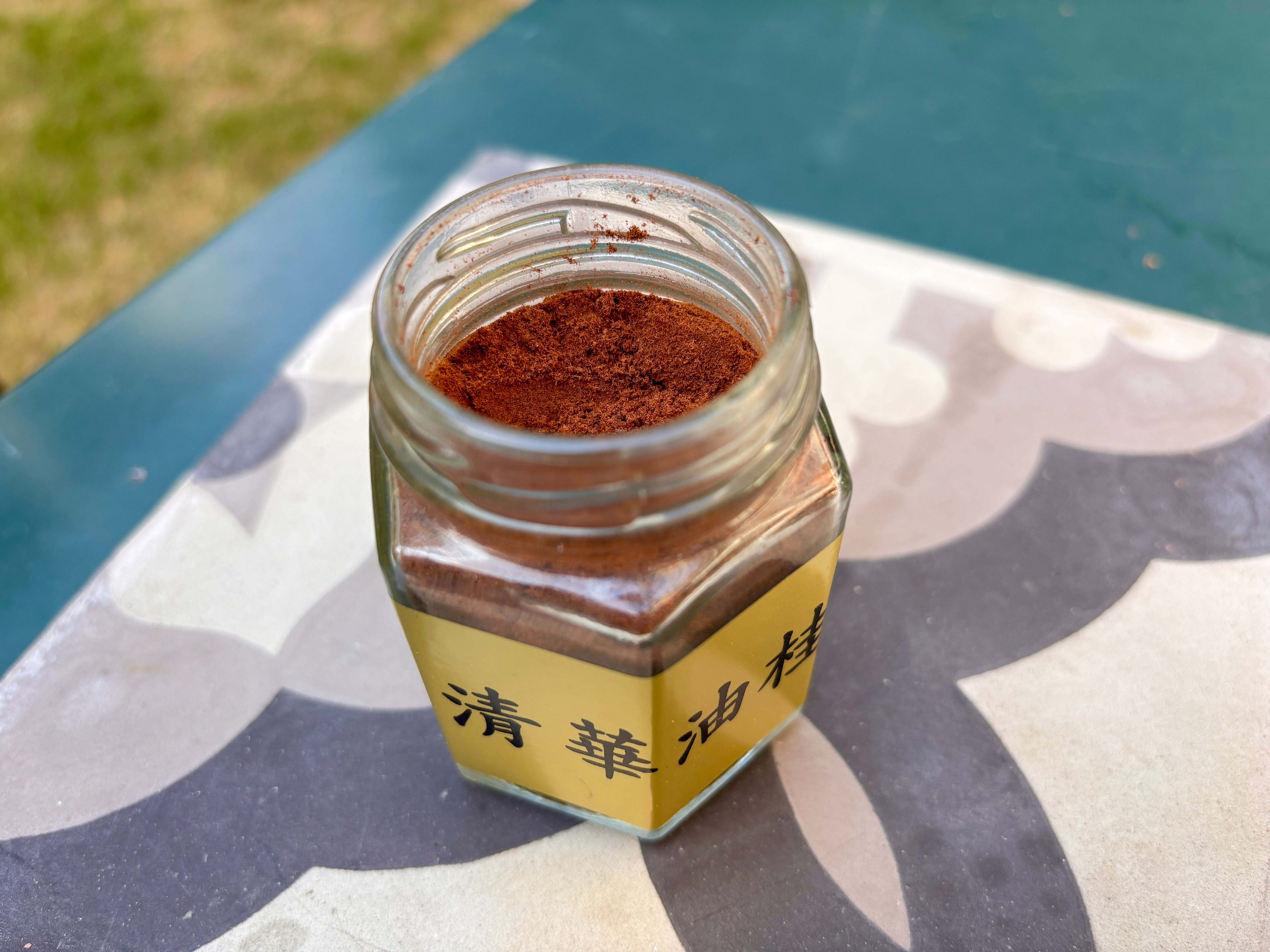
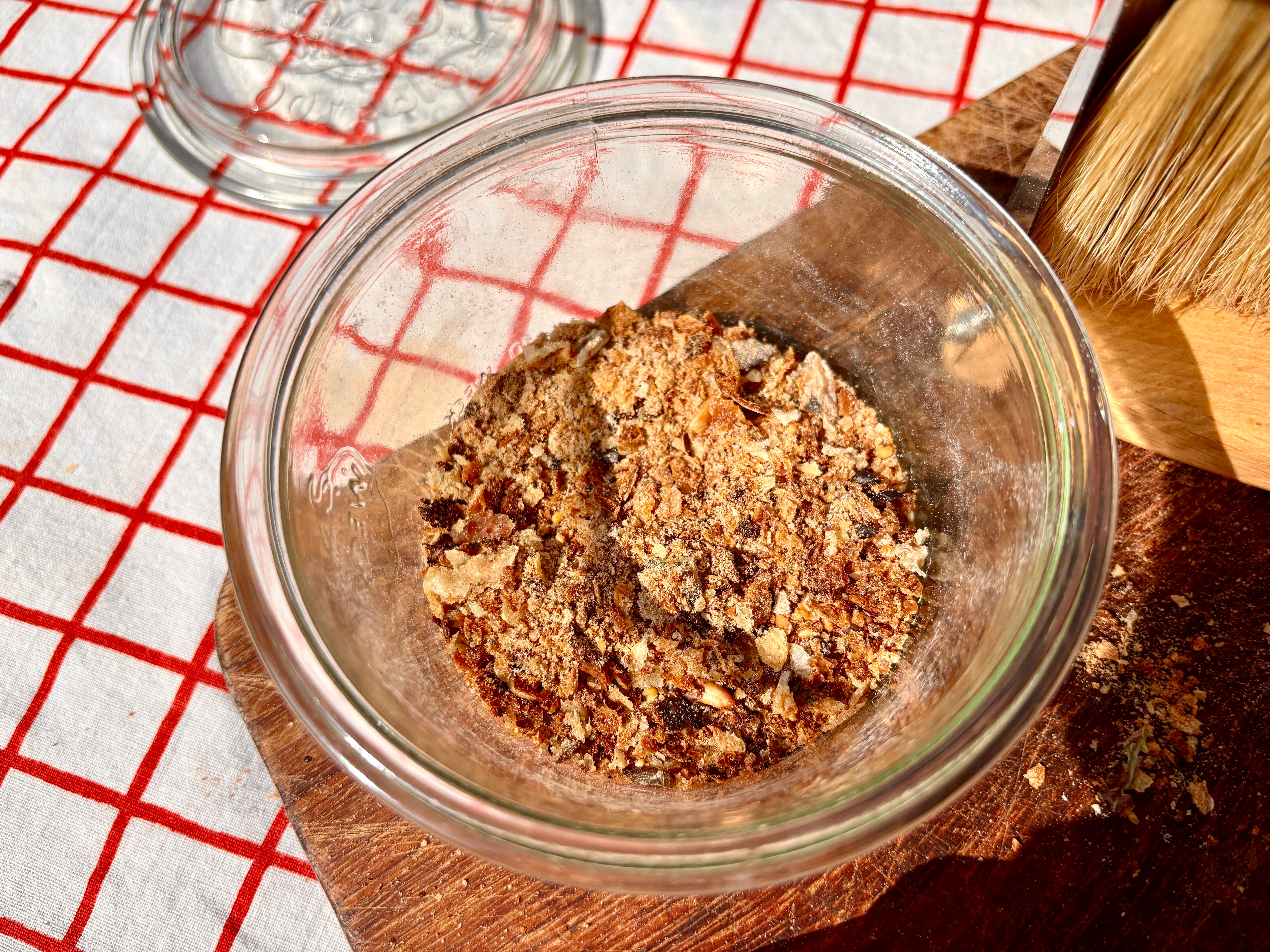
Thankfully the wonderful chef Mingmar at The Happy House, where we stayed for a week, gave me a jar of his spice mixture and said just to mix it with olive oil when I got home. Every time I pressed him, or anyone, for that matter, to find out exactly what was in it, I got a completely different answer. I guess it’s true that you can’t have it all.
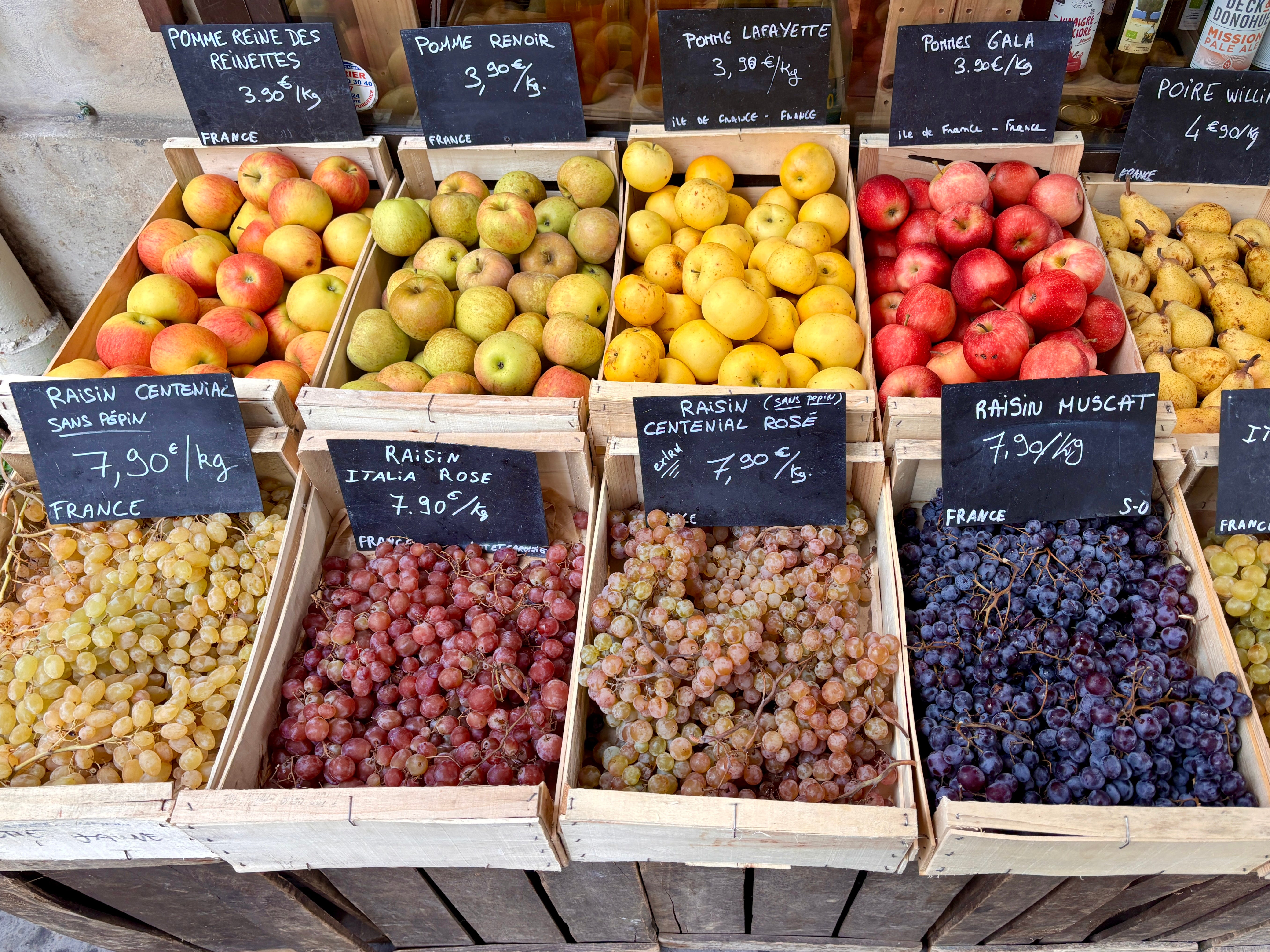
Now that it’s November, we’ve got lots of pears, apples, and persimmons at the markets. Clementines, with their shiny green leaves attached, are just starting to show up, waiting to be sold by the bagful. Those really brighten up winter.
Gravy? Sweet potatoes with marshmallows? Pumpkin pie? While some of us may be nostalgic for them (I only wanted the marshmallows when I was a kid…and nowadays, I like sweet potatoes, but still, I keep them separate), they’re not all that enticing to French palates. Neither is turkey, although French farm-raised turkeys are excellent. Pro tip: If you’re looking for a whole turkey in Paris, the volaillère at the coveredMarché Beauvau sells holiday birds at non-extortionist prices. I’ve seen whole turkeys selling for €250 ($280) per bird elsewhere. Yikes.
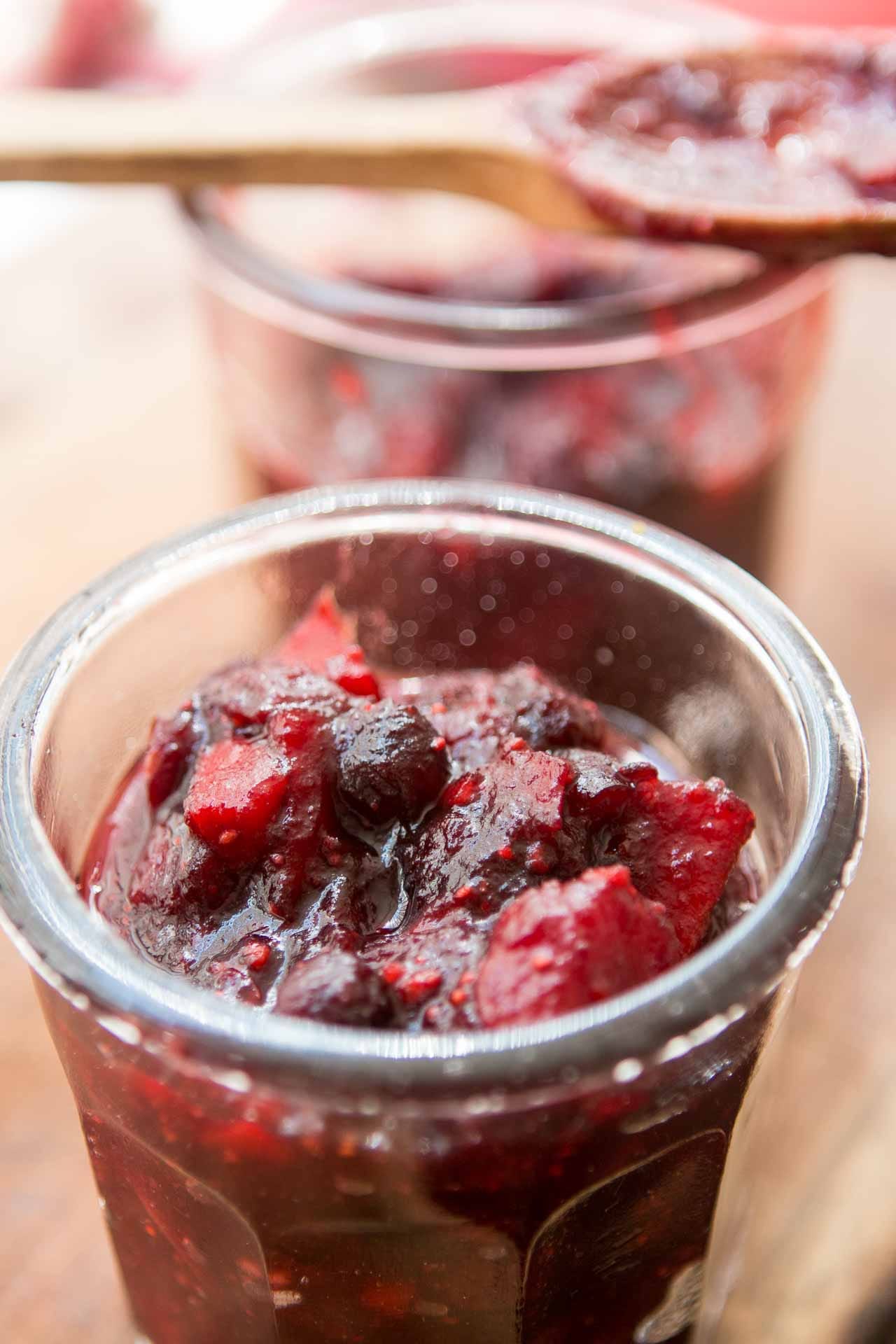
This tangy Cranberry chutney is a favorite around here. I make it whenever I can get my hands on some fresh cranberries, although frozen work just as well.
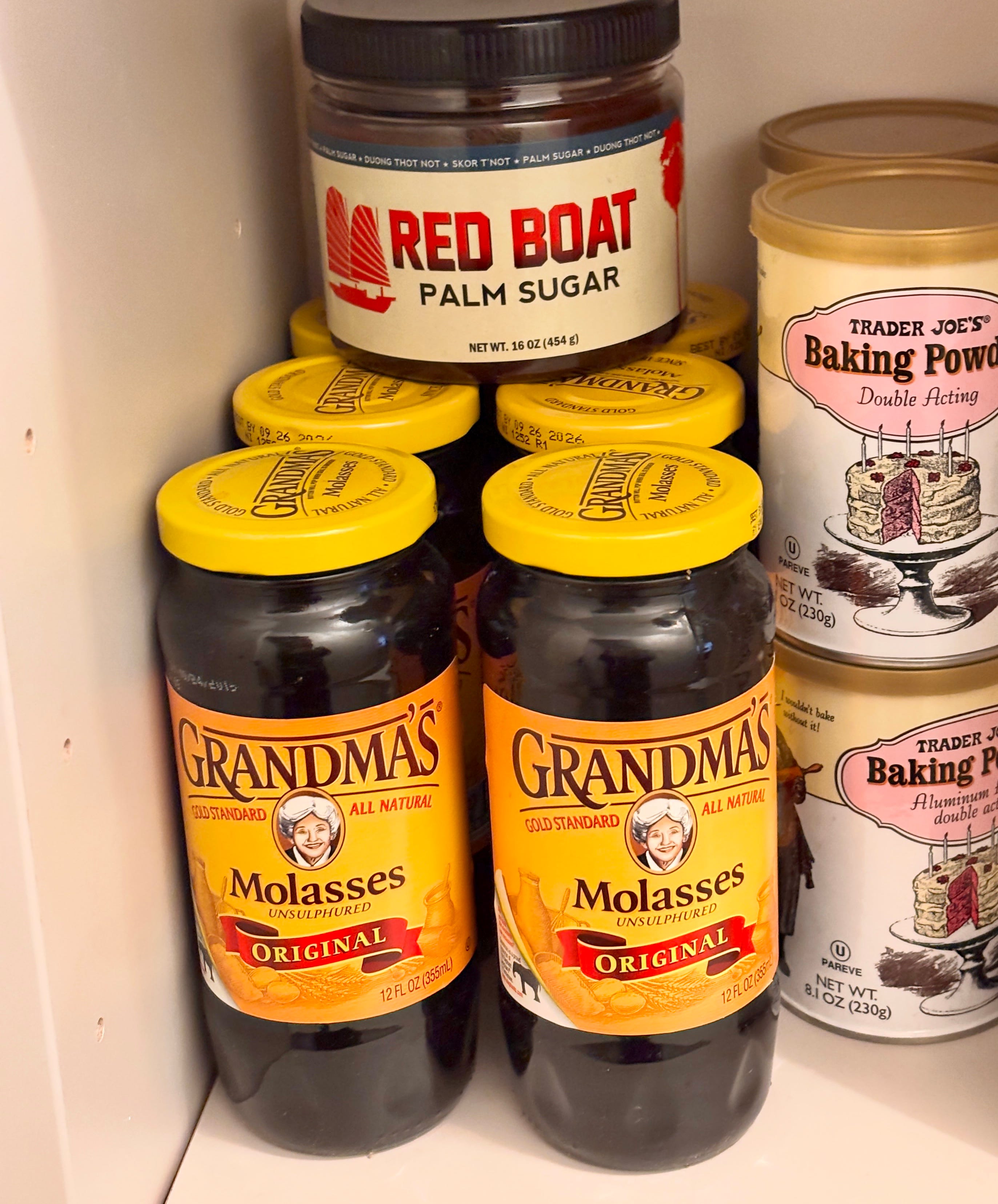
The other T-day barrier is the scavenger hunt to find all the ingredients here, which can break la banque. I’m maintaining a good stash of molasses, but if anyone’s looking for it, it can be had for €14,50 ($16.50) a jar at La Grande Épicerie. But don’t worry, I list my lower-priced alternative here.
So onward to November. The days are getting shorter and it’s darker earlier. Another day of strikes and demonstrations is planned for November 5th, and there will be more to come. If you’ve got plans to come to Paris, check museum websites and keep abreast of any changes with the métro and other forms of transportation, which are announced in advance on the Paris transit website. Thankfully Paris is a great city to walk in, and one where there’s never a dull moment.
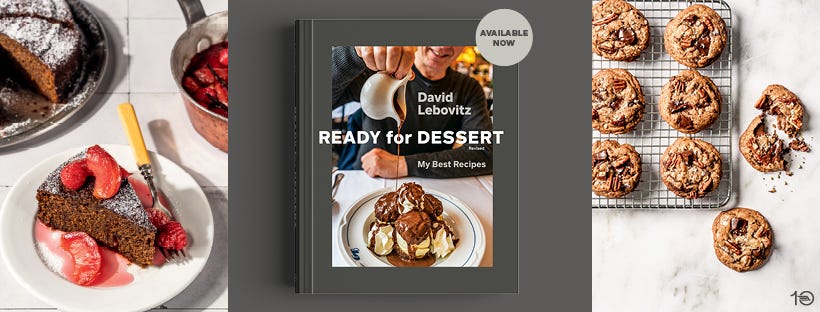
Everybody loves cookbooks, which can’t be replaced by AI, unless AI is able to taste a recipe. So for now, I still have a job.
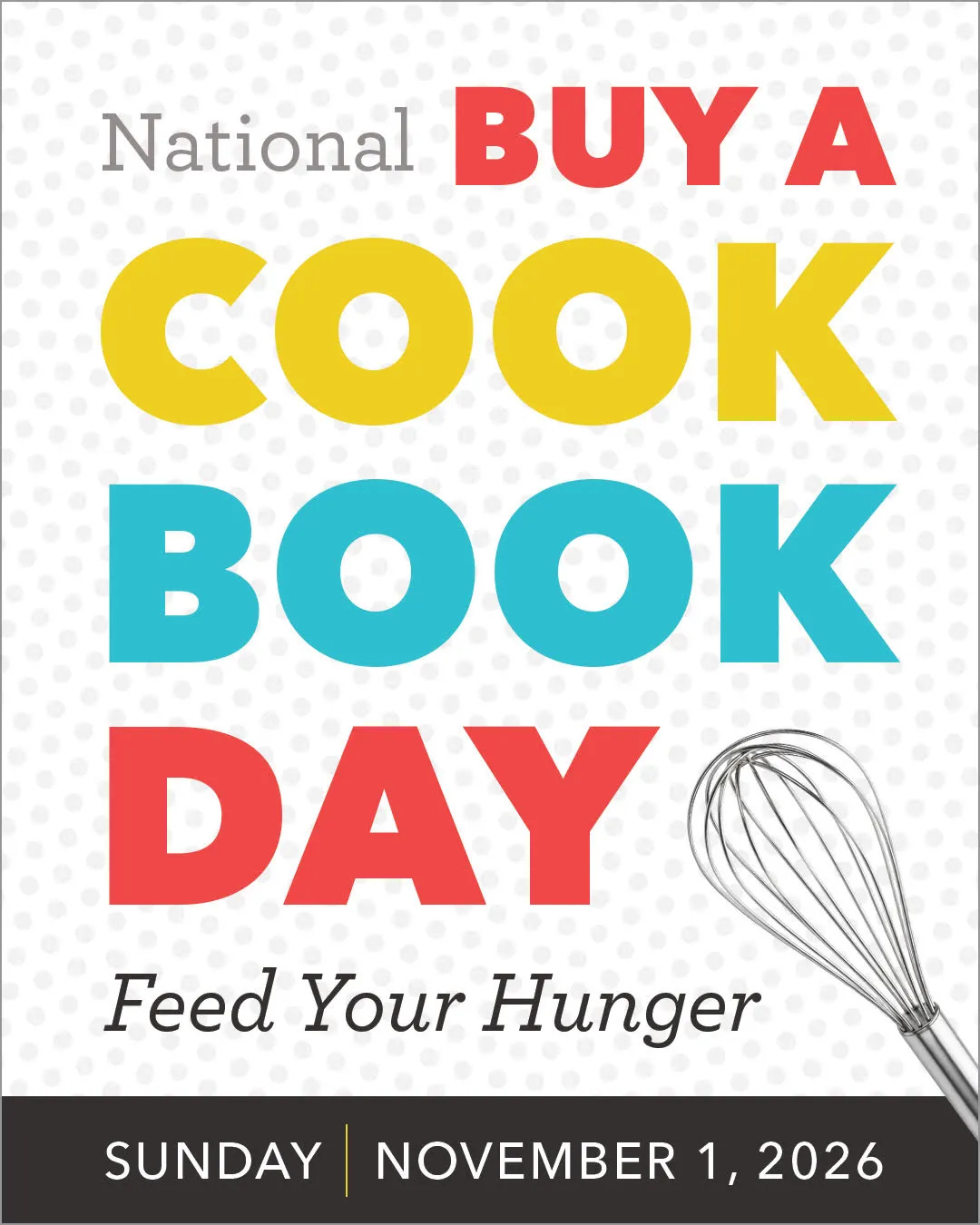
To support the community of cookbook authors, Jenna Helwig of launched Buy a Cookbook Day, when you’re encouraged to buy a cookbook and support an author and a bookseller. There are some wonderful cookbooks that came out this Fall, although you may already have some favorites in mind.
I’ve been revisiting some of my own recipes lately, and often I find new ways to make them, sometimes tweaking ingredients and other times, streamlining instructions. I’ve also been adding short how-to videos to recipes on my website. Here are a few of my recent favorites…
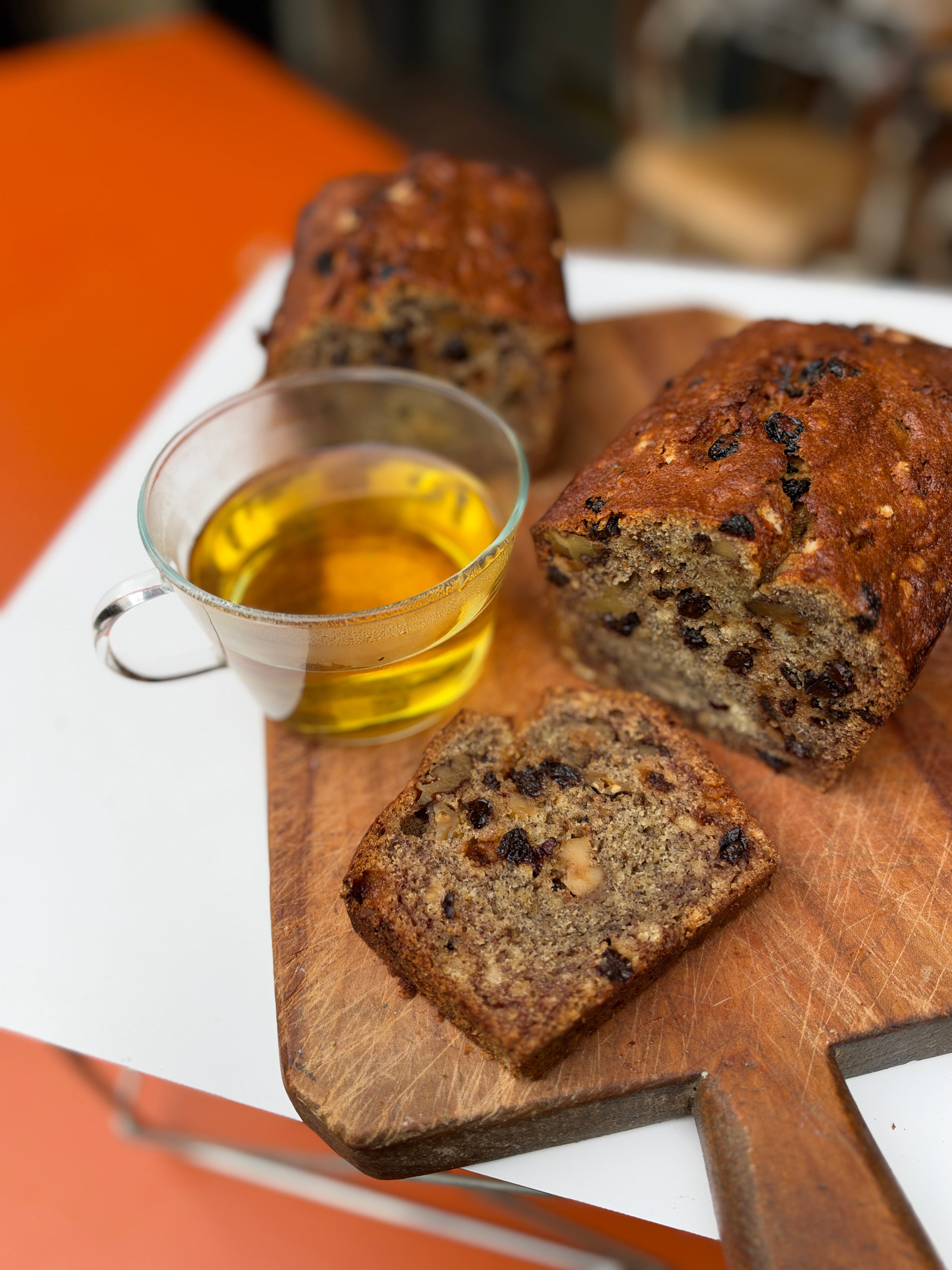
This Persimmon bread is a true Fall treat and a great way to use ripe persimmons. Everybody loves this bread, and I bring a loaf each year to a saleswoman at a well-known Left Bank chocolate shop, who was so nice to me when I first arrived in Paris. So I like to return the favor with an annual cake. If she’s reading this, stand by!
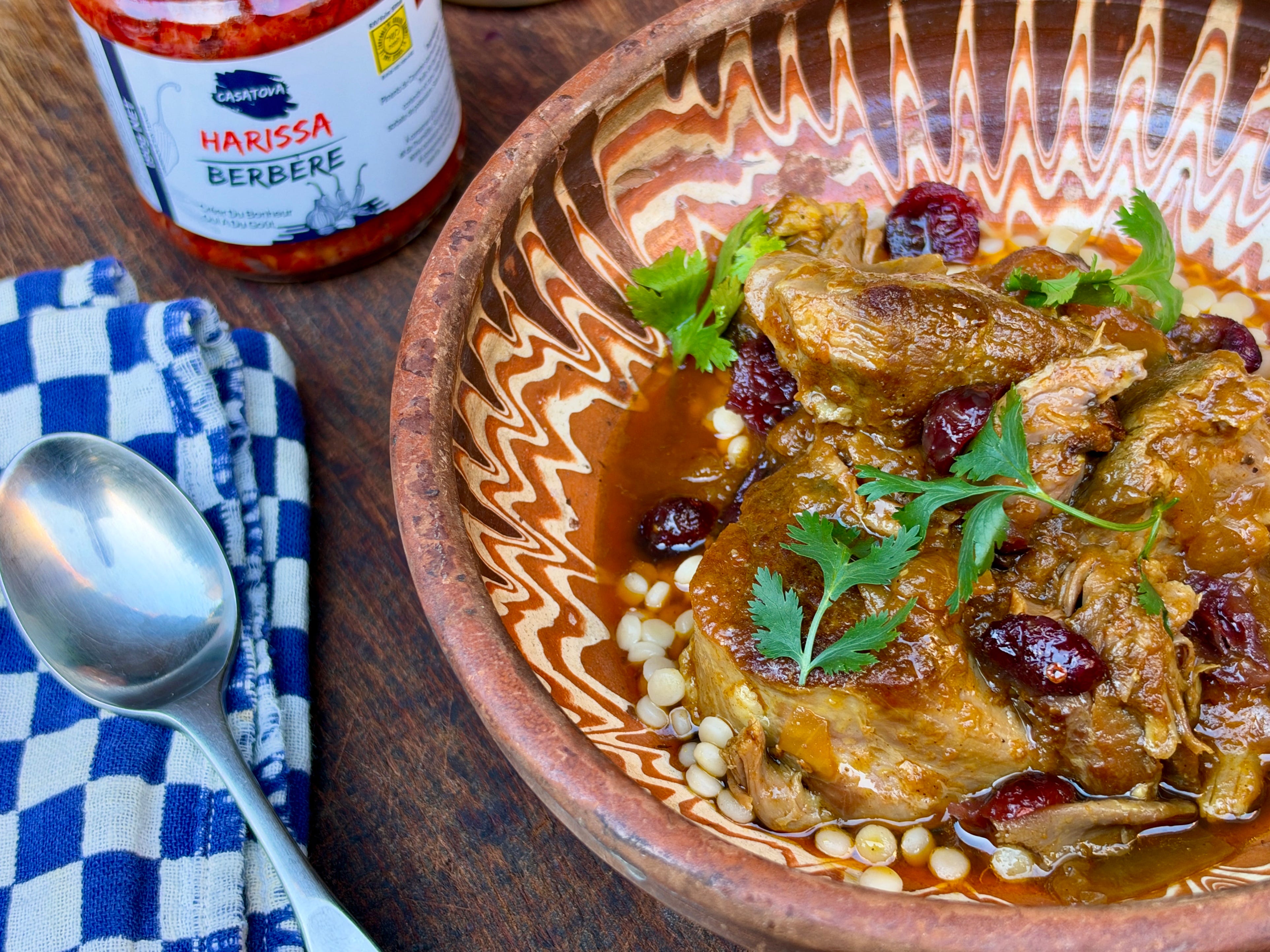
I don’t know the word for “cozy” in Arabic (I’m still working on my French), but tagine is North African comfort food at its best. With gentle spices, falling-off-the-bone lamb meat, and dried fruit punctuating things here and there, offering a little sweetness, Lamb tagine is simple to make and great for winter, when you don’t mind crave something that’s been braised gently in the oven for a few hours. I always serve it with a jar of harissa on the side for guests to dial up the amount of spiciness to their liking.
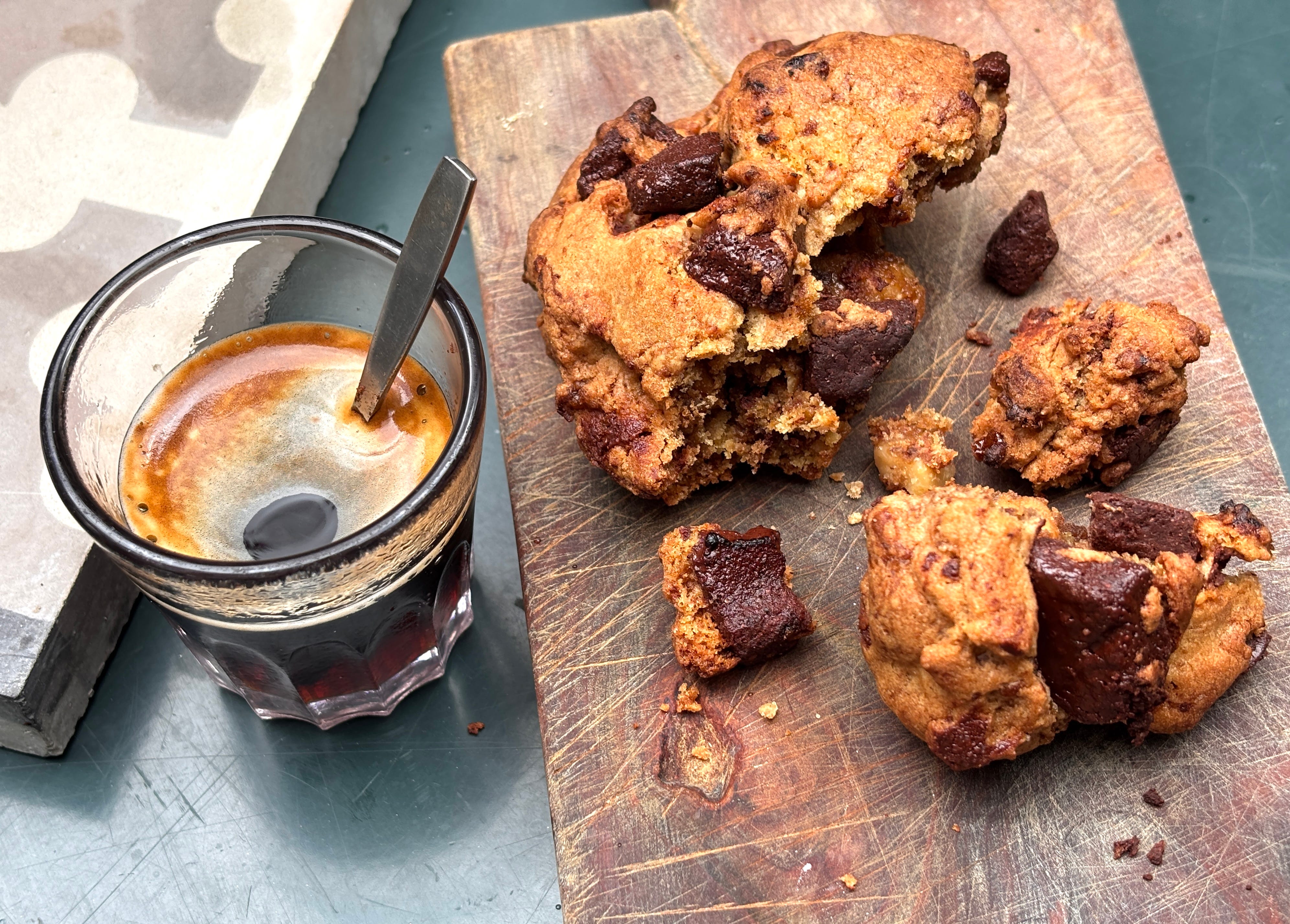
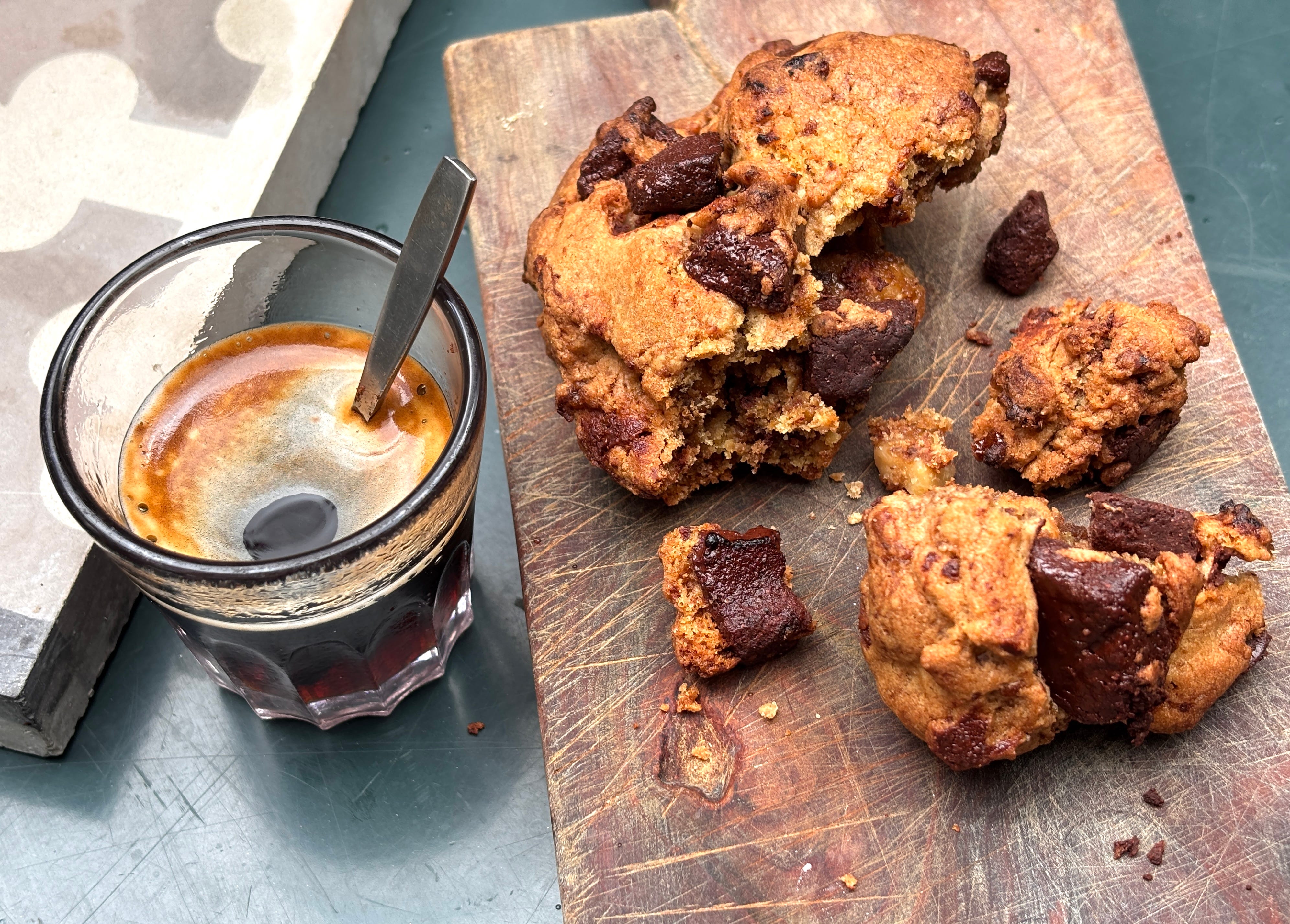
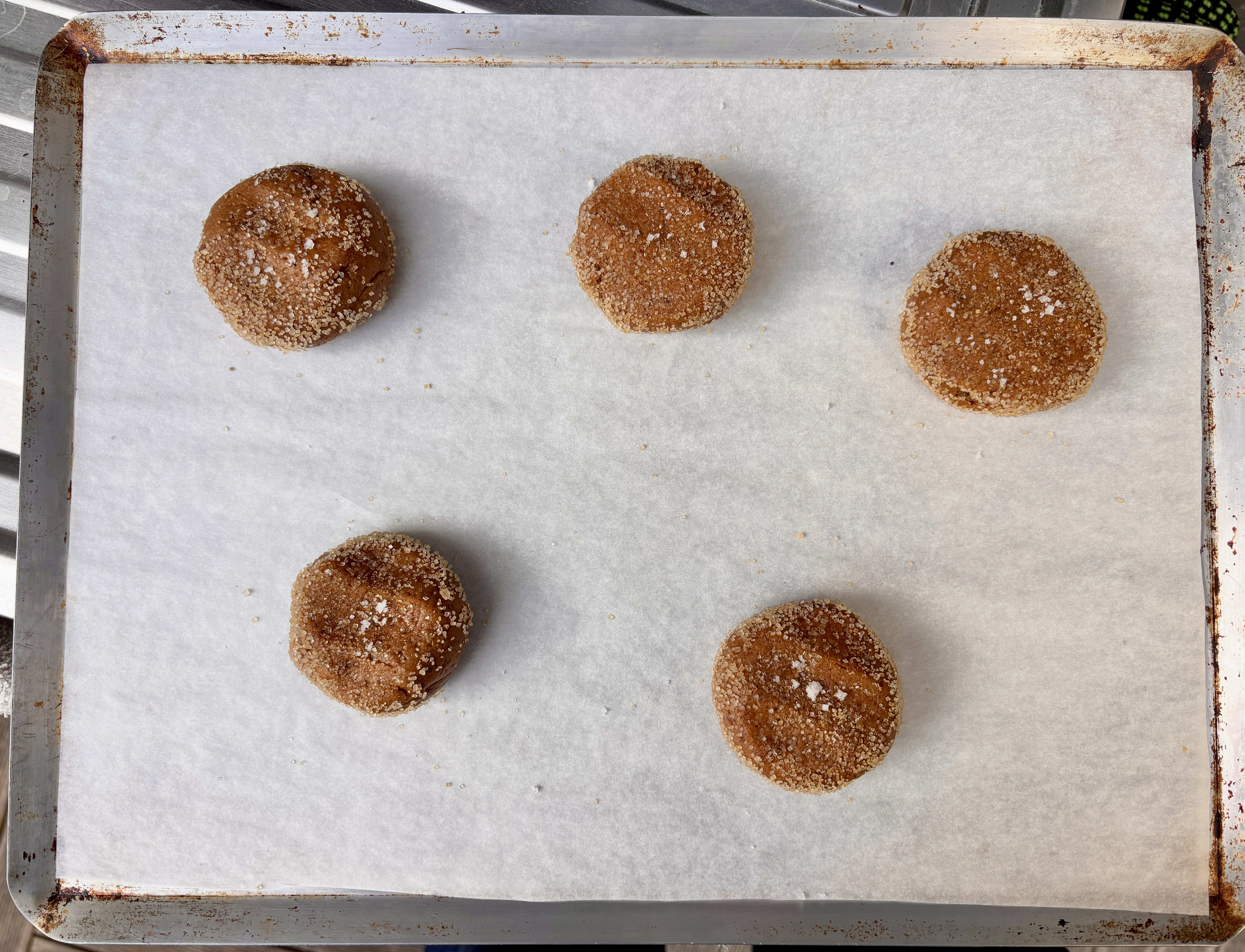
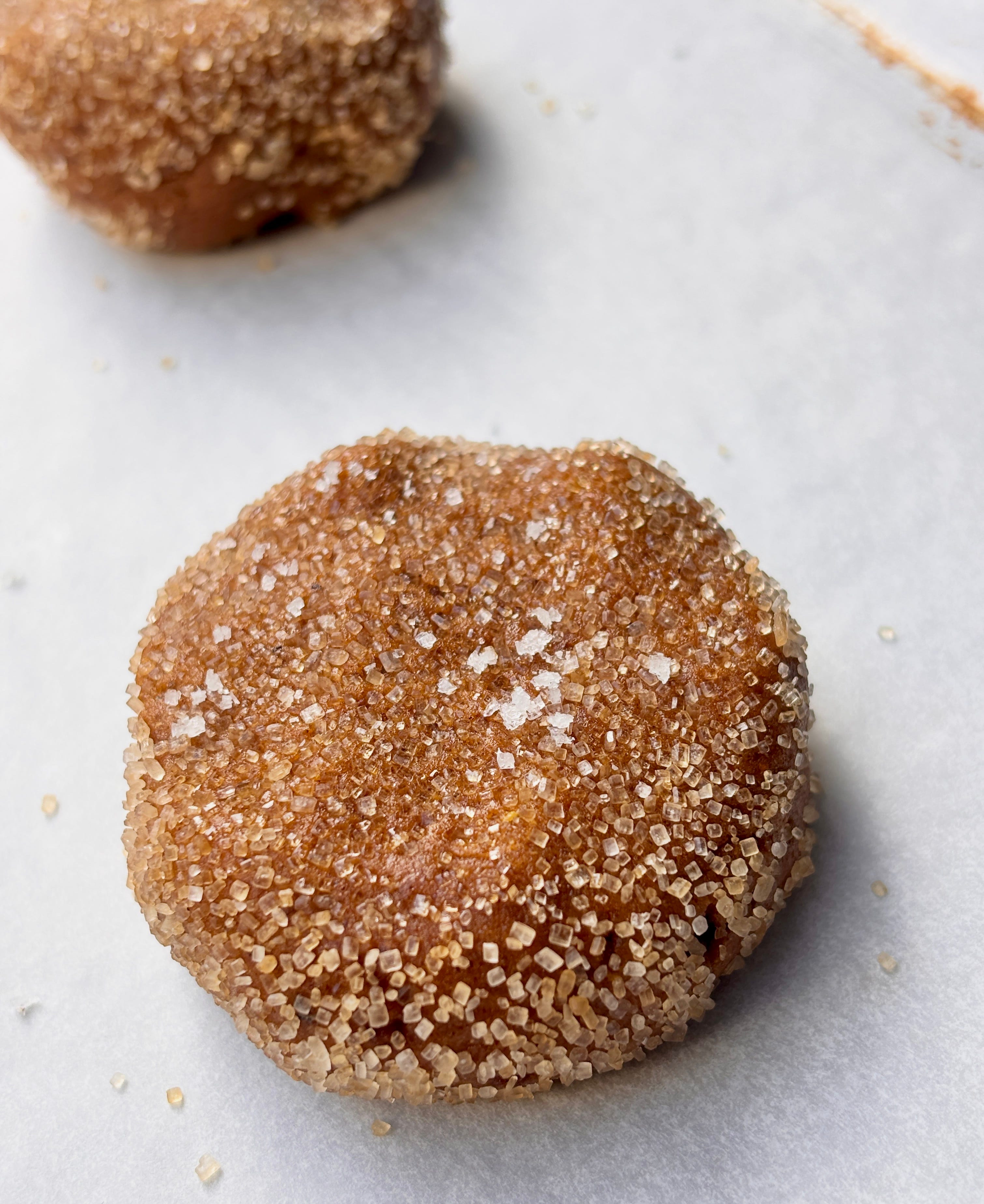
Sift by is such a wonderful baking book that I had to return to it so I could prepare herMiso walnut chocolate chip cookies. The recipe only makes five (5) cookies. But boy, what cookies they are! Each mound is loaded with an overly generous amount of chocolate chunks and crispy nuts. And like the oversized desserts in some Paris pastry shops, each cookie is big enough to share. But sharing is optional.
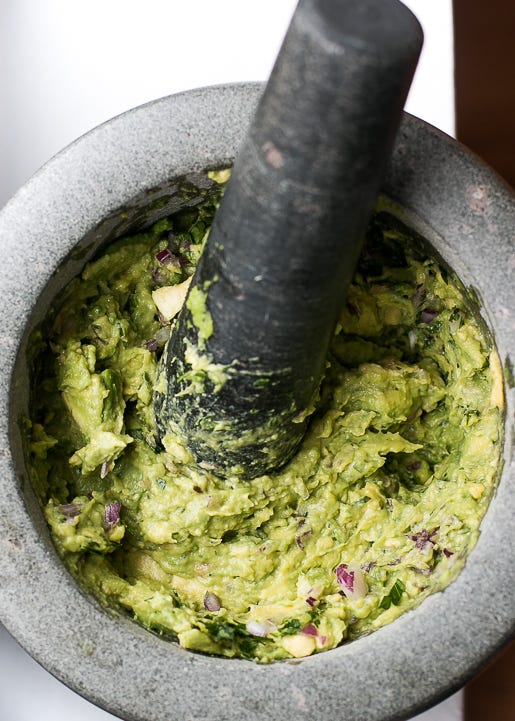
There are a lot of ways to make guacamole. A Mexican friend back in southern California made hers by mashing avocados and mixing in salsa from a jar of Pace. Another friend here in Paris uses white vinegar in his guac, in place of fresh lime juice. And yet another Mexican friend insists that guacamole should only have three ingredients: avocados, lime juice, and salt.
I’m not telling anyone how to make guacamole, but I prepare mine with a bit of red onions, a little garlic, cilantro, and a bit of chopped chiles, which may be unauthorized additions…but I’ve never had any complaints. In fact, people always scrape the mortar clean. And speaking of the French language, the final “e” in guacamole is silent in French, so it’s pronounced guac-a-mole. I’d like to suggest another unauthorized addition: Add an accent to make it guacamolé.
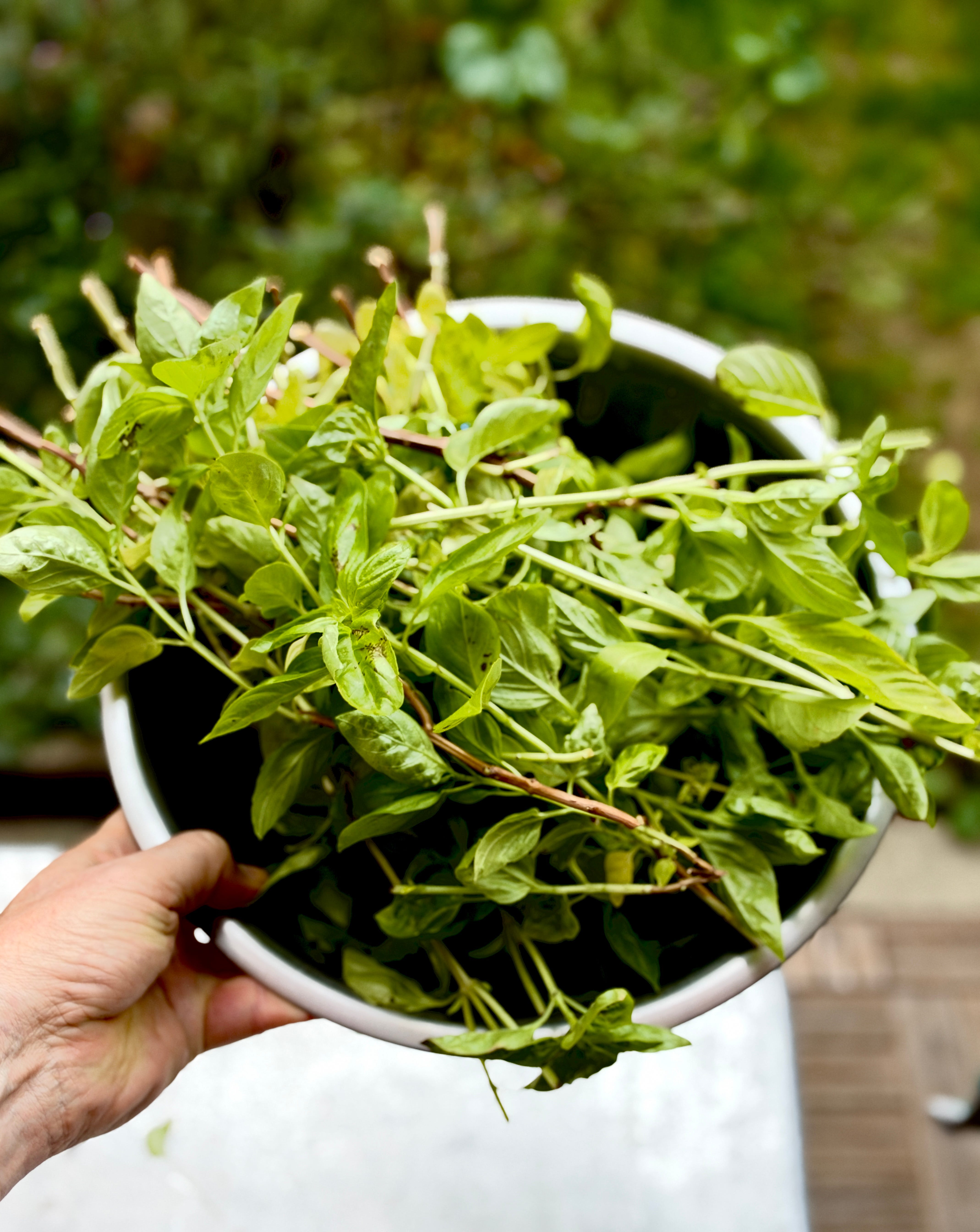
Lastly, the temperature is dropping day-by-day, so this morning, I grabbed my scissors to harvest the last of the fresh basil in our garden, to make one last batch of pesto. 🌿🌿🌿
Deliveries are a bit difficult right now: La Poste, the French post office.
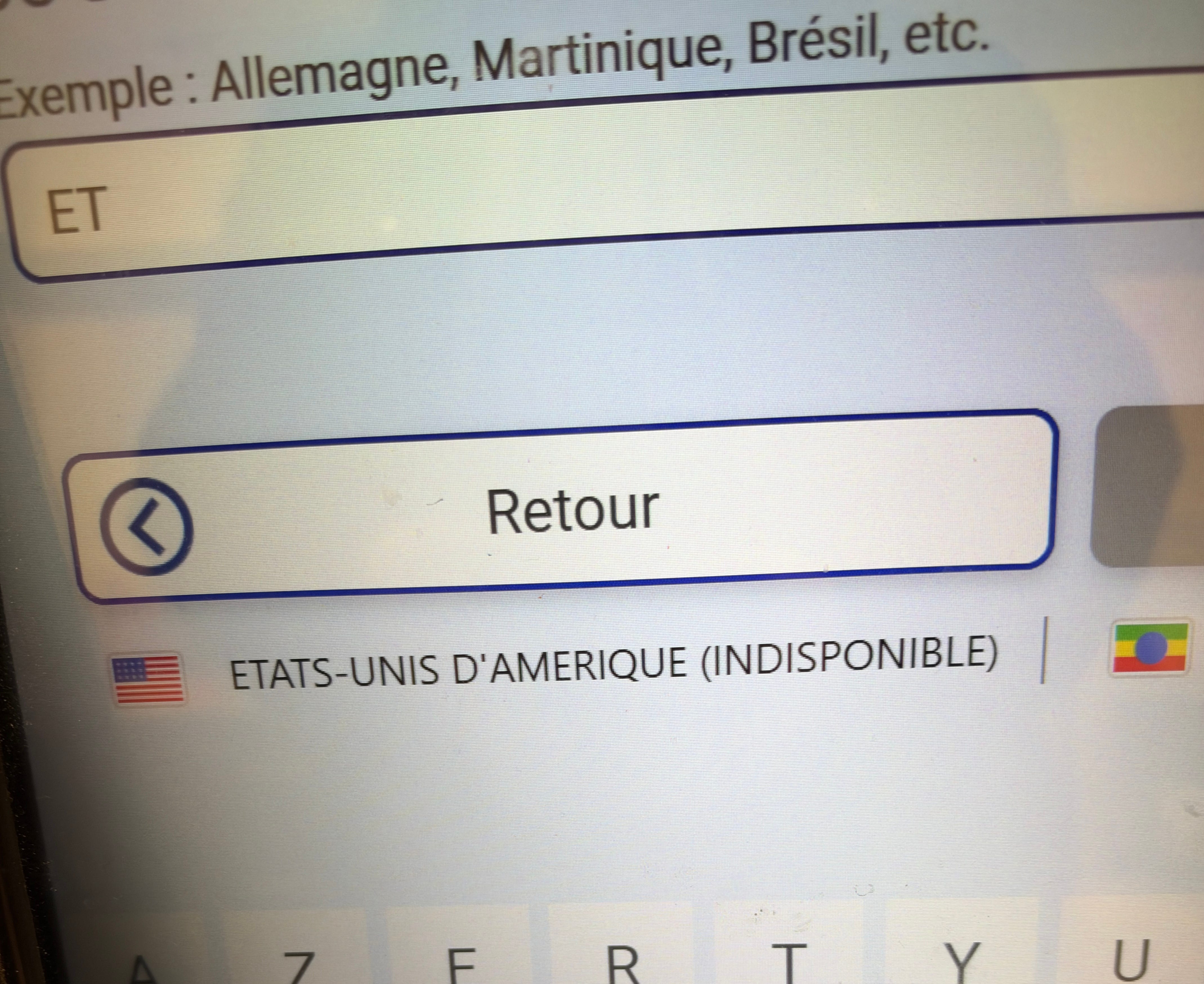
Due to a confluence of factors, here in France, deliveries to and from the U.S., have become a lot more challenging. It wasn’t easy to get deliveries here before, but now it can be a two-week odyssey to find out where a package is, and get your hands on it. Even La Poste, the French post office, says the United States isn’t available. Like other things in France, “non” isn’t necessarily the final word, but that you need to find a work-around.
Fortunately, thanks to my skills at tracking packages (which has become one of my many part-time jobs around here), as well as e-books and PDFs, I’ve been able to see new books that are on the horizon, and in some cases, I got a preview when asked to write quotes for them. I’m always excited when I come across a great cookbook, one that teaches me something or focuses on a subject I want to know more about.
I’m sure I missed a few, so if you have any current favorites, feel free to leave any of them in the comments. Also coming up, November 1st, is Buy a Cookbook Day, so these are some that might interest you.
There’s been a spate of cookie cookbooks out in the last few years, but I got a preview of Cookie Queen by and was wowed by her truly original collection of recipes. Susan is an ace baker and recipe developer, as well as a noted food stylist (she did the food for the films Julie and Julia and Eat, Pray, Love). Her latest book toggles from “rustic and natural” cookies, and offers gluten-free variations for each recipe, such as Quinoa crunch chocolate peanut butter cookies and Toasted corn cookies, to Black sesame palmiers, an oversized Malted chocolate chunk skillet cookie that’s meant for sharing, and Caramel slices, Swedish cookies that crackle with every bite. Susan certainly raises the bar with this book!
Another baker I admire is Joanne Chang, whose bakery, Flour, is a beloved fixture in Boston. Or fixtures, I should say, since there are many other addresses around town. Her newest book is The Joy of Cookies, which leans heavily toward cookie classics, such as Maple shortbreads and Oatmeal cream pies, as well as savory treats like Parmesan-chive coins. I’m especially interested in her Better than Ted Lasso shortbreads, as I watched Hannah Waddingham dig, with euphoric rapture, into her daily box of shortbreads on the show, and wonder if shortbread can get much better? If they’re made from a recipe by Joanne Chang, you can be sure that they live up to their name.
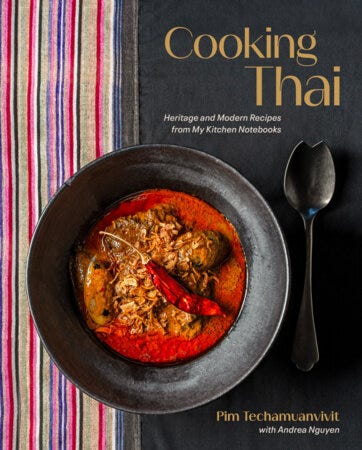
I’ve known Pim Techamuanvivit for over twenty years and still remember an incredible Thai meal she made for us in Paris, circa 2005. I may not remember what I had for lunch a few hours ago, but that meal left an indelible mark on me. Over the years, Pim transitioned from food blogger, to jam-maker, to charcuterie teacher, and now, to Michelin-starred chef, with two outstanding restaurants in San Francisco, Nari and Kin Khao, and one in Bangkok.
Thai cooking can seem complicated but when I got a preview of Cooking Thai by Pim, co-written with , the recipes were not only enticing but also achievable. They spent two years working closely together, making sure the recipes were accessible to home cooks, a talent Andrea is particularly adept at, with primers on how to moderate chili heat and what ingredients can be swapped out, say, if you want to make Som tum, shredded green papaya salad, and green papaya isn’t available. There’s the recipe for aThai chicken and coconut noodle soup that’s perfect winter fare, as well as Sweet potato massaman curry andKin Khao’s legendary chicken wings. I’m really impressed by this book and while I have a few books on Thai cooking on my bookshelf, this one is going to be used in my kitchen.
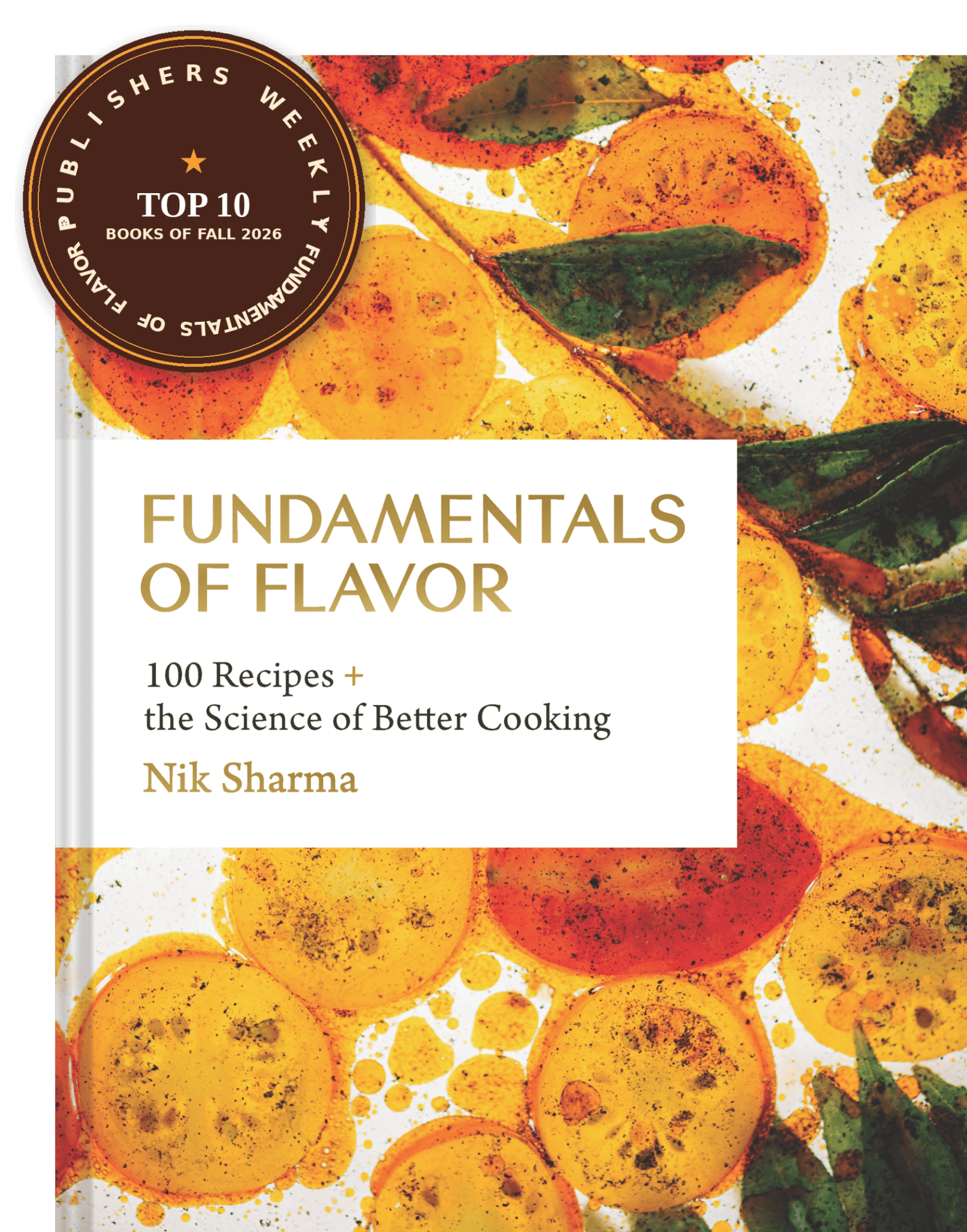
In Fundamentals of Flavor, Nik Sharma continues to explore the intersection between cooking and food science, with a focus on flavor. His book opens with a touching, and sometimes painful, memoir of Nik’s journey from India to the United States, where he eventually found his footing in the food world. The book is divided into four chapters: Fire, Earth, Air, and Water. Nik walks readers through building flavors, with bold recipes such as French onion soup scented with black onion seeds and Tandoori chicken that lets you mimic the flavors of a traditional tandoori oven at home, either on your grill or in the oven.
For those who are obsessed with cultured French butter, Nik has a recipe for making that at home as well. And “My ultimate carrot cake,” which has a few cross-cultural twists, sounds amazing. Cooks and bakers who want to take a deep dive into the world of food science will especially enjoy this book, and if you want to know the how’s of how ingredients work, and the why’s of how to use them, Fundamentals of Flavor answers those questions.
I was obsessed with The Diplomat and did not want season 4 to end. (And who knew that ending was coming?) The Foreign Correspondent’s Wife by Jenna Helwig is another transatlantic thriller, set in post-World War II Paris. It’s a murder mystery involving students at a culinary school, which sounds like a promising yarn. (It’s on my iPad, ready to read.)
I was happy to chat with Jenna recently on my podcast about cookbooks, as well as her first novel. Listen here!
Subscribe to my newsletter to get new posts, videos, recipes, podcasts, and more, sent right to your inbox!
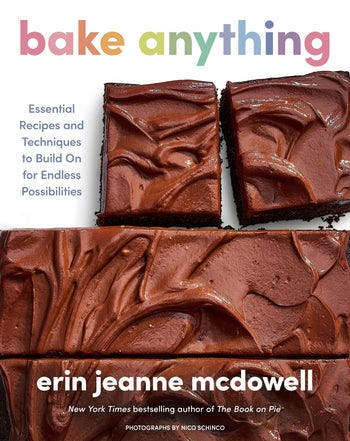
I’ve long admired baker Erin Jeanne McDowell, and her new book, Bake Anything, walks bakers through the basics of baking. Chapters on the basics feature ways to build on those basics, from yeasted morning pastries, such as croissants, morning buns, and brioche, to éclairs, cakes, and French macarons. Accompanying the recipes are QR codes throughout the book so you can learn, and bake along with Erin.
My first encounter with Rose Levy Beranbaum was shortly after her iconic book, The Cake Bible, was published. I was working in the pastry department at Chez Panisse and we were all in a tizzy that she was coming. Since I was driving back to San Francisco after my shift, she asked if I could drop her off at the Neiman Marcus store in Union Square, since they were the only place that carried the bras she wore. That was my introduction to Rose.
Over the years I’ve gotten to know her, as her career continued to take off, with her writing authoritative books on bread baking, pastry, and even Christmas cookies, which happens to be one of the best books on the subject. Rose has finally written Ma Vie en Rose, a memoir of her life, which lists her accomplishments, including the highs (book awards and accolades) and the lows (marriage issues and her husband’s death), and other sometimes uncomfortable truths about her “sweet life.” Some of the stories in the book may startle readers with their frankness (as a courtesy to you, I don’t write about my sex life), but Rose doesn’t shy away from topics like that, and others.
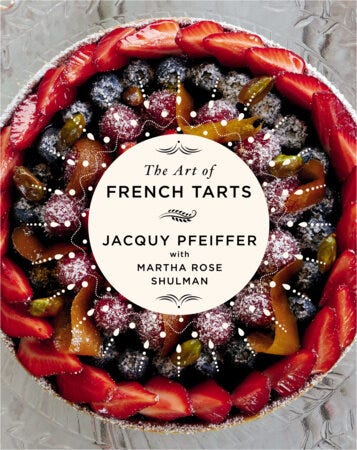
If you watched Kings of Pastry, you know Jacquy Pfeiffer as one of the participants who’s preparing for the strict, and stressful, competition in France, which determines if a chef can attain the prestigious M.O.F. designation, signaling that you’re a master in your field.
(I was surprised, and delighted, to find a picture at that link about M.O.F.s of my chef/instructor, Philippe Gobet, when I was a student at École Lenôtre. On my last day of class, he grabbed my hand and said, “Daveed, I’m going to take you into the factory…” and then proceeded to lead me through the entire pastry production facility of Lenôtre, where he was greeted by everyone on the staff like a cherished friend. It was a highlight of my life.)
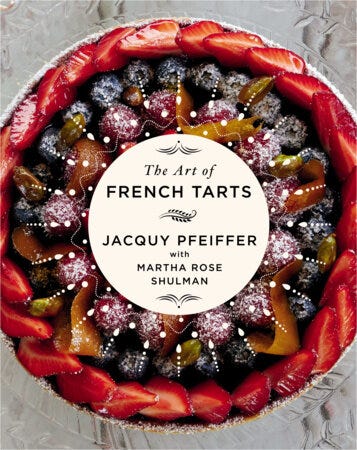
No spoilers, but Jacquy, who co-founded The French Pastry School in Chicago and starred in the film, has returned to his native France. He’s now leading culinary retreats in the south, where you can spend a week with him, focusing on all things pastry. (Spoiler: I want to go to one.) If you can’t make it to France, The Art of French Tarts is his brand-new guide to baking French tarts, both sweet and savory.
If you follow chef Pfeiffer on Instagram (above), you know how deftly he explains techniques and tips, making French baking and pastries accessible to anyone. This book is coming out in November, and I’m looking forward to baking my way through my copy, when (or, if?) it arrives. Thankfully, it’s coming from within France…so fingers crossed - 🤞 😅
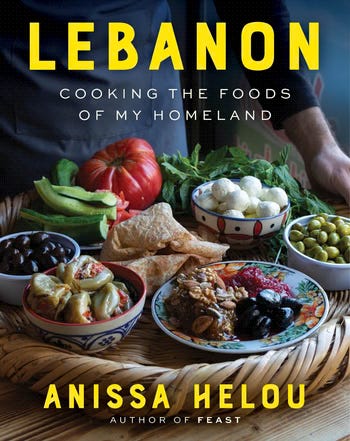
My Lebanese “sister” (Anissa Helou calls me her brother, since we’re both part Syrian) revisits the foods of her homeland in her latest book on Lebanese cooking. As her publisher states, “While only half the size of New Jersey, Lebanon boasts an astounding variety in its cuisine, including classics like hommos or kibbeh…Meatballs in lemony sauce, fava beans and lamb in yogurt, lentil risotto, and baked fish with Tripolitan tahini cilantro sauce…along with delectable sweets, including sweet walnut triangles, aniseed fritters, semolina cream pastries, and tahini rice pudding.”
I’ve had the pleasure of traveling with Anissa, and having her cook for me, and I can tell you there’s no better guide to the cuisine of her family’s country.
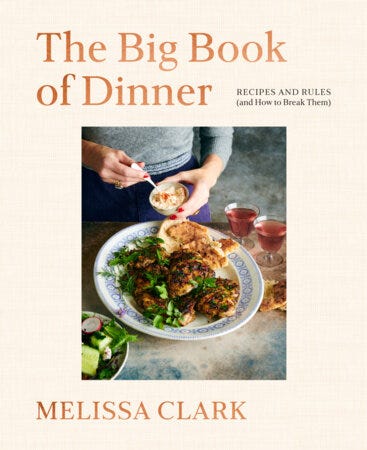
How can you not love a book whose subtitle is “Recipes and Rules (and How to Break Them)”? In her latest cookbook, The Big Book of Dinner, Melissa Clark tackles one of life’s most pressing questions: What’s for dinner?
I loved her book, Dinner: Changing the Game, which changed mine. Melissa is obsessed with dinner, also having written Dinner in an Instant and Dinner in One, and she was even named a Chevalier de l'Ordre du Mérite Agricole, Knight of the Order of Agricultural Merit, by the French government for her book, Dinner in French. Which makes me think that maybe I should stop writing about baking in France and focus on dinner?
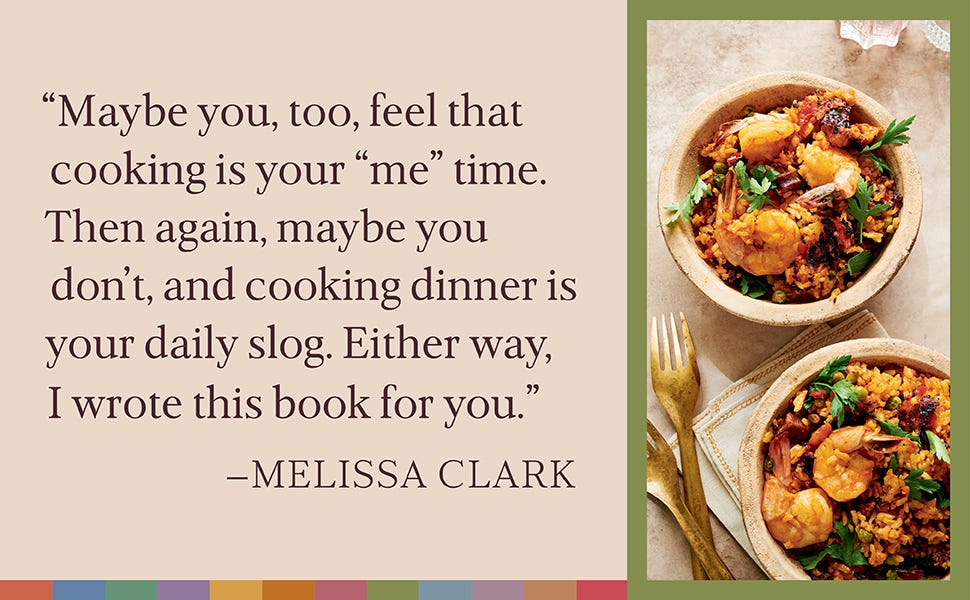
Melissa says her book is for everyone, whether you like to cook, or don’t.
But I’m a fan of Melissa and am thrilled for her well-deserved success, at home and abroad. Her latest book features 175 recipes, with 150 variations, for supper. I’m looking forward to diving into this one, especially all the braises now that winter is just around the corner.
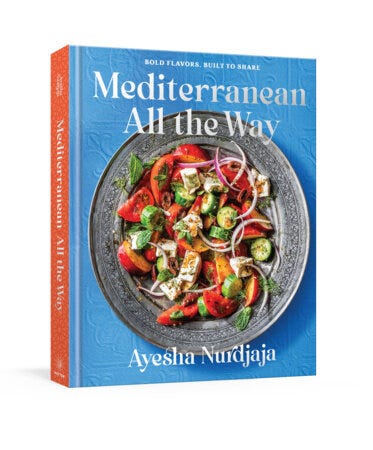
Whenever I’m in New York, Shukette is a must-stop for me. I love, love chef ’s vibrant, flavorful food. (The bread menu is a must, as is their soft-serve ice cream for dessert.) Chef Ayesha’s debut book, Mediterranean All the Way, shares her recipes, which are known for their bold flavors and generous use of fresh vegetables and herbs. Ed Anderson, who photographed my last four books, turned his lens on Ayesha’s food, and what beautiful food it is!
Mediterranean All the Way is currently the number-one best-selling book on Mediterranean food online, and it’s easy to understand why. Who doesn’t want to make Halloumi with strawberries? That combination was a shock to me last time I was at Shukette, but in Ayesha Nurdjaja’s hands, it was a triumph. I learned from her introduction that she almost became a lawyer. Lucky for us, she didn’t.
I didn’t grow up eating rice pudding and never quite got how everyone was so nostalgic for it. My mom made tapioca pudding, which is less popular nowadays. But I loved the sticky-silky texture of it, spooned out of the red Pyrex bowl she poured it in right after making it, which kept the pudding warm.
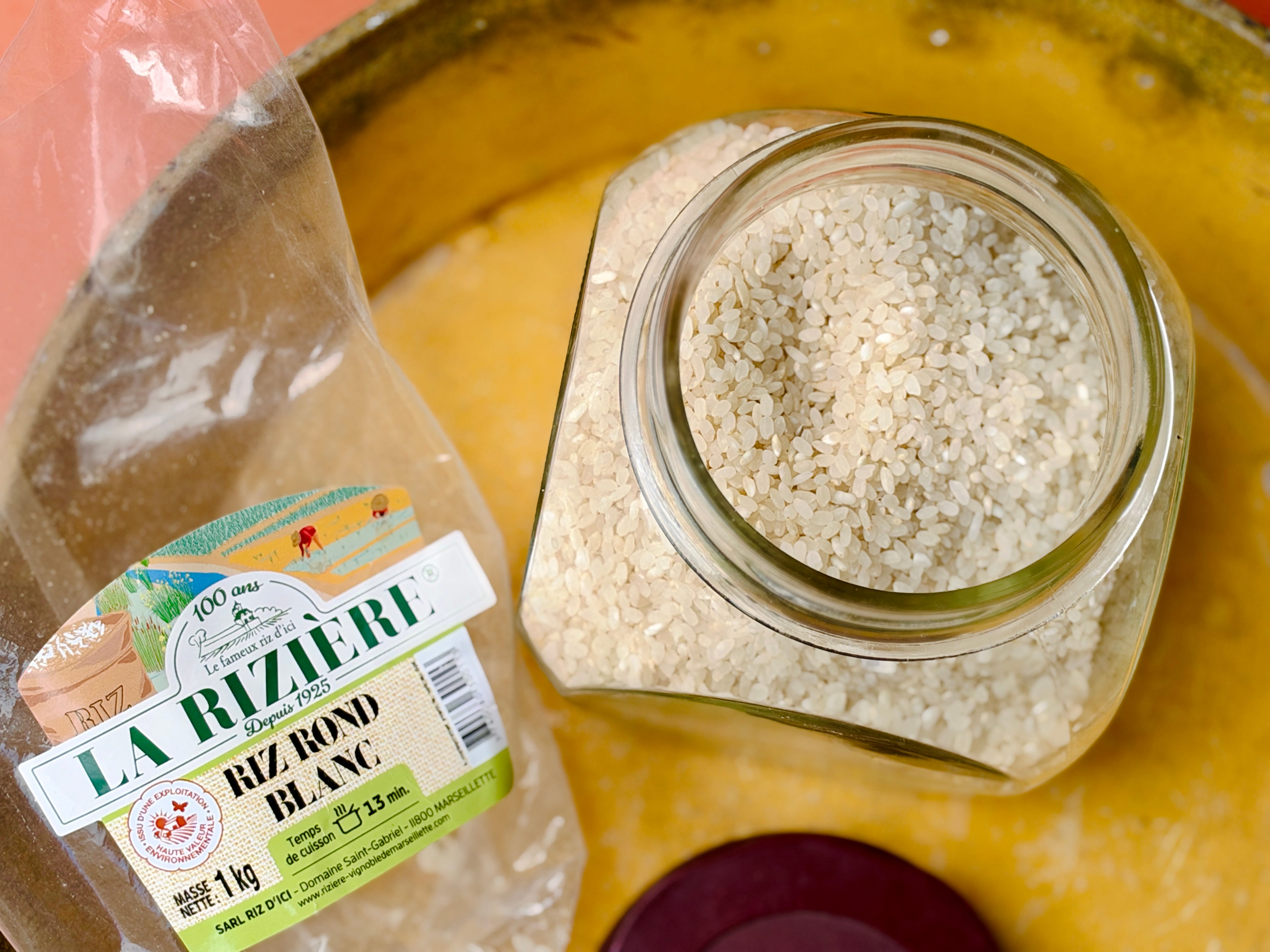
Riz rond, or short-grain rice.
Fast forward to today (ok, sixty years isn’t exactly “fast” forwarding…), I live in France, where riz au lait is practically the national dessert, and I get its appeal. I didn’t grow up in France but Romain did, and he’s always had an aversion to rice pudding due to unpleasant versions served in his elementary school. Another French friend screwed up his face while describing having to eat beef tongue simmered in tomato sauce in his school cafeteria. Try serving that to kids in America!
It’s been hard getting Romain to come around, since old habits die hard around here, but I was delighted when my biggest critic (who is also my entire support system) loved this version, which I came up with when revising Ready for Dessert.
Like life with a Frenchman, French cuisine is constantly changing/sometimes challenging, and always interesting, which keeps me on my toes. And nowadays, even hip bistros and restaurants that focus squarely on contemporary French cuisine have their version of Riz au lait on the dessert menu since, like Œufs mayo, the café classic dish of hard-cooked eggs with mayonnaise, many people also have a soft spot for Riz au lait.
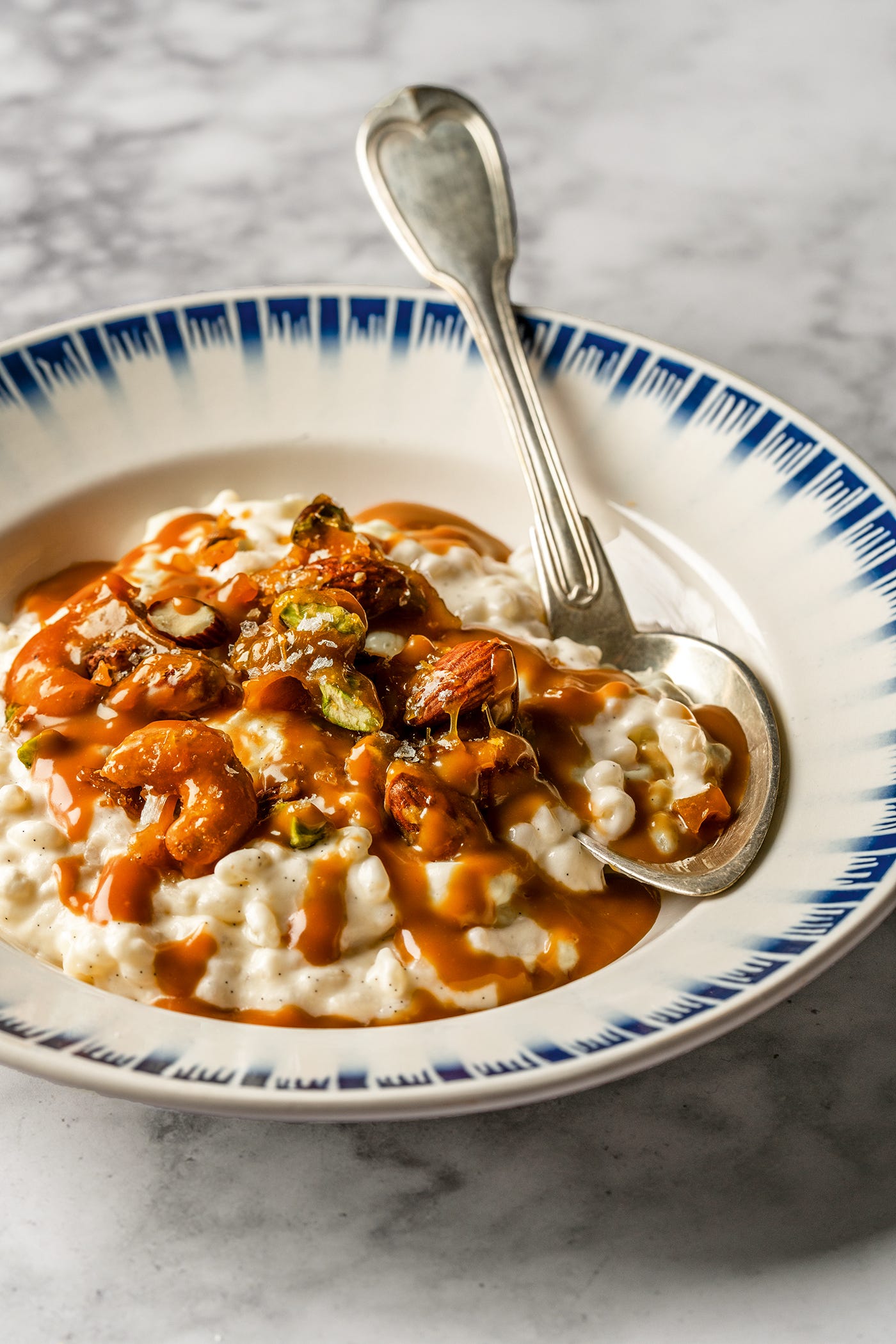
The Riz au lait at L’Ami Jean is probably the best known in Paris, served with a dollop of caramel mousse and topped with crunchy caramelized nuts. It’s a winning combination and when I was revising Ready for Dessert, I wanted to offer my own version, one that included caramel but wouldn’t be daunting for someone to make at home. So I nixed the idea of a caramel mousse stabilized with gelatin, in favor of a luscious salted butter caramel sauce.
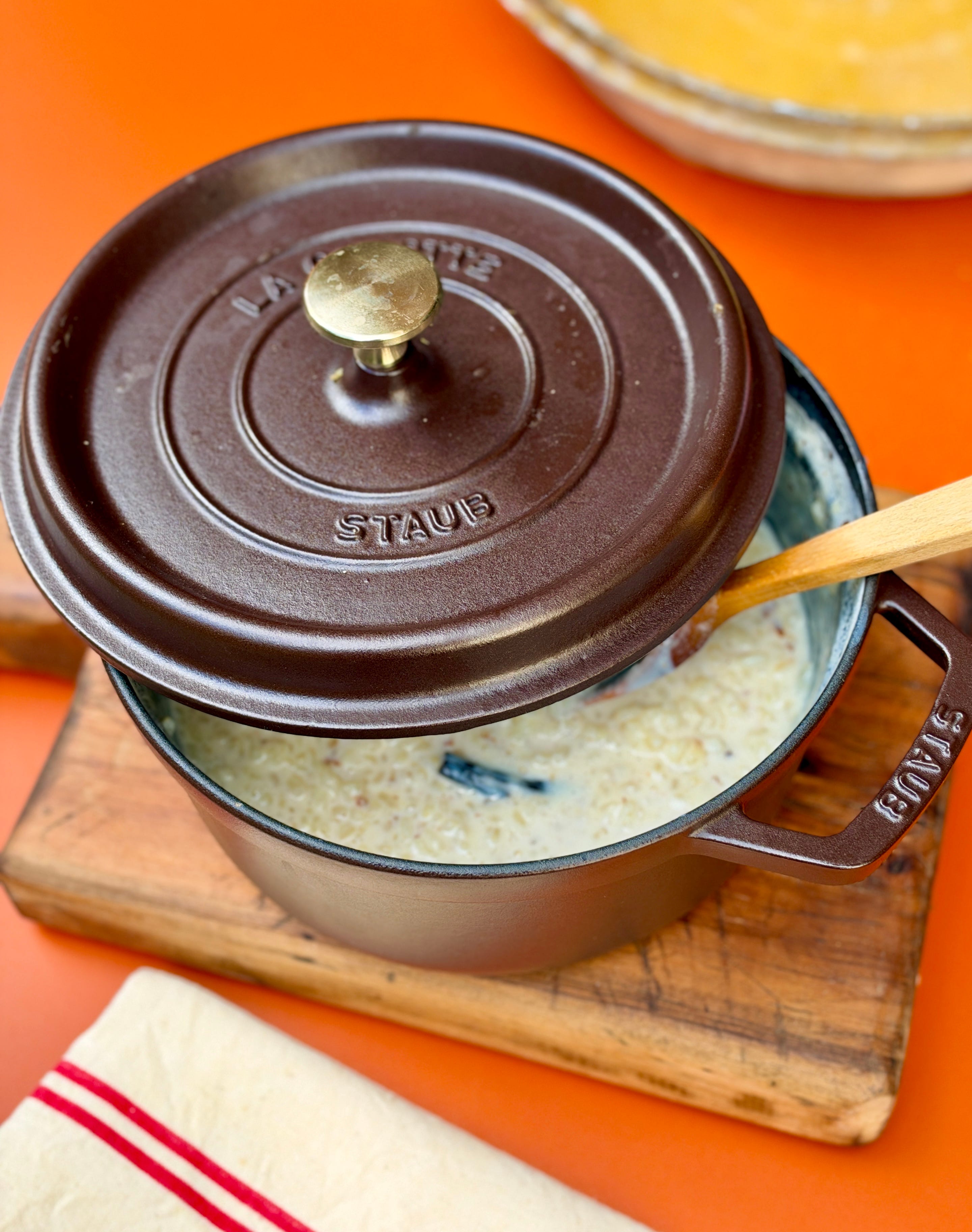
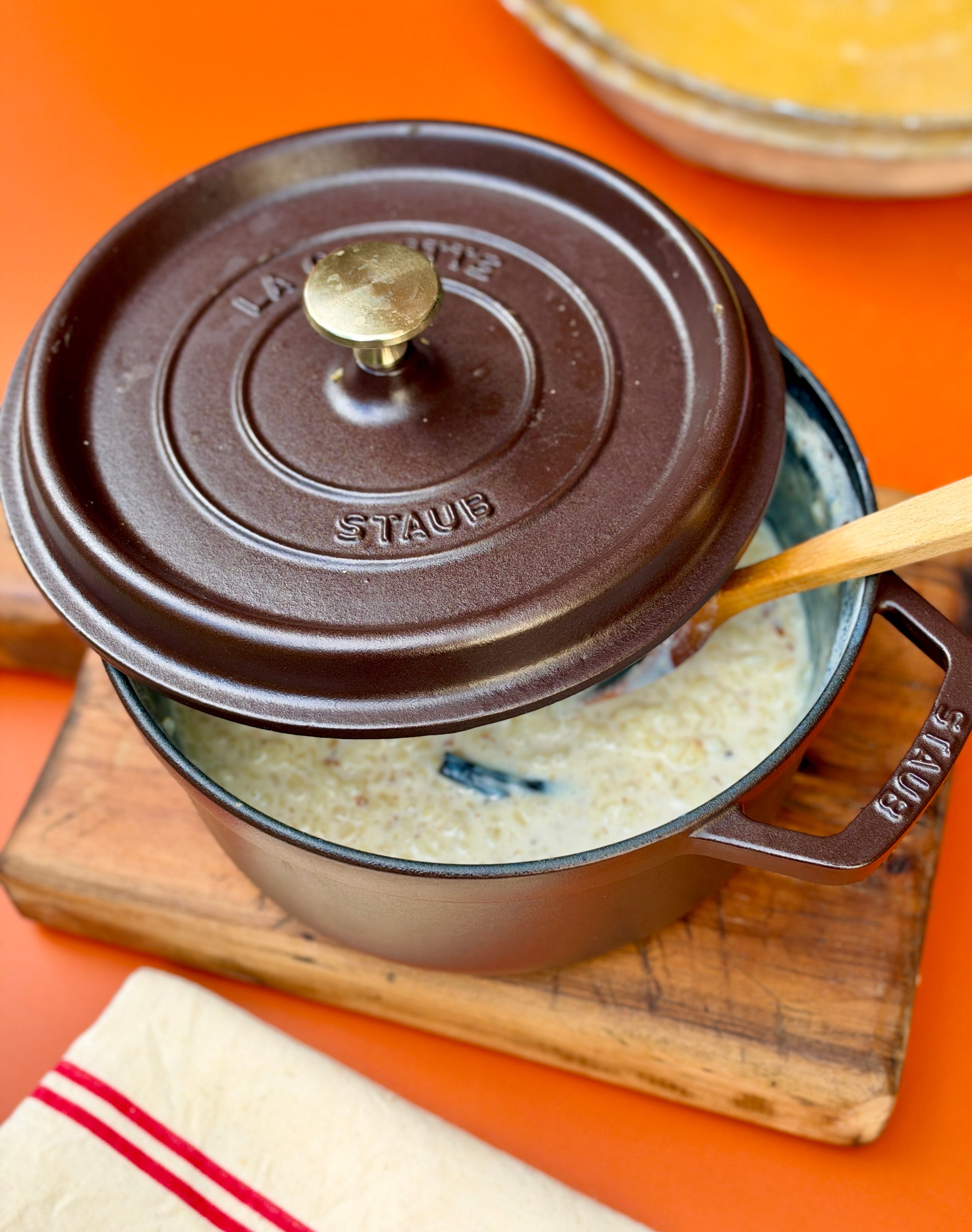
Last month, the folks at Staub cookware got in touch with me and asked me to make a dessert for an event* to launch their beautiful new color, Espresso. I loved its rich brown hue, which reminded me of chocolate.
Subscribe to my newsletter to get recipes, videos, Paris tips, and more, sent right to your Inbox!
To christen the pot, my first thought was to bake a large mocha pot de crème in it, since I imagined how nice the shimmering custard would look with the warm, dark coffee color of the cocotte (Dutch oven). I also loved the classic shape of my Espresso casserole, and the more I thought about it, the more the idea of making a classic French dessert in it appealed to me.
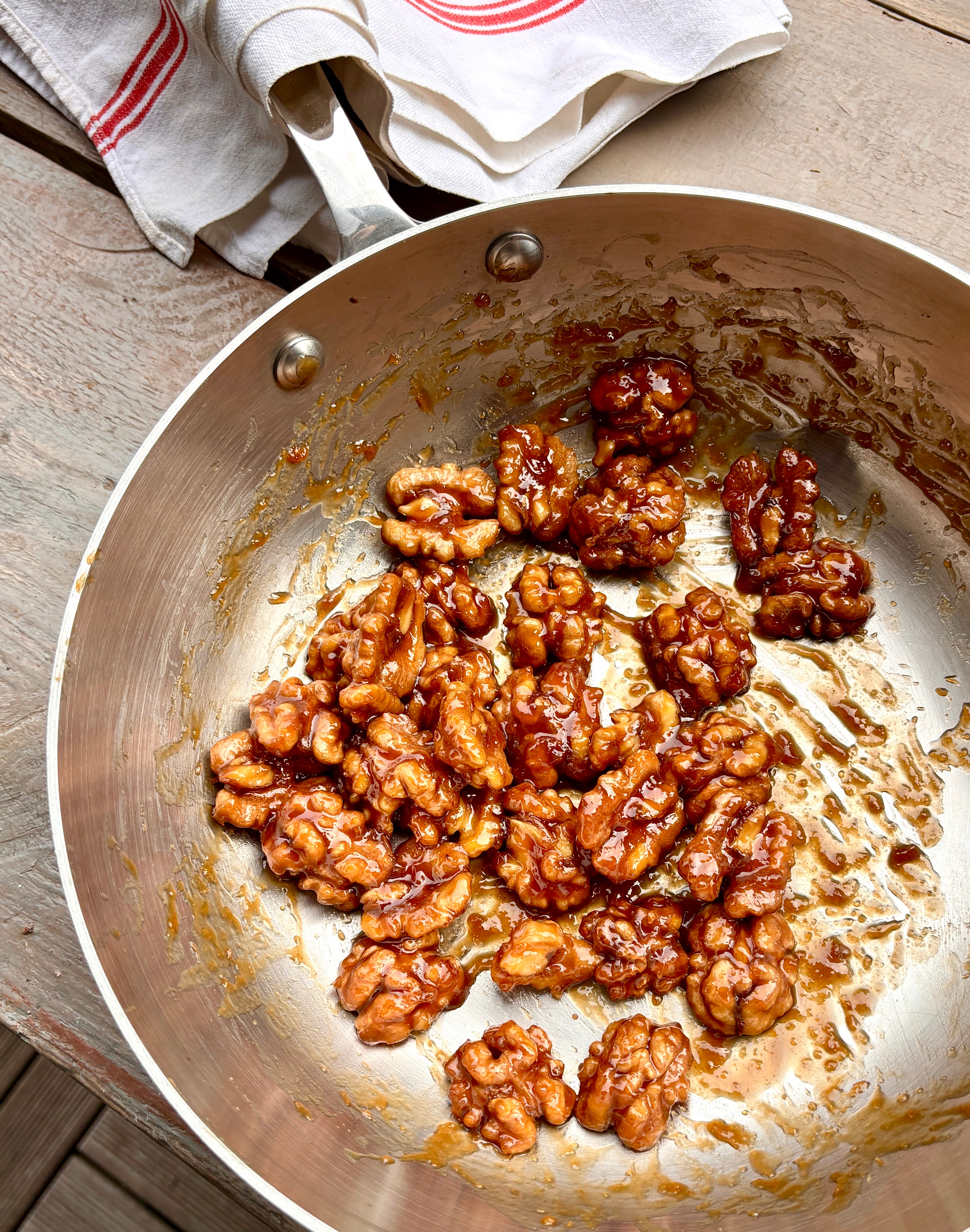
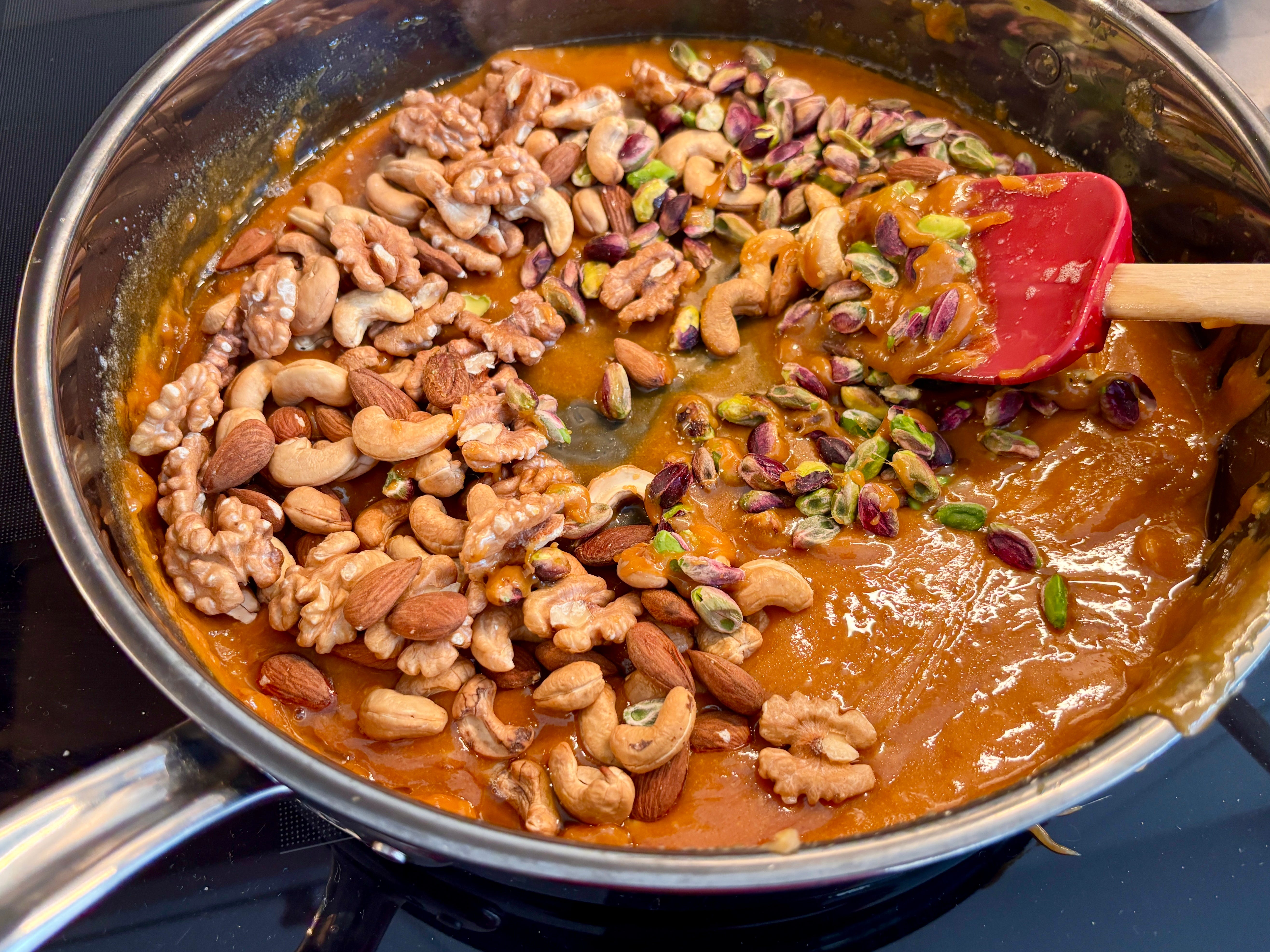
If you own any of my cookbooks, you know I’m a fan of anything with caramel. And if you know me personally, you know I like candy, especially candied nuts. And this nougatine, which I garnish the Riz au lait with, is hard not to like — whether you know me or not.
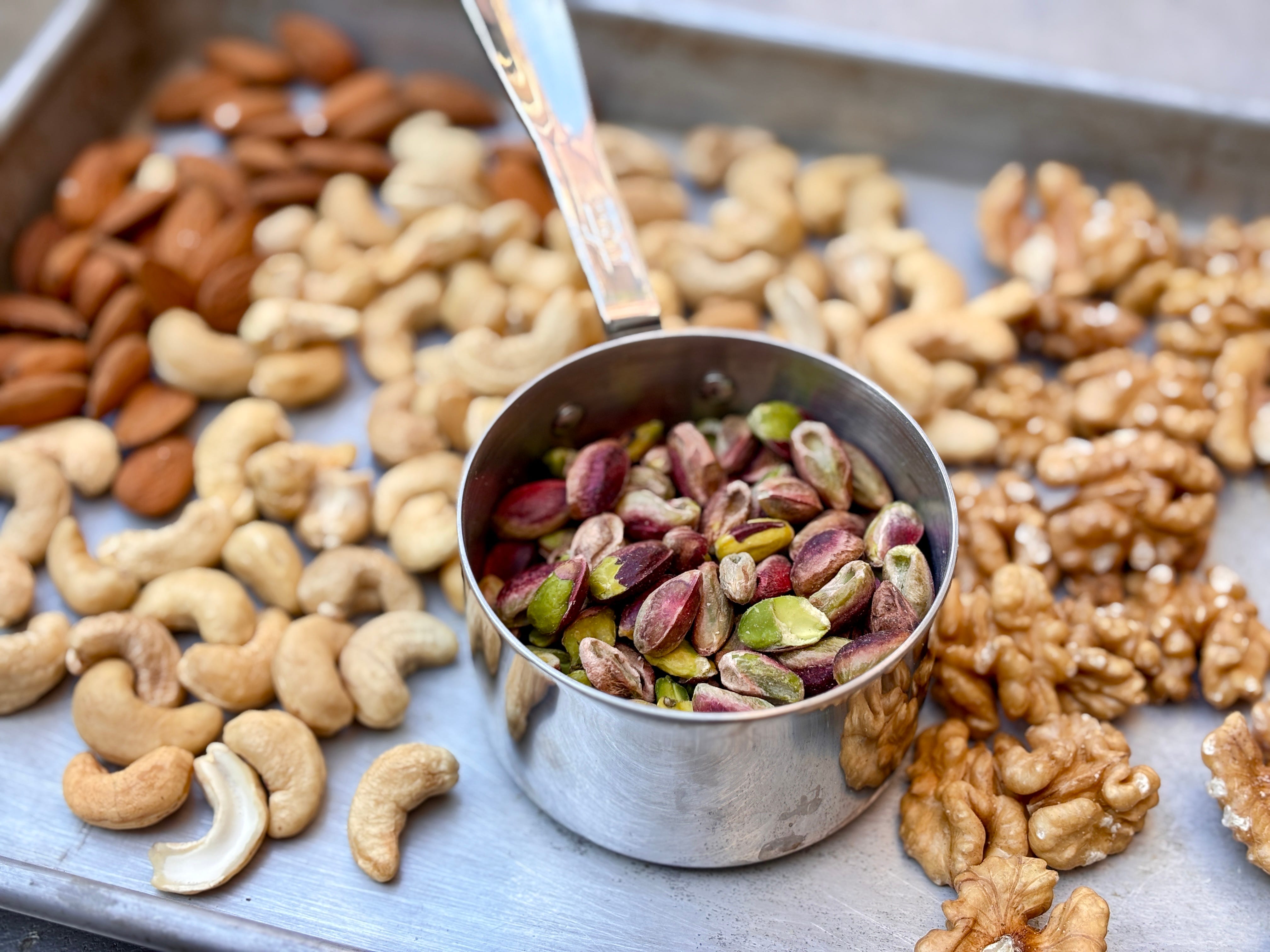
You can use any combination of nuts, but I like to include cashews and pistachios: cashews for their fun shape and buttery texture, and pistachios because they’re so pretty and taste good as well.
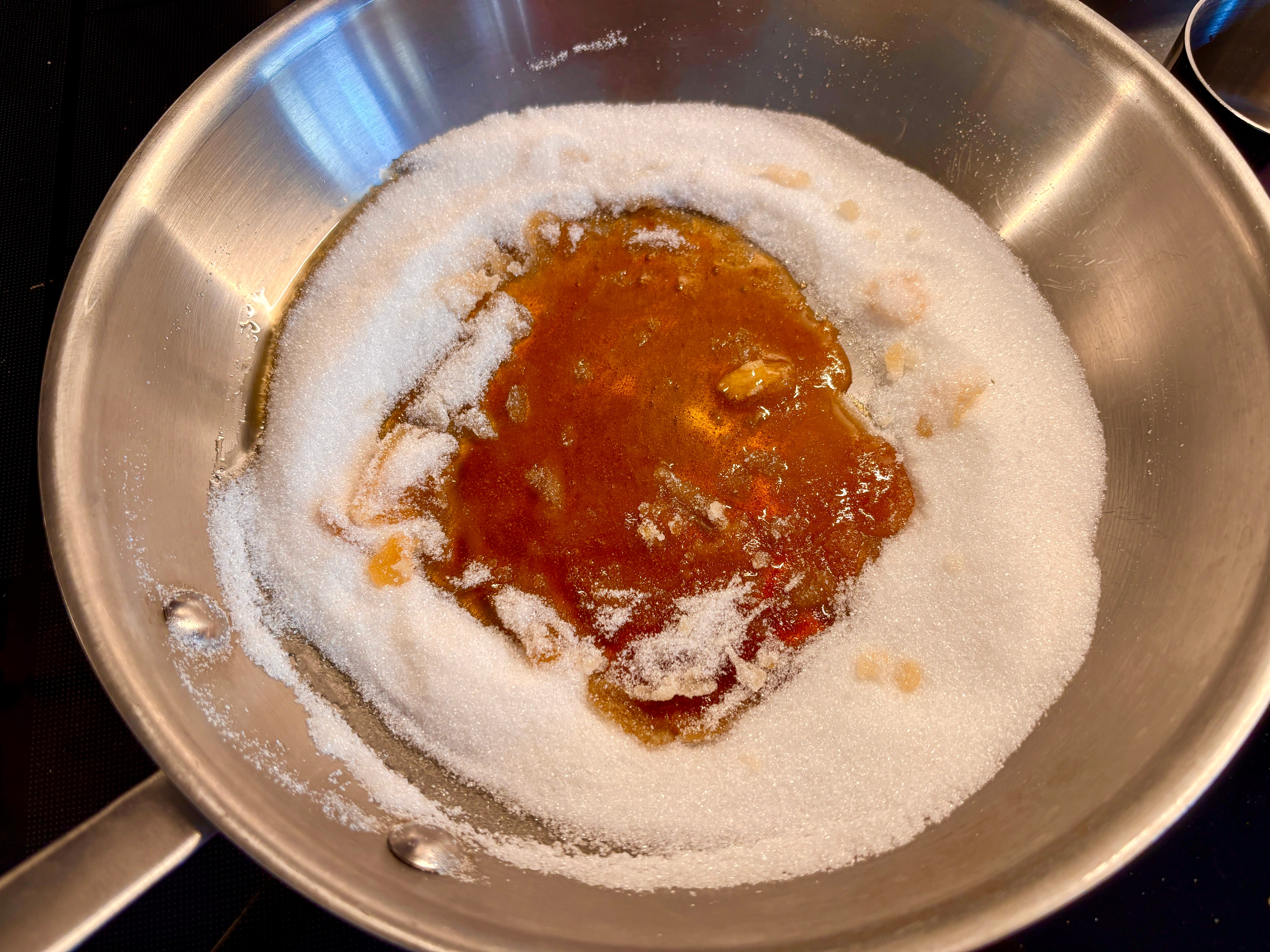
Using induction comes with a bit of a learning curve, and I used to say in recipes that when heating sugar in a skillet, the edges will melt first and begin to caramelize.
When I revised my book, I took into account that with induction, the heat from the stove goes directly into the pan, not up and around the sides. So the sugar on the bottom of the pan will melt and caramelize there first, which you can’t easily see unless you peek.
But even if you do get crystals or lumps, pas de problème.
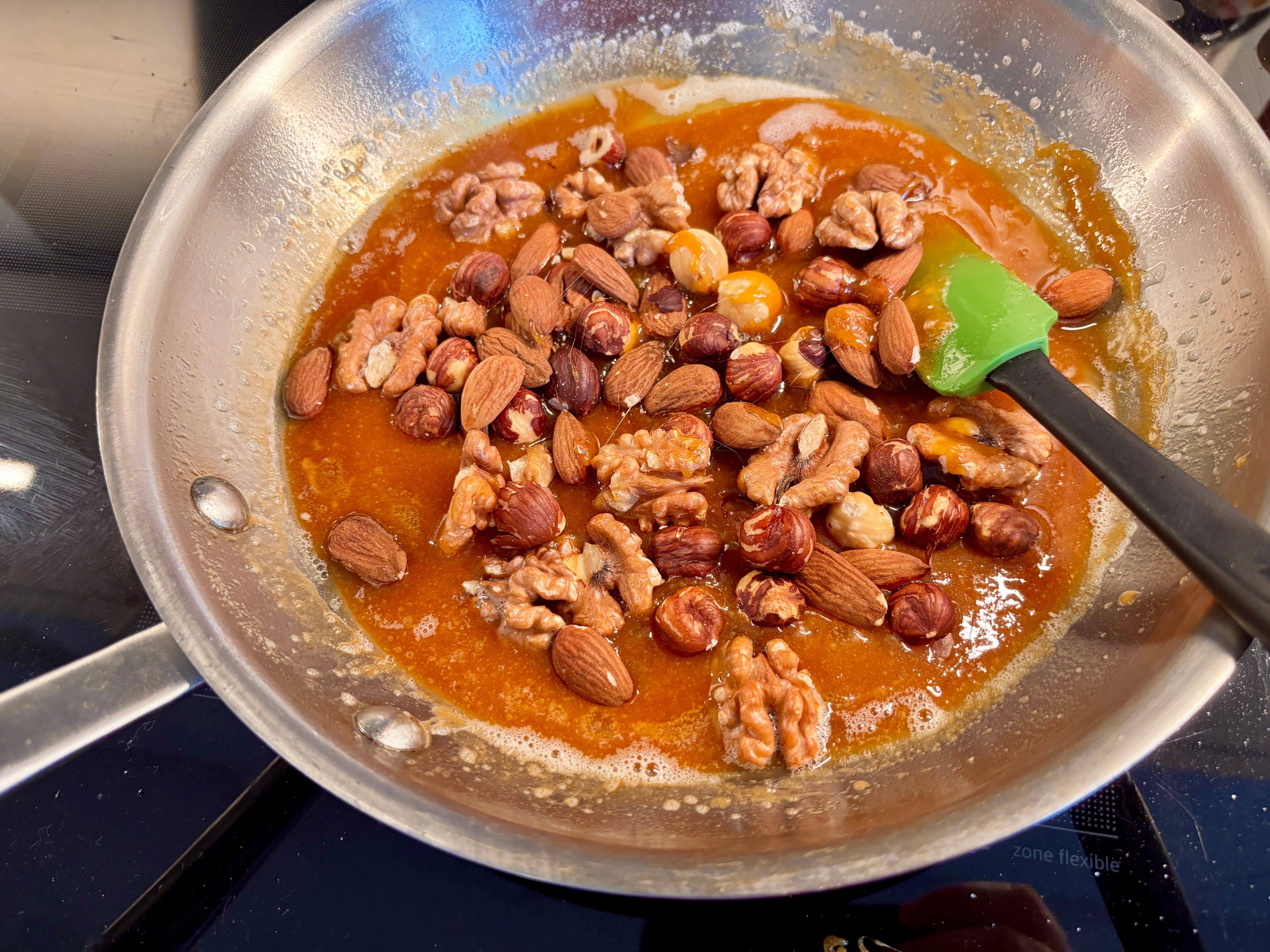
When you add the butter, then the nuts, all is forgiven and things will smooth out.
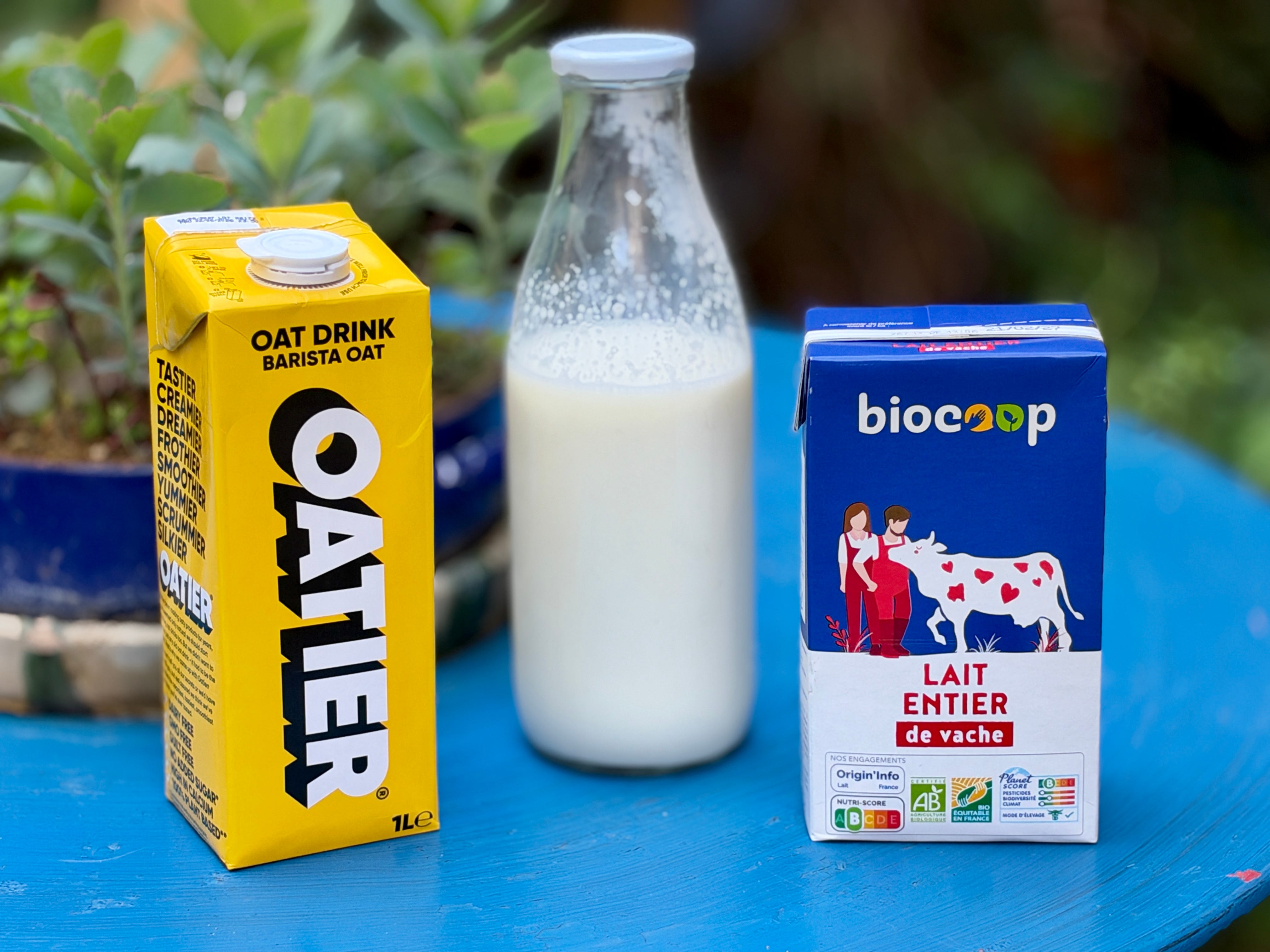
I like to make the Riz au lait with whole milk but have also used “barista” oat drink, which is richer than other plant-based drinks. I buy an Irish brand at Early Bird Coffee, which tastes like Irish oats.
I had a great time serving this rice pudding to the guests who had visited the Staub factory that day. I’ve been on that tour…
…and it was fascinating to see the pots being made in France, beginning with molten metal being poured into molds, to the final cocottes, glazed with various colors, coming off the production line.
I figured everyone would appreciate a little pick-me-up after their visit to the factory that day, including the folks from Crate & Barrel (who also carry the matt espresso Staub pot that I used), I fortified the salted butter caramel sauce with a few shots of espresso.
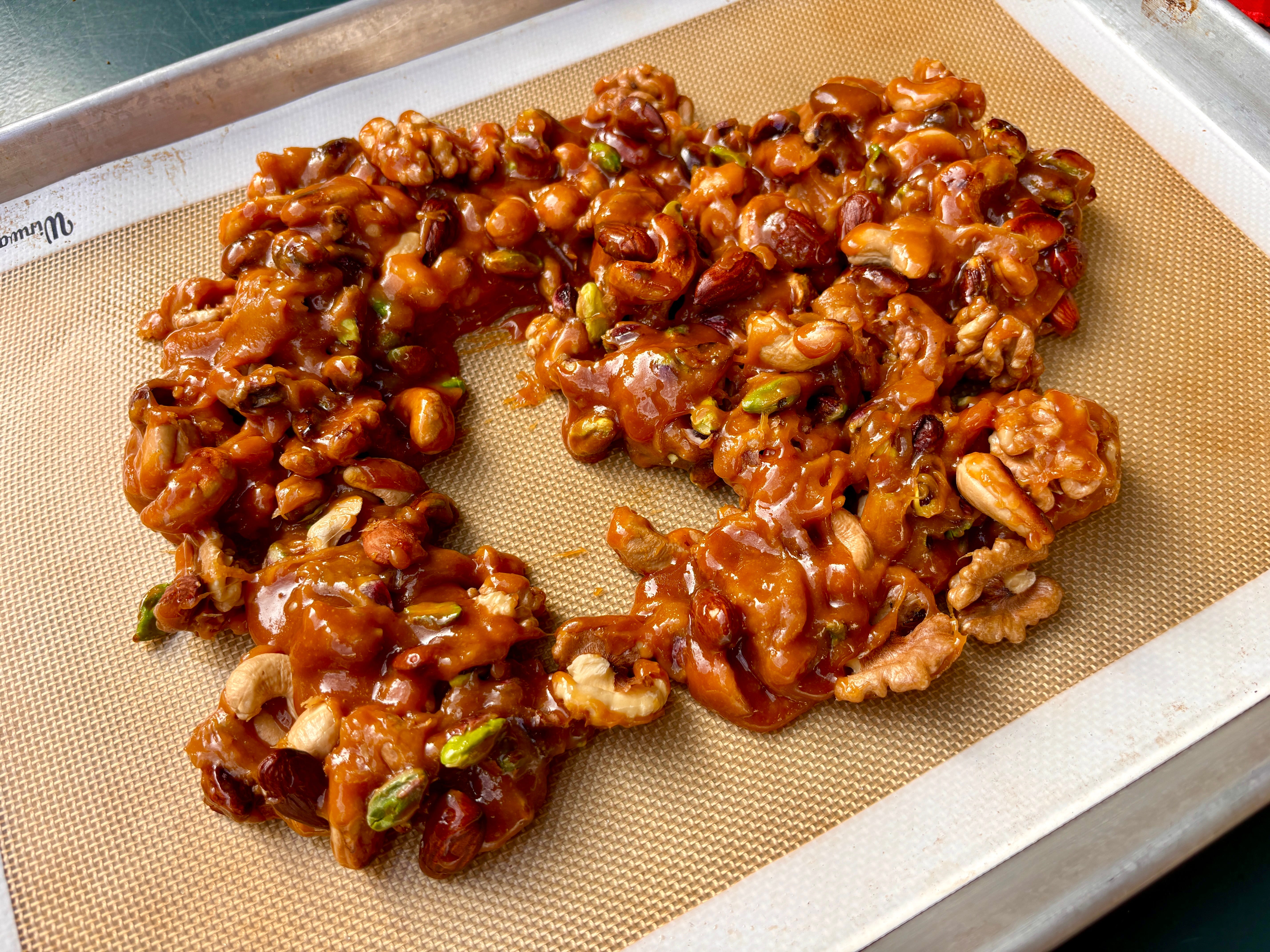
Everybody loved the rice pudding, and the biggest hit was the nougatine.Everybody reaching into the bag to grab seconds, and thirds. (Thank goodness I’d made extra!) Someone who had an early-morning flight the next day requested a little bag of it, as that was going to be her breakfast. I happily complied.
While I don’t normally eat nougatine for breakfast, when sprinkled over rice pudding, it makes a ne plus ultra dessert topping. Although if you add some coffee to the caramel sauce, I guess it wouldn’t be much of a stretch to have a bowl of this in the morning.
When using vanilla beans, I like to complement their flavor with a little vanilla extract, which adds an extra-fragrant vanilla note to the rice pudding. In France most people just use regular riz rond, also known as round or short-grain rice, but you could use arborio rice if you wish.
If you want to use espresso in the salted butter caramel sauce, replace 1/4 cup (60ml) of the cream withstrongespresso.
2 tablespoons(1 ounce/30g) unsalted or salted butter, cubed, at room temperature
1 cup (120g) nuts; a mix of toasted almonds, hazelnuts (loose skins removed), pecans, peanuts, cashews, sliced almonds, and pistachios
Kosher or flaky sea salt, such as fleur de sel or Maldon
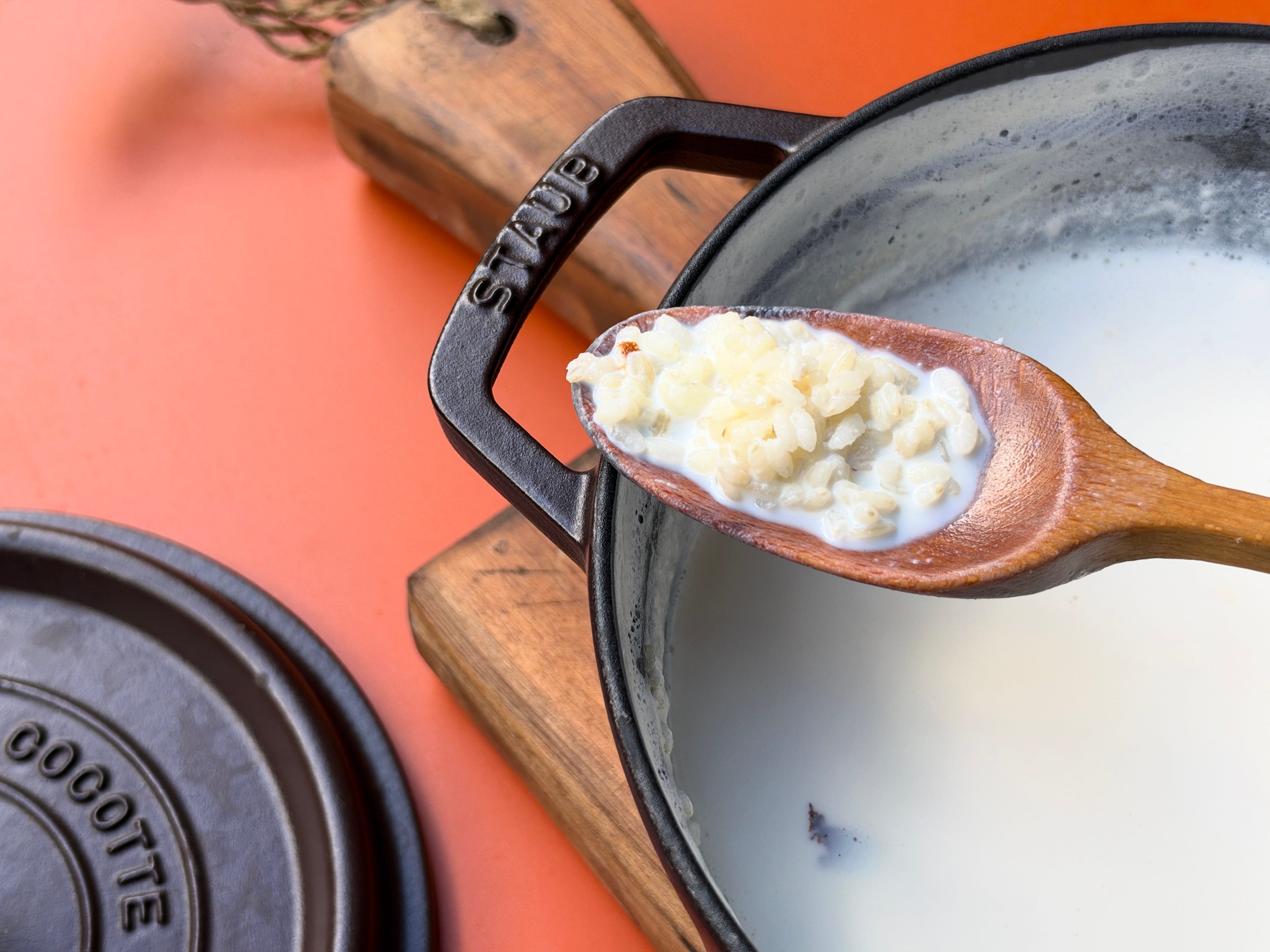
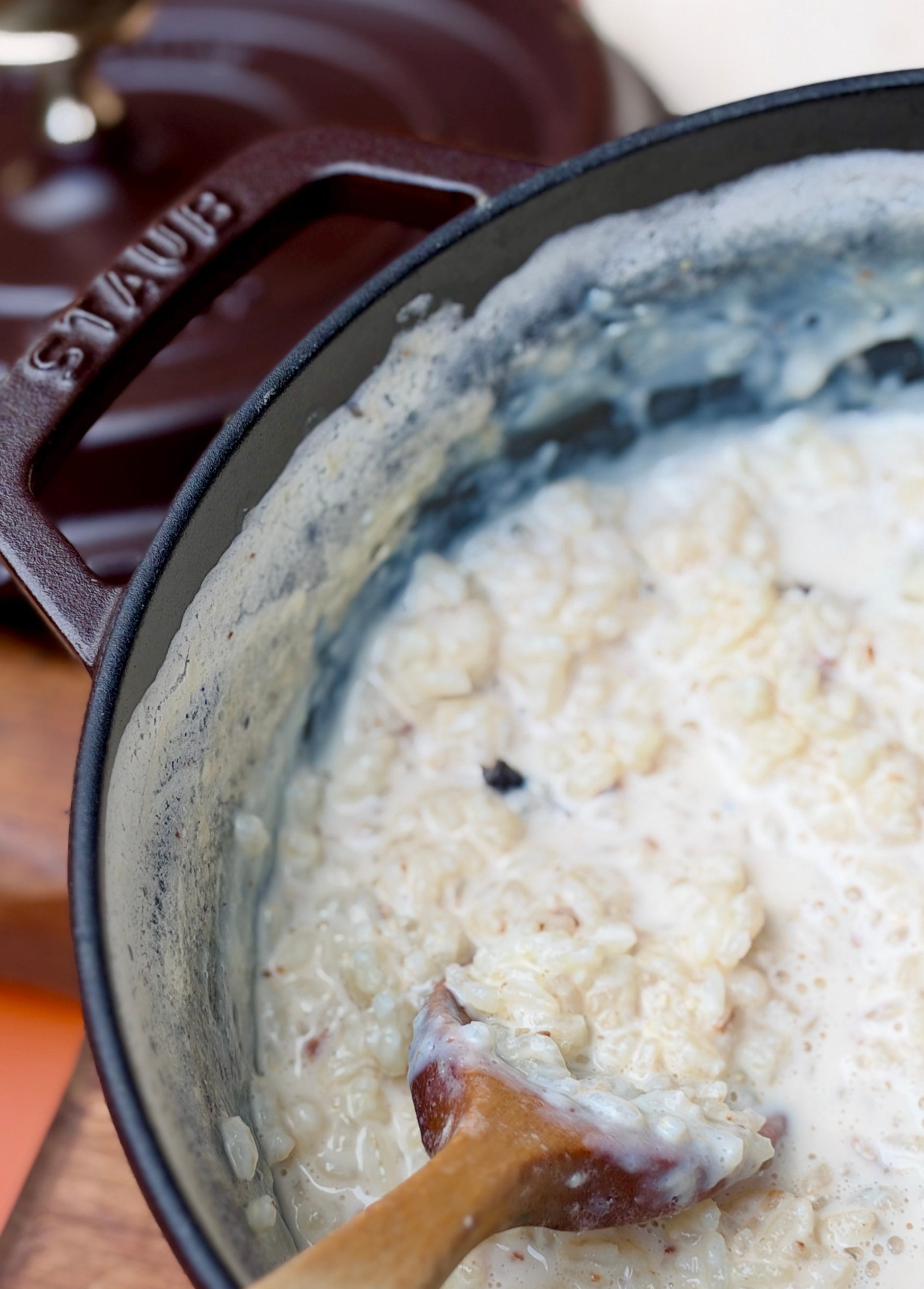
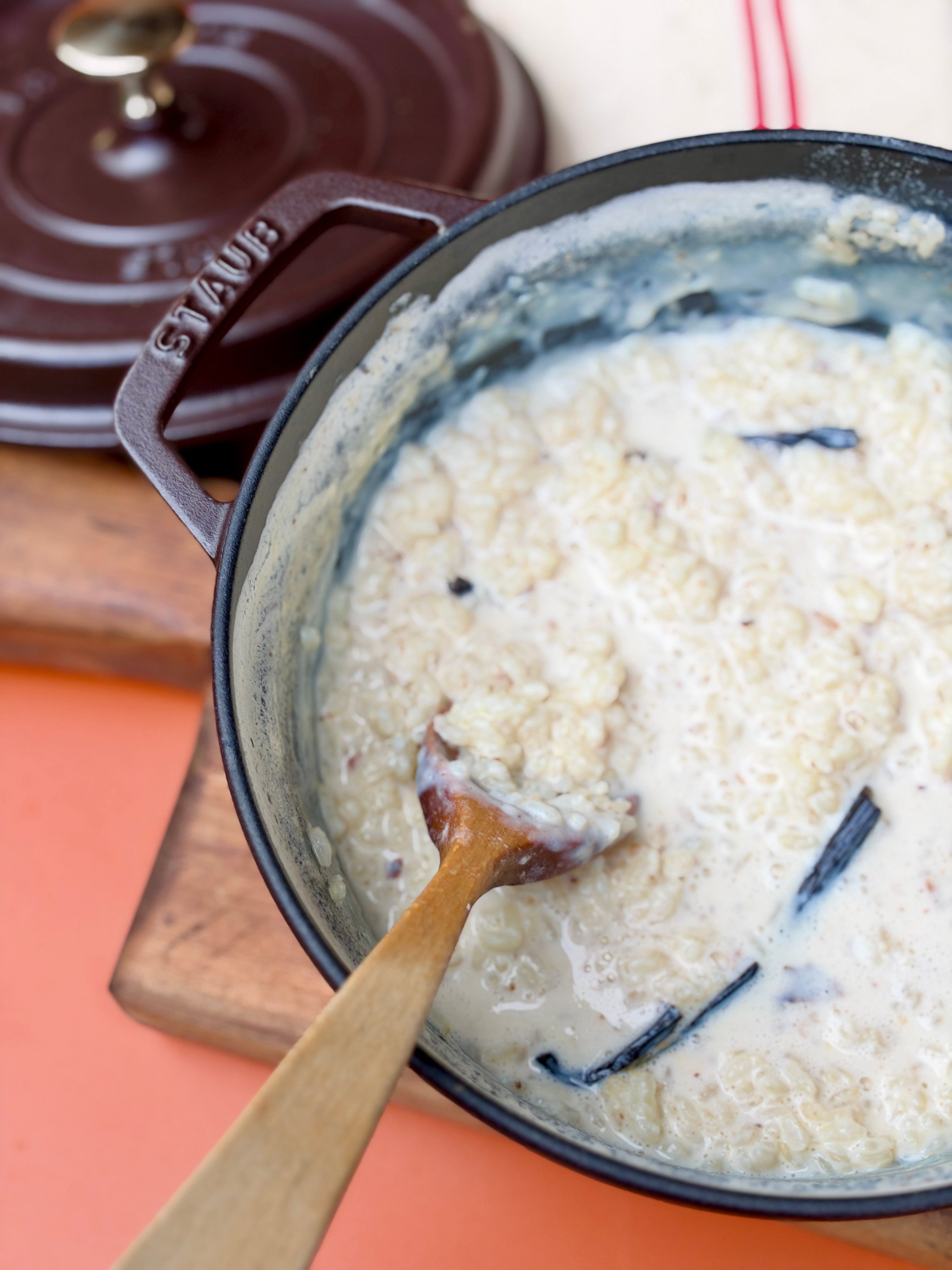
1. To make the Riz au lait, pour the milk into a medium Dutch oven and stir in the rice and salt. Scrape the vanilla beans from the pod, then add them, and the pod, to the milk, or add the vanilla bean paste. Bring the mixture to a boil, stirring occasionally, then decrease the heat so that the milk is at a steady but persistent simmer. Continue to cook, stirring often, making sure to scrape the bottom of the pot to prevent scorching.
2. After 20 minutes, add the sugar and continue to cook, stirring often, until most of the milk has been absorbed by the rice and the rice is tender, about 15 minutes. (It may take less or more time, depending on the rice.) When ready, the mixture should be the consistency of cooked oatmeal. Scrape the rice into a medium bowl and stir in the vanilla extract. Whisk the mixture vigorously for 3 seconds to break the rice up a bit, which makes it creamier. Let the rice cool to room temperature, stirring occasionally to help it cool down faster.
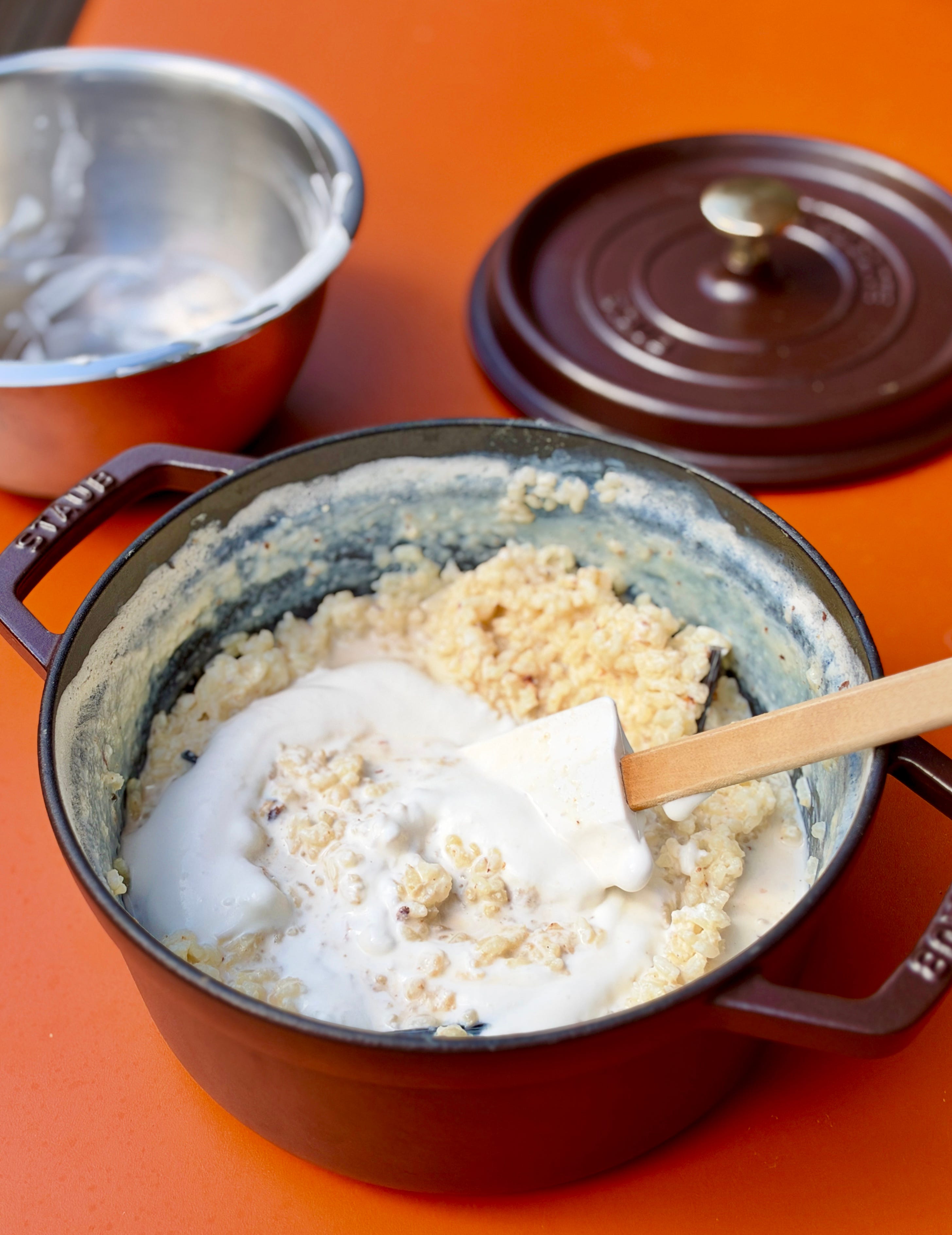
3. Whip the cream until it holds soft peaks. Remove the vanilla bean from the rice pudding, then fold the cream into the cooled rice pudding.
4. To make the nougatine, lightly oil a baking sheet or line it with a silicone baking mat.
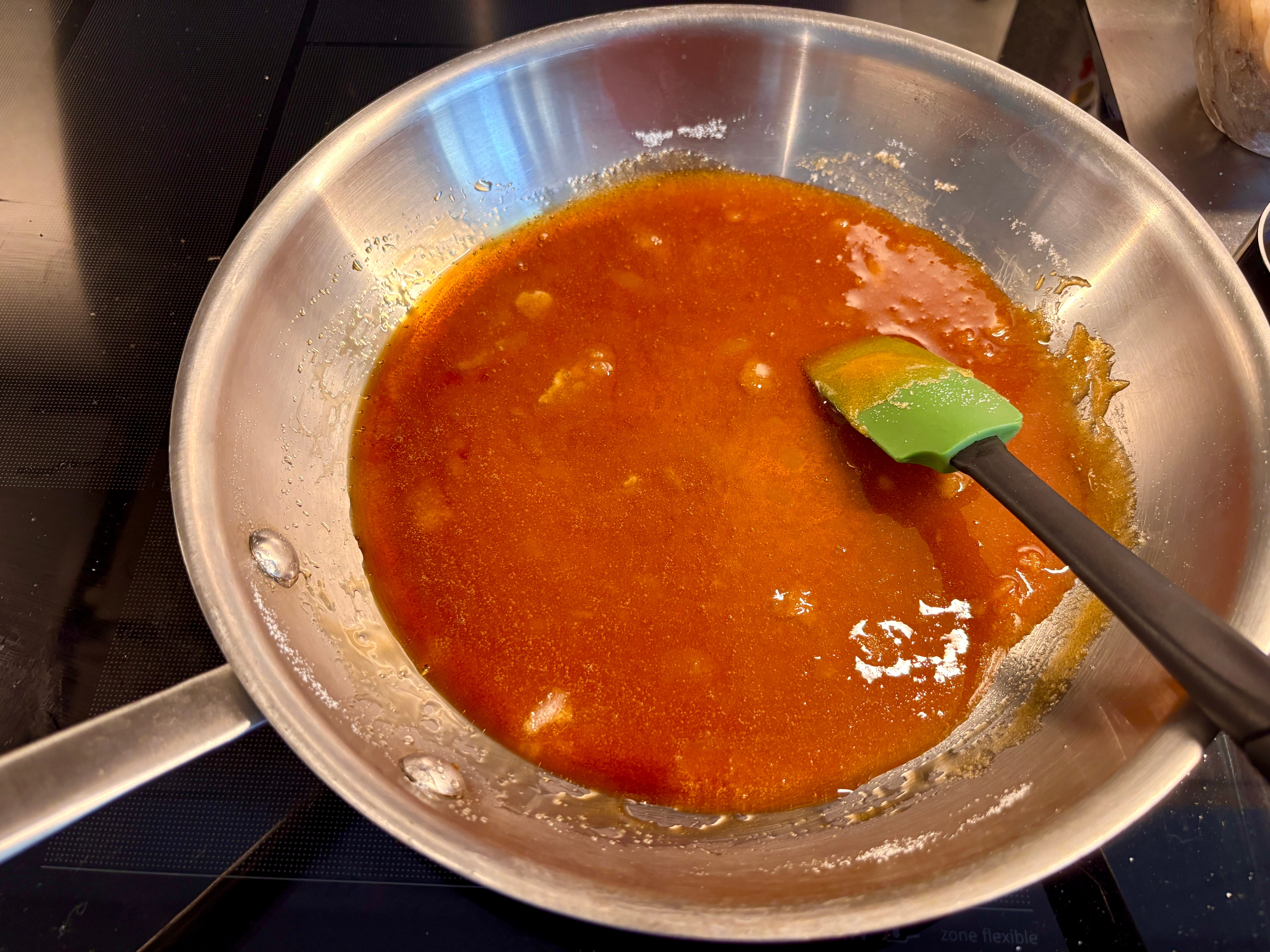
5. Spread the sugar in an even layer in a medium heavy-duty skillet and cook over medium heat without stirring until the sugar begins to melt on the bottom of the pan (if using induction, you may need to peek underneath) or around the edges. Using a heatproof spatula, slowly drag the liquified sugar to the center and stir gently until all the sugar is melted.
6.Continue to cook until the caramel becomes a medium amber color. Remove from the heat and immediately stirin the butter until it’s almost all melted, then stir in the nuts and a sprinkle of salt, using the spatula to scrape the caramel from the bottom of the pan to coat the nuts quickly before the caramel hardens. (If it does harden, you can gently rewarm the pan over medium heat until the nut mixture loosens up.)
7. Scrape the caramelized nuts with the caramel onto the prepared baking sheet and spread the mixture quickly, and as evenly as possible, without overworking it. Let cool completely. When cool, coarsely chop the nougatine into bite-size chunks, but not too fine; I like it when some of the nuts are still whole.
To serve, warm the salted butter caramel sauce (recipe follows) in a saucepan over low heat, stirring until smooth and pourable. Spoon the rice pudding into serving bowls and drizzle caramel generously over each bowl of the pudding and garnish with chopped nougatine.
Salted Butter Caramel Sauce
About 1 1/4 cups (310ml)
6 tablespoons (3 ounces/85g) salted butter, cubed
3/4 cup (150g) sugar
1 cup (250ml) heavy cream, warmed
1/2 teaspoon pure vanilla extract
1 teaspoon flaky sea salt (such as fleur de sel or Maldon) or kosher salt
1. Melt the butter and sugar together in a medium-large saucepan (one that holds at least 4qts/4L, as the mixture will bubble up later) over medium-high heat, stirring occasionally, until the butter is melted. Continue to cook, stirring frequently, until the mixture gets foamy and boils. Keep an eye on it, stirring almost constantly as it starts to brown.
2. When the color is dark amber, the color of strong, dark coffee with just a touch of milk added, and smells a bit smoky but not burnt, remove from the heat and immediately stir in one-third of the warm cream. The caramel will bubble up vigorously, then the bubbling will subside. Stir in the remaining cream, then the vanilla and salt. The sauce will be thin at first but will thicken as it cools. I often make it a day in advance and refrigerate it, then gently rewarm it before serving.
*This is not a sponsored post. Staub did engage me to create a dessert for their event in Paris, but there was no requirement to write about it or share the recipe here in the newsletter.
The newsletter is reader-supported — thank you, paid subscribers!
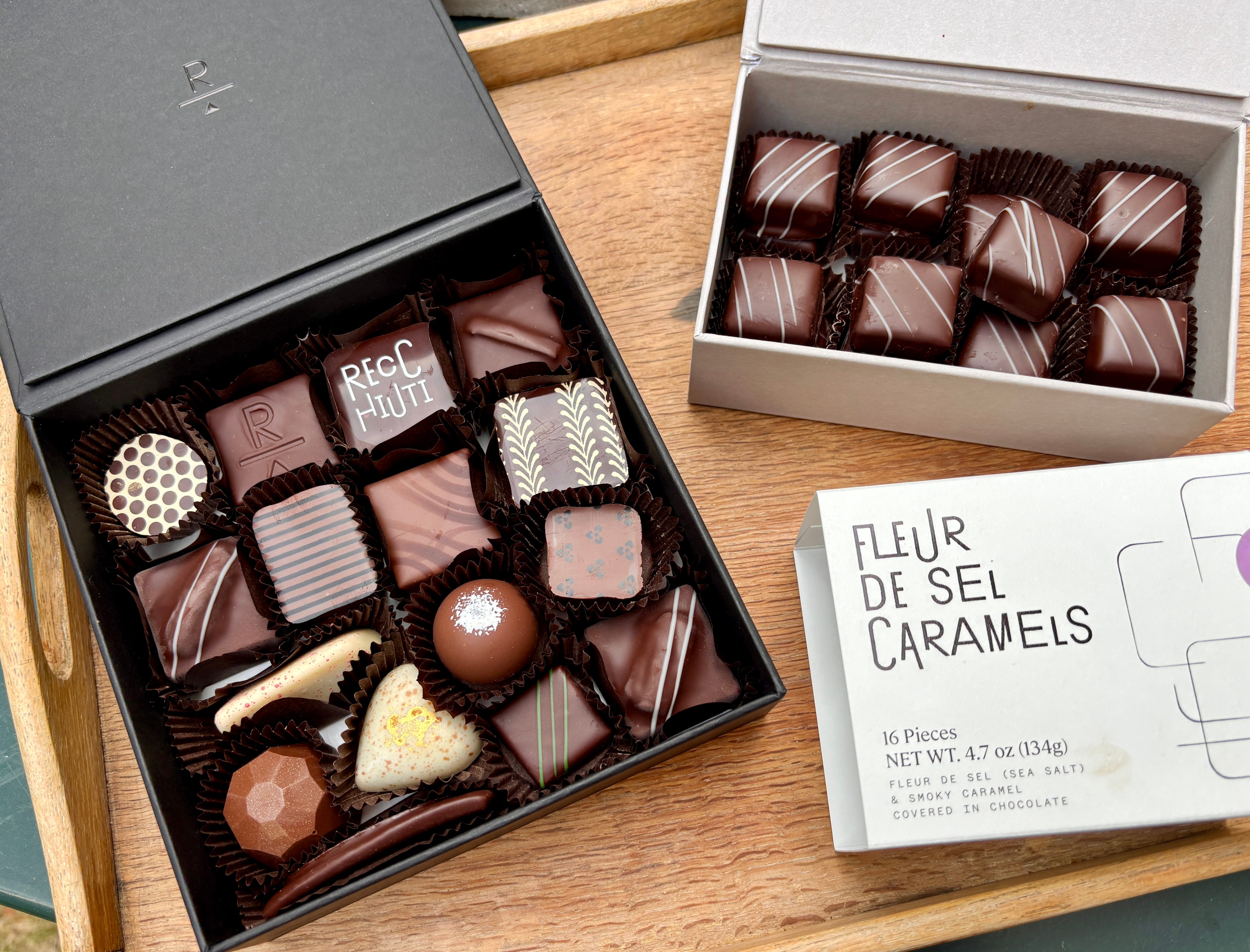
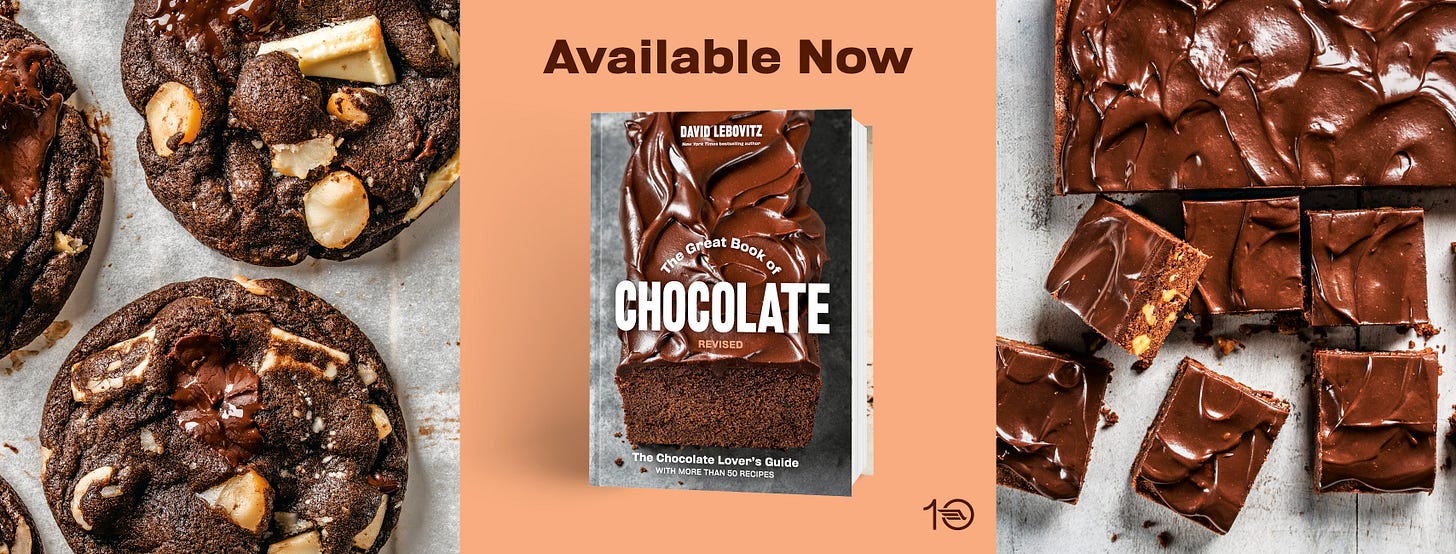
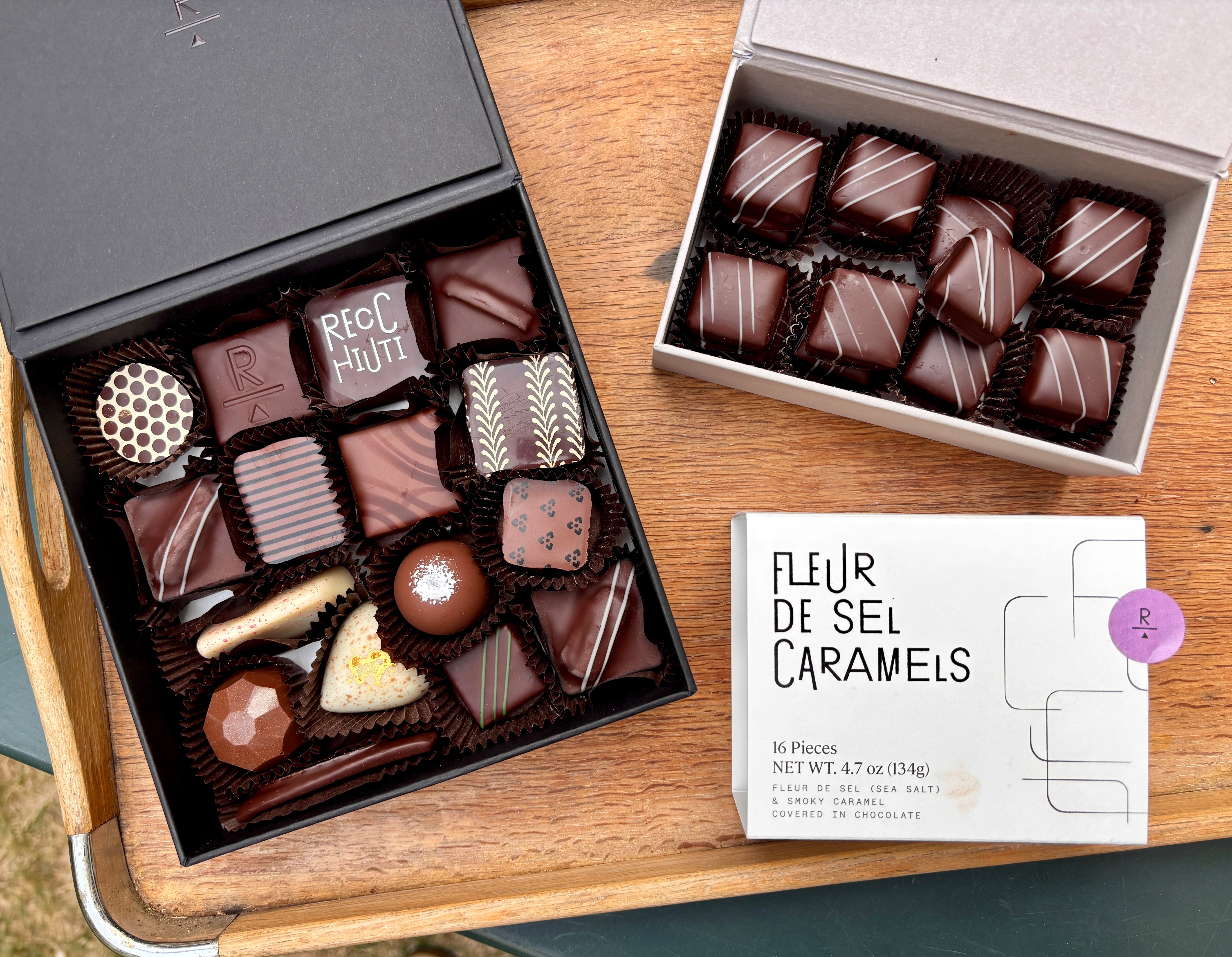
When I wrote my book, The Great Book of Chocolate, I got to meet — and learn from —some of the best chocolatiers in the world. One of them was Michael Recchiuti, co-founder and chocolatier of Recchiuti chocolates in San Francisco.
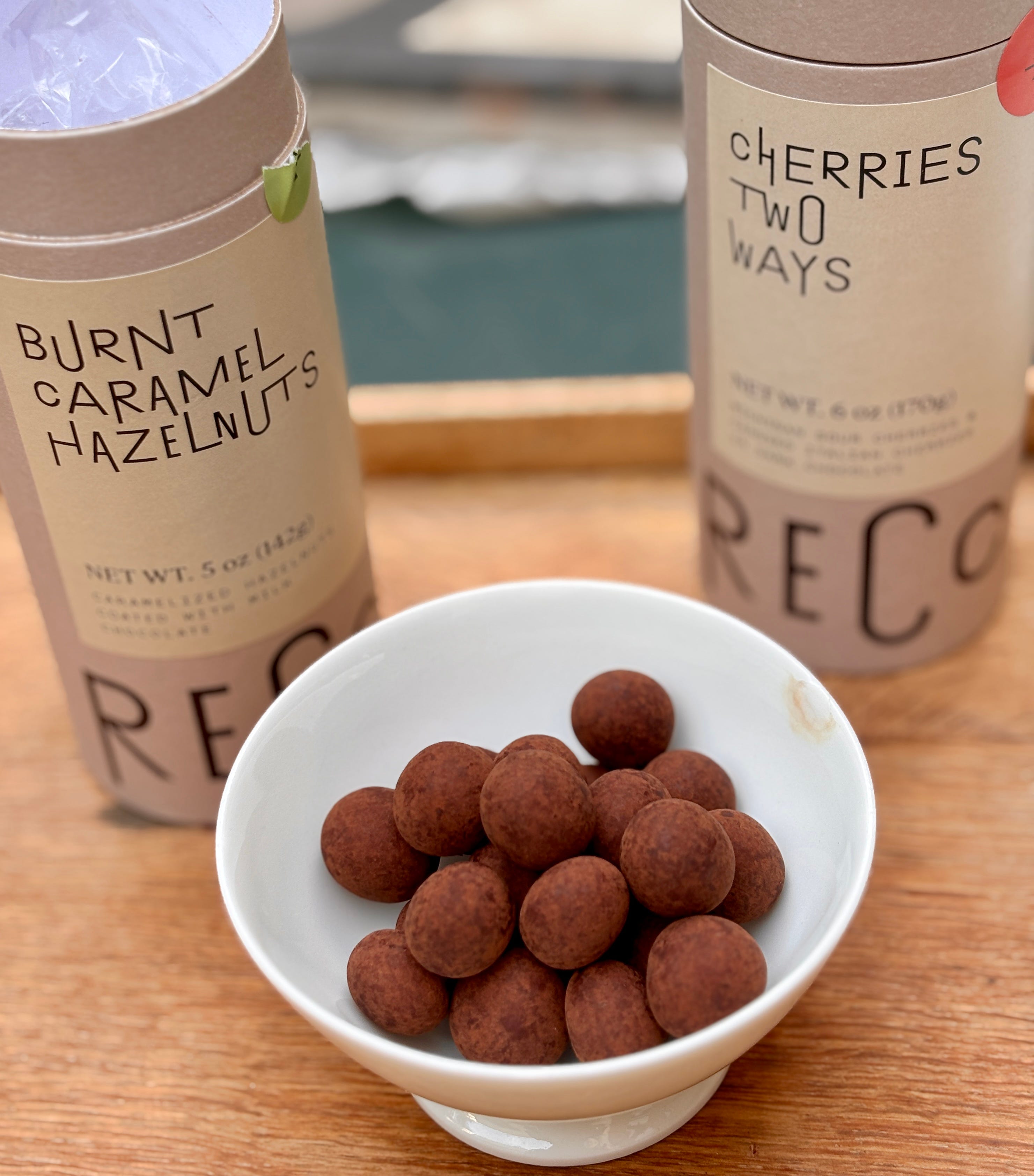
At the time, artisan and bean-to-bar chocolates were emerging in the United States, and Michael was at the forefront, incorporating diverse ingredients, such as herbs, locally grown oranges and pears, Key limes, Hawaiian coffee, and French fleur de sel, into his sublime confections.
On a recent visit to Paris, I invited Michael into my kitchen, along with his wife, Jacky, who is the co-founder andcreative director of the company, to chat about chocolate, including discussing some of the differences between French and American chocolates. We also did a tasting of some of his favorite chocolates.
Photo from Michael and Jacky Recchiuti
Michael recounted how we met, which was when I was working on the first edition of The Great Book of Chocolate, and the (admittedly, extreme) lengths I was going to get the recipes right, and we’ve become friends ever since.
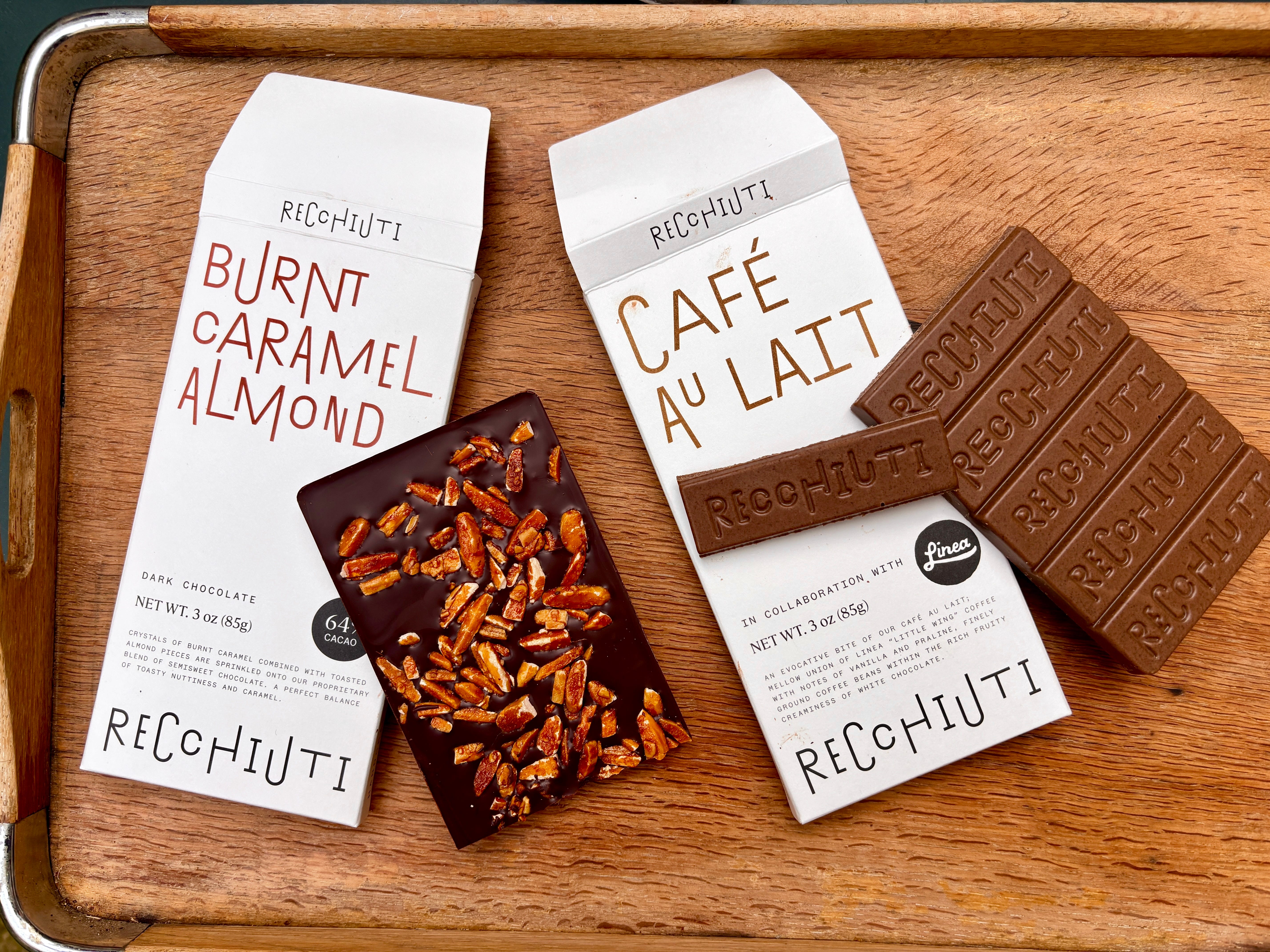
Michael also uses the darkest milk chocolate I’ve seen in tablets of chocolate that raises the milk chocolate bar (so to speak), using milk chocolate that contains 54% cacao solids. In collaboration with San Francisco coffee roaster Linea, he melds finely ground organic coffee beans with white chocolate into an irresistible café au lait bar, reminiscent of a café latte.
Michael has also been working with NASA and Astreas on a “luxurious functional truffle,” which astronauts will be taking into space, to keep them alert — and satisfy their chocolate cravings — while in the stratosphere. Here on earth, The New York Time’s Wirecutter team rated Michael’s chocolates, The Best Boxed Chocolates.
Subscribe to my newsletter to get podcasts, videos, recipes, Paris dining tips, and more, sent right to your Inbox!
If you’d like to try some of Michael Recchiuti’s chocolates, he’s provided a promo code PARISKITCHEN15 that will give you 15% off your purchase in his online shop, which is also valid in the Ferry Building store in San Francisco. Be sure to use that code when ordering.
(Note: They can only ship to U.S. addresses. The code is valid until December 31, 2026.)
I hope you enjoy my podcast chat (and chocolate tasting) with Michael and Jacky Recchiuti as much as I did! - David
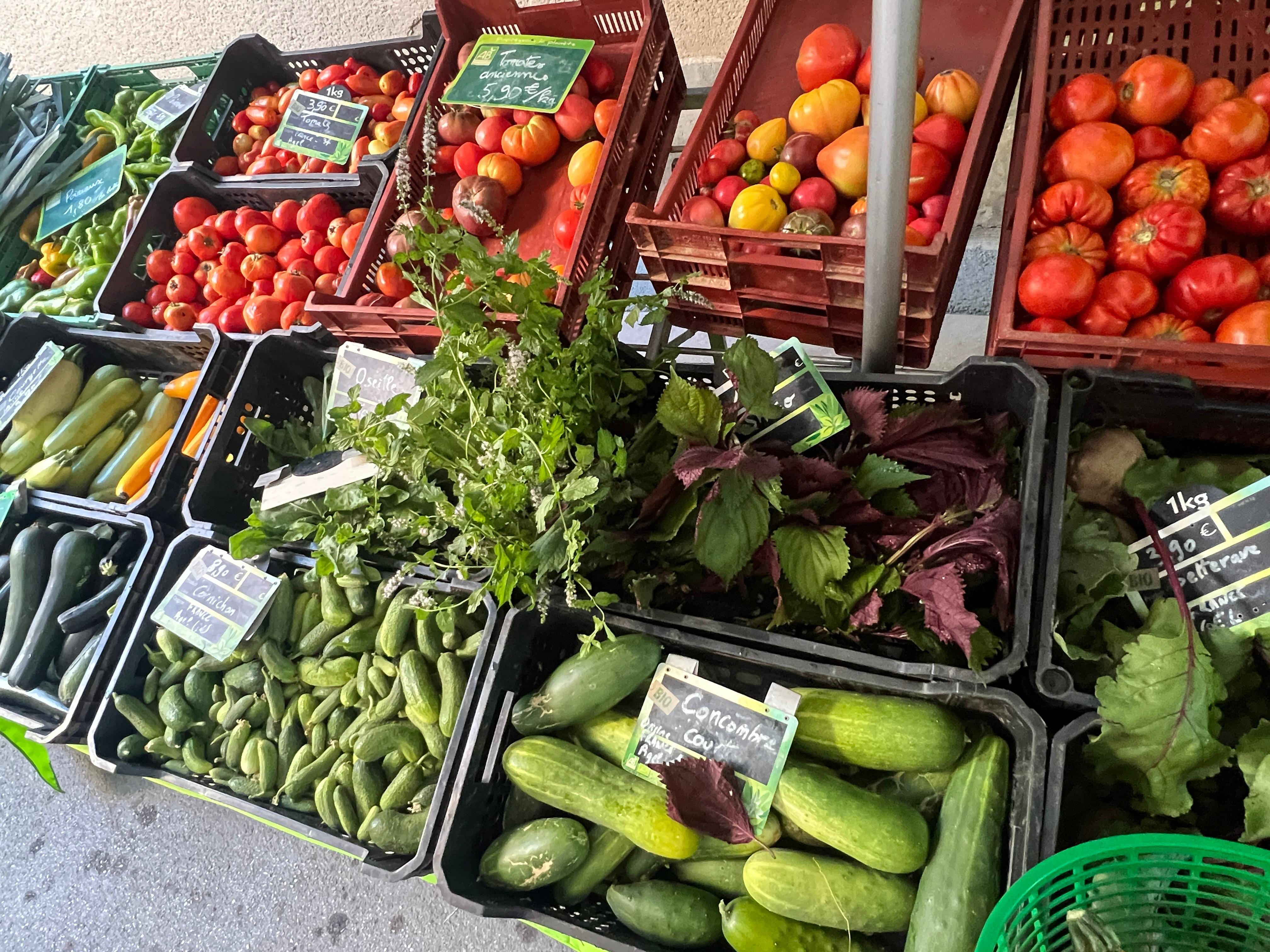
It’s Saturday morning and it’s a big day in France with strikes and major demonstrations nationwide. But everyone has to eat, so we hit the Marché d’Aligre in our neighborhood, to gather some things for the weekend.
My weekend projects are Lamb tagine, Green curry, and Riz au lait (rice pudding) from my book, Ready for Dessert, for a recipe that I’ll be sharing here in the newsletter shortly.
The lamb tagine is from my book, My Paris Kitchen and the North African butcher was so happy that I was making a tagine, he gave me a bouquet of fresh mint to make tea with, to drink afterwards.
We also picked up persimmons, avocados, speck, shallots, Japanese eggplant, and Romain’s favorite cheese!
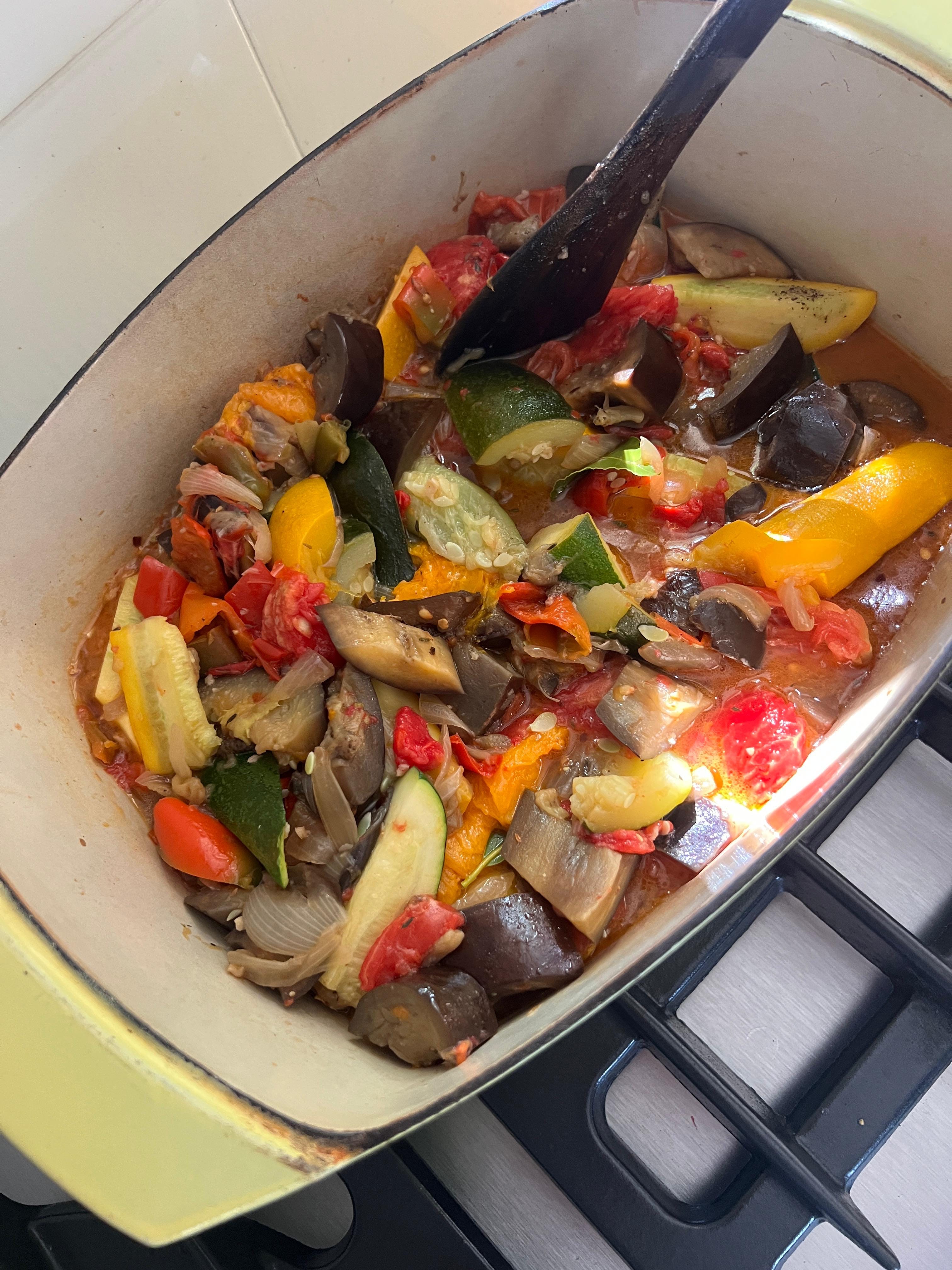
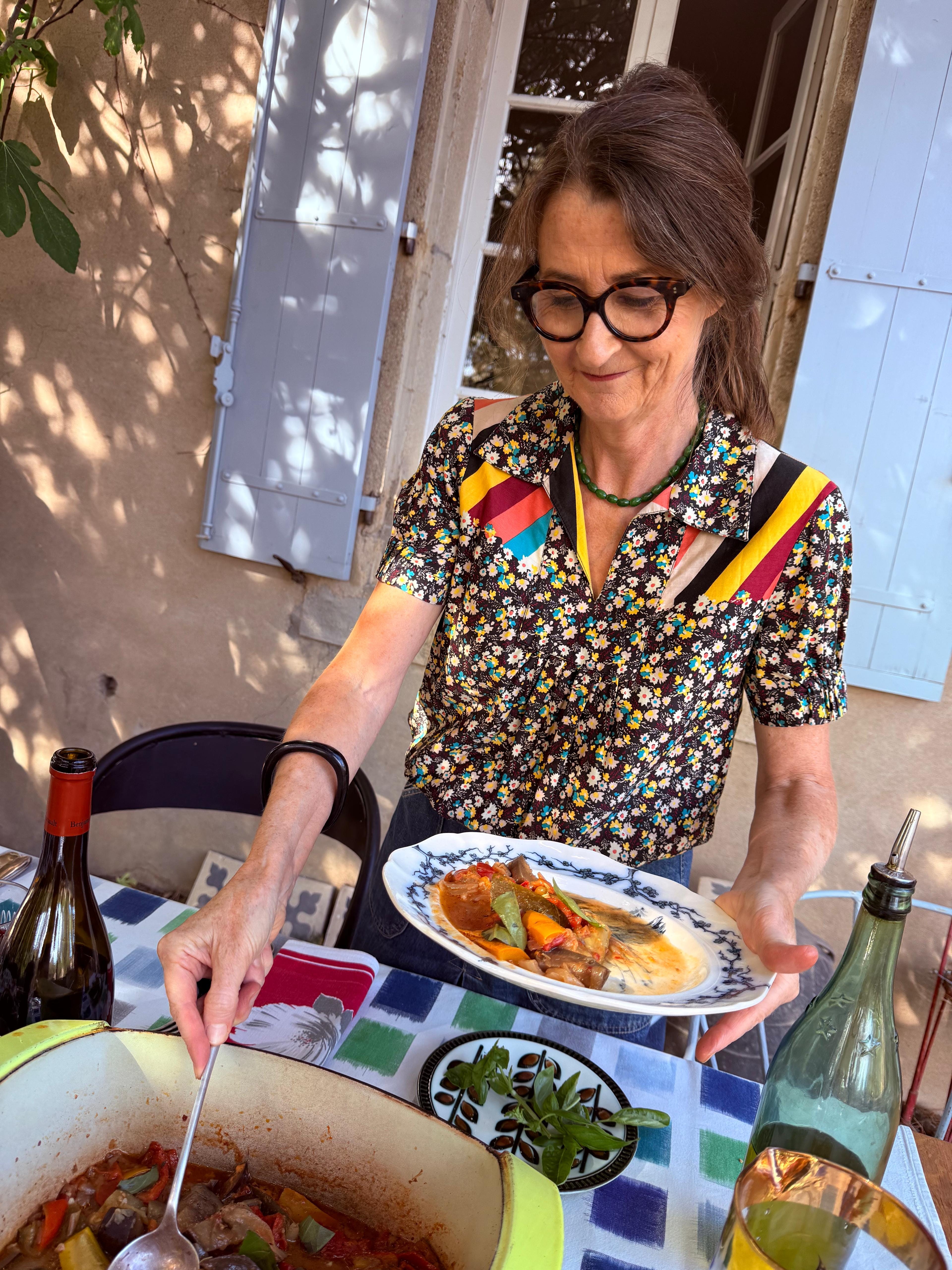
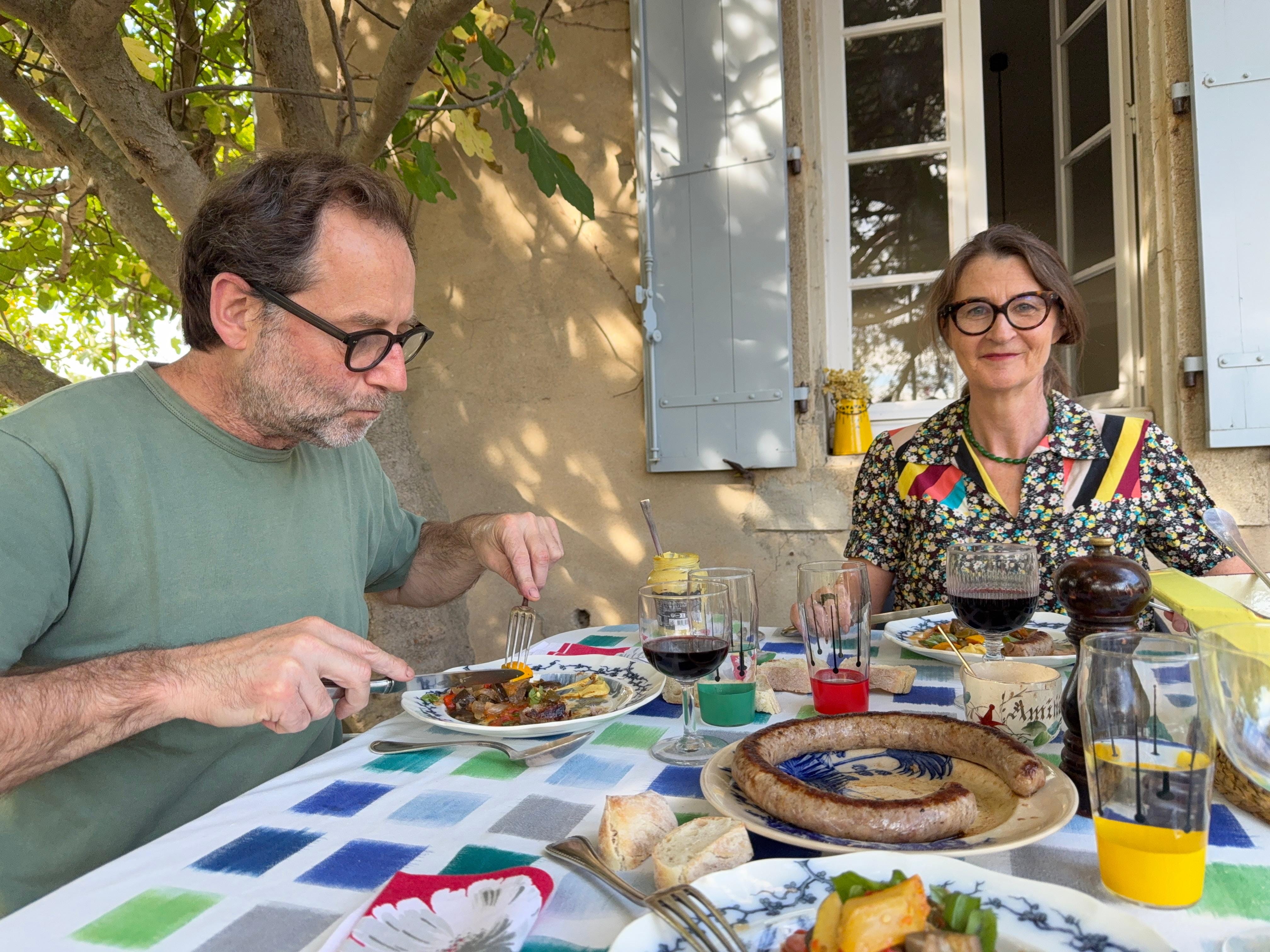
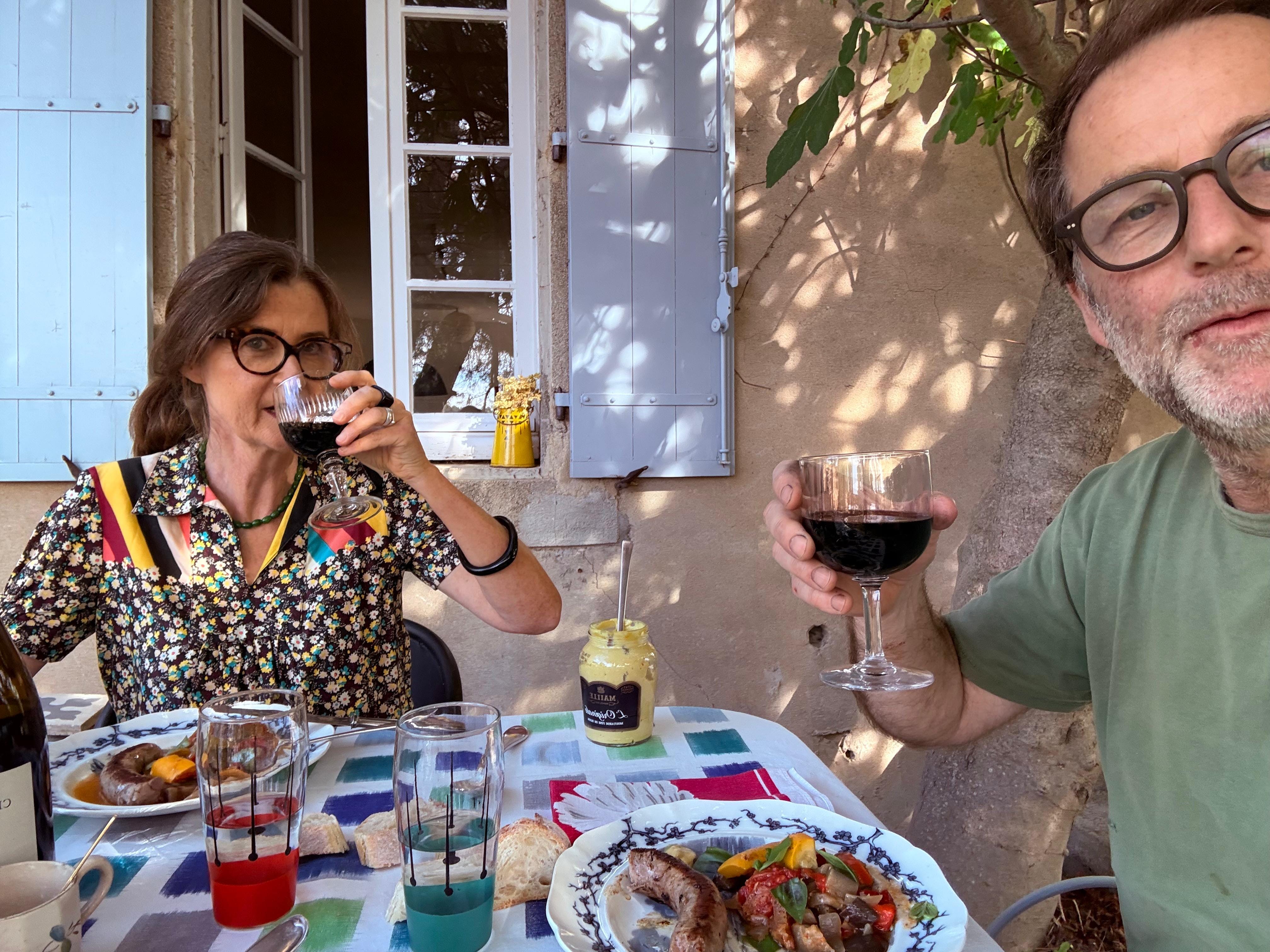
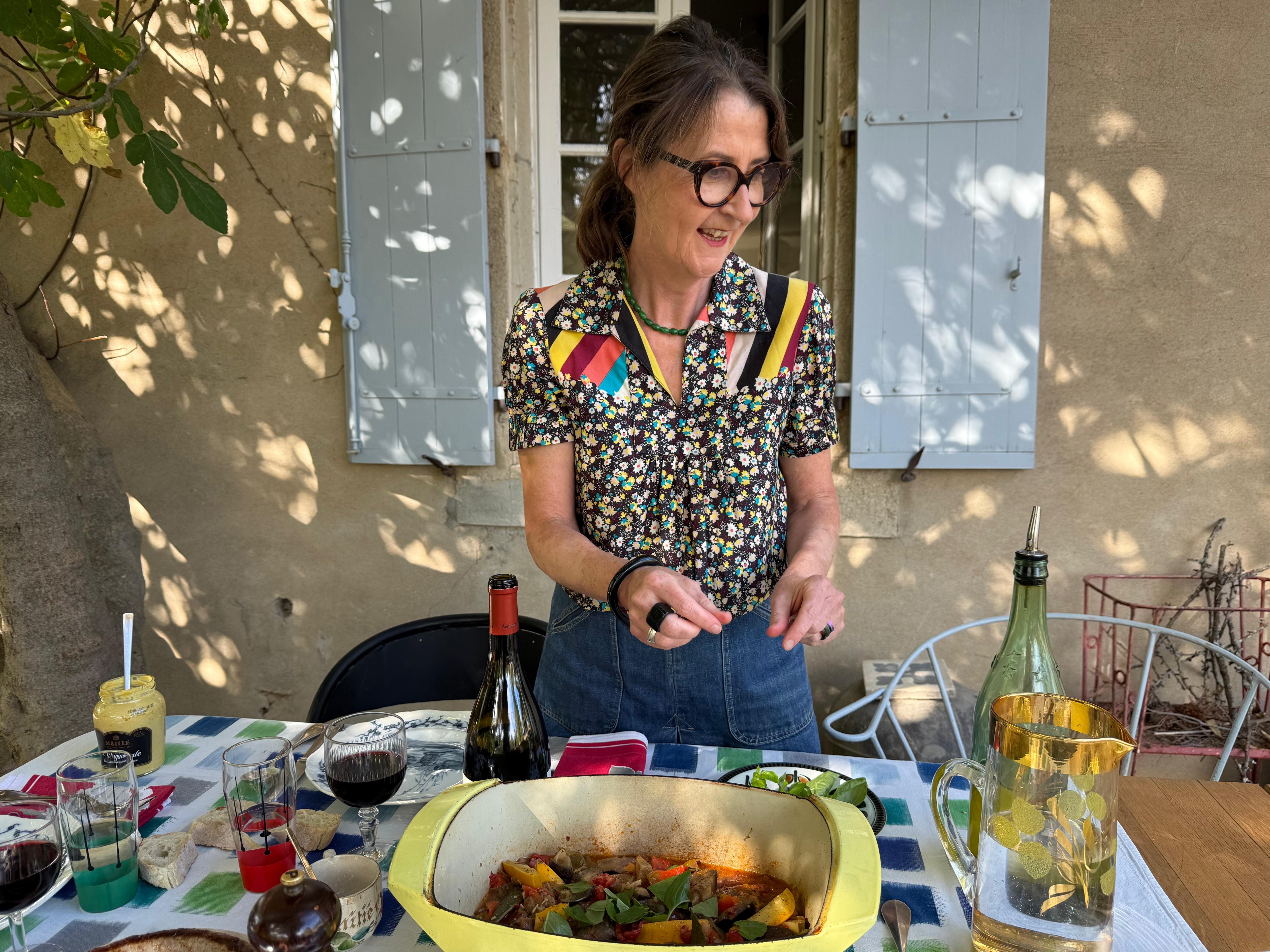
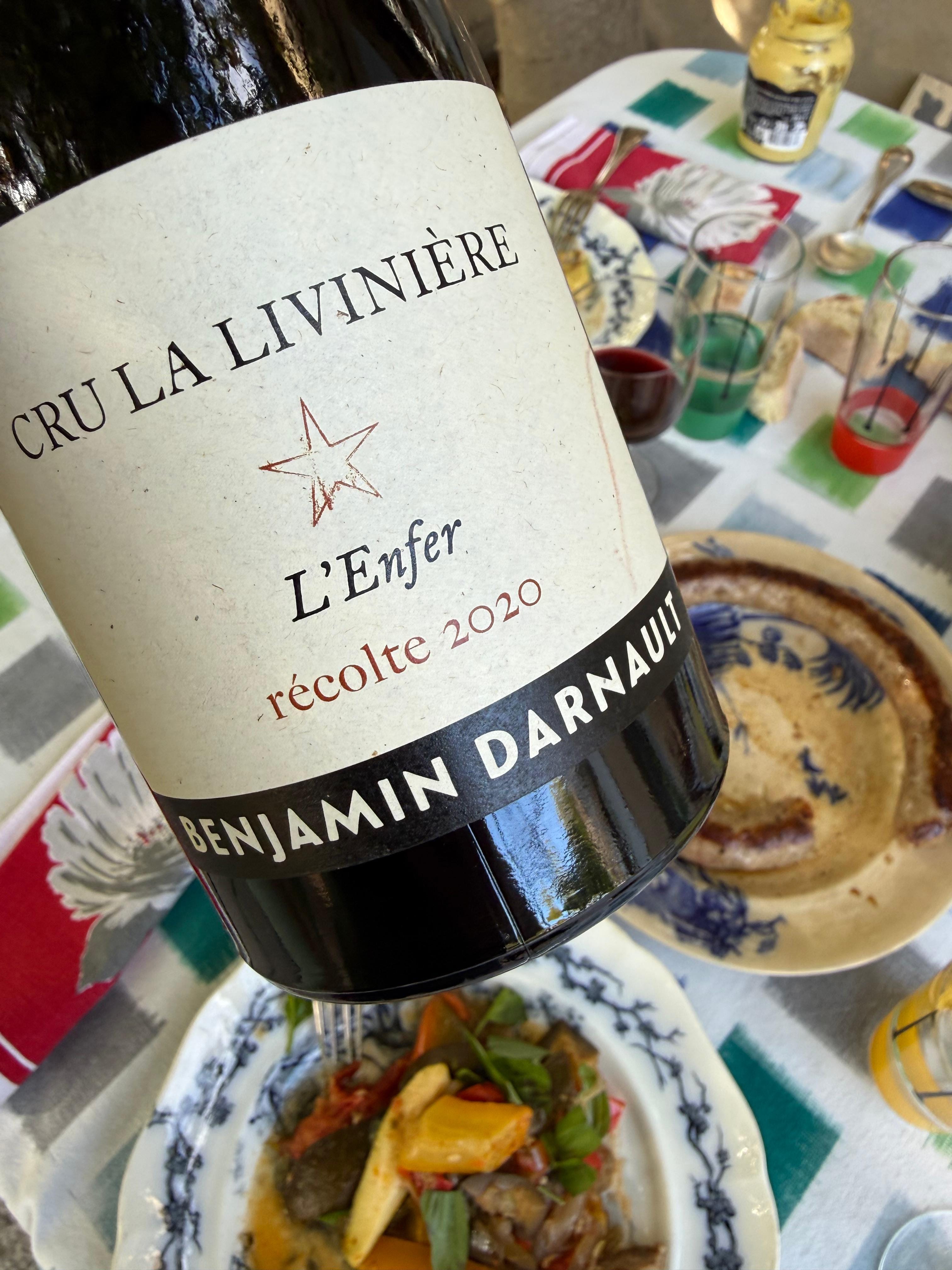
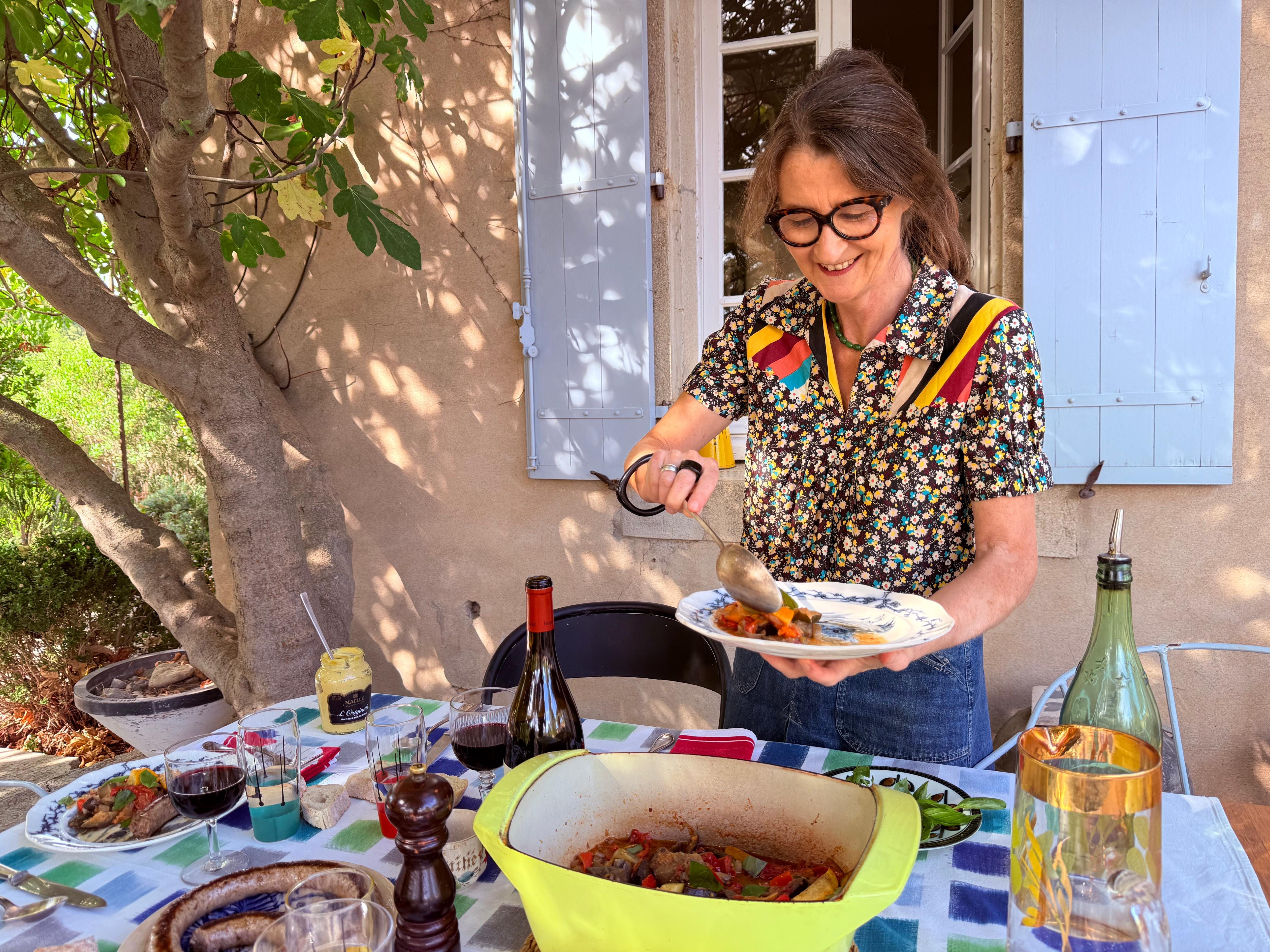
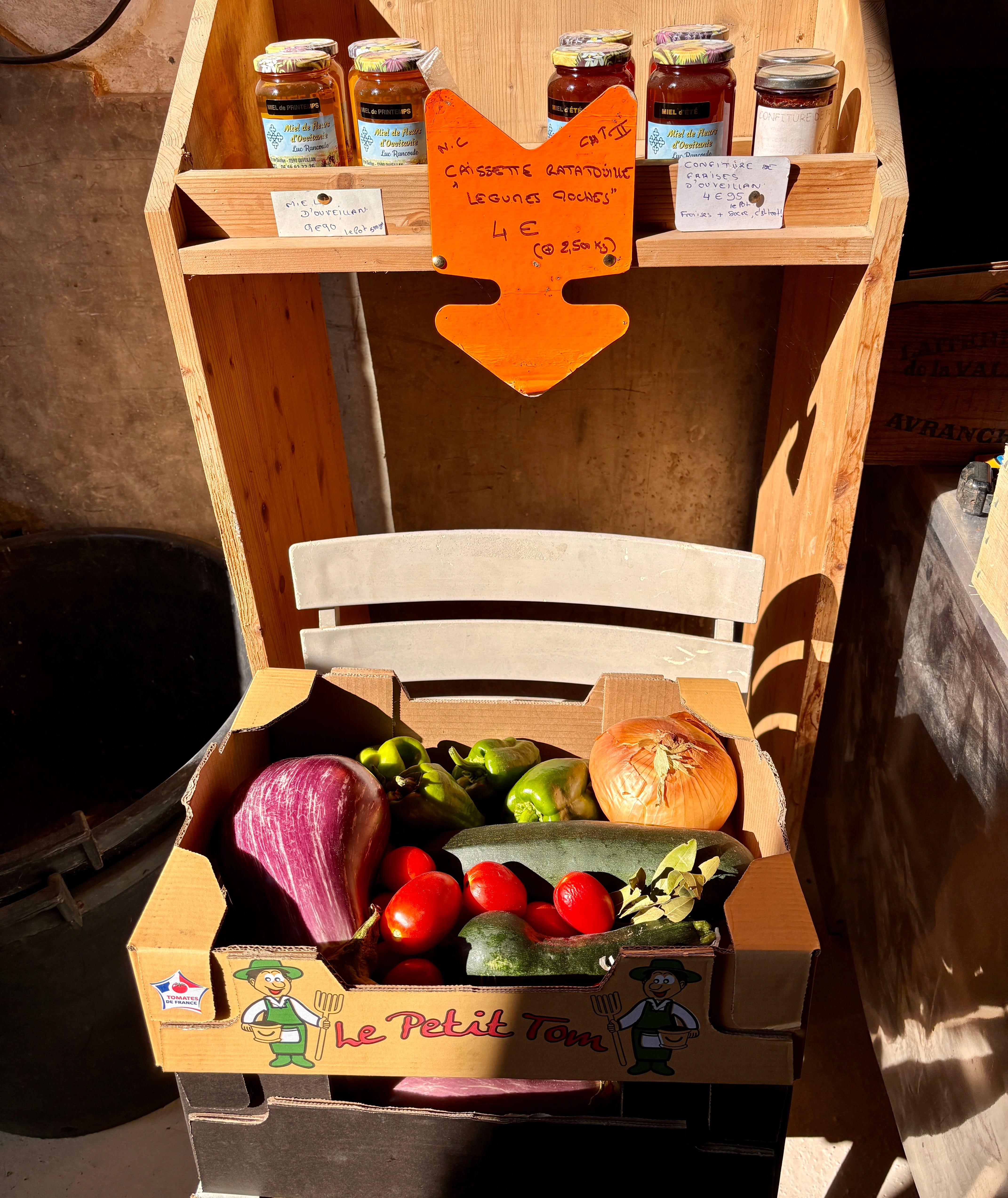
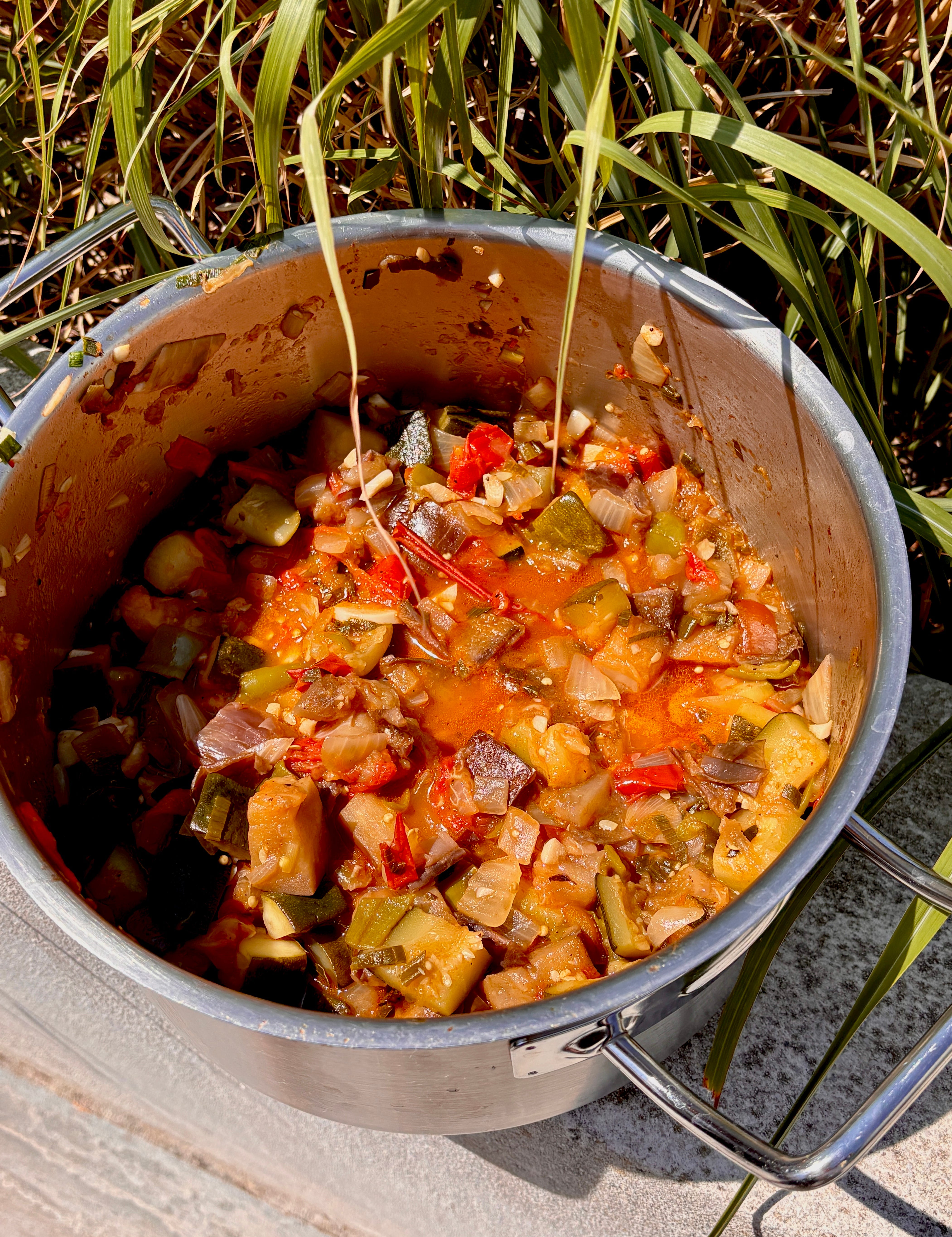
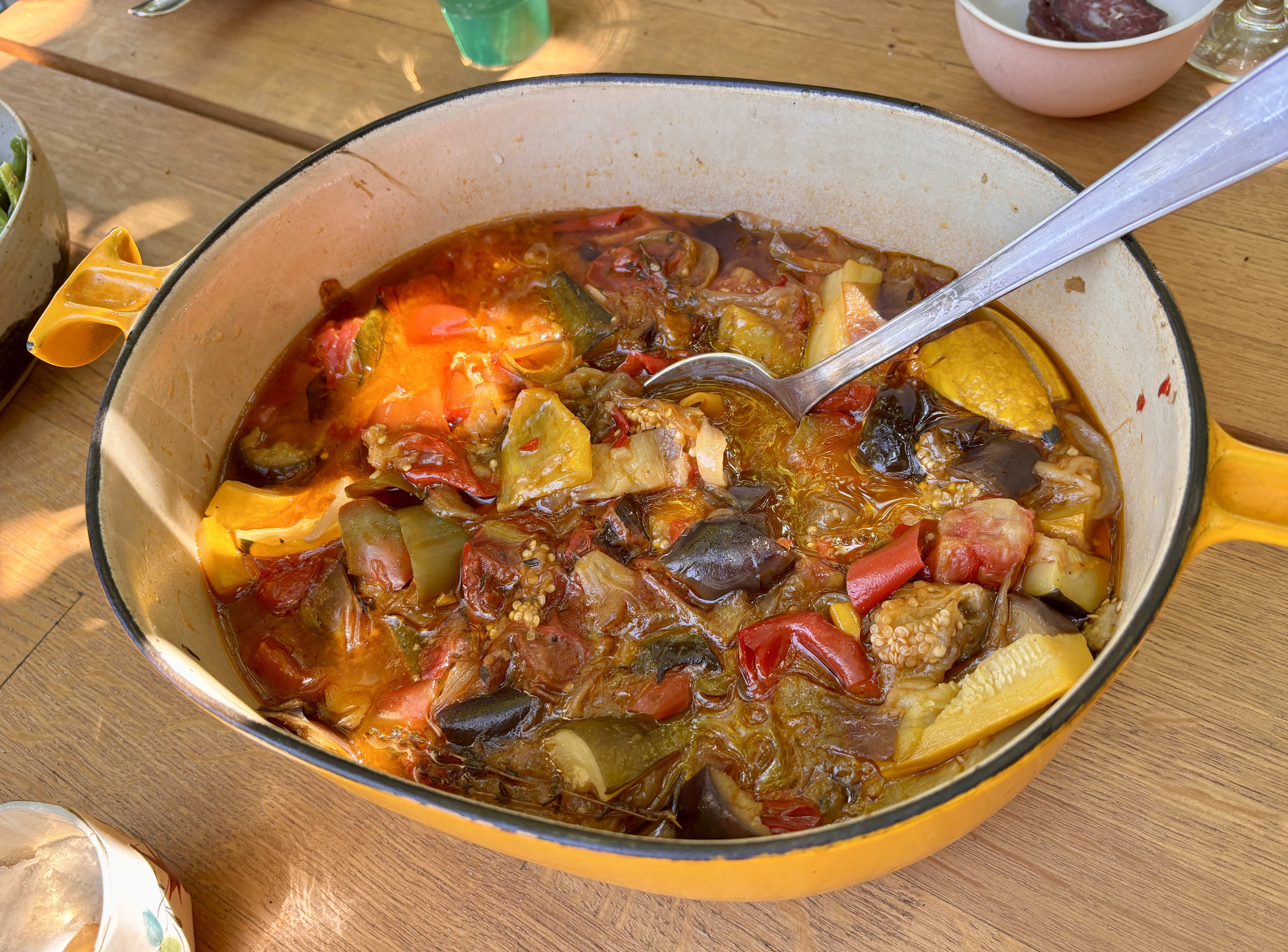
After some lively discussion about ratatouille in a recent newsletter, I thought it would be fun to ask my friend Kat, aka; The Vigneron’s Wife, who lives in the Languedoc-Roussillon region of France, with her French husband, winemaker Benjamin Darnault, to share with us how she prepares this iconic French dish in a guest post. Whenever we visit the region, Kat and Benji, as her husband is known, often invite us for lunch on their stunning terrace overlooking the vineyard. On our last visit, Kat, who is originally from Australia, made a delicious ratatouille with vegetables she picked up at the local market in Olonzac, one of the best in France, and the flavors were stunning.
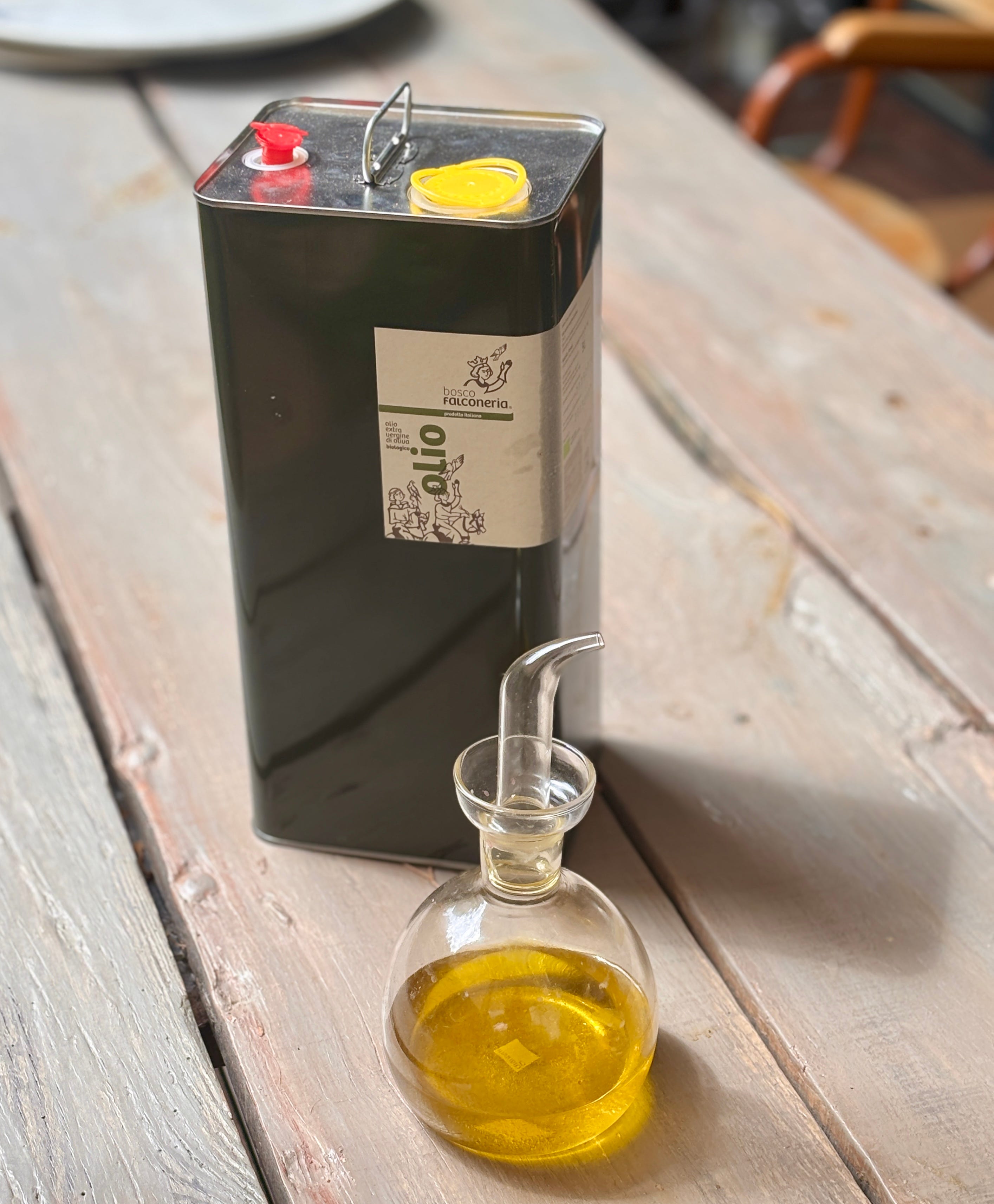
You’ll notice Kat uses quite a bit of olive oil, which is perhaps one of the reasons why it’s so good. (An Italian friend once told me, “Olive oil isn’t used just to keep foods from sticking. It’s a flavor.”) I hope you enjoy this guest post, and recipe (and photos), from Kat! - David
When I was a kid in Australia, market shopping was a treat. Every Friday night, I’d go with my parents to Adelaide’s Central Market. Dad was obsessed with Italian charcuterie, Mum loved the fresh fruits and fried Asian dishes, and I’d find myself carrying a bag of steaming roasted beer nuts, hot in my hands with burning, salty fingers, trying not to lose Mum and Dad in the crowds.
The market was packed to bursting with people and noise, vendors yelling bargain prices, excitement in the air for the weekend. Stall after stall was awash with colour and all sorts of aromas drifting to my nose. My parents bought most of our household’s food at the local supermarket, but this was our thing: to head into the city and treat ourselves to exotic produce you couldn’t often find anywhere else. The Central Market was our happy place.
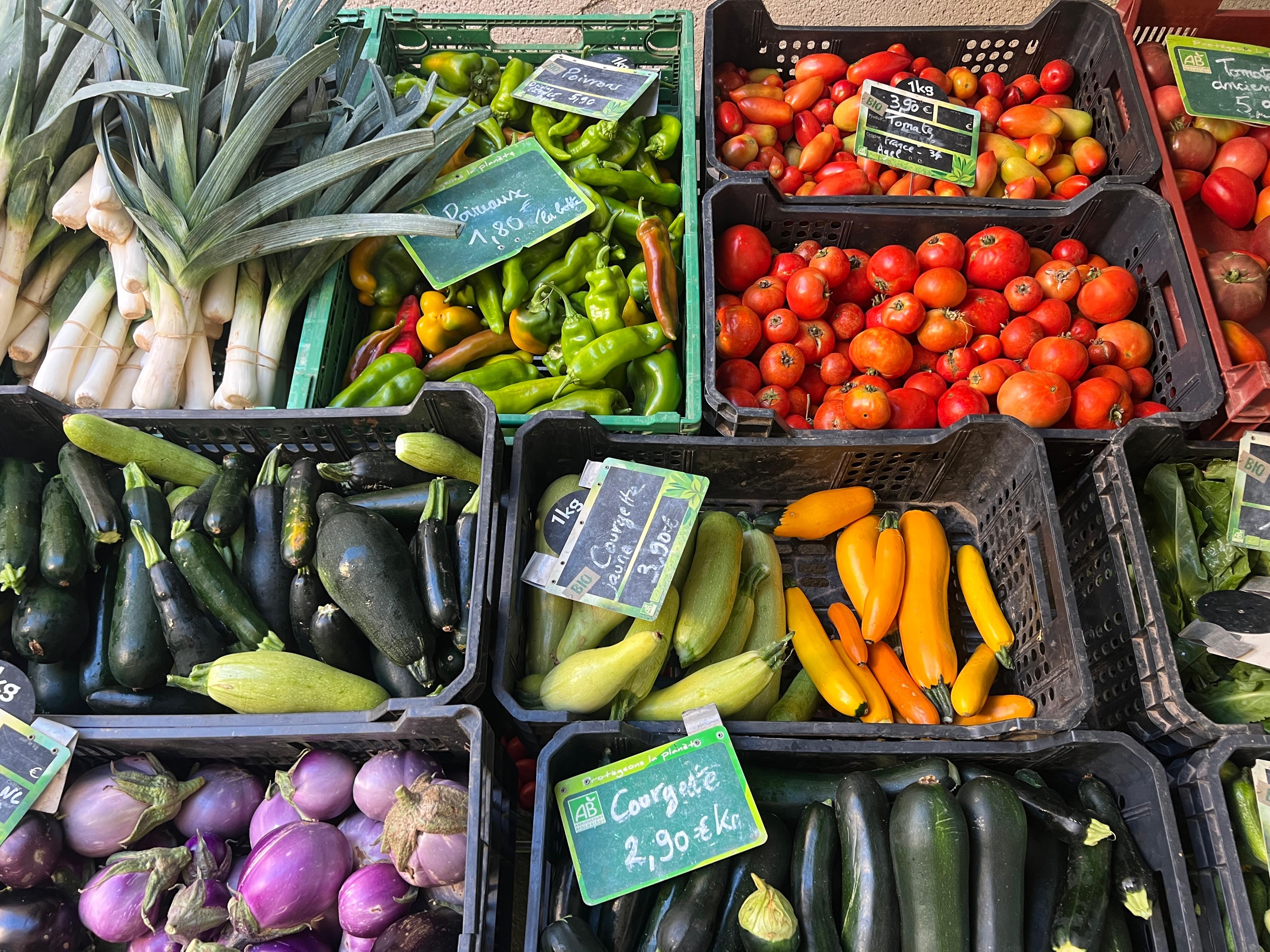
The market in Olonzac, France.
Fast forward to today, and I still do a weekly market shop, but it’s thousands of kilometers from my childhood home, in a small rural village in France called Olonzac. If ever you’d told me I’d be living in a remote region of France and shopping at an outdoor market on an ancient square, that 12-year-old Australian kid would never have believed you. And yet here I am, and I’ve been coming to this market now for over 25 years.
So where is Olonzac exactly? It’s a village in the heart of the Minervois, a historic wine-producing area of southern France. People have been making wine here for thousands of years, since the Romans inhabited the area. Part of this region was formerly known by the name you might be more familiar with, the Languedoc-Roussillon - which lines the Mediterranean coast and is close to the Spanish border.
Subscribe to David’s newsletter to get posts, recipes, podcasts, videos and more, sent right to your inbox!
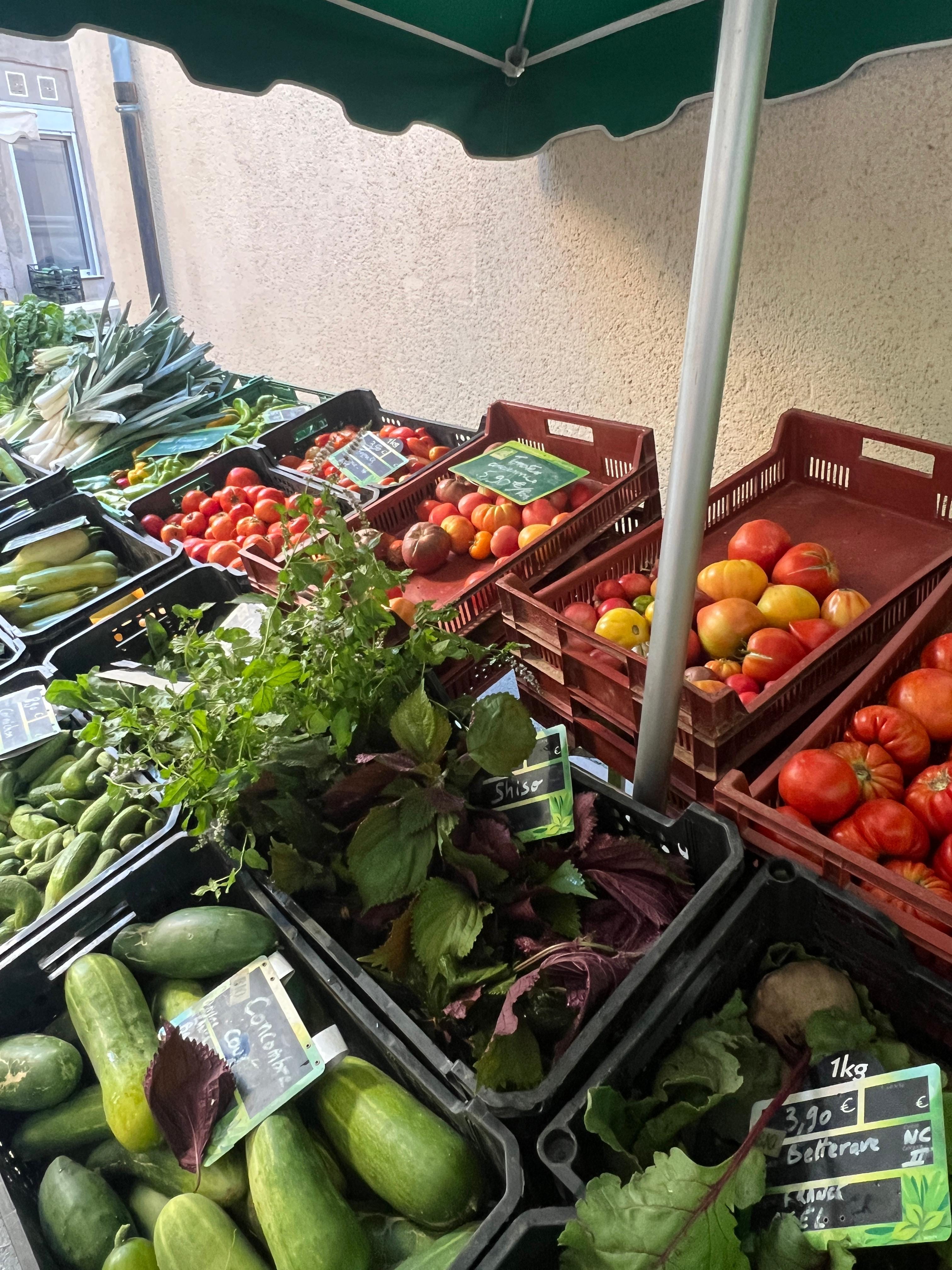
The Olonzac market is approximately 12km (7½ miles) from the village I live in, and it’s where I do the bulk of my food shopping. Every Tuesday morning, vendors from around the region set up their stalls: fresh fruit, vegetables, cheeses, meats, small goods, eggs, fish, bread, flowers freshly picked from up in the Montagnes Noires (Black Mountains). The selection of produce is amazing.
I love this market for its food. There’s a big mix of stalls selling products from all over the region, but for me the finest, most delicious produce is what’s grown in local gardens by Vanessa, Valérie, Isabelle, and Lisbeth. Many of my favourite growers are women and over the years, my nervous first attempts at communication, using my hands or a nodding, embarrassed smile, shifted to small exchanges about my hometown (‘It’s sooo far!’ they would say), the weather, or what vegetables are growing well at the moment. I can’t tell you the honour this foreigner felt when I graduated to being on a first-name basis with these people!
As children arrived in our lives, next came introductions to each other’s kids - mine in a pusher (stroller), while theirs sat on the ground behind the stall, reading books, or older ones helped mum refill the cucumber bins. What a joy it is now, to have a voice in their language and share a bit of our lives with each other: to be asked how my daughter is doing, what is she studying now; is my dad well, has he travelled back to Australia; hearing Valérie’s daughter is now living in Barcelona; Isabelle’s husband is back from working in Corsica.
It has been a privilege getting to know these women and their lives. The market has not only given me access to, and a knowledge of, incredible local products, it has given me a sense of community in our region. In an entertaining and discreet way, it has also been a great gauge on how my French is evolving - or not! (still have a looong way to go). One more thing: it has forced me to appreciate things at a slower pace. Queuing up and waiting is all part of the process! To be honest, on some days it can be a little frustrating - and if you are rushing to get back to your desk, simply out of the question.
But if you have the privilege of time, waiting for the butcher to prepare a farm chicken for Madame Vidal can lead to a conversation about which local doctor is taking new patients; lining up to pay for your tomatoes will allow you to hear which teacher at your kid’s school is leaving, or be given a good tomato recipe from the Monsieur in front. You can glean all sorts of VIP information.
Another French product that I have a very personal connection to is wine. Yes, of course, it goes without saying that I like drinking wine! But basically why I live here is because I am married to someone who makes wine here. It’s a long story, and a very long time ago (29 years), but I married a Frenchman after an exceptionally short time together. We had met in Australia, went our separate ways, then decided to rendezvous one year later, in South Africa.
I joined Benjamin working a harvest in Paarl and within the first week, we decided to get married. One month later, we celebrated our wedding over lunch in an outdoor cafe in Cape Town, with two strangers who had also been our witnesses.
As far as everyone at home knew, I was still ‘backpacking’ with my French fling and the next stop on our itinerary was France. No one in the world knew we were married, and landing together on Benjamin’s parents’ doorstep was nerve-wracking. It was my first-ever time in France, I didn’t speak French, and here I was, living with people I’d just met, who were my in-laws.
I’ll spare you the nitty-gritty, just to say I stumbled over more than a few faux pas, like telling my mother-in-law who didn’t yet know she was my mother-in-law, ‘je suis chaude’ on a hot day. I was desperate to prove to these French people that I was a nice person (and a decent daughter-in-law), but nothing impressive came out of my mouth - and what did, was often wrong.
Eventually we announced the news of our marriage to both families (not good news for everyone…though Dad eventually budged at ‘winemaker’), and the next step in our grown-up life was to find work. Via a good family friend, Benjamin landed his first ‘serious’ winemaking job in the Languedoc. We gathered our belongings from each hemisphere and set up house together in the Minervois, for Benjamin’s new position as a chief winemaker in the village of La Livinière.
It was an exciting place to land. The Languedoc-Roussillon is a major wine-producing area of France, and a beautiful region with spectacular natural landscapes and a lovely, gentle climate influenced by the Mediterranean, conditions perfect for vineyards. We live, literally, surrounded by grapevines and nearly everyone has some kind of connection to vineyards or to wine; wine/viticulture is the most important agricultural industry in the area.
Just to give you an idea of the scope, the wider Occitanie region - which includes our Languedoc-Roussillon - produces around 10 million hectolitres of wine in a typical year (FYI, that’s how we measure wine production - roughly a billion litres). That’s a lotta wine! Benjamin has been making wine in this region for over 24 years now, and I am in awe of how much he has learned and created since our first days here, expanding his knowledge of the ‘terroir’, as they say, and increasing his focus on organic and biodynamic farming.
It has been an adventure…to say the least, getting to know this region together. We arrived as twenty-year-olds, the young ‘foreign’ couple (Benjamin coming from the Charente region is as much a foreigner as me) - and now it is home.
Thanks to David’s kind suggestion, something I would like to share with you from our home, is my recipe for ratatouille. This traditional southern French dish captures all the things I love about here: the colours, the seasons, the flavours and time spent shopping and cooking fresh produce. With the end of summer and the season for local tomatoes and eggplants coming to a close, I reckon it’s a good time for one last ratatouille. It is perfect for serving to your family and friends, while enjoying some slow time around the table, along with glasses of good (preferably local) wine.
“Rat-a-too-ey”. The name is a mouthful, but what a delicious mouthful it is.
Nothing evokes Summer in the south of France more for me than this traditional French dish. At this time of year, local markets like the one in Olonzac are laden with bell peppers, eggplants, zucchinis and tomatoes. The colours are sublime and just thinking about cooking a ratatouilleconjures up images of the potagers, the gardens where the vegetables are grown, and big old cast-iron casserole pots full of all these fresh Summer vegetables simmering on country kitchen stoves.
Here for you is my version of a ratatouille. And yes I say ‘my’ version, as there are many! While the ingredients are nearly always the same, the cooking methods differ (many French people = many opinions): vegetables cut big or small; diced or sliced; separate frying or fry together; oily, not so oily; fresh tomatoes or tinned...
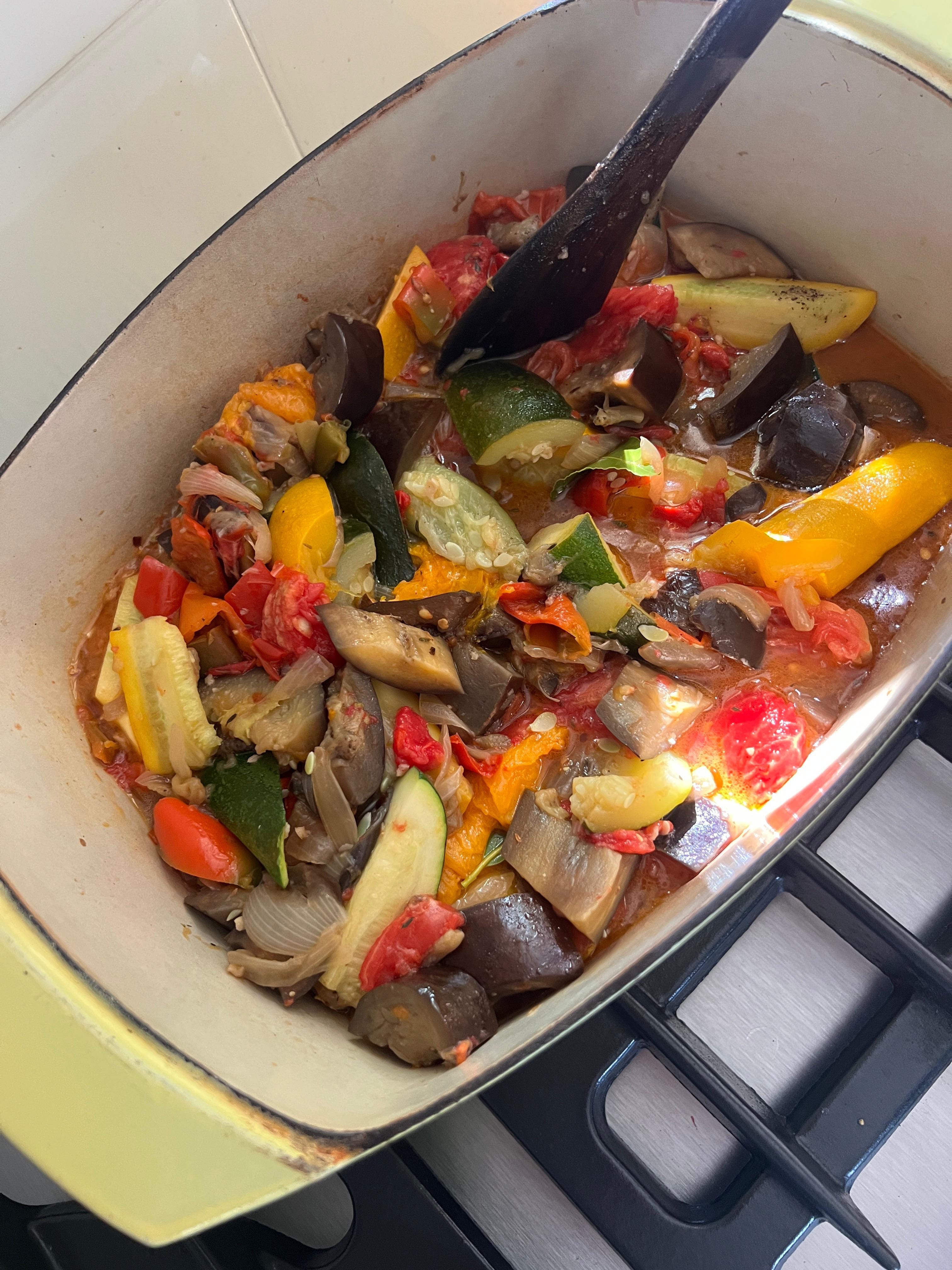
There is no right or wrong way, it’s up to you (as I keep reminding my French husband who tends to peer over my shoulder!!). My version has changed over the years - I used to spend a lot of time preparing my eggplants - salting, rinsing, drying, and frying each piece to a golden colour before adding them to the pot. It was a lovely looking result, but SO time-consuming. And so much oilier. I now add them directly to the pot, unsalted and uncooked. I also cut my vegetables larger, which gives them a fleshier texture. You know what you are eating - unlike cutting them so small, you render the vegetables unrecognisable. The larger cut also helps maintain a level of firmness. I now only use fresh tomatoes instead of grabbing canned ones.
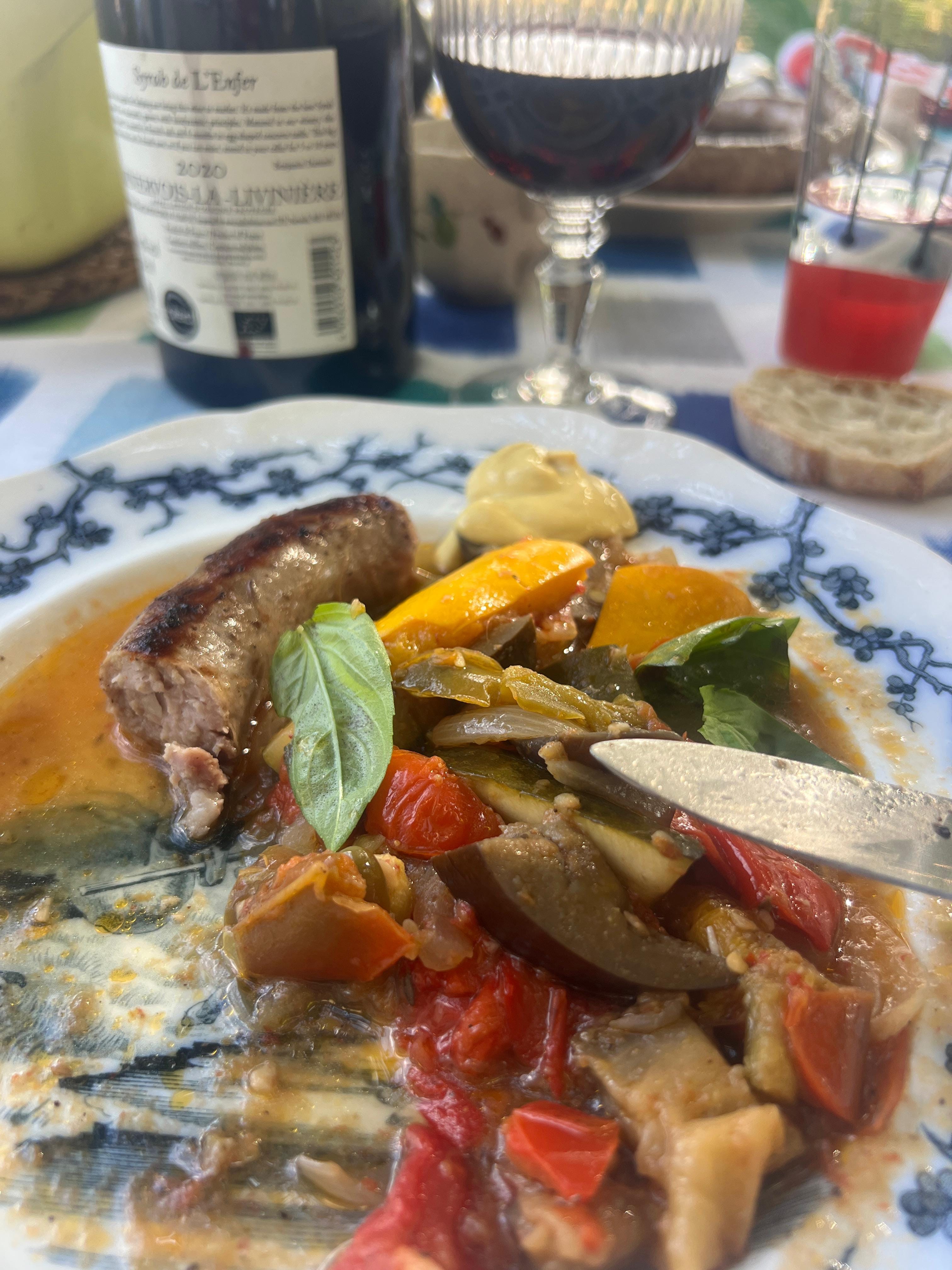
Ratatouille is a lovely choice for accompanying roast lamb and grilled pork sausages,* or served at room temperature or cold with crusty bread and a green salad. It is also a great leftover sauce to pour over pasta with grated cheese, which was my special way of serving vegetables to our daughter when she was ‘anti-vegetables.’ I’d like to add that she always ate her vegetables when presented this way.
*We often buy Saucisses de Toulouse (Toulouse sausages). They are made from roughly 75% to 80% coarsely minced lean pork (such as shoulder) and 20% to 25% pork belly or fat and seasoned with salt and black pepper. - Kat
- Approximately 200ml (~3/4 cup) extra-virgin olive oil
- 2 large onions, halved, then sliced roughly, about a .5cm (¼-inch) in thickness
- 6 red and green bell peppers (or capsicums or poivrons, often referred to as sweet peppers), seeded and roughly cut into 3cm (1-inch) slices
- 4 medium eggplants (aubergines), sliced and quartered into about 2cm thickness
- 5 to 6 medium cloves garlic, finely chopped
- 2 bay leaves
- 1 sprig of thyme
- salt and freshly ground black pepper
- 1 teaspoon minced fresh or dried chillies, less or more as desired; the chile adds a lovely lift
- 4 medium zucchinis (courgettes), cut lengthwise into chunky 6cm long pieces (if you can find yellow as well as green zucchinis, this adds a lovely colour to the dish)
- 4 to 5 medium tomatoes, peeled and roughly chopped or pulled apart
- Big handful of basil, about 6 sprigs with leaves
method:
In a large cast-iron pot, heat 3-5 tablespoons (60-100ml) olive oil, enough to cover the bottom of the pot with a shallow pool of oil. Add the onions and fry over low heat until soft and golden, stirring occasionally.
As the onions become soft and golden, add the bell peppers, eggplants, garlic, bay leaves, thyme, salt and pepper, and chilli to taste, and pour over some more olive oil, about 3 tablespoons, enough to give it a glow-up! Stir well and increase the heat to medium. Cook for 20 minutes, with lid on, stirring occasionally to help the vegetables meld.
Reduce the heat to low, keeping the lid on, and cook over gentle heat for approx. 20 minutes.
Add the zucchinis and tomatoes, pour over approx. 2 tablespoons olive oil, and stir well. Place the lid back on and continue cooking for approx. 30 minutes, or until the vegetables are tender.
During this time, check every 10 minutes or so and give the vegetables a stir, being gentle so you don’t break up the zucchinis and eggplants too much.
to serve:
Adjust the seasoning to taste and scatter torn basil over the top. Please make sure you have some Dijon mustard handy too! It’s a delicious touch having a dollop on the side of your plate. Plus a good chilled French wine (red or white, you choose) ready to serve alongside. If you are able to find a Benjamin Darnault wine, even better!
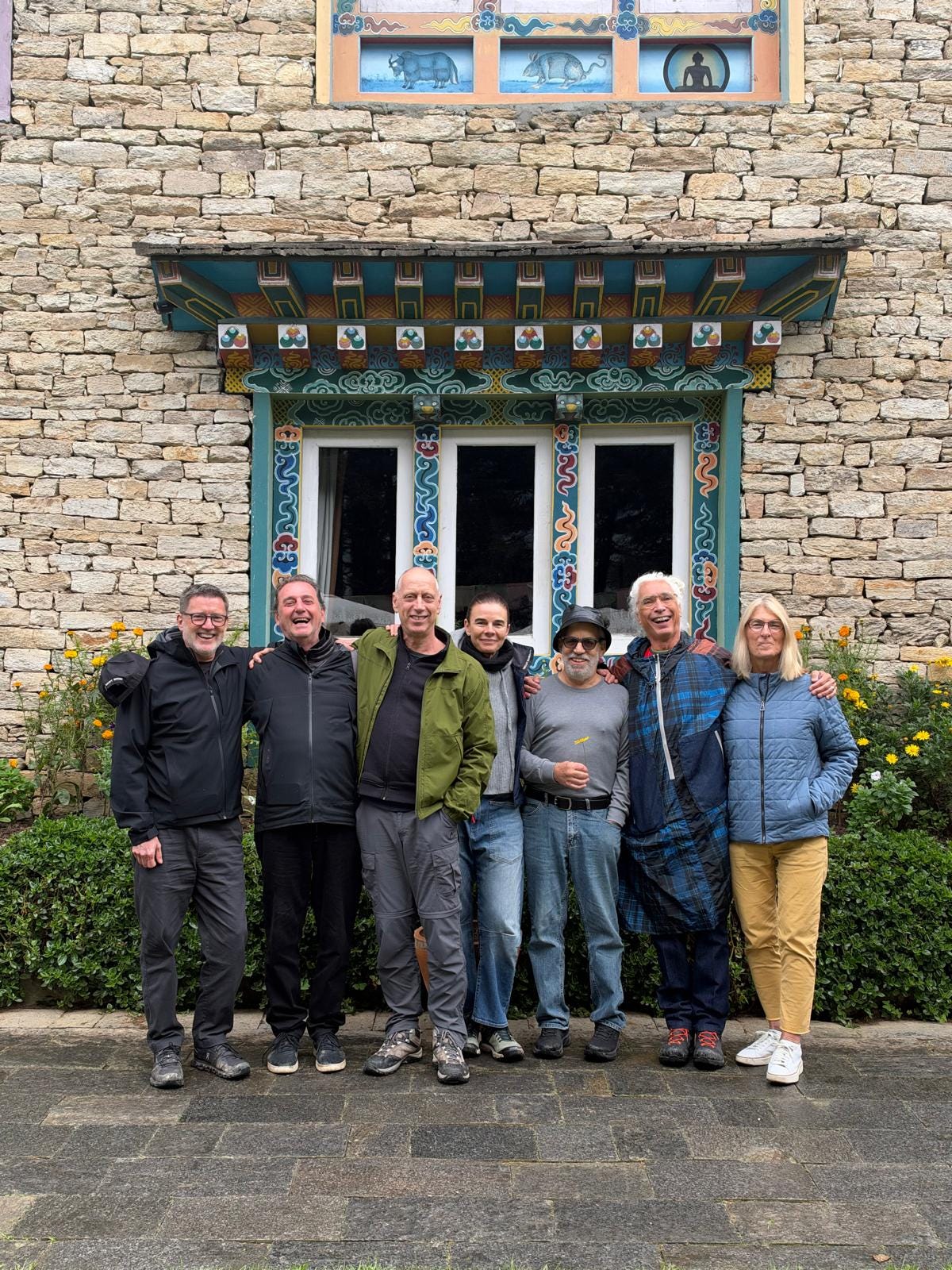
I’ve had a wonderful week in Nepal, starting in Kathmandu, before heading north to Phaplu and staying at The Happy House with friends. We visited monasteries, hiked, drank hot lemon ginger tea, which I’m confident all of us are going to make a habit of drinking when we’re back home. We fêted a friend for his 70th birthday, and did some sound healing, which uses sounds and vibrations from gongs and singing bowls to relax and balance our energy. It’s our last day and I’m amazed by everything we managed to do, and eat, in one week.
At the two monasteries we visited, one requiring a 3-hour hike up a mountain, we prayed with the monks, who served us yak butter tea.
A local guide told me that she wasn’t a fan of it, and in the north of Nepal, they brew it a lot stronger than what was served to us. I took a few sips and it had a salty-funky taste, reminiscent of clam juice. I didn’t mind it but decided to stick with the lemon ginger tea.
Fellow traveler Anissa Helou wears one of the hats given to us from The Happy House.
While riding and walking around the country, someone in our group asked why so many houses were painted blue. “That’s the only color that’s available,” our guide told us. While other buildings are sometimes painted red or yellow, if you’ve ever spent hours looking at hundreds of paint samples, trying to decide what’s the exact perfect shade of beige for your bathroom, I like the idea of there just being one color, and that’s what you use.
At one of the monasteries they did a dance for our friend’s birthday, with two people working in tandem in a costume, to prance around the courtyard.
Subscribe to my newsletter to getnew posts, recipes, and more, sent right to your Inbox!
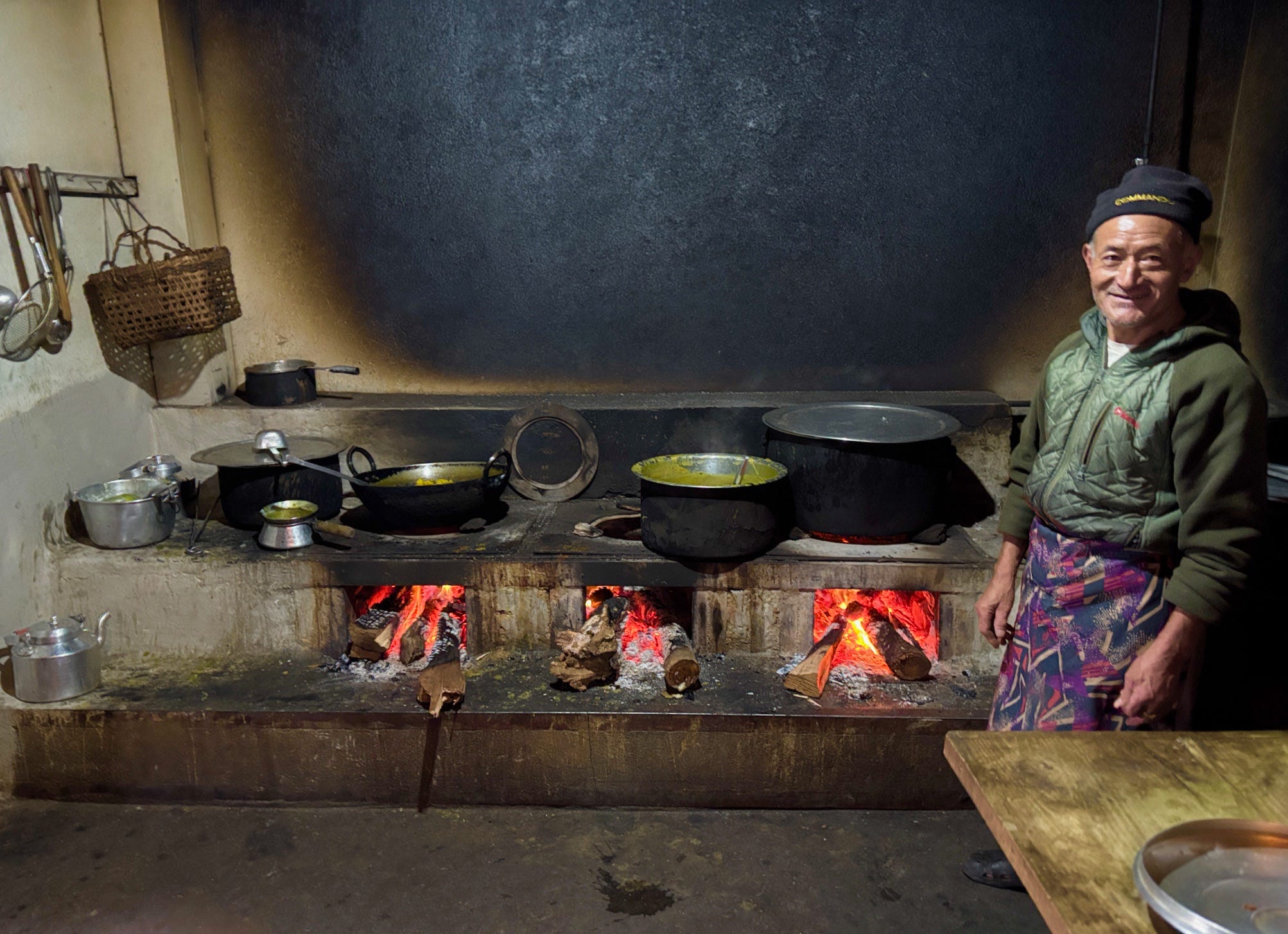
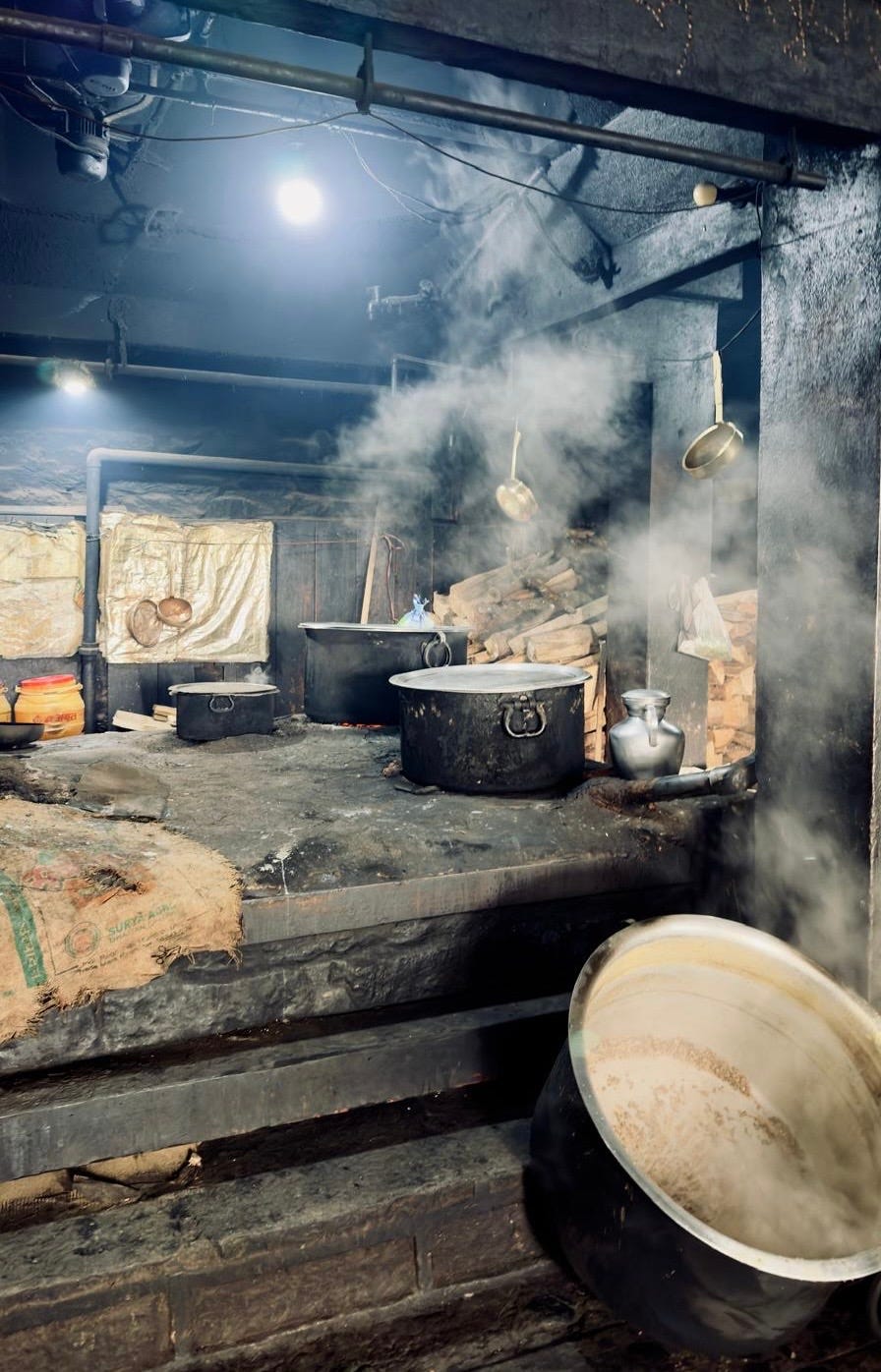
The kitchens in the monasteries were quite rustic affairs with cauldrons and pots simmering away over wood fires.
Most of the kitchen staff, understandably, didn’t want their pictures taken. But most were huddled around bowls, sitting on the floor, taking a break. The monks ate sparsely and one was even licking his bowl so thoroughly, it probably didn’t need to get washed afterwards. (Although I’m sure they did.)
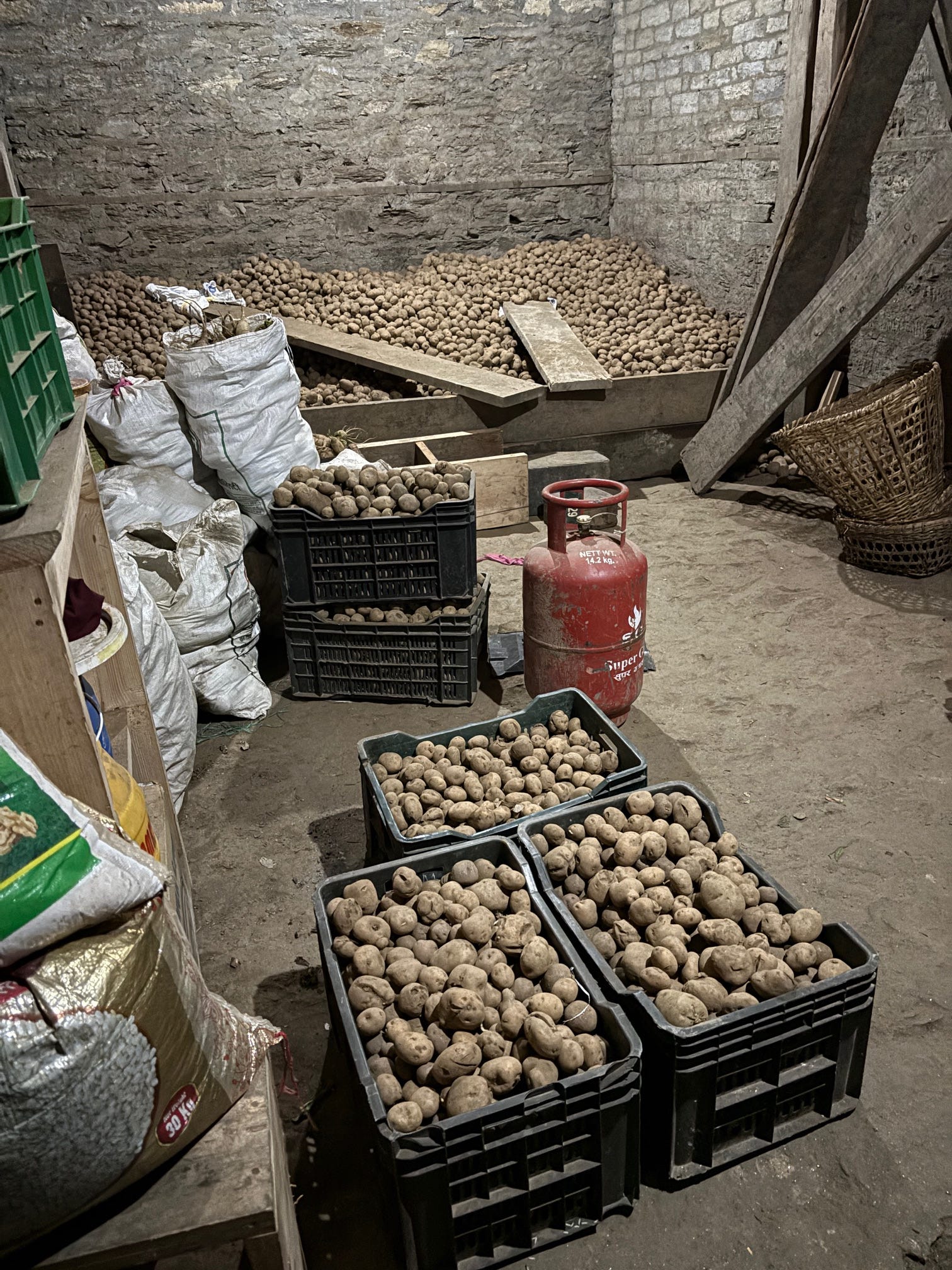
Potato storage at a monastery.
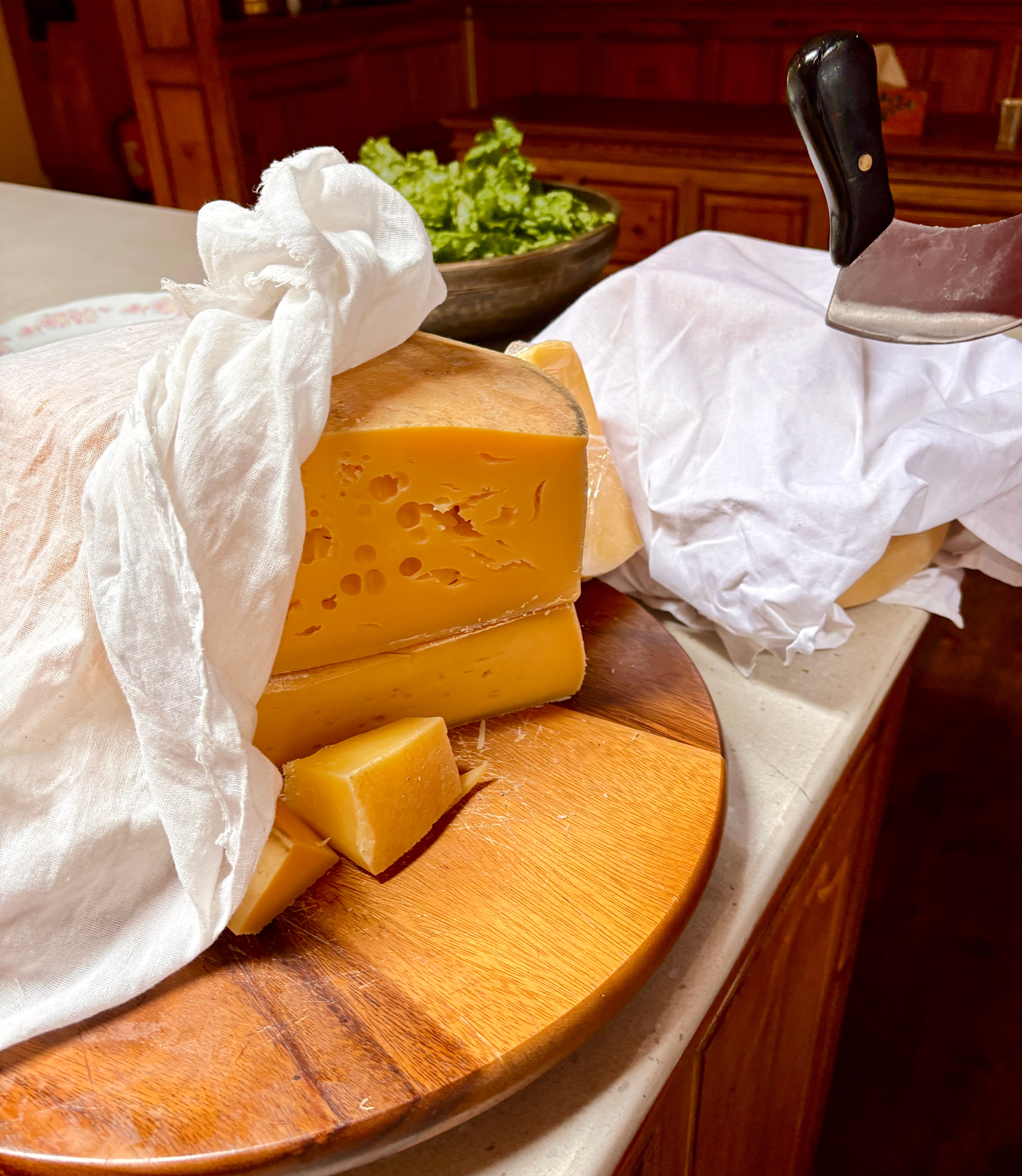
You might not think of cheese when you think of Nepal, especially when you come from a country with over a thousand cheeses. But the cheeses I ate in Nepal made me want to bring a wedge home.
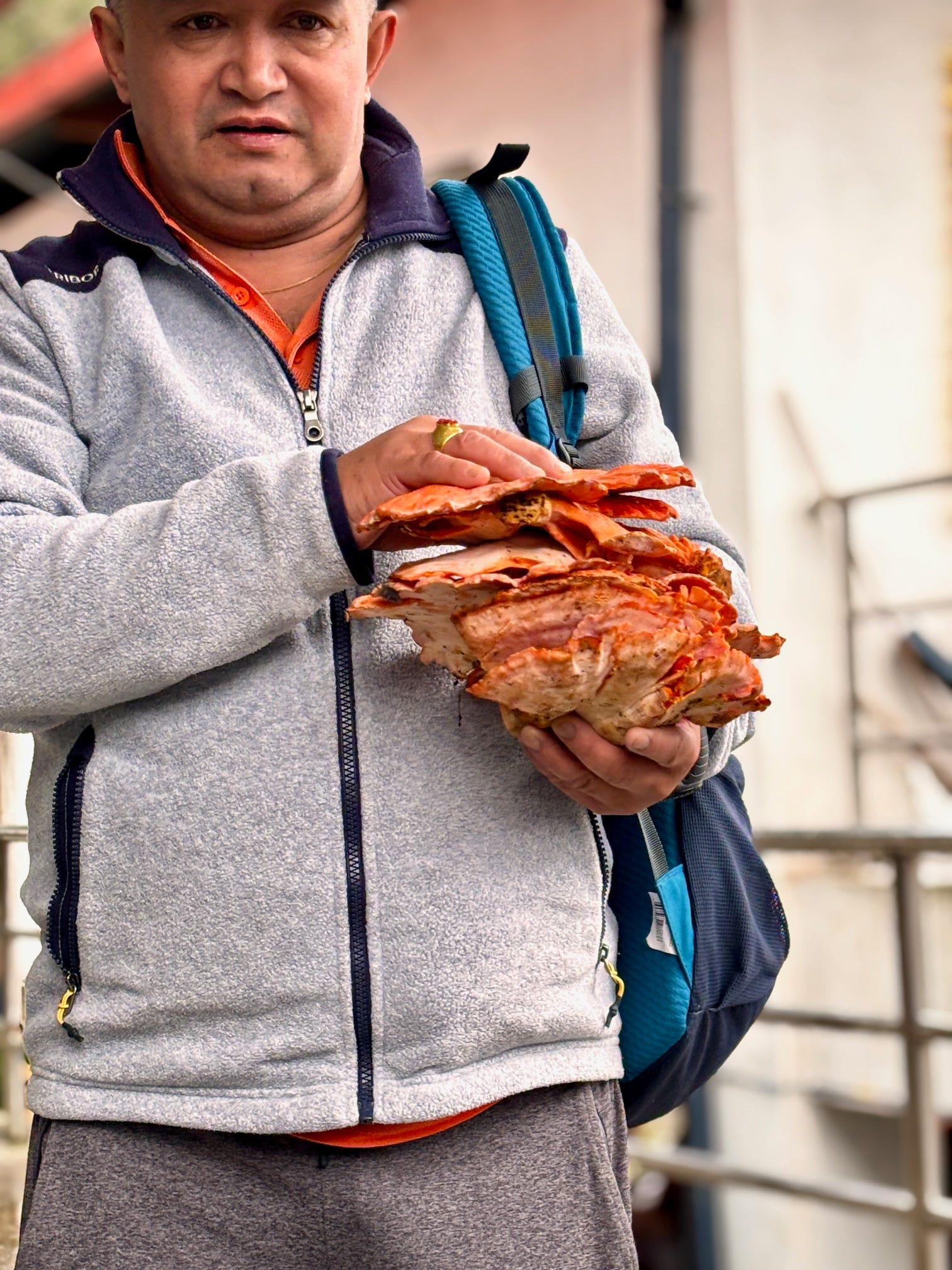
Most of them were made with cow or yak milk, or a combination of both. I didn’t see any goat or sheep’s milk cheese, but perhaps they have them. The ones above tasted similar to Emmental cheese, and one was slightly smoky. Both were delicious.
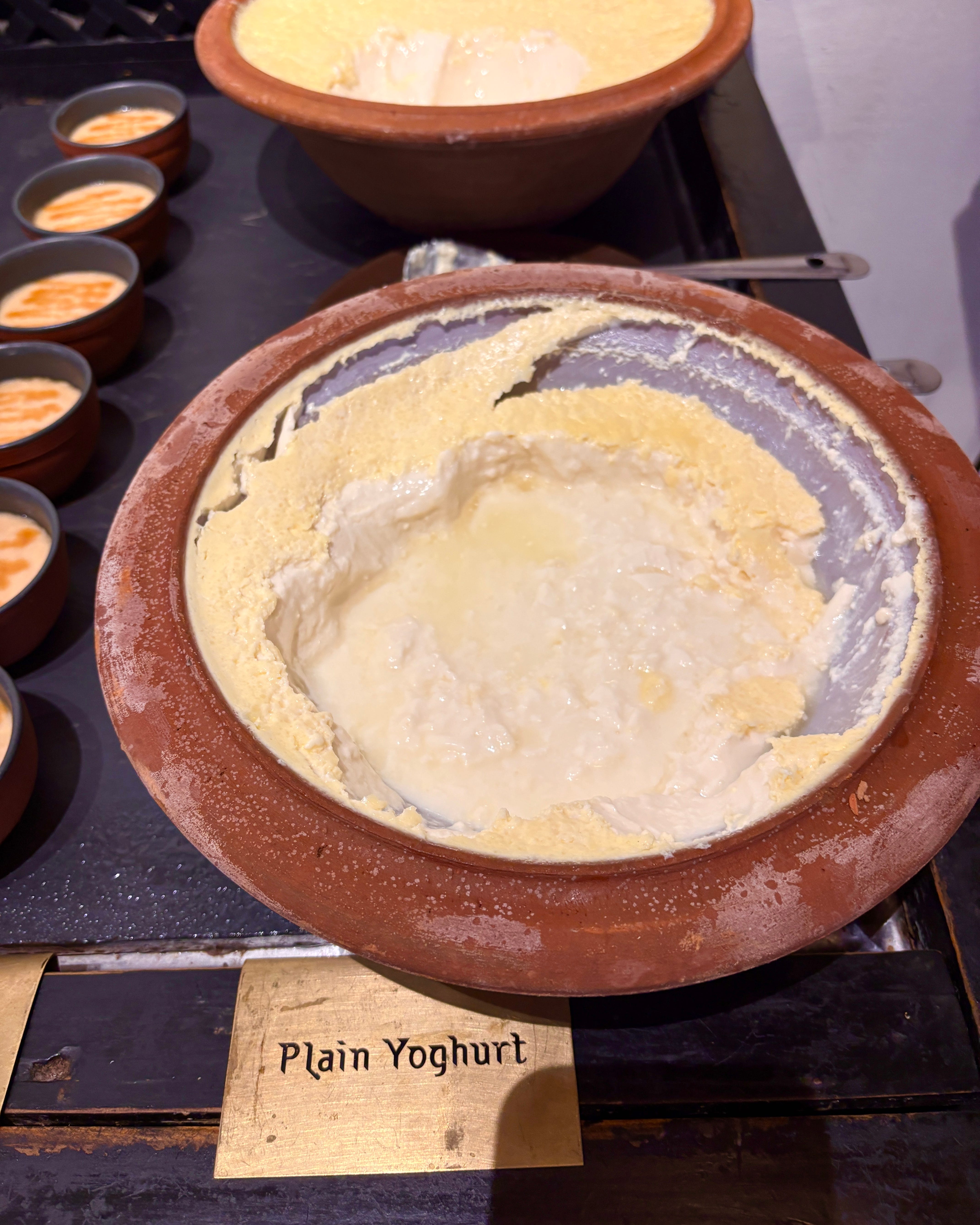
My favorite, though, was the yogurt, the best made with buffalo milk. If you’re one of those people who doesn’t like skin on their pudding or yogurt, please feel free to give it to me. Sometimes the yogurt was a bit coarse and curdy, other times it was made with cooked-down milk, so it was rich and creamy. We get good yogurt in France, but with apologies to mescompatriotes, the yogurt in Nepal is next level.
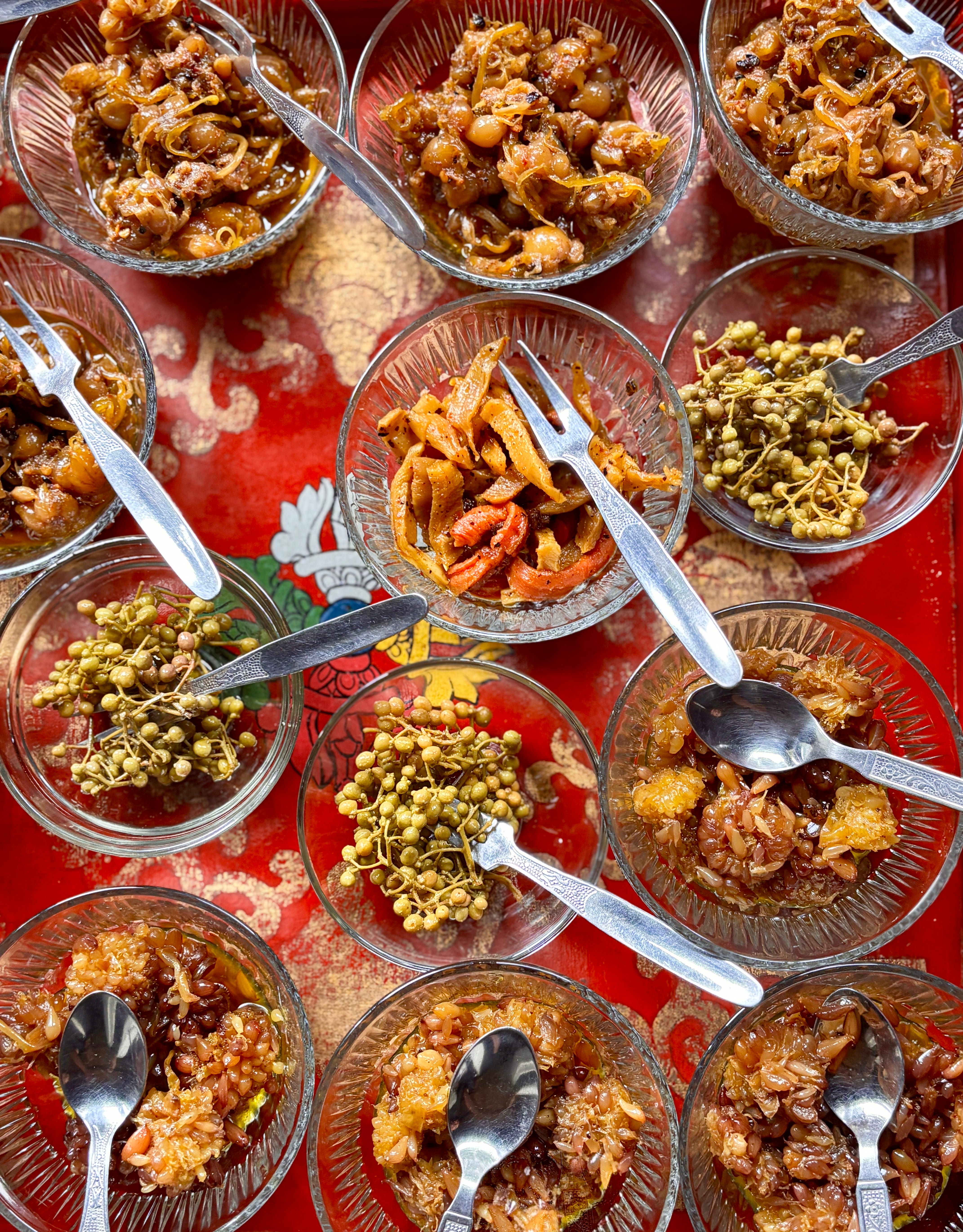
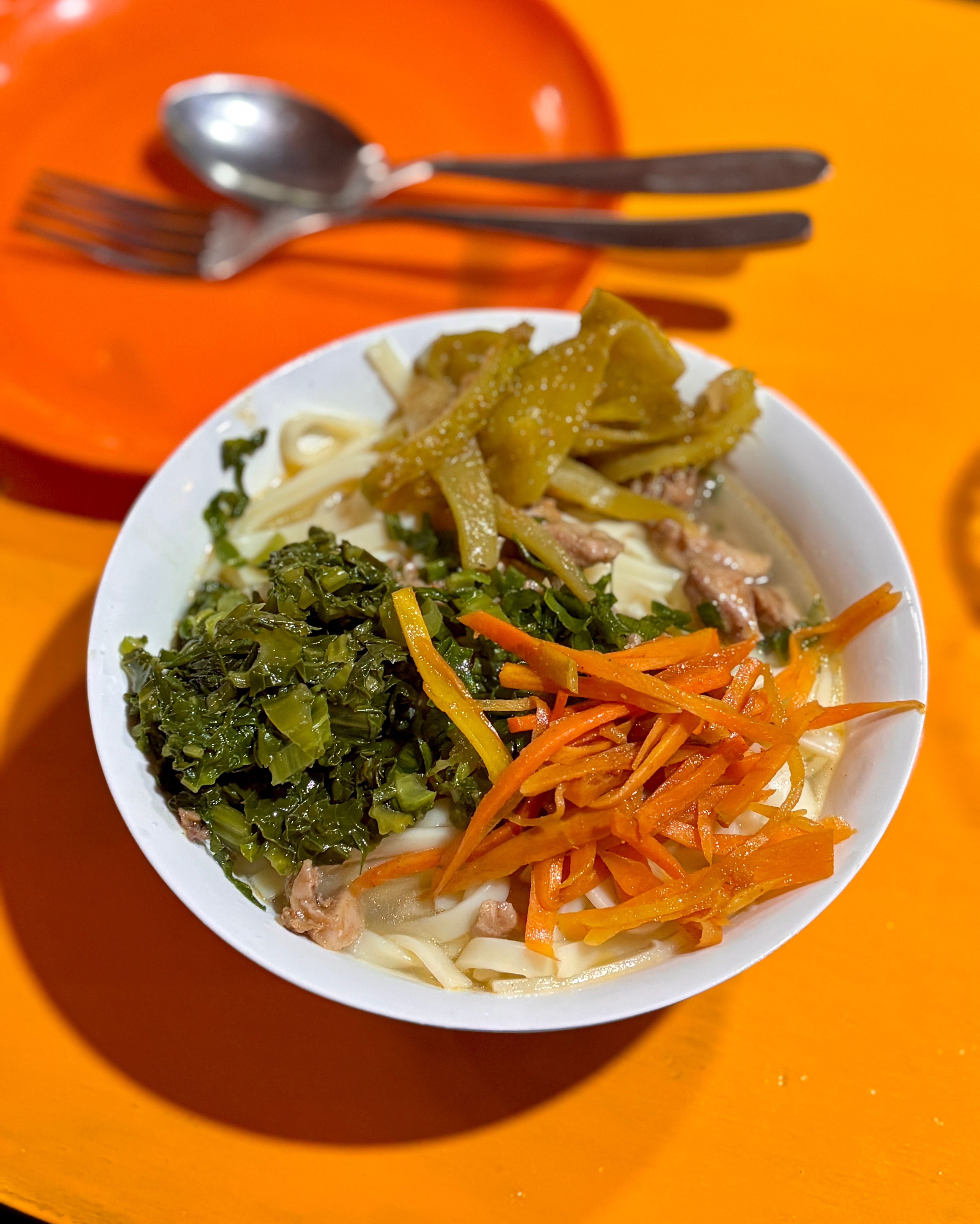
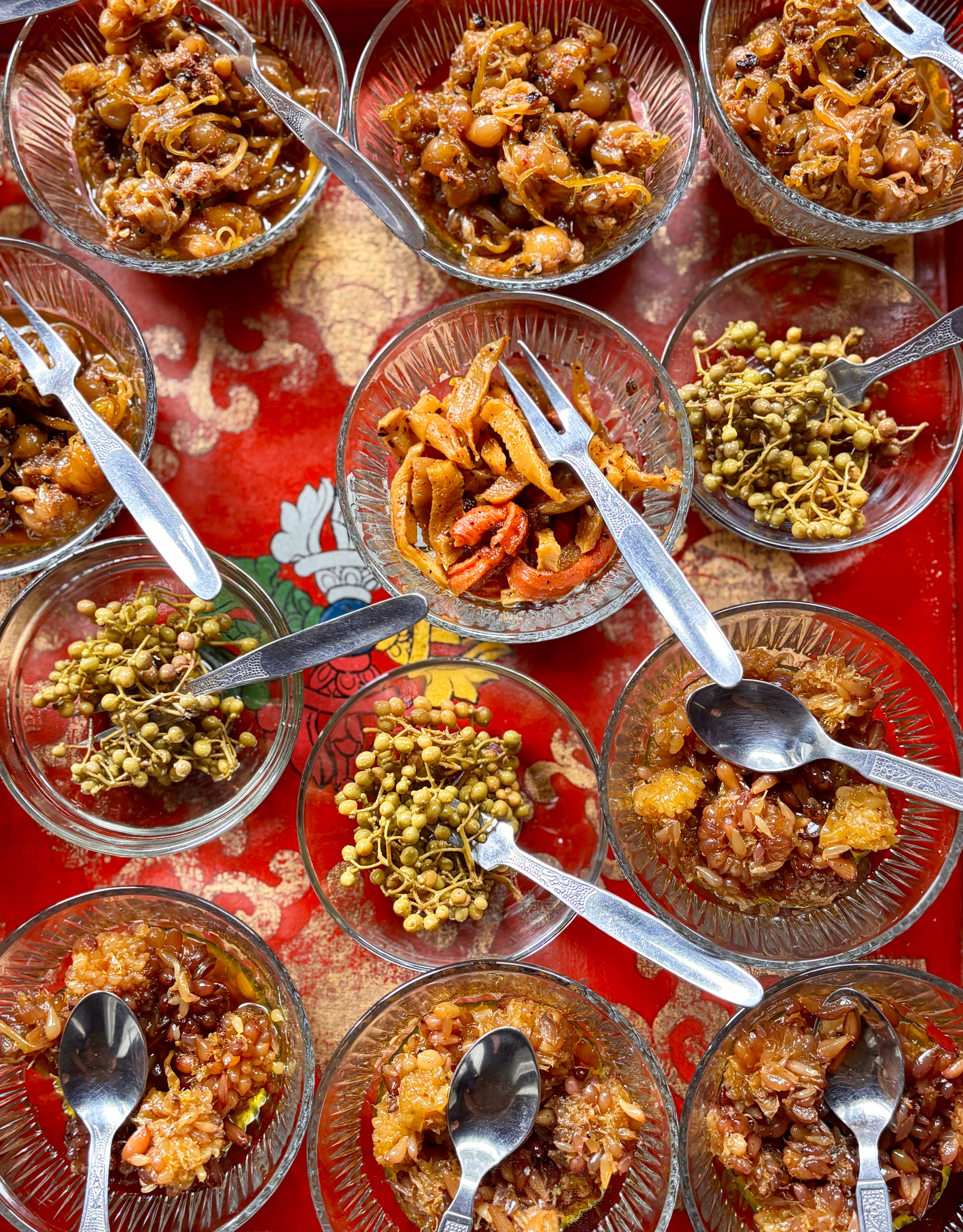
Condiments are another thing you’ll find on Nepalese tables. You can see some at the very top of this post. Some are made with Sichuan peppercorns, which sizzle when you bite into them; other condiments are pickled garlic, spinach, and fermented vegetables. Meat is mostly an accent in the foods we ate, not the main course.
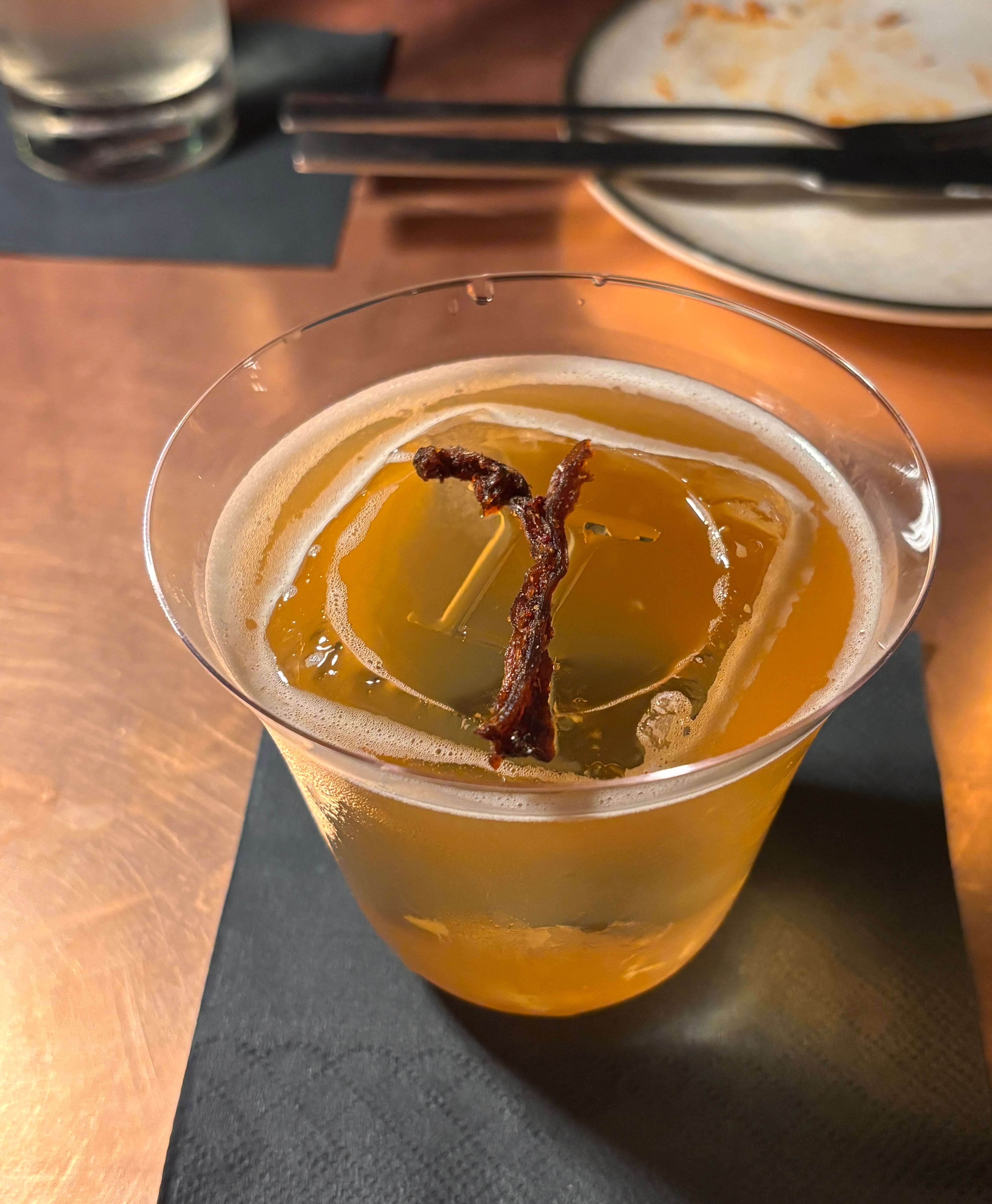
Although one exception was this cocktail…
I was told to check out Barc, which is on one of those “50 Best” lists in the cocktail bar category. Barc is located on the top floor of a shopping mall in Kathmandu, and it took us a moment to find the front door, which we eventually did, and sat down to try some cocktails.
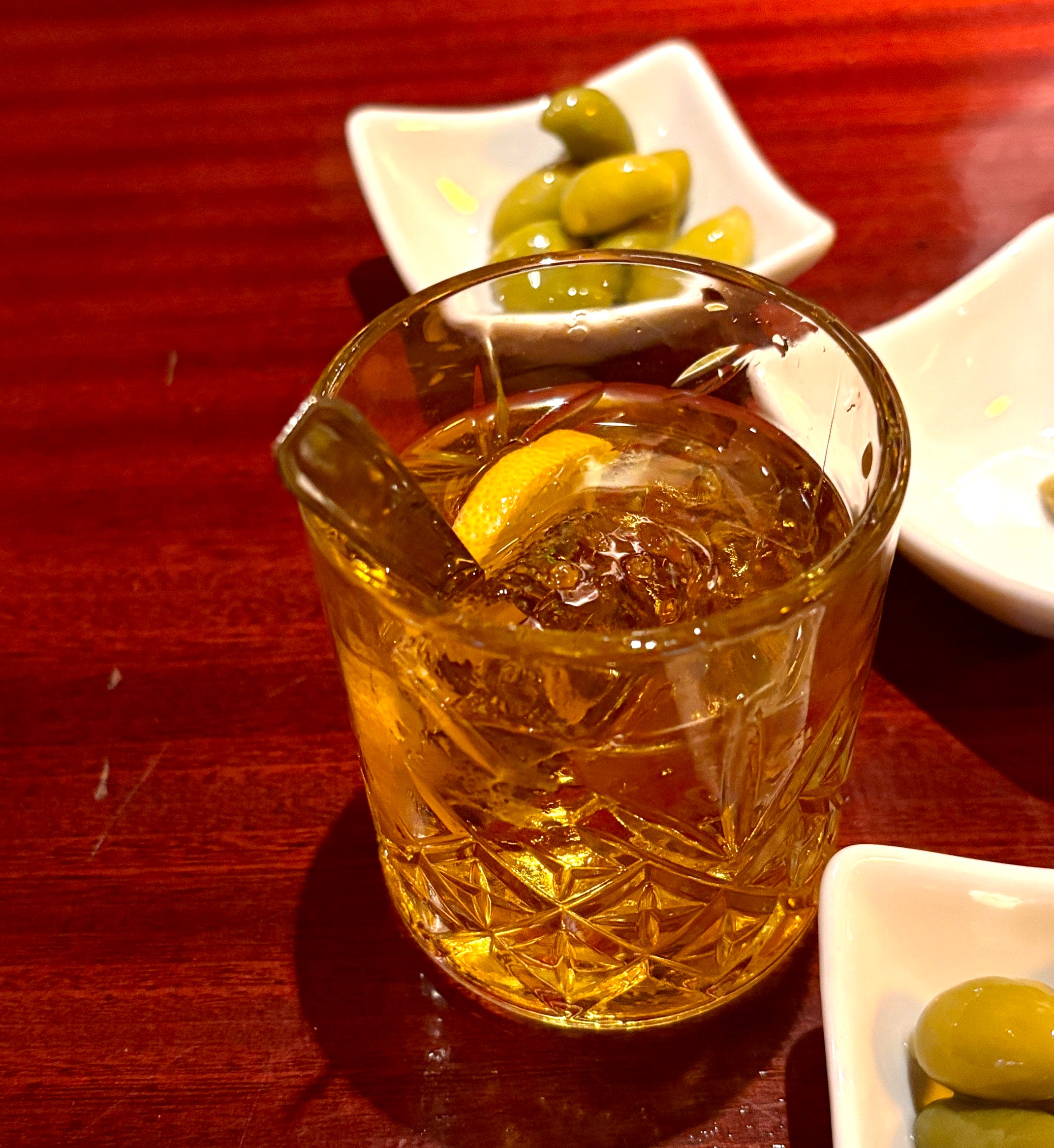
The cocktail menu toggles between sweet and savory, and the one above, The Spicy Shukti, was an experimental cocktail, which the server told me as he gently warned me away from it. The drink is made by infusing buffalo jerky with whisky, vermouth, cocktail onions, and tomato, and after a few sips, I couldn’t drink anymore; it was way too meaty for me. It was a nice try, though (but maybe a little more experimentation is needed…) The waiter replaced it with a flight of Aylā, a fermented rice distillation, which ranged from a glass of the unaged clear spirit, to other glasses infused with spices, aged in oak, and betel leaves.
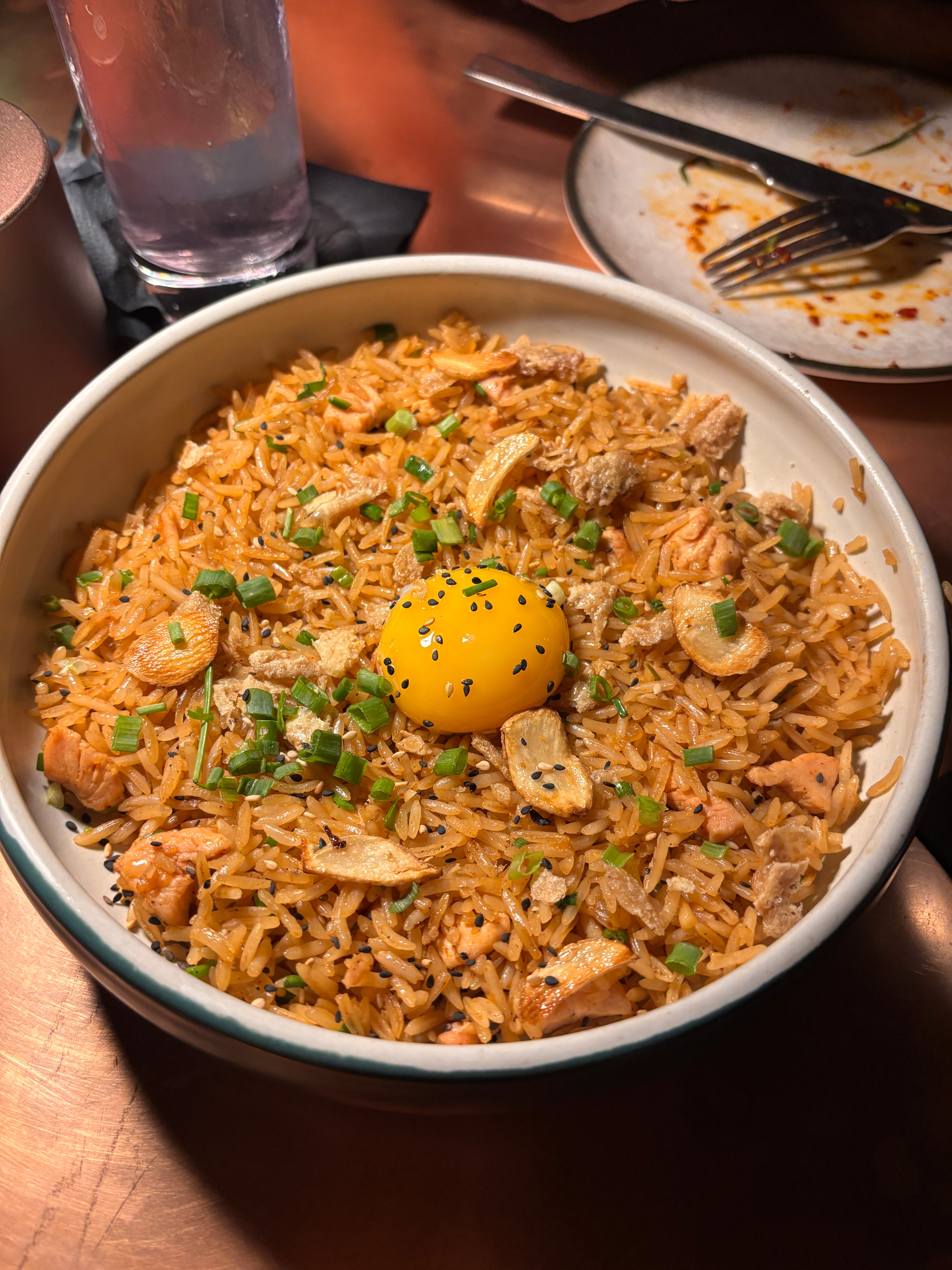
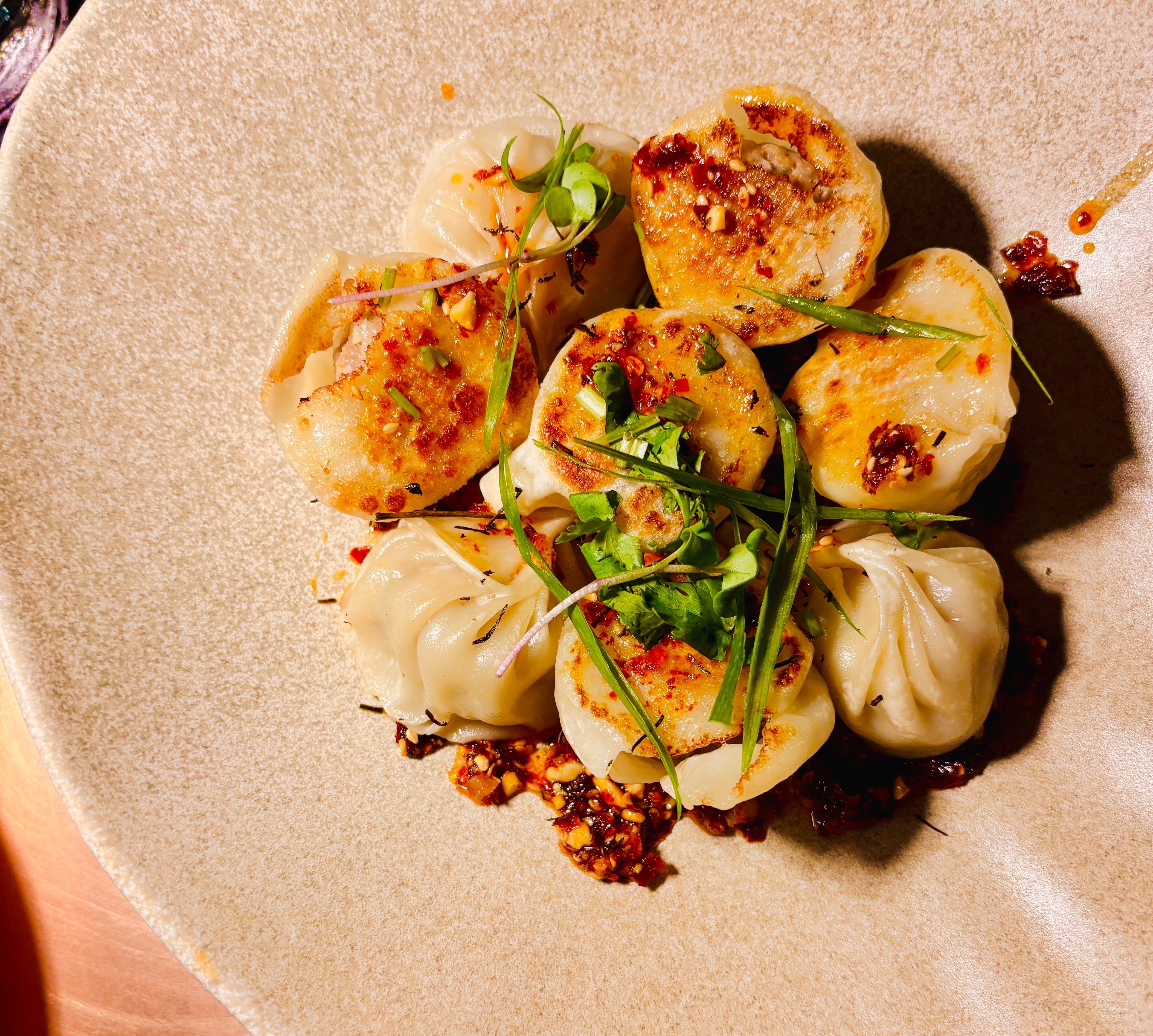
We were bigger fans of the food, rather than the cocktails, which included an excellent chicken fried rice with garlic, above, and spicy, pan-fried momos (dumplings), which were some of the best we had in Nepal.
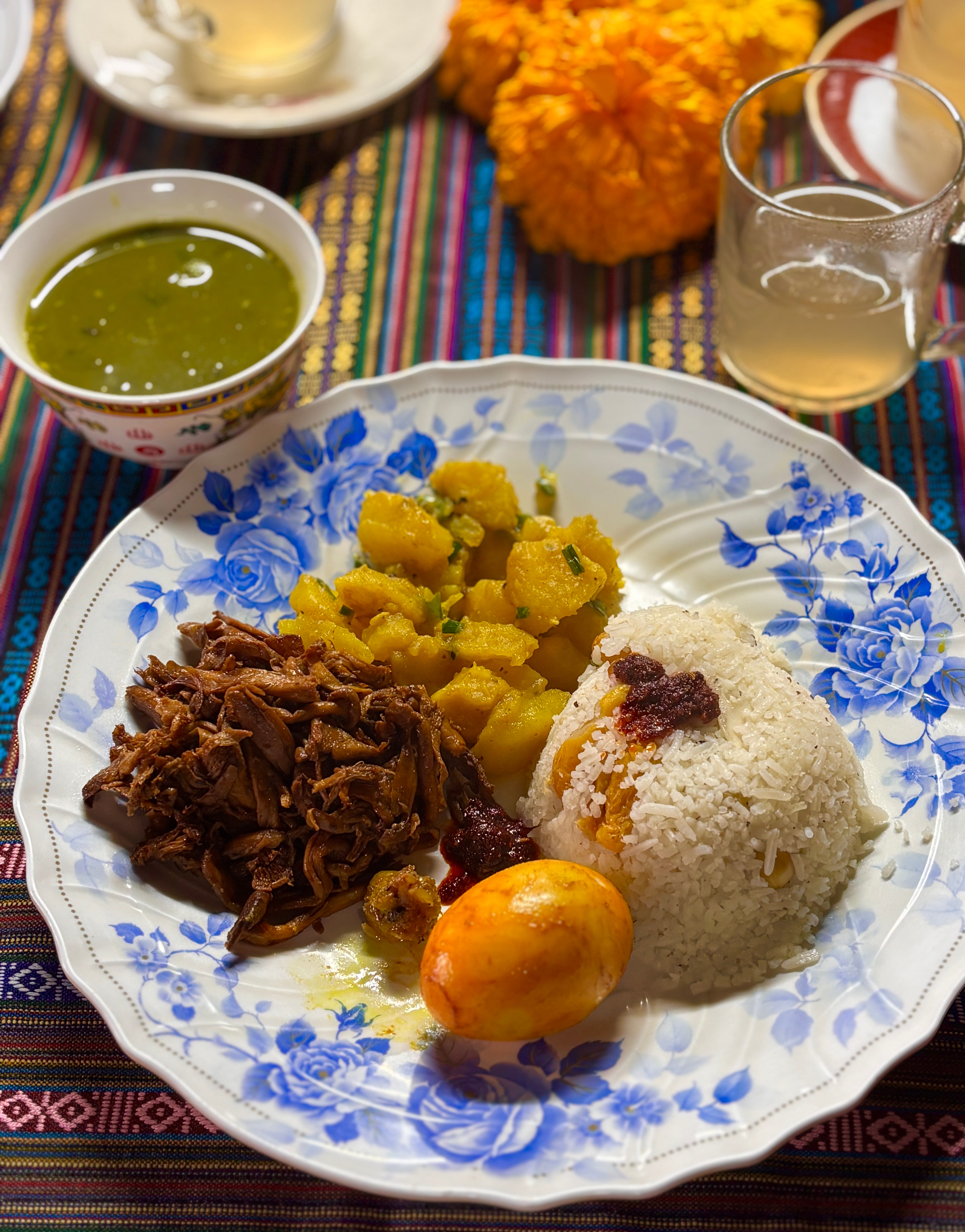
A number of meals we had in Nepal involved a mound of rice surrounded by everything from potatoes and vegetables, to eggs (the red orb near the bottom of the plate) and shredded mushrooms, which resembled meat.
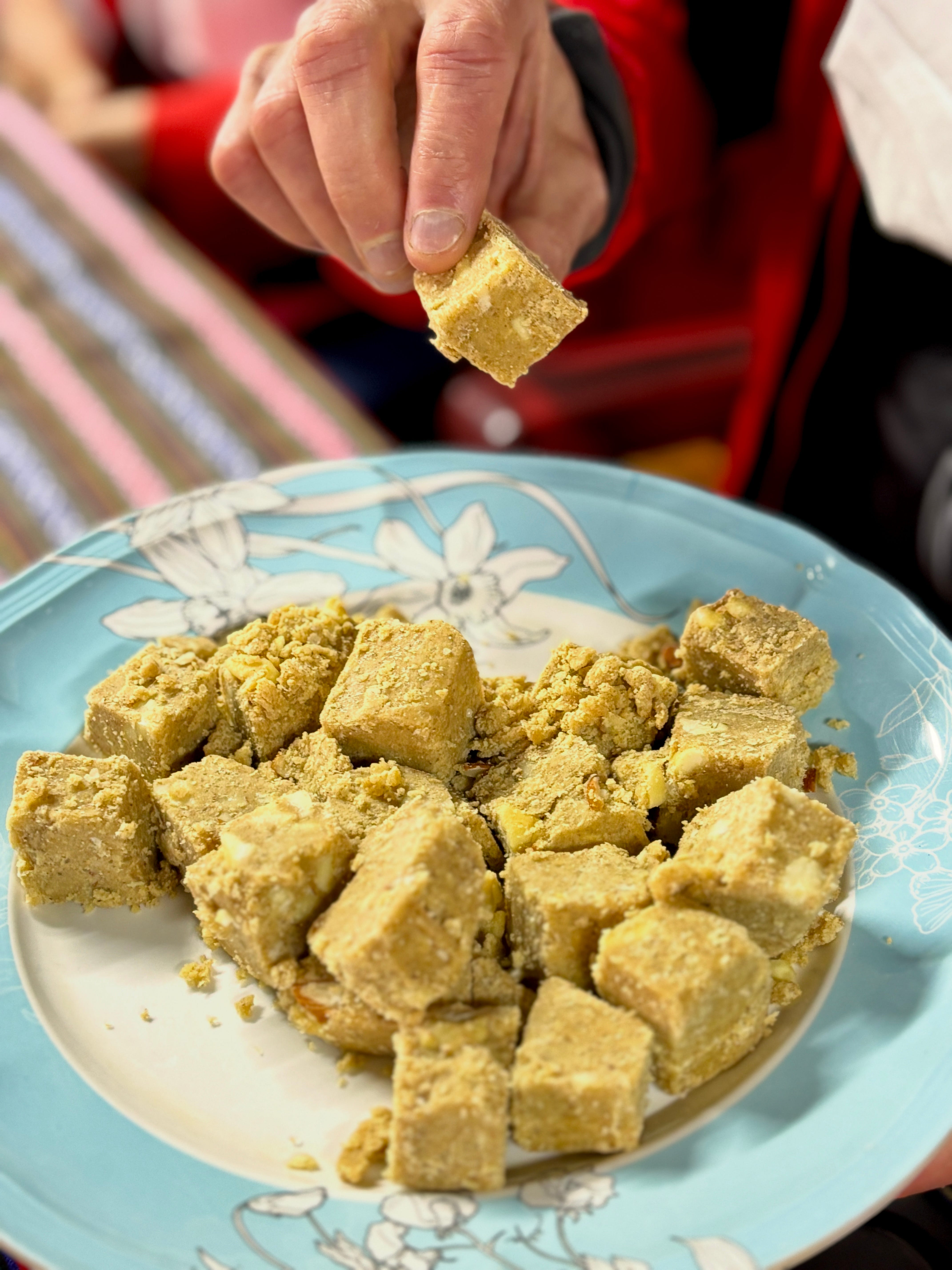
Meals in Asia don’t end with cakes or sweets, as they do in other cultures. In Nepal, Milk Cake is popular, made from cooked-down milk. Some contained grains, such as flour, and others had nuts in them. They were all quite good and trekkers like to snack on them for energy.
We also visited a rustic farmer’s market in Nayabazar, a small village near where we were staying. We got there pretty early, and things were in full swing.
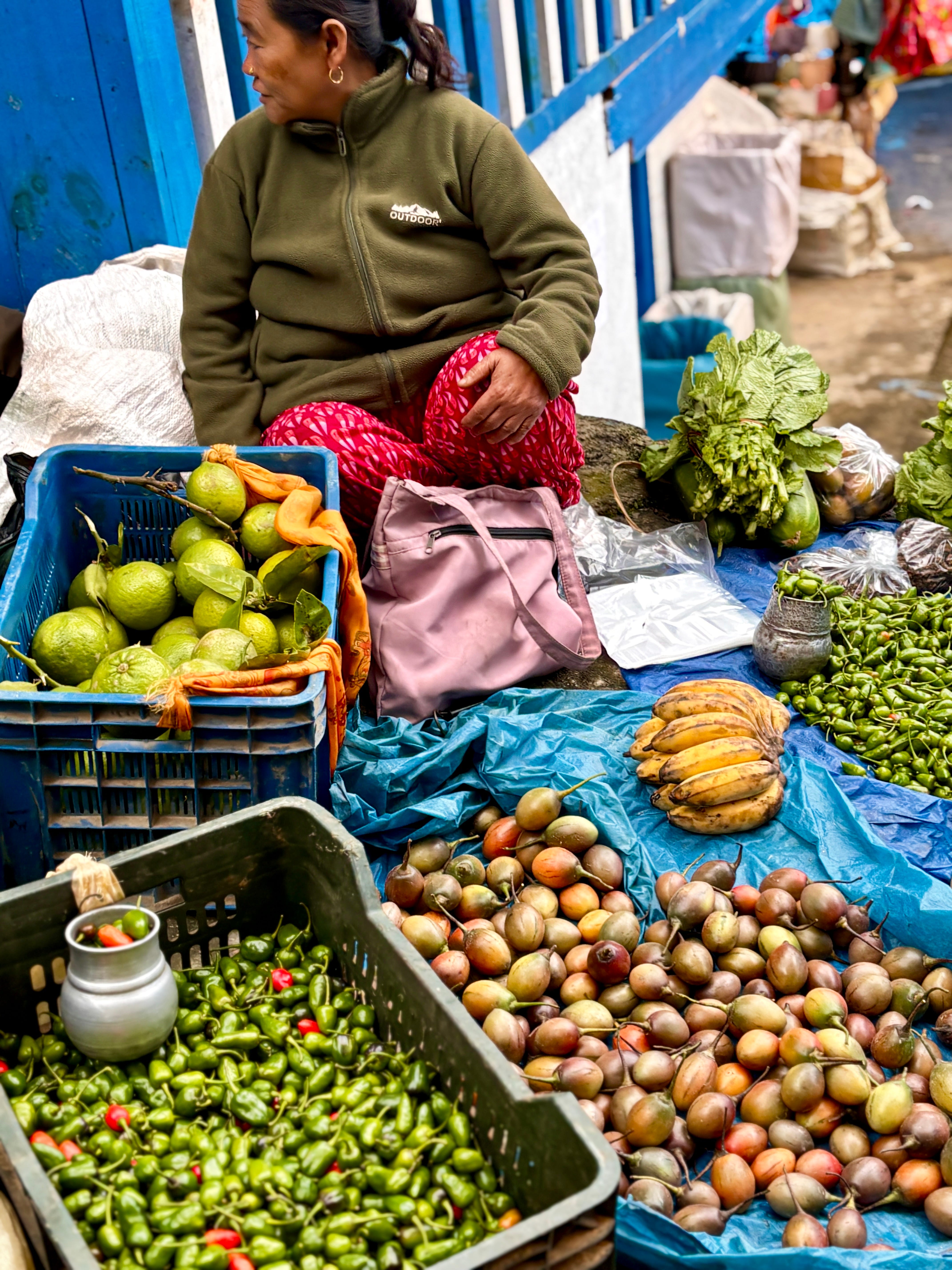
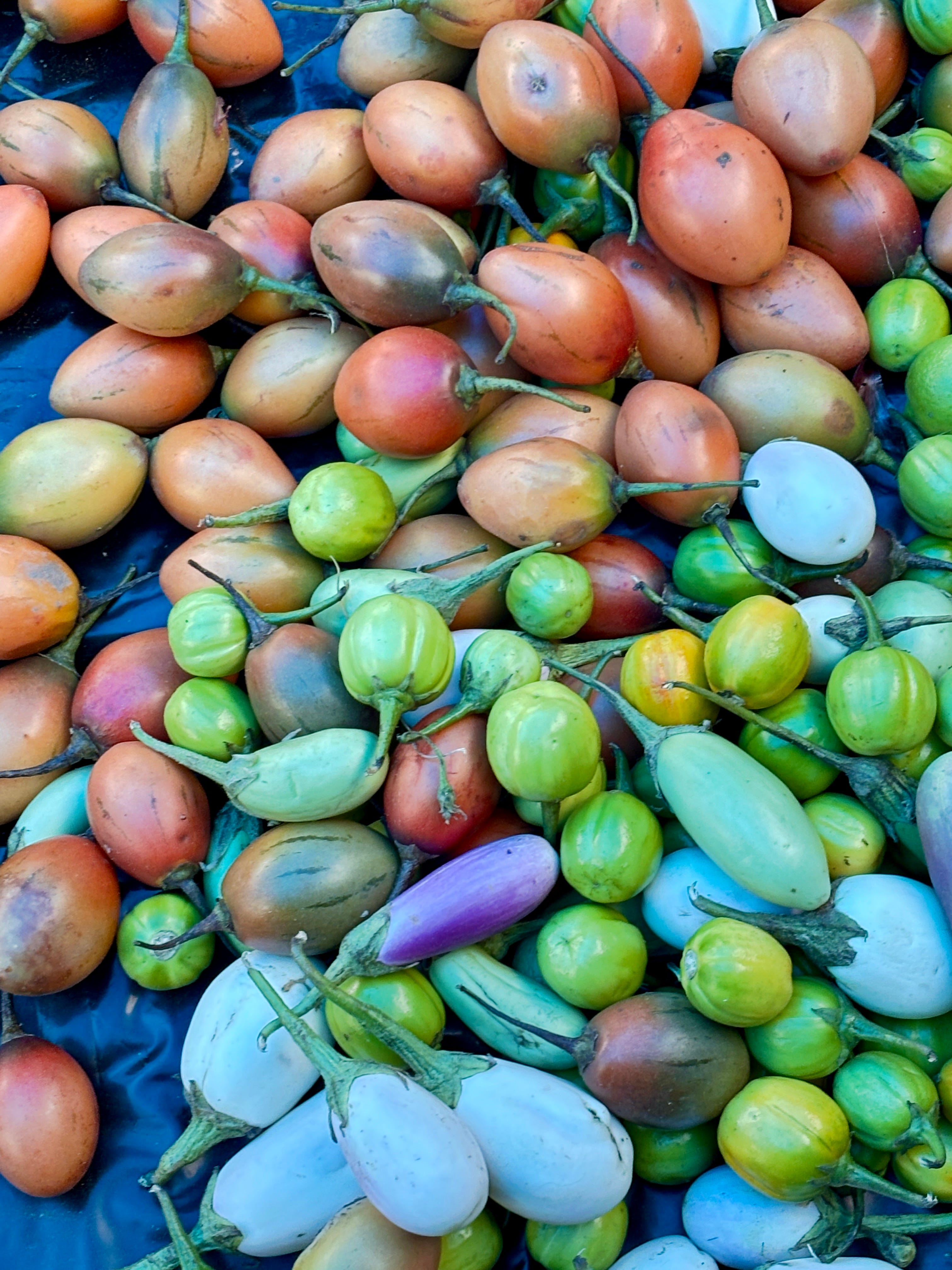
Sellers sold everything, from the chiles andtamarillos above, to Asian pears, bitter melons, cucumbers, tomatoes, and squash. The region isn’t wealthy and some farmers come just to trade ingredients, not buy them. In fact, I don’t know if I saw any money changing hands while we were there.
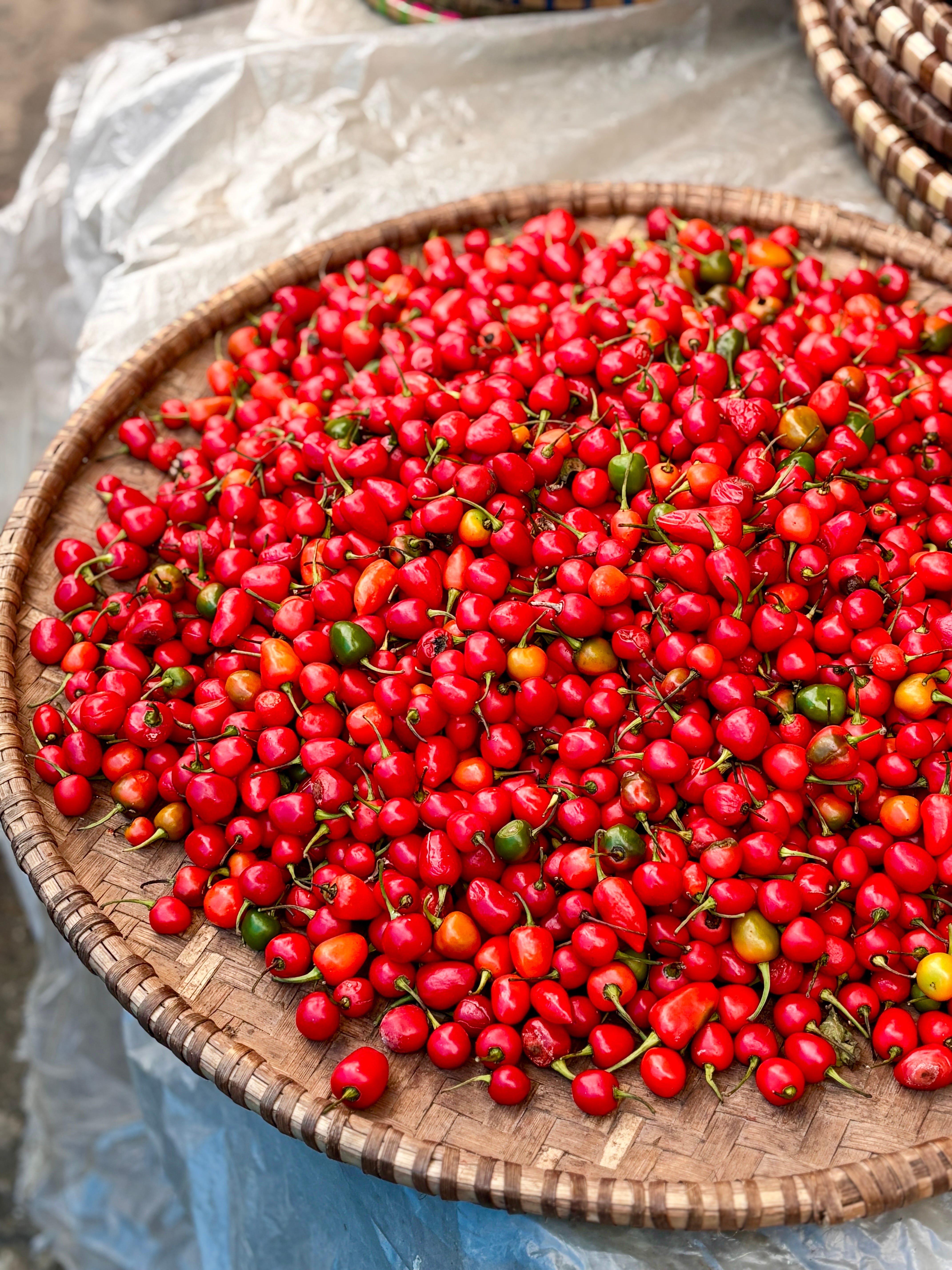
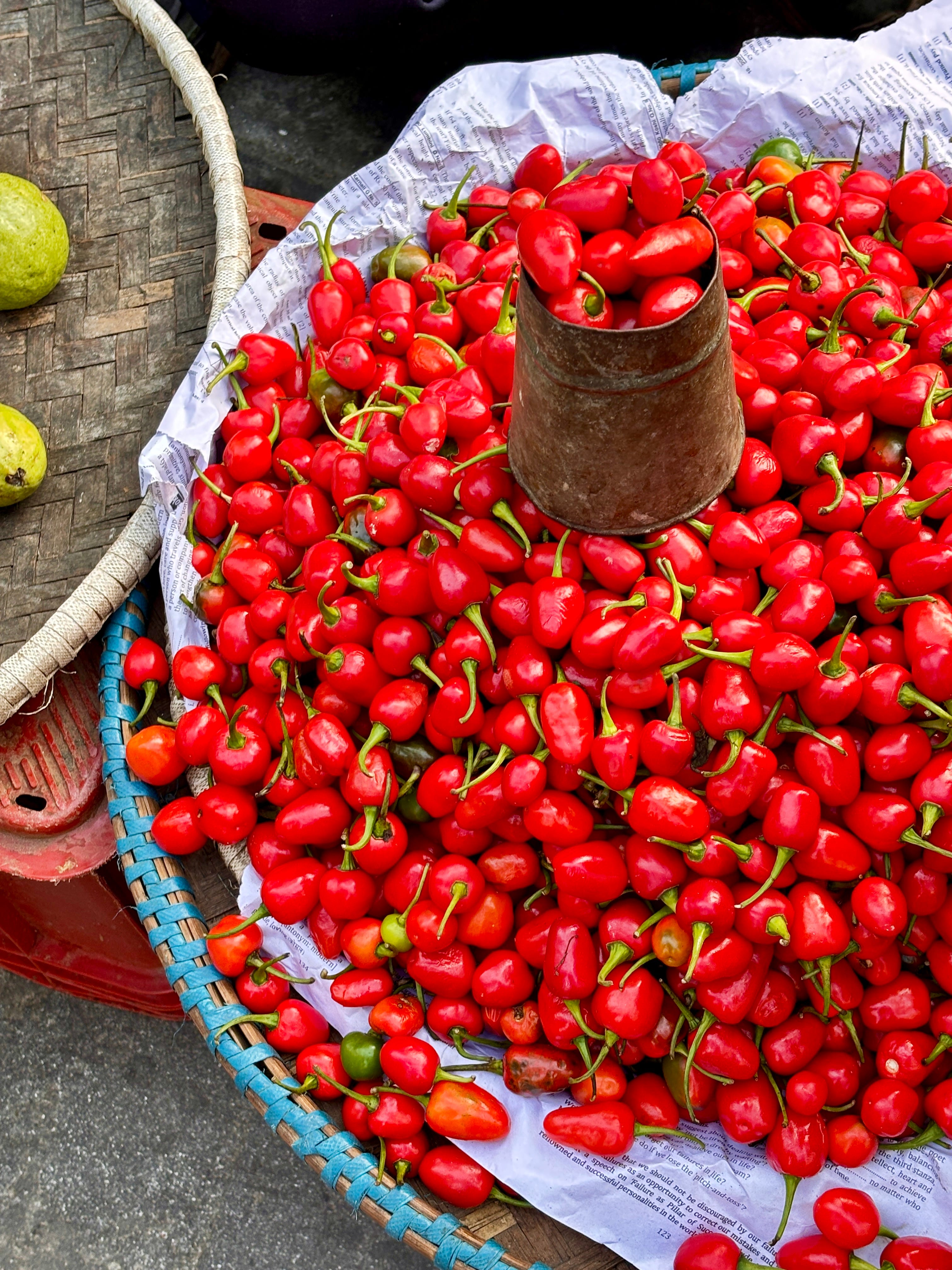
I fell in love with these marble-sized red chiles called dalle Khursani, which are the base of an especially good hot sauce that’s on almost every table in Nepal. They have a particular flavor that was a bit citrusy, and are fairly spicy, but the heat is smooth, rather than abrupt.
It was served with almost everything,
A jar of chile sauce, served with breakfast while overlooking Mt. Everest, which was beautiful to see.
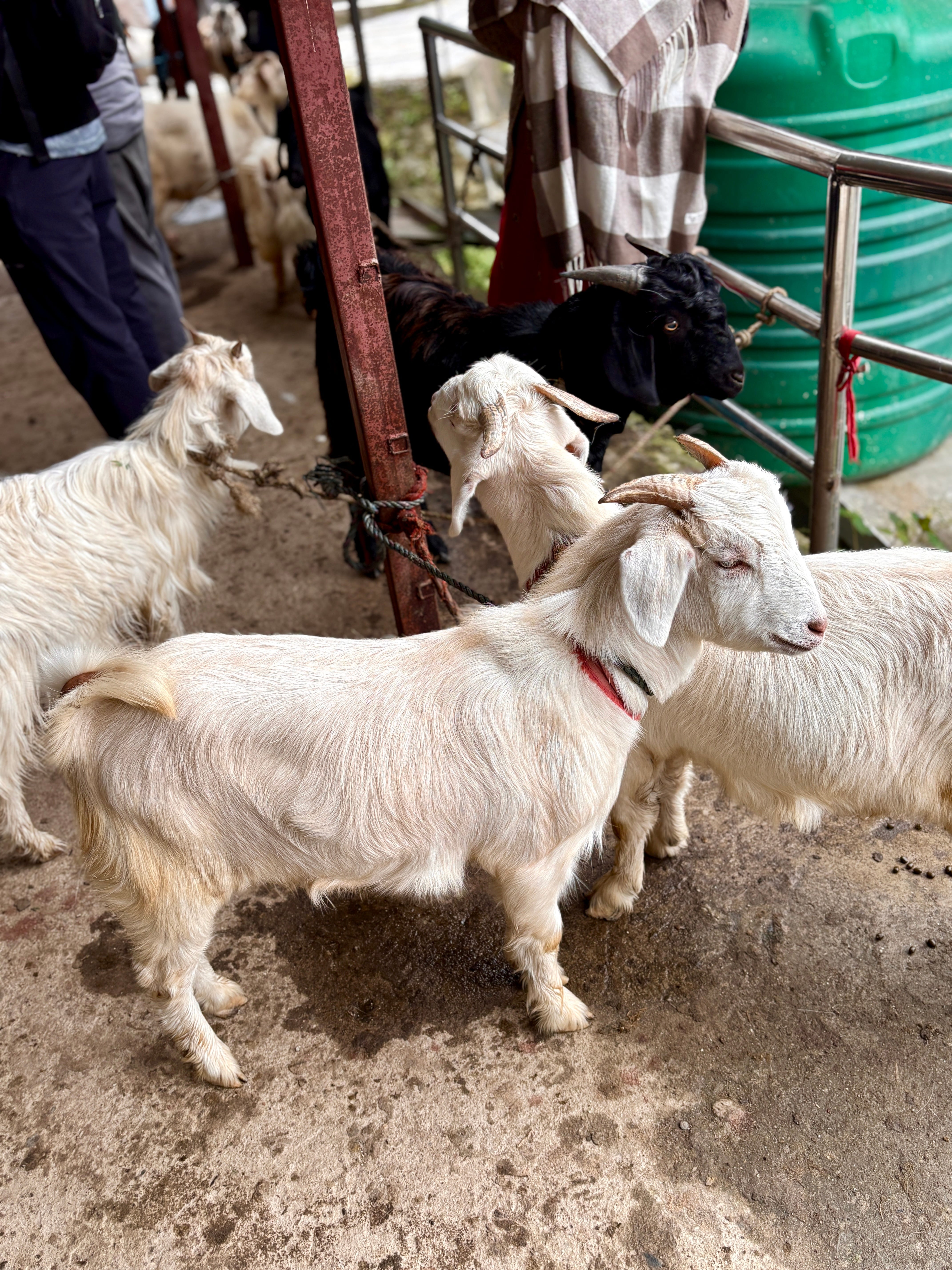
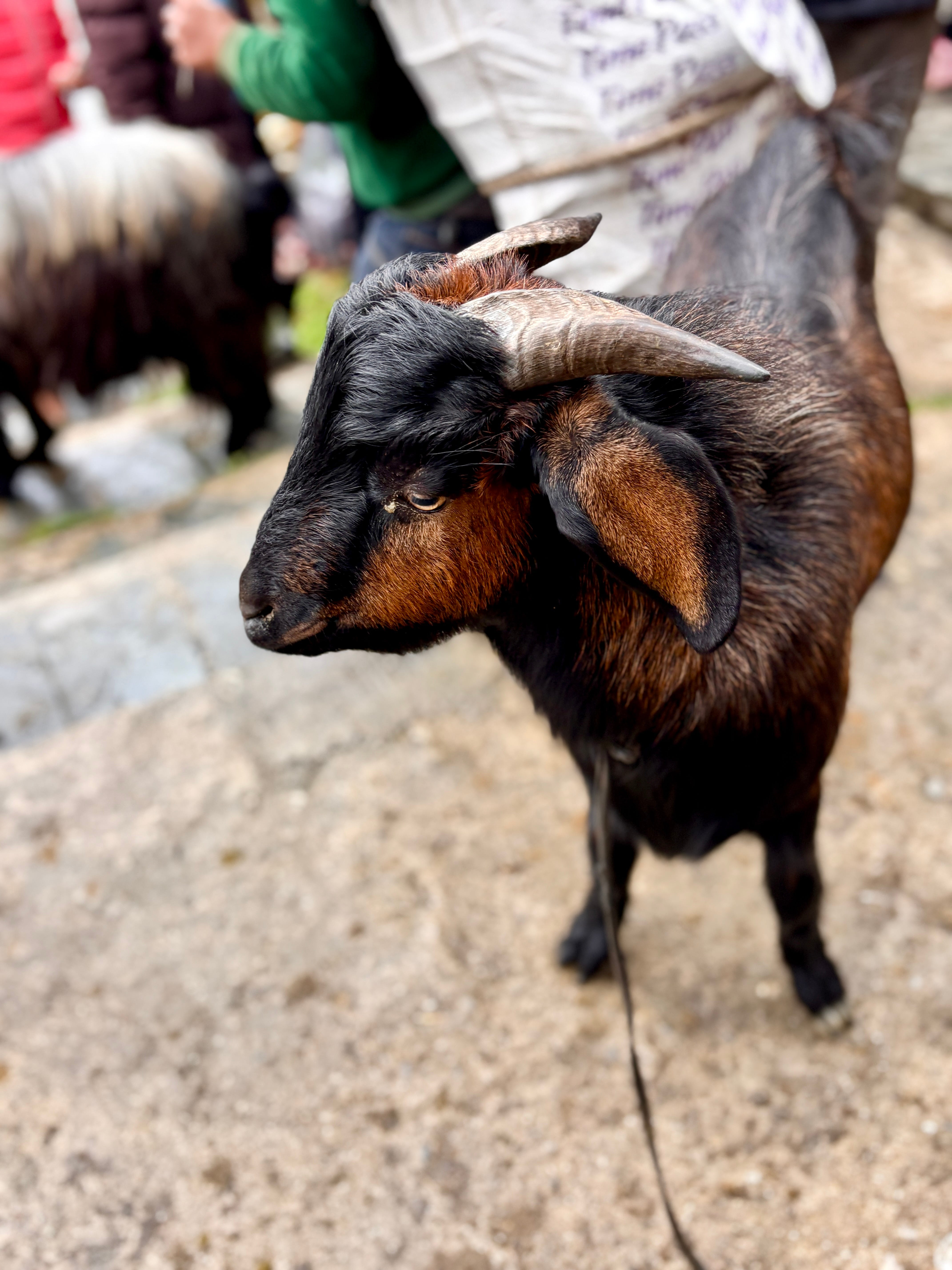
At the market, there were some really cute goats and Suzanne Goin, who’s the chef/owner of A.O.C. restaurant in LA, didn’t want to look at them since we thought they were going to meet their maker, right then and there. But we were relieved they were just being sold, or traded, at the market for farming, not feasting on.
My time at Chez Panisse didn’t overlap much with Suzanne’s time there, but she did tell me when the group of us who worked at CP stayed up late one night laughing together and spilling some tea about our time there, that she was afraid of me.
I don’t know why she was afraid since I’m so nice and she’s such a dynamic chef. No one else had any problems with me, but Suzanne and I had a good laugh about it. And I’m glad she’s over it 😆…and we can be friends.
(She actually told me she was afraid of me because I was in the pastry department since we were psychologically separated from the other cooks in the restaurant. Even though we were in the same kitchen, we were doing our own sweet thing.)
After heading back to where we were staying, we divided up into groups for the final hike and overnight camping at the top of a mountain. The hardier folks in our group would do the steep walk while others would ride part way and do that last part by foot, which was the only way it was accessible.
With the higher altitude, hiking was a bit more challenging to me than biking around Paris, so I opted for the slower route, also so I could savor the scenery. We’d taken a pretty substantial hike a few days before that was over three hours long, and if there wasn’t a meal at the end of it, I may not have made it to our destination.
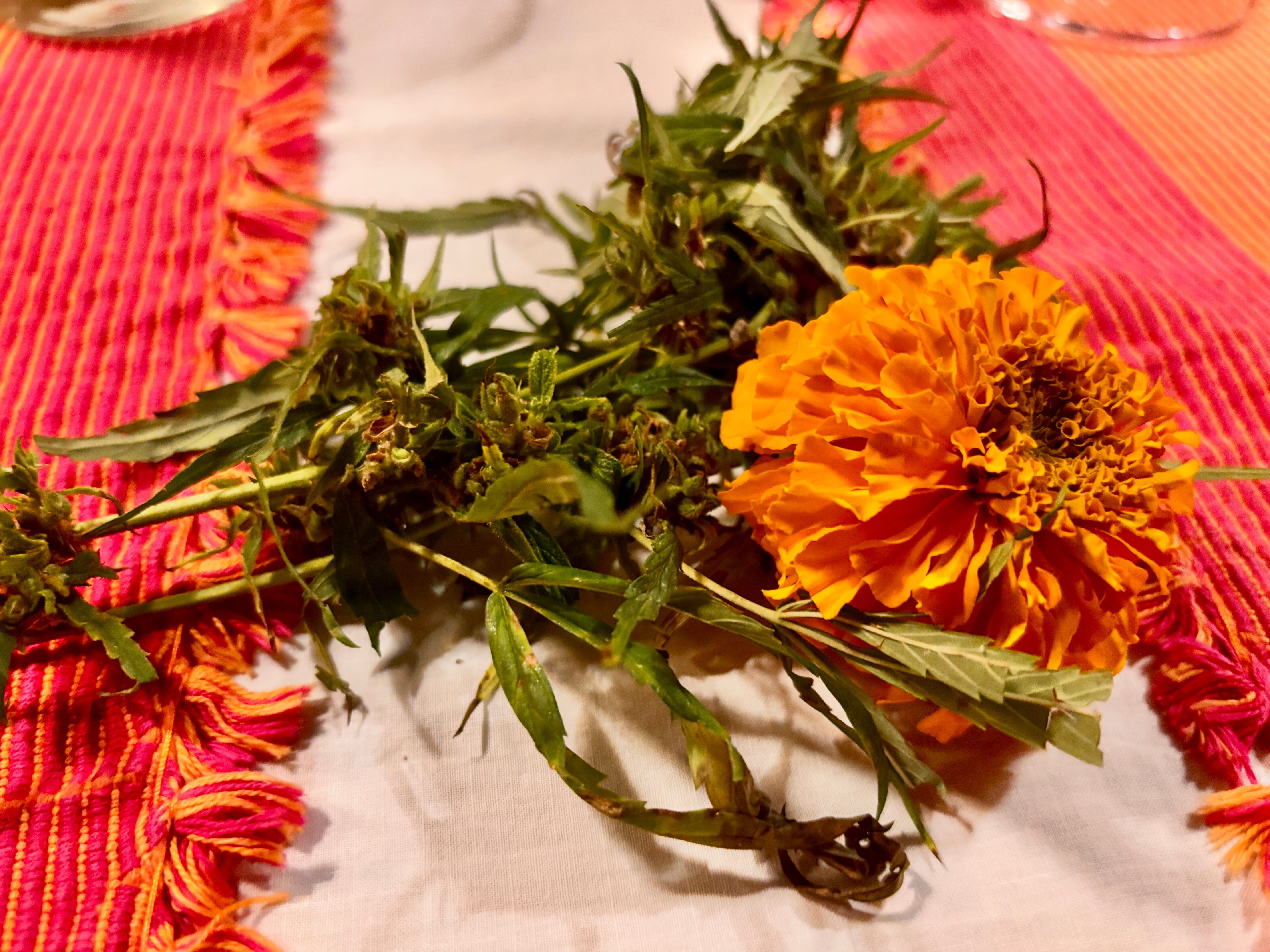
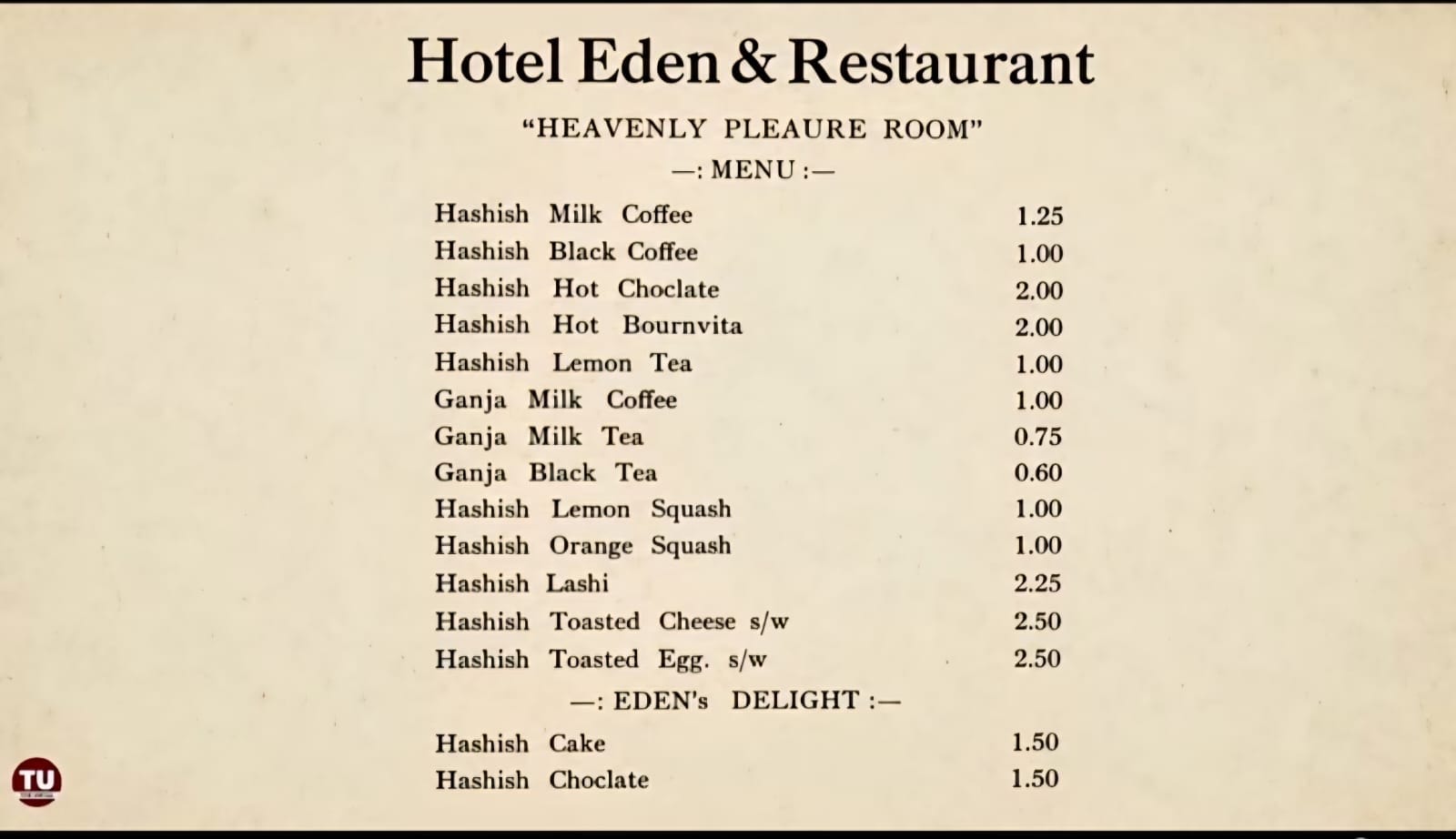
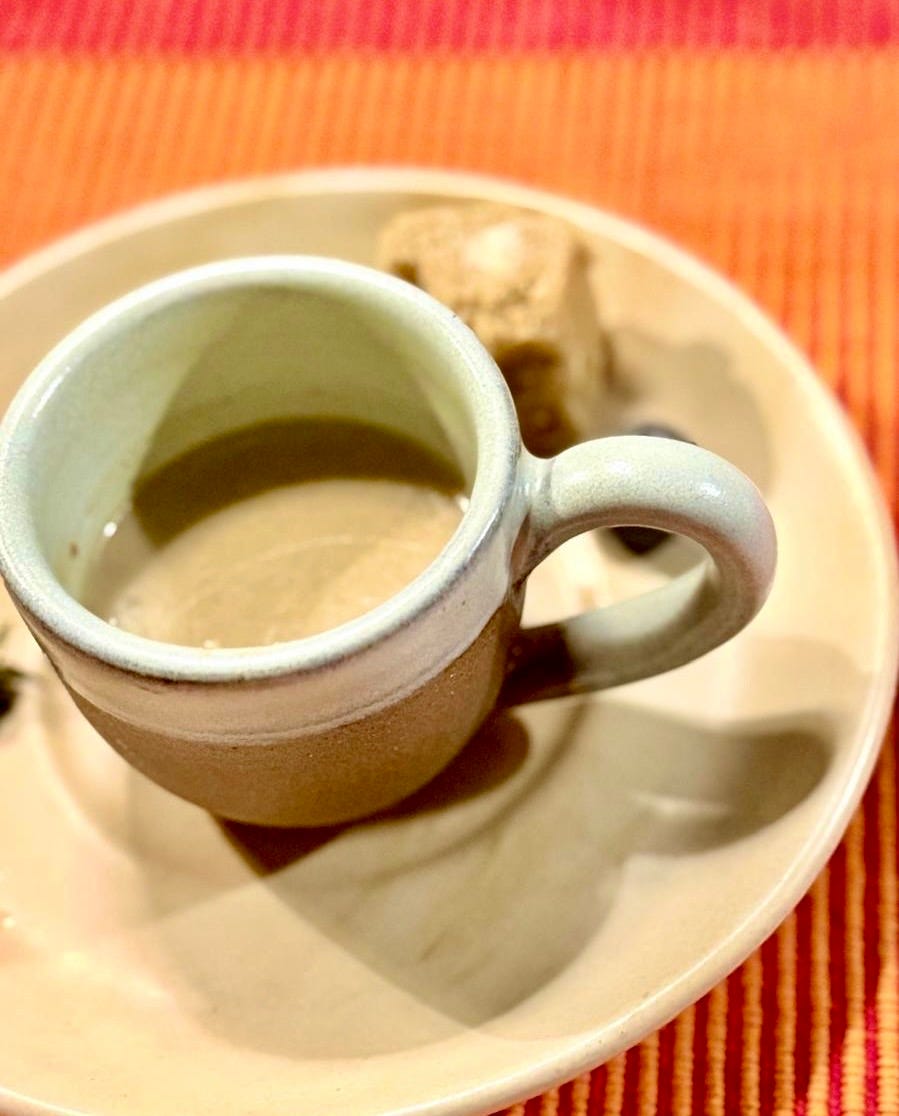
Perhaps the most curious thing we had to eat in Nepal was bhang, a drink with a curious name, whose primary ingredient is cannabis. I later found out thatBhang is the word for weed, in Nepal.
Because I’m a law-abiding citizen, I did ask a local if it was legal and she sent me the above menu from the 1970s, with a message that it is (although the decriminalization of it is actually recent). Anissa Helou, a friend who was on this trip, said farms often have plants, and they feed the leaves to the goats. I wasn’t sure how strong it was, so I focused mostly on the milk cake served alongside.
By the time you read this, I’m heading back to Kathmandu, and then returning home. Thanks to everyone in Nepal for their exceptional kindness and graciousness. The Nepalese people have been so welcoming and friendly, and discovering their foods and culinary culture has opened my eyes, and stomach, to a cuisine that I was unfamiliar with. Namaste!
As many of you know, several communities in Nepal were recently hit by devastating flash floods. If you’d like to make a donation to the official relief efforts, you can do so at this link:
It was an opportunity that was too hard to pass up. A good friend was celebrating his 70th birthday and decided to do it in Nepal. I’d never been to South Asia and Kathmandu had always had a bit of a mystique to me. India is still on my bucket list to visit, but I’ve been holding off on going there until I could go with an Indian friend, who knew the lay of the land and who could explain all the customs and cuisines to me. You could use up a continent of water understanding them all with an AI chatbot, so I won’t do that.
And I’m also sitting in a hotel room while everyone else is asleep, sipping instant coffee from the hotel minibar at 4:40am, using the feeble internet connection, to upload some pictures to share. So sorry about any typos or lapses in knowledge about Nepal and Nepalese cuisine, which I’m trying to fill as I go along here. This was a relatively last-minute trip, so I should have crammed and studied up with some books on Nepalesecooking, but there really isn’t a better way to understand a country than through its food, and that’s what we did.
After a night of flying, we arrived pretty early, so unloaded our luggage at our hotel and hit the ground. The people at the desk warned us about walking around, saying it was a little dangerous. I wasn’t sure if that meant we would get mugged, but in the end, their concerns were for our safety due to the chaos of drivers and motor scooters coming at you from every which way. Apparently crime in Nepal is very low, but doing things like crossing a busy street can be harrowing due to a riot of traffic, so you might feel like you’re in a pinball machine, avoiding the flippers, if you walk around. (In Paris, we have food delivery drivers on bikes who seemingly have no idea about the rules of the road, and other cyclists who whiz through red lights, to worry about.) I felt very safe and while I’ve only been here a few days, everyone has been very kind.
My friend, another David, mastered using his hands as utensils better than I 😄
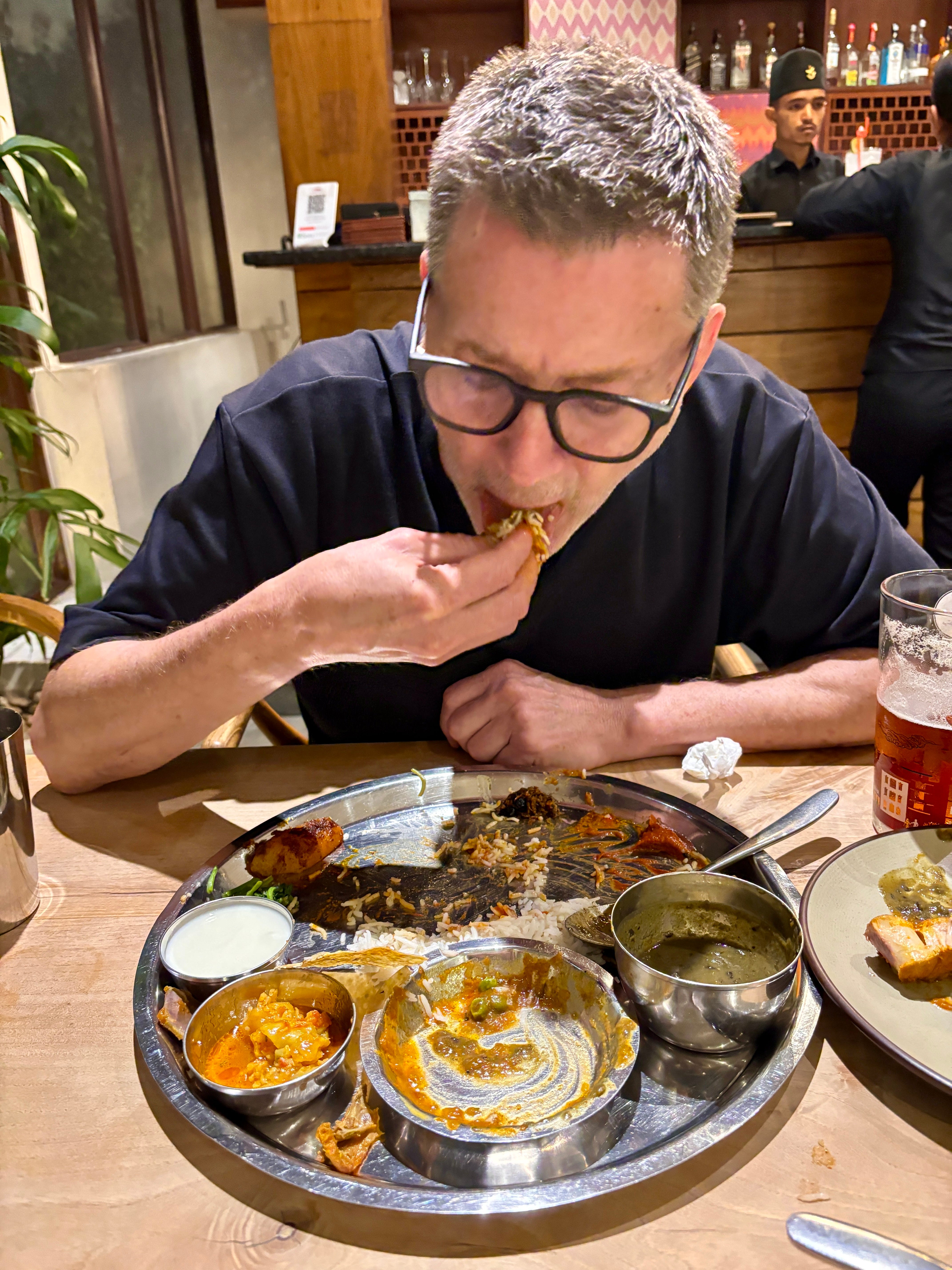
At our first meal, the waiter gave us some guidance on eating with your hands. I’ve been out in Paris with my friend Beena Paradin, who gave me some tips, but it’s a talent I’ve yet to master.
I also took a chance on ordering dhido, a buckwheat dumpling of sorts, which came out in a big, gooey lump, drizzled with ghee (clarified butter). I can’t say it was my favorite thing that I ever ate, and the super-nice server told me it was best eaten by tearing off a chunk and dipping it in the sauce, then swallowing it without chewing. Since it had the texture of mochi, which people choke on in Japan, I decided that it may not be the best way to eat it. And talking to locals later about dhido, I realized it wasn’t everyone’s favorite. But they gave me kudos for trying it!
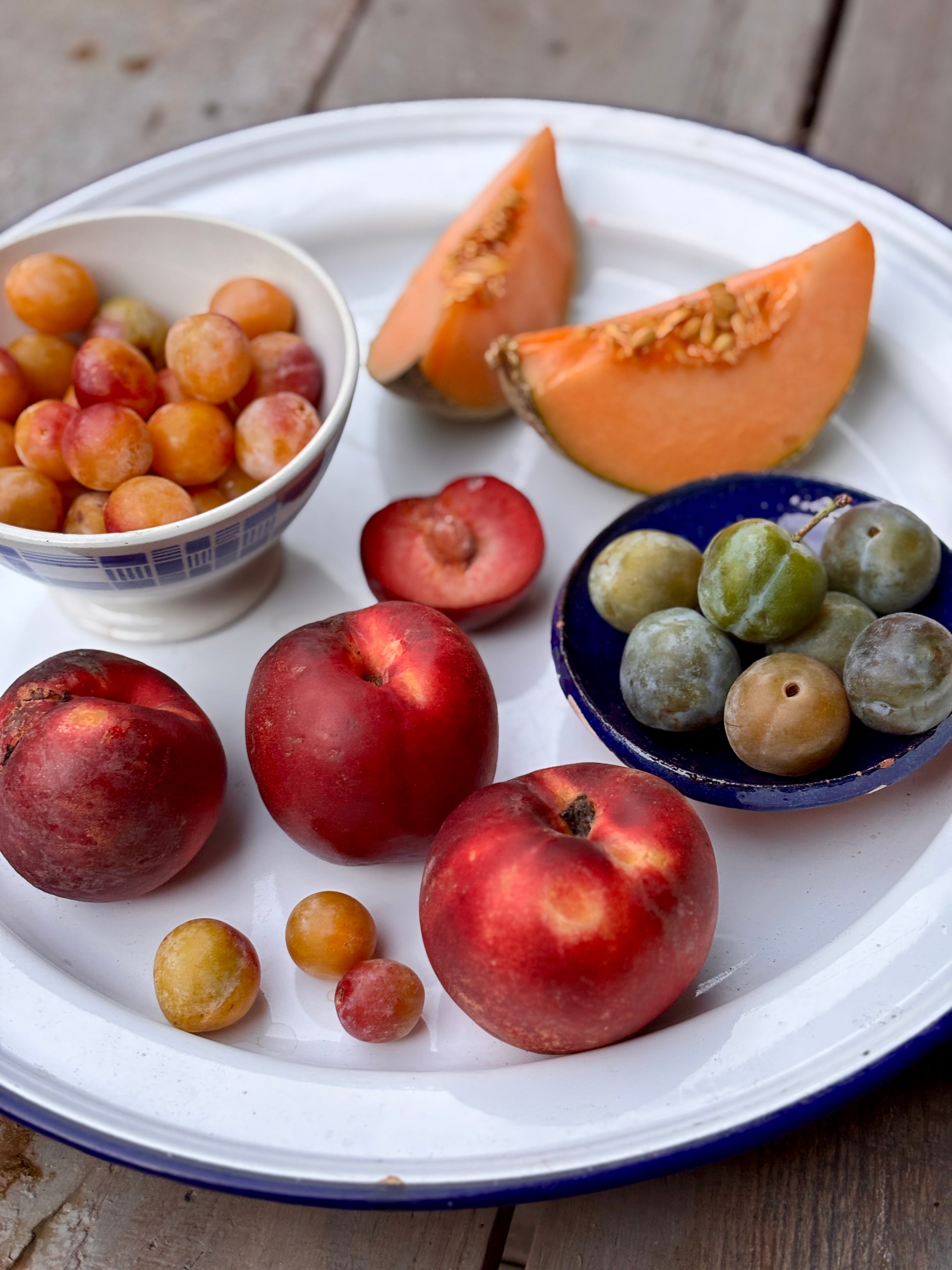
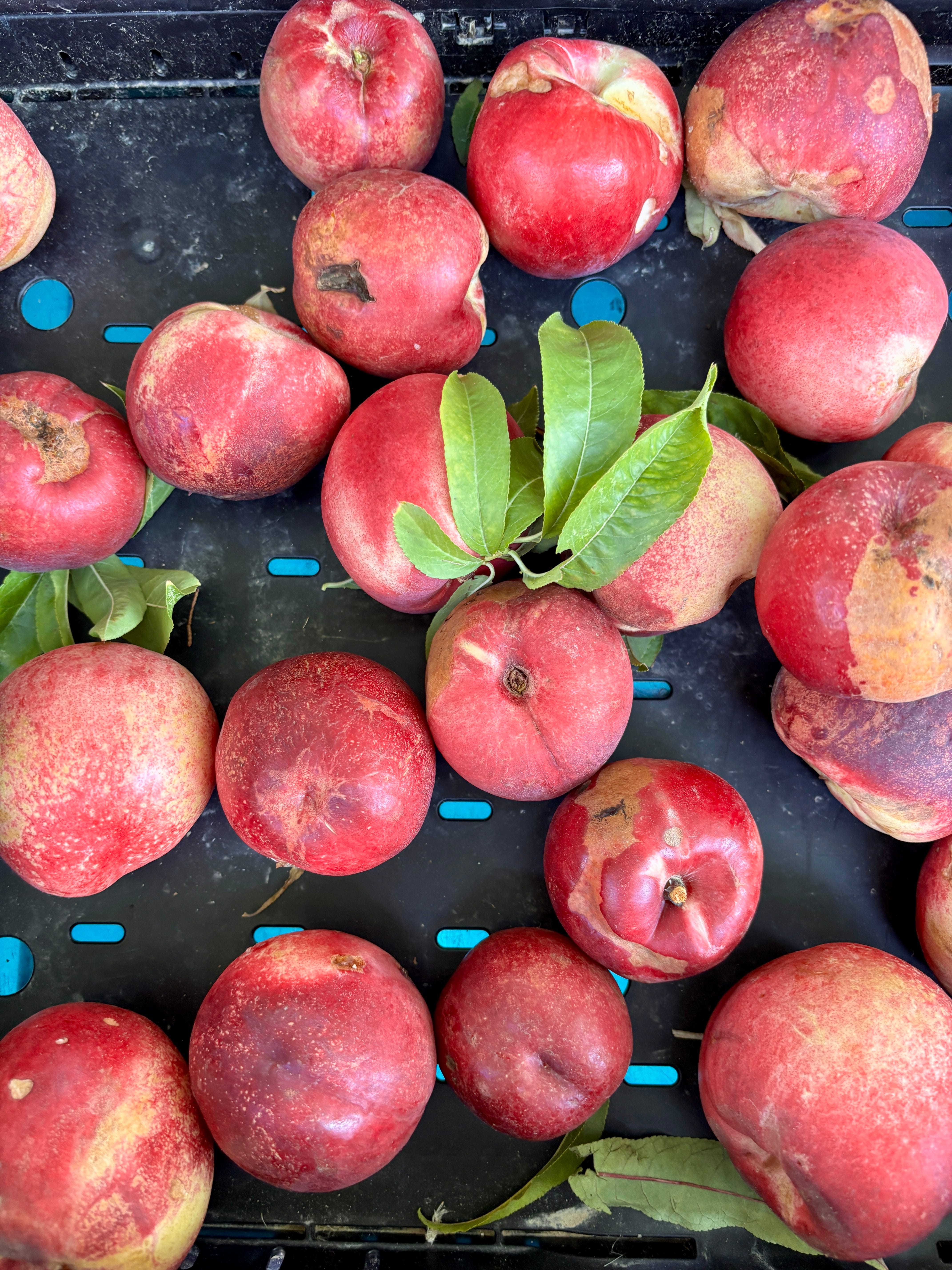
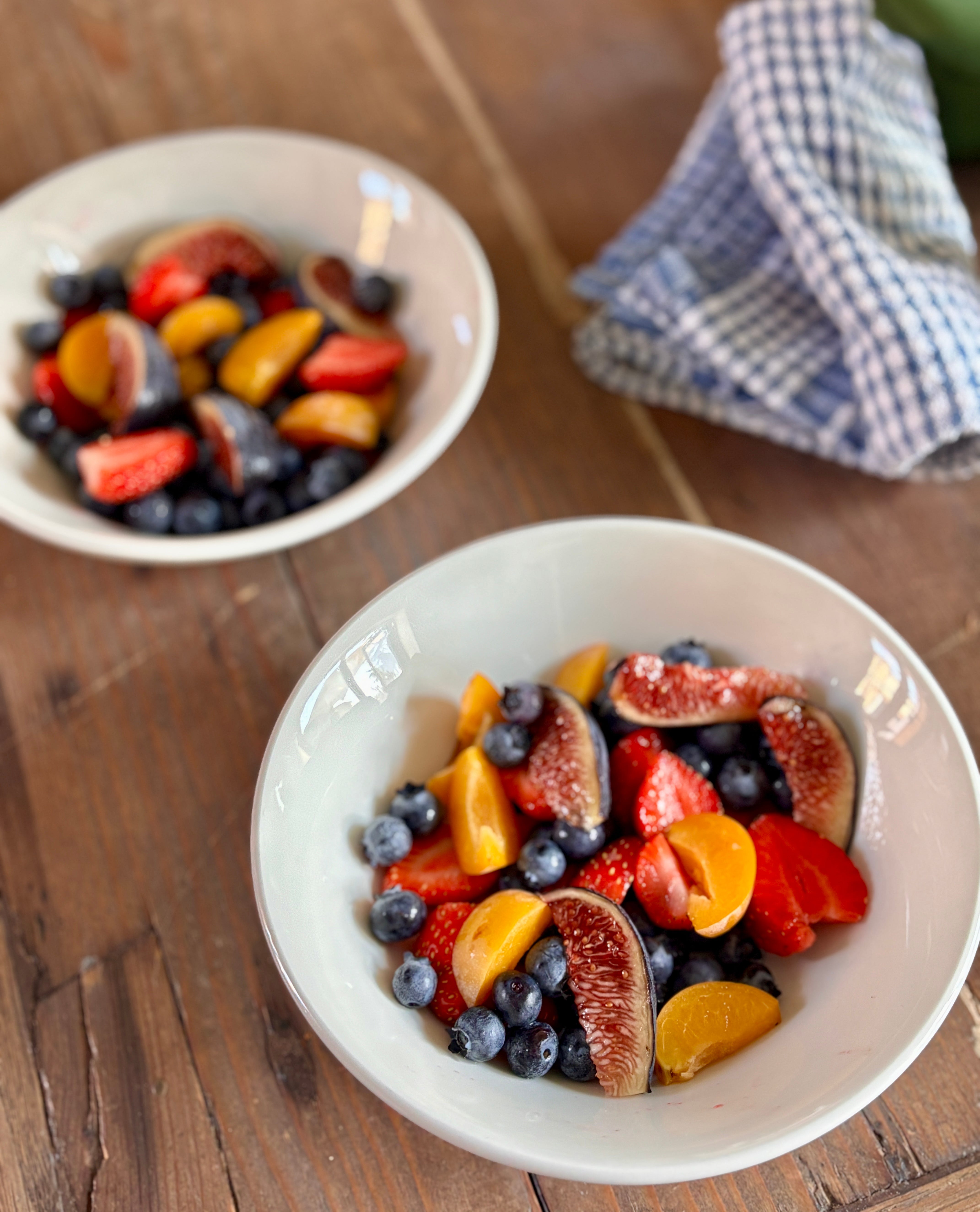
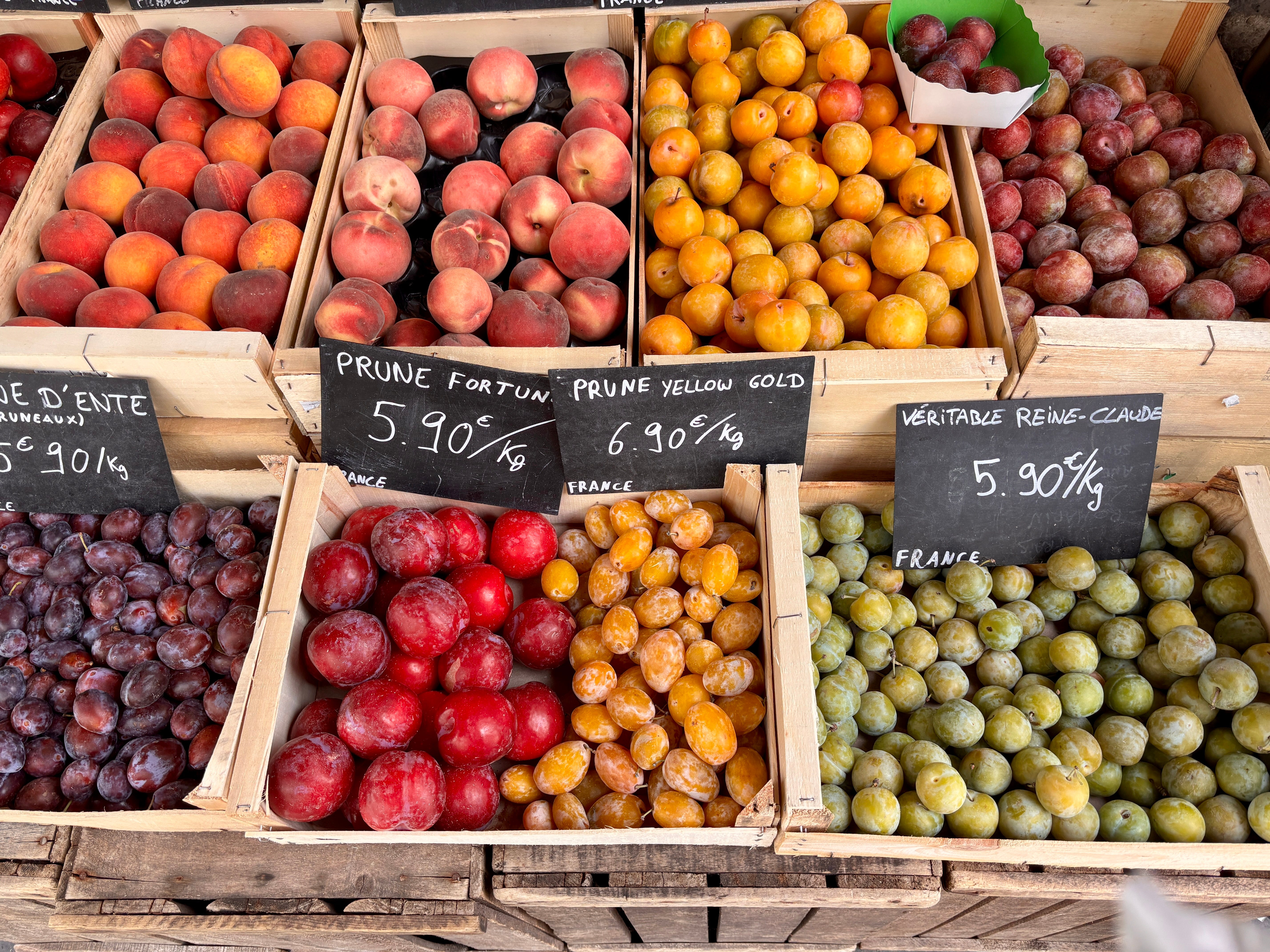
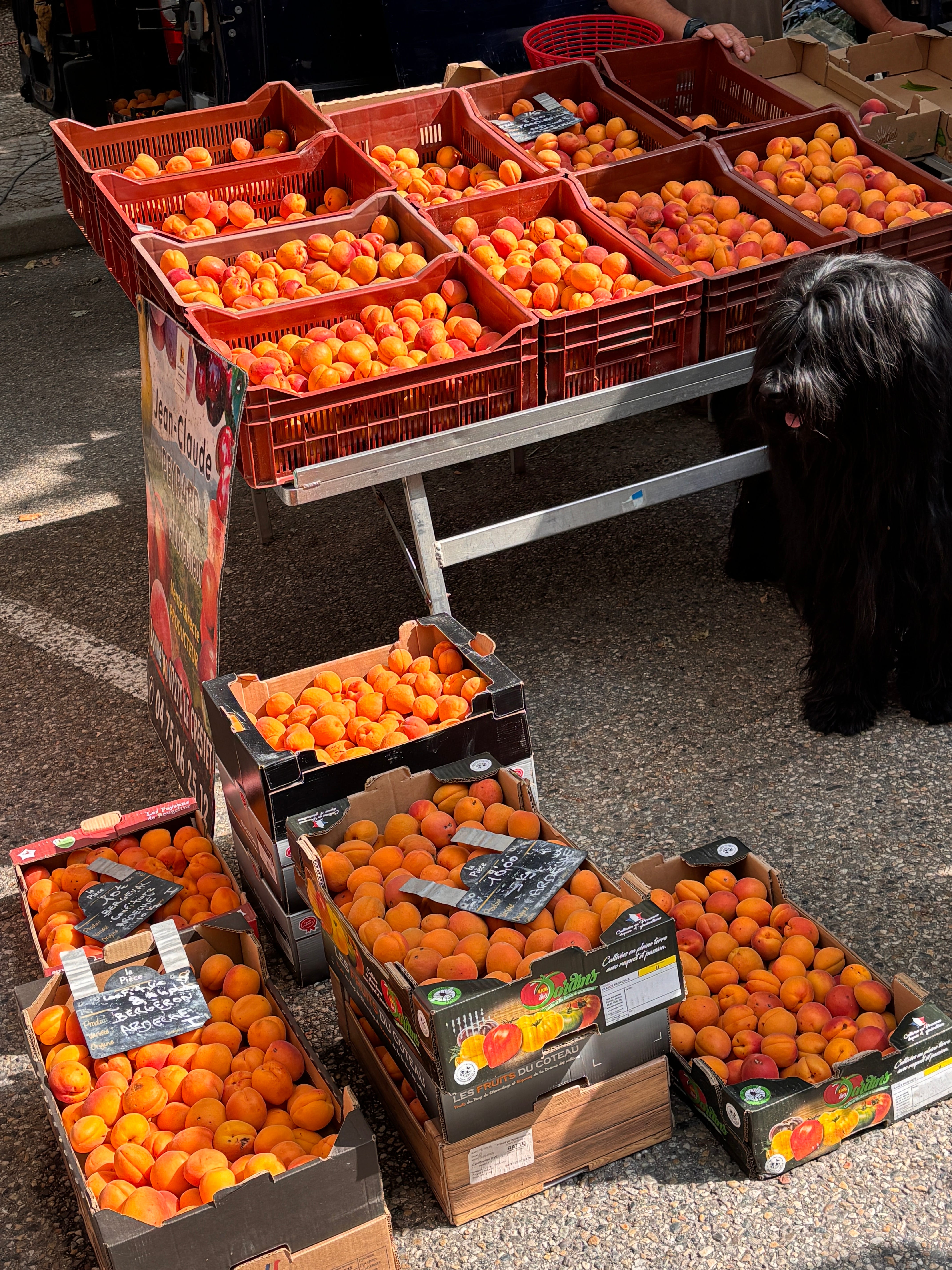
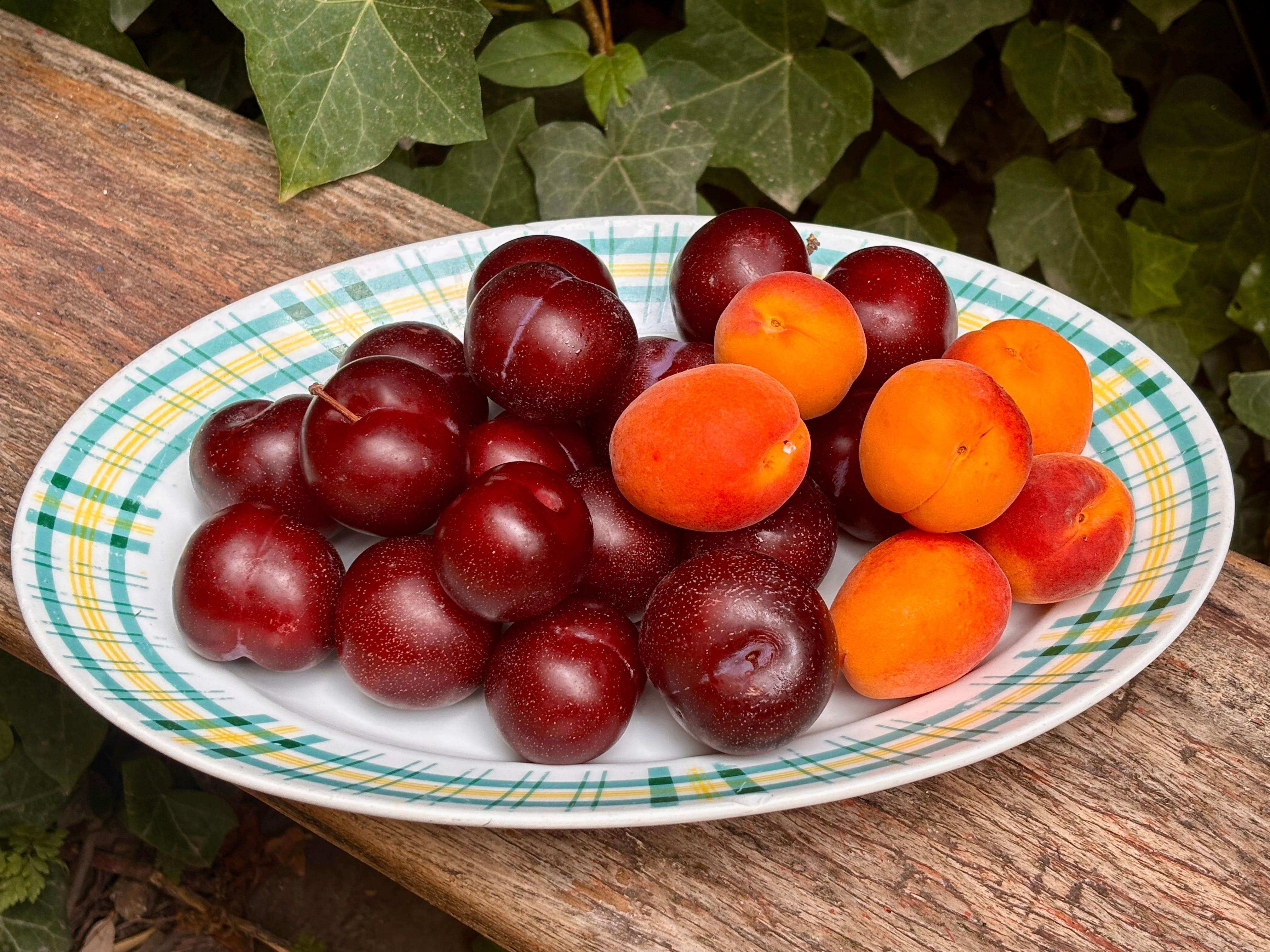
Something I’ve noticed is that in the summer months, when we’re visiting friendsin and around France during July and August - when summer fruits are at their absolute peak - everybody has a bowl of pears and apples in their kitchen.
It strikes me as odd that in the midst of apricot, cherry, melon, strawberry, peach, and nectarine season, when the most outstanding fruits of the year are at the markets, people are eating apples and pears. A sign popped up at my local natural food store that said, “Finally, apples and pears!” It’s as if people have been waiting patiently for the end of summer so they could have apples and pears.
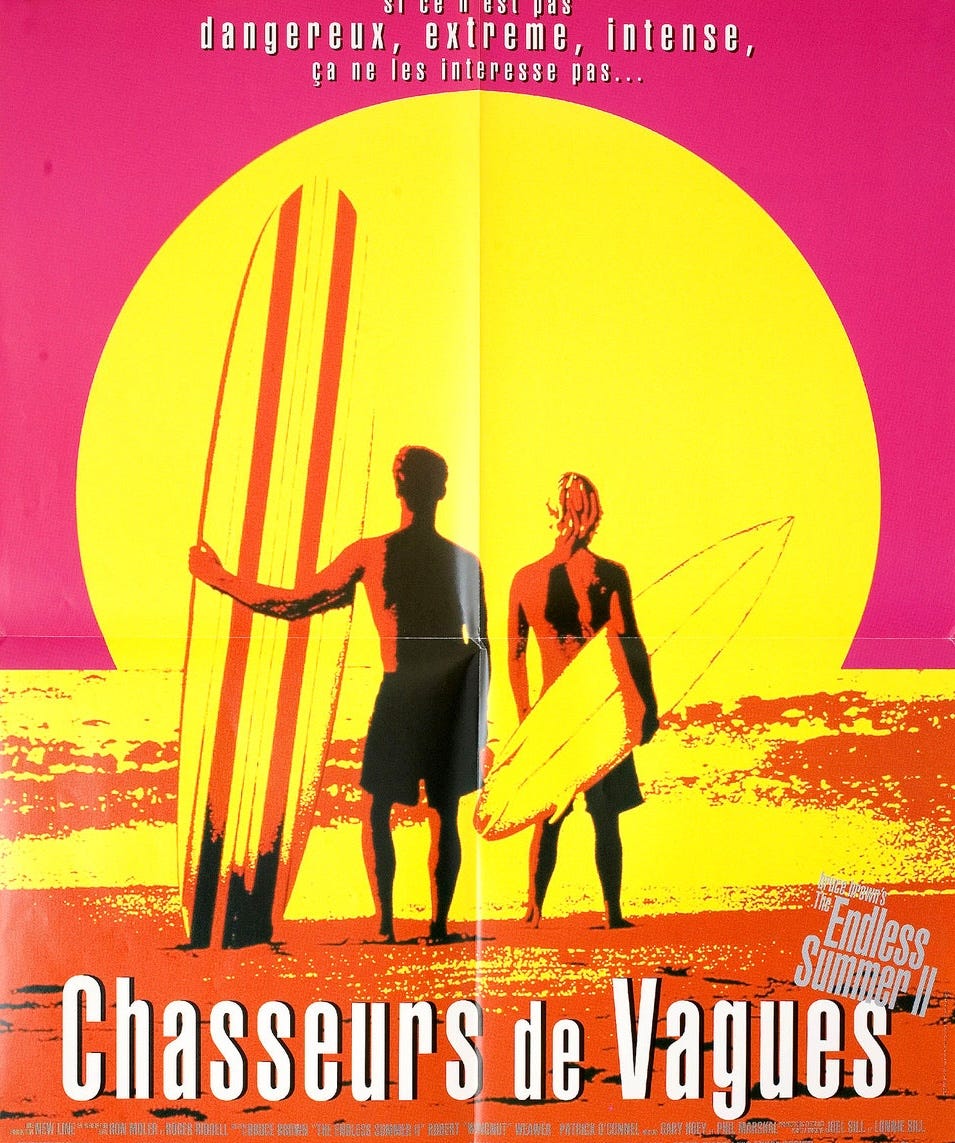
In spite of crazy heatwaves this year, summer is my favorite season, mostly due to the fruits. But I’m not the only one who’s ever dreamed of an endless summer. So did Californians in 1964…
But they changed the title of the movie in France, from Endless Summer to Wave Chasers.
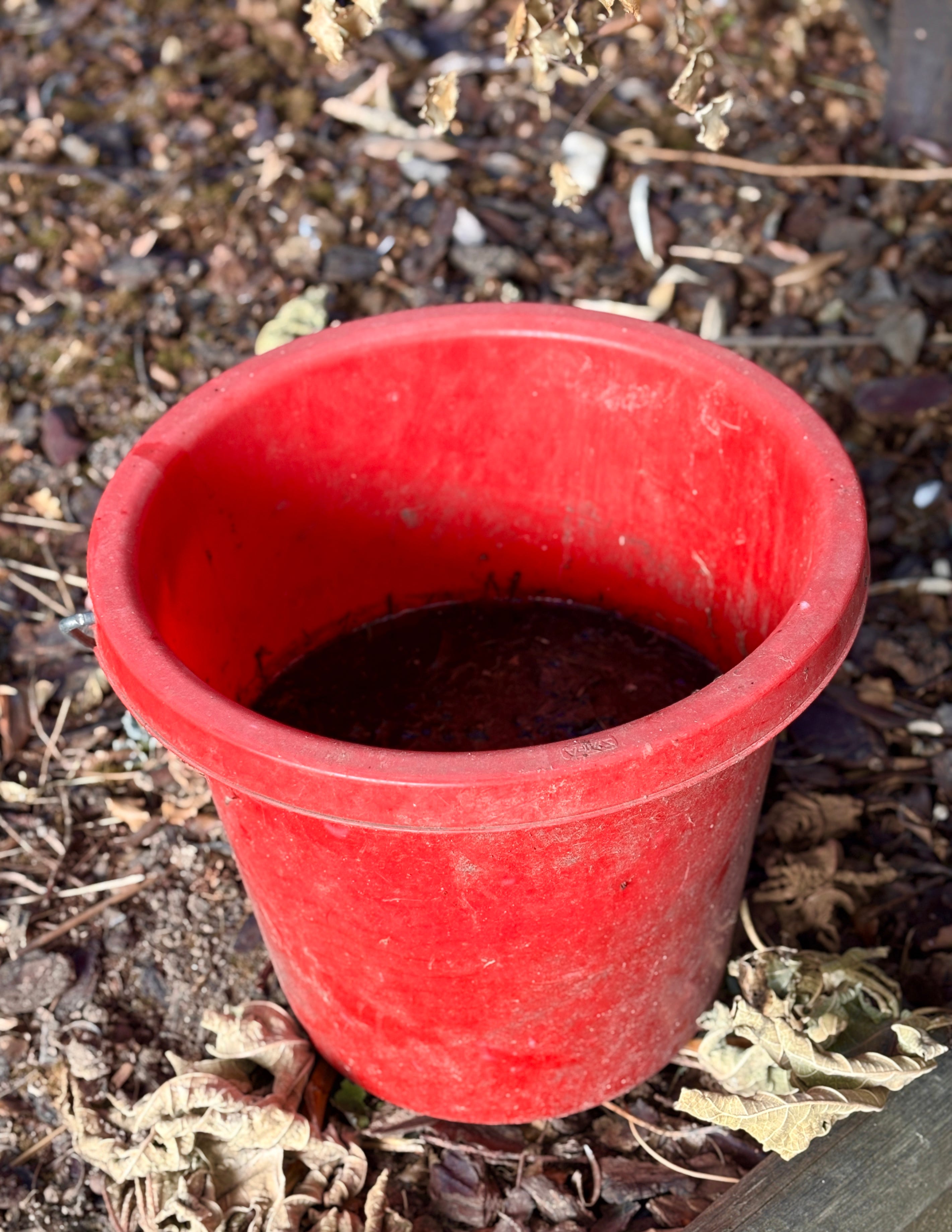
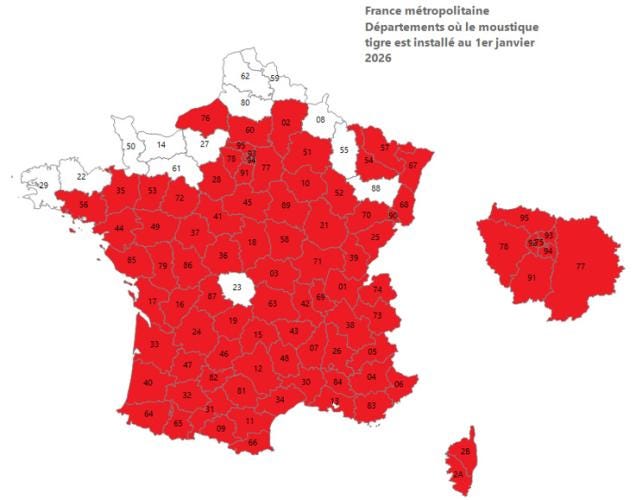
In France, people are excited about the rentrée, when people come back after summer vacations and celebrate being back by having parties and get-togethers. There’s something to be said for people who wait all year for their summer vacation, then celebrate when it’s over. Maybe it’s my California roots, but I wish summer would never end. I like wearing short-sleeve shirts and sandals, and eating outside, although the mosquitos followed everyone back and even the two “buckets of doom” I concocted failed to curb them.
One of my “buckets of doom,” which I should have dubbed “buckets of hope.” Apparently the constant fluctuations in the weather this summer, and droughts, provided the perfect breeding ground for mosquitos in France.
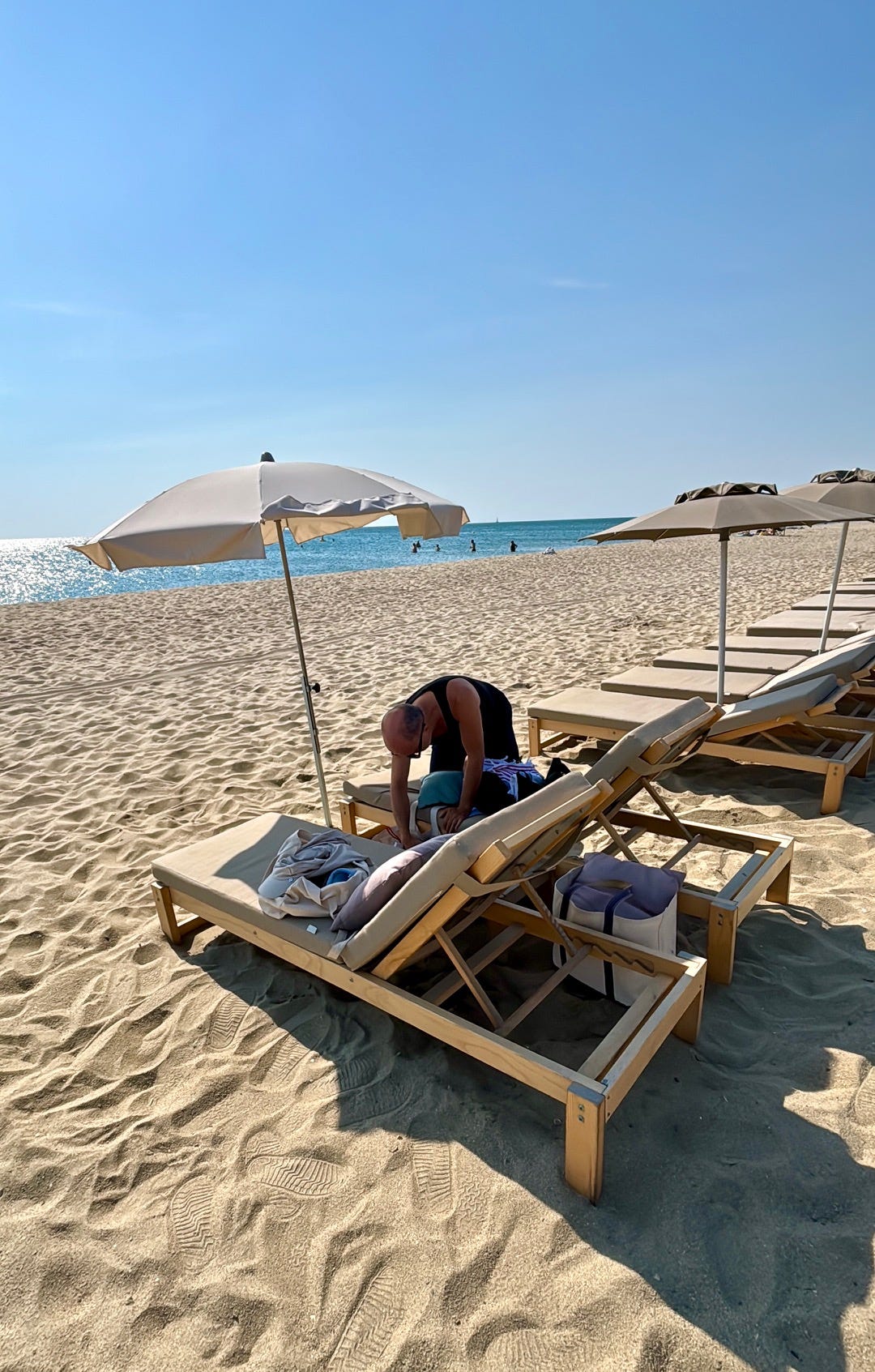
I love summer and wish it would never end, and if I’m being honest, coming back took me a few weeks to catch up on everything. I try not to do anything during my summer vacation except read, eat, drink, swim, and relax, but I do forget that the rest of the world isn’t France (or Europe, for that matter), where summer vacations are taken seriously. Yes, people at the beach are still scrolling, but no one seems to be spending a lot of (or any) time answering business emails, at least in my orbit.
Are you a subscriber? If not, subscribe to my newsletter to get recipes, videos, Paris restaurant tips, podcasts, and more, sent right to your Inbox. Free subscribers get most posts, and paid subscribers get all posts and access to archives, as well as the ability to be part of the lively, and lovely, community of commenters. (Thank you, commenters, for providing such interesting tips and points of view!)
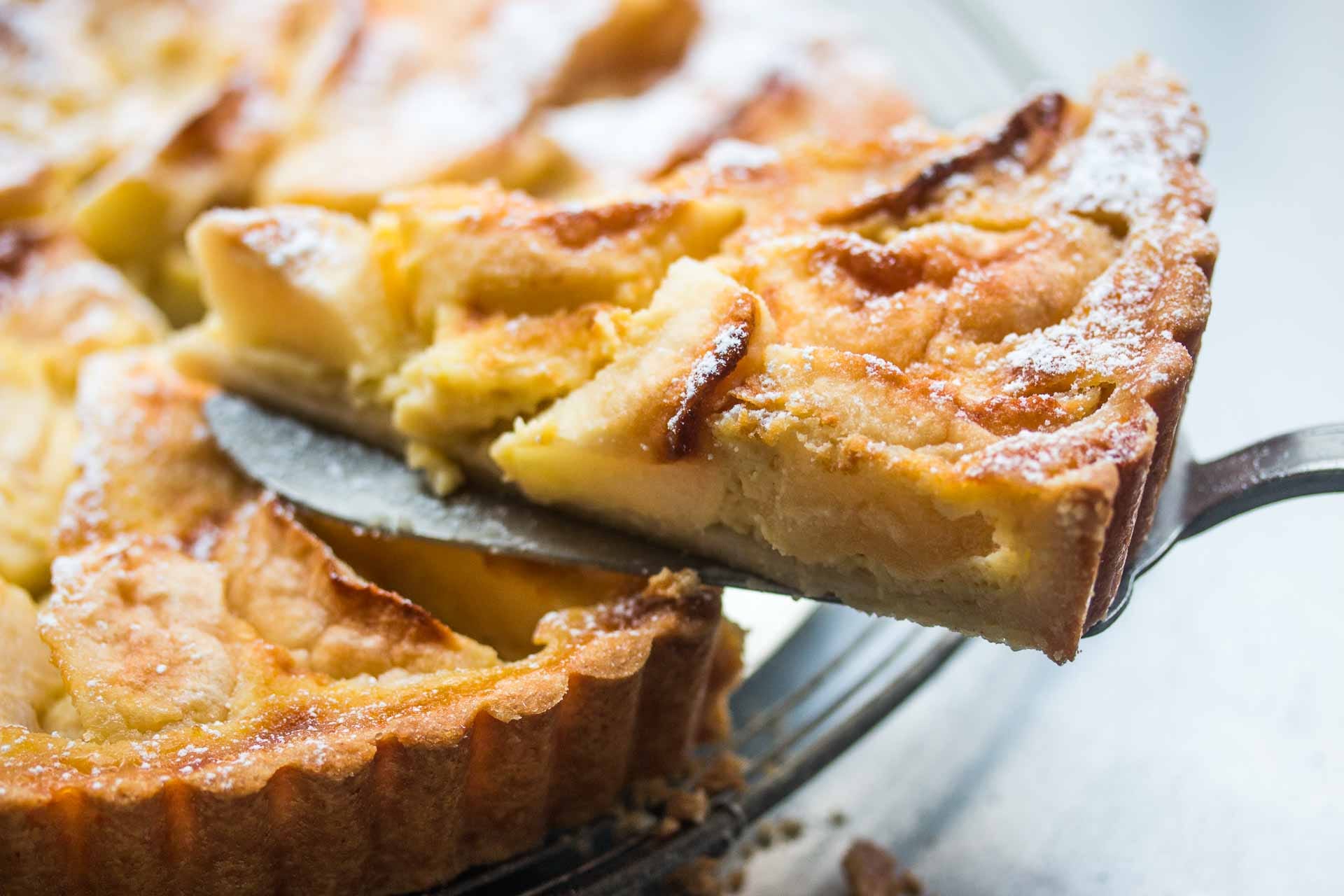
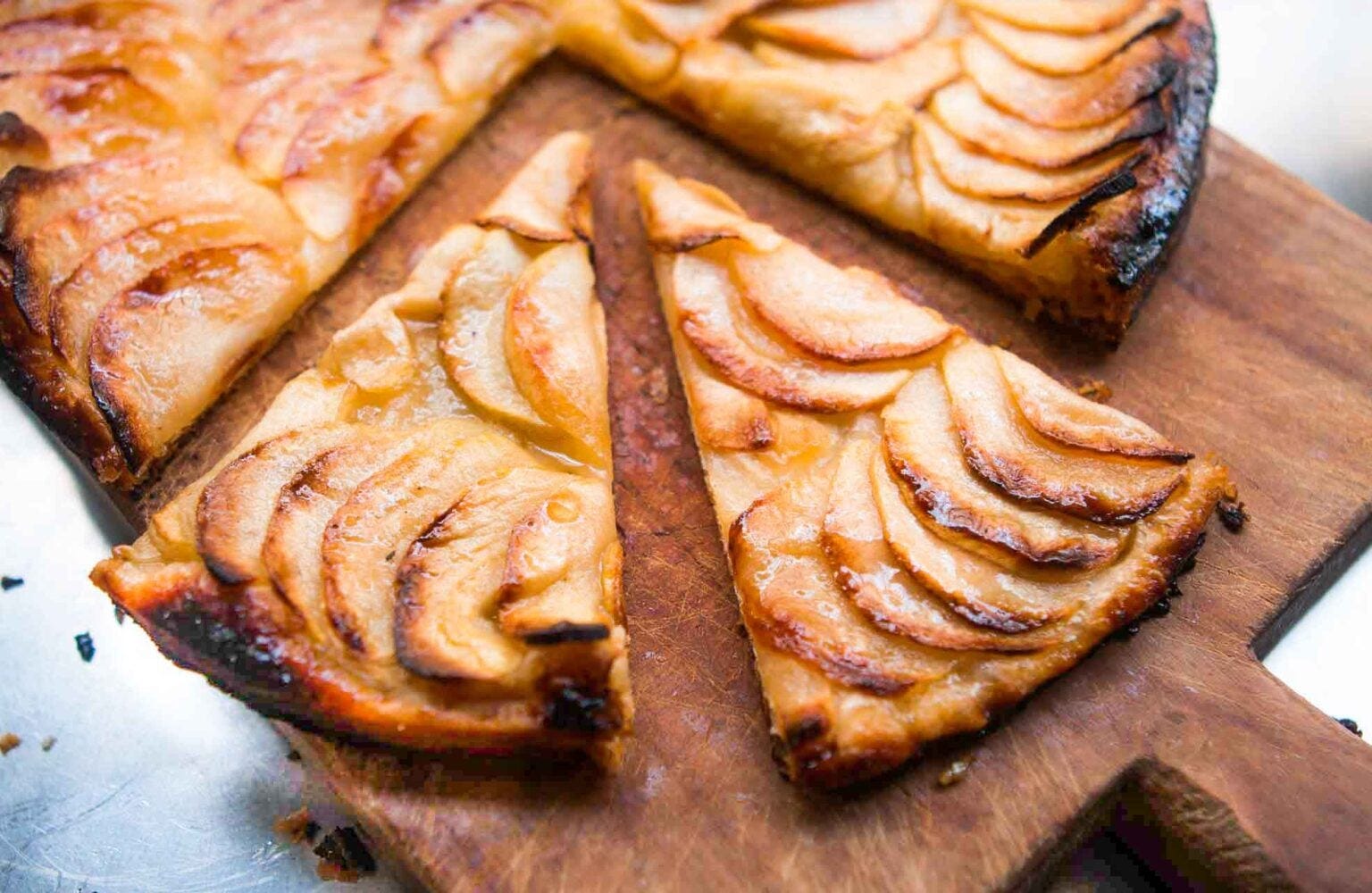
I did my best in September to hang on to all the lovely summer fruits, but soon will succumb to apples and pears, since there are lovely, aromatic Williams pears at the markets, fragrant quince, and wooden crates of heirloom apples, perfect for making French apple tarts.
I love when friends from San Francisco come visit, especially ones who make chocolate! Coming soon on my podcast, a chat with Michael and Jacky Recchiuti of Recchiuti. Stay tuned…
A few thoughts and stories that caught my eye recently:
A New York City vintage cookbook store owner landed in jail over a line dispute, which gave us a brief respite from all the influencers on social media complaining about the $60 loaf of rye bread in New York. My take is, like a $16,000 Hermès handbag, you don’t have to buy it. On the other hand, I agree with a baker who posted that they didn’t want bread to become a fancy commodity, as coffee did, being sold in precious little bags at high prices.
But to the people who were amused by a Lidl truck advertising their $3.99/loaf of bread outside the Soho bakery, you can’t compare a loaf of industrially made bread to a loaf of handmade bread. I worked in a bread bakery exactly one night, and I almost didn’t make it through the whole shift. It’s very hard work.
I know people are on a budget, but I’ve tasted Lidl bread and, sorry, but it’s not very good, imho. Fortunately I live somewhere where bread is considered a right, and more affordable. And I agree that $60 is a lot for a loaf of bread but, thankfully, New Yorkers can buy terrific bread from bakeries, such as She Wolf, Frenchette, Runner & Stone, La Cabra, and Lost Bread, that are a fraction of the price. And while I’m not someone who thinks you have to DIY everything, you can make your own bread without spending a fortune.
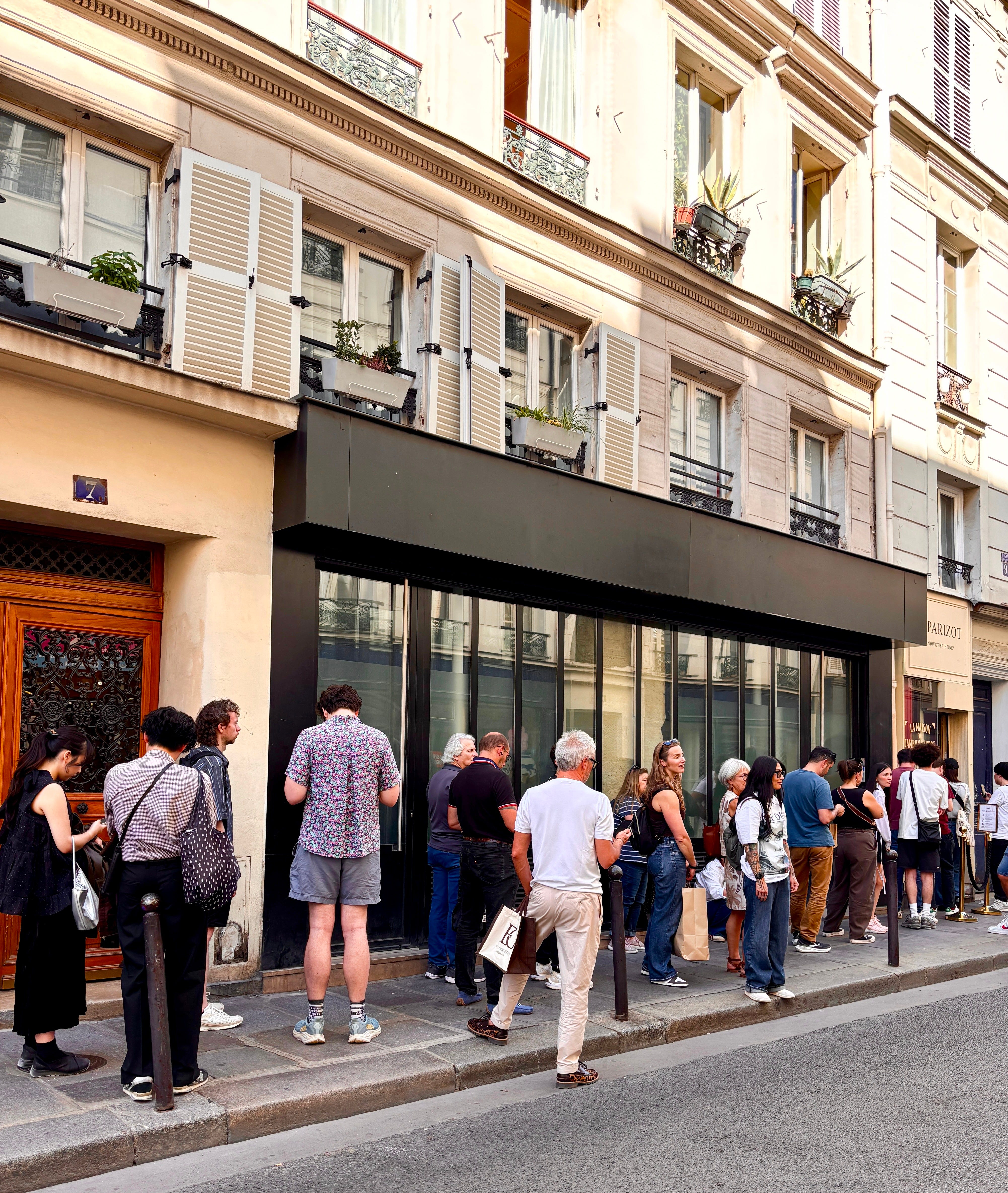
I thought I’d give Parizot a try, known for making a great jambon-beurre sandwich. But the line at 2:30pm was looong.
Speaking of lines, Paris seems to be all about lines these days. I wanted to try a newish shop that opened up, selling jambon-beurre (ham and butter) sandwiches. But when I rode my bike by it the first time, which was 40 minutes before they opened, people were already lined up. Two of my favorite sandwich shops, which I wrote about in 2011 and 2014, now require a wait as well, thanks to social media…and serving delicious sandwiches!
While it’s true that the two aforementioned sandwiches are worth waiting for — which is coming from someone who waited thirty minutes in Copenhagen for a cardamom bun that was scrumptious — I miss walking into a place, chatting with the owner or the clerk for a few moments, i.e., human interaction, and leaving with a nice sandwich for lunch.
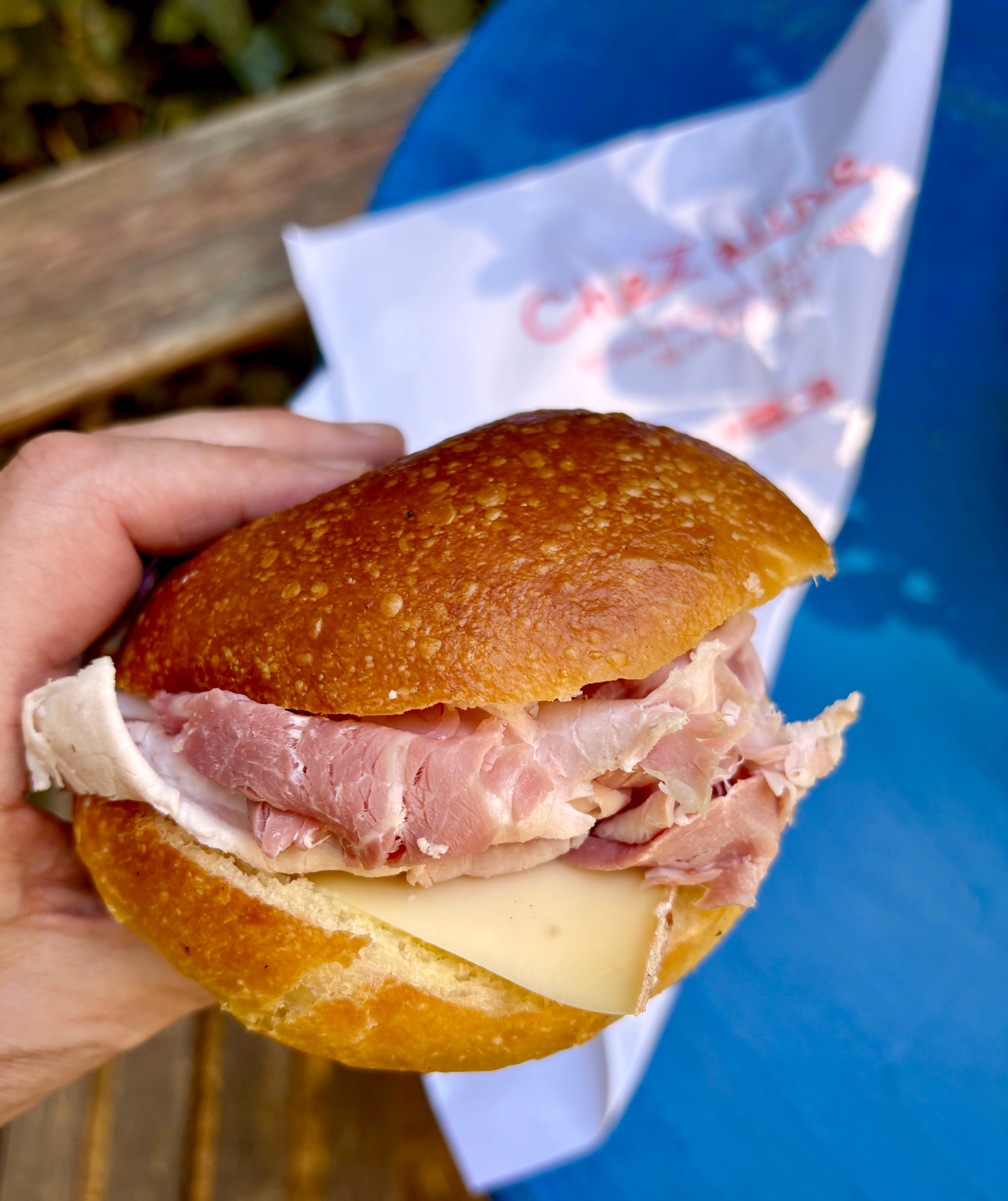
Fortunately the other day, after seeing the lengthy queue at Parizot, I decided to stop by sandwich stalwart, Chez Aline, for a jambon-fromage. Frequented by locals, it also happens to be in my neighborhood. The owner was locking the door as I pulled up, but offered to make me a sandwich. She was out of baguettes so made it on a round roll. I do prefer baguettes for sandwiches, so maybe I will give Parizot a go another time. One draw is they apparently offer a cornichon relish, which sounds delicious. On the other hand, I could just make my own.
Although I haven’t experienced it, a few people online have been talking about an arnaque (scam) involving taxis in Paris. Apparently some people said after they paid for their taxi by credit card, they found their card had been charged thousands of dollars, claiming the driver likely switched credit card machines, and not using the one they’re supposed to use.
First up, you can always pay for a taxi in cash, and exact change (or close) is best if you want to, because they rarely have change. (G7, the most reliable taxi service in Paris, has an app you can hail a cab and pay through, if you want to go cashless.) Second, before you accept a credit card transaction, take a look at the screen and verify the amount. Third, after you pay, ask for a fiche (receipt). Official taxis in Paris are required to accept credit cards, in spite of some of them saying otherwise 🙄. And they are required to have meters that will show the fare.
Lastly, everyone in France is familiar with paperwork (believe me…), and it’s very common to ask for, and get, a printed receipt. So ask for one. If you don’t get a receipt, take a screenshot of the meter or credit card machine screen if you can and one of the taxi license number, too, in case of a dispute. There’s a website in France, which is also in English, to report fraud and scams. You can submit a report here.
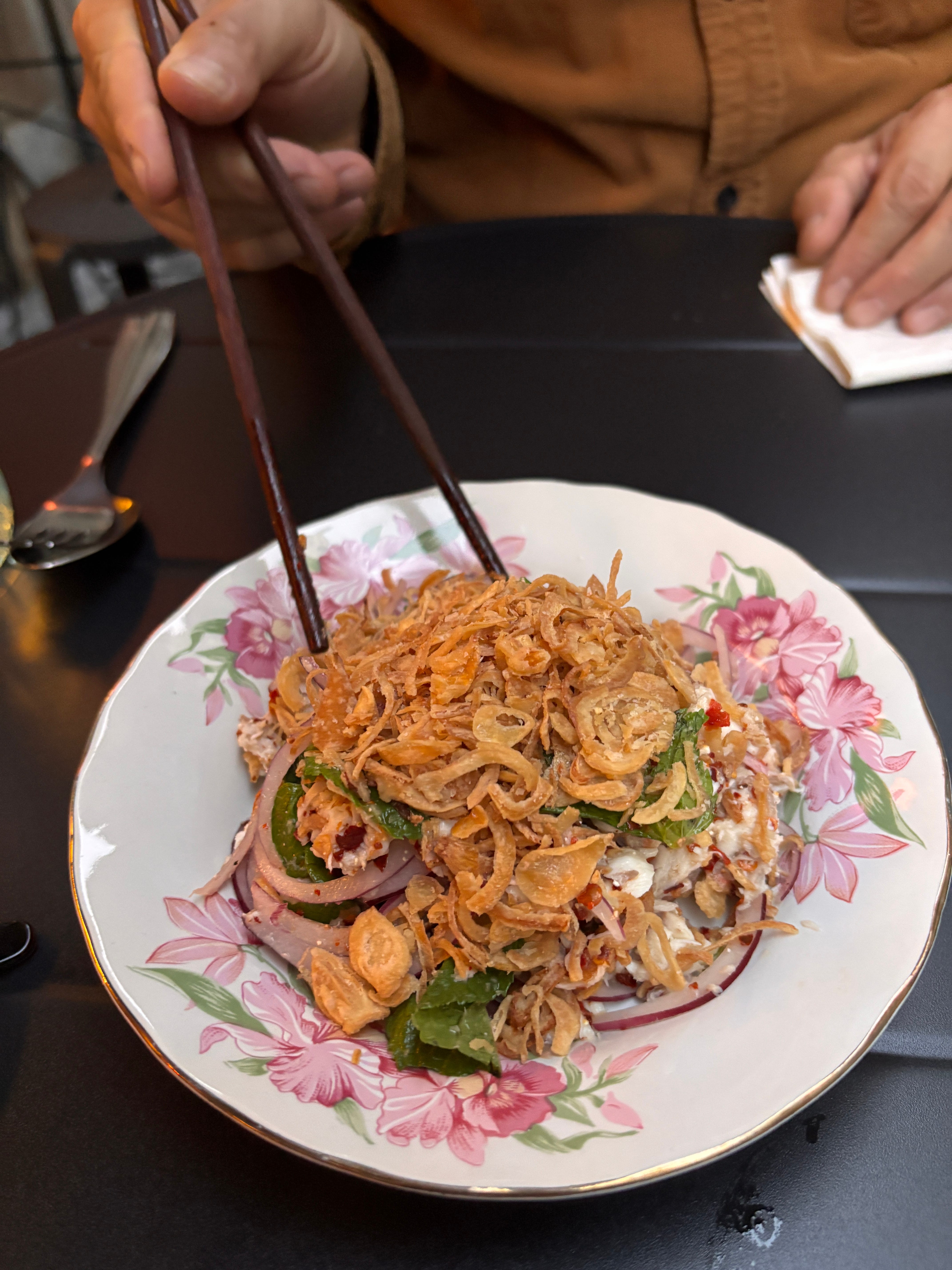
Excellent (and spicy) fish laab with fried shallots at Pochana in Paris. It was worth trying to balance sitting on the low, three-legged stools for.
It was just a matter of time, I supposed, that there’s now a butter shop in Paris, which is on my list of places to get to. The owner seems like a nice guy who joked that influencers were sending him offers to get paid a few thousand dollars to promote his shop, which apparently is already crowded, thank you very much. (But more lines?!) But since French butter is so good, what a good idea to open a whole shop devoted to it.
Just an fyi: This store-brand butter won the taste test in Que Choisir, France’s version of Consumer Reports. There are fancier brands out there, but if you want to live like a local, that’s a brand many French people buy.
I did a YouTube interview with Fabien Pelissier ofFab Expat, who helps foreigners with visa, insurance, relocation support, and other issues that arise when moving here. I don’t spend a lot of time on YouTube, especially in the comments, but —yikes. Someone criticized Fabien’s French accent (um…he’s French), and another said I wasn’t a chef, which was news to me, because while my memory isn’t what it used to be, I remember being the pastry chef at two restaurants and consulting pastry chef at another. (And have the leg and back problems to prove it.)
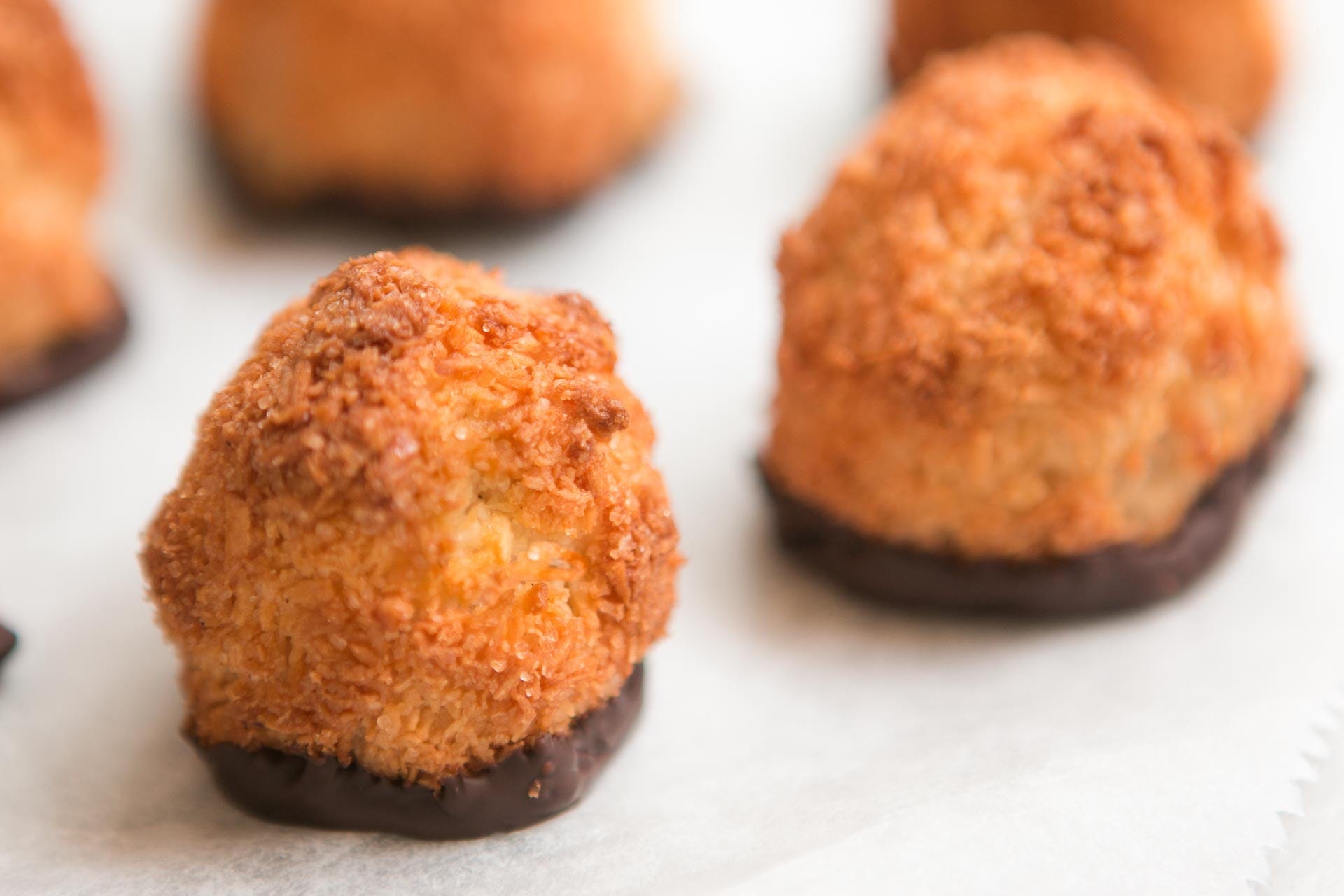
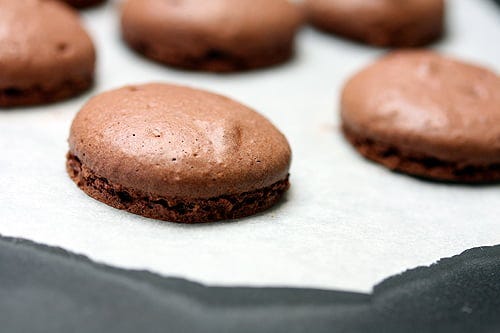
Another said I didn’t know what I was talking about, when I talked about French macarons, made with egg whites and nuts, which share similarities with American macaroons, which are also made with egg whites and nuts. The almonds used in French macarons technically aren’t nuts, and coconuts aren’t either, but they can be considered nuts.
I don’t argue with people online, but macarons aren’t originally from France; they arrived here from Italy. The Italian ones were likely inspired by cookies or small cakes from the Arab world. Today, French bakers in many regions make their own version of macarons from almonds, untilLadurée starting making Parisian macarons, sandwiching two macarons together with buttercream or another filling.
This website claims coconut was added in France, which made the cookies easier to ship since coconut stayed fresher than almonds. While they don’t refer to them “macarons” in France, the French make cookies called rochers au coco or congolais, which are similar to American macaroons, but not sure if selling “American macaroons” next to “macarons parisiens” in a French bakery would go over very well.
Another theory I heard is that when Jewish European settlers came to America, they couldn’t find almonds, orsome say, because almonds weren’t kosher, they used coconut. But as someone told me about what happened hundreds of years ago, if you weren’t there, you can’t be sure.
Almost everything we eat can be traced back to somewhere else, so I’m not sure what the point of battling with each other about these things is. I often say, you never know how many things you’re doing wrong until you put it on the internet. On the upside, I had such a great time with Fabien that I’ve invited him to be a guest on my podcast in the future. If you have a question you’d like me to ask him about moving to or living in France, let me know in the comments.
The commenting section in the newsletter is accessible to paid subscribers. If you want to become a paid subscriber, you can use this link to take 20% off a paid subscription. Link valid through October 10th.
In other news, our two favorite contractors are moving back to their home countries. It’s interesting talking to them, to see what they miss and why they’re going back. My first French teacher, at my first French classes shortly after I arrived in France, said to start a conversation (in French), he asks people in his classes what they miss most about home, and Americans always said the same thing: customer service.
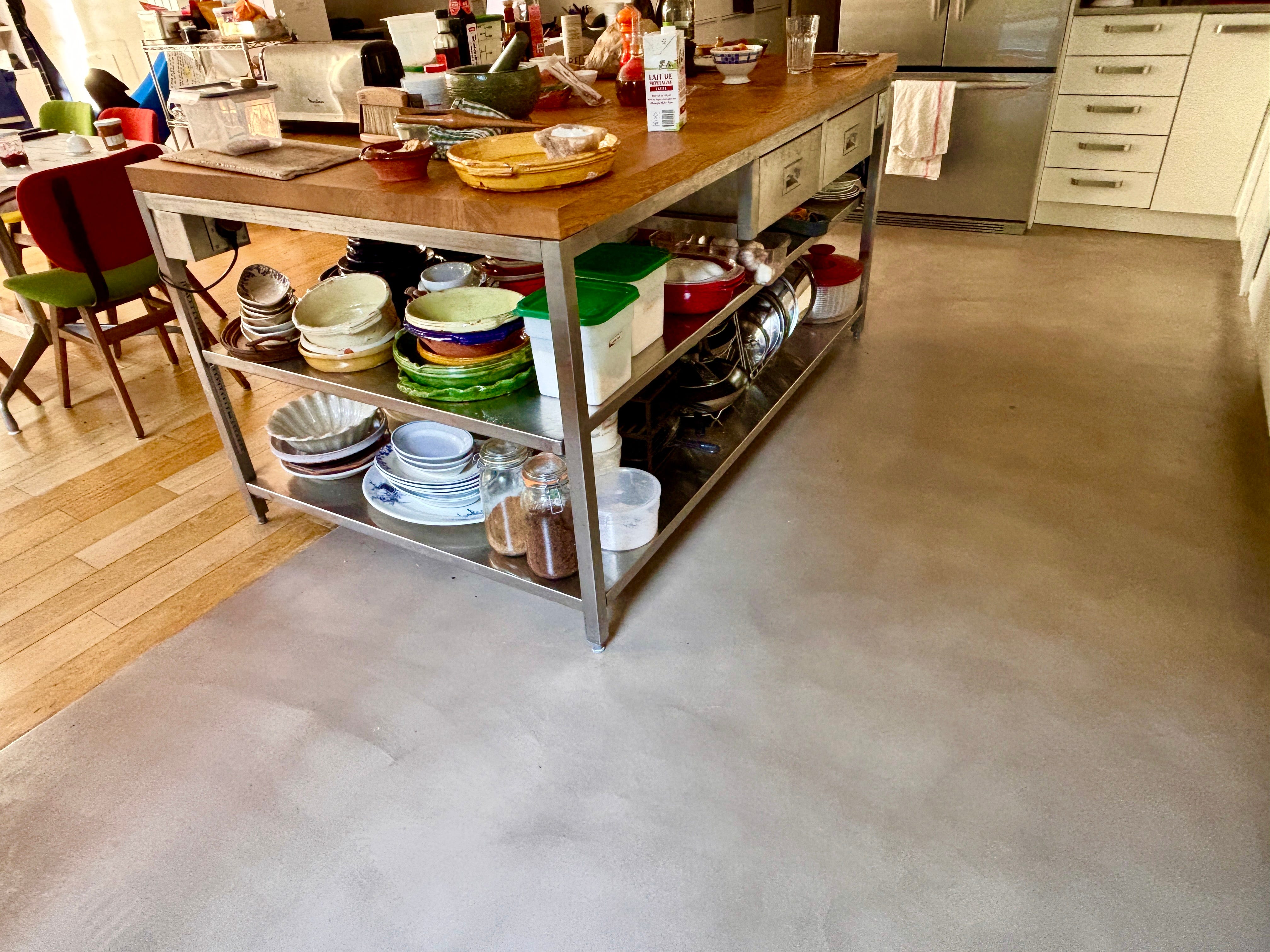
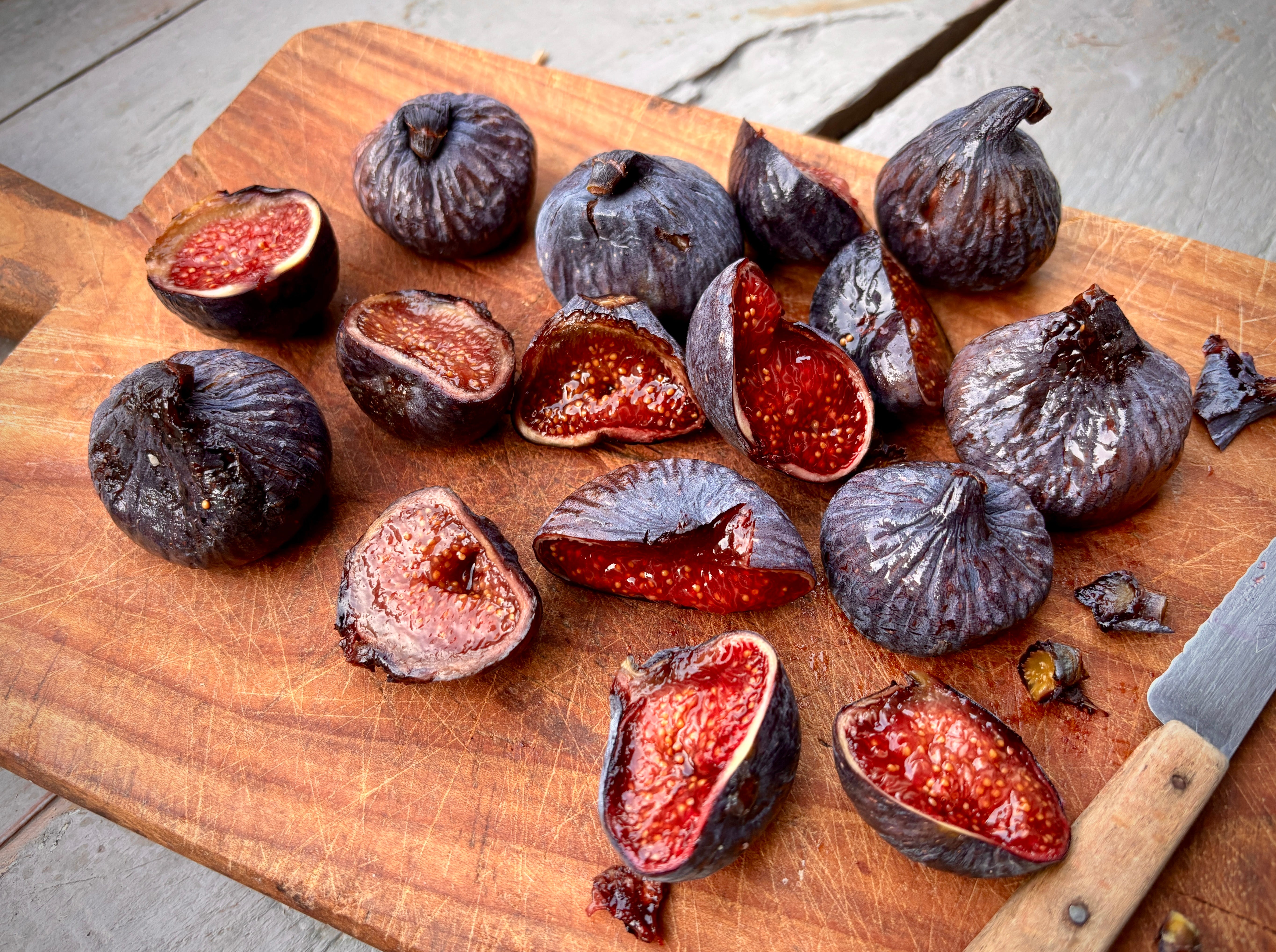
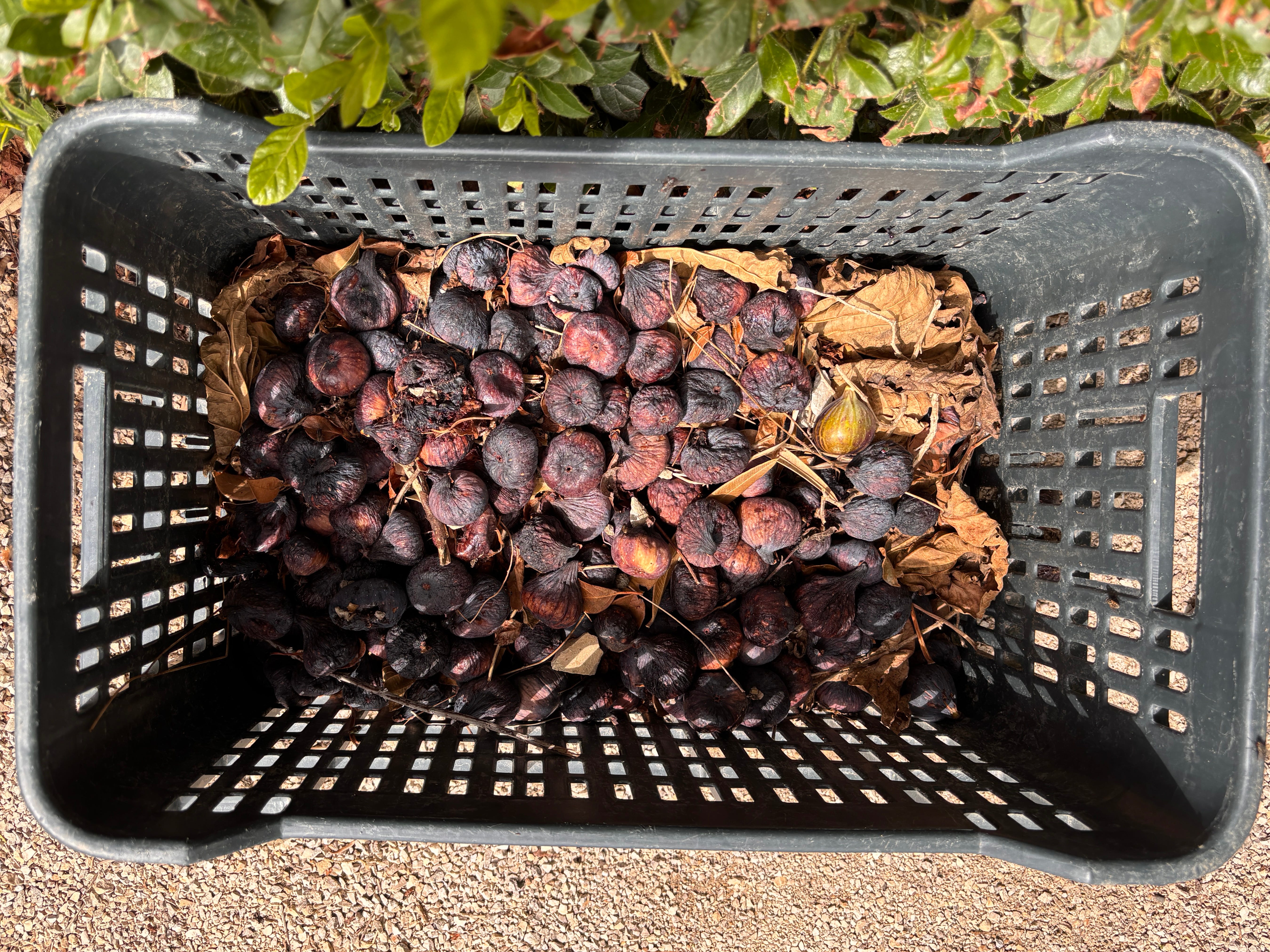
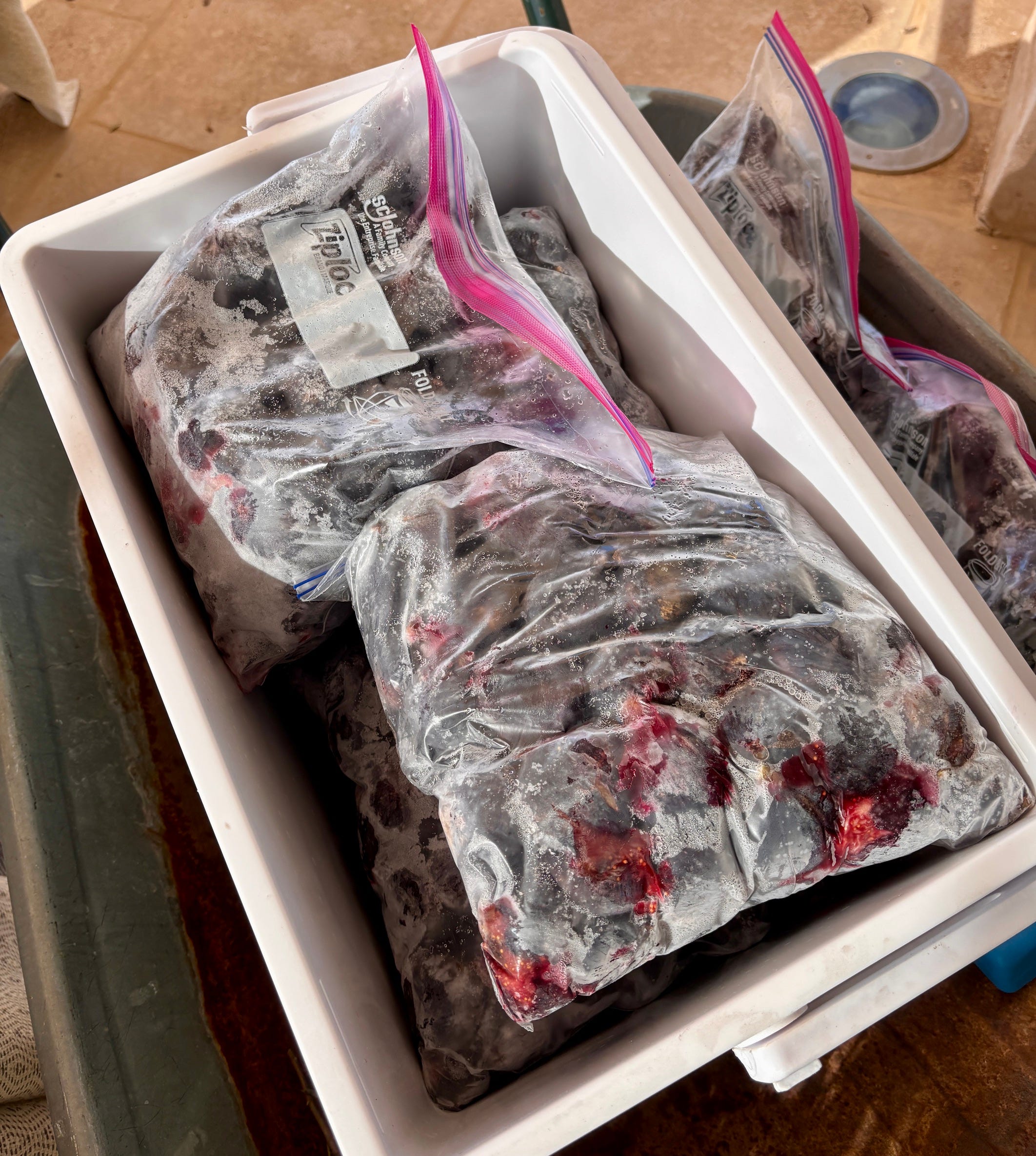
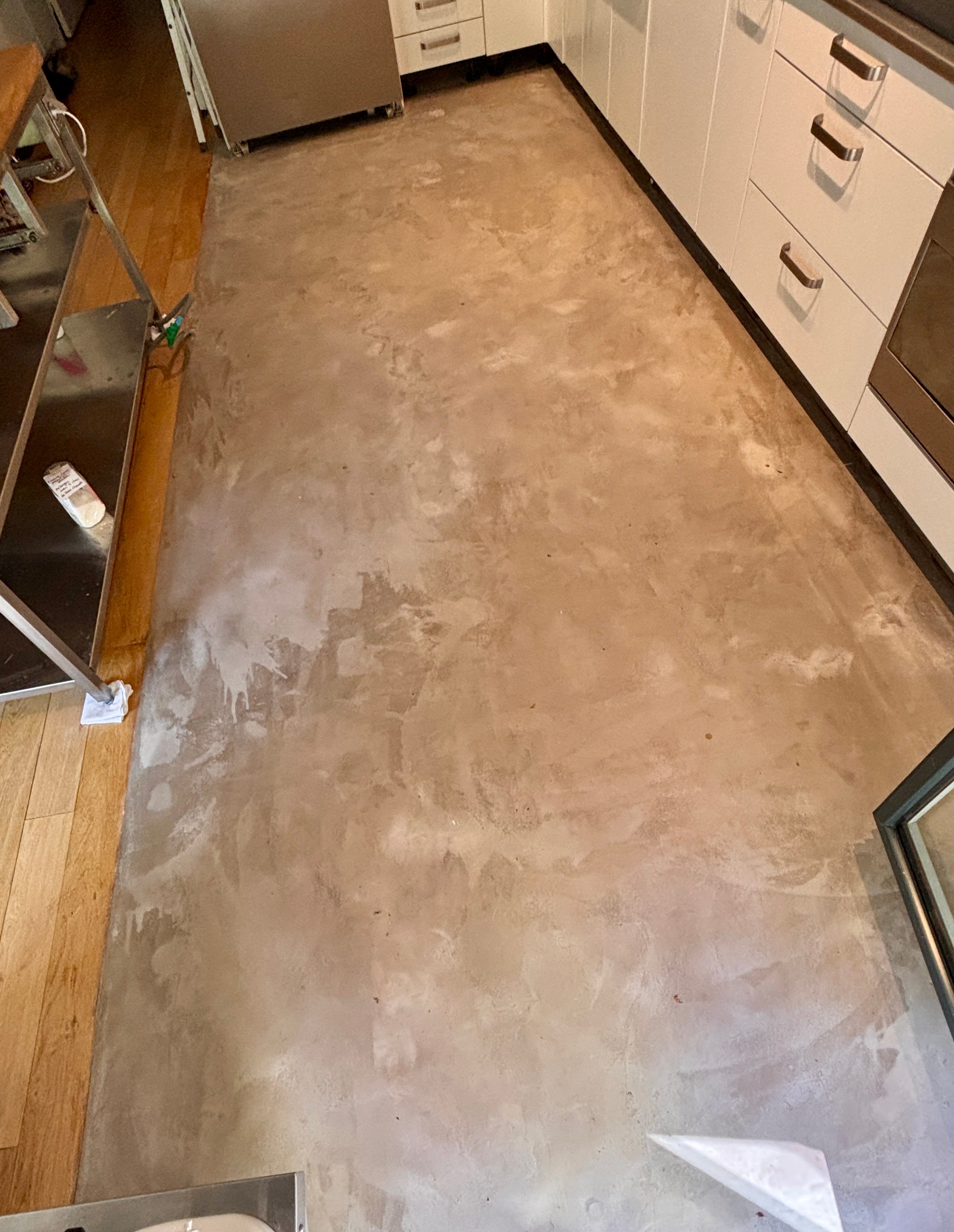
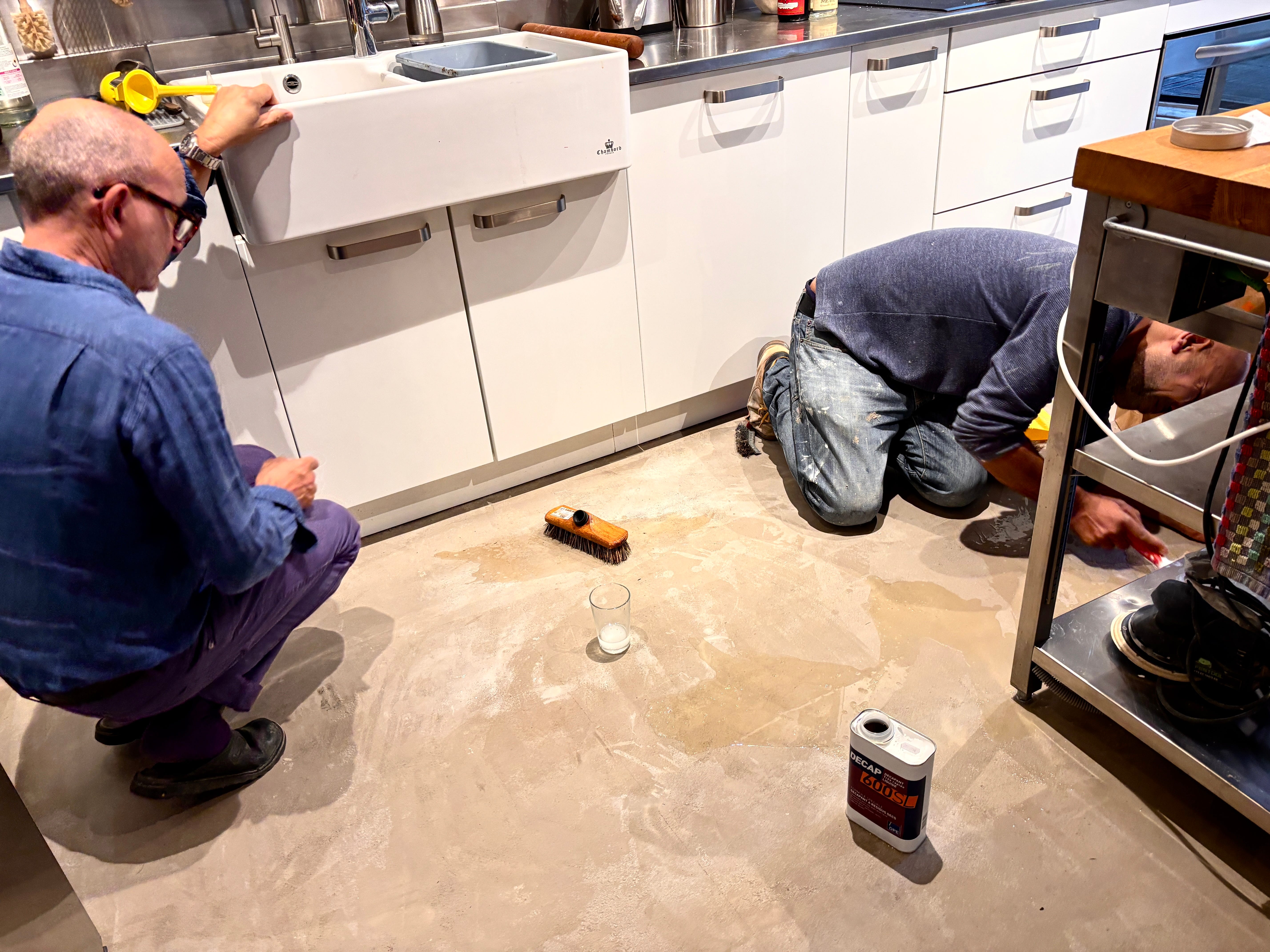
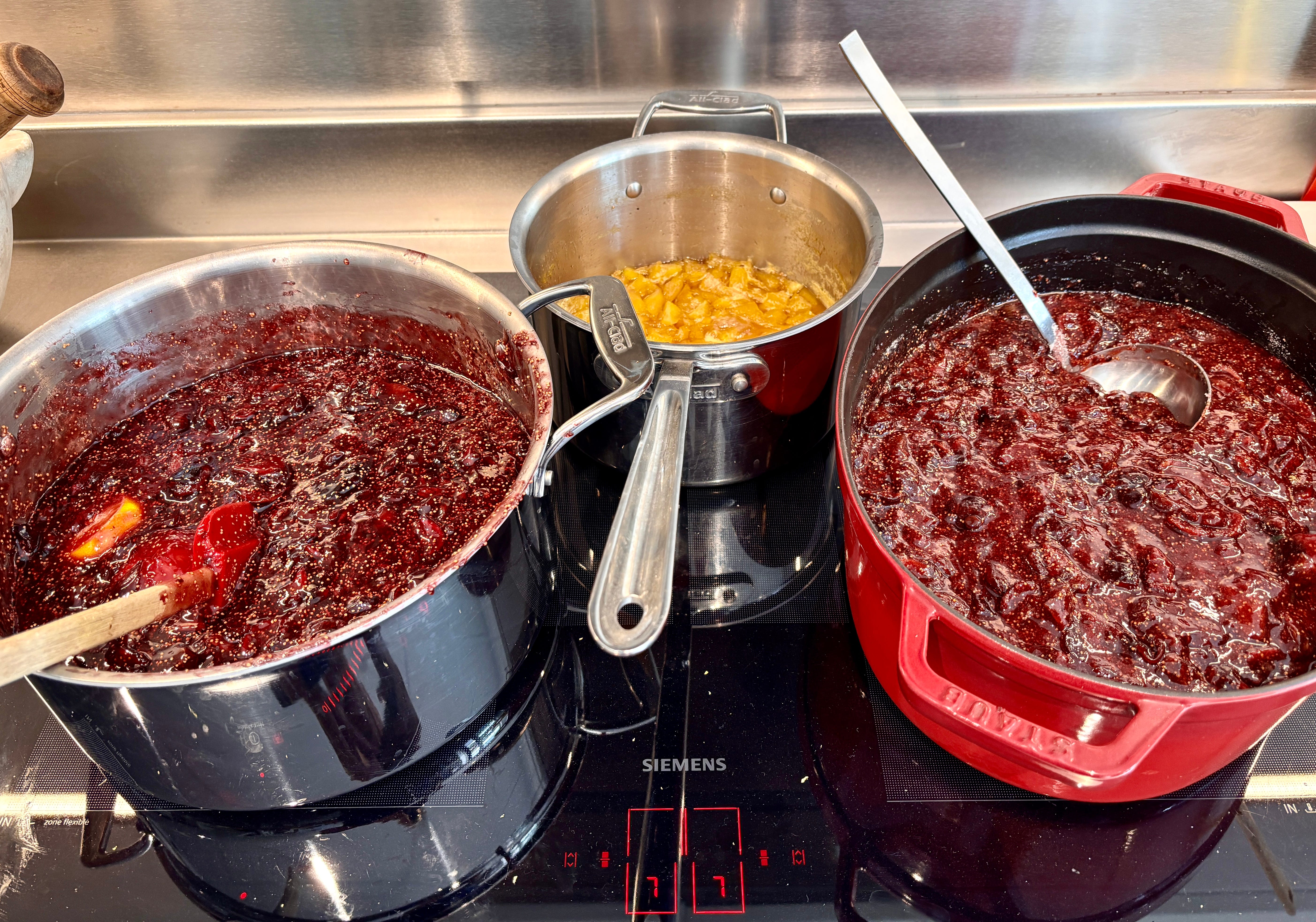
That’s improved a lot in France* and while frustrating, the French seem to be right about making things difficult to return. But we loved our painter, who redid our kitchen floor, which wasn’t properly sealed the first time. (An example of not-great service.) He was super nice and we often had coffee together, and I even gave him a few jars ofFig jam, since he grabbed handfuls of the figs I picked in Provence when I offered him one. So I knew he’d like the jam.
Fortunately he’s also super honest and promptly returned the money that was accidentally wired to him, twice. In France, people get paid by virements, bank transfers, which are very common for transactions here, but there are a bunch of steps and security questions to go through to initiate one. What’s most challenging is that you need to enter the twenty-seven numbers of the recipient’s IBAN in the bank form on app or website, and if you get one digit wrong, someone else is going to be very happy to find an unexpected windfall landing in their bank account.
Other contractors would have…well…we already covered that in my book, L’Appart.
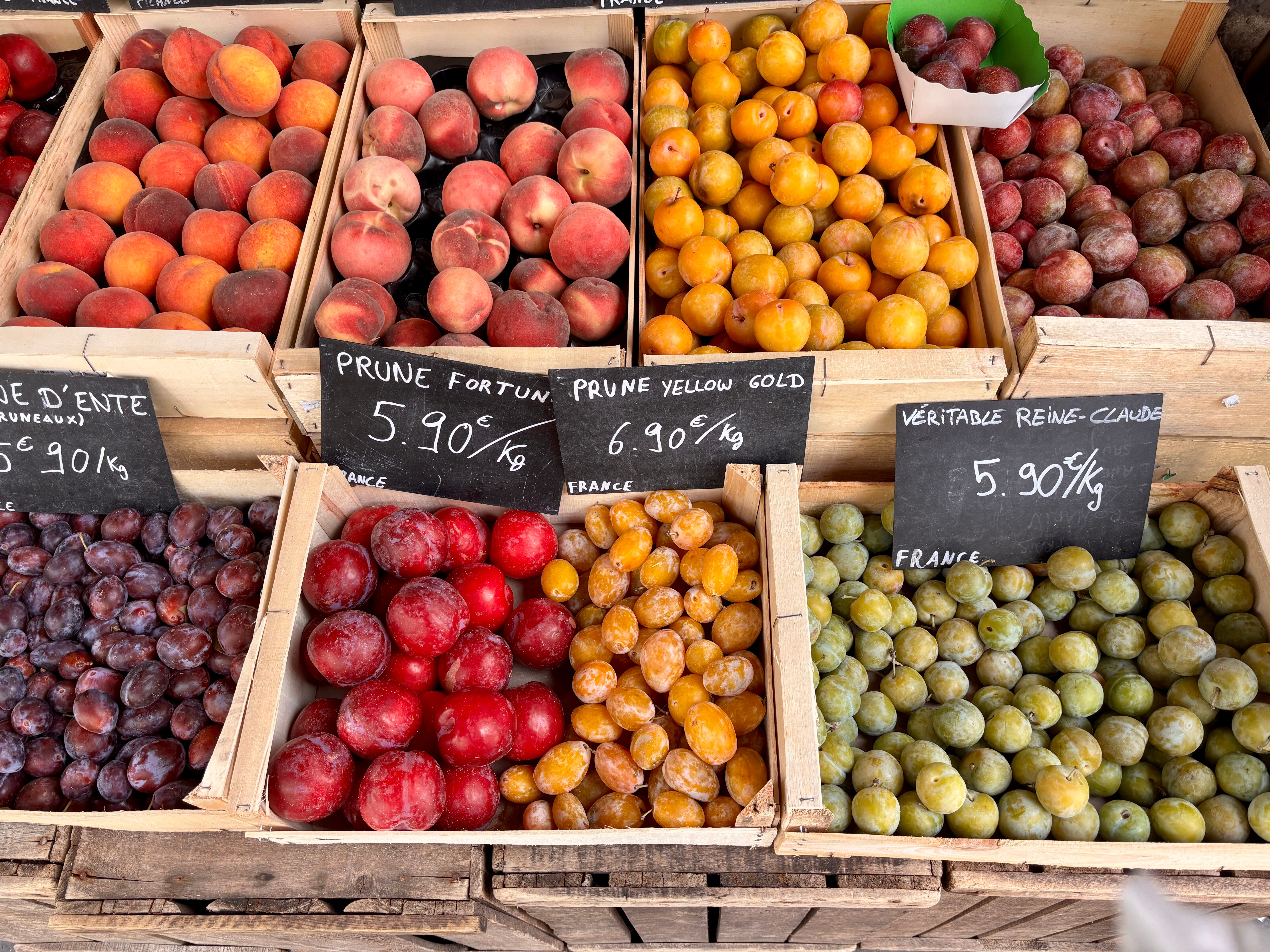
How can I resist all these beautiful fall fruits?
In addition to having to find another place in my kitchen for a shiny new cocotte, I’ve got lots going on this month. I’ll be traveling a bit for a friend’s 70th birthday, which promises to be a lot of fun, and I’ll get to see friends that I worked with at Chez Panisse, and others. I’m also planning another trip to Japan in the spring so am looking at options for that. And even more important, Romain’s birthday is next month, so I’ve reserved seats at the restaurant in the Eiffel Tower, which he’s been bugging me to try. (He’s a sucker for a view.) I ate there back in 2008, when they had a different chef. So it’ll be interesting to see how it’s changed.
Lastly, every year my friend and I treat ourselves to a fancy restaurant in Paris for our birthdays, which take place in December. Last year we trudged through a snowstorm that left waist-high drifts of snow on the sidewalks of Paris for a lovely meal at Alliance. In previous years we did La Tour d’Argent, which was great, save for a snafu with a wine that was past its prime.
And the year before, it was lunch at Le Clarence, situated in a gorgeous 19th-century mansion. So any suggestions that you have for a celebratory lunch that feels special, let me know. It’s never too early to start planning a great meal…
-David
Favorite Fall Desserts
By the time mid-October rolls around, I’m firmly back on team apples and pears. Here are some of my favorite recipes for using them, and more:
Inspired by the tart at a bakery that won the Best Apple Tart in Paris award, this tarte normande takes its name from the hint of apple brandy used in the filling, and of course, the apples, which Normandy is famous for. My version is just as good as the bakery’s, if I do say so myself. And you can make it at home, wherever you live. (recipe here)
Yes, you can make the same whisper-thin tarte fine aux pommes that is on offer at French bakeries. People often stop in to buy a slice for a snack or a whole one to take home for dessert. If you can roll pie dough, you can make the crackly-crunchy quick puff pastry. And if you’re anything like me and not great at entertaining, double the dough recipe and freeze half to make a tarte for future fêtes. (recipe here)
One of my searched-for posts on my website is How to poach pears. Poaching pears is a super-simple way to add flavor to the fruit. However, if your pears aren’t as delicious as you’d hoped, poaching will infuse them generously with flavor. Poached pears only get better when stored in the poaching liquid, so do-ahead folks will rejoice. Having a batch of poached pears in the refrigerator also means you’ll have an instant dessert when sliced and served with a scoop or two of ice cream or sorbet.
If you pair them with a scoop of vanilla ice cream and a ladle of warm chocolate sauce, you’ve got the French classic, Poires belleHélène. You can also serve slices alongside French chocolate cake. In case you haven’t noticed, the French have a thing for poached pears and chocolate, and so do I. (recipe here)
Finding cranberries in Paris makes you feel like you’ve landed on the holy grail. When I see them at the markets, fresh, I scoop them up as fast as I can. (Apologies to other Americans in Paris, looking for cranberries.) They go remarkably well in Cranberry upside down cake, an American classic that marries the tangy orbs with a shimmering brown sugar topping, which is my favorite part of this cake. The delicious layer of buttery cake below, well…that’s the icing on the cake, so to speak. (recipe here)
If you find yourself with an overload of apples — lucky you! Perhaps you’ve got a tree or know someone who does. If so, Apple jelly is the perfect way to use them. I was visiting friends in Brittany who have a few apple trees that are adjacent to their house, and was piling as many as I could into baskets to bring back to Paris. When a neighbor came by and thought I was stealing them, I told him I was friends with the owners of the tree, and was going to make jelly with them, he smiled and said it was -“une bonne idée!”
This apple jelly requires no peeling, no seeding. You just just chop ‘em up and cook them up.Another friend in the countryside and was eyeing his medlar tree that he’s promising me the fruits from. If you can get your hands on those curious fruits, here’s a recipe for Medlar jelly.)
Apple jelly tip: If you have a farmer’s market and there’s someone there who sells apples, or you don’t want to get accused of stealing someone’s apples, you can sometimes score apples that are discounted due to dings and dents, which are called à cuire (to cook) in French. Smart shoppers search for those.(recipe here)
Ed, who photographed my last four books, gifted** me a bottle of St. George Spiced Pear Liqueur, whose beguiling spicy flavors prompted me to come up with the Far from the tree cocktail. True to its name, the spirited liqueur packs a seasonal mouthful of spices in each sip, making it the perfect cocktail for fall. As the holidays approach, top it with sparkling wine or cider for a festive touch. (recipe here)
When Jacques Pépin came to work with us in the pastry department at Chez Panisse, he introduced us to his Apple crunch tart, which was so good, it went on heavy rotation on our dessert menus. At some point, we ditched the top layer and called them apples galettes. While galettes are now a dime a dozen, I thought I’d bring back the OG and discovered that the crunchy topping was definitely something I missed. Serving it without a scoop of ice cream is definitely a miss, too, so don’t forget it. (recipe here)
It’s no secret that I love thrifting in flea markets and brocantes. And I don’t want to brag, but I’m pretty good at it. (Actually, if you saw my stockpiles, you might say that I’m too good at it.) In France, you can find amazing things at these, like vintage baking dishes in my favorite cookware color, bright orange, sold for a song.
Another secret is that fruit isn’t just for sweet dishes. It’s also for savory dishes, like Wine harvester’s chicken. I’m not sure of the origin of the dish but it’s easy to imagine during the grape harvest, there were so many grapes, someone got the bright idea to use some of them in the kitchen, such as in this easygoing braise. It’s filled with fall flavors and perfect with a light-bodied Riesling or a more substantial Chablis. But really, anything with grapes will do. (recipe here)
*People aren’t fond of Amazon and Uber these days, but their arrival in France was a wake-up call to stores and taxis to improve their service, which they did. A recent Uber ride in Paris confirmed my move away from the platform due to 1) Difficulty booking one, 2) An unpleasant driver (who finally arrived…), and 3) A hefty surcharge added to the bill, which made it the same price as a taxi.
**I used this word online a while back and was told that I shouldn’t use it as a verb. See what I mean about not knowing what you’re doing wrong until you post about it on the internet? For the record, Merriam-Webster says it’s okay, and I ain’t arguing with Webster.
I’ll admit that entertaining isn’t my strong suit. I wistfully look at cookbooks that break down exactly how to plan a dinner party, sharing multicourse menus that promise you can do it all in one afternoon. And by the time guests arrive, you’ll have changed out of your T-shirt and sweatpants, wearing your best outfit, and enjoying drinks and appetizers with guests, knowing that everything in the kitchen, which is all cleaned up, is ready to serve. You’ve done it. All you need to do now is to enjoy yourself.
Some books have the nerve to insist that there’s nothing better than getting everyone to come into the kitchen, grab a wine glass, and “join in the fun” of preparing dinner. I’m a dictator in the kitchen and don’t want anyone in there with me, if they’re just there to “have fun.” We’ve got dinner to work on…and there’s a reason they call it “work.”
When someone’s coming for dinner, the panic starts a few days before, planning the menu, and the shopping. Because I am insane (I realize insane + dictator may not be a very appealing combination for potential guests, but these days, here we are), there is one store where I get onions and garlic, another where I buy my lettuce, and another that has the kind of plums I like, that will be ripe by the time I need them.
I get a sustainable seafood delivery once a week, so that needs to be organized and ordered in advance, if fish or shellfish are on the menu. If I’m going to serve meat, I either get it at my local natural food store, which sells meat that’s responsibly raised, and they only have it on certain days. If they don’t have it, I hoof it over to the butcher shop that’s a twenty-minute walk, but it’s worth it because the guys who work there are très beaux, and when you walk in, they dazzle you with their extra-friendly welcome, so it’s worth the trek. The meat isn’t bad, either.
Even if I’m just serving a simple appetizer, a main course, salad, cheese, and dessert, I start first thing in the morning while Romain is huddled over his coffee, wondering what that crazy man in the kitchen is doing. By the time dinner rolls around, to be honest, my goal is to go to bed. Since it’s Paris, people arrive between 8 and 8:30, and I try to get dinner on the table by 9, although we have friends who don’t serve dinner until 10pm or later. By then, all I want is to be horizontal.
Sometimes I have to make dinner when friends come to Paris, because they don’t heed my advice that reservations nowadays need to be made at least a week in advance, especially if you want to eat out on Friday or Saturday night. Most just want to be a free man (or person) in Paris, unfettered and alive, but even if Joni Mitchell just walked intoSeptime, the toughest reservation in Paris, (or Serena Williams walked into L’Oiseau Blanc), they wouldn’t get a table.
Fortunately I keep a stash of molasses on hand. Molasses isn’t widely used in France and the mélasse sold in natural food stores is closer to blackstrap molasses, whose flavor can overwhelm when used in cakes and cookies.
So when a good friend was coming for dinner recently, and yes, it was on a Friday, and the three restaurants I was hoping to get into were, of course, fully booked, I offered to make dinner.
I made a batch of hummus after I picked up a jar of chickpeas at the natural food store, then rode my bike over to Utopie to pick up a poppyseed-hazelnut baguette, and grabbed some small eggplants at one produce store to grill, a head of lettuce at the other produce store that had the lettuce I like, and a few slabs of tuna at a new poissonnerie in our neighborhood (which involved a very interesting and lengthy discussion with the owner of the shop, whose wife is Japanese, who explained why he keeps the best grades of fish in the refrigerator, which keeps the fish fresher, not on ice like they normally do at seafood shops). Then I stopped at the fromagerie to get some cheese.
The upside is that when you have really good ingredients, which I’m (obvs) picky about, you don’t have to do a lot to them. One entertainment-friendly cue I have embraced is always having ice cream on hand, in this case, Fig leaf ice cream and Plum sorbet, so dessert was mostly done. I roasted some figs that I’d picked in Provence, which I plucked from one of the bags I’m storing in the freezer, but needed something to go with dessert.
I have plenty of cookies in my repertoire, but I’m embarrassed about the high stack of cookbooks on my desk that I’ve bookmarked with recipes I want to try. One book dates as far back as 1976, so I’m pretty behind.
One newer book was Will This Make You Happy, which bills itself as a “narrative cookbook” (think: memoir), by baker Tanya Bush about navigating her life as a budding baker. This includes a disappointing, yet informative…and formative, internship in Tuscany, working at a cooking school, and hopscotching through rocky relationships. She eventually finds her footing in baking, and her book has recipes such asSoba Cha Panna Cotta, Dark Chocolate and Coconut Birthday Cake, and Toasted Croissant Ice Cream.
I didn’t have a lot of time to spare and was intrigued by herSpicy Olive Oil Ginger Cookies, partially because a spice cookie is welcome with any fruit dessert, and partly because I had all the ingredients on hand, so I didn’t have to do any shopping.
An intriguing thing about these cookies is that they use olive oil rather than butter, so you don’t have to wait for butter to come to room temperature and can make them right away. They do need time to rest in the refrigerator for about 30 minutes, but then, you just roll them in sugar and bake.
After I baked the cookies and they cooled, I tasted one. I was a bitdéçu that I didn’t find the spices punchy enough, and was wondering if I needed to make the recipe again, dialing up the spices.
I reread the recipe, which called for a generous 2 tablespoons of ground ginger and 4 teaspoons of cinnamon. That gave me a chance to use the very special, and very expensive, cinnamon I got in Taiwan, although I did swap a teaspoon of ground cardamom for the nutmeg, so maybe that was the culprit.
But the more I dug into the cookie, the better it got. And by the time dessert rolled around that night, the flavors were spot-on and the spice level hit its stride. Even better, the next day, I found that the flavors developed even further, making the cookies extraordinarily delicious, with just the right level of spiciness. And the chewiness increased as well. After all that panicking, things eventually worked out and they were the perfect chewy, chunky, spicy cookie.
The original recipe was written in metrics, and that’s what I used when making these cookies. (I’ve included Tanya’s conversions here.) More and more people in the U.S. are baking with scales, which provide more consistent results. If you don’t have a scale, consider getting one.
Tanya’s instructions said to flatten the cookies to 3 inches (7,5cm) in diameter before baking, but I prefer them a bit thicker and flattened mine to 2 inches (5cm). If you like thinner cookies, go ahead and flatten them to her dimensions.
Turbinado sugar (called cassonade in French) are free-flowing, large crystals of natural sugar, which add a marvelous crunch to anything they touch, including these cookies. But you can roll the cookies in granulated sugar if you don’t have turbinado.
The cookie dough
150g (3/4 cup) granulated sugar
50g (scant 1/4 cup, packed) light brown sugar
90g (1/4 cup plus 1 teaspoon) light or mild molasses
65g (5 tablespoons) extra-virgin olive oil
1 large egg, preferably at room temperature
1 large egg yolk
1 teaspoon pure vanilla extract
280g (2 1/3 cups) all-purpose flour
2 tablespoons ground (dried) ginger
4 teaspoons ground cinnamon
1 1/2 teaspoons baking soda
1 teaspoon ground cardamom or a scant teaspoon of ground nutmeg
Flaky sea salt, such as fleur de sel or Maldon (optional)
In the bowl of a stand mixer fitted with the paddle attachment, or by hand in a large bowl, mix the granulated and brown sugar, molasses, and olive oil on medium-to-low speed until combined.
Add the egg, egg yolk, and vanilla, and beat on medium speed until they’re well incorporated.
In a separate bowl, whisk together the flour, ginger, cinnamon, baking soda, cardamom or nutmeg, salt, and cayenne pepper. With the mixer on its lowest speed, gradually mix in the dry ingredients. Stop the mixer midway through, and use a silicone spatula to make sure any dry ingredients at the bottom of the mixer bowl are getting incorporated. Remove the bowl from the mixer and mix in the candied ginger.
Cover the bowl and chill the dough for at least 30 minutes. (The dough can also be refrigerated for a few days.)
To bake the cookies, preheat the oven to 325ºF (165ºC). Line a baking sheet (see note, below) with parchment paper or a silicone baking mat.
Spread the turbinado sugar in a shallow soup bowl or small dinner plate. Shape the cookie dough into 12 equal-size rounds, each about 55 grams, or a scant 1/4 cup.
Roll six of the cookies, one at a time, in the turbinado sugar, covering them as thickly and completely as possible, and place them equally spaced apart on the baking sheet. Use your hand to flatten the cookies so they’re about 2 inches (5cm) in diameter.
Bake the cookies on the middle rack of the oven, turning the baking sheet midway during baking so the cookies bake evenly. The cookies are done when they’re light-to-moderately golden brown across the top and puffed up. In my oven, a baking time of 10 minutes was right. If you want them a bit more firm, you can bake them for 12 minutes.
Remove the cookies from the oven and bang the pan on a sturdy countertop once or twice to slightly flatten the cookies, so they are no longer domed. Sprinkle the cookies with a little flaky sea salt, if desired, and let the cookies cool for a few minutes, then transfer them to a cooling rack.
Allow the baking sheet to cool completely, then bake the remaining six cookies the same way.
Note: On a standard American half-sheet pan, which is about 13 x 18 inches (33 x 46cm), you should be able to get six cookies on the baking sheet. I baked these in my compact oven so used a European-size baking sheet pan, which is smaller than American baking sheet pans, and baked five cookies on the baking sheet, as shown in the photo in the post.
It was quite an experience eating at les Grands Buffets, the world-famous, all-you-can-eat buffet in France, last month. There was a lot to eat, and a lot to write about. So I divided the post into two parts. You can read part 1 here:
After grazing our way through appetizers, truffle-scented scrambled eggs and soup, lobsters and oysters (and foie gras and ham), we headed over to the main course area, known as La Rôtisserie, which serves up more of Escoffier’s recipes. The main area offers several different dishes, each one plated to order.
You stand in a single, well-organized line and let them know what you want. Then, depending on what you’ve ordered, they hand you a plate with what you asked for, some of it having been cooked almost to order. Among the offerings are filets of beef Rossini, sautéed in butter, with foie gras and black truffles, vol au vent (puff pastry) filled with sweetbreads and morel mushrooms, quail stuffed with foie gras, andlièvre à la royale, a traditional dish of hare braised in red wine, with blood sauce and innards (although more modern renditions often use a bit of chocolate in place of the blood and innards), along with cassoulet de Castelnaudary.
The last two I don’t remember seeing on offer, but they’re not exactly summer dishes. Although I do love cassoulet and would have liked to have tried theirs. (Maybe I need to go back in the winter?)
On the rich front, I ordered a Saint-Jacques à la Nantaise, a dish I wasn’t familiar with. After looking it up (and after eating it), I found out that it’s traditionally scallops, mussels, and a sauce made from mashed pain de mie (white bread). It’s perhaps a dish that was better left in the past, when French cooking meant smothering foods, including seafood, with rich, thick sauces. While it was good, with apologies to Escoffier, I think it’s pretty hard to improve on fresh scallops pan-seared in butter. I ended up picking out the seafood and eating that, since I didn’t want to fill up on sauce.
There were also stations where you could get leg of lamb, which I enjoyed a slab of. I did jockey myself in line so when it was my turn, I’d get a piece with some of the crispy crust. And I broke my rule about not filling up on carbs with two delicious pommes grenaille flecked with sea salt.
At another station, which some consider the highlight of the buffet, a serious-looking gentleman was serving canard au sang: duck served with a sauce made by crushing the carcass and using the juices, and the blood, to thicken the sauce.
The sign notes they follow the historic recipe from the 19th century.
As you can see, the portions aren’t huge.
Canard au Sang
They’re not being stingy. They don’t want you piling a whole bunch of things on the same plate. Being France, where appearance is everything, a big pile of food on a plate isn’t very becoming. Plus they don’t want to waste food. I didn’t see any signs at les Grands Buffets, but restaurants elsewhere with buffets are starting to charge people for uneaten food. The average diner at les Grands Buffets eats between seven and eight plates of food, which I found was about right. The owner was quoted as saying something along the lines of, it’s not about all you can eat, but it’s all about what you want to eat.
Intriguing, but less compelling to me, were the plats mijotés, simmered dishes, which were presented in chafing dishes, with items like frog’s legs, snails, veal kidneys, and tripe. In case you’re interested, some of those recipes appear in Escoffier’s book on pages 544, 543, and 626. You’re welcome.
Frog’s legs.
Before dessert, you’re faced with what Guinness World Records certifies is the largest restaurant selection of cheese in the world.
Perhaps you’ve heard about les Grands Buffets, the buffet in the south of France that’s à volonté. The all-you-can-eat restaurant is so popular, tables are booked months and months in advance. Like a number of things in France, what’s generally a straightforward process can become…a process.
When booking your table, there are multiple screens to pass through, with a lot of boxes to check, making sure that you agree to everything…
You need to confirm that you understand the reservation is for the exact number of people you are asking for (you can’t change it later), that there is no children’s menu or special price for them, and there are no high chairs.
… including a strict schedule of deposits and payments. As someone who loves rules, and who lives in a country where rules are often considered for other people but not for you, I understand why. So they make everything very clear, including the dress code, with entrée refusée if wear athletic clothes, tank tops, flip-flops, or baseball caps:
For men, les bermudas de ville (chino-style shorts) are authorized, since this is, after all, the south of France where people are generally more relaxed. But just to be on the safe side, I wore linen pants. I didn’t want to get there and be refusé at the door.
I don’t think they want to police people, but in France you’re often sized-up on how you present yourself. Romain once got into a verbal tussle with a waiter at a restaurant in the French Alps because he was wearing a baseball cap and didn’t want to take it off. The idea, I think, is that they realize les Grands Buffets is a special experience (the night we went, a few women were wearing evening gowns), and they want people to be respectful of that. As long as I don’t have to wear a tie and jacket, I’m fine with whatever.
They’re also strict about seating times, and guests are booked and seated at 15-minute intervals, so everyone isn’t seated (or hits the buffets) all at the same time.
Les Grands Buffets isn’t in the center of town, but is part of a public building adjacent to the zone industrielle of Narbonne.
Recently I had on my podcast, and we had a great chat that included talking about her excellent article in the New Yorker, The Hottest Restaurant in France is an All-You-Can-Eat Buffet (possible paywall), which put the place on the map for many people who didn’t know about it.
The restaurant was founded in 1989. The city of Narbonne was looking for someone to open a restaurant in a municipal sports center, which Louis Privat did. Currently the restaurant feeds over a thousand people a day at lunch and dinner. There are hundreds of dishes presented, prepared, and served by close to two hundred employees, and the price is €65,90 per person.
According to the BBC, the restaurant grosses €30 million ($35 million) and is the highest-grossing restaurant in France, and 86% of the customers are French. A lot of guests are Spanish since Narbonne is close to the Spanish border…and Spanish people like to eat. Privat has resisted opening another restaurant, even though he frequently is presented with opportunities in other cities. (And likely, in other countries.)
The main mission of the restaurant (aside from being a business) is to preserve French cuisine and traditions, set forth by Chef Auguste Escoffier, who wrote what’s considered the seminal book on French cuisine, Le Guide Culinaire, with instructions for preparing over five thousand French dishes. In it, you’ll find recipes for frog’s legs, snails, and tripe, which have fallen out of favor but are offered at the restaurant to keep those foods, as well as others, alive. My favorite quote from Privat was in Lauren’s article, “Why would you put a tarte Tatin in a shot glass?”
True to his word, thankfully, they don’t.
My own experience with Escoffier was when I was a line cook in San Francisco and ran across the street to the store to get an ingredient that we were out of. When I came back, the head chef wasn’t amused that I wore my chef’s coat to run the errand. “What would Escoffier say?” he admonished me. “I don’t know,” smart aleck me replied. “He’s dead.”
I didn’t see any staff members in chef’s coats running out the door, but a very nice woman named Elodie greeted us as we walked towards the door fifteen minutes early. In a very organized fashion, she made a note that we were there and directed us to their bar, which was next door, by the bowling alley. Knowing how rules about lines in France can be one of those things that are “for other people,” she said that when we came back, if there’s a line, just head to the front of it and ask for her.
The bar that looked out over the bowling alley was hopping, and I had a glass of Suze, a bitter French apéritif that’s particularly appealing in the summer. To accompany your drinks, there are help-yourself appetizers, such as this DIY Tête de moine cheese machine, which produces perfectly scraped ruffles of cheese with a push of a lever:
The cheese is named after a monk’s tête (head) and one theory goes that it was a symbolic way to get revenge on the monks, who people had to pay rent to hundreds of years ago, for using the land. A few othertheories are out there, but as the head of Chartreuse told me when I asked him to fact-check what I wrote in Drinking French about the Carthusian monks, who now make Chartreuse, whose history dates back a thousand years, he replied, “It’s hard to know what happened then…we weren’t there.”
The dining room of les Grands Buffets is a surprisingly elegant affair, and you might feel like you’re attending a wedding or a gala event when you enter the room.
We kicked things off with a bottle of Heidsieck & Co Monopole champagne. Part of the restaurant’s philosophy is to charge close to retail prices for wines, rather than jacking them up. So the wine list is remarkably affordable and many producers from the region are featured in a section marked “Autour de Narbonne” — wines from around Narbonne. A majority of the wines are in the €20-25 ($23-29) per bottle range, which included that champagne.
There are various strategies for tackling les Grands Buffets. Unlike Las Vegas buffets, which a friend noted was likely the inspiration for this restaurant, there wasn’t any shoving or elbowing others out of the way, which also was because the restaurant is in the south of France, not in Paris. Diners lined up politely and waited their turn for their food.
It’s best not to fill up on bread or vegetables, and I noticed most of them went untouched. Another strategy that I read was not to skip lunch if you were going there for dinner, since you’re going to be starving upon arrival and probably fill up on carbs.
I made the truffle station my first stop, where they don’t skimp on truffles. And yes, they’re the real ones. Not “summer” truffles. There wasn’t a whiff of phony truffle oil in sight, nor a smell.
One offering was a soup made with black truffles and foie gras under a cap of feuilletage, buttery puff pastry.
Since I was skipping carbs, I skipped that, but the woman seated at the neighboring table took the soup, lifted the cap off, and ate it like a cookie. I admired her creativity.
I went for the brouillade, a mound of freshly made scrambled eggs, which were scrambled with a lot of minced truffles inside and topped with shaved black truffles.
I was never a big truffle fan. When I worked in restaurants, I would occasionally get to eat them for free (ditto with caviar), so it’s hard for me to pay for truffles and I was never gaga for them. However, years ago, I went on a truffle hunt in France and was in a room with hundreds and hundreds of truffles. Every course at dinner that night was loaded with truffles, and I was hooked. Still, I didn’t go back for the soup but moved on to the charcuterie.
The pièce de résistance in that department was a station of hams, sliced to order. Each one listed its provenance and in France, they tend to slice ham thicker than they do in Spain and Italy, which makes it a little tougher to eat. Romain once told me to tell the person at the charcuterie that I wanted my ham “as thin as cigarette paper.”
I tried that and the guy deadpanned back to me, “Monsieur…je ne fume pas…” I don’t smoke.
Personally, I think it’s a strategy to sell more ham since when something’s sold by weight, ten thick slices weigh a lot more than ten cigarette paper-thin slices. The lone slicer at les Grands Buffets was doing his best to keep up with all the customers, and the hams. So it was hard to fault him for the thickness of the slices. But maybe he wasn’t a smoker either.
While I was on vacation, I posted a few pictures from the restaurant. Someone made a comment wondering aloud how there could be so much food, when others have so little? It’s definitely true that most of us have access to food that’s sadly, not available to everyone. Narbonne is not a wealthy city and most people earn less than the national average. Unemployment is around 18%, which is over double the national average (8%) in France.
While researching her article, told me that some people save up all year just to have dinner at les Grands Buffets, that it’s their special night out. After thirty years, the restaurant has figured out how much food they’ll go through each night so there’s very little food waste, and whatever is left over is served at the staff meal. Being in a municipal building, the restaurant is a strong supporter of the local community, which also includes winemakers and other producers, in addition to supporting a staff of hundreds of people.
It’s hard to size up people by how they look and are dressed, but the people eating at les Grands Buffets seemed to be “everyday” people. (I didn’t see any fancy cars in the parking lot.) Judging from their accents, it sounded like there were many locals. Folks in this part of France have what’s referred to as an accent du midi and pronounce certain words, such as wine (vin), as ving, with a bit of a nasal twang on the final “g.” And unlike the buffets of Las Vegas, this restaurant isn’t a palace of gluttony. People weren’t loading their plates up as full as possible, overindulging in whatever they could. It was all quite civilized.
I suppose you can criticize people eating at restaurants when others can’t. But not sure how one draws the line. At least the price point here is not too far from the price of a 3-course dinner at a mid-range restaurant in Paris.
Four presentations of foie gras, with little explanations attached: Lightly smoked, with truffles, mi-cuit (partially cooked) with Armagnac, and in the style of crème brûlée, with port wine.
It’s true that the lobster tower could be considered a little over the top, but as a winemaker in the region told me once, “People who live here know how to cook, so they don’t go out for the food. They go out for the experience.” And the lobster tower is giving it to them.
As mentioned, one objective of the restaurant is to guard the heritage of Auguste Escoffier and la cuisine française. They adhere so closely to his recipes that the page numbers from his book, Le Guide Culinaire, are listed on the menus.
Subscribe to my newsletter to get new posts, Paris dining tips, recipes, and more, sent right to your Inbox. Sign up here!
An undeniable part of French culinary heritage is foie gras. It’s a controversial ingredient, even in France, and is not something we eat often. When we do, I try to make sure that it’s produced in France, not just “packaged” or “transformed” in France, as some jars and cans say, which means the foie gras can be produced elsewhere.
After nibbling around that plate of richness, we headed to the seafood section and loaded up on oysters. They also had mussels, bulots (sea whelks), and smoked salmon, heaped up on ice, all for the taking.
I didn’t try the crab claws, below, which a reader told me was better than the lobsters. As a New Englander, I’m pretty partial to Maine and Canadian lobster. Lobsters from France are twice as expensive are they are in the States, and a pricey indulgence.
I was wondering if the restaurant would haveFrench lobsters, which they didn’t. I guess they blow their budget on black truffles. So if you go, grab a claw or two, or three, and let me know what you think.
Stay tuned for part 2 — main courses, the cheese course from the largest selection of cheeses in the world, and, of course, dessert(s).
It’s no secret that summer vacation is sacred in France. When I moved here, I found it curious that everyone went away en masse, at the same time. Bakeries, restaurants, eyeglass stores, market vendors, and almost every other business take time off for lescongés annuels, their yearly break.
But twenty-five years later, I get it. At the beginning of August, things start to slow down, and while I like the relative quiet of Paris during that month, I want to head to the beach and drink rosé and jump in some waves, rather than stay in sticky-hot Paris.
It took me a few years to unwind, and now I’m more low-key than my French friends and family, and am simply content to sit in a lounge chair and read for a few weeks on a beach or by a pool, while they’re scrolling through their telephones. I forgot to set a vacation notice for my email so I had to answer some messages. I think I’ll set it now for next year, so I don’t forget.
Romain tried to get me to visit museums, and he managed to get me in a few churches; if you live in France and have a French partner, the main attraction in any city is the church, whether they’re religious or not. As a good sport, I try to get in some culture on vacation. For example, I loved the Louisiana museum when we went to Copenhagen, even though it cut into my cardamom bun time. (Admittedly, there were no beaches nearby.)
This year I tried to deflect, that I’m an ouvrier, someone who works with his hands (not so much his brain), which got me mostly off the hook.
Pizza and pissaladière on the beach.
Happily, I’ve been able to coerceRomain into going to the south of France in the summer. We used to go to Brittany in the summer, a popular destination for Parisians. But sitting on the beach there, even in August, can require a down jacket and a scarf, and my idea of vacation is not to wear anything but a T-shirt, shorts, and sandals.
Aside from the five — or was it six? — heatwaves we had in France this year, the second big topic was the mosquitos, which have taken over the country, save for onesmall region…
…and that’s where I want to go next summer.
Mosquitos aren’t as compelling of a story as, say, the lack of air-conditioning in France, which was analyzed to death by magazines and newspapers in and out of France. By early summer, we couldn’t go in our backyard, which seemed to be the breeding ground for the entire country.
I did find two effective things to ward them off. One was Off! Clean Feel, which is unscented and doesn’t leave a greasy film; friends from the States bring it to me, even though I’m not keen on slathering it on my skin. On the natural side, I found the anti-mosquito stick made by Comme Avant pretty effective, in spite of its waxy feel.
So much of our summer was spent swatting and itching. I was surprised when I visited a friend who lives in the Ardèche and found they’d installed screens on all their windows, which are as common as unicorns in France, and I hope the idea catches on. We did get a bid to put one (1) on our sole bedroom window, which was an astounding €900 ($1045), so it’s no wonder people are reluctant to install them.
A beautiful cheese plate at lunch with my friends Kat and her husband, winemaker Benjamin Darnault.
The first part of our vacation was spent in the Languedoc, a region in the south of France that’s known for growing grapes. Winemaker Benjamin Darnault told me it was the largest winemaking region in the world.
We also visited the Olonzac market, which has the most beautiful fruits and berries you can imagine. Every morning we treated ourselves to a big bowl of fruit, and while I do pretty well getting very good fruit in Paris, the fruits in the south of France are even more delicious.
I’m not sure where people got the idea that French people practice portion control. If anyone thinks that, they haven’t eaten at a restaurant like Les Trois Petits Cochons.
That, above, was almost a whole pork loin on my plate. A local friend I was dining with ordered a salad, thinking it would be a healthier, or at least lighter, option. She was startled when the waiter set down a plate the size of a child’s umbrella in front of her: a bed of lettuce topped with several giant bundles of deep-fried filo dough. Inside of each was a slice of toasted bread with melted cheese on it. There was enough food on her plate to feed two. An upside of Covid was that it gave us doggy bags, and if you ask nicely, you can take uneaten food home with you. One place did charge me €1 for the container, though.
In addition to doggy bags, which used to be a rarity, for those who think (or know) that ice is tough to find in France, it seems all of it is being hoarded in the south. And unlike elsewhere in the country, you won’t hear people telling you it’ll give you pneumonia or freeze your stomach, as I’ve had people tell me. For the record, I’ve enjoyed plenty of iced drinks and so far haven’t had either.
When I asked for a few ice cubes for our rosé, the waiter replied, “Bien sûr, monsieur.C’est obligatoire!” and brought over a glass that was almost as big as the carafe of wine.
Being close to the southern coast, there’s no shortage of seafood or shellfish. During a lazy day at Biquet Plage, we had grilled sardines, oysters, and French fries. The restaurant on the beach folds up at the end of August, when everything comes down: the walls, the floors, the bar, and the dining room, and is packed away until the following year. It’s an easygoing place to spend the day since you can rent a chair and large beach umbrella, and you just need to bring a towel and swimsuit, as well as a book, and you’re all set.
In the evening, apparently the place turns into a big beach party with a lot of people arriving, a DJ blasting music, people enjoying lots of drinks, and whatever else people indulge in at rave-like parties, so we’re generally out of there by 5pm.
Grilled sardines and frites with aïoli at Biquet Plage.
We stopped at a farm stand that we visit every summer. Last year we arrived at the end of the morning, after all the customers had left, and just about all of the produce was gone. We ended up talking to the owner for a good thirty minutes before waving goodbye.
This year when we showed up, during the rush, she was thrilled to see us and began our discussion with, “I think last year we decided to tutoyer each other…right?” It was fine with me since 98% of my life is tutoyer-ing people, and some of those longer, more formal verb tenses that use vous in French can require oral acrobatics for me. Invariably I end up tutoyer-ing someone I should vouvoyez, but I get a pass because people hear my accent. Someone once said that you don’t want to speak French too well because you want to be treated like a foreigner. I’d say that’s pretty true.
Last year, the owner of the stand gave me a big box of unsold chili peppers, and this year, she perhaps assumed I was coming back and gifted me a big bag of dried chilis. I think I’m going to grind them up and use the pepper powder to season food. She gave me so many that I‘m pretty sure I’ve got enough to last me until next year.
This year she was offering a special box of vegetables for ratatouille, a dish I’ve never made. I’m not a fan of bell peppers and so many versions seem to feature them. But the smaller peppers grown by farmers in the south don’t have the same flavor that bell peppers do, which overtakes everything else in a dish and when raw, are as unpleasant as biting into a dried-out wicker basket.
Since I can’t resist a bargain, nor can I resist beautiful produce, I bought a box (Romain likes bargains too, and was insisting we buy two boxes, but I shut that idea down as I didn’t want to spend my whole vacation chopping vegetables). I looked at a few recipes online. Some said to cook the vegetables for just a few minutes, and another said to cook the dish up to 1 1/2 hours. My friend sent me her recipe for Ratatouille Niçoise from her book, Niçoise, which called for some optional hot chile powder. I also looked at Alice Waters’ recipe for inspiration, then decided to just wing it with what was in the box.
In the end (Warning: Unpopular opinion incoming…), I don’t think I love ratatouille. Mine, above, tasted more like leftovers rather than a delightful pot of freshly cooked vegetables. When you have beautiful fresh vegetables, why cook them up into a stew?
I was ready to give up on ratatouille forever until my friend Kat invited us for the aforementioned lunch and as part of it, brought out a big vintage casserole dish of…ratatouille. It was so delicious that I started changing my tune about ratatouille.
Perhaps it’s just something I don’t have the touch for, or it’s something you have to live in the south of France to get it right. And if that’s the case, I’ll need help convincing Romain that we need to move to the south of France. I’ve convinced him to go on vacation there, but not sure how far he’s willing to go down that route with me.
And just when I thought my ratatouille wasn’t up to par, we stopped at an Autogrill at a highway rest stop and below was their ratatouille, which they served alongside a steak à cheval:
Steak à cheval isn’t a burger made of horse meat (cheval) - whew! It refers to the egg riding “horseback” on top of a ground beef patty.
As a former restaurant cook, my inclination if I was cooking for a customer, was that if I broke an egg, I’d cook another one. But since the burgers were taken directly out of the freezer and placed on the grill, I wasn’t expecting the best meal of our vacation.
Romain’s brother said, “C’est pas trop mal pour le déjeuner d’autoroute” - “It’s not so bad for lunch on the autoroute.” While the cook was frying our patties, she asked how we wanted them cooked. The burger ended up being bien cuit, well-done, or à la semelle, as they say in French: like the sole of a shoe. The other option at the rest stop was Burger King and, like moving to the south of France, that was a pretty hard non when I half-jokingly suggested it to Romain.
Subscribe to my newsletter to get recipes, videos, stories, and more…sent right to your inbox!
One notable place where we ate in the south of France was Les Grands Buffets, an all-you-can-eat buffet that proudly features the food of Escoffier. It’s one of the most…if not the most popular restaurants in France, and I was a little wary of (over)eating there, especially in the heat of summer, but it was quite an experience.
I’m going to write about it in another post since there’s a lot more to share than I have the space for here. Stay tuned…
One of the best flans I’ve ever had, at Augusta bakery in Villeneuve-lès-Avignon, after the Saturday morning flea market.
Beautiful plums in Paris.
Now that we’re back and well into September, I remember being told by someone, in no uncertain terms, that I shouldn’t mention when I’m busy. So I won’t mention it, but rather, let’s just say there’s a lot going on around here this month.
Those of you who’ve been with me for a while know I have a website, formerly my blog, with 700+ recipes on it. The technology and all the software and annoying SEO stuff you have to do for a blog finally got to me, and I said, “Game over,” and moved here. But some of my favorite recipes are archived there and I’m shooting short videos to accompany the most popular ones. I’m going to start uploading those this month.
The final stop during our vacation was in Provence, which had a magnificent fig tree right outside our room that was loaded with the most delicious figs I’ve ever tasted. I’ve tasted a lot of figs and each one could barely hold in the sticky-sweet interior, which was ruby-red and already close to being jam. The owners of the property don’t eat them so most go into the compost bin.
Destined for compost…
We furiously picked as many as we could and snagged one of the last coolers in the south of France, to transport them back to Paris. I felt a little guilty taking all their figs, but they said we were doing them a favor as it saved them from having to rake up the figs and haul them over to the compost bin. One man’s trash is certainly a treasure to me, and I can’t believe how many we picked.
The morning after we got home,I found myself with ten 1-gallon bags full of very ripe figs that needed to be tended to, pronto. Before we left, I cleared out my main kitchen island (which was loaded with pottery and baking dishes and pots and pans and other stuff), where I do all my cooking, because the polished concrete kitchen floor needed to be sealed. The guy who originally laid the floor forgot that step. Oops.
Kitchen floors get a lot of wear and tear and ours got really grimy, which required plenty of elbow grease to scrub, and we were never able to get it really clean. So we finally got someone to come over to seal it properly, which was a several-day process.
I won’t get into the details but when we came home, the new sealant had been applied over the grimy floor - the grime so was embedded in the floor that it couldn’t be cleaned and the sealant just made it look worse. So the floor needs to be re-scraped and completely redone.
That started at the end of last week and will be continuing all through this week, until the weekend. While it’s being redone, we can’t go into, or use, the kitchen. So no cooking or baking for me until it’s finished.
Double pots of jam going. This is about 20% of all the figs I picked and brought home.
Fortunately I already took care of a few bags of my figs, making Fig Jam and Fig-Pineapple Jam, ending up with nearly thirty jars. The rest will have to wait a few more days until I’ve got my kitchen (and my sanity) back.
While many things have been replaced by technology, keys are still with us: stiff, sharp metal objects we carry around in our pockets and handbags, messenger bags, and backpacks. We live in fear of losing them or getting locked out for a lack of them. While digital locks have made inroads somewhere, here in France, we live in the land of keys, and I regularly carry around almost a dozen or so every day, attached to a key ring that has fobs, badges, buttons. I don’t know if there’s a comparable word in French*, but I feel like a high school janitor.
I also recently added an Air Tag to the mishigas after I lost my keys six months ago and literally had a panic attack. Not because I was worried someone was going to find them and break into our apartment, but because it would have cost me over €600 ($700) to replace them, not to mention all the paperwork attached to getting them remade. And as I recently learned, all the time that it takes.
I’ve lived in cities like San Francisco and New York, and having a key made cost $2 a pop at my local Ace Hardware store. When I was in New York last year, I had a key made but didn’t have any cash on me. The guy just looked at me and said, “Fuggedaboudit.” Here, I would have had to submit to a prise de sang, giving a blood sample and getting fingerprinted, with a promise to give them my first-born male child, before I’d be able to leave without paying.
I was thrilled when Sami Tamimi told me he was coming to Paris. Sami recently released his third book, Boustany: A celebration of vegetables from my Palestine, so I invited him into my kitchen to make a recipe from it with me. And the weather was so nice, we decided to prepare it outside.
Sami is the co-founder of the Ottolenghi restaurants and delis, and the author of Falastin, one of my favorite cookbooks, which explores his Palestinian heritage through stories and recipes from his homeland. Boustany focuses ore squarely on the vegetable dishes of Palestine.
Sami’s book features a bounty of recipes that focus on vegetables, such as salads like the Fridge-raid fattoush, and there are beautifully verdant Gazan fava bean falafels. I’ve never made falafels, but his recipe and the gorgeous photo that accompanies it make me want to. Other recipes that I’ve bookmarked are the spicy Shatta condiment, Bulghur wheat dumplings & lentil soup, and Ouzi phyllo parcels, which are individual dishes filled with rice, orzo, vegetables, nuts, and spices.
Where does chocolate fit in? Well, like tomatoes and squash (which are lavishly featured in the book), chocolate is also technically a fruit. And besides, who doesn’t love chocolate?
Since I’ve been in the chocolate mode, thanks to The Great Book of Chocolate coming out, I was glad Sami was up for doing some baking and showed up ready to make hisTahini, Halvah, and Coffee Brownies.
Subscribe to my newsletter and get videos, recipes, Paris tips, and more, sent right to your Inbox!
Pan-baked tahini, halva & coffee brownie (Qahwa w Halaweh brownie)
“Imagine yourself sitting in one of many coffee shops dotted around the souk in Jerusalem’s old city, having a piece of chocolate and a strong, sweet Arabic cardamom coffee. One mouthful of this dessert can almost definitely transport you there. It’s a dessert meant for sharing, to be spooned straight from the pan. A great, easy, chewy and fudgy brownie which can be ready in under 20 minutes. It hits all the right spots for chocolate lovers like me.”
“This is the recipe exactly as it appears in Boustany. If you have watched me make these, you will know I improvise. I add more coffee if the batch I have is weaker, that sort of thing. The recipe below is the version I trust, so start there and make it yours.” - Sami Tamimi
Rounded ½ cup / 150g tahini paste
½ cup / 120ml lukewarm water
Heaping ½ cup | 3% oz / 110g granulated sugar
2 large eggs
½ cup / 20g unsweetened cocoa powder
1 tbsp instant espresso coffee
¼ cup / 1 oz / 30g all-purpose flour
½ tsp ground cardamom
½ tsp ground cloves
½ tsp baking powder
salt
1½ oz / 40g dark chocolate chips or chocolate roughly chopped into ¼ inch | ½ cm pieces (70% cocoa solids) (½ cup chopped)
For the toppings
1½ tbsp sesame seeds
1½ oz / 40g dark chocolate chips or chocolate roughly chopped into ¼ inch | ½ cm pieces (70% cocoa solids) (½ cup chopped)
⅓ cup | 70g plain or vanilla halva, broken into chunks
vanilla ice cream
Preheat the oven to 375°F. Grease a 8-inch | 22cm square baking pan or dish with sunflower oil and set aside.
Put the tahini and water into the bowl of a stand mixer, with the paddle attachment in place, and mix on medium-high speed for 2 minutes, until pale and smooth. Reduce to low speed, add the sugar, then the eggs, one at a time, and mix for a further 2 minutes.
Sift all the dry ingredients, using a fine sieve, and add them to the tahini mixture, along with aheaping ¼ teaspoon of salt and the chocolate. Mix for a minute more. Pour the batter into the prepared pan.
Sprinkle the top with the sesame seeds and chocolate and dot with the halva. Bake for 10-12 minutes, until the edges are set and the center is not runny (it needs to be slightly wet). Set aside for 10 minutes before serving.
Serve with vanilla ice cream.
The brownie can be stored in the fridge for up to a week.
A highlight of writing Drinking French was getting to meet, and highlight, some of myfavorite creative people in Paris, and in France, who are part of the cocktail scene, which has rapidly expanded over the years, turning Paris into one of the world’s most exciting cocktail destinations.
Franck was one of the heroes in Drinking French, and as you can see in thevideo, there are more pictures of him in my book…than of me.
After working in an art gallery in Paris, Franck went on to work at the highly celebrated restaurant, Le Châteaubriand, where chef Inaki Aizpitarte was invigorating, and shaking up, the world of French cuisine. Franck saw how the world of cocktails was changing outside of France, and decided to delve into cocktails as well, creating cocktails that leaned into French spirits and ingredients.
Subscribe to my newsletter to get videos, recipes, Paris tips, and more, sent right to your Inbox!
In his book, art, film, and Franck’s distinctive style intersect with his expertly made cocktails, which are deceptively simple. Most are careful revisions of classics such as the Tunnel, a reimagined Negroni served in a coupe glass. And his Yellow cocktail is a masterful mixture of Yellow Chartreuse, gin, lemon juice, and Suze gentian liqueur. (It’s one of my top three favorite cocktails of all time.)
What began as an extraordinarily charming (twenty-seat!) café tucked into a magnificent Hector Guimard Art Deco building, Cravan has extended to a four-story building in the heart of the Saint-Germain-des-Prés, where Franck invited me to stop by for a French 75 on a warm summer afternoon. It was cool perfection in a glass.
To make his interpretation of the French 75, Franck infuses London dry gin with agastache, known in English as dried anise hyssop. I’ve included the recipe for the infusion and the simple syrup after the cocktail recipe.
1 ounce (30ml) anise hyssop-infused London dry gin 1/2 ounce (15ml) simple syrup 1/2 ounce (15ml) freshly squeezed lemon juice 1 dash of absinthe Lemon twist Brut (dry) champagne
Combine the gin, simple syrup, lemon juice, absinthe, and lemon twist in a cocktail shaker. Fill three-quarters full with ice. Cover and shake vigorously for two seconds. Double strain the mixture into a chilled coupe glass.
Top with champagne and serve.
-To make the anise hyssop-infused gin, mix 1 3/4 teaspoons (5g) dried anise hyssop flowers with 24 ounces(700g) London dry gin. Cover, shake gently, and refrigerate for 24 hours. Strain, then filter the gin through a premoistened paper filter, such as a coffee filter. Store refrigerated.
Dried anise hyssop, which is different than anise, can be found at herbalists and well-stocked natural food stores. A few places to get it online: Reverie Farm, The Herb Loft, and Etsy. I’ve not tried the cocktail without the infused gin but you could give it a go with uninfused London dry gin.
-To make the simple syrup, heat 3 ounces(90g) sugar with 3 ounces (90g) water over low heat, stirring until the sugar is dissolved. Refrigerate until thoroughly chilled.
-A dash of absinthe adds a little je ne sais quoi to cocktails. Pastis and anisette have a similar flavor profile and you could use one of those, sparingly.
I used to wonder why, in cities like New York and Paris, everyone claimed that they could never, ever live anywhere else. Then, when summer rolled around, everyone would say they can’t wait to get out of town.
I’m a city person and I like Paris best in the summer. A majority of people have left, so it’s a lot quieter. You can get into all those restaurants that you normally needed to book weeks in advance. And while the markets are more sparse, shops selling produce from small producers have been doing their best to keep their stores stocked, in spite of a lot of fields and farms and vineyards being decimated by successive heatwaves, and now, wildfires. One of our neighbors has been dropping cigarette butts in our backyard, which is as dry as a haystack, so we’re praying our building doesn’t go up in flames, too. But for the time being, Paris has been spared.
We have friends, a couple who live part-time in Ardèche, and when they invited me to come for a few days, I erased everything I had scheduled in my calendar and took a two-hour train ride to stay with them. That region is called the Auvergne-Rhône-Alpes, especially known for sausages, wine, and its famous chestnuts, les châtaignes d’Ardèche, which have protected AOP status in France.
It wasn’t quite chestnut season, and people are worried about the effects of the heatwaves on the chestnut trees, but I picked up a jar of chestnut paste at one of the farm tables at the market. Sometimes the chestnut spread is made with candied chestnuts, but generally at the markets, the varieties are less sweetened, and looser, like the one in the jar, above, that I bought.
Chestnut spread is delicious served with plain yogurt or fromage blanc, or if you buy the ones made with candied chestnuts sold in a tube, like toothpaste, when no one is looking, people squeeze it directly into their mouths.
I often joke with Romain that when we stay with friends in the summer, invariably they have a bowl of apples and pears, regardless of the season. It’s a bit perplexing to me because when apricots, plums, peaches, nectarines, and cherries are in season, I buy far more than I need because I’ve been waiting all year for them, and it’s a treat to have them so readily available, and so delicious.
One stand at the market in Lamastre had so many apricots that I thought I would faint. They had three or four varieties, and if I wasn’t taking the train home, I would have bought a few cases, especially those marked down for jam-making.
Fresh apricots sold for a song, for jam-making.
My friends who live there were scandalized about one vendor selling his tomatoes for €4,50 (~$5) per kilo (#2.2), when all the others were selling theirs for €3,50 ($4) per kilo. As a city dweller, both were a bargain to me. It made me reconsider the urban lifestyle that I’ve chosen.
The flavor of the tomatoes was also worlds away from any tomatoes we get in Paris. I see why people are so eager to get out of town!
I’ve had (non-French) people tell me, “Oh, no…no one in France would ever drink wine out of a box!” Well, now I’ve got photo proof that they do.
(Someone once insisted to me that no one in Italy would ever dream of buying jarred tomato sauce. The jars sold in grocery stores, they told me, were for tourists. If you’ve ever seen the tomato sauce aisle in an Italian supermarket, you’ll wonder how so many tourists manage to bring all those jars of sauce home with them.)
Wine in a box isn’t a bad thing. It’s wine that’s meant to be drunk daily, not saved for ten years in a cellar. The box keeps the wine fresh; the bag inside the box compresses as the wine is poured, so the wine isn’t in contact with air. Plus the boxes are arguably more ecological (and easier to ship and store) than bottles. Also, you can see the savings on the price: €16 ($18) for the equivalent of 4 bottles of organic wine. Not bad!
Subscribe to my newsletter to get recipes, videos, stories, posts, and more, delivered right to your Inbox!
Eggs from our friends’ chickens
Another delice were the fresh eggs from our friends’ henhouse. They were so beautiful, and it was wonderful having a fresh egg for breakfast every morning.
Thankfully, I wasn’t worried about taking a half-dozen eggs home with me, although I carried them carefully on the train. And my friends promised to bring me some medlars from their tree when they’re ready to pick…
…which I use to make rose-colored medlar jelly. With all the jams and jellies that I make, maybe I am a country boy after all?
For those following the food processor drama (and for those who aren’t: My KitchenAid food processor bowl broke and was collecting gunk in the handle, and no replacement is available. And yes, I checked everywhere.) I’ve finally resolved it.
When I worked in restaurants, we always used a Robot-Coupe, the original food processor, which could handle anything. The problem in Paris is that the cost for them is pretty steep: Prices for new models are north of a thousand bucks, and I didn’t know if my occasional use of one justified the price. So I did what everyone in France does: I checked out Le Bon Coin, which is the 9th most-visited website in France, right after Google.
You can pretty much find anything in France on Le Bon Coin, from medlar trees to an apartment in Paris, or your dream house in the countryside.
Using the search term “robot culinaire,” I landed on a vintage one (above), just like the ones I used in restaurants. It was a mere €80 ($91) but they didn’t want to ship it, so I had to pass. I set up an alert and a couple of days later, one turned up in Paris.
I’ve honed my bargaining skills in France — as Romain once said to me, “No one is ever going to offer you a deal. You have to ask.” So I did, offering what I thought was a bit low, figuring the seller would come back with a counteroffer in the middle. She came down a bit, and in the few hours that I ruminated whether to just buy it, a notification showed up — Offre acceptée.
While it wasn’t in the excellent condition she mentioned, it was a solid “very good,” and heavy as a motherf**ker. I placed the machine in the basket of my bike and with every turn, the weight of it threatened to pull me down to the curb, so I rode extra carefully, and slowly, much to the ire of other cyclists. In the U.S., it’s cars that are aggressive to bicyclists but in Paris, it’s the other cyclists who pose the hazards.
I, and the machine, made it home in one piece, and it’s now sitting on my countertop. It weighs a ton so it’s not convenient to store in a cabinet. Romain asked me, “Is that where you’re going to keep it?” when he saw it on the counter. He’d already banished my stand mixer to a distant shelf, which makes it harder to bake (I guess I should use as a counterargument all those cookies and cakes he’s missing out on?), but if he wants the Robot-Coupe to go into a cabinet, he’s going to have to put it in there himself and take it out when I need it.
As we enter August, I took advantage of waning cherry season to pick up a load of fresh cherries and turn them into compote, to freeze. It’s nice to pull out a packet of cherries in the winter to serve with ice cream, tangerine sorbet, or frozen zabaglione, which is a great recipe that doesn’t require an ice cream freezer to make.
I pitted and sautéed them until they were cooked through. If you let them sit overnight, the juices will thicken further and the cherries will turn a deeper red color. If you want to freeze them, just put the cherries in a freezer-safe storage container and save them for a rainy, or snowy, day. Mine are now in my freezer, ready for winter. (Which I’m not.)
When I was in San Francisco on tour with The Great Book of Chocolate, I was invited to the Williams-Sonoma testkitchen to bake bouchons with test kitchen directorBelle English. We hadSO MUCH FUN! (Paid subscribers: You’ll find the recipe at the end of the newsletter.)
When I lived in San Francisco, I was one of those weirdos, or cool people, who had a Saab. Yes, I was crazy enough to drive a stick shift there and I pitied the people in their fancy BMWs who’d ride my tail on those steep hills, unaware that you had to have lightning-fast reflexes to shift into gear when a red light turns green, to avoid your car backing up an inch or two. Unless you got the timing precisely right, down to a nanosecond, my bumper might tap their front fender.
Fortunately I was pretty adept at shifting on the hills, but the few times I missed and tapped someone’s bumper, I never got out to see if I caused any damage. I just chalked it up to their fault, paving my way for a move to France, where things are inevitably pas ma faute.
Considering how expensive that car was to maintain, the knob on the gearshift was made of cheap plastic. They offered a wood option to replace it for $70, which seemed like a lot of money at the time. I ruminated over it for a few weeks (unlike my Robot-Coupe) until a friend said to me, “David, how many times are you going to touch that knob? Isn’t it worth getting a nice one?” So I caved and bought one, and she was right.
My friend Sarah caused a bit of an online kerfuffle when she poked fun at a hairbrush store in Paris beloved by influencers, and there’s always a line (yes, for hairbrushes) to get in. I don’t fight with people online but I beg to differ about brushes; I love the kitchen brushes at La Trésorerie that are handmade of wood and with natural bristles. And since there’s no line, the shops are free of influencers.
I saw one while shopping for a bottle brush at La Trésorerie and made the mistake of posting a picture of it on social media. It wasn’t cheap, so I had to ruminate over that too…and people wonder what I do all day… When I went back to the store to buy one, they were out of stock.
Search results turned up copies online but I found the website for the family-owned company that makes them, which was so engaging, and their brushes were so beautiful, I decided to spring for a handmade one. (The company’s website, Bürstenhaus Redecker, has every type of brush you can imagine.) When I was in Denmark, we happened upon a great kitchenware shop and I hesitated for about four seconds before picking one up.
Besides that it’s handmade by a family-owned business, there’s a lot to like about this brush. It stands vertically on the counter so takes up less space, and has a reassuringly strong magnet that snaps the brush into place, and it stays there.
I’m not sure where to get them outside of Europe. I noticed they have them on Amazon, and companies like Boston General Store and Flotsam & Fork carry the brand, but you may need to do some digging to find this one. Maison Empereur carries them in France, but they can no longer ship to the U.S. In the UK, they sell them here and here. If you can’t find one and resort to buying a copy, I won’t judge you…since I got carpal tunnel unearthing those links.
And being me, I am saving all the crumbs, which I hope quash any online kerfuffles about the price. I hope you collect enough of them to pay for the brush.
As promised, below is the recipe for the dark chocolate Bouchons from The Great Book of Chocolate that I made in the Williams-Sonoma test kitchen. As you can see in the video farther above, we loved eating them, as did the crew who were filming us 😊…
La chaleur (the heat) has been the topic du jour around here this summer, due to the record-breaking temperatures that made France hotter than the Sahara Desert. While that got a lot of international press, there’s something that no one’s been talking about: The success of hot sauce in France. And no one was more surprised about it than me.
Like it or not, stereotypes often contain a kernel of truth. Americans have a reputation for being loud. French people are thought to be rude. Anyone who’s lived above or even on the same street as a late-night café in Paris can tell you that there are some very loud Parisians. (Either that, or they’re Americans with an excellent command of French, and perfect French accents.) And the later it gets, the louder they get. And last time I was in the States, as an American, I forgot that people don’t stand as tightly together when waiting in line as they do in France (to prevent line-jumping), and I rudely cut in front of half of the line when I noticed a two-foot gap between two people and assumed that was the end of the line. Thankfully a woman yelled, “Um…SIR!!!” at me, tipping me off that there were other people waiting.
It’s hard to paint any culture with an all-encompassing brush, but I will say with certainty that a lot of French people avoid spicy food. French diners in restaurants will ask the waiter, “Ça pique?” and demure against ordering anything on the menu that may pique their palate.
“The hottest naan in your region.” As for being the hottest sandwich in Paris, I don’t know if there is a lot of competition.
In restaurants, waiters will reassure customers that anything with chiles in it are of the variety that are très doux, very mild, and they ne piquent pas — they don’t bite. The last few times we ate at Le Servan, where items on the menu often feature a condiment where chiles are involved, invariably the server will warn us not to worry, they won’t bite. But with more authentic Asian restaurants popping up across Paris, many will use a little chili icon, or a row of icons, to denote the spice level of each item on the menu.
I was recently at an Asian restaurant where, when you order, they ask how spicy you want the food, on a scale of 1 to 3. The table of young Frenchmen next to me were quick to reply: “Zéro.”
A variety of sweet (doux) chiles at the market in Paris.
When I’ve hit the markets looking for chiles that have a bit of heat to cook with, vendors are quick to (re)assure me that the peppers they are selling are doux, when it’s the spicy ones that I’m after.
I’ve been asked over the years why people in France don’t like spicy food, and here are some of my responses:
When I go to the U.S., I can only bring back three cookbooks* due to stringent measly luggage allowances. Getting anything delivered can be a challenge here, but nowadays, anything you receive will rack up customs, duties, and taxes. They used to be more lenient with books, but someone has to pay the bill for cleaning up the Seine, I guess, so why not make it cookbook collectors?
During book tours, such as mine in May for The Great Book of Chocolate, I’m usually at cookbook stores and find myself surrounded by cookbooks, and have to resist immersing myself in all of them. But alas, I can only bring a few back with me, and one was More than Sweet by .
I was not only intrigued by the striking photos and bold layout of the book, but appreciated Marie Frank’s creativity, which often blends the lines between sweet and savory.
As I dove deeper into the recipes, some of the ones I wanted to give a go contained at least one ingredient that I didn’t have on hand, and would be challenging to find. The braised cherries that were paired with this recipe called for one makrut leaf. The mango sorbet in the Vacherin called for a teaspoon of locust bean gum or fruit pectin (which is optional). Her gorgeous plum galette called for ground Sichuan pepper, and the hojicha snickerdoodles called for — yup — hojicha. But boy, do they sound good!
Subscribe to my newsletter to get recipes, videos, and more, sent right to your Inbox!
I was also intrigued by the addition of lots of lemon zest in the Miso-Lemon Chocolate Chip Cookies. But she makes a compelling case for the zest, saying it provides the perfect balance “among the savory, salty, and sweet” flavors, so I’ve got those bookmarked as well as the snickerdoodles with roasted green tea.
Marie Frank does begin the book with a treatise called How to Use This Book, which includes a passage: ”I strongly encourage you to change the flavors with the seasons or simply to suit your personal preferences,” which is reassuring to those who want to go off-script.
I decided to make the Olive Oil Panna Cotta because I always have olive oil on hand, and we’re also in the midst of summer fruit season and I had plums on hand, which I thought would pair nicely with the creamy dessert, rather than the cherries.
I’m often asked by readers about which olive oil to buy, which is difficult because a lot of the choices are based on where you live. When I moved to Paris, I lived above an olive oil store and just went downstairs with an empty wine bottle and filled it with one of the owner’s olive oils, which were stored in large tins with spigots.
Now I get my olive oil from friends in Sicily, which I buy in 5-liter (5qt) tins, and they only ship within Europe. Understandably, they like you to buy a certain quantity to make the shipping worthwhile. I used to get a whole bunch of friends together to make a large enough order for them to ship. But I often forgot who ordered what, or who’d paid and who didn’t. So I’m sure my poor accounting skills have given someone a complimentary tin of olive oil, at my expense.
[One good olive oil I tasted recently was Arkè extra-virgin, which they sell in consumer-friendly bottles and 2-liter tins. Good mail-order sources for olive oil in the U.S. are Market Hall Foods, Zingerman’s, and Corti Brothers.]
I also wondered about the recipe instructions, which said to pour water into the molds and then shake out any excess before filling them to prevent the panna cottas from sticking. I never tried that so thought I’d do an experiment, lightly oiling half of the ramekins, as I normally do, and using water on the other three, to see if there was a difference.
My tray with three of the oil-coated ramekins on one side, and the other three, on the other.
The next day when I went to unmold them, I realized I forgot to put water in the non-oiled ones. D’oh! Since we were in the middle of one of our many heatwaves this summer, let me tell you, strange things happen when the temperatures remain in the triple-digits for over a week and you get a little loopy. So I can’t tell if the water method works, but I do know the oiled ones slipped right out.
And, thanks to my inattentiveness, I also know that if you do nothing, they’ll come out a little floppy, above, but are equally delicious. And if you want to pour the mixture into glasses and serve it in those, there’s no need to do anything to prepare them before adding the panna cotta mixture.
I loved the texture and flavor of this olive oil panna cotta. We happened to be outside and I did think, looking over at our lemon verbena plant, “Hmmm…I wonder what this would be like infused with lemon verbena?” Or maybe a fig leaf or two?
Panna cotta is the perfect summer dessert. It’s easy to make and goes well with summer fruits. She pairs it with braised cherries but I made the plum-raspberry compote from Ready for Dessert to go alongside, cutting eight pitted plums into eighths (or sixths, if small) and simmering them in 1/4 cup (50g) sugar, 1 cup (250ml) water, and half a vanilla bean, just until the plums are soft.
Once cooked, remove from the heat and stir in a basket of raspberries. I usually let it stand for an hour, but they’re even better if you let them sit overnight, refrigerated or at room temperature, which gives time for their juices to thicken. Other possibilities are apricot-cherry compote or oven-roasted figs.
For those who use sheet gelatin, Marie Frank says you can use 2 1/2 sheets of platinum gelatin, soaked in cold water, in place of the powdered gelatin. If you go that route, soak the sheets for about five minutes, wring out the excess water, then whisk them into the warm cream mixture until dissolved.
In a small bowl, sprinkle the gelatin over the cold water and let stand 5 minutes.
Warm the cream, milk, and sugar in a medium saucepan, stirring until the sugar is dissolved. When the mixture just starts to bubble, remove from the heat and whisk in the softened gelatin, stirring until it’s completely dissolved.
Add the olive oil and a big pinch — what would call a “three-finger pinch” — of salt, then use an immersion blender to emulsify the mixture. If you only have a standard blender, let the mixture cool until it’s tepid, then blend.
Lightly oil six ramekins or similar-sized custard cups with a very light coat of unflavored vegetable oil.** Or, you can assemble six serving glasses to use, which don’t need to be oiled since you’re not unmolding them.
Transfer the panna cotta mixture into a measuring cup or pitcher with a spout, and divide the mixture between the ramekins.
Chill the panna cotta for at least 12 hours, or overnight. To serve, run a knife around the outside of the panna cotta to loosen it from the sides of the ramekins, and invert them onto dessert plates. If they don’t slide right out, hold on to the ramekins and plates and give them a firm shake, which should loosen them enough to slip out.
Serve with a fruit compote, if desired. You could also serve them with shavings of dark or milk chocolate, or with a little pour olive oil on top and a few grains of flaky sea salt.
*The hard thing about going on book tour is that I go to amazing cookbook stores and see all the incredible cookbooks and want to bring all of them back with me.
**As mentioned, the original recipe said to rinse the ramekins in ice water and shake out the excess, but don’t towel-dry them, rather than oiling them. My experiment didn’t work but if you try it, let us know in the comments how it works out.

 Login