❌

Reading view

Gay candidates won where it was supposed to be impossible

On Tuesday night, two things happened at once, and the country will be tempted to remember only one of them.

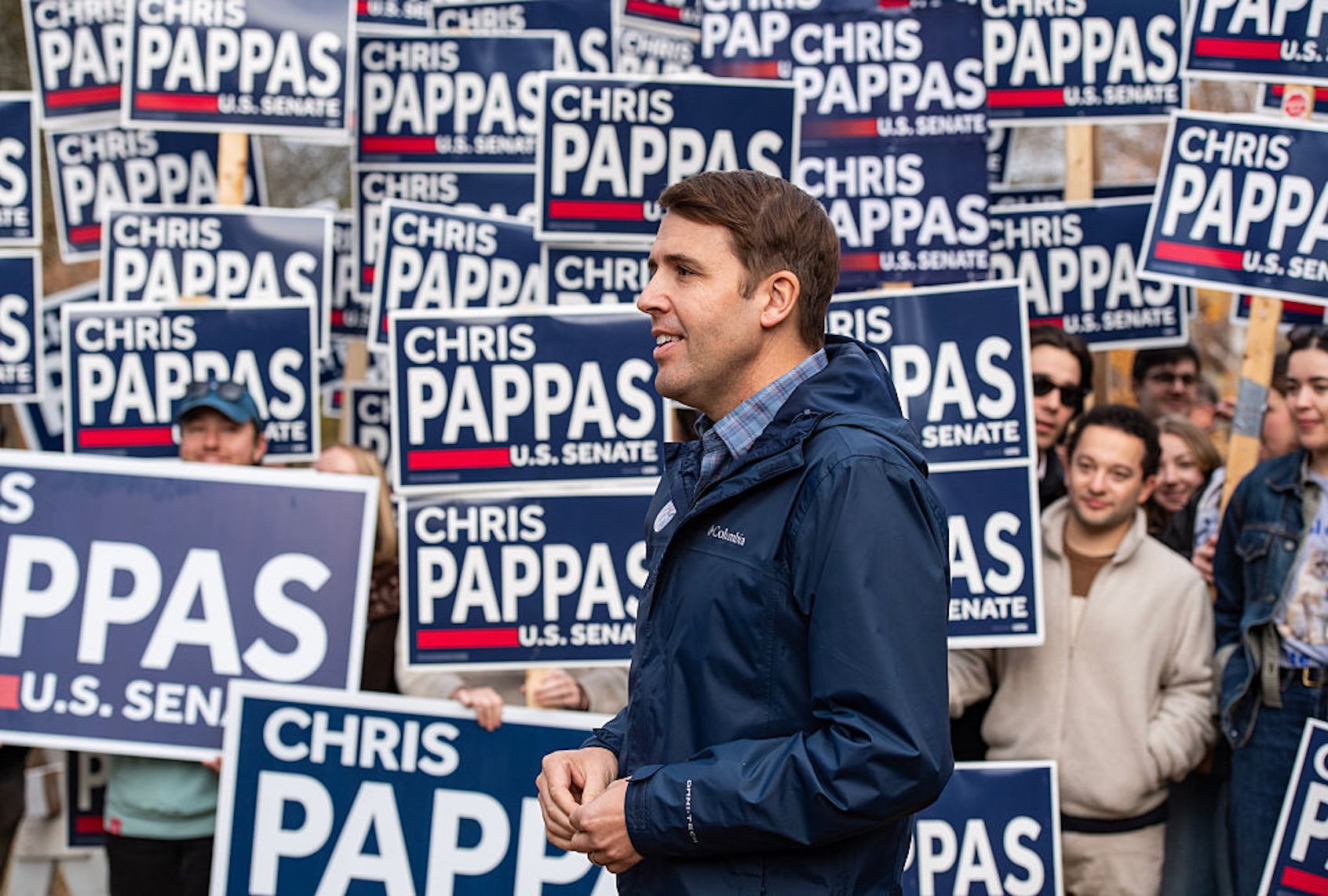
The first made me go quiet at my kitchen table. Chris Pappas won election to the U.S. Senate in New Hampshire, becoming the first openly gay man ever sent to that chamber, and part of the margin that handed Democrats the Senate. In Indiana, J.D. Ford, the first openly gay person ever elected to that state’s legislature, unseated a Republican incumbent and is headed to the House. In Texas, of all places, James Talarico beat Ken Paxton to become the first Democrat to win statewide in more than thirty years, after a campaign in which anti-LGBTQ+ messaging was reportedly Paxton’s single largest category of advertising, and in which the vice president of the United States stood on a stage and used “gay” as a punchline against him. Talarico is straight, and he won anyway.

And on Long Island, in a district Donald Trump carried, a gay Democrat named Chris Gallant, whose private photographs were leaked against him precisely because someone believed that seeing him would be enough to end him, came within about two points of flipping a seat the forecasters had rated safely Republican. He conceded the election on Wednesday, down by roughly 6,700 votes in the closest race of the incumbent Republican Nick LaLota’s career. In the same breath, Gallant called LaLota a brother in arms and told the district he was still their neighbor, which is to say he refused the shame he was supposed to feel from the photo leak to the very end. Whatever that is, it is not the story of a man sunk by leather. It is the story of a man who nearly won the unwinnable while carrying the exact weight that was supposed to be disqualifying.

In 2026, you cannot reliably win an American election by making a man’s gayness, real or invented, the center of your campaign. Republicans tried it in Texas and lost the whole state. They tried it on Long Island and watched a red seat nearly flip.

Put those results next to one another and a sentence forms that would have been unimaginable a decade ago: In 2026, you cannot reliably win an American election by making a man’s gayness, real or invented, the center of your campaign. Republicans tried it in Texas and lost the whole state. They tried it on Long Island and watched a red seat nearly flip. The oldest weapon in the drawer — the one that raised me, the one that could empty a lunch table in the 1990s — is losing its edge at the ballot box. Voters keep looking at the openly gay candidate and sending him to Washington.

That is the headline, and it is real, and I am not going to let anyone talk me out of being moved by it.

But here is the second thing that happened Tuesday night. In the same hours, often on the same ballots, and it is the part the rainbow-wave coverage is already rushing past. In Arizona and Nebraska, voters approved measures to bar transgender girls from girls’ sports. In Colorado, two measures aimed at transgender young people, one on sports and one restricting certain surgical care for minors, are narrowly passing. In Washington State, an initiative to keep transgender girls out of girls’ sports passed comfortably. The same electorate that refused to punish a Senate candidate for being gay reached down the ballot and punished trans kids for existing.

This is the thing I need people to see before the celebration hardens into a story we tell ourselves. The contempt did not disappear on Tuesday. It relocated. A political movement that has learned it can no longer win by hating gay men has not given up the strategy. It has updated the target. The MAGA machine that aired the Paxton ads and laughed at Vance’s joke is the same one now writing ballot measures about 11-year-olds, because cruelty still tests well when it is aimed at the group with the least power to answer back. Gays are simply the part of the community that got powerful enough to be left alone.

I know this pattern in my body, because I have watched it my whole life. The fear moves. First it was the plague, then it was the gay man as predator, then it was marriage as the end of the world, and each time the broader culture eventually got bored or ashamed and the fear went looking for a new address. Right now the address is a trans child in a locker room. The people who found that child did not arrive by accident. They are the same people, running the same play, because it is the only play they have ever had.


Want more sharp takes on politics? Sign up for our free newsletter, Standing Room Only, written by Amanda Marcotte, now also a weekly show on YouTube or wherever you get your podcasts.


So I want to be careful about the victory lap, even as I take one. It is a genuine and hard-won thing that Chris Pappas will be a senator and J.D. Ford will be a congressman, and that a straight man in Texas could not be destroyed by being called gay. Those wins are not small, and the people who did the work to make them real earned every bit of the joy. 

But a movement does not get to accept its own seats at the table while the youngest and most defenseless members of its own community are voted off the field in four states on the same night. This is not a win we get to keep cleanly. It is a split screen, and if we only look at our half of it, we become exactly the kind of people who could be bought off with a little representation while someone else pays the bill.

The refusal to be ashamed won some rooms on Tuesday. I felt it. The task now is to extend that refusal to the people the machine has decided to hunt next, to say as loudly for trans kids what the voters of New Hampshire and Indiana and Texas just said for us: that you do not get to make a person’s existence a punchline, or a wedge, or a ballot measure. We learned that lesson about gay men the slow and brutal way. The whole point of learning it is to spare the next group from learning it alone.

Chris Gallant did not quite win. But he came close enough to prove the old weapon is dulling. The question Tuesday really asked is whether we will hand the people wielding it a new one, or finally take the thing out of their hands.

The post Gay candidates won where it was supposed to be impossible appeared first on Salon.com.
  •  

The Democrat congressional candidate who won’t be kink-shamed

For the better part of its final decade, Rawhide was my bar. The old leather place on Eighth Avenue in Chelsea was dark in the way that mattered, a judgment-free room where the only thing anyone asked of you was that you be yourself. There was the Eagle down the street, a bigger playground, but Rawhide was rawer, closer to the bone, and it happened to sit practically next to my apartment, which made it the place I dropped into on my way home or to kick off a night. 

Most nights I was a simple man at the end of the bar, taking in the spectacle, listening, watching. On slow nights, when the crowd thinned, the bartender would let me put on a few of my own songs and we would all jam to them, and it felt less like a scandalous den than like Cheers with a twist, everybody knowing your name, nobody needing you to explain yourself. Then it closed, and the space became, of all things, a lingerie shop, which tells you most of what you need to know about what New York City decided those rooms were worth.

I bring it up because I recognized something the instant I saw the photographs of Chris Gallant.

Gallant is the 37-year-old openly gay Democrat running for Congress in New York’s first congressional district, out on eastern Long Island, against the Republican incumbent Nick LaLota. A few weeks ago, the New York Post surfaced a set of images from a 2010 photo shoot: Gallant, younger and gorgeous, in bondage gear, pictures taken with a then-partner for the fetish retailer Mr. S Leather. The photos lived openly on the company’s website for most of a decade, and then disappeared. Perhaps inevitably, someone dug them up, handed them to a tabloid and waited for the man to crumble.

Gallant didn’t. In an interview with the New York Times, the military pilot, union leader and firefighter called it his “Kim Kardashian moment,” said his friends have always known he is kinky and refused, flatly, to perform the shame he was supposed to perform. I have rarely been prouder of a stranger.

But I want to be precise about what is actually scandalous here, because everyone keeps aiming at the wrong target. I spend my working life as a trauma-informed violence-prevention educator, which means I spend it on a single distinction: the difference between what is done with your consent and what is done to you without it. By that measure, the photographs are the most innocent thing in this entire story. They were made by consenting adults, with a partner, for a purpose Gallant chose, and they lived in the open for years. There is no victim in them.

The violation came later, and it belongs entirely to whoever pulled those images out of their context to use them as a political weapon. That is the nonconsensual act in this story. That is the thing we should be clutching our pearls about. Someone took a man’s consensual expression of his own desire and weaponized it to try to drive him out of public life, and the media coverage of it largely treated the man in the leather as the problem. 

The violation came later, and it belongs entirely to whoever pulled those images out of their context to use them as a political weapon. That is the nonconsensual act in this story.


We have the true obscenity backward. The scandal isn’t the leather. It’s the leak.

Gallant’s refusal to grovel is the correct answer — the only answer. For most of my life, the price of a seat at any table was a quiet agreement to be a less vivid version of yourself, to sand down whatever might frighten the neighbors, to apologize in advance for existing. The men I stood shoulder to shoulder with at Rawhide mostly paid that tax their whole lives. So when a candidate looks at the oldest trick in the book — here is evidence that you are a deviant — and simply declines to be ashamed, he is doing something the boy I was could not have imagined. Be queer. Be masculine. Be unafraid, authentic, bold, believable. That is the whole platform, and it is a good one.

Here is where I step off the easy celebration everyone else is writing, though not in the direction you might expect. Gallant is making his stand in a district Donald Trump carried in 2024 and that the Cook Political Report currently rates as Solid Republican. He may well lose. But losing would not make his candidacy a mistake. Every barrier broken is a notch in a glass ceiling, and the ceiling does not care much whether the person who cracked it got to walk all the way through. An out, unapologetic gay man refusing to be shamed off the ballot in Trump Country is exactly the kind of barrier that, once broken, cannot be unbroken.


Want more sharp takes on politics? Sign up for our free newsletter, Standing Room Only, written by Amanda Marcotte, now also a weekly show on YouTube or wherever you get your podcasts.


There is an asymmetry worth naming. A straight candidate with an old racy photo shoot — such as former Massachusetts Sen. Scott Brown, a Republican who posed nude for a Cosmopolitan photo spread in the 1980s — gets a wink and a news cycle. A gay man with the same gets a referendum on his fitness to serve. But you do not retire a double standard by hiding from it. You retire it by having enough people walk straight into it, unbowed, that it stops working. Gallant just made it work a little less well.

What I actually worry about is not whether Gallant wins. It is whether the next one runs. Look at how the field is being remade right now, by democratic-socialist insurgents, by former military officers and ex-intelligence officials trading their clearances for yard signs — whole new kinds of candidates deciding the work is too important to sit out. So where are the out, unapologetic queer candidates? 

My fear is that a young gay man with a few consensual images somewhere on the internet, and there are a great many of us, watches what is being done to Gallant and quietly decides it is not worth it. My hope is the opposite: that he watches a man refuse to be ashamed and thinks, if he can take that and keep his head up, so can I.

Because that is the thing this moment cannot be allowed to become: a warning. Instead, it has to be an invitation. A seat at the table is too important to cede to whoever is willing to leak a photograph.

Gallant did nothing wrong. He took some beautiful photographs with a partner a long time ago, and he has declined to be sorry about it. The shame in this story was never his, and it was never ours. It belongs, every ounce of it, to the people who went looking for a way to make a good man disappear.

My hope, for the next queer person weighing whether to step into the arena carrying a past and a future both, is that they look at Chris Gallant standing in his own light and decide to run anyway. We need them there.

The post The Democrat congressional candidate who won’t be kink-shamed appeared first on Salon.com.

  •  
❌