America is heading to the polls for the midterm elections — and Europe is watching closely. With the outcome set to have consequences far beyond Washington, from trade to defense, we’re bringing you a special episode of The Conversation, hosted by POLITICO’s Dasha Burns.
Dasha sits down with two political strategists working behind the scenes in some of America’s most consequential races: Republican T.W. Arrighi and Democrat Lis Smith. They take stock of the race, reveal what goes into running a high-stakes campaign and explore what’s shaping the battle for American voters.
If you have a question or comment, don’t hesitate! Message us on our WhatsApp here or at +32 491 05 06 29.
The bailout clock is ticking. In September, Oracle invoked “force majeure” to delay paying debt on a data center, which led to a drop in the corporation’s stock price. This month, OpenAI significantly cut its revenue projections; CoreWeave, a heavily leveraged data-center company, saw its share price plunge; and investors began racing to buy credit-default swaps to protect their portfolios. These are all signs of declining investor confidence. The risk that the heavily debt-fueled and interconnected AI sector could crash—taking the broader economy with it—is high and rising.
When the next crash happens, originating from whatever sector, the president will control a bailout apparatus with essentially limitless authority. Ever since the 2008 global financial crisis, the Federal Reserve and U.S. Treasury have claimed, with almost no resistance, more power to deal with each successive financial emergency. These bailouts were rationalized on the basis that they were in the public interest and at least theoretically subject to congressional oversight. But if the crash happens on Donald Trump’s watch, his administration would likely sidestep Congress entirely. A Trump bailout would proceed on whatever terms please the president and his allies, who would use it as a bonanza to enrich their favored companies and CEOs, even if they were the ones who caused the crisis to begin with.
The billionaires—and the trillionaire—in Trump’s inner circle have already usurped decision making about which federal agencies to decimate, which federal workers to fire, which scientific research to defund, and which industries to deem necessary for national security. They could also usurp the bailout apparatus, making it spin into action even before a crisis arrives. When they start feeling financially wobbly, they might go to Treasury Secretary Scott Bessent, Federal Reserve Chairman Kevin Warsh, or, most likely, Trump himself and request an emergency declaration to justify a bailout. They would know that the current Supreme Court majority would be unlikely to block an emergency declaration by the executive branch and central bank.
The bailout authority is a loaded gun. Once triggered, it would bring downsides that have become familiar since 2008: public deficits and debt that devour GDP, zombie companies that taxpayers are forced to carry, an expansion of wealth inequality, and a dramatic shift of losses from perpetrators to the public. In Trump’s hands, it would also feature a new and more frightening dynamic: the creation of a standing money printer that can be turned on for the president’s allies and turned off for his enemies, enabling state-supported favoritism and plunder on a staggering scale.
Historically, the rationale for a bailout was that central banks should play the role of what Walter Bagehot called the “lender of last resort,” extending loans as necessary to tide over a blameless firm—a firm that, but for circumstances beyond its control, would otherwise be solvent and able to post adequate collateral. In 1932, Congress put this function inside the Federal Reserve. Section 13(3) of the Federal Reserve Act gave the central bank the power to extend loans to banks and any corporate entity in “unusual and exigent circumstances.” During the Great Depression, the Fed made limited use of its new authority. Then, for seven decades, Section 13(3) sat idle.
The 2008 crash inaugurated the modern bailout era. When that crisis hit, its scale was unprecedented; financial markets had grown, becoming more intertwined and complex. The Federal Reserve, under Chairman Ben Bernanke, deemed the situation “urgent and exigent” and used Section 13(3) to establish special-purpose vehicles to buy up financial assets. Section 13(3) was also used to justify loans to AIG, an insurance company, and its affiliates, in exchange for collateral that consisted of nonperforming financial instruments with dubious market value. Working closely with the Treasury, which had related legal authority under the vague goal of dollar stability, the Federal Reserve began a program of extending loans to banks and other financial firms while purchasing huge quantities of mortgages and other shaky assets held by such entities as credit-card companies and private student-loan lenders.
I served as a Federal Reserve governor during the tail end of the financial crisis, and then as the deputy secretary of the Treasury in the Obama administration. I eventually came to see that the bailout of the financial sector was not doing much for the broader economy. Long after the financial sector had recovered, many Americans were out of work, unable to repay their mortgages, and contending with rapacious debt collectors and sloppy mortgage servicers. Ordinary people could not help themselves to the enormous sampling of bailout options that the Federal Reserve and Treasury had provided to the banks. Mortgage-relief programs were slow to get off the ground and undermined by arguments that the intended recipients never should have had access to subprime loans in the first place. Congress passed the Dodd-Frank Act, a financial-reform bill, in part to address the distributional consequences of what had just happened and to limit the Federal Reserve’s emergency powers. Ultimately, however, the law left largely intact the Fed’s discretion to choose bailout recipients, the interest rate charged on bailout loans, and the quality and value of the collateral taken to backstop those loans.
A decade later, when the coronavirus pandemic threatened an economic slowdown, the Federal Reserve mobilized preemptively. It initiated an even more aggressive version of large-scale asset purchases, with earlier money and more of it. Chairman Jerome Powell’s bailout opened up all of the faucets that spurt out continuous liquidity and created some new ones. Expanding its usage of Section 13(3) beyond mortgage assets, the Fed purchased the debts of various companies. In many cases, no requirements were imposed on these firms in exchange for cheap financing. By the Federal Reserve’s own estimates, the highly indebted fossil-fuel industry, for example, reaped more than $1.47 billion from the Main Street Lending Program—8.4 percent of the allocated funds—after lobbying the Fed to make the terms of its loans more generous. The Fed’s purchases of this debt “took all the risk overhang you normally associate with a risky company and took it off the table,” one chief investment officer toldThe Wall Street Journal at the time.
By the time Silicon Valley Bank suddenly failed, in 2023, the Federal Reserve had learned that it could bail out favored sectors without imposing any consequences on failed businesses. Even though no one would have described this midsize regional bank as a “too big to fail” institution, the Federal Reserve and Treasury drew on the techniques they had perfected during the financial crisis and the pandemic. They established the Bank Term Funding Program to lend against collateral with depressed values. Interest rates were set so low as to permit any eligible entity to borrow from the Fed rather than the private sector, even after the threat of any deposit run had subsided.
The result of these three bailouts was a collective recognition that the Federal Reserve had the power to choose winners and losers. Big banks and oil companies could be winners, the crypto sector and Silicon Valley–backed venture firms could be winners, and the CEOs and owners of these entities could be winners—even if they had acted recklessly. Families who had lost their homes and their incomes would be losers; so would entrepreneurs who aspired to displace companies that, but for a bailout, would have gone under.
This approach widened income and wealth inequality, further shrinking the middle class. The companies that had been bailed out continued to act in ways that had permitted them to shed their costs to the public. In each case, these bailouts were conducted hastily, because of the unchallenged view that allowing companies or sectors to collapse would deprive the economy of necessary public benefits. And they were conducted with little consideration of their long-term consequences.
The recent history of bailouts gives us a clear indication of what the next one will look like.
Enormous public money will be spent, in magnitudes approaching or exceeding the amount that Congress appropriates as part of its fiscal functions. The Federal Reserve and Treasury will once again choose the sectors that will benefit, and the terms on which bailouts will be offered. Only this time, the process will be under the aegis of an administration that brazenly trades political favors for money and support. The government could buy up nonperforming debt from favored firms; more nonperforming debt could be unloaded by data-center financiers and family foundations headed by allies of the president. Once the bailout machine is turned on, businesses will line up to buy favorable terms in exchange for political contributions. Those that refuse to play this game would be left to fail.
But this chaotic free-for-all is not inevitable. Congress created the government’s bailout powers, and Congress can constrain them. If it does not, then it will be implicated in the consequences. If no public benefit justifies reviving a failing firm, then Congress should allow it to fail. If failing companies are going to be rescued, then conditions must be attached to bailout funds to make sure that the public benefit will be achieved.
Congress should structure these terms before the next bailout. If the businesses being bailed out are data centers, for example, Congress could require them to limit their emissions or build their own renewable-energy sources. If the businesses being bailed out are the creators of frontier AI models, they could be required to prioritize investments in medical research. To make these judgments, Congress could establish a bailout manager to identify the public benefit, establish the conditions needed for the benefit to be delivered, and then oversee adherence to those conditions long after the crisis has passed.
Every bailout is a sign of economic failure. Without interventions by our elected representatives, future bailouts won’t just risk widening inequality—they stand to politicize our entire economic system. A president who wields the bailout gun on his own behalf could leave the country with societal damage that will take generations to remediate. It’s up to Congress to assess those dangers now and determine how to intervene, while it still has the chance.
European leaders are descending on Montreal in a bid to forge closer ties with Canada.
On today’s show, host Zoya Sheftalovich catches up with Sarah Wheaton, who’s on the ground at the EU-Canada summit. They unpack what the talks could actually deliver — from defense and critical raw materials to space and AI — and the Trump-shaped shadow hanging over it all.
Next, Commission President Ursula von der Leyen may be here in Montreal, but back in Brussels, questions remain about her role in the EU’s Covid vaccine deal with Pfizer.
Finally: Eurovision has revealed its 2027 lineup — but the row over Israel’s participation is far from over.
Questions, comments? Please write in! Find us on WhatsApp here or at +32 491 05 06 29.
Let’s be clear about what we’re doing here. The Bulwark exists to fight authoritarianism and defend American democracy. We do that with reporting, analysis, accountability, and by building a community of people who refuse to look away or pretend this is normal. If you believe this fight matters, join Bulwark+ and help us do the work.
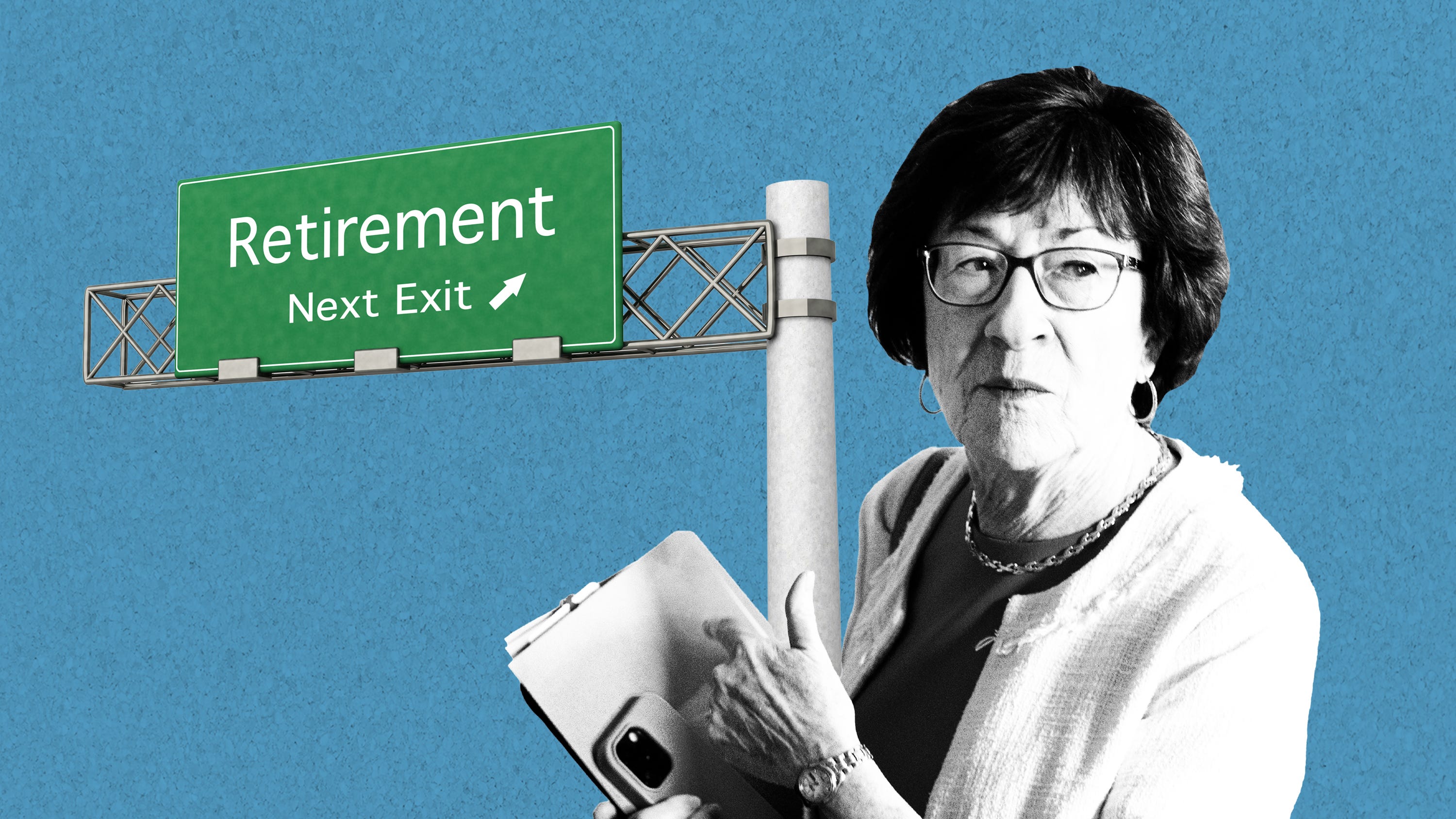
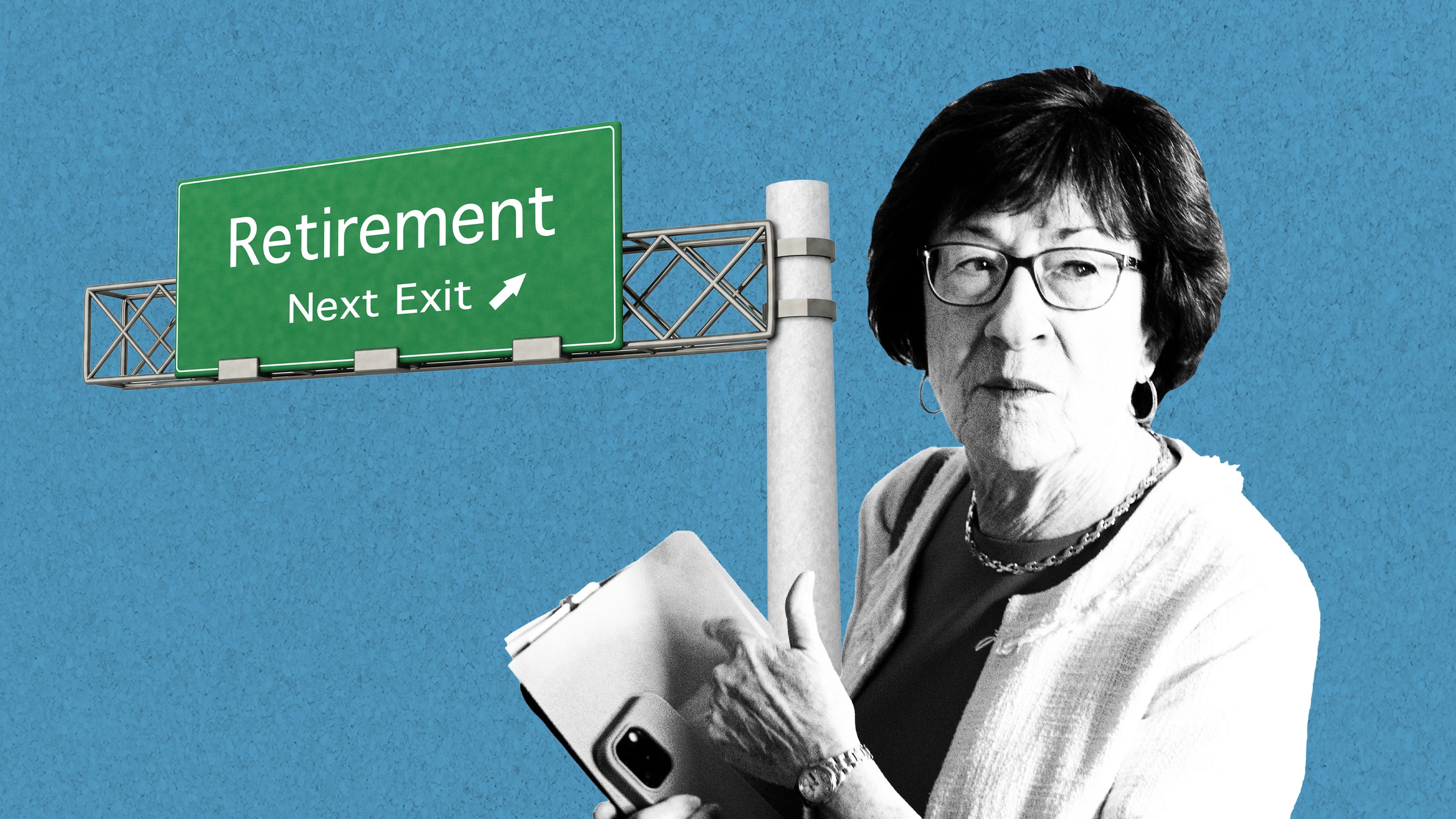
Sarah Longwell and Andrew Weissmann discuss Trump’s desperate (and failing) attempts to punish his political enemies, from a grand jury’s refusal to indict Cassidy Hutchinson to a judge’s ruling against the firing of Maureen Comey. They also examine the DOJ’s election interference in California and Alaska, troubling corruption allegations involving Susan Collins, and why the Epstein files remain a problem for Trump.
A new developer platform will let businesses bring their services to Google's AI experiences, potentially changing how consumers discover and use apps.
BAROMÈTRE DU REJET : Le Pen, toujours moins rejetée
La nouvelle édition de l’enquête mensuelle de Cluster 17 pour POLITICO montre que Marine Le Pen est encore moins rejetée par les Français qu’au mois de septembre. Reste un mince motif d’espoir pour le bloc central.
Par SARAH PAILLOU et PAULINE DE SAINT REMY à Paris
Les mobilisations et violences d’octobre ont renforcé le rejet de Jean-Luc Mélenchon et amoindri celui de Marine Le Pen.| Joel Saget/AFP via Getty Images
Les candidats du bloc central, Edouard Philippe et Gabriel Attal, sont bien placés pour le savoir : s’ils peinent à progresser dans les sondages d’intentions de vote — voire, s’ils reculent — c’est qu’après deux quinquennats d’Emmanuel Macron, l’heure est au dégagisme.
Comme le montre la dernière enquête de l’institut Cluster 17 pour POLITICO, parue lundi 26 octobre, ce sont les incarnations d’une rupture radicale avec le macronisme qui, à ce stade de la campagne, ont le vent dans le dos : Marine Le Pen et Jean-Luc Mélenchon.
Mais les représentants du camp central ne souffrent pas que d’un simple désir d’alternance : s’ils décrochent, c’est qu’ils suscitent désormais chez les Français un rejet aussi fort, voire plus puissant, que le Rassemblement national ou La France insoumise. Impossible donc, pour les partis ayant déjà exercé le pouvoir, de continuer à parier sur des électeurs prêts à tout pour barrer la route de l’Elysée aux “extrêmes”.
Pour l’emporter en 2027, un prétendant à la présidence doit donc formuler un nouveau vœu : plutôt que de rêver d’être majoritaire dans le pays, se contenter d’espérer être le moins exécré des compétiteurs. Ce que mesure notre baromètre mensuel du rejet, réalisé par Cluster 17 pour POLITICO, dont la deuxième livraison montre que les grandes tendances observées en septembre s’accentuent et témoigne d’un moment de la campagne “plutôt favorable aux droites” (traditionnelle et extrême), analyse Jean-Yves Dormagen, le président de l’institut.
Logique : notre enquête a été menée du 19 au 22 octobre, juste après les casses et pillages du 17 octobre.
Cluster 17 a, de nouveau, demandé à 3 000 personnes quelle était la probabilité, sur une échelle de 0 à 10, qu’elles votent “un jour” pour chacun des candidats à la présidentielle testés — 0 correspondant à une impossibilité totale de glisser ce bulletin dans l’urne, 10 indiquant que les sondés jugent “tout à fait possible” de le faire.
Seul motif de satisfaction pour Edouard Philippe et Gabriel Attal : la priorité des Français est davantage de faire barrage au camp RN ou au camp Insoumis plutôt qu’au bloc central. | Daniel Perron/Hans Lucas/AFP via Getty Images
Tous les candidats testés demeurent rejetés par une majorité de Français. Les plus répulsifs restent les mêmes, mais ils voient augmenter le taux de Français excluant totalement de voter pour eux. L’Ecologiste Marine Tondelier arrive ainsi toujours en tête du classement du rejet, à 71% (+3 par rapport au mois dernier) — à égalité cette fois avec Eric Zemmour, non testé dans notre précédente enquête.
Mélenchon de plus en plus repoussoir
Même logique pour Jean-Luc Mélenchon. Toujours en deuxième position des personnalités les plus rejetées, l’Insoumis l’est encore plus qu’en septembre. Les interrogés sont désormais 69% à juger inimaginable de choisir un bulletin au nom de l’Insoumis (ils étaient 66%).
Les violences du week-end des 17 et 18 octobre ont “radicalisé sur la droite un certain nombre de personnes”, juge Dormagen. Et ainsi conforté l’image négative de “JLM”, augmentant la perception de LFI comme “un mouvement radical, qui incarne une rupture brutale”.
Le moment profite, en miroir, aux figures supposées incarner l’ordre, la fermeté, l’autorité, au premier rang desquelles Marine Le Pen. La candidate RN est désormais celle qui réunit le moins de sondés estimant strictement impossible de voter un jour pour elle : ils ne sont plus “que” 52% (- 4).
A ses côtés au même score : le social-démocrate Raphaël Glucksmann. L’eurodéputé Place publique se maintient quasiment à son niveau du mois dernier.
Misant sur une promesse du retour de l’ordre lui aussi, l’ancien ministre de l’Intérieur Bruno Retailleau est lui aussi moins repoussé qu’en septembre. Les sondés sont 54% (-4) à refuser catégoriquement de voter pour lui. Il rejoint ainsi le mouchoir de poche des personnalités les moins rejetées, avec Marine Le Pen et Raphaël Glcuksmann.
Edouard Philippe est à peine plus rejeté que ces personnalités. Avec 56% de Français excluant à jamais de voter pour lui, il se voit doublé de peu par le sénateur vendéen.
Le bulletin Gabriel Attal est, en revanche, de moins en moins envisagé par les interrogés comme une possibilité. Les sondés sont 59% à trouver inimaginable de voter pour le candidat Renaissance — une augmentation de trois points, comparé à notre sondage précédent. Supposition de Jean-Yves Dormagen, qui ne parie pas sur une hostilité des sondés à son égard : outre le rejet qu’il suscite, “la candidature d’Attal se heurte depuis le début à un enjeu de légitimité. Y compris dans son espace électoral potentiel, les gens ont du mal à comprendre pourquoi il est candidat.”
Le député des Hauts-de-Seine est ainsi quasiment aussi inenvisageable pour les Français que… François Hollande, nouvellement testé. L’ancien président, qui rêve d’un retour en grâce dans le cœur des Français, a visiblement du pain sur la planche : 61% des sondés jugent impossible de voter pour lui.
Un espoir pour le camp central ?
Reste, malgré tout, une (petite) raison d’espérer pour les anciens Premiers ministres d’Emmanuel Macron. Cluster 17 a cette fois demandé aux sondés quelle était leur priorité (à l’exclusion des deux autres) : empêcher la victoire du RN et de ses alliés, de LFI et de ses alliés, ou des partis ayant soutenu le président ?
Réponse : les Français ne sont que 14% à dire que leur objectif principal est une défaite du camp “macroniste”. Alors que faire barrage au camp Insoumis est prioritaire pour 43% d’entre eux, et celui du RN pour 30%.
De quoi laisser penser, donc, que si tous les camps restent majoritairement rejetés — fût-ce d’une courte tête —, tout espoir pour un représentant du bloc central de faire “barrage” à l’extrême droite n’est pas complètement vain. Encore faudra-t-il accéder au second tour.
(*) Etude Cluster 17 pour POLITICO réalisée auprès d’un échantillon de 3 000 personnes, représentatif de la population française grâce à la méthode des quotas, interrogées par questionnaire autoadministré en ligne, du 19 au 22 octobre 2026. Les données ont fait l’objet d’un redressement sociodémographique, à partir des données de l’Insee, ainsi que d’un redressement politique fondé sur la reconstitution des votes au premier tour de l’élection présidentielle de 2022 et aux élections européennes de 2024. La marge d’erreur se situe entre 0,8 et 1,8 point.
In October 2017, just one day before The New York Times published its investigative report exposing his long career as a rapist, Harvey Weinstein blew into the newspaper’s offices with a phalanx of lawyers. The film producer was intent on attacking Ashley Judd, the actress, activist and humanitarian who is one of the authors of this piece, saying she had “mental issues.” For support, Weinstein brandished a photograph of the two of them taken in 1997 during the Oscar party his company Miramax hosted at Beverly Hills’ Peninsula Hotel.
When she learned of his spectacle at the Times’ offices, Judd immediately recognized Weinstein’s slippery strategy as DARVO and felt a sense of relief. She knew there was language and a body of research that plainly identified and unpacked what can otherwise be a head-spinning distortion of reality.
An insidious response tactic — it never happened, you’re a liar, you’re the one who hurt me — DARVO is intended to disorient the victim, painting them instead as the villain. It follows a predictable pattern: deny the harm, attack the credibility of the person who named the harm, and reverse the roles of victim and offender. The acronym, introduced to the world in the 1990s by Jennifer Freyd, another co-author, has grown in usage by individuals, media and institutions as an increasing number of people have come forward to report sexual assaults and harassment. Since then, DARVO has become so ubiquitous that it has now been canonized in the Merriam-Webster dictionary and added to its list of trending terms.
DARVO was inspired by an infamous confirmation hearing. In 1991, Anita Hill testified before the Senate Judiciary Committee that Clarence Thomas, her former supervisor at the Department of Education and the Equal Employment Opportunity Commission, who was then a nominee for the Supreme Court, had sexually harassed her. Thomas and his supporters responded quickly. While he denied the allegations and claimed to be the victim of a “high-tech lynching,” Republican senators attacked Hill’s credibility and motivations — and Thomas was narrowly confirmed to the Court. Freyd, a psychology professor and trauma researcher, took notice. As she saw it, the collection of responses followed a specific pattern. Several years later, she introduced DARVO to the world in a research article.
At the time, Freyd called her acronym capturing how perpetrators deflect responsibility “very speculative.” Thirty years later and a #MeToo movement later, it’s no longer speculation. A growing body of research, some of it conducted by Freyd and Sarah Harsey, another co-author of this column, has provided important insights into this tactic. A database tracking DARVO research now counts 33 peer-reviewed studies investigating it.
The studies tell us that DARVO can shift observers’ beliefs about who is really to blame. This is a fundamental goal of DARVO-users: Convince others of your innocence.
The studies tell us that DARVO can shift observers’ beliefs about who is really to blame. This is a fundamental goal of DARVO-users: Convince others of your innocence. When study participants were exposed to a fictional perpetrator’s use of DARVO, they assigned less responsibility to the perpetrator and more responsibility to the victim. When a fictional perpetrator used DARVO to explain away sexual assault allegations, participants were less likely to say the perpetrator should face punishment and more willing to agree that the victim should be punished.
This research is consistent with what happened during Thomas’ confirmation hearing. After he testified, Thomas gained credibility in the public’s eye. Hill’s credibility, on the other hand, was damaged.
Research has also shown that DARVO is relatively common. When study participants were asked to report on their experiences confronting other people, nearly 72% had heard a denial, attack, and reversal of victim and offender. And the more DARVO participants heard, the higher levels of self-blame they felt. In a different study, exposure to DARVO was also linked to greater levels of psychological distress. Although these studies are correlational — which means it isn’t clear if hearing DARVO causes increases in self-blame or distress — they still suggest that being the recipient of DARVO is at least connected to worse well-being.
But what do we know about people who use DARVO? In a survey of over 900 participants, people who used more DARVO to respond to confrontation also reported perpetrating more sexual harassment. One reason for this finding is that people who engage in bad behavior — like sexual harassment — may be accustomed to responding with DARVO as a way to get away with their actions. This survey also found that people with greater DARVO tendencies were more accepting of rape myths, which are common but inaccurate beliefs about rape that excuse the actions of perpetrators and place blame on victims. The connection here may be simple: People who personally engage in victim blaming agree that victims, including victims of rape, are blameworthy.
As research continues to tell us more about DARVO, highly visible examples appear regularly in the news cycle. President Donald Trump, for instance, often reaches for denials, attacks, and victim-playing responses when faced with information that threatens his power or reputation. When talking about E. Jean Carroll — the writer whom Trump was found civilly liable for sexually abusing — the president has denied the sexual abuse, attacked her appearance, motives and sanity, and claimed to be the target of a witch hunt. Even Carroll herself couldn’t help but point out the pattern. In a 2019 interview with Anderson Cooper, she observed, “He denies. He turns it around. He threatens, and he attacks.”
Striking examples of DARVO can be found outside of the things political figures say. Beyond his noxious attacks on Judd, Weinstein has repeatedly used DARVO tactics in his many attempts to discredit the many women who come forward about his crimes.
More recently, the investigation into the seven Cornell University fraternity members who are accused of sexually assaulting a female undergraduate has unleashed a torrent of DARVO against the student known as Jane Doe. A visible part of the discourse about the Cornell Seven reveals how some have flatly rejected the possibility that Doe was assaulted, attacked her credibility and her appearance, and labeled the case as a “hoax.” Sympathy for the fraternity members is not too hard to find, either; Trump himself shared that he felt “badly” for the accused men.
Many may wonder whether DARVO is a necessary response to an accusation. How else is someone supposed to respond? But DARVO is not inevitable. Someone can admit their responsibility for causing harm and sincerely apologize, which is the most constructive path for all involved. If someone is innocent of the accusation — or wants others to believe they are — they can respectfully deny the allegation without attacking or putting themselves into the victim role. Thomas, for instance, who had chaired the very agency charged with enforcing sexual harassment law, could have responded to Hill’s testimony by saying: “I do not remember the events in this way but I know these conversations about sexual harassment are important, and I want to understand your experience.”
DARVO poses a significant social problem. For even the smallest transgressions between two individuals, it’s antagonistic and fails to provide a productive resolution. On a larger scale, DARVO stands in the way of justice by encouraging a pervasive and hostile disbelief of victims. Even our institutions can use this chilling tactic, resulting in a particularly harmful form ofinstitutional betrayal. This may be one reason many people fear coming forward to seek accountability and are effectively silenced.
Two stories of institutional betrayal were prominently featured in the 2015 documentary “The Hunting Ground,” which investigated sexual assault on college and university campuses. In 2007, during her freshman year at the University of North-Carolina, Annie Clark reported being sexually assaulted to campus officials. One employee compared rape to football. Annie was the quarterback; what could she have done differently? She had come seeking support and instead found herself being asked to account for her own supposed failure. Four years later, while a student at Harvard Law School, Kamilah Willingham encountered a struggle for accountability after reporting a sexual assault.
The stories of Clark, Willingham and others brought institutional betrayal painfully close: the place where you hoped to learn, belong and flourish can become another place entirely, one where you must fight to be heard.
When the documentary was recently screened at Harvard — one of the institutions whose responses it challenges — those stories were given particular force. They also offered a lens for examining institutional responses at Cornell University, the University of Chicago and beyond.
DARVO helps us name how institutional self-protection can become an attack on the person seeking help: deny responsibility, undermine the survivor’s credibility and cast the institution or the accused as the injured party. The student asking for protection becomes a threat to someone else’s future or reputation. Freyd has identified this institutional DARVO as a particularly harmful form of institutional betrayal.
But the film also follows Clark and her colleague Andrea Pino building a network of survivors who refuse to leave one another alone with these experiences. Universities could learn from them. The Center for Institutional Courage’s 12 steps call on institutions to welcome truth-tellers, respond well to disclosures, acknowledge harm and sustain the resources needed for change. Imagine the difference if a student’s disclosure was met with care — and a commitment to stay for the work of accountability and repair.
This underscores the good news of what we have learned: DARVO loses some of its power when people know what it is.
This underscores the good news of what we have learned: DARVO loses some of its power when people know what it is. In one experiment, some participants read a one-paragraph explanation of DARVO — what it stands for and why perpetrators may use it — before reading a fictional scenario in which a perpetrator used the tactic. Compared with participants who had not read the explanation, DARVO-educated participants believed the victim more and supported the perpetrator less.
Institutional DARVO can be combated, too, withinstitutional courage. By taking actionable steps such as cherishing whistleblowers, practicing transparency, and committing to seek truth and engage in moral action, institutions can act in ways that restore trust and help people who have been harmed come forward.
Judd has described the effect in her own life. “When I know I’m being attacked, I immediately remind myself that that is a common strategy,” she toldThe Hollywood Reporter in 2017. “It’s DARVO.”
This is why Merriam-Webster’s entry for DARVO matters. Its presence in the dictionary makes the term available to a wide audience; anyone can look it up and learn what it means. This access is especially important for victims who have been made to doubt themselves, who can now more easily reach for a term that shines a light on their experiences. It also offers a critical reassurance: No, you’re not crazy — you’re being DARVOed. The tactic’s efficacy depends on a confused audience, and every person who learns about the acronym is a little bit harder to fool.
Alex Ekker served four years in the Marine Corps—then decided to be an actor. While sightseeing at the Empire State Building, he talks about his professional début in Aaron Sorkin’s “A Few Good Men.”
(Photo illustration by Bill Kuchman/The Bulwark | Photos: Getty, X, Shutterstock)
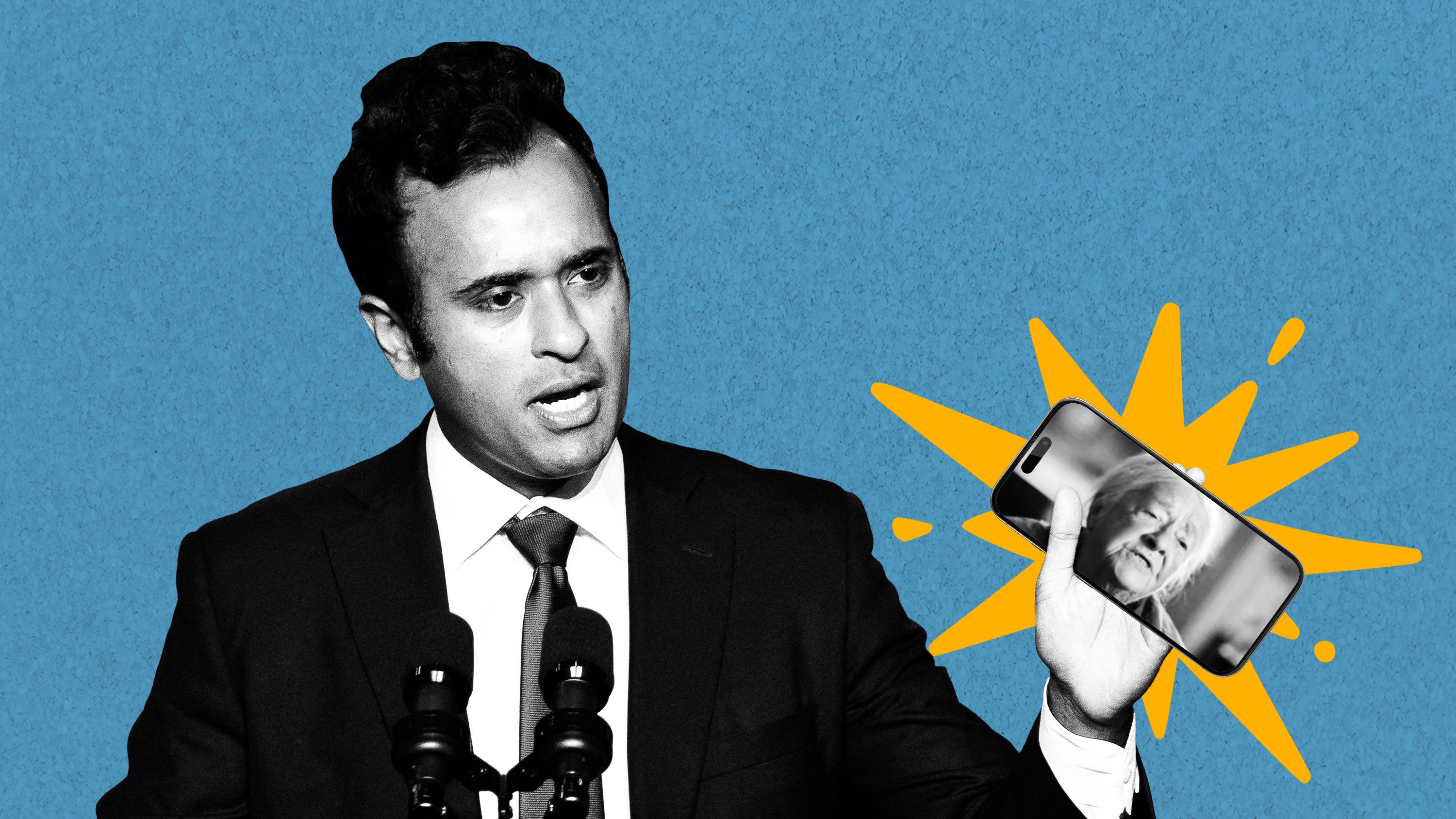
BY NOW, YOU’VE SURELY HEARD about the ad Vivek Ramaswamy is running against his opponent in the Ohio gubernatorial election, Democrat Amy Acton—the one featuring Acton’s mother accusing her of lying about her past. Not mentioned in the ad: that this woman hasn’t seen Acton in forty-eight years, since she fled Ohio with her husband after he was charged with having raped Acton starting when she was 10 years old.
Ramaswamy put $4 million behind the spot and he’s been cheered on by President Donald Trump and Vice President JD Vance. It’s a massive bet that voters will believe the mom—despite overwhelming evidence that she is the one lying—and not recoil (as basically much of the top ranks of the Ohio Republican Party have) at the sheer vileness of the attack.
Will it work? To find out, on October 22, three days after the ad started circulating online, we convened a group of ten Ohioans who voted for Trump in 2024 but have since soured on him. Of those ten, five people had participated in a past focus group and expressed some openness to Ramaswamy. The remaining five were lukewarm at best on Ramaswamy prior to the group. We played the ad for them, as well as the ad the Acton campaign released in response, featuring her brother. Here’s what happened next:
If we’re going to protect American democracy, we have to understand the voters, even when what they tell us is surprising, frustrating, or downright infuriating.
That’s why we run so many focus groups: to listen, ask questions, challenge our assumptions, and find out what Americans actually think—not just what we wish they thought.
That work takes resources, and it’s our Bulwark+ members who make it all possible. Become a member yourself today and help us keep bringing you the insights you won’t find anywhere else.
Let’s be clear about what we’re doing here. The Bulwark exists to fight authoritarianism and defend American democracy. We do that with reporting, analysis, accountability, and by building a community of people who refuse to look away or pretend this is normal. If you believe this fight matters, join Bulwark+ and help us do the work.
Why is Trump’s own Justice Department investigating Corey Lewandowski, and is the corruption probe for real? Sarah Longwell and Andrew Weissmann examine the allegations, Trump’s attempt to challenge 20,000 California voters, Russia’s latest election interference campaign, and the surprising turn in Trump’s $10 billion lawsuit against the BBC.
From retro cassette players and virtual notebooks to flight trackers and even a digital toaster, developers are finding creative ways to take advantage of Apple's first foldable iPhone.
Maine is getting a lot of national attention for such a small state. Sen. Susan Collins is trying to win a sixth term despite losing some shine of off her reputation as an "independent" senator. A lot of former Collins voters are ready for her to go, but still harbor a lot of goodwill towards her. Collins' opponent isn't inspiring much confidence from them, either. Midcoast Villager deputy editor Alex Seitz-Wald joins to discuss how Mainers are feeling about her this year, where they're finding Troy Jackson lacking, and some of the other local issues that may play a big role in this race.
If you value this kind of in depth coverage and want to show your support for the our work, upgrade now to watch or listen to our premium ad free editions of Bulwark shows—PLUS you’ll get access to Sarah’s Focus Group newsletter too.
Each membership ensures we can give away subscriptions to those who can’t afford to join our community. The only way through is together.
Full ad-supported episodes ofThe Focus Groupare available wherever you get your podcasts and on YouTube. Hit that like 🤍 button and share this episode with a friend. Click here to add the show to your player of choice.
Sarah Matthews joins Nicolle Wallace to discuss the Trump DOJ’s removal of thousands of January 6 records, the effort to preserve the evidence, and what it could mean for the midterms. They also examine Trump’s broken promises, his family’s growing wealth, and why young men who helped return him to office are increasingly feeling betrayed.
Tom Yum Noodle Soup is a hearty, tangy, delicious Thai noodle soup that’s surprisingly simple to put together. Contrary to what you may be thinking, it’s not just the tom yum soup you’ve had at your local Thai restaurant with noodles added to it. It is its own delicious dish, and each diner can make […]
U.S. President Donald Trump has the world’s war crimes court in his crosshairs.
By sanctioning the entire International Criminal Court, his administration is threatening its ability to function. Europe has rushed to the court’s defense — but can it actually protect it from American financial power? And how far is the European Union willing to go to confront Washington when it still relies so heavily on the U.S. for its own security?
Host Sarah Wheaton is joined by European Parliament lawmaker Dirk Gotink and Atlantic Council sanctions expert Lize de Kruijf to discuss Europe’s options, its dependence on the U.S. dollar and American technology and whether the EU can stand up for international justice.
If you have any questions or comments, send us a message on our WhatsApp here or at +32 491 05 06 29.

 Login