This story appeared in Today, Explained, a daily newsletter that helps you understand the most compelling news and stories of the day. Subscribe here.
Defense Secretary Pete Hegseth announced this week that the Pentagon would begin testing the testosterone levels of all military members over the age of 30 as part of their regular, annual physical exams. And — if their levels are low — service members could choose to receive testosterone replacement therapy.
“It’s not about artificial enhancement,” Hegseth said. “It’s about restoring and optimizing your natural capabilities, protecting your longevity, and ensuring you have the biological foundation required to sustain the fight.”
— Secretary of War Pete Hegseth (@SecWar) July 15, 2026
It’s another example of the performative masculinity that has defined Hegseth’s time atop the US military. He has sought to rebrand the Department of Defense as the Department of “War,” preached a “warrior” ethos, rolled back DEI initiatives while blocking promotions for women, and taken an unusual interest in the beard-grooming standards of service members.
The testosterone obsession is just one of several ways that the military is having a Make America Healthy Again movement. Hegseth announced over the spring that service members would no longer be required to get an annual flu vaccine. (The military later reinstated the mandate for new recruits, after a major flu outbreak at a boot camp.) And also this week, he launched a new investigation into the Defense Department’s decision in 2021 to mandate the Covid-19 vaccine — shades of the efforts being made by Robert F. Kennedy Jr. at the US Department of Health and Human Services.
Go a little deeper
The “T” trend is not just a fixation of Kennedy’s, who has said that he takes testosterone supplements, and Hegseth. More Americans of every age group are taking testosterone. By one count, prescriptions grew from 7.3 million in 2019 to more than 11 million in 2024.
So, is getting more people to take supplemental testosterone actually a good idea? Should everybody be screened, as Hegseth is suggesting for service members over 30?
The Endocrine Society said in a statement after Hegseth’s announcement that there was “insufficient evidence” to support testosterone-level screening for asymptomatic Americans. Previous research suggests that, if anything, testosterone is already overprescribed in the US; only 12 percent of men receiving a prescription had received appropriate diagnostic testing.
Testosterone levels indeed fall as men age, and there has been a general decline in testosterone among men today compared to men of the past. But what’s not clear is whether widespread testosterone testing and supplementation is the solution.
For one, distinguishing between a natural decline in testosterone and a decline that warrants clinical intervention is the subject of ongoing debate among doctors. Low T can also be a sign of other chronic health conditions that it would be better to treat. If your T is dropping because of obesity, for example, it would be better to lose weight (or take a GLP-1 drug instead of a testosterone supplement). The evidence is mixed on how much taking T actually improves things like mood, energy, sexual performance — or military effectiveness — and taking too much testosterone could come with its own health risks.
The dialogue around T supplements is still evolving. Doctors used to worry that extra testosterone could cause cardiovascular problems, but more recent research has allayed those fears, leading proponents in the Trump administration to call for more prescribing. But the evidence right now does not appear to support the widespread T testing and supplementation that the military’s new program would suggest.
One link for later
How to keep your cool on a bad day: As a parent of three children, I’m always on the lookout for better ways to manage my stress — and took heart in the four strategies suggested by Vox’s Allie Volpe in her piece this week. If we can take the time to acknowledge how we’re feeling and really reflect on what has led us to feel that way, we might be able to avoid a full-blown meltdown. That’s news you can really use.
Before you go…
Did you know: Prediction markets correctly guess the winner of reality TV shows upward of 90 percent of the time? It’s a trend that raises questions about insiders using insider knowledge to make a buck — and risks ruining the fun of following these shows.
Today’s trivia: What is a Russian name meaning “holy”? (You can find this and other brain puzzles in Vox’s daily crossword. Look for the answer in Monday’s edition.)
Yesterday’s trivia: Yesterday, we asked you what animal can be as narrow as a few millimeters or as wide as 13 feet. That would be crabs, the various species of which can range from tiny and adorable to monstrously terrifying.
American voters desperately want relief from rising prices — especially the increasingly unaffordable cost of healthcare. Democrats have a plan for that.
Massachusetts Sen. Elizabeth Warren recently introduced the Break Up Big Medicine Act with Sen. Josh Hawley, R-Mo., a bill that would split up the huge conglomerates that have made the current healthcare system so expensive and frustrating to navigate. Businessman Mark Cuban recently quipped that breaking up these near-monopolies could bring costs down by 40%.
If Democrats run on this healthcare affordability agenda, we stand a good chance of flipping not just the House, but the Senate too.
Insurers like UnitedHealth or Cigna don’t just sell coverage. They’ve consolidated power over virtually every part of our healthcare system, operating hospitals, clinics and pharmacy networks. And they use that control to generate billions in profits — by pushing patients toward care at the facilities they control.
UnitedHealth Group, for example, generates about 40% of its revenue — about $180 billion — from transactions between its thousands of subsidiaries. Its insurance branch steers patients to its roughly 90,000 affiliated doctors, and pressures those physicians to refer patients to its affiliated hospitals and clinics rather than lower-cost independent providers. And that’s not all. The company’s pharmacy benefit manager (PBM) arm pushes patients to affiliated pharmacies. Those pharmacies frequently upcharge patients for medicines, sometimes by 10 times the acquisition cost.
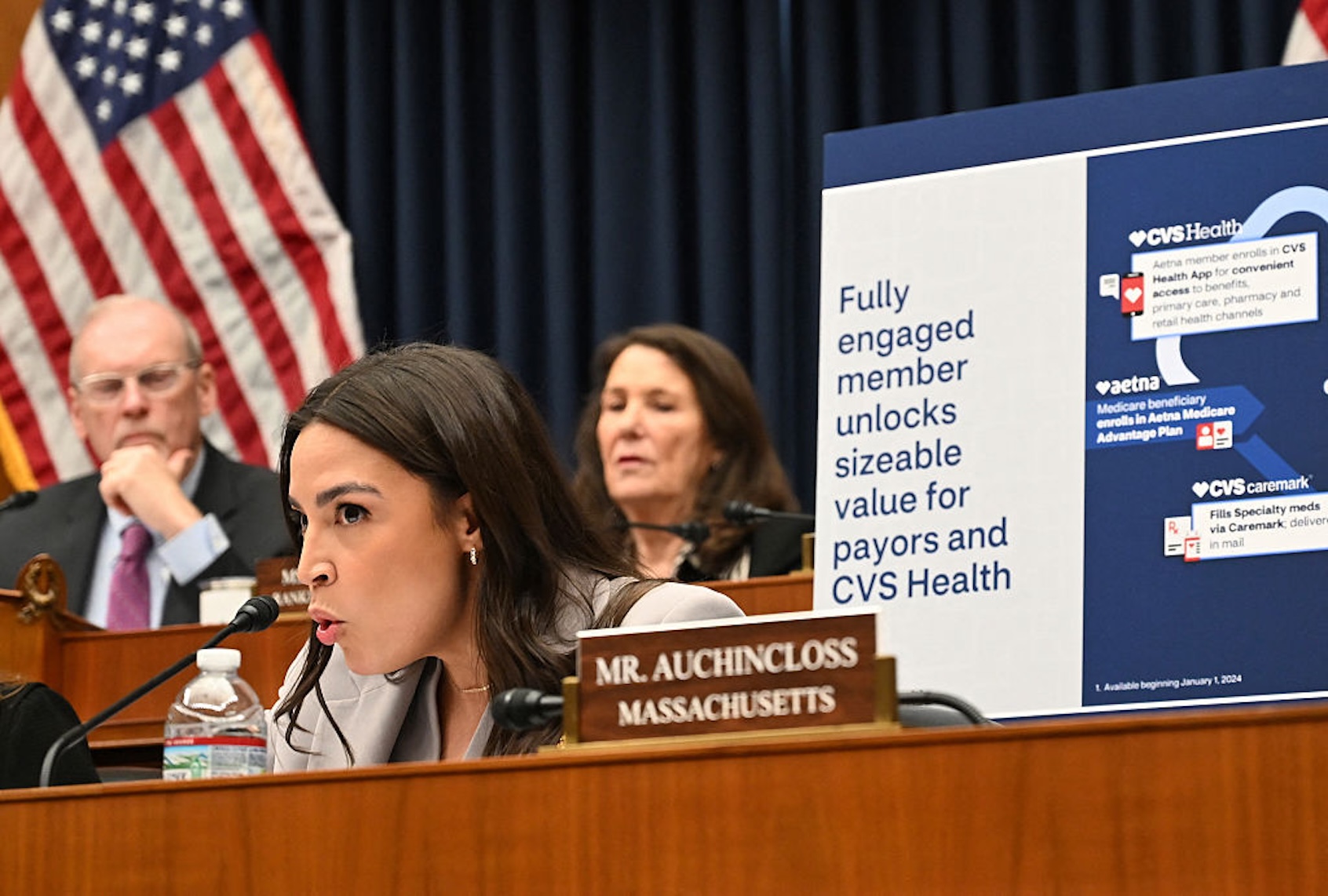
UnitedHealth Group is the largest of these conglomerates, but it’s hardly the only firm that operates this way. CVS Health owns Aetna, one of the nation’s largest insurers, in addition to the more than 9,000 CVS pharmacies it’s best known for. It also owns CVS Caremark, one of the nation’s largest PBM.
In theory, PBMs exist to save employers money by overseeing all the drug-related details of health insurance plans, and using their bulk-buying power to negotiate with pharmaceutical companies for big discounts and rebates. PBMs often tell employers that they pass along all the discounts and rebates they receive to the employer, minus a small fee for their services.
What they typically don’t mention is that many PBMs are affiliated with foreign-based entities called “group purchasing organizations.” In 2025, the House Oversight Committee launched an investigation into whether PBMs are using these overseas entities to skirt government oversight. Lawmakers have raised concerns that these arrangements allow PBMs to retain rebate-related revenue and fees within opaque corporate structures, rather than transparently passing those savings on to employers and patients.
Meanwhile, insurers continually deny coverage for treatments and procedures that patients need. They often force doctors to get insurer approval — known as prior authorization — before prescribing, or they force patients onto less effective drugs. That places an immense administrative burden on physicians, who can spend an average of 12 hours per week completing prior authorizations, time that they’d certainly rather spend with patients.
Prior authorization can have dire consequences for patients. More than eight in 10 patients that face prior authorization simply give up on treatment. About a quarter of doctors say that prior authorization delays have led to a serious adverse event for a patient in their care — whether that’s hospitalization, permanent damage or death.
Breaking up the healthcare conglomerates that have enriched themselves by immiserating patients and cheating employers is good policy.
Polls show that voters overwhelmingly support bold healthcare reform. According to a recent poll, nearly seven in ten insured Americans identified either lowering out-of-pocket costs or nixing prior authorization as the single most important change they want from their health insurance. It would be a mistake for Democrats to content themselves with merely tweaking the Inflation Reduction Act, the party’s last major healthcare reform, which primarily focused on reducing the federal government’s pharmaceutical spending.
That kind of incrementalism won’t work — Democrats cannot win by being Republican-lite. We need to target the insurer and PBM practices that directly drive up Americans’ out-of-pocket costs and force too many people to choose between filling their prescriptions and filling their gas tanks.
If Democrats are looking for a 50-state strategy for the midterms — something I insisted on as chair of the Democratic National Committee during the 2006 blue wave — Sen. Warren’s bill offers a great place to start.
A parasite called cyclosporiasis, which can cause explosive and watery bowel movements, has infected as many as 4,000 people in the United States this year. | Paige Vickers/Vox; Getty Images
As if we needed one more thing to worry about so soon after the hantavirus scare, there is a new public health threat for Americans to contend with: a rapidly escalating outbreak of, of all things, diarrhea.
It’s a parasite-borne illness called cyclosporiasis. It can cause explosive and watery bowel movements — and it is wreaking havoc across the United States this summer.
How bad exactly? As of July 15, Michigan’s health department is reporting 3,762 cyclosporiasis cases, up from 1,500 late last week. Forty-four people have been hospitalized as of July 9. To put that number in context, the state normally sees about 50 cases in a year. To the south, at least 364 people have been infected in Ohio. According to a USA Today compilation of state health department data, almost every state has reported at least one cyclosporiasis case this year.
This is not our first bout with a cyclosporiasis outbreak. In 2013, the US saw more than 600 cases, and more than 500 people were sickened across the country by contaminated McDonald’s salad meals in 2018. Cyclosporiasis is caused by the parasite cyclospora, which can infect people when it is attached to fresh produce and then consumed. It does not, fortunately, spread from person to person. We do know some likely culprits: Bagged salads, basil, cilantro, peas, and berries have been linked to prior outbreaks.
Watery diarrhea — described by public health authorities as “frequent” and “sometimes explosive” — is the most common symptom. People can also experience cramping, bloating, nausea, and vomiting. Symptoms can start anywhere between two days and two weeks after a person eats tainted food. No one has died, and thankfully, cyclosporiasis is rarely fatal. But it is an extremely unpleasant experience that could last for up to a month without treatment, and certain people, such as folks who are immunocompromised, are at higher risk of more serious complications.
There are steps that everyone can take to protect themselves from cyclosporiasis (more on that in a moment). But the current situation is challenging, because, right now, officials don’t actually know which products are causing the outbreak. “At this time, no specific produce grower, supplier, or type of produce has been identified as the source,” Laina Stebbins, a spokesperson for the Michigan Department of Health and Human Services, said in a statement to Vox on Friday. On Monday, Michigan officials said they believed lettuce or bagged salad products were to blame, but still had not identified specific brands or items that could be linked to the growing outbreak.
It’s a public health mystery, one that results from both the sneaky nature of the parasite itself and our increasingly globalized food supply. It could be a while before we learn the answer. But, in the meantime, if you’ve found yourself spooked by some of the recent headlines, here’s what you actually need to know.
Why cyclosporiasis outbreaks are so hard to trace
Cyclosporiasis makes itself hard to find. Scientists don’t know exactly how much of the parasite a person needs to be exposed to to become infected — one of many unknowns about the basic features of the bug. The foods carrying this pathogen may not be contaminated with much of it at all, which makes any preemptive testing a challenge.
And, on top of that, there can be a long gap between the parasite being introduced to the food supply and when a person actually gets sick, which further complicates any efforts to trace the outbreak’s origins. A fruit or vegetable could be contaminated in one of the various tropical or subtropical regions of the world where cyclosporiasis is more common, well before it lands in your grocery store in the United States.
“Oftentimes when we see these outbreaks, what happens is that somewhere in the world, a contamination event occurs, and then that produce is then shipped throughout the area and it could go anywhere in the world,” Dr. Kathleen Linder, the hospital epidemiologist at the Veterans Affairs hospital in Ann Arbor, Michigan, told Vox.
Sometimes, the source can be closer to home: A 2020 outbreak appeared to be linked to produce grown in Florida and shipped to a plant in Illinois that produced bagged salad kits. But, as if to demonstrate the difficulty of doing this work, the FDA said it could not conclusively prove those farms were the source of the outbreak.
The point is: We have a food production supply chain that sources produce and combines ingredients from all over the country and the globe — providing more opportunities for a parasite like this to find its way in.
“We’re relying more and more on produce coming from other countries so that we can have raspberries all year round,” Joseph Eisenberg, a professor of epidemiology and global public health at the University of Michigan, told Vox. “That kind of luxury only happens when we centralize our food distribution system.”
Even once an outbreak is underway, it can be hard to pinpoint the source. Symptoms may not occur for up to two weeks after a person eats contaminated food.
“I can barely remember what I had for dinner a couple nights ago; there’s no way I’m going to be able to remember a week ago,” Linder told me. “It takes a lot of time and a lot of manpower to get all that information collected.”
As with any outbreak under the Trump administration, the Centers for Disease Control and Prevention is responding with significantly fewer workers and resources than it used to have. To be clear: This cyclosporiasis outbreak could have happened either way. This parasite has sparked widespread infections before. But Linder said that because the CDC has rolled back some of its national reporting programs, it’s been left to the states to take the lead — and that has made it harder to pull together a complete picture of the outbreak.
“It has been very hard to get updated information,” Linder said. “The information is lagging a little bit behind because it’s being done at the state level.”
What you can do to reduce your risk of cyclosporiasis
For scientists, the work ahead involves better understanding the properties of the pathogen itself and developing surveillance tools and techniques that allow us to catch contaminated food before it reaches people. But what can the rest of us do right now, during an active outbreak?
According to various public health authorities, the short version is to cook the produce that you can — heat is the absolute best option for eliminating cyclosporiasis — and to clean your raw fruits, vegetables and herbs as thoroughly as possible.
Wash everything with running water before eating or preparing it. Scrub the firmer fruits, like melons and cucumbers, with a produce brush if you have one. If you see damaged or bruised areas on your fruit or lettuce, cut them away. Even if a food’s package says it’s prewashed, Linder said she advises people to rewash it just to be sure.
Previous outbreaks have specifically been linked to bagged lettuce and salads, so you might consider buying whole heads of lettuce instead. If you do that, cut away the outer layers and then separate the inner leaves to wash them. For green onions, you should cut away the bulby root and the outer layer and then wash them thoroughly. Raspberries were associated with one of the first US outbreaks in the 1990s, and they are particularly tricky to clean given their bumpy surfaces; you may want to consider eating them only after cooking (to prepare a jam or compote, for example) or opt for frozen raspberries for the time being. (Freezing is believed to reduce, if not completely eliminate, the parasite.) And be careful with leftovers: You should refrigerate any unused foods that you plan to eat later within two hours.
You could also consider buying locally sourced foods, Linder said, because cyclosporiasis is more common in food sourced from other parts of the world.
If you do start to experience extreme diarrhea, make sure to hydrate very well to avoid dehydration. Linder told me that if somebody experiences dizziness, they can’t keep fluids down, or they have very dark urine, then they should seek immediate medical attention. And anybody experiencing those symptoms should get in touch with their health care providers and their local health department.
Sooner or later, experts will probably figure out what caused the current outbreak, whether it’s one source or several. But cyclosporiasis will still be a concern in the future; it’s a byproduct of the food system we have built. It serves as a potent reminder about the importance of good food hygiene. A little extra effort to wash your food before you eat it could save you a lot of pain later.
Update, July 15, 2026, 11:45 am ET: This story, first published July 10, has been updated with current case numbers and products linked to the outbreak.
Instead of death being declared because the brain has stopped functioning, in DCD, death is declared after circulation ceases and the heart stops beating. | Miguel Porlan for Vox
Emily Hoffman was walking home from lunch in the Pittsburgh neighborhood of Squirrel Hill in February 2023, when a driver turning left struck her on the crosswalk.
Hoffman was 34. By the time paramedics arrived on the scene, she had gone into a traumatic cardiac arrest. They strapped her onto a machine that delivered automated chest compressions and rushed her to UPMC Presbyterian, a major trauma hospital in Pittsburgh.
Over the next several days, doctors performed multiple surgeries, kept Hoffman on a ventilator, and waited until she was stable enough for an MRI. The scans showed multiple strokes and severe traumatic brain injury. She was alive, but her family understood that she was not going to make a meaningful recovery to a life she would have wanted.
The next Thursday, a week after the crash, Emily’s parents and her sister Beth Hoffman met with the care team and decided to remove ventilator support to allow her to die naturally. Organ donation came up only afterward. Emily was already a registered donor, and Beth knew it was what her sister wanted.
For most of the short history of organ transplantation, Emily would not have been the usual kind of organ donor.
Almost all transplanted organs once came from patients who died in one specific and rare way called brain death, in which the brain has irreversibly stopped functioning, even as machines keep the heart beating and the organs supplied with oxygen. Brain death is extraordinarily rare, but it happens often enough to create a workable — though far from sufficient — supply of life-saving organs.
But Emily was not one of the brain-death donors. Even after the strokes and brain injury, she still had some reflexes. She was dying, but not brain dead.
Her donation followed a different path, one that has transformed American transplantation in the last decade. It is called donation after circulatory death, or DCD. Instead of death being declared because the brain has stopped functioning, in DCD, death is declared after circulation ceases and the heart stops beating. Many more people die this way than by brain death.
Death by circulatory criteria has been legally recognized since the 1980s, but for decades, doctors rarely recovered organs this way, because, once blood stops moving through the body, organs begin to deteriorate within minutes. In recent years, however, new machines and surgical techniques have helped change that, giving doctors the ability to preserve organs outside the body, making DCD far more viable.
Hoffman’s donation is hardly an outlier anymore. In the last decade, DCD has gone from a rare practice to something that now accounts for nearly half of all organ donors who have died in the United States. In 2000, DCD donors supplied just 219 organs (kidneys, livers, lungs, hearts, and pancreas combined) to the transplantation system in the US. In 2025, DCD brought in close to 17,000 organs. (Most transplanted organs, about 85 percent, come from dead donors, though some organs, most often kidneys, can also come from living donors.)
That growth has saved lives, but it has also pushed transplant medicine into an unusually sensitive moment: the time after a family has decided to let their loved one die but before death has actually occurred.
In brain-death donation, a patient has already been declared dead before the possibility of donation is raised with the family. Because most brain-dead donors are on ventilators, with machines supplying oxygenated blood to their organs, transplant teams can take their time with the donation process.
DCD doesn’t offer that same cushion. Because organs deteriorate so quickly after circulation ceases, the work of donation — the testing, matching, surgical teams flying in — has to be set in motion once the family has decided to withdraw life support but before the patient has died.
This is where the tension in DCD begins. The process pushes transplantation into the narrow interval between that decision to let someone die and the moment death occurs. It creates a situation with almost no parallel in medicine: one set of hands caring for the dying, even as another prepares to recover and transplant their organs.
The medical system tries to manage that complexity with a strict procedural sequence. First, hospital doctors and family conclude that no treatment will bring the patient back to a life they would have wanted. Only then, and only from a separate team, does the word donation come up. The firewall is in place so that the need for organs never shapes the decision to let someone die.
“Ethically, you want to make sure that those two are uncoupled,” said Wade Smith, director of the Neurovascular Service at the University of California San Francisco.
But as DCD has scaled up, more weight is put on that narrow interval. What was once a rare event is now routine in hospitals across the country, carried out by teams with different levels of experience and overseen through rules that can vary from one place to another. At the same time, the organizations that handle organ donations are under new federal pressure to acquire and distribute more organs from eligible donors.
DCD has saved thousands of lives by making donations possible from patients who once wouldn’t have been donors. Hoffman’s donation improved several lives at once: Her kidneys went to two men, her liver to a third recipient, and her corneas helped give sight to a nine-month-old baby.
But its growth has also made the fragile period before death more consequential: how families are told, which steps can be taken while the patient is still alive, how consistently hospitals and organ donation teams follow safeguards, and who has the authority to stop the process if something feels wrong.
When DCD was still rare, these questions stayed at the edges of transplantation. Now, they are moving towards its center, as a lifesaving practice becomes a routine part of how Americans die and donate.
Key takeaways
In the past decade, there’s been a boom in the number of organs available for transplantation in the US.
Much of that growth has come from a little-known donation pathway called donation after circulatory death, or DCD.
DCD allows patients who are dying but not brain-dead to donate organs after their life support is withdrawn and their circulation stops.
That boom has raised questions about medicine’s ability to manage the boundary between life and death.
The breakthrough
Modern transplantation is a relatively young field, only about 70 years old. And from the beginning, transplantation has depended on the novel medical achievement of keeping organs functional after a person had been declared dead.
The mechanical ventilator, developed in the 1950s, made that possible. It could keep a body breathing, and its heart beating, even after the brain had stopped for good. That created, for the first time, a situation where patients were deceased by every older measure, even as their organs were still functional.
Surgeons were initially wary of recovering organs, largely because the legal lines between life and death had never been clearly drawn. Then, in 1968, a Harvard committee proposed a definition of brain death. By 1981, a model law gave states the language to recognize two ways of legal death. Your heart and lungs could stop for good (circulatory death) or your entire brain could (brain death). Today, every state recognizes some version of that framework.
With those lines in place, transplant teams could work with more confidence, and brain death turned out to be close to ideal for them. Because a ventilator kept the heart beating and blood moving through the organs, even after death, there was no ticking clock to race against. The hospital staff had time to evaluate the organs, sometimes convince families to donate them, find the right recipients, and bring in surgical teams before recovery began.
The problem was always with the math. Brain death is rare — only about three in 1,000 deaths happen in a way that leaves organs usable for transplant. That puts a hard biological ceiling on how many ideal donors there could ever be.
But demand for the organs had no such ceiling. Nearly a million Americans are diagnosed with heart failure each year, while surgeons performed just 4,636 heart transplants in 2024, after DCD became a widely used part of transplantation, up 81.5 percent from 2013. There are “just not enough organs to go around,” said Ashish Shah, chief of cardiac surgery at Vanderbilt University. The kidney numbers are even bleaker. Over 500,000 people are on dialysis in the US, but only a fraction will ever reach the waiting list, and even among those who do, many will die before receiving a transplant offer, said Dorry Segev, a transplant surgeon and researcher at NYU Langone.
The modern DCD boom grew out of this desperation, presenting the possibility of donation in far more common cases of death that transplantation surgeons had rarely been able to draw on before: catastrophic strokes, car crashes, cardiac arrests, and other injuries that left patients with no meaningful chance of recovery but short of brain death. But with DCD, the clock suddenly became a factor. Once circulation stopped, the organs deteriorated fast, and, in many cases, they were ruined before surgeons could recover them.
Because of those challenges, DCD stayed marginal for decades, at well under a tenth of all donations. Those numbers ultimately spiked because of several things that happened almost simultaneously.
One surprising thing
While reporting this story, I learned that the opioid crisis also expanded America’s supply of donated organs. Many people who died from overdoses in the US were young and otherwise healthy, making their organs suitable for transplant. It’s a grim reminder that transplantation lives in this space between one family’s — or community’s — catastrophe and another’s chance.
The first was technological. New machines, like TransMedics’ Organ Care Systems — which were first used in 2015 in the UK — could keep a recovered organ alive outside the body, pumping it with warm, oxygenated blood instead of packing it in ice, allowing a heart to beat and function as normal inside a box. This meant that even if there was delay in recovering an organ, that damage could be limited, even reversed, once the organ was put in the machine.
Other teams found ways to use machines originally developed to support failing hearts and lungs to restart circulation inside the bodies of donors after death had been declared. Transplant teams in Spain and the UK began adapting that technology before American programs picked it up for DCD hearts around 2019. Both approaches helped extend the time to successfully perform DCD.
“As soon as the results were good, the big American centers took it on,” said John Dimarakis, a cardiac transplant surgeon at the University of Washington.
Policy changes also helped push DCD further. In Hoffman’s case, the donation process was coordinated by CORE, the nonprofit responsible for organ donation in the Pittsburgh region. Organ procurement organizations, or OPOs, cover a particular region in the US, and they work with hospitals in that region to evaluate potential donors, speak with families, arrange testing, and offer organs to transplant centers. There are 54 such OPOs in the US, which are certified and regulated by the Centers for Medicare and Medicaid Services (CMS).
For years, critics argued that OPOs were judged according to weakly defined standards based on numbers they reported themselves, and poor performers were rarely penalized. But in 2020, new federal rules began ranking them against one another, with a mechanism to strip the worst performers of their territory. Facing the threat of losing their monopolies, many OPOs began pursuing harder cases they would’ve earlier passed over, according to Greg Segal, who founded patient advocacy group Organize. A larger share of those more complicated donors were DCD.
Still, no single force explains the speed of DCD’s rise. “Technology plays a big role in it,” said Nader Moazami, a cardiac surgeon at NYU Langone who helped pioneer one of the new techniques. “But it doesn’t explain how suddenly 50 percent of our donors are DCD.” In 2000, there were only 118 DCD donors in the United States. By 2025, there were 8,137. Brain death donation grew over that same period but far more slowly — from 5,867 donors a year to 8,416.
Whatever the mix, it’s clear that DCD has led to more organs, shorter waits, and saved thousands of lives that otherwise would have ended on a list. “People who have been waiting now wait less,” Dimarakis said.
On a chart, it looks like an unambiguous triumph — until you step into a hospital room.
The passage
Beth Hoffman remembers her sister Emily’s last morning. She read aloud an email from Bradley Whitford, Emily’s favorite actor from the TV drama The West Wing, who had written after hearing what had happened. Then, a playlist of Emily’s favorite songs played as the breathing tube came out. Within about 10 minutes, while “For Good” from Wicked filled the room, her sister was gone.
What Beth mostly didn’t see was the second sequence unfolding around her: the referrals, tests, calls, and scheduling that would turn Emily from a dying patient into an organ donor.
Federal rules require every hospital to alert their organ procurement organization whenever a person may be nearing death. The OPO screens those referrals, and most go nowhere. Alexandra Glazier, who runs the OPO that covers most of New England, says hers get about 50,000 such referrals a year. Only 2 or 3 percent turn out to have any medical possibility of donation at all.
Emily was one such possible case for her Pittsburgh hospital’s OPO. The organization had to reach out to her family; explain what DCD would involve; and, then, start the work that had to happen while she was still alive: reviewing her medical history, testing whether her organs could be used, matching them to recipients, and arranging the surgical teams who might fly in to recover them.
Most families never see much of that work, but some do. Smith, the UCSF neurologist, watched a family agree to withdraw life support and donate, set a time, and gather relatives for a final goodbye, only to learn that the withdrawal had to wait because the OPO still needed more tests. Some families, after being told their dying relative must stay on machines longer for donation’s sake, walk away.
For the Hoffmans, things proceeded more quietly. When the time came, Emily was wheeled into the operating room, and the breathing tube was removed there. The surgeons who would recover her organs were kept away from the withdrawal and death declaration. They often fly in from their own hospitals — sometimes several at once for different organs — but they’re walled off from everything that comes before. “We are not involved in that process,” said Dimarakis, the cardiac transplant surgeon at the University of Washington, “because it’s not ethical for us to be involved.”
That separation is the line DCD depends on. One team cares for the dying patient, withdraws support, and declares death. The other waits outside that decision and recovers the organs only after. The OPO stands between them, coordinating the donation without letting the firewall be breached.
Then comes the waiting. Once the ventilator is out, the clock starts ticking. If the heart doesn’t stop within a window — often about two hours — the organ recovery may be called off, and the patient is returned to end-of-life care. But when circulation does stop, as it did for Emily, the team counts exactly five more minutes to make sure it won’t restart on its own. Only then can a hospital physician declare death, and only then can the transplant surgeons begin.
DCD rests on a simple promise: The need for organs never causes the death. The death is already coming, and donation only changes what can come from it.
But a new frontier in DCD complicates that promise.
The reversal
Normally, after death is declared, most DCD organs are removed and preserved outside the body, either on ice or on machines that circulate oxygenated fluid or blood. The goal is to slow the damage that begins the moment circulation stops.
Then, around the mid-2010s, transplant teams in Spain and the UK began using a newer technique that restores circulation inside the dead donor’s body, before the organs are removed. It’s called normothermic regional perfusion, or NRP.
In one version of NRP, called abdominal NRP, blood is meant to be restored only below the diaphragm to preserve organs such as the kidneys and liver. In a more controversial version called thoracoabdominal NRP, it runs through the chest, as well, and the heart starts beating again.
For the transplant team, especially heart surgeons, the appeal is clear. Kidneys and livers can survive a stretch without circulation, but a heart is harder to preserve. Once it has stopped, there’s no easy way to know whether it will beat reliably again. NRP helps answer that question by restarting it inside the donor’s body after death has been declared, where surgeons can watch it work before deciding whether to recover it.
Shah, the Vanderbilt cardiac surgeon, says the technique lets doctors take hearts from donors who otherwise would not be able to yield a workable one.
But this kind of NRP is unsettling for the very reason that it is useful. If a death is declared because the heart has stopped, what does it mean to start it again inside a donor’s body, often only minutes later? Is that still death? Or something else?
The controversy isn’t simply that the heart beats again. A beating heart is not, by itself, the same as a living person. The heart of a brain-dead patient can beat, too, can be kept going by machines, and that doesn’t mean the person is alive. The deeper concern is whether restored circulation in the body could reach the brain, which could potentially restore consciousness.
To prevent blood from reaching the brain, surgeons clamp or cut the vessels that carry blood to the head before circulation is restored. That distinction is central to the defense of NRP, and it lets surgeons say they are restoring circulation and restarting the heart, not the person.
But those safeguards haven’t always worked. In a safety notice last November, the Organ Procurement & Transplantation Network (OPTN), the federal system that oversees transplant policy and data, said it had received “verified reports” that blood had unintentionally reached the brain and brainstem during NRP. Such events are extremely rare, the notice said, but can occur when a clamp fails or blood reaches the head through an unrecognized route. The notice asked transplant programs using either form of NRP to strengthen their safeguards and report any failures. But those recommendations were not national requirements and as of May 2026, the OPTN was still developing formal standards for NRP. For Claire Morgan, a transplant surgeon from North Carolina who has criticized NRP’s rollout, that is a central weakness. “It’s a bulletin. It’s not a policy,” she said. “There’s no punishment for not reporting.”
But even if blood never reaches the brain, NRP can still introduce deeper ambiguity into our understanding of circulatory death. In the first few minutes after a heart stops, it can often be brought back, an event that happens every day in a busy emergency department. In conventional DCD, however, doctors don’t try to restart the heart, because a patient or family has already decided against being revived. It is that decision, not just the stopped heart itself, that turns the moment into a death. The same goes for anyone who dies under a do-not-resuscitate order.
NRP puts pressure on that logic. The circulation declared permanently gone is deliberately brought back. “There’s a misalignment between NRP practices and the legal standard for how death is defined,” said Glazier. You cannot, critics argue, pronounce someone dead because the circulation will never return — and then return it.
Robert Truog, professor of Medical Ethics, Anaesthesia, & Pediatrics at Harvard Medical School, supports NRP but thinks the possibility of blood returning to the brain is the issue that matters most. “The only questions are, is there a risk of pain or suffering in the procurement of the organs?” he said. And there’s a possibility of that if the circulation is restarted in the brain.
None of this is settled, which is why some hospitals refuse to perform NRP at all. Moazami pioneered the NRP heart technique in the US and practices it at NYU Langone. “But you cannot do it at Columbia,” he said, “just five miles away.” Glazier’s OPO, one of the country’s largest, said her organization has done roughly 650 NRP cases since adopting the practice — but only the abdominal kind, holding off on the heart version until the national protocols are better standardized.
Claire Morgan, a transplant surgeon from North Carolina who has criticized the rollout of NRP, is more worried about what happens if something goes wrong. The donor cannot complain, families may never know if there was a concern, and clinicians who speak up may have limited protection if they challenge what happened in the operating room.
All of that matters, because NRP is already far from marginal. The Organ Procurement & Transplantation Network (OPTN), the federal system that oversees transplant policy and data, only began collecting data on whether NRP was used in a DCD recovery in October 2025. In the first five months of that reporting, from October 1, 2025, through February 28, 2026, 3,463 DCD donors were recovered nationally, according to data shared by the OPTN with Vox. More than half of those involved NRP; though, OPTN doesn’t collect data on which kind.
Vox’s analysis also found that NRP cases were concentrated among some organ procurement organizations. The top 10 OPOs accounted for 47 percent of all DCD recoveries that used NRP.
The patchwork
The core safeguard in DCD — that the decision to withdraw life support must come before questions about donation — is widely accepted. But many of the details around that sequence that shape a family’s experience, or a patient’s protection, are still handled differently from hospital to hospital, OPO to OPO.
“The entire process of DCD or donor withdrawal is not very standardized across the United States or even within states, even within different hospitals in the same city,” Moazami said.
That can mean differences in what families are told about the donation process, what medications are considered appropriate before death, whether NRP is allowed and how it is performed, and who has the clear authority to pause or stop the process if someone believes something is wrong.
That unevenness matters more now, because the transplant system has been trying, with good reason, to recover more organs. For years, many in the field, and those who depended on it, argued that the organ procurement organizations were leaving transplantable organs on the table. Greg Segal, whose advocacy group Organize helped push for stronger OPO accountability, compared the old system to a canvassing campaign where you only knock on the easiest doors. “The problem with OPOs is they were only doing the much easier ones,” he said.
A 2020 rule from the Centers for Medicare & Medicaid Services, the federal agency that oversees OPOs, was meant to change that. It ranked OPOs against one another and created a path to penalize low performers by stripping them of their territories. That policy appears to have had some impact, but it is hard to separate from other forces driving DCD’s rise including new preservation technology, like NRP and broader clinical adoption. Jeffrey Trageser and Charles Strom from the Association of Organ Procurement Organizations, the trade group that represents OPOs, argued that the metrics are too broad, evaluating OPOs partly on whether transplant centers ultimately accept organs and not fully accounting for regional differences such as age of potential donors, local rates of cancer, or how far organs must travel to reach transplant centers.
This pressure to recover more organs has also made some OPOs seem more aggressive to the clinicians working besides them. “Some people view them as vultures, which is horrible,” said Smith, the UCSF neurologist who has experienced the tension from the hospital side. “They’re trying to do their job.” Still, he added, “when you impose that [pressure], then it changes how aggressive they are.”
Both things can be true. The old system needed pressure to perform better. And pressure can create risks, or perceived risks, in a process that depends on careful judgement around a dying patient.
And the safety question isn’t a theoretical concern either. A March 2025 investigation from the Health Resources and Services Administration (HRSA), the federal agency that oversees the national transplant system, documented what can happen when those safeguards fail. In a review of attempted DCD cases at Kentucky Organ Donor Affiliates, an OPO that covered Kentucky and parts of Ohio and West Virginia, HRSA found recurring problems about staff missing vital signs in patients that raised concerns, failed to work collaboratively with hospital medical teams, failed to respect family decision-making, and documented medical data poorly. HRSA said the pattern suggested “organizational dysfunction” and a weak safety culture.
One OPO’s failure does not prove that DCD is broadly unsafe or that OPOs across the country behave the same way. But the Kentucky review showed how badly things can go when the line between patient care and organ recovery is not honored.
Since then, federal officials have been trying to close some of the gaps. HRSA has pushed for clearer family education around DCD and more standardized reporting on ventilated patients referred to OPOs, as well as opened up a reporting channel that sends misconduct concerns directly to HRSA. In a separate case, the Department of Health and Human Services also moved to shut down an OPO in South Florida after finding unsafe practices, underperformance, and paperwork errors.
Organ donation is a touchy subject, because it relies so much on the goodwill and the trust of the people who agree to give their organs so they can live on in others. But the procedural issues also matter, because there are lives at stake on both sides of the process.
Around 13 people die each day in the US waiting for organs. In that desperate landscape, the rise in DCD has led to many lives saved and helped several more live better, fuller lives. The dearth of organs even compelled my former Future Perfect colleague Dylan Matthews to sign up as a living donor and donate his kidney to a complete stranger. (You can read his story here).
And the value of the donation is not just measured in recipients saved. For the Hoffmans, the knowledge that Emily’s organs helped others offered a solace they had not expected. Emily “gave the gift of life in her death,” Beth told me.
That is the highest ideal organ donation — and DCD – can achieve: a death already coming that still changes the lives of others in need. The case for DCD is clear, but its future depends on its proponents’ ability to protect both patients and public trust.
Clarification, July 1, 6 pm ET: A previous version of this post described how the NRP process intends to stop blood from reaching the brain, but did not acknowledge cases where that does not go according to plan. The post has been updated to include a safety notice from the Organ Procurement & Transplantation Network, which said it had received “verified reports” that blood had unintentionally reached the brain and brainstem during NRP. The post has also been updated to clarify that Dorry Segev and Nader Moazami are doctors at NYU Langone.

 Login
Login