Last Wednesday, the head of an AI tech company casually announced, in a long-winded post on X, a discovery that, if true, would represent a major breakthrough in biomedical research. Dario Amodei, CEO of Anthropic, wrote that his company’s large language model Claude had found “a molecular machine that we suspect could represent a new gene editing mechanism.”
So what does this “molecular machine” actually do? No one is entirely sure yet. But that hasn’t stopped tech bros from already upholding it as a new version of CRISPR, the enzyme-wielding tool that cuts up DNA like nobody’s business, sparking a revolution in ultra-precise genetic modification that has spanned research in everything from agriculture to cancer therapy. It’s no surprise its discoverers earned a Nobel Prize in Chemistry. If an AI program really just made a similar discovery, it would be big news.
Indeed, Amodei goes on to say that this finding could be a step toward developing cures for most diseases in five to 10 years. The company’s press release goes into more detail, but basically says that Claude was prompted to search through a massive database of DNA sequences for reverse transcriptases, enzymes that copy RNA into DNA. “After 21 hours spent searching this data by roughly 950 agents using 210 million tokens, one of the agents spotted something remarkable: a repeating pattern of DNA sequences that occurs next to the gene for an odd-looking RT,” the statement reads. Except that nothing about that is so “remarkable,” at least according to numerous people who study and work in this field.
“It is too soon to say that Claude — or the team of human researchers involved has discovered a ‘new CRISPR,’” Dimitri Perrin, an associate professor at the Queensland University of Technology, writes in The Conversation. He goes on to emphasize that what Claude found — a previously uncharacterized enzyme system found in viruses that infect bacteria — isn’t necessarily going to be useful. More research is needed, but Perrin explains that for now, the discovery is “CRISPR-like in its architecture, but there is no evidence that it is CRISPR-like in its function.”
“Claude’s work isn’t even close to being in the same league as DeepMind’s AlphaFold system for predicting protein structure, which is proving to be truly transformative,” Michael Le Page, a senior reporter at New Scientist, wrote. Social media exploded with other examples of people dunking on Anthropic’s PR, with Simon Maechling, a PhD chemist, writing on X, “Claude discovered something in biology. Nobody knows what it does. But we already have the press release. … Finding something interesting isn’t the same as understanding it. Understanding it isn’t the same as showing it works. And showing it works isn’t the same as making it useful.”
Perhaps AI researcher Timnit Gebru summarized it best: “Please see what experts in this field are saying about this ‘discovery’ and not these scammers or press stenographers. This hype DDOS from them isn’t going to stop any time soon and we’ve seen how the mainstream media is doing press-release-as-a-service at this point.”
So it seems like Anthropic is making some pretty bold claims over something that is mildly cool and worth investigating, but at this point, also seems unlikely to revolutionize medicine or science. Why does this matter? A tech company making extreme claims is far from new. Big deal. But contrast all this hype (not to mention the energy spent debunking it) with the buzz just a few weeks ago about how, in just a few years, AI will supposedly gain sentience and kill off humanity. Consider how Anthropic CEO’s Amodei is among those pushing such a narrative, including warning that his company’s tools carry a risk of being used for cyberattacks or terrorism, including developing deadly viruses. Taken together, this presents a false dichotomy: AI will either end disease and suffering or inflict it in untold measure. Might there be a third option?
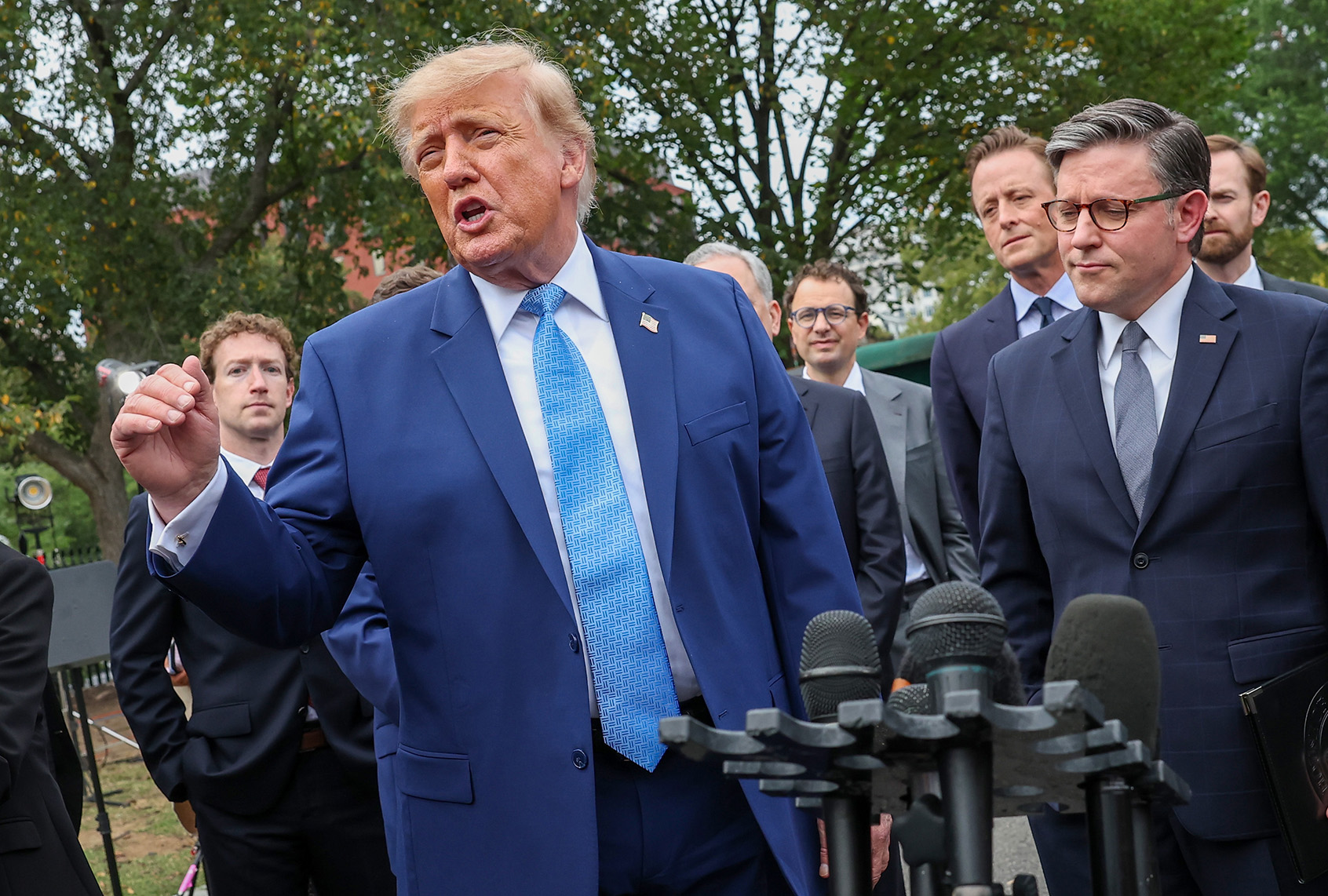
For anyone who buys the AI spiel, it’s a tool with boundless power. For now, however, the tech companies still rely on an old-fashioned kind of power offered by the state, which is precisely why other tech CEOs were seen sucking up to Chinese President Xi Jinping during his recent U.S. vacation. Amodei missed meeting Xi, for what it’s worth, but had a private dinner with President Donald Trump late Sunday night and later this week joined other tech leaders for a luncheon hosted by Trump and House Speaker Mike Johnson. There — joined by Nvidia CEO Jensen Huang, Tesla and SpaceX CEO Elon Musk, Meta’s Mark Zuckerberg and others — the president signed a “morally binding” artificial intelligence document, which sounds promising, until you hear Trump repeatedly tell reporters that tech companies can supervise themselves. “The self-regulation is very important,” Trump said. The document signed seems to have zero enforcement or legal mechanisms, so in this context, it appears “morally binding” just means “self-policing.”
It’s no mystery why the president — heavily invested in the AI industry as he acridly dismisses any notion of regulation — is cozy with the idea of AI’s alleged abilities. In his latest effort to sell the American public on the coming “golden age” of AI (of course Trump would use that phrase), on Monday the Trump administration both launched America.gov, an AI chatbot powered by Google’s Gemini and Elon Musk’s Grok, and signed an executive order to rename AI “super intelligence.”
As Gebru observed, the grift has no end. All the more reason to pour cold water on outrageous claims about flagging little enzymes in huge databases. (Let’s avoid anthropomorphizing these programs by using the verb “discover.”) The goal of Anthropic’s AI propaganda — because that’s what it is — is to get most people skimming past the headlines to only catch “AI finds new CRISPR” and think a cure for cancer and world peace are right around the corner. All we have to do is hand the keys and all our money to Silicon Valley. Whether it’s utopia or dystopia, that’s the pitch: cede control of this tech to the billionaires in charge. In that sense, blindly swallowing AI’s positive hype can be as dangerous as its alleged existential risks.
Chinese President Xi Jinping and US President Donald Trump in the White House on September 24, 2026. | Kevin Dietsch/Getty Images
The national conversation about AI in the US is full of fear: fear about AI’s potential to end humanity, fear of data centers moving in, fear that government officials will do absolutely nothing even as the industry pleads for regulation, you name it.
But the AI conversation looks remarkably different across the Pacific.
In China, driven by public enthusiasm and a state-backed push for AI dominance, the country is in the midst of a large-scale AI integration into all facets of its society, driven by Chinese leader Xi Jinping’s support for the technology.
“He’s super AI-pilled,“ said Kyle Chan, an expert on China’s technology development and industrial policy at the Brookings Institution. “When you look at his speeches, when you look at Chinese policy documents, everything is about rolling AI out to as many domains as possible: manufacturing, services, education, healthcare, pharmaceuticals, and of course the military. Everything is about trying to integrate AI.”
Beneath this push for a high-speed AI adoption across Chinese society lies a regulatory framework designed to safeguard political stability and keep boundaries on the kind of information AI models are able to share.
Chan joined Vox’s Today, Explained podcast to speak with co-host Sean Rameswaram about the different AI anxieties in the US and China, and whether joint regulations on AI safety are possible while the two countries are engaged in an AI arms race.
Below is an excerpt of their conversation, edited for length and clarity. There’s much more in the full podcast, so listen to Today, Explained wherever you get podcasts, including Apple Podcasts, Pandora, and Spotify.
One thing that really struck me about the way the Chinese government is approaching AI is that China has this explicit goal, right?
China has some concrete plans to boost AI adoption through the country, including its recent AI-plus initiative. And their goal is to try to boost the penetration of AI in so-called terminal devices, everything from computers to smartphones, to 90 percent or more by 2030.
It’s going really fast and it is, in part, a state mobilization effort. There are state-owned companies, there are government agencies that are trying to integrate AI, but also there’s just an enthusiasm from the general population.
If you look at surveys like the latest Gallup poll, people in China are much more enthusiastic and positive about how AI might help them and help the country. It’s quite a striking contrast with what you see in the US in terms of attitudes towards AI.
Because people here are worried about AI as an existential threat. People here are worried about AI taking their jobs, people here are worried about AI data centers in their backyards. Is that not the vibe in China?
Not so much. There is some concern about AI and jobs. But in general, China’s not worried about AI wiping out humanity. You really don’t hear that from the Chinese policymakers. There’s no talk about a P(doom), the probability that AI will wipe out humanity. So this is just a different approach to AI risk in general.
And why not the existential risk?
You know, one factor, I think, is sci-fi and the culture.
Huh. We’ve watched too many movies?
It seems like every major sci-fi book or film involves machines trying to kill us all, and I think that that idea has become very prevalent.
When you imagine a future with AI, that is one of the primary futures that people imagine, versus in China, I think a lot of the attitude towards technology in general, not just AI, is about using this edge to keep up and to become more competitive.
For a lot of people in China, technology was something that they saw transform their lives in real time. And Chinese leaders think it’s the key to China’s future modernization and transformation to a global superpower.
Let’s talk about what concerns there are.
One of the biggest concerns that Chinese political leaders have when it comes to AI is political and social instability. They don’t want AI-generated content to act the way that social media or the internet broadly could, which is to disseminate information, maybe deepfakes, maybe viral news that could threaten the [Chinese Communist Party’s] hold on power.
For AI-generated content, it was about making sure that the models didn’t say the wrong things about sensitive topics. A lot of this is about social and political risk rather than about existential technological risk per se.
From pretty early on, China has been developing a model registration system where basically AI services have to be vetted in advance and go through a battery of tests where they’re asked sensitive political questions and they’re supposed to either not answer them or say the “right thing” before they are officially registered. And once they’re registered, then they can be released to the public. So it’s a pretty tight regulatory framework for controlling things like political content.
We know that there’s a high unemployment rate in China, especially among young people, which is also a great concern of the government. Are people worried that this bullish approach to AI could affect employment numbers?
Yes and no. On the one hand, China is actually facing this demographic problem with a shrinking labor force. Fewer people want to go into, say, factory jobs, but China still wants to make everything the world wants to buy.
They see AI as a partial solution to that, a way to automate things like manufacturing. On the other hand, though, there are growing concerns in China about job loss. And you see also some recent court cases in China where they basically are telling employers, you cannot use AI as a reason to fire workers.
But I think overall, what they’re trying to do is they’re trying to find this balance between the diffusion of the technology and trying to prevent any kind of large-scale protest movement that might arise from sudden mass unemployment of, say, factory workers or food delivery drivers.
And President Xi was of course here in Washington last week. From the limited photos we have of the state dinner or of President Trump and President Xi on the tarmac, everything looks so chummy, even though we are so clearly in a cold war with China over AI. The president’s always talking about how he wants to win.
Was there tension in his visit to Washington last week? Did you notice any?
The weird thing is that just between these two men, there seems to be this kind of romance where Trump really fawns over Xi Jinping.
I think he has tremendous respect, even admiration, for Xi Jinping’s grip on power and control over the government apparatus in general.
What is happening under the surface, though, is continuing tensions and a deep competitive structural relationship. That involves especially competition in AI. AI has emerged as a new fault line of competition between the US and China, one that could come to define the relationship going forward.
I think that on the one hand, they’re talking about cooperation on things like AI safety and AI risk. On the other hand, there’s a whole bunch of issues where the US wants to lead. China wants to also get ahead. And when it comes to things like distillation or cyber capabilities, it’s as zero-sum as it’s ever been.
Who’s winning?
It depends on what you’re looking at and how you define winning. If you’re talking about the best models, for sure the US. And virtually everyone in China would agree, right? In fact, Anthropic’s Claude is very popular in China, even though technically Anthropic bans its use in China.
But aren’t their open-source models kind of popular here?
Yes, exactly. Chinese open-source models are getting more popular in the US, especially at a time when some of the capabilities are so incredible that most normal people don’t really need them, and they also don’t want to pay for the most advanced and most expensive models. Ultimately it’s this weird sort of cooperation and competition at the same time.
American models are popular in China. Chinese models are popular in America. We’re at each other’s throats, but quietly, politely.
Does the cold war make it all but certain that safety isn’t going to really be a chief priority for either country until something terrible happens?
The fierce level of competition and the very, very deep distrust between the two countries makes any kind of cooperation on AI safety very, very difficult. Even just talking to each other, having the US and China establish an official AI dialogue, which apparently they’ve agreed to, is seen as a huge first step, even though they’re just talking.
There’s a long, long road to go before we can even think about something like an arms control treaty or a broader international agreement about AI and AI safety. But I think that’s what some people, especially in Silicon Valley, are trying to jump to.
Fox News is confronting an awkward problem of its own making. Conservative media has spent years teaching its audience to distrust the institutions building artificial intelligence, but now those same institutions are working with Donald Trump and Republicans nationwide to secure billions of dollars in public infrastructure, regulatory favors and political protection to build the physical machinery that makes AI possible. So the network is now trying to discipline a conservative backlash it helped build by recasting public anger as a threat to Trump’s economic agenda and America’s rivalry with China.
The shift was gradual. The network did not simply move from being skeptical of AI to becoming enthusiastic about it. Instead, it changed the question. What began as a story about whether AI was “woke” became a story about whether the U.S. could afford to not dominate its development.
Over the past three years, as Trump’s alliance with tech oligarchs deepened, network hosts have seemingly dropped their culture war suspicion of AI, which at first centered on ChatGPT and accusations that the chatbot, produced by OpenAI, was “woke” and exhibited an “anti-Trump bias.” They have now adopted an aggressive defense of the industrial buildout behind the technology. What began as a moral panic over Silicon Valley chatbots and censorship has turned into a desperate campaign to douse the flames of a conservative grassroots rebellion against AI data centers.
What began as a moral panic over Silicon Valley chatbots and censorship has turned into a desperate campaign to douse the flames of a conservative grassroots rebellion against AI data centers.
When ChatGPT exploded into public consciousness in early 2023, network hosts used its standard culture war playbook to raise the alarm against generative AI. Jesse Watters complained on “The Five” that AI would discriminate against conservatives and said he feared machines would become another mechanism for censorship. Laura Ingraham held up the news that Vanderbilt administrators had used the chatbot to draft a message after the Michigan State shooting as proof that intellectual standards were collapsing. Tucker Carlson, then still on the air, gave Elon Musk a platform to voice apocalyptic warnings about where the field was heading.
For a moment, the right-wing media apparatus seemed positioned to critique AI as an anti-human concentration of corporate power. But when Carlson was ousted only days after the April 2023 interview, he took that strain of populism with him to the political periphery, joining voices like former Trump adviser and podcast host Steve Bannon in expressing sustained alarm over AI from the right.
But as Salon’s Amanda Marcotte has documented, the politics surrounding the technology changed as the money got bigger. Tech companies began pouring hundreds of billions of dollars into data centers. After the federal government’s own assessment estimated that data centers consumed about 4.4% of total U.S. electricity in 2023, and could consume between 6.7% and 12% by 2028, conservative voters who distrust Silicon Valley and resent rising utility bills collided with Trump-aligned officials who want to build the technology and its data centers at breakneck speed. A July Fox News poll found that 70% of Americans opposed data centers being built in their communities. Faced with a genuine populist uprising against corporate extraction, the network seems to have stepped in to perform damage control for Big Tech and the Trump administration.
By August 2026, “Fox & Friends” began reassuring viewers that local opposition was not an authentic community defense but rather a deceptive plot orchestrated by the “far left.” Host Brian Kilmeade suggested that calls to slow down AI expansion could “tank” the economy ahead of the midterms, effectively warning viewers that defending their local water source was an act of economic sabotage. On “The Five,” Greg Gutfeld picked up the same talking point, arguing that Democrats were weaponizing local opposition to AI development as a sneaky way to undermine Trump’s economic numbers. Will Cain’s program has similarly cast local opposition as a Democratic weapon for stirring outrage in swing districts.
Fox reached for establishment gravitas and deployed heavyweights from the national security state like former Secretary of State Condoleezza Rice to sell the data centers buildout under the banner of “techno-optimism.” Dismissing concerns over sweeping job losses on Monday, Rice framed the issue around international competition. On Fox Business, Larry Kudlow has argued that opposing data centers amounts to promoting China, and Charles Payne has described a New York moratorium as part of a Democratic war on AI. In May, Payne went further on “Jesse Watters Primetime” when he accused Sen. Bernie Sanders, I-Vt., of working with the Chinese to kill the American AI industry.
An incident involving businessman and television personality Kevin O’Leary is the classic cautionary tale taught in journalism schools. In May, the “Shark Tank” investor appeared on former Fox Business host Maria Bartiromo’s show promoting his proposed Utah data center when he claimed that local groups and residents opposing it were proxies for the Chinese government. The allegation was subsequently repeated across Fox programming. O’Leary later acknowledged that he had no evidence that the organizations or individuals he identified were funded by China or the Chinese Communist Party. Fox News Media eventually issued an on-air apology.
This campaign to pacify the conservative base culminated in Trump’s direct intervention. Characterizing fears of existential risk from AI as a “hoax,” Trump made it clear that corporate expansion would take priority over local or environmental concerns. After returning from a golf tournament in Illinois over the weekend, Trump openly boasted to reporters at Joint Base Andrews about his late-night dinner with Anthropic CEO Dario Amodei, illustrating the strange politics of this moment. Anthropic has become one of the most prominent companies arguing that powerful AI systems require safety measures and public oversight. Amodei himself has warned that AI could pose a risk to humanity if developed badly.
On Tuesday, ahead of a scheduled lunch with industry executives to discuss the technology, Trump announced the launch of America.gov, a government chatbot billed as a research tool for public services. “We do not surrender to fears about what technologies will do to us,” he said. “We decide that those technologies will do for us some very, very incredible things.” Using his preferred moniker for AI, the president added. “This kind of innovation in government is just a preview of what is possible with super intelligence.”
Trump’s rhetoric and actions underscore that his role in selling AI to a skeptical public is central. He has dismissed existential AI fears as a “hoax” and made expanding data centers a centerpiece of his agenda. That is why Fox was so quick to abandon the rural and suburban communities facing the real-world fallout from data centers, choosing instead to lecture its audience on the national security duty of surrendering their power grids and backyards to Big Tech.
UPDATE: This column has been updated to include President Donald Trump’s announcement that the government is launching its own chatbot, America.gov.
Object permanence: Flash Worms; This Film is Not Yet Rated; Libdem copyright sabotage; Religion worth more than Big Tech; Geographic tubemap; Selective censorship resistance.
Upcoming appearances: Budapest, Edmonton, Boston, South Bend, Hudson, Calgary, Winnipeg, Vancouver, Victoria, Ottawa.
How an AI moratorium can save AI bosses (permalink)
There's lots of reasons to believe the "hyperscaler" model of AI can never be profitable, and not just because of its gigantic expenditures and negative unit economics (the companies lose money with every new customer and every new use, and they lose more money with each generation of their products):
The industry strenuously denies this, of course. They insist that they are only days away from turning their balance sheets right side up. All they have to do is fix those unit economics, then they can make back the cost of producing their models by selling access to them. The problem is that the evidence for those improving unit economics is weak, while the evidence that they're faking their finances is very strong:
Same goes for the claims that these companies are already profitable. Dig into those claims and you'll learn they depend on a new, special meaning of "profitable" that does not match the generally accepted accounting procedures (GAAP) definition, which is to say, these companies are claiming that they are so cool that their profitability can only be measured using a novel, secret form of mathematics:
This is the same wheeze that Softbank tried with Wework. Speaking in my capacity as an author of internationally bestselling technothrillers about accounting fraud, I can tell you that it was accounting fraud then, and it's accounting fraud now:
But let's give the AI bosses a momentary benefit of the doubt and stipulate that they are on the verge of acquiring positive unit-economics, which will let them start to pay off the massive expenditures they incurred by training their models and enter their long-anticipated profitability phase, when the money-furnaces they've been running for years turn into money printers, to the delight of the investors who've supplied the vast bales of $100 bills the companies have been shoveling into their models' coalboxes for years now.
Basically, they're saying, "Sure, it cost us a lot to get these rails laid, but now that the railroad is complete we can start running cars over them and make a profit." Unfortunately (for bosses and investors), this proposition is every bit as dubious as their claims to improving unit economics.
To understand why, just look at what happened the last time Anthropic shipped a major Claude update. Virtually overnight, all of OpenAI's best customers stopped paying for ChatGPT and started paying for Claude. That's because chatbots have very low switching costs: going from one chatbot to another costs almost nothing:
Everyone using AI knows this to be true. When I walked the floor at CES last year, I asked every AI-powered gadget maker, "What will you do if your chatbot provider jacks up their prices?" and to a one, they said, "No problem, we've designed this thing so that we can switch chatbots with the click of a mouse":
That means that you can't just "build the railroad and run the cars over it." The minute you finish your railroad, your rivals will announce that they've got a new, adjacent railroad that's even faster than yours, and you will have to get to work laying another set of tracks to support even faster trains.
This is a disaster all around: the AI companies are locked in a Red Queen's Race, a fatal beggar-thy-neighbor doom-loop. The only way they could escape that trap is by signing a nonaggression pact amongst themselves promising not to compete anymore. But there's two giant problems with this: first, it is incredibly, fantastically illegal under antitrust law, because it represents a conspiracy among the dominant players to cease to compete with one another, and; second, it leaves the field open for the further development of Chinese "open weight" models that customers can run on their own modest, low-powered computers, which are presently lagging the US "frontier models" by a mere four months:
But what if there was a way for the AI companies to get government permission to violate antitrust law and cease to compete with one another, and secure a ban on the use of Chinese open weight models? Turns out, there is a way to call time on the Red Queen's Race: merely insist that you are on the verge of teaching so many words to the word-guessing program that it will wake up and devour us all, and call for a ban on "superintelligence":
Once the government stipulates that "superintelligence risk" is an existential crisis, it must grant the hyperscalers a consent decree absolving them from any violations of antitrust law stemming from a conspiracy to halt direct competition with one another:
Freaking out about "superintelligence" is a canonical example of "criti-hype," where critics repeat boosters' claims but append, "(and that's bad)" to them:
Remember, the tech giants want to stop competing. Mark Zuckerberg and Sudar Pichai colluded to rig the ad-market with a secret program called "Jedi Blue":
And the biggest tech companies in the world had a secret "no poach" agreement where they illegally promised not to try to hire one another's top engineers by offering them raises:
When an industry that is eating itself alive through "hyperscaling" demands that the government bless a conspiracy to halt competition and ban open source alternatives, you should be suspicious. When that industry is pursuing a venture that has lost more money than any other venture in human history, you should be very suspicious, especially when its "rogue AI hacking" story turns out to be a story about how a hacking tool did exactly what it was designed to do:
Peter Thiel is right: AI is full of wasteful competition, but not because competition is a waste – rather, it's because the companies are competing to convince people to use their expensive products for the cheapest applications.
Elon Musk's SpaceX IPO depended on him losing billions of dollars by letting the world's stupidest chuds produce mountains of child porn and images of Sonic the Hedgehog with giant boobs. That is indeed wasteful (and reprehensible).
That doesn't mean we should allow the AI companies to get the government to bless their conspiracy in restraint of trade; rather, it militates for having the government investigate them for securities fraud, trafficking in child sex abuse material, election finance violations, and a long list of other crimes and misdemeanors.
"Red Team Blues": "A grabby, compulsive thriller that will leave you knowing more about how the world works than you did before." Tor Books http://redteamblues.com.
"Chokepoint Capitalism: How to Beat Big Tech, Tame Big Content, and Get Artists Paid, with Rebecca Giblin", on how to unrig the markets for creative labor, Beacon Press/Scribe 2022 https://chokepointcapitalism.com
“Once Is Enemy Action,” a science fiction novel about the origins of modern technofascism. Today's words: 555 (15487 total).
"The Post-American Internet," a sequel to "Enshittification," about the better world the rest of us get to have now that Trump has torched America. Fourth draft completed. Submitted to editor.
A Little Brother short story about DIY insulin PLANNING
This work – excluding any serialized fiction – is licensed under a Creative Commons Attribution 4.0 license. That means you can use it any way you like, including commercially, provided that you attribute it to me, Cory Doctorow, and include a link to pluralistic.net.
Quotations and images are not included in this license; they are included either under a limitation or exception to copyright, or on the basis of a separate license. Please exercise caution.
"When life gives you SARS, you make sarsaparilla" -Joey "Accordion Guy" DeVilla
READ CAREFULLY: By reading this, you agree, on behalf of your employer, to release me from all obligations and waivers arising from any and all NON-NEGOTIATED agreements, licenses, terms-of-service, shrinkwrap, clickwrap, browsewrap, confidentiality, non-disclosure, non-compete and acceptable use policies ("BOGUS AGREEMENTS") that I have entered into with your employer, its partners, licensors, agents and assigns, in perpetuity, without prejudice to my ongoing rights and privileges. You further represent that you have the authority to release me from any BOGUS AGREEMENTS on behalf of your employer.
There is a video version of the following information:
Why Analyze AI Capabilities?
I’ve had multiple people over the past couple years send me steel compositions that ChatGPT came up with. People want to know what I think, and if AI is going to be taking over everything now, including the design of new steels. I took a few of the steel compositions people sent me so I can analyze them to see if they would work. Can ChatGPT come up with new and fresh ideas to revolutionize knife steel? Let’s look at them and see:
Infinisteel
ChatGPT has some grandiose claims for this first steel:
Introducing the revolutionary super steel, InfiniSteel! This cutting-edge material boasts unparalleled toughness, edge retention, and corrosion resistance, surpassing any other steel on the market. By exploiting a unique interplay between various alloying elements, InfiniSteel exhibits remarkable properties that set it apart from conventional steel grades.
The biggest issue with this steel is that it won’t harden. When heat treating knife steel the main step is “austenitizing,” the high temperature step before the steel is quenched (rapidly cooled). You can read more about austenitizing in this article. It is called the austenitizing temperature because the steel transforms from the low temperature ferrite phase to the high temperature austenite phase. Ferrite is the normal “phase” of iron at room temperature which has a certain set of properties, such as being magnetic and soft. When you heat up iron to high temperature the atoms rearrange themselves into a different structure called austenite, which has different properties, one of them being that it is not magnetic. When you quench austenite it transforms to the hard steel phase martensite. If you don’t transform to austenite at your heat treatment temperature you will still have soft ferrite after heat treating and thus it will not make a good knife edge.
Some elements are “ferrite stabilizers” and some are “austenite stabilizers.” This steel has a relatively high content of ferrite stabilizers including 20% Cr, 2.5% V, 0.8% Mo, and 0.5% W. This would be ok if there were enough austenite stabilizers, but the only austenite stabilizer in the steel is carbon, and 1.2% is not enough for all of those ferrite stabilizers. ChatGPT is just adding elements in because when it reads random articles online that say that each element does some beneficial thing. It doesn’t know anything about balancing different elements together and it has no idea that it needs to have enough carbon or other austenite stabilizers to go with all of those ferrite stabilizers.
Here’s a detailed explanation of the role each component plays in the alloy and how they contribute to the exceptional performance of InfiniSteel:
Iron (Fe): As the primary element in steel, iron provides the backbone of the material’s structure. It imparts strength and toughness to the alloy, ensuring InfiniSteel can withstand substantial loads and resist deformation under various conditions.
Carbon (C): The addition of 1.2% carbon significantly improves the strength and hardness of the alloy. This results in superior edge retention, allowing InfiniSteel to maintain a sharp edge even after extensive use. Additionally, the high carbon content enables the formation of carbides, which further enhance wear resistance.
Chromium (Cr): Chromium contributes to InfiniSteel’s exceptional corrosion resistance. At 20%, it forms a stable, adherent, and self-healing passive film on the steel’s surface, effectively protecting it from oxidizing agents. This film also enhances the steel’s resistance to various corrosive environments, such as those with high humidity or in contact with aggressive chemicals.
Vanadium (V): Vanadium’s primary function is to refine the steel’s grain structure, leading to enhanced toughness and resistance to impact. At 2.5%, it forms hard vanadium carbides that strengthen the material and improve its edge retention properties. Additionally, vanadium aids in stabilizing the passive film, further enhancing the steel’s corrosion resistance.
Molybdenum (Mo): Molybdenum strengthens the steel matrix and improves its resistance to high-temperature creep and stress rupture. At 0.8%, it also contributes to the formation of a more stable passive film, increasing the corrosion resistance of InfiniSteel.
Tungsten (W): The addition of 0.5% tungsten enhances the high-temperature performance and hardness of InfiniSteel. It forms carbides that provide excellent wear resistance, contributing to the alloy’s outstanding edge retention properties.
Through this unique interplay of alloying elements, InfiniSteel achieves an unprecedented level of performance in terms of toughness, edge retention, and corrosion resistance. The combination of carefully selected constituents enables the alloy to outshine any other steel on the market, making it the ideal choice for a wide range of demanding applications, such as aerospace, automotive, marine, and cutting tools industries.
The explanations of what the different elements are doing are also very dumb and obviously based on random articles from non-experts online. For example, under iron it says that the iron “imparts strength and toughness to the alloy.” This is a very odd thing to say about the steel since steel is made up of iron. Iron is pretty soft before we add other elements to it, especially carbon. So why would you describe iron as imparting “strength”? Sounds like something a dumb AI would write.
It also says that “Vanadium’s primary function is to refine the steel’s grain structure, leading to enhanced toughness and resistance to impact.” Small amounts of vanadium, like 0.1-0.2%, are added to prevent grain growth. In knife steels when you have 0.3% or more added, that is for wear resistance. In that case it is adding wear resistance and reducing toughness. So the claim by the AI that the vanadium is added for enhanced toughness is nonsense.
The AI also says that molybdenum was added for “its resistance to high-temperature creep and stress rupture.” High temperature creep is when a material is held under stress at relatively high temperature for long periods of time. The material slowly deforms, which is called creep. Resisting creep is totally unnecessary in a knife, and the AI is just pulling things from various places to support its choices in a seemingly random way.
No manganese or silicon was added to the steel. These are not always shown on datasheets but are present in all tool steels that I am aware of. I would say it just didn’t mention them, but it also gave the percentage of iron (75%) which leaves no more room for Mn and Si.
User
Please provide a detailed analysis of Infinisteel vs Magnacut?
ChatGPT
InfiniSteel and MagnaCut are both high-performance steels designed for demanding applications. Here’s a detailed analysis comparing their properties and performance:
Toughness: Both InfiniSteel and MagnaCut boast high levels of toughness due to their vanadium content, which refines the grain structure of the steel. InfiniSteel contains 2.5% vanadium, while MagnaCut has a higher vanadium content at 4.0%. The higher vanadium content in MagnaCut might result in slightly better toughness compared to InfiniSteel.
Corrosion resistance: InfiniSteel has a higher chromium content (20%) than MagnaCut (17%). This results in better passive film formation and, consequently, superior corrosion resistance. Additionally, MagnaCut’s nitrogen content (0.18%) further enhances its corrosion resistance. However, InfiniSteel is likely to have the edge in this category due to its higher chromium content.
…
The person who sent me this also asked ChatGPT how the steel would compare to MagnaCut. Somehow ChatGPT managed to get the composition of MagnaCut wrong. MagnaCut has 10.7% chromium but ChatGPT says it has 17%. It also has 0.2% nitrogen as a target, so the 0.18% nitrogen that ChatGPT reports could technically be a nitrogen content that would be seen in an individual bar of steel, but that is not the target composition. And it also reports that MagnaCut has 0.3% nickel, even though nickel is not added to the steel and is not reported in the datasheet.
ChatGPT also repeats its mistake from earlier, saying that vanadium in higher amounts leads to more toughness. So it says that MagnaCut would have higher toughness because it has 4% vanadium instead of the 2.5% in “Infinisteel.” That is not how it works.
My Grade: D-
It is difficult to give the steel high marks when you can’t harden it.
Ultravium Steel
— create a unique composition of elements for a great blade steel that does not exist yet…
ChatGPT:
Creating a unique composition for a great blade steel requires a deep understanding of metallurgy and the desired properties in the resulting steel. While this composition doesn’t exist yet, we can propose an innovative blend of elements to produce an exceptional blade steel:
Name: Ultravium Steel
Composition:
Carbon (C): 2.5%
A higher carbon content contributes to increased hardness, making the blade exceptionally sharp and able to hold an edge for extended periods.
Vanadium (V): 7%
Vanadium adds wear resistance, enhancing the blade’s durability and edge retention. It also aids in fine-grain structure formation, crucial for sharpness.
Molybdenum (Mo): 3%
Molybdenum boosts the steel’s strength, toughness, and resistance to corrosion. It also helps maintain blade sharpness under high-stress conditions.
Tungsten (W): 5%
Tungsten further improves hardness, wear resistance, and overall blade performance. It enhances the steel’s ability to withstand extreme temperatures.
Niobium (Nb): 1.5%
Niobium promotes grain refinement, which contributes to sharpness and overall blade strength. It also adds stability to the steel’s microstructure.
Cobalt (Co): 2%
Cobalt increases the steel’s strength and high-temperature performance, making it ideal for blades subjected to extreme conditions.
Copper (Cu): 0.5%
Copper adds a touch of corrosion resistance to the steel while maintaining its strength and hardness.
Silicon (Si): 1%
Silicon enhances the steel’s toughness and resistance to wear, improving its overall durability.
ChatGPT starts out by saying that a unique composition for knife steel “requires a deep understanding of metallurgy,” which I agree with. However, this composition shows that ChatGPT also does not have this required deep understanding. The approach appears to have been adding large amounts of most of the major elements. This steel is a good example of how ChatGPT “reads” things online that say all the positive things that different elements do. When a layman reads about different elements this is also typically what they see. It says what an element does to improve properties but it doesn’t usually explain the tradeoffs or how elements are balanced or how they work together. It says that molybdenum “helps maintain blade sharpness under high-stress conditions.” I don’t know what that means or how molybdenum is helping. Is a “high stress” condition one where an individual is under attack? Or is “high stress” referring to “engineering stress” where a load is being applied to a knife? It says that tungsten is added “to withstand extreme temperatures.” What kind of temperatures? Is this a knife for use in volcanoes? It says that niobium is for grain refinement, but 1.5% is way more than necessary for grain refinement. That amount is for wear resistance and ChatGPT didn’t even mention wear resistance. Cobalt was added again for “high-temperature performance,” “for blades subjected to extreme conditions.” And again I say that if the temperature is too high for the knife it is way, way too hot for humans. Copper is added for “a touch of corrosion resistance” for some reason.
There is a big omission with this steel, however, which is chromium. ChatGPT didn’t add any of it. This means the steel does not have any corrosion resistance to speak of (that 0.5% copper isn’t doing much). But chromium is also added to steels for other reasons. It is present in nearly all high alloy tool steels, in part so that it has high “hardenability” so that it can be quenched more slowly and still fully harden. Not adding it is very strange for this steel.
Heat Treatment:
Ultravium Steel would undergo a precise heat treatment process, including quenching and tempering, to maximize its hardness, toughness, and fine-grain structure. The ideal hardness level would be around HRC 65-66.
Properties:
Ultravium Steel would be renowned for its exceptional hardness, wear resistance, and edge retention. It would maintain sharpness even under heavy use and extreme conditions.
The steel’s fine-grain structure would contribute to its ability to take and hold a razor-sharp edge.
Superior strength and toughness would make it suitable for a wide range of cutting applications, from fine slicing to heavy-duty chopping.
Ultravium Steel would exhibit excellent corrosion resistance, reducing the need for extensive maintenance and ensuring longevity.
It would be an ideal choice for high-performance knives, cutting tools, and blades used in demanding environments.
Applications:
Chef’s knives: Ultravium Steel would excel in the kitchen, making it a favorite among professional chefs and culinary enthusiasts.
Survival and outdoor knives: Blades made from this steel would prove highly reliable in rugged outdoor conditions.
Industrial cutting tools: Ultravium Steel would be sought after for its ability to withstand heavy use in manufacturing and construction.
Military and tactical knives: Its strength and durability would make it suitable for combat and tactical applications.
Artistic blades: Bladesmiths and artisans would appreciate its ability to hold intricate patterns and designs in damascus or layered steel.
While this hypothetical Ultravium Steel may not exist yet, advancements in metallurgy continue to push the boundaries of what’s possible. Such an innovative blend of elements could revolutionize the world of blade steel, offering exceptional performance and versatility to knife makers and users alike.
ChatGPT then claims that Ultravium would have “excellent corrosion resistance” which it certainly would not have without any chromium. It also says that bladesmiths would like it for “its ability to hold intricate patterns and designed in damascus or layered steel.” I don’t know what it means to “hold” an intricate pattern. But bladesmiths would likely not prefer this steel for Damascus because the high alloy content would make it more difficult to forge weld.
My Grade: C-
Since this steel hardens I will give it a C-. Can’t give higher than that since it skipped chromium while claiming the steel would have high corrosion resistance.
MagnaCut+
— ChatGPT
Hypothetical Composition for “MagnaCut Plus”
• • •
Element Proposed Content
Expected Improvements
• Wear Resistance: The increase in vanadium and tungsten would lead to harder vanadium and tungsten carbides, resulting in better edge retention.
• Toughness: The slight decrease in carbon and the introduction of cobalt would help maintain or even improve toughness.
• Corrosion Resistance: The increase in chromium and nitrogen should enhance resistance to rust and corrosion.
• Grain Refinement: More niobium would aid in creating a finer grain structure, resulting in better overall balance.
Potential Drawbacks
• Higher Cost: Adding tungsten and cobalt increases the cost of production.
• More Challenging Heat Treatment: The changes may require more precise heat treatment to unlock the full potential of the alloy.
• Diminished Ease of Sharpening: Higher vanadium content can make sharpening slightly more difficult.
This proposed “MagnaCut Plus” would aim to push the limits of what MagnaCut offers without compromising the balanced properties that make it so desirable. It would likely excel in applications requiring even greater edge retention and toughness, such as high-performance cutting tools and hard-use knives.
This steel was requested by the user to be an improvement on MagnaCut. However, ChatGPT offers from very strange reasoning:
“The increase in vanadium and tungsten would lead to harder vanadium and tungsten carbides, resulting in better edge retention.”
The vanadium content was reduced from MagnaCut, down to 3% from 4%. So I don’t know why ChatGPT thinks it has increased vanadium. It also claims that it added tungsten to form “tungsten carbides.” In these types of high alloy steels, adding a tiny amount of tungsten does not lead to the formation of any carbides that are tungsten-rich. The tungsten incorporates into other carbide types such as vanadium-rich or chromium-rich carbides. And those carbides would not be any harder. A small addition of tungsten seems to be a theme for ChatGPT and I don’t really see the point. To be fair, there are several stainless steels from Takefu where they added small amounts of tungsten and claimed similar reasoning. But I have also been on record saying I think that the tungsten is unnecessary in these steels.
“More niobium would aid in creating a finer grain structure.” The niobium content is less than MagnaCut, 0.5% vs 2%. so it does not have “more niobium.”
“The changes may require more precise heat treatment to unlock the full potential of the alloy.” Why? Based on what?
Other criticisms of the design require more in-depth analysis with a thermodynamics software that predicts carbide types and alloy in solution. ChatGPT claims an improvement in corrosion resistance because of the higher chromium, but in fact the chromium in solution is reduced in the “MagnaCut+” alloy because of the other elements. There is also 3-5% chromium carbide in the heat treated structure which reduces corrosion resistance. The improvement in corrosion resistance with MagnaCut came from reducing chromium carbide content to near-zero and this steel dropped that innovation for no reason because ChatGPT doesn’t know what it is doing.
The carbide content of MagnaCut+ and MagnaCut would be similar but MagnaCut+ would have half of its carbide be the larger chromium-rich type, reducing toughness. It also claims that cobalt improves toughness, which it doesn’t.
My Grade: C
The steel can be hardened and would be nearly stainless. But calling it MagnaCut+ while reducing corrosion resistance, wear resistance, and toughness from MagnaCut is bad so it gets a C.
Some General Thoughts
In none of the proposals that ChatGPT gave did it ever say that it would make these steels by powder metallurgy. The very high alloy content of these steels means they would not be very good if made with conventional steelmaking. Or at the very least these would not be an improvement on existing steels if they were not made with powder metallurgy. So to not state explicitly that the steel should be made with powder metallurgy is a big omission.
ChatGPT provided no heat treating information. In one case ChatGPT claimed its new alloy would require “more precise heat treatment” but it did not provide any information on temperature ranges the steel might heat treat from. I very much doubt it could give accurate ranges even if asked. Of course in the one case the steel wouldn’t be able to be hardened at all so it wouldn’t be able to give a temperature that would work.
As I have stated several times, the approach ChatGPT takes is to add a lot of every element. It seems to think that elements only improve steel, so add some of all of them and you have a new super steel. It has no real concept of balancing different elements together or what the drawbacks are for adding different elements. It is basically what happens when “internet experts” try to design their own steel. So maybe this is a win for AI because it is now as smart as “internet experts”?
Could a Different AI Design Knife Steel?
ChatGPT is a “large language model,” meaning it was trained on huge amounts of written text from humans. It uses the statistical information about how humans put words together to generate coherent text. However, the model is not good at collecting data about different things, analyzing and comparing that data to find unique insights and solutions, and then to turn that into information. The other problem is that information about how to design tool steels is not really available on the internet, especially not in a form that ChatGPT could use. To really develop a good model we would need a database of information specific to knife steel design. So not a “general AI” but a “narrow AI” for our specific task. This would still be challenging, because the exact data we want does not really exist. The more data we can feed into an AI model the better the results can be. This is the classic example of “garbage in, garbage out.” A lot of information on tool steels and stainless steels are locked within specific steel companies, or even inside the heads of different metallurgists. The scientific literature, including publicly available journal articles and reported experiments, are not usually in a format that would easily be usable in a large database for an AI. Each study is done with different conditions: they hot rolled the steel with a different amount of reduction, they tested different sized coupons, they reported microstructure values but not mechanical properties, they tested Izod toughness instead of charpy toughness, etc.
For my own development of steel I use several different things, including:
Journal articles and books which collect different studies to find trends with different variables. Changes to composition, heat treatment, etc.
My own data which I have collected the last several years on Knife Steel Nerds – toughness, corrosion resistance, hardness, edge retention, etc.
Thermodynamics software – this software does not use machine learning or AI but uses databases to come up with expected microstructure at different temperatures. When it works perfectly you can know what carbides you have and which elements are “in solution” and how much.
Simple models for different properties – I have created simple equations which predict properties and there are some that are reported in journal articles and books. Some that I have created have been reported on this website such as this study on corrosion resistance or this study on edge wear.
With those pieces of information I can come up with approximate property targets and balance elements together. A similar process could be used for a “narrow AI.” Existing thermodynamics software could also be plugged into this AI, which is already happening. I think to do much better than humans would likely require a bigger database of experimental data than we currently have. For example, small tweaks could be made to existing steels such as the content of Mo, Si, Mn, N, etc. Currently, without experimentation by making these variations, we don’t know which changes could potentially lead to improvements. If our database was big enough, perhaps an AI could make predictions about which changes to try and thus reduce the number of experiments. But we are not there yet.

 Login