Login

Prompting as Self-Portrait. “We need the blank page and...
Prompting as Self-Portrait. “We need the blank page and the silence to go deeper into our thoughts and our understanding of ourselves and of the world.”

Prompting as Self-Portrait. “We need the blank page and the silence to go deeper into our thoughts and our understanding of ourselves and of the world.”
Nearly 4M Records of Enslaved People in 20 Former British Colonies Now Searchable Online. “The Former British Colonies Enslavement Registers contains about 300,000 pages recording enslaved people across former British colonial dependencies…”
Bellerby & Co. Globemakers are one of the world’s last remaining makers of globes by hand. Their Instagram account is chock full of their handiwork.

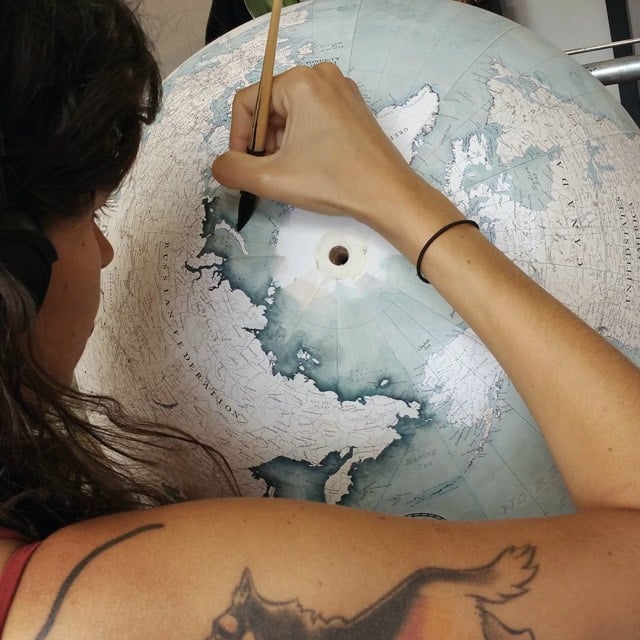
If I could afford it (£2000!), I’d get The Livingstone globe in Prussian blue. Beautiful and wonderful craftsmanship.
[This is a vintage post originally from Aug 2015.]
Tags: design · Earth · maps · timeless posts
Actress Selma Blair was arrested Sunday night after allegedly attempting to open an airplane door midflight and assaulting two flight attendants aboard a Delta flight from Los Angeles to New York, according to multiple reports.
Blair, 54, allegedly punched one flight attendant and bit another during the confrontation, TMZ first reported Monday.
The Port Authority of New York and New Jersey confirmed that officers responded to Delta Flight 938 after it arrived at John F. Kennedy International Airport around 11 p.m. Sunday. Two flight attendants reported injuries, and one was transported to a hospital for further evaluation.
Blair was taken into custody and transported to a hospital for evaluation. The FBI is investigating the incident.
A representative for the actress told TMZ that she had experienced a medical emergency. “Selma experienced a medical emergency that led to the alleged conduct,” the representative said. “Upon landing, she received immediate medical attention and is currently in stable condition.”
The nature of the reported medical emergency has not been disclosed.
Blair, known for her roles in “Cruel Intentions” and “Legally Blonde,” publicly revealed her multiple sclerosis diagnosis in 2018. She has since become an advocate for people living with the chronic neurological disease. In April, Blair said she remained in remission but continued to experience fatigue and other lasting symptoms. There is no confirmed connection between her MS diagnosis and Sunday’s incident.
Start your day with essential news from Salon.
Sign up for our free morning newsletter, Crash Course.
Delta said in a statement to Variety that it has “zero tolerance for unruly or unlawful behavior,” adding that passenger and crew safety is its priority.
The airline said the flight landed ahead of schedule despite the incident.
Read more
about celebrities behaving badly
The post Actress Selma Blair accused of biting flight crew appeared first on Salon.com.

A five-minute shopping trip to Brooklyn has turned into a multimillion-view social media feud for Kelly Clarkson, who accused a novelty shop of treating her like Julia Roberts’ character in *Pretty Woman* — all over a $15,000 mechanical singing bird.
Clarkson visited Art of Play, a high-end shop on Atlantic Avenue, on Saturday and said an employee looked at her as though she couldn’t afford its merchandise.
“Just drove all the way to Brooklyn to check out this store I thought looked really rad and had a few things in mind to buy,” Clarkson wrote on X, adding that an employee offered to find her something comparable.
Just drove all the way to Brooklyn to check out this store I thought looked really rad and had a few things in mind to buy and literally was looked at as if I couldn’t afford it and was told he could find something comparable for me. Wow, dude. You’re an idiot and just lost a huge sale. But y’all should go check out Art of Play in Brooklyn if you enjoy being treated like Julia Roberts character in Pretty Woman. For sure, check it out 👎
— Kelly Clarkson (@kellyclarkson) October 10, 2026
“Wow, dude. You’re an idiot and just lost a huge sale,” she wrote, suggesting others visit the store if they enjoyed being treated like Roberts’ character in the 1990 film.
The object at the center of the dispute was Molly, a mechanical yellow bird mounted on the store’s wall and used in its magic shows.
this being the bird kelly clarkson wanted to buy😭 https://t.co/jnjtJlkbJw
— 𝗱𝗮𝗻𝗻𝘆🫧💚 (@beyoncegarden) October 11, 2026
Art of Play responded Sunday that Molly was permanently attached to the wall and wasn’t for sale, although it acknowledged that Clarkson’s description of the encounter would resonate with anyone who had felt judged while shopping.
“Imagine our surprise when our small local business was suddenly attacked by 8 million people who have never visited our store,” the business wrote on Instagram, describing the backlash as a “surreal experience.”
Clarkson disputed the explanation, saying she had pointed to a $15,000 price tag and been told the bird was available. She accused the employee of looking her up and down before offering to find her something comparable.
“So you’re not only rude, you’re also a liar. Got it,” Clarkson wrote.
Cool, cool. Sure, it wasn’t for sale. That’s the narrative Art of Play is gonna go with 👍 so the whole conversation we had when I asked you if it was for sale whilst pointing to the price tag hanging on the wall with the title Singing Bird didn’t happen as you elevator eyed me saying in a condescending tone “yes, it’s for sale but it costs 15,000 dollars so if you’d like me to find something comparable for you I can.” That all never happened and now it’s not for sale. Okay, cool. So you’re not only rude, you’re also a liar. Got it ✅
And by the way, I obviously support small businesses because I was literally at a small business trying to purchase things. I love small businesses and know they are important and I always support them, but you don’t get a free pass to treat people less than in your store just because you are a small business. It’s not that hard to be kind. I never blast people but you my friend were an exception.
Your store is really cool.
Unfortunately, you aren’t.— Kelly Clarkson (@kellyclarkson) October 11, 2026
In a subsequent statement, Art of Play said a nearly identical bird made by Seattle artist Bliss Kolb was available for $15,000. The store also said it offered Clarkson a German-made alternative priced at $2,000, but that she left before seeing it.
The business said it had contacted Clarkson privately in hopes of resolving the disagreement.
Its original response ended with a pointed reference to one of the singer’s biggest hits. “As a talented popular singer once said ‘what doesn’t kill you makes you stronger,’” the store wrote.
By Monday morning, Clarkson’s original post had been viewed more than 40 million times, according to The New York Times. The dispute has divided social media users between those sympathetic to Clarkson’s experience and others who say her enormous platform has unleashed disproportionate backlash against a small business.
Clarkson rejected the suggestion that supporting small businesses meant overlooking poor treatment.
“I love small businesses and know they are important and I always support them, but you don’t get a free pass to treat people less than in your store just because you are a small business,” she wrote. “It’s not that hard to be kind.”
Art of Play said it has contacted Clarkson privately in hopes of clearing up the dispute.
Read more
about this topic
The post Behind Kelly Clarkson’s “hazel eyes”: A $15K bird appeared first on Salon.com.

Federal agents searched the Washington, D.C., home of Democratic Rep. Ilhan Omar of Minnesota, on Monday morning as part of a criminal investigation, following months of public accusations against the congresswoman by President Donald Trump and members of his administration.
Agents from Homeland Security Investigations executed a search warrant authorized by a federal judge, according to the Associated Press and The Washington Post.
“This enforcement action is part of an ongoing federal criminal investigation,” the Justice Department said in a statement.
The department did not disclose the scope of the investigation or what agents were seeking. Fox News reported, citing unidentified sources, that investigators were examining immigration paperwork completed by Omar’s late father when she was a child.
The search follows repeated allegations of immigration fraud from Trump administration officials, including Vice President JD Vance, who previously said he discussed potential legal action against Omar with White House deputy chief of staff Stephen Miller.
Omar, a naturalized U.S. citizen born in Somalia, has repeatedly denied the allegations. Federal officials have not publicly presented evidence substantiating them.
Trump has frequently singled out Omar, an outspoken critic of his administration and one of the first Muslim women elected to Congress. His attacks have included calls for her to leave the United States and repeated references to a Minnesota welfare fraud scandal in which Omar has not been accused of wrongdoing.
Start your day with essential news from Salon.
Sign up for our free morning newsletter, Crash Course.
The search comes just three weeks before the Nov. 3 midterm elections — and after voting has already begun in Minnesota.
Absentee voting in the state opened Sept. 18, according to the Minnesota secretary of state’s office. Omar is seeking reelection to Minnesota’s 5th Congressional District, which includes Minneapolis.
The Justice Department has longstanding policies discouraging investigative actions intended to influence elections. Federal officials have not explained whether election-related considerations factored into the timing of Monday’s search.
Omar’s office had not issued a public response to the search as of the latest reporting. No charges have been announced.
Read more
about Rep. Ilhan Omar
The post Federal agents search Rep. Ilhan Omar’s D.C. home appeared first on Salon.com.

American Eagle is standing by its fall denim campaign starring “Euphoria” and “Anyone But You” star Sydney Sweeney after a wave of criticism accused the ads of leaning into racially coded language and imagery.
The campaign hinges on a pun: Sweeney talks about inherited traits before a male voiceover says, “Sydney Sweeney has great jeans.”
In some ads, “genes” is crossed out and replaced with “jeans.” What AE framed as playful wordplay struck a nerve with critics, who argued it echoed historic eugenics rhetoric, particularly given the ad’s focus on her physical appearance like her blond hair and blue eyes.
Social media reaction was swift, with detractors calling it “tone‑deaf” and “Nazi‑coded,” while supporters, especially conservative commentators, praised the joke and dismissed the outrage as performative.
On Friday, American Eagle posted a statement to Instagram defending the campaign: “This is about the jeans. Her jeans. Her story,” the company wrote, adding, “Great jeans look good on everyone.” The retailer noted that proceeds from Sweeney’s campaign will go to Crisis Text Line to help victims of domestic violence.
Sweeney herself has stayed silent. Still, the uproar has boosted visibility for the brand, driving spikes in online engagement and even a reported uptick in AE’s stock price — suggesting that in the culture‑war economy, controversy can be as valuable as the clothes themselves.
The post American Eagle defends “Great Jeans” campaign after backlash appeared first on Salon.com.
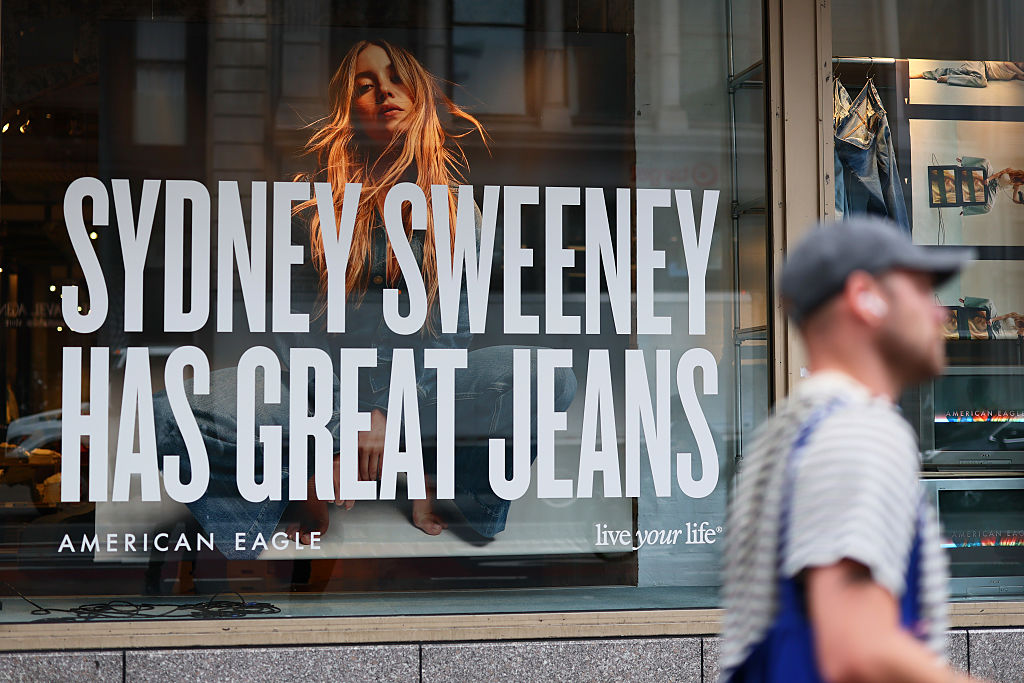
American Eagle’s new fall campaign starring Sydney Sweeney is under fire—not for the jeans, but for the tagline: “Sydney Sweeney Has Great Jeans.”
The phrase, used in bold on billboards in Times Square and Las Vegas, was designed as a denim pun. But online, many saw something else: “great genes,” a phrase historically used to celebrate whiteness, thinness and attractiveness. This makes this campaign seem to be a tone-deaf marketing move.
And it’s not like they were being subtle about it. One campaign advertisement literally has Sweeney “painting” over the words “great genes” to become “great jeans.”
“Maybe I’m too … woke,” one viral post read, “but getting a blue-eyed, blonde, white woman and focusing your campaign around her having perfect genetics feels weird…” Others described the slogan as too close to “master race” propaganda and said it echoed eugenics-era language used to validate and promote the superiority of white beauty.
Eugenics movements in the U.S. often promoted the idea of “good genes” to encourage reproduction among white, able-bodied people while justifying the forced sterilization of others. Critics say those ideas still show up in modern advertising and influencer culture, often unexamined.
American Eagle has not addressed the backlash directly. The campaign features Sweeney modeling a limited-edition “Sydney Jean” denim collection that benefits Crisis Text Line (a helpline for victims of domestic violence), along with AR filters, AI try-ons and massive 3D billboards in Times Square and Las Vegas.
Despite the controversy, the campaign caused American Eagle stock to spike by as much as 16%. Analysts pointed to meme stock behavior, a viral surge driven by retail traders on Reddit and Stocktwits, not by fundamentals. Like GameStop or AMC before it, AEO became a momentary favorite based on online buzz and speculation.
One commenter summed up the tension: “It’s not just about the jeans. It’s about who gets to be the face of America’s ‘best genes.’”
Read more
about genes
The post Sydney Sweeney’s new campaign draws fire for racial undertones appeared first on Salon.com.
 Must Read Magazines has issued a statement shared by Analog Science Fiction and Fact on Bluesky in response to public criticism by John Picacio, Donato Giancola, Victoria Strauss, and others about its contract terms for artists.
According to the statement,
We previously commissioned illustrators to create covers as work-for-hire when they were asked to adapt authors’ original stories for elements such as cover art.
This will be changing.
The rights granted to MRM are limited, and therefore we can’t protect the intellectual property and rights of the original author of the story, if we at the same time grant the authors’ rights to the illustrator so that the illustrator can then retain an adaptation copyright. We don’t acquire rights from authors that allow us to grant illustrators broad unencumbered use of the worlds, characters, and other elements created by the author.
We’re planning to pause cover contracts based on specific stories for the foreseeable future while we figure out the best way forward with those kinds of commissions.
…
Regarding retention of “moral rights” in illustrations: our licensing agreements for original art and original fiction use language prepared by an international IP attorney based on notes we received from SFWA’s contracts committee. These kinds of agreements no longer include a waiver of moral rights.
We always appreciate when contributors to the magazines express their concerns.
The response comes after a public memo from Picacio shared to “strongly advise” against submitting stories to or creating art for any of Must Read’s magazines. Picacio has sent Locus a copy of the boilerplate contract he received. Elements he rejected read as follows:
Artist hereby waives the benefits of any provision of law known as “droit moral” and/or “moral rights” or any similar law in any jurisdiction of the universe and hereby agrees not to institute or support, maintain, or permit any action or lawsuit on the grounds that the The Work or any ancillary uses thereof violates any of Artist’s rights or is in any way a defamation or mutilation of the The Work. Company shall solely own the copyright in the The Work. Neither the suspension nor termination of Artist’s services nor the expiration of this Agreement shall in any way adversely affect Company’s ownership of the The Work.
Company or its divisions may be credited as the copyright holder of the work…
Workable files shall mean layered files suitable for use in Adobe Photoshop or such similar software.
At no additional cost, Company will be presented with at least Two (2) and at most Three (3) rounds of drafts of the The Work for review by Company. … Company may instruct Artist to make changes up to Three (3) times upon review of the The Work and drafts inclusive of Company’s notes on such drafts.
The contract sets the artist’s pay at $1,200. Giancola, who reported in a separate post that he rejected a cover art contract offering the same pay, described this as being “on the low side and the same fee they had offered six years before for similar work.” Giancola also strongly criticized the usage of a work-for-hire agreement, “NOT a contract structure I had worked under before for ANY of my previous Asimov’s covers,” as well as several other terms for “deviat[ing] far beyond” his contracts with other SF publications, including some of those quoted above.
I went back and forth in contract revisions with Asimov’s SF legal department five times over three months. Nearly as much time was spent on these negotiations, legal revisions, and emails then what I would put into creating art for a final illustration. All for a $1200 fee on a commission who’s legal contract issues were settled in a five minute digital handshake six years ago.
At the end of June, while their legal department was still soliciting me to supply a Non-Disclosure Agreement I would be fine signing after stating I would not sign one, I told Asimov’s SF to find another artist. Their legal department was not negotiating in good faith to get me to work on their magazine – they were looking for an artist to exploit.
Strauss commented on the subject on the SFWA-sponsored Writer Beware blog: “[E]ven if the publisher is willing to make changes, [writers] must think about what it says about the publisher, and its attitude toward its writers, that it would offer a bad contract to begin with. … [W]riters shouldn’t be afraid to negotiate, and publishers should be open to change. It’s just really important not to let the details obscure the big picture.”
Scott Edelman, who has previously written about his decision to withdraw all submissions to Must Read, also commented on the company’s statement: “This defense from the publisher of Asimov’s, Analog, and F&SF is no defense at all. I’d hoped those of us who’d protested rights-grab contracts last year had caused a change in the way the company dealt with creators, but sadly, all three dream markets must still be unacceptable outlets for me.”
For more information, see previous coverage by Locus, including Must Read’s acquisition of several SF/F magazines, its delisting from The Submission Grinder, SFWA’s provision of contract notes, and Must Read’s announcement of contract revisions.
Mary Alyce Stephens (née Neader), posting on Cringely’s Facebook account:
Hello, this is Mary Alyce, Bob’s wife. I am coming to you with immense sadness to let you know that Bob passed away. His obituary follows. His family is not requesting anything, however, if you would like to make a donation in his honor, please consider The American Heart Association or The American SIDS Institute. [...]
Writing as Robert X. Cringely, Mark became a distinctive voice in technology journalism. He had an unusual ability to understand not only technology but also the human beings behind it — the dreamers, inventors, entrepreneurs, eccentrics, and risk-takers who were changing the world. He could take a complicated subject and make it understandable, entertaining, funny, and deeply human. He was skeptical when skepticism was warranted, irreverent when others were overly serious, and never particularly interested in following conventional wisdom. That independence was not simply part of his writing. It was Mark.
He followed the beat of his own drummer throughout his life. He was brilliant, funny, opinionated, curious, generous, exasperating, and unforgettable — sometimes all within the same conversation. He loved a good story and knew how to tell one. He could make you laugh, make you think, make you argue with him, and occasionally drive you crazy. Life with Mark was rarely dull.
Mark’s life also included heartbreaking loss. He was preceded in death by his beloved sons, Chase and Cole Stephens, as well as his parents, Ray and Lois Stephens and father-in-law Jim Neader. I could also add brother-in-law Jimmy Neader and niece Ericka Neader, but they were a thorn in our side.
That last dig, at her own dead brother and niece, offers a hint at why Cringely loved her. He wasn’t one to pull punches either.
Her full obituary for Cringely/Stephens is visible without being logged into Facebook (I’ve still never created one), but Steven Sinofsky kindly posted it to his account on X. Pick your poison. Update: Here’s a version hosted by the funeral home.

Why I Did Not Leave Nazi Germany in Time. “Many of us feared the shock of being uprooted and tried to avoid it if at all possible. But to understand this reaction…I say that nobody could possibly have foreseen the ‘final solution.’”
The Worst Way To Get To Space. I’d never heard the story of the manhole cover possibly propelled into orbit by a nuclear blast — it was estimated to be moving at ~42 miles/sec. “Some speculated it became the first manmade object to enter Earth’s orbit.”
I 100% love this video of every time someone says a percentage on Star Trek: The Next Generation. And the word “percent” has lost all of its meaning due to semantic satiation. (thx, caroline)
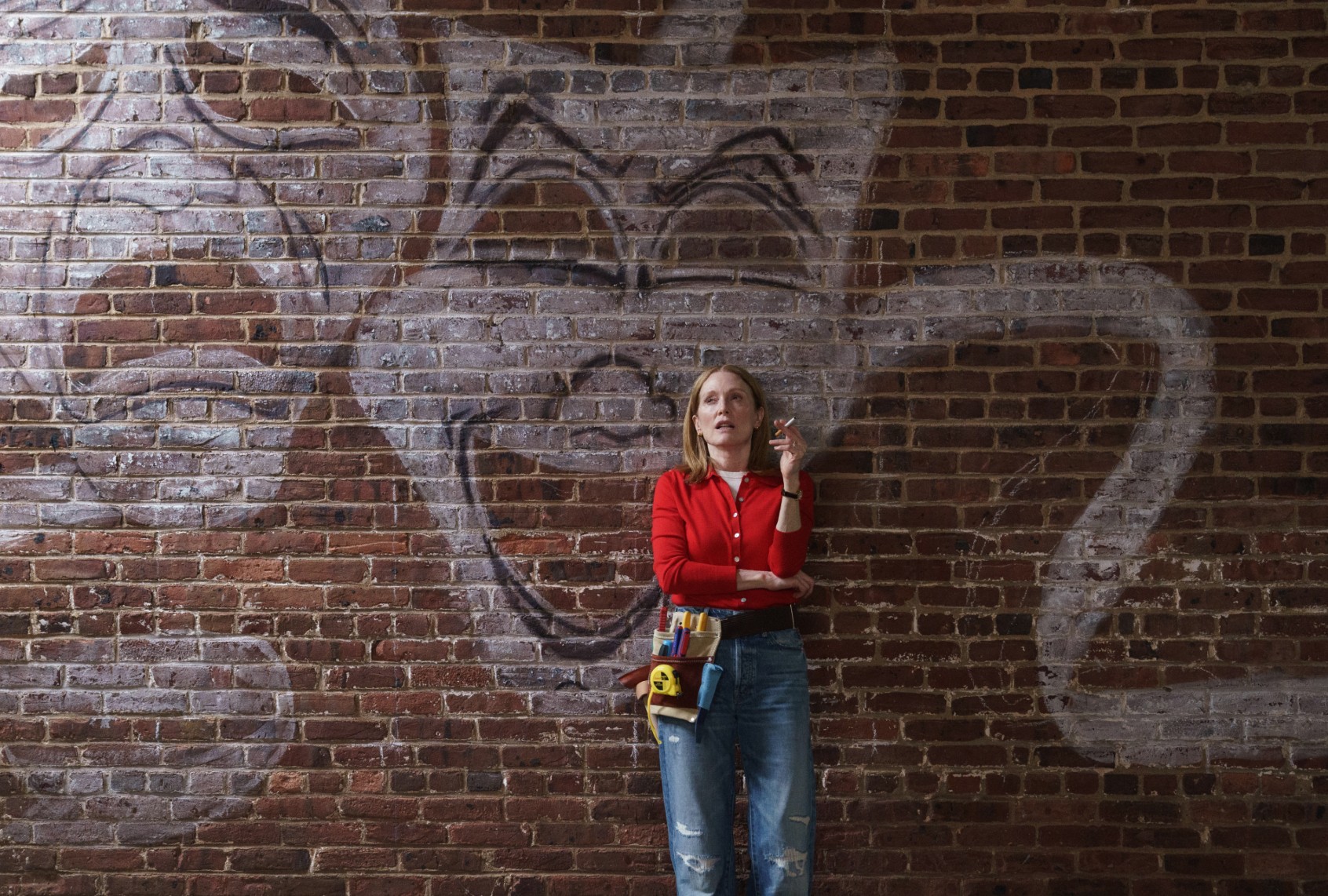
It’s audition day at New Jersey’s Brook Arts Center, and everyone is a bundle of nerves. Actors dot the lobby, doing vocal warm-ups between mini panic attacks and greeting old friends from past shows. This year’s production is “Nosy Neighbors,” a forgotten musical about a New York apartment building and its kooky tenants, including its superintendent, Miss Danielle — a dreamer who, despite repairing clogged toilets and collecting rent for a living, hasn’t let the city spit her out. The role is a bit part, but features a showstopping centerpiece number, the kind of song musical theater performers eat, sleep and breathe. But for mousy housewife Mona Friedman (Julianne Moore), the size of the part or the strength of the song don’t matter. Miss Danielle seems like the right choice to audition for because the role is age-appropriate, and Mona wants to be included however she can be.
And though this might be New Jersey community theater, the standards are just as high as on Broadway. Renowned local director Jerry Blankenbuehler (Paul Giamatti) demands perfection; anything less than excellence won’t touch his stage. Mona, of course, has no way of knowing this. She’s an interloper among established thespians, a woman in her late 50s who has only just begun listening to the little voice inside her, the one begging her to step outside her comfort zone. She’s up against seasoned actors and singers who know what they’re doing, whose every step, gesture and note resonates effortlessly. Yet, somehow, that doesn’t stop her. Despite her nerves, she stands in the spotlight and sings Miss Danielle’s big number. It doesn’t matter how timidly the words might’ve come out; what’s important is that Mona did it.
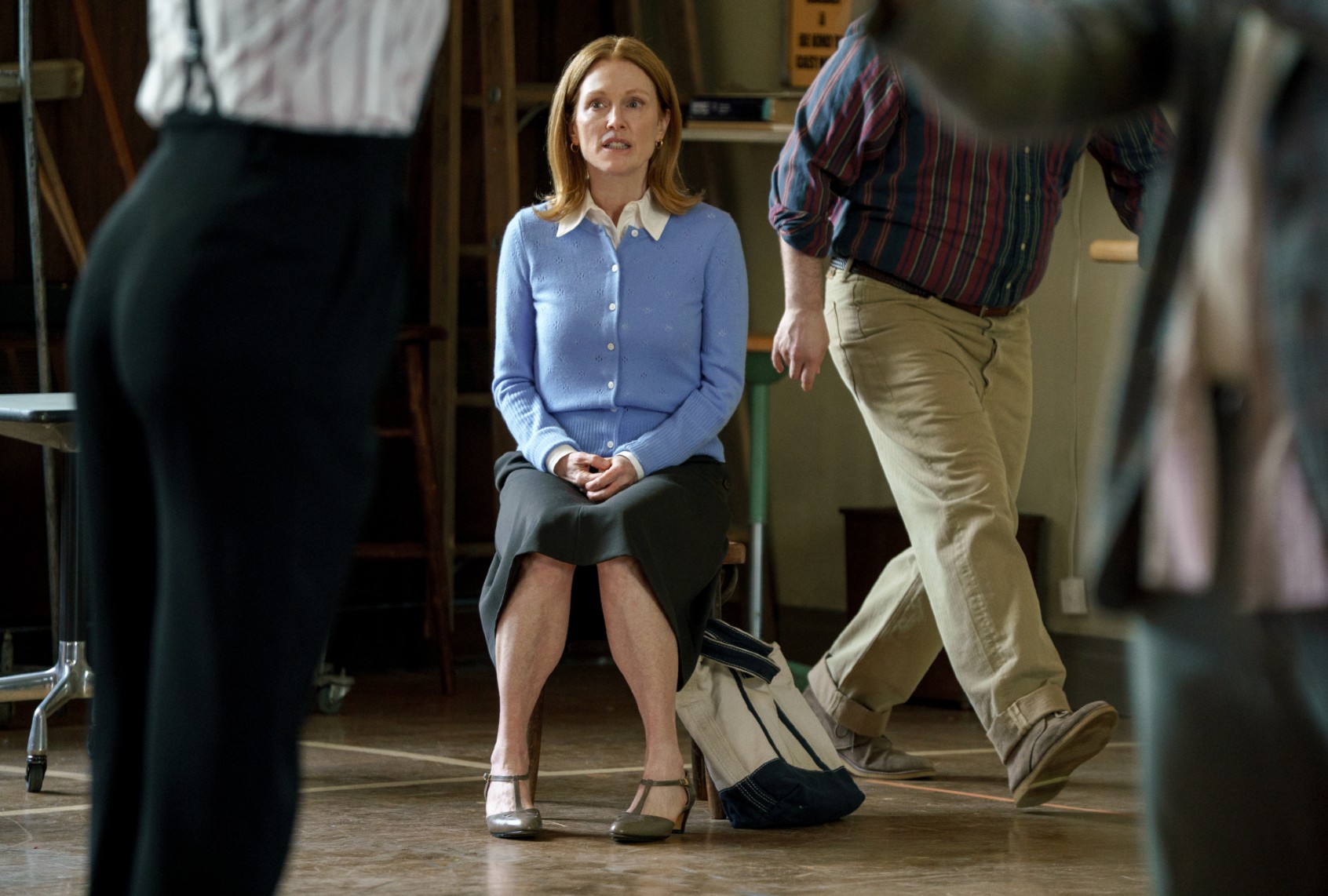
(A24) Julianne Moore in “The Debut”
Mona transforms before our eyes from a diffident mother of two in an unhappy marriage into the star she always could be, though not without a few bumps in the road. It’s these obstacles that make Eisenberg’s film feel all the more realistic, accurately representing how much work it takes to find oneself, an arduous process that must be experienced over and over in different ways.
This is the brilliant way writer-director Jesse Eisenberg thrusts us into his third — and best — feature, “The Debut,” screening at this year’s New York Film Festival and premiering in theaters December 11. We meet Mona in media res, nervously tapping her shoes on the carpeted lobby floor and fretting over her audition. But instead of the traditional cutthroat audition setting, where every actor silently sizes up the competition, the Brook Arts Center fosters a warm environment. Fellow actors Stef (Halle Bailey) and Trish (Bonnie Milligan) assure Mona she’ll be wonderful. And though Mona’s audition might be far from it, that little spark of community and care is all she needs to feel like she’s right where she should be.
Want more from culture than just the latest trend? The Swell highlights art made to last.
Sign up here
Finding this sense of contentment isn’t easy. Some go their whole lives searching for it, aching to find where they belong, or what gives them purpose. The longing is what makes life beautiful and also impossible. We’re so often told in childhood that we can be anything and anyone we want to be, dazzled by illustrations of astronauts smiling through their helmets while floating in space, or ballerinas gracefully twirling while dancing “The Nutcracker.” But just as often, these turn out to be children’s fantasies — wide-eyed dreams of imaginary futures, tempered by real life. Bills must be paid. Kids have to eat. We have to survive. And in the pursuit of survival, there’s rarely time for side quests.
That’s precisely why “The Debut” is such a brilliant revelation. There’s no shortage of cinematic depictions of people getting their groove back, but seldom is the search for the self portrayed with as much tender empathy as Eisenberg and Moore have for Mona — an instant all-timer in Moore’s stacked repertoire. Over the film’s blissful 105 minutes, in which Moore appears in every scene, Mona transforms before our eyes from a diffident mother of two in an unhappy marriage into the star she always could be, though not without a few bumps in the road. It’s these obstacles that make Eisenberg’s film feel all the more realistic, accurately representing how much work it takes to find oneself, an arduous process that must be experienced over and over in different ways. As Mona discovers, the stumbles are as important as the triumphs. There is no greatness without embarrassment.
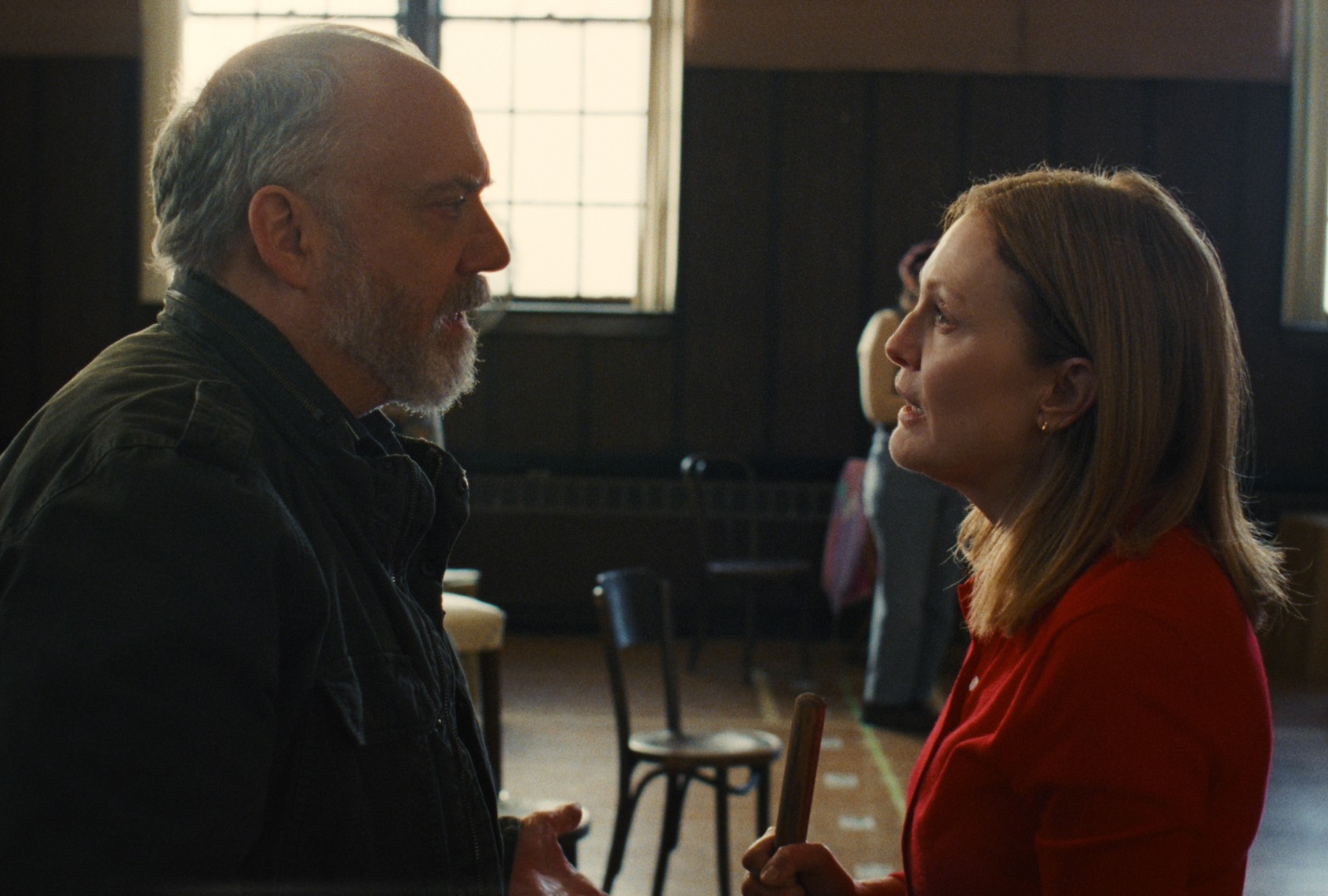
(A24) Paul Giamatti and Julianne Moore in “The Debut”
But to be embarrassed, one must first get the chance to be embarrassed. The role of Miss Danielle is Mona’s to lose, and lose she does to local legend Serena Cherry (a wonderful cameo by Bernadette Peters), who gives Mona’s big song all of the polished oomph of the Great White Way. But competition isn’t any concern of Mona’s. She’s more interested in what simply auditioning made her feel, how she came alive, if only for a brief few moments until Jerry cut her off. On a double date with her husband and their best friends, Mona, beaming, tells the group that she’s auditioned for “a musical show.” Her inadvertent gaffes with industry terminology might make her seem silly and out of her depth. But they also indicate an eagerness to learn, a will that makes Mona’s eventual callback after Serena Cherry drops out of the show seem almost like manifestation.
And, really, that’s all achieving anything in this life is: manifestation. While the word has been co-opted and corrupted by vision-board romantics and TikTok gurus, it’s still the key to making what we want happen. Manifestation doesn’t mean something we want pops out of thin air just because we think about it; it means hard work and relentless effort. And if struggling is how Mona will mold herself for the theater — stretching and shaping her performance into something worthy of the greater New Jersey area’s most prolific stage — so be it.
It takes immense skill for a great actor to convincingly play a novice performer. And because Moore is so talented — so uniquely proficient at finding the human depth at the core of all her characters — she can make Mona unforgettable. Here, Moore shows reverence not only for her own craft, but for all the hopeful idealists who pine to know what it feels like to lose yourself in someone, or something, else. As Mona goes deeper into Miss Danielle, turning a minor role into something far bigger and more unwieldy than anything she or Jerry prepared for, Moore reminds us why we lie awake at night, convincing ourselves there might be more to life. We don’t just search for something that fulfills us because we want to know what it feels like to be happy in our work or hobbies; we do it to make sense out of a nonsensical life, to understand what being a human is all about.
We need your help to stay independent.
To say I can relate would be an understatement. I rarely find myself both crying with laughter and crying through my laughter in the span of the same film. It moved me deeply to be tossed headlong into Mona’s life, to sit beside someone who, one day, decided that she wanted something else for herself. I saw reflections and heard echoes of all of the reservations I had about becoming a writer, telling myself that I’d never be able to conjure the commitment it takes to write consistently, afraid that everyone else had sharper, smarter worldviews than mine — that they could see things I’d never be able to. I’d convinced myself that it would take too much time to start over, and that it wasn’t worth trying.
Moore reminds us why we lie awake at night, convincing ourselves there might be more to life. We don’t just search for something that fulfills us because we want to know what it feels like to be happy in our work or hobbies; we do it to make sense out of a nonsensical life, to understand what being a human is all about.
But, like Mona and her fond memories of childhood church choir, I couldn’t let the urge go. It wasn’t enough to simply watch films; I needed an outlet for all the ways they made me feel and all the ideas they inspired. My life didn’t feel complete just watching other people’s art. I wanted to make my own, too. And, again, like Mona, accepting that dream as a potential reality can shift your self-perception entirely. I’m not the same person I was when I first started this, and I often feel like I don’t recognize the person who first put finger to keyboard. Getting here now — typing away while I sniffle with a cold, a life I wouldn’t change for the world — required carefully deflating a rapidly overblown ego.
There’s a tendency to think that, because one has had any success at all, be it a musical callback or a greenlit freelance piece or a short story selected for publication, that they know best. But that’s never the case, at least not in the arts. And as Eisenberg continues to remind us that this is not Mona’s musical — that everyone in the cast and crew is just as important as she is — “The Debut” starts to sing even more beautifully than it already had.
But “The Debut” is not only for those in, or interested in, the arts. It’s a film for anyone who has put aside their desires and told themselves it’s too late or too scary to try something new. Be it gardening, ceramics, hang gliding, mountain climbing, swimming, competitive hot dog eating (well . . . consult your doctor), photography, skeet shooting, upholstery, or even just journaling, trying anything and everything to be closer to your happiest self is worthwhile. You may crash and burn, sure. But you might also come to understand your reason for living. Either result will paint a fuller picture, widening the spotlight little by little, until everything begins to glow.
Read more
about unforgettable Julianne Moore performances
The post “The Debut” finds joy and fear in starting over appeared first on Salon.com.