❌

Reading view

“The Debut” finds joy and fear in starting over

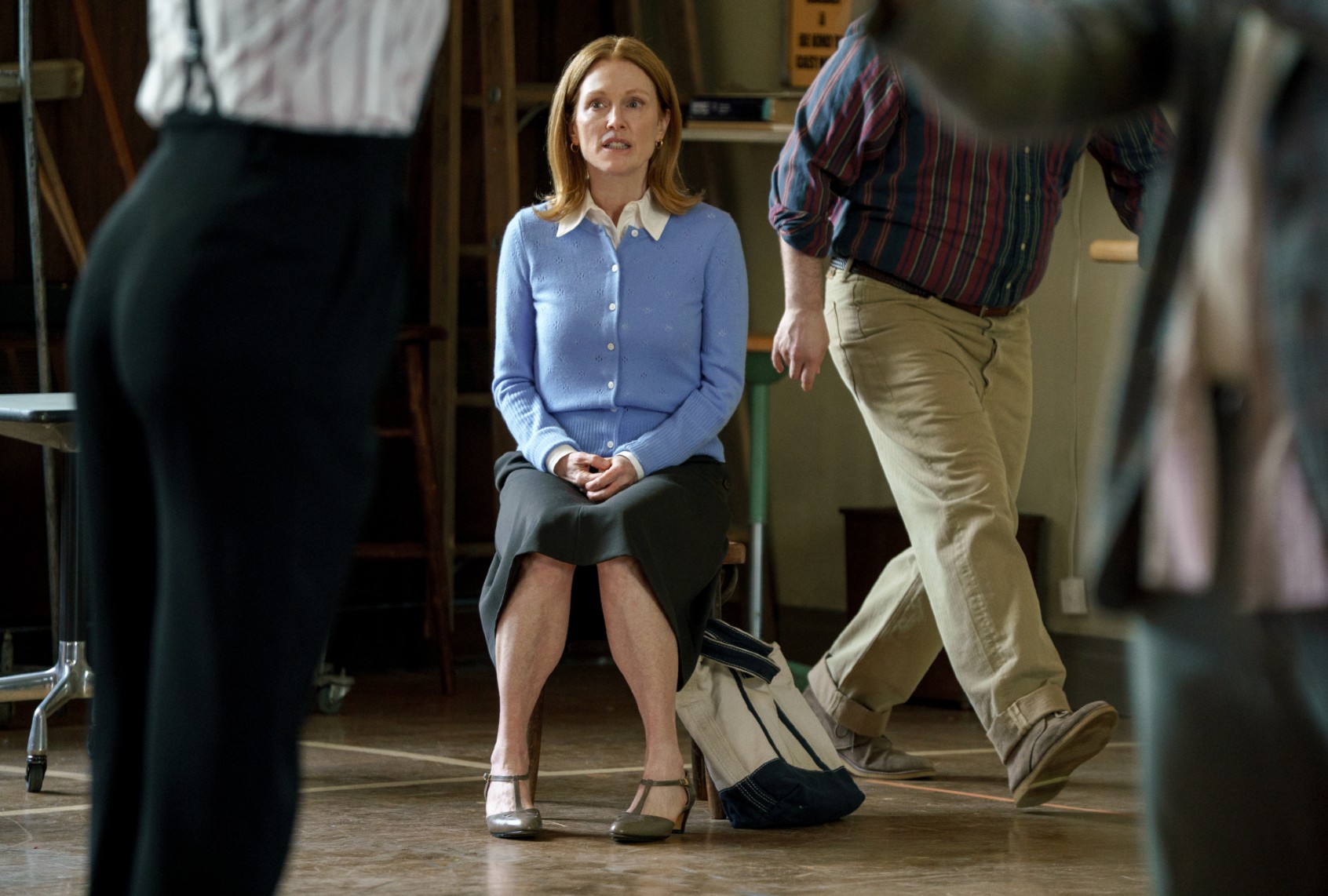
It’s audition day at New Jersey’s Brook Arts Center, and everyone is a bundle of nerves. Actors dot the lobby, doing vocal warm-ups between mini panic attacks and greeting old friends from past shows. This year’s production is “Nosy Neighbors,” a forgotten musical about a New York apartment building and its kooky tenants, including its superintendent, Miss Danielle — a dreamer who, despite repairing clogged toilets and collecting rent for a living, hasn’t let the city spit her out. The role is a bit part, but features a showstopping centerpiece number, the kind of song musical theater performers eat, sleep and breathe. But for mousy housewife Mona Friedman (Julianne Moore), the size of the part or the strength of the song don’t matter. Miss Danielle seems like the right choice to audition for because the role is age-appropriate, and Mona wants to be included however she can be.

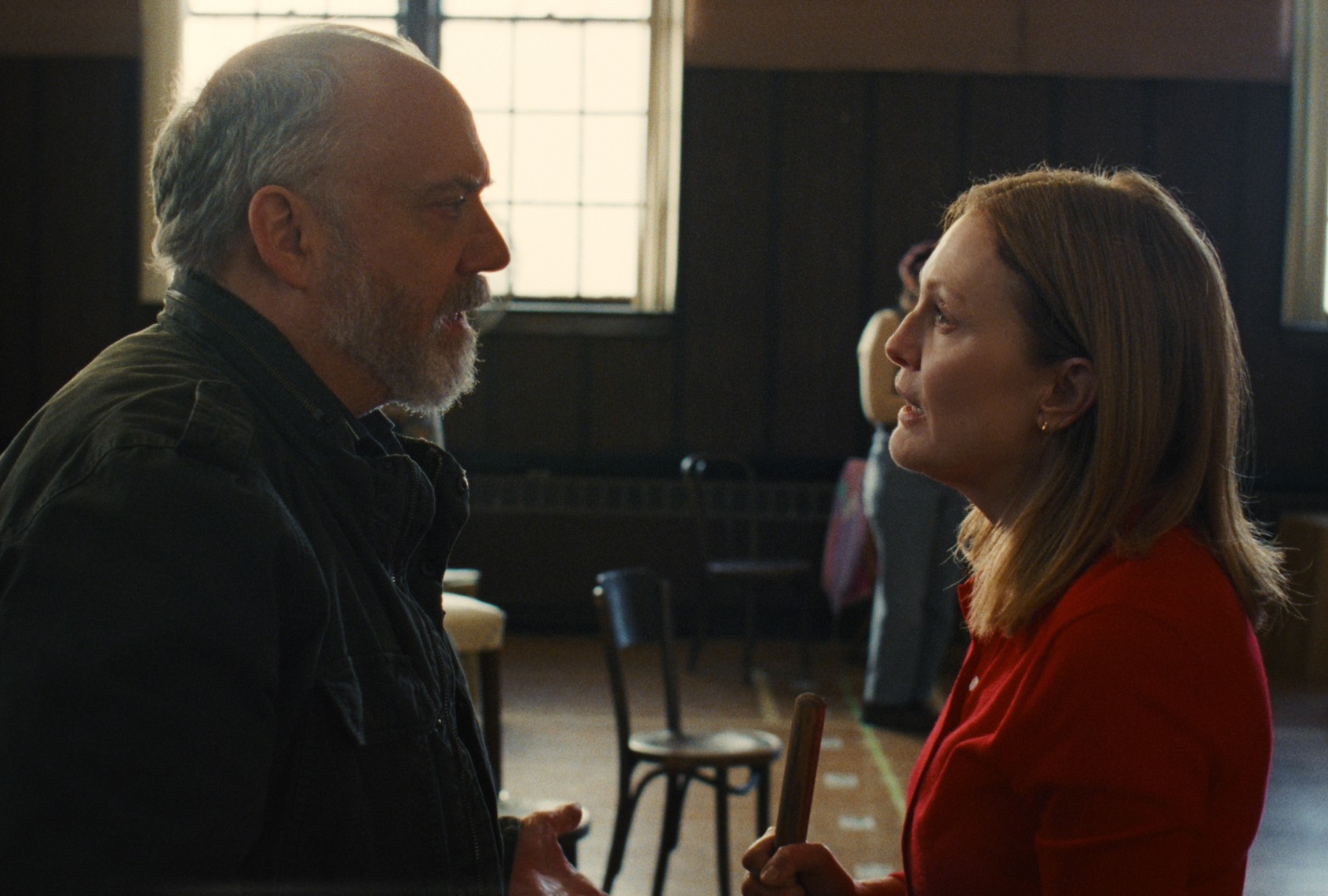
And though this might be New Jersey community theater, the standards are just as high as on Broadway. Renowned local director Jerry Blankenbuehler (Paul Giamatti) demands perfection; anything less than excellence won’t touch his stage. Mona, of course, has no way of knowing this. She’s an interloper among established thespians, a woman in her late 50s who has only just begun listening to the little voice inside her, the one begging her to step outside her comfort zone. She’s up against seasoned actors and singers who know what they’re doing, whose every step, gesture and note resonates effortlessly. Yet, somehow, that doesn’t stop her. Despite her nerves, she stands in the spotlight and sings Miss Danielle’s big number. It doesn’t matter how timidly the words might’ve come out; what’s important is that Mona did it. 
(A24) Julianne Moore in “The Debut”

Mona transforms before our eyes from a diffident mother of two in an unhappy marriage into the star she always could be, though not without a few bumps in the road. It’s these obstacles that make Eisenberg’s film feel all the more realistic, accurately representing how much work it takes to find oneself, an arduous process that must be experienced over and over in different ways.

This is the brilliant way writer-director Jesse Eisenberg thrusts us into his third — and best — feature, “The Debut,” screening at this year’s New York Film Festival and premiering in theaters December 11. We meet Mona in media res, nervously tapping her shoes on the carpeted lobby floor and fretting over her audition. But instead of the traditional cutthroat audition setting, where every actor silently sizes up the competition, the Brook Arts Center fosters a warm environment. Fellow actors Stef (Halle Bailey) and Trish (Bonnie Milligan) assure Mona she’ll be wonderful. And though Mona’s audition might be far from it, that little spark of community and care is all she needs to feel like she’s right where she should be.


Want more from culture than just the latest trend? The Swell highlights art made to last.
Sign up here


Finding this sense of contentment isn’t easy. Some go their whole lives searching for it, aching to find where they belong, or what gives them purpose. The longing is what makes life beautiful and also impossible. We’re so often told in childhood that we can be anything and anyone we want to be, dazzled by illustrations of astronauts smiling through their helmets while floating in space, or ballerinas gracefully twirling while dancing “The Nutcracker.” But just as often, these turn out to be children’s fantasies — wide-eyed dreams of imaginary futures, tempered by real life. Bills must be paid. Kids have to eat. We have to survive. And in the pursuit of survival, there’s rarely time for side quests.

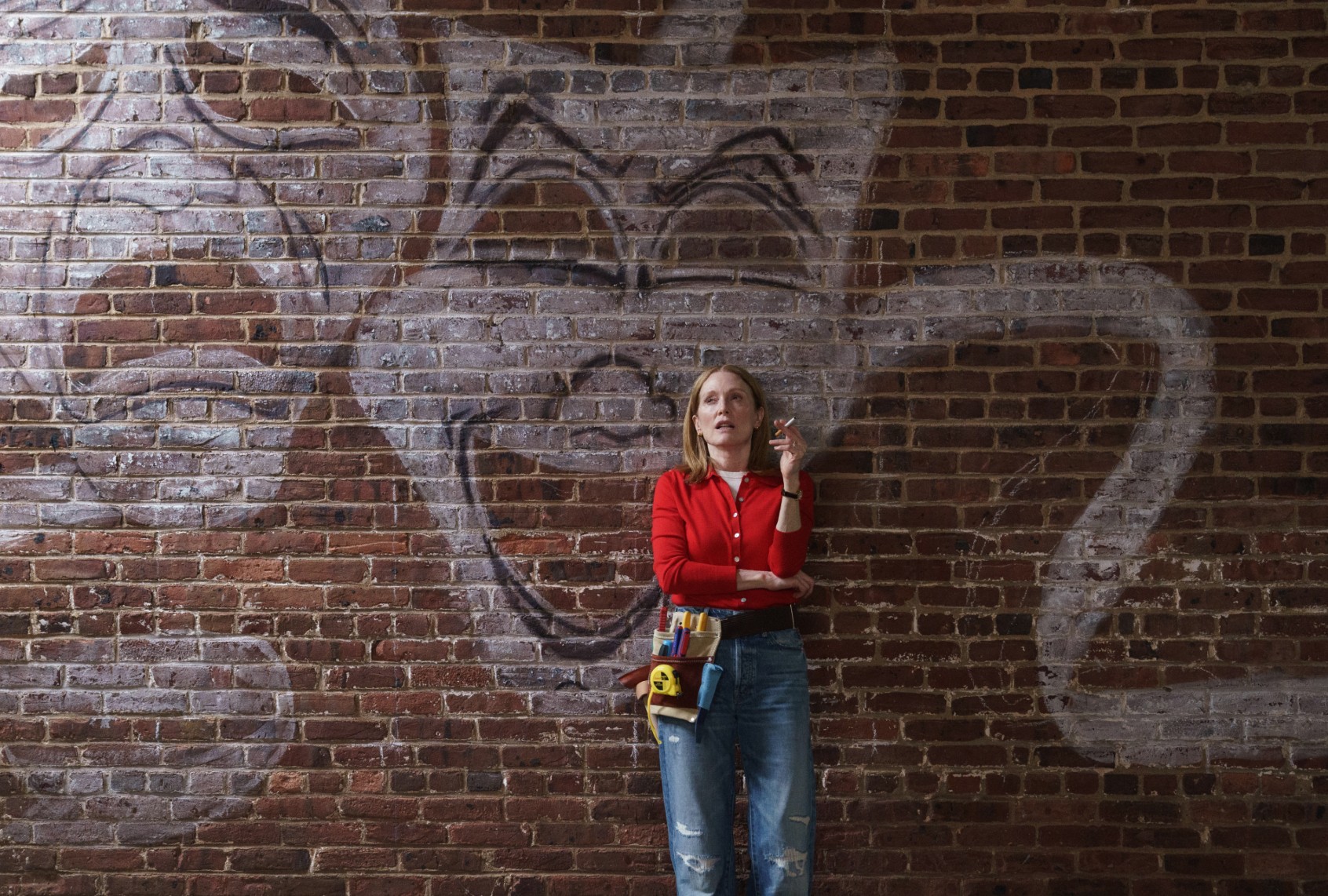
That’s precisely why “The Debut” is such a brilliant revelation. There’s no shortage of cinematic depictions of people getting their groove back, but seldom is the search for the self portrayed with as much tender empathy as Eisenberg and Moore have for Mona — an instant all-timer in Moore’s stacked repertoire. Over the film’s blissful 105 minutes, in which Moore appears in every scene, Mona transforms before our eyes from a diffident mother of two in an unhappy marriage into the star she always could be, though not without a few bumps in the road. It’s these obstacles that make Eisenberg’s film feel all the more realistic, accurately representing how much work it takes to find oneself, an arduous process that must be experienced over and over in different ways. As Mona discovers, the stumbles are as important as the triumphs. There is no greatness without embarrassment.
(A24) Paul Giamatti and Julianne Moore in “The Debut”

But to be embarrassed, one must first get the chance to be embarrassed. The role of Miss Danielle is Mona’s to lose, and lose she does to local legend Serena Cherry (a wonderful cameo by Bernadette Peters), who gives Mona’s big song all of the polished oomph of the Great White Way. But competition isn’t any concern of Mona’s. She’s more interested in what simply auditioning made her feel, how she came alive, if only for a brief few moments until Jerry cut her off. On a double date with her husband and their best friends, Mona, beaming, tells the group that she’s auditioned for “a musical show.” Her inadvertent gaffes with industry terminology might make her seem silly and out of her depth. But they also indicate an eagerness to learn, a will that makes Mona’s eventual callback after Serena Cherry drops out of the show seem almost like manifestation.

And, really, that’s all achieving anything in this life is: manifestation. While the word has been co-opted and corrupted by vision-board romantics and TikTok gurus, it’s still the key to making what we want happen. Manifestation doesn’t mean something we want pops out of thin air just because we think about it; it means hard work and relentless effort. And if struggling is how Mona will mold herself for the theater — stretching and shaping her performance into something worthy of the greater New Jersey area’s most prolific stage — so be it.

It takes immense skill for a great actor to convincingly play a novice performer. And because Moore is so talented — so uniquely proficient at finding the human depth at the core of all her characters — she can make Mona unforgettable. Here, Moore shows reverence not only for her own craft, but for all the hopeful idealists who pine to know what it feels like to lose yourself in someone, or something, else. As Mona goes deeper into Miss Danielle, turning a minor role into something far bigger and more unwieldy than anything she or Jerry prepared for, Moore reminds us why we lie awake at night, convincing ourselves there might be more to life. We don’t just search for something that fulfills us because we want to know what it feels like to be happy in our work or hobbies; we do it to make sense out of a nonsensical life, to understand what being a human is all about.


To say I can relate would be an understatement. I rarely find myself both crying with laughter and crying through my laughter in the span of the same film. It moved me deeply to be tossed headlong into Mona’s life, to sit beside someone who, one day, decided that she wanted something else for herself. I saw reflections and heard echoes of all of the reservations I had about becoming a writer, telling myself that I’d never be able to conjure the commitment it takes to write consistently, afraid that everyone else had sharper, smarter worldviews than mine — that they could see things I’d never be able to. I’d convinced myself that it would take too much time to start over, and that it wasn’t worth trying. 

Moore reminds us why we lie awake at night, convincing ourselves there might be more to life. We don’t just search for something that fulfills us because we want to know what it feels like to be happy in our work or hobbies; we do it to make sense out of a nonsensical life, to understand what being a human is all about.

But, like Mona and her fond memories of childhood church choir, I couldn’t let the urge go. It wasn’t enough to simply watch films; I needed an outlet for all the ways they made me feel and all the ideas they inspired. My life didn’t feel complete just watching other people’s art. I wanted to make my own, too. And, again, like Mona, accepting that dream as a potential reality can shift your self-perception entirely. I’m not the same person I was when I first started this, and I often feel like I don’t recognize the person who first put finger to keyboard. Getting here now — typing away while I sniffle with a cold, a life I wouldn’t change for the world — required carefully deflating a rapidly overblown ego. 

There’s a tendency to think that, because one has had any success at all, be it a musical callback or a greenlit freelance piece or a short story selected for publication, that they know best. But that’s never the case, at least not in the arts. And as Eisenberg continues to remind us that this is not Mona’s musical — that everyone in the cast and crew is just as important as she is — “The Debut” starts to sing even more beautifully than it already had. 

But “The Debut” is not only for those in, or interested in, the arts. It’s a film for anyone who has put aside their desires and told themselves it’s too late or too scary to try something new. Be it gardening, ceramics, hang gliding, mountain climbing, swimming, competitive hot dog eating (well . . . consult your doctor), photography, skeet shooting, upholstery, or even just journaling, trying anything and everything to be closer to your happiest self is worthwhile. You may crash and burn, sure. But you might also come to understand your reason for living. Either result will paint a fuller picture, widening the spotlight little by little, until everything begins to glow.

The post “The Debut” finds joy and fear in starting over appeared first on Salon.com.
  •  

Billionaires love Trump’s AI rebrand

In the 1987 Nintendo game “Zelda II: The Adventure of Link,” there is a village you can visit and a home you can enter and a man in a purple shirt you can speak with. But the only thing he says is “I am Error.” I was unexpectedly delighted by this dialogue when I first encountered it on a Gamecube emulator in 2009 (I’m not that old). It felt both meta and existential, or just an amusing bug. It turned out that Error was actually the character’s name, a sort of in-joke slash translation mistake that has since become a meme akin to “Your princess is in another castle” or “It’s dangerous to go alone! Take this” from the original “Legend of Zelda.”

Error is a non-player character (NPC), meaning one that the player can’t control but is usually more than just video game wallpaper. Nearly 40 years later, NPCs have come a long way, with increasingly complex behaviors and conversational dialogue that span far more than just three words. The upcoming game “Grand Theft Auto VI” is rumored to feature unprecedented complex NPCs with rich, fleshed-out personalities and backstories, while video game companies explore using artificial intelligence to let players train NPCs as they interact.

In many ways, NPCs are how many people were first introduced to AI, although in a relatively simplistic form compared to the chatbots and massive data center hogs that we have come to either love or loathe, with little room in between. Years ago, NPCs became an insult spun out of 4Chan, the anonymous online forum, to describe real people who don’t think for themselves and follow a set of cultural programming, usually illustrated by an expressionless gray cartoon avatar. The meme became popularized by chronically online cohorts of Donald Trump supporters during his first presidential term, adjacent to the idea of “Trump derangement syndrome,” both implying that people oppose the MAGA movement out of reflexive mindlessness and not, you know, because they’d looked under the hood and seen it for what it is.

It might just sound like a new way to call someone an idiot, but the NPC label has much deeper, scarier implications. On the surface, it seems like harmless video game humor, and I’m sure we’ve all had encounters with actual humans that resembled interacting with tautological machines programmed with limited responses. “There is weather today. Did you hear about celebrity? Sports.” And certainly social media, now overrun by bots, increasingly feels as if every conversation is between different viruses. These realities don’t map to every experience yet following the NPC slander to its logical conclusion can be dangerous: declaring that a person’s alleged lack of inner thinking is justification for dismissing their humanity. After all, they’re just mindless characters in a video game (and maybe reality is just The Matrix, so whatever), so it’s fine to ignore them, disenfranchise them or abandon them to a grim fate.


Start your day with essential news from Salon.
Sign up for our free morning newsletter, Crash Course.


Solipsism, the philosophical position that you can only experience your own consciousness, and therefore other people might not exist or have souls, is not a new idea. René Descartes believed animals were soulless, unthinking automatons, though modern neuroscience has repeatedly disproven that one. (On some level, “I am Error” echoes Descartes’ famous quip about thinking and therefore am-ing.) But now that complex AI has spilled from video games into the mainstream, it’s especially dangerous to see the NPC label has become embedded in mainstream politics, whether explicitly or not.

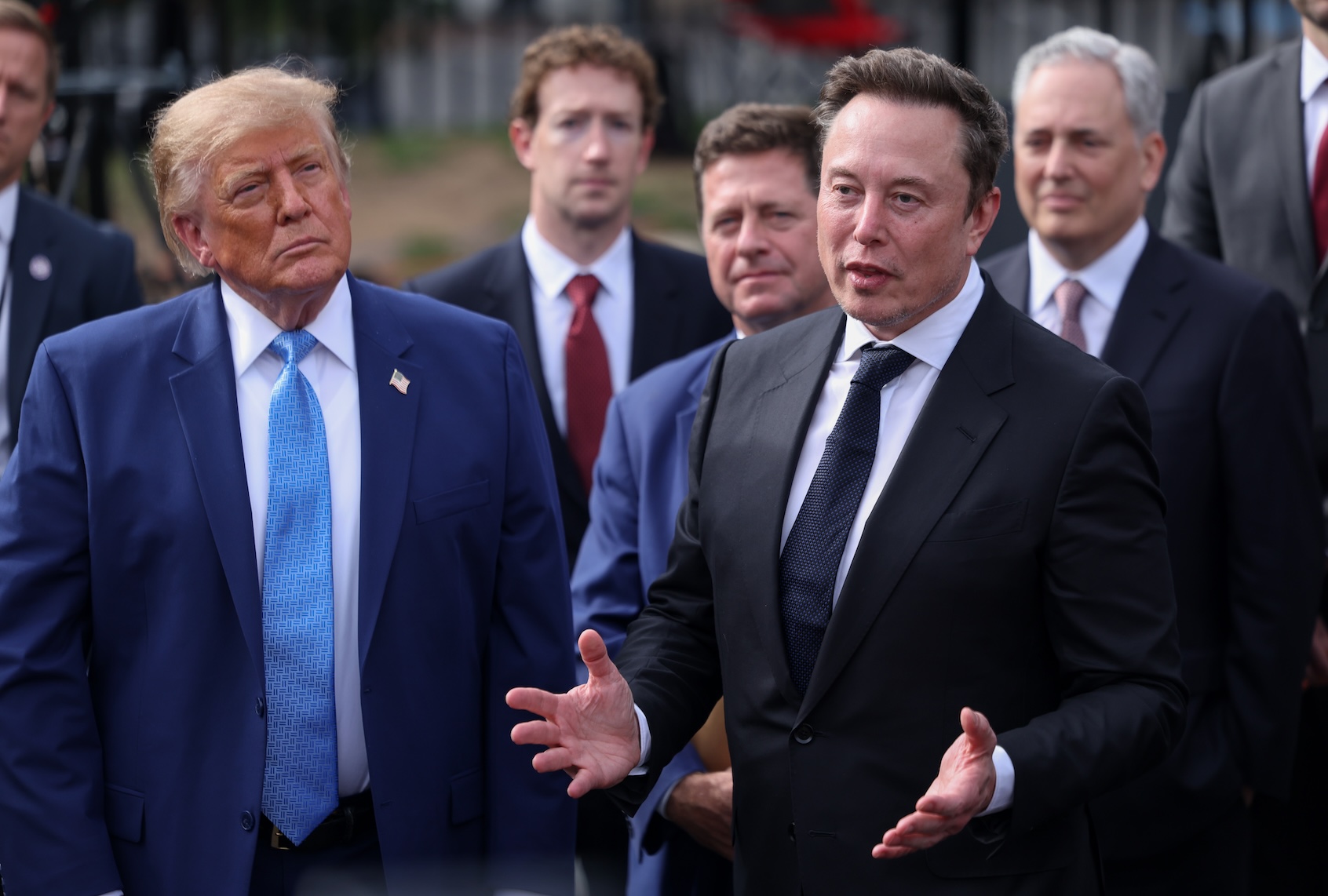
All this is rooted in Donald Trump’s recent campaign to rebrand artificial intelligence as “super intelligence” via executive order, posting on social media Thursday that “The White House considers anyone that uses the term, ‘Artificial Intelligence,’ as opposed to the highly accepted new and more accurate term, ‘Super Intelligence,’ THE ENEMY!” The idea has quickly been embraced by tech leaders, with SpaceX CEO Elon Musk saying this week that AI is “no more” and promising to change the name of his AI company, SpaceXAI, a subsidiary of SpaceX, to SpaceXSI. More recently, Amazon founder Jeff Bezos shared his approval in a Wednesday interview with Fox News. “I do like SI, because ‘artificial’ is not a very flattering thing. Like, nobody wants an artificial sweetener, artificial flavoring,” Bezos said. “Artificial sort of means fake.”

Yeah, most of us are going to roll our eyes hard at AI being “super,” but if these attempts at normalization gain ground and get pushed to their absurd conclusion, it might end in providing AI more rights than humans. (It’s worth noting Musk invokes the NPC meme often.) It’s right there in the name: “Super intelligence” is better than the old, human kind, so why shouldn’t we give these computer programs rights and defend them from regulation? That’s why stories about AI bots being put into virtual torture chambers aren’t just silly, but foregrounds the false notion that AI is capable of suffering. (Maybe don’t put bots in rooms like that anyway — at the very least, it’s a waste of energy.)

After all, AI will either become the savior of humanity or make humans obsolete, depending on what day of the week it is. Sure, this technology is nifty, even as it comes with an enormous environmental destruction. But we are still a long way from elevating the technology above regular human intelligence. But as in a two-for-one, if you can be sold on the myth that AI is superhuman, it travels along with the idea that regular humans are disposable. In other words, the tech bros are trying to turn us all into NPCs, into Errors, not least through the mass surveillance programs being used to hunt migrants and spy on protesters.

Yes, thankfully, granting above-human rights to supposedly sentient AI sentience is still a fringe idea, but we can see that changing before our eyes, not to mention we already kind of did that with corporations. Recently, OpenAI CEO Sam Altman told POLITICO that the “world should accept some bad things happening for the benefits of this technology and people having the agency.” To further consolidate its power — or at least keep the economy from crashing — Silicon Valley wants us to believe their latest technological invention can think, reason and moralize. It’s no surprise that tech bros were recently exposed trying to convince none other than the pope that AI is conscious, but to his credit, Leo XIV has rejected this idea, saying “Algorithms lack the spark of humanity” and elsewhere warning against “losing our humanity amid a ‘paradise of machines.’”

Spending time with large language models like ChatGPT and knowing a little about how they work, it becomes clear that it’s just a really good computer program that can mirror human expression, sometimes terribly and sometimes surprisingly well. There remains zero hard evidence that AI algorithms are sentient.

Yet an increasing number of people are convinced otherwise, as seen in the controversial AI psychosis phenomenon, which makes me wonder how so many people have persuaded themselves a souped-up version of “I am Error” is a conscious being. It can feel like human interaction typing back and forth with these things, but there are always gaps where you can sense the uncanny valley, where you know it’s just a lot of math and nothing more. Perhaps, if you want to be really cynical about it, you could boil down all of human nature and biology and the emergence of consciousness into “a lot of math” as well. But our brains aren’t computers and physics has yet to fully explain consciousness — that’s why they call it a hard problem. Instead of stewing in this mystery, tech bros have gotten the metaphor backward, assigning personhood to bots while denying it to living humans. Talk about soulless.

The post Billionaires love Trump’s AI rebrand appeared first on Salon.com.

  •  

The centerpiece scene of “Babygirl” cleverly redefines how we see sex and pleasure onscreen

There’s nothing subtle about a movie where Nicole Kidman crawls on her knees to lick milk out of a saucer. And yet, Halina Reijn’s “Babygirl” is perhaps the most thematically complex and provocative film of the year, kitty-play and all — one that will continue to reveal its multitude of layers long after Sky Ferreira’s scorcher of an end credits song has dulled its blaze. 

It’s a cornucopia of titillating treats, best exemplified by the film’s centerpiece scene, which features the most memorable orgasm since “When Harry Met Sally.”

That dissonance between Reijn’s deliciously clever writing and her narrative’s more forthright eroticism is encapsulated by the film’s outré promotional rollout. To tantalize and tease prospective viewers, the marketing team behind “Babygirl” has leaned all the way in, emphasizing the movie’s Christmas Day release in promotional materials that demand audiences “get everything you want” this holiday. Trailer drops and sneak peeks have been accompanied by milk emojis, while official stills flaunt Kidman’s costar Harris Dickinson’s back muscles.

It’s no shock that, for a film that plainly features kinky sex, the “Babygirl” marketing team would want to stress the movie’s raw eroticism to get curious viewers in theater seats. It’s a trick almost as cunning as the one Reijn pulls off in the movie itself, as she disguises a stirring work about controversial pleasure and cerebral expansion as a kind of elevated “Fifty Shades.” Once audiences get eyes on “Babygirl,” they quickly find that the movie is so much more than milk emojis, gold chains and rippling back muscles. Rather, it’s a cornucopia of titillating treats, best exemplified by the film’s incredible centerpiece scene, which features both the most memorable orgasm since “When Harry Met Sally” and gobsmacking bits of screenwriting and acting that will force you to reconsider good sex as you know it.

By the time we arrive at this moment, Kidman, Reijn and Dickinson have done a good bit of work to make the payoff so satisfying. Kidman’s character, the incredibly successful and even more brilliant automation industry magnate Romy Mathis, has inadvertently found herself locked into a sizzling affair with Dickinson’s character Samuel, an intern at Romy’s company. During their first meeting as part of a new company-wide mentorship program, Samuel matches Romy’s slippery intensity, and his reluctance to ingratiate himself intrigues her. The pair soon engage in a series of high-stakes games where Samuel is in control. They play with one another under everyone’s noses, yet never consummate their dynamic with more than a kiss. That is until things between Romy and Samuel become so heated that neither party can ignore the magnetic pull any longer.

Samuel arranges for Romy to meet him at a seedy hotel room, a far cry from the luxury that Romy is used to and expects. She arrives before he does, and when he opens the door to meet him, she chides his behavior. “Leaving me notes, texting me, calling me, sending me milk, are you f**king insane?” Romy asks. “Keeping me waiting in this disgusting hotel? I mean, I don’t wait for anything.” Romy got to the top of her field by ingeniously developing ways for fleets of robots to automate repetitive tasks, and her sexual exploits are no different; waiting around is time wasted and money lost.

But the line between sensual restraint and true inconvenience is one that Romy has never established, and her annoyance is only confusing for Samuel, who we soon realize is just as unfamiliar with this particular energy as Romy is. He can’t tell if Romy’s vexation is genuine or just another part of their game, and tries to figure it out with a command. “Get on your knees,” he orders. When Romy immediately objects, Samuel laughs in response, himself confused about where Romy’s desire ends and where it begins. “I don’t know how to . . . is that what you want? Be honest.”

Romy tells him that she worries about his age and about hurting him, and Samuel — the shrewd student that he is — reads between the lines. “Hurt me?” he asks with a smirk. “I think I have power over you, because I could make one call and you lose everything. What, does that turn you on when I say that?” Romy holds his gaze, silently communicating her arousal, and Samuel responds by once again telling her to get on her knees. She begins, but stops herself, getting up and gathering her things to leave before stopping at the door and running back into his arms. Samuel, however, doesn’t want reluctance. He wants certainty. 

When he pushes Romy off of him, the two wrestle to the ground, playfully slapping each other and grunting. It’s a brilliantly uneasy moment, and Reijn ensures that the viewer will never quite know where it will go until it’s over. Kidman giggles and then grows timid. Suddenly, the fear that something violent will happen becomes very real, but Samuel only subdues Romy and tells her to stop so they can figure out what’s happening. He clamps his eyes closed, and when he refuses to open them at Romy’s request, she reaches up to pry open his eyelids, causing him to smile.

By now, the scene already feels like a masterwork in erotic tension, with most audiences undoubtedly on the edge of their seats. The banter between Samuel and Romy is mischievous and childlike, at once sexy and threatening before turning around again to feel wholly loving. Much in the way that Romy is desperate to understand what exactly it is she wants, so is Samuel. The lines are blurred again later in the film, when the threat of ruining Romy’s life becomes more than a seductive trick, and that inevitable turn wouldn’t be nearly as gratifying for the viewer if it weren’t for the intense intimacy established in the remainder of this scene.

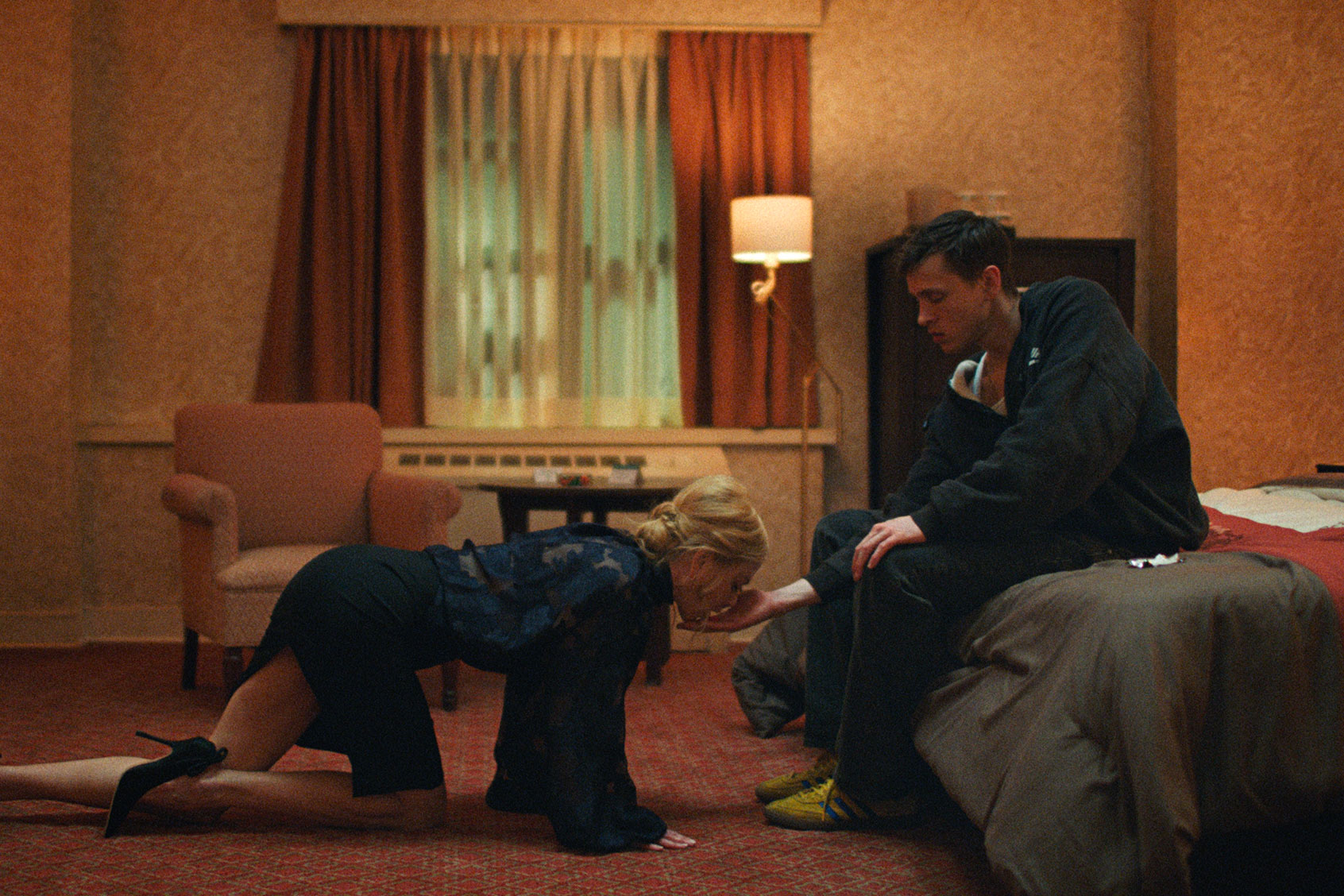
Samuel helps Romy off the floor and positions her in the corner of the room, like a child in time-out. This is Reijn’s most explicit image of Romy working through her incontrovertible Freudian shame, a humiliation that has troubled her for her entire life and which has no identifiable source — despite her attempts to pinpoint it through every therapeutic treatment known to man. At this stage, Romy is unwilling to remove her clothes, so Samuel circumnavigates the traditional nude image of sex to find a different route to her pleasure. He asks her to get on her knees before unwrapping a piece of hard candy and placing it into his hand. Romy crawls forward and picks it up with her mouth, allowing Samuel to pet her like a dog. Gently, he places Romy onto the dirty hotel room floor, facing away from him, and reaches into her skirt to finger her.

It’s a brilliantly uneasy moment, and Reijn ensures that the viewer will never quite know where it will go until it’s over.

What comes next (no pun intended) is one of the most startlingly crude and incontestibly incredible sex scenes in recent memory. Reijn’s camera closes up on Kidman’s face while Samuel works in the background, out of focus. We watch as Romy moves through pleasure, fear, bliss and confusion. Here, Kidman is using her powers as both a grade-A movie star and a true artist to mesmerize us, fully in service of Reijn’s vision. It’s a staggering bit of genius and one of the most unforgettable scenes in any film this year, a truly affecting look at the heady pursuit of physical euphoria. As Romy nears her orgasm, she’s terrified, and when she objects and tells Samuel that she “doesn’t want to pee,” we realize that she has no experience physically ejaculating. He quells her worries and brings Romy to orgasm, and she is immediately stricken with a massive wave of grief and guilt.

But Romy’s remorse doesn’t just stem from the fact that she’s cheated on her husband Jacob (Antonio Banderas), it comes from her realizing that her husband — the person she loves the most, with whom she shares two children — has never made her feel such full-bodied pleasure. Samuel bears a power that takes hold of Romy, the kind of hypnotic sway that she’ll have to contend with eventually. But first, she sobs, crumpling into Samuel’s arms while he holds her close.

It must be said that this scene demands everything of Kidman, and she bares herself entirely without any nudity at all. It is positively thrilling to see someone act at this level, so much so that Kidman’s performance demands that the viewer shed all pretenses. It’s impossible not to admire the complex, sophisticated work in this scene, which is so beautifully constructed that it defies whatever vulgar, less refined terms that may be used to define it going forward. Here, “Babygirl” graduates from to inviting to important, blowing past the tactics that marketers used to get people to pay the price of admission. Reijn’s film is more than just an erotic thriller, it’s a landmark piece of mainstream erotic cinema that, like Samuel and Romy, relishes the opportunity to push the boundaries.

The post The centerpiece scene of “Babygirl” cleverly redefines how we see sex and pleasure onscreen appeared first on Salon.com.

  •  

The AI drive-thru wars aren’t really about your order

A few years ago, an experimental McDonald’s drive-thru system became convinced that two customers needed an almost ceremonial quantity of chicken McNuggets. As a video of the exchange showed, the number kept climbing: 240, 250, 260. The customers shouted for it to stop. The machine, unmoved, continued adding nuggets.

The clip went viral, in part because the mistake was so specifically inhuman. Someone wearing a headset might mishear an order for 26 nuggets. But one imagines that, somewhere between the second and third hundred, a person would pause to ask, “You sure you want 260 nuggets, hon?” The machine had no such reservations.

McDonald’s eventually ended that IBM pilot in 2024, after testing automated order-taking at more than 100 restaurants. Now, it’s trying again.

The company’s new voice assistant, Archy, is part of its Google-powered ArchIQ system and can take drive-thru orders in English and Spanish. McDonald’s says its early tests have topped 90% accuracy, with plans to expand the technology as part of a sweeping modernization initiative. The pitch is familiar: Faster service, fewer mistakes and less repetitive work for employees, who will theoretically be freed to concentrate on something more important.

Hospitality.

But another chicken chain is drawing a line. Chick-fil-A CEO Andrew Cathy recently told CNBC that his company has no plans to replace drive-thru order takers with AI, even as it explores ways to use the technology elsewhere. The reason, he explained, is that the chain wants its hospitality to remain “human to human.”

At first glance, this sounds like a disagreement over whether a computer can be trusted to hear “no onions” rather than “more onions.” But underneath that technical question is a more consequential one: Which parts of hospitality do restaurants think are automatable — and which are worth keeping human?

There is, of course, a genuine appeal to frictionlessness.

Sometimes you’re tired, antisocial or running spectacularly late. Sometimes you want to make a substitution to an order without worrying whether it will get lost between the person wearing the headset and the person assembling your food. Sometimes you just want to tell a box that you need fries and trust that fries will appear.

I understand this instinct completely. I’ve walked into plenty of busy restaurants where the prevailing atmosphere suggested human error was the expectation rather than the exception, and a kiosk felt like a little gift.

Nor is there anything inherently noble about making employees spend eight hours deciphering orders shouted through crackling speakers while the ice-cream machine is down and a small diplomatic crisis is unfolding in the PlayPlace. Taking orders is part of the job, certainly; trying to do it while the rest of the restaurant threatens to unravel is another matter.

The optimistic version of AI-assisted service makes some sense: Let the machine handle routine tasks. Give employees more time to solve problems, help customers and perhaps make their shifts a little less frantic.

The less optimistic version is that companies will realize they can run the same restaurant with fewer people.

McDonald’s own financial projections offer some reason to examine that distinction carefully. In its September presentation of the company’s broader “> NEXT” strategy, the chain said Archy could free at least 50 labor hours per week as the technology scales. It also projected that its larger package of restaurant improvements could generate approximately $100,000 in annual gross cash-flow benefits for an average U.S. restaurant, with most of those gains eventually benefiting the bottom line.

Neither figure tells us precisely what happens to the employees who would otherwise be working those hours. But it does reveal how closely the language of hospitality is intertwined with the language of efficiency.

And McDonald’s has experimented with this vision before. In late 2022, the company unveiled a smaller-format restaurant outside Fort Worth, Texas, designed around customers ordering ahead through an app and collecting their food from a conveyor system. Employees still prepared the meals, but the design dramatically reduced the need for face-to-face interaction.

The concept was presented as a more convenient way to get food into customers’ hands. Fair enough. But if the great promise of automation is that it gives employees more opportunities to practice hospitality, it’s worth asking what that hospitality looks like when customers scarcely encounter those employees in the first place.

Chick-fil-A, meanwhile, has made a rather different calculation.

The company has always been unusually explicit about its values, which are rooted in the religious principles of founder S. Truett Cathy. Its restaurants remain closed on Sundays, including locations where that choice may seem commercially inconvenient like airports and college campuses. Its employees are famous for responding to customers with the relentlessly chipper “My pleasure!” The brand talks about service not merely as a function of getting food to customers, but as an expression of care.

That self-image is not without complications. Chick-fil-A has faced years of criticism over its charitable foundation’s past donations to organizations with anti-LGBTQ positions, which it said it would stop funding in 2019. Its public vision of care has not always been received as universally inclusive.

Still, the consistency with which the chain has made personal hospitality part of its identity is instructive.

And it’s not as though Chick-fil-A is technologically timid. At a Georgia location opened in 2024, food travels from an elevated kitchen to employees below on a conveyor system designed to deliver a meal every six seconds. Customers can order ahead digitally or place orders with workers in the drive-thru. The technology is decidedly futuristic, but the company has deliberately preserved a person at the point of service.

That distinction strikes me as meaningful.

Technology can expedite a restaurant’s work without necessarily becoming the face — or voice — of the restaurant itself.

Of course, a scripted “My pleasure!” isn’t necessarily more authentic than a cheerful voice generated by a computer. And anybody who has ever worked in a customer-facing job knows that hospitality, particularly of the relentlessly sunny variety, can involve a tremendous amount of emotional labor.

Employees shouldn’t have to manufacture delight on demand while working short-staffed shifts for inadequate pay, fielding customer complaints about things outside their control. A good restaurant culture takes more than telling workers to smile. It requires adequate staffing, good managers, training, compensation and enough breathing room for employees to exercise judgment.

This is the problem with imagining hospitality as another task that can be optimized. The value of an interaction isn’t always apparent in advance, and the most meaningful parts of it often have little to do with completing the transaction.

But I think there’s a difference between demanding that employees perform warmth and creating an environment where warmth has room to develop.

Disney World, for example, has practically made an industry out of carefully cultivated hospitality. The entire experience is choreographed, from the language employees use to the way they interact with guests. Yet some of the most memorable moments happen when an employee notices something unexpected and responds in kind: A bus driver making a tired child laugh, or a character performer taking an extra moment with someone who’s been waiting all morning.

The environment is engineered. The little spark between two people isn’t.

And that’s what makes this debate about AI ordering feel more consequential than the technology itself might initially suggest.

Because hospitality isn’t entirely something a restaurant provides. It’s also something customers participate in.

Recently, I was ordering coffee at a neighborhood café, one location of a regional chain. A woman ahead of me, well-dressed and perhaps in her early 30s, was asked by the barista what she’d like. Instead of answering, she wordlessly handed over her phone. The barista looked confused. The woman sighed, tapped her screen with a fingernail and said, “It’s right there.”

It was a small moment, over almost as soon as it began. Nobody yelled. Nobody demanded a manager. But something about the exchange bothered me. The barista had asked a perfectly ordinary question. The customer seemed irritated that the answer required any effort on her part. The information existed on a screen. Why should she have to communicate it?

We’ve spent years teaching machines to understand human behavior. I wonder whether we’ve also begun expecting humans to behave more like machines.

It’s difficult to shake the feeling that something has frayed in our public interactions since the pandemic. We got used to contactless delivery, app-based ordering, packages appearing at our doors and transactions completed without speaking to anyone. Those conveniences were useful, sometimes essential. Many remain genuinely wonderful.

But I’ve also noticed more impatience. Less eye contact. An increasingly common expectation that the person behind the counter should function as an extension of whatever digital system we’ve already been using.

And perhaps there’s an uncomfortable lesson here for customers, too. We demand personalized service, but don’t always seem particularly interested in the people providing it. We want our preferences remembered, our mistakes corrected and our food ready precisely when promised. We don’t necessarily want to offer much patience, curiosity or goodwill in return.

Service workers have always dealt with difficult customers, of course. There’s no reason to romanticize some vanished golden age of American politeness. But the incremental disappearance of ordinary interactions raises a question worth considering: What happens when convenience becomes the organizing principle of our public lives?


Want more great food writing and recipes? Sign up for Salon’s free food newsletter, The Bite.


I keep thinking about the spaceship in Pixar’s “WALL-E,” the Axiom, where every human need has been anticipated and met. Passengers float around in automated chairs, surrounded by screens, food and entertainment. They are comfortable, in the technical sense. They are also profoundly disconnected from one another and from the world around them.

The unsettling thing about the Axiom isn’t that its passengers are miserable. It’s that they don’t seem to notice everything they’re missing.

No one individual convenience creates that kind of world. But taken together, thousands of decisions to eliminate small inconveniences can also eliminate opportunities for connection. And those encounters, however insignificant they seem, are part of how we learn to share space with other people.

A few months ago, I was shopping at Trader Joe’s when I noticed the cashier’s earrings. They looked like tiny illustrations of fish pulled from the label of a particularly fancy tin of sardines, with hooks attached. I told her I loved them. “Shrinky Dinks!” she replied.

It turned out she was a crafter. She pulled out her phone to show me some of her work, which included garments she’d fashioned out of Trader Joe’s tote bags. There were pants. Actual pants, made from the grocery store’s reusable bags.

I was delighted. Here was this woman who liked her job, or at least the store where she worked, and liked making things, and had found a wonderfully weird way to combine those interests. For a minute or two, the checkout lane became something other than a place where groceries changed hands.

It wasn’t a life-changing encounter. I don’t know the woman’s full name; her name tag simply said MB. I couldn’t tell you what I bought that day. But I remember her earrings, and the pants, and how much fun it was to meet someone who was so enthusiastic about something so delightfully specific. I wouldn’t have had that interaction if I’d been scanning my own groceries. And, importantly, I wouldn’t have had it if I hadn’t noticed the earrings and said something.

Neither of us was obligated to participate. That’s part of what made it lovely.

This is the problem with imagining hospitality as another task that can be optimized. The value of an interaction isn’t always apparent in advance, and the most meaningful parts of it often have little to do with completing the transaction.

A machine might eventually take my order perfectly. It might remember my favorite coffee, anticipate the substitution I’m about to request and move me through the line several seconds faster. On certain mornings, I’d welcome every bit of that.

But it cannot offer the particular surprise of encountering another person who has decided, for no reason other than the pleasure of it, to show me something strange and wonderful.

The real danger of automating our ordinary encounters isn’t that we’ll suddenly forget what human connection feels like. It’s that we’ll gradually make fewer opportunities for it, until its absence begins to feel normal.

Communities are shaped by the ways we participate in them. Even at a coffee counter. Even through a drive-thru window.

Sometimes that participation amounts to nothing more than a little patience, an unexpected compliment or somebody asking, Wait, is that really what you meant?

And sometimes that’s where the magic happens.

The post The AI drive-thru wars aren’t really about your order appeared first on Salon.com.

  •  

Trump gets richer while gas prices soar

In mid-September, Chinese scientists announced a breakthrough in extracting hydrogen and fresh water from the ocean with about 15% better energy efficiency than older techniques. Their research, published in Nature Energy on Sept. 15, underscores that China continues to dominate in the renewable energy race, generating so much that the country can’t even use it all. As Reuters reported in August, “China turned away enough clean energy to power Mexico ​for a year in the six months through June as its grids hit their limits.” At the Fortune Leaders Forum in Macau on Sept. 8, Youyuan Huang, executive vice chairman of BTR New Material Group, the world’s top maker of battery anode materials, said “China’s grid is a very strong and stable one . . . but we’ve installed too much green energy.”

Boy, the U.S. could sure use some of that excess juice. Currently, this country is embroiled in a self-inflicted energy crisis, largely a result of President Donald Trump’s war against Iran, that is sending deep ripple effects across the globe as oil prices spike. In the U.S. alone, diesel prices have risen around 70% since before the war began on Feb. 28, hitting a record $6.52 on Sept. 22, and in the last two months, at least 16 trucking companies, both large and small, have been bankrupted. The world’s richest nations are trying to staunch the bleeding, recently vowing to release up to 100 million barrels of diesel and crude oil within four months. But on Monday, Amin Nasser, CEO of Aramco, the world’s largest oil company, cautioned that this is little more than a Band-Aid and that long-term supply issues remain. Until the Strait of Hormuz “fully reopens and confidence returns, the crude reality is that pressure at both ends of the barrel will intensify,” Nasser said at the Energy Intelligence Forum in London.

Some “crude reality” would be another nice-to-have for those helming U.S. policy. The rising fury against the war and high energy prices threatens to clobber Republicans in the midterm elections. So the Trump administration is frantically trying to drive down diesel prices, first by floating the idea of banning exports. This tactic, criticized as “unwise” by some oil executives, has been abandoned for now, but at a Monday rally in Nebraska — where Trump also seemed to promote the idea of Iran attacking two California cities — he signed an executive order promoting the use of red-dyed diesel. Normally reserved for agriculture operations, red diesel is exempt from highway fuel taxes, but experts caution that expanding its use probably won’t help much because major fuel suppliers are unlikely to go along with it. For one, the taxes are only deferred, meaning companies could end up paying them later. But red dye, when used, can also gum up tanks and fuel systems. “We do not expect most reputable diesel retailers and fuel marketers to do this,” the Society of Independent Gasoline Marketers of America and the National Association of Truck Stop Owners said in a note to their members, citing “limited upside.”

On Friday, Trump announced his latest bid to reduce prices: buying oil from Russia. Shortly afterward, the Treasury Department issued a temporary license allowing Russian diesel to be supplied to the global market. Though details were scarce, this undermines the president’s own sweeping Russia sanctions law he signed last month. Regardless, it doesn’t look like it will do much to lower prices. “It’s kind of shuffling deck chairs on the Titanic,” Michael Lynch of the Energy Policy Research Foundation, told the Associated Press. “If we get diesel from Russia, basically it means that their existing customers are not going to get it and they’ll have to go somewhere else, and that will keep the price basically where it is now.”

With diminishing options — besides the obvious one of ending the Iran war immediately, which Trump can do whenever he wishes — the administration’s primary strategy is to blame everyone else. On Monday, he repeated claims on social media that Ukraine is most at fault for high oil prices thanks to their continued attacks on Russian oil refineries, and that “What’s driving up gasoline is no longer the Strait of Hormuz.” The president also said the closure of oil refineries in “blue states” is part of the problem. 

With diminishing options — besides the obvious one of ending the Iran war immediately, which Trump can do whenever he wishes — the administration’s primary strategy is to blame everyone else.


Energy Secretary Chris Wright has also spread these claims, appearing Oct. 4 on “Face the Nation” to blame Ukraine and California Gov. Gavin Newsom, the latter for closing two refineries. (In fact, Newsom had nothing to do with the refinery closures.) Wright insisted that fuel prices will drop soon, as Trump has been claiming for months now. He also said that Trump was warned before attacking Iran that it might create an energy crisis — “he was well aware of the risk to energy flows that were coming out of the Persian Gulf region” — but the president insisted it would all be worth it to stop Iran from getting a nuclear weapon.

Wright has been especially busy lately trying to instill a sense of optimism around the energy sector, dismissing climate change as a non-issue while laundering Trump’s vision of “energy dominance.” All of this is remarkably myopic. Half of it is an artificial war against renewable energy projects, including the cancellation of almost $8 billion in Biden-era clean energy grants, and using specious claims about “national security” to cancel offshore wind projects. The other half is accelerating oil, gas and coal extraction while slashing protections for endangered species threatened by drilling in the Gulf of Mexico. But here’s the rub: Neither approach has made fuel cheaper, and it doesn’t seem that will change any time soon.


Start your day with essential news from Salon.
Sign up for our free morning newsletter, Crash Course.


There’s little wonder why: Wright founded Liberty Energy in 2011, one of the fossil fuel giants that led that decade’s fracking boom, and he has attacked renewable energy projects almost as enthusiastically as Trump, saying they can never fully meet increasing energy demands. China and other countries have conclusively proved that false, but it’s not an either-or situation. Despite being the world’s No. 1 renewable energy producer, China is also rapidly expanding its coal industry. “The growth of renewable electricity is not incompatible with maintaining, and sometimes developing, fossil-fuel capacity,” science and technology historian Jean-Baptiste Fressoz explains in his 2025 book “More and More and More: An All-Consuming History of Energy.” 

In other words, human energy consumption is rising so fast that we’re continuing to grow all energy sectors rather than entirely replacing fossil fuels with renewables. (That’s not great news for the climate, of course.) But only the U.S. is leaning quite so hard into 19th-century fossil fuels instead of 21st-century solutions.

Why would the Trump administration push so hard for retrograde technology? Perhaps it’s time to admit that the president actually has no interest in driving down consumer prices or the cost of living, let alone ending the war, whether it hurts his party’s electoral chances or not. Trump is deeply invested in oil and gas companies, which have enjoyed obscene profits throughout the conflict. As Reuters reported in late September, “The ​five largest Western oil companies — BP, Chevron, ExxonMobil, Shell and TotalEnergies — are expected to report combined third-quarter profits of around $53 billion, according to RBC Capital Markets estimates, up from $48 billion ‌in the second quarter and more than double year-earlier levels.” 

Trump has caught plenty of these profits, with an August report from the Joint Economic Committee finding that the president “owned as much as $45.6 million in oil and gas company stocks in 2025, a portfolio that is now worth as much as $61.1 million given the surge in oil and gas stocks driven by Trump’s war in Iran.”

No wonder Trump continues to hint that the Iran war will heat up again after the midterms: He has a vested interest in keeping it going and inflating gas prices, so maybe it makes sense to call his bluff here. After all, truckers may be dropping more than $1,000 every time they fill up, or losing their jobs entirely, but the ultra-rich aren’t feeling much stress from all this. They are well positioned to buy up bankrupt trucking companies and jack up prices, further consolidating their monopolistic or oligarchic power. It’s the classic “shock doctrine,” in which corporations exploit disaster conditions, created intentionally or not. 

It would be more sensible to follow China’s lead on renewable energy, just as it would probably be smart to retreat on Iran rather than get entrenched in another forever war. But that just wouldn’t generate such spectacular windfall profits for Trump or those in his orbit. The solution is to nail these people to the consequences of their decision. They don’t want to end this crisis, so we must make them.

The post Trump gets richer while gas prices soar appeared first on Salon.com.

  •  

Trump’s “Camp Donald” grift is designed to outlast his presidency

The American presidency is one of the most stressful jobs there is. Presidents famously age during their terms, often starting off looking hale and hearty and, by the time they’re finished, appearing tired, more lined and a whole lot grayer than when they started. So it’s understandable they would need to recharge by getting away from Washington from time to time. 

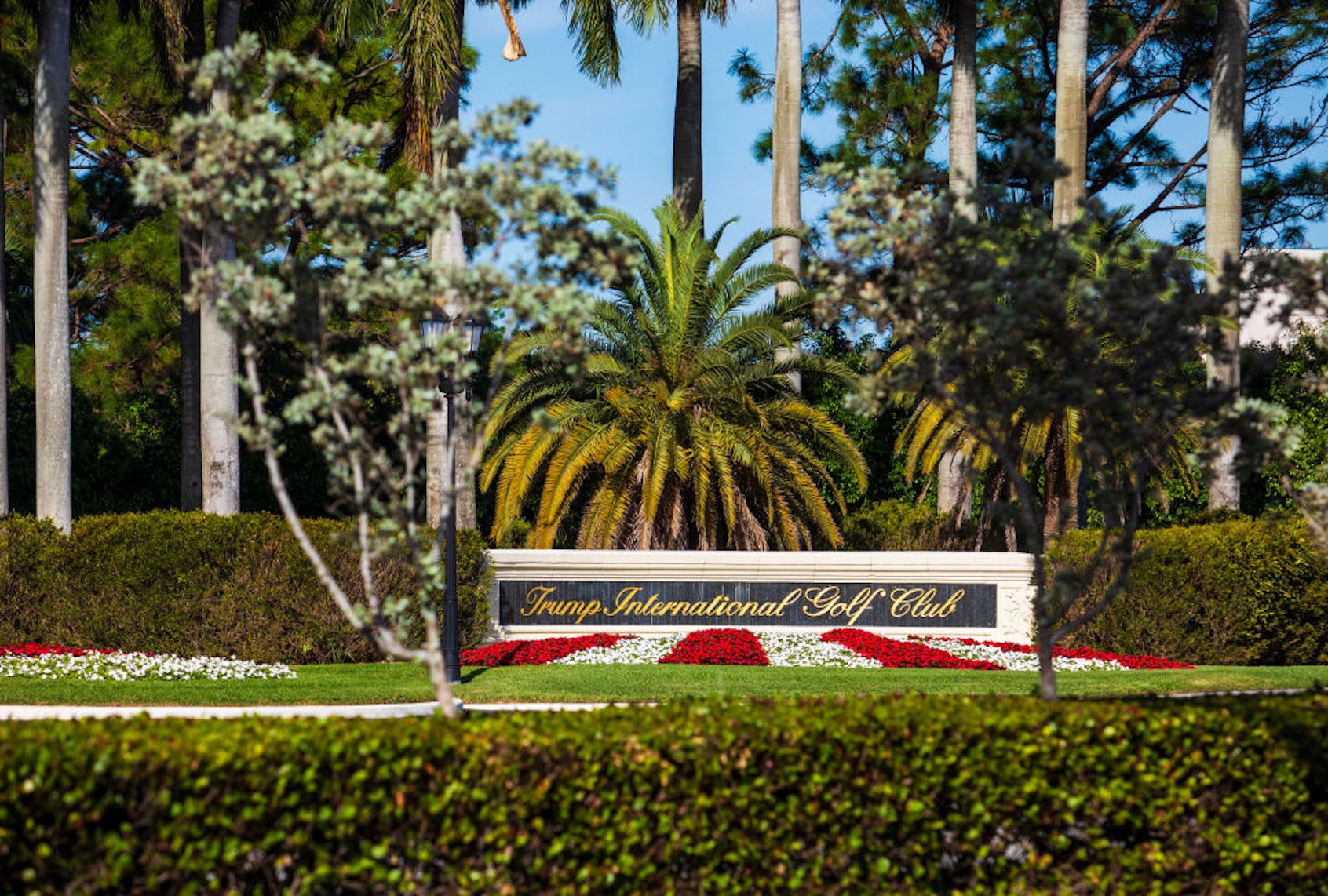
Donald Trump has made a habit of this, regularly jetting to his Mar-a-Lago estate in Florida, and his golf club in Bedminster, New Jersey, for extended periods of time in lieu of Camp David, the famous presidential getaway nestled in Maryland’s Catoctin Mountains. Now, according to a recent report by the Washington Post, he is seeking to create a permanent official presidential retreat in Florida at his Trump International Golf Club in West Palm Beach.

This would be an unprecedented move, even though it isn’t unusual for presidents to crave time away from Washington. According to the White House Historical Association, many of the early presidents left the White House in the summer because they believed that the white fog that formed on the nearby marshes was a deadly white gas; they wanted to get away for their health. In fact, James K. Polk is the only president to have stayed in the White House for each of the three summers he was president, and since he died shortly after leaving office, his fate was attributed at the time to those white gases.

Presidents, of course, have to keep working wherever they are. Some have wanted to escape Washington’s notorious humid summers, while others longed to flee the cold and create a “winter White House” in warmer climes. Harry Truman reportedly liked his Key West winter home so much that he called it the “Little White House” and spent 175 days of his presidency there. Richard Nixon was also fond of Florida, but he also frequently jetted back to his native California, as did Ronald Reagan. George W. Bush spent as much time as possible at the West Texas ranch he bought just before assuming the presidency. 

The first official presidential retreat was the Old Soldiers Home, which was commandeered by President James Buchanan as a summer getaway since its location in leafy Northwest Washington was cooler and quieter than the White House. It was subsequently used by Abraham Lincoln and his family, and he was said to have written the Emancipation Proclamation there. Some subsequent presidents enjoyed the retreat as well, but it was soon out of fashion as they began to travel further afield for their vacations. 


Want more sharp takes on politics? Sign up for our free newsletter, Standing Room Only, written by Amanda Marcotte, now also a weekly show on YouTube or wherever you get your podcasts.


From 1880 until 1977, when President Jimmy Carter sold off the last one, there was always a presidential yacht for the chief executive to unwind on and entertain guests, but there wasn’t another official presidential retreat until 1942, when President Franklin Roosevelt visited a Works Progress Administration project in Maryland called Camp Hi-Catoctin and selected it as the location for a future presidential retreat he dubbed Shangri-La. Roosevelt used the property to relax, but he also saw it as a perfect place for high-level diplomacy. His successor, Harry Truman, made it a permanent federal facility and then, after he took office in 1953, Dwight Eisenhower renamed it Camp David in honor of his young grandson. Since then, the property has been the site of many meetings with foreign leaders, including the diplomatic negotiations hosted in 1978 by Carter between Egyptian President Anwar Sadat and Israeli Prime Minister Menachem Begin that culminated in the Camp David Accords. 

Its location — just a 30-minute helicopter ride but many spiritual miles away from the White House — makes it a convenient spot for important domestic matters to be dealt with outside the bustle of the White House. Richard Nixon famously fired his trusted aides H.R. Haldeman and John Ehrlichman at Camp David in 1973, while 12 years earlier John F. Kennedy received counsel there from Eisenhower after the Bay of Pigs disaster. 

While some presidents have clearly enjoyed Camp David more than others, Trump has made no secret of his deep dislike of it. He has used it only rarely, and the one time he has been known to propose having any high-level talks there was in 2019 when he inexplicably invited Taliban leadership to join him there just days before the anniversary of Sept. 11, a meeting which was mercifully cancelled after the group killed an American in a car bomb attack in Kabul. 

Even on his official trips, if he’s unable to return home Trump will sleep at one of his own hotels, a move that is always profitable for him personally since the government pays for much of the huge entourage trailing the president.

Trump only wants to visit his own properties. According to the independent watchdog Citizens for Responsibility and Ethics in Washington (CREW), as of June the president has spent 37% of his second term at his own properties, with Mar-a-Lago receiving the most visits. Even on his official trips, if he’s unable to return home Trump will sleep at one of his own hotels, a move that is always profitable for him personally since the government pays for much of the huge entourage trailing the president. In fact, one of the perks Trump has given himself is that his various winter and summer retreats are also his commercial properties, and his visits not only promote the properties, they also provide opportunities for paying customers to have access to the president. His behavior has become so commonplace that few even remark anymore that the president lives a good part of the time at clubs with members who pay hundreds of thousands of dollars to spend time in his presence. 

The grift will apparently continue even after he leaves office. Trump recently announced that his proposed presidential library in Miami will double as a hotel, making it yet another profit center for the family. (He is also being sued by various interested parties who are upset that he was given the valuable land, worth a reported $330 million, for only $10 by Florida Gov. Ron DeSantis, with the understanding it would be used for a nonprofit organization.) Now he has big, unprecedented plans for the new Camp David.

According to the Washington Post, “a parcel” of his West Palm beach golf resort will “be designated a permanent, official sanctuary for foreign leaders and future U.S. presidents, designed to host international summits and house presidents when they take vacations in Florida.” Trump’s generosity is such that he also plans to throw in complimentary members for presidents. It’s obvious that there is a lot of money to be made, which will be accompanied by ongoing access to him and his family. If foreign dignitaries were there to meet with the president and take in some golf, you can imagine that Trump would be at the club next door waiting to hold court. As Rick Reilly, author of “Commander in Cheat: How Golf Explains Trump,” told the Post, “I suppose he wants to make a power play with these people and show them who is the king of America.”

Trump claims there would be no cost to the government, since he plans to pay for the housing himself. But as we’ve seen with the rapidly increasing costs to American taxpayers for his ballroom money pit at the White House, that’s unlikely to be the case. Taxpayers will almost certainly be on the hook for many millions, if only for the enhanced security that would be necessary. After all, this is the golf course where a would-be assassin was caught last year hiding in the bushes.

Trump leases the land for the golf course from Palm Beach County, which is seriously considering his proposal. If it is approved, the only course of action for the administration that follows Trump is to offload it — just as the federal government did with Mar-a-Lago after the socialite Marjorie Merriweather Post left it to the government when she died in 1973 to serve as a winter White House. Eight years later, citing exorbitant annual maintenance costs, the government returned the property to the Post Foundation, which put it for sale in 1985 before it was bought by Trump.

No name has been chosen for the property. But I don’t think there’s any mystery about what it’s going to be, do you?

The post Trump’s “Camp Donald” grift is designed to outlast his presidency appeared first on Salon.com.

  •  

Leave the Greenland sharks alone

The 1975 film “Jaws,” in which a local government hires a shark hunter to protect the town’s tourism industry, delighted me as a 10-year-old. But other than its infamous opening sequence, I don’t recall being scared. My younger sister, however, developed a years-long fear of deep water, even our 11-foot-deep pool. Maybe I’d just cultivated too much shark knowledge, well aware that these apex predators are docile and do not hunt humans like they do in Peter Benchley’s novel. The book and the film — I consumed both and can report that Steven Spielberg’s adaptation is better — only instilled in me a deeper love and respect for sharks. They are still my favorite fish to observe in aquariums or the ocean.

Outside of the movies, shark bounties are uncommon these days. That’s why news this week that Greenland was planning to cull 1,000 Greenland sharks was so alarming to many online. Officials in the Avannaata municipality on the island nation’s west coast approved the plan, offering fishers 300 Danish kroner, or about $45, per shark heart. The government complained that hungry sharks are eating too much Atlantic cod and Greenland halibut, cutting into what humans can bring home and damaging their gear. Lars Erik Gabrielsen, mayor of Avannaata, told The Guardian, “We need to safeguard the income of fishermen and the catch so that we can continue to eat the foods that we have relied on for generations.”

Conservationists and shark lovers were outraged at the proposal. Nick Dulvy, a professor and marine conservationist at Simon Fraser University in British Columbia, called it a “disaster” and said that biologically, the sharks are “the most sensitive species in the ocean to overfishing.” Marine ecologist Spencer Roberts, whose advocacy work includes calling out shark poaching, posted on X that “There is a psychotic sense of entitlement spreading around the world that imagines humans own the fish in the sea and demands retaliatory killing of predators who rely on these fish. Even centuries-old sages of the Arctic Ocean are not safe from this deranged human delusion.”


Start your day with essential news from Salon.
Sign up for our free morning newsletter, Crash Course.


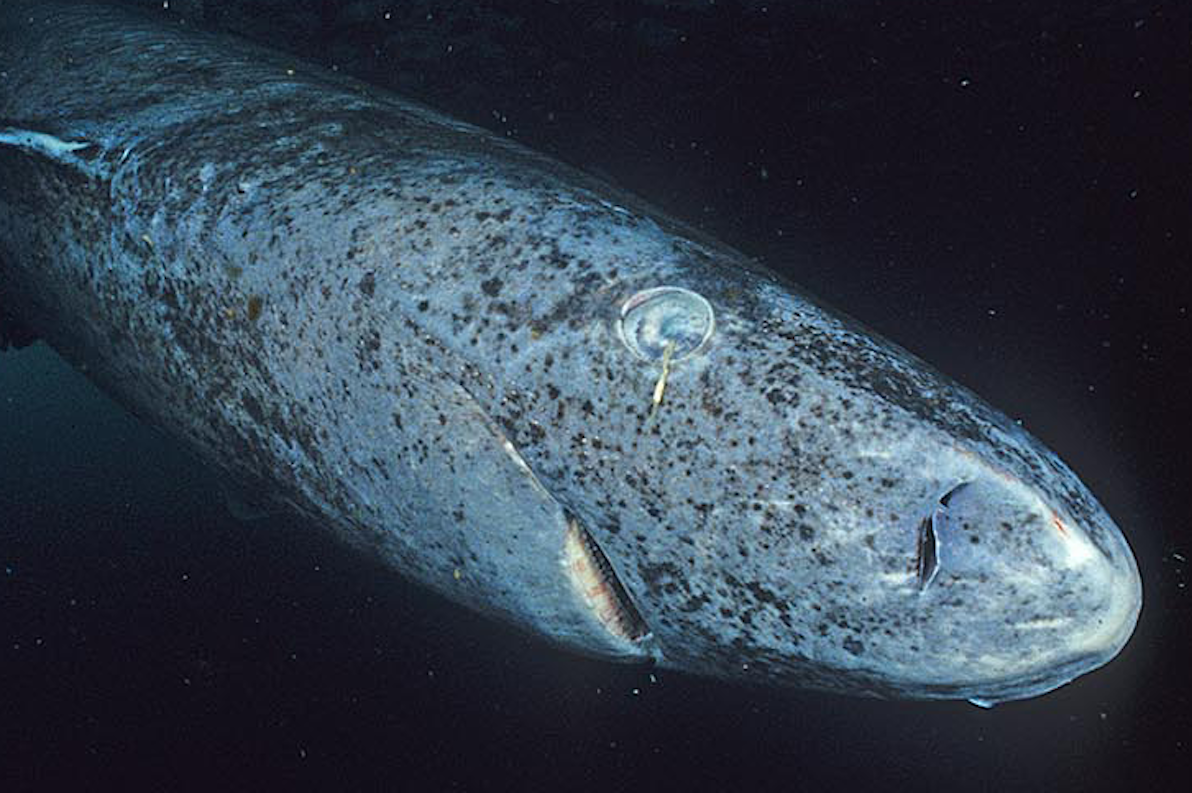
Indeed, the Greenland shark (Somniosus microcephalus) is bizarre and misunderstood, basically being the couch potato of the depths of the North Atlantic and Arctic Ocean, where waters are just above freezing. Known as an abyssal species, it slothfully trawls the shadows like some mournful Lovecraftian being, possessing an especially sluggish metabolism, which isn’t surprising considering its size. Greenland sharks weigh in at one ton and reaching up to 23 feet in length. The maximum lifespan can average 400 years, the longest lifespan of any known vertebrate, meaning there are apparently Greenland sharks that are older than the United States. If that doesn’t blow you out of the water, I don’t know what will. Humans are famously bad at mentally fathoming deep time, so thinking about these ghostly rotund things hiding in the dark of the ocean, outliving empires like an ichthyological Ozymandias, fills me with even more awe than most sharks do.

In a rare spot of good news, the local government dropped the plan after national officials questioned its legality, but a future cull hasn’t been ruled out. Still, it’s worth upholding this turnaround as an example of why speaking out on animal rights can be successful. We don’t need to just sit back and watch the extinction of any species that doesn’t directly benefit us, while of course recognizing that fishers have to eat too. Some have proposed reimbursing fishers or using acoustic deterrents instead of mass slaughter.

But it’s more than just Greenland sharks at risk, with an estimated 79 million sharks dying in fisheries in 2019. At least 25 million of those species are threatened. As coral reefs struggle to survive, many sharks are losing their main food source, but humans are to blame for that one. These animals can be dangerous, same as a grizzly bear or elephant, but people tend to value sharks a lot less. This is in spite of their critical role in a healthy environment. Sharks aren’t monsters, they evolved to fill very specific roles in the ocean — a huge block in the Jenga of life — and if they go, our oceans would dramatically tumble in ways that would negatively impact humans too.

“Jaws” is a fantastic film if you can suspend your disbelief about a great white being the menace of the seas. That’s really us, but it doesn’t have to be.

The post Leave the Greenland sharks alone appeared first on Salon.com.

  •  

Clavicular’s charges show the real danger of MAGA manhood

It wasn’t long after Braden Peters, better known as “Clavicular,” was arrested on suspicion of raping a 17-year-old girl at his family’s home in Massachusetts that his fellow MAGA influencers started complaining that he was the real victim. 

“Now we live in a climate where a 19-year-old can’t even sleep with a 16-year-old with a little alcohol involved. Absolutely insane,” said Nick Fuentes, the popular white nationalist podcaster, ignoring the fact that it has long been considered rape to have sex with someone unconscious and unable to consent, as alleged by the criminal complaint against Peters.  

Others floated conspiracy theories accusing the mysterious “they” of trying to “control” Clavicular, or claiming he is besieged with “women trying to ruin his life with rumors.” Brian Atlas of the “Whatever” podcast posted a video of the alleged victim drinking with Peters, as if it were exonerating evidence instead of bolstering the criminal case against him. Clavicular himself has been accusing the girl of fabricating her claims to get revenge for being rejected by him, an accusation echoed online by many of his fans. Right-wing commentator Richard Hanania, whose claims of reforming his racist views have drawn laudatory profiles in Vox and The Atlantic, struck out against the accuser, apparently because she didn’t cut off immediate contact with Peters after the alleged rape. (Research shows that victims often maintain contact with their assailants, especially if they’re still in denial or processing the trauma.) 

MAGA hysteria over “cancel culture” has long provided an excuse to recast bigots as free speech martyrs on the specious grounds that being criticized for saying ugly things is a violation of their First Amendment rights.

Such reactions are entirely predictable. MAGA hysteria over “cancel culture” has long provided an excuse to recast bigots as free speech martyrs on the specious grounds that being criticized for saying ugly things is a violation of their First Amendment rights. This was always pretzel logic, but the halos granted to the canceled by right-wingers has expanded beyond those who are mad because people yelled at them on social media. Actual crimes, especially violence against women, are now being excused and justified by redefining perpetrators as victims of cancel culture. As long as what you do makes progressives and feminists angry, it appears, there is no limit to how some on the right will protect and even canonize you. 

“MAGA and the right-wing have really lost the thread when it comes to their anger at cancel culture and are now just angrily fighting on the side of anyone who does like a crime,” Cody Johnston of “Some More News” noted in a recent episode. “Especially, it seems a crime against women.”

The Daily Wire, a right-wing production company founded by Ben Shapiro, openly brags how it hires actors and other talent shunned by mainstream Hollywood studios. “Thank you to the purple hairs. Please ‘cancel’ more creative geniuses,” a representative for the company said in a May 2025 press release that touted the hiring of former “Jeopardy!” producer Mike Richards as the new CEO. Richards had been slated to take over as host of “Jeopardy!” in 2021 — until The Ringer published an exposé containing accusations that he had been abusive toward female employees and “repeatedly used offensive language and disparaged women’s bodies” on his short-lived podcast. His hiring by The Daily Wire followed other prominent contracts between the outlet and canceled actors such as Gina Carano, who was fired from Disney after she equated liberals mocking her right-wing views to Nazis murdering Jews. 

The Daily Wire’s glorification of the canceled quickly expanded beyond those who had experienced consequences for hate speech, however. After coming aboard, Richards soon hired Jonathan Majors, who had been fired from the Marvel franchise years earlier, to star in an action film called “Run Hide Fight: Infidels,” a movie reportedly so terrible that even critics struggled to take its vicious Islamophobia seriously. Unlike previous high-profile hires of canceled celebrities, though, Majors wasn’t just guilty of saying terrible things. He was convicted of domestic violence in 2024. 

As Johnston notes, MAGA leaders like Tesla CEO Elon Musk have also been championing “Citizen Vigilante,” an independently produced and intensely racist film starring Armie Hammer as a former Army officer on a killing spree against immigrants. Hammer has been accused by multiple women of sexual and emotional abuse, with at least one woman claiming he raped her. Although he has consistently denied the charges, he did admit in an interview with Air Mail in 2023 to having “used people.”

“They could have been happy to just be with me and would have said yes to things that maybe they wouldn’t have said yes to on their own,” he said. Hammer was dropped by his agency and lost acting jobs, and he now contends he had no idea “Citizen Vigilante” would be so “disgusting.”


Want more Amanda Marcotte on politics?  Sign up for her free newsletter, Standing Room Only, now also on YouTube or wherever you get your podcasts.


Even the right-wing influencer Andrew Tate, who has twice been arrested on charges of rape and sex trafficking, has long benefited from the glow-up one gets in MAGA circles after claiming status as a victim of cancel culture. The laundry list of allegations against him grew so long that the Trump administration, after seeming to help him escape justice in Romania, finally acceded to the United Kingdom’s request to extradite him and his brother Tristan. Still, it took years before powerful people on the right finally started to inch away from the Tates. Their close relationship with MAGA influencers — and with Trump’s son Barron — have reportedly left the brothers with hope that the administration will intervene on their behalf. 

In retrospect, the shift from exalting those canceled for words to championing those canceled for alleged criminal behavior was inevitable. The First Amendment prevents government censorship, but one reason there are social penalties, including criticism, shunning and firing for hateful rhetoric, is that it is not, in fact, harmless. The discourse around so-called cancel culture has itself been warped, coming to imply that the problem is not bigoted language but liberal reactions to it. The insinuation is that such statements are “just words,” and to have any strong reaction to them is hysterical and overblown.

In fact, there is a direct line between misogynist rhetoric and violence against women. Men who listen to and repeat the idea that women exist to serve them — and should be punished if they reject that duty — are often likely to attempt to enforce that belief with violence. Degrading language aimed at women online often becomes the justification for vile behavior toward them in the real world. Creating social accountability for men who say misogynist things isn’t about feminists being overly sensitive; it’s about preventing those words from turning to action.

Clavicular’s arrest is a perfect example of this issue. He rose to fame as a “looksmaxxer,” which is a spin-off of the larger incel community. Incels believe that men are entitled to women’s sexual attention, and that feminism is an aberration because it allows women to live independently of men, instead of having to trade sex for survival. Looksmaxxers like Clavicular take it a step further, trying to game out strategies to reassert sexual dominance over women. Like Andrew Tate, a lot of the looksmaxxer discourse skirts the law by focusing on manipulating and tricking women into sex. But the implication of overt coercion is always bubbling beneath the surface. After all, if you feel that you are owed sex by women, rape becomes less like a crime and more like recompense. 

To be fair, conservatives aren’t the only ones who have fueled years of panic over “cancel culture.” The hysteria has normalized and promoted by centrist pundits in publications like The Atlantic and The New York Times, helping to obscure what should have been obvious: that bad words lead to bad actions.

Bigoted chatter online isn’t just trolling or trying to get a rise out of liberals. It’s dehumanizing actual people, and it makes violence against them easier to justify. By all accounts, Clavicular was enjoying his rising fame, engaging in laudatory interviews in popular venues like Barstool Sports and the “All In” podcast, outlet that treated his misogyny as mere theatrics. The rape charges against him should be a reminder to us all: Sometimes people actually act on their beliefs. 

The post Clavicular’s charges show the real danger of MAGA manhood appeared first on Salon.com.

  •  

Commentary: Cory Doctorow: Reverse Centaurs

Science fiction’s superpower isn’t thinking up new technologies – it’s thinking up new social arrangements for technology. What the gadget does is nowhere near as important as who the gadget does it for and who it does it to. Your car can use a cutting-edge computer vision system to alert you when you’re drifting out of your lane – or it can use that same system to narc you out ...Read More

  •  

Commentary: Cory Doctorow: Rubber-Hose Cryptanalysis

If there’s one thing I can’t abide, it’s nontechnical technothrillers. You know the trope: “We’ve got eight minutes to crack this mainframe, but it’s protected with encryption that is rated for ten minutes. We’re gonna have to hack really hard. Come on, hacker, HACK AWAY!”

Technothrillers are consumed by an increasingly computer-savvy audience, which means that the kind of technical elision and corner-cutting that dominates the field grows thinner by ...Read More

  •  

Commentary: Cory Doctorow: Strange Bedfellows and Long Knives

If a group of people have been trying to get something done for some time without success, there are two possibilities: Either they’re failing because of bad tactics, or they’re failing because they simply lack the power to achieve their goals. When things start changing in big, dramatic ways, that means that some group in society has either discovered a new tactic, or they’ve found some new coalition partners.

Most ...Read More

  •  

Commentary: Cory Doctorow: There Were Always Enshittifiers

In my new novel Picks and Shovels, we learn the origins of Martin Hench, my bestselling, two-fisted, scambusting forensic accountant who debuted in 2023’s Red Team Blues and whose adventures continued in 2024’s The Bezzle.

Marty’s origin story starts at MIT in 1982, where he joins the proud lineage of computer science students who flunk out of their degrees because they’re too busy hacking code to do their ...Read More

  •  

Cory Doctorow: Hard (Sovereignty) Cases Make Bad (Internet) Law

Let’s start with two obvious facts:

  • The internet is a communications medium, that
  • crosses international borders.
  • That means that every single policy question related to the internet will have:

  • a) A free expression dimension, and
  • b) A national sovereignty dimension.
  • With that out of the way….

    Late last August, Pavel Durov – the billionaire owner of the Telegram app – was arrested by French authorities after he landed his private ...Read More

    •  

    Cory Doctorow: Marshmallow Longtermism

    There are many ways to cleave the views of the political right from the political left, but none is so science fictional as the right’s confidence in the role of individual self-discipline on one’s life chances. Dip into any political fight about crime and poverty and you’re sure to turn up someone confidently asserting that these social ills are rooted in impatience. Poverty, we’re told, is rooted in an unwillingness ...Read More

    •  

    Cory Doctorow: No One Is the Enshittifier of Their Own Story

    No one was more surprised than I was when the American Dialect Society named ‘‘enshittification’’ – my dirty little coinage to describe how everything on the internet is (suddenly, simultaneously) getting (much) worse – to be its Word of the Year. But though the news was a surprise, it was a very pleasant one.

    My early writings on enshittification focused on its symptoms, the way platforms decay. The progression of ...Read More

    •  

    Cory Doctorow: Capitalists Hate Capitalism

    In conflict, we find clarity.

    We all hold contradictory views: We love our families, but they drive us crazy. We want more housing in our cities, but we don’t want our property values to decrease with expanded supply. We want better schools, but we recoil from a 0.1% municipal levy to fund them.

    It’s normal to hold contradictory views, but when those views come into conflict, how we act shows ...Read More

    •  

    Cory Doctorow: What Kind of Bubble is AI?

    Of course AI is a bubble. It has all the hallmarks of a classic tech bubble. Pick up a rental car at SFO and drive in either direction on the 101 – north to San Francisco, south to Palo Alto – and every single billboard is advertising some kind of AI company. Every business plan has the word “AI” in it, even if the business itself has no AI in ...Read More

    •  

    Commentary by Cory Doctorow: Don’t Be Evil

    It’s tempting to think of the Great Enshittening – in which all the inter­net services we enjoyed and came to rely upon became suddenly and irreversibly terrible – as the result of moral decay. That is, it’s tempting to think that the people who gave us the old, good internet did so because they were good people, and the people who enshittified it did so because they are shitty people. ...Read More

    •  

    Commentary by Cory Doctorow: Plausible Sentence Generators

    I was surprised as anyone when I found myself accidentally using a large language model (that is, an “AI” chatbot) to write some prose for me. I was twice as surprised when I found myself impressed by what it wrote.

    Last month, an airline stranded me overnight in New York City when my flight to LA was canceled due to an air traffic control snafu. The airline rep at the ...Read More

    •  

    Commentary by Cory Doctorow: SF Doesn‘t Predict, It Contests

    On June 20, 2023, I will be awarded an Honourary Doctor of Laws from York University’s Faculty of Liberal Arts and Professional Studies, in Toronto, Canada. The text below is the speech I will give.

    Goodness me, it is a gigantic honour to be here today, and to be recog­nized in this way. I’m profoundly grateful to the faculty and administration here at York, and to my friends and family ...Read More

    •  
    ❌