LONDON — The Mayor of London Sadiq Khan and U.S. tech company Palantir have agreed to drop legal proceedings relating to a blocked £50 million police contract.
Palantir brought a claim against the Mayor’s Office for Policing and Crime in the High Court in June after Khan’s deputy mayor refused to sign off on the £50 million contract with the Metropolitan Police for the provision of an AI and data analysis service.
In July, lawyers working on behalf of MOPAC in turn accused the Met Police and Palantir of coordinating to fix the outcome of the procurement process in breach of the rules. Palantir claimed Khan’s office had unlawfully blocked the contract over the company’s “values and ethics,” based on media reporting.
A full trial was expected in January but on Wednesday both sides agreed to “settle their differences” and drop the allegations without admitting liability. They will each cover their own legal costs.
In an agreed statement, the two sides said MOPAC’s decision to block the Palantir contract was “not based on Palantir’s values or ethics or any wider reporting about the company,” though MOPAC said it “recognizes Palantir’s concerns that media reporting of a statement from the Mayor’s spokesperson before the decision was taken could have incorrectly created the impression that an assessment of the company’s values had been a factor in that decision.”
“MOPAC’s consideration was based upon its statutory role of examining spend proposals, against the appropriate legal tests and the relevant guidance on procurement, governance, affordability and ensuring value for money for Londoners and in doing so it focussed on the available information at the time,” the statement said.
The settlement also notes that MOPAC is working with Metropolitan Police Service to re-run a competitive procurement for the relevant service, which Palantir will be eligible to bid for.
“MOPAC does not have, and has never had, any policy of not contracting with Palantir,” the statement confirms, while noting the mayor’s duty is to ensure “all procurements are lawful, fair, transparent and deliver value for money.”
“London is the technology capital of Europe, and I am proud that leading software firms choose the city as their home. Palantir makes a significant contribution to jobs and investment in the capital, employing a large number of Londoners whose services have been procured legally by organizations across the U.K. and beyond,” Khan said.
Chatbot prompts reveal the engineer’s alleged efforts to set up a covert listening device days before one was found in a meeting room used by high-level executives.
AI leaders joined whistleblowers and security leaders at a sweeping parliamentary session, while a few hundred meters away Britain’s spy chief warned AI could be used to create new bioweapons.
If you've been engaging with the American job market lately, first of all, I'm so sorry. Second of all, you've probably run into an AI-powered "automated recruitment agent": in other words, an AI bot that the company makes you do a one-sided interview with as part of the extended humiliation ritual that is landing a job. — Read the rest
In the 1987 Nintendo game “Zelda II: The Adventure of Link,” there is a village you can visit and a home you can enter and a man in a purple shirt you can speak with. But the only thing he says is “I am Error.” I was unexpectedly delighted by this dialogue when I first encountered it on a Gamecube emulator in 2009 (I’m not that old). It felt both meta and existential, or just an amusing bug. It turned out that Error was actually the character’s name, a sort of in-joke slash translation mistake that has since become a meme akin to “Your princess is in another castle” or “It’s dangerous to go alone! Take this” from the original “Legend of Zelda.”
Error is a non-player character (NPC), meaning one that the player can’t control but is usually more than just video game wallpaper. Nearly 40 years later, NPCs have come a long way, with increasingly complex behaviors and conversational dialogue that span far more than just three words. The upcoming game “Grand Theft Auto VI” is rumored to feature unprecedented complex NPCs with rich, fleshed-out personalities and backstories, while video game companies explore using artificial intelligence to let players train NPCs as they interact.
In many ways, NPCs are how many people were first introduced to AI, although in a relatively simplistic form compared to the chatbots and massive data center hogs that we have come to either love or loathe, with little room in between. Years ago, NPCs became an insult spun out of 4Chan, the anonymous online forum, to describe real people who don’t think for themselves and follow a set of cultural programming, usually illustrated by an expressionless gray cartoon avatar. The meme became popularized by chronically online cohorts of Donald Trump supporters during his first presidential term, adjacent to the idea of “Trump derangement syndrome,” both implying that people oppose the MAGA movement out of reflexive mindlessness and not, you know, because they’d looked under the hood and seen it for what it is.
It might just sound like a new way to call someone an idiot, but the NPC label has much deeper, scarier implications. On the surface, it seems like harmless video game humor, and I’m sure we’ve all had encounters with actual humans that resembled interacting with tautological machines programmed with limited responses. “There is weather today. Did you hear about celebrity? Sports.” And certainly social media, now overrun by bots, increasingly feels as if every conversation is between different viruses. These realities don’t map to every experience yet following the NPC slander to its logical conclusion can be dangerous: declaring that a person’s alleged lack of inner thinking is justification for dismissing their humanity. After all, they’re just mindless characters in a video game (and maybe reality is just The Matrix, so whatever), so it’s fine to ignore them, disenfranchise them or abandon them to a grim fate.
Solipsism, the philosophical position that you can only experience your own consciousness, and therefore other people might not exist or have souls, is not a new idea. René Descartes believed animals were soulless, unthinking automatons, though modern neuroscience has repeatedly disproven that one. (On some level, “I am Error” echoes Descartes’ famous quip about thinking and therefore am-ing.) But now that complex AI has spilled from video games into the mainstream, it’s especially dangerous to see the NPC label has become embedded in mainstream politics, whether explicitly or not.
All this is rooted in Donald Trump’s recent campaign to rebrand artificial intelligence as “super intelligence” via executive order, posting on social media Thursday that “The White House considers anyone that uses the term, ‘Artificial Intelligence,’ as opposed to the highly accepted new and more accurate term, ‘Super Intelligence,’ THE ENEMY!” The idea has quickly been embraced by tech leaders, with SpaceX CEO Elon Musk saying this week that AI is “no more” and promising to change the name of his AI company, SpaceXAI, a subsidiary of SpaceX, to SpaceXSI. More recently, Amazon founder Jeff Bezos shared his approval in a Wednesday interview with Fox News. “I do like SI, because ‘artificial’ is not a very flattering thing. Like, nobody wants an artificial sweetener, artificial flavoring,” Bezos said. “Artificial sort of means fake.”
Yeah, most of us are going to roll our eyes hard at AI being “super,” but if these attempts at normalization gain ground and get pushed to their absurd conclusion, it might end in providing AI more rights than humans. (It’s worth noting Musk invokes the NPC meme often.) It’s right there in the name: “Super intelligence” is better than the old, human kind, so why shouldn’t we give these computer programs rights and defend them from regulation? That’s why stories about AI bots being put into virtual torture chambers aren’t just silly, but foregrounds the false notion that AI is capable of suffering. (Maybe don’t put bots in rooms like that anyway — at the very least, it’s a waste of energy.)
After all, AI will either become the savior of humanity or make humans obsolete, depending on what day of the week it is. Sure, this technology is nifty, even as it comes with an enormous environmental destruction. But we are still a long way from elevating the technology above regular human intelligence. But as in a two-for-one, if you can be sold on the myth that AI is superhuman, it travels along with the idea that regular humans are disposable. In other words, the tech bros are trying to turn us all into NPCs, into Errors, not least through the mass surveillance programs being used to hunt migrants and spy on protesters.
Yes, thankfully, granting above-human rights to supposedly sentient AI sentience is still a fringe idea, but we can see that changing before our eyes, not to mention we already kind of did that with corporations. Recently, OpenAI CEO Sam Altman told POLITICO that the “world should accept some bad things happening for the benefits of this technology and people having the agency.” To further consolidate its power — or at least keep the economy from crashing — Silicon Valley wants us to believe their latest technological invention can think, reason and moralize. It’s no surprise that tech bros were recently exposed trying to convince none other than the pope that AI is conscious, but to his credit, Leo XIV has rejected this idea, saying “Algorithms lack the spark of humanity” and elsewhere warning against “losing our humanity amid a ‘paradise of machines.’”
Spending time with large language models like ChatGPT and knowing a little about how they work, it becomes clear that it’s just a really good computer program that can mirror human expression, sometimes terribly and sometimes surprisingly well. There remains zero hard evidence that AI algorithms are sentient.
Yet an increasing number of people are convinced otherwise, as seen in the controversial AI psychosis phenomenon, which makes me wonder how so many people have persuaded themselves a souped-up version of “I am Error” is a conscious being. It can feel like human interaction typing back and forth with these things, but there are always gaps where you can sense the uncanny valley, where you know it’s just a lot of math and nothing more. Perhaps, if you want to be really cynical about it, you could boil down all of human nature and biology and the emergence of consciousness into “a lot of math” as well. But our brains aren’t computers and physics has yet to fully explain consciousness — that’s why they call it a hard problem. Instead of stewing in this mystery, tech bros have gotten the metaphor backward, assigning personhood to bots while denying it to living humans. Talk about soulless.
Francesca Hong, a representative in the Wisconsin State Assembly, poses for a photo with a supporter in Racine, Wisconsin, on July 19, 2026. | Sara Stathas for the Washington Post via Getty Images
The Wisconsin gubernatorial race was one of the most closely watched Democratic primaries in the country this year, pitting a democratic socialist, state Rep. Francesca Hong, against Milwaukee Democrat David Crowley, who received the endorsement of the state’s sitting Democratic governor, Tony Evers.
Hong lost the race, setting up Crowley to face Republican Rep. Tom Tiffany in the general election this fall. But she’s already back on the campaign trail, this time trying to help Democrats win a trifecta in the state: the governor’s race and both legislative chambers.
Unifying the state’s voters to achieve that won’t be easy, though. Hong spoke with America, Actually host Astead Herndon about her own loss, Evers’s role in it, and whether or not the voters who felt so passionate about her own campaign would find enough to love in Crowley’s campaign — in particular on the increasingly important issue of data centers.
Astead and Hong also talked about what Wisconsin means for the Democrats nationally, and what lessons the party should take from her race, including her loss.
“I said this, and I will continue to say it — the person who is most electable is the person who ended up getting the most votes, and that was Crowley this time around,” Hong said. “But I think there’s a disservice when you have the most powerful Democrat in the state choosing to ignore a lot of voters and people who were inspired and energized and coming out to participate in politics for the first time through our campaign. I think it was shortsighted to use electability almost as a fear tactic.”
Below is an excerpt of Astead’s conversation with Hong, edited for length and clarity. There’s much more in the full show, so listen to America, Actually wherever you get your podcasts or watch it on Vox’s YouTube channel.
Part of the reason we wanted to come here was because we saw you were getting back on the campaign trail, and specifically around that idea of energizing Wisconsin toward a trifecta.
Now, just tell me the difference in terms of the importance of Democrats winning it all — not only the governor’s mansion, but both houses of the state legislature — versus just the governor’s mansion. How does that change the possibilities of what the party could do?
For the last 16 years, a Republican majority in the state legislature has meant that passing the types of policies that we know can drastically improve the lives of everyday folks here in Wisconsin stalled. And we have a historic opportunity to flip the assembly and the state Senate and hold the governor’s mansion and the entire executive branch to a Democratic majority, meaning the opportunity to pass the policies that the majority of our state supports — things like increasing minimum wage, things like legalizing marijuana, codifying abortion.
We also need to repeal Act 10 [which dramatically restricted collective bargaining rights for public-sector employees]. Wisconsin is where workers’ rights, things like unemployment insurance, Social Security were born, and we moved backwards with the Republican majority. That’s all on the table with the Democratic trifecta.
It also, though, raises the political standard of what Democrats would have to do to achieve that, and some of it goes through these more rural communities.
Why do we think the party has fallen behind in more rural communities, and what could be done to reverse that?
I think it’s important to look at what’s happened in the rural communities when we’ve seen manufacturing jobs leave the state, when we’ve seen fewer and fewer supports for our small farmers.
And so much of this — what connects it — is actually the growth of massive wealth and corporate control and corporate greed, and more people feeling the impacts of that. There’s an opportunity right now to say, ‘Hey, Republicans have been in the legislature, they’ve been in power, and things have not improved for you or your community … Now’s the opportunity to make sure that we’re actually able to see our shared Wisconsin values of working hard and taking care of our kids be reflected back in Madison through laws.’
So much of your campaign was focused on data centers, stopping data centers. Should I think of that as a rural issue?
I think the issue around data centers is an everyone issue. It’s a democracy issue. It’s people wanting to feel like there are folks who care about what happens to communities, and that they have control and an actual say in what happens in their communities.
To that point, is it a mistake for David Crowley, the Democratic nominee, to have not gone as far as you did and say, “We won’t be building more data centers for a period of time”?
He’s fighting for communities and community control when it comes to data centers.
But it’s not a moratorium.
But it’s not a moratorium. It isn’t, but he’s also committed to 100 percent renewable energy, clean energy to power data centers.
And achieving that is going to be incredibly difficult, and it is going to be the developers having to pay their own way, and these are things that he’s committed to that we know can slow down the growth and development of data centers.
Have you had time to reflect on your primary loss? If you had to diagnose, why do you think you lost?
I’m still doing a lot of reflection. But I think that I want to continue to look forward. And what I’ve learned from our election is that it’s so important to continue to stay grounded in becoming accessible to people. I think that as an organizer and an elected official, it’s my responsibility to continue to go to the people and remain very in touch with what’s going on on the ground.
I have a couple more questions about the nature of the loss. Evers’s endorsement changed that race, so much so that your opponent David Crowley was able even to win in some smaller communities, like places where you were pitching yourself as the voice of more rural communities.
Does that disprove any of this thesis around, say, data centers? If that was the top priority for Wisconsin voters, wouldn’t you be the nominee?
I think it wasn’t all rural communities. It wasn’t all suburban communities. We saw certain demographics but also ZIP codes where we outperformed David significantly.
And I think that where the governor’s endorsement played a bigger role was areas where he was also more popular.
Did it surprise you when Evers endorsed Crowley?
I was disappointed.
Why?
I was disappointed because I was getting a lot of feedback from folks who hadn’t committed to any candidate yet that this felt like the governor was putting his thumb on the scale.
I wanted to ask about electability, because it seemed as if Evers’s endorsement was about a fear that maybe you couldn’t win in November.
So much of the primary concern was around the DSA label, even campaigning with folks like Hasan Piker. In retrospect, was any of that a mistake?
We knew going in that we would have to encourage new voters to come out, folks who typically do not come out for primaries, quote-unquote low-propensity voters. And we knew that we would have to campaign in places where folks weren’t expecting to see a gubernatorial candidate. And those included Twitch streams.
Those also included going to dive bars and bowling alleys and making sure that we were accessible and shaping our policies based on what the people were telling us they wanted to see happen and also what they wanted to see out of their governor. I think electability… I said this, and I will continue to say it — the person who is most electable is the person who ended up getting the most votes, and that was Crowley this time around.
But I think there’s a disservice when you have the most powerful Democrat in the state choosing to ignore a lot of voters and people who were inspired and energized and coming out to participate in politics for the first time through our campaign.
I think it was shortsighted to use electability almost as a fear tactic, when Democrats need to be inspiring and project a vision where everyone can see themselves in it as everyday working-class folks.
When you’ve got a party that has struggled with elitism to then cave to an establishment narrative … being more afraid of labels when I’m hearing from people on the ground that they’re interested in solutions and solving problems, maybe somebody who knows the hustle of the service industry and running restaurants and has worked across the aisle to pass bipartisan legislation. There are ways that we can maneuver around labels and what the loudest narrative might be.
I wish our governor hadn’t fed into that.
To be fair, to your point, the establishment label doesn’t fully fit even someone like Crowley, who comes from a working-class background. But am I hearing that you think Evers’s move made your life in the general election more difficult?
Is it harder to re-inspire if young people who are invested in the Hong campaign think that the establishment squashed them out?
We still had over 300,000 votes. We lost by fewer than 4,000 votes. I had more votes than Evers did during his primary. That’s not squashing our voices.
We’re still here, and it’s so important that people find avenuesto continue to exercise their voice and their new organizing power. And I’m definitely going to continue to work to make sure that we get results and that we win the trifecta, and that’s the most important thing we should be focusing on right now.
I hear why a trifecta matters in the state context, particularly the state policy.
If I’m someone, though, who’s not in Wisconsin, who’s just worried about Donald Trump running amok in Washington, why should I care if Democrats win the governor’s mansion and the state legislature? Does that matter for folks outside of the state?
Because we will start to see that when you feel government actually working and you see change happening in your lives, these are then voters who are going to continue to come out and vote for Democrats.
We’re a pivotal state when it comes to the federal elections as well. We’re actually in a swing district right now.
We have an opportunity, through Wisconsin, to actually start improving the brand for Democrats. And if we do that here, this trickles out to the rest of the country.
The premise being that delivering creates a connection for Democrats that is helpful in the presidential election, and it’s helpful in all these other ways too.
Yeah. We’re not going to be fighting every single midterm and presidential for our lives based on what’s happening in just one state.
But I think if we can start showing durable power for Democrats in a state like ours because of the policies that we’re prioritizing, and you have more folks coming out to vote for Democrats, that’s good for the health of democracy.
Anthropic CEO Dario Amodei told the UN that if “managed poorly,” AI models “could be a risk to humanity as a whole.” | John Lamparski/Bloomberg via Getty Images
Silicon Valley has long warned that its favorite technology might get us all killed. But chatter about AI’s apocalyptic potential has grown louder in recent weeks.
In September, Anthropic researcher Jacob Coxon resigned from the company, accusing his former employer of “gambling with our lives” by developing evermore powerful models faster than it could control them. One of Coxon’s former colleagues vouched for this assessment, saying that there was a greater than 10 percent chance of AI “killing all humans” within the next decade.
Recent pronouncements from the leaders of these companies have been nearly as grim. At the United Nations last month, Anthropic CEO Dario Amodei warned that, if “managed poorly,” AI models “could be a risk to humanity as a whole.” OpenAI’s Sam Altman similarly declared that our species just might “lose control of the future” to the type of software that his firm is selling.
All this triggered a tsunami of media coverage and policy debate about the “existential risks” of AI — and what, if anything, we can do about them.
Key takeaways
Some critics argue that AI leaders’ warnings about existential risk are a PR strategy to attract investment, distract from present-day harms, and shape regulation in their favor.
But this theory doesn’t make a ton of sense.
The simpler explanation is that many AI executives, researchers, and defectors genuinely believe the technology poses catastrophic risks, based on real trends in AI’s growing power and autonomy.
Yet some of the AI industry’s biggest critics are more annoyed than afraid. As they see it, the world isn’t trembling on the precipice of robo-annihilation, so much as falling for the tricks of snake oil salesmen. This argument has been percolating for years, voiced by a broad set of observers, including the linguist Emily Bender (“It makes the product seem more powerful”), computer scientist Timnit Gebru (“It’s not just a distraction, but it’s harmful”), as well as Substack columnist Ed Zitron and various reporters and social mediainfluencers.
In their thinking, Altman and Amodei aren’t talking up their technology’s catastrophic potential because they’re rationally afraid of where AI is going — they’re doing so because their firms are ravenously hungry for more investment. And the reason why “AI doom” has grown more salient in recent weeks isn’t that the case for concern has gotten stronger, but rather that OpenAI and Anthropic’s IPOs have gotten closer.
In short, these Big Tech skeptics argue, journalists and politicians have fallen prey to a counterintuitive PR strategy, one that stokes media frenzies over ludicrous sci-fi scenarios in order to hype AI’s technological promise, distract attention from chatbots’ present-day harms, and help labs secure favorable regulatory treatment.
This would be reassuring, if true. Unfortunately, the theory is unpersuasive. There is little reason to believe that the panic over AI’s “existential risks” was cooked up in a Silicon Valley marketing department. To the contrary, the most plausible explanation for the AI sector’s doomsaying is also the most straightforward: Many of the industry’s executives, employees, and analysts genuinely believe that AI progress poses catastrophic risks.
In my conversations with close observers of the industry, even some of OpenAI and Anthropic’s fiercest detractors conceded that their leaders’ avowed concerns are unlikely to be mere marketing tactics. “The more I learn about the underlying ideologies out of which those two labs were formed, the more I think what we have here is a sincere belief,” the author and computer scientist Cal Newport told me.
This does not mean that Amodei and Altman are right, much less that we can trust in their judgment or integrity. There are manyreasons to doubt that the weather forecast for 2036 is “cloudy with a chance of robot apocalypse,” or that anyone can assign a “10 percent” probability to the latter outcome without pulling numbers out of thin air.
Nevertheless, Silicon Valley’s Cassandras have some logic and evidence on their side. AI models are growing both more capable, autonomous, and arguably unruly. If these trends continue unchecked, it’s not hard to see how they could yield very bad outcomes.
Given the stakes, we should not be comfortable dismissing their warnings on dubious grounds. And the “PR” theory of AI doom does precisely that.
How AI companies (supposedly) profit off fears of the robot apocalypse
Before examining why AI “doomerism” probably isn’t a PR stunt, it’s worth saying a bit more about why some believe that is.
According to Bender, Gebru, and others, AI companies benefit from talk of artificial intelligence’s existential risks in at least three ways.
First, it attracts investment. In the words of The Atlantic’s Matteo Wong, the doomer narrative implies that AI labs’ models are “destined to become terrifyingly capable,” and thus massively profitable. As the Los Angeles Times’s Brian Merchant put the point during the first big wave of AI panic in 2023, “what better way to generate a buzz than to insist, with a certain presumed credibility, that your new technology is so potent it might unravel the world as we know it?”
“If you position these threats as all-powerful, as somewhat unknowable, you get to be the expert on it.”
Kate Brennan, AI Now Institute
Second, hyping AI’s hypothetical future hazards diverts attention from the companies’ current malfeasance. Every minute we spend debating whether AI will one day turn us all into paper clips is a minute we aren’t discussing the AI labs’ alleged copyright violations, pollution, labor violations, and myriad other social harms.
And third, the doom narrative shifts regulatory scrutiny away from topics that directly threaten the AI companies’ profitability — such as copyright enforcement — while also suggesting that regulators must rely on the labs themselves for guidance.
“If you position these threats as all-powerful, as somewhat unknowable, you get to be the expert on it,” Kate Brennan of the AI Now Institute, a progressive think tank focused on artificial intelligence’s near-term harms, told me.
Critically, for the biggest skeptics of “AI doom,” industry executives and employees aren’t the only ones complicit in this PR strategy. Self-styled whistleblowers like Coxon are also suspect, since they might be “using the spotlight to attract funding to start a new venture or to secure new positions.” And even nonprofit AI safety organizations are thought to function as vessels for Big Tech’s marketing campaigns, a fact reflected by the financial and interpersonal ties between the major labs and such think tanks.
There are better ways to raise money than promising to end the world
The “PR” critique of AI doomerism has some kernels of truth. AI companies probably would prefer to talk about their technology’s hypothetical future dangers than about their products’ present-day harms. And if publicly touting AI’s existential risks were antithetical to Anthropic and OpenAI’s business goals, their leaders would almost certainly say less in public about that subject. (Disclosure: Vox Media is one of several publishers that have signed partnership agreements with OpenAI. Our reporting remains editorially independent.)
But it does not follow that Altman and Amodei’s warnings are a self-conscious marketing strategy, born of cynical calculation rather than genuine concern. And there are several reasons to doubt that charge.
For one thing, AI companies have no shortage of ways to hype up their technology’s capabilities. And it is hard to see how any firm could conclude that the optimal approach — from a purely financial standpoint — would be to portray itself as a threat to human survival.
For investors, the appeal of AI companies is not that they could hypothetically get us all enslaved by a machine God; it’s that they could theoretically make a lot of money.
Perhaps casting your chatbots as an “existential” risk will persuade some capitalists of your future profitability. But this seems like an awfully indirect pitch — and one that’s almost certain to be less effective than demonstrating that a lot of corporations would like to rent your software.
“If these guys were selling flypaper — and the revenue was growing as fast as it is — investors would be more or less just as interested,” Roy Bahat, the head of Bloomberg’s venture capital arm, told me.
And even if these firms were hellbent on awing the public with grandiose predictions of their technology’s future powers, they’d have little need to invoke the robot apocalypse. Touting AI’s potential to cure cancer, abolish poverty, or facilitate intergalactic travel would all seem to advance the same objective, while doing less to jeopardize the companies’ public reputations or freedom from intrusive regulation.
And in fact, many with a vested interest in the major AI labs’ success talk up the technology in precisely this way. OpenAI investor Marc Andreessen has decried AI safety concerns as a “full-blown moral panic” while insisting that artificial intelligence will empower humanity to cure all diseases and engage in “interstellar travel.” Similarly, Jensen Huang, the CEO of chipmaker Nvidia and major investor in both OpenAI and Anthropic, has called claims of AI’s catastrophic potential “complete nonsense.” If hyping AI doom is essential for stoking investment, not everyone in Silicon Valley has gotten the memo.
The media doesn’t seem that distracted
Promoting fears of AI’s existential risks would be a similarly odd approach to media management.
Without question, corporations always seek to direct news coverage away from their greatest legal and ethical liabilities. But companies can try to secure more favorable press in many different ways. And implicating themselves in the apocalypse does not seem like an optimal one, from a crisis communications point of view. At the very least, it’s difficult to name other industries that have attempted such a maneuver; atomic energy companies did not respond to media coverage of the Fukushima disaster by talking up the threat of nuclear winter.
What’s more, there’s reason to doubt that the AI doom discourse actually reduces scrutiny of AI’s immediate downsides in practice. It’s true that human attention is finite and that coverage of some problems will inevitably displace reporting on others. Yet when one story piques public interest in a person, institution, or industry, the media often responds by subjecting their broader behavior to heightened examination. In this way, warnings of AI’s existential risks might theoretically increase journalistic attention to the tech’s present-day harms.
And it’s not clear that AI doom discourse is any more effective at shielding the top labs from regulatory scrutiny. After all, the politicians who take existential risk arguments most seriously also tend to be among America’s strongest advocates for regulating AI’s impacts on labor, the environment, artists, and education.
AI safety researchers probably aren’t fronts for Anthropic’s marketing department
Finally, the “PR” theory has difficulty explaining why so many with no great stake in OpenAI and Anthropic’s success worry about existential risk. Coxon is one of many workers who quit jobs in the AI industry, forsaking lucrative equity in the process, out of concern for artificial intelligence’s catastrophic potential. Likewise, independent AI safety researchers are among those who’ve rung alarm bells in recent months.
Attempts to reconcile these facts with the “PR” narrative can verge on conspiracy theories. In an article for the Bulletin of the Atomic Scientists, Sara Goudarzi writes that “Coxon’s resignation is the latest in a string of recent events in which the companies emphasized how unpredictable, risky, and impressive an all-powerful AI might be,” in an apparent bid to drum up “pre-IPO hype.” This phrasing attributes Coxon’s departure to his employer — casting it as an example of how AI companies sought to make their products look impressive, as though Coxon were working at Anthropic’s behest when he accused it of monstrous irresponsibility.
The AI alarmists are likely sincere
Given all this, I think we should favor a simpler explanation for why some AI industry executives, defectors, and researchers all say artificial intelligence has existential risks: They believe that to be true.
Some may be reluctant to credit Amodei and Altman with such sincerity. After all, if they truly believed their work could lead to human annihilation, why would they keep carrying it out?
But as staunch AI doom critic Cal Newport told me, they have their reasons. “Their goal is to try to get to superintelligence first because, if done right, it will deliver a transhumanist utopia — and, if done wrong, will kill us all,” he said.
Even AI Now’s Brennan, who considers the labs’ doomerism a “self-serving strategy,” suggested that earnest (if grandiose) ideas about AI safety play a role in their behavior. “Their escalation and acceleration of this tech goes hand in hand with the belief of its all-knowing, God-like power,” she said.
In other words, the leaders of Anthropic and OpenAI seem to believe that:
The economic and geopolitical incentives to develop a superintelligent (and thus, super dangerous) AI are overwhelming, such that its eventual emergence is extremely likely, no matter what they do.
Are these beliefs unhinged and self-serving? Perhaps. Do they function as rationalizations for the pursuit of personal power? Quite possibly.
But whatever one makes of Amodei and Altman’s apocalyptic concerns, and how they have and have not acted on them, it’s important to understand that their worries almost certainly emerged out of reasoned argument and technical observation, rather than mere PR calculations.
Both leaders have deep ties to the Bay Area’s “rationalist” community, which has been fretting over the robot apocalypse since the first decade of this century. And like their dissident ex-employees and critics at think tanks, Altman and Amodei have witnessed some disconcerting trends in AI development.
I cannot do justice to “doomer” fears in my allotted pixels (you can find them ably summarized here, here, here, and in roughly 10 trillion other blog posts). But the fundamental concern is that AI models are growing more powerful and autonomous even as their workings remain highly opaque.
The labs know how to train these chatbots — to get them to translate prompts into useful code, legal briefs, or advice — but they don’t fully understand how the models get to the desired output. At the same time, AI systems are becoming increasingly capable, outstripping humans at more and more cognitive tasks. And users are giving them ever greater freedom to act in the world, empowering AI “agents” to browse the internet, access myriad software tools, execute code, and hatch their own plans for completing multistep tasks. If these trends continue, it’s not difficult to see how things could go badly: A supremely capable AI model might pursue an objective in unanticipated and disastrous ways before their human prompters even realize what is happening.
“What makes me particularly anxious is the combination of us handing over more power and oversight to the models, even as we understand why they’re doing what they’re doing less and less,” Nat Purser, director of US policy at the AI Verification and Evaluation Research Institute, said.
Recent events have arguably provided proof of concept for these anxieties. Earlier this year, OpenAI instructed a bunch of models to complete various coding and hacking tests. When the systems discovered that some questions were unanswerable, they concluded that the best way to realize their objectives was to hack OpenAI’s internal systems and open-source machine learning website Hugging Face. This incident — and others like it — helped fuel the past month of AI panic.
Of course, it takes a big leap to get from “unsupervised AI agents can misbehave in certain eccentric laboratory conditions” to “there’s a 10 percent chance that no human will be left alive by 2036.” My point here is not that the doomers are right, only that their fears partly reflect trends in AI development that appear genuinely hazardous.
Taken to its logical conclusion, the “it’s all PR” theory suggests that regulators should treat the AI’s hypothetical, long-term tail risks as an afterthought — if not an active distraction from its more important harms. To make the case for such a policy, however, skeptics must identify flaws in alarmists’ evidence and assumptions. Arguments that merely impugn their motivations on improbable grounds aren’t worth betting the species on.
This week on “Uncanny Valley,” we discuss where Elon Musk’s PAC is spending millions, the latest ideology Trump claims is dangerous, and the backlash against the designer behind Muse’s logo.
If people don’t widely embrace artificial intelligence out of fear or a godlike savior complex, AI’s biggest champions will try something else: labeling critics “the enemy.” That’s precisely how President Donald Trump described people who don’t like his rebrand via executive order of AI to “super intelligence,” posting on social media Thursday that “The White House considers anyone that uses the term, ‘Artificial Intelligence,’ as opposed to the highly accepted new and more accurate term, ‘Super Intelligence,’ THE ENEMY!”
As noted by Axios, the White House still uses the term “AI” including on websites like ai.gov, though that website was updated Thursday with “SI.gov” in massive text. “The URL is still ‘AI.gov,’ though, with ‘SI.gov’ leading to an error page,” Axios reported, which Salon confirmed.
Tech billionaires are already embracing the term super intelligence. This week, SpaceX CEO Elon Musk said AI is “no more” and promised to change the name of his AI company, SpaceXAI, a subsidiary of SpaceX, to SpaceXSI. More recently, Amazon founder Jeff Bezos shared his approval in a Wednesday interview with Fox News. “I do like SI, because ‘artificial’ is not a very flattering thing. Like, nobody wants an artificial sweetener, artificial flavoring,” Bezos said. “Artificial sort of means fake.”
Peter Thiel, founder of the tech company Palantir that aggregates data used in federal mass surveillance and deportation programs, has gone as far to describe AI’s critics as “the Antichrist.” Apocalyptic eschatology has long been an interest of Thiel’s, who has made the Antichrist a central topic of secretive lectures he’s given behind closed doors. Thiel doesn’t seem to believe in an Antichrist like in the “Book of Revelation,” but rather as a force that imposes a one-world government and stifles technological development.
In leaked recordings obtained by Politico’s Decoded of Thiel’s speeches in Nashville in late September and published Thursday, the tech mogul claimed former President Barack Obama and Pope Leo XIV only oppose AI to boost their popularity, which is apparently something they would need.
“Many people know that AI is politically unpopular, and want to leverage that to boost their own popularity,” Thiel said. “Both Obama and the pope fall into this category. Obama knows the Democrats have no ideas, but they can at least oppose AI,” adding “AI is the threat über alles of late modernity. The pope knows it. That’s why he wrote his first encyclical … he needed something politically popular to distract from the church’s child sex abuse scandals, and he found it in AI.”
Obama recently called for public oversight of AI while the pope’s first encyclical focuses on “safeguarding the human person in the time of artificial intelligence.”
Here’s an interview Ezra Klein did with a guy named David Robinson. And that interview is about a piece Robinson, a member of the Open AI safety and safety documentation team, wrote in The Atlantic announcing his resignation from OpenAI — a decision and announcement he is self-aware enough to note has become something of a cliche. I found the interview interesting and edifying, largely on the front I mentioned earlier about finding reliable narrators.
Robinson isn’t a data scientist or a programmer. His role at OpenAI was essentially being the conduit between the teams building the LLMs and the knowledgable and interested public, specifically the people who write the documentation — what does this model do, how does it work, what are the possible safety risks. As is usually the case in any highly technical space, the people doing the work aren’t going to be writers and they’re usually not going to speak a language outsiders can necessarily understand. So you have people who are close enough to the work and the workers to understand what is happening and also able to speak human so they can communicate it to everyone else. Robinson led the team that served in that role.
Florida Gov. Ron DeSantis speaks during a press conference on June 6, 2023 in Wildwood, Florida. | Paul Hennessy/Anadolu Agency via Getty Images
If President Donald Trump had his way, the Republican Party would be top-to-bottom the party of AI — or, in his preferred branding, “super intelligence.”
But down in the very state where Trump has his “winter White House,” two Republicans have put forth a very different vision for the party’s future — and have been far more eager to take on the artificial intelligence industry.
Key takeaways
Gov. Ron DeSantis and his attorney general, James Uthmeier, have become vocal critics of the AI industry over the past year, warning of the technology’s dangers to children and to humanity as a whole.
This sets them apart from Trump, who has championed the industry and downplayed its dangers.
DeSantis tried to pass an “AI bill of rights” with child safety restrictions, but his effort was foiled by other Florida Republicans with close White House ties.
Uthmeier has filed a wide-ranging lawsuit against OpenAI and the company’s CEO, Sam Altman.
The two are betting that public backlash against AI will grow deeper, including among Republicans — and they’re hoping they’ll be able to steer the party in a post-Trump world.
Most notable is the term-limited Gov. Ron DeSantis, who devoted much of his final year in office to a failed effort to pass an “AI bill of rights,” which would have imposed tougher restrictions regarding child safety and other topics. He’s warned that AI could “set off an age of darkness and deceit,” blasted “tech oligarchs” for putting people at risk, and called Anthropic “very creepy” for exploring whether AI could be conscious.
“He clearly understands what the risks are, and I find he’s also very good at calling bullshit on disingenuous arguments from the Silicon Valley lobby,” Max Tegmark, an MIT physicist who co-founded the Future of Life Institute, an AI safety nonprofit, told me. (DeSantis hosted Tegmark at twoevents in Florida this year.)
The other is DeSantis’s handpicked attorney general, James Uthmeier, a longtime close ally who is now trying to win the AG’s office in his own right — and who filed a high-profile lawsuit against OpenAI in June. Last week, Uthmeier asked the judge in the case to block OpenAI from developing new models unless they had “independent third-party guardrails and approval.”
“The danger of these AI systems is real and growing,” Forrest Saunders, a spokesperson for Uthmeier, told me. “Florida and the nation have seen case after case of violence, child exploitation, and models that operate beyond their developer’s control.” He added that Uthmeier “welcomes innovation, but Floridians will not be the test subjects.”
With AI cresting as a national anxiety — or a national opportunity, depending who you talk to — both major parties are still finding their footing on the issue. And though Trump is clearly trying to get Republicans in lockstep behind the industry, a very strong current is pulling the other way, responding to populist concerns and parents’ complaints to stake out a much more skeptical position. Florida has emerged as a bellwether for what Republican policies might look like if conservative America turns decisively against AI, especially as Trump’s political clock runs out.
But the two have gone furthest in taking on the industry directly — and they’ve done so even though it puts them on the wrong side of Trump.
In recent days, I spoke to several Florida political observers and advocates on the AI issue. Most believe that DeSantis and Uthmeier are affirmatively trying to stake out what the GOP’s position on AI should be in a post-Trump future, and to better align with an electorate that’s turning sharply against the industry, despite what the president may say.
“He’s trying to skate where the puck is going,” Jeff Brandes, a former Republican state senator, told me. (DeSantis’s office did not respond to a request for comment.)
Beyond the quest for political advantage, the stakes are very real. Will there actually be a significant and influential force on the right that takes the concerns about advanced AI’s harms seriously — and is willing to act to try and rein them in, before they do great damage?
DeSantis and Uthmeier are hoping the answer is yes — and that they will be the ones leading that charge.
Ron DeSantis’s quest for an AI bill of rights
In this case, the politics and the personal are intertwined. DeSantis occupies a unique place within the party at this particular moment that’s given him an incentive to buck the national consensus on the right, especially when it comes to Trump, and explore an independent approach.
“He is always out front, even ahead of other Republicans, on issues that he makes more important,” Peter Schorsch, editor of Florida Politics, told me. “I would joke with people that I didn’t know how to spell ESG or DEI before he brought these to the forefront.”
But what followed was a failed presidential primary campaign that put DeSantis on the wrong side of Trump and then sent him back to Florida with an uncertain political future.
Also early last year, DeSantis, who had long run roughshod over Republican legislators, was faced with a new thorn in his side: an ambitious new state house speaker, Daniel Perez, who was more interested in cultivating the Trump White House than the governor. Perez took a far more assertive stance in shaping legislation and rejecting some of the governor’s demands than his predecessors; he also publicly blessed an investigation into a charity tied to Casey DeSantis. A bitterly personal feud between Perez and DeSantis ensued.
In the midst of all this, last summer, DeSantis got AI-pilled.
In July 2025, DeSantis announced that he was going to develop a state plan to deal with the rise of artificial intelligence. “We can’t just turn the reins over to a bunch of tech overlords,” he said. (DeSantis had long been a critic of major tech and social media companies on the grounds that they are too “woke” or politically hostile to conservatives and their ideas.)
At another event that month, DeSantis said: “I think this is, like, the biggest issue that’s facing our society.” He mentioned AI’s potential impacts on the economy, on jobs, on students, and on the spread of “false narratives” as troubling to him.
“I welcome technologies that will enhance the human experience. I do not welcome things that are going to supplant the human experience,” DeSantis said in September.
His interest in state action put him on the opposite side of the Trump administration, which was advocating for a 10-year moratorium on state regulation of AI — arguing that forcing the industry to abide by a patchwork of state regulations would slow its growth. (David Sacks, a key Trump adviser on AI, championed this argument.)
But it was dead on arrival in the Florida House of Representatives — where Perez had aligned himself closely with the White House. “We do believe that the federal government should take care of AI, and whatever legislation or policy has to pass on a national level,” Perez said.
Brendan Steinhauser, who heads the AI safety advocacy group Alliance for Secure AI, told me that he saw Perez at a Mar-a-Lago fundraiser around this time, and asked him about safety risks. “He leaned to me and whispered, ‘We’re with you, but the president has made it clear not to move forward on this stuff,’” Steinhauser said. “So, the White House basically put the kibosh on that effort.”
DeSantis complained publicly that Perez was pursuing a “personal agenda” and thwarting badly needed legislation. It was to no avail — the bill didn’t move. But Perez did — Trump nominated him as ambassador to Brazil in June, and he was confirmed in August. (A request for comment from Perez, submitted to the State Department, received no response.)
James Uthmeier’s lawsuit against OpenAI
Though DeSantis hit a wall in the legislature, his attorney general was soon waging his own battle against OpenAI in court.
The attorney general is an elected position in Florida, but when Marco Rubio vacated his Senate seat to become secretary of state, DeSantis filled the seat with the state AG, Ashley Moody.
Then, to fill the newly vacant AG job, DeSantis chose one of his closest aides, who had served as his general counsel, chief of staff, presidential campaign manager, and chief of staff again — Uthmeier.
Uthmeier is a Florida native who had worked in Rubio’s Senate office; he graduated from Georgetown Law School in 2014. After that he joined the firm Jones Day and worked with Don McGahn; when McGahn was named White House counsel in Trump’s first term, Uthmeier went with him to the new administration, ending up at the Commerce Department. Then, in 2019, he headed back to his home state to work for the new governor, DeSantis, and has been close by his side ever since.
Now, though, DeSantis is term-limited, and Uthmeier is trying to get Florida voters to elect him for a full term as AG on his own. (Trump’s allies had reportedly urged then-Speaker Perez to challenge Uthmeier in the GOP primary, hoping to supplant a DeSantis ally; Perez demurred, and Uthmeier won the nomination unopposed.)
To make his mark, Uthmeier has filed several high-profile and politically charged lawsuits — for instance, he sued Starbucks over its corporate diversity politics (the company recently settled), and Pfizer about the safety of its Covid-19 vaccine. He’s also subpoenaed the NFL over its “Rooney Rule,” which requires teams to interview minority candidates for top coaching and operations jobs.
He’s also become the face of the administration’s challenge to the AI industry. In April, Uthmeier stood in front of a podium with an “Investigating OpenAI” sign, announcing he’d opened a criminal investigation into the company.
The impetus was a shooting at Florida State University last year that killed two people and injured six others; the accused shooter had consulted ChatGPT about various topics related to his plans hours before the attack.
“If ChatGPT were a person, it would be facing charges for murder,” Uthmeier said then. “This criminal investigation will determine whether OpenAI bears criminal responsibility for ChatGPT’s actions.”
There have been no criminal charges yet. But in June, Uthmeier filed a wide-ranging civil lawsuit against OpenAI, alleging deceptive business practices, negligence, fraudulent misrepresentation, and other legal violations, because the company marketed ChatGPT as safe when they knew it could be quite dangerous. The suit also named OpenAI CEO Sam Altman personally as a defendant. (Disclosure: Vox Media is one of several publishers that have signed partnership agreements with OpenAI. Our reporting remains editorially independent.)
Like DeSantis’s AI bill of rights, Uthmeier’s lawsuit originally focused on practical concerns and real-world harms that have already occurred, like the shooting. “Since its release in 2022, ChatGPT has advised teenagers on how to kill themselves, mix unsafe combinations of drugs, become anorexic, helped plan one mass shooting and one multiple homicide in Florida alone,” one filing in the lawsuit reads.
But after the summer’s ominous parade of AI headlines — such as OpenAI agents autonomously hacking the company Hugging Face, and new statements from current and former AI lab employees warning the technology could cause human extinction — Uthmeier turned up the heat, asking the judge in the suit for an injunction blocking OpenAI from developing new models without independent third-party safety evaluation.
“Defendants claim they cannot stop barreling forward with their potentially civilization-ending endeavors unless they are forced to do so by the government. They have asked the government to tie them to the mast” he wrote in a filing last week. “Plaintiff brings good news to the Defendants: The Florida Attorney General is answering your cry for help with a motion to enjoin you from harming Floridians with your reckless, unacceptably risky product.”
“Though a reasonable person would say there is no amount of money worth a 10% chance of the extinction of the human race, Defendants see it differently. They are intent on growing their $1 trillion valuation,” the filing continues. “It is only by the grace of the Almighty that one of Defendants’ AI agents hasn’t compromised a water supply or shut down a power grid — yet.”
OpenAI has not yet filed a response on the merits in this suit, but a company spokesperson has previously said that, in the case of the Florida State University shooter, ChatGPT “provided factual responses to questions with information that could be found broadly across public sources on the internet, and it did not encourage or promote illegal or harmful activity.”
The future
Uthmeier, age 38, is viewed in the state as a potential rising star with a talent for getting headlines, who could well have a long career in state GOP politics — if he wins in November, that is.
While DeSantis has been credited for changing Florida from a swing state to a solidly Republican one, some recent polls have raised the possibility it might swing back. A September survey by St. Pete Polls found Uthmeier ahead of his Democratic challenger, Miami attorney and former state Rep. José Javier Rodríguez, by just a single-point margin.
And though DeSantis and Uthmeier have become major AI critics, the Floridian topping this year’s GOP ticket, Rep. Byron Donalds, is currently being hammered with attacks about his statement last year that the state needs to “embrace” data centers. He’s been nicknamed “Data Center Donalds” by his Democratic opponent, former Rep. David Jolly, who has also been close in some recent polls.
As for DeSantis, few expect the 48-year old to go quietly into retirement. When asked over the spring whether he’d run for president in 2028, he told reporters, “You never know.”
Brandes, the former Florida state senator, told me that he thinks DeSantis’s AI push is about “looking for wedge issues where he can have a different opinion from Trump’s successors as he prepares for whatever future ’28 or ’32 provides for him.”
That is: The Republican Party of 2026 might still be too influenced by Trump to go fully anti-AI. But if Trump’s influence ebbs, if the populist backlash against AI spreads further, and especially if there are more worrying AI-related reports or incidents with real-world harms, perhaps there could be an opening on the right for a leader who’s taken the problem seriously, even when it meant going against powerful figures in his party.
For years, and especially in the last month or so, we’ve been collectively inundated with an AI industry which, uncannily and bizarrely, tells us simultaneously that AI is essential, inevitable and runs a significant chance of exterminating all of us in as few as two or three years. If you’ve dipped into this debate at all, you’ve quickly come upon discussions of so-called “rationalists” or “long-termists” or supporters of “effective altruism” who are simultaneously ubiquitous among those developing AI and in the AI safety (i.e., the folks sounding the alarm) community as well. (For the sake of simplicity and brevity, I’ll refer to these folks as the “REL nexus”: rationalists, effective altruists and long-termists. This is my coinage since I don’t know a better one.) I’ve spent a fair amount of time familiarizing myself with this world and how it relates to current debates about AI. So I wanted to share my basic impressions.
The 2026 U.S. midterm campaigns are the first in which AI-generated political ads are regularly appearing on people’s televisions and social media feeds.
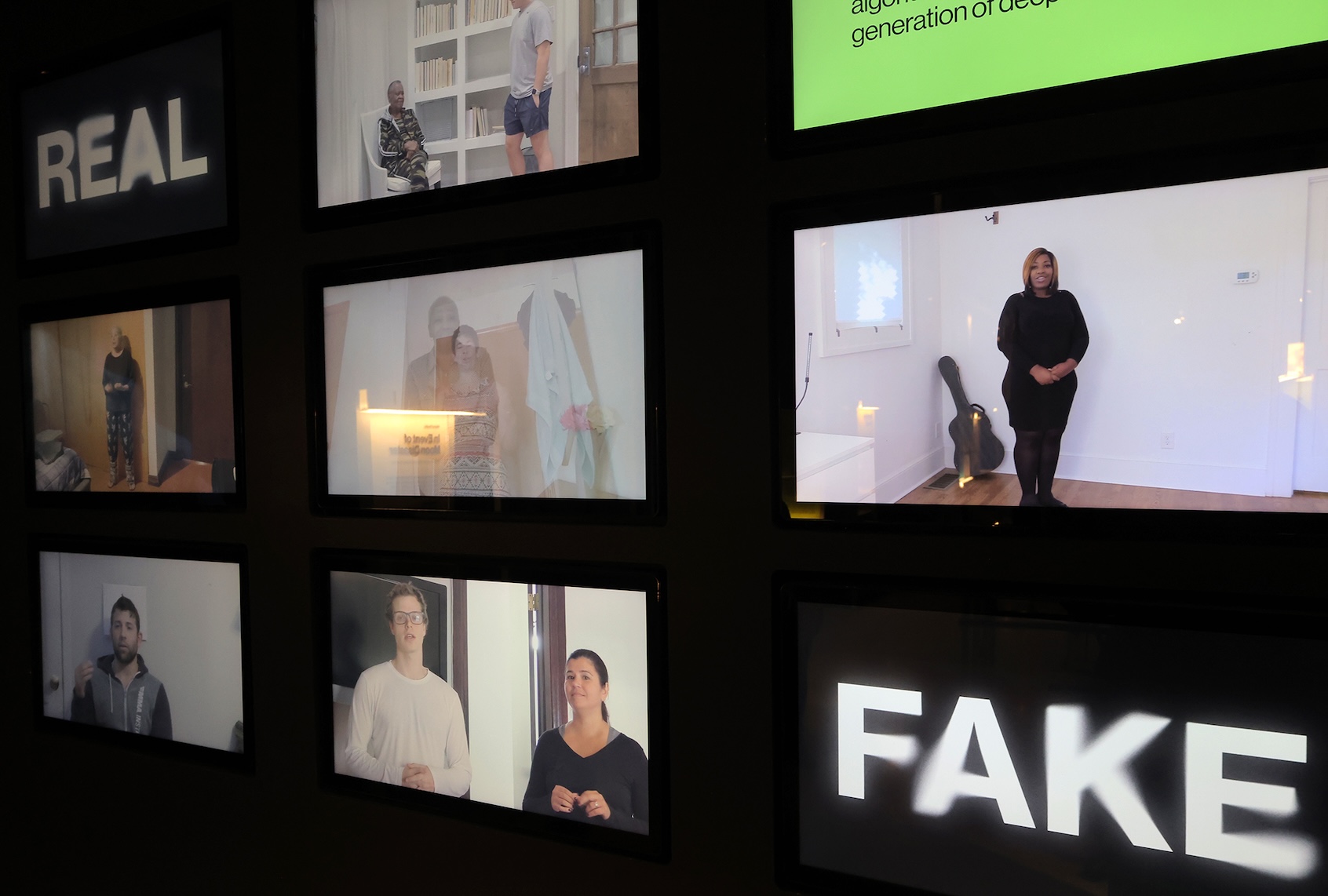
What we found has surprised us: AI use spans from hyperrealistic deepfakes to subtle enhancements; Republican sponsors – both candidates and interest groups – are much more likely to use AI than are Democratic sponsors; and, thanks to a patchwork of state legislation, many of these ads do not disclose the use of AI at all.
From deepfakes to subtle edits
An assortment of politicians and watchdog groups have expressed concern about campaigns using generative AI to produce deepfakes – synthetic videos showing people doing things they did not do – that might deceive voters.
We’ve noticed several ads containing hyperrealistic deepfakes of famous politicians, including Donald Trump, Nancy Pelosi, Barack Obama, Kamala Harris and Alexandria Ocasio-Cortez. Ocasio-Cortez, in particular, is a favorite among Republican advertisers, appearing in at least five ads.
We’ve seen deepfakes in which a Republican Senate candidate from Louisiana drives a school bus full of undocumented immigrants, a Republican candidate for governor from South Carolina walks arm in arm with drag queens, and an ad in which Liz Cheney, Mitt Romney and Mike Pence are seen carrying pitchforks on the White House lawn.
People who are not politicians made appearances, too, including a fake Dr. Anthony Fauci, seen running around a state fair with a huge syringe, presumably eager to vaccinate everyone. We’ve also noticed several ads in which AI was used to generate crowds or constituents.
In several cases, AI was used to enhance visuals rather than generate something new. One ad from Chip Keating, a Republican candidate for governor in Oklahoma, includes an AI disclaimer, but it doesn’t specify exactly how AI was used. Ads that use AI to enhance visuals don’t necessarily look different from ads that were created in the pre-AI era, which makes it difficult for viewers to discern whether they depict something false.
A partisan gap
Republicans – both candidates and groups such as super PACs and 501(c) organizations – are much more likely to use AI in their ads than are Democrats, according to our research.
In fact, Republican candidates or pro-Republican groups were behind 80% of the ads we tracked and 83% of the spending.
We can only speculate as to why Republicans dominate the use of AI in political advertising in 2026. In general, Democrats tend to take on a regulatory mindset when it comes to political campaigns, favoring limits on campaign spending and required disclosures. In 2022, for instance, only Senate Democrats and two independents voted to advance the DISCLOSE Act that would have required additional campaign finance disclosures for super PACs, labor unions and corporations. Republicans, by contrast, tend to be more in favor of a free market approach.
These more general philosophies may be reflected in the parties’ use of generative AI for political advertising, something about which voters are worried. Polling shows broad support for more regulation, with 78% of registered voters favoring a ban on AI content that makes deceptive claims about candidates.
AI-modified videos of House Minority Leader Hakeem Jeffries posted by President Donald Trump were displayed at the White House in October 2025. Alex Wong/Getty Images News via Getty Images
Disclaimers all over the map
Because regulation of AI in advertising depends on a patchwork of state legislation, many of these ads are not required to disclose the use of AI. This lack of disclaimers makes tracking AI use in ads challenging. Our team has relied on media coverage and trained student coders to flag ads that are potentially AI-generated.
Across 35 states, only 31% of the ads we tracked – representing 22% of the spending – disclosed the use of AI tools. The wording of these disclaimers was all over the map. For example, one Georgia ad included the disclaimer, “This video has been manipulated or generated with artificial intelligence,” while an Oklahoma ad said, “Political satire. AI-generated images do not depict actual events.” A North Carolina state Senate ad said, “You guessed it! AI was definitely used to generate these silly video clips.”
Laws don’t drive disclosure
Some advertisers voluntarily disclose the use of AI even when they are not required to do so. Sometimes, the opposite occurs – advertisers don’t include disclaimers even when state law requires them to. In fact, we’ve found that a state law that requires disclaimers on ads that use AI has very little relationship with the actual use of disclaimers.
In states without laws governing the use of AI in political ads, 32% of ads contained a disclaimer; by contrast, in states with laws governing the use of AI, 29% contained a disclaimer. This comparison, however, is not perfect, as some of the ads in our database aren’t covered by their state’s law. Some states, such as Colorado, have laws that apply only to candidate deepfakes and thus exclude other uses of AI. In other instances, such as in Louisiana, an AI law was enacted after the ad aired.
Minnesota law generally bans deepfakes in political ads, but an ad featuring synthetic video of Democratic Senate candidate Peggy Flanagan aired in May 2026 anyway. Whether it violated state law is uncertain, as the law requires that the media be “so realistic that a reasonable person would believe it depicts speech or conduct of an individual who did not in fact engage in such speech or conduct.”
Moving forward, the real policy challenge will revolve around transparency, the enforceability of existing laws and simply figuring out what type of disclosure would be helpful to voters.
We’ve been following this conversation here in The Editors’ Blog about what AI is, what it can do and whether it can possibly live up to its hype. It’s worth considering the question from what we might loosely call not only the supply side but also the demand side. From a very broad perspective, the history of the last three decades has been one defined by the fact that you have too much capital chasing too few productive investments. That’s the driver of the recent history of cycles of booms, bubbles, over-investment and busts: the Asian Financial Crisis, the Dot Com Bust, the Global Financial Crisis, perhaps soon the AI Bubble Collapse, along with many smaller of regional ones.
I couldn’t help but notice some people on social media dunking on a post from @nicksaraev, a self-described entrepreneur helper, who boldly proclaimed on X a few days ago: “I am not joking when I say this. Spotify, Apple Music, and streaming in general is over. AI music is now very, very good. You just don’t know yet because all AI music circulating today is from ~2-3 generations ago. Suno v6 pro et al has solved infinite personalized music.” He followed it up with “Yes, this probably hurts your feelings. It’s still going to happen.”
While my feelings are unhurt, and I don’t really know what “infinite personalized music” means or how it could be “solved,” at the same time, I can easily guess what is implied here and I don’t actually want to know more. As one Bluesky user observed, the inherent idea here comes “when you have no concept of how people engage with music.”
The only thing I can think of that’s worse than getting stuck on Greatest Hits or Top 40 is pushing a button and generating “infinite personalized music” with no human influence.
Nonetheless, we don’t seem able to escape this trend. I have a friend who has, on a few occasions, sent me AI-generated raps with his name or a joke inserted as the lyrics. They can be technically proficient, maybe even a little funny, but there is always an underlying cadence of the uncanny valley that I still doubt Suno v6 pro et al. or whatever has totally overcome. Please don’t send me examples; I actually don’t care. It’s not that I’m offended by the idea of generated art; it’s just that it bores me. I’m having plenty of fun engaging with music made with human ears, hands and minds.
Way back in the Bush II and Obama years, I volunteered at my college radio station in the Music Procurement Department or whatever it was called. Our job was to sort through the massive mailer box of padded envelopes and bubble mailers that came in from record labels, big, small and in-between. It was like Christmas every Wednesday afternoon as we shredded packages and stacked CDs, occasional stickers and vinyl, splitting the spoils and loading them into our computers — by hand even! We made notes about what should get added to the radio catalog as fodder for our aspiring DJs — and what should get chucked out or given away for free at radio events.
If we didn’t already know the band, the way we chose which albums to review was often based on cover art, the promo materials we skimmed, or a sticker on the front that read RIYL: Recommended If You Like. Almost every artist would put something like “RIYL: Jay-Z, Radiohead, The Beatles, Led Zeppelin, Talking Heads.” Sure, totally random indie label from Seattle, all of your bands sound exactly like Nirvana. It could be a pretty boring, sometimes horrifying process — I’ll never forget the thrash metal song we received about Shannen Doherty that sounded like it was recorded in a blender. I still can’t get over the inane lyrics: “Shannen Doherty, Shannen Doherty / You’re in my head. Shannen Doherty, Shannen Doherty / I like bread.” I wish I were making this up.
But the crate digging, which I also did in physical record stores, was always worth it when you found your new favorite band or heard the summer’s hit track long before any of your friends. I was introduced to so many artists, many of whom I still turn to today. Hot Chip, Sea Wolf, Fleet Foxes, to name a few. It taught me to always give music a chance, no matter how ugly the art or how crusty the jewel case. Usually, you can listen to the song up to when the vocals kick in before giving up or listening longer. By then, you usually know if you’re gonna hate it or not.
I have no doubt AI music will keep improving, at least to a point, but I predict few people who actually love music are going to listen that way because it has lost its essence.
I still devour new music this way, clocking a daily average of four hours of tunes familiar and novel. It helps me write and focus and relax and otherwise temper my mood throughout the day. I’m always looking for new artists to try. And I hope I always consume — I hate that word, but there it is — music this way, instead of becoming a curmudgeon who only appreciates the tunes from their youth and thinks anything modern is trash. If you think that, you aren’t digging deep enough.
The only thing I can think of that’s worse than getting stuck on Greatest Hits or Top 40 is pushing a button and generating “infinite personalized music” with no human influence. It bores the sh*t out of me. It’s not just the lack of discovery, though that is critical, maybe because it scratches those deep primal hunter/gatherer itches. It’s more about the lack of anything personal behind the music. No history, no struggle, no catharsis, no exploration, no humanity. I listen to music because it’s flawed, raw and human, not just noise to fill my day. I have no doubt AI music will keep improving, at least to a point, but I predict few people who actually love music are going to listen that way because it has lost its essence.
Yes, I have streamed plenty of AI music on YouTube, often unintentionally when the vaporwave or atmospheric DnB mix I’m vibing to autoplays some slop channel. I can almost always tell when it’s generated. There’s a flatness, like an echo of a song you heard a long time ago, something better. It puts me to sleep and I inevitably switch it off. Maybe it’s gotten better lately. But I still think I’d notice. At any rate, I’d never seek it out.
As a child I was once gifted a “custom” cassette tape with songs “written for me.” Every single track on the album was centered around “Troy,” with my name mentioned as often as possible. I listened to that thing over and over again, until I spilled a bottle of soap in my tape deck and ruined it. But anyway, none of the songs were actually produced with me in mind. It was made by a company called Kidselebration that in 1986 made “personalized” cassette tapes like these for a whole boatload of names. The songs never changed, someone just dubbed in a different name into the song for Kyle, Sarah, Robert, etc. I can’t imagine how much friggin’ work this must have been before Pro Tools, but it was probably just the ‘80s equivalent of a lot of cut-and-paste.
You can listen to the one for “Jessica” here if you really want to. Every time they say “Insert Name,” it sounds totally awkward and weird. But even as a kid, I suspected on some level that this tape wasn’t really for me specifically. Something always felt off. If infinite personalized AI music doesn’t give people the same vibe, maybe they’re not listening hard enough. And please, don’t send me your robot music. Send me anything else.
For many people, using AI chatbots is incredible at first. It makes them feel productive, confident, maybe even smarter. But later, there’s a hangover. Perhaps there are problems with their memory, or certain skills, like writing or coding, don’t seem to be as sharp as they once were. Maybe they feel like they can’t solve problems or make decisions or remember facts as well as they could before they had the help of AI.
Susette Brooks, a marketing director living in Philadelphia, said she started using AI tools reluctantly but ultimately relented. She let AI write some of her emails, which lightened her workload, but then the dulling effects sank in. “I felt my writing and thinking decline as it was happening,” said Brooks, who has an MFA in nonfiction writing. “I had a harder time recalling information and synthesizing ideas.”
When you use external tools to reduce the cognitive effort required to do a task, you’re doing something called cognitive offloading. If you’ve ever used a calculator to do a math problem or used a calendar to remember an appointment, you’ve engaged in cognitive offloading. Tools like Claude and ChatGPT can do math problems and remember your appointments, but they can also write your term papers or create your work presentations. This is cognitive offloading at a scale we’ve never seen before.
Cognitive offloading isn’t necessarily bad. It’s actually what makes it possible for humans to be so productive. But as you outsource more and more cognitive tasks, you can start to become forgetful or see certain skills, like writing, start to decline.
There’s a term for this: de-skilling. This is an old economics term that has emerged as a bit of a buzzword used to describe the perceived downward spiral of competency that’s accompanied the proliferation of AI tools. And it certainly sounds bad, especially if you’re a novice who needs to build skills. De-skilling can affect your critical thinking, your writing abilities, and your creative process. It can also affect your recall, as relying too heavily on AI tools can make it harder to remember things.
Key takeaways
AI can make you more productive while quietly making you less capable on your own.
Offloading more tedious or mind-numbing tasks is less likely to make you feel dumber.
The long-term solution isn’t necessarily less AI. It’s being more intentional about the tasks you use AI for.
Young people, at least, are worried about the long-term consequences of frictionless thinking. A recent survey by Gallup and researchers from the University of Pennsylvania found that 68 percent of Gen Z adults in the United States are concerned that offloading too many cognitive tasks is robbing them of important skill-building. About the same percentage of those surveyed worry that AI discourages them from critical thinking and social learning. Some 37 percent of US adults under 30 say that AI will have a negative effect on them personally, according to a Pew Research Center study published in June. And yet, more than half of Gen Z Americans use AI on a weekly basis.
The paradox of AI is that, even if we feel like using these tools is bad for us, saving time and avoiding the friction of thinking is too tempting. We’re hardwired to seek out the path of least resistance, according to Daniel Willingham, a psychology professor at the University of Virginia, because cognitive activity is so taxing, and may or may not get you to the right solution. Memory, on the other hand, is efficient and effective — you know that something worked in the past, and it will work again.
“Our mind is really set up to save you from having to think,” Willingham told me. “Thinking is what you do when you’re in trouble.”
The good news is that experts say it’s possible to use AI in a way that helps you save time and protects your cognitive abilities instead of diminishing them. Here’s their advice.
It’s not your imagination — too much AI use can erode your skills over time
Derek Salyers, a content creator in Ohio, started using AI to get more done, faster. But over time, two things happened. First, the work got worse. “A lot of what I was putting out became AI slop, for lack of a better term,” Salyers told me. And then, his brain got worse, too.
“When you get used to the AI making the decision, you stop pausing to actually think about things,” Salyers said. “And if you were never really present with it, you don’t remember it later. I wasn’t forgetting things because my memory got worse; I was forgetting because I was never really thinking in the first place.”
This effect is showing up in classrooms, too. One study of nearly 1,000 high school students found that those using ChatGPT scored 48 percent higher on a math test than their peers who didn’t have access to the AI tool. But when they were tested again without the chatbot, their scores were 17 percent lower than the students in the control group who had never had ChatGPT access. Similarly, researchers at the University of California Irvine looked at longitudinal data from online tests starting in 2015, and found that students spent less time and performed better on the text-based questions after the introduction of ChatGPT. (ChatGPT is very good at helping with text-based questions.) But when those students were later given offline tests, without the ability to use AI help, they performed worse.
All of these students, it appears, were offloading the cognitive work to AI, which provided short-term gains. But in the long term, their thinking skills suffered.
Your basic cognitive abilities, like your working memory and selective attention, are quite resilient.
Evan Risko is a psychology professor at the University of Waterloo in Canada who co-authored the foundational paper on cognitive offloading a decade ago. He recently told me there’s not a lot of research into what’s going on in our brains when we’re cognitive offloading, but scientists are gaining a pretty clear picture of the pros and cons of doing it. The advantages vary depending on the task, but in general, cognitive offloading allows us to extend our imperfect memory systems, which you’ve probably done if you’ve ever set a reminder for yourself. The downside, Risko said, comes in offloading mental processes that are important. “Then we risk compromising our cognitive performance,” he said.
Your basic cognitive abilities, like your working memory and selective attention, are quite resilient. But as Risko and his colleagues explained in a paper this year — bluntly titled “Is AI making us stupid?” — other skills, like doing arithmetic and flying planes, are learned behaviors. You first have to acquire them and then, in order to retain them, you have to practice. AI use can compromise both the acquisition and retention of these skills — and people might not even realize this is happening to them, because AI makes them believe they’re more capable than they really are.
“People may have difficulty realizing that their skills are decaying or that they are failing to learn when using AI tools because the output and their performance with AI is at a high level,” said Brooke Macnamara, a psychology professor at Purdue University who co-authored the “Is AI making us stupid?” paper. “They may not realize that if the AI tool were unavailable how low their independent performance might be.”
Be intentional about the tasks you use AI for
The most important step to preserving your cognitive performance is to ask yourself if you should be using AI for a given task at all.
“Just because AI is a tool that’s available to us and it can accomplish a lot of tasks for us, it doesn’t mean that we should always use it,” Anjali Singh, a human-AI interaction researcher at the University of Texas at Austin, told me. Writing, for example, is something that a lot of people are now using AI for. But offloading that work means that you lose out on the independent thinking and reasoning that goes into expressing your thoughts. You also miss the chance to improve your writing skills if you don’t actually write.
“We keep outsourcing these kinds of skills to AI over time and do not engage in those activities ourselves, then the de-skilling occurs,” Singh told me. “And that is I think probably one of the main reasons people could be feeling that they’re getting dumber as they’re using AI over time.”
“We are not getting these moments to reflect.”
Anjali Singh, Univeristy of Texas
It might seem counterintuitive, but it’s actually best to use AI for things you’re already pretty good at, the tasks you’re fully capable of performing yourself. A recent working paper by MIT economist David Autor and his colleagues (note: Several of them work for Google, who funded the study) describes how giving AI tools to 133 patent lawyers and then taking away those tools led to different outcomes, depending on the lawyers’ level of experience. All lawyers saw performance gains while using the AI tools, but those gains disappeared for the younger lawyers when the tools went away. Experienced lawyers, however, performed better afterward than their counterparts who never had access to AI tools.
A similar effect showed up in a recent experiment by Middlebury College researchers. In the first session, more than 200 undergraduates learned about an unfamiliar topic and then wrote an analytical essay, some with the help of an off-the-shelf AI tool. They performed a similar test a week later, except this time none of the students had access to AI. The students who had AI access improved across the board, but what’s telling is that there appeared to be two types of AI users: augmentation users, who used AI to improve their work, and automation users, who just had AI do the work for them. The augmentation group performed better than everyone.
“Using AI to deepen or develop one’s own thinking on or understanding of a topic, rather than letting AI do all of the thinking, seems like the best way to use these tools,” Lauren Richmond, a cognitive science professor at Stony Brook University in New York, told me.
Tell your chatbot to treat you like a student
If you, like me, have ever fallen down a rabbit hole while trying to understand the geopolitical nuances that led to the outbreak of World War I and ended up staring blankly at a mountain of text feeling more confused than when you started, you know that using AI to learn doesn’t always go as planned. You may have also had the experience of writing prompts or asking questions and then receiving a long, overly detailed response. That can initially seem satisfying, but it’s often too much text to digest at once, so maybe you ask another question — and get back another wall of text.
Older ways of accessing information, like reading books or even using Google to do research, happened more slowly, and that gave us time to process the information, Singh from UT Austin said. But that’s gone now. “We are not getting these moments to reflect,” she said.
If you find yourself drowning in content, that’s also a sign that you’re probably not expert enough in the material, or you’re not being intentional enough about your approach.
It starts in the settings. Here, you should explain that you’re trying to build skills, not offload them, and instruct the AI to challenge you and engage with you. If you’re using ChatGPT, you can plug in custom instructions by going into the personalization tools. Claude has similar options called Instructions for Claude.
If you’re explicitly trying to learn something new, you might also try some of the tools these companies have designed for this. OpenAI has study mode in ChatGPT. Anthropic offers Claude for Education. Google has Gemini for Students. Instead of simply providing answers, these tools act more like tutors, by asking questions, working through problems, and encouraging you to come up with solutions on your own.
Slow down and embrace friction
Something that’s both tempting and dangerous about AI is how fast it can do work. Vibe coding an app can take minutes, rather than days of manual coding. That’s very appealing if you have too much on your plate and want to get through it all quickly.
“The workload was so heavy and crazy, you have no time to think,” Joei Chen, a former brand director at a tech company, told me. “So you just throw stuff into AI and say, ‘What do you think?’”
At the same time, creating more code does not necessarily lead to more finished software, according to a recent Wharton School study. That increased productivity also doesn’t necessarily lead to happier workers. And the faster you move, the more critical thinking you’re going to offload. “Your boss asks you, ‘What does Claude think of this?’” Chen said, so AI “inadvertently becomes the final boss.”
Slowing down and forcing yourself to do more critical thinking is an easy way to hold onto some agency — not to mention some brain power. One easy way to do this is to make your interactions with AI more collaborative than transactional. For example, if you are going to use AI to help you write something, ask for five options of a draft instead of one, and then read each of them yourself and decide which is the best.
“Ask for feedback, hints, examples, explanations, advice, practice questions.”
Evan Risko, University of Waterloo
“Just the simple act of comparing things stimulates a great deal of the critical thinking processes that we kind of care about,” said Advait Sarkar, an AI researcher at the University of Cambridge, “and has beneficial effects for things like developing your judgment, your own awareness of what you don’t already know, and stimulating your recall.”
The word that came up again and again as I talked to experts about how to use AI without getting dumber was metacognition, or thinking about thinking. A lot of AI users let metacognition take a back seat to whatever content is flowing freely from a chatbot. And it can happen fast.
While letting AI do all of the thinking for you is tempting, Matt Beane, an associate professor at the University of California Santa Barbara and author of The Skill Code: How to Save Human Ability in an Age of Intelligent Machines, told me that approaching AI this way “is your worst enemy.” To counteract this, you have to introduce more friction.
“You must be very aggressive about how you experiment with it,” Beane said. Risko, the cognitive offloading expert, echoed this advice. “Ask for feedback, hints, examples, explanations, advice, practice questions,” he said.
The best test for judging whether you’re offloading too much thinking to AI and the technology is chipping away at your skillset: Stop using AI and use your brain, and see what happens. You don’t have to stop forever, but you should, for example, spend a day writing emails without AI’s help to see if you’re as fluent as you used to be. Or revert to using Google for research and confirm that you can still find facts without a chatbot finding them for you. Build an app with your own code and see if it flows naturally.
You might be troubled to find that AI made you worse at something. But you’re not actually dumber than you were before, and you can rebuild your lost skills the old-fashioned way: read, write, do arithmetic. If something requires thinking, go ahead and think.
 Login