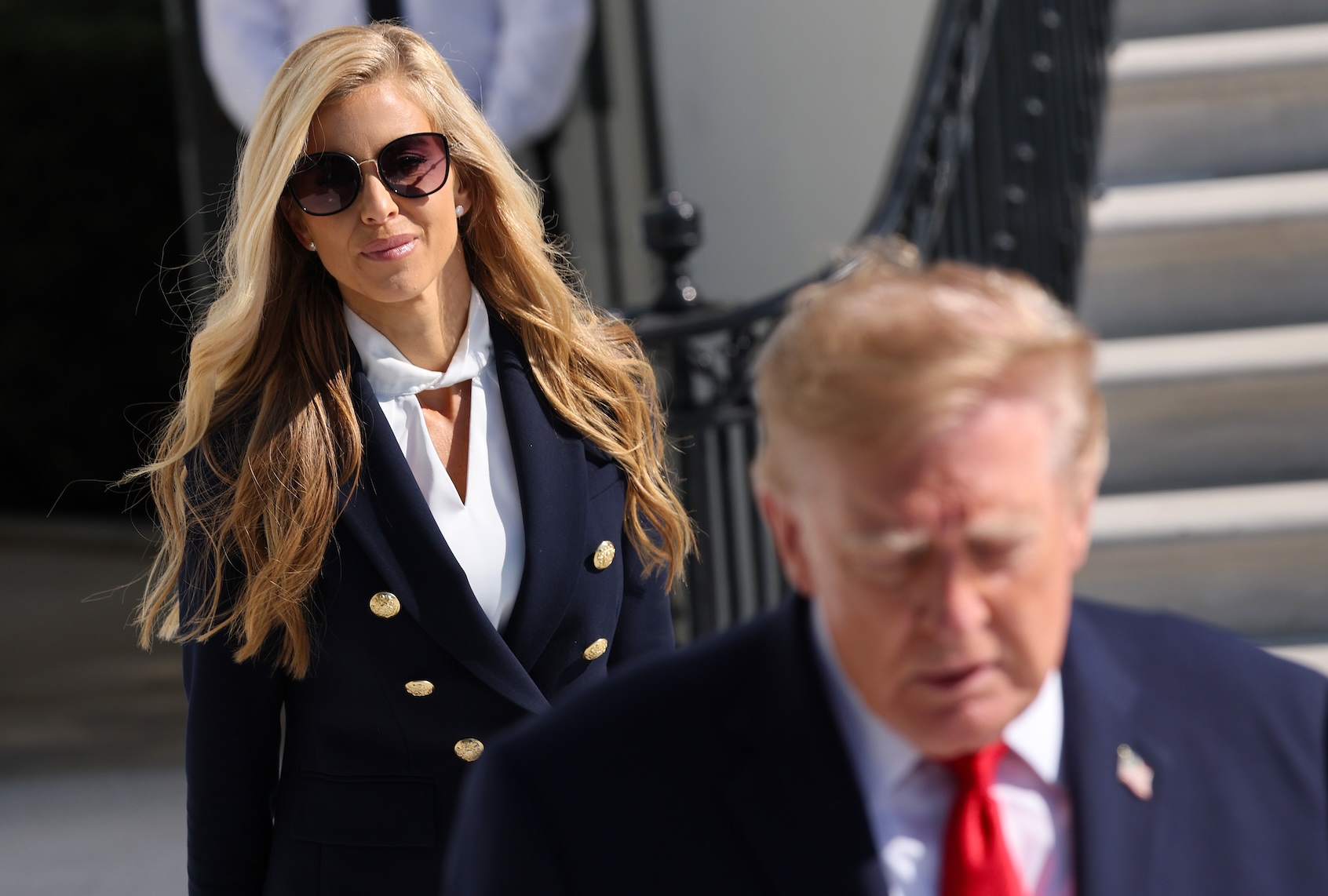
Well, that didn’t last too long. Katie Zacharia became White House press secretary just five days ago, but after President Donald Trump told reporters she should “reconsider,” the New York Times reported she’d been fired Friday afternoon.
Zacharia held the position for less than a week, but generated considerable controversy in that short time. Her first briefing on Tuesday lasted only 14 minutes as she took questions from just three reporters at Breitbart, Fox News and the Daily Mail, appearing flustered and disorganized. Meanwhile, questions about her credentials took center stage, as she identified herself as a lawyer but in fact had never passed the bar exam. Her long history of pushing far-right conspiracy theories like QAnon also resurfaced.
Then, Zacharia made two appearances on Fox News, both of which did not seem to go well. Sean Hannity grilled her on her false credentials Thursday night and told her, “I can give you some unsolicited advice. That’s never going to be a friendly room to you,” referring to the White House press pool. The next morning, she appeared on “Fox and Friends” and was asked if she still had the “confidence” of the president. “I-I-I’m standing here and I was able to travel with him through all of the midterm convention — or, excuse me — the midterm rallies, and I hope to be able to build the trust and confidence of everyone around me,” she replied.
Apparently, she did not have Trump’s confidence. Speaking to reporters at the White House Friday, the president said he told her “Honestly, if I were you, I’d reconsider.” He added that he would leave the decision to her, according to CNN, but said they would speak when he returned to the White House. “Katie, do you need this? I don’t think you need this,” he said he told her. A few hours later, she was out.
Numerous people online compared Zacharia’s short tenure was compared to Anthony Scaramucci, who was appointed White House Communications Director in 2017 during Trump’s first term, but just lasted 11 days. “To put it more precisely: a Zacharia is about .4 of a Scaramucci,” Anna Bower, a senior editor at Lawfare, posted on Blue Sky. The Mooch, as Scaramucci is popularly known, posted on X that “Records are made to be broken. But I take no pleasure in other people’s pain.”
Zacharia replaced secretary Karoline Leavitt, who resigned from the position in August.
😳 Zacharia flames out on Fox News for the second time in 12 hours 😳
With the wreckage still smoldering from her debacle on Hannity, Katie went on Fox & Friends and received another grilling from Fox hosts
LAWRENCE JONES: It’s been a tough week for you. Do you wish you would’ve disclosed to the president about not passing the bar?
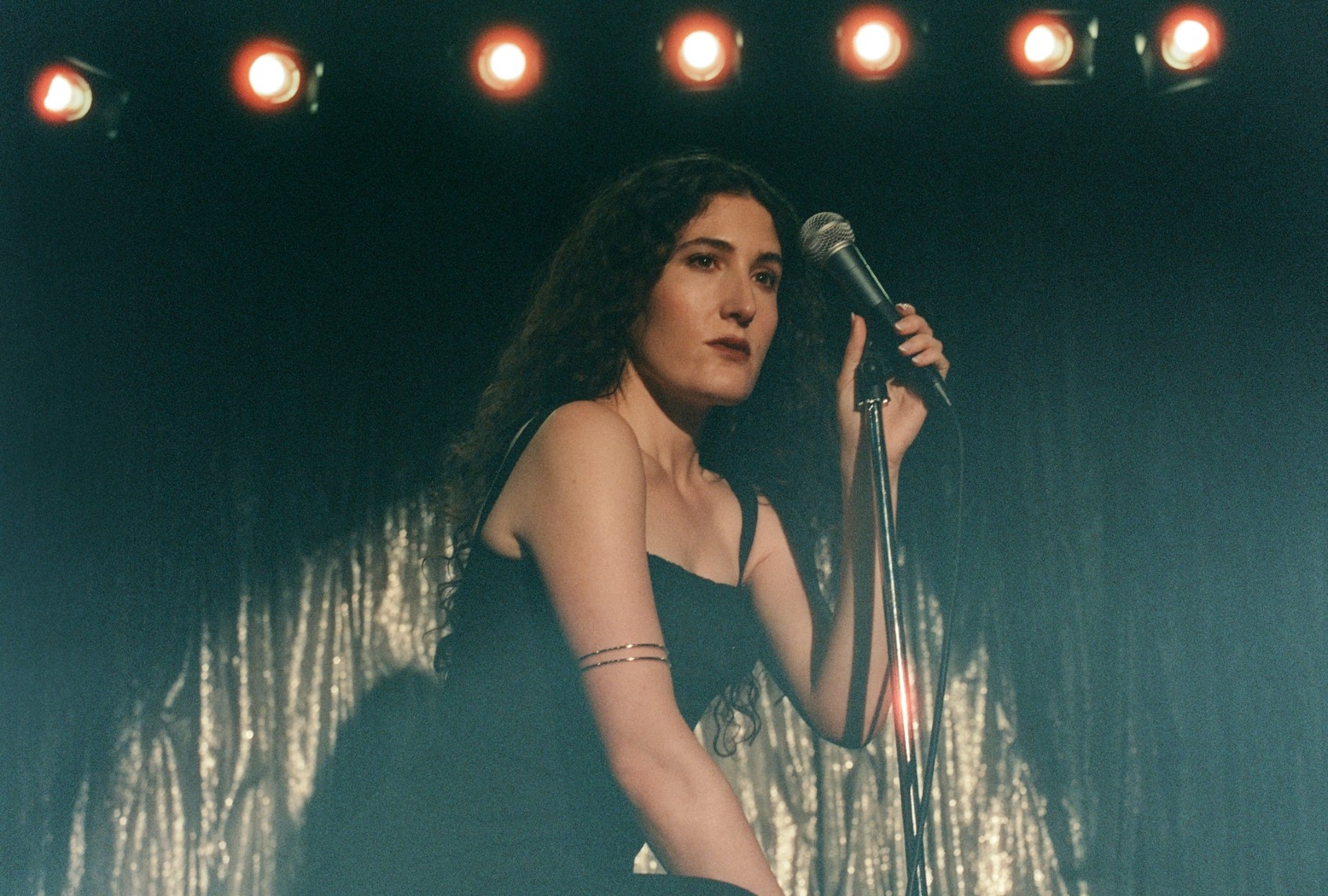
In a digital flyer promoting the stand-up shows that would culminate in her new HBO comedy special, “Parmesan,” comedian, actress and one of America’s greatest working artists, Kate Berlant, posed an important question: “HAVE YOU SEEN THIS CLOWN?” In one photo, Berlant, fresh from glam, seduces the camera; in the other, her face contorts into a rascally grin, eyes half-crossed for effect. No dichotomy better represents Berlant’s razor-sharp, thoroughly tasteful wit, which sits halfway between refined humorist and go-for-broke court jester.
If you haven’t seen this clown, there’s no better time than the present. Like most of Berlant’s work — from her extensive collaborations with best friend John Early to her unforgettable one-woman show, “KATE” — “Parmesan” is a masterful send-up of a time when we’re all doing character work. What begins as an honest account of modern life’s bleak state is distorted alongside Berlant’s malleable expressions, slowly blossoming into something life-affirming, like a diamond among the rubble. Some comedians like to say they give their audience a “night off” from the world. Berlant, on the other hand, relishes the chance to remind her audiences of just how blissfully hysterical the world can be.
Everyday life, in the Berlantian sense, is driven by affection for both the mundane and the surreal in equal measure. In the joke that inspires the special’s title, she measures an Instagram comment’s subzero value in a wide scope, lampooning the communal yet cartoonish nature of our endless scroll. Elsewhere, Berlant gets more personal than she ever has on stage, using the relatively recent discovery that she isn’t straight as the springboard for bits about how embracing queerness later in life can be as beautiful as it is uniquely mortifying.
But with Berlant, it’s not just about the jokes; it’s about the rhythm and physicality that accompany them. No one understands their audience better than she does, knowing comedy relies as much on observation as on good, old-fashioned slapstick. Berlant’s a tenured professor at the Make-‘Em-Laugh Institute, and “Parmesan” proves her research-driven thesis statement time and again: There’s no bad mood a good clown can’t improve.
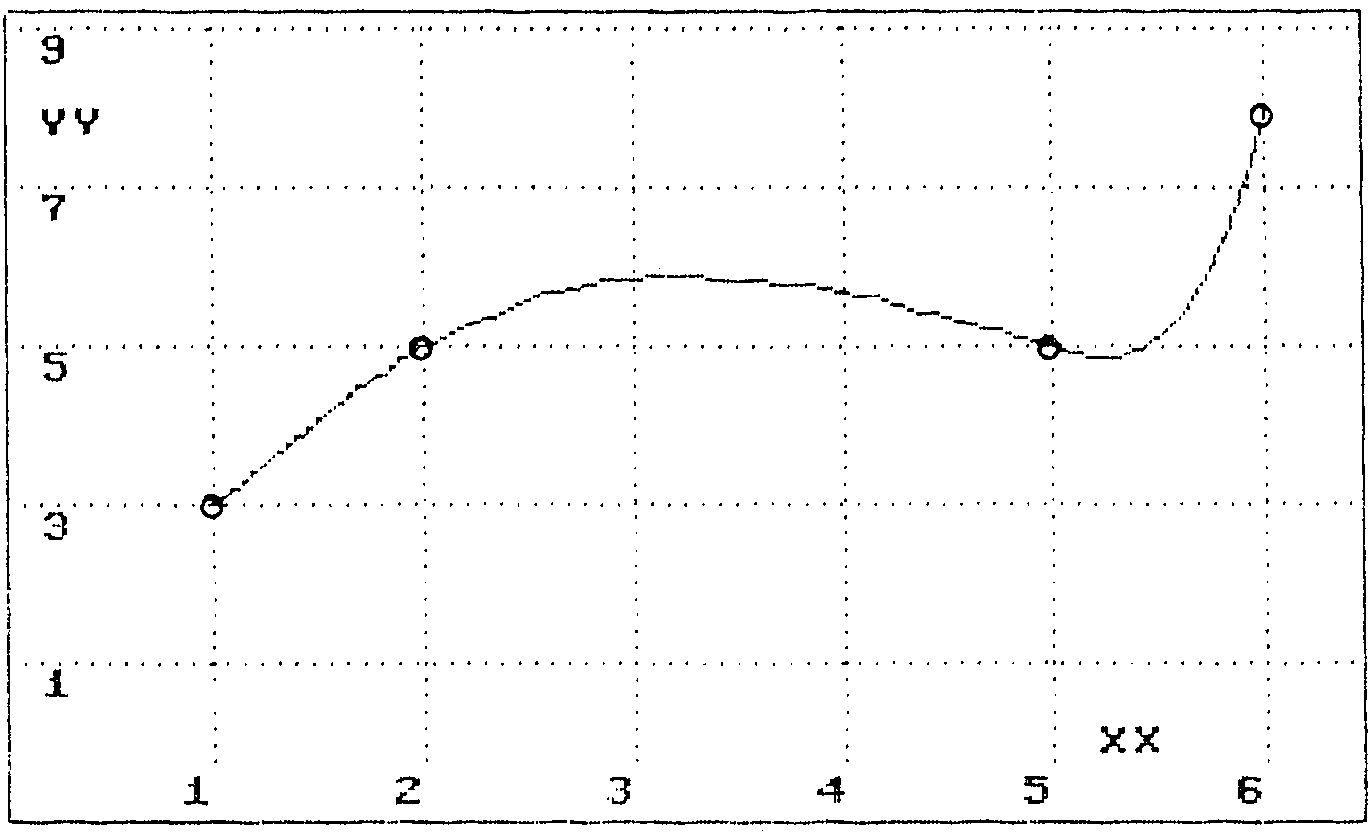
Durch wenige Stützstellen lassen sich beliebige Kurven sehr exakt ermitteln und darstellen. Daher ist das Programm für all diejenigen interessant, die in irgendeiner Form etwas mit der grafischen Auswertung von Meßwerten zu tun haben.
From the transcript of Sunday’s Face the Nation on CBS:
Shyam Sankar: You know, I take — I think there’s a profound
truth to Pascal’s saying that every human has a god-shaped hole in
their heart, and it’s important to understand that many of these
folks in Silicon Valley who are building this technology have
filled that hole with the machine God of AGI. And I mean, there’s
so many interesting stories around this. Like, for example, so
many AI researchers have started smoking as a way of signaling to
other researchers how much they believe in AI. I believe so much — (CROSSTALK)
Margaret Brennan: What? That makes no sense. What do you
think —
Shyam Sankar: I believe so much in AI that it’s going to cure
cancer. So I will — I’m showing you my chips are all in. So
there is kind of this mass psychosis, social delusion around it,
and I think it’s getting in the way of actually what is happening
with AI.
Sankar doesn’t name anyone, alas, but if there’s any truth to this (and good god do I hope there is) it’s got to be Anthropic researchers specifically. They’re the religious kooks who believe they’re creating an AI god and hold the psychotic belief that Claude is already conscious. Smoke ‘em if you got ‘em, you crazy fucks.
Following up on the MAGA-under-pressure, intra-MAGA knife fights breaking out, whack everybody front. From this morning’s Politico Playbook …
PLAYBOOK IN PRINT:Natalie Harp printed a copy of yesterday’s Playbook about Susie Wiles’ future for President Donald Trump, according to two people with knowledge. It caused a “freakout,” as three people described it to Playbook. The president “blew up” over more bad headlines about his chief of staff, and Wiles and allies “burn[ed] up phones around town” trying to quell the situation.
Democrats’ prospects across the board look about as good as they have at any point in the 2026 election cycle, and about as good as could have reasonably been imagined at any point since late November 2024. House, Senate, governorships, state legislative races, really just about everything is looking pretty rosy. The point of this post isn’t to rain on any of that. But for the last week or so I’ve been wanting to write a post about just how close many of the frontline Senate races are, despite the fact that it’s plausible that Democrats could come out of this election with a majority in the low or even mid-50s. What I’m talking about here is no more than the inherent uncertainty around all polls and all elections. But it’s still worth absorbing.
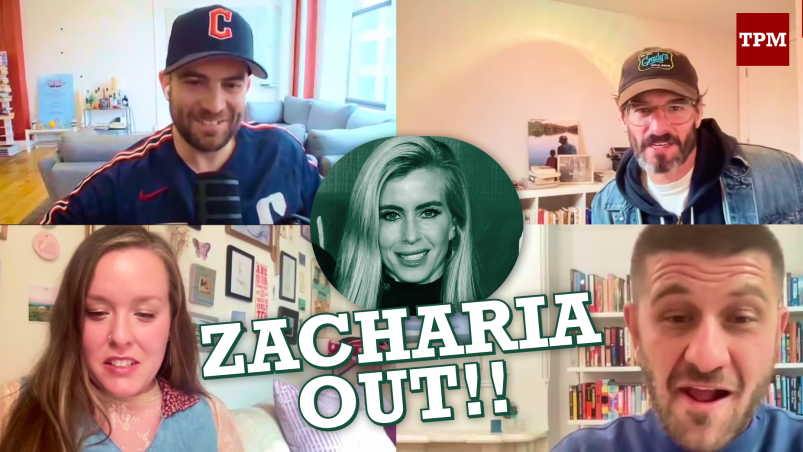
TPM editor Nicole LaFond, investigative reporter Hunter Walker and Head of Product Derick Dirmaier and I wanted to discuss if we are living in a golden age of grifting. But, we were interrupted by some breaking news: Katie Zacharia’s very, very special time as press secretary has come to an end.
We’re asking readers to help us with something important as well. If you’ve been reading The Brief, you know each day John Light selects a Man of the Hour. If you can’t guess who won this week, well, I doubt you really read the site.
Beginning next week, we’re going to be using a new email provider to send out Morning Memo each day. If you already receive Morning Memo by email, you don’t need to do a thing. Morning Memo will still come to you the same as usual, but directly from TPM instead of from Substack. You’ll still be able to read Morning Memo in the email version or on Substack or at TPM.
Trump DOJ Sues California
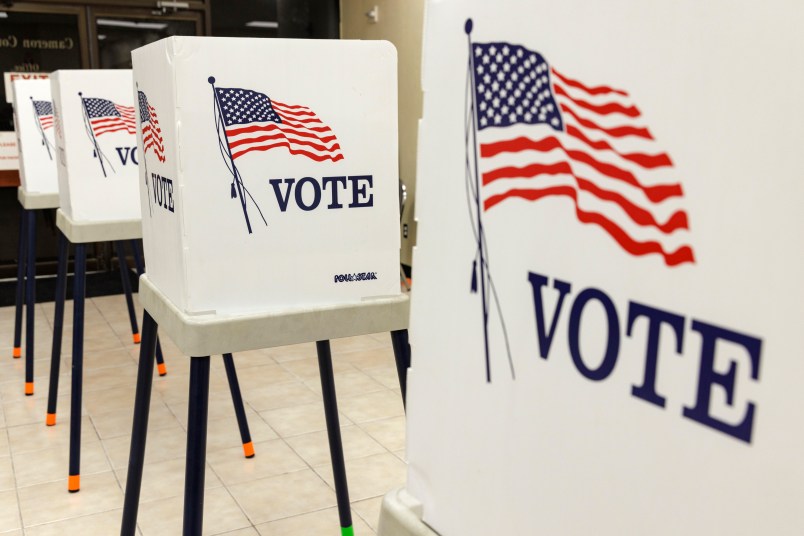
I’ve had my hair on fire the last three days on the Trump administration’s unprecedented new interference in the midterm elections because it represents a high water mark in its effort to intrude in state-run elections.
Sequestering and not counting already-cast ballots — on the dubious grounds that the Trump administration has identified alleged noncitizens who received mail-in ballots — is a dramatic escalation of its month-long attack on state-run federal elections. (It also fits perfectly into the thematics of a GOP campaign largely being run on racist and xenophobic themes in the absence of any affirmative arguments for more of the same.)
But we haven’t really talked about the administration’s end game here, which has now become a little more clear.
At this stage, the administration doesn’t appear to be advancing a strategy to tilt the outcomes in particular elections by disqualifying a significant number of ballots or by suppressing the overall vote. Even if that was its goal, the numbers involved at this point just aren’t big enough.
We learned yesterday in the lawsuit that the Trump DOJ filed against California that its list of “likely noncitizen voters” contained in the vicinity of 20,000 names. I had assumed that the DOJ list was specific to Los Angeles County since acting Deputy Attorney General Trent McCotter sent his list on an encrypted thumb drive (along with a sticky note containing the password). But the lawsuit says the 20,000 names is a statewide list — “with many addresses listed in Los Angeles County.” (That’s down a wee bit from the 190,000 noncitizen voters that the Trump administration previously claimed California had.)
Even if you account for the atmospherics of the DOJ suing to weed out alleged noncitizen voters having some dampening effect on minority voter turnout, the number of alleged noncitizen voters aren’t anywhere near big enough to have either a significant or predictably pro-GOP effect on election outcomes in California.
So what does that leave as plausible goals for the administration?
Goal #1: Get a federal court somewhere to rule that the law provides a role for the federal government in making sure noncitizens don’t vote
Given what the law says, including the Constitution, legal experts insist it’s a long-shot bid. But it’s a gambit with a high upside and not much political downside. You don’t make shots you don’t take, etc.
That being said, I’m struggling with why the Trump DOJ would pick California as the venue for this gambit versus a reliably red state in a federal circuit that is more obviously MAGA-tilted than the 9th Circuit Court of Appeals, which covers California.
(For what it’s worth, the Trump DOJ is trying to get the California case in front of the Trump-appointed judge who presided over Hunter Biden’s tax fraud conviction, arguing that this case is related to an election case he’s already hearing. But there’s nothing about U.S. District Judge Mark C. Scarsi that marks him as a radical MAGA-coded judge. Already fighting back, California wants the case assigned to a Clinton-appointed judge who is already hearing a election case that it claims is more related than Scarsi’s is.)
Ultimately prevailing in the California lawsuit — or in yet-to-be-filed cases in other states — would open the door wide to the Trump administration being able to intervene in the election in much more robust ways under the guise of policing the virtually nonexistent problem of noncitizen voting.
But with less than three weeks until voting ends, it might make more sense to view this as a long-term bid with bigger potential impacts coming after the 2026 election — except in one regard, which brings us to the next goal.
Goal #1A: Create election chaos
In the short term, with Republicans almost certain to lose the House and the Senate increasingly at risk, sowing chaos has mostly upside for the GOP. In that sense, the California lawsuit is less a legal strategy than a political one.
Noncitizen voting is the Big Lie of 2026, so think of this as a prelude to a post-election refusal to accept the results, fights over close individual races, and desperate attempts to salvage a majority in either chamber. Conflicting court rulings, emergency appeals, and a last-ditch bid to get the Supreme Court to decide the election somehow all gin up a crisis atmosphere that’s then used to justify extraordinary interventions of one form or another.
The point isn’t to fear-monger here, but just to note that chaos favors the sure loser desperate to do anything to avoid their fate.
Goal #2: Delegitimizing a Democratic win
Regardless of the outcome of the California lawsuit, the Big Lie of noncitizen voting will inevitably be sustained past the election into the new Congress — as a GOP hand-wave to minimize its own losses, dismiss the Democratic mandate, resist a post-election narrative of MAGA’s demise — and soothe the wounded ego of a certain former reality TV star.
The lawsuit in California helps to fortify that rhetorical argument, even if the Trump DOJ ultimately loses. Time and again, MAGA has seized on setbacks and losses as proof of is own victimhood.
One caveat to all of the above: California may not be the only place that the Trump DOJ decides to do battle on noncitizen voting while voting is underway. It laid the same groundwork in some two dozen states as it did in California by requesting voter information over the past several months in its pursuit of the mythic noncitizen voter, ultimately losing repeatedly in court. If you see evidence of this happening in other states, please let me know. My contact info is linked at the bottom of this post.
And now the Trump administration is attempting to strip Democratic congresswoman Ilhan Omar, who was born in Somalia, of her citizenship so as to deport her. This is more than just another persecution of one of Trump’s political enemies. Rather, his government is tacitly declaring the citizenship of all foreign-born people provisional, their Americanness something that can be revoked. It’s a frontal attack on the idea of constitutional equality.
Uneven Playing Field Alert
Your occasional reminder that U.S. elections are, by law, tilted in favor of monied interests to a greater extent than at any point since at least the Gilded Age:
NYT: Avalanche of G.O.P. Cash Keeps the Party Competitive Despite Its Problems
Politico: Megadonors are powering Republicans’ spending advantage
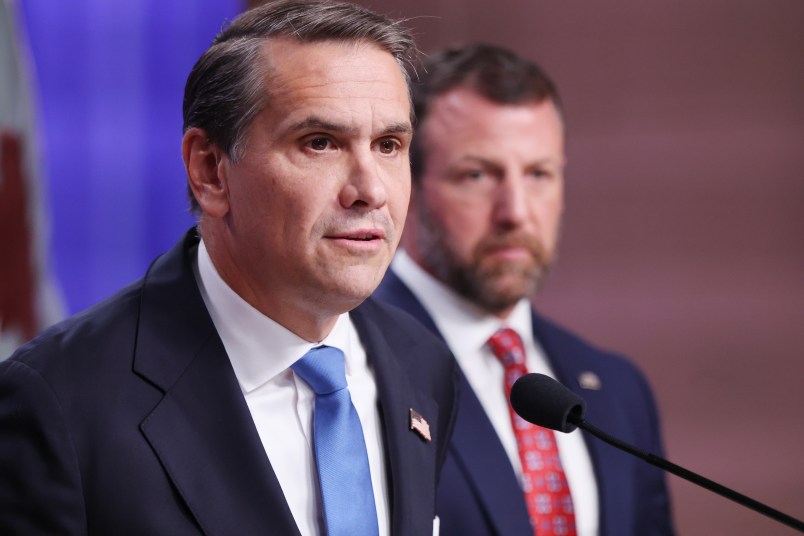
NYT: Most of Ken Paxton’s Money Can Be Traced to One Man: Elon Musk
See You Back Here Monday
Check out Morning Memo playlists on Spotify and YouTube.
News? Tips? Feedback? Please let me know. For sensitive information, use the encrypted methods here.
Diego Poncelet recently set a new world record for the fastest speed on a skateboard. The old record was 146.7 km/h (91.2 mph) and he hit 151.8 km/h (94.3 mph). There are a couple of parts you can skip, but watching most of the video is worth it because you see the process and can compare how truly insanely fast he is moving during the final run — I found myself holding my breath for the last minute or so.
Also, I cannot believe how closely the camera car is following him — looks like only a few feet away. Bonkers.
I just found the first time I posted about speed skateboarding on KDO: this post from 2008. Less aerodynamic, more gonzo, and the cameraman is also on a skateboard going equally fast.
Hey, remember Pokémon Platinum Version? You know, the best game of Pokémon's best era? Giant fictionalized Hokkaido to explore, evil team that wanted to make the world a nightmare dimension? If you've been hankering to revisit the best of the DS (which I kind of have lately, as it and its rival the PSP re-enter the zeitgeist thanks to hipsters), you no longer have to do it alone. — Read the rest
After thirteen years of waiting, it feels nothing short of surreal to even think the words 'final GTA 6 trailer'. We've suffered through paywalled advertising, shockingly expensive collectors' editions, and the preceding decade of complete radio silence, but we're finally here. — Read the rest
I played (not) solitaire for more hands than I would care to admit. “A multiplayer game where the multiplayer was about companionship, empathy, and comfort, instead of competition or even interaction.”
This story was originally published by ProPublica, a nonprofit newsroom that investigates abuses of power. Sign up for Dispatches, a newsletter that spotlights wrongdoing around the country, to receive their stories in your inbox every week.
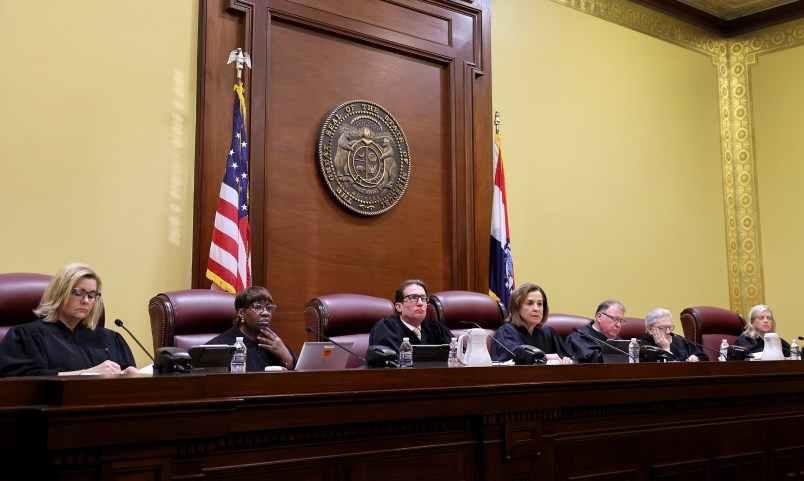
Some 86 years ago, Missouri voters enshrined a system for selecting top judges that would remove political influence from the courts. And almost immediately, it came under attack.
Under what has come to be known as the Missouri Plan, lawyers help choose a slate of three candidates from which the governor must make an appointment for the state Supreme Court, appeals courts and, in some populous areas, the circuit courts.
In the first years after adoption, it faced pushback from party bosses who had historically used judicial seats for political patronage. They said it gave too much power to the lawyers. Voters, though, decisively defeated a repeal measure in 1942.
More recently, the conservative activist Leonard Leo, who viewed Missouri as a crucial battleground, tried in 2007 to persuade Republican Gov. Matt Blunt to reject a slate of Supreme Court candidates — part of a broader effort to weaken a judicial selection system that had become a model for some two dozen states around the country.
Blunt resisted and picked one of the three judges from the approved slate.
Then, in 2012, GOP lawmakers put a proposed overhaul before voters that, if approved, would have given the governor more control. Voters, by a 3-to-1 margin, turned back the plan.
Now the attacks are back, driven by a new grievance.
From the moment Alex Gibney announced he was working on “Musk” in 2023, it became one of the most anticipated documentaries around – and a source of trepidation for its titular subject, tech mogul Elon Musk. But we may have underestimated how far the world’s wealthiest man and his ilk would go to prevent audiences from seeing it.
Weeks before “Musk” hit theaters, its distributor, Bleecker Street, couldn’t buy ads on TikTok, YouTube, Mark Zuckerberg’s Meta-owned Facebook and Instagram or, here’s a shocker, Musk’s own X. A Hollywood Reporter story published on Sept. 25 made YouTube and Meta reverse course – a rare case of two media giants shamed into living up to their free-speech claims.
But this attempted media suppression shows “Musk” has struck a nerve, despite its namesake dismissing it as a “hit piece that misses.”
What happened to Bleecker Street, then, is both familiar to Gibney and extraordinarily alarming. “You can see how a few platforms coalescing around the endorsement of what these tech viziers are doing decide that a criticism of tech power is somehow political and can’t be allowed in terms of open discourse on their platforms,” Gibney told Salon. “So that was really disconcerting.”
It’s shaping up to be a dark autumn for Silicon Valley’s villains. In early December, Luca Guadagnino’s “Artificial” turns our attention to OpenAI CEO Sam Altman, played by Andrew Garfield.
Meanwhile, “Musk” was recently joined in theaters by Aaron Sorkin’s “The Social Reckoning,” in which Jeremy Strong portrays Zuckerberg as a soulless ghoul prioritizing clicks over user safety. In “You Can See Everything,” notorious prankster Nathan Fielder shadows notorious (for different reasons) Theranos fraudster Elizabeth Holmes in the days before she went to prison.
Gibney also profiled Holmes in his 2019 work “The Inventor: Out for Blood in Silicon Valley,” which adds another layer of coincidental symmetry: Fielder’s film hits theaters on Oct. 16, the same day “Musk” opens nationwide.
But “Musk” is unquestionably a tougher watch, and given its subject’s extensive integration into the second Trump administration, it can’t help but be political.
Of course, “Musk” isn’t campaigning for anything except our need to confront the existential threat posed by one man exercising significant control over our media and our military.
A chorus of testimony from people who were once closest to Musk builds a profile of a megalomaniacal con artist. Two of Musk’s most incisive critics, his ex-wife Justine Musk and former right-wing influencer Ashley St. Clair, describe him as a gaslighter and a nuke, respectively.
But perhaps the most damning testimonial comes from Musk himself – or rather, existing audio recordings of Musk delivered by a CGI version of the Tesla and SpaceX CEO, since he refused to participate.
All of it boils down to simple questions Gibney poses at the film’s outset: How could Musk assume so much power, and why have we given it to him? I discussed those questions with Gibney, and what they taught him about Musk and our penchant for enabling men like him, in a wide-ranging conversation transcribed below.
This interview has been edited for length and clarity.
Salon: You’ve done a documentary on Putin. You did one on Scientology, a famously litigious organization. You have a vast filmography featuring subjects who might have taken issue, or have taken issue, with what was said in your documentaries. Where does this rank in terms of threat level, legal or otherwise?
Gibney: Well, high. I mean, when just before “Going Clear” was released, the Church of Scientology took out full-page ads in the New York Times and the L.A. Times with a big picture of me, sort of denouncing me. And there were people, you know, who would pop up in dark parking lots, you know, sort of accosting me, trying to kind of destabilize me psychologically. But I think in this case, he’s the richest man in the world. He has a lot of resources… And he has this platform, Twitter, which has become a kind of Thunderdome of hate and vitriol, and that activates, you know, unpredictable characters who sometimes act on their own…
That said, I don’t want to exaggerate what’s happened to me so far. Other people put themselves at greater risk than I, in the sense that they came forward and appeared on camera.
One of the things that you said in other interviews, and I think you actually said this in the documentary as well, is that you used to be a fan of Elon Musk’s products.
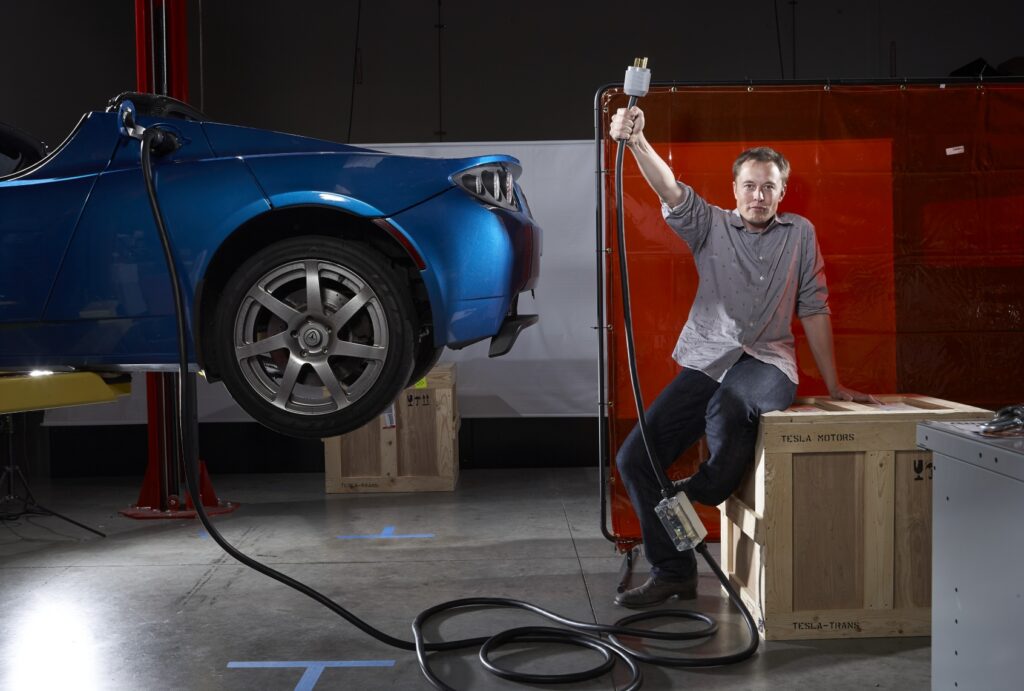
I mean, I looked at him from afar. I have some history on this whole electric car thing because I was brought in long ago to help with the editing of a doc called “Who Killed the Electric Car,” which is about GM’s first foray into the world of electric cars. A woman I met on that film, Jessie Deeter, later produced a film called “Revenge of the Electric Car,” and Elon Musk is in that. And Jessie, when she worked with him on that, was a big fan. [Deeter is also a producer on “Musk.”]
(Courtesy Bleecker Street Film / Gregg Segal)
So, you know, I had a certain connection to him. And I’m a big electric car guy. I own one — not a Tesla— but I own one, and I had a Tesla Powerwall in my house. I also sort of liked the kind of mumbling charisma that he had for a while, because he seemed like very much a regular guy. He was joking with people around on Twitter and stuff like that.
That said, he could also do unpredictable, chaotic and sometimes offensive things. But largely speaking, my view of him was positive. But I was interested in the fact that he accumulated so much power, and so that was the basis on which I dug in back in 2022.
Do you think that his ability to amass this much power is related to the fact that he is doing it in the American capitalist system, or do you think he could have done it in any other place in the world?
Well, I mean, there are a lot of intersections of opportunities for Elon Musk, and I also think he discovered, to use a phrase of his, the anomaly in the matrix for the American system. And that is money. He discovered that not only can you get a lot of money from the federal government, but if you have a lot of money, you can use it to influence sometimes how much money you get from the federal government or state governments. So I think there was that.
The other big thing is that in America we also have a kind of grudging admiration for the P.T. Barnum-like qualities of certain larger-than-life entrepreneurs, you know, and you see that a lot in Silicon Valley . . . That is a kind of cultural trope in this society for which I think we have a weakness. We sort of like to see them trick us all, though we also do like to see them go down after they’ve tricked us. So I think for all those reasons that maybe Elon was able to succeed here in a way that really exploited some of the flaws in our system and our psyche.
There’s also a propensity in our culture to believe in some superhuman aspect of genius, which I think your documentary gets at very well.
Yeah, it’s also that our weakness for money, or the power of money, in this culture also causes us somehow to think that if you’re wealthy, you’re also wise rather than just ruthless, right?
I often think of that famous line from “Citizen Kane,” where Orson Welles is joking with somebody, you know, having been very successful playing this William Randolph Hearst character, who said, “It’s no trick making a lot of money if all you want to do is make a lot of money.” Meaning, if you’re ruthless and determined, you can make a lot of money. Doesn’t mean you’re a genius, and it doesn’t mean that you’re a tech genius either.
I also think Elon Musk, having seen the ascent of Steve Jobs, was sort of defining himself in that way too – or going back to Thomas Edison, who had his own P.T. Barnum-like qualities in terms of inventing a character for himself to play. It’s not just the investor; it’s the inventor.
“Musk” runs for almost four hours. Did you always know it would be that long?
No. In fact, I had a cut of the film in the spring of 2024 that was under two hours. We were moving to release that and put it into the fall festivals. Then, in Butler, Pennsylvania, Trump is nearly assassinated, and Musk hitches his wagon to the Trump train. And my friends at HBO said, “You’re not done. You have to follow this story because it could go to places that you don’t expect, and having spent as much time as you have, you have to follow it to at least a moment of greater conclusion.”
So I did, and that ended up being the reason that it’s at such a length. You see patterns from the first film that then repeat themselves, but on a much larger scale, in the second film. Suddenly economic power meets political power, economic and technological power meets political power, and that is the making of an epic story.
(Courtesy Bleecker Street Film / Ken Cedenoupi / UPI Alamy News) Elon Musk
In addition, it just so happened that as he embarked on his political project, a lot of people that I was talking to in the background, trying to persuade them to come forward, did come forward because they saw some of the more problematic aspects of Musk wielding power as part of MAGA world. That gave the story a kind of human dimension as well.
Weirdly, you know, I was having trouble kind of putting it all together, and I didn’t really get a sense of how to shape it until I watched Guillermo del Toro’s “Frankenstein,” which in itself was a kind of take on the tech bros. That helped me kind of find a way forward in terms of what became a kind of epic narrative.
How so?
Well, you know, you start with a scientist who wants to do something big and important. And there’s even a sense of idealism about his ambition. But then he literally creates a monster, and the whole enterprise becomes utterly reckless and irresponsible and all about his own sort of grandiosity. Rather than a mission that might help people, it becomes about him.
What are you hoping this documentary will do in terms of making people a little bit more aware of who Elon Musk is and getting at the man behind the curtain, so to speak?
Well, I mean, it is an agent provocateur. I don’t provide a solution, but I do provide, I think, a pretty compelling story, which asks the kind of fundamental question I posed at the beginning, which is, how did this guy get so much power, and why did we give it to him? Because it’s both about him and it’s about us, and it asks some discomforting questions about how literally existential power rests in the hands of one man who is increasingly chaotic, unhinged, and seemingly pursuing power without reason. There’s a chilling moment at the end of the film where somebody asks him, “Why have you accreted so much power?” And he literally can’t answer the question…
He’s a very peculiar character who’s a chaos agent. But we’ve allowed him to become normalized in a way.
I remember writing about him being on “Saturday Night Live” and people shrugging it off, like, “Oh, it’s not that big of a deal.” But it was a very big deal. Those kinds of things make him into a character when the reality is he has massive access to power.
And he’s saying things, even on “Saturday Night Live,” that were patently untrue… Even when he says, “Did you think I was going to be a chill, normal dude?” Well, there’s a funny hidden message there, which is kind of discomforting if you really think about it. Like, if you want to drive a Tesla, be prepared to endure a lot of performative cruelty from me, including cruelty that may end up killing people. . . That’s a pretty brutal message, honestly, for “Saturday Night Live.” But it was a joke, right? And that’s the genius, in a way, of Elon Musk: he’s constantly saying stuff that is deadly serious and a joke at the same time.
Speaking of that, the images and the joke, let’s talk about using the [CGI] avatar. I remember when the news first broke about that, someone said, “Well, I wonder if that’s Alex kind of trolling Musk back.”
I mean, it’s kind of a troll-back, yeah. In a way, it’s kind of investing in him, playing in his sandbox, because he didn’t agree to appear.
And I should make it clear, as I tried to do in the film, that what we hear from him are actual audio recordings of him. In other words, they’re not AI-confected answers. We didn’t ask AI what Elon would say. We’re taking real audio recordings, but how to couch that visually? And we took our cue, having done all this research into stuff that Elon said, from something he kept going over again: This idea that we’re likely living in a simulation. So I thought, OK, how about a simulated interview?
And yes, he’s famous for trolling people. He’s famous for creating memes. What was it he said in 2020 on Twitter? He said, you know, parodying “Dune,” he said, “He who controls the memes, controls the universe,” right? OK, well, here’s a meme for you, Elon, of you.
Want more from culture than just the latest trend? The Swell highlights art made to last. Sign up here
What, if anything, about this documentary may help illuminate a few things for people, regardless of their political leanings, as we approach the midterms?
I mean, this should be our concern, whether you’re from the left or the right, is giving people unaccountable power. Also, this whole idea that our politics and, indeed, our Department of Justice and our Department of Defense can be utterly transactional.
We’re not getting the best that money can buy. We’re getting what money can buy. Period. In other words, the military stuff that you’re seeing is a third-rate frontier AI technology being fully integrated into our Department of Defense. And why is the worst technology being integrated? Because Elon Musk is literally paying for political advantage. So it’s a payback system, and we should all be outraged about that, left, right, or otherwise.
And now you’re seeing him trying to buy the midterms. He’s spending way more now than he did for the presidential campaign in 2024, and in part that’s to get more money for himself in the form of military contracts. But also, he knows that a reckoning is coming for him if the Democrats take over the House and the Senate, and there’s going to be a lot of investigations into him for corruption and abuse of power, taking our information, particularly possibly relating to DOGE, and doing God knows what with it.
Our whole system is built on a system of checks and balances, and the idea that the government is our instrument for making a better world, rather than, you know, making a few people rich…
But I think that what’s changed now with Trump is that the Department of Justice has become a protection racket for those who flatter and ally themselves with the president, and an instrument of revenge for those who oppose the president. You can’t depend on it as a kind of law-enforcing mechanism, and that may be the scariest thing of all. . . What we’re talking about is Putin’s Russia here, right? And if people want to avoid that, then I would strongly urge them to go out to the polls. Because this is a rogue administration that goes beyond any kind of sense of party affiliation. It’s a rogue administration that’s literally destroying our democracy.
If you were hoping to surprise someone with an iPhone Duo for
Christmas, you might be out of luck, as Apple’s online store in
the U.S. is already showing an estimated shipping date of January
25 for all configurations following the start of pre-orders today.
It is possible that some Apple Stores will have the iPhone Duo
available for walk-in customers on Friday, October 23 launch day,
but it seems likely that inventory will be very tight.
I suspect it’s a combination of high demand and low supply but I doubt we’ll get any insight on that from Apple itself. It’s in their interest to let people think demand is simply very high, and not draw attention to their production limits.
I feel for the folks on the West Coast who woke up for a 5:00am start and still got stuck with December or even January ship dates. This is one of those times where it’s frustrating that, per Apple’s consistent schedule, pre-orders always start before reviews appear. People are left to guess whether they’re going to like it without any word from people who’ve used it.
LAcon V, the 83rd World Science Fiction Convention, received 2,492 valid ballots (two paper), up from 1,962 at Seattle Worldcon 2025. There were 1,488 nominating ballots received (six paper), up from 1,338 last year.
The procedure for counting nominations remains the E Pluribus Hugo, or EPH, system, instituted in 2017 to help reduce the effect of bloc voting. The rather complicated system gives a single point to each voter’s ballot, dividing that point among the nominees. The points are counted, the two nominees with the fewest points are compared, and (points notwithstanding) the one with the fewest nominations (votes) is dropped. The process repeats until down to six finalists; the last position on the ballot is determined strictly by votes unless there’s a tie. This system complicates discussing how close a runner-up was to making the ballot, as some nominees might have eliminated others earlier on if they’d had just a few more points. We used to try to determine ourselves how far back the closest runner-up to the ballot was, but for the last several years the official nomination statistics have included their own determination of the margin by which the last place on the final ballot was decided, and we’re using those summations.
Once again, it’s time to explain the Australian ballot preference system (also called ranked voting or ‘‘Instant Runoff Voting’’) used for the Hugo Awards. First-place votes (including those for No Award) are counted in column one. If no entry has the majority of the vote then the entry with the fewest votes is dropped (e). The dropped entry’s second-place votes now become first-place votes (column two) and the process is repeated until a nominee has a majority of the votes (usually six drops, with six finalists), deciding first place. Second place is determined by dropping the winner, counting their second-place votes as if they were first, etc. Therefore, the item that originally placed second doesn’t necessarily win second place. Likewise, third place is decided by dropping both first- and second-place winners, promoting the next eligible entry, and counting all over again. The system ensures that the winner is liked by a majority of voters, even though it may not have received a majority of first-place votes.
BEST NOVEL
The Everlasting by Alix E. Harrow won easily, starting with the most first-place votes and holding the lead through all six rounds of voting to take first place. The Incandescent by Emily Tesh, which had the most nominations, then took second place in similar fashion. Third place was more of a contest, with The Raven Scholar by Antonia Hodgson leading in the first two rounds, only to see A Drop of Corruption by Robert Jackson Bennett take the lead in the last two rounds. The Raven Scholar then took fourth place in three rounds without challenge. Death of the Author by Nnedi Okorafor took fifth in a single round, and Shroud followed in sixth. The closest runner-up to the ballot was Katabasis by R.F. Kuang, which needed three more nominations to make the ballot. This was Harrow’s seventh Hugo nomination and second win.
BEST NOVELLA
Amal El-Mohtar’s The River Has Roots came in with the most nominations, the most first-place votes, and led through all six rounds to win. The rest of the places also went without significant challenge, with Annalee Newitz’s Automatic Noodle in second place, Freya Marske’s Cinder House in third, Naomi Novik’s The Summer House in fourth, T. Kingfisher’s What Stalks the Deep in fifth, and Olivia Waite’s Murder by Memory in sixth. The closest runner-up to the ballot was A Mouthful of Dust by Nghi Vo, which needed 11 additional nominations to make the list. This is El-Mohtar’s third Hugo nomination and third win.
BEST NOVELETTE
‘‘Never Eaten Vegetables’’ by H.H. Pak led all the way to take the Hugo in six rounds. Second place saw a bit of a scuffle, with ‘‘Kaiju Agonistes’’ by Scott Lynch leading in the first two rounds, only to have ‘‘When He Calls Your Name’’ by Catherynne M. Valente pick up enough votes to move into the lead when ‘‘The Millay Illusion’’ by Sarah Pinsker dropped, and hold on to take second place in the fifth round. ‘‘Kaiju Agonistes’’ then led all the way in voting for third place. Fourth place saw a tie between ‘‘Rapport: Friendship, Solidarity, Communion, Empathy’’ by Martha Wells (which had the most nominations and led the first round of voting) and ‘‘The Girl My Mother Is Leaving Me For’’ by Cameron Reed, which pulled up to tie in the third round. The Pinsker then ended up in sixth place. John Scalzi’s ‘‘3 Days, 9 Months, 27 Years’’ was the closest runner-up, needing one nomination worth more than half a point to make the list. This is Pak’s first Hugo nomination and win.
BEST SHORT STORY
‘‘In My Country’’ by Thomas Ha led the voting all the way, taking the award in six rounds. Second place was more of a contest, with ‘‘Wire Mother’’ by Isabel J. Kim leading the first two rounds of voting, only to have ‘‘10 Visions of the Future; or, Self-Care for the End of Days’’ by Samantha Mills move into the lead in the third and fourth rounds; then the Kim surged ahead in the fifth round to snag second place. ‘‘Missing Helen’’ by Tia Tashiro then led all the way in voting for third; the Mills took fourth without a challenge. ‘‘Six People to Revise You’’ by J.R. Dawson, which had the most nominations, ended up in fifth place, and Effie Seiberg’s ‘‘Laser Eyes Ain’t Everything’’ followed in sixth. ‘‘Barbershops of the Floating City’’ by Angela Liu needed just one more nomination to make the ballot. This is Ha’s second Hugo nomination and his first win.
BEST SERIES
John Scalzi’s Old Man’s War series started with a solid lead in first-place votes and held on to win the award in the sixth round. Seanan McGuire’s October Daye series led the first four rounds of voting for second place, but when Elizabeth Bear’s White Space dropped, enough of its votes went to Katherine Addison’s The Chronicles of Osreth (which had the most nominations) to push it into the lead, taking second place in the fifth round. The October Daye series then waltzed off with third place without a contest, Bear’s White Space took fourth in a bit of a squeaker with Max Gladstone’s The Craft Wars, which then took fifth in one round; Heather Fawcett’s Emily Wilde came in fifth. Two series got enough nominations to make the list, but were declared ineligible: Mary Robinette Kowal’s Lady Astronaut due to having fewer than 240,000 new words since its last appearance on the ballot in 2019, and Nghi Vo’s The Singing Hills Cycle due to having fewer than 240,000 words total. Because of the two dropped series, it’s difficult to determine the closest runner-up; T. Kingfisher’s Sworn Soldier needed two more nominations to make the ballot, but might not have enough words to be eligible; Adrian Tchaikovsky’s Dogs of War needed nine more nominations to make the ballot. This is Scalzi’s 14th Hugo nomination and fourth win (previous wins are for fan writer, related book, and novel).
BEST GRAPHIC STORY
A Wizard of Earthsea: A Graphic Novel, based on Le Guin’s novel and adapted and illustrated by Fred Fordham, led for all six rounds to take the Hugo. Things got a little more interesting in the voting for second place: The Space Cat, written by Nnedi Okorafor and illustrated by Tana Ford, led in the first two rounds, only to see Absolute Wonder Woman Vol. 1: The Last Amazon, written by Kelly Thompson and Hayden Sherman. pull ahead in the third and fourth round; then The Invisible Parade by Leigh Bardugo & John Picacio dropped, and enough of its next votes went to The Space Cat for it to take second place. The Invisible Parade led the first two rounds of voting for third place, only to have Absolute Wonder Woman Vol. 1: The Last Amazon take the lead and keep it to take third in four rounds. The Invisible Parade, which had the most nominations, then led all the way in the voting for fourth place. The Power Fantasy Vol. 1: The Superpowers took fifth place in one round, and webcomic A Girl and Her Fed written by K.B. Spangler and illustrated by Ale Presser took sixth. The closest runner up is Who Killed Nessie? written by Paul Cornell and illustrated by Rachael Smith, which needed two more nominations to make the ballot. This is Fred Fordham’s first nomination and win, as well as Ursula K. Le Guin’s 27th nomination and ninth win.
BEST RELATED WORK
Ada Palmer’s Inventing the Renaissance led from the first round and held on to win. Second place was mostly a contest between two titles: The Hugo Spreadsheet of Doom, maintained by Renay, which led in the first two rounds, then tied in the third round with Positive Obsession: The Life and Times of Octavia Butler by Susana M. Morris, which pulled ahead in the fourth and took second in the fifth round. The Hugo Spreadsheet of Doom (which had the most nominations) took third place without a challenge, and Colourfields: Writing About Writing Science Fiction by Paul Kincaid took fourth. Essay ‘‘The Cuddled Little Vice (Sandman)’’ by Elizabeth Sandifer took fifth in one round, followed by ‘‘Ragnarök vs the Long Night’’ by Ashaya & Aziz in sixth. We Will Rise Again: Speculative Stories About Political Protest, Resistance, and Hope edited by Karen Lord, Annalee Newitz, and Malka Older needed eight more nominations to make the ballot. This was Palmer’s third Hugo nomination and first win.
BEST DRAMATIC PRESENTATION – LONG FORM
Sinners started with the most nominations, the most first-place votes, and went unchallenged through six rounds of voting to take the Hugo. Second place went to Andor (Season 2) without a contest. KPop Demon Hunters trounced the opposition for third place, taking it in just three rounds. Superman led the first two rounds of voting for fourth place, only to lose to Frankenstein in the third and final round. Superman then snagged fifth, and Mickey 17 took sixth. The closest runner up was Pluribus, which needed either one more nomination, or for the series Andor to have been eliminated in favor of the Best Dramatic Presentation – Short Form entries; enough nominations were made for Andor to make the ballot in either category, but more voters nominated the longer form than nominated individual episodes, so the Short Form nominees were eliminated. Under the same rules, Murderbot could have made the ballot here, but was eliminated in favor of the episodes in Short Form.
BEST DRAMATIC PRESENTATION – SHORT FORM
Murderbot: ‘‘All Systems Red’’ won with a dramatic display of dominance, coming in with the most nominations, a big lead in first-place votes, and building that lead to take the prize in only five rounds. Murderbot: ‘‘The Perimeter’’ similarly took second place in just four rounds. Pluribus: ‘‘We Is Us’’ led all the way in the voting for third place; Severance: ‘‘Cold Harbor’’ tooks fourth without challenge. Doctor Who: ‘‘The Story & the Engine’’ only needed one round to take fifth place, followed by The Wheel of Time: ‘‘The Road to the Spear’’ in sixth. A number of items that could have made the ballot were dropped; as mentioned in the previous category, three Andor episodes were dropped here in favor of having the series on the Long Form ballot. Due to the limit on the number of episodes of the same show on the final ballot, Murderbot: ‘‘Free Commerce’’ was dropped at the showrunners’ request. This many changes make it effectively impossible to determine the next runner up, or how far back it was, but Star Trek: Strange New Worlds: ‘‘A Space Adventure Hour’’ was next on the list by number of nominations, at least nine nominations back of the ballot.
BEST GAME OR INTERACTIVE WORK
A clear favorite with voters, Clair Obscur: Expedition 33 had the most nominations, a big lead in first-place votes, and held on to win in six rounds. Second place had Blue Prince leading through the first three rounds of voting, but Hades II managed to pick up a 20-vote lead in the fourth round, holding on to take second in the fifth round. Blue Prince then took third place without challenge, Hollow Knight: Silksong similarly took fourth, Dispatch took fifth in one round, leaving Citizen Sleeper 2: Starward Vector in sixth. Split Fiction was the closest runner-up, needing 11 more nominations to make the ballot.
BEST EDITOR – SHORT FORM
Neil Clarke won easily, starting with the most nominations and a solid lead in first-place votes that only grew through six rounds of voting. Sheila Williams took second place with similar ease. Third place ended in a tie; Jennifer Brozek had a slim lead over Michael Damien Thomas in the first two rounds, but Thomas pulled ahead by two points in the third, only to have Brozek pull up to tie in the fourth round. Lee Harris then took fifth place in one round, and Scott H. Andrews ended up sixth. John Joseph Adams needed six more nominations to make the ballot. Clarke now has 18 Hugo nominations and eight wins overall; this is his 14th nomination and fifth win in this category.
BEST EDITOR – LONG FORM
Diana M. Pho started with a slim lead in the first few rounds of voting, but held on and grew that lead to win in six rounds. Lee Harris, who had the most nominations coming in, then took second place without serious challenge. Third place was more of a contest; Carl Engle-Laird led the first two rounds of voting, but then Jaymee Goh pulled ahead in the third round and took third in the fourth round. Engle-Laird then led through three rounds of voting to snag fourth place, Jenni Hill followed in fifth, and Joe Monti in sixth. Lindsey Hall declined nomination in this category; the closest runner-up was Navah Wolfe, three nominations back of the ballot. This was Diana M. Pho’s fifth Hugo nomination and third win.
BEST PROFESSIONAL ARTIST
Another category with a clear winner from the start: John Picacio came in with the most nominations, a big lead in first-place votes, and won without serious challenge in six rounds. Second place saw a scuffle between three contenders: Tran Nguyen led the first four rounds of voting, with Tom Roberts running second for the first two rounds, then Kelly Chong moved up into second place for the third and fourth rounds and then took the lead in the fifth and final round. Tran Nguyen led all the way to take third place in four rounds. Tom Roberts claimed fourth place in a single round, Dave Kellett snagged fifth place in one round, and Lulu Chen followed in sixth place. Maurizio Manzieri needed just one more nomination to make the ballot. Picacio now has four wins out of 19 Hugo nominations (16 in this category). Next year, the name of this category will change to Best Artist in Professional Illustration.
BEST SEMIPROZINE
Uncanny won without a fight, leading through all six rounds of voting. None of the places in this category saw any real contest: Strange Horizons, which had the most nominations, placed second, followed by Escape Pod in third, and Khōréō in fourth. On Spec took fifth place in a single round, leaving The Deadlands to take sixth. Beneath Ceaseless Skies declined nomination. The Sunday Morning Transport was the first runner-up, needing four more nominations to make the ballot. This is the 11th nomination for Uncanny and the ninth win.
BEST FANZINE
The voting started with An Unofficial Hugo Book Club Blog having the most nominations and the lead in first-place votes, a lead it kept through four rounds, but when Journey Planet dropped out nerds of a feather flock together picked up enough votes to move into the lead and win in the sixth round. The rest of the places went without challenge: An Unofficial Hugo Book Club Blog coasted into second place in the usual five rounds, Ancillary Review of Books took third, Journey Planet fourth, Intergalactic Mixtape took fifth, and Galactic Journey sixth. The closest runner-up was The Rec Center, 11 nominations away from the ballot. This was the eighth nomination and third win for nerds of a feather flock together.
BEST FANCAST
Worldbuilding for Masochists led through the first five rounds of voting, only to have Hugo, Girl! pull off a last minute surge and win in the sixth round with a nine-point lead. Worldbuilding for Masochists had to settle for taking second place without challenge, followed by Eating the Fantastic taking third in similar fashion. Octothorpe, which had the most nominations, came in fourth. The Coode Street Podcast took fifth place in a single round, and A Meal of Thorns ended up in sixth place. The Sword and Laser needed 13 more nominations to make the ballot. This is the fourth nomination and second win for Hugo, Girl!
BEST FAN WRITER
James Davis Nicoll led the first three rounds of voting, only to see Jason Sanford vault into the lead in the fourth round and build that lead to win in the sixth round. Nicoll then led the first four rounds of voting for second place, only to have Roseanna Pendlebury grab the lead in the fifth and final round. Nicoll then took third place without a fight. Örjan Westin followed in fourth place, Alex Brown in fifth, and Jay Brantner (AKA ‘‘Tar Vol’’) in sixth. There was some confusion about Brantner’s name; this was his first time on the ballot and most of his nominations were variations on TarVolon or Tar Vol, only five including any part of ‘‘Jay Brantner’’, who said he preferred to have his real name on the ballot; initially the Hugo Administration team tried to avoid confusion for fans who didn’t know the author’s real name by using ‘‘Jay Brantner (for ‘Tar Vol On’)’’, but on further discussion settled on the version with (AKA ‘‘Tar Vol’’) to make it clear Tar Vol is a pseudonym. The closest runner-up is Cora Buhlert, two nominations away from the ballot. This is Jason Sanford’s seventh Hugo nomination and first win.
BEST FAN ARTIST
Yuumei came in with the most nominations, a big lead in first-place votes, and held the lead to win in just five rounds. Geneva Bowers led all the way in the voting for second place, Sara Felix took third place in the same style, Richard Man then took fourth in only two rounds, España Sheriff grabbed fourth in one round, and Terri Ash followed in sixth. Brad Foster needed two more nominations to make the ballot. This was Yuumei’s first nomination and win.
BEST POEM
‘‘Hex Supply Customer Support Log’’ by Elis Montgomery led all the way through six rounds of voting to win. All of the places in this category went without challenge: ‘‘How to Become a Sea Witch’’ by Theodora Goss took second, ‘‘Care for Lightning’’ by Mari Ness (which had the most nominations) was third, ‘‘The World to Come’’ by Jennifer Hudak was fourth, ‘‘The Mourning Robot’’ by Angela Liu took fifth in a single round, and ‘‘Landing: Seattle’’ followed in sixth. The closest runner-up was ‘‘the jacarandas are unimpressed by your show of force’’ by Gwynne Garfinkle, two nominations away from the ballot. This is Elis Montgomery’s first nomination and win. The Best Poem category was a special Hugo Award for both Seattle Worldcon 2025 and LAcon V; a special amendment to make the category permanent got its first passage in 2025 and was ratified in 2026, becoming effective in 2027; it will need to be re-ratified in 2029.
LODESTAR AWARD FOR BEST YOUNG ADULT BOOK (NOT A HUGO)
Sunrise on the Reaping by Suzanne Collins had the most nominations, started the voting with a solid lead in first-place votes, and held onto the lead for five rounds, only to lose to Coffeeshop in an Alternate Universe by C.B. Lee, which had the fewest nominations and was only fourth in first-place votes, but picked up enough votes when other titles dropped, particularly They Bloom at Night by Trang Thanh Tran, to pull ahead in the final round. This is one of the interesting effects of the Australian voting system – even big bestsellers with lots of first-place votes can have trouble winning if they don’t have support lower down on the ballot. Sunrise on the Reaping then started in the lead in the voting for second place, but Among Ghosts by Rachel Hartman pulled ahead in the fifth round (again, after the Tran dropped) to take second place. The Collins again led the first three rounds of voting for third place, but it was Tran’s turn to pull ahead in the last round. The Collins then ended up taking fourth place, just two votes ahead of Holy Terrors by Margaret Owen, which then took fifth, leaving Oathbound by Tracy Deonn in sixth. Breath of the Dragon by Shannon Lee & Fonda Lee needed just one more nomination, or 0.18 points, to make the ballot. This was C.B. Lee’s first Lodestar nomination and win.
ASTOUNDING AWARD FOR BEST NEW WRITER (NOT A HUGO)
Antonia Hodgson started out with the most nominations, a big lead in first-place votes, and led throughout the voting to win. H.H. Pak took second place without challenge, Jared Pechaček took third in similar fashion, Sophie Burnham took fourth, Kamilah Cole landed fifth in a single round, and Molly O’Neill followed in fifth. Hodgson and O’Neill were the only two nominees not in their second year of eligibility. Hodgson herself questioned her elegibility in this category, as she has a number of previous novels, but since none of her earlier works had genre elements she was deemed eligible for her first work of SF/F, The Raven Scholar. Two other authors with enough nominations to make the ballot were ruled ineligible due to qualifying publication(s) before 2024: Barbara Truelove and Silvia Park. The closest runner-up was Carolyn Zhao, two nominations away from making the ballot.
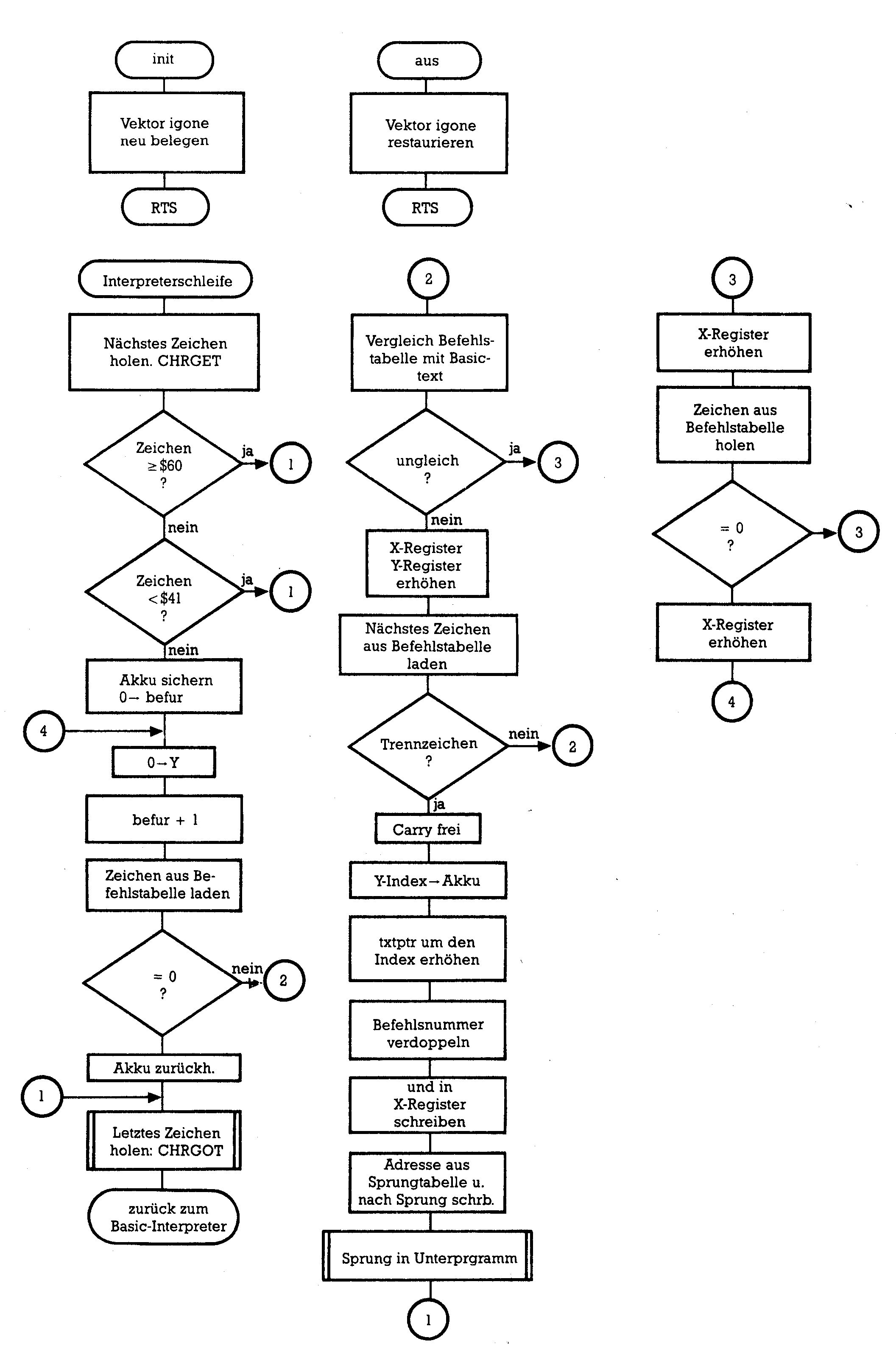
Neben einer Anzahl von Integer-Routinen und einer Technik zum Schreiben von Basic-Erweiterungen beschäftigen wir uns mit Assembler-Programmen, die sich selbst verändern.

 Login