Ukrainian President Volodymyr Zelenskyy confirmed Sunday that the United States temporarily interrupted intelligence-sharing with Ukraine, as a Republican congressman demanded an investigation into separate disruptions affecting Ukrainian battlefield communications.
Speaking on NBC’s “Meet the Press,” Zelenskyy said American intelligence used to detect incoming Russian missile strikes had been restored after a brief interruption.
“We are very thankful for this,” Zelenskyy said. “Now it works.”
President Donald Trump previously maintained that intelligence-sharing had never stopped, despite Ukrainian officials reporting that some Russian attacks occurred without warning.
Zelenskyy also criticized the administration’s decision to allow Russian diesel imports and waive new sanctions targeting Moscow, warning that Washington’s actions could undermine Ukraine’s defense.
“If the United States will officially take the side of Russia … we will not prevail and we will not be able to stand,” he said.
Treasury Secretary Scott Bessent, appearing on the same program, declined three times to directly answer whether the United States considers Ukraine an ally.
“I’m not the secretary of state. I’m not the president,” Bessent said after repeated questioning by moderator Kristen Welker.
Bessent pointed to continued American intelligence and military assistance, arguing that Washington was seeking a negotiated end to the war.
Meanwhile, Rep. Mike Turner, R-Ohio, called for a congressional investigation into disruptions involving SpaceX’s Starshield satellite communications system, which Ukrainian forces rely on for battlefield operations.
“Absolutely not,” Turner said when asked whether Rubio’s explanation was sufficient. “There needs to be a congressional investigation.”
Turner warned that interrupted communications could endanger Ukrainian lives and urged Trump to reconsider waiving sanctions on Russia.
The tensions also provided material for Saturday night’s “SNL UK,” which spoofed Zelenskyy’s meeting with British Prime Minister Andy Burnham.
James Austin Johnson, reprising his Trump impersonation from the American “Saturday Night Live,” crashed the meeting as the fictional Zelenskyy pleaded for restored Starlink access. Johnson’s Trump offered to help Ukraine with anything, “provided it’s not help with war.”
The nationwide “No Kings” protest movement took its opposition to President Donald Trump from the streets to the ballot box Saturday, holding rallies across the country to encourage early voting ahead of the Nov. 3 midterm elections.
Organizers billed the latest demonstrations as a nonpartisan effort to increase voter participation and protect election integrity, marking a shift from the massive anti-Trump marches that have defined the movement since his return to the White House.
In Washington, demonstrators gathered at the Lincoln Memorial carrying signs reading “VOTE EARLY” and “HANDS OFF MY VOTE!” Similar events took place in New York, Los Angeles, Atlanta and communities across the country.
At an Atlanta rally, City Councilman Michael Julian Bond urged participants to recognize the power of their ballots.
“You don’t see Superman giving up his power,” Bond told the crowd, according to The Associated Press. “You don’t see Black Panther giving up his power.”
But the movement’s officially nonpartisan message did not prevent some demonstrators from explicitly advocating Democratic victories.
In Alexandria, Virginia, protesters told Fox News Digital they wanted Democrats to win control of Congress, despite national organizers’ instructions against endorsing candidates or political parties.
“We got to take the power away from Trump, from the Republicans,” one participant said.
No Kings spokesperson Eunic Epstein-Ortiz defended the movement as a peaceful, nonpartisan coalition. Individual protesters’ political statements do not, by themselves, establish that organizers violated election laws.
The rallies also came amid escalating disputes over voting access. On Thursday, the Trump administration sued California election officials over mail ballots from people federal authorities identified as potential noncitizens. The Justice Department subsequently warned local election officials about possible criminal investigations involving such ballots.
With Election Day approaching, the movement’s latest demonstrations reflected a new emphasis: turning public opposition to Trump’s administration into participation at the polls.
President Donald Trump endorsed Israeli Prime Minister Benjamin Netanyahu for reelection Sunday, warning Israeli voters against choosing the “wrong Leader” just nine days before the country’s national election.
In a lengthy Truth Social post, Trump praised Netanyahu as a “Great Warrior Prime Minister” and a partner in confronting Iran, while suggesting that electing someone else could complicate future U.S. military action against Tehran.
“If Israel has the wrong Leader, which would be anyone other than Bibi, America will have to do this work ourselves, and I am not inclined to do so,” Trump wrote.
Trump also threatened to “soon finish the job” against Iran unless its leaders “change their ways, rapidly.”
The endorsement marks a shift for Trump, who had spent months declining to publicly back Netanyahu despite their longstanding alliance. Earlier this month, when asked whether he supported Netanyahu’s reelection, Trump told Time magazine, “I’m not involved in politics anymore.”
Their relationship has been strained by disagreements over the nearly eight-month war with Iran, Israeli military operations in Lebanon and efforts to negotiate a ceasefire in Gaza.
Netanyahu welcomed Sunday’s endorsement.
President Trump, my friend Donald – thank you for your extraordinary endorsement. Israel has never had a greater friend in the White House. Together we will never let Iran’s regime get nuclear weapons. Thank you for your clarity, courage and unwavering support.
@realDonaldTrump https://t.co/GqaOVB74Dj
— Benjamin Netanyahu – בנימין נתניהו (@netanyahu) October 18, 2026
“Thank you, President Trump, for the tremendous support and work together,” Netanyahu wrote on X. “Together we will complete the mission!”
His Likud party also circulated a campaign video featuring the two leaders.
Netanyahu faces a competitive election against opposition parties led by figures including former military chief Gadi Eisenkot and former Prime Minister Naftali Bennett. Recent polls suggest Netanyahu’s governing bloc could fall short of the 61 seats needed to command a majority in Israel’s 120-member parliament.
Trump has increasingly departed from the traditional U.S. practice of avoiding explicit endorsements in foreign elections, backing candidates in countries including Hungary, Japan and Argentina.
Israelis vote Oct. 27 in their first national election since Hamas’ October 2023 attack.
Growing up, my sisters and I used to make batch after batch of Rice Krispy Treats because they reminded us of the Vietnamese kind made with freshly puffed rice and palm sugar syrup. We prepared the American icon out of longing for Viet-ish flavors. So when I spotted Joyce Tang’s matcha crispy rice treats from her Bake Sum cookbook (you can enter the giveaway through 10/21!), I got nostalgic. My brain and cravings drifted to a savory favorite from my youth — SHRIMP TOASTS.
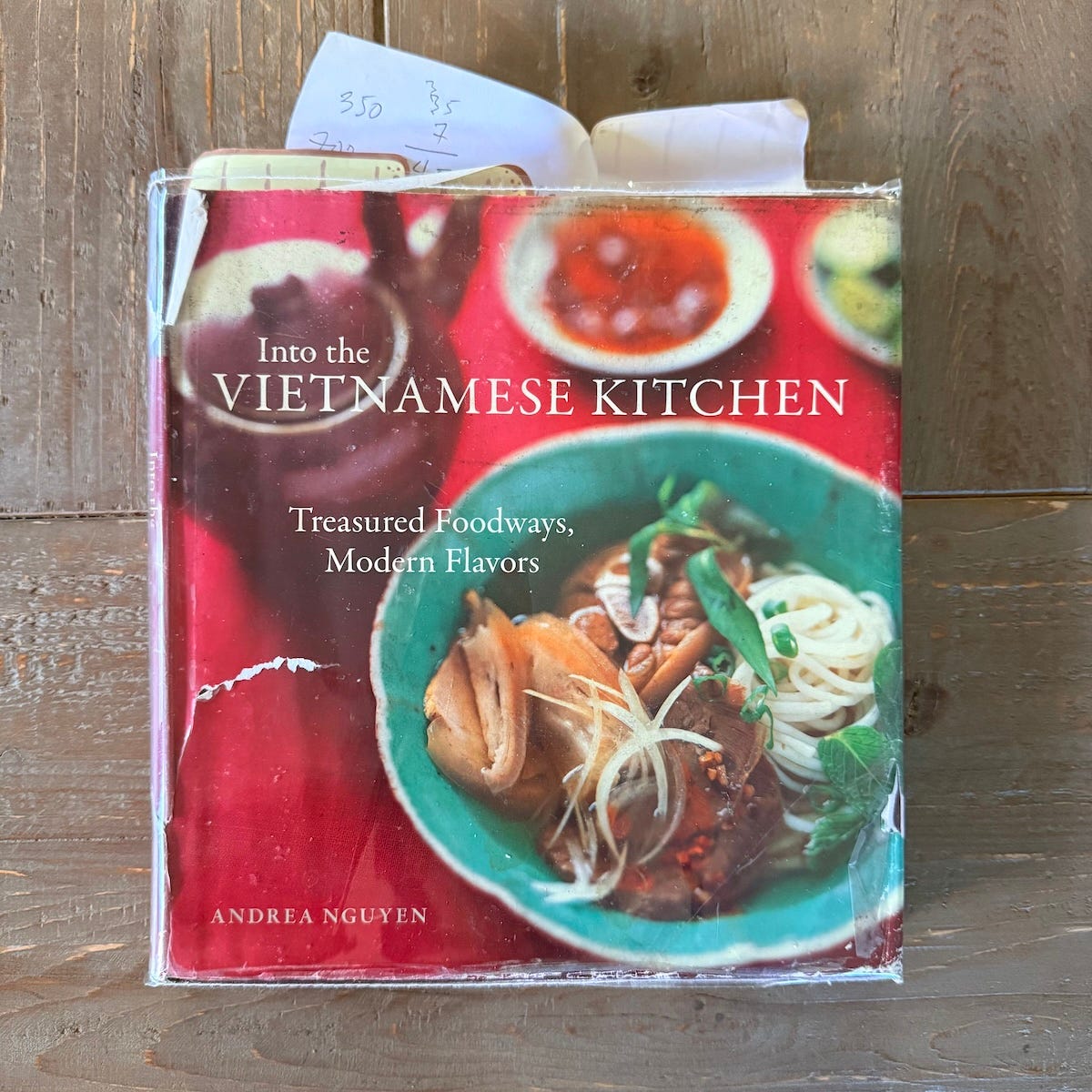
Mom went bonkers making them after we settled in California. Sliced sandwich bread was plentiful here. Traditional airy baguettes in Vietnam sucked up the oil like crazy during deep frying and the shrimp paste often slipped off during cooking. I devised a baked version for my first cookbook, Into the Vietnamese Kitchen, which celebrates its 20th birthday this month!
My first copy of Into the Vietnamese Kitchen remains a special one. It’s so well used that my mom sewed a book jacket for it. I call it “Number 1”.
This past week, when I went to update and make baked shrimp toasts, I faced a problem.
I couldn’t easily find the right bread! 😫
Thin white sandwich bread serves as the ideal platform for the toasts. In the 1990s and early 2000s, Oroweat thin sliced sandwich bread was widely distributed. That’s no longer the case.
What do to?
The ideal loaf needed to be soft like an old-fashioned sandwich loaf, yet sturdy enough to thinly slice. Additionally, my current taste and health preferences are for 100 percent whole wheat. Finally,my shrimp toast craving demanded a fast, low-effort, reliable recipe.
If I could achieve all that, not only would my shrimp toasts get a wholesome upgrade but you and I will have an easy path to delicious, 100 percent whole grain bread. (Some “whole wheat” breads are not made from 100% whole grain. Go figure!)
Everyone talks about rustic bread but heck, it’s the sandwich loaf that serves as a gateway to countless eating pleasures. In my books, website and here, I’ve made banh mi from sandwich bread. Baguette-style bread isn’t the only bread baked in Vietnam! At more upscale bakeries and in supermarkets, you can buy sliced bread.
I’m tackling the bread issue this week and postponing the shrimp toast till next Sunday because there’s no good shrimp toast without the right bread!
Batter whole wheat bread vs rustic sourdough
I baked lots of whole wheat bread this week. My trusty rustic sourdough — a recipe I’ve been ‘practicing’ for nearly two years, has many ups and downs. Besides it is a 28-hour labor of yeasted love. It’s not easy to master and while it has a robust flavor and lovely custardy crumb, it’s also quite chewy. It’s not suitable for shrimp toast.
My hope was that the sandwich loaf would yield more success for me and for you!
Most modern no-knead bread yields a freeform, rustic loaf. But Bernard Clayton’s classic The Complete Book of Bread (1973) offered a “batter whole wheat bread” recipe that involved vigorously stirring ingredients together but no kneading. His was a loaf bread.
Was that realistic? How would a fifty year old recipe work today? It seemed weird. I was incredulous. But poking around, I found similar approaches on the internet, including seeded lazy loaf at his Substack.
I went for it. Shazam! With a few ingredients, stirring and beating (a mixer does the work though you can cook unplugged, if you want), no-knead sandwich bread is practically failsafe. It tastes fantastically wholesome and slices easily too. Moreover, I’ve never made a good sandwich loaf this fast.
For one trial, I started the loaf at 8:30am and by 11:30am it was done and out of the oven. We sliced into the cooled loaf around 1:30pm for lunch. Later in the afternoon, we smeared goat cheese and apricot-ginger jam on some as a snack.
Whereas my overnight sourdough bread is an edible art project, this sandwich loaf is a leisurely stroll in the park on a gorgeous day. Its naturally nutty flavor is not too sweet. Its tender crumb possesses a slight chew.
Use this no-knead whole wheat bread for toast, PB&Js, wholesome banh mi, and my updated shrimp toast recipe when it arrives next week!
Below you’ll find the full recipe for my no-knead 100 percent whole wheat sandwich bread in text and as a downloable PDF. I’m also sharing ingredient explainers to help you select affordable, excellent whole grain flour, for instance. Ingredient swaps help you to smartly use what you have on hand. Technical and equipment pointers enable you to craft your own approaches to make this bread your own.
Support Pass the Fish Sauce however you can. Join as a free subscriber. Or, become paid subscriber for this recipe and access to 225+ others, along with class discounts, and much, much more.
Seit über einem halben Jahr ist der Star NL-10 unser Referenzdrucker der Preisklasse von 1000 bis 1400 Mark. Und das mit gutem Grund, denn er verbindet Schriftqualität, Leistung und günstigen Preis in einem exzellenten Verhältnis. Der NL-10 hat nun einen Zwillingsbruder bekommen, den NG-10, der dem NL-10 fast aufs Haar gleicht. Der NG-10 weist die gleichen Leistungsmerkmale wie der NL-10 auf, verfügt über vier...
Ein besonders anwenderfreundliches Zeichenprogramm ist das »OCP Art Studio«, das sich fast ausschließlich mit dem Joystick bedienen läßt und dabei eine Menge guter Zeichenfunktionen bereitstellt.
TL;DR: Own Microsoft Office Professional 2021 for Windows with a one-time payment of $27.97 (reg. $219.99).
Microsoft 365 Personal costs $99.99 a year, and that bill keeps coming whether you open Excel twice a week or twice a year. Microsoft Office Professional 2021 for Windows skips the renewal entirely, and it's on sale for $27.97 (reg. — Read the rest
I can’t remember the last time a catch-up phone call with a confidante didn’t include one of us marveling that we haven’t caught an assault charge. If any law enforcement happens to be reading this, I want to make it clear that will never happen.
Well, let’s call it a non-zero chance. At the end of the day, I am a realist; anything can flip a person’s switch from off to blackout rage. However, I have decades of practice holding back my inner She-Hulk. So do most women.
Every day, we wake up in a nation controlled by a convicted felon accused of multiple sexual assaults, while a college student seeking justice after alleging she was gang-raped at a fraternity party is doxxed and swatted. We are not taken seriously in politics or at work. The manosphere has poisoned our water coolers and social media feeds.
Women have had it, including with each other. Aspiring tradwives and “Live, Laugh, Love” Karens selling out everyone else to keep up their manicures are legion. They threaten to run you down in crosswalks and refuse to bow out gracefully when told, for instance, that a pretty mechanical bird mounted on a boutique’s wall isn’t for sale.
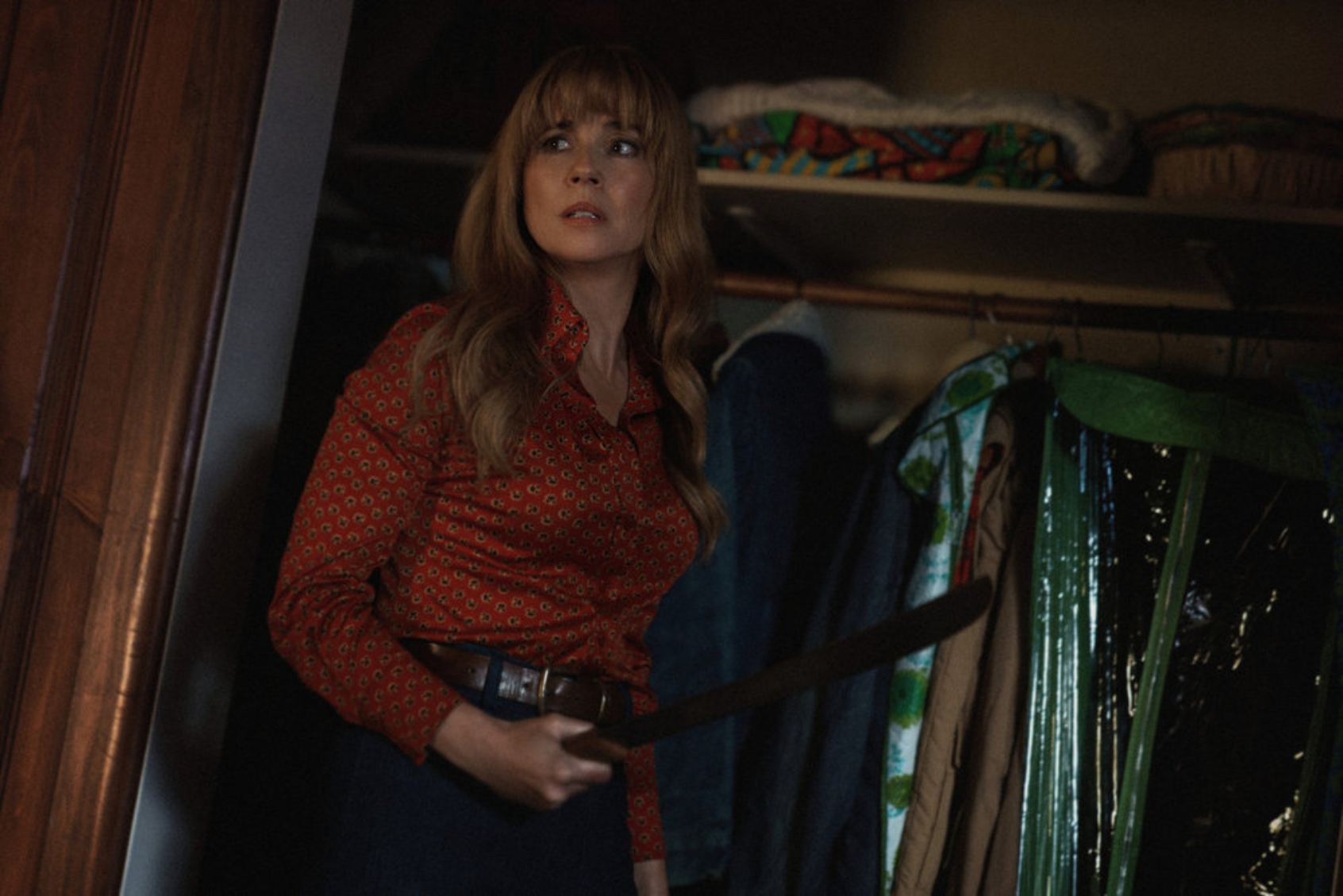
Ladies, look to your left. Now look to your right. One of you is dying to knife somebody. Only Pamela Voorhees, brought to life by Linda Cardellini in “Crystal Lake,” has the guts to act on that impulse. Her bloodlust coats her skin in the crappy opening scene of this “Friday the 13th” prequel, after she’s dispensed with two goons who make the fatal blunder of invading her home and taunting her. One goes down with a swift nick to the jugular. The other loses half his face to the Voorhees family’s machete.
The thing is, by the time we’re assaulted by all that, we understand that Pamela has had it, too. She lost her gentle son, a boy born with hydrocephalus, a birth defect in the brain, who is endlessly bullied until he drowns at camp. The town moves from pitying her to whispering that she’s crazy, leaving her rutted in the anger stage of the grieving process. As she chops away at the men who attack her, I found myself muttering, “Yes. Get him. Again. Again!”
Don’t confuse this for an endorsement. Please don’t. “Crystal Lake” is a barely watchable gorefest, with a plot riddled with more seeping holes than Pamela’s victims. (Of course, if you’re into that kind of thing, which I am not, I guess that counts as a recommendation.) What passes for story amounts to little more than a two-dimensional cartoon rendered in human-flesh puppetry, courtesy of actors capable of much better, Cardellini included.
Even so, it’s kind of great to watch one of TV’s most enjoyable performers massacre a gaggle of sex-crazed hippies, or knock an abusive parent into a deep fryer for stress relief. Few of us can claim to have never daydreamed about, say, an anvil dropping from the clouds to erase some menace from our lives, whether it’s an entitled relative or an idiot comedian. Jason Voorhees’ mom simply prefers a hands-on approach.
I understand why the many chefs who mucked up the “Crystal Lake” cauldron, starting with Bryan Fuller, were compelled to fill in the blanks of Pamela’s origin story. The beauty of the character, once her truth was revealed in the original 1980 movie, is her relative mystery. Who would suspect a frumpy matron in a humble sweater could wreak such unhinged havoc? Other women, that’s who. We’ve always suppressed murderous desires. (See: “Dateline,” “Snapped” and rest of the Oxygen channel’s true crime lineup.) Only recently have we taken to saying that out loud.
Long before the medical and pharmaceutical industries made perimenopausal rage fashionable, Pamela Voorhees was a genre outlier, especially in a cultural climate that had already started retreating from a decade of legislative gains for women’s rights.
Now, in this post-Roe v. Wade world of ours, feminine wrath must be mansplained to be taken seriously. While women have produced excellent recent examinations, including “Furious” and “East of Eden,” the brutal truth is that the “Friday the 13th” movies are IP recognizable to hockey-masked trick-or-treaters too young to watch them.
So it falls to “Crystal Lake” to tell most of us why the mother of slasher cinema’s patron saint was driven to kill, kill and kill again in the first place. But it also helps us understand why a crumpled sock in the middle of the living room or dirty dishes on the kitchen counter makes the exhausted woman in your life crash out.
Let’s assume that if you’re reading this far, you already know the first movie’s big twist: the real killer wasn’t Jason Voorhees, but his mad mama. If not, I mean, what gives? Did you see that picture of Cardellini and wonder what cool-as-a-cuke Lindsay Weir from “Freaks and Geeks” has been up to? With regret, I present this as your answer.
But as any old-school porn hounds skilled in fast-forwarding through “the plot” will tell you, there’s merit in skipping straight to the action — meaning, Pamela destroying fools with something more cutting than wit.
Maybe Fuller, the guy who classed up “Hannibal,” could have done something brilliant with Pamela. But he exited the project early due to creative differences, leaving “It: Welcome to Derry” showrunner Brad Caleb Kane to expand the legend of a woman whose motives were fairly basic. I mean, if your kid died because two horny teen counselors shirked their lifeguard duties to bone in a shed, you might harbor a few homicidal compulsions too.
Alas, in these days of milking dormant franchises for every drop of ichor, a simple explanation isn’t enough. Therefore – and this will either save you the trouble of enduring all eight episodes or spoil them – Pamela Voorhees is revealed to be a victim of a patriarchal industrial plot.
The former professional singer gets knocked up by her lover, Elias (Hamish Linklater), who works for a company called Bellflower. When she nearly miscarries, he convinces her to marry him and move to his company’s sponsored enclave that’s popping with pregnant women like her. Once she’s settled in, her husband plies her with Bellflower-manufactured TV dinners and happy pills, occasionally shuttling her to the doctor to be pumped full of mystery muck. Truly a MAHA conspiracist’s nightmare.
Sometime later, Jason arrives and demonstrates a knack for reviving from naps the average human wouldn’t wake up from. So father secretly subjects son to all manner of mad science, including massive radiation exposure. Once Pamela discovers this, she rescues Jason, turning the skull of the man who gets in her way into soup, and they escape to Crystal Lake.
Want more from culture than just the latest trend? The Swell highlights art made to last. Sign up here
Cardellini’s Pamela Voorhees is what happens when women drinking from a bottomless well of contempt and human carelessness hit their limit. The writers, in their clumsy way, cater to that idea by having her dispose of her first slaughter by slathering the bodies in a deconstructed tonnato sauce of canned fish and honey, and standing by as a massive bear lumbers up to feast.
Before the animal takes a bite, it sizes up Pamela, sniffs her tears, and leaves her be. You could view this as one predator recognizing another. To women of a certain mood, though, it confirms what we already know: that a bear is preferable company to thoughtless, dangerous people. Plus, it’ll help rid you of pesky evidence without asking questions, which only a true, understanding friend would do.
All episodes of “Crystal Lake” are streaming on Peacock.
When Donald Trump clinched the presidency in 2016, my wife broke into tears on camera as a local journalist interviewed patrons at a bar in Queens that had advertised a presidential watch party, complete, in its wide-eyed audacity, with Clinton cocktails. As an immigrant and Deferred Action for Childhood Arrivals (DACA) recipient who had to navigate the cruel vagaries of the U.S. immigration system, she grokked then what it would take many people years to understand. Not long after, Trump attempted to dismantle DACA, the executive order that defended immigrant children in lieu of the DREAM Act. While my wife is now a citizen, the raid of Democratic Minnesota Rep. Ilhan Omar’s home is a reminder that not even U.S. citizenship guarantees the safety of immigrants in Trump’s United States.
The case against Omar worries me, not only because it’s bald-faced political vengeance, a grim milestone in our collective lurch toward fascism, but also because of what it means for naturalized citizens in the United States — people like my wife, my sister and my mother. Attacks on citizens who did not arrive on the Mayflower or through Ellis Island is an extension of the Trump administration’s remorseless persecution of immigrants in the U.S. Child of immigrants? Side eye. Naturalized citizen. Well, let’s revisit that paperwork, shall we?
On the first day of his second term, Trump attempted to end birthright citizenship, how I became a U.S. citizen, via executive order. Over the summer, the Supreme Court ruled against the president, but a month later, he signed two more executive orders targeting so-called birth tourism and birthright citizenship. As this latest attack on immigrants faces fresh challenges, the Department of Homeland Security is focusing on denaturalization.
In June 2025, DHS issued a memo about “prioritizing denaturalization,” a process that enables the federal government to strip people of their citizenship, which historically was reserved mostly for Nazi war criminals. At the time, I worried the memo signaled the escalation of an effort to broaden the discretion of the federal government to determine, even retrospectively, who deserves to be a U.S. citizen. Given Monday’s sweep of Omar’s Washington, D.C., home by Homeland Security Investigations agents, my fears appear to be well-founded.
The federal case against Omar follows years of accusations and innuendoes — and even a review during Trump’s first term that reportedly found no issues with her citizenship. But the president has still repeatedly called for her denaturalization and deportation, saying on social media earlier this year that she “should be in jail” and “sent back to Somalia.” He has called people from Somalia “scammers” and “lowlifes.” Vice President JD Vance has also suggested that Omar is likely guilty of immigration fraud. But what is the actual case against her?
Unfortunately, the judicial warrant is sealed, and as usual, the Department of Justice hasn’t revealed much information except to say that it is an “ongoing criminal investigation.” The involvement of Immigration Customs and Enforcement in the search, however, gives weight to comments made by public officials about potential immigration fraud. Is there any merit to the accusation? Not really.
The U.S. government granted Omar’s family, refugees from Somalia, asylum in 1995. Five years later, Omar became a U.S. citizen via a law in which minors are eligible for citizenship once their parents naturalize. Some critics have suggested without evidence that Omar was born a year earlier, which would have made her ineligible for citizenship through the aforementioned law. The bigger question is: Why now?
It’s been over 25 years, and the federal government happened to unearth “incriminating” evidence of a vocal Trump critic three weeks before the midterm elections? It’s dubious at best, and a rank abuse of power at worst.
It’s been over 25 years, and the federal government happened to unearth “incriminating” evidence of a vocal Trump critic three weeks before the midterm elections? It’s dubious at best, and a rank abuse of power at worst. Even in the worst-case scenario, Omar was a girl at the time, so any fudging of numbers would have been done by her late father, who filed the paperwork.
But this is nothing new for Trump. Casting doubt on a political adversary’s right to be in the U.S. was how Trump made his presidential bones. His 2011 birtherism tour, in which he suggested President Barack Obama was not born in the United States but rather in Kenya, was his beautillion ball, laying the groundwork for what would become his primary political strategy: Attack with conspiracy theories. Never bother to substantiate. Repeat ad infinitum. The difference now is that he has a loyal Justice Department and DHS at his back.
The birtherism lie was not unlike the current mudslinging campaign against Omar. But between then and now, a couple of major changes have taken place. One, Trump became president, and two, in his second term, he has, through a series of executive orders, communiqués and personnel rejiggering, weaponized DHS, Customs and Border Protection, ICE, Border Patrol, U.S. Marshals and other federal agencies by affording them a dangerous amount of latitude.
A salient example is the expanded 287(g) program, which allows ICE to deputize local law enforcement, thereby entangling local and federal police, effectively eliminating a peacekeeping backstop against federal overreach. Congress established the 287(g) program in 1996 through the Illegal Immigration Reform and Immigrant Responsibility Act, but in Trump’s second term, the program has so far ballooned from 140 memorandums of agreement to 2,660 agreements in 38 states and two U.S. territories.
Combine that with $70 billion in immigration funding, donning masks, failing to produce identification and eschewing judicial warrants in favor of administrative warrants — nothing more than a performative gesture — and Trump has effectively created a paramilitary domestic force that does his bidding, including going after political foes with impunity.
Denaturalizations are up, owing to this administration’s expressed priority, and naturalizations are down 75%, a consequence of intimidation tactics and the practice of federal agents ambushing immigrants at green card and naturalization hearings.
Omar’s case will be a litmus test for this administration’s authority, both in terms of carrying out political vendettas and processing denaturalization. Even if Trump’s DHS fails to denaturalize and expel the congresswoman from the country, the mere attempt sends a chilling message to naturalized citizens across the country, including my own family: You’re not safe in Donald Trump’s America.
In January, my wife and I will return to the U.S. for the first time in 15 months — the longest time we’ve been away from the country. Before becoming a U.S. citizen four years ago, my wife hadn’t left the country since she arrived as a toddler. Suddenly, she was free to come and go as she pleased, so when her postgraduate program in Versailles accepted her application, we went. Now, as our return to the U.S. approaches, a worm of doubt squirms within us. We’re both U.S. citizens, safe on paper, but what if the value of our papers has changed? What if the manner by which we obtained our citizenships — birthright and naturalization — now invites skepticism and scrutiny?
Before we moved to Europe, we went on a weekend trip to Montreal. Ahead of our return, prompted by horror stories I had seen in the news about people being detained for something as innocuous as a meme, I deleted media on my phone that could be construed as critical of the Trump administration, and I turned my phone off while going through customs. It was the only time in my life I’ve done that.
A gynecologist points to the head of a fetus in an ultrasound image. | Jan Woitas/picture alliance via Getty Images
We live in an era of endless optimization. Fitness trackers help us measure our lifespan, people are consuming piles of protein in an attempt to be their best selves, and there’s even an urge to maximize our morality. In a world of constant self-improvement, it’s no wonder that journey has reached our attempts at reproduction.
Kristen V. Brown is a journalist and author of the forthcoming book The Immortal Womb: The Centuries-Long Quest to Control the Female Body and Hack Human Reproduction. As the title suggests, she writes about all of the ways people are trying to exert more control over the process of having children.
“I think that what we’re seeing right now is that people will do anything they can to have the healthiest baby possible,” she told Vox. “So much is out of your control, and people are just trying to figure out, how do I get more control? How do I skew the odds in my favor?” She says that one way people try to get more agency is through a technology called PGT-P, or preimplantation genetic testing for polygenic risk.
“If you go through IVF, very often they’ll have you do a basic genetic screening that can detect things like Down syndrome. This screening takes that up a notch,” Brown said. “It uses that same preimplantation genetic testing to look for the likelihood of complex genetic conditions — stuff like heart disease, like diabetes — in order to, quote, ‘let people have the healthiest baby.’”
But what can potential parents do with that knowledge? How far can this technology go? And what are the ethics of using it in the first place? We discuss that and more on the latest episode of Explain It to Me, Vox’s weekly call-in podcast.
Below is an excerpt of my conversation with Brown, edited for length and clarity. You can listen to the full episode on Apple Podcasts, Spotify, or wherever you get your podcasts. If you’d like to submit a question, send an email to askvox@vox.com or call 1-800-618-8545.
What other things are they testing embryos for?
For conditions that are only impacted by one gene, like Huntington’s disease, it’s very easy to say, ‘Does this embryo have it or not?’ with a pretty good degree of confidence. But that’s not how this technology works. Something like heart disease, for example, is impacted by hundreds of genes. Also, something like heart disease is not only genetic. It’s affected by environment and lifestyle.
I think that what’s motivating most people is the health aspect. But a lot of these companies are marketing these tests, saying they can also look for height. They can look at eye color. Some of them are promising IQ. How do you even define intelligence, let alone how do you define the genetics of intelligence? Alzheimer’s disease, longevity, which embryo is going to live the longest life. So it’s already gone beyond disease into some of these more aesthetic concerns.
Do we know how many people are doing this?
I think it’s a very small number of people at this point. But I think that we’re seeing more and more companies in the space, and we’re seeing more and more support from fertility doctors.
I want to emphasize that most mainstream medical societies are against this. Most of the IVF doctors I know do not think this has value. Most people in the genetic space do not think this technology has value either for embryos or for adults, but I think we’re seeing support growing.
I think that a lot of people in the fertility space are already envisioning a future where this does become more mainstream because the idea is just so appealing, even if the technology has flaws.
What about embryo editing? Is that something we’re seeing? Can people go in and change things around?
Not right now. Embryo editing is very much illegal in the United States. It is illegal in most countries. How can you be sure enough that it’s safe? Because you won’t know for sure until an embryo grows up into an adult whether anything went awry.
Right now it is illegal, but there is growing interest as the technology has gotten better. Most of the support right now for embryo editing is for disease. The argument for it is that, let’s say you are a carrier for Huntington’s disease or you have Huntington’s disease. Right now, there is something that you can do. You can use polygenic screening to select the embryos that don’t have the disease, but in IVF, even if you don’t have a terrible disease hiding in your DNA, it’s hard to get a lot of embryos.
You have these situations where couples have to do rounds and rounds and rounds of IVF to get one or two embryos that aren’t carriers for a harmful variant, right? And so the argument for it is, let’s give these people a better shot.
But I imagine there are people out there who aren’t looking into editing simply for making children more resistant to diseases. They are looking at those things like eye color and height.
There’s actually a name for that. This tech executive called Brian Armstrong coined this term, the Gattaca stack, [named] after the movie. The vision is to use a suite of fertility technologies to make the perfect human.
The first thing they want to use is this technology called in vitro gametogenesis, which is where you take a skin cell and you turn it into an egg and a sperm, and then you make an embryo with it, so women don’t have to go through rounds of IVF.
The idea is that you can get tons and tons and tons of embryos, and then you can use PGT-P to then screen for the best ones, and then you can use an artificial womb to incubate and grow them.
This brings to mind a certain E word, and that word is eugenics. What are the ethics here?
Because on one hand, I can understand that there are parents who are like, “I just want to have a healthy baby. I want to bring a child into this world. I just want to put my best foot forward with this human that I’m going to bring to Earth.” And then on the other hand, it gets a little weird.
It gets weird fast. In some ways, we’ve already gone down that slippery slope. Right now, even if you don’t go through IVF, we screen against Down syndrome early in pregnancy. Down syndrome is a condition in which you have a disability, but you can live a full, happy, healthy life. For a long time, parents of kids with Down syndrome have argued that already selecting and screening against Down syndrome pregnancies is a form of [eugenics].
As technology gets more advanced, we see that same question applied to more and more conditions. I think that one of the things that we don’t talk about enough is that the genome is complicated. You can’t actually just go in there and be like, ‘I want a tall baby with blue eyes and a great laugh.’
I think that becoming a parent is an exercise in giving up control, and that’s easier for some people than others. I have so much sympathy and empathy for people who are trying to stack the deck. But I think there are just so many variables when it comes to human reproduction that we are never going to be able to fully control the process, as much as we might want to and as appealing as that might sound.
One of the first lessons I learned, right after I moved to Paris, was to never, ever be on time for a dinner party. When i got my first invitation to a dinner party, my hosts told me, “Come at 8pm…which in Paris, means to come at 8:20 or 8:30pm.”
Subsequently, when I have guests for dinner, I expect them to be at least 20 minutes late, although there’s much debate on how late you’re actually supposed to be. But if you’re on time, or early, your host likely won’t not be ready and you’ll probably catch them by surprise.
It’s a tricky balance when you’ve inviting people for dinner, since you want make sure when everyone’s at the table, dinner will be ready and perfectly cooked. If your friends show up very late, and you’ve made something like pork roast, which can take a while to bake, but will dry out if overcooked, you’re sunk.
So one technique I rely on is braising. Braising is cooking something long and slow, which softens cuts of meat and poultry, and infuses whatever you’re cooking with flavor. In the case of a tagine, a North African dish that benefits from braising, your cooking the meat in a broth of onions, aromatics, and spices, which all come together after a stint in the over to make a perfect one-pot meal, that’s can be kept warm in the oven until everyone is at the table.
In Paris, with so many Arabic and North African butchers around, it’s easy to find cuts of meat that lend themselves to slow-braising, and tagines are quite popular in France. When I wrote my book, My Paris Kitchen, someone wrote to me, wondering why I had non-French recipes in my book. Just like people in other countries, such as Americans who make Mexican and Asian foods at home, or Dutch people who eat rijsttafel, an Indonesian meal composed of many side dishes, French people regularly eat a variety of foods from other cultures, especially in Paris, which is a melting pot, where you can enjoy couscous in Belleville, dosas in the Indian quarter, and Vietnamese noodles in the thirteenth arrondissement. But really, you can get all those foods in just about every corner of the city.
Tagines are simple to make, and once you’ve made one, you’ll wonder what took you so long to make one? You’re basically just browning the meat in a Dutch oven or large pot, then sautéing an onion with spices and seasonings, adding a few spoonfuls of tomato paste or a can of tomatoes, some stock or water, then braising it in the over for a few hours.
This is my basic recipe that I make often. It works great with a lamb shoulder, which you can have your butcher cut into pieces for you. If you can only get a whole lamb shoulder, you can skip the sautéing step and just braise the lamb shoulder whole. If you can get lamb shanks, this recipe works well with four of them.
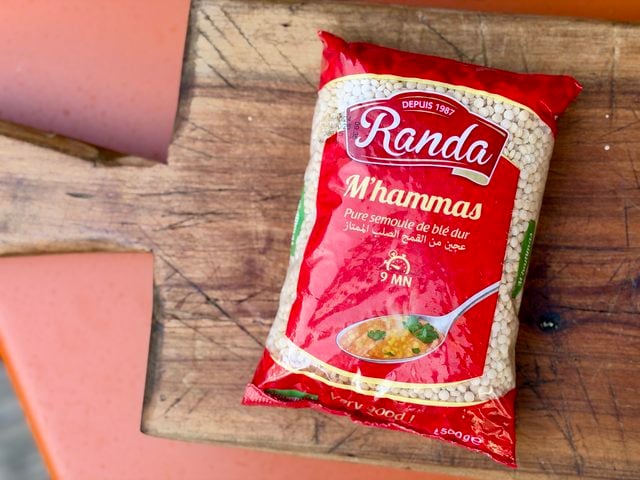
I like to serve it with pearl couscous, which you can see above. It’s basically pasta pearls, and goes by several different names. Regular couscous is also an option, as is rice-shaped pasta, known as orzo
You can substitute a cut up chicken for the lamb. If using chicken, reduce the oven time to 1 to 1½ hours. I also like to add prunes, raisins or dried apricots or cranberries to the tagine, during the last 20 minutes of cooking. You can vary the spices depending on what you have or can get. The saffron is optional since that can be more difficult (and expensive) to obtain, but I like the flavor of it in a tagine. Sometimes I use tomato paste in my tagines, and other times I add a can of crushed tomatoes. I put a jar of harissa, North African hot sauce, on the table, for guests who like a little spice with their tagine. (And hosts like me, who like it too!) A favorite brand of harissa in the U.S. is made by NY Shuk.
Course Main Course
Cuisine Mediterranean
Keyword tagine
Servings 6servings
Ingredients
1lamb shouldercut into 4 pieces
1 1/2teaspoonskosher or sea saltplus more, to taste
1medium onionminced
2 1/2cups (600ml)chicken stockor water
1teaspoonground ginger
1 teaspoon ground cumin
1teaspoonground turmeric
2teaspoonspaprika
1teaspoonground cinnamon
freshly-ground black pepper
1small bunch fresh cilantrotied with a string, plus a few sprigs for garnish
a pinch of saffron threads(optional)
2tablespoonstomato pasteor one 14 ounce (400g) can crushed tomatoes
Harissafor serving
Instructions
Massage the pieces of lamb shoulder with the salt.
Heat a few tablespoons of oil in a Dutch oven over medium-high heat, and sear the lamb pieces very well, turning them only after they’re nicely browned (this step adds flavor to the tagine.) As you cook the lamb pieces, don’t crowd them in. If your Dutch oven isn’t big enough to cook them all in a single layer at the same time, brown the lamb pieces in batches.
Preheat the oven to 350ºF (175ºC). Once the lamb is browned, remove the pieces from the pot and set them on a plate. (If there is a lot of fat in the pan, you can remove some of it, but leave a film of it in the bottom of the pan.)Add the chopped onion to the pot and some of the stock (or water), then scrape the bottom of the pan with a flat wooden spatula to release the flavorful browned bits. Add the spices, the rest of the water, the bunch of cilantro, the saffron, if using, and the tomato paste or crushed tomatoes. Give everything a quick stir to mix everything together.
Cover the pot and bake in the oven for 2 1/2 to 3 hours, turning the lamb over in the liquid a few times during baking. The liquid should just be simmering gently. If it’s boiling, turn down the heat. Add more liquid if necessary while it's cooking so the meat is half submerged in liquid. When the meat starts to fall off the bone, that’s when it’s ready. Taste the liquid and add more salt if desired.
Pull the meat off the bones. Spoon the meat and some juices into bowls over a bed of couscous or pearl couscous (pasta). Garnish with a sprigs of fresh cilantro.
Notes
To serve, remove the cilantro and discard. Squeeze some lemon juice into the liquid and add more salt, if desired. Serve with rice or bulghur, along with juices from the tagine. At the table, make sure you have a tube of harissa handy, the fiery Moroccan hot sauce.
Es bedurfte einiger Techniktricks, um dem Winzspeicher des Atari 2600 eine Spielwelt mit 255 Bildschirmen zu entlocken. Dieses Kunststück gelang Activision-Mitgründer David Crane, dessen Pitfall! große Abenteuerlust auf der kleinen Konsole weckte. Was hat uns damals an der Schatzjagd fasziniert, wie viel Spaß macht das Wiederspielen nach über 40 Jahren?
Conservatives have long pitched their project as a return to normalcy, a way to set right a world that’s gone off its axis. In theory, it’s an understandable goal. Who doesn’t react to getting older and more removed from the engine of culture with an initial feeling that the next generation is doing it wrong?
In practice, the right’s message is more of a respectable veil covering the fact that they want the power to beat up on minorities and buy anything they want. But there’s one arena where the right might actually be bringing back an honest-to-goodness return to tradition: the multiplex.
The lines between television and the movies used to be rather rigid. There were movie stars and there were television actors, and rarely did the twain meet. Actors without matinee idol looks or sufficient draw could make a living as character actors. Faded stars could scrape out a second act in B-movies and lesser studio offerings without losing the prestige of the silver screen. Television actors traded that type of cachet for steady work and wider audiences. A movie star appearing on television was a sign of terminal decline.
The rise of prestige television and streaming shook up the established hierarchy. If television could hit something approaching the same cinematic highs and emotional depths as a Hollywood movie, even if rarely, then the stigma of going episodic couldn’t last. The prestige TV gold rush inspired plenty of marquee stars to jump ship, taking roles from deep-pocketed streamers for niche audiences. (Somebody must be watching Reese Witherspoon and Billy Crudup on Apple TV’s “The Morning Show,” but I can’t say I’ve ever seen them.) The old order and the connotations of each medium had gone post-modern and topsy-turvy.
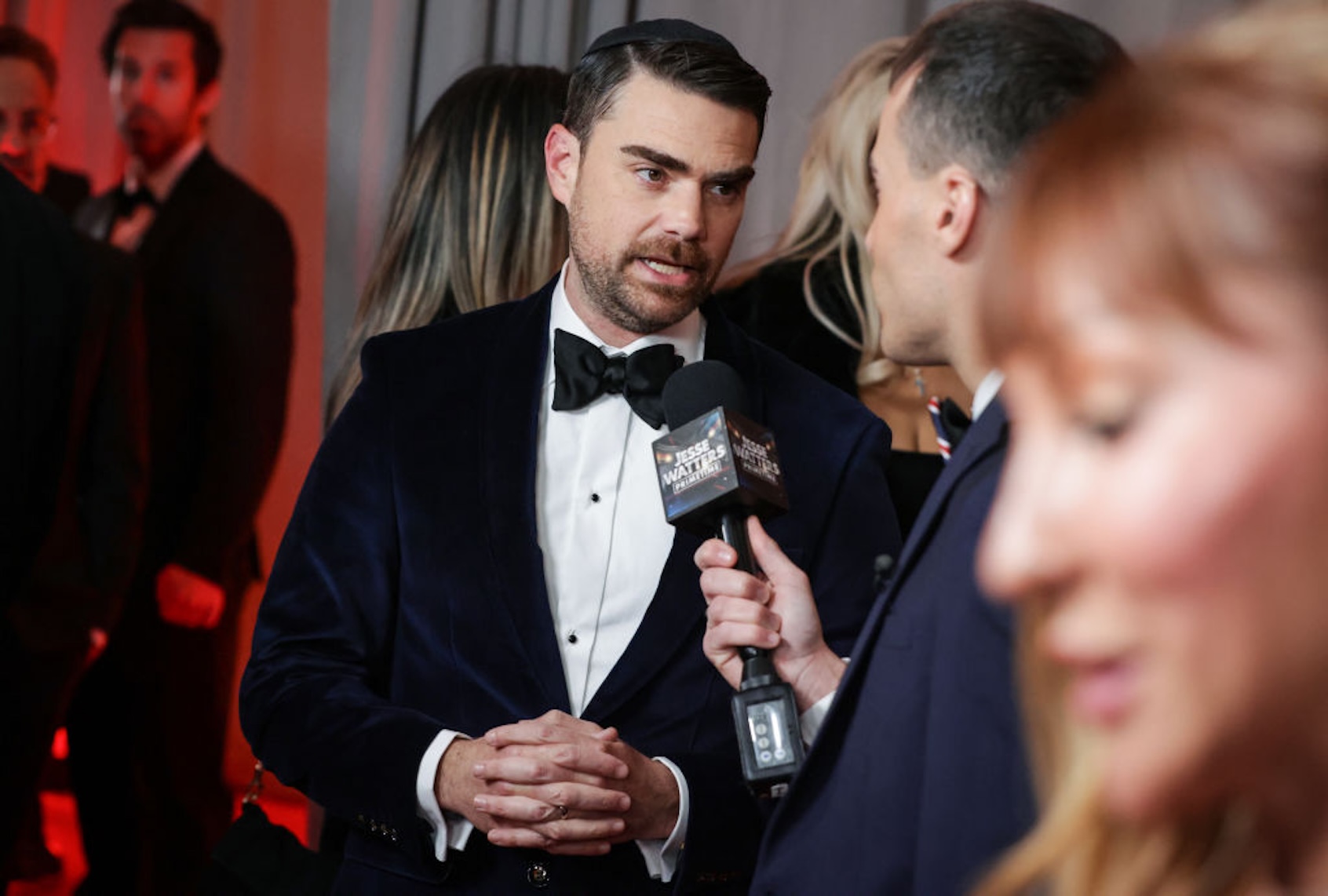
Enter Ben Shapiro.
The Daily Wire co-founder and conservative political commentator has made several attempts to break into Hollywood. Over the years, he has repeatedly alluded to a script he wrote as a young man at the behest of the late ABC executive Leonard Goldberg, while his dramedy about a conservative student at Harvard never got off the ground. But that hasn’t deterred Shapiro. He’s used his political commentary outlet as a springboard to produce a series of execrable comedies and thrillers, from 2023’s irredeemable and laughless “Lady Ballers,” which centers on a group of former high school basketball players reuniting to compete in women’s basketball by posing as transgender women, to the semi-competent and bloody hatefest “Run Hide Fight: Infidels.”
Shapiro’s films haven’t made much of a dent in Hollywood, let alone the wider culture. But that is likely to change with The Daily Wire’s upcoming film “Confession.”
Shapiro’s films haven’t made much of a dent in Hollywood, let alone the wider culture. But that is likely to change with The Daily Wire’s upcoming film “Confession.”
Written by Shapiro, “Confession” follows an academic in Moscow under the rule of Joseph Stalin. He’s brought in for questioning after allegedly conspiring with a dissident priest, only to find that his interrogator is a former student. In less ideological hands, the film could be an interesting examination of loyalty and state overreach. Coming from the man who accused Baron Harkonnen, the villain in the “Dune” science-fiction franchise, of being a communist, we aren’t holding our breath.
Still, the announcement of “Confession” made a splash, less for its logline than its topline. The cast is chock full of former Oscar nominees and one-time A-listers. The participation of James Franco, Rob Lowe, Brad Dourif and Emile Hirsch make this the most star-studded production Shapiro has ever produced. Beyond the musty Cold War paranoia and production design straight out of the “Command & Conquer: Red Alert” video game, the film is small-c conservative in its appeal to a bygone tradition: giving disgraced actors a mid-budget springboard from which to launch their career revivals.
Franco was once a megawatt star, but his career faltered shortly after several women accused him of sexual misconduct in 2018. In the late aughts, with a Screen Actors Guild-nominated turn in “Into the Wild,” Hirsch was positioned to be the next big thing. But the belly flop of “Speed Racer” and a 2015 assault of a female Paramount Pictures executive at the Sundance Film Festival put his career on ice. Lowe’s scandal-plagued days are long behind him, but he’d settled into a career as a reliable network television star. Most recently, the star of “The West Wing” has been a mainstay on Fox’s campy disaster series “9-1-1.” “Confession” sees him trying out long atrophied dramatic acting muscles, taking a tentative step into Hollywood. Dourif has never generated any significant controversies to our knowledge, but his appearance is notable because it contradicts his 2024 retirement announcement.
Taken with the blink-and-you’ll-miss-it starring turn from Jonathan Majors in “Infidels,” The Daily Wire’s gambit becomes clear. In reaching out to disgraced or out-of-fashion actors, the company is getting notable names for their bargain-basement productions. The actors, in turn, can add a few performances for their sizzle reels that post-date whatever controversy pushed them out of the limelight.
It’s not a bad deal for either party. From the actors’ perspective, they’re just following the B-list trails blazed by actors like John Travolta and Nicolas Cage, stars who spent decades cranking out direct-to-video duds while seeking the right role to catapult them back into notoriety. What’s new is the ideological bent of a studio like Shapiro’s. Typically, appearing in outwardly conservative fare was the mark of an inwardly conservative star. Think Kirk Cameron’s Christian schlock or Kevin Sorbo’s post-Hercules output. When a name like Jim Caviezel shows up in QAnon-adjacent thrillers, it’s a bit of a “fork found in kitchen” situation.
Shapiro’s comeback machine is something slightly different. Given what we’ve seen from the films he has worked on in the past, the machine is likely to be clunky — but that won’t matter to either party if it works.
Conservatives’ belief that “cancel culture” has gone too far, that men chastised for behaving badly are really victims of a radical mob run amok, allows them to take on names that are not welcome in Hollywood. If the ploy works, it’s proof that they were right all along — that cooler heads prevailed and the initial controversy was an overreaction.
With the Daily Wire’s film arm, Shapiro is bringing back the B-list for a cancel culture age, offering dimmed stars the chance to bide their time until the unistudio of Paramount/Warner Bros. comes calling.
Since news about the lawsuit against the “Cornell 7” broke, the internet has been rife with discourse about how Millennial parents are “raising sons differently.” That doesn’t just mean teaching young boys about consent. As Tomika Anderson wrote in Essence recently, “I want to raise a son who understands that his responsibility to another human being doesn’t end with, ‘I didn’t do it.'”
“Masculinity isn’t aggression, and being a good man isn’t about never having anger or difficult emotions,” one mom said. “It’s about learning what to do with those emotions without making somebody else pay for them.”
From online influencers to Reddit threads and group chats, it’s not the first time discussions have sparked around whose responsibility it is to teach young boys about consent, boundaries and rape culture. As a Millennial boy mom myself, I’m deeply familiar with this discourse. And as an American mom living in Italy, we aren’t free of gender-based violence. In September, Italy saw its seventh alleged femicide since mid-August. But instead of the conversation focusing on consent, this generation of parents appears to be expanding it to teaching young boys to be willing to speak up. Curious, I asked parents what they’re doing differently, and then I asked a few psychologists if it might be working.
Stephanie Janét is a Millennial mother of two boys. But since she had her first child when she was 19, she said she’s seen firsthand how the cultural conversations around boys, masculinity, respect and boundaries have evolved over the years. From a young age, she would start to introduce empathy with her sons by simply saying, “Mommy doesn’t like this,” or asking, “How do you think that would make somebody feel?” Janét said she’s also tried to communicate that masculinity isn’t synonymous with aggression.
“Masculinity isn’t aggression, and being a good man isn’t about never having anger or difficult emotions,” she said. “It’s about learning what to do with those emotions without making somebody else pay for them.”
For 35-year-old Katie Mills, she said raising her sons differently means that they know not to be afraid “to ask for help.” That they “understand their own mental health and know that becoming an adult doesn’t mean having to face everything alone.”
Want more from culture than just the latest trend? The Swell highlights art made to last. Sign up here
Indeed, reframing masculinity is a big part of the conversation among Millennial parents — and research supports this shift in mindset among generations. According to a Pew Research poll, Millennials were more likely than Boomers to say it’s a good thing for parents to encourage young boys to play with toys and pursue activities normally associated with girls. The same poll found that women are more likely than men to think both boys and girls should be encouraged more to share their feelings.
Diana Chu, a licensed marriage and family therapist and executive coach in California, said she thinks Millennials are the first generation of parents to parent with a vocabulary for feelings— something, she said, that many of them learned in therapy as adults.
As for the “consent talk,” Chu said, it is not enough on its own. She said that parents need to think about how to teach their sons the ability to “break from the group.” In her own work as an executive coach, Chu has observed how men who run companies are afraid to break from the group when they’re in a room with people they want to like them. “They learned early that staying in step with the group was safer than being right, and the cost of questioning values and ethics is high,” she said. “The question parents are asking after Cornell is really how to raise a boy who will take the risk and leave the room.”
Chu said teaching young boys to become men who aren’t afraid to break from the group can start at home, at a young age, with low stakes. For example, letting a six-year-old say no to you and watching the no “hold.” She added that young boys also learn from seeing their parents disagree and repair.
“If a son never hears his father say ‘I was wrong’ or ‘I’m scared,’ he learns that men don’t, and the boys who can’t say a small true thing are the ones who go quiet when a big one is happening,” Chu said.
Stephonia Llewellyn, a therapist who works with children, adolescents and families, said when it comes to raising today’s boys “differently,” it’s important to focus on helping them develop emotional intelligence, empathy and accountability from an early age. “We should be creating environments where they can express sadness, fear, disappointment and vulnerability without being shamed or told to ‘toughen up,’” she said. “At the same time, emotional expression needs to be paired with responsibility—children should learn that having strong emotions is okay, but hurting others or violating someone’s boundaries is not.”
Llewellyn emphasized that fathers and other male role models have an especially meaningful role to play. “Children learn a great deal from what they observe,” she said. “When boys see the men in their lives communicate openly, apologize when they are wrong, respect others, manage frustration appropriately, and treat women and other people with dignity, those lessons can be incredibly powerful.”
“The question parents are asking after Cornell is really how to raise a boy who will take the risk and leave the room,” says Diana Chu, a licensed marriage and family therapist.
Christopher Everett, a father of a four-year-old boy, said he is obviously not sitting his son down to discuss the details of the Cornell 7 lawsuit today. But stories like these do make him think deeper about what he’s teaching long before these conversations can occur.
“For me, raising a boy differently has less to do with telling him what kind of man he should become and more to do with what we allow him to practice now,” Everett told me. “I want him to be able to say when he’s scared, hurt, embarrassed or wrong without feeling like those things diminish him.”
Everett added that he wants to teach him that strength and being gentle “are not opposites.”
“I want him to learn that another person’s boundaries matter even when he doesn’t understand or agree with them and that kindness isn’t something you perform only when adults are watching,” he said. “A lot of that begins in very small moments.” For example, how he treats his little sister, how they handle conflict at home, and whether Everett apologizes when he gets something wrong.
Everett said he doesn’t believe one generation of parents gets to declare they have figured out how to “raise boys correctly,” but he’s seen his peers trying to give their sons a larger emotional vocabulary than they inherited. “Without confusing emotional openness with an absence of responsibility or discipline,” he added.
Republicans running for governor across the country are backing away from abortion bans they once endorsed.
U.S. Rep. Tom Tiffany, the Republican candidate for governor in Wisconsin, calls his state’s 20-week abortion limit “settled law.” Just three years ago, he co-sponsored a bill that would have banned abortion six weeks into pregnancy.
Stacy Garrity, the GOP’s candidate in Pennsylvania, has said during her campaign that she would “respect” the state’s current law, which allows abortion until 24 weeks of pregnancy. Four years ago, she called on abortion opponents “to engage and make a difference” in state laws after the fall of Roe v. Wade.
In Kansas, where abortion is legal until 22 weeks, Republican Ty Masterson has demurred when asked if, as governor, he would support a statewide referendum to eliminate the Kansas constitution’s abortion protections. Masterson had previously spoken at protests in opposition to reproductive rights and won the backing of state and national anti-abortion groups.
The candidates’ retreat suggests that, even as reproductive rights fade from the national spotlight and polls show voters are far more likely to prioritize cost-of-living concerns, the political ramifications of pushing for new abortion restrictions remain substantial. The rhetorical distancing also moves political conversations away from an issue that overwhelmingly energizes Democrats.
“That might be their strategy there, to try to demotivate Democratic turnout in the state to take abortion off the table as a voting issue,” said Ashley Kirzinger, a pollster at KFF, a nonpartisan health policy research, polling and journalism organization. That’s especially true in tighter races such as those in Wisconsin and Kansas, she said.
Tiffany’s, Garrity’s and Masterson’s campaigns did not reply to requests for comment. The 19th contacted multiple Republican-aligned pollsters who also did not immediately respond.
About 60 percent of Americans believe that abortion should be legal in most or all cases, including about two-thirds of independents, according to a poll from The 19th and YouGov.
That said, pushing for abortion restrictions has never been broadly popular. Even before Roe v. Wade was overturned in 2022, Republicans seeking general election typically would not campaign overtly on abortion bans, said Molly Murphy, a pollster and president of Impact Research, a Democratically-aligned polling firm.
“It would get discussed in donor meeting hot mics, endorsement questionnaires, etc, but candidates wouldn’t run on the fact that they’d ban abortion,” she wrote in an email.
Wisconsin Republican gubernatorial candidate Tom Tiffany is now calling his state’s 20-week abortion limit “settled law”, when only three years ago he co-sponsored a bill that would have banned abortion six weeks into pregnancy.
(Scott Olson/Getty Images)
Voters largely don’t consider abortion to be “settled law,” said Celinda Lake, a longtime Democratic pollster, noting that the share of voters opposing abortion bans has increased since the fall of Roe. “They feel like, ‘Wait a minute, it can be taken away again.’”
In some races, Democrats and their allies are trying to push abortion rights back under the microscope — a strategy geared toward energizing liberal voters, Kirzinger said.
Wisconsin’s Democratic nominee for governor, David Crowley, has said that, if elected, he would work with the state legislature to enshrine abortion rights into the state constitution — though it’s not clear how expansive that protection would be or whether it might supplant the state’s 20-week cutoff.
Pine Tree State Prosperity, a political action committee associated with the national Democratic Governors Association, is running advertising in Maine that highlights anti-abortion remarks made by Bobby Charles, the state’s Republican pick for governor. The Democratic nominee, Hannah Pingree, has led by double digits in recent polls. Charles’ campaign did not reply to a request for comment.
Planned Parenthood’s super PAC, called Planned Parenthood Votes, has focused its resources in states such as Michigan, where the Republican candidate, U.S. Rep. John James, has said that abortion is “decided.” Four years ago, James said he opposed abortion in all cases, and he has compared the practice to genocide. His campaign did not reply to a request for comment.
James’ running mate, Jay DeBoyer, recently suggested leveraging a state constitutional convention to enact a 12-week abortion ban in Michigan, according to recordings of the remarks reported by The Detroit News and Michigan Advance. DeBoyer has since said publicly that abortion is a “settled” issue in Michigan, where voters in 2022 amended the state constitution to protect abortion before fetal viability.
Some gubernatorial candidates are still pushing for abortion restrictions, albeit far less ambitious ones.
In New Mexico, where Democrats are expected to keep control of the governor’s mansion and already control both legislative chambers, Republican candidate Gregg Hull said he was “fully committed” to working with Texas Gov. Greg Abbott to reduce the number of Texans coming to the neighboring state for abortions.
Hull has repeatedly called himself “pro-life” but also said that he would not change the state’s abortion law, which imposes no time limits on the procedure, without legislative support. His campaign did not respond to a request for comment.
Abortion opponents are trying to revive the issue in a handful of states. SBA Pro-Life America, one of the nation’s leading anti-abortion groups, is pushing ads that characterize Democratic candidates for governor as well as the U.S. Senate and House of Representatives as extreme on the issue, including in Ohio, Wisconsin and Michigan.
But generally, voters are less likely to trust conservatives on abortion, Lake said. And talking about abortion, she added, is more likely to generate enthusiasm among key Democratic voting blocs, particularly young women and college-educated women, who typically support reproductive rights.
“We have in our research people who say, ‘I used to be pro-life, I didn’t support abortion, I would never get one, but I think this is a decision that needs to be made by a woman and her doctor,’” Lake said. “People now feel this is just way too dangerous. This has gone way too far.”

 Login