Stephen King and Peter Straub’s Other Worlds Than These (Scribner) debuts strongly, ranking #3 on three lists. Also on three lists: V.E. Schwab’s Victorious (Tor), third book in the author’s Villains trilogy; and Veronica Roth’s The Six Faction (HarperCollins).
The table shows the current rank of each book and the change since last week, where:
= same as last week
+/- change since last week
+ back on list
++ new on list
x no longer on list (number of x’s: weeks off list)
All lists rank hardcovers and paperbacks separately, except for the USA Today list, which is a single list combining fiction and nonfiction in all formats. Dates shown are posted dates, except those in parentheses, which are dates compiled. New York Times posts its list one week in advance of print publication.
Note that some sources do not compile paperback bestsellers, and some exclude YA books (like the Harry Potter series) from their hardcover and paperback fiction lists.
So if you ever meet someone who tells you, “At Apple, I’m the one
who did this,” take it with a grain of salt. They were probably
part of the team that made it happen, and that’s already something
to be proud of.
Sometimes, when the final product finally comes out, you can
recognize a few of the personal touches you contributed along the
way. And that, in itself, is immensely rewarding.
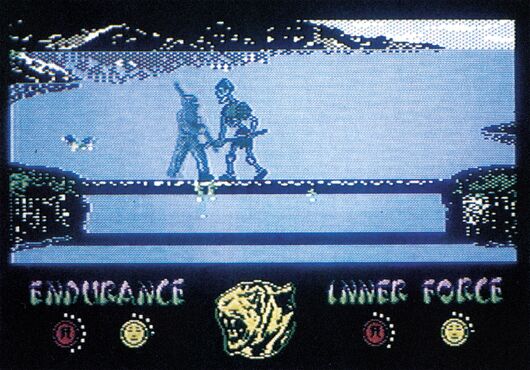
Der Karateschlag hat in den letzten Monaten nichts von seiner Faszination verloren. Nur so läßt es sich erklären, daß wieder mal zwei Kampfsportspiele erschienen sind.
Steve Bannon has spent years trying to make himself the face of resurgent white resentment in America, championing the Trump administration as a means to punish the movement’s enemies while pushing the president to try for an unconstitutional third term.
But now, with the president’s approval rating at historic lows and the upcoming midterms set to wrest Congress away from the Republican Party, Bannon is looking downballot, stumping for Bo French, the Texas politician who has turned his race for a job regulating oil and gas in the state into a vehicle to test how far open racism can get you in politics.
Towers of Babble is a game that mashes up word games and tower defense games. “Nouns make buildings and other parts of speech make modifiers that you can add to a building to improve its stats.”
There’s a new report out in Axios that adds a bunch more detail to the story. But before getting to that report, there’s some important context and caveats. I wouldn’t see this new Axios report as quite a “report” in the sense of new reporting that advances the story. It’s better to see this as three players (the White House, Grenell and Habba/Mildon) each of whom are trading a very hot potato back and forth between the three of them and hoping not to be the one left holding it when the music stops. But instead of a literal potato, that lashing out is taking place through new batches of leaks. We need to be clear that each batch of new leaks is from an interested party, with its own goals and agenda. And it may include some false details or more likely ones that are misleading. But on balance each batch of leaks is probably mostly true, helps fill out the emerging picture and sinks both adversary parties (Grenell and Habba/Mildon) deeper into the quicksand.
I’d never heard of this before: in 1990, the BBC aired a program created by and starring Douglas Adams called Hyperland. It begins with a frustrated Adams throwing his TV out (too linear, too non-interactive) and Tom Baker (from Doctor Who) popping up as an intelligent interactive agent that promises to “do your every slightest bidding, to fetch and carry for you, to work tirelessly and selflessly on your behalf, always ready, always willing, no job too small or too menial”.
Circumventing the limitations of ‘linear’ broadcast TV, the 50-minute programme imagines a new world in which an AI software ‘agent’ - brought to life here by Doctor Who favourite Tom Baker - helps the user (played by Adams) to find and access material of interest in a global world of hyperlinked information - text, images, audio and video.
Pop-up ‘micons’ (moving icons) conveniently link to interviews with leading technologists of the era (among them Ted Nelson, Robert Winter, Robert Abel, Kristina Hooper, Fabrice Forin and Steve Gano).
Some of this stuff has dated badly - few visions of the future get everything right! - but the programme is nevertheless of considerable historical importance.
Incredibly, at about the time Hyperland was being broadcast, a young CERN computer scientist by the name of Tim Berners-Lee was beavering away on URLs and HTTP, the foundations of what would become the World Wide Web.
Even Adams, who foresaw so much, didn’t anticipate the impact the Web - and the Internet that conveys its data globally - would have on civilisation. Needless to say, the enticing infoworld envisaged in Hyperland was a public-service one of education, art, literature (including nods to Adams’ own works!) and entertainment. There’s no advertising, hacking, cybercrime, information theft, social-media addicts, unaccountable corporate domination or drug-like dependence on the smartphones that Adams himself predicted.
And Tom Baker’s enthusiastic agent isn’t forever popping up to try and sell you something…
I’m imagining what 16-year-old Jason would have made of this (or HyperCard or hypertext had he had any clue that they existed until 4-5 years later) — his brain probably would have exploded.
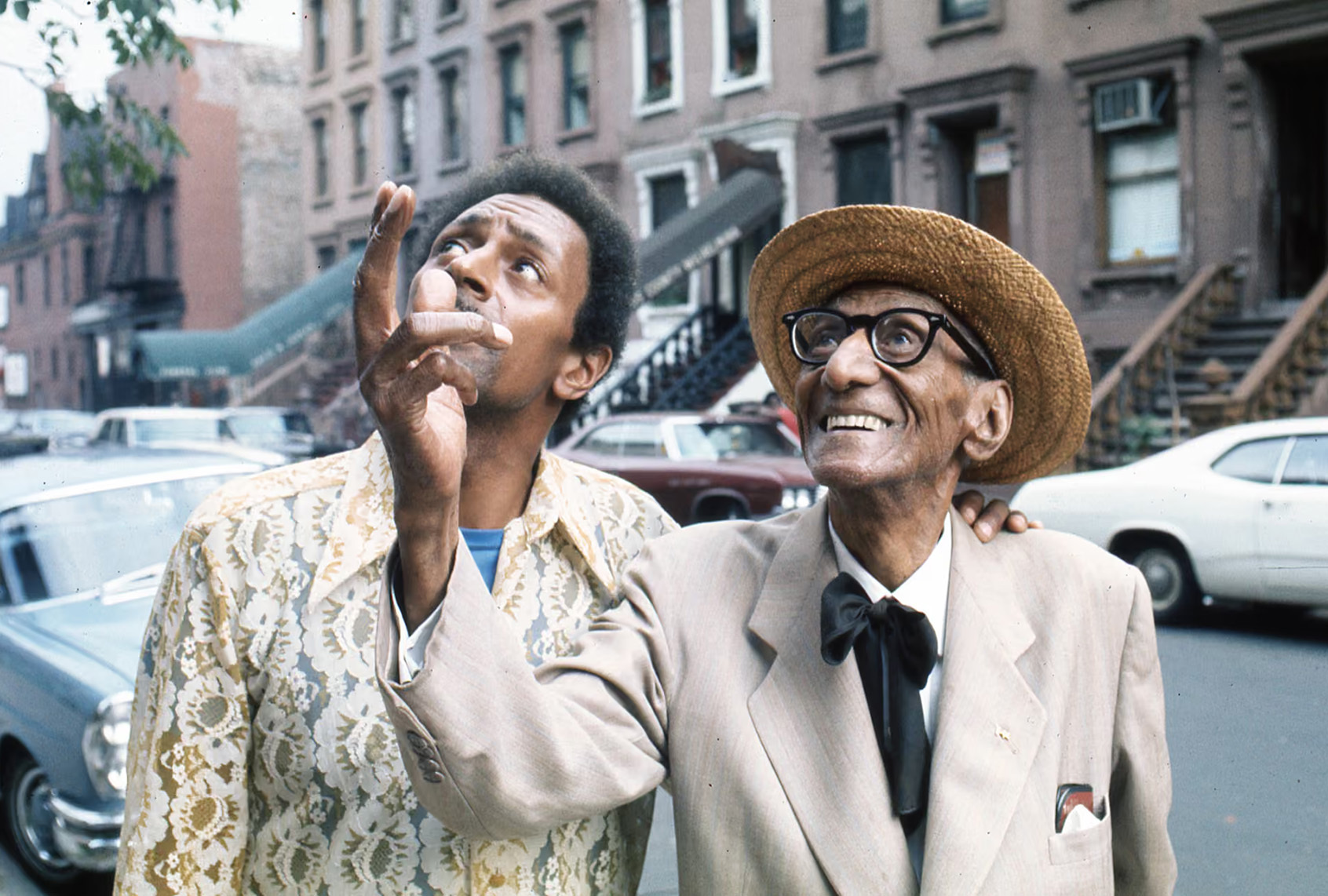
Amid a social media era where people often feel more unheard and misunderstood than ever, so much about director David Greaves’ documentary, “Once Upon a Time in Harlem,” feels like a relic: a snapshot of a time when intellectuals gathered in person for lively, productive debate.
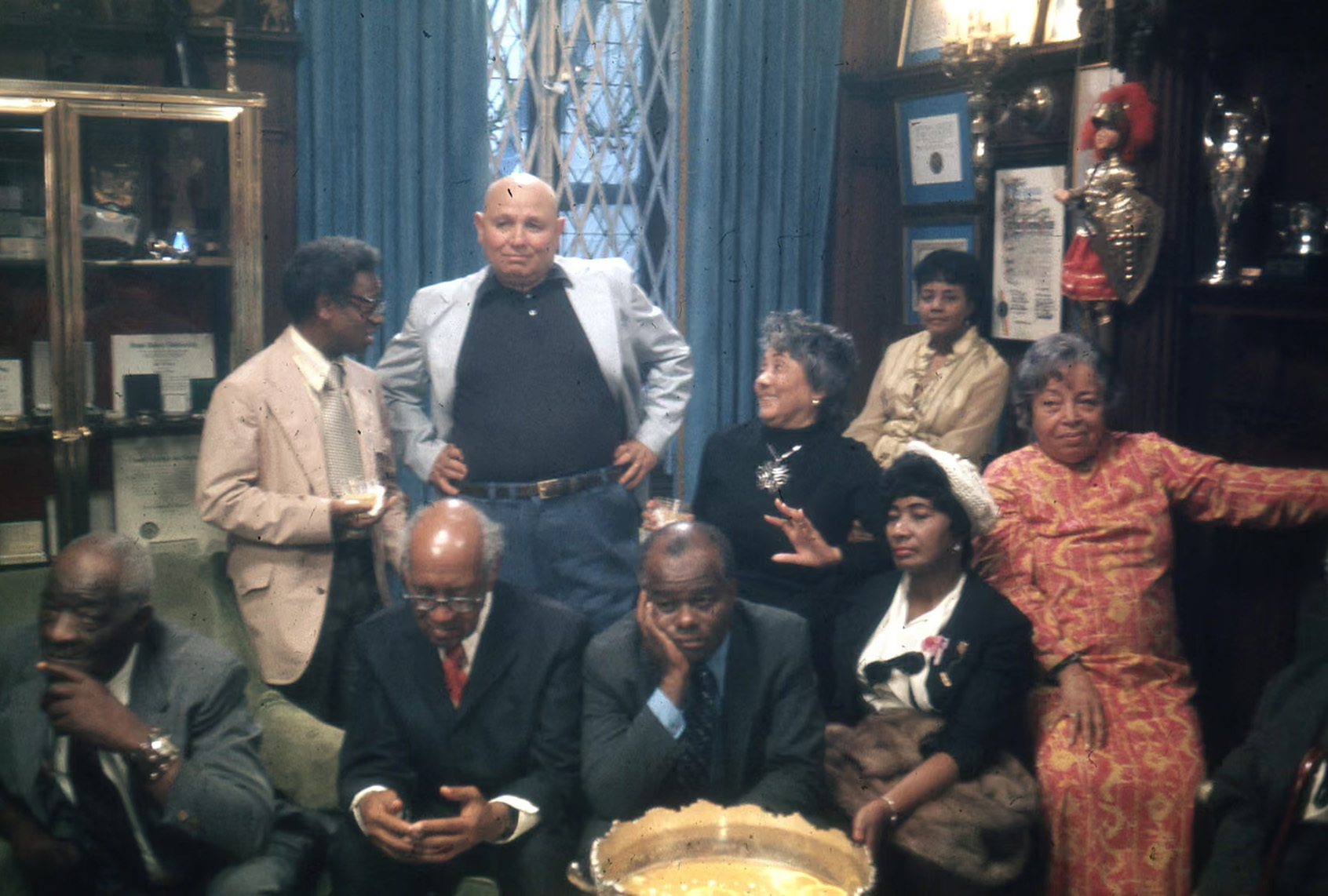
The film, newly restored from Greaves’ father William’s original offering, captures a staggering array of luminaries of the Harlem Renaissance reflecting on the period during a four-hour cocktail party at Duke Ellington’s townhouse in 1972. That salon included pianist Eubie Blake, artist Romare Bearden, activist Louise Thompson Patterson, playwright Irvin C. Miller, journalist Gerri Major, and librarian Jean Blackwell Hutson grappling with the legacy of the era and the issues it raised that persisted even then.
It’s an intimate, engaging discussion among people with different approaches, styles, and even points of view while, as Brienne Adams, assistant professor of Black Studies at Georgetown University, put it, “still having the goal of Black humanity and liberation at the forefront.”
Among those sources of conflict expressed in “Once Upon a Time in Harlem” are the years that comprised the Harlem Renaissance, or the New Negro Movement as it was often referred to at the time. To hear one person tell it, it was the 1920s. Another suggests that it really found its footing in the ‘30s, while someone else considers its genesis around the 1910s, punctuated by the Silent Protest Parade of 1917.
What is seen in “Once Upon a Time in Harlem” is, to borrow writer and journalist George Schuyler’s words in the film, “a mark of a civilized community,” people challenging each other on everything from their art to their politics.
There are also ponderings on the Black journalist agenda; thoughts about the intentions and tactics of political activist Marcus Garvey; concerns that writer and anthropologist Zora Neale, sculptor Augusta Savage, poet and novelist Countee Cullen and others were minimized. There’s a rich conversation about the efficacy of influential figures such as gangster Casper Holstein and writer Carl Van Vechten, who helped finance and support, respectively, members of the Harlem Renaissance and their work. With Van Vechten, author of the controversial 1926 novel, “Ni**er Heaven,” comes the question of how white patronage impacted the cultural output of the era.
Relatedly, writer and journalist George Schuyler cogitates on his prominent 1926 essay in The Nation, “The Negro-Art Hokum,” and poet and activist Langston Hughes’ follow-up, “The Negro Artist and the Racial Mountain,” as urgent critiques of the white relationship to Black art.
(Neon) “Once Upon A Time In Harlem”
It doesn’t take long in “Once Upon a Time in Harlem” for the many voices in Ellington’s home to get louder and start to overlap as boozy drinks are poured and the elder Greaves flits from one side of the room to another to catch each rebuttal and vivid recollection. Decades after the Harlem Renaissance, it had to be remarkable to witness such insight and impassioned thoughts about the era from those who lived it — and in the same year that the National Black Political Convention raised the alarm on some of those same concerns once again.
In 2026, though, at a time when social media too often mangles critical thinking and disagreement, it is downright extraordinary. It’s also nostalgic in a way that finally seems imperative in today’s Hollywood that reeks of hollow, monetized sentimentality about its past.
What is seen in “Once Upon a Time in Harlem” is, to borrow Schuyler’s words in the film, “a mark of a civilized community,” people challenging each other on everything from their art to their politics. He recalls that every ethnic group in Harlem had “intellectual centers” for such discussions.
Want more from culture than just the latest trend? The Swell highlights art made to last. Sign up here
It’s not that Black critical engagement doesn’t still happen every day, even online. It’s that it’s much more difficult to parse through an algorithmic funnel of opinions and perspectives that can often appear half-formed or entirely outside their context.
“Social media allows for more voices to be heard, but algorithmically situated based upon someone’s interests where they’re entering into the conversation,” Adams said.
Just as Harlem Renaissance figures broached subjects such as the white influence on Black art and questions about what defines Black art or a Black artist, particularly inside a white business establishment, there are still concerns about the representation of Black art and stories. The conversations about Issa Rae’s trajectory from YouTube to HBO and Tyler Perry keeping many Black actors employed, though consistently coming up against criticism over the quality of his work, both come to mind.
But recent pushback and critiques of offerings such as the new “A Different World” series and the “Michael” movie once again raise valid concerns about the state of critical debate on Black art. What it too often comes up against are parasocial responses, antagonism, doxing, or a preciousness around the critique, particularly at a time when Hollywood has rolled back on Black storytelling.
Back then, it was about critiquing Black art for Black art’s sake and its possibilities, when today critical discussions seem to urgently hinge on Black art for the sake of its preservation.
Adams, whose background in digital studies examines interiority in Black cultural productions and fandom expression as an example of Black digital knowledge production and public intimacy, said that the rise of content creators is one component of those responses.
“If they are content creators that are having these conversations because getting eyes on their content can be tied to monetary gain, that can sometimes lead to salaciousness in the approach to the ‘civilized’ society, right?” she explained.
That motivation, Adams added, can lead to a need to demonstrate “the most,” “whether that is the most right, the most devoted (in the case of fandom), the most knowledgeable, the most (insert marginalized identity here). People resort to antagonisms to demonstrate their hierarchy of ‘most.’” That, in turn, results in a collapse of intellectual curiosity and humility that “undergirds critical thinking,” Adams concluded.
There’s also the distinction that, unlike some of the most notable figures of the Harlem Renaissance, social media assembles people from across various classes, education and media literacy levels, professions with sundry access to information and art itself. Additionally, motivation, even beyond the content creation monetization that Adams pointed out, can sometimes be connected exclusively to the idea of supporting and amplifying Black art and artists while deprioritizing inquiries of their merit.
Contrarily, Harlem Renaissance figures such as writer Zora Neale Hurston, Hughes and others were able to gather in more intimate spaces among people they often already knew from the neighborhood with similar interests and scholarship, regardless of whether they agreed. In fact, they often didn’t.
Where writing critiques in news media like The Nation, Fire!, and The Crisis, which ran a Black symposium with questions about how “The Negro” should be portrayed in Black art in 1926, was a way to engage with other intellectuals; social media broadens that audience and more quickly. Plus, like today when many outlets require that their readers pay for subscriptions to access essential journalism, essays from the Harlem Renaissance and even the 1972 gathering in “Once Upon a Time in Harlem” restrict engagement based on intellect or economics.
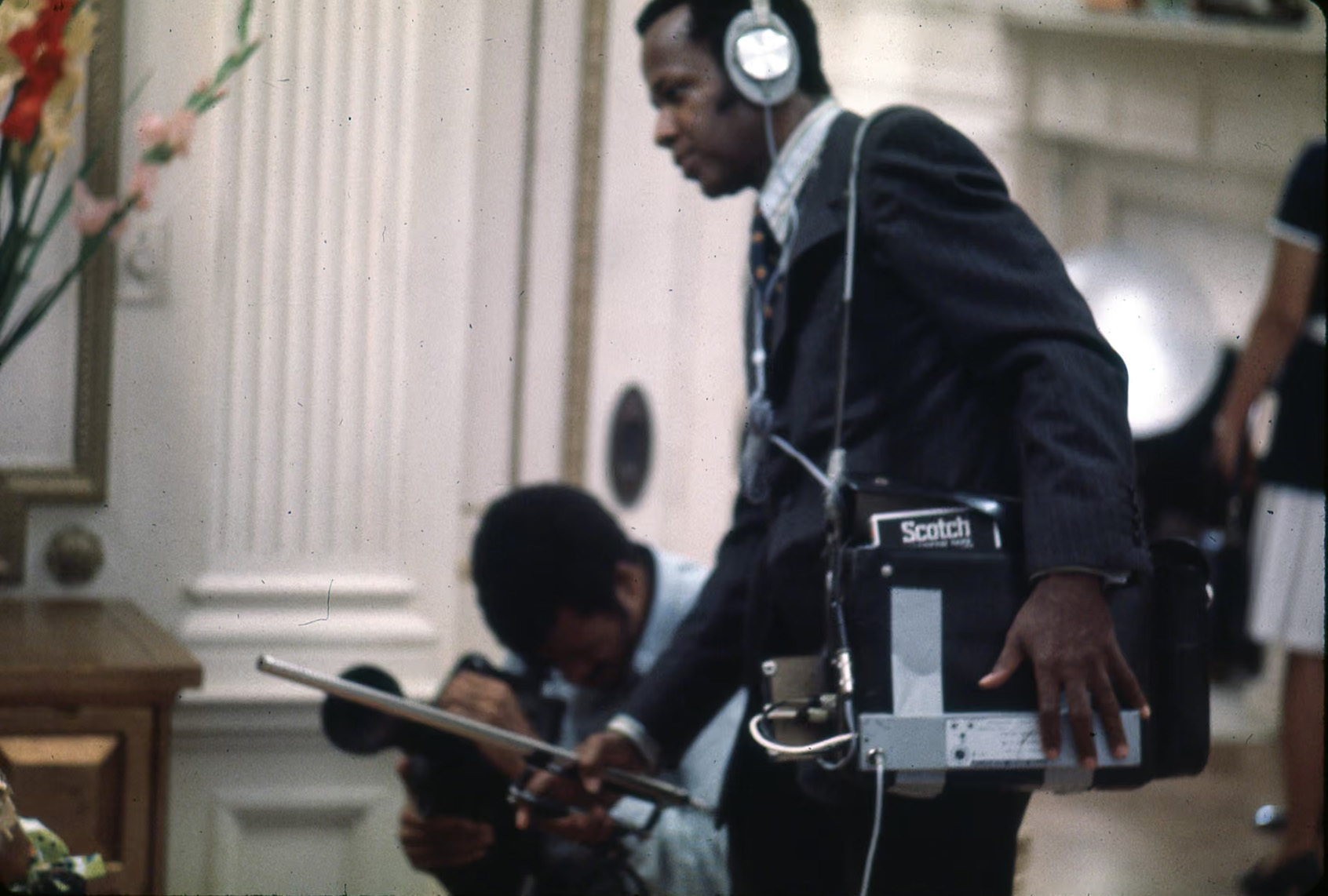
(Neon) William Greaves on the set of “Once Upon A Time In Harlem”
“The artists and scholars of the Harlem Renaissance are still this small, kind of enclaved people that maybe most of them went to Howard who are having very similar types of training and conversation,” Adams said.
Add to that, most patrons across the racial spectrum who engaged with the work and workers of the Harlem Renaissance didn’t have as much access to their personal lives to form parasocial relationships with them as fans have today. Back then, it was also often about critiquing Black art for Black art’s sake and its possibilities, when today critical discussions seem to urgently hinge on Black art for the sake of its preservation. Those distinctions impact the response to critical discussion — from the in-fighting on BookTok to the arguments on Threads.
Still, concern about the increased dearth of Black artists and Black art is legitimate. Filmmaker Nina Lee said that Hollywood gatekeepers preclude greenlighting certain Black films until they determine that others of their ilk make a splash at the box office. But that reality is too often used to establish a tenderness around criticism of the Black art that does manage to come down the pipeline.
However, that delicacy around discussing the flaws of Black art can, as Adams considered, illustrate a propriety to the white for the sake of white acceptance. “The preciousness around critiquing it still centers white gazes to say that we have to be presentable and respectable in ways,” she said.
None of that is conducive to the type of “civilized community” Schuyler reflects upon in “Once Upon a Time in Harlem.” While some have managed to successfully carve out their own niche spaces online for critical debate, from podcasts to more curated social media discussions and personal Substacks, the recognition that it serves to help push the art forward is too often lost.
That contemporary disconnect is what makes Greaves’ documentary that more profound. It deepens audiences’ understanding of healthy, effective debate through a reflection of our not-so-distant past at a time when too many are consumed by self-aggrandizement rather than the roadmap those who came before them already laid out. As Major says in the film, “They’re going to lose if they cannot profit from the struggles that we went through.”
Jasper Nathaniel, an independent journalist who filmed the attack, describes the significant increase in West Bank violence on the eve of the Israeli election.
Joe Flint and Jessica Toonkel, reporting for The Wall Street Journal last week:
Netflix is cutting 6% of its staff, or roughly 1,000 positions
globally, its biggest round of layoffs since 2022, as it struggles
with slowing growth and customer engagement. Co-Chief Executives
Greg Peters and Ted Sarandos said in an email to employees
Wednesday morning that the bulk of the cuts would be in the
streaming giant’s product, tech, legal and human-resources teams.
The layoffs may have hit those teams (including some of the talent that created the excellent Duo support for Netflix’s iOS app), but Peters and Sarandos seem to know where the fundamental problem lies: Netflix has peaked and their content blows.
Just below the broad smile he’s been wearing all morning, John
Ternus’ hands are shaking.
On this September day in Silicon Valley, Apple’s new CEO is
surrounded by celebrities, tech enthusiasts, and reporters who
have flocked to Apple Park from around the world to catch a
glimpse of the company’s new and long-awaited foldable phone, the
Duo. After Ternus takes a few photos with the device, an Apple PR
rep pulls the influencer known as IShowSpeed out of the
crowd to meet him. Winning over the 21-year-old isn’t exactly the
toughest assignment Ternus has faced in his 25-year Apple career:
Speed barks when he sees the phone and then gleefully
springs into a backflip.
But IShowSpeed also happens to be livestreaming the encounter to
his 61 million subscribers on YouTube. And as Ternus thumbs
through the $1,999-and-up phone, attempting to drag a photo into a
text-message box, eagle-eyed viewers notice his hands quivering.
Ternus later explains that he didn’t sleep much the night before.
“I was on such a moment of adrenaline and caffeine and excitement
for the day,” he tells Time.
There’s only a glimpse of Ternus’s personality revealed here. To date he’s more of a cipher than even Cook. He’s Apple’s San Francisco sans serif typeface brought to life. Handsome, distinctive, decidedly “Apple” — but plain. That, surely, is not the real John Ternus.
So it’s fitting that his ascension coincided with the announcement
of the Duo, Apple’s most radical design change to the iPhone since
its 2007 release. Apple has been exploring the concept for years.
In 2011, when many people still carried around flip phones, Ternus
and five other engineers filed a patent application for
foldable electronic devices, exploring what kind of batteries and
circuit boards might be needed for such an idea. “It felt clear
that we were going to eventually get to a place where OLED
displays were going to be flexible,” Ternus says.
The Ternus profile is the cover story for Time’s “Best Inventions of 2026”, which is led by the iPhone Duo. Let us not forget that this esteemed accolade was awarded to Humane’s AI Pin in 2023.
At the end of September, Apple was conspicuously absent when
President Donald Trump hosted a luncheon for AI power
players like SpaceX’s Elon Musk, Meta’s Mark Zuckerberg, and
Google’s Sundar Pichai, who lobbied him on their visions
for America’s tech future.
But Ternus and other Apple executives say they aren’t concerned.
In the midst of a populist AI backlash, they contend that
they are building a modest but personalized and privacy-preserving
form of AI that will actually help ordinary people as opposed to
merely dazzling Silicon Valley’s “lunatic fringe,” as Greg
Joswiak, senior vice president of worldwide marketing, puts it.
And besides, Ternus argues, even if other companies succeed in
their mission of building super-intelligence, users will still
want to talk to it on Apple devices.
This is, I’m convinced, the correct strategy for Apple. They’re smart not even to be ankle-deep in the wild capex spending pool that has all of their peer companies way out in the deep end, where their feet no longer touch the bottom. But this is a bet, and bets carry risk.
Over the past week, the East Potomac Park case has morphed from another of President Trump’s personalist projects in D.C. to a burgeoning confrontation between the executive and judicial branches.
U.S. District Judge Ana Reyes had, by her own admission, bent over backwards to accommodate the Trump administration as it defended its supposedly nascent plan to remake a popular park in the heart of monumental D.C.
But then — in violation of her orders that the administration provide advanced notice and a chance for the court to intervene before undertaking any major projects in the park — the National Park Service removed hundreds of trees from the park’s golf course after providing scant notice just before 5:00 p.m. ET on a Friday before a holiday weekend.
That led to a fiery hearing in front of Reyes on Columbus Day in which she deplored the conduct of the administration and its DOJ attorneys. The hearing culminated with Reyes temporarily blocking any more tree removals at the park.
In the kind of self-defeating move that’s become common in cases where Trump has taken a close personal interest, the Trump DOJ responded to the courtroom woodshedding with a defiant motion on Friday evening calling on Judge Reyes to step aside from the case.
The motion to disqualify was over the top, accusing her of “histrionics,” “bias,” “disdain,” “open hostility,” and “animosity” toward the Trump administration in this and other cases.
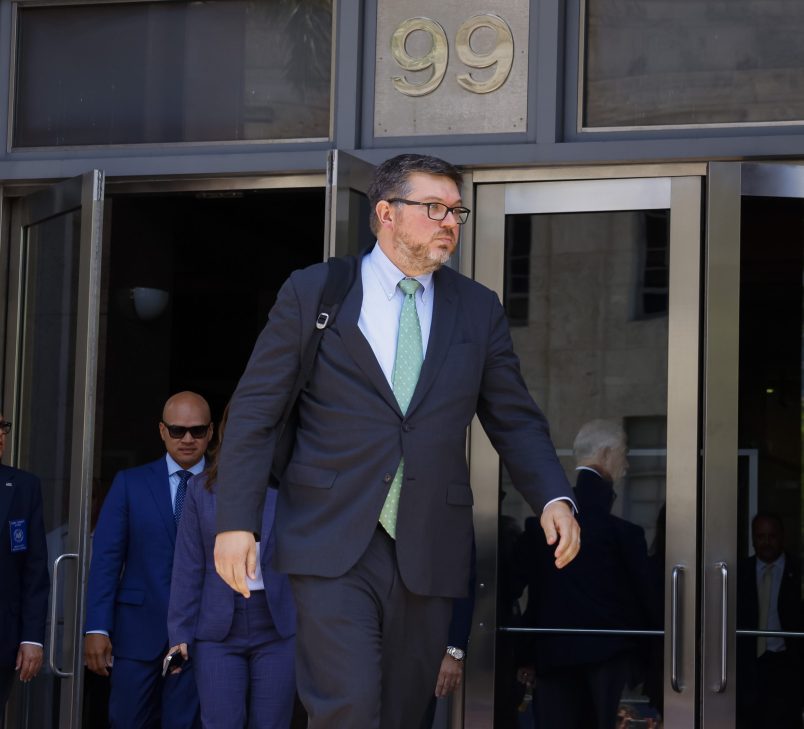
The motion was signed by a single attorney: Stanley E. Woodward, Jr., the No. 3 official at DOJ.
Judge Reyes last night denied the motion to disqualify herself but not before eviscerating the Justice Department again: “That is a serious charge. The Court answers it. With the record.”
With that prelude, Judge Reyes spooled out pages of transcripts from prior proceedings in the case that rebutted the administration’s claims against her, before concluding:
It is easy to weaponize selective quotations to bring a baseless recusal motion. But it is much harder to meet the demanding legal standard against a full record. By any objective measure, the Government fails to meet the standard for recusal.
But things didn’t stop there.
Trump announced over the weekend that he plans to begin work on remaking the park on Nov. 15, closing it for 15 months. So much for Trump’s plans being nascent, as the administration had insisted for months. Judge Reyes took judicial notice of Trump’s post on Sunday and asked if it changed the administration’s prior position in the case:
The Court ORDERS that the Government notify it, by 8:00 p.m. today, whether it continues to take the position that it took in its October 16, 2026, filing, that, “there is no final agency action” and that “at most [] the President has given preliminary thought to” the plan to rebuild East Potomac Golf Course.
In its response — signed again only by Associate Attorney General Woodward — the administration insisted nothing had changed.
Then came this morning’s pre-dawn tirade from President Trump in which he called Judge Reyes a “crazed lunatic.”
Another hearing in the case is underway this morning on whether to issue a preliminary injunction blocking the administration’s plan. In her Sunday order, Reyes upped the ante by requiring Woodward and Deputy Assistant Attorney General Robert N. Stander to appear in person at today’s hearing.
Stay tuned …
We Can Afford to Have Nice Things
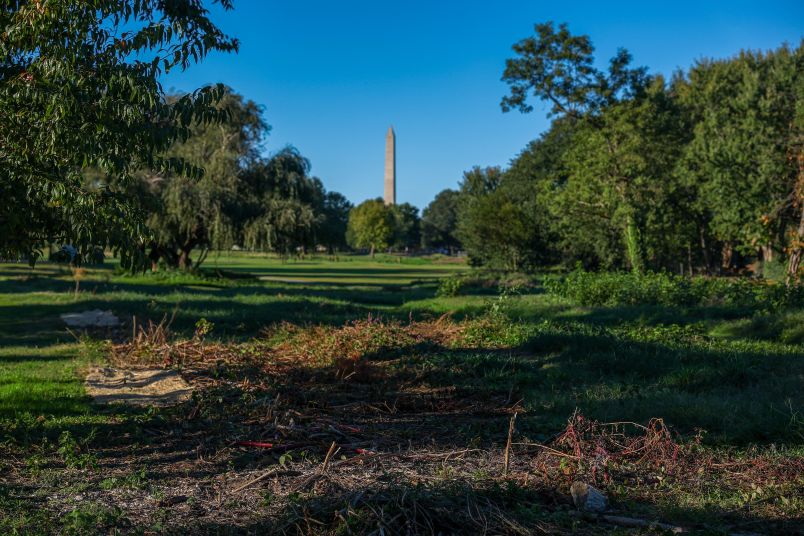
WASHINGTON, DC – OCTOBER 18: Logs and debris are piled on the course at East Potomac Golf Links on October 18, 2026 in Washington, DC. The National Park Service confirmed in a filing they had marked over 500 trees for removal as the Trump Administration mulls over a renovation for the golf course. (Photo by Tasos Katopodis/Getty Images)
Until the open clash between Trump and Judge Reyes, I’d hesitated to cover the East Potomac Park case for a national audience because in some ways it’s a parochial D.C. issue and not of the same import as, say, the demolition of the East Wing of the White House, the blight of the Trump Triumphal Arch, the renamings of the Kennedy Center and the Institute of Peace, or the unspeakable painting of the intricate exterior of the grand Eisenhower Executive Office Building.
But there’s more going on here than a threat to one public golf course.
For those not familiar, it should be noted that while the public golf course within the historic park is at the center of the dispute, the identity, public use, and access to the park as a whole is at stake. The park features a heavily used paved waterfront loop for walkers, runners, and cyclists. It has a playground and picnic area. People fish, enjoy the views of the D.C. core and northern Virginia, and watch planes taking off and landing from DCA.
The park was created for the public by Congress in the late 19th century and then was built using fill on the tidal mud flats of the Potomac. The low-cost golf course, like two other public courses in D.C. on National Park Service land, has always catered to a broad clientele, trying to keep the sport accessible.
What makes this a national story beyond the clash with Judge Reyes is that the narrowing of public spaces is happening in parallel with the shrinkage of civic life under Trump. The concern is that Trump’s plan would make the golf course more exclusive and less accessible. It would alter the public nature of the park as it has existed for more than 100 years.
Must See
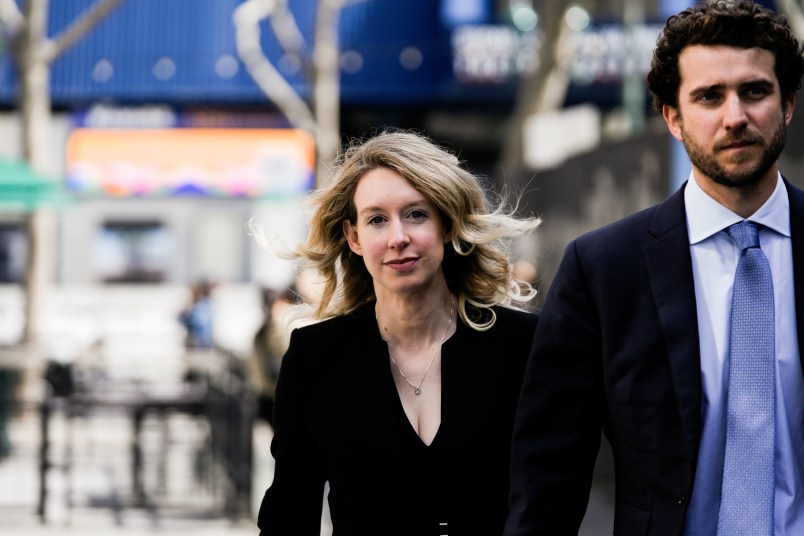
SAN JOSE, CA – Former Theranos CEO Elizabeth Holmes alongside her boyfriend Billy Evans, walks back to her hotel following a hearing at the Robert E. Peckham U.S. Courthouse on March 17, 2023 in San Jose, California. Holmes appeared in court for a restitution hearing. (Photo by Philip Pacheco/Getty Images)
Let me join the chorus of reviewers urging you to go see Nathan Fielder’s “You Can See Everything.” It’s among the smartest documentaries I’ve ever seen.
I came to it unfamiliar with Fielder’s previous work and with only passing Wikipedia-level familiarity with the Theranos scandal.
If you’re a Theranos obsessive, you may come away disappointed. It’s not a Theranos documentary. It’s a psychological profile of Elizabeth Homes and of her romantic partner Billy Evans. While it may be tempting to make a judgment on Holmes’ culpability in the Theranos scandal based on Fielder’s work — and audiences probably come out of theaters chatting about exactly that — it would be a mistake.
The Theranos fraud, while inextricably woven into the documentary, exists separate and apart from it. Trials and depositions and financial filings and good investigative reporting already explore the fraud itself in great detail. This isn’t that. (If you feel the strong need for a villain in the documentary, Billy more than fills that role on his own — even though he had nothing to do with Theranos and didn’t first meet Holmes until after the company’s collapse.)
What really sets Fielder’s documentary apart is its acute self-awareness. It grapples openly with the range of challenges that confront documentarians and storytellers: the limits of objectivity, the nature of truth, the intrusive role of the observer, the inevitability of bias, the constraints of narrative forms. I’m barely even getting started. There’s a lot going on.
Fielder inoculates himself against the most obvious criticisms by confronting them as part of the story he’s telling. It gets super meta at times, but it doesn’t lose the thread of the story. I can’t say much more than that without spoiling it for you.
If you’re comfortable with uncertainty, bask in nuance, enjoy the challenge of juggling competing explanations, and can tolerate not having everything reduced to a single “answer,” you’ll delight in this artwork.
News? Tips? Feedback? Please let me know. For sensitive information, use the encrypted methods here.
Through a mix of moxie, cynicism, and misanthropy, Trump has made himself into the dominant American of our age. Sometimes a man meets his moment, and Trump met his in the wake of a black presidency and a conservative movement doggedly and patiently pursuing a decades-long counterrevolution. The marriage of Trump’s charisma to a fundamentalist right wing has been bountiful: three Supreme Court justices in four years, the subsequent destruction of national abortion rights, the banishment of affirmative action, the hollowing of the Voting Rights Act.
And the genie may not go back in the bottle:
But some things can’t be unseen. The example that Trump has set, the scope of what is possible should one embrace the dark powers of the White House, will not dissipate. It turns out that you can deploy secret police onto American streets. You can deport immigrants in defiance of the courts. You can have the Justice Department badger your enemies. And you can become very rich while doing it. And some of the most powerful sectors in America, those who most loudly extol their own love of country, will stand around and watch you do it. Asked why he was making deals during his second term, Trump gave a succinct and chillingly accurate summation: “I found out that nobody cared.” And to the extent that there is a genius to Trump, it is in his apprehension of this reality—so very few people who matter care. When you’re president, they let you do it.
Update mit dem Ergbnis: Als Liebling unter den Abstimmenden hat sich die Neuauflage von Gothic herauskristallisiert, die mit deutlichem Vorsprung das Rennen macht. Dann macht sich Hagen bereit für den rauen Charme des Minentals, das er nun bald mit eurer Unterstützung besuchen möchte.
A Crunchwrap Supreme and a bag of supermarket salad generally appeal to rather different notions of a good lunch. One offers the architectural pleasure of a crunchy tostada tucked inside a warm tortilla; the other, the satisfaction of having arranged to eat vegetables without chopping any. This summer, however, both came with a less welcome consideration: iceberg lettuce.
A massive cyclospora outbreak linked to shredded iceberg from Taylor Farms de Mexico prompted recalls extending from Taco Bell kitchens to supermarket produce aisles. Shoppers began trying to determine which seemingly unrelated groceries shared a supplier; someone even made a barcode-scanning app for precisely this purpose. (Such was the broader atmosphere of suspicion that an entirely unsupported rumor about the Trump administration’s promised bargain beef being horse meat eventually inspired online guides for distinguishing one animal from the other.)
And according to a Gallup poll published October 8, Americans emerged from it considerably more cautious about what they eat. Nearly three-quarters now say they have avoided buying certain foods because of recalls or government advisories, up from 53% in 2024. This newfound vigilance crosses party lines: 81% of Democrats and 63% of Republicans report having taken such precautions.
What it did not produce was much agreement about the people responsible for keeping the lettuce safe.
In 2024, when Joe Biden occupied the White House, 74% of Democrats and 50% of Republicans expressed confidence in federal food-safety oversight. Two years and one change of administration later, those figures stand at 30% and 70%, respectively.
A 24-point Democratic advantage has become a 40-point Republican one, a remarkable 64-point reversal.
Ahead of the midterms, the findings illustrate a curious feature of American political life: People can encounter the same dangers, take similar precautions and nevertheless arrive at radically different conclusions about the institutions responsible for protecting them. And if there were ever a summer when one might have expected a little consensus about the importance of competent food-safety oversight, surely it was this one.
The outbreak, the largest recorded cyclospora outbreak in U.S. history, sickened nearly 13,000 people across 21 states, hospitalizing 570 and killing two. The recall included lettuce served at Taco Bell and Marketside iceberg salad sold at Walmart. Taylor Farms maintained that its own branded salad kits were unaffected, a distinction that mattered scientifically, if not necessarily psychologically, to shoppers eyeing the refrigerated wall of greens.
The trouble with becoming an amateur food-safety inspector is that the job is never quite finished. You can establish that the blueberries in your refrigerator haven’t been recalled, but this tells you remarkably little about the blueberries you’ll purchase next Thursday. You can discover who owns the company that packaged your broccoli, though what to do with that information is another matter. Every new discovery yields a little more knowledge, if not necessarily a corresponding increase in certainty.
There was a policy dimension to this uncertainty, too. In March 2025, the FDA announced plans to delay compliance with its Food Traceability Rule, which requires businesses handling higher-risk foods, including leafy greens, to maintain records that help investigators identify and remove contaminated products more quickly. Originally scheduled for January 2026, the compliance deadline was proposed to be extended to July 2028; Congress subsequently directed the FDA not to enforce the rule before then. The agency said businesses needed additional time to coordinate their systems.
The delay did not cause the summer’s outbreak. Still, there is something peculiar about postponing industry-wide traceability requirements while ordinary shoppers are left scanning their broccoli with smartphones, hoping to learn something useful about where it came from.
During Bad Lettuce Summer, even the official answers required some translation.
In July, the FDA announced that a lettuce sample had tested positive for cyclospora, then corrected the finding as a false positive. Taylor Farms emphasized the correction; federal investigators maintained that their broader epidemiological and traceback evidence still implicated the company’s shredded iceberg. Subsequent environmental testing strengthened that evidence, without conclusively establishing how the contamination occurred.
One could read the competing statements carefully and emerge with some more information, but not much more confidence about dinner.
Then came the political subplot. As the investigation intensified, Taylor Farms representatives met privately with White House officials. The company and its leadership had donated substantial sums to Republican-aligned political groups, including $1 million to the pro-Trump super PAC MAGA Inc. Rep. Robert Garcia, the ranking Democrat on the House Oversight Committee, subsequently sought answers about whether the company had attempted to influence the investigation. The White House denied compromising public safety, and no evidence established that political access changed the FDA’s findings.
Still, it is an extraordinary distance to travel from wondering whether the lettuce in your taco is safe to wondering who has the ear of the White House.
The Gallup numbers do not establish why Americans’ confidence has diverged so dramatically. Someone may distrust the industrial food system while enthusiastically supporting an administration promising to reform it. Someone else may have specific objections to that administration’s regulatory decisions. But the speed of the partisan reversal suggests that who runs Washington matters enormously to how Americans evaluate its institutions — though there is a certain irony to this in the age of Make America Healthy Again, which has elevated suspicion of the conventional food system into something approaching a civic virtue.
Its influence has extended all the way to the fast-food fryer: Steak ‘n Shake announced that it had “RFK’d” its French fries by replacing vegetable oil with beef tallow, a development Health and Human Services Secretary Robert F. Kennedy Jr. celebrated over burgers and fries during a televised appearance with Sean Hannity. The nation’s health secretary had become a verb, and the French fry a political statement.
It is, admittedly, easier to stage a photo opportunity around a basket of fries than a database of food-traceability records. Both involve questions about what Americans eat, but investigating foodborne illness requires a rather different kind of governmental attention.
Of course, Americans did not suddenly begin losing confidence in food-safety oversight under Trump.
Gallup found that overall confidence has fallen from 85% in 2004 to just 47% today. And recalls themselves contain an uncomfortable ambiguity: They reveal that something dangerous entered the food supply, but also that someone detected a problem and warned the public. The same event can look like evidence of a system working or a system failing, depending on which part of the story one chooses to emphasize.
With the midterms approaching, that distinction matters. The lawmakers elected in November will have a say in how federal food-safety agencies are funded, scrutinized and held accountable when the next outbreak arrives. Yet Americans are approaching that election with increasingly different assessments of the institutions charged with protecting them, even as their own precautions suggest a broadly shared sense of vulnerability.
The next outbreak, unfortunately, will not wait for everyone to agree on whom to trust.

 Login