Reading view

EU backs top international court against Rubio

European Commission President Ursula von der Leyen and European Council President António Costa threw their weight behind the International Criminal Court Wednesday, after Washington announced sanctions against its president and another senior court official.

U.S. Secretary of State Marco Rubio sanctioned the ICC President Tomoko Akane and senior trial lawyer Abdoulaye Seye on Tuesday, accusing the court of targeting officials from countries that reject its jurisdiction given its pursuit of Israeli officials for alleged war crimes in Gaza. While Israel and the U.S. don’t belong to the ICC, the court says it has jurisdiction over alleged crimes committed in Palestinian territories.

Israeli Prime Minister Benjamin Netanyahu commended Washington’s move on Tuesday, praising Rubio and calling the ICC a “kangaroo court that cloaks its abuse of power in the language of international law.” Netanyahu, who is wanted by the court, has denied the allegations of war crimes.

In a joint statement posted on X in response to the new sanctions, von der Leyen and Costa said they “stand firmly with the [ICC], President Tomoko Akane and the officials who uphold its mission.” The court helps deliver justice to victims of some of the world’s worst crimes, they noted, and its judges and officials must be able to work “independently and without external pressure.”

Commission Executive Vice-President Teresa Ribera struck a similar tone, calling the sanctions “profoundly sad and unfair.” The EU stands with the court, its president and officials, she said.

The statements add to mounting pushback from other U.S. allies.

Germany similarly said it stood by Akane and the court on Wednesday, with Martin Giese — a deputy spokesperson for Germany’s foreign ministry — stating the ICC was “fulfilling its mandate exactly as intended” by holding perpetrators of the gravest crimes to account.

Dutch Foreign Minister Tom Berendsen posted on X Tuesday evening, saying the Netherlands “disapproves” of the sanctions and warning that international courts “must be able to freely carry out their mandates.” Berendsen has invited Akane to The Hague for talks on continued Dutch support.

Washington has been ramping up pressure on the court recently, with Rubio vowing to “systematically dismantle” the tribunal’s ability to act against Americans and other non-member countries.

The ICC itself decried the sanctions in a statement released Wednesday, calling the measures a “flagrant attack” on its independence. Targeting judges and prosecutors for carrying out their mandate “undermine[s] the rule of law,” the court warned.

“When judicial actors are threatened for applying the law, it is the international legal order itself that is placed at risk.”

This story has been updated.

  •  

Florida Republican who wants child sex abusers put to death is one, say cops

Florida Republican Michael Caruso has strong opinions about pedophiles: they should receive the death penalty when convicted of sexually battering children under 12 years of age. He was arrested Tuesday and charged with five felony counts of child abuse.

Caruso, 67, formerly Palm Beach's House Representative and its current county clerk, allegedly kidnapped and molested a young child. — Read the rest

The post Florida Republican who wants child sex abusers put to death is one, say cops appeared first on Boing Boing.

  •  

Bring back the corporate death penalty

I’m a huge fan of the corporate death penalty, a legal process in which a corporation is forced to dissolve or stop existing. (This is actually the only death penalty I support, because the state executing humans isn’t just unethical, it also doesn’t work to deter homicides. But unlike what the Supreme Court believes, I don’t think of corporations as human.) More formally known as judicial dissolution, the corporate death penalty basically happens when the government is so pissed off by the corruption or damage a corporation causes that it yanks away their charter. 

The mechanism has existed since at least the 19th century, but it has only been used a few times, usually in response to severe environmental destruction. In 1890, the North River Sugar Refining Corporation was dissolved by New York’s highest court on the grounds that it was abusing its power as a corporation. The judge’s opinion contains this little gem: “The life of a corporation is indeed less than that of the humblest citizen…” 

My, how times have changed!

It’s hard to find any modern examples of the corporate death penalty, but that doesn’t mean critics of abusive business haven’t attempted to invoke it. Goldman Sachs, Wells Fargo, Equifax and even the National Rifle Association have all been the target of calls for this form of execution. 

There is at least one semi-recent example of the government destroying a business as punishment for corruption. Arthur Andersen was once one of the “Big Five” accounting firms (it’s now the Big Four) that dominate the financial sector. Among the company’s biggest customers was Enron, the energy company that infamously filed for bankruptcy in 2001 after widespread internal fraud was uncovered. The largest corporate bankruptcy in American history at the time, Arthur Andersen was instrumental in helping Enron cover up that fraud by destroying evidence, and the firm was indicted and found guilty of a narrow charge of obstructing a Securities and Exchange Commission official proceeding. Arthur Andersen surrendered its CPA license, effectively putting the firm out of business in 2002, although the Supreme Court later overturned the conviction. But the damage was done, and the firm no longer exists. 

Generally, while calls to invoke judicial dissolution don’t result in much action, it’s still fun to fantasize about which corporations should face execution. Perhaps there should be a reckoning for Flock Safety, whose mass surveillance devices have spread like a plague through communities, and are ripe for abuse from police and riddled with false positives. Or we could break up Amazon for a million reasons. But to pick one just from this month, the company is planning to build a power plant (for fueling artificial intelligence data centers, naturally) so big it threatens to instantly become the country’s largest polluter. That seems like a decent rationale for invoking the corporate death penalty. And Taylor Farms would certainly top the list for anyone glued to a toilet bowl lately, thanks to the company’s alleged indiscretion handling lettuce laced with the “explosive diarrhea” parasite.


Start your day with essential news from Salon.
Sign up for our free morning newsletter, Crash Course.


In another universe, one in which Donald Trump hadn’t secured a second term, he may have been convicted of the fraud he was accused of and his companies could have been liquidated by using the corporate death penalty. Indeed, people were floating the idea before the 2024 election, which allowed Trump to dodge the numerous lawsuits against him that may have resulted in total dissolution of his businesses. It could still happen one day, but it doesn’t seem likely any time soon.

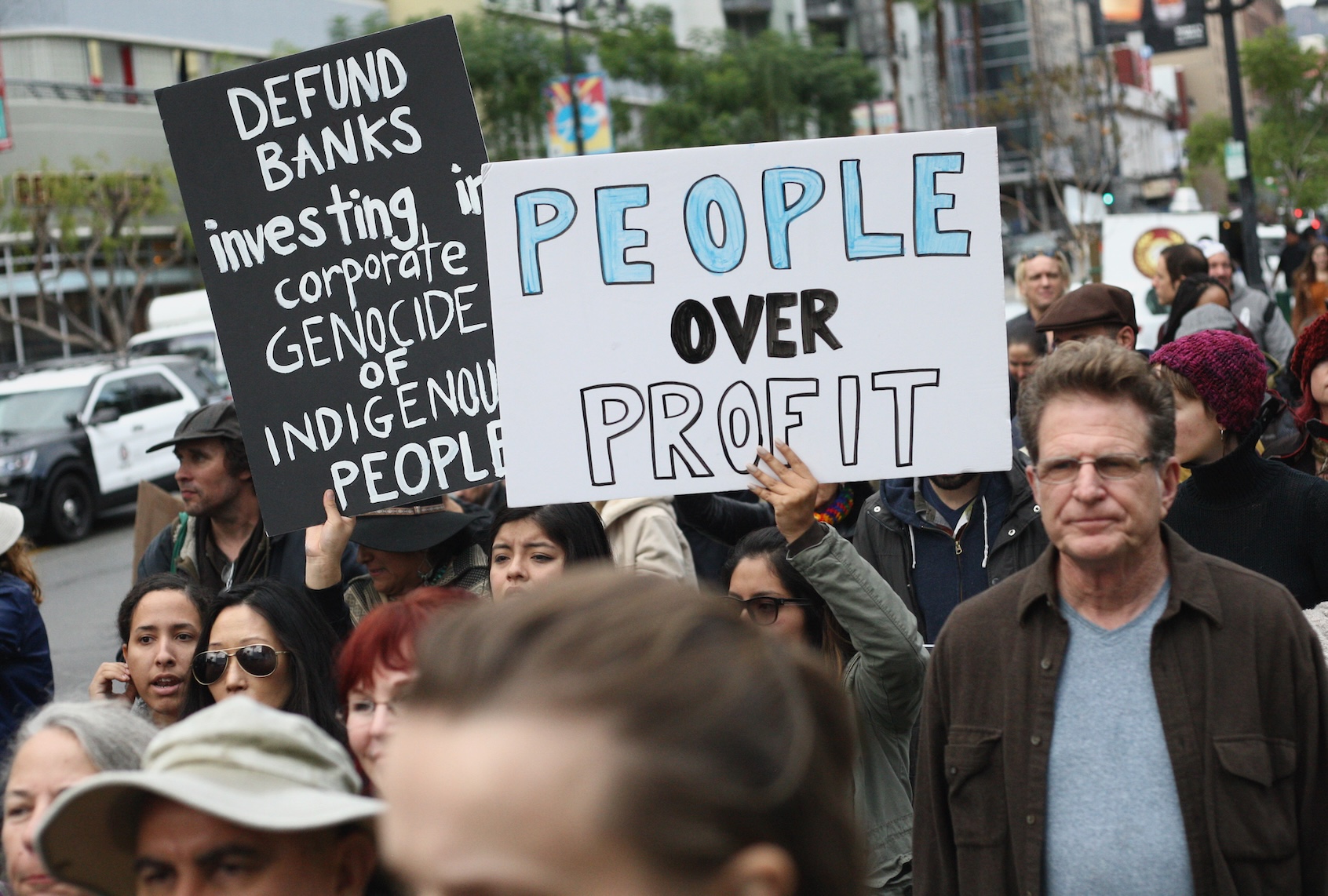
Much like jury nullification — another legal mechanism that is not widely known — there is a reason the corporate death penalty isn’t part of the Overton window, the range of acceptable discourse in the mainstream public. The corporate death penalty is the kind of thing that keeps the ultra-rich scared. It’s why corporate shills love to make the excuse that using the corporate death penalty would unfairly punish employees and bring shocks to the economy. More likely, it would persuade big business to pursue due diligence instead of profits over people and the environment.

“This weapon might help minimize corruption but with collateral damage,” John F. Hulpke, a professor at University College Dublin, wrote in the Journal of Management Inquiry in 2017. “But if society is serious about wanting to curb corruption, all weapons must be considered, including this one.”

In yet another universe, we would restructure corporations to have more than one bottom line beyond their shareholders. So-called public benefit corporations do actually exist, and with a triple bottom line: a dedication to people, planet and profit, essentially in that order. Corporate responsibility could encompass so much more than making the stock market rise. There are approximately 10,000 of these entities in the U.S. It’s difficult to get an exact number of corporations in the U.S., but the IRS flagged 6.8 million active corporate returns filed in 2022, so to say there’s a big gap in ideology here is a major understatement. 

Corporations aren’t people — they’re technology. And if our corporate law is actually outdated and destructive tech, maybe we should update it. Don’t worry, the rich will still make plenty more than they need, but it doesn’t have to come at the expense of everyone else.

The post Bring back the corporate death penalty appeared first on Salon.com.

  •  

Netherlands slams US sanctions on top ICC officials

Dutch Foreign Minister Tom Berendsen lashed out at the Trump administration on Tuesday after Washington sanctioned two senior officials at the International Criminal Court over probes targeting alleged Israeli crimes in Gaza.

Earlier in the day, Washington had upped the ante in its campaign against the international tribunal by sanctioning ICC President Tomoko Akane and senior trial lawyer Abdoulaye Seye.

“The Netherlands disapproves of the latest sanctions against officials and staff of the International Criminal Court,” Berendsen wrote on X. “International courts and tribunals must be able to freely carry out their mandates.” He added that the Netherlands “fully” backed the court and had invited Akane for talks to discuss its continued support.

U.S. Secretary of State Marco Rubio accused the court of threatening American sovereignty, saying the administration was acting to protect its citizens from a “sham” institution and would never allow Americans to be “transported beyond seas to be tried for pretend offenses.”

Tuesday’s sanctions are part of a campaign Washington launched last month to cripple the ICC. The U.S. has already sanctioned at least 11 ICC officials and has urged the court’s 125 member states to withdraw from the organization.

The Hague-based ICC, established in 2002, prosecutes genocide, crimes against humanity and war crimes. Its pursuit of charges against senior Israeli politicians on such grounds, including Prime Minister Benjamin Netanyahu, against whom it has issued an arrest warrant, has been a particular sore point for the U.S.

The court issued a statement on Tuesday pushing back against Washington, warning that measures punishing judges, prosecutors and staff for carrying out their mandate “undermine the rule of law” and put the international legal order at risk.

Netanyahu, who is wanted by the court for allegedly using starvation as a method of warfare and intentionally directing attacks against the civilian population of Gaza, applauded Washington’s move, branding the ICC a “kangaroo court” and praising Rubio for making clear that its officials would “face consequences.”

  •  
❌