❌

Reading view

Shane Gillis and the danger of laughing at unfunny men on “SNL”

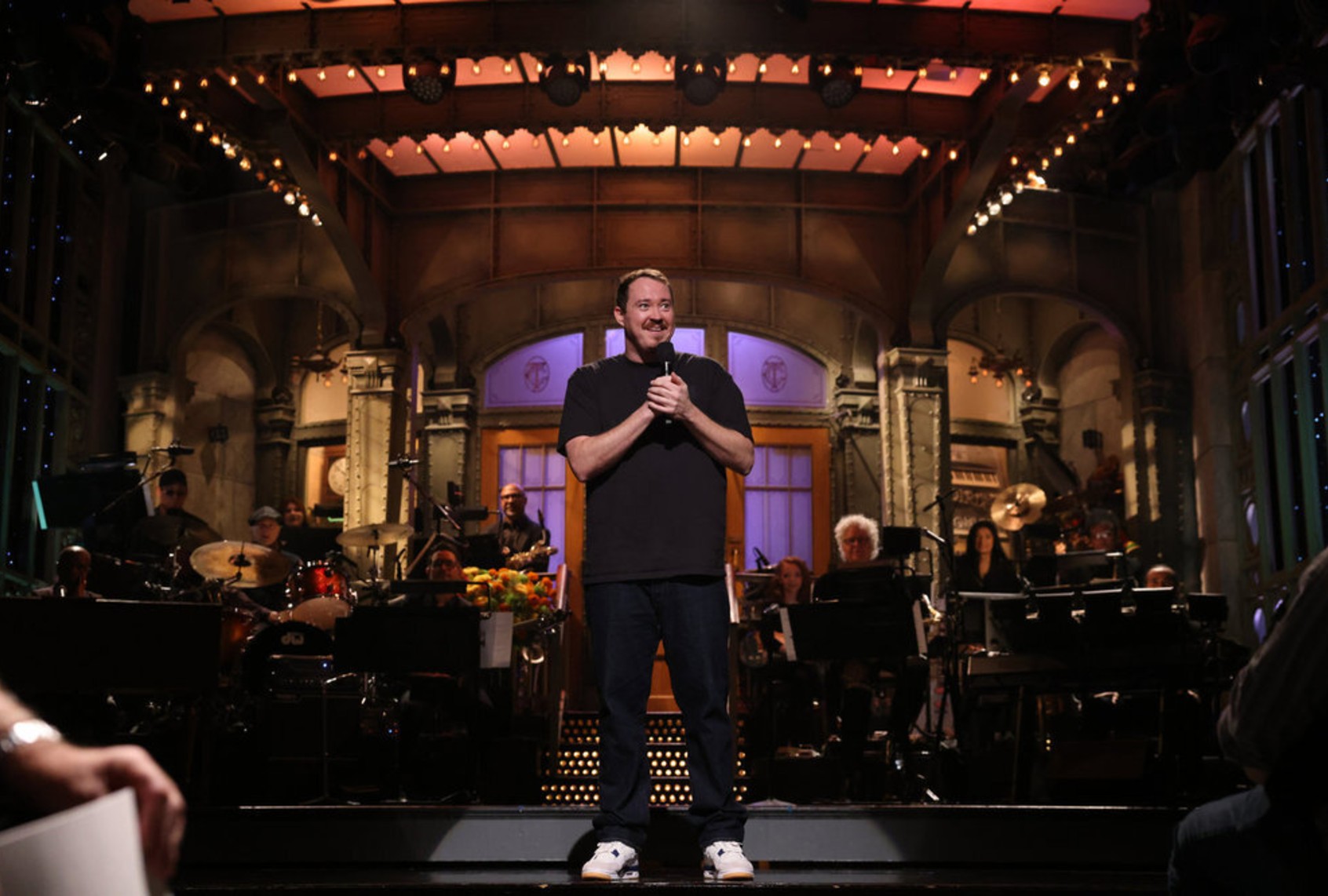
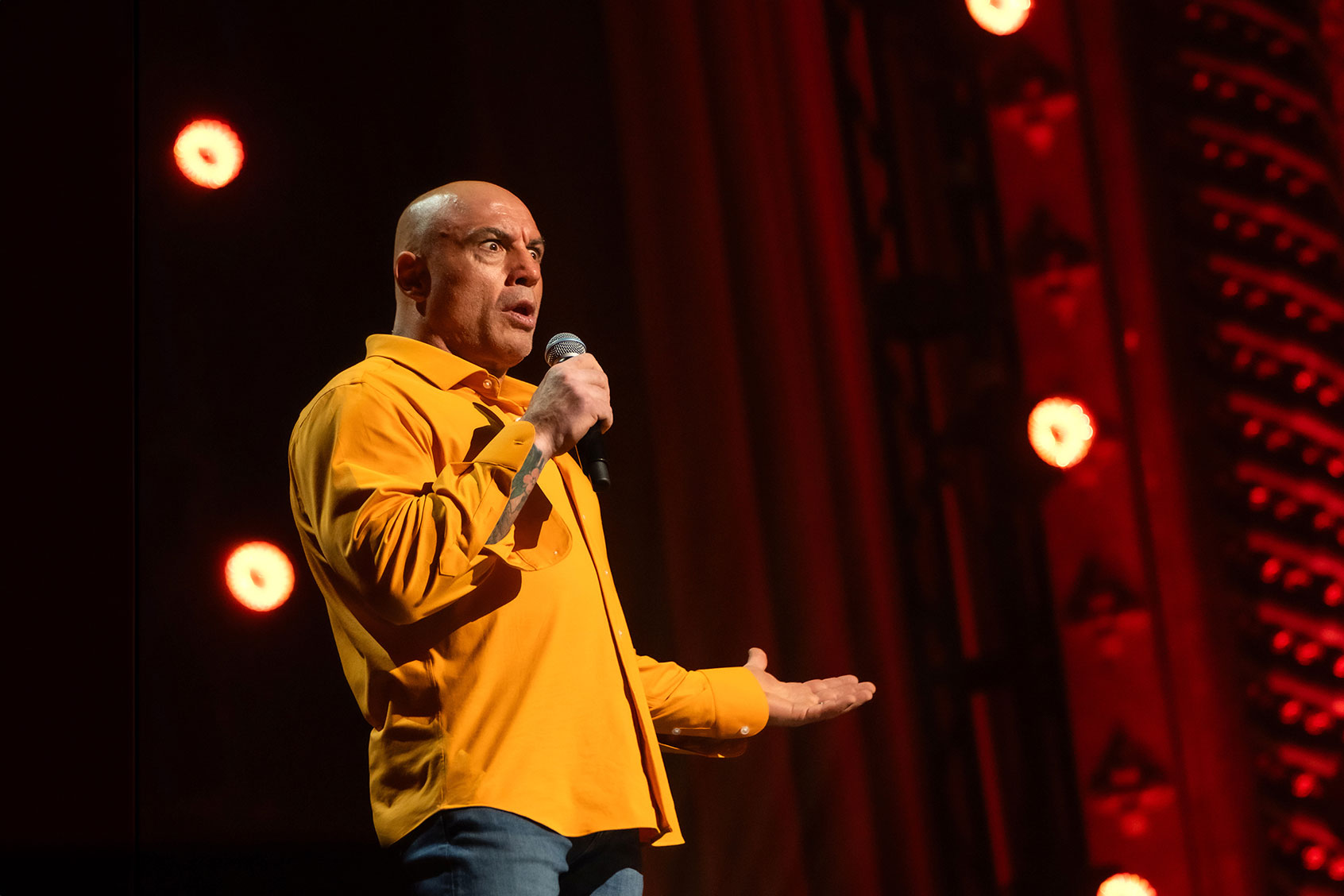
Watching Shane Gillis tickle himself to the point of being red in the face during his third “Saturday Night Live” hosting gig this past weekend, I’d wager that no one thinks Shane Gillis is funnier than Shane Gillis. But while that’s a pretty safe bet, his confidence in his own comedic stylings can’t get full credit for landing him where he’s at: appearances on a show he was fired from, Bud Light commercials where, as he points out, he “looked like a lesbian,” and a TV show about tires that 59% of critics hate and 91% of people who probably also think it’s funny to hear women called whores love.

No, we can thank everyone who, during the course of his 38 years on this earth, politely laughed at one of Gillis’ “Cornell 7‘s Big Book of Punchlines” zingers. And additional thanks to Lorne Michaels, who knows a ratings/headlines cow when he sees one, even if he doesn’t want to house him in his own barn at the end of the night.

Just as journalists worth their paychecks are taught to shy away from punching up headlines with puns or expletives because it’s lazy work, plenty of successful comedians refrain from desperately grasping for an easy laugh by calling women whores or punching down at their “big fat bit*h sisters,” as Gillis did in his monologue on Saturday night. Leanne Morgan has, to my knowledge, never joked about going to the gym and the men there being sluts for wearing sweatpants that show off their D and B’s, and she probably actually goes to the gym. Oh wait, Gillis did say in his monologue that he feels most comfortable working out in “his friend Joe Rogan‘s private gym.” Right. Riiiiiiiight.

It’s not the controversy alone that’s of value to a show like “SNL”; it’s giving a platform to someone who’s more than willing to stand there, in front of a live audience, and verbalize the ugly things that people are afraid to say out loud . . . for now. But if they see enough people doing it, they may just be bold enough to do the same.

Point being, happy, successful, confident, well-loved comedians are creative and secure enough to reach out and up for their material, not straight into their own asses. There’s a difference between being a “controversial” comic and appealing to the lowest common denominator. Dave Chappelle is equally awful, content-wise, but at least he’s good at being the absolute worst, if that can be a thing for the sake of this argument. Worth noting here that, even though he’s been in the game far longer than Gillis, Chappelle’s hosting number is only one larger than his . . . wonder why that is?

Gillis has made a career out of appealing to people chomping at the bit for their chance to storm the Capitol, and apparently there’s a home for that now on “SNL,” a show that’s lasted 51 years and counting by offering up a little something for everyone and carving out space for anyone — except for women, and people of color, and, more and more, viewers who haven’t been able to wear a red ball cap since 2017. Who’s laughing now? Not anyone I’d want to be next to on the treadmill.


Want more from culture than just the latest trend? The Swell highlights art made to last.
Sign up here


It’s not the controversy alone that’s of value to a show like “SNL”; it’s giving a platform to someone who’s more than willing to stand there, in front of a live audience, and verbalize the ugly things that people are afraid to say out loud . . . for now. But if they see enough people doing it, they may just be bold enough to do the same. And so it goes, and here we are. Audiences just want to look in a mirror, even if they themselves internally despise what they see in that mirror. 

Gillis got enough polite, awkward laughs on his misogynistic sad clown shtick thus far from friends, relatives and dates just waiting for him to shut up so they can order appetizers that now he not only has a whole career to showcase that shtick, but a built-in audience of like-minded fans who also were told by one too many people that they have “a great sense of humor.”  We’re all paying the nauseating price now, and anyone who paved the way is complicit.

But “SNL” is a liberal show, you may be thinking. I mean . . . sure? But it’s also a show with a sound bite archive spanning decades which includes such hits as “Jane, you ignorant slut,” from a late-’70s “Weekend Update” sketch starring Dan Aykroyd and Jane Curtin. I’ll save you the Google. There’s more. 

Gillis got enough polite, awkward laughs on his misogynistic sad clown shtick thus far from friends, relatives and dates just waiting for him to shut up so they can order appetizers that now he not only has a whole career to showcase that shtick, but a built-in audience of like-minded fans who also were told by one too many people that they have “a great sense of humor.”

In the wake of Gillis’ most recent hosting gig, it’s been refreshing to see men in the entertainment industry call him out. Michael Che, who started at “SNL” as a writer in 2013 and transitioned to an on-screen role as a “Weekend Update” co-anchor the following year, weighed in on Gillis’ monologue via a series of Instagram stories, writing, “Gotta do more press this week to promote the special . . . wonder what every f—ing questions gonna be about . . . thanks a lot, Shane.” “Schitt’s Creek” star Dan Levy, son of “SCTV” alum Eugene Levy, also took to Instagram with a more direct and thoughtful approach, saying, “Women wearing short shorts at the gym does not make them whores. It makes the men calling them whores misogynists.”


But the most effective statement would be from Lorne Michaels, which he could make by honoring his first instinct to place Gillis in the persona non grata pile after clips from his podcast, “Matt and Shane’s Secret Podcast,” showed him using racist and homophobic slurs, causing Gillis to be canned from the cast of “SNL” just days after his hiring was announced.  

I personally regret every time I put wind in the sails of a deeply unfunny and offensive man by politely laughing, feeling too awkward to course-correct the moment. Most women have these moments. I had one during my first job, when I was 15, and I laughed at the security guard twice my age who joked about his pants feeling tight after I mentioned that I had a girlfriend. I had one when I was driving with an old friend and didn’t give more than a “you gotta be careful with stuff like that” warning when he launched into a rant about how the women assaulted by Harvey Weinstein “shouldn’t have been surprised” he acted the way he did. It’s hard to stand up in moments like these, but look what happens when we don’t. Shane Gillis is a cystic pimple. All the rest of it is the pus.

Lorne Michaels will likely invite Gillis back. The fact that I and countless other writers are typing out similar commentaries all but ensures it. But what he should be asking himself is whether the audience he’s going after with jokes like the ones Gillis made this past weekend is an audience he’d feel comfortable sitting in. That should matter. And more people should say something if it seems like it doesn’t.

The post Shane Gillis and the danger of laughing at unfunny men on “SNL” appeared first on Salon.com.
  •  

In Joe Rogan, Netflix continues mainstreaming misinformation and panic for laughs

Just like comedy fans replay their favorite routines every so often, I often find myself returning to a few journalistic pieces written about comedy to help me order my thoughts. One is Lindy West’s 2013 Jezebel piece she wrote in the wake of debating Jim Norton concerning comedy’s role in perpetuating rape culture on the canceled FX series “Totally Biased with W. Kamau Bell.”

The aftershock is probably more memorable than the piece. The barrage of hatred that bombarded West moved her to record a YouTube video wherein she reads the litany of threats prompted by her daring to suggest that comedians be more thoughtful in their stand-up routines.

The essay she wrote about that experience plainly summarizes her reasonable stance. “I believe that the way we speak about things and the type of media we consume profoundly influences how we think about the world,” she wrote.

Emily Nussbaum’s 2017 New Yorker essay “How Jokes Won the Election,” a second repeat reader, is a kind of response to that call, taking a hard look at the far-right’s weaponizing of humor and cloaking threats in punchlines. This tactic helped Donald Trump, a most ridiculous candidate, sail to the White House.

“How do you fight an enemy who’s just kidding?” Nussbaum asked, a question we should be mulling each time Netflix triumphantly announces a new stand-up special from celebrities who can’t get enough of reducing queerness into a punchline.

One year before West debated Norton on TV, Joe Rogan’s NBC gig “Fear Factor” aired its last episode. He talks about his departure in his Netflix stand-up “Burn the Boats,” in which he revealed that the line he refused to cross was to challenge contestants to drink donkey semen.

“When I’m the voice of reason,” Rogan said, “you’ve got a really f***ed-up program.” You could reasonably apply that same note to Netflix, which recently debuted Rogan’s hour-plus special as a live comedy event.

Netflix is determined to maintain its claim as the top destination for stand-up specials, which it does by flooding the stream with choices. The Hollywood Reporter cites a source that counted the total number of comedy specials released in 2023 at more than 150, with most of those appearing on Netflix.

Amazon’s Prime Video is also a player, countering Netflix’s “anything goes” approach with a select stream of comics known for working clean like Nate Bargatze and Jim Gaffigan. Hulu is also beefing up its stand-up presence with 12 specials per year while one-time king HBO is going niche, matching Amazon’s eight-special ballpark.

This feels like light years from the era when a Comedy Central special was every ambitious comic’s goal – that, or getting a sitcom deal. Then HBO became the comic’s dream gig and, to a lesser extent, Showtime.

Now Netflix is the comedian’s golden ticket. Get a stand-up special there or a deal for multiple gigs, and the possibilities are endless. On the lower end, lesser-known comics can fill clubs or maybe larger theaters.

Mid-to-top range comics can fill arenas once they’re in with the service’s top executive Ted Sarandos. Taylor Tomlinson was a relative unknown when she signed on to do a few specials. Now she has a weeknight broadcast network gig, “After Midnight,” following “The Late Show with Stephen Colbert.”

Live events, however, are reserved for the top-level killers. Chris Rock’s followed nearly a year of silence about getting slapped at the Oscars, which also happened live. Katt Williams’ live special “Woke Foke” came after his post-New Year’s tea-spilling on Club Shay Shay.

Other live specials, including “The Roast of Tom Brady” and John Mulaney’s six-episode variety talk show “John Mulaney Presents: Everybody’s in L.A.” were exercises in brand establishment as much as entertainment events, although Mulaney’s was undeniably more of a creative high-wire act.

Rogan’s stand-up special, his first in six years, is a mutual exhibit of power and influence. He’s one of a very few entertainers whose presidential endorsement makes headlines. (He’s backing Robert F. Kennedy, Jr., as you may have guessed.)

He doesn’t need Netflix, but surely Netflix is happy to have him.

The Wall Street Journal reported that the new multiyear contract Spotify signed with Rogan in February to continue hosting his podcast could be worth as much as $250 million and is no longer exclusive to the streamer.

He’s also opened Comedy Mothership in Austin, drawing performers from around the country to the Texas city in a quest to create another stand-up epicenter driven by successful podcasters as opposed to New York’s and Los Angeles’ comedy club pipeline.

We need your help to stay independent

And Rogan, who caused a furor in 2022 for spreading misinformation during the pandemic, is accepted as an inevitability of modern popular culture. A recent Bloomberg profile softened his reputation to just short of baby skin texture by describing his podcast as “[mixing] marathon interviews of prominent guests with a hefty dose of often conventional and sometimes iffy lifestyle advice — including diet tips, exercise routines and vitamin supplements.”

Some have moved their lives to Austin to be close to Rogan’s Mothership, including the likes of Tom Segura and Shane Gillis. Exerting his pull in the comedy world, which boasts a booming live performance market, only makes him more powerful. Pollstar says the Top 30 comedy tours grossed nearly $514 million in 2023.

Joe Rogan doesn’t need Netflix, but surely Netflix is happy to have him.

But what he and the other comics he boosts have in common, besides Netflix deals, is their penchant for anti-trans material and platforming far-right bigots in the name of “asking questions” and pursuing the “truth.” They also sell out arenas, cultivating their audiences online and forwarding some truly odious ideas in the name of yuks and supposed pondering.

Segura welcomed accused sex trafficker and vocal misogynist Andrew Tate as a guest on “Your Mom’s House,” which he co-hosts with his wife Christina Pazsitzky. Gillis and Matt McCusker’s “Secret Podcast” is where listeners can hear more of the racist material that got Gillis fired from his “Saturday Night Live” gig before it began.

Rogan has hosted all these comics along with all types of conspiracy theorists, “free-thinkers” like Matt Walsh and Tucker Carlson, and worst of all, repeat Rogan guest Alex Jones.

Rogan goes on at length about Jones in “Burn the Boats,” calling him “right about a lot of things . . . he was wrong about that one thing, though. But he’s right — the wrong thing was a big one! But he’s right — that one thing was huge. But he’s often correct!”

That is quite a stance to take about a man who not only concocted a massive lie about the Sandy Hook massacre, that one thing he was wrong about, but recently opined that Trump should embrace Project 2025 instead of distancing himself from it. And not for the jokes.

Let’s not forget another significant event Jones made possible: he spearheaded the organization efforts that became the “Stop the Steal” rally on January 6, 2021. You know, the direct attack on democracy sane people refer to as an insurrection.

This is part of Rogan’s Netflix special, in which he also jokes, “We lost a lot of good people during the pandemic. Many of them are still alive.”

Ha! Kidding! Not about his admiration for Alex Jones, though.

The prevailing model in any business, showbiz included, is that success breeds success. A week after Rogan’s special premiered it’s still in the service’s Top 10 most popular titles, sitting at No. 4 as of Friday.

Netflix’s average output of one special per week along with its other debuts means Rogan will eventually be washed down the stream along with the other comics. But his Netflix berth places him in front of many more people, including those who don’t follow his podcast.

Contemplating what all of this means returned me to West’s thoughts from 11 years ago because they apply here. “I do believe that comedy’s current permissiveness around cavalier, cruel, victim-targeting rape jokes contributes to (that’s contributes — not causes) a culture of young men who don’t understand what it means to take this stuff seriously,” she wrote.


Want a daily wrap-up of all the news and commentary Salon has to offer? Subscribe to our morning newsletter, Crash Course.


Indeed. Comedians who may have made light of sexual assault a decade ago have since moved on to joke about others more easily vilified than half the human population. Mainly transgender people.

Rogan is right there with them. And Netflix’s willingness to further elevate a performer whose entire schtick is slapping a smile on disinformation and normalizing trans panic should worry more of us, even if they’ve done it several times before.

A predictable rebuttal is that people don’t have to watch if they don’t want to, which is true. A lot of people watch Netflix, though; the service accounted for 8.4% of TV usage for June, according to Nielsen, a month during which 40.3% of time spent watching TV in June was attributable to streaming.

You can turn on Netflix and watch Hannah Gadsby or other progressive comedians who took a stand against the service’s promotion of Dave Chappelle’s anti-trans material. Besides, there’s a market for this stuff, as Spotify proved by standing by Rogan in 2022. The service lost subscribers and artists over Rogan’s conspiracy-mongering related to COVID and vaccines, but even Neil Young’s back now. If you can’t beat ‘em, et cetera, et cetera.

 “[A] joke can be another kind of Big Lie, shrunk to look like a toy,” Nussbaum wrote. “It’s the thrill of hyperbole, of treating the extreme as normal, the shock (and the joy) of seeing the normal get violated, fast.” Flood the stream with so many jokes like that and from a whole lot of mainstreamed mouthpieces to the point of making fringe nonsense into just another normal bit, and like Rogan said, you’ve got yourself a really f***ed-up program. 

The post In Joe Rogan, Netflix continues mainstreaming misinformation and panic for laughs appeared first on Salon.com.

  •  

James Talarico isn’t vegan. So why is the GOP so fixated?

President Donald Trump has lately been telling a story about James Talarico that comes with its own setting, action and reliable third-act catastrophe. The Democratic candidate for U.S. Senate in Texas, Trump says, goes to barbecues, forces down meat and then slips behind a tent to vomit. The tent is a surprisingly durable detail. The menu changes.

At an Oct. 2 rally in Mobile, Alabama, Trump described Talarico as a vegan who was now “eating meat like a pig.” After every barbecue, he claimed, the candidate retreats behind a tent and “throws up all over the place.” In Nebraska, the offending meat had become steak. By San Antonio, Trump had incorporated Talarico’s recent absence from the campaign trail into the plot: The candidate, who said he had the flu, was supposedly sick from eating meat “for political reasons.” The president seems particularly taken with this little drama. He has returned to it repeatedly, refining the details like a comedian workshopping a bit.

The premise is that Talarico is a secret vegan. 

Just for the record: He isn’t. The story ties back to 2022, when Talarico advocated reducing meat consumption and announced that his state House campaign would purchase vegan products from local businesses. He did not announce that he had become vegan himself. Since then, he has been photographed eating chicken, steak and a turkey leg. His campaign has repeatedly denied the accusation. 

Ordinarily, one might expect the turkey leg to settle things.

Instead, Trump has supplied an imaginary sequel to every public meal.

At his San Antonio rally, the president turned to Talarico’s Republican opponent, Attorney General Ken Paxton, and offered an assessment: “I have a feeling Ken likes meat.” He then launched into praise of Texas’ exceptionally tough men and strong women, invoking Davy Crockett and the other heroes of the Alamo. It was a remarkably efficient progression from barbecue to regurgitation to virility to American legend. However, Americans have long used a man’s dinner to make assumptions about his character.

A few years ago, I wrote about the meat-and-potatoes man, that sturdy fixture of sitcoms, country music and nostalgic Americana. In an episode of “The Andy Griffith Show,” Andy confronts a French menu and simply asks for steak and a baked potato. Barney, determined to appear worldly, accidentally orders snails and brains. Andy’s plainspoken certainty is the point. He knows what he wants, and he doesn’t particularly care whether anybody else approves.

Where meat-and-potatoes masculinity once suggested a certain rugged, if slightly hayseed, self-assuredness, its latest incarnation is curiously obedient.

Consider Trump’s fondness for distributing Florsheim leather oxfords to the men in his orbit. The president has reportedly taken to guessing their shoe sizes and ordering pairs accordingly. Some recipients apparently feel obliged to wear them, lest they offend the boss. The old meat-and-potatoes man knew what he liked and ordered it without apology. His successors are walking around in matching shoes because someone else likes them.

And that’s before anyone sits down to dinner.

Several senior administration figures have embraced the “meat and ferments” diet promoted by physician Sean O’Mara: grass-fed beef, sauerkraut, kimchi and relatively little room for improvisation. Health and Human Services Secretary Robert F. Kennedy Jr. has praised its supposed effects on his visceral fat. His wife, Cheryl Hines, has described the embarrassment of bringing his pungent sauerkraut into restaurants. Picture the leather shoes pinching beneath the table, the fermented cabbage making itself known above it. These men are all, supposedly, very, very manly.

The meat-and-potatoes man has become the man with a meat protocol. What once signaled a cheerful lack of fuss now demands a highly specific menu, bodily surveillance and an almost devotional attention to what enters the digestive tract. It is not so much dinner as a program.


Want more great food writing and recipes? Sign up for Salon’s free food newsletter, The Bite.


There is something genuinely romantic about the self-sufficient cowboy who can build a fire and cook a well-seasoned steak beneath a blanket of stars. But the romance depends on his independence. If Trump decided tomorrow that everyone should trade their Florsheims for Stetsons, one suspects Washington would experience a sudden proliferation of cowboy hats. What ought to resemble John Wayne riding into the sunset would begin to look more like the Kens in “Barbie,” each earnestly serenading his respective date with the same Matchbox Twenty song. One man strumming a guitar by firelight can be charming. An entire beach of men performing the exact same romantic gesture becomes cringeworthy. What was supposed to be a spontaneous expression of rugged individuality has become something closer to choreography.

Which brings us back to Talarico. It is not enough for him to eat meat. He must eat Texas barbecue. More than that, he must actually enjoy it. And even that is insufficient. In Trump’s version, the evidence of fraud is waiting just beyond the camera’s view, behind the tent. 

There, in a scene of the president’s own invention, Talarico can always be caught dropping the act.

Food has embarrassed politicians before. In 1976, Gerald Ford famously bit into a tamale without removing its corn husk during a visit to San Antonio. Ford committed an observable mistake. Talarico’s supposed misstep takes place somewhere nobody can see it. Once, a candidate could be judged for eating the local specialty incorrectly. Now he can be accused of eating it correctly and not meaning it.

The trouble with masculinity as a group project is that it rarely remains confined to the group. When belonging depends on following an increasingly elaborate set of rules, there is a temptation to start enforcing them. And those expectations have a way of extending beyond men themselves, toward how women should dress, behave and exercise autonomy. The performance acquires an audience, and then the audience is expected to participate.

The idealized American man is, after all, supposed to be a self-assured loner: the pioneer charting his own course, the cowboy slipping into the night to find a lost horse, the man who simply does what needs doing. 

Instead, this version of manhood seems to require an extraordinary amount of coaching. I keep thinking of “The Birdcage,” in which Robin Williams’ Armand attempts to teach Nathan Lane’s Albert how to walk like John Wayne. The more deliberately Albert performs masculinity, the more conspicuous the performance becomes.

Of course Trump imagines Talarico disappearing behind the barbecue tent to drop the act. For a political culture increasingly invested in prescribing how a man should dress, eat and behave, the idea of someone secretly abandoning the performance must be familiar. Maintaining it looks exhausting.

The post James Talarico isn’t vegan. So why is the GOP so fixated? appeared first on Salon.com.

  •  

Trump’s new QAnon press secretary exposes his desperation

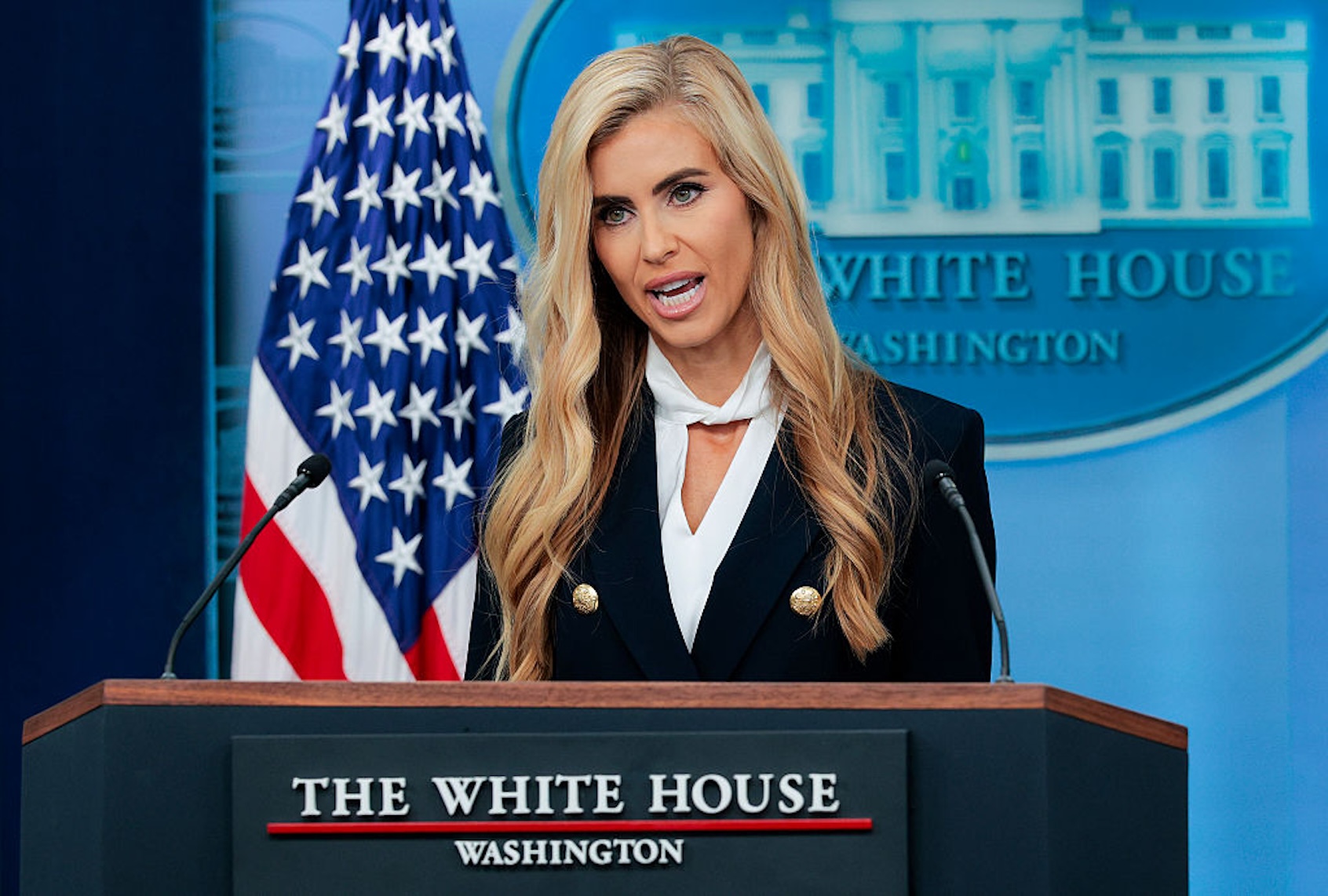
Even by first-day-on-the-job standards, Donald Trump‘s new press secretary is shockingly incompetent. Katie Zacharia has some media experience as a cable news pundit, albeit mostly on far-right channels like Newsmax and One America News. She’s even had a communications job before, when she replaced the infamous Tricia McLaughlin as the spokesperson for the Department of Homeland Security. But her stint there lasted only six weeks, which in retrospect should have been the first sign of trouble. 

At her first White House briefing on Tuesday, Zacharia kicked things off by haltingly reading a lengthy statement about how she hopes to “only build on, only amplify, and only multiply, to the extent possible, all of the wins” of Trump’s second term.

The situation only grew worse. Zacharia took questions from just three reporters. Even though they were from friendly media outlets — Fox News, Breitbart and the Daily Mail — she still seemed overwhelmed. Her response to a softball question about her family was painful to watch; she said “my president” before correcting herself and saying “my husband.” After about seven minutes of questions, Zacharia threw in the towel, directing reporters to the tarmac where Trump would be boarding Marine One. “You can ask him all of the questions there!” she announced.

Reviews of her performance were brutal.

“Trump managed to find a press secretary who can barely read,” independent journalist Aaron Rupar posted. 

Former Biden press secretary Jen Psaki called it “basically an SNL skit.”

Nikki McCann Ramirez, a political reporter for Rolling Stone, dubbed it a “Chat-GPT-ass first speech from the new press secretary.”

But Zacharia found a defender in the only audience that ultimately matters. “I thought she was very good,” Trump shouted minutes later over the roar of Marine One’s engines while Zacharia, taking a spot usually held by presidential aide Natalie Harp, stood smiling over his shoulder. 

Of course the president thinks she’s great. Zacharia has the only traits that matter to Trump: She’s blonde, skinny and she appears to worship him passionately. Harp had better watch out; she’s got real competition for the role of most fervent Trump devotee. The president confirmed this by praising Zacharia not for any special skills but for being a “devoted fan” with “an unblemished record of support” for himself. 

But taking a step back, Zacharia’s hiring is revealing — and encouraging. It’s yet another sign that the president is putting his own cravings for adulation over political considerations.

But taking a step back, Zacharia’s hiring is revealing — and encouraging. It’s yet another sign that the president is putting his own cravings for adulation over political considerations like winning the upcoming midterms for his party. 

“When stressed, Donald Trump retreats to his comfort zone,” investigative journalist Lindsay Beyerstein told me. Beyerstein, who is working on a book about conspiracy theorists called “Angry Minds,” noted that “Zacharia has a long history of pushing QAnon.”

The term “QAnon” may seem like a blast from the past, and for good reason. According to a February 2022 report from PRRI, tens of millions of Americans — including 25% of Republican voters — affirmed the QAnon conspiracy theory that Democrats sexually abuse and kill children to drink their blood. In the haze of the Covid-19 pandemic and the disaster of Jan. 6, millions of Trump supporters turned to the myth that Trump was God’s emissary sent to earth to destroy this Satanic cabal of child-killers. After Trump blocked the release of Justice Department files on his long-time friend, convicted sex offender Jeffrey Epstein, the fantasy that the former reality TV host is a holy warrior against pedophilia lost a lot of public appeal. 

But as far as Trump is concerned, QAnon is forever. Even as many of his voters quietly pretend the whole QAnon thing never happened, the White House was trying to revive the conspiracy cult over the summer. As The Bulwark’s Will Sommer reported in June, “The Trump administration launched a bizarre QAnon-themed social media campaign,” with various departments tweeting QAnon slogans. Sommer followed up his report by telling CNN that even “as the president faces persistently low approval rating,” the White House is trying to tell his voters something else: “[R]emember when you thought Trump was going to save the world?”

As a political move, it’s a bad idea. Trump’s apparent narcissism and corruption were easier for voters to laugh off when the economy was doing well. But now that he’s goosed inflation with tariffs and the war on Iran, his methods are not so funny anymore. For his part, Trump seems increasingly less concerned with political realities and more worried about saving face and fluffing his own ego, even if that means pulling deeper into a bubble where he’s only surrounded by people who flatter him all day with pleasing lies about his greatness. 

“He’s reliving QAnon because it represents the bygone days when his supporters worshipped him like a god,” Beyerstein said. “Trump may not realized how played out QAnon has become because he doesn’t live in the real world.”

Zacharia’s QAnon history is deep and troubling. As Popular Information’s Judd Legum reported, “Zacharia repeatedly used Truth Social to promote Pizzagate and other fringe conspiracy theories.” (Pizzagate is the original QAnon conspiracy theory — that Democrats sexually abuse and cannibalize children.) She repeatedly accused John Podesta, who headed Hillary Clinton’s 2016 presidential campaign, of being a “pedophile,” posting in 2022, “The radical left Hollywood elitists are sick pedo cannibals.” Zacharia also reposted the false claims of another Trump sycophant, Ali Alexander, who wrote, “Democrats want to mask and rape your children. That’s their satanic platform.”


Want more Amanda Marcotte on politics? Sign up for her free newsletter, Standing Room Only, now also on YouTube or wherever you get your podcasts.


Popular Information also looked into Zacharia’s claims that she was a lawyer and found “there is no evidence that [she] ever passed a bar exam.” The press secretary is not a member of the bar association in any state where she’s worked. In fact, according to Legum and his team, there is no whiff of documentation that she’s licensed to practice law anywhere.

When she was standing next to Trump after her disastrous briefing, a reporter asked, “Where did she pass the bar exam?”

The president looked quizzically at Zacharia, who replied, “When I moved to China.” Sharp readers will notice that China has no authority to grant law licenses anywhere in the United States. 

Such a clumsy diversion would never have happened under Karoline Leavitt, Zacharia’s predecessor who was, if nothing else, good at her job. A smooth character and fast talker, Leavitt deployed cartoonish Christian piety and a non-stop act of aggrieved victimhood to keep reporters too discombobulated to hold her feet to the fire about the administration’s various failures. There was little sense that she legitimately worshipped Trump; instead, she appeared to see him as a stepping stone for her own ambitions. This theory got another shot in the arm when Leavitt left the White House, implying she was going to be a housewife, only to walk right into a cushy job as a Fox News commentator. 

Trump reportedly floated Harp as Leavitt’s replacement, a move that was spun as a “joke” — even though “jokes” are not about humor for the president but instead a way to test boundaries. While press secretaries have long been spin doctors, under Trump the job morphed into one where blatant lies and gaslighting are readily employed to create over-the-top praise for the president. But clearly, this outward-facing propaganda was not enough for the president. 

Being Trump’s press secretary isn’t as much about distorting press coverage or bamboozling the public anymore. The position has been refocused on the task of giving the president more of the hardcore Natalie Harp treatment. Even as the midterms grow closer, Trump is abandoning the task of winning the public over, choosing instead to retreat deeper into a fantasy world.

There, everyone loves him most of all.

The post Trump’s new QAnon press secretary exposes his desperation appeared first on Salon.com.

  •  

The biggest GOP lie isn’t about elections — it’s the economy

Donald Trump lies. Telling untruths is not merely second nature to him; it is of the first order, automatic. He lies as naturally as he breathes.

From his claim to being a great businessman and dealmaker to calling himself not the worst president in U.S. history — which he is, by far — but the best, Trump has spewed a firehose of falsehoods to the public. But he has never reserved his lying only for his political opponents.

He has lied to his MAGA followers about, well, everything — bringing grocery prices down, ending this or that war “on day one,” the value of his cryptocurrency offerings, creating any number of “unbelievable” plans to fix our infrastructure, our healthcare, our economy. All those “beautiful” plans that were never plans but so-called concepts of plans. You know, back-of-the-envelope musings on critical national issues while heading off for another taxpayer-funded golf outing.

Suffice it to say: If you can name it, Trump has lied about it.

Journalists often write of Trump’s Big Lie about how the 2020 election was stolen from him, but that is only one of the big lies Republicans tell, and it is not the one that most adversely affects working Americans.

With Trump’s wild mismanagement of the economy, public sentiment is finally changing. More people now trust Democrats on the economy, and for good reason.

The biggest lie is the one Republicans have told for more than half a century — about how they are better than Democrats at managing the economy. A majority of Americans have believed this for my whole lifetime. But with Trump’s wild mismanagement of the economy, public sentiment is finally changing. More people now trust Democrats on the economy, and for good reason.

The idea of telling a lie so massive that not many people would think that it could be made out of whole cloth comes from Adolf Hitler’s 1925 book “Mein Kampf.” The failed artist and future German führer thought that most people would not believe that someone “could have the impudence to distort the truth so infamously.” This theory was later put to use by Joseph Goebbels, the Third Reich’s propaganda minister, to scapegoat and dehumanize Jewish people, and it led directly to the Holocaust — a horrible truth many Nazi-curious conservatives love to deny.

Trump, a fanboy of ruthless dictators, was determined to stay in office after losing the 2020 election decisively in both the Electoral College and the popular vote to Joe Biden, and he naturally turned to Hitler’s technique. (I say “naturally” because, according to his first wife Ivana, he kept a volume of Hitler’s speeches by his bedside. Also, after Trump’s first term, his former White House chief of staff Gen. John Kelly warned Americans that Trump very much admired Hitler.)

The Republican’s lie on the economy is such a whopper — so “colossal,” as Hitler put it — that it has defined American politics for decades. That’s the ruse of the colossal lie, which is not merely the propagandist’s use of repetition (Trump’s main go-to move) but a sort of verbal legerdemain. People are cunningly led to disbelieve what they see with their own eyes and feel in their own pocketbooks.

As we head into the November midterms, and as candidates begin to emerge in the 2028 presidential race, it’s a good time to refresh our memories of how costly the GOP’s colossal lie about trickle-down economics, which began with President Ronald Reagan, has been for Americans.

Running for the presidency, the former Republican California governor and B-list actor said that giving tax breaks to the wealthy and corporations would “trickle down” benefits to the working people of America. This sounded good in theory, but it was “voodoo economics” in practice, as George H. W. Bush, Reagan’s opponent in the 1980 Republican primaries, noted — until he was chosen as the Californian’s running mate).

In his two terms, Reagan’s tax cuts increased the national debt from $1.1 trillion to $2.7 trillion. But that’s nothing compared to Trump. While occupying the White House, the president has increased the national debt by a staggering $11.6 trillion so far, an increase of more than 25%.

As I’ve written before, Democratic presidents have almost always done better — I should say much better — than Republican presidents in managing the U.S. economy. According to a 2016 academic study by Alan S. Blinder and Mark W. Watson, this was true from the Truman administration through the first Obama term across all major macroeconomic measures: job creation, unemployment, national debt, GDP growth, growth in real wages and controlling inflation.

As Blinder and Watson concluded:

[T]here is a systematic and large gap between the U.S. economy’s performance when a Democrat is president of the United States versus when a Republican is. Democrats do better on almost every criterion.

We can tack on Biden’s term as well, which, amid the global inflation spikes caused by the COVID-19 pandemic shutting down supply chains, recovered far better than any other advanced country. As The Economist put it at the time, the quickly recovering economy under Biden was “the envy of the world.” People may not have felt “the vibe,” but things were on the right track by all standard economic measures.

In addition, in 2021, the Biden administration’s $1.2 trillion Infrastructure Investment and Jobs Act was passed with bipartisan support to rebuild or upgrade the nation’s aging transportation, water and broadband systems. The following year, the $280 billion CHIPS and Science Act was enacted and called for microchip manufacturing to be started up in rural areas, mostly Republican-voting districts. Unlike Trump, Biden understood that the president is charged with working on behalf of all Americans, not just those who voted for him.


Want more sharp takes on politics? Sign up for our free newsletter, Standing Room Only, written by Amanda Marcotte, now also a weekly show on YouTube or wherever you get your podcasts.


Since the Republican President Dwight Eisenhower, about 70% of all jobs have been created during Democratic administrations, and in recent decades, the percentage is more than 90%. Of the 11 recessions the country suffered between 1953 and 2020 — when the pandemic began — 10 began while a Republican was in the White House.

What Blinder and Watson studied was independently updated in 2024 with similar findings of a “striking” positive difference on the U.S. economy when a Democrat is in the White House. One doesn’t need academics or economics experts to tell that Republicans never look out for the interests of the working class, or even the middle class. But for those who still like evidence, a series of charts by Steven Rattner and graphic artist Taylor Maggiacomo tell the story of Trump’s promises on the economy and his results so far.

What these charts cannot show is the long-term economic disaster of lost markets for farmers and U.S. manufacturers caused by Trump’s tariffs and his disparagement of our trading partners, or what it will mean to our economy as countries move to de-Americanize their tech — which they must do to protect themselves from Trump.

Democrats are not only better stewards of the economy, but they also want the wealth created by American workers to be shared more equitably and for the social safety net to be made more robust, so Americans can better weather any financial vicissitudes.

Although he had once headed the Screen Actors Guild, Reagan kicked off the GOP’s modern union-busting zeal, treating union members as badly as he did university kids, our infrastructure of the future, as governor of California. This points to another factor that macroeconomic statistics do not tell us: Democrats are not only better stewards of the economy, but they also want the wealth created by American workers to be shared more equitably and for the social safety net to be made more robust, so Americans can better weather any financial vicissitudes.

Democrats also understand that the economy depends on healthy, educated, informed workers, and that the performance of parents in the workforce increases when they have access to affordable quality childcare.

Do I need to point out that Republicans have little to no desire to help workers and those in need, outside of, say, charitable contributions or church work? Indeed, rather than looking out for the poor or loving the stranger — and growing increasingly annoyed by those darned Biblical verses about a camel passing through the eye of a needle — the wealthy and powerful long ago undertook to remake American Christianity.

As Salon’s Amanda Marcotte recently noted, the right’s perversion of the message of Jesus knows no bounds; to justify their greed and avarice, they are taught that it is inconceivable to be Christian and vote other than Republican, which is yet another colossal lie by the GOP.

Public sentiment about which party does best in managing the economy has finally shifted to Democrats in the face of Trump’s gross mismanagement of the recovering Biden economy. Trump’s tax cuts, tariffs, attacks on education and journalists, his disparagement of historical allies and his war of choice with Iran have undermined nearly every aspect of what has made the United States prosperous.

But it is up to journalists to regularly tell this truth to the public in the face of the colossal Republican lie about the economy that began with Reagan, a man who had the sheer audacity to claim that the budget deficit was affected by restaurant servers not declaring their tips.

Today’s Republicans are even more Dickensian, focused as they are on deporting hard-working immigrants who long to be American citizens and taking healthcare and even food stamps away from struggling American families.

Why are Republicans terrible with the economy? Because they do not believe in government — unless it helps them.

The post The biggest GOP lie isn’t about elections — it’s the economy appeared first on Salon.com.

  •  
❌