❌

Reading view

‘No logic’: Finland slams Trump for siding with Putin against Ukraine

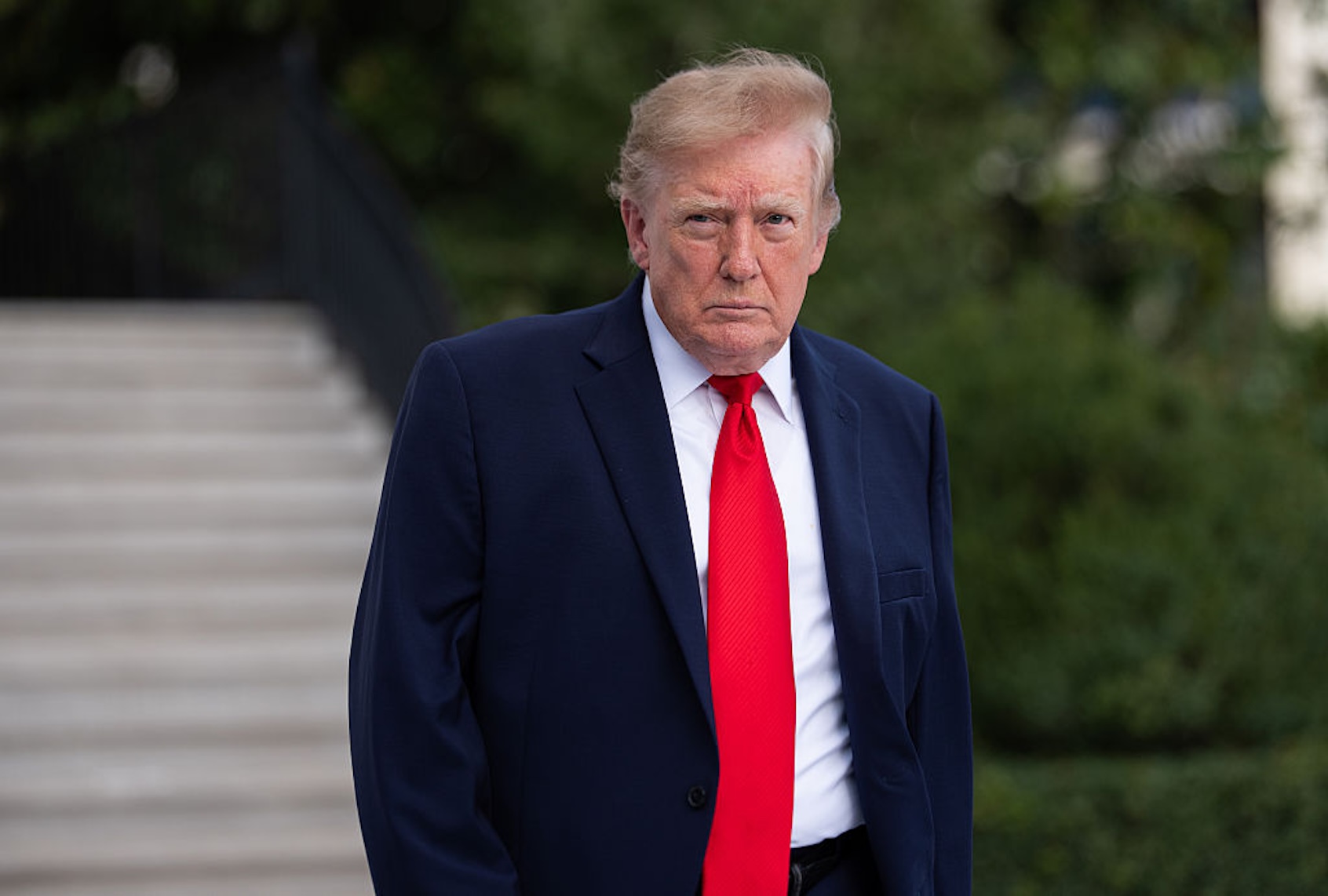
BRUSSELS — There is “no logic” to U.S. President Donald Trump’s recent moves to take Russia’s side in the Ukraine war, and he should remember his true allies lie in Europe, Finland’s prime minister said Thursday. 

In an exclusive interview with POLITICO, Petteri Orpo summed up the shock and dismay among Ukraine’s allies after Trump announced a diesel deal with Russia’s leader, Vladimir Putin, and reportedly imposed limits on Kyiv’s access to the military intelligence and technology needed to counter Russian attacks.

“My message to him [Trump] is that we are allies,” Orpo said on the sidelines of the European Council summit in Brussels. “We are in NATO. And what is the biggest threat against NATO? It’s Russia — and that is why there is no logic. I don’t have answers. I have many questions.” 

Trump alarmed European leaders and horrified Ukrainian President Volodymyr Zelenskyy this week by announcing a deal to release Russian diesel onto the market, apparently in an attempt to lower fuel costs for American consumers. Ukraine’s allies fear the move will boost Russia’s revenue from fuel sales, giving it more money to spend on war. 

Trump also said Ukraine should stop hitting Russian fossil fuel facilities — as part of what he said was a ceasefire on energy infrastructure — and should replace Zelenskyy. 

Finland is an influential voice among Ukraine’s European allies: The country has the EU’s longest land border with Russia, at 1,300 km, and its president, Alexander Stubb — a talented sportsman — won Trump’s respect on the golf course, giving him leeway to try to influence White House policy.

Orpo said if he were in Trump’s position “I would not trust Putin.” Zelenskyy has said he fears Ukraine is losing the U.S. to Russia’s side in the war, warning the Americans and their president are on “the wrong side of history”. Orpo said he agreed: “I think he is, and they are.” 

Ukraine now faces grave danger, he said. “The sky is open for Russia, there are missiles. They need more military support, air defense,” Orpo said. “Also, the situation is dangerous because of the latest deal between Trump and Putin.”

Midterms move

One possible reason Trump turned against Ukraine with that diesel deal is the U.S. midterm elections on Nov. 3. “I think it is because of domestic reasons — elections are coming,” Orpo said. “But we need to get them back.” Nonetheless, he said the amount of Russian diesel that could be sold to the U.S. is too small to make much of a difference for American consumers. 

Whatever happens, EU leaders must equip Ukraine with weapons and cash, whether or not they can rely on the U.S., he said. “Today, we need to find a solution [on] how to support Ukraine, how to finance Ukraine in this winter, but also in next year,” Orpo said. “It’s crucial.”

Finland and Sweden are among the countries pushing the European Commission to reopen the fractious debate over how to use Russia’s financial assets currently frozen in European banks, especially in Belgium, which blocked a deal to raid the funds last year over legal concerns. 

“The best solution would be that we will have a solution on how to use frozen assets,” he said. “We have to try again,” Orpo said. 

Finland has asked the Commission “to continue work with Belgium, and the other member states, to find a solution.” He said he hoped to hear an update from the Commission during the summit. “It’s a better solution than using our own money.”

Budget blues

European leaders are arguing this week over their long-term budget, which Brussels officials want to finalize by the end of the year. Many diplomats do not expect a deal this year, and some leaders say they’re in no hurry. 

But others want the budget, worth around €2 trillion, signed off by December because they fear next year’s European elections — especially if far-right leader Marine Le Pen wins the French presidency — will derail negotiations. 

The longer budget negotiations last, the “more difficulties we will have,” Orpo said. “So we have to work to find a solution this year. I understand very well that it is difficult, a huge challenge, but I cannot see how it would be easier next year, because in France elections are coming, for example.”

Finland also has an election coming up in April 2027. Orpo’s center-right National Coalition Party is struggling in the polls. “This time has been very difficult,” he said. “But, finally, our economy is growing.”

Orpo’s Swedish sister party, the Moderates, mounted a late surge in last month’s election. Although that seems unlikely to keep them in office, Sweden’s Moderates still have a slim chance, even though many commentators had written them off long before the vote.

“They did excellent campaign work, and in the end of the day, people vote Moderates, not populist or socialist,” Orpo said. “I would like the same in Finland.”

  •  

Von der Leyen floats EU ‘strategic reserves’ for gas amid winter supply fears

BRUSSELS — European Commission President Ursula von der Leyen wants EU leaders to look into the idea of developing bloc-wide strategic gas reserves amid concerns the continent faces a winter shortage, three diplomats and two EU officials told POLITICO.

Europe’s existing gas storage caverns — which are typically refilled over the course of the year by commercial actors — are running at record lows this year after high summer prices linked to the war in Iran undercut market incentives to restock, leaving the bloc underprepared for winter.

While it wasn’t immediately clear to diplomatic officials what form the reserve idea would take, one senior EU official described it as a long-term measure to cushion the bloc against future supply risks, as countries already do with oil and refined products. The Commission president’s comments came at a major summit of European leaders in Brussels on Thursday.

Documents detailing November plans to revamp the bloc’s gas security architecture, seen earlier this year by POLITICO, include plans to encourage better crisis management by companies. However, they stop short of explicitly endorsing strategic reserves that governments would have to fill to a set level to offset supply shortages, regardless of market conditions.

Countries that typically rely on commercial refilling have already been forced to change tack this year as the limits of the existing model became clear. The Netherlands has moved to subsidize energy purchases, costing it almost €1 billion, while Germany is exploring whether to develop its own strategic stockpile.

A separate Commission proposal to set up an EU-wide mechanism to carry out joint energy purchases was received without enthusiasm by EU leaders on Thursday, two diplomats said.

  •  

‘We give back’: Zelenskyy replies to Le Pen’s pledge to cut aid

PARIS — Ukrainian President Volodymyr Zelenskyy replied to French far-right presidential hopeful Marine Le Pen’s pledge to cut financial aid with a message: Europe is benefitting from Ukraine.

“Ukraine will give back security. It’s security and experience, the price is not so high as people’s lives, that’s why I think that Madame Le Pen is not deeply [acquainted] with some details,” he told the Financial Times. “We give back and this is very important.”

Le Pen has repeatedly said, including to POLITICO, that she would stop financial aid to Ukraine if she’s elected as French president next year — but suggested France could keep training Ukraine’s military and provide non-financial assistance. Le Pen, the National Rally candidate, is currently leading the polls.

Zelenskyy stressed that European armed forces and defense industries, including France’s, were benefiting from Ukraine’s battlefield experience. “It’s win-win,” he said. `

He argued that Le Pen should keep supporting Ukraine because it’s helping the Franco-Italian air defense system SAMP/T, which is currently deployed in the war-torn country, be more efficient. “We made a lot of different changes together with French guys, because they saw how it worked and how it works now.”

“The French industry only wins with these technologies, cooperation, co-production,” he added. “I will not vote for her … because I’m Ukrainian,” he also joked.

  •  

Millions of phones exposed to Israeli spyware operation through online ads, researchers say

An Israeli surveillance technology firm has run a large-scale operation to infect mobile phones with spyware using online advertisements to hack the devices, researchers said on Thursday.

An investigation by the University of Toronto’s Citizen Lab and cybersecurity firm Confiant Threat Intelligence laid bare an ad-based infection technique developed by an Israeli company that researchers named “AdFection.” The hacks weaponized legitimate online ad systems for espionage purposes, allowing spyware manufacturers to connect to millions of devices and identify, track and target victims.

“Plugging into the online ads ecosystem provides the mercenary spyware industry a stealthy delivery system,” said Bill Marczak, senior researcher at The Citizen Lab. He said the findings were “surely just the tip of the iceberg” of how online ads are abused for espionage.

Researchers discovered critical details of the hacking tools by analyzing devices belonging to journalists and staff at the Al Jazeera media network, finding that 45 devices of journalists and staff were targeted and some infected with Israeli-made spyware known as Candiru.

At the heart of the hacking campaign is the Israeli company Discover-Tech that describes itself as an advertising business. Citizen Lab researchers said the company facilitated surveillance for commercial spyware operators. Its platform, called Controlium, allegedly allowed spyware makers like Candiru — which in 2025 was acquired by Integrity Labs — to identify, track and target devices by loading advertisements on websites and apps.

Discover-Tech and Integrity Labs did not immediately respond to a request for comment.

The scale is striking: An analysis of four billion advertising records found that Discover-Tech’s ads appeared across nearly 200,000 websites and mobile apps in dozens of countries over four months. Among the websites that featured the ads were institutional sites of NATO, the United Nations, the European Parliament, European Commission and Council of the EU.

The technique exploits real-time bidding — the automated system used by platforms such as Google to sell advertising space and target users. Rather than persuading victims to click a malicious link, attackers can exploit advertisements to identify and potentially infect devices without any interaction from the user — a technique known as “zero-click” infections.

Discover-Tech’s advertisements directed millions of devices to servers associated with Candiru, potentially enabling large-scale surveillance and reconnaissance, researchers said. That does not mean all those devices were infected.

Citizen Lab, based in Toronto, is a globally recognized research group that previously uncovered spyware scandals targeting Catalan political figures, a member of the European Parliament and the inner circle of murdered Saudi journalist Jamal Khashoggi.

The findings triggered calls for further investigation on Thursday. “The possibility that EU institutions have been exposed should set off alarm bells across Brussels,” said Hannah Neumann, a German European Parliament lawmaker of the Greens group. Neumann herself was the victim of a cyber-espionage operation by an Iranian hacking group.

“Europe cannot claim to defend democracy while leaving its own democratic institutions vulnerable to spyware,” Neumann said.

  •  

The internet isn’t dead. It’s even worse

Earlier this month, three data centers in western Russia suddenly went dark due to a “rapid unplanned disassembly,” to use euphemistic engineering parlance. They exploded, in other words. Operated by Yandex, a Russian technology company often compared to Google that offers many similar services — a search engine, online shopping, cloud computing and the like — the centers were heavily damaged in a series of coordinated drone strikes over four days by Ukraine, which saw them as a valuable target in the country’s military campaign against Russian infrastructure.

As Russia’s war against Ukraine slogs on, both sides are increasingly adopting this strategy. While power plants and oil refineries have been hit, data centers and internet facilities are becoming the latest quarry for drone and missile strikes — and not just in Europe. Data centers operated by Amazon in Bahrain and the United Arab Emirates have also been targeted in the ongoing Iran war.

Few Americans have probably heard of Yandex, let alone use its services, and most likely didn’t notice when many of its hosted websites became inaccessible. But after Ukraine’s attacks, many people started to claim that social media was seemingly different. Ukrainian President Volodymyr Zelenskyy was quick to suggest his country had dealt a massive blow to Russia’s online disinformation machine, saying, “It suddenly became a little easier to breathe on many social platforms. There was less hate, less division and fewer provocations.” Several reports seemed to support his claims, citing data from internet monitoring service Cloudflare, that allegedly showed “Russia’s Yandex bot traffic nearly eliminated overnight.” 

But the truth is far more complicated, as some experts have noted. Yandex did experience a crash in bot activity, but at least some of that traffic seems to be legitimate. “When Cloudflare data shows a precipitous drop in ‘bot’ traffic, that does not mean ‘automated social media troll accounts’, it means ‘software that makes automated web requests on a large scale,’” Michał ‘Rysiek’ Woźniak, an internet infrastructure expert, told The Guardian. Others noted that they haven’t seen an actual drop in online disinformation. “Our platforms are still monitoring Russian social networks across the world and there is no discernible change in their posting patterns,” said Amil Khan, the chief executive of Valent, a tech startup that tracks disinformation.

None of that has stopped Reddit and other corners of the web from celebrating and memeing the issue. If those celebrations aren’t quite justified, there’s still something to be learned from the ordeal, which digs into the so-called dead internet theory. The basic premise is that almost nothing we see online is human-generated anymore. In his 2025 book “Market-Oriented Disinformation Research,” business academic Carlos Diaz Ruiz, who has studied how disinformation spreads in social media echo chambers, describes what many of us experience online on a daily basis: “an eerie feeling that the Internet is made up of bots talking to bots, following and liking bots, and posting AI-generated content designed for machine consumption, the algorithm, not humans.”

Indeed, bot traffic makes up an increasingly large share of the internet, surpassing human traffic for the first time in history over the summer, according to a June Cloudflare report. No doubt the surge in generative artificial intelligence use is what tipped the scales, but of course, not all bots are created equal. Many have legitimate, beneficial uses, like archiving web data.


Start your day with essential news from Salon.
Sign up for our free morning newsletter, Crash Course.


Some people have wedged dead internet theory into a conspiracy theory that Diaz Ruiz divides into “weak” and “strong.” The weak version of the theory is that the internet is now little more than a hall of mirrors used to manipulate the masses into fighting a culture war instead of a class war. “The Internet drama keeps the population occupied and distracted, preventing them from resisting the elites secretly controlling the world,” as Diaz Ruiz says. “The ‘strong’ version of the dead internet conspiracy theory claims that online activity is entirely disconnected from human activity because our society ceased to exist some time ago. In some versions, a catastrophic event occurred in the past, triggering society’s collapse.”

OK, so we’re basically talking the plot of “The Matrix” here. The argument that humanity peaked in 1999 may be compelling, and I won’t argue against it. If reality truly is nothing more than a hallucination, dream or computer screensaver in the brain, why should we waste time disputing it? Proving a negative with such a lack of evidence is fruitless. The point is, some people may be taking dead internet theory a little too far, but that doesn’t change the fact that within the last week people felt like they got a taste of some version of it.

If we lift the hood on some of these conspiracies, we can understand what people are really afraid of. Last December in the journal Computer, Hal Berghel, a computer science professor at the University of Nevada, argued the dead internet is more than a conspiracy and should not be dismissed, writing, “There’s certainly evidence of the distortion of the internet from the original concept as a liberating, self-healing, packetized purveyor of useful and important information: the original commitment to net neutrality is on life support, the goal of a shared public information repository is constantly compromised by paywalls, the content has moved from valuable scholarship to a sub-cerebral landfill, and the users are subjected to a mind-numbing cacophony of digital threats: spam, phish bait, spyware, malware, online bullying, online fraud, extortion, hacking, VoIP 911-swatting, doxing, slander, pretexting, etc.”

In other words, there’s a good reason so many people find dead internet theory attractive. Once a zone of promise and connection, the web has not only rotted and enshittified, it’s turned into a literal warzone. There really are algorithms out there, unleashed by governments actively dropping bombs on one another, that are designed to infect our minds and prejudice our ability to perceive the truth. It’s one of the many ways modern warfare has become invisible, pervasive and endless. No wonder social media is making so many people depressed — it can be a form of assault.

“In tandem with proxy warfare, cyber operations have become a central pillar of modern statecraft. Cyber warfare enables states to conduct aggressive acts; espionage, sabotage, infrastructure disruption without engaging in kinetic violence,” philosophers Oluyemi Opeoluwa Adisa and Kareem Shwan Adham wrote last year in a study published in the International Journal of Scientific Research and Management. “The strategic advantage of cyber warfare lies in its stealth and ambiguity. Because it blurs the line between war and crime, attribution becomes difficult, enabling perpetrators to operate with minimal consequences.”

How do we even tell how much of the dead internet theory is true? Perhaps through that old tech-support adage: Turn it off and back on again. And no, I don’t mean bombing more data centers, though we’re likely to see more of that, for better or worse. If everything feels fake, maybe we’re better off getting outside and experiencing something real for a minute. Yeah, yeah, we’ve all been told to touch grass so much that such advice is routinely mocked, and anyway, not everyone can easily do that.

But here’s your daily reminder that humans are primates whose still-evolving brains are exponentially outpaced by technological advancement. Being in nature is essential because we are nature. There’s a certain reset available in the presence of trees, birds and clouds. Even more important is connecting with real humans: family, friends, neighbors. Socialization is the essence of the primate brain too. You don’t have to uninstall any apps or delete Facebook, though you could try it too. Off, on again. 

And when you are online, which is unavoidable for many of us, try to remember that you are probably interacting with fewer humans than you might think. So don’t take it so seriously. Temper those outrageous emotions, the ones the algorithms have gotten so good at teasing out of us. Maybe instead we can fortify them into weapons to attack the real problems we face, like widening wealth gaps, destruction of the environment and the rise of authoritarianism. 

The post The internet isn’t dead. It’s even worse appeared first on Salon.com.

  •  

Democrats have discovered the key to midterm victory

Former Speaker of the House Nancy Pelosi always said that the only way for Democrats to win elections was to focus on the proverbial “kitchen table issues.” As the leader of the caucus for 20 years, she had quite a track record, presiding over quite a few big wins and many small ones, so she knew what she was talking about. According to her way of thinking, people are motivated to vote over concerns about their own material well-being, and in recent years, this has meant healthcare, job security and the cost of living — the basics.

Republicans, by contrast, tend to rely on a broader appeal to security in general. “Law and order” has been their bumper sticker, covering a wide range of free-floating anxieties in American society having to do with cultural changes, race and the loss of status of straight white males. Their answer to economic stress comes down to blaming the bogeyman of the day, whether it’s immigrants or the deficit, and the answer is always tax cuts and more tax cuts. 

Democrats have usually been trusted more on the kitchen-table issues, depending on whether they happen to be in office when some kind of economic crisis hits. Jimmy Carter paid a high price, losing his 1980 re-election bid after having inherited crippling stagflation from his GOP predecessors, and was hit with a big recession as a result of the Federal Reserve policies — which he supported — to break it. His successor, Ronald Reagan, reaped the benefit, a common consequence of painful Democratic policies necessarily deployed to clean up a Republican administration’s economic mess.

The GOP enjoyed 12 years in the White House after Carter’s loss, including a big boom which inevitably turned into a recession and helped ensure Bill Clinton’s victory over George H.W. Bush in the 1992 election. Clinton presided over an economic boom that saved his presidency, which was otherwise dogged by scandals largely perpetrated by the GOP’s final evolution from the party of mainline Protestants and main street business owners to one of ruthless street-fighters.

Economics, of course, aren’t the only issue that motivates voters. While more abstract notions of foreign policy and national security are rarely at the top of the agenda, war certainly can be. George W. Bush learned this in 2006, when the American people finally realized the Iraq war was a disaster. But something else was looming on the horizon. Bush had also made the fatal mistake of trying to privatize Social Security, breaking whatever trust people had in Republicans to safeguard their hard-won benefits. The Democrats won the midterm election in a rout.

Two years later, Barack Obama was hit with a double whammy. The war in Iraq was still the top issue, but at the height of his campaign against Arizona Sen. John McCain, the Republican nominee, the bottom fell out of the housing market and the world suffered the worst financial crisis since the Great Depression. At the same time, the healthcare crisis had reached a crescendo, with millions of people going bankrupt, and many suffering and dying due to the high price of insurance. After his win, those kitchen-table issues were front and center in shaping Obama’s presidency. In fact, two years into his first term, as the Great Recession continued to drag on, the American people let out the equivalent of a political primal scream and gave Democrats what Obama famously admitted was a “shellacking” in the 2010 midterms. Perversely, this was largely caused by the passage of the Affordable Care Act, the party’s healthcare plan, underscoring that no good deed goes unpunished.


Want more sharp takes on politics? Sign up for our free newsletter, Standing Room Only, written by Amanda Marcotte, now also a weekly show on YouTube or wherever you get your podcasts.


Then came Donald Trump. When he announced his candidacy for president in 2015, the economy was on the upswing, and just enough people were gulled by his phony reputation as a great businessman and promises to make everyone rich that he eked out an Electoral College win. Once in office, Trump basically just rode the recovery that was already underway and took credit for it. When the Covid-19 pandemic hit and his incompetence fully manifested itself, voters turned against him. If there was ever a kitchen-table issue, the pandemic was it: We were all stuck sitting around the table for months, wondering if the world was ever going to be the same. Trump failed to rise to the occasion.

But he was elected again after Joe Biden presided over the pandemic’s economic recovery, which was painful, ushering in inflation for the first time in decades to a chunk of a population that had never experienced it. The issue did him — and his vice president, Kamala Harris, who replaced him on the ticket — in, returning Trump to the White House on the promise that he would restore the economy to the alleged golden age of his first term. Unfortunately for America and the world, enough people bought into Trump’s chicanery once again, and here we are today in a crisis of chaos, mistrust, incompetence and despair over the radical policies wrought by a second Trump administration. 

Kitchen-table issues are still at the top of most voters’ lists. The cost of living remains high and keeps climbing. Housing is out of control, and gas prices are through the roof due to Trump’s war of choice with Iran. His much-ballyhooed tariffs have helped keep inflation high, and there is now little doubt what is driving the polls showing that Republicans are about to take a drubbing in the November midterms. 

But the concept of kitchen-table issues has its limits. Not everything in life is actually about money, and people’s perceptions of the economy are often colored by other issues that don’t appear at first glance to be directly related.

But the concept of kitchen-table issues has its limits. Not everything in life is actually about money, and people’s perceptions of the economy are often colored by other issues that don’t appear at first glance to be directly related. Bush’s losses in 2006, for instance, were affected by his mishandling of Hurricane Katrina and the Iraq War, both of which contributed to a sense that the administration suffered from hubris and incompetence. There is little doubt that the backlash against Obama during his first term was also driven by the recoil on the right to his identity as the first Black president. Trump likewise benefited from the fact that misogyny and racism were in play in his victories over the first two women to win the nominations of a major party.

The problem is that Democrats have too often relied solely on the kitchen-table issue agenda and failed to address underlying anxieties that contribute to their distress. And with Donald Trump, they are legion. 

The unrelenting pandemonium of his presidency, from his brutal immigration crackdown to the flagrant corruption and degeneration of the president himself, as manifested in his obsession with gold and the building of personal monuments in a time of economic stress, is making the public depressed and angry. The fact that Trump broke one of his fundamental promises to not get the country into a war, as he whines constantly about being denied the Nobel Peace Prize, is maddening. His ongoing disregard of the rule of law and the assault on the democratic process are obvious. The disconnect between what average Americans are feeling and the way their leaders are behaving is a mile wide.

People have been yearning for a holistic explanation for this chaos and confusion — and Democrats have finally found a way to express it. As POLITICO recently noted, Sen. Jon Ossoff of Georgia, along with Senate candidates Dr. Abdul El-Sayed of Michigan and James Talarico of Texas, as different as they are individually, are “leaning hard into anti-corruption messaging in the final weeks of the campaign as new research suggests that linking corruption to Americans’ economic struggles can boost Democrats into the home stretch.”

The corruption argument is compelling. Beyond the hated war in Iran (and its resulting gas prices), Trump’s son-in-law Jared Kushner and old friend Steve Witkoff’s deals in the Middle East have come under scrutiny and outrage, as have the government contracts being handed out to companies in which Trump’s sons are invested. Pardons are being sold to anyone with enough cash, some of them to people convicted of healthcare fraud, even as the Republicans are cutting Medicaid and healthcare subsidies. Contrary to his blarney, Trump’s Louis XIV-style monuments to himself are being largely paid for by the taxpayers. On top of all that, there are the reports that Trump has made $2 billion since returning to the White House, a figure that is excessive, even for him. 

The shameless grifting is too obvious for voters to overlook, and the Democrats have finally realized that the critique of Trump and MAGA Republicans must go beyond the kitchen table because it is all connected. The chaos, incompetence, deceit and self-dealing are at the heart of America’s distress, and it’s benefiting Trump and his cronies at the expense of average taxpayers. 

Distilling all this into a media-ready indictment, a soundbite, is difficult, but “Washington is rigged to benefit the wealthy at the expense of everyday Americans” is about as good as it gets. Let’s hope Democrats can carry this message of reform past Election Day and actually do something about it.

The post Democrats have discovered the key to midterm victory appeared first on Salon.com.

  •  

How Russia plans to revive its ties with Slovakia

BRUSSELS — Slovakia is reviving a dormant cooperation forum with Moscow, putting Russia’s gas and oil supplies, nuclear fuel and the treatment of Russian athletes high on the agenda of their first such meeting in five years, according to a Russian government note obtained by POLITICO.

The note, written by Russian Science and Higher Education Minister Valery Falkov, says Slovak Foreign Minister Juraj Blanár agreed during an Aug. 20 video call to hold a meeting of the Russian-Slovak Intergovernmental Commission in Moscow.

Slovakia’s Prime Minister Robert Fico said Wednesday the meeting is scheduled for Nov. 25. The Russian note — which is dated Sept. 10 — initially set the date of the meeting as Oct. 26-27.

The IGC, which covers economic, scientific and technical cooperation, has been dormant since Russia’s full-scale invasion of Ukraine in February 2022. The last meeting was the commission’s 21st session, held in Bratislava on Nov. 12, 2021.

The meeting comes as Moscow finds openings in other international arenas. The U.S. has invited Vladimir Putin to December’s G20 summit in Miami, while the International Olympic Committee has provisionally lifted its suspension of the Russian Olympic Committee and urged sports bodies to ease restrictions on Russian athletes.

Asked about the purported agenda for the IGC, the Slovak foreign ministry directed POLITICO to Blanár’s public statements after the Aug. 20 call. “We pursue a policy in all directions and maintain dialogue with all countries that are interested in pragmatic cooperation with us for the benefit of the Slovak Republic’s national interests,” Blanár said at the time.

The Russian foreign ministry did not respond to a request for comment.

The renewed push for warmer Slovak-Russian relations follows Fico’s May 9 visit to Moscow, where he met Russia’s President Vladimir Putin during Victory Day commemorations. It comes after Viktor Orbán’s defeat in Hungary’s April election, which cost Putin one of his closest partners in Europe and forced him to look elsewhere for EU allies.

Months before losing the election to Péter Magyar, Orbán rebooted the Russian-Hungarian Intergovernmental Commission on Economic Cooperation, which had been suspended for several years after the 2022 invasion. Magyar’s government did not confirm to POLITICO whether the commission would go ahead next year.

EU leaders, including Fico, will gather in Brussels on Thursday for a two-day summit focused on issues including energy prices and support for Ukraine, with the country’s President Volodymyr Zelenskyy expected to join them for a conversation on Friday.

Oil imports and cultural integration

In the August video call, Blanár raised Slovakia’s opposition to the EU’s phaseout of Russian gas imports and asked to discuss supplies at the Moscow meeting, according to the document, which POLITICO could not independently verify but bears the hallmarks of a legitimate Russian ministerial note. Slovak representatives also stressed the importance of continued Russian oil deliveries through the Druzhba pipeline and welcomed regular shipments of nuclear fuel for Slovak power plants, according to the note.

Slovakia remains heavily reliant on Russian oil and gas, and Fico has argued that ending imports would raise costs. When the two leaders met in Moscow on May 9, Putin said Russia would do everything to meet Slovakia’s energy needs.  

The agenda for the meeting next month reaches beyond energy, according to the document. The sides plan to explore working groups on culture, tourism, agriculture and environmental protection, and to discuss the status of the Russian Center for Science and Culture in Bratislava.

Falkov also records Blanár’s opposition to what the note calls the “discrimination against Russian athletes” at international competitions, noting the issue is to be discussed at the IGC meeting.

The International Olympic Committee lifted the suspension of the Russian Olympic Committee in July and said its previous recommendations restricting Russian athletes’ participation no longer applied. World Archery lifted restrictions on Russian athletes and officials in August. FIFA President Gianni Infantino has also called for Russia to be allowed back into international football.

The approach echoes Moscow’s recent effort to lock in closer ties with Orbán’s Hungary. Budapest and Moscow in December agreed on a 12-point plan to expand cooperation in areas including energy, trade and culture. The plan was signed by then Hungarian Foreign Minister Péter Szijjártó and Russian Health Minister Mikhail Murashko after talks in Moscow in December. The Slovak note points to a similar breadth of ambition.

The Kremlin’s outreach to Fico shows how Moscow can use energy ties to pull individual EU countries away from a united stance on Ukraine. Putin made a similar pitch in Washington last weekend: After a call with the Russian leader, President Donald Trump said Russia would supply diesel to U.S. and global markets to bring down fuel prices. The deal would provide revenue to Moscow while weakening efforts to maintain a united front against the Kremlin.

But there are questions over whether Putin can follow through on his pledge to Trump. Ukraine has been stepping up drone strikes on Russian refineries, aiming to disrupt fuel supplies and cut revenue for Moscow’s war effort. Kyiv said this month that strikes had disabled 51 percent of Russia’s oil-refining capacity.

  •  

Why Ukrainian strikes on data centers are a real problem for Russia — and beyond

Ukraine’s strikes on data centers inside Russia aimed to disrupt military planning and communication services. There were also reports of another kind of disruption: to customers waiting for their dinner from food-delivery apps.

Kyiv’s drone strikes on three Yandex data centers in Sasovo, Kaluga and Vladimir saw delays and interruptions for thousands of businesses and households that rely on Yandex’s cloud infrastructure, including e-commerce, digital payment platforms and apps of food delivery and car services. Ukrainian drones on Wednesday targeted a major Sberbank data center in Russia’s Saratov region, though a senior company executive said it hadn’t affected operations.

After the strikes on Russian data centers, Kyiv noted that Moscow has already repeatedly targeted its digital infrastructure. “Ukrainians wanted to show Russians that two can play this game,” a senior official familiar with the operation told POLITICO, granted anonymity to discuss sensitive matters.

The attacks and counter-attacks point to a new frontline in war: the infrastructure powering the digital economy.

The attacks on the buildings that supply compute power are akin to striking a power plant supplying the electricity, heating and fuel that both militaries and civilians depend on. It may weaken an enemy’s war effort but can also bring everyday life to a standstill.

Experts say the cost of rebuilding in Russia will be particularly high as the centers require scarce materials that must be imported. “Obtaining a large amount of equipment to replace what was destroyed is not going to be easy,” said Oleg Shakirov, a cyber policy and international security researcher, noting that most hardware needs to be imported and that is complicated by high global demand and sanctions on Russia.

“To be honest, no one really knows what’s the actual damage. Since two data centers are still offline, we can assume that it’s significant,” said Shakirov.

Joseph Jarnecki, a senior research fellow at the Royal United Services Institute, warned that normalizing strikes to data centers could have a new set of dangerous consequences.

“These strikes likely breach International Humanitarian Law and it’s a big risk when global populations increasingly rely on digital services,” he told POLITICO.

When servers become targets

Data centers have entered the crosshairs of other recent armed conflicts. During the U.S.-Israeli conflict with Iran earlier this year, drone strikes hit three Amazon Web Services (AWS) facilities in the United Arab Emirates and Bahrain.

Since data centers can serve civilian and military purposes simultaneously, the legal status of targeting them is far from straightforward.

Kubo Mačák, an expert on international humanitarian law, said a data center must meet two conditions to qualify as a military objective under the Geneva Conventions: it must make an effective contribution to military operations and destroying it must offer a “definite military advantage.”

A delivery robot from Russian tech giant Yandex moves through Moscow. | Alexander Nemenov/AFP via Getty Images

“If you know that they are storing military intelligence or that they’re using the data center to power military artificial intelligence tools,” Mačák said, there could be grounds to consider it a military objective.

Following the most recent strikes of the Yandex data centers, users on social media platform X reported a sudden drop in automated bot activity, including from accounts associated with pro-Russian, pro-Trump and Germany’s far-right Alternative for Germany (AfD) narratives.

Ukrainian President Volodymyr Zelenskyy seized on the reports to boast that the strikes had made social media less toxic, even as independent researchers and national research institutes found no evidence they specifically disrupted any Russian disinformation campaigns.

Mačák said that even if a data center is being used to “let’s say, run some trolls or these bot farms to interfere with elections abroad … that would not be sufficient.” In other words, hosting propaganda bots does not, by itself, make a data center a lawful military target.

The dual-use quandary has often focused on the targeting of energy infrastructure, which has been frequent in the Russia-Ukraine war. On Saturday, U.S. President Donald Trump urged Ukraine to stop striking Russian oil refineries, blaming the attacks for rising fuel prices. He has since called for both sides to halt attacks on energy infrastructure, although the existence of any ceasefire agreement remains disputed.

As data centers become increasingly central to national economies, they will become more consequential targets. A senior NATO official granted anonymity to discuss the matter told POLITICO that data centers are already considered potential targets and that the alliance is factoring their vulnerability into its planning.

NATO allies recognize that their data centers could come under attack in a conflict, the official said: “We would get it in a fight.”

Veronika Melkozerova in Kyiv contributed to this report.

  •  

Trump is taking his midterms anger out on Ukraine

Donald Trump, lit with red light, walks away from the White House helipad on the South Lawn at night.
Donald Trump walks to the White House from the South Lawn on October 10, 2026. | Alex Wroblewski/AFP via Getty Images

This story appeared in The Logoff, a daily newsletter that helps you stay informed about the Trump administration without letting political news take over your life. Subscribe here.

Welcome to The Logoff: Is Trump turning on Ukraine? 

What’s happening? Ukraine says its access to Starlink, the satellite internet system run by Elon Musk’s SpaceX company, and Starshield, the military version of the same technology, is being throttled as President Donald Trump’s animosity toward the country mounts.

Why is Trump angry with Ukraine? Trump has been hot and cold on Ukraine since he returned to office, but his current anger is driven by oil prices and successful Ukrainian strikes on Russian oil refineries — particularly ahead of the US midterm elections. 

Last week, Trump announced a US-Russia diesel deal, which has elicited bipartisan anger and probably won’t do much, if anything, for diesel prices in the US. Ukrainian President Volodymyr Zelenskyy has criticized the deal, leading Trump to lash out and call for Zelenskyy’s replacement.

Over the weekend, Trump also announced an “ENERGY CEASEFIRE” between Ukraine and Russia that doesn’t really seem to exist. “Both parties have agreed,” he wrote. “Do not break it!” (Russia appears to have broken it the same day, while Ukraine is complying for now.)

Is Ukraine actually to blame for high oil prices? Partially, but not primarily; as the BBC explains, while Ukrainian refinery strikes play a role, ongoing disruptions to the Strait of Hormuz and the Gulf oil industry from Trump’s war with Iran have had a greater impact (though Trump has tried to shift the blame to Ukraine).

Why is Starlink so important? Starlink and Starshield provide vital communications infrastructure in Ukraine, especially on the battlefield. The technology is also used to control offensive and defensive Ukrainian drones, which have emerged as a key part of Ukraine’s military efforts against Russia.

What’s next? Despite the fact that neither Russia nor Ukraine seemingly signed on to Trump’s “ENERGY CEASEFIRE” and Russia is still attacking Ukrainian energy facilities, Trump is trying to bind Ukraine to it: The US has reportedly threatened to suspend US intelligence sharing, which has helped give Ukraine early warning of Russian missile attacks, if Ukraine strikes more Russian refineries.

And with that, it’s time to log off…

I appreciated this New York Times story, pegged to Pope Leo XIV’s diagnosis yesterday, about all of the ways that science has made lung cancer massively more survivable than in years past, with a fatality rate half of what it was in the 1990s. You can read it here with a gift link.

Thanks for reading, have a great evening, and we’ll see you tomorrow!

  •  
❌