❌

Reading view

Two Firefighters Died in Yosemite—For What?

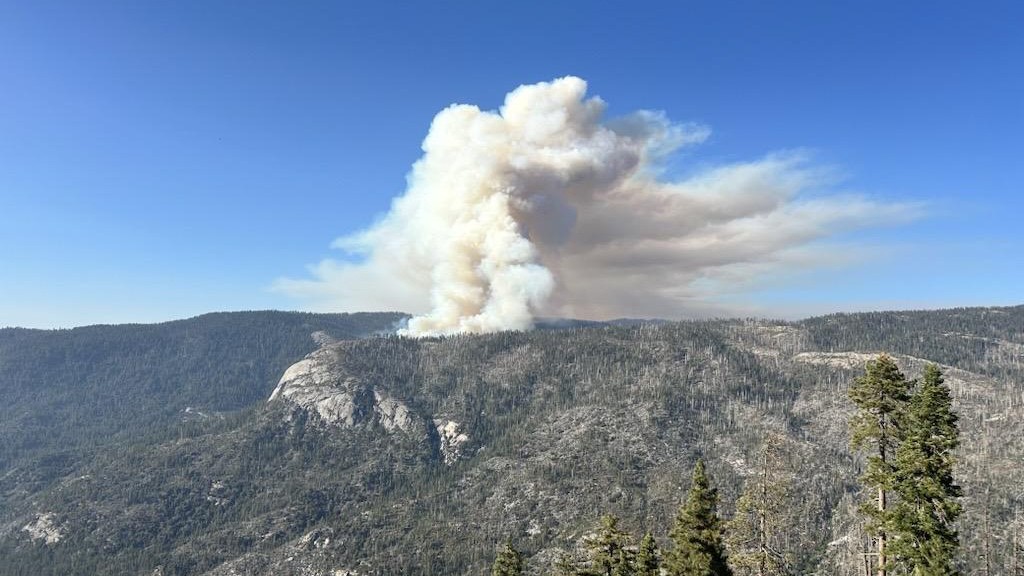
This year, the Trump administration gave federal firefighters a mandate: no more letting fires burn. Conventional wisdom among firefighters and public-land managers has held that allowing fires in remote areas to run their course can be beneficial. But now the administration’s new U.S. Wildland Fire Service was to pursue a policy of “full suppression” on every wildfire, Interior Secretary Doug Burgum instructed his workforce, to avoid the possibility of dangerous spread. “Accelerate initial attack,” Agriculture Secretary Brooke Rollins put it in her own directive to the Forest Service. “Suppress fires early and limit growth.” And when Yosemite National Park caught on fire last month, that is what firefighters did.

The hazy skies above the park filled with aircraft—planes dropping fire retardant on forested slopes; helicopters ferrying hotshot crews to the blaze. At one point, at least 17 helicopters were in rotation, along with more than 1,000 firefighters. “I’ve worked in Yosemite and with Yosemite for almost 40 years,” Tom Nichols, a former head of fire and aviation for the National Park Service (and no relation to the Atlantic writer Tom Nichols), told me. “I’ve never seen that kind of response.”

At the start, attacking the fire aggressively made sense: It had started near a popular hiking trail and was burning on a slope above Wawona, a small community in the park. It looked to be human caused. In such situations, federal policy, even before this year, called for firefighters to use “full suppression” to try to put it out as quickly as possible, former Yosemite fire officials told me.

But as it developed, the Dome Fire spread to the north and east, farther up the mountains, away from any homes or communities. The resources being poured into fighting it began to baffle some fire veterans. As a former Yosemite official put it to me, “There’s really no reason to be attacking a fire like that.” (I spoke with several sources for this story who requested anonymity because they were not authorized to speak publicly and hoped to avoid professional repercussions.) Such an aggressive approach can be dangerous. Five days into the effort to put it out, one of the helicopters was doing water-bucket drops from a nearby lake when it crashed. Both pilots died.

“For what?” one federal fire official told me. “There’s nothing out there. Just let nature do its thing.” Another official had to ask: “Did they die in vain?”


Under the Trump administration’s policy of full fire suppression, so far this year entrapments—when firefighters’ positions are surrounded by flames—are above the average for the previous two decades. At least 17 wildland firefighters, pilots, and contractors have been killed, surpassing the full-year average over the past decade, according to the Wildland Firefighter Foundation. That number includes four firefighters in Colorado who died this summer responding to the Knowles and Gore fires as flames spread amid high winds and low visibility. After that incident, several Democratic senators called on the Interior Department to investigate whether the full-suppression policy put firefighters at undue risk.


Brian Fennessy, the Wildland Fire Service chief, doesn’t think that the new policy is putting firefighters in more danger, he told me. The two pilots’ deaths in the Dome Fire were a tragedy—one he hopes his agency can learn from—but “this was not the year to allow managed fire on the landscape,” he said. The winter was historically warm, and snowpacks were at record lows across much of the western United States. Federal authorities were not about to let fires burn unattended, even in the wild. And the administration’s policy of suppression does mean increasing the number of people and helicopters fighting a given fire, he said: “Instead of two engines and a helicopter, maybe you’ve got four engines, two helicopters, maybe an air tanker.” Given how hot and dry it’s been, had firefighters not focused on putting out fires, in Yosemite and elsewhere, many could have been worse, he said.

The question of whether to harness or extinguish fire is particularly relevant in Yosemite. This is where America’s formal debate over that policy began, after Abraham Lincoln signed a bill in 1864 to grant the Yosemite Valley and the Mariposa Grove of giant sequoias to California as a public trust. The commission to oversee the area disagreed about the question of annual burning by Native Americans, Stephen Pyne, a historian of fire, told me. Fires set by the Ahwahneechees were “deliberate and purposeful, even artful,” Pyne writes in his book about Yosemite’s fire history, Pyrocene Park: “They burned to keep grasslands open and attract game animals like deer to fresh forage; to keep trees from crowding out annual-grass prairies; to help harvest acorns; to stimulate willows useful for basketry; to promote berries.” Some of the Yosemite’s first commissioners saw the value in that. Others, such as Frederick Law Olmsted, considered such fires vandalism that undermined, as he put it, “the duty of preservation.”

For more than a century afterwards, the suppressionists prevailed until, in 1974, Yosemite leaders allowed a major lightning-caused fire to burn in the Illilouette Creek basin, whose creek runs behind Half Dome, the park’s famous bald mountain. This was the first big test of its new policy to manage certain fires for ecological benefit. Since then, more than 100 fires have come through that basin, and scientists have documented its renaissance. The proportion of the basin covered by dense conifer forest fell by 20 percent, and a mosaic of meadows and grasslands emerged. Biodiversity bloomed, as bees and bats and understory plants thrived. Even streams flowed a bit more abundantly, as fewer trees competed for water and snow had more open space to accumulate, Scott Stephens, a professor of wildfire science at UC Berkeley, told me. The regular burning also makes the basin more capable of handling future fire, he said, by minimizing how much of it burns at a destructive intensity. It’s now “one of the most resilient, functioning forests in all of California.”

Set under the right conditions, prescribed fires, too, can help prevent hotter-burning conflagrations. The evidence was plain just four years ago in Yosemite, when the Washburn Fire bore down on the Mariposa Grove and its revered giant sequoias. The park had conducted more than 20 prescribed fires in that area since the 1970s. And when the Washburn Fire approached the grove, the flames moved around the treated areas as if they were boulders in a stream, sparing the sequoias that have been burning up in great numbers elsewhere in California.

But this year, at least, under the Trump administration’s leadership, the park seems to have stepped back from prescribed burns as well. Although in many recent years Yosemite has done several prescribed fires, this year the park has done none and even canceled a long-planned prescribed fire near the Mariposa Grove scheduled for May, around Memorial Day, according to two people familiar with the decision. They added that Ray McPadden, the superintendent of the park, was concerned it would affect park visitation because it required closing parts of the grove temporarily. (McPadden did not respond to a request for comment; the Wildland Fire Service said Yosemite was looking for an opportunity to complete the burn this fall.)

Over the long term, avoiding fire puts the sequoias at risk, Cicely Muldoon, who retired as Yosemite’s superintendent last year, told me. And on top of that, jettisoning controlled burns, which ultimately keep fires modest, also means that “you’re really putting people in harm’s way.” A little fire—however it starts—can help prevent future huge fires.


Under the Trump administration’s reorganization of federal firefighting resources, superintendents of national parks no longer decide how to manage fires that start within their borders. That authority now lies with the Wildland Fire Service, which is housed within the Department of the Interior. After last summer’s Dragon Bravo fire at the Grand Canyon, a lightning-caused fire that destroyed more than 100 buildings, Trump-administration officials have shunned the notion of letting fires burn for the health of the landscape.

From the beginning, people fighting the Dome Fire—including those from the National Park Service and two different California interagency incident-management teams—did all that they could to put the fire out, for weeks. Because it was burning on remote slopes, these firefighters relied heavily on helicopters to reach the flames, haul in supplies, and drop water. (The teams also sent in mule trains and firefighters hiking on foot.) Crews camped in the woods as they cut fire lines by hand. Such a response is expensive too. Fighting a 6,700-acre fire that has burned no buildings has cost at least $55 million so far, according to the National Interagency Fire Center. The Wildland Fire Service said in a statement that fire managers were concerned about different assets as the fire progressed, including Yosemite West—another nearby community—and the Badger Pass ski area.  

In the field, the work was logistically complex, and its tempo was high. Six firefighters got injured or became ill, according to the Wildland Fire Service. People were reporting falls, bee stings, smoke inhalalation, one firefighter told me, and the frequency of incidents was “more than you’d expect” for what they were gaining from keeping the fire at bay, the firefighter said. “People were like, What are we doing? There’s nothing out here. We’re slamming this fire shut,” this person added. “People were questioning that.”

Congestion from so many helicopters caused safety concerns, too, including a close call on September 19 between a firefighting helicopter and skydivers near the Mariposa-Yosemite Airport, a small airfield outside the park. Although an employee from Skydive Yosemite had alerted firefighters about their plans in a morning briefing, when five people jumped from 14,000 feet later that day, they floated down as a helicopter carrying cargo hovered in the vicinity of their landing zone, Paul Wignall, the company’s owner, told me. The helicopter pilot did not appear to be monitoring radio messages from the skydiving plane, Wignall said, and one of the divers drifted close enough to make eye contact with the helicopter pilot. By the time others in the group came down, the helicopter had flown off. Wignall was particularly concerned about the powerful rush of air from the helicopter’s blade. “If he can see a parachute coming, he should get the hell out of there,” Wignall said.

During the incident, the helicopter pilot “took action in response” to the skydivers, the Wildland Fire Service said in a statement, and firefighters later met with the skydiving operator to discuss the incident. The FAA brought in a temporary control tower, and firefighters moved equipment to avoid potential problems, Adrienne Freeman, a spokesperson on one of the interagency incident-management teams for the Dome Fire, told me. Authorities would later close the airport for a week. The day after the skydiving incident, another helicopter went down fighting the fire.

The circumstances of the deadly crash on September 20 remain under investigation. The firefighting community has rallied support for the families of the two pilots who died—Greg King and Ryan Cutter—and held ceremonies to honor their service. The pilots worked for Precision, a Forest Service contractor based in Oregon. After the crash, the use of aircraft on the fire paused as Fire Service managers assessed the safety risk. The losses cast a shadow over the whole enterprise.

The danger of letting a fire burn might very well have been higher than normal because of the hot, dry conditions this year, as Brian Fennessy, the federal fire chief, said. But these types of years are more common now. The next one could be hot and dry too. In Yosemite, and across America, the choice to always put the fires out carries its own risks. The kindling keeps piling up, increasing the chance that the next one will be so big that no one can control it.
© National Park Service

  •  

Two Firefighters Died in Yosemite—For What?

This year, the Trump administration gave federal firefighters a mandate: no more letting fires burn. Conventional wisdom among firefighters and public-land managers has held that allowing fires in remote areas to run their course can be beneficial. But now the administration’s new U.S. Wildland Fire Service was to pursue a policy of “full suppression” on every wildfire, Interior Secretary Doug Burgum instructed his workforce, to avoid the possibility of dangerous spread. “Accelerate initial attack,” Agriculture Secretary Brooke Rollins put it in her own directive to the Forest Service. “Suppress fires early and limit growth.” And when Yosemite National Park caught on fire last month, that is what firefighters did.

The hazy skies above the park filled with aircraft—planes dropping fire retardant on forested slopes; helicopters ferrying hotshot crews to the blaze. At one point, at least 17 helicopters were in rotation, along with more than 1,000 firefighters. “I’ve worked in Yosemite and with Yosemite for almost 40 years,” Tom Nichols, a former head of fire and aviation for the National Park Service (and no relation to the Atlantic writer Tom Nichols), told me. “I’ve never seen that kind of response.”

At the start, attacking the fire aggressively made sense: It had started near a popular hiking trail and was burning on a slope above Wawona, a small community in the park. It looked to be human caused. In such situations, federal policy, even before this year, called for firefighters to use “full suppression” to try to put it out as quickly as possible, former Yosemite fire officials told me.

But as it developed, the Dome Fire spread to the north and east, farther up the mountains, away from any homes or communities. The resources being poured into fighting it began to baffle some fire veterans. As a former Yosemite official put it to me, “There’s really no reason to be attacking a fire like that.” (I spoke with several sources for this story who requested anonymity because they were not authorized to speak publicly and hoped to avoid professional repercussions.) Such an aggressive approach can be dangerous. Five days into the effort to put it out, one of the helicopters was doing water-bucket drops from a nearby lake when it crashed. Both pilots died.

“For what?” one federal fire official told me. “There’s nothing out there. Just let nature do its thing.” Another official had to ask: “Did they die in vain?”


Under the Trump administration’s policy of full fire suppression, so far this year entrapments—when firefighters’ positions are surrounded by flames—are above the average for the previous two decades. At least 17 wildland firefighters, pilots, and contractors have been killed, surpassing the full-year average over the past decade, according to the Wildland Firefighter Foundation. That number includes four firefighters in Colorado who died this summer responding to the Knowles and Gore fires as flames spread amid high winds and low visibility. After that incident, several Democratic senators called on the Interior Department to investigate whether the full-suppression policy put firefighters at undue risk.


Brian Fennessy, the Wildland Fire Service chief, doesn’t think that the new policy is putting firefighters in more danger, he told me. The two pilots’ deaths in the Dome Fire were a tragedy—one he hopes his agency can learn from—but “this was not the year to allow managed fire on the landscape,” he said. The winter was historically warm, and snowpacks were at record lows across much of the western United States. Federal authorities were not about to let fires burn unattended, even in the wild. And the administration’s policy of suppression does mean increasing the number of people and helicopters fighting a given fire, he said: “Instead of two engines and a helicopter, maybe you’ve got four engines, two helicopters, maybe an air tanker.” Given how hot and dry it’s been, had firefighters not focused on putting out fires, in Yosemite and elsewhere, many could have been worse, he said.

The question of whether to harness or extinguish fire is particularly relevant in Yosemite. This is where America’s formal debate over that policy began, after Abraham Lincoln signed a bill in 1864 to grant the Yosemite Valley and the Mariposa Grove of giant sequoias to California as a public trust. The commission to oversee the area disagreed about the question of annual burning by Native Americans, Stephen Pyne, a historian of fire, told me. Fires set by the Ahwahneechees were “deliberate and purposeful, even artful,” Pyne writes in his book about Yosemite’s fire history, Pyrocene Park: “They burned to keep grasslands open and attract game animals like deer to fresh forage; to keep trees from crowding out annual-grass prairies; to help harvest acorns; to stimulate willows useful for basketry; to promote berries.” Some of the Yosemite’s first commissioners saw the value in that. Others, such as Frederick Law Olmsted, considered such fires vandalism that undermined, as he put it, “the duty of preservation.”

For more than a century afterwards, the suppressionists prevailed until, in 1974, Yosemite leaders allowed a major lightning-caused fire to burn in the Illilouette Creek basin, whose creek runs behind Half Dome, the park’s famous bald mountain. This was the first big test of its new policy to manage certain fires for ecological benefit. Since then, more than 100 fires have come through that basin, and scientists have documented its renaissance. The proportion of the basin covered by dense conifer forest fell by 20 percent, and a mosaic of meadows and grasslands emerged. Biodiversity bloomed, as bees and bats and understory plants thrived. Even streams flowed a bit more abundantly, as fewer trees competed for water and snow had more open space to accumulate, Scott Stephens, a professor of wildfire science at UC Berkeley, told me. The regular burning also makes the basin more capable of handling future fire, he said, by minimizing how much of it burns at a destructive intensity. It’s now “one of the most resilient, functioning forests in all of California.”

Set under the right conditions, prescribed fires, too, can help prevent hotter-burning conflagrations. The evidence was plain just four years ago in Yosemite, when the Washburn Fire bore down on the Mariposa Grove and its revered giant sequoias. The park had conducted more than 20 prescribed fires in that area since the 1970s. And when the Washburn Fire approached the grove, the flames moved around the treated areas as if they were boulders in a stream, sparing the sequoias that have been burning up in great numbers elsewhere in California.

But this year, at least, under the Trump administration’s leadership, the park seems to have stepped back from prescribed burns as well. Although in many recent years Yosemite has done several prescribed fires, this year the park has done none and even canceled a long-planned prescribed fire near the Mariposa Grove scheduled for May, around Memorial Day, according to two people familiar with the decision. They added that Ray McPadden, the superintendent of the park, was concerned it would affect park visitation because it required closing parts of the grove temporarily. (McPadden did not respond to a request for comment; the Wildland Fire Service said Yosemite was looking for an opportunity to complete the burn this fall.)

Over the long term, avoiding fire puts the sequoias at risk, Cicely Muldoon, who retired as Yosemite’s superintendent last year, told me. And on top of that, jettisoning controlled burns, which ultimately keep fires modest, also means that “you’re really putting people in harm’s way.” A little fire—however it starts—can help prevent future huge fires.


Under the Trump administration’s reorganization of federal firefighting resources, superintendents of national parks no longer decide how to manage fires that start within their borders. That authority now lies with the Wildland Fire Service, which is housed within the Department of the Interior. After last summer’s Dragon Bravo fire at the Grand Canyon, a lightning-caused fire that destroyed more than 100 buildings, Trump-administration officials have shunned the notion of letting fires burn for the health of the landscape.

From the beginning, people fighting the Dome Fire—including those from the National Park Service and two different California interagency incident-management teams—did all that they could to put the fire out, for weeks. Because it was burning on remote slopes, these firefighters relied heavily on helicopters to reach the flames, haul in supplies, and drop water. (The teams also sent in mule trains and firefighters hiking on foot.) Crews camped in the woods as they cut fire lines by hand. Such a response is expensive too. Fighting a 6,700-acre fire that has burned no buildings has cost at least $55 million so far, according to the National Interagency Fire Center. The Wildland Fire Service said in a statement that fire managers were concerned about different assets as the fire progressed, including Yosemite West—another nearby community—and the Badger Pass ski area.  

In the field, the work was logistically complex, and its tempo was high. Six firefighters got injured or became ill, according to the Wildland Fire Service. People were reporting falls, bee stings, smoke inhalalation, one firefighter told me, and the frequency of incidents was “more than you’d expect” for what they were gaining from keeping the fire at bay, the firefighter said. “People were like, What are we doing? There’s nothing out here. We’re slamming this fire shut,” this person added. “People were questioning that.”

Congestion from so many helicopters caused safety concerns, too, including a close call on September 19 between a firefighting helicopter and skydivers near the Mariposa-Yosemite Airport, a small airfield outside the park. Although an employee from Skydive Yosemite had alerted firefighters about their plans in a morning briefing, when five people jumped from 14,000 feet later that day, they floated down as a helicopter carrying cargo hovered in the vicinity of their landing zone, Paul Wignall, the company’s owner, told me. The helicopter pilot did not appear to be monitoring radio messages from the skydiving plane, Wignall said, and one of the divers drifted close enough to make eye contact with the helicopter pilot. By the time others in the group came down, the helicopter had flown off. Wignall was particularly concerned about the powerful rush of air from the helicopter’s blade. “If he can see a parachute coming, he should get the hell out of there,” Wignall said.

During the incident, the helicopter pilot “took action in response” to the skydivers, the Wildland Fire Service said in a statement, and firefighters later met with the skydiving operator to discuss the incident. The FAA brought in a temporary control tower, and firefighters moved equipment to avoid potential problems, Adrienne Freeman, a spokesperson on one of the interagency incident-management teams for the Dome Fire, told me. Authorities would later close the airport for a week. The day after the skydiving incident, another helicopter went down fighting the fire.

The circumstances of the deadly crash on September 20 remain under investigation. The firefighting community has rallied support for the families of the two pilots who died—Greg King and Ryan Cutter—and held ceremonies to honor their service. The pilots worked for Precision, a Forest Service contractor based in Oregon. After the crash, the use of aircraft on the fire paused as Fire Service managers assessed the safety risk. The losses cast a shadow over the whole enterprise.

The danger of letting a fire burn might very well have been higher than normal because of the hot, dry conditions this year, as Brian Fennessy, the federal fire chief, said. But these types of years are more common now. The next one could be hot and dry too. In Yosemite, and across America, the choice to always put the fires out carries its own risks. The kindling keeps piling up, increasing the chance that the next one will be so big that no one can control it.

© National Park Service

  •  

Weekly Bestsellers, 19 October 2026

King/Straub Other Worlds

Stephen King and Peter Straub’s Other Worlds Than These (Scribner) debuts strongly, ranking #3 on three lists. Also on three lists: V.E. Schwab’s Victorious (Tor), third book in the author’s Villains trilogy; and Veronica Roth’s The Six Faction (HarperCollins).

Title Debut / #wks on any list NYT
10.25
LAT
10.18
USAT
10.11
PW
10.19
Amz
(10.19)
UK:
Amz UK
(10.19)
Canada:
Amz.ca
(10.19)
Items on list -x- number of lists surveyed 10×3 10×2 150 15×3 100 100 100
Hardcovers
Adeyemi, The Siren 10.19.26 / 1 10 ++
Bright, Wings of Reverie 08.17.26 / 10 6 -1 xxx.. xxx..
Brown, Red Rising (Deluxe Slipcase Edition) 10.27.25 / 51 xxx.. 58 -2 xxx..
Burke, Yesteryear 04.20.26 / 27 11 +1 xxx 34 -1 12 = 33 +2 41 +1 21 -13
Dinniman, A Parade of Horribles 04.27.26 / 26 xxx.. xxx.. xxx.. 16 + x x
Dinniman, Carl’s Doomsday Scenario 01.12.26 / 41 xxx.. xxx.. 98 -18 xxx.. x
Dinniman, The Butcher’s Masquerade 04.21.25 / 37 xxx.. 80 +9 xxx.. 88 + 37 +56
Dinniman, The Dungeon Anarchist’s Cookbook 02.02.26 / 37 xx 70 -1 37 +21 32 -12
Dinniman, The Eye of the Bedlam Bride 05.26.25 / 35 12 + 92 -7 xxx.. 94 -17 67 +13
Dinniman, The Gate of the Feral Gods 03.24.25 / 39 xxx.. xxx.. 54 +9 xxx.. 66 +30 53 -20
Dinniman, This Inevitable Ruin 10.06.25 / 31 15 + xxx.. xxx.. xxx 96 -21 x
Gillig, The Knave and the Moon 09.14.26 / 6 xxx xxx.. xx 23 -1
Hoffman, The Witches of Cambridge 09.21.26 / 5 xxx.. 148 -55 xxx
Jones, Off the Reservation 10.19.26 / 1 93 ++
King/Straub, Other Worlds Than These 10.05.26 / 3 3 ++ 3 ++ 3 ++ 73 -21 86 -27 42 -12
Maas, A Court of Forgotten Melody 03.09.26 / 18 xxx.. 14 +7 10 +5 14 +8
Maas, A Court of Splintered Harmony 03.09.26 / 23 xxx.. 1 = 2 = 1 +2
Mandel, Exit Party 09.28.26 / 4 xxx 4 -2 39 -25 x
Roth, The Sixth Faction 04.20.26 / 3 1 ++ 4 ++ 2 ++ x x x
Rowling, Harry Potter and the Half-Blood Prince: The Illustrated Edition 10.19.26 / 1 6 ++ 1 ++ 53 ++ 42 ++ 40 ++
Schwab, Victorious 10.19.26 / 1 14 ++ 36 ++ 11 ++
Yarros, Fourth Wing 05.15.23 / 123 x xxx.. 75 -20 x xxx.. xxx.. xxx..
Yarros, Iron Flame 06.19.23 / 119 xxx.. xxx.. 132 -59 x xxx.. xxx.. xxx..
Yarros, Onyx Storm 04.01.24 / 130 xxx.. xxx.. 85 -3 xxx.. xxx.. 50 +34 xxx..
Yarros, Threshing Day 04.20.26 / 25 2 -1 2 -1 2 -1 2 -1 5 +34 3 +1 2 -1
Title Debut / #wks on any list NYT
10.25
LAT
10.18
USAT
10.11
PW
10.19
Amz
(10.19)
UK:
Amz UK
(10.19)
Canada:
Amz.ca
(10.19)
Paperbacks [tpb=trade]
Borison, Grim Tidings [tpb] 09.28.26 / 4 x 146 -34 12 +2
Brown, Red Rising [tpb] 05.02.16 / 51 14 -3 xxx.. xxx.. 29 +58 57 +
Buehlman, Between Two Fires [tpb] 09.09.24 / 34 50 +2
Collins, Sunrise on the Reaping [tpb] 08.17.26 / 10 6 = 99 -17 49 +11 76 -30
Dinniman, Carl’s Doomsday Scenario [tpb] 08.17.26 / 10 8 +2 x 10 = 78 +1 38 +3
Dinniman, Dungeon Crawler Carl [tpb] 01.12.26 / 41 3 +1 4 -3 16 +2 3 +1 30 -6 89 ++ 24 -7
Dinniman, Dungeon Crawler Carl, Vol. 1 (Graphic Novel) [tpb] 06.01.26 / 20 xxx.. 21 +4
Dinniman, Dungeon Crawler Carl, Vol. 2 (Graphic Novel) [tpb] 10.19.26 / 1 35 ++ 5 ++
Ishiguro, Klara and the Sun [tpb] 03.07.22 / 32 xxx.. 9 + xxx.. xxx.. xxx.. xxx..
Maas, A Court of Thorns and Roses [tpb] 05.16.16 / 288 10 +3 xxx.. 94 +1 xxx.. xxx.. 68 +12 88 -19
Maas, A Court of Thorns and Roses Paperback Box Set 06.19.23 / 159 xxx.. xxx.. xxx.. 49 +
Weir, Project Hail Mary [tpb] 10.03.22 / 100 7 = xx 55 -9 xxx.. 90 -2 xxx.. 61 +16
Yarros, Fourth Wing [tpb] 09.16.24 / 108 15 -1 xxx.. xxx.. xxx.. 95 + 33 +18 xxx..
Yarros, Iron Flame [tpb] 06.02.25 / 69 xxx.. xxx.. xxx.. 48 +31 xxx..
Title Debut / #wks on any list NYT
10.25
LAT
10.18
USAT
10.11
PW
10.19
Amz
(10.19)
UK:
Amz UK
(10.19)
Canada:
Amz.ca
(10.19)

The table shows the current rank of each book and the change since last week, where:

= same as last week

+/- change since last week

+ back on list

++ new on list

x no longer on list (number of x’s: weeks off list)

All lists rank hardcovers and paperbacks separately, except for the USA Today list, which is a single list combining fiction and nonfiction in all formats. Dates shown are posted dates, except those in parentheses, which are dates compiled. New York Times posts its list one week in advance of print publication.

Note that some sources do not compile paperback bestsellers, and some exclude YA books (like the Harry Potter series) from their hardcover and paperback fiction lists.

  •  

Ex-Apple Employee Fred Potter on HomeView

Fred Potter, on LinkedIn:

So if you ever meet someone who tells you, “At Apple, I’m the one who did this,” take it with a grain of salt. They were probably part of the team that made it happen, and that’s already something to be proud of.

Sometimes, when the final product finally comes out, you can recognize a few of the personal touches you contributed along the way. And that, in itself, is immensely rewarding.

Wishing HomeView every success!

Potter’s LinkedIn bio lists his time at Apple as July 2021 through June 2024, and describes it only as “Worked on HomeView”. (Via Christophe Laporte at iGeneration.)

  •  

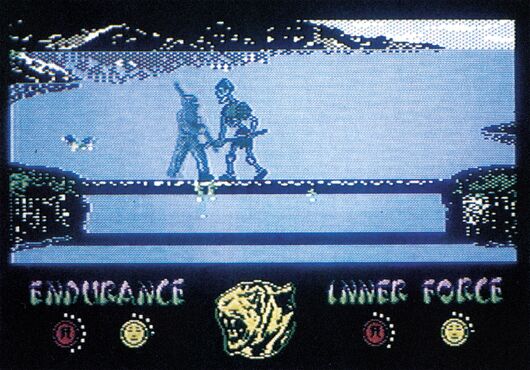
International Karate / Way of the Tiger


Der Karateschlag hat in den letzten Monaten nichts von seiner Faszination verloren. Nur so läßt es sich erklären, daß wieder mal zwei Kampfsportspiele erschienen sind.
  •  

Auto-Save

Wenn Ihnen beim Abtippen eines Programms schon mal der Strom ausgefallen ist, dann ist das folgende Programm genau das richtige für Sie.
  •  

Sony’s best noise-canceling earbuds are nearly $100 off today only

Woman wearing Sony WF-1000XM6
Sony’s WF-1000XM6 are on sale in black today only. | Image: Sony

For a very limited time, Sony’s latest high-end noise-canceling earbuds are actually cheaper than their last-gen counterpart, the WF-1000XM5. B&H Photo is selling Sony’s latest WF-1000XM6 in black for an all-time low of $238 ($92 off) at checkout. Other retailers aren’t currently offering a discount on the XM6.

Sony WF-1000XM6 earbuds

The Sony WF-1000XM6 earbuds in both black and grey.

Where to Buy:

The XM6 are a solid upgrade over their predecessor and easily amongst the best noise-canceling wireless earbuds on the market. In his review, John Higgins noted that they do a better job of tuning out other people’s conversations than any other earbuds he’s tested. Sony has also improved the bone-conduction sensor and added AI-powered microphones that help keep your voice clear during calls, even in noisy environments.

The XM6 earbuds also deliver clean, balanced sound with impressive bass, raising the bar of what we expect with Sony’s WF-1000XM series. If you prefer to customize your listening experience, Sony’s Sound Connect app offers plenty of customization options, including the ability to adjust how much surrounding noise you hear without removing the earbuds. You can also personalize the touch controls.

The XM6 earbuds support Sony’s LDAC codec, which delivers higher-quality audio from compatible Android devices, too. New in the latest set is a listening mode that makes music sound more like background audio playing in a cafe, allowing you to listen to your favorite music without getting too distracted from whatever you’re doing.

Read our Sony WF-1000XM6 review.
  •  

"Wreckage" of Amelia Earhart plane probably just trees

Image: Archaeological Legacy Institute

The remote Pacific island of Nikumaroro, Kiribati, has been a candidate for the aviator's final resting place since she and her navigator, Fred Noonan, disappeared en route to Howland Island, 400 miles to the north, on July 2, 1937. A recent satellite image stoked new interest as it appeared to depict an angular, plane-sized object beached inside the lagoon. — Read the rest

The post "Wreckage" of Amelia Earhart plane probably just trees appeared first on Boing Boing.

  •  

Resident Evil fan film is just as spooky as the games

Resident Evil: Veronica. Screengrab via Capcom

Granted, I'm not the world's biggest Resident Evil fan. The only one I've played in full was Resident Evil 7, a grimy Texas Chainsaw Massacre-inspired ordeal that's about as close to disconnected from the series' convoluted overarching plot as it gets. — Read the rest

The post Resident Evil fan film is just as spooky as the games appeared first on Boing Boing.

  •  

Atomic Shrimp, the godfather of scambaiting, is back

hacker dude

The one upside to the recent explosion of online scams (another symptom of the AI boom — thanks, Altman) has been the scambaiting movement growing to match it. There is nothing more cathartic than watching someone take an unsuspecting scammer for a ride, wasting their time, energy and occasionally AI tokens. — Read the rest

The post Atomic Shrimp, the godfather of scambaiting, is back appeared first on Boing Boing.

  •  
❌