❌

Reading view

What “Once Upon a Time in Harlem” can teach us about arguing over Black art

Amid a social media era where people often feel more unheard and misunderstood than ever, so much about director David Greaves’ documentary, “Once Upon a Time in Harlem,” feels like a relic: a snapshot of a time when intellectuals gathered in person for lively, productive debate. 

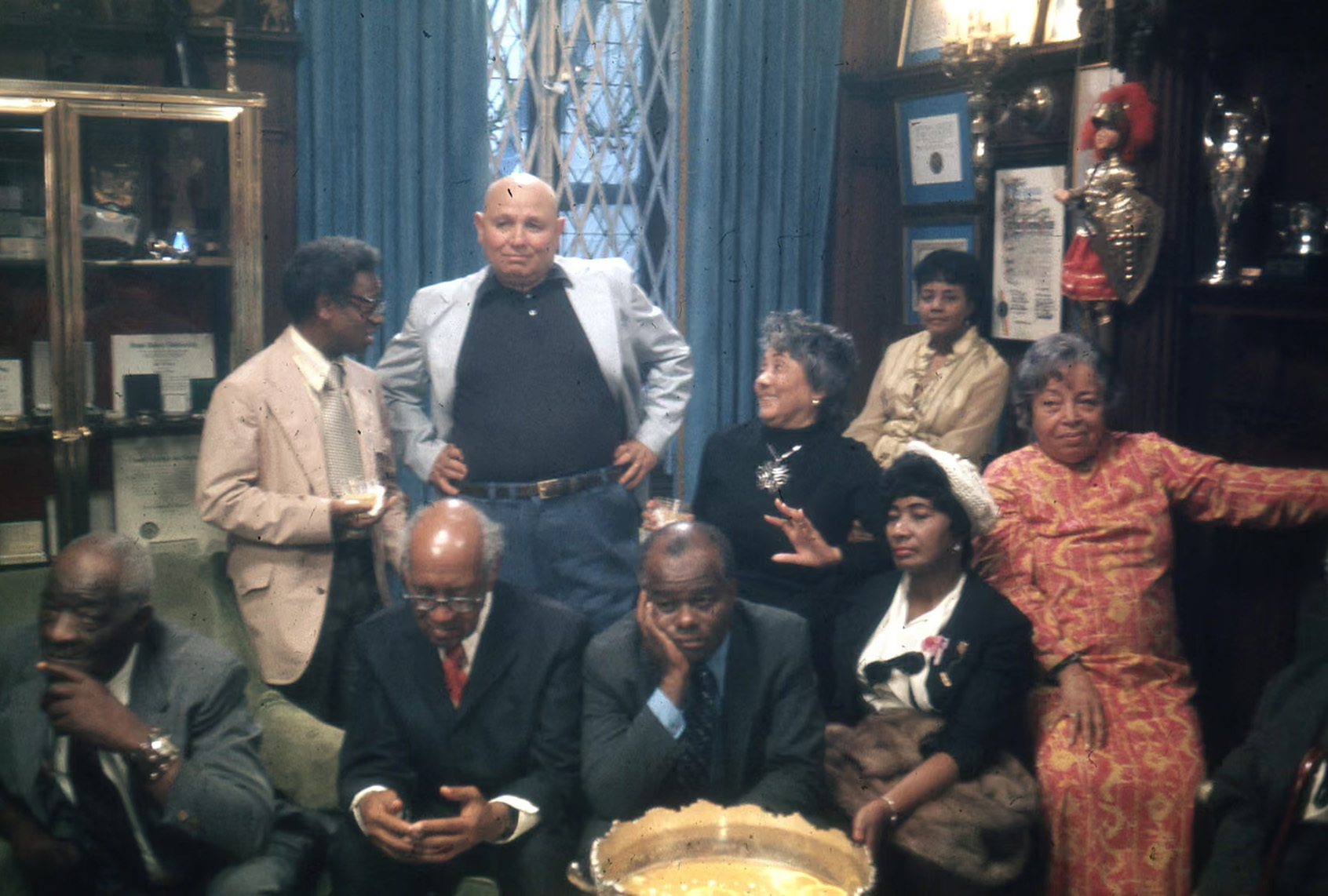
The film, newly restored from Greaves’ father William’s original offering, captures a staggering array of luminaries of the Harlem Renaissance reflecting on the period during a four-hour cocktail party at Duke Ellington’s townhouse in 1972. That salon included pianist Eubie Blake, artist Romare Bearden, activist Louise Thompson Patterson, playwright Irvin C. Miller, journalist Gerri Major, and librarian Jean Blackwell Hutson grappling with the legacy of the era and the issues it raised that persisted even then. 

It’s an intimate, engaging discussion among people with different approaches, styles, and even points of view while, as Brienne Adams, assistant professor of Black Studies at Georgetown University, put it, “still having the goal of Black humanity and liberation at the forefront.”

Among those sources of conflict expressed in “Once Upon a Time in Harlem” are the years that comprised the Harlem Renaissance, or the New Negro Movement as it was often referred to at the time. To hear one person tell it, it was the 1920s. Another suggests that it really found its footing in the ‘30s, while someone else considers its genesis around the 1910s, punctuated by the Silent Protest Parade of 1917.

What is seen in “Once Upon a Time in Harlem” is, to borrow writer and journalist George Schuyler’s words in the film, “a mark of a civilized community,” people challenging each other on everything from their art to their politics.

There are also ponderings on the Black journalist agenda; thoughts about the intentions and tactics of political activist Marcus Garvey; concerns that writer and anthropologist Zora Neale, sculptor Augusta Savage, poet and novelist Countee Cullen and others were minimized. There’s a rich conversation about the efficacy of influential figures such as gangster Casper Holstein and writer Carl Van Vechten, who helped finance and support, respectively, members of the Harlem Renaissance and their work. With Van Vechten, author of the controversial 1926 novel, “Nigger Heaven,” comes the question of how white patronage impacted the cultural output of the era.

Relatedly, writer and journalist George Schuyler cogitates on his prominent 1926 essay in The Nation, “The Negro-Art Hokum,” and poet and activist Langston Hughes’ follow-up, “The Negro Artist and the Racial Mountain,” as urgent critiques of the white relationship to Black art.
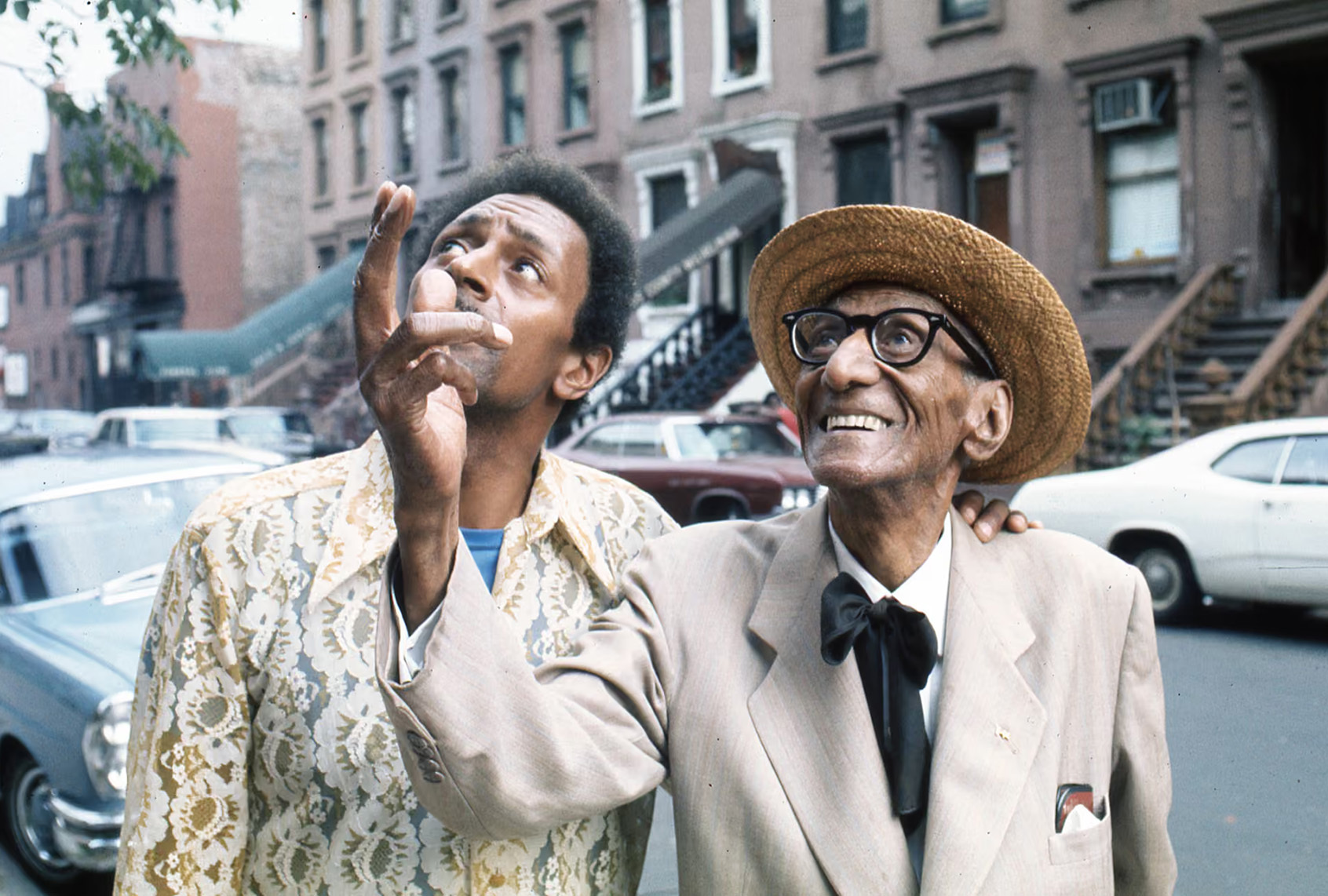
(Neon) “Once Upon A Time In Harlem”

It doesn’t take long in “Once Upon a Time in Harlem” for the many voices in Ellington’s home to get louder and start to overlap as boozy drinks are poured and the elder Greaves flits from one side of the room to another to catch each rebuttal and vivid recollection. Decades after the Harlem Renaissance, it had to be remarkable to witness such insight and impassioned thoughts about the era from those who lived it — and in the same year that the National Black Political Convention raised the alarm on some of those same concerns once again. 

In 2026, though, at a time when social media too often mangles critical thinking and disagreement, it is downright extraordinary. It’s also nostalgic in a way that finally seems imperative in today’s Hollywood that reeks of hollow, monetized sentimentality about its past.  

What is seen in “Once Upon a Time in Harlem” is, to borrow Schuyler’s words in the film, “a mark of a civilized community,” people challenging each other on everything from their art to their politics. He recalls that every ethnic group in Harlem had “intellectual centers” for such discussions.  


Want more from culture than just the latest trend? The Swell highlights art made to last.
Sign up here


It’s not that Black critical engagement doesn’t still happen every day, even online. It’s that it’s much more difficult to parse through an algorithmic funnel of opinions and perspectives that can often appear half-formed or entirely outside their context. 

“Social media allows for more voices to be heard, but algorithmically situated based upon someone’s interests where they’re entering into the conversation,” Adams said. 

Just as Harlem Renaissance figures broached subjects such as the white influence on Black art and questions about what defines Black art or a Black artist, particularly inside a white business establishment, there are still concerns about the representation of Black art and stories. The conversations about Issa Rae’s trajectory from YouTube to HBO and Tyler Perry keeping many Black actors employed, though consistently coming up against criticism over the quality of his work, both come to mind. 

But recent pushback and critiques of offerings such as the new “A Different World” series and the “Michael” movie once again raise valid concerns about the state of critical debate on Black art. What it too often comes up against are parasocial responses, antagonism, doxing, or a preciousness around the critique, particularly at a time when Hollywood has rolled back on Black storytelling. 

Back then, it was about critiquing Black art for Black art’s sake and its possibilities, when today critical discussions seem to urgently hinge on Black art for the sake of its preservation.

Adams, whose background in digital studies examines interiority in Black cultural productions and fandom expression as an example of Black digital knowledge production and public intimacy, said that the rise of content creators is one component of those responses. 

“If they are content creators that are having these conversations because getting eyes on their content can be tied to monetary gain, that can sometimes lead to salaciousness in the approach to the ‘civilized’ society, right?” she explained. 

That motivation, Adams added, can lead to a need to demonstrate “the most,” “whether that is the most right, the most devoted (in the case of fandom), the most knowledgeable, the most (insert marginalized identity here). People resort to antagonisms to demonstrate their hierarchy of ‘most.’” That, in turn, results in a collapse of intellectual curiosity and humility that “undergirds critical thinking,” Adams concluded.


There’s also the distinction that, unlike some of the most notable figures of the Harlem Renaissance, social media assembles people from across various classes, education and media literacy levels, professions with sundry access to information and art itself. Additionally, motivation, even beyond the content creation monetization that Adams pointed out, can sometimes be connected exclusively to the idea of supporting and amplifying Black art and artists while deprioritizing inquiries of their merit. 

Contrarily, Harlem Renaissance figures such as writer Zora Neale Hurston, Hughes and others were able to gather in more intimate spaces among people they often already knew from the neighborhood with similar interests and scholarship, regardless of whether they agreed. In fact, they often didn’t. 

Where writing critiques in news media like The Nation, Fire!, and The Crisis, which ran a Black symposium with questions about how “The Negro” should be portrayed in Black art in 1926, was a way to engage with other intellectuals; social media broadens that audience and more quickly. Plus, like today when many outlets require that their readers pay for subscriptions to access essential journalism, essays from the Harlem Renaissance and even the 1972 gathering in “Once Upon a Time in Harlem” restrict engagement based on intellect or economics. 
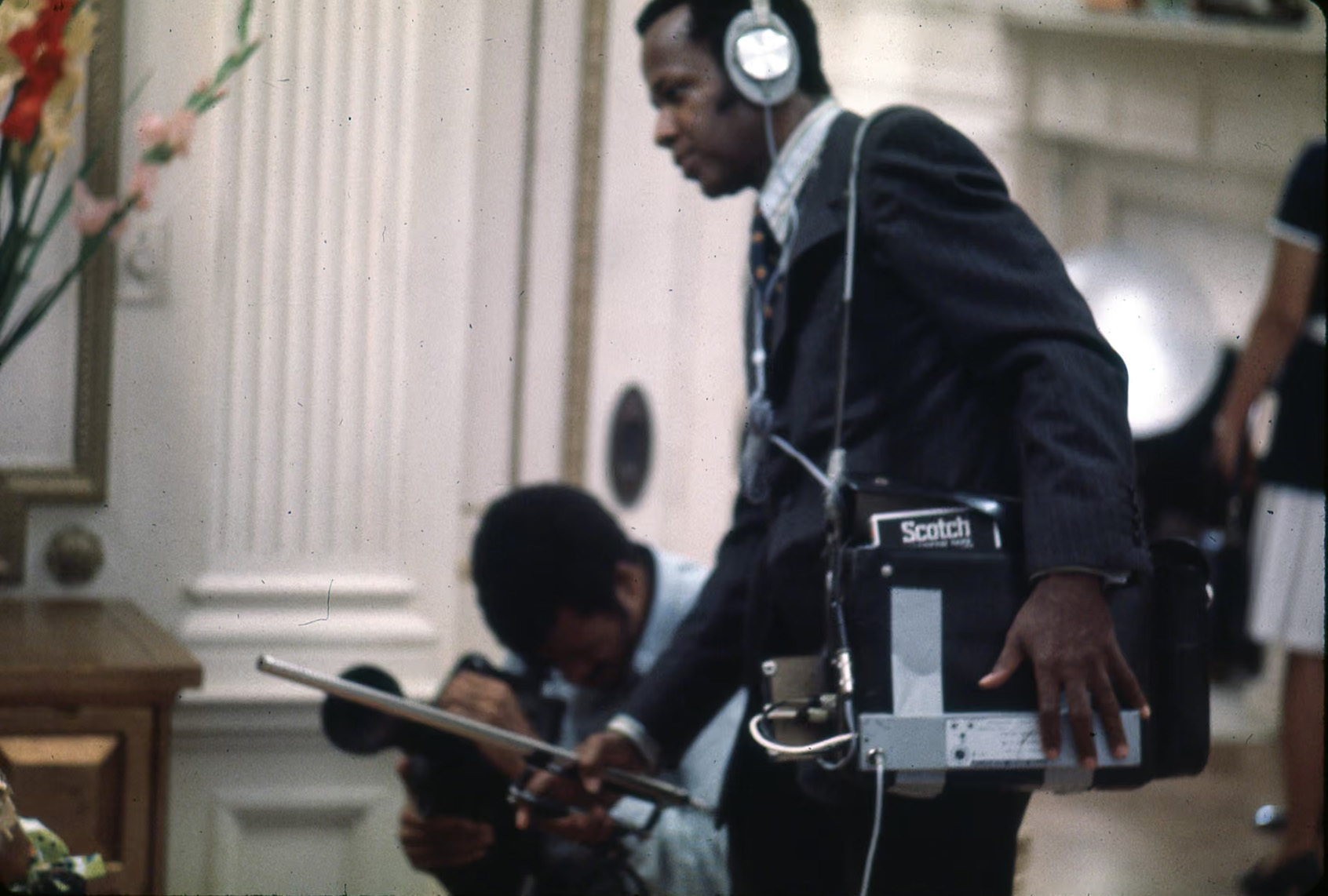
(Neon) William Greaves on the set of “Once Upon A Time In Harlem”

“The artists and scholars of the Harlem Renaissance are still this small, kind of enclaved people that maybe most of them went to Howard who are having very similar types of training and conversation,” Adams said. 

Add to that, most patrons across the racial spectrum who engaged with the work and workers of the Harlem Renaissance didn’t have as much access to their personal lives to form parasocial relationships with them as fans have today. Back then, it was also often about critiquing Black art for Black art’s sake and its possibilities, when today critical discussions seem to urgently hinge on Black art for the sake of its preservation. Those distinctions impact the response to critical discussion — from the in-fighting on BookTok to the arguments on Threads. 

Still, concern about the increased dearth of Black artists and Black art is legitimate. Filmmaker Nina Lee said that Hollywood gatekeepers preclude greenlighting certain Black films until they determine that others of their ilk make a splash at the box office. But that reality is too often used to establish a tenderness around criticism of the Black art that does manage to come down the pipeline. 

However, that delicacy around discussing the flaws of Black art can, as Adams considered, illustrate a propriety to the white for the sake of white acceptance. “The preciousness around critiquing it still centers white gazes to say that we have to be presentable and respectable in ways,” she said.  

None of that is conducive to the type of “civilized community” Schuyler reflects upon in “Once Upon a Time in Harlem.” While some have managed to successfully carve out their own niche spaces online for critical debate, from podcasts to more curated social media discussions and personal Substacks, the recognition that it serves to help push the art forward is too often lost. 

That contemporary disconnect is what makes Greaves’ documentary that more profound. It deepens audiences’ understanding of healthy, effective debate through a reflection of our not-so-distant past at a time when too many are consumed by self-aggrandizement rather than the roadmap those who came before them already laid out. As Major says in the film, “They’re going to lose if they cannot profit from the struggles that we went through.” 

The post What “Once Upon a Time in Harlem” can teach us about arguing over Black art appeared first on Salon.com.
  •  

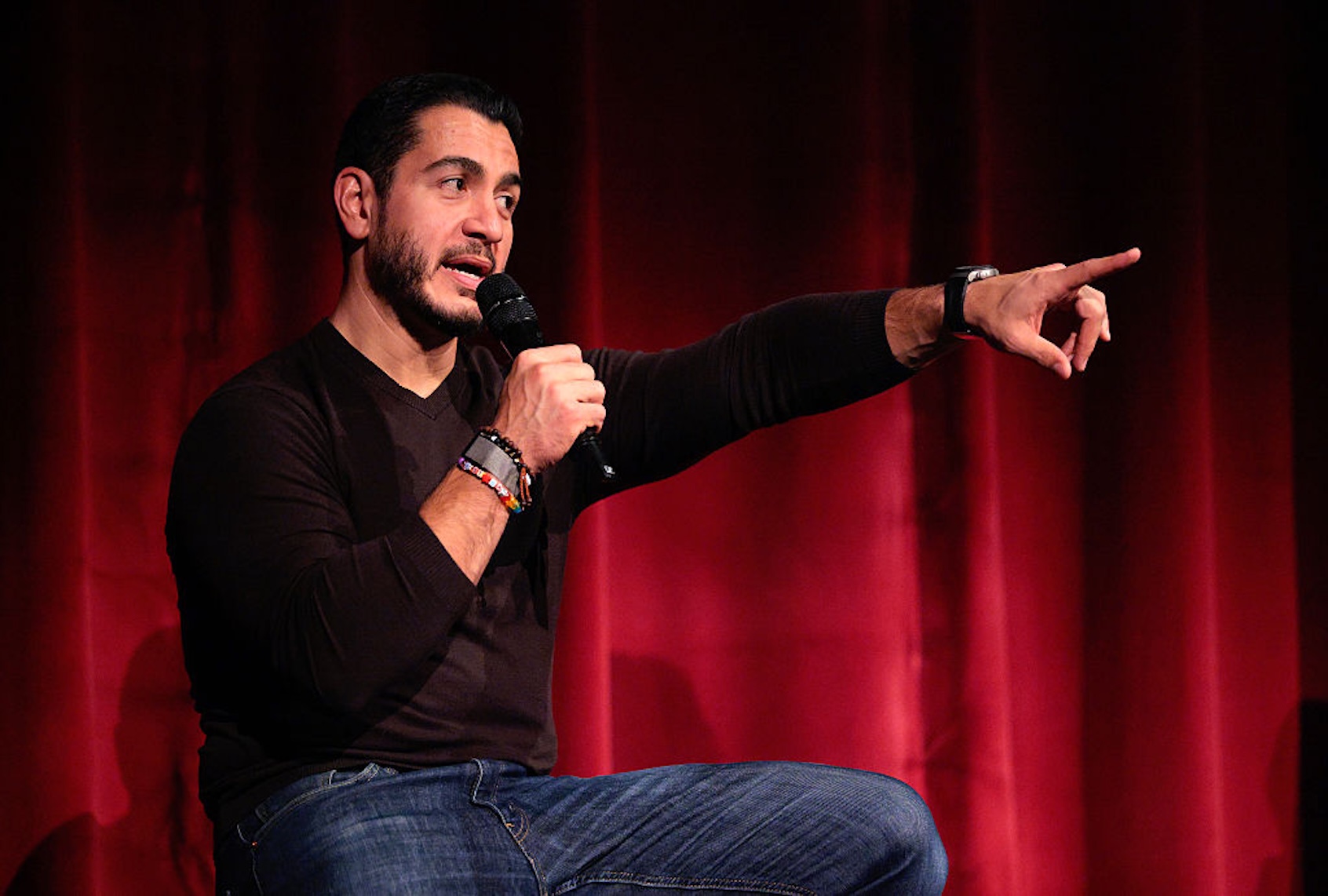
Abdul El-Sayed’s fighting style terrifies MAGA

Jesse Watters can’t seem to stop admiring Dr. Abdul El-Sayed. The Fox News host loves to talk about how Michigan’s Democratic nominee for the Senate is “in great shape” and how “Abdul . . . beat the machine” — meaning the party establishment’s candidate, Rep. Haley Stevens — in a hard-fought primary. During an interview in August, Watters clearly enjoyed El-Sayed’s jokes and blunt speech, which included calling his opponent, former Rep. Mike Rogers, a “beta,” and asking the host if he was circumcised when Watters tried to corner him on gender-affirming surgery for minors. The next day, Watters made no bones about El-Sayed’s appeal. “I like him,” he said. “I don’t want to like him. I like him for some stupid reason.”

But the reason was obvious. The doctor-turned-politician has an aggressive bro style that appeals to someone like Watters. Quick-witted with bulldog energy, El-Sayed never backs down from a fight. But despite Watters’ admiration, Fox News has become obsessed with taking El-Sayed down. It’s not because he’s Muslim, though Republicans are ratcheting up the racism in their efforts to derail his campaign. It’s because he is a model for how Democrats can escape their reputations for being weak and feckless. 

El-Sayed has a lot going for him. He spent years running public health services in the Detroit area and speaks eloquently and with authority about people’s struggles to afford healthcare, even writing a book about Medicare for All. Most importantly, he’s an excellent communicator who can boil down complex policy ideas into easily digestible concepts without dumbing them down. A video of him explaining to Trump voters why universal healthcare is cheaper than the insurance system went viral for good reason. One can see that, for these voters, it’s likely the first time someone plainly explained how removing executive salaries and profit incentives from healthcare makes it cheaper. 

Other politicians, like Sen. Bernie Sanders, I-Vt., or Sen. Elizabeth Warren, D-Mass., are good at explaining progressive policy. But what really seems to scare Republicans about El-Sayed is his political persona as a brawler — and for good reason. Vice President JD Vance learned this last week when he lobbed a strange insult at El-Sayed during a rally in Michigan for Rogers. The Democrat, Vance said, is “a little weasel who should shut his mouth and show a little gratitude.”

This is a common and deeply racist attack from Vance, who portrays non-white progressives as undeserving recipients of white people’s largesse — a caricature that has no relation to reality. El-Sayed left a position as an assistant professor at Columbia University to work in public health, where he won awards for his success in protecting children’s health from environmental pollution. During this same period, Vance worked as a venture capitalist who was close with tech billionaire Peter Thiel.

El-Sayed resisted the temptation to “well, actually” Vance, and instead hit back by calling the vice president and those around him “carnival barkers” who “are small and want to make us small like them.” His response was smooth. “JD Vance called me a little weasel today,” El-Sayed said. “I’m like, ‘No, no, no. What you’re talking about is a Wolverine,'” a reference to the mascot for the University of Michigan, where the Democrat got his undergraduate degree. 

As Salon’s Sophia Tesfaye recently wrote, El-Sayed has been courting Fox News viewers by appearing on the channel and running endless ads on it, all without softening his left-leaning message. He clearly hopes his bravado will woo some of the network’s audience, just as it won over Watters. 

For his part, President Donald Trump is worried that El-Sayed is right. He’s been openly complaining at rallies and on Truth Social about how charming the candidate is in his Fox appearances. In early October, Axios reported that the White House contacted the network to complain about El-Sayed’s coverage. Trump was especially miffed at the Democrat’s interview with Martha McCallum, during which the host’s efforts to bait him into saying something that could be spun as “radical” failed. Instead, MacCallum embarrassed herself by defending billionaires hoarding wealth, to which El-Sayed said that he’d rather pay for schools than be so “focused on allowing a billionaire to make another billion.”

Since then, it seems that Fox producers got the White House’s message that they have to do something to dirty up El-Sayed. But they’ve learned the hard way that it won’t work to come at him directly, because he ends up dominating interviews and beguiling those who, like Watters, love his commanding and clever style. MacCallum later tried to redeem herself by interviewing progressive activist Corbin Trent and pretending he was a stand-in for El-Sayed.

At first glance, Trent performed as Fox producers no doubt hoped he might. He took MacCallum’s bait by defending the Muslim Brotherhood, something that the host could not get El-Sayed to do. The problem, though, is that Trent has no discernible relationship to the candidate. While he has worked for other progressives, including Sanders, I found no evidence that he has even met El-Sayed, much less is qualified to speak for him.

This attempt to hobble El-Sayed was revealing; it’s clearly all Fox News has. If the network tries to bring El-Sayed on again to ask him the same questions, they know from experience that he’ll probably just win over even more of their viewers. This isn’t idle speculation. MS NOW recently conducted a focus group with regretful Trump voters in Michigan and found that five out of the six are voting for El-Sayed. Republicans should be worried about the young male demographic in particular. Trump won male voters under 30 by a narrow margin in 2024, but they are jumping ship and now strongly favor Democrats.

El-Sayed is a compelling model for a new kind of Democrat. Polling by Strength In Numbers/Verasight shows that even Democratic voters take a negative view of the party, but not because they think their leaders are too progressive. “[T]he single most common complaint about their own party is that it is too weak, too cautious, or not fighting hard enough,” writes G. Elliott Morris in an analysis of the poll.

The Democratic base wants the party to take a more aggressive stance toward their GOP opponents, which will be key to building a more lasting coalition — especially one that includes younger and more male voters. El-Sayed is doing just that, and it has the right scared.

The post Abdul El-Sayed’s fighting style terrifies MAGA appeared first on Salon.com.

  •  

Even Europe’s far right is ready to dump Trump

When Donald Trump returned to the White House in 2025, he seemed like the leader, or at least the dominant figure, of a globalized version of the MAGA movement, a worldwide network of far-right parties sometimes described as the “nationalist international.” We can make a long list, starting with Nigel Farage’s Reform UK, Marine Le Pen’s National Rally in France, the not-quite-neo-Nazi Alternative for Germany, or AfD, and Giorgia Meloni’s Brothers of Italy, along with other previously-fringe parties now creeping toward the mainstream in many different places. 

If it strikes you that the term “nationalist international” contains its own contradiction, by the way, you’re miles ahead of JD Vance and Stephen Miller and the rest of the Trumpian pseudo-intellectuals, who still haven’t figured that out.  

That vision of a MAGA-centric new world order was always an illusion, although it began with some fragments of plausibility and was enormously amplified by the Trump distortion effect, meaning our president’s uncanny ability to soak up media attention and make himself the main character of every narrative. Now that illusion has melted away like an ice cube in Europe’s catastrophic summer (where I personally experienced a 104℉/40℃ day in Berlin, the highest recorded temperature in that city’s history). 

Indeed, the world now faces another apparent contradiction, or at least a historical irony. If Trump still looms over the American landscape like an unkillable ogre in a third-rate AI fairytale, he is all but finished as a political force. He has done more damage to his own country than anyone since Jefferson Davis, his disillusioned supporters are deserting him, he is universally despised around the world and he’s headed for a potentially historic electoral defeat in November. 

Europe’s far right, on the other hand, is doing fine without him. It’s about a 50/50 proposition that by the end of this decade the four largest nations in Europe will be governed by right-wing populist parties. All of them at some time sought inspiration and financial support from Trump and his Mar-a-Lago hangers-on, and pretty nearly all of them have now ghosted him entirely, and pretend they never really knew the guy: “Neues Handy, wer bist du?”

Trump’s second term began with a triumphal sense that a hard-right “vibe shift” was transforming not just America but the world (which Americans are always ready to perceive as a picturesque but unreliable subsidiary). Those early months of 2025 were undeniably terrifying and inordinately destructive, but they were also ridiculous. In retrospect, from half a tick into the future, those guys were immeasurably high on their own supply, based on a narrow electoral victory over incompetent and disorganized opposition.  

Early in Trump’s second term, Vance, Marco Rubio, Elon Musk and others were dispatched to various world capitals to urge support for right-wing candidates or to deliver preposterous blood-and-soil history lessons straight out of wingnut “Great Books” podcasts.

As part of that extended touchdown dance, Vance, Marco Rubio, Elon Musk and others were dispatched to various world capitals to urge support for right-wing causes and candidates, or to deliver preposterous blood-and-soil history lessons straight out of wingnut “Great Books” podcasts. That tendency culminated in the now-legendary 2025 National Security Strategy, a document that offers most presidential administrations a chance to deliver boilerplate language about shared values, human rights and democracy. 

Not this time. As I wrote last year, the NSS featured a poisonous combination of “Great Replacement-fueled fanboy enthusiasm for far-right parties” and “unhinged and unconcealed racist panic.” Europe was losing its cultural identity, the document warned, and faced the “stark prospect of civilizational erasure” as well as the (entirely imaginary) possibility that “certain NATO members will become majority non-European.” 

That was one of many vainglorious MAGA failures to read the room, on an international scale. Right-wing European politicians traffic in similar rhetoric, to be sure. But nobody on that continent, of any dispensation, enjoys receiving arrogant lectures on history and civilization from Americans, and even extremist parties like Reform UK or the AfD prefer to cloak the bigotry in layers of euphemisms and some degree of plausible deniability. 

In a long and painful video interview with Economist editor Zanny Minton Beddoes published this past week, for instance, AfD co-leader Alice Weidel professed horror and amazement when asked whether her party contains overtly racist or proto-fascist elements. As Weidel took pains to point out, she is married to a Swiss woman of Sri Lankan ancestry, which presumably cleanses her of any bad intentions when she rejects “gender theory” or insists that all the Syrians and Afghans now living in Germany must leave. 

That interview is an instructive experience in other ways. Beddoes repeatedly asks Weidel why she can’t just be a normal budget-cutting conservative, of a variety less frightening to readers of The Economist. Oh, but she absolutely is, Weidel insists, lulling her interlocutor for a while with prodigiously dull business-school chatter before returning to her central theme: Germany’s financial woes will be cured, somehow, by expelling the Muslims.

To return to our main theme, Weidel mentions Trump only twice, with evident distaste, in that hour-long conversation. That’s not exactly news at this point. By the time the above-mentioned NSS was published last December, Europe’s far-right populists had already reached the conclusion that Trump was a loser. Or, in the more delicate phrasing of Armida van Rij in the newsletter Strategic Europe, that “Trump’s repeated threats to invade Greenland, his attacks on the pope and Italian Prime Minister Giorgia Meloni, and his trade war on the EU have made the friendship electorally costly.”

That became obvious to the entire world last April, when MAGA darling Viktor Orbán was routed in Hungary’s election after JD Vance’s campaign visit provided the “political kiss of death,” in the words of Daniel Hegedüs of the Institute for European Policy in Berlin. That was the same month, as it happens, when Meloni publicly broke with Trump over the latter’s criticisms of Pope Leo XIV.

But Marc Bassets of the Spanish newspaper El País identifies the real turning point a full year earlier, in the Canadian elections of April 2025, when Trump’s threats and mockery drove mainstream liberal Mark Carney to an unexpected victory over a MAGA-friendly opponent who seemed to hold the advantage.

That result, coming just three months into Trump’s term, “became an example closely watched in Europe,” Bassets writes, which was replayed in several subsequent elections. Then came Trump’s threatened annexation of Greenland, his raid on Venezuela and his disastrous war with Iran, all of which were blatant violations of national sovereignty, the core principle of Europe’s new right. 

Like Trump’s capricious tariff war and his public feuds with Meloni and the pope, this reflected the president’s profound ignorance about the world and a fundamental mismatch between the grandiose neo-imperialism of MAGA foreign policy and a European far right that “increasingly presents itself as a rebellion against Americanization” and wants no part of world maps plastered with the Stars and Stripes or arbitrarily renamed bodies of water. 

All of this reflects a fundamental mismatch between the grandiose neo-imperialism of MAGA foreign policy and a European far right that “increasingly presents itself as a rebellion against Americanization” and wants no part of world maps plastered with the Stars and Stripes.

That quotation comes from Robert Benson of the centrist think tank Center for American Progress, who argues that the Trump administration “has mistaken cultural affinity for strategic alignment” in empowering political parties like the AfD that may “share mutual enemies” with MAGA — such as multiculturalism, racial justice, LGBTQ rights and climate policy — but “do not share American interests, or even the interests of this administration.”

As Europe’s far-right leaders draw closer to holding power (or already do, as in Meloni’s case), Trump’s support “appears almost as a liability,” as Dominique Moïsi of the Paris think tank Institut Montaigne tells El País. Trump has long been massively unpopular among European voters across the political spectrum, and his approval ratings cratered to new lows after the Iran war drove energy prices into the stratosphere. Across Europe, the U.S. is now viewed less favorably than either Russia or China, a remarkable accomplishment whose long-term effects are impossible to calculate.

In France, Marine Le Pen is focused on winning next year’s presidential election and has conspicuously avoided saying Trump’s name throughout his second term. She leaves that to her deputy and potential future prime minister, Jordan Bardella, who has repeatedly castigated Trump’s “totally erratic” war with Iran: “No one can say what the ideological backbone of this war is, a war whose end seems nowhere in sight.”

Meloni recently became the longest-serving Italian prime minister since World War II — an extraordinary fact in itself — and over her four years in office has gone from “Trump whisperer” to the evident conclusion that Trump is a “toxic asset,” in Bassets’ phrase. (The “Trump whisperer” label has also been affixed to former British Prime Minister Keir Starmer and current German Chancellor Friedrich Merz, with dire political consequences.)


Want more sharp takes on politics?
Sign up for our free newsletter, Standing Room Only by Amanda Marcotte, also a weekly show on YouTube or wherever you get your podcasts.


Even the AfD, despite its aforementioned “cultural affinity” with MAGA and a mutual eagerness to throw Ukraine overboard and make nice with Vladimir Putin, has evidently concluded that glowing endorsements from the likes of Musk, Vance and Rubio are a mixed blessing when the U.S. “has become so unpopular in Europe that being close to Trump is not a source of legitimacy,” in Moïsi’s words. Weidel has reportedly described the Iran war as a “catastrophe” in private meetings, while Björn Höcke, the most inflammatory figure on the AfD’s right flank, has mocked mainstream politicians as “German-speaking Americans” and demanded the withdrawal of U.S. troops from German soil.

All of this points us toward the inescapable conclusion that Donald Trump was never the leader of anything. He was an empty vessel into which hundreds of millions of people in America and around the world poured their confusion, rage and desire. He became a global symbol of the failure of liberal democracy, but was not the reason for it. As he fades from the scene, the global crisis he came to represent is more urgent than ever. 

Donald Trump was never the leader of anything. He was an empty vessel into which hundreds of millions of people in America and around the world poured their confusion, rage and desire. He was a global symbol of the failure of liberal democracy, not the reason for it.

As Italian journalist Mattia Ferraresi recently observed in a New York Times panel discussion, “Mainstream liberal politics, in both its left- and right-wing versions, failed to deliver on its promises, not only in terms of welfare and economic growth but also in the more complex realm of identity and meaning.” What we see around the world today, in the ascendant far right and in a newly radicalized generation of young people from Paris to New York, are “expressions of the same disillusionment with liberalism and its policies.”

It has become almost irresistible to compare this era to the 1930s, when “bourgeois democracy” collapsed in Europe, plunging the world into murderous darkness. If the parallels are clear enough, the world is a very different place in this century and the outcome does not have to be the same. The future remains unwritten, and Donald Trump will not be its author. 

The post Even Europe’s far right is ready to dump Trump appeared first on Salon.com.

  •  
❌