Ahead of the 2024 election, Elon Musk and Tucker Carlson joked on a livestream that Musk was “fucked” if Democrats won the White House. Musk had trollishly asked on Twitter why, despite two Trump assassination attempts, no one tried to assassinate Joe Biden or Kamala Harris. That, he and Carlson mused, was enough for the Democrats to throw him in prison. “How long do you think my prison sentence is going to be?” Musk said. “Will I see my children, I don’t know.”
Remember when billionaire Elon Musk and President Donald Trump were supposedly enemies? At the start of Trump’s second term, the world’s richest man, was busy ripping through nearly every level of the U.S. government with the Trump-approved Department of Government Efficiency. But by June 2025, the Wall Street Journal reported the pair had “torched” their relationship, which amounted to a lot of social media slapfights and accusations about who was in the Epstein files. But the truth is, the two men have a storied on-off relationship that seems to fluctuate based on who’s grabbing the check.
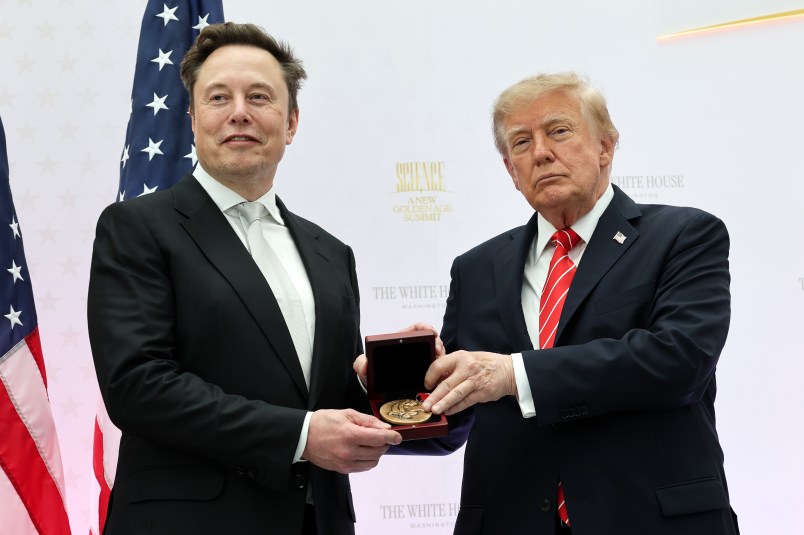
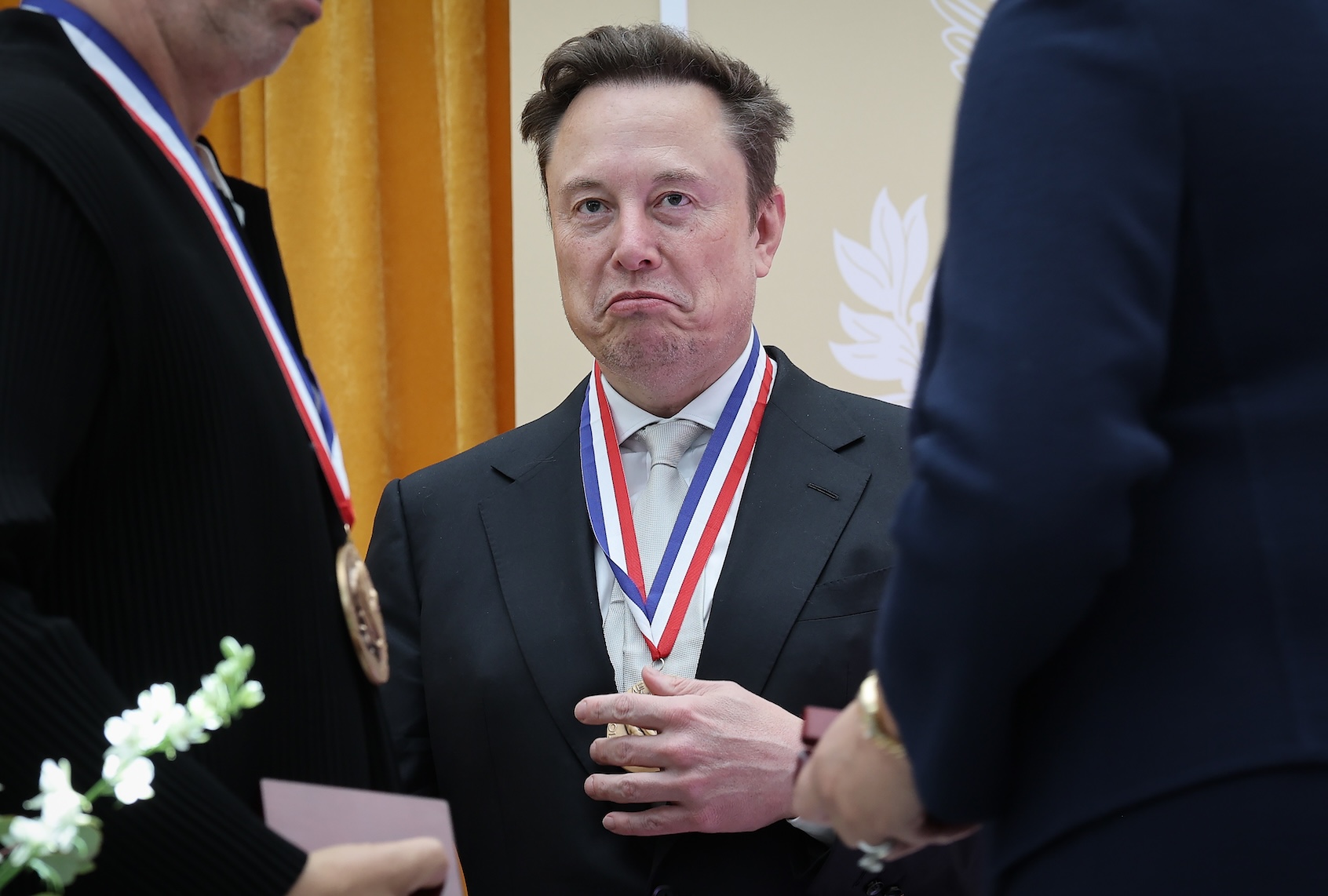
Lately, Musk and Trump are back to acting like close pals. It was hard not to cringe watching the president award Musk the National Medal of Science on Oct. 8, the highest honor the U.S. can bestow on a scientist or engineer. I was probably reading too much into it, but I sensed some awareness on Musk’s part that it was an empty gesture, unless inflating stock prices is a scientific achievement. But maybe the pageantry is meant to distract from how many government grants Musk has been awarded. According to multiple reports, Tesla and SpaceX basically would not exist without the government giving Musk’s companies wads of cash.
At any rate, Musk is now stepping in to try to save Trump’s allies in the midterms, dumping hundreds of millions into races, with Axios reporting he is “single-handedly keeping the Republican Party afloat in some of its most vital races.” So far, he’s spent some $366 million in pro-GOP midterm TV spots and other campaign efforts, with $276 million donated since July alone. No other known donor comes close to dishing out more funding. But for Musk that’s a relatively trivial amount, even though his fluctuating trillionaire status is currently hovering below the threshold for designation.
Some of Musk’s money went to his own super PAC, but a good chunk also to the Senate Leadership Fund and the Lone Star Liberty PAC, both of which are backing Texas GOP Attorney General Ken Paxton’s endangered campaign for the U.S. Senate against state Rep. James Talarico. Right now polling indicates that statewide election results in the Lone Star State are going to be extremely tight, with new data from the University of Texas/Texas Politics Project released Wednesday indicating Democrats are statistically tied in key races. It’s not just Talarico, who leads Paxton 50% to 47%, but Democratic state Rep. Gina Hinojosa holds a one-point lead over Republican Gov. Greg Abbott, which is effectively a tie. Trump is reportedly already searching for someone to blame if Democrats pick up their first Senate seat in Texas since 1988.
Across the country, other races indicate a high likelihood that Democrats will retake the House, while the Senate still looking like a tossup. With these numbers, Musk is likely to dump even more cash into the election before Nov. 3, but it increasingly smells like desperation. As Alex Gibney, director of the new documentary “Musk,” recently told Salon’s Melanie McFarland, Musk is “literally paying for political advantage.”
“He’s spending way more now than he did for the presidential campaign in 2024, and in part that’s to get more money for himself in the form of military contracts,” Gibney said. “But also, he knows that a reckoning is coming for him if the Democrats take over the House and the Senate, and there’s going to be a lot of investigations into him for corruption and abuse of power, taking our information, particularly possibly relating to DOGE, and doing God knows what with it.”
It remains to be seen if this midterm meddling will pay off for Musk. He got what he wanted out of the 2024 presidential election by propping up Trump’s campaign, but his attempts to financially sway results in other races haven’t worked. In 2025, Musk dumped more than $18 million into a Wisconsin Supreme Court race, hoping to suborn the state’s redistricting efforts and regulations of car manufacturers and dealers. His influence made it the most expensive judicial race in U.S. history, but that still didn’t get him the outcome he wanted.
Last Thursday, Musk settled a class action lawsuit alleging that his PAC had engaged in fraud in the 2024 presidential election by falsely telling voters they had a chance to randomly win $1 million when the winners were actually predetermined. He also dodged bribery charges in August for trying the same stunt in the Wisconsin Supreme Court election.
In the end, the results will all come down to voter appetites, and there are increasing indicators that the majority of Americans are fed up with the ultra-rich meddling in government. A recent Fox News poll indicates that corruption is the top concern among both Democratic and Republican voters, with 60% extremely concerned, a figure that outpaces inflation (58%), gas prices (50%), government leadership (49%) and healthcare (48%). Data from a Washington Post-ABC News-Ipsos poll released Sunday found roughly two in three Americans believe Trump is using the presidency to enrich himself, with most of the increase over the past year coming from people who lean Republican.
These numbers may indicate that people are starting to see through Musk’s ruse. He could probably pour even more money into politics, and probably will anyway, but there’s a glimmer of hope that it won’t accomplish much.
With Election Day 2026 just weeks away and control of Congress hanging in the balance, the results will almost certainly hinge on voter turnout, just as they did in 2024.
As a scholar of U.S. politics, I see this as a high-risk strategy for Republican candidates and American democracy. That’s because reduced trust in election integrity can reduce motivation to vote – even if based on flawed information. But it’s not at all clear which Americans are most likely to stay home in November.
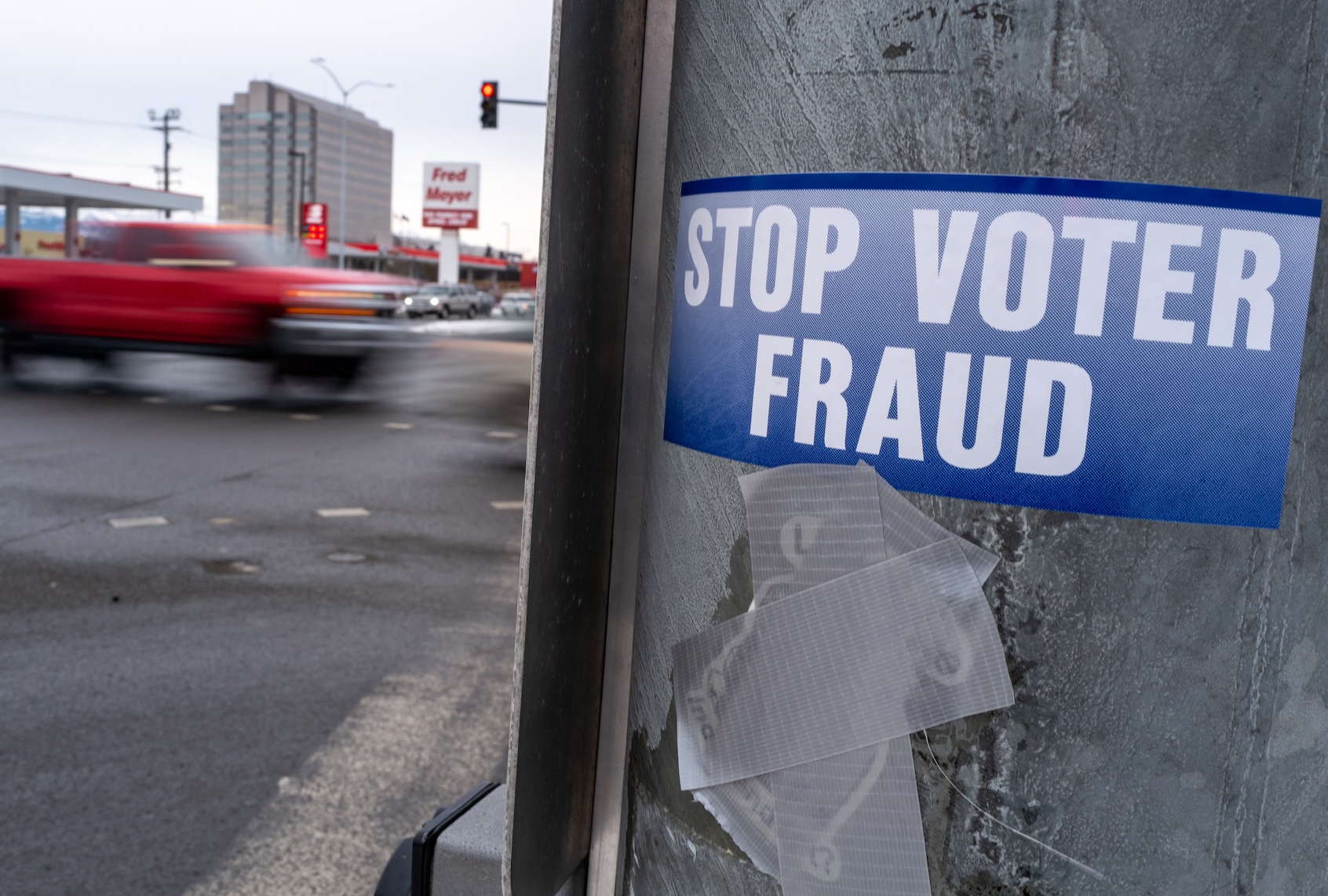
Nonetheless, rhetoric from the Trump administration about voter fraud has been pervasive. Consider the recent claim by Homeland Security Secretary Markwayne Mullin that Nevada had nearly 16,000 noncitizens on its voter rolls – a number reduced to 185 when state authorities pressed for details, and reduced to zero when the state investigated the names provided.
There is comparable behavior from Congress. My own research on political communication has shown that a substantial number of members of Congress, strongly skewing Republican, make frequent use of rhetoric that undermines democratic norms and delegitimizes political institutions.
How does this uncertain political environment influence voters?
There is clear data showing that voter confidence in elections has fallen across party lines: Only 65% of Republicans, 64% of Democrats and 57% of independent voters are very or somewhat confident that the 2026 vote count will be reliable. Conventional wisdom suggests such discouraging numbers would depress turnout.
Any campaign’s quest to mobilize additional voters, therefore, must find them among citizens without a strong sense of civic duty. But among these people, diminished trust in democratic processes can play out in counterintuitive ways.
Recent research on German voters is relevant to the U.S.: It shows that among more passive voters – those following cues from political elites – reduced trust in elections can depress motivation to vote. That’s because there’s no trustworthy result that voters are seeking to affirm.
Conversely, among voters with greater skepticism about elite messaging, reduced trust can motivate increased turnout as an attempted corrective for a flawed system.
What does this mean for potential voters in the U.S.? Among Republicans, it appears that the party’s strategy carries a strong risk of backlash.
Findings from MIT’s Election Lab confirm that cues from political elites are a powerful factor in voter behavior. Specifically, cues setting expectations of a disappointing or untrustworthy result will reduce motivation. Why vote if you don’t expect it to help achieve the desired result?
The same study finds Republican voters broadly inclined to believe GOP leaders’ cues about voter fraud and to frame their expectations accordingly. And once they’ve made that shift, they cling firmly to the belief, even in the face of contrary empirical evidence or messaging from within the party.
In the current election cycle, 50% of Republicans surveyed distrust mail-in voting, and 51% fear voting by noncitizens. They expect election results to be fraudulent. This likely won’t mobilize them, as there’s no positive result they can expect to affirm. The Republican Party’s messaging has painted its voters into a corner.
Democrats, meanwhile, are less inclined to believe claims of voter fraud. But they are more inclined to be concerned about attempts to undermine the midterms by political elites making such claims. Examples include the Trump administration’s efforts to sow doubt about voting by mail and about alleged noncitizen voting.
These efforts increase motivation to vote among Democrats. Unlike GOP voters, they see the capacity to correct for the system’s vulnerabilities – the potential and urgency to overwhelm attempts at voter suppression through higher turnout.
An election integrity officer, in red, trains poll watchers at the Orange County Registrar of Voters in Santa Ana, Calif., on Nov. 1, 2022. Television monitors display what each employee is looking at on their desk for observers to watch. Paul Bersebach/MediaNews Group/Orange County Register via Getty Images
Truth and trust
Opponents of Trump and the GOP may find these diverging effects encouraging. No matter the results this November, however, we’re left with a precarious dynamic. Increasing numbers of voters lack trust in elections and make their decisions to vote – or not – based on limited or flawed information.
Fortunately, there are signs of hope.
Although voters in general are poorly informed about how elections are conducted, they can and do respond to clear information familiarizing them with election processes.
I’ve seen this myself over the years, working with nonpartisan efforts to register young adults and train them as poll watchers. And in the current election cycle, there have already been widespread efforts to broaden public awareness about the fact that state officials, not federal ones, have authority over voter rolls and election security.
Looking beyond November, what Americans can hope for is a cycle in which clear election outcomes provide an opportunity to inform voters of how and why the system works. That’s the way to motivate more political engagement and voter turnout in the future.
The Trump administration’s Justice Department has escalated its pre-midterm crusade against California, using the myth of widespread noncitizen voting as its justification for novel and bizarre adventures to try to undercut trust in elections ahead of the midterms.
Just last week, the DOJ sent a letter to election officials in Los Angeles demanding election administrators take a series of actions after claiming it found thousands of noncitizens who were registered to vote in the state. DOJ officials laid out a list of steps they wanted local election administrators to take to ensure that these people, who it alleged were “likely noncitizen voters,” didn’t receive mail-in ballots or have their votes counted.
Since then, the Justice Department has also sued the state of California and threatened investigations and the potential prosecution of any election worker in the state who might knowingly process ballots from noncitizen voters. The DOJ has previously issued similar warnings to election officials across the nation.
Noncitizens voting in federal election is vanishingly rare and there is no evidence to show that it has impacted the outcome of any federal election. But President Trump and his allies roll out the conspiracy theory that it is widespread anytime he loses, or thinks he’s about to lose, an election, as TPM has reported for years.
On Monday, federal law enforcement arrested 11 people and charged 28 people residing in California, accusing them of making false statements and submitting fraudulent voter registrations. Each of the people charged have legal status in the U.S. but are not U.S. citizens, the DOJ said. The Justice Department is calling the sweep of arrests “Operation Protect the Vote.” The DOJ in an online statement accused California election officials of not properly maintaining the state’s voter rolls and ignoring its wild claims that there are some 20,000 noncitizens registered in the state.
My colleague David Kurtz got into the DOJ’s potentially unfounded accusations in Morning Memo a bit more last week, which you can catch up on here. There are plenty of reason to be suspicious of the DOJ’s claim that it has found tens of thousands of noncitizens on California’s voter rolls. The DOJ has been trying to force states to hand over their voter lists and/or to run their voter rolls through a faulty federal database that has a poor track record with finding eligible voters to be ineligible. Courts across the nation have blocked the DOJ’s campaign to seize voting records from states.
California Democratic Attorney General Rob Bonta told reporters on Monday that there is not a widespread issue with voter fraud in California and described the DOJ’s arrests as “a drop in the bucket” of the state’s 23 million registered voters.
“They provided no — no basis, fact, evidence, substantiation, backing for that allegation, all they provided was a list of people and nothing about why they’re purportedly ineligible,” Bonta said, referencing the DOJ’s claims that it’s identified 20,000 noncitizens on California’s voter rolls.
“If they have such information we would be happy to review it, but they’ve provided none. And what words they’re using are very important,” Bonta continued. “They’re not saying that ‘we have conclusive proof,’ they’re not saying ‘we know,’ they’re not even saying ‘we think we know.’ They’re saying ‘we believe it’s likely.'”
Bonta then brought up the last time that the Justice Department claimed to have found tens of thousands of noncitizen voters in Nevada earlier this year. Those claims fizzled out entirely.
“We are not impressed by their case, we are not impressed by their position. Our north start is the law and the facts and they have neither on their side,” he said. “We believe their case is meritless and we’ll make our position very clear in court.”
The Trump administration is ramping up its efforts to flush out noncitizen voters with next month’s midterm elections approximately two weeks away. On Monday, the Department of Justice filed criminal charges against more than two dozen green card holders in California, accusing them of illegally registering to vote or casting fraudulent ballots. The 28 defendants are lawful permanent residents with legal status in the country but are not citizens permitted to vote.
Noncitizen voting is incredibly uncommon, according to data on the issue, and has not been shown to influence the results of races. Not only does the practice create a paper trail, it carries steep penalties. “Federal law prohibits non-U.S. citizens from registering and voting in Federal elections; violators are removable and face up to five years in prison,” Citizenship and Immigration Services acknowledged in an October 2024 letter. “The evidence is clear that these laws are working as intended — it is extremely uncommon for noncitizens to vote in Federal elections.”
That hasn’t stopped members of the Trump administration from upholding the recent DOJ arrests, dubbed Operation Protect the Vote, as evidence of cheating in the midterms. “This causes real damage to real elections and real damage to American citizens,” Trent McCotter, the acting deputy attorney general at the DOJ, said during a Los Angeles news conference.
The arrests come less than a week after the DOJ sued California and sent officials a list on an USB drive and a handwritten password, demanding to know who on the list was a citizen or not with only a 48-hour window to respond. Dean Logan, the Los Angeles county clerk and recorder, told The Guardian his office refused to review the list, in part because they didn’t consider the USB drive to be secure. “The Department of Justice has not provided the underlying evidence, source, or methodology supporting its assertions that individuals identified in its records are ineligible to vote,” Logan said in a statement.
“If the regime truly believed California had an illegal voting problem — no such problem exists — they would have taken this action a long time ago, not as Californians are literally casting votes,” State Sen. Scott Wiener, a Democrat, posted on X. “This is all a political stunt to trick people into voting for Prop 39 (which will make it harder for citizens to vote) and to lay groundwork for a coup on January 3 by refusing to seat House Democrats based on bogus “voter fraud” claims.”
Prop 39, also known as the “Voter Identification, Citizenship Verification, and Registered Voter List Administration Initiative,” is basically a voter ID law. If passed, it would, among other things, require voters to present a government-issued ID for in-person voting or provide the last four digits of a government-issued ID designated during voter registration for mail-in voting.
Claims of voter fraud and noncitizen voting are not new to the Trump administration. It was a strategy that Donald Trump explored in his 2024 presidential campaign, but it was largely dropped once he defeated Vice President Kamala Harris and it became unnecessary to use. David Becker, the executive director of the Center for Election Innovation and Research. “You can absolutely bet if Trump loses, he will claim there was widespread noncitizen voting without any evidence whatsoever,” Becker told NPR in September 2024. “And that is going to incite anger and potentially violence.”

 Login