Normal view

The Scoop on Ice Cream

24 August 2025 at 11:01

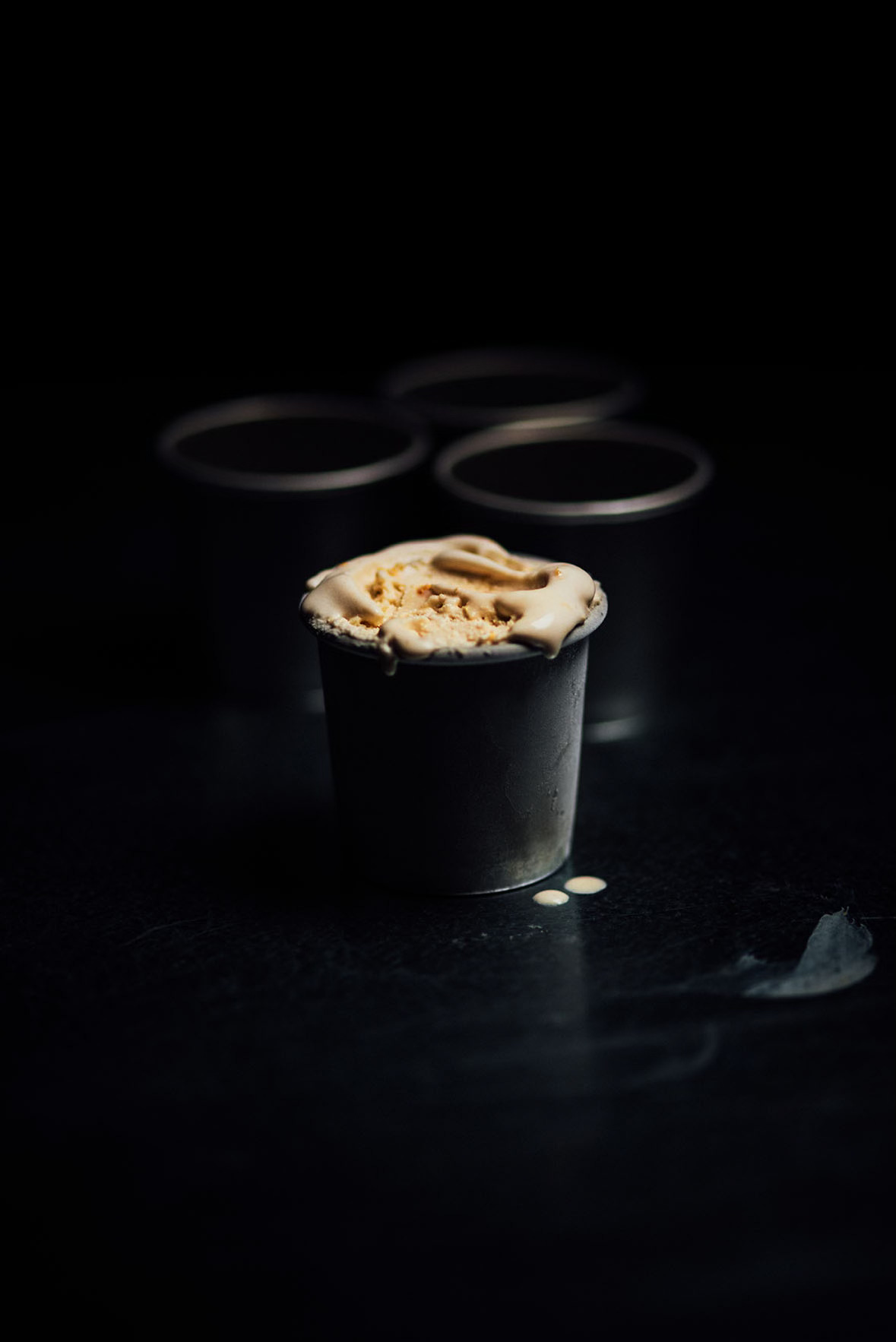
The heat has settled over Los Angeles like a heavy quilt. By five, I’m up, leash in hand, Paddington trotting beside me as we chase the last scraps of cool air before the sun bares its teeth. Neither of us has the will for anything more once the streets begin to simmer. The oven sits cold, the stove ignored. Lunch has been little more than crisp salads, sandwiches straight from the fridge, and generous bowls of ice cream. So this week, it feels only right to turn to one of my truest comforts: ice cream in all its glory.

The Scoop on Ice Cream

There are few foods that capture both memory and science like ice cream. A crack of the spoon through its surface, the first silky cold bite, suddenly you’re five years old again, chasing the music of the ice cream truck. Yet beneath the nostalgia lies an extraordinary story of chemistry, physics, and culinary invention. Today, we’ll peel back the layers of ice cream: its history, the science that makes it work, and the machines and cookbooks that have carried it into our kitchens.

A Brief History of Frozen Pleasures

It begins in ancient China, around 200 BCE, where someone thought to stir rice and milk together, sweeten it, and chill it with snow. Not simply a dessert, but a small miracle in a bowl, cold and fleeting.

A few centuries later in Persia, the royal courts sipped sharbat, fruit syrups cooled with mountain snow. A drink with sunlight in its flavor and winter in its chill, the ancestor of sherbets and sorbets to come.

By the sixteenth century in Mughal India, ice was carried down from the Himalayas on horseback to cool fruit and milk puddings. Kulfi was born here: milk slowly caramelized until nutty and golden, then frozen in metal molds. It is still eaten today, dense and creamy, the taste of centuries held on the tongue.

Then Italy, during the Renaissance, where sorbetto (sorbet), light and tart, became the pride of Florence and Naples. Entire courts competed for supremacy, the frozen fruits of summer turned into works of art.

France followed in the seventeenth century. Parisian cafés began to serve crème glacée to the aristocracy. Cold, rich, and impossibly decadent, it was spooned out as if the very essence of luxury could be captured in ice.

Across the ocean in the United States, George Washington reportedly spent a small fortune on ice cream one hot summer, while Thomas Jefferson carefully wrote down one of the earliest recipes for vanilla ice cream. You can almost picture the ink drying on the page as the dessert began to melt in the heat.

And here is the cool fact. Before refrigeration, the ice trade was a global enterprise. In the nineteenth century, blocks of ice cut from frozen New England lakes traveled by ship to India and the Caribbean, packed in sawdust to slow the inevitable melt. The idea of carrying winter to the tropics feels almost romantic now, a gesture of excess and longing.
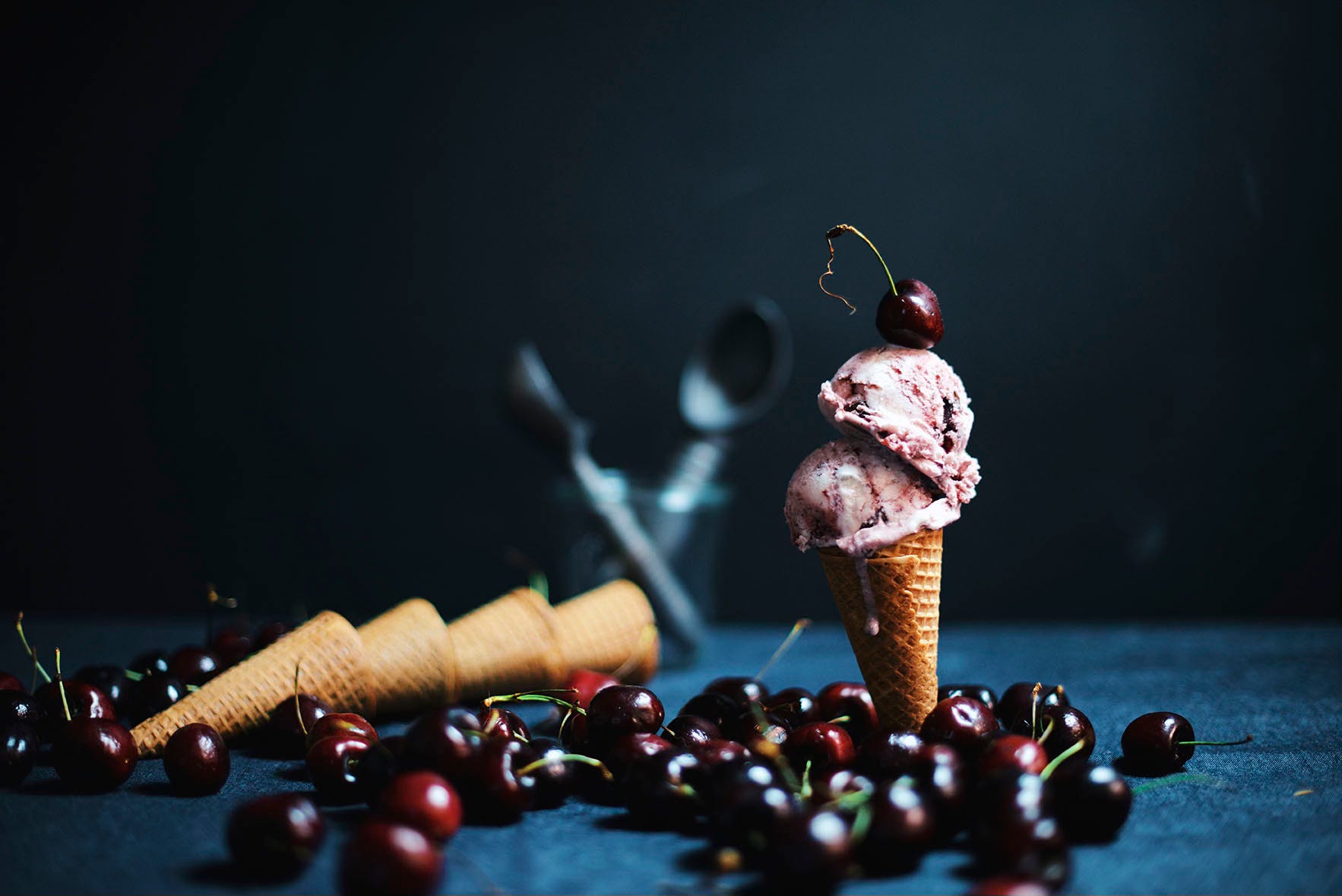
The Science of Ice Cream

The Architecture of Ice Cream

At its heart, ice cream is a small piece of alchemy, a dessert built on a multi-phase system that somehow tastes like happiness.

There are the ice crystals, tiny shards of frozen water that, if kept under fifty microns, give that elusive smoothness. Then come the fat globules, drifting in from cream or other fats, half-joining as the churn whips through the mixture, helping to trap air. The air itself is another layer, what ice cream makers call overrun. Premium ice creams hold only about twenty to thirty percent air, while cheaper ones can be puffed up to nearly double their volume. Finally, there is the unfrozen sugar solution, the part that stays liquid, keeping everything scoopable rather than turning into an icy brick.

Together, these phases give ice cream its paradoxical nature: frozen yet soft, solid yet melting.

Sugar: The Quiet Magician

Sugar is not there only for sweetness. It lowers water’s freezing point, so the mix never becomes a block of ice. Each sugar behaves differently. Sucrose, our everyday table sugar, gives balanced sweetness and moderate freezing. Glucose or corn syrup keeps more water locked in, lending a gentle chewiness. Invert sugar, honey, and agave resist iciness altogether, keeping the texture velvety.

Emulsifiers and Stabilizers

Egg yolks, with their lecithin and proteins, hold fat and water together while giving a custardy richness. Starch, often cornstarch or arrowroot, has long been used in Italian gelato to add body. In the modern world, stabilizers like guar gum, carrageenan, and locust bean gum keep ice cream creamy for longer and prevent those dreaded shards of ice from forming as it sits in the freezer.

The War on Ice Crystals

The enemy of good ice cream is large ice crystals. The faster the freeze, the smaller they stay. That is why factories use blast freezers at minus thirty degrees Celsius. At home, patience and planning help. Chill the base overnight, pre-freeze your equipment, work quickly, and you will be rewarded with a smoother, creamier scoop.
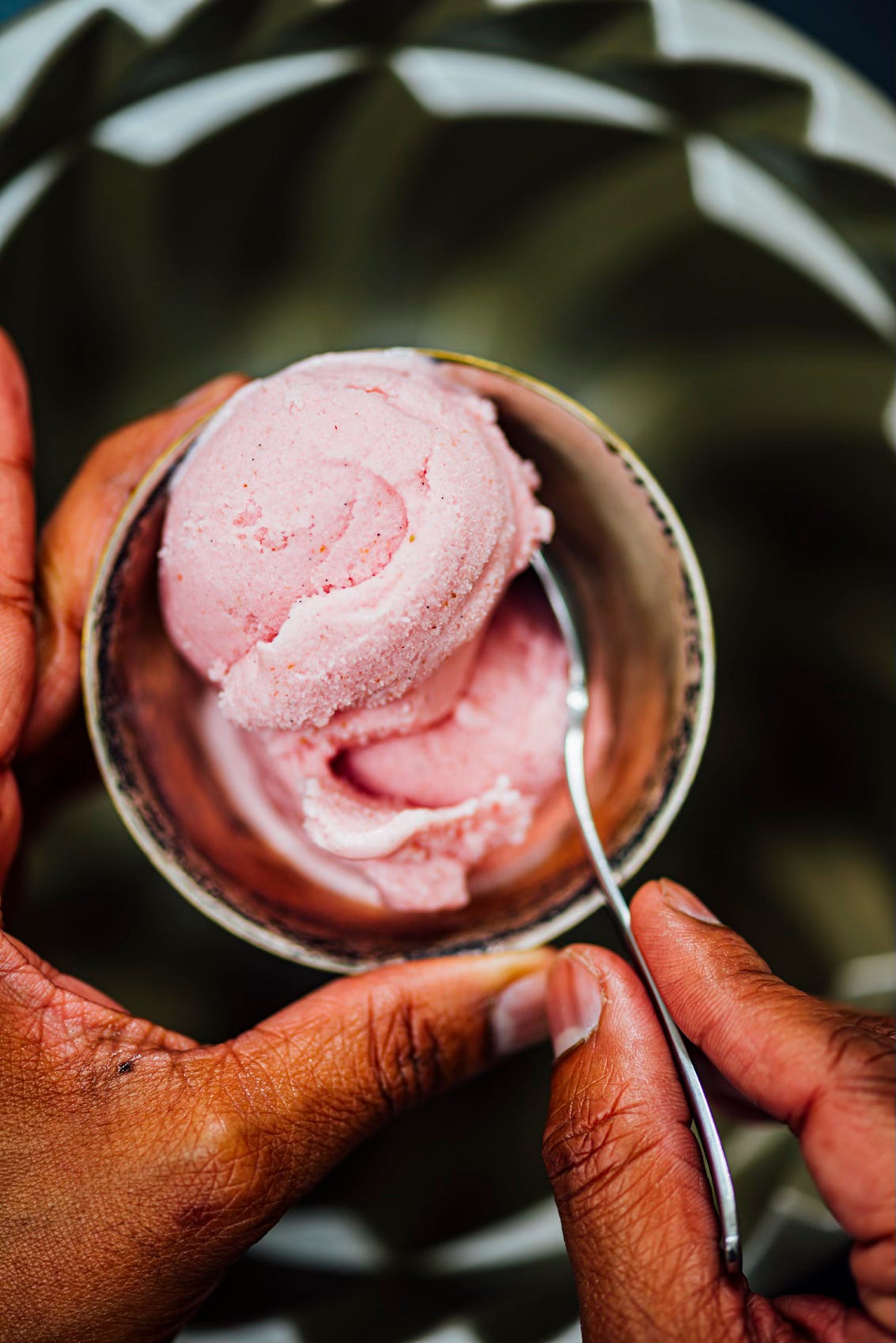
Styles Around the World

French custard ice cream begins with a cooked egg yolk base, a custard as lush and silky as velvet. Philadelphia-style skips the yolks altogether, leaving the flavor of cream to shine through, lighter and cleaner.

In Italy, gelato is churned more slowly, served warmer, with less fat than traditional ice cream. The result is denser, the flavors more intense, the texture almost elastic on the tongue.

Sorbet is fruit and sugar syrup, nothing more, no fat at all, while sherbet adds just a touch of dairy for creaminess. In India, kulfi starts with milk slowly reduced until thick and nutty, then scented with cardamom, saffron, and pistachios before being frozen solid. Dense, chewy, fragrant.

Soft-serve, a twentieth-century invention, is held at warmer temperatures so it flows out in those familiar swirls, kept stable with modern ingredients.

And here is a story I love. In 1904, at the St. Louis World’s Fair, an ice cream vendor ran out of cups. A waffle seller at the next stall rolled his waffles into cones. The ice cream cone was born in that moment, by accident and necessity, and the world never looked back.


Inventions and Machines

  • In 1843, Nancy Johnson in Philadelphia patented the hand-cranked ice cream freezer, a simple device using ice and salt brine to chill the base quickly. For the first time, households could make their ice cream without waiting for winter.

  • In the 1930s, Clarence Birdseye’s work on rapid freezing transformed commercial production, creating smoother textures. A few years later, in Illinois, the McCullough family invented soft-serve, and Dairy Queen began.

  • By the 1960s, Häagen-Dazs took ice cream in the opposite direction, reducing the air for a dense, rich style that set the standard for premium ice cream.


Modern Tools

Today, compressor machines do it all in one step with their built-in freezers. Freezer-bowl machines are simpler, more affordable, but need overnight chilling before you can churn. And then there is the dry ice method, which freezes the base almost instantly at home, filling the kitchen with clouds of cold, white vapor. At home, I use the Breville the Smart Scoop, which comes with its built-in freezing unit; it’s a lot more convienent especially if you don’t have space to pre-freeze the bucket.


Cookbooks for Ice Cream Enthusiasts

  • Jeni’s Splendid Ice Creams at Home — my number 1-go-to cookbook for ice creams, the ideas, her iconic cream cheese technique, and the methods are a game-changer.

  • The Perfect Scoop by David Lebovitz — approachable, timeless.

  • Frozen Desserts by Francisco J. Migoya — the Culinary Institute of America’s Ice Cream textbook. This book is geared towards chefs, but it does a fantastic job of explaining the science behind frozen desserts and is chock-full of ideas.

Science Spotlight: Freezer Burn and Recrystallization

Why does ice cream sometimes turn grainy, littered with tiny shards of ice? The culprit is recrystallization. Each time the temperature wavers, small ice crystals melt and then refreeze into larger, crunchier ones.

Keep your ice cream in the coldest, most stable corner of the freezer. Lay a sheet of parchment against the surface before sealing the lid to limit moisture migration. And resist the temptation to dip in for “just one spoonful” and put it back. Those cycles of thawing and refreezing are what give you that unwelcome crunch.

Commercial stabilizers are formulated to slow this process, which is why a supermarket pint lasts longer than any homemade batch, no matter how careful you are.


Ice cream may seem like pure whimsy, but every scoop carries history, invention, and science within it. From the first sharbats to kulfi, from the birth of gelato to Jeni’s Splendid, from freezing point depression to the happy accident of the waffle cone, it is one of the most remarkable culinary creations we have ever dreamed up.

Here are some of my favorite ice cream recipes just for you!

My Ice Cream Recipe Collection

So what is your favorite ice cream memory? A kulfi dripping down a stick on a hot Bombay afternoon or a passion fruit ice cream in Auckland? Gelato eaten too quickly by the Arno? A neon-bright swirl of soft-serve at a state fair? Write back and tell me. I would love to share a few of your stories in a future issue.

A treat’s on its way to your inbox. I won’t say more, but you’ll know it when you see it.

Until next time,

Nik

Pesto Pizza

21 August 2025 at 19:05
pesto pizza

How about pizza tonight? It’s hard to beat classic pesto pizza. This simple vegetarian pizza recipe is a guaranteed crowd pleaser. It offers an irresistible combination of fresh, bright flavors from the basil pesto and tomatoes, plenty of cheesy mozzarella, and a bubbling crust with a satisfying chew.

This easy pesto pizza recipe comes together quickly with the help of your food processor. You can whip together the dough and pesto in about 15 minutes—just wipe down the processor in between the two components. If you’re looking for a super simple weeknight meal that’s better than take-out, use store-bought dough and pesto instead!

Continue to the recipe...

The post Pesto Pizza appeared first on Cookie and Kate.

double chocolate zucchini bread

By: deb
20 August 2025 at 20:27

Oh you wanted a chocolate zucchini bread recipe? Don’t you know this is a food blog? I’m contractually obligated to tell a meandering and infuriatingly irrelevant story in each headnote, keeping you from the recipe as long as possible for nefarious, possibly witchy, purposes, and I don’t want to disappoint. Next week, I’ll be celebrating my 20th wedding anniversary with a guy I met because I wrote some rambling things on a blog about, like, dating and New York City and funny things that had happened, he read it, we went for a drink, I stopped dating, needed a new subject to fill the void, and Smitten Kitchen came to be one year later. [Some people have honeymoon babies, I, uh, had you.]

Read more »

Poulet Sauté au Vinaigre, Noyaux, and the Culinary Elegance of Acids

17 August 2025 at 11:52

There are ingredients that season, and then there are ingredients that change everything. Acid belongs to the latter camp. A squeeze of lemon over fish, the tang of yogurt on warm bread, a splash of vinegar in a simmering pot; they don’t just add flavor, they alter it entirely, reshaping textures, brightening colors, and waking up our taste buds. Cooking with acid is less about subtlety and more about transformation, the quiet but decisive shift from good to unforgettable.

In this paid subscriber newsletter, you will…

  • Learn which acid gives carbonated beverages a whisper of acidity, and why I store yogurts in glass or stainless steal.

  • Get my recipes for Poulet Sauté au Vinaigre/Chicken Sautéed in Vinegar and Noyaux (I hope you saved your apricot kernels!)

  • Discover why there is a trace amount of cyanide in foods like amaretti cookies, and why you shouldn’t go on a raw kernel binge bender!

An Acid Love Story

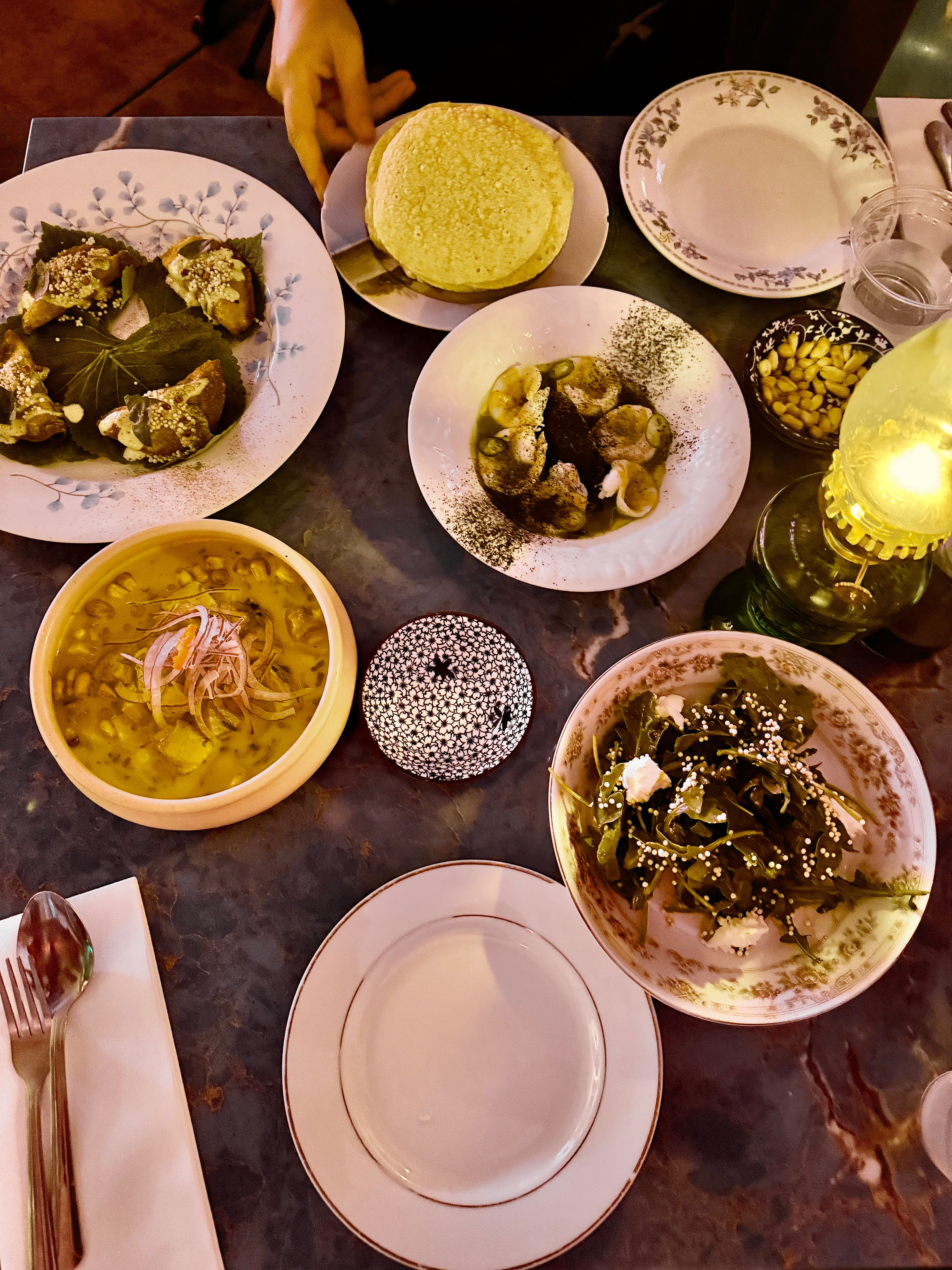
At a small square table, I pressed the edge of my tostada to keep its crisp crown from cracking, then layered it with ribbons of blue prawn, each slice shimmering under its coat of emerald-green, citrus-bright ceviche. One bite and I was elsewhere, by the ocean, where the sun’s warmth is tempered by a salt-sweet breeze and the soft susurration of coconut leaves brushing against each other.

Acid is one of the kitchen’s most thrilling sleights of hand. It brings a certain brightness, a spark, the sharp inhale of the sour taste that can lift a dish from pleasant to unforgettable. It reshapes what it touches: curdling milk into the cool tang of yogurt through the gentle work of lactic acid, loosening the taut web of gluten in bread dough with the mellow vinegar notes born of fermentation, coaxing meat into tenderness in a marinade. And here, in this ceviche, it takes the sea’s raw offering and, with a kiss of citrus, turns it into something luminous and new.

My friend and cookbook author, Rie McClenny, and I had come to The Hummingbird Ceviche House in Echo Park, a Peruvian-Japanese restaurant that hums with the precision of one cuisine and the exuberance of the other. Plate after plate arrived, each one a testament to the quiet magic of acid and the way it can transform the ordinary into something unforgettable.


Inorganic vs. Organic Acids

But here’s the thing: not all acids are created the same, and because of this, their behaviors are different. In chemistry, acids fall into two groups: inorganic and organic acids. Inorganic acids are acids that aren’t built on a carbon backbone like organic acids – citric or lactic acid, which do show up in cooking, though they’re far less common than organic acids. The ones we use are almost always very diluted because concentrated forms can be dangerous.

Not all acids are created equal, and in the kitchen, their personalities show. Some are sharp and industrial, others soft and fruit-born; each behaves differently, each with its way of coaxing flavor into life. In chemistry, they fall into two families: inorganic and organic.

Inorganic Acids

Inorganic acids are the quieter, rarer guests in the home kitchen. They don’t arrive in the squeeze of a lemon or the brine of a pickle jar, but they still have their place in the greater food world.

Hydrochloric acid (HCl) lives naturally in our stomachs, breaking down what we eat. In food production, when it’s tamed to safe, delicate dilutions, it can help in processes like starch hydrolysis, gelatin making, or crafting certain candies. But it’s far too corrosive to ever keep on the pantry shelf.

Phosphoric acid (H₃PO₄) is more familiar, hiding in the deep, dark sweetness of cola,

Read more

Perfect Scrambled Eggs

13 August 2025 at 19:55
scrambled eggs recipe

I’ve cooked scrambled eggs about a million times in my life, and I’m pretty particular about them. I like fluffy scrambled eggs topped with cheese. They must not be mushy, undercooked, or overcooked (the worst—and that smell!). I’m sharing my perfected technique with you today.

This recipe is designed for a stainless steel or cast iron skillet. If you’ve ever wondered how to cook scrambled eggs without a nonstick skillet, this post is for you. It can be done!

With this technique and some practice, you’ll make beautiful scrambled eggs with little mess. Even if you think you have your scrambled egg technique down pat, I think you might find some new tips here.

Continue to the recipe...

The post Perfect Scrambled Eggs appeared first on Cookie and Kate.

Sausage gimbap (소세지 김밥)

Who doesn't like Gimbap? Quick, fun, easy to make, easy to eat, and with endless variations, it's no wonder than they are so popular on my website and videos. I thought it would be fun to make a sausage version for the summer.

Homemade Pita Chips

11 August 2025 at 22:04
homemade pita chips with hummus

Have you tried making your own pita chips? The key is to separate your pita bread into layers so the chips turn out delightfully crisp and golden. They’re truly irresistible and last in the pantry for up to two weeks, so they’re ready to grab for a quick snack.

Freshly-baked pita chips taste so much better than store-bought chips, even when you’re using store-bought pita bread like I did. These homemade pita chips are also healthier than store-bought options because they’re brushed with extra-virgin olive oil, not fried in canola oil.

I streamlined the preparation method to make these pita chips a quick and easy project. They’re ready after a ten-minute bake in the oven. Take your favorite Mediterranean dip up a notch by serving it with these homemade pita chips!

Continue to the recipe...

The post Homemade Pita Chips appeared first on Cookie and Kate.

Tomatillos and the Flavor Maximizing Power of Heat

10 August 2025 at 11:02

A big congratulations to Dale Goldberg, Carlos Castro, and Steph Fuller—winners of Boustany by Sami Tamimi! Thank you for being part of The Flavor Files community. Keep an eye out—more giveaways are on the way soon.


green and yellow vegetables in brown plastic container

This week, we’re diving into the world of high heat and its transformative effect on flavor, with a special spotlight on tomato’s green cousin, the tomatillo. These little green gems are packed with sharp acidity that cuts through richness, and when roasted, they mellow into a smoky, slightly sweet flavor profile that becomes the base for countless dishes. I’ll share my recipe for a bright and bold salsa verde, perfect for tacos, grilled veggies, and beyond. And, as stone fruit season hits its peak, I’m also sharing some of my favorite ways to cook with peaches, apricots, and plums, celebrating the fleeting flavors of summer. Get ready to bring out the best of the ingredients of the season!

Science Spotlight: Why High Heat = Big Flavor

Ever wonder why your food won’t brown? It might be your heat. This week’s short video is a quick flavor science breakdown on why searing matters (it’s less about burning, more about building).

🎥 Watch the video


The Secret Life of Tomatillos (and the Sauce That Saves Me)

Tomatillos are deceptive. They masquerade as green tomatoes, wrapped in husks that rustle like old paper. Peel one open and you’ll find a sticky film clinging to the skin, a natural shield made of sugars and acids. Rinse it away, and the fruit beneath is startling: firm, luminous, quietly electric.

But there’s more to that brightness. Tomatillos brim with malic acid (and citric acid), the same compound that makes green apples sharp and snappy. Unlike tomatoes, they don’t sweeten as they ripen. Their acidity holds. It’s why they make such compelling sauces, they slice through richness, wake up oil, tame heat. They lift.

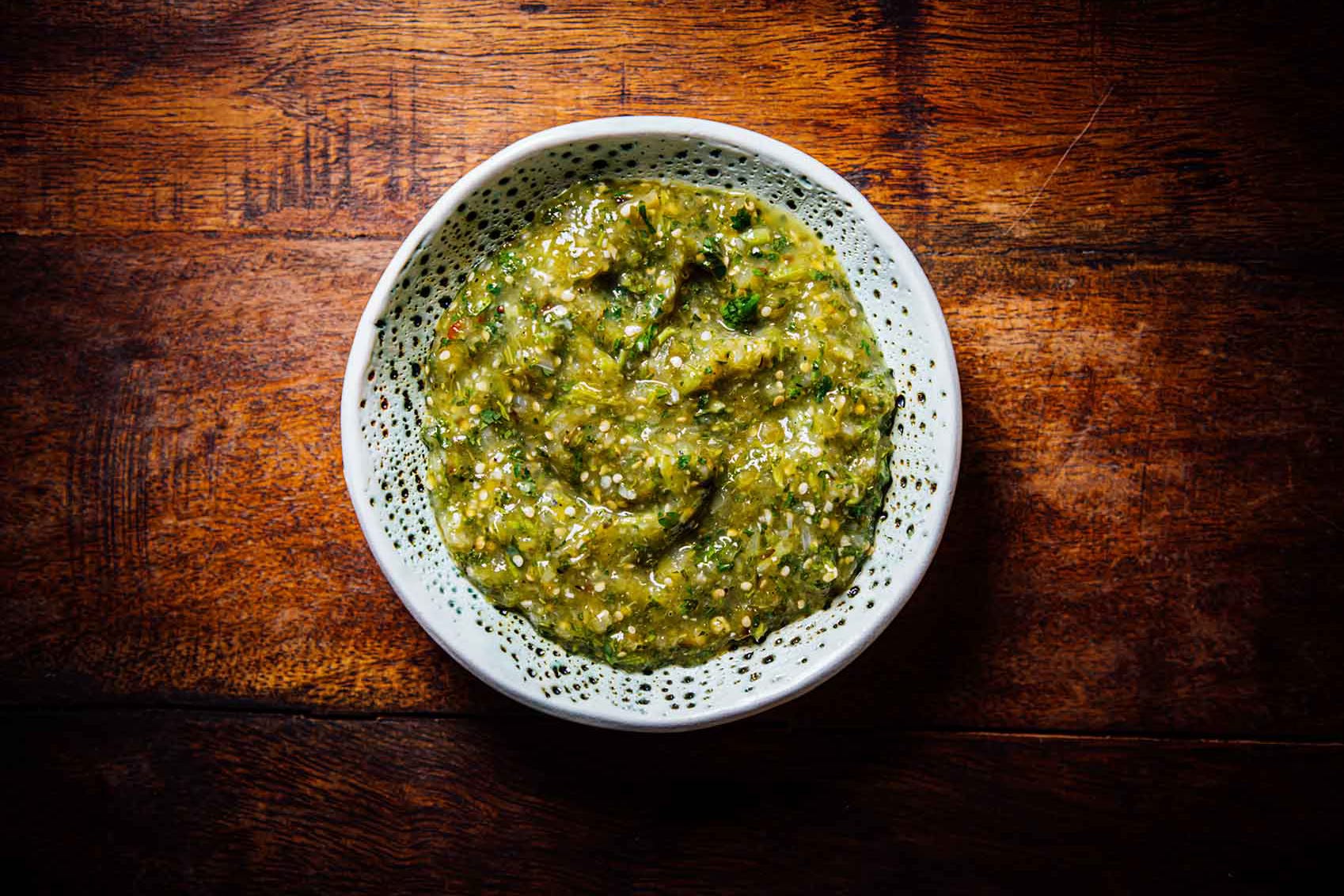
Roast them, though, and their sharpness softens. The skin blisters, the flesh collapses. You still get that green note, but it’s mellowed; smoky, slightly sweet, a little sultry. In my kitchen, they become the base of a salsa verde I return to again and again. Grilled tomatillos meet charred garlic, serrano chiles, herbs, and toasted nigella seeds. The result is something bright and bold, with just enough fire to keep it interesting, and enough depth to anchor a dish.

There are days when dinner feels like a question I don’t have the energy to answer. When the fridge offers little inspiration, and I need something that makes a meal out of not much at all. That’s when I reach for this salsa.

Not the jarred stuff (there’s nothing wrong with buying jarred stuff, but in this case, making your own is worth the extra effort). But the type you can make with whatever green you’ve got: a handful of herbs, maybe roasted scallions or a softening jalapeño, a squeeze of lime, a little olive oil. Sometimes I add an anchovy. Sometimes yogurt. Sometimes it’s just tomatillos, garlic, and salt. There are no rules. Only green.

And that’s the beauty of salsa verde. Wherever it comes from, Mexico (Mexico inspires today’s recipe), Argentina, Italy—it doesn’t ask for precision. It just shows up. You stir it into yogurt, and suddenly you’ve got a sauce for grilled zucchini or fish. Dollop it onto eggs, and breakfast feels intentional. Swirl it through potatoes or noodles, spoon it over roast chicken, drag a crust of bread through it, and call that dinner.

It stays humble, just a green sauce in a jar. But somehow, it makes everything taste like more.

This week, I’m sharing my version: smoky, herbaceous, flecked with the markings of brutal heat. I make things in double batches because I know they won’t last.

The recipe’s below. And a few ideas on how to use it, beyond tacos (though put it on tacos).

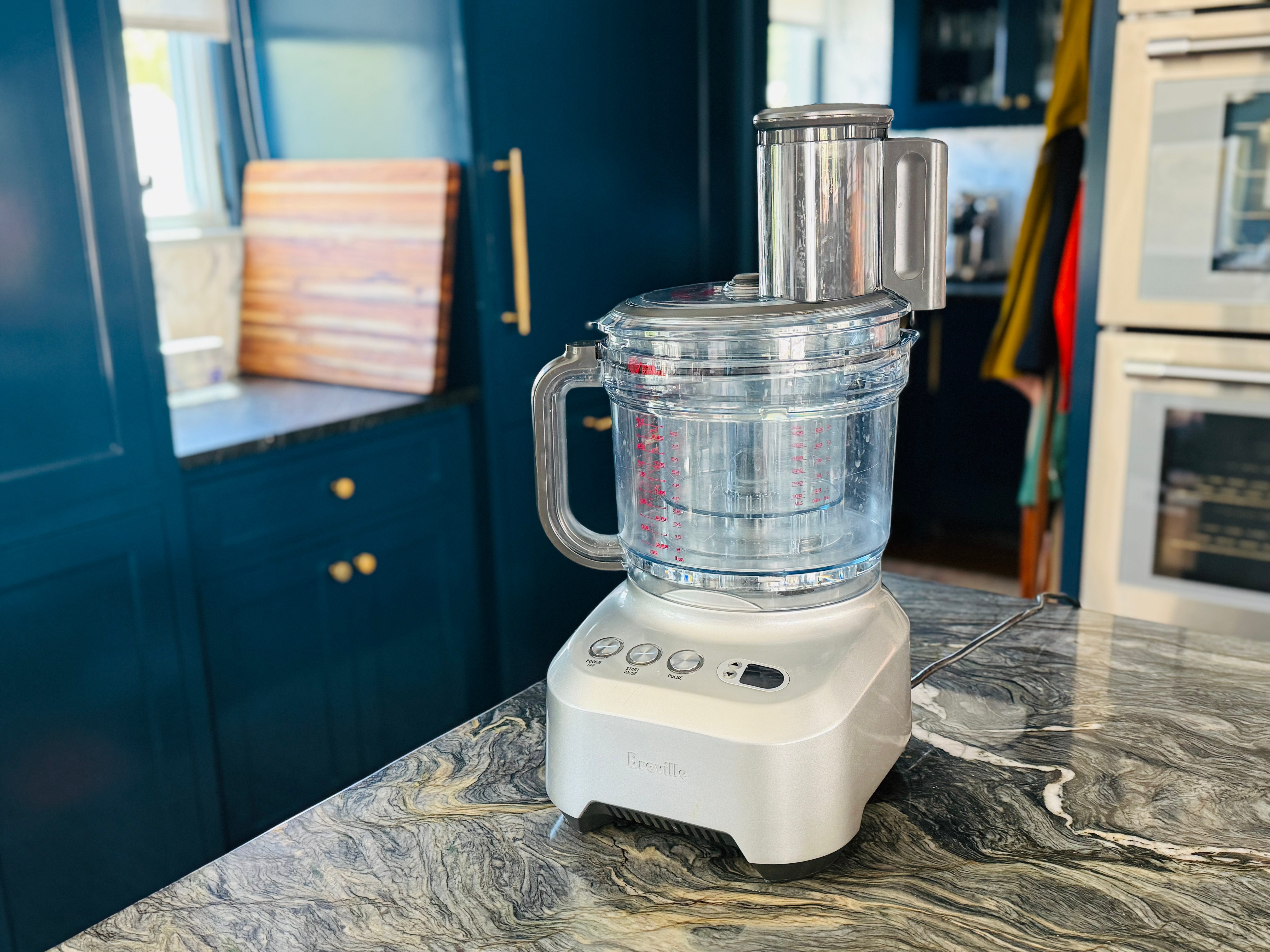
Time Saving Appliance Hack: Recipes like this used to mean a whole lot of chopping, mashing, and mixing, an arm workout disguised as dinner prep. Back in the day, you’d be breaking a sweat over a mortar and pestle. I, however, would like to personally thank modern civilization for the invention of the food processor, which has saved me countless hours. My favorite is the Breville Sous Chef 16. Once you get food processor-addicted, it’s hard to quit!

Here’s to the sauces that save us.

Salsa Verde

Beyond the Chip: 11 Delicious Ways to Use Salsa Verde

1. Swirled into Yogurt. Instant creamy dressing. Spoon it over grilled zucchini, roasted carrots, or steamed potatoes. Bonus: it doubles as a killer dip for crudités or spoon bread.

2. On Your Eggs (Any Style). Fried, scrambled, or poached, whatever your allegiance, salsa verde adds just the right amount of brightness and heat. Try it with jammy eggs and toasted sourdough.

3. As a Soup Finisher. Drizzle over black bean soup, dal, or a brothy chicken stew. It adds acidity and freshness like a squeeze of lime, but better.

4. In a Sandwich. Use it like a spread: slather it inside a roast chicken sandwich, grilled cheese, or breakfast burrito. Especially good with melty cheese.

5. Tossed with Noodles or Pasta. Thin with pasta water and toss with noodles, feta, and any roasted veg you’ve got lying around. Or swirl it into cold soba with sesame oil and a squeeze of lime—also, a great way to build flavor into a pasta salad.

6. As a Marinade Base. Add a splash of olive oil and use it to marinate shrimp, mushrooms, tofu, chicken, or steak. Grill or roast, and let the salsa do the heavy lifting.

7. Mixed into Beans or Lentils. Hot or cold, salsa verde + legumes = flavor-packed meal prep. Add some grains and call it a salad.

8. Tucked into Tacos (Obviously) But also: try it on quesadillas, tostadas, and even smashed avocado toast.

9. Drizzled over Roasted Potatoes. Or sweet potatoes. Or grilled corn. Or honestly, anything starchy and golden.

10. Stirred into Rice or Quinoa. Use it like a finishing sauce. Add herbs, a handful of nuts or seeds, maybe a little cheese. Suddenly, it’s a composed dish.

11. As a Pizza Topping (Yes, really). Dollop it over a white pizza with goat cheese or feta, or swirl it onto a crust before adding toppings. It adds that herbaceous zing that cuts through fat like a dream.


Stone Fruit Season Is Fleeting—Here’s How I’m Cooking Through It

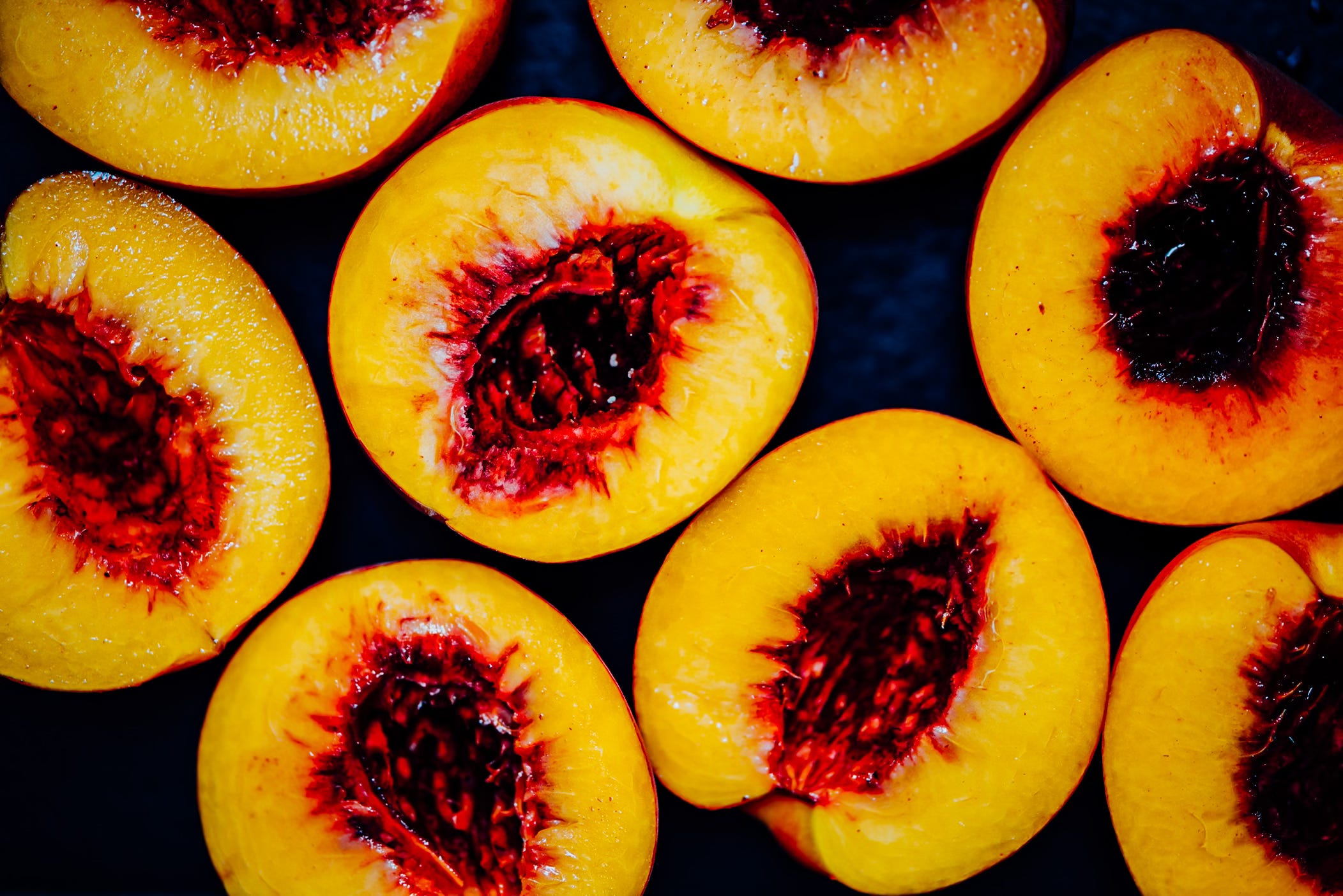
Late summer is when stone fruit truly comes into its own. The peaches are soft and perfumed, dripping with juice. Apricots glow golden-orange like little suns. And plums—whether midnight purple or soft pink—hold their tart sweetness just beneath the skin, waiting for the first bite.

This produce doesn’t need much dressing up. Just a little heat, the right spice, maybe a good swirl of cream or a crackle of crust. These are the fruits I reach for now, when the sun is still high but the days are getting shorter—my way of capturing a season that always seems to slip away too quickly.

So I’ve pulled together some of my favorite ways to cook with stone fruits: recipes that are easy, vibrant, and full of flavor. Some sweet, some savory, all built to let the fruit shine.

Sweet Recipes to Savor. There’s the Peach, Cardamom, and Saffron Cake, warm and fragrant like late afternoon sun. A Peach Thai Basil Clafoutis, which feels just fancy enough for a dinner party but simple enough for a weekday bake. Pumpkin Apricot Bread straddles the seasons—still golden and soft, but with a whisper of autumn spice. And if you're craving something cool, try the Peach and Elderflower Ice Cream—floral, creamy, and utterly dreamy.

Savory with a Stone Fruit Twist. Fruit doesn't have to mean dessert. My Spice-Roasted Chicken with Peaches is rich and aromatic, the peaches collapsing into their sauce. And the Grilled Peach Salsa with Steak Salad is a riot of textures—smoky, juicy, crisp, and fresh all at once.

A Few More Favorites I like to tuck away a few jars of Apricot Lemon Orange Jam for later—the kind of thing that turns toast into a moment. There’s a Peach and Mint Lassi that’s cooling and gently sweet, and my Dried Apricot, Fig, and Almond Oatmeal Cookies, which are as good with afternoon tea as they are for breakfast on the go.

Whether you’re loyal to peaches, smitten with plums, or quietly hoarding apricots, I hope you find something in this collection that makes you pause, spoon in hand, and think: yes—this is what summer tastes like.

See all the recipes below—and if you make one, I’d love to hear what you think.

Easy Flavorful Stone Fruit Recipes

grilled chicken salad with cilantro-lime dressing

By: deb
6 August 2025 at 17:56

What did we get up to while our kids’ time away overlapped for two weeks this summer? Did we go on vacation? Did we party every night? The truth is honestly embarrassing, so middle-aged coded, Deb of the early Smitten Kitchen years would rage and weep. [“You promised you wouldn’t get lame!”] I got… orthotics. And even worse than considering this newsworthy, I love them. I caught up on appointments. I challenged myself to finish books before they were overdue at the library and occasionally pulled it off. Sometimes I drank an entire 8 glasses of water and went to bed by 10:30pm. Sure, we went out. We had uninterrupted conversations. We drank Hugo spritzes. We saw dogs playing in a kiddie pool set up in front of an open fire hydrant and lamented that the kids were missing it, then reloaded their last locations and photos from the camp stream a million more times. We said things to each other like, “I miss the kids, but not parenting.” I watched this clip and it emotionally wrecked me. I’d sleep through my alarm in the morning and nobody was there to tell me I make weird faces in my sleep or that they’d promised they’d bring homemade treats to school that day. Friends, it was wild.

Read more »

Peach Cobbler with Almond Topping

5 August 2025 at 22:38
peach cobbler recipe

Meet the peach cobbler of my dreams! This irresistible dessert features warm, bubbling peaches with a golden cobbler topping that’s craggy at the edges and tender inside. Make this recipe from mid-to-late summer when fresh peaches are at their peak.

This simple peach cobbler recipe is sweet but not too sweet, so the glorious peach flavor shines above all else. The filling is sweetened with honey, and the topping is lightly sweetened with lemony sugar—both of which impart some lovely complementary flavors that make this cobbler taste extra special. The recipe is not complete without some vanilla extract, cinnamon and yogurt for a light, buttermilk-like tang.

The buttery topping is made of almond flour, which offers a tender crumb and light almond flavor that pairs perfectly with ripe peaches. I tried making this cobbler with regular all-purpose flour and much preferred it with almond flour. Thanks to the almond flour, this recipe is gluten-free, whether you need it to be or not!

Continue to the recipe...

The post Peach Cobbler with Almond Topping appeared first on Cookie and Kate.

Smoked, Mashed, and Magical: Baingan Bharta

3 August 2025 at 11:01

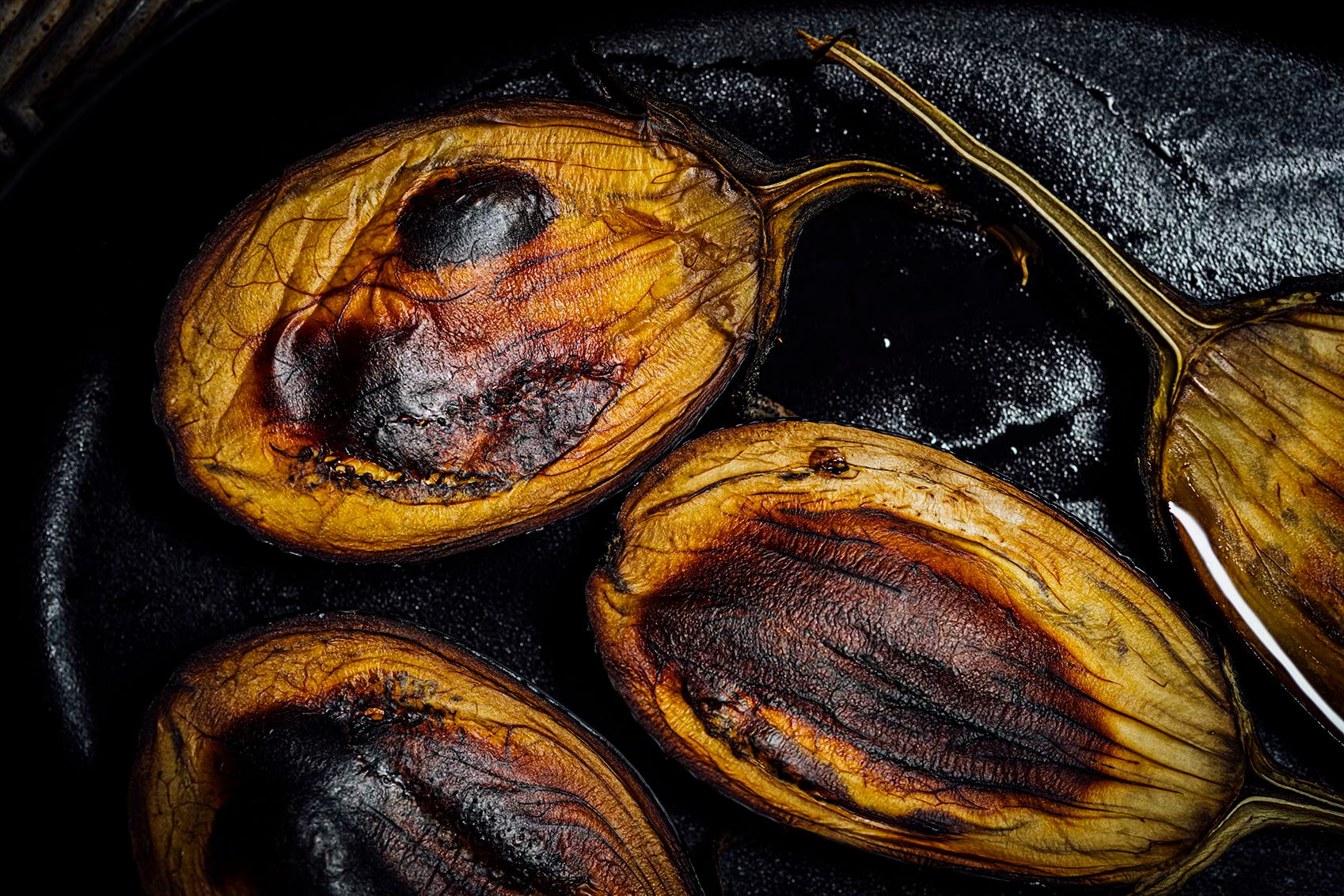
I’ve always found it quietly amusing that two of my favorite fruits—peaches and eggplants—have become internet shorthand for things far cheekier than their culinary uses. But today, we're steering clear of thirst traps and heading into the kitchen, where the eggplant, aka aubergines or brinjals, gets the attention it truly deserves. This is your little guide to cooking eggplants like a pro, with science-backed hacks, practical tips, and the kind of detail that makes all the difference. And then, there’s the reward: baingan bharta, that intensely smoky, soft-spoken yet powerful Indian classic. It’s comforting, iconic, and—if you ask me—just about the best way to eat an eggplant.

In this paid subscriber newsletter, you will…

  • Learn why I often quickly microwave eggplant before frying

  • Get to know the smoky, spiced magic of baingan bharta and how it varies across the Indian subcontinent

  • Get my recipe for the baingan bharta that I make at home!

And don’t miss Sami Tamimi’s Eggplant & Chickpeas with Green Lemon Sauce/ Bitinjan ma’ Hummus that I shared last week!


🔬 Kitchen Chemistry: Cooking Eggplant Like a Pro

Here’s a collection of eight clever, science-backed kitchen hacks for cooking with eggplant—whether you're roasting, frying, grilling, or storing them. These tips can help you get the most flavor and best texture out of every eggplant dish:

1. Salt for Better Texture (and Less Bitterness)

Why it works: Salt draws out excess moisture via osmosis, collapsing air pockets, and preventing sogginess when cooking. It also tames bitterness in older or larger eggplants, more so by masking the bitterness (and not destroying the bitter compounds as previously thought). However, farmers have selectively bred out bitterness from eggplants, and today’s eggplant doesn’t taste bitter, so this is now less of a concern. 

How to do it:

  • Slice or cube eggplant.

  • Sprinkle with kosher salt and let sit for 30 to 60 minutes in a colander.

  • Pat dry (no need to rinse and pat dry, unless you do end up oversalting).

Bonus: This hack helps prevent your eggplant from soaking up too much oil during frying or roasting.

2. Choose the Right Variety

Not all eggplants behave the same.

Read more

Pesto Pasta

29 July 2025 at 22:21
pesto pasta

It’s hard to beat a bowl of pesto pasta. Today, I’m sharing a classic basil pesto pasta recipe from start to finish! You’ll learn how to make basil pesto from scratch and toss it with freshly cooked noodles in perfect proportions.

I like my pesto pasta saucy, so I used a generous amount of pesto here, which is more affordable when you’re making your own pesto. It takes ten minutes or less to make pesto in a food processor, but you could certainly use store-bought pesto if you have a favorite brand.

This vibrant pesto pasta is quick and easy to make for dinner on a weeknight. It’s also a lovely side dish to serve at a dinner party or casual summer cookout. Get ready for the best pasta pasta you’ve ever had.

Continue to the recipe...

The post Pesto Pasta appeared first on Cookie and Kate.

The Recipes We Carry

27 July 2025 at 08:52

What Went Down in the Kitchen

For the past few weeks, I’ve been on a bit of a tandoori bender. We’ve made skillet naan (because not all of us have a clay oven in our backyard), fast and fancy tandoori lamb, oven-roasted tandoori salmon over at America’s Test Kitchen (yes, it works, no, your smoke alarm won’t love it), and even grilled carrots because... vegetables deserve a smoky glow-up too.

And just when things were getting a little too hot, we cooled it all down with a Coconut Lychee Lime Granita. It’s icy, floral, and the opposite of standing over a grill in August, which is to say, highly recommended. Plus a double feature on apricots, featuring an Apricot Lemon and Orange Jam with a hint of orange blossom water, and an Apricot Coconut Cake laced with cardamom, accompanied by a sweet coconut crumble.

I’d love to see how you take these recipes and techniques — whether it’s tandoori-style grilling or turning fruit into frosty magic — and make them your own. Use them as a jumping-off point, remix them, and tag me on social media when you do. That’s where the real fun (and flavor) begins.


August’s Flavor Forecast

This month’s recipes are basically a vacation in your kitchen, with just enough heat to make things exciting (hello, spicy shrimp roast) and plenty of cool-downs to keep you sane. We’re twirling noodles through no-cook tomato sauces that taste like you’ve been simmering them for hours (spoiler: you haven’t), tossing preserved lemon spaghetti like it’s our full-time job, and letting miso crash the pasta party in the best way possible. There’s a retro-crunch iceberg salad, a garlic-zucchini-yogurt situation that’s begging to be scooped with everything, and desserts that scream summer: roasted strawberries with balsamic, popcorn ice cream (yes, you read that right), and a peach-saffron cake that’s basically August in a slice. Oh—and my Bombay lemonade, because we’re fancy and hydrated! Let’s cook.

August Recipe Digest


What I’m Reading

I’m looking forward to my upcoming conversation with chef and author . I don’t say this lightly: Boustany is one of the most soulful and evocative cookbooks I’ve encountered in years (and I’m featuring a recipe from it this week!). I have always admired Sami’s work. Sami has a rare talent for weaving stories through food, and in Boustany, he shares them on a deeply personal level—braiding memory, displacement, and identity into every dish and every word.

The very title, “Boustany,” translates to “my garden” in Arabic—an apt, lyrical name for a cookbook devoted to the bounty of vegetables. The word itself conjures visions of his maternal grandparents’ garden in Hebron, teeming with vibrant fruits and lush greens, and of a childhood spent wandering the hills of the Old City of Jerusalem, foraging alongside his parents. During the long days of the pandemic, Sami found solace in tending his own garden in Umbria, Italy, letting the act of nurturing plants ground him. Throughout the pages of his book, one theme stands out clearly to me: the elegance of cooking with simplicity, making the most of a few humble ingredients, leaning on the pantry, which is filled with foods like preserves, fermented foods, and pickles that carry memories of tradition throughout the year.

Sami’s book isn’t just a collection of recipes; it’s a tender tribute to Palestinian people, their kitchens, and the homes many have left behind, a reminder of the endurance of culture expressed through flavor and ritual.

My copy is already bristling with bookmarks: the Freekeh-Stuffed Peppers, Two-Lentil Mejadra, Tomato Arugula Walnut Salad, and the Jerusalem Sesame Bread Nests, where each nest cradles a golden-yolked egg. These are recipes I know I’ll return to again and again, not just for their taste but for the stories they carry. Boustany is a book to cook from, yes—but also to sit with, to reflect on, and to cherish.

Join us live TODAY at 12 pm ET on Substack Live. (Missed today’s Substack Live at noon? Paid subscribers to Flavor Files+ can now watch the full conversation below.)


Recipe

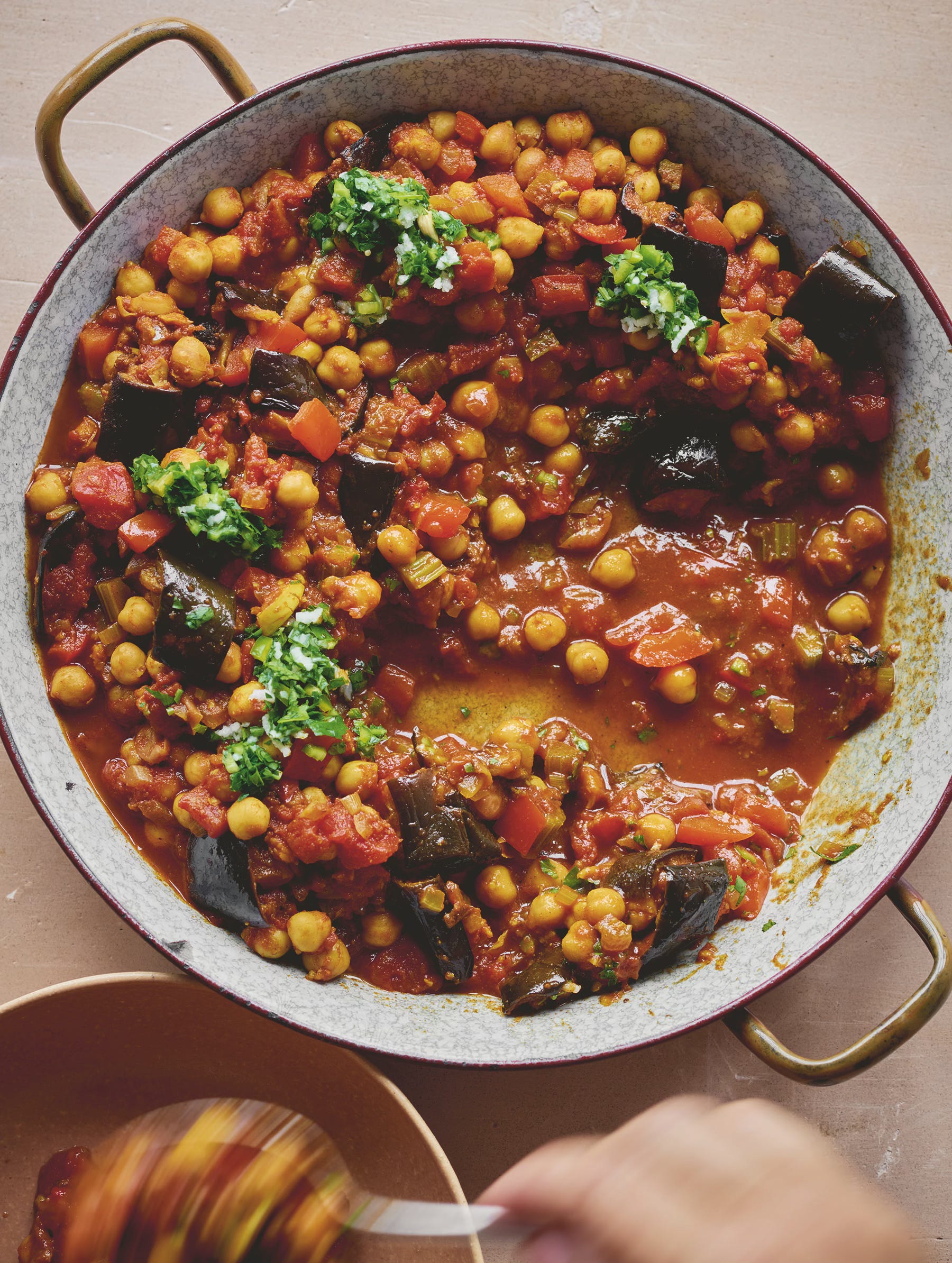
The recipe is this week is Eggplant & chickpeas with green lemon sauce/ Bitinjan ma’ Hummus, direct from Sami’s book.

There are many kinds of eggplant and tomato dishes in the Middle East, each with its own distinct character, and this eggplant and chickpea stew is no exception. It’s a hearty dish that combines the meatiness of the eggplant, the nutty-creamy texture of the chickpeas and the umami of the tomato sauce, all complemented by the zesty
green chile sauce.

Make the Recipe

chipwich ice cream cake

By: deb
25 July 2025 at 20:15

High on the list of cooking things that I’ve got far more opinions on than anyone has ever asked of me (and may have even, at times, prayed I’d stop yapping about), are homemade ice cream sandwiches. Why? Because it’s devastating when you realize something that should bring us nothing but incandescent summer joy — ice cream! cookies! — rarely work as well as promised. Most cookies become so hard once frozen, you feel like you’re breaking a tooth with each bite. Unyielding cookies also squeeze the ice cream out the sides, leading to drips down your arms and an immediate bad mood (for adults; kids, naturally, love it). While writing Smitten Kitchen Keepers, I became obsessed with creating a deeply nostalgic homemade chipwich-style ice cream sandwich that did everything right and I had three big a-ha moments along the way:

Read more »

❌