I’m down under for a very special reason. I’m spending time with family and celebrating my cousin’s wedding, all in the middle of summer. Which means, yes, there has been a lot of ice cream. I don’t get to see my family nearly as often as I’d like since we live so far apart, so anytime there’s even the slightest excuse to gather, I’m on a plane without hesitation.
Before I left, I set a small kitchen experiment into motion. My very young Buddha’s hand tree surprised me with two large fruits this year, and I found myself unsure of what to do with them. They’re often candied, turned into marmalade, or used for extracts, but I wanted something simple and a little playful. So I chopped both fruits and tucked one into a jar of tequila and the other into tequila with sugar, planning to leave them for a month. Just 24 hours later, the tequila had already begun to take on the natural pigments from the citrus. I’ve hidden both jars away in a cool, dark corner of the kitchen and can’t wait to see what greets me when I return. It could be a disaster. It could be magic. We’ll find out.
This is my final newsletter of the year, and I’ll see you on the other side in the new one. As this year comes to a close, I want to thank you from the bottom of my heart for being part of this community. It is such a privilege to see you cook from my recipes and share them in your own kitchens. I hope you’re able to take a little break, spend time with people you love, and also steal a quiet moment just for yourself.
Special Holiday Offer From America’s Test Kitchen
My friends at America’s Test Kitchen created a special holiday to share with my readers. Access over 30 years of ATK recipes (including mine) and reviews with a free one-month subscription and then 37% off your first year with my exclusive link.
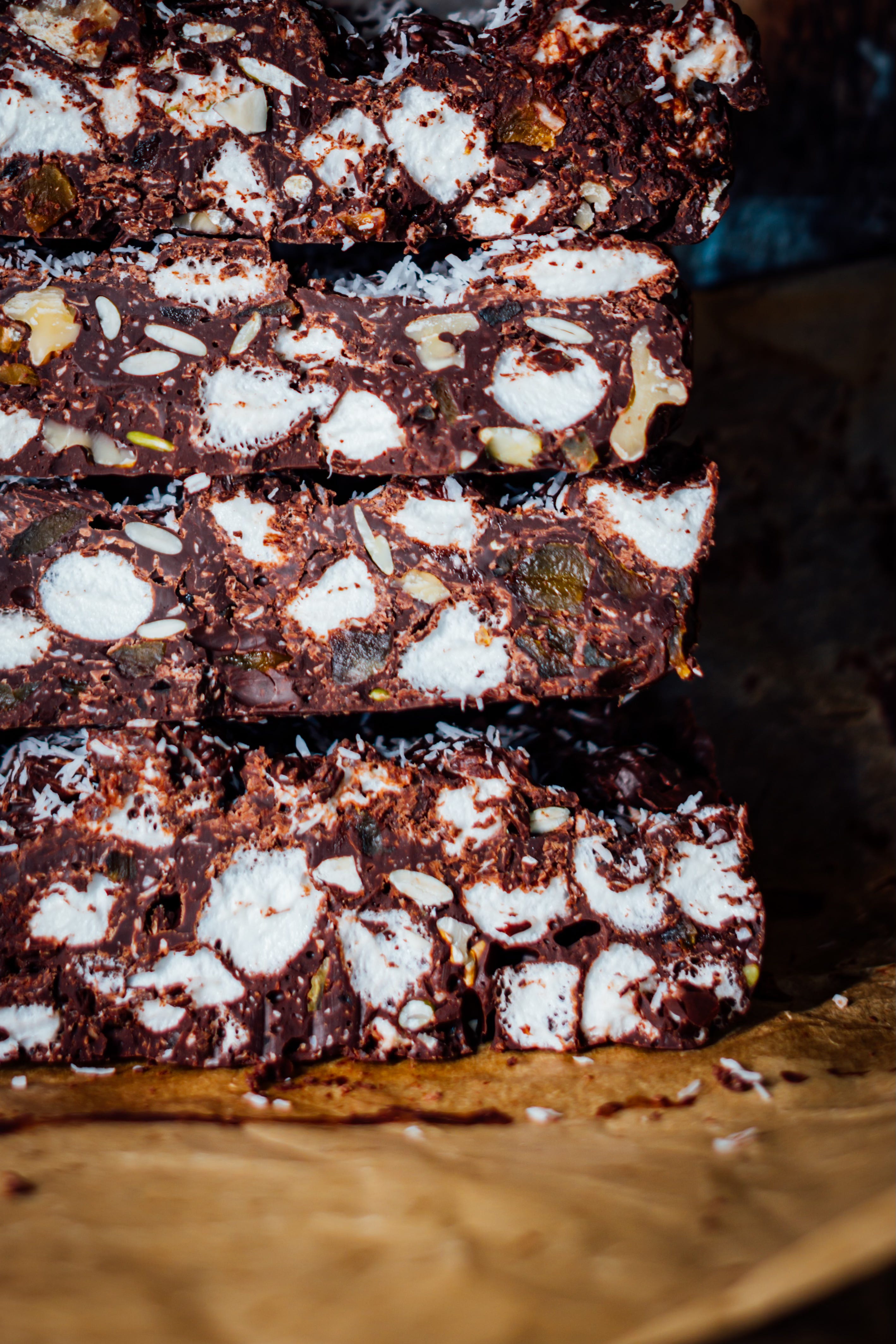
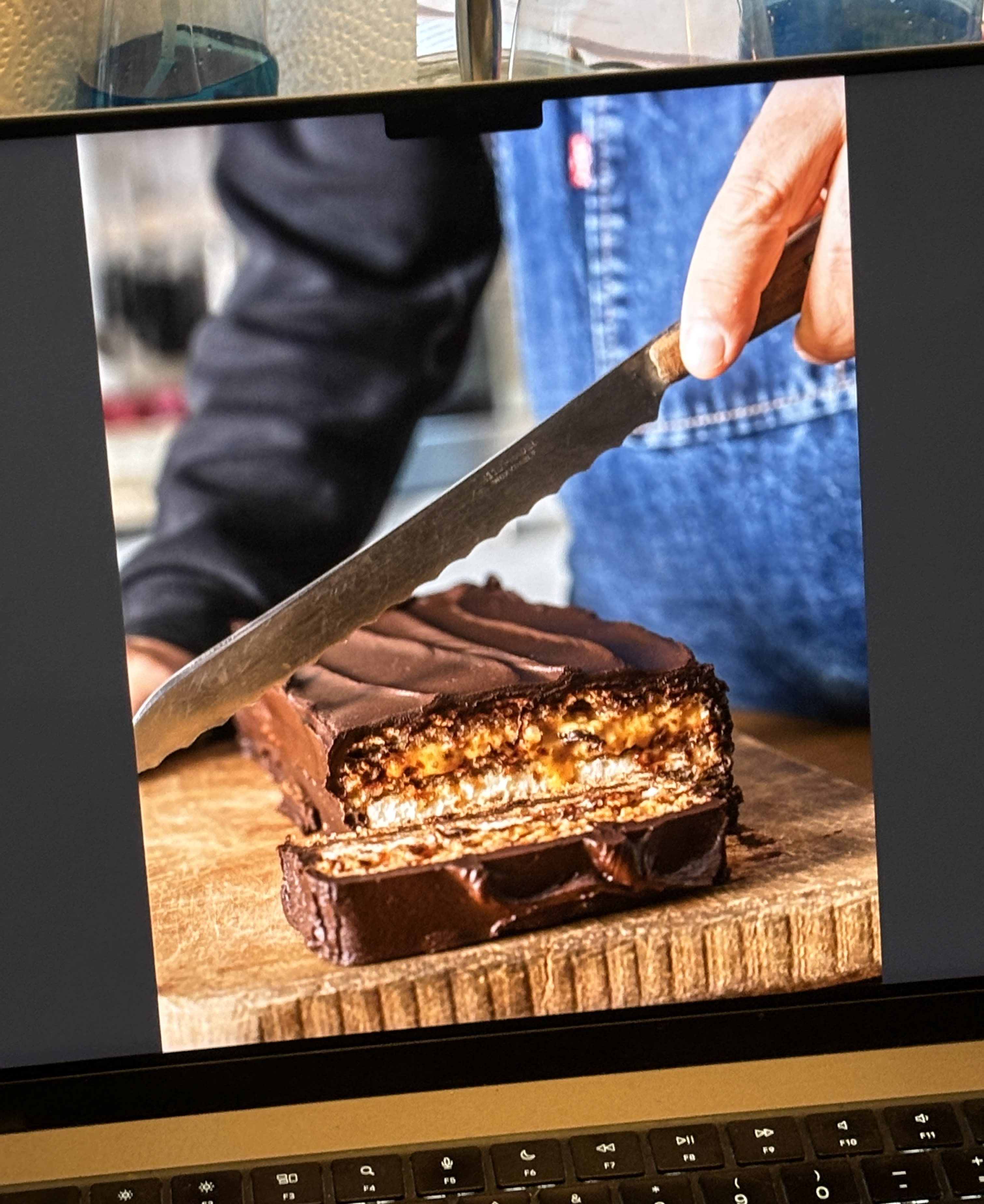
Rocky road has always felt like a dessert built from joy and improvisation. Its origins stretch from 19th-century Australia, where chocolate, nuts, and marshmallows were mixed to make use of imperfect ingredients, to its rise as a beloved ice cream flavor in the United States during the Great Depression, when texture and generosity turned restraint into indulgence. However it traveled, the rocky road became shorthand for comfort, abundance, and that playful feeling that anything delicious could happen in one bite.
These bars keep that spirit alive while quietly sharpening the flavors through science. Dark chocolate forms the backbone, bringing bitterness that makes every sweet note feel brighter. Marshmallows soften the snap and create those familiar pockets of chew, while dried apricots and pineapple add concentrated fruit acids that lift the richness. Walnuts and pepitas deliver crunch and fat for balance, and a touch of coconut reinforces the fruit with gentle, toasty aromatics. Chilling the slab sets the chocolate to a clean snap and lets the flavors release in layers rather than all at once.
There is no baking required, no need for precision, and no wrong way to cut them. These bars are meant to be shared, stacked high on a platter, and broken into with your hands, just like rocky road always has been.
The Flavor Files: Why These Rocky Road Bars Work
Rocky road is one of those desserts that feels nostalgic and indulgent at the same time, but what makes these bars really special is how many different flavor and texture mechanisms are happening in one bite. This is a dessert built on contrast, and contrast is one of the most potent drivers of deliciousness.
Let’s break down what is happening under the hood.
I just spent a few days in Boston on my most recent trip to ATK, where I learned the most incredible news: Flavor Forward has been renewed for a second season! I truly could not contain my joy when they told me. Hosting my own cooking show has already been such a gift, and I have made peace with whatever the future holds. But to hear it has been greenlit for another season feels like one of the best holiday surprises I could have imagined. I am so profoundly grateful to every one of you who watched, shared, liked, and left comments. I am heading into 2026 with a huge smile on my face. Thank you from the bottom of my heart.
This week, I am also sharing my holiday gift guides, filled with cookbooks, food and culture books, and thoughtful ideas for home cooks. There are so many fun picks in here, whether you are shopping for someone else or treating yourself. I hope you find something that makes you just as happy to give as it is to receive.
And since it is officially Christmas baking season, I also have a brand-new cookie addition to my holiday lineup for this year, something warm, spiced, and perfect for sharing. I cannot wait for you to bake it.
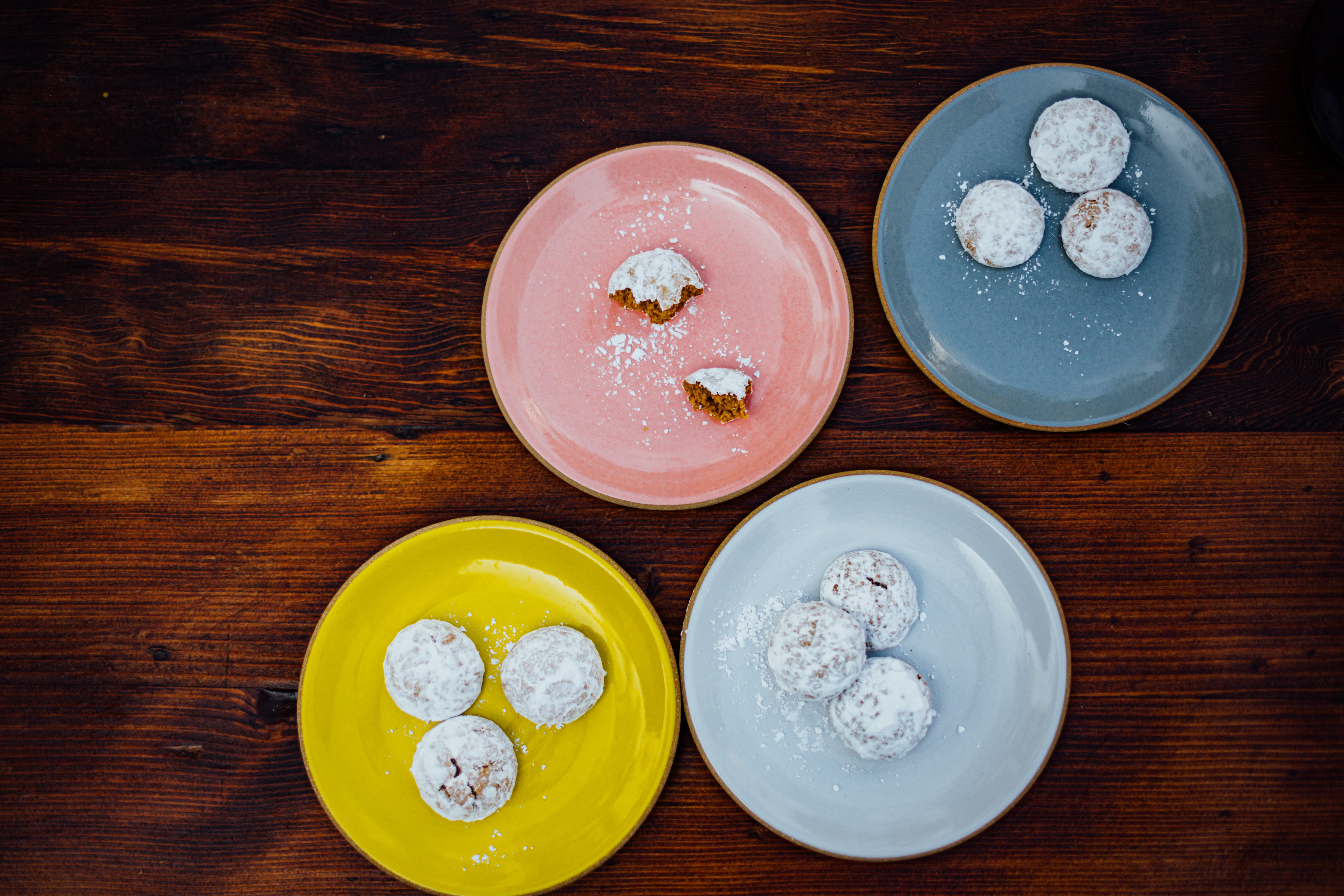
I’m always chasing a holiday cookie that hits all the right notes at once: warm, comforting spice, deep caramel sweetness, a fabulous chewy texture, and a recipe that doesn’t ask too much of me when the season already feels full. These masala chai brown sugar cookies check every one of those boxes. They’re quick to mix, easy to bake, and somehow still feel special enough for a cookie tin or a last-minute get-together.
What I love most is how they bake up with those beautiful crackled tops and a soft, chewy center. The chai masala brings warmth without overpowering, making each bite feel cozy rather than cloying.
It’s been 17 months since I first questioned whether anyone even needed another recipe for a basque cheesecake — the burnished, custardy and uncluttered kind that hails from San Sebastián, Spain — and concluded that in fact, I did.
Hello from Washington, D.C.! It’s been eight years since I was last here, and it feels good to be back, even if just for a quick stop before I head to Virginia to spend the holiday with Michael’s family. I’ve been catching up with friends, soaking in the city, and squeezing in a bit of downtime — which for me means getting lost in a good book.
Right now, I’m reading Strange Pictures by Uketsu. It’s a wonderfully bizarre and clever form of horror. Every story hides clues inside the illustrations, so you find yourself flipping back and forth trying to solve a mystery while also getting spooked. It’s basically a puzzle book disguised as a ghost story, and I’m having a lot of fun with it.
This week
It’s time for my Big Annual Thanksgiving Menu.
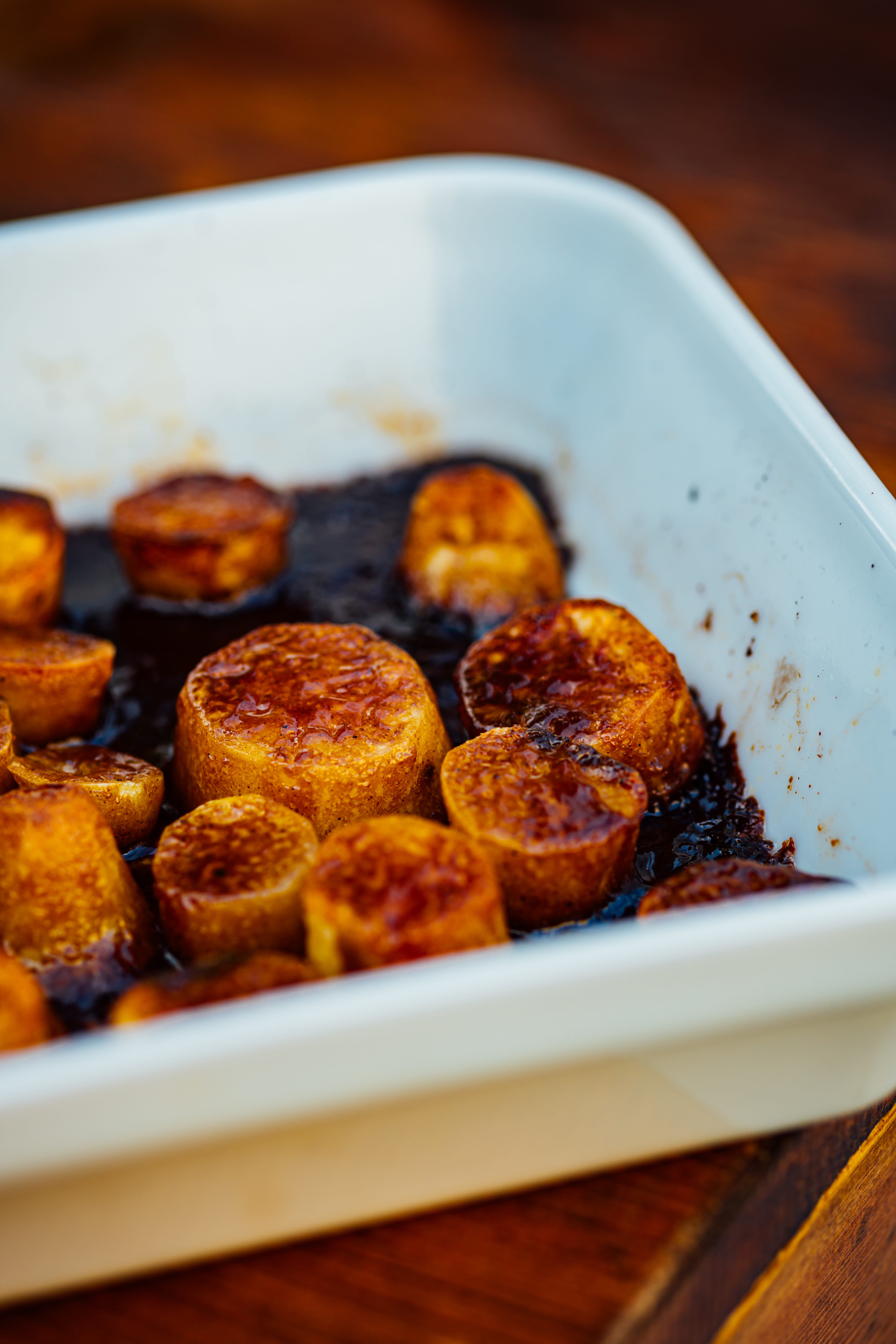
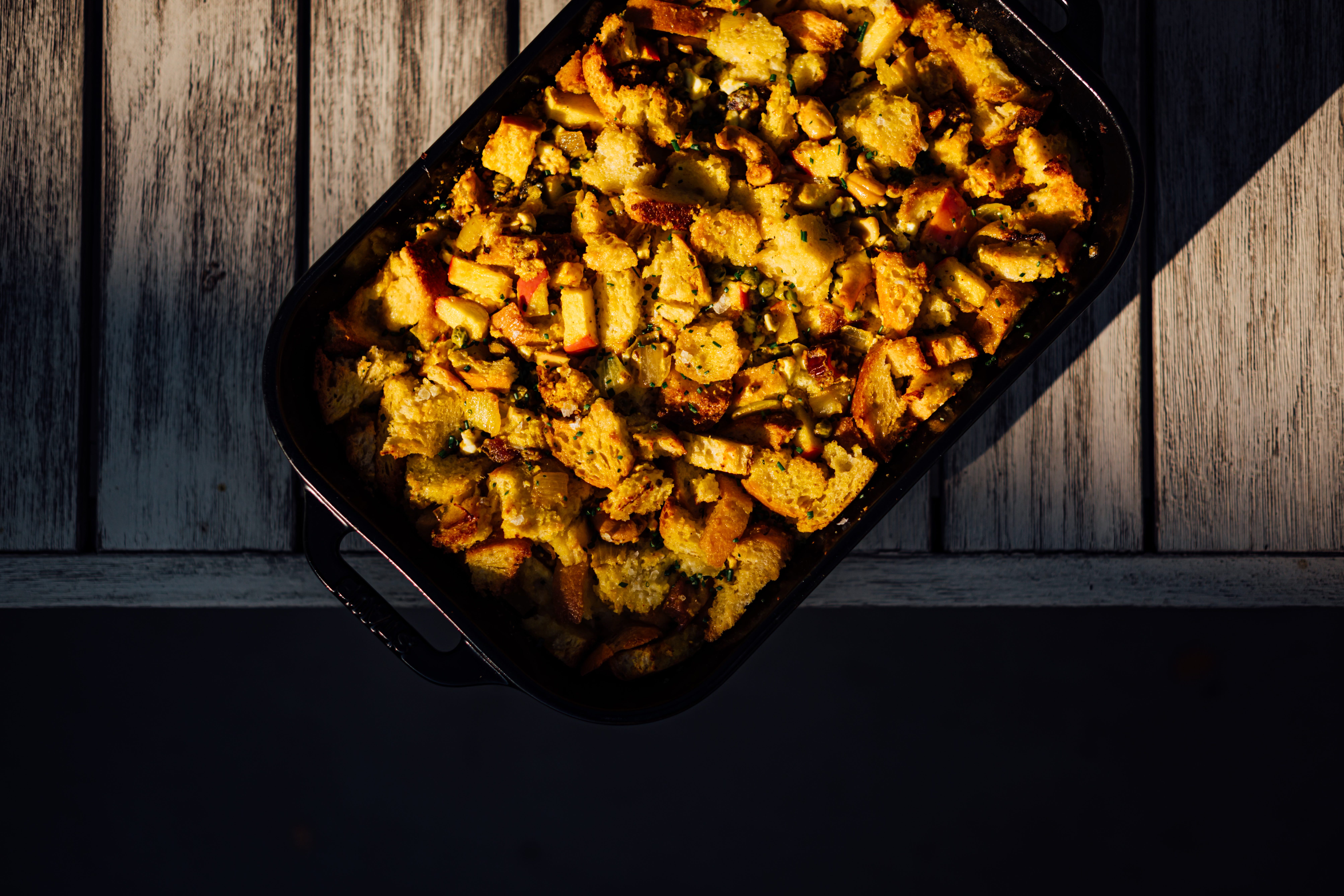
For my paid subscribers this holiday, I have a new side dish: the classic candied sweet potatoes, reinterpreted my way with the warm, comforting scent of chai spices and earthy jaggery, so the sweetness doesn’t mask the natural sweetness of the roasted sweet potatoes.
If you’ve been considering becoming a paid subscriber, now’s the time! I’ve jumped on the Black Friday train and am offering 40% OFF annual subscriptions for ONE WEEK ONLY. Redeem here.
ICYMI: Another extra side for my paid subscribers, My Indian Style Cornbread Stuffing
The 2025 Thanksgiving Menu
Thanksgiving is one of those days where food does more than feed us — it brings everyone a little closer. It’s the laughter in the kitchen, the rush to grab the last roll, the stories we only remember when we’re all finally sitting down together. As I get ready for my own celebration this year, I wanted to share the dishes that make me excited to cook for the people I love.
So I’ve gathered three curated collections to help you build a table that feels special — whether you’re hosting a crowd or cooking for just a few. Think golden, juicy mains… sides packed with color and crunch… and desserts that feel like a warm hug at the end of the night.
I’d love for you to dive in, pick a few favorites, and make them your own. If you end up cooking something from these lists, please send me a photo or tag me. Nothing makes me happier than seeing my recipes become part of your holiday memories.
Here’s to warmth, good food, and a table full of small moments that matter.
I’m giving myself a tiny break next weekend to enjoy the holiday, so there won’t be a newsletter next Sunday — but I’ll be back the following week with more delicious things.
My strongest opinion on Thanksgiving sides is that whenever possible, they should come in a casserole dish (or its chic French cousin, a gratin). I don’t mean that your sides should be limited to things that swim in cream, cheese, butter, or a happy combination of all three — although one dish in this category is highly welcome on my table — I simply mean that sides like this, that is baked in dishes with walls, tend to excel at holding up to resting times, reheat well, and stay warm longer.
I kicked things off with dinner at Workshop Kitchen & Bar, where the non-alcoholic drinks were so good I briefly forgot they were non-alcoholic. And because my ongoing quest for the world’s best potato pizza never takes a day off, I ordered their wood-fired sourdough topped with potato confit, braised leeks, truffled crème fraîche, and an unapologetic amount of cheese. It was creamy, indulgent, and genuinely made me consider starting a potato-pizza appreciation society.
The Palm Springs Food and Wine Festival has been a delight, even with the dramatic atmospheric storm currently soaking Southern California. Rain is a rare guest here, and when it shows up, the whole desert goes full glamour-shot mode — the mountains turn moody and cinematic, like nature is doing its own editorial spread.
So in the spirit of that bold, dramatic energy, I’m flipping the script this week. Instead of easing into Thanksgiving with savory dishes, we’re starting with dessert. Because honestly, when the sweets are this good, why pretend we don’t all want them first?
Hop in — it’s going to be a fun ride.
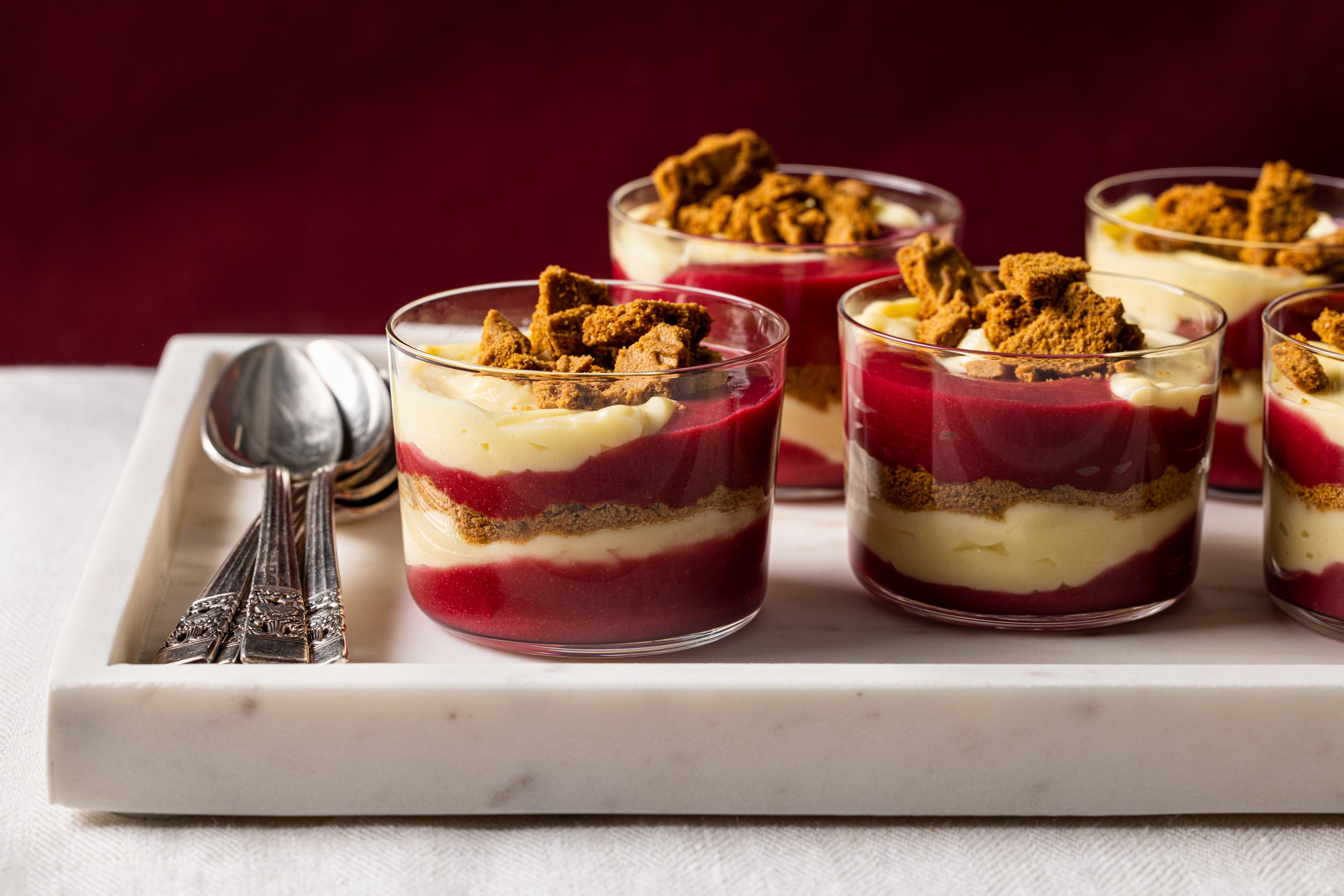
Cranberries and Cream Parfaits
If you’re not in the mood for pie this year or you’re looking for something different and more refreshing to end a rich celebration, these Cranberry and Cream Parfaits are for you. It’s the dessert I made for our Friendsgiving episode at America’s Test Kitchen, and it has quickly become one of my favorite Thanksgiving finales. Parfaits are easy to prepare ahead and assemble beautifully in individual glasses, which makes them perfect for entertaining. In this version, tart cranberries meet the gentle warmth of cinnamon and star anise, layered with a silky pastry cream for balance. The result is bright, festive, and light, everything you want after a hearty meal. You can watch how I made it and grab the recipe in the Friendsgiving episode.
Thanksgiving desserts are where I like to loosen things up a little — to keep the comfort but add surprise and brightness. This year’s collection leans into that balance. You’ll find desserts that cut through the richness of the meal, like cranberry-forward sweets and chilled puddings, alongside cozier bakes built on pumpkin, sweet potato, warm spices, and caramelized edges. A few are playful twists on tradition, while others borrow inspiration from my travels or the flavors I grew up with; together, they make a lineup that feels both familiar and new. These are the recipes I keep coming back to because they work for almost every table: small gatherings, big Friendsgivings, potlucks, or for that weekend when you want something festive. Since dessert is the theme this week, I’ve pulled together a curated list of the treats I think deserve a moment on your Thanksgiving menu this year.
I hope you are enjoying my recent show on America’s Test Kitchen (ATK), Flavor Forward. As an extra bonus for my newsletter subscribers, I’ve secured an exclusive discount on ATK subscriptions for the holidays. Through the end of November, in addition to a one-month free trial, you can get 37% off the first year of a membership. Just click HERE.
I just wrapped up the final edits for my new cookbook! After hours spent squinting at the galleys, scrolling, tweaking, and finessing every last word and photo, my eyes deserve their own vacation (or at least an eye exam). The cover will be locked in soon—and I can’t wait to share it with you.
It’s also the final episode of FLAVOR FORWARD, and fittingly, it ends on a sweet note: a cool, tropical granita made with coconut, lime, and lychee. It’s light, bright, and the perfect way to end a heavy meal—or to cleanse the palate between bites. As the series comes to a close, I’ve been reflecting on how close I once came to giving up on the idea of hosting a show that combines my two great passions: flavor and science. I’m so glad I didn’t. If you’ve been following along, thank you—and if not, this is a great time to jump in and show the finale some love. You’ve been with me through every high and low, cheering me on and reminding me why I do what I do. I couldn’t have done any of this without you—thank you for lifting me up always.
One Last Burst of Flavor
If you missed an episode of Flavor Forward, now’s the time to catch up. From broiled tandoori salmon and lemony couscous to this week’s tropical creamy coconut lime lychee granita, each episode dives into the science of flavor in a whole new way. 🎥 Watch all the episodes on America’s Test Kitchen’s YouTube channel → [Watch Now]
Next weekend, I’ll be cooking at the Palm Springs Food and Wine Festival—my first visit to the desert! If you’re local or have been before, I’d love your recommendations (food, vintage finds, or anything in between).
More soon, Nik
In this week’s newsletter:
New Recipe (Paid Subscribers): Indian-style stuffing with dates, nuts, and warm spices — a golden, flavor-packed twist on the classic holiday side.
Kitchen Science Deep Dive:The Science of Boiling Water — what really happens when water hits its boiling point, why pasta cooks slower at higher altitudes, and how understanding heat and pressure can make you a smarter cook.
Science Spotlight:The Truth About Washing Produce with Baking Soda — what the research actually says about using baking soda to remove pesticides (plus the correct ratio and soak time if you want to try it).
We’re down to the second-to-last episode of Flavor Forward with Nik Sharma, and this one packs more than just heat. I’m making Chicken 65, the South Indian fried chicken that’s crispy, fiery, and bright with lemon—the kind of dish that wakes up every sense. It’s marinated in spiced yogurt, fried to a perfect crunch, and tossed in a glossy chile-lemon glaze that hits all the right notes: tangy, savory, and addictive. But that’s not all. There’s a special guest in this episode who completely threw me for a surprise at the end—you’ll have to watch to find out who. Catch it now on America’s Test Kitchen’s YouTube channel and let me know what you think!
🔥 Don’t Miss the Heat
If you missed an episode of Flavor Forward, now’s the time to catch up. From broiled tandoori salmon and lemony couscous to this week’s spicy, crispy Chicken 65, each episode dives into the science of flavor in a whole new way. 🎥 Watch all the episodes on America’s Test Kitchen’s YouTube channel → [Watch Now]
“Cooking is chemistry—and Chicken 65 proves it.”
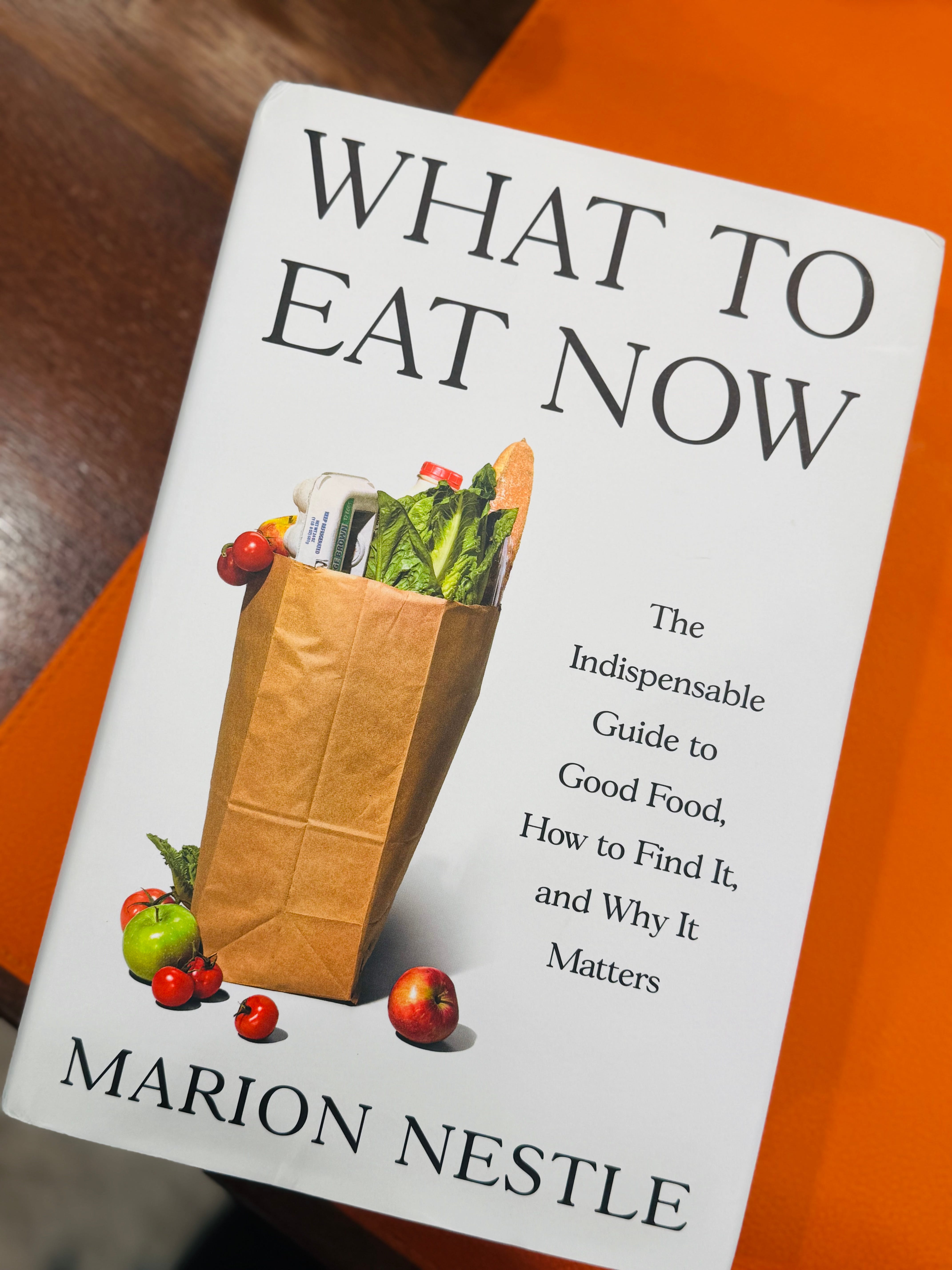
What I’m Reading: What to Eat Now by Marion Nestle
I’ve been reading Marion Nestle’s updated edition of What to Eat Now (Amazon/Bookshop), and it offers a smart and refreshing look at how we navigate food today. Marion has a gift for cutting through the noise of food trends and marketing hype with warmth, wit, and science. It’s a big book, one to spend time with and read slowly, page by page, because every section makes you think a little differently about how food really works in our lives. It is a masterclass in cutting through food industry noise with clarity, humor, and science. Marion unpacks the language of labels, marketing claims, and supermarket psychology to help us make better choices for both our bodies and the food system. I was lucky to read an advance copy and write a few words of praise for it, and I think you’ll enjoy it too.
Recipe
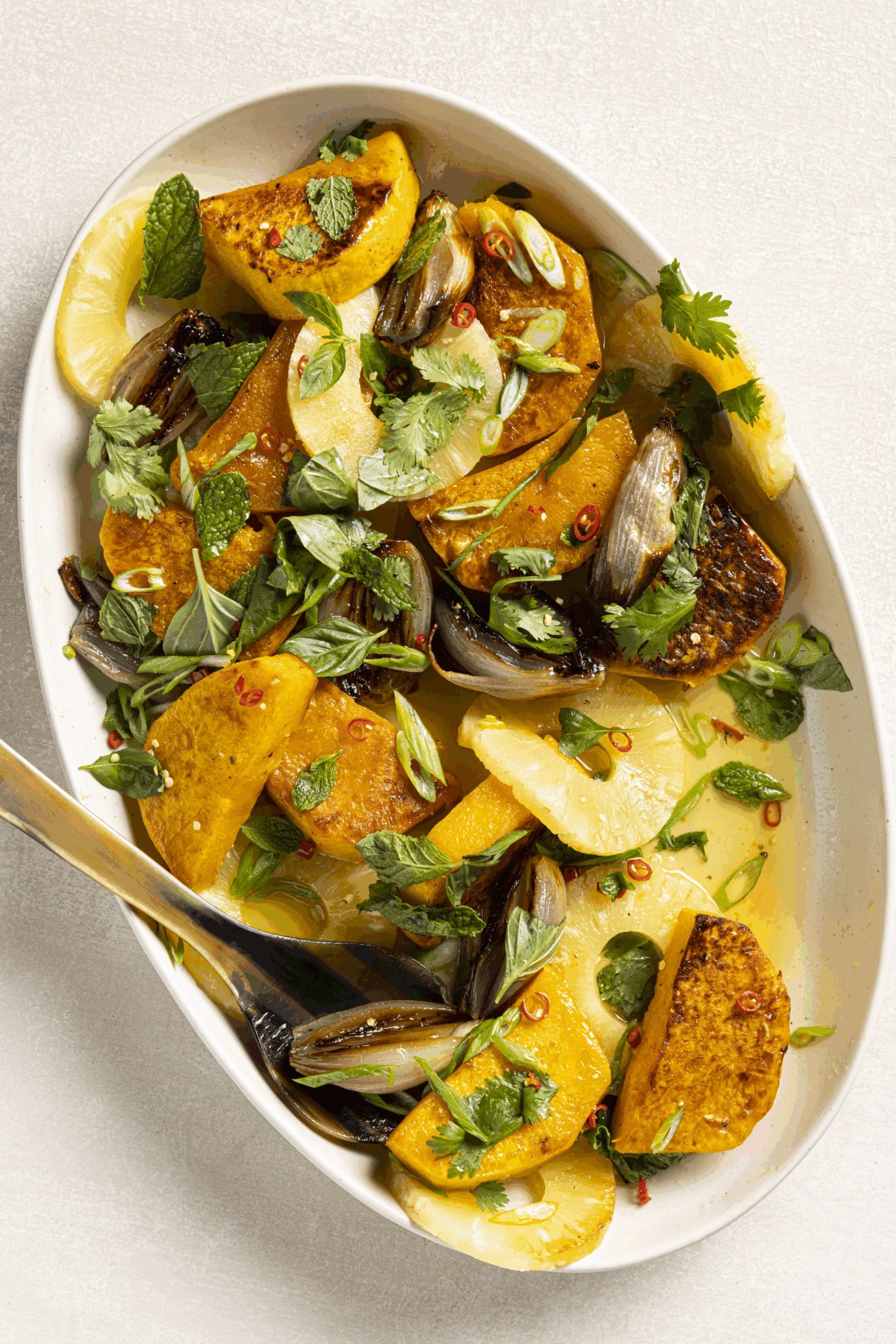
Roasted Squash and Shallots with Pineapple and Honey-Lime Dressing
My Roasted Squash and Shallots with Pineapple and Honey-Lime Dressing, walks the perfect line between sweet and savory. Butternut squash and shallots roast until caramelized and nutty, while pineapple adds juicy bursts of acidity. A honey-lime dressing ties everything together, its balance built on chemistry: sugars caramelize for depth, acids from lime and pineapple keep things bright, and a touch of fish sauce adds subtle umami.
Once roasted, the vegetables are layered with pineapple rings and topped with Thai basil, mint, cilantro, scallions, and sliced Thai chiles for heat. It’s colorful, fragrant, and bold—an easy side that feels special enough for a dinner party or holiday table. (Pro tip: skip the Italian basil; Thai basil’s spicy, anise-like flavor is what makes this dish sing.) 👉 Get the full recipe on America’s Test Kitchen
Unless you’re living your life better than me (probably!), I bet it’s been way too long since you last had a baked potato for dinner — or, as they’re more charmingly called across the pond, “jacket potato.” And it’s a crime because they’re so cozy and uncomplicated to make, we could fix this right now.
I can’t remember where I saw it or who wrote it, but they aptly described the weather in LA right now. It’s autumn in the morning, summer in the afternoon, spring in the evening, and at night winter sets in—all four seasons in one day. I never know what to wear, so I end up taking a jacket everywhere I go, just in case. And I learned my lesson well when I went out to dinner at the new Malaysian restaurant Rasarumah when stopped in LA on her book tour. Vegetarians, this place has a separate menu just for you. I highly recommend the gado gado salad and mushroom clay pot, which we ended up ordering twice that evening. The cendol sundae with coconut ice cream and pandan jelly noodles was phenomenal.
This week…
See what I’m cooking up in the latest episode of Flavor Forwardwith America’s Test Kitchen!
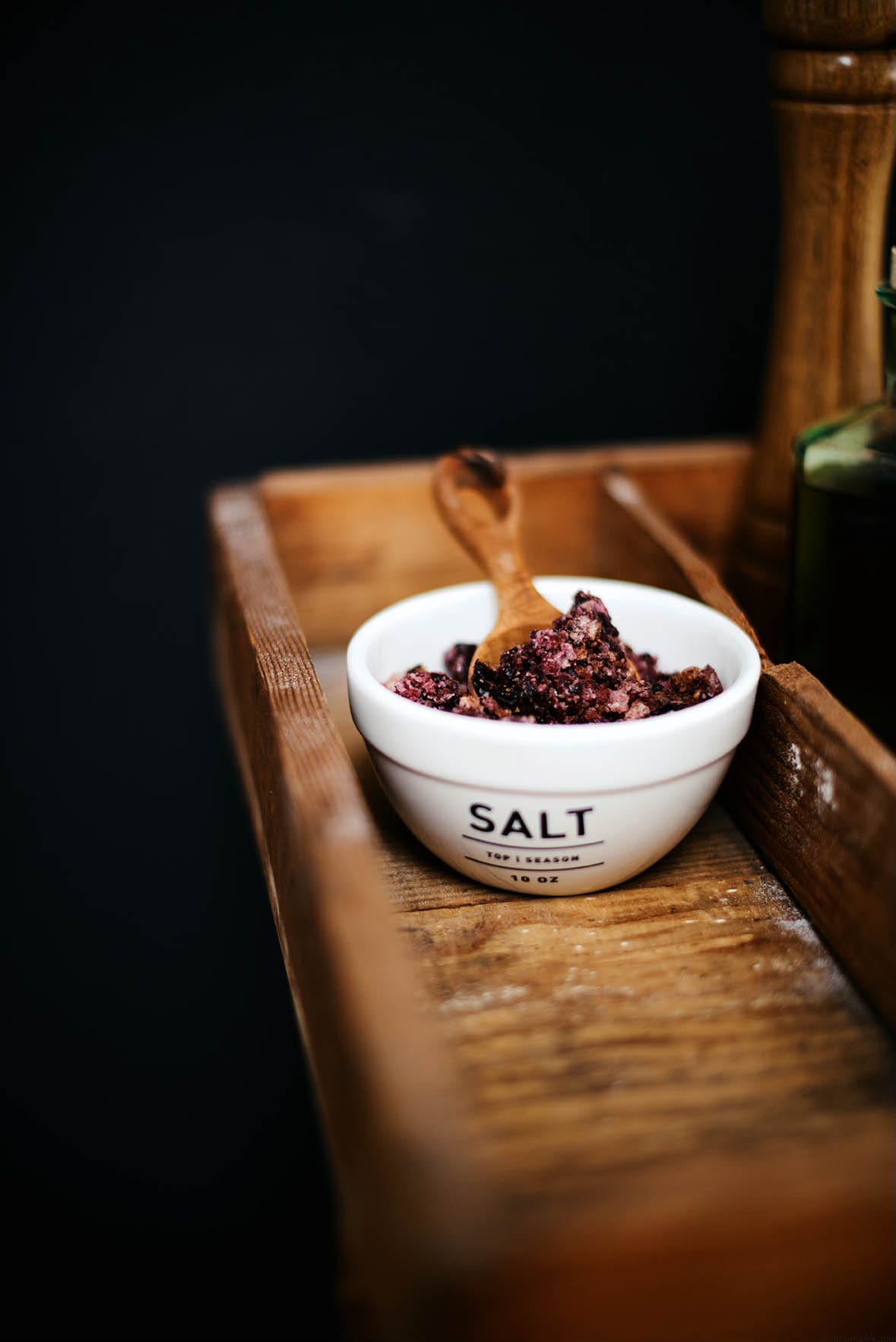
Learn about the science of salt in my salt deep dive (and get a handy chart to help with measurements for different types of salt)
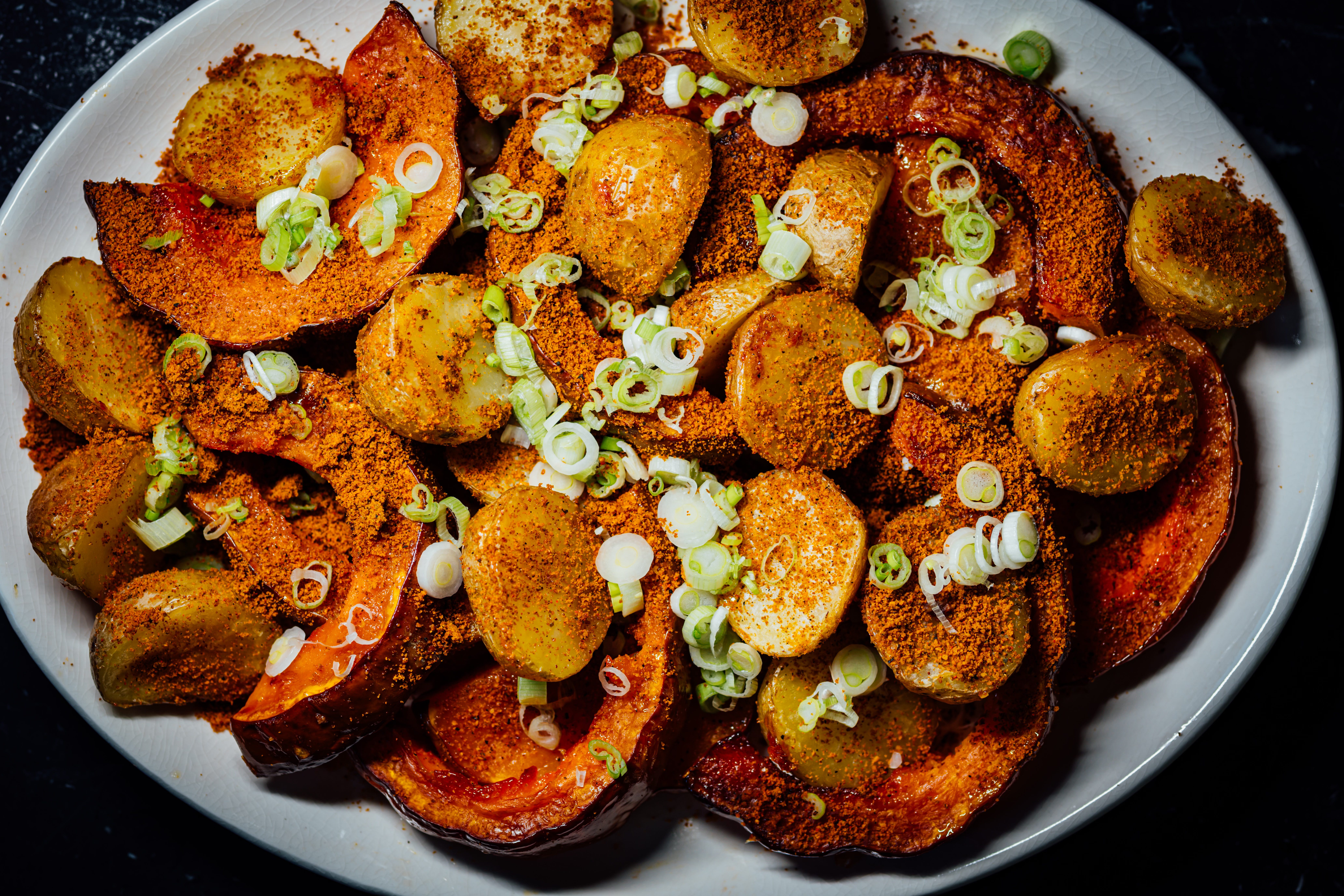
Exclusively for my Paid subscribers, my recipe for Gunpowder Butternut Squash and New Potatoes
Tandoori Salmon: Turning the Heat Up
Tandoori food delivers some of the boldest, smokiest flavors in Indian cooking, and that is precisely why I love it. Growing up in Bombay, I would sneak out with my friends at night to eat tandoori chicken fresh off the grill, wrapped in buttery naan. The meat’s charred crust, its crimson hue, and the aroma of spices that reached you before the plate did were unforgettable. For this episode of Flavor Forward, I wanted to bring that same intensity to salmon. The broiler may not hit the 900 degrees of a tandoor, but its radiant heat can still mimic that smoky, high-heat magic.
Instead of the traditional yogurt marinade, I take a different route. A brief soak in a baking soda solution raises the salmon’s pH, keeping it tender and moist while allowing time for a dark crust to form. I then brush the fillets with lemon juice, which resets the acidity, just enough for the beet juice in my spice paste to hold its deep red color. The paste combines garam masala, Kashmiri chili powder, garlic, ginger, and kasoori methi, creating a rich, earthy heat. The result is buttery, smoky salmon with layers of spice and color that rival anything from a tandoor. Watch the full episode of Flavor Forwardto see how it all comes together and learn the science behind this vibrant dish.
Missed an episode? Catch them all here at Flavor Forward.
Let’s Talk About Salt — and Why It Changes Everything You Cook
If you’ve ever wondered why salt makes food taste better, you’ll want to read this one. I just published a deep dive on the science of salt, how it sharpens aromas, balances bitterness, and even changes texture at a molecular level. It’s a quick, practical guide to understanding salt beyond “season to taste,” and it’ll change how you cook everything from pasta to pastries. You can read it here: The Science of Salt.
This recipe was inspired by Chipotle’s tofu option called “sofritas.” Have you tried it? I often order it on my burrito bowl for some additional plant-based protein. It’s hearty, saucy and spicy, and makes the extra three-dollar charge for guacamole worthwhile.
I based this recipe directly on Chipotle’s ingredient list. Then, I played around with the amounts and the method until it tasted just right. Honestly, I like this version even better! It tastes fresh, flavorful and nicely spiced. Sometimes Chipotle’s sofritas are so spicy that they overwhelm the other flavors in my bowl.
Friends, it’s snickerdoodle season. If you didn’t know that snickerdoodles had a season, let me paint a picture for you: you’re coming inside on a blustery and colder-than-you’d-expected October day so you hadn’t dressed for it and you can’t wait to announce what my kids always laugh at me for saying when I walk through the door: “Well, that’s enough doing things for me today!” and forswear things like “being outside” and “hard pants” for the rest of the evening but what is this! What is this god-like aroma of buttery baked cinnamon sugar warmth that has permeated your senses? Is it a scented candle, i.e. the idea, but not the substance of a thing you love? No, it’s snickerdoodles. And you’re about to eat a warm one, which feels like climbing inside It’s The Great Pumpkin, Charlie Brown while also, simultaneously, getting to be this dog. I’m not saying you cannot experience this sensory transcendency on a day in January or June, but it hits on a different, worldview-shifting, level when cold air is still a novel thing.
A trip to the Rose Bowl Flea Market in Pasadena feels a bit like rolling dice at an antique casino. You never know if you’ll come home empty-handed or juggling treasures. Held every second Sunday of the month, this legendary market is an event in itself with more than 200 vendors selling everything from vintage furniture and old cookbooks to potted plants, ceramics, clothes, and art. It is a dream for anyone with an eye for stories told through objects, whether collectors, stylists, designers, or just curious wanderers like me.
Our first visit years ago was a total bust. I had gone looking for a mirror like the one my parents have back home, an oval brass frame covered in delicate floral engravings. I found plenty of gold-painted wooden mirrors, ornate and beautiful, but not what my heart wanted. I left empty-handed and a little deflated.
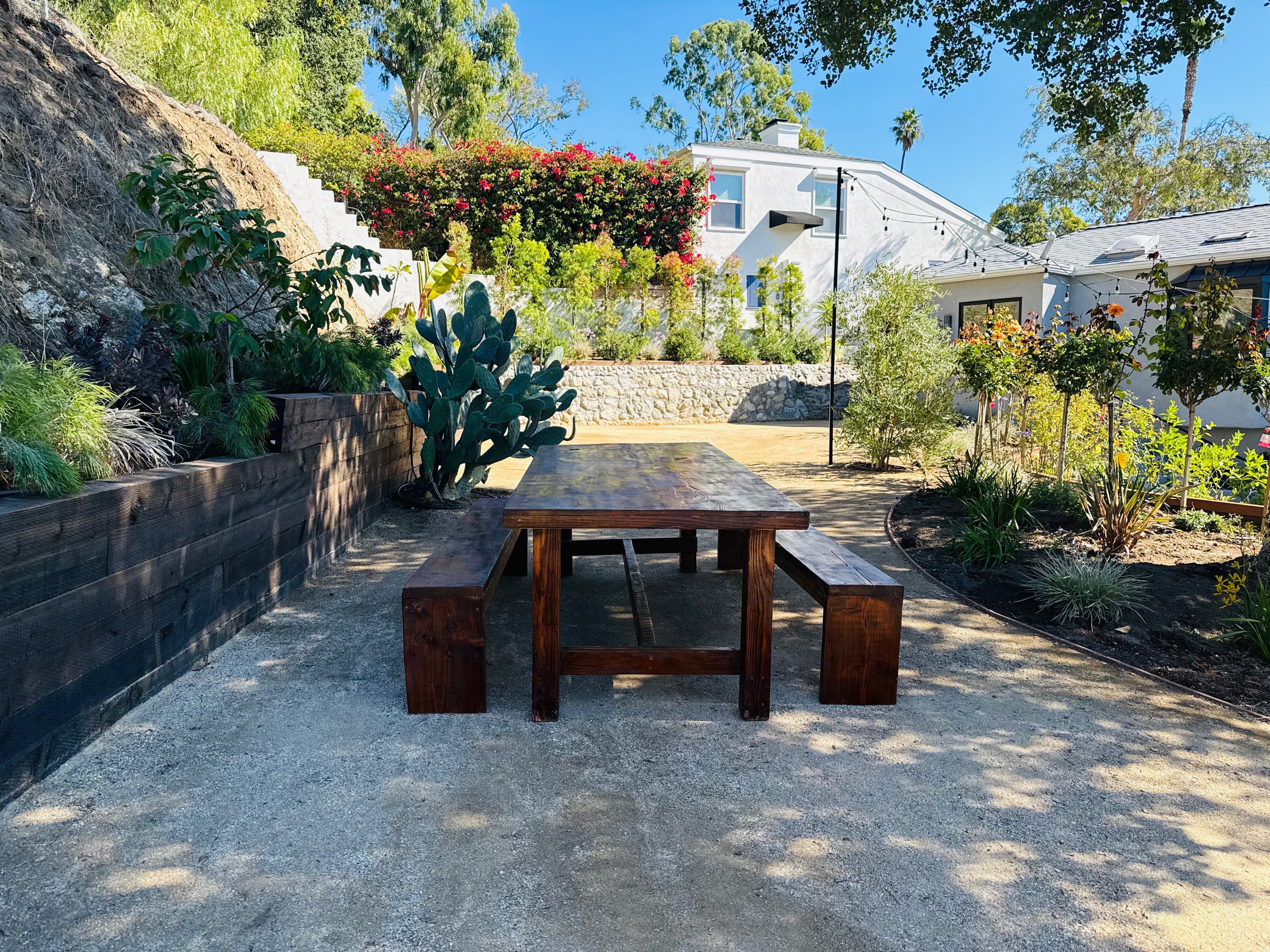
Fast forward to this year. We had just finished remodeling our backyard, and I was on the hunt for a dining table, something big and full of character, and a smaller one just for us when we weren’t entertaining. On a whim, we decided to tempt fate again and head to the Rose Bowl. And wouldn’t you know it, luck was waiting. Not only did we find outdoor furniture (made by Zation Wood Works), but we also found the mirror I had been searching for all these years. Heavy brass, beautifully aged, etched with intricate patterns that catch the light just right.
The outdoor tables and benches came with their own story, too. They are made from reclaimed wood floors salvaged from old Los Angeles homes. I love that. When I look at them, I imagine they have lived many lives before ours, seen things, heard whispers, maybe even held secrets. Perhaps those floorboards once felt the boots of a pirate or covered treasure tucked below.
Now they sit in our backyard, watching the sun move across the day. And I like to think that in their long journey through time, they somehow found their way home.
Lemon Couscous Chicken with a Burst of Freshness
If you’re craving something cozy but full of brightness, this week’s recipe is it. Inspired by my love for citrus and easy one-pan meals, Lemony Chicken with Chickpeas, Artichokes, and Pearl Couscous brings sunshine straight to the dinner table. The chicken thighs soak in a lemon-spiked marinade with smoked paprika, turmeric, and oregano before crisping up and finishing atop toasted couscous, tender artichokes, and creamy chickpeas. A drizzle of lemon dressing and a handful of arugula pull it all together into something that tastes like you spent all day cooking, even though it comes together surprisingly fast. Learn how to make it on the latest episode of Flavor Forward.
Missed an episode? Watch all episodes of Flavor Forward!
Best Fall Cookbooks of 2025: New Must-Read Releases for Every Kitchen
Every fall brings a wave of new cookbooks, and this year’s lineup feels especially thoughtful. From Helen Goh’s tender reflections on baking to Hetty McKinnon’s gatherings built around food and music, these books celebrate the ways cooking connects us. I’ve rounded up my favorite fall cookbooks of 2025, each one full of stories, flavor, and heart.
There’s a lot going on when you write a cookbook. You begin with an idea, then spend a year or two testing and developing recipes. Once the first draft is done, it goes through a developmental edit where the editor gives feedback on what you’ve done so far and offers up changes, ideas, or things to reconsider.
One of my favorite pictures from Ready for Dessert: Slicing the Marjolaine, which is also one of my favorite recipes in the book. (Photo by Ed Anderson)
After you’ve implemented those (or not), it then goes to a copy editor who checks grammar and spelling, as well as scans the recipes for omissions or gaffes, such as forgetting to say when to add an ingredient, and checks your metric conversions. I’ve seen more and more books lately that also credit an “Americanizer,” who presumably takes on that last task, since conversions are a big lift. I kid you not. I’m pretty sure I could write two cookbooks a year if we all used the same system of measurement.
The book then goes to a production editor, who makes sure everything is in the right place, then to a proofreader. (Not all publishers do all these steps. Mine does.) During the process, cookbook authors often send recipes to testers to give the recipes a go and get feedback. Some authors have people develop recipes but I give a tester the finished recipe and get feedback on that.
Shooting some of the desserts in our backyard.
If the book is going to be photographed, food stylists generally make the recipes for the photos, although in some cases, the author does. (Which I’ve done.) But it’s a very big job organizing and planning the shoot, then gathering all the ingredients and making everything, which is especially challenging if you plan to shoot five different photos a day. Then there’s the cleanup afterward.
I was fortunate to have George Dolese and Elisabet der Nederlanden working as a team on my book since there were a lot of photos to shoot in 2 1/2 weeks. That’s a very long shoot, but my publisher wanted a lot of photos so we, along with photographer Ed Anderson, delivered.
George arrived with a 7-inch (18cm) thick notebook, and I was startled to see how organized he was. We’d corresponded a lot before he came to Paris, and he asked me what he should bring from the U.S. I said parchment paper circles, natural cocoa powder, Lazzaroni amaretti cookies (why can’t we get those here? Romain has been devouring the leftovers…), almond paste, and chocolate chips — among other things.
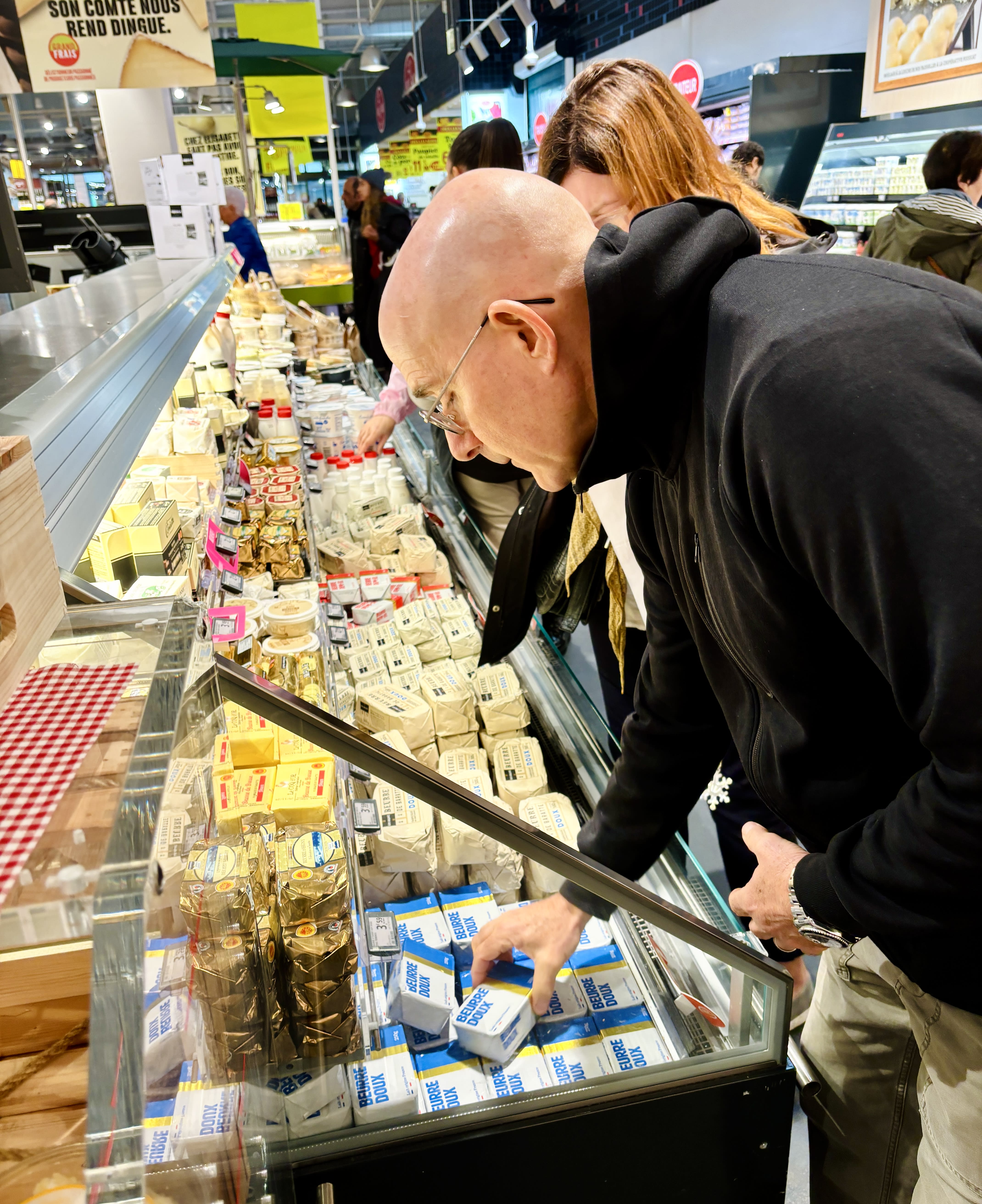
When George and Elisabet arrived, armed with massive shopping lists, I took them to a Grand Frais supermarket outside of Paris. For some reason there are no Grand Frais supermarkets in Paris, but they have a remarkable selection of everything, including aisles and aisles of every kind of fruit you can imagine, as well as a massive cheese aisle, a butcher, and shelves of nuts and baking ingredients.
Buying (lots of) butter at Grand Frais.
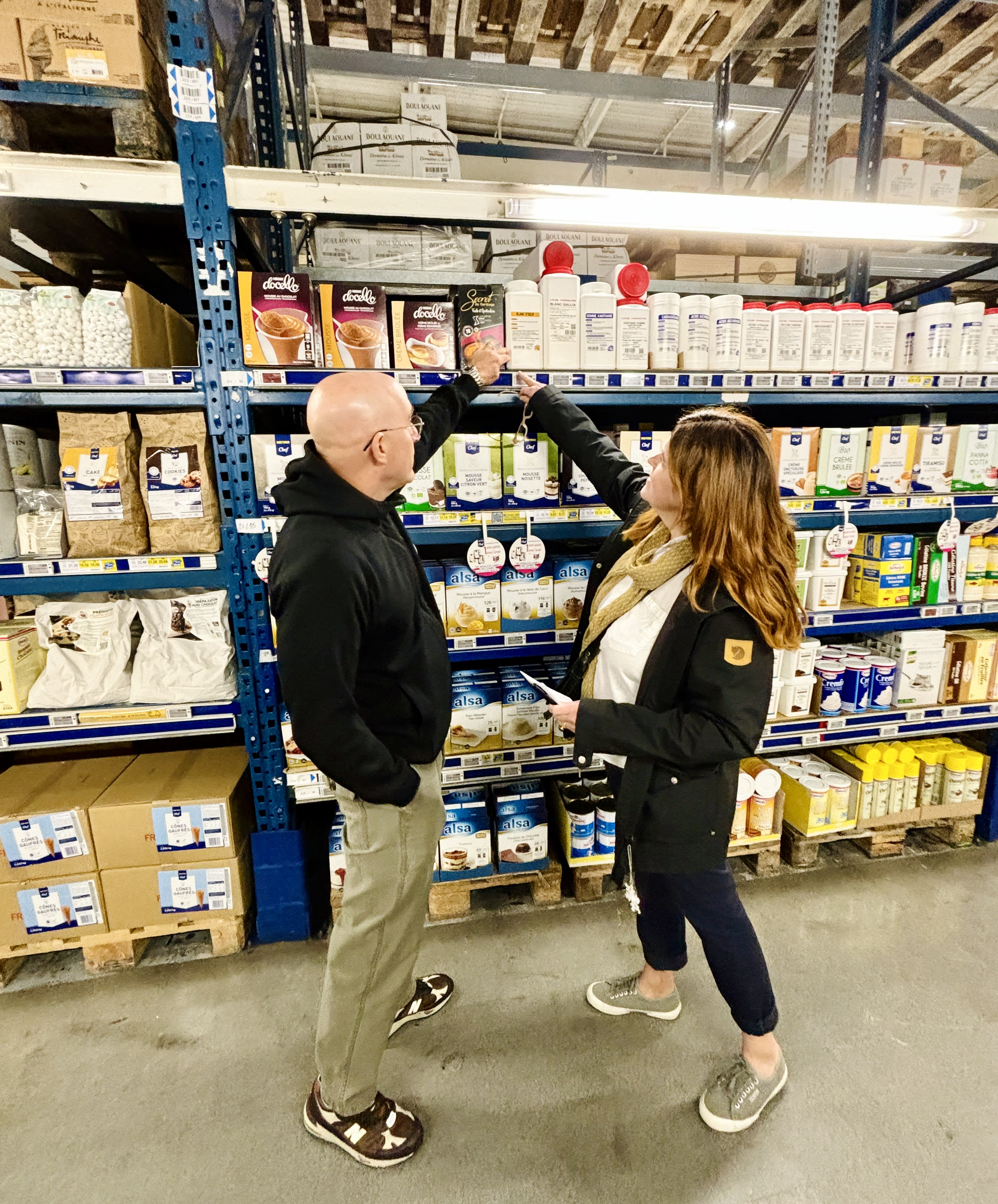
I also took them to Metro, a membership-only store that requires you to have a resale license. Elisabet is a particularly avid baker and went a little nuts in the baking aisles. She was especially wowed by all the various sugars available in France, from dark, moist cassonade (cane sugar) to crunchy pearl sugar.
Food stylists are invariably pros at cooking and often give valuable feedback if they run into any issues with the recipes. To be honest, food stylists do a better job than most of us can to make food look good for the camera. No one working on cookbooks uses fake food or anything like that, although when shooting pictures for the first edition of Room for Dessert (I was the food stylist on it), which became Ready for Dessert, I couldn’t find Concord grapes for the pie since it wasn’t grape season. A food stylist friend suggested that since it was only for a photo, I should use black olives. I used regular grapes instead and zhuzhed them up with some grape jelly for color.
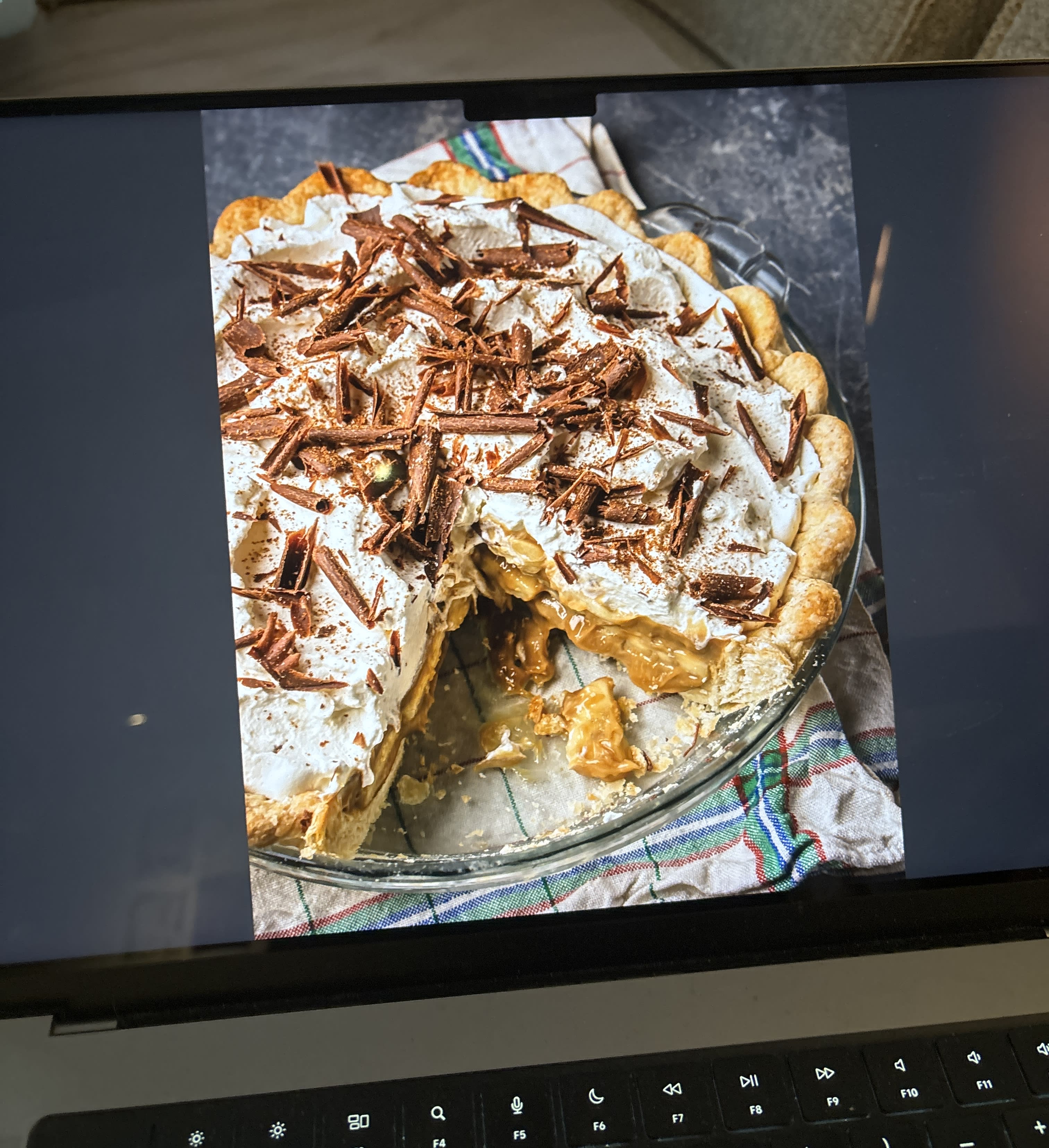
Banana butterscotch cream pie, page 100. (Photo by Ed Anderson)
Once the book is laid out and designed, with everything in place, the publisher sends a PDF of the book to the author to check and make sure everything’s A-OK. Then it’s off to the printer, and when you get the final book in your hands, you notice that tablespoon in one recipe is spelled “tablespooon.” (Which happened to me in another book.)
Photographer Ed Anderson and I took a coffee break when shooting out and about in Paris, here in the Place des Vosges. I had hot chocolate!
As the great Maida Heatter called them, “gremlins” get into cookbooks, no matter how hard you try to keep them out. Also, as someone who likes to tinker with recipes, I sometimes find different ways to make them. Books also have limited space, so it’s nice we have the internet to fill things in, as I’m doing here.
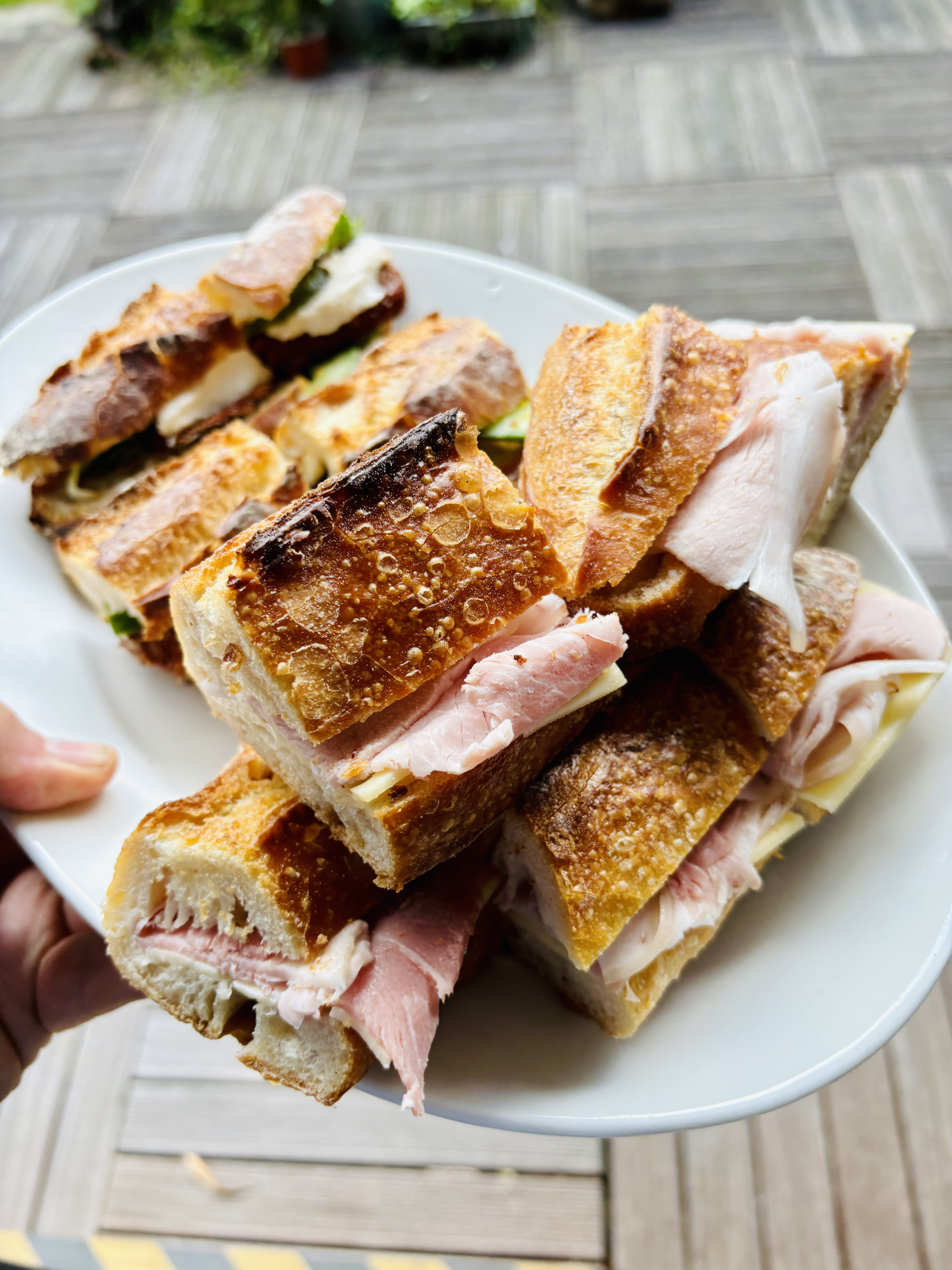
During the photo shoots, I was sometimes tasked with “staff meal.” I kept things pretty French for the crew, and jambon-beurre (ham and butter) sandwiches became the most requested meal…and I was happy to oblige.
Ready for Dessert Recipe Notes & Errata
Here are some additional notes about the recipes, including a few tips on baking times, a little errata the thickness of a cookie recipe, and an bonus recipe, that’s on the cover of the book.
– For the Easy jam tart (page 121), if the dough is a bit too sticky to press into the pan, put the pan with the pastry in it in the refrigerator or freezer for a few minutes to firm the pastry up.
– When making the Peanut butter and jelly linzertorte (page 103), if the ropes that you’re rolling by hand to place over the top break, it’s ok to place the pieces on top of the tart and simply pinch them together. They’ll bake up beautifully. While a lattice topping is traditional on linzertorte (which is really a tart), baker Jessie Sheehan suggested that the dough could be crumbled over the top of the tart, which I’m going to try the next time I make it.
– For the Panna cotta recipe (page 161) you can reduce the amount of sugar to 1/4 cup (50g), and you can omit the cinnamon and lemon zest if you want them with those flavorings in them.
– For the Croquants (page 251), yes, the batter is measured out in teaspoons, one per cookie, which is the measurement in the book. It makes cookies the size they are in France, the cookies in the photo on the left. (It doesn’t seem like a lot of batter when you are making the cookies, but the batter spreads as it bakes.) You are welcome to make them larger, like the cookies on the right. You may need to increase the baking time another minute or so, until they’re toasty brown across the top.
– For the Pâte à choux recipe (page 276), the yield will vary depending on the size you pipe the dough. You may get twenty puffs if you pipe them larger, which is fine!
I also like to play with the temperature of the oven, depending on how I feel that day. Life isn’t always cut-and-dry, and neither is pastry dough. And as I’ve said before, recipes aren’t set in stone. If they were, cookbooks would be very, very heavy.
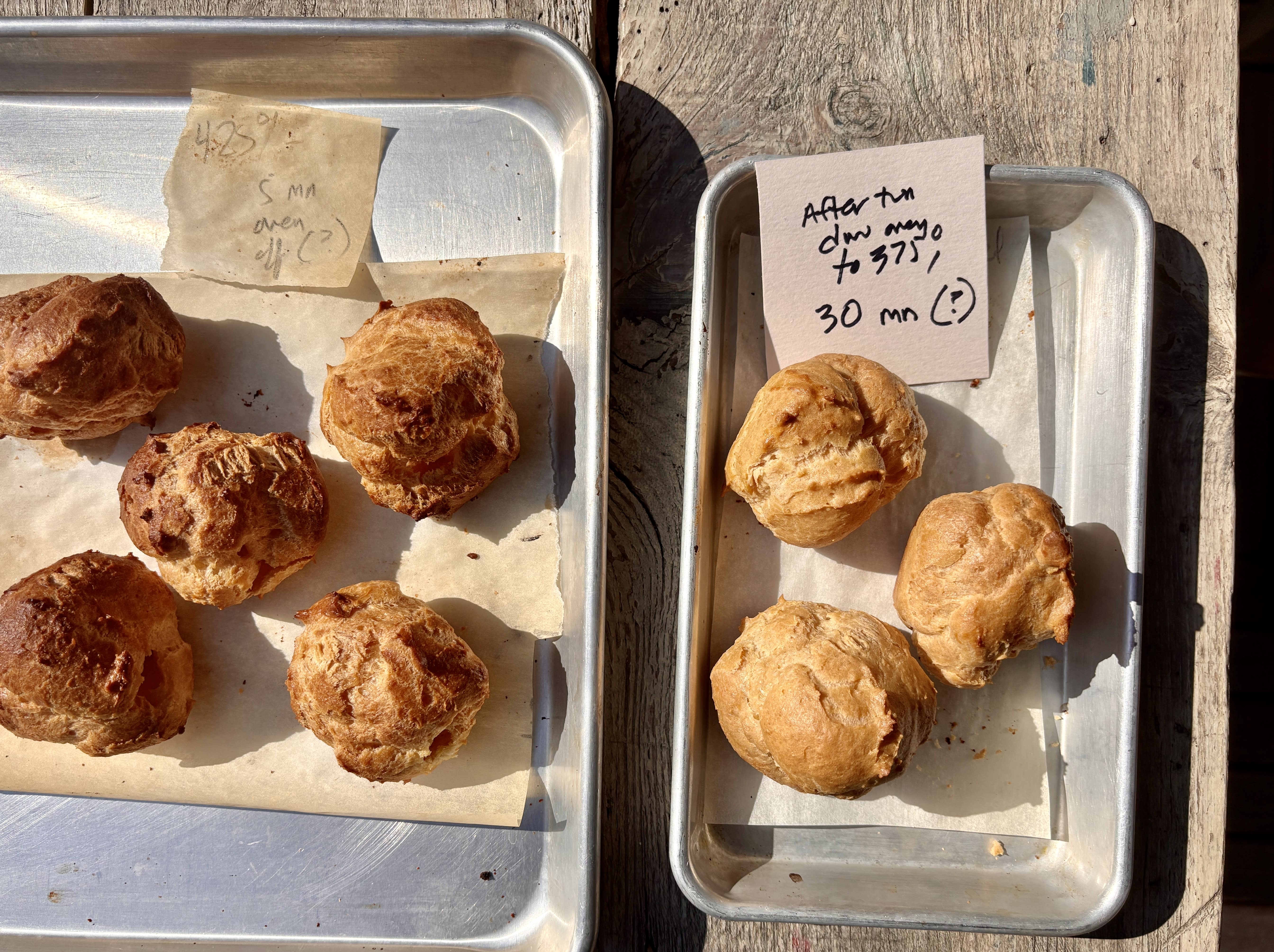
While the baking temperature in the first printing of the book has you baking the puffs at 425ºF (220ºC), I’m wondering if that’s too high for people? I like my puffs very crispy so that’s fine with me. But if yours are getting too dark for your taste, you can take them out before the recommended baking time. Similarly, you don’t need to keep them in the turned-off oven for 5 minutes after baking.
Another way I prepare pâte à choux puffs is to bake them in a 425ºF (220ºC) oven for 5 minutes, then turn the oven down to 375ºF (190ºC) and bake them until they’re golden brown. You can see the difference here:
On the left, baked at 425ºF/220ºC only (as the recipe appears in the book). On the right, puffs that were baked for 5 minutes in a 425ºF/220ºC oven, then turned down to 375ºF/190ºC.
When baking, always use visual clues to check for doneness, rather than strictly adhering to a baking time. When I baked professionally, we used a timer to remind us that something was in the oven. We never relied on it to tell us when something was done.
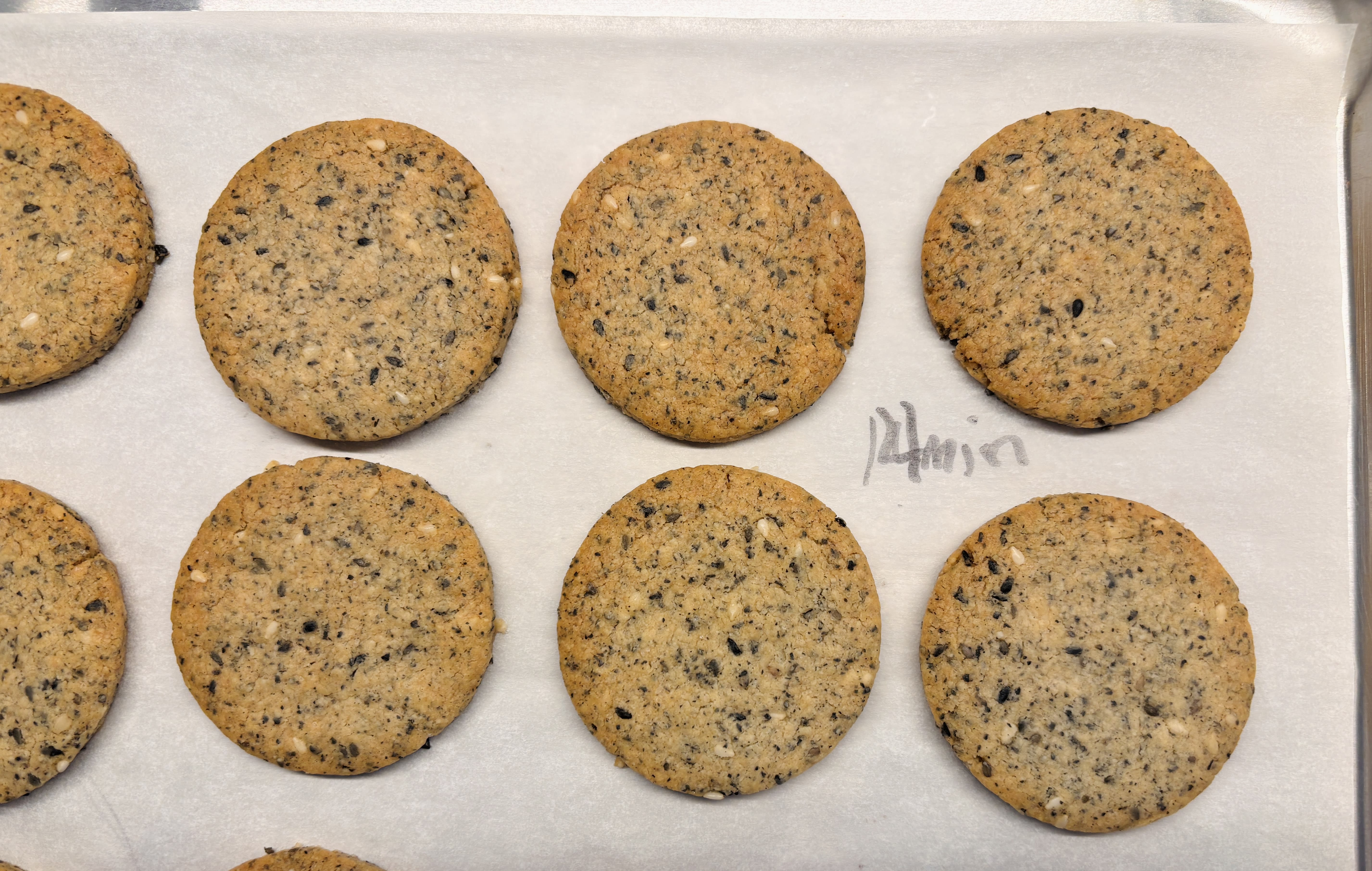
– When rolling out the dough for the Orange poppyseed sandwich cookies (page 246), the dough should be rolled 1/4 inch (6mm) thick, rather than the 1/2 inch in the book. I find the baking time of 12 minutes is just right for me, but if you like the cookies a little darker, I did a test at 14 minutes, shown below:
These were baked for 14 minutes; at 12 minutes, they’ll be lighter. The darker ones are crispier but the lighter ones meld more smoothly with the filling.
In the book, I gave a chocolate and chocolate-hazelnut options for filling the cookies, if you’d prefer to do that instead of using jam. But you can also fill them with Salted butter caramel sauce (page 283) that’s cooled until it’s thick and spreadable. And in place of poppyseeds, you can use very coarsely ground black or white sesame seeds instead. Or leave them whole! You’ve got options.
Poppyseed cookies filled with salted butter caramel.
-For the Palets Bretons (page 243), a magazine published the recipe with a baking time of “25-35 minutes.” After I developed the recipe, they were tested (again) here in my kitchen when the food stylists made them for the photo in the book. After the magazine published the recipe, one of the food stylists retested them in his kitchen in California and found the baking time in the book to be correct (see above.) But if your oven is different, just bake them until they’re golden brown across the top.
-The yield on the Seville Marmalade recipe (page 299) says it makes 8 cups but depending on various factors, you may get less. Also you don’t necessarily need to let the oranges rest overnight in the liquid. It does help the pectin work its magic, but it’s not obligatory.
– I’ve been playing with the Butternut squash pie (page 96), which is a great holiday treat. Some have said that it makes a bit too much filling for the dough. I recast the recipe so there’s no leftover filling, and you can get that here.
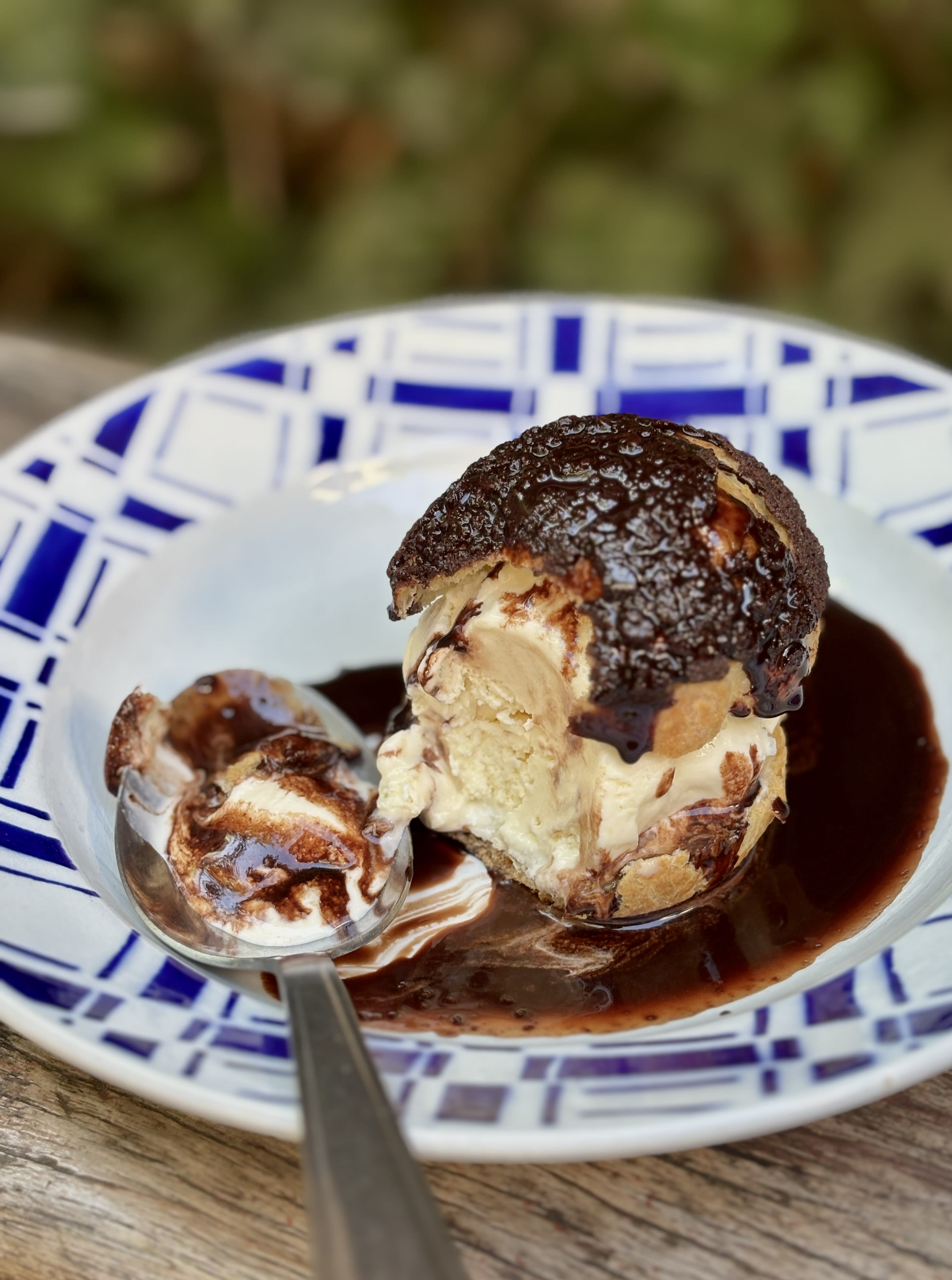
Sharp-eyed readers might notice the profiteroles on the cover of the book, from Grand Brasserie in Paris, have a layer of craquelin over the top. So I thought I’d share a recipe for chocolate craquelin.
I’ve never been a huge fan of sticky buns because I find many of them teeth-screamingly sweet. That said, these dial down the sweetness in favor of flavor, courtesy of two of my favorite things: pecans and maple syrup. And having the two swaddled in a butterscotch-like caramel seems to make each one taste even better than they do on their own.
I was intrigued by a new baking book, The New Sugar & Spice by Samantha Seneviratne, whose subtitle promises recipes for “bolder baking,” which immediately caught my interest. I don’t need to wow me with innovation – tweaking classics is often good enough. The wheel can only be reinvented so many times and no need to repair something that doesn’t need fixing.
It’s unfortunate that I am hooked on both, and like other expats, maple syrup and pecans are two things that we tend to hoard. Sirop d’érable (maple syrup) is available in Paris, the best bottles are sold at natural food stores, and pecans are around, although I often find them not quite at their freshest by the time they’ve hit the store shelves. So I lug those back with me. Fortunately, on occasion, I’m treated to bags by visiting friends and guests. Thank goodness I now have an American-sized freezer.
Well…to be honest, I used to hide them in the freezer, but since I’m a compulsive nibbler, I was getting tired of teething on frozen pecans. So I gave up and started keeping them in a drawer, which means easier access to these precious beauties.
Sticky buns are very easy to make. You start with a simple yeasted dough, softened with milk. Once it rises, you strew the rolled out dough with a mixture of brown sugar and cinnamon. Then comes the fun part: Rolling them up!
The doughy roll then gets sliced into spiraled wheels. Watching them rise in the pan – then rise even further in the oven, is one of the great joys in life. Eating them, of course, is the best part. But if you’ve got kids (or even a middle-aged man, like me), this is a really fun project for a weekend or during a holiday break.
While I was making these, I posted a live video on Snapchat, which is a fun way to share short videos that I’ve been playing around with. The downside is that I got so involved with shooting and sharing that I neglected to chop the pecans before using them, as you can see in the pictures. On Snapchat, posts and videos disappear after twenty-four hours – so when it’s gone, it’s gone! But you can follow me on Snapchat for other tips, future videos and a soupçon of occasional goofiness at davidlebovitz.
As much as I’m freaked out by new technologies, the old ones tend to vex people, too. Folks get freaked out by candy thermometers, but if you use one, you can get your caramel precisely to where it should be. I “went rogue” and didn’t use one, and my sticky buns got a touch too dark, which I liked for the “on the edge” flavor, but resulted in a sticky bun glaze that was less-runny that what some might be used to. So if you have one, you should put that candy thermometer to use when making these sticky buns.
The result of my morning of baking was a tray full of sticky buns that were great for a mid-morning snack but not bad for bringing to a meeting later that evening, which I did. The next day, people raved about them. I’ve got a few other “bold” recipes bookmarked from Samantha’s gorgeous book. And I’m going to make sure my stock of pecans doesn’t run too low, because I’ll be making these again in the near future.
Adapted from The New Sugar & Spice by Samantha SeneviratneThe original recipe calls for baking eight spirals in a 9-inch (23cm) round pan, but I wanted to get nine smaller ones, so used an 8-inch (20cm) square pan and cut the rolled up dough into nine disks. You can do either. Note: Do not use a springform pan for this recipe. Because of the maple caramel, the pan may leak. Even if you wrap it well with foil, caramel may seep out and you don’t want the lovely maple-accented glaze on foil. You want it on your sticky buns.The original recipe also called for a mix of walnuts and pecans, and I opted for all pecans since they’re one of life’s great luxuries to me. But you can swap out any nuts as you wish. There was also 1/2 cup (80g) of raisins added to the caramel along with the pecans, which I omitted as well, although you’re welcome to add them, or another dried fruit, like cranberries or sour cherries.You’ll also note the recipe calls for bread flour. Its higher protein content means that you’ll have better gluten formation and sturdier bread, or buns, as in this case. Most well-stocked supermarkets carry it or you can buy it . You can replicate it by replacing 1 1/2 teaspoons of all-purpose flour with 1 1/2 teaspoons of vital wheat gluten, per cup, or 140g, of all-purpose flour. (In France, I use T65 organic flour and add vital wheat gluten, which is available in natural food stores.)
Course Snack
Ingredients
For the dough
6tablespoonsunsalted buttercubed
2/3cups (160ml)whole or lowfat milk
3tablespoonsgranulated sugar
1 3/4teaspoonactive dry yeast
1large egg
2 1/2cups (320g)bread flour
1/2teaspoonkosher or sea salt
For the topping
6tablespoons (3 ounces, 85g)unsalted butter
1/4cup (45g)dark brown sugar
1/4cup (60ml)maple syrup(dark amber)
1/2teaspoonkosher or sea salt
1cup (140g)pecanslightly toasted and coarsely chopped
For the filling
1/4cup (45g)dark brown sugar
2tablespoonsground cinnamon
1/2teaspoonkosher or sea salt
3tablespoons (1 1/2 ounces, 42g)buttersalted or unsalted, at room temperature
Instructions
To make the dough, warm the butter, milk and sugar in a small saucepan. Pour into the bowl of a stand mixer and let stand until slightly tepid. (You can make this without a stand mixer. If so, pour the milk mixture into a medium bowl.) Sprinkle the yeast over the milk, stir gently, and let sit in a warm place until it starts to bubble, about 10 to 15 minutes.
Mix in the egg, flour, and salt, and knead with the paddle or dough hook at low-to-medium speed until smooth and elastic, about 5 minutes. (If kneading by hand, it may take a bit longer.) Knead the dough a few times with your hand until it’s a smooth ball, place it back in the bowl and cover the bowl with a kitchen towel. Let rise in a warm place until doubled, about 1 to 1 ½ hours. Time can vary, and it may take longer, or less time.
While the dough is rising, make the topping. Lightly butter a 9-inch (23cm) round or 8-inch (20cm) square cake pan. Heat the butter, brown sugar, maple syrup and salt in a small saucepan fitted with a candy thermometer and cook over medium heat until the mixture comes to a boil. When it gets foamy, after a minute or so, when a few of the bubbles start to get larger, remove from heat. (Samantha notes in her book that if using a thermometer, the temperature should read 212ºF (100ºC).
Pour the maple caramel into the prepared cake pan and strew the pecans over the caramel. Set aside.
To make the filling, mix the brown sugar, cinnamon and salt in a small bowl. Set aside.
When the dough has risen, knead the dough a couple of times on a lightly floured countertop and roll it into a 10-inch (25cm) square. Spread the softened butter over the dough and sprinkle evenly with the filling mixture. Roll up the dough as tightly as possible and using a serrated knife, cut the dough into 8 or 9 slices. If using a square pan, cut into 9. If using a round pan, cut into 8. Place them in the pan with the cut side up. Cover loosely with plastic wrap or a clean, lint-free kitchen towel, and let rise until almost doubled, about 1 hour.
Ten minutes before you’re ready to bake the sticky buns, preheat the oven to 375ºF (190ºC). Place the pan of sticky buns on a baking sheet lined with foil (to catch any overflow drips or spill) and bake until the center roll is lightly browned on top and it doesn’t feel soft when you press it with your finger, 25 to 30 minutes.
Remove the rolls from the oven. Let cool for 5 minutes then run a knife around the outside (if possible, as the buns may have overtaken the rims), then tip the sticky buns out onto a cooling rack or serving platter.
Notes
Serving and storage: Sticky buns are always best served warm, and the day they are made but are fine the next day. If you wish, you can keep them well-wrapped for a few days, rewarming them in a low oven, wrapped in foil until heated through. They can be frozen for up to two months.
Although spinach gnudi — soft, pillowy cheese dumplings fried in browned butter and sage — are traditionally more of a spring or summer food, I’m here to make the argument we should eat them right now, in prime soup-and-sweater weather. Because did you hear the part about warm cheese? the puddle of brown butter? the earthy sage? It’s a symphony of delicious fall things and if you tell me you don’t want to curl up on the plate and take a nap in it, fine, I’ll believe you but I do think you’re in denial.
I’m honestly overwhelmed with gratitude. The response to Flavor Forwardhas been beyond anything I imagined. What excites me most is hearing how you’ve used these episodes to cook something new, to see ingredients differently, or to rediscover why you love being in the kitchen. Thank you for tuning in, for cheering me on, and for sharing this journey with such kindness and curiosity.
This week’s episode is one of my favorites yet, featuring a simple weeknight pasta that combines Italian passata and Korean gochujang. It’s comfort food with a twist: silky, bold, and quietly surprising, much like this adventure has been for me. The sauce reminds me why I love cooking in the first place: how two seemingly different ingredients can come together to create something entirely new.
This week, I’m taking paid subscribers behind the scenes into my kitchen to explore how a recipe takes shape. My Guide to Recipe Creation shares the framework and principles I rely on when developing new dishes, using my Pineapple Five-Spice Rice Krispies Treats from America’s Test Kitchen’s Rice Krispies Treat Challenge as a running example. I hope it inspires you to experiment, adapt, and create your own.
Thank you, truly, for watching, for writing, and for reminding me that food connects us in more ways than I could ever put into words.
From Idea to Plate: My Guide to Recipe Creation
How to Build Recipes That Tell a Flavor Story
Cooking gets more exciting when you stop following recipes and start understanding them. This guide is meant to help you think like a recipe developer to see how flavors connect, textures form, and small choices shape big results. Once you grasp the “why” behind a recipe, you can start experimenting with confidence and make every dish your own.
Welcome to the cake that has terrified me the most. You see, I have two favorite cakes. The first is my Strawberry Summer Stack Cake, the layered strawberry, cream, and butter cake version of the Strawberry Summer Cake in Smitten Kitchen Keepers. The second is the Opera Cake (Gâteau Opéra), a stacked and striped dessert with thin almond cake layers soaked in espresso syrup, chocolate ganache, and a rich espresso buttercream. The difference between the first cake and the second is that the second recipe was never going to happen.
Thank you so much for tuning in to the very first episode of my new show, Flavor Forward! It has been such a joy to share it with you, and the response has been incredible, all thanks to you. I am truly grateful.
In the newest episode of Flavor Forward, I take a humble can of white beans and riff on romesco, using one of my favorite pantry staples: jarred crushed Calabrian chiles. I first discovered these fiery little gems at a pizzeria years ago, and they have quickly become a permanent fixture in my kitchen. I keep two jars in constant rotation. They bring just the right amount of heat, around 25,000 to 40,000 Scoville units, along with a smoky and fruity depth. I have spooned them over eggs, tucked them into grilled cheese sandwiches, and, as in this week’s episode, used them to build dinner-worthy flavors in a romesco bean stew.
Calabrian chiles are often referred to as the “red gold” of Southern Italy. They are so beloved that there is an annual peperoncino festival in Diamante and even a museum dedicated entirely to them. Brought to Europe from the Americas in the 16th century, they quickly became an integral part of Calabria’s identity and cuisine. Their heat is considered medium, but what sets them apart is the complexity of flavor. Warm, fruity, and smoky, they lend depth without overwhelming the dish.
A spoonful of Calabrian chile paste can transform pasta, pizza, seafood, sauces, and more. Locals often say that food is not truly Calabrian without peperoncini, and many even carry them in their pockets to ensure they never face a bland meal. More than an ingredient, they are a symbol of joy and identity. You see them painted on walls, hanging from balconies, and sold in markets as charms of good luck.
Back at home, I am preparing for a family visit from Auckland. My cousin and I can be a bit of a whirlwind together, and I am sure we will keep everyone on their toes in the best possible way.
ICYMI
WHAT TO COOK IN OCTOBER: COZY RECIPES FOR FALL
October always feels like the month when the kitchen asks us back in, not with urgency but with comfort (and a little spooky Halloween fun). I find myself craving the scents that fill the house and linger long after the pans are washed: cardamom and cinnamon wrapped into a Masala Chai Pumpkin Cake, the sweet scorch of caramel over a Caramelized Nut Semolina Kefir Cake, and the vinegar tang that cuts through a Goan Coconut Curry. There are dishes that warm—like Chickpeas Stewed with Spinach, or Butter Chicken rich with spice and cream, and those that brighten, such as a Preserved Lemon Pasta that tastes of sunlight even on the grayest day. And because we can never have too many sweets, there are Cookies for Halloween, a Date and Tamarind Loaf, and a Lemon Poppy Seed Ice Cream that surprises me each time with its brightness in the middle of fall. These are the flavors I am cooking and eating this October, and I hope you will bring them to your table too.

 Login
Login