Normal view

Poule au pot

16 February 2026 at 16:03

Well, la gastro got me again. Because la gastro is so common here in the winter, and French is so complicated to speak even for native French speakers, the name gets shortened from gastro-entérite, or gastroenteritis.

Being densely populated, Paris is a petri dish for it, although some guests were in the French Alps last week, and four out of six of them got felled by it. So escaping to the mountains doesn’t ensure that it won’t find you there.
I had it about a month ago, and just got it again, which doesn’t seem fair, although as I recently heard a doctor say, viruses don’t care about your feelings.

Share

La gastro is very contagious and the best defense is washing your hands. (Hand sanitizers aren’t that effective against the virus.) Unfortunately, in a country where greeting someone involves shaking hands, and daily life entails holding onto poles in crowded métros, eating in restaurants and shopping at markets where multiple people have handled your food, and towels for drying your hands after washing them in some restaurants and cafés are shared with perhaps a hundred or more people*, you don’t need to look very far to see how (or where) you could have gotten it.
One thing about getting sick in France is that you have to plan for it. There’s no pre-prepared chicken soup, and supermarket soups are invariably veloutés or purees of vegetables.
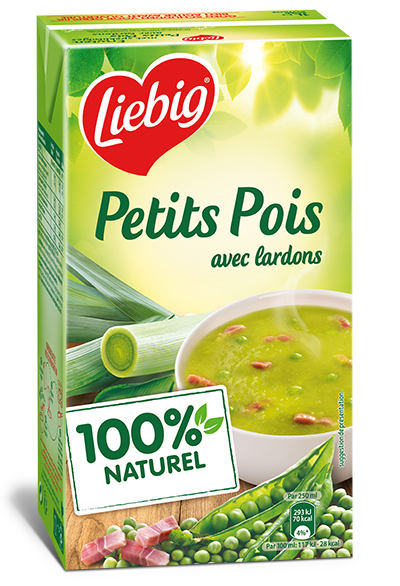
I don’t know about you, but when I have an upset stomach, the last thing I want is a bowl of green soup, especially if you’re old enough to remember Linda Blair in The Exorcist. When things are coming out of you fast and furiously, you want a bouillon-based easy in, easy out situation. And certainly not anything green.

Newcomers to France, from America, are surprised to find that store-bought bouillon or stock isn’t readily available in liquid form, as it is in the States, where whole aisles of the supermarkets are devoted to a range of stocks sold in quart cartons. In France cubes of stock are commonly used, from brands like Knorr, and Maggi. Ultra-processed hasn’t become a keyword in France yet, but I’ve yet to make the transition to them.

I’m not sure what people in France do when they get sick, but if you can drag yourself to the grocery store, or can manage a trip to both the butcher and the produce store, you can make a poule au pot.** This “chicken in a pot” requires little hands-on work, and is easy on the system, one that I’m doing my best not to upset any further.

Subscribe to my newsletter to get new posts sent right to your inbox…

There are fancy ways to make a poule au pot, such as one with a sauce suprême made with crème fraîche, egg yolks and butter, or this one, with 14 ingredients. Or this one with chicken stuffed with a farce (stuffing), which you’re welcome to tackle if you’ve got the fortitude for it.

There may be a definitive version of poule au pot, but I’m too zonked to track it down, nor am I up for a battle with the authenticity police. And I’m definitely not up for*** stuffing a chicken, or making or eating cream sauce.
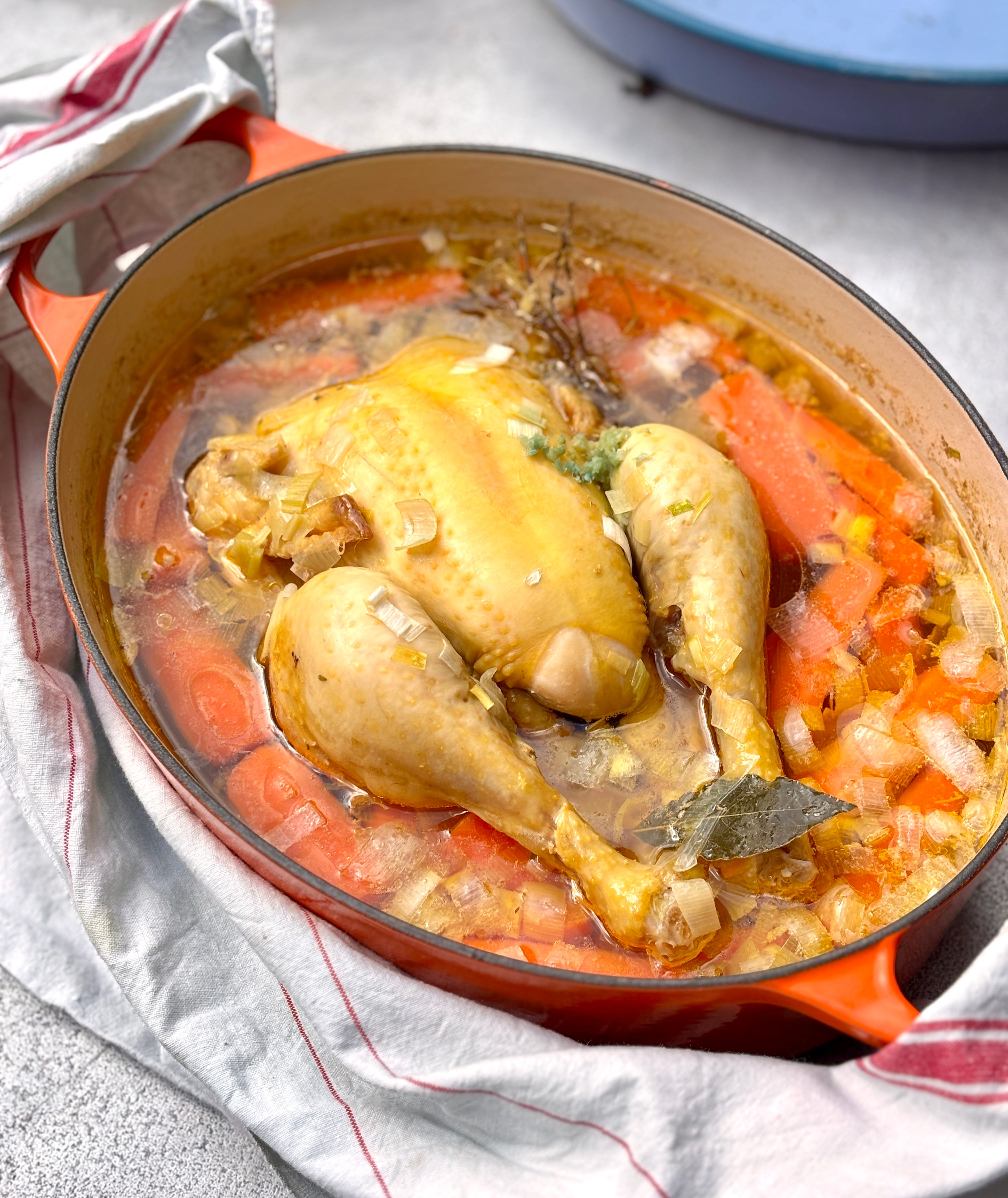
The good thing about making this dish is that you don’t need store-bought stock as cooking a whole chicken gives you a lovely, rich broth. And while not part of the French culinary canon, since Manischewitz has not made it to France, there’s no matzoh meal at the supermarché.

Another Poule au pot

Yes, you can buy pain azyme and grind it yourself, but that also takes strength, so it’s a no-go. My neighbor who owns a deli in Brooklyn is out of town. Otherwise I’d ask him to bring some matzoh balls over. I’d be pretty surprised if he didn’t have some matzoh meal squirreled away.
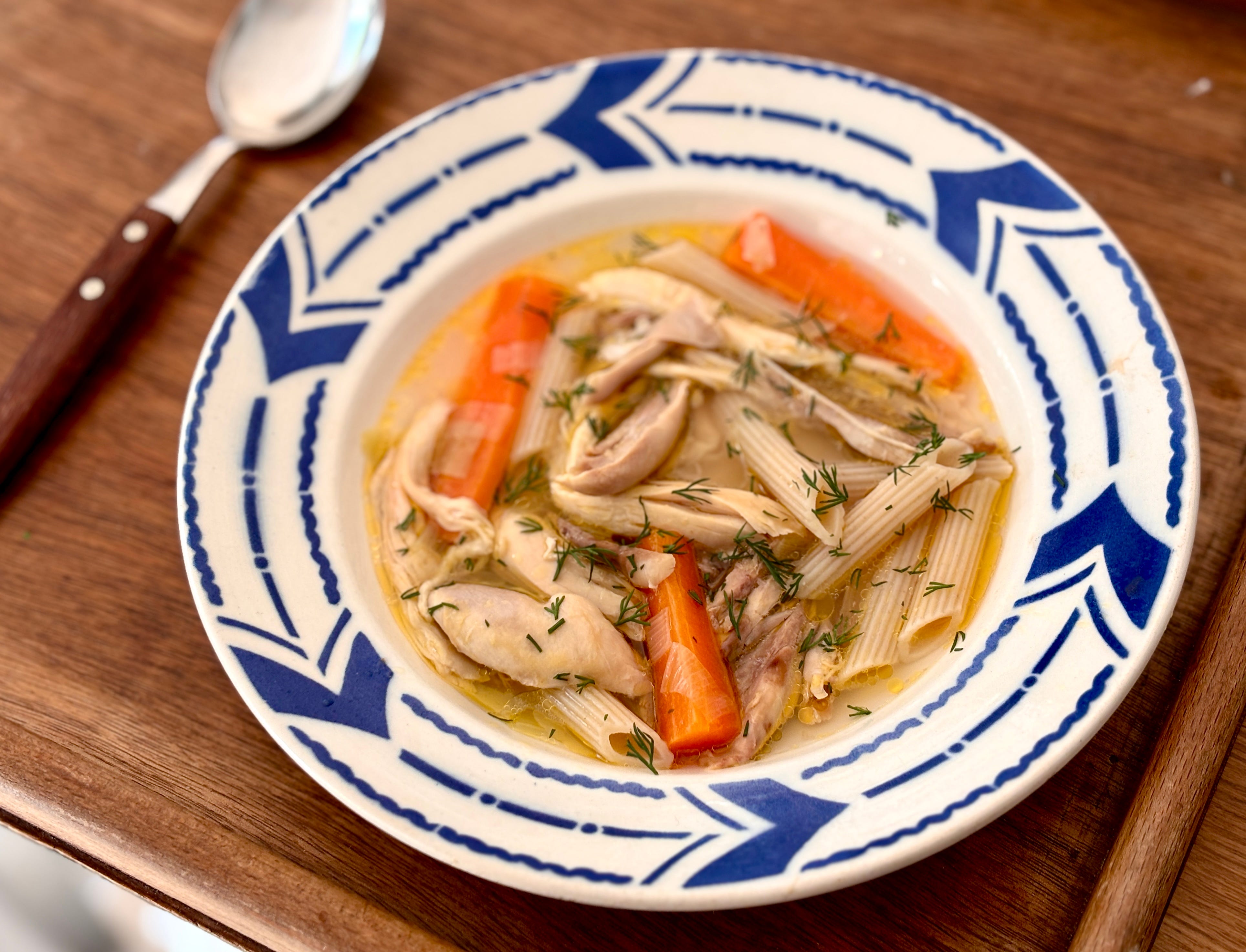
Poule au pot

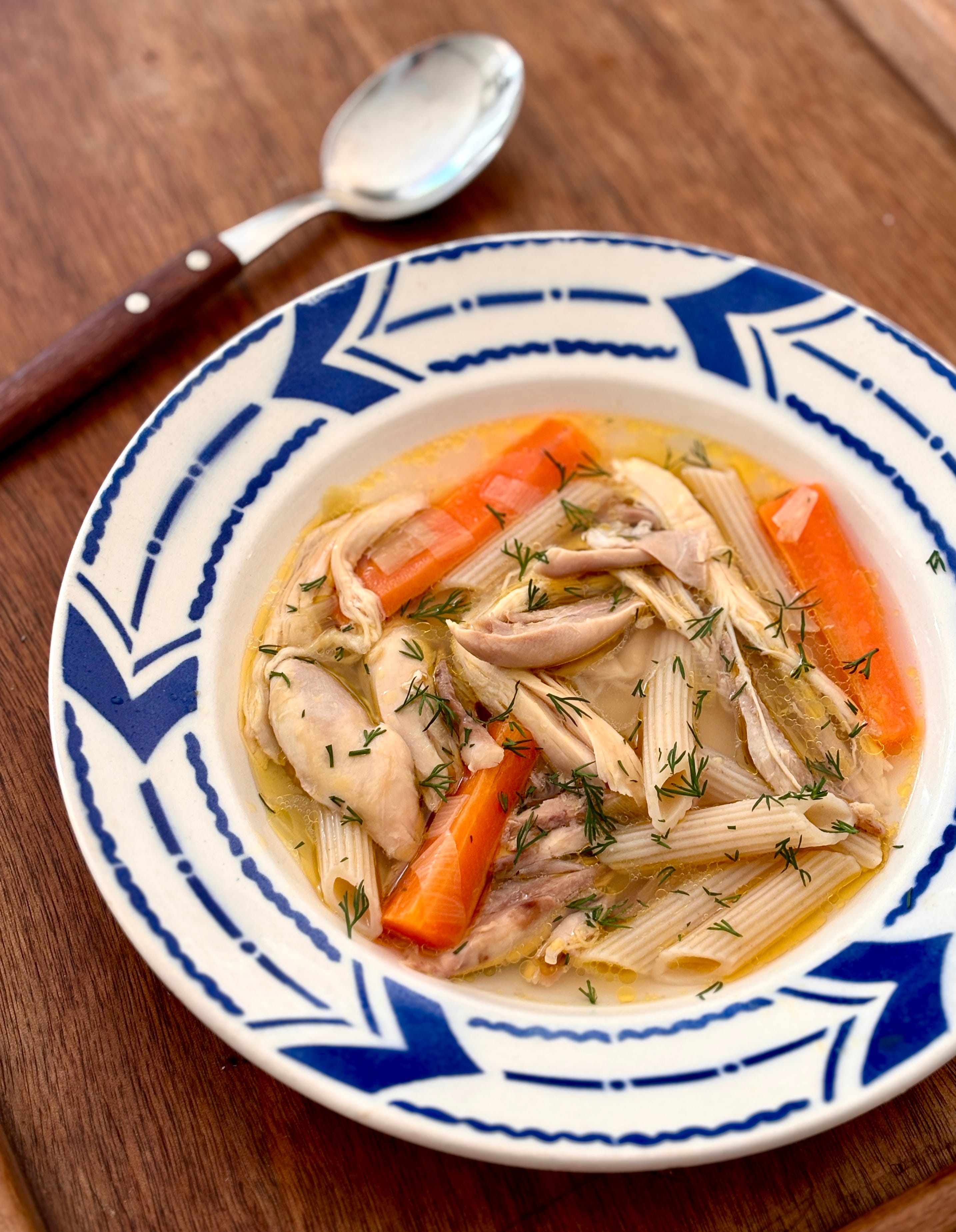
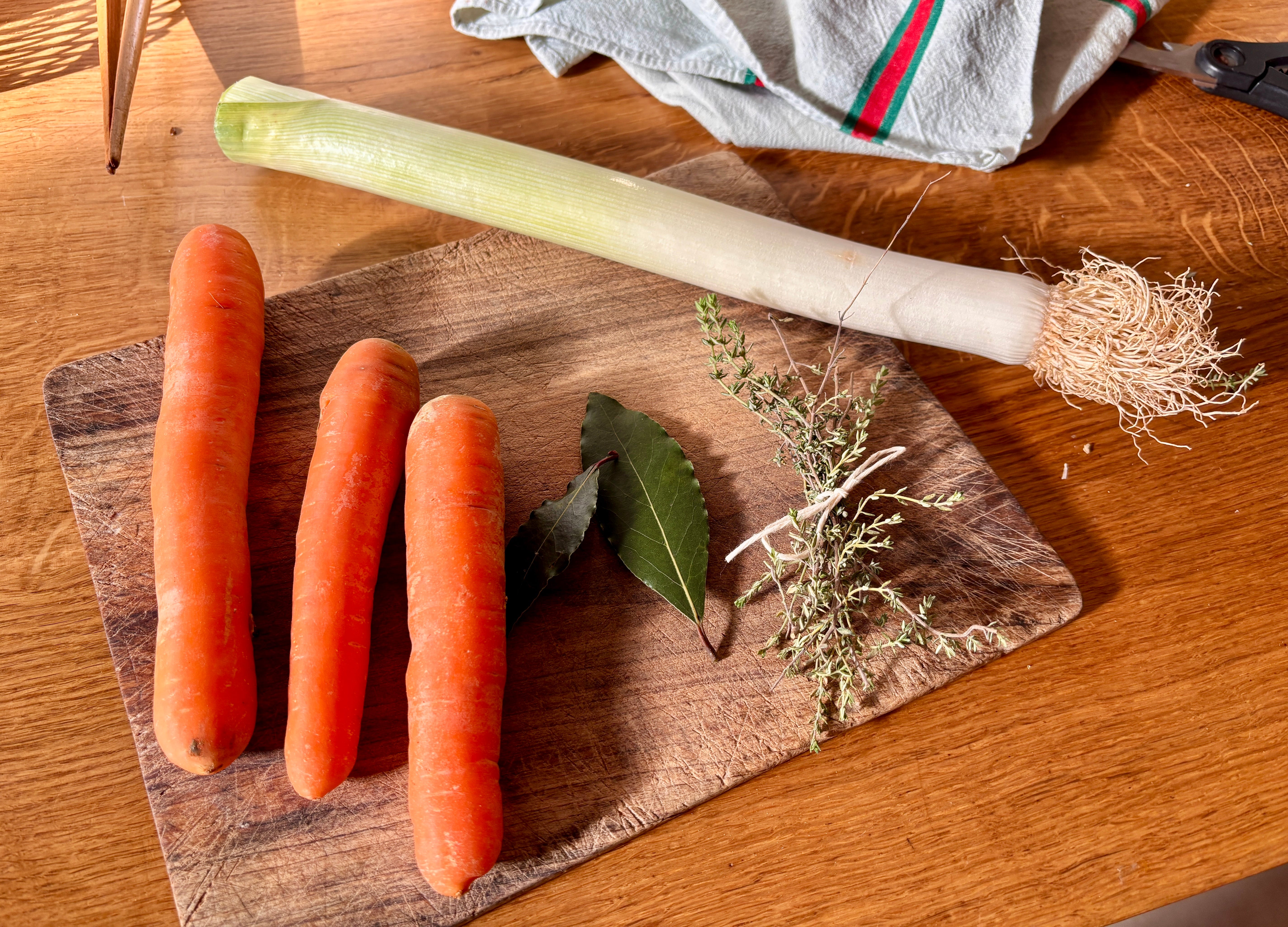
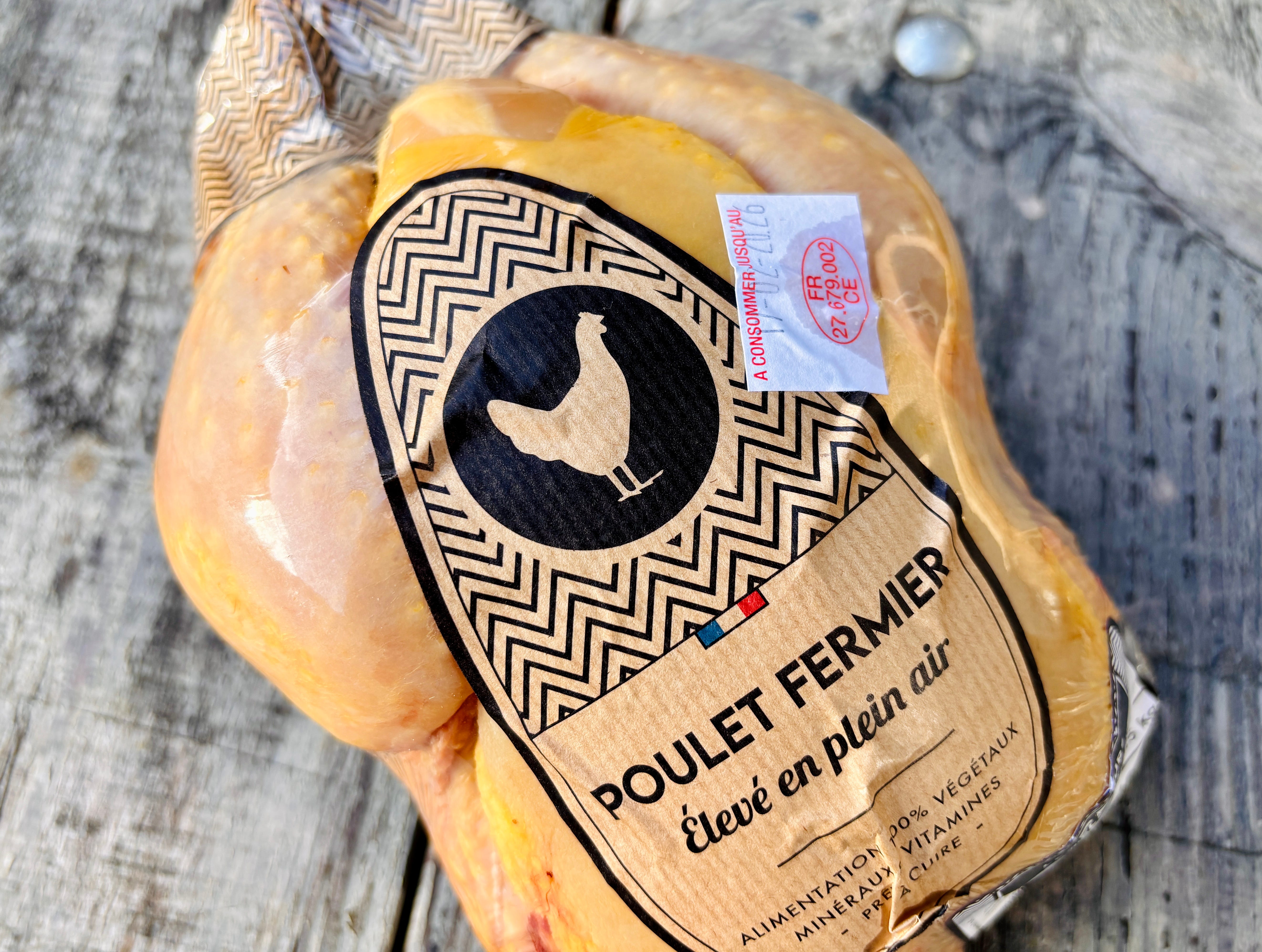
Armed with my shopping list, after Romain came back from the store, I placed the free-range chicken in a pot. I added enough cold water so it covered about three-quarters of the chicken, then added some salt as well as a chopped leek and three carrots cut into thick batons. Fortunately we have a garden so I grabbed a few sprigs of thyme and tied them in a bundle to add to the pot, as well as two bay leaves.

Garlic is used very discreetly in French cuisine; with the exception of aïoli, which technically is Provençal - and some in Provence may argue that that’s not French cooking, that it’s Provençal. (Once again, I’m not looking for a fight. I’m just being diplomatic.) Few, if any, poule au pot recipes in French call for ail — doing an online search, the only ail I found in poule au pot recipes was in the word volaille, which means chicken.

I added four minced cloves of garlic, which the authenticity police may not approve of, and even Claude AI was baffled by the request. And into the pot that went, as the health benefits of garlic outweigh any cultural conflicts.

Everything was simmered over very low heat with the lid ajar for about 90 minutes, until the chicken was very tender. About halfway through the cooking, I used tongs to pull the thighs away from the breasts to help the broth get more infused with flavor. (That may not be scientifically provable but I have a feeling that it does.)

Once the chicken was cooked, I fished the pieces out with tongs and put them in a bowl to cool. When cool enough to handle, I shredded the meat and put it back in the pot. And that’s it.

If you want to add rice or noodles****, as I did, it’s best to cook them separately and add them to individual servings right before serving, or they’ll get soggy. Fresh dill is an add-on that’s no common in France, but Romain likes it (as do I), and picked some up at the store. It adds a nice flavor to the soothing soup.

Leave a comment

*Many restrooms in France, such as those in restaurants and cafés, have a cotton towel on a hook for people to dry their hands on after washing them. That may save paper, but to me, seems to defeat the purpose of washing your hands. Although perhaps the feeling is that is everybody is washing their hands, before drying them on the towel, the towel isn’t harboring any germs or viruses.

**You’ll find recipes for soupe de poulet and soupe au poulet, that are basically variations on poule au pot, which further complicates things — especially the two different prepositions for the same soup. As mentioned, French is hard…even for the French.

***Sorry about any typos.

***Like Manischewitz matzoh meal, Goodman’s egg noodles haven’t made it to France yet. But egg noodles (pâtes aux œufs) are the best with this dish.


Here are 2 Moo Shu recipes so you can have it your way

15 February 2026 at 15:47

There are many great things about Lunar New Year but for me, the most important one is the idea that the holiday is not just one day. It’s more like a festival that lasts many days, weeks, or even a month, depending on how you want to celebrate. In Vietnam, people slow down for for at least a week to ăn Tết (literally “eat the New Year”) because at the center of the celebration is food. People work so hard during the rest of the year that they go home to visit family for rest, relaxation and special food.

Even though the Year of the Horse officially starts on Tuesday, February 17, you can get into the Lunar New Year spirit for weeks! There’s no need to rush. Just learn how to say Chúc Mừng Năm Mới (pronounced “Chook Moong Nahm Moy”) and repeat it to any Viet people you run into during the Tết season to make us extra joyous.

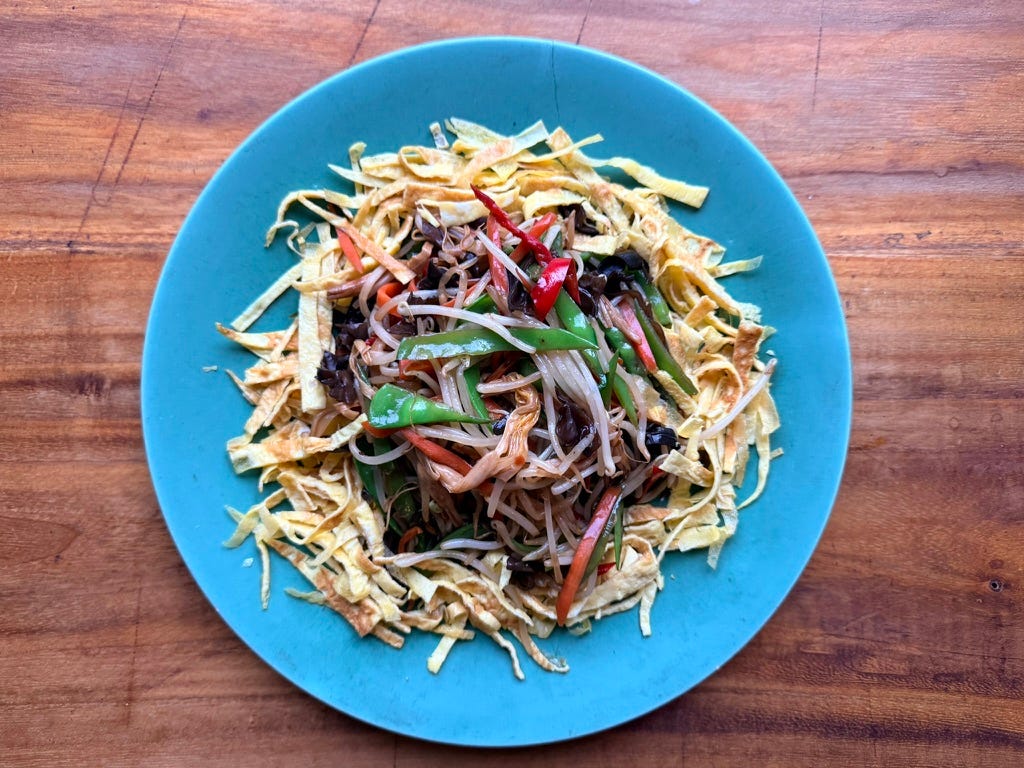
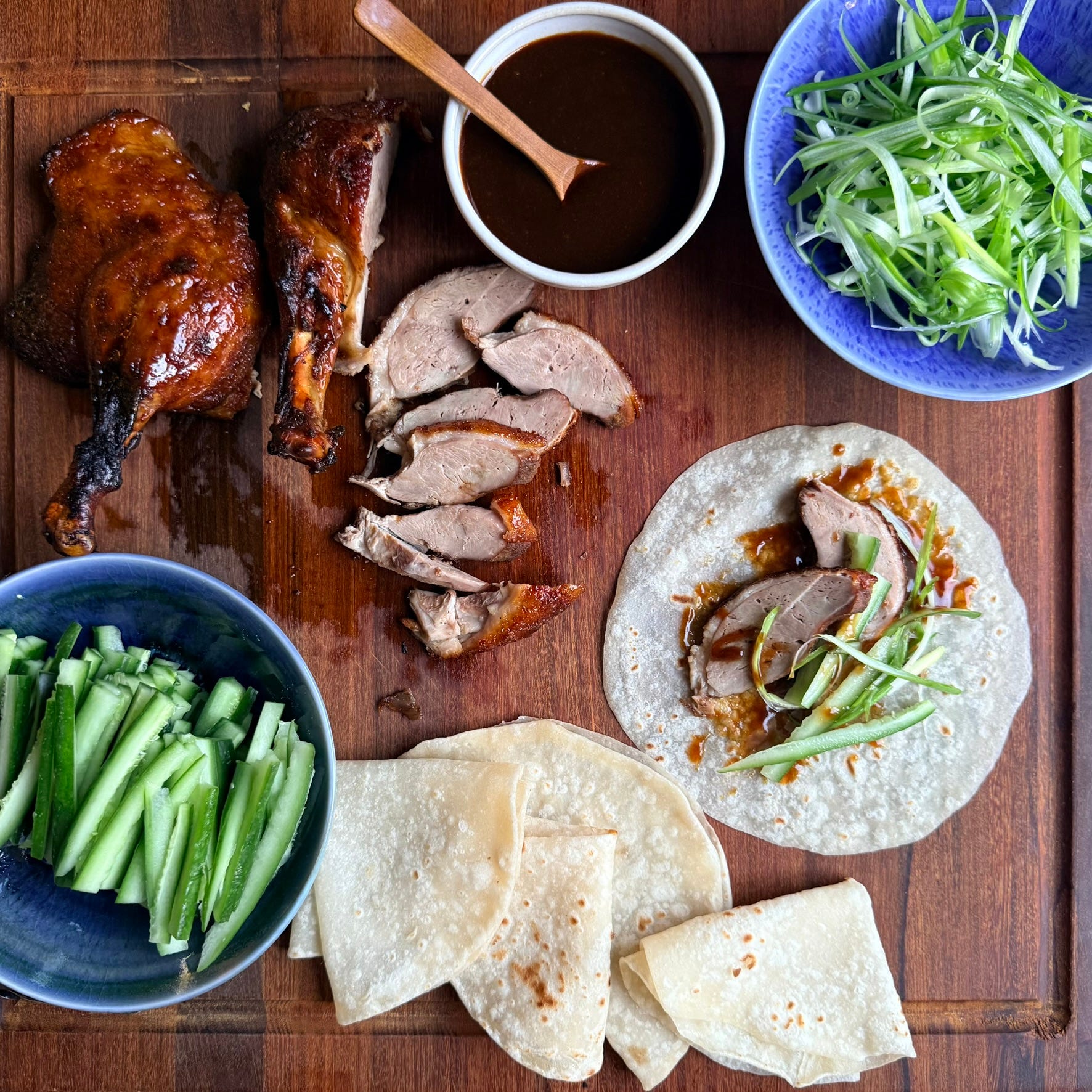
I’m at my mom’s house now for Tet and she’s asked if we were going to have Mandarin pancakes for something. Yup, I brought two stacks that I’d frozen so we can wrap up Chinese roast duck purchased from a barbecue shop and moo shu — a quick stir-fry full of flavors, color, and textures.

Last weekend, for a gateway experience, I led with my Mandarin pancakes mini class plus shortcut duck recipes. Then at midweek I followed up with a homemade Peking duck recipe, in case you want your pancakes to wrap around something super duper and ultra impressive. Today, let’s moo shu with the pancakes!

The Moo Shu Any Meat recipe in this post is built for you to do things your way. Add the Vietnamese pomelo salad or a salad dressed with Nuoc Cham vinaigrette for a refreshing companion and complete meal.

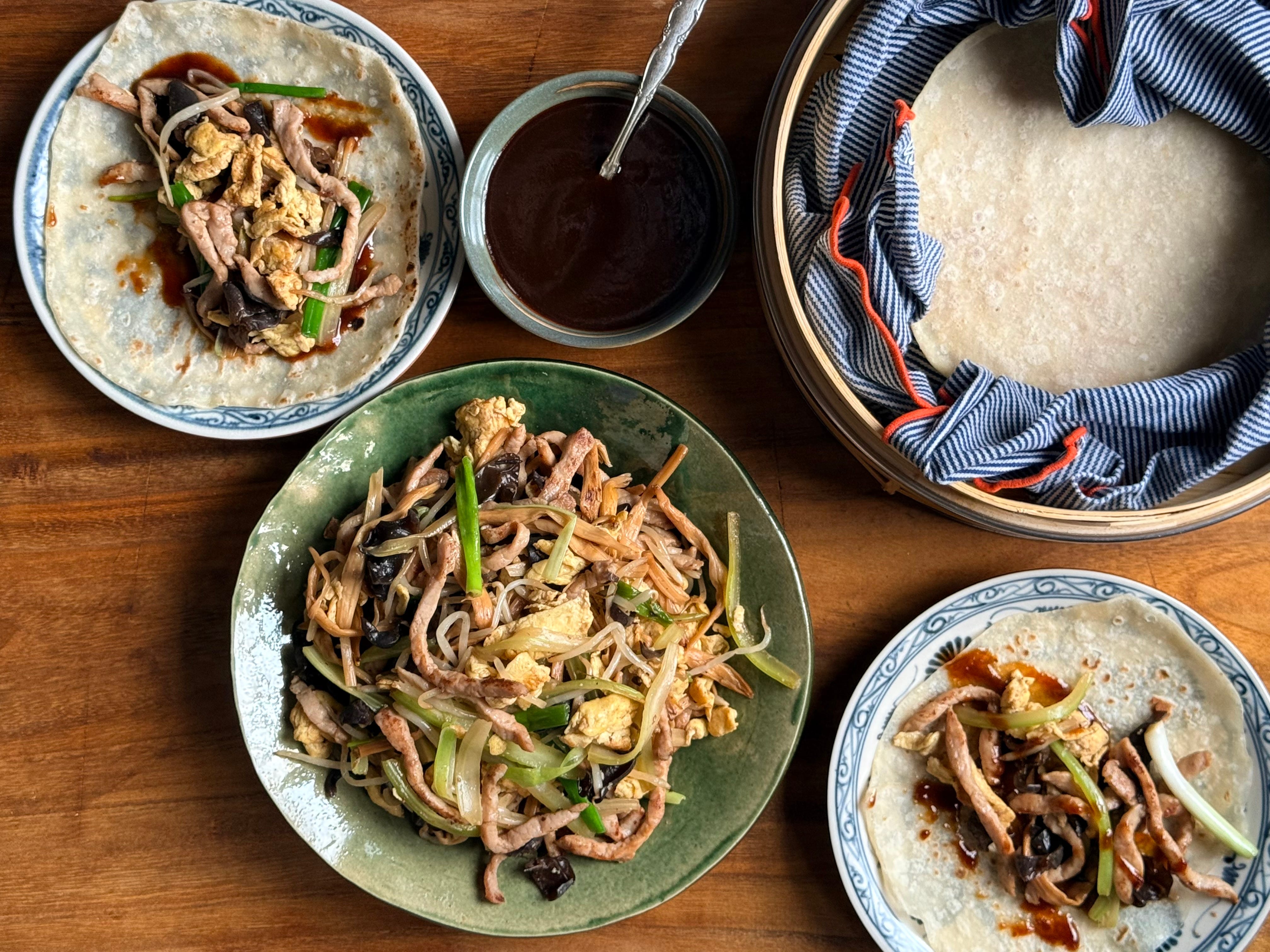
If you’ve ordered moo shu (aka mù xī ròu, 木樨肉), at a Chinese restaurant in America, you know that it can be made with different proteins. The dish originated as a simple stir-fry in Shandong, a coastal province in northern China. Shandong is southeast of Beijing and has a peninsula that pokes eastward. When I was studying Mandarin Chinese, a friend joked you can see Korea from the tip of the Shandong peninsula. Stir-fries are a hallmark of Shandong cuisine.

Moo shu usually contains some scrambled egg that are deftly prepared to mimic the delicateness of fragrant sweet osmanthus flowers (Osmanthus fragrans), a symbol of longevity and nobility in Chinese traditions. In the dish’s name, the characters 木樨 (mù xī) refer to the sweet osmanthus. There are folks who say the original characters referred to wood ear mushroom (木耳, mù ěr) which are also in the dish, but in the main, people explain the characters as referring to the flower.

You don’t have to decide. Both egg and mushroom are constants in my moo shu recipes to add harmonious-yet-varied textures and flavors.

Finally, the third character 肉 refers to ròu — meat, which in China and Vietnam, defaults to pork. Traditionally the dish was prepared with pork, egg, earthy bamboo shoot, frilly crunchy black fungus mushroom, and aromatics and simple seasonings. It was a homey stir-fry that people whipped up to eat with rice.

Then, something changed.

Get 25% off for 1 year

Moo shu pork in America

As moo shu was introduced to the U.S. by northern Chinese cooks, the simple stir-fry got wrapped up in Mandarin pancakes and served as an appetizer. That’s to say, moo shu got the Peking duck treatment! When did it happen?

Thanks to a number of women chefs and entrepreneurs in the 1950s and 60s, urban areas on the East Coast had boundary pushing Chinese restaurants. The movers and shakers included noteworthy Chinese restaurant owners like Emily Kwoh and Irene Kuo in New York City and Joyce Chen in Boston.

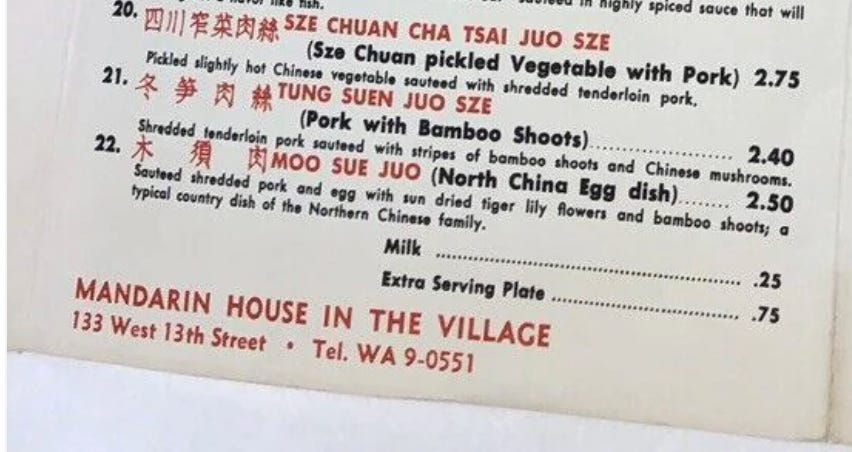
Kwoh opened Mandarin East and Mandarin House in the 1950s. Below is a vintage menu from Kwoh’s restaurant with “moo sue juo” (for moo shu rou) but without the pancakes — yet. The New York Times eventually credited Kwoh as being one of the first to serve moo shu with pancakes at Mandarin House.

Kuo opened Lichee Tree in Greenwich Village in 1960 and Gingko Tree in 1966. Joyce Chen operated restaurants starting in 1958. They were all likely monitoring one another’s menus. The first cookbook to include moo shu with the pancakes was The Joyce Chen Cookbook, published in 1962.

Kwoh, Kuo and Chen were talented chefs and business people. Kuo and Chen were on national TV, hobnobbed with celebrities, artists and intellectuals, and they were not Cantonese. Chen was born in Beijing and Kwoh and Kuo were from Shanghai. They favored northern Chinese over southern Chinese food. Like Cecilia Chiang in San Francisco in the 1960s, those East Coast Chinese women were looking to push the Chinese food envelope before Nixon set foot in China in the 1970s! (Chiang opened The Mandarin in San Francisco in 1960 or 1961; though she had Shandong cooks, I can’t find early mention of moo shu on her menu.)

Get 25% off for 1 year

Have moo shu Chinese or Chinese-American style

This explains why if you go to mainland China and ask for moo shu pork, you’ll likely get a wonderful stir-fry of rich pork, tender eggs, earthy daylily buds or bamboo shoot, crunchy black fungus and perhaps some other vegetables. Mandarin pancakes are not probably going to be on the side for you to wrap up the stir-fry with a smearing of salty-sweet hoisin-ish sauce.

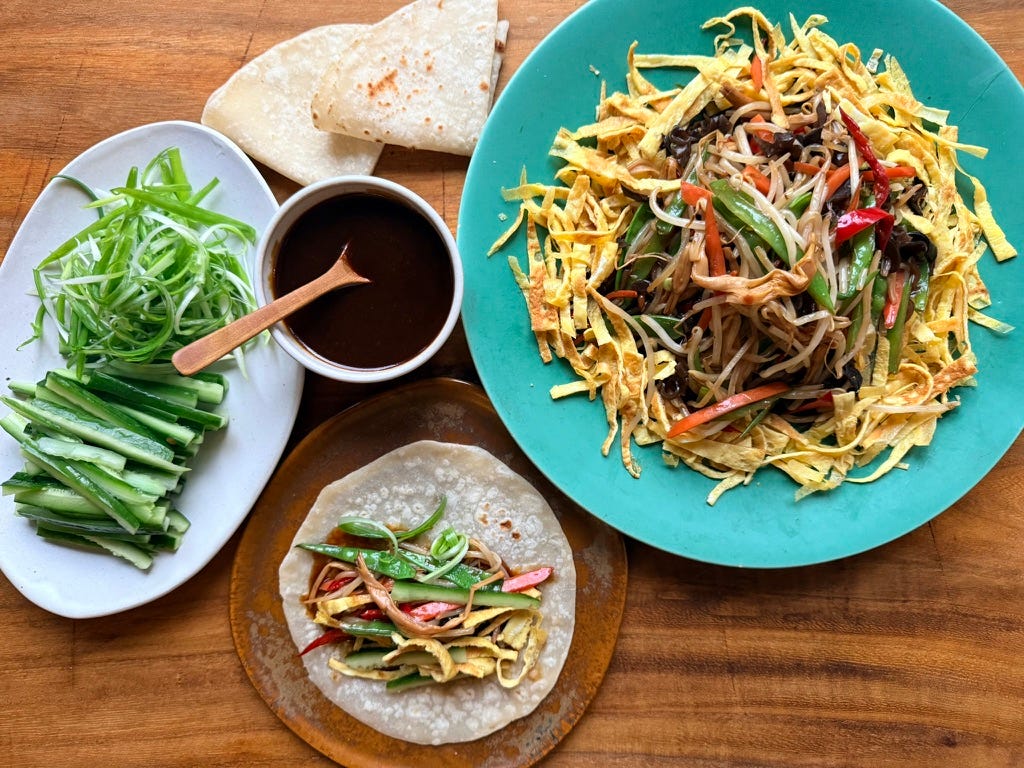
Go vegetarian with the other moo recipe, if you’re not feeling meaty. Yeah, I load mine up with extra raw veggies. Add roast duck or rotisserie chicken and you can have a wrap party! I sometimes add coarsely chopped cilantro for an herby lift.

But if you like moo shu with Mandarin pancakes, know that it’s legit. Kwoh, Kuo and Chen tweaked moo shu for American diners and over time, the dish became redefined and it became a winning idea. Now it’s part of the Chinese-American food experience. Food evolves.

I developed two moo shu stir-fries for you that are fabulous wrapped up in the pancakes or simply eaten with rice. Below you’ll find:

  • 3 recipes + PDF for: Master Moo Shu Recipe Blueprint + Moo Shu Any Meat (feel free to vary the protein!) + Vegetarian Moo Shu (with a vegan option)

  • Audiovisual aids: 2 videos plus process shots to help you manage potentially tricky moves

  • Ingredient guidance and swap tips: Explainers are here for those who want to shop at an Asian market and substitutions are suggested if you just want to use more accessible ingredients

You can plate the Vegetarian Moo Shu with the egg mixed in or on the rim. It tastes great both ways. I couldn’t decide. Yes, there’s a vegan tip below for this recipe too. AND, you can just treat this and the Moo Shu Any Meat as a stir-fry to have with rice.

This culinary deep dive and threesome of Moo Shu recipes were sponsored by paid subscribers. Join us to gain access to these recipes and so many other professionally developed recipes. You’ll also seed new content and enjoy other benefits, including my deep appreciation. I value support at all levels.

Read more

Midweek gems #58: Birthdays, Valentines, Lunar New Year + Peking Duck recipe

12 February 2026 at 15:39

Hello friends,

Politics and economics aside, we’re in an unusual celebratory few weeks right now that’s filled with human physical achievements (the Super Bowl and Winter Olympics — Ilia Malinin! Yuma Kagiyama! ⛸️ 💥), passion (Valentine’s Day 💘), Presidents Day (civic pride, sales, and a long weekend), and Lunar New Year!

I also celebrated a birthday this past Monday. I turned 57. Rory asked what I thought about that and I said — and this is the truth, “I don’t really think about it.” Thankfully, I still have all my original parts and feel better now than I did when I turned 50 and had to endure perimenopause. Things are alright.

Besides, I have my mom as a role model. By her standards, I’m just getting started. Look at the birthday message she sent me. It’s rad. She’s a 91-year-old who didn’t even email until a few years ago.

Instagram reminded me that I had another birthday to celebrate: Vietnamese Food Any Day was released on February 5, 2019. I thought about the book because my friend said she spotted “VFAB” (sic) in the above Instagram post by actress and author Lauren Graham of Gilmore Girls fame. Lauren’s stack of cookbooks also include works by Ina Garten and David Chang. If you have VFAD, you’re in damn good company! Don’t have VFAD yet? Check with a local bookstore, Bookshop.org, the library, Amazon, Barnes & Noble, and Target.

💎 Winged victories

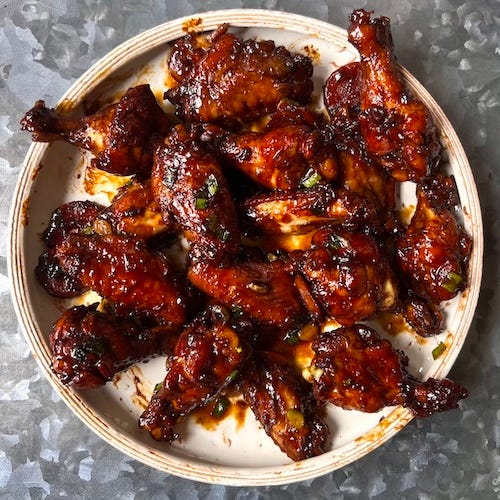
Some of you already jumped on the spicy ginger-orange chicken wings and reported great success. doubled the recipe and cooked the wings in a Dutch oven! The sauce didn’t reduce enough but they loved the wings so much they’re going to do a redo! A note on doubling recipes — not just when using my recipes. You always want to use a bigger pan if you want the same cook time as the original recipe. If that’s not possible, just expect a longer cook time because you’re dealing with a larger quantity of ingredients.

If you have VFAD, the chicken wings coated with chile garlic sauce on page 47 is outstanding too. AND, don’t forget the fantastic vegan Roasted Cauliflower “Wings” on page 48; one of the editors at America’s Test Kitchen said it’s in her rotation.

💎 Lava cakes for chocolate lovers

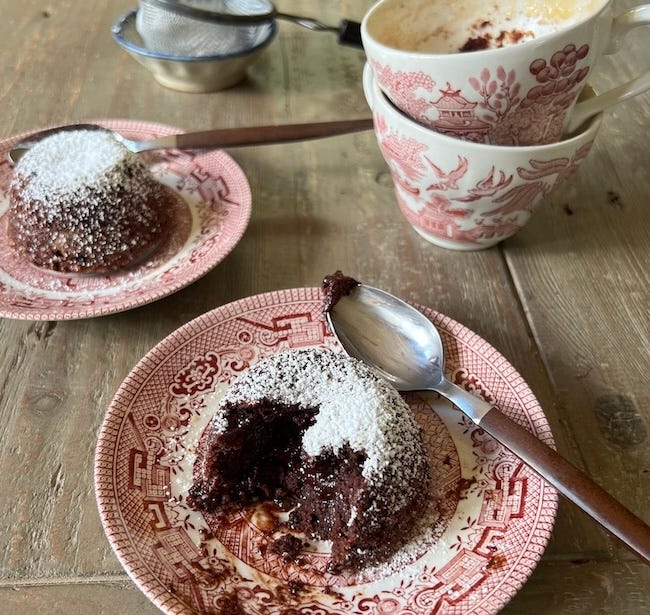
Bake a little something special for your honey for Valentine’s Day — a molten lava cake. My recipe is just for two (2) and you can use regular or gluten-free flour. You can bake them in teacups to get the mountainous shape with ease. The batter comes together pretty quickly too. Here’s the lava cake recipe for you!

💎 Mandarin pancakes follow-up

Susan asked about a gluten-free approach to the pancakes. I don’t have one yet because I’ve not tried a GF flour blend on the recipe; that’s where I’d start. The other suggestion I had for Susan was to offer radicchio, endive, or lettuce leaves instead of the Mandarin pancakes. When I did catering gigs in the 1990s, I made a tasty duck appetizer wrapped in radicchio.

Today, I received a great idea: Duy makes the honey-roasted duck legs from my first cookbook, Into the Vietnamese Kitchen, and wraps the result in rice paper. That is a GRRREAT gluten-free solution to wheat mandarin pancakes!

Additionally, in last Sunday’s post, the Mandarin pancake video summary that I shared didn’t have any audio. Where was my brain?! My apologies. I was trying to cram too much in and was tired after a week of intense book proofreading. So, I added audio to the video so you will have a better sense of what the heck I was doing. Here’s the updated video to go with the Mandarin Pancake Mini Class dispatch. (I also just added a Weee! link to the duck that Costco also carries.)

Support Pass the Fish Sauce! Join us as a free or upgrade to a become a paid subscriber to enjoy 125+ professionally developed recipes, seed new content, and get future class discounts. Thanks for your enthusiasm!

💎 Homemade Peking Duck Master Recipe and Plan for Success

What if roast duck shortcuts and hacks are not your jam? Also in response to the Mandarin pancakes and duck feast dispatch, Sunnie asked about roasting a duck from scratch. Sunnie lives in Europe and doesn’t have an Asian barbecue shop or Costco nearby.

To help Sunnie and any of you want to go the full distance, I put together materials for a Homemade Peking Duck Master Recipe. It’s project cooking that results in a very impressive, glorious meal. I’ve roasted Peking duck over a dozen times and even on the first try, it was darn good — crisp skin and tender flesh.

If you are going to roast your own Peking duck then you must have homemade Mandarin pancakes too. Get my Peking Duck Recipe and the full low down at my website. Then use the duck for the plug-and-play Mandarin Pancake and Roast Duck Feast recipe (just scroll on down in this PTFS dispatch).

Lunar New Year is a time for fun cooking projects with family and friends. The end result is wonderful food and company. So, to help you make the most of the Mandarin Pancakes you have and will make, I’ll be offering two simple recipes on Sunday to go with those pancakes. Omnivores and vegans will be happy!

miso chicken and rice

By: deb
10 February 2026 at 21:18

How do you cook when your kitchen isn’t available for kitchen-ing? On a Sunday last April, I awoke at the crack of dawn jet-lagged from an (excellent) trip to Amsterdam* to an email from my apartment building that ConEd had found a gas leak in the main line to the building and had shut down service for safety. With this, I was indoctrinated into a society of New Yorkers I previously hadn’t known existed, as NYC is apparently riddled with tales of people who lived without gas for (what seemed like the minimum of) 6 months and up to 18 months while their building trudged at a snail’s pace through rounds of repairs and inspections.

Read more »

Podcast: Lauren Collins, Paris-based New Yorker Journalist

9 February 2026 at 08:38

Since 2015, Lauren Collins, staff writer for the New Yorker, has called Paris home. The author of When in French: Love in a Second Language, Lauren moved from Switzerland to France with her French husband and still writes for the New Yorker, continuing their tradition, which includes writers such as A. J. Liebling, Anthony Bourdain, Calvin Trillin, John McPhee, and Adam Gopnick, of outstanding food writing and reporting on food-related topics.

https://www.penguinrandomhouse.com/books/317941/when-in-french-by-lauren-collins/

When in French by Lauren Collins

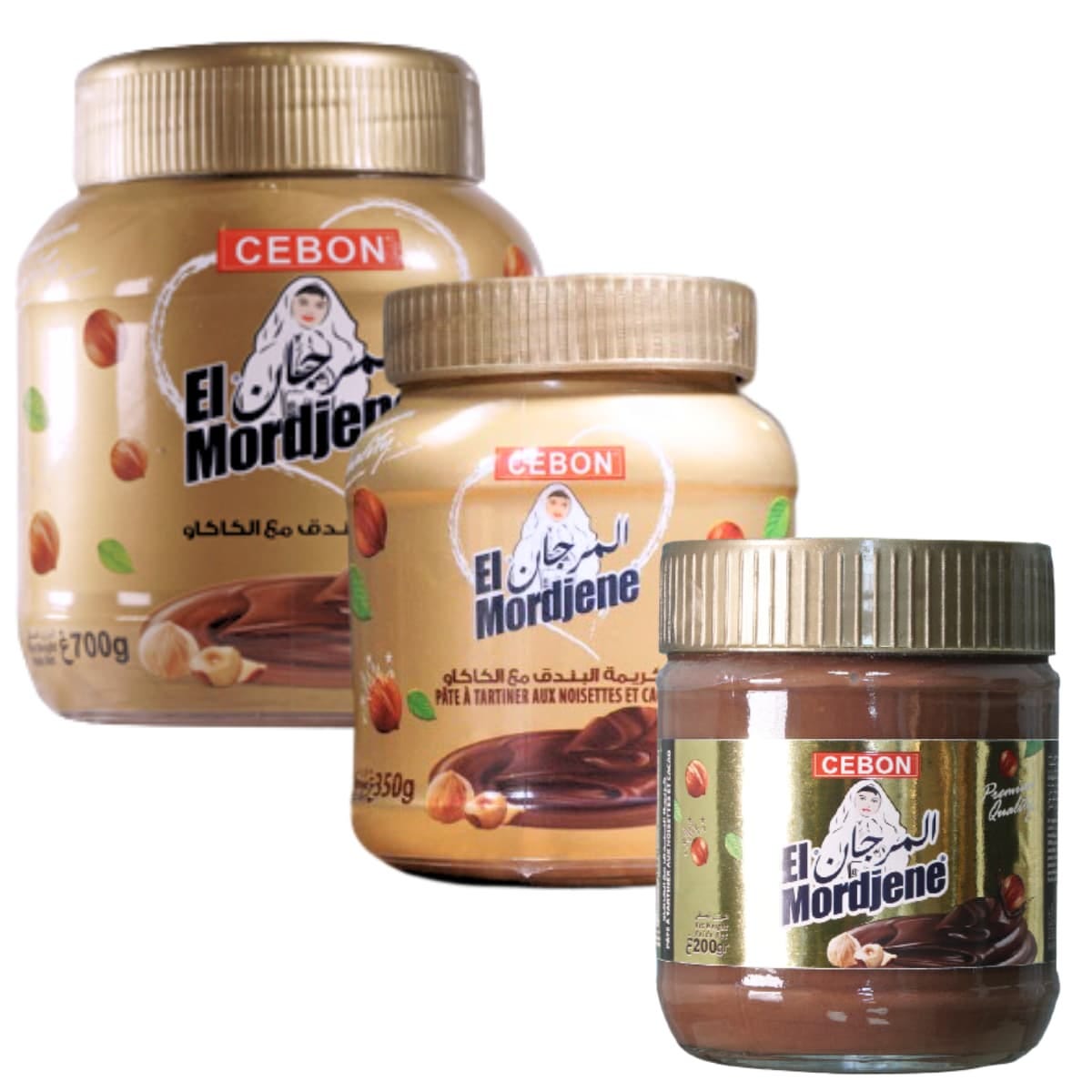
Her articles have ranged from subjects such as the controversial French tacos, spelled with an “s,” even though it’s just one; Les Grands Buffets, the all-you-can-eat buffet restaurant that’s the hardest reservation in France (in my experience trying, it’s the hardest in the world); and the elusive El Mordjene Algerian hazelnut spread, a cult favorite that’s nicknamed “beige gold,” which was banned in France.

Lauren has also written on the wonders of Japan’s fake foods, as well as “Where should I go?” a service that provides Americans and other visitors with “insider” French experiences, such as fulfilling the request of a client who wanted to be invited to a party in a French person’s home.

Subscribe to Lettre Recommandée

Recently Lauren reviewed the just-published memoir of former Président Nicolas Sarkozy’s brief time in prison, titled How Nicolas Sarkozy Survived Twenty Days Behind Bars, a book that received a mixed reception in France. In her newsletter , she titled her story The Rush Job Memoir That’s Topping the French Charts. Oh, and she got to meet Omar Sy!

In the podcast, we discuss how these stories came to be, as well as how things have changed in France since Lauren’s moved here, and what it’s like being a journalist in France. As I do with Paris-based guests on my podcast, I asked Lauren to share some of her favorite addresses in the city for dining, which she was happy to do.

Follow me on Apple Podcasts

Lauren’s recommendations are Le Récamier, Le Soufflé, Chez Carrie, Enni Udon, Magnolia, La Joie, and Rosario, as well as Finkstuebel in Strasbourg. In the podcast, she explains why they are her favorites.

Enjoy listening in!

-David

Leave a comment

https://www.davidlebovitz.com/book/ready-for-dessert-revised/

💾

Mandarin Pancake Mini Class + a Duckylicious Feast

9 February 2026 at 00:12

This past week, Super Bowl party wings sales led me to making a batch of wings that didn’t require deep-frying. They’re simmered in bold seasonings and end up tender, rich, and kinda sticky and messy-fun to eat — what we want from chicken wings, yes? If you’re a wing person get the Spicy Ginger-Orange Chicken Wings recipe at my website.

My week hasn’t been filled with Super Bowl preparations. I’ve been working with chef Pim to prepare the book to go to print in early March. We’re at proofreading phase two out of three. Cooking Thai is looking great and the early reviews and endorsements are remarkable. Phew.

I’m also gearing up for Lunar New Year. No matter how spent I am, I feel giddy about starting anew. Tuesday, February 17 will usher in the Year of the Horse. My dad was born in the Horse year so welcoming this new lunar cycle also honors and celebrates my father. My mom, siblings and I are going all in.

We’re gearing up for a mini family feast this coming weekend. Mom is already making bánh chưng (“baan choong”) sticky rice cakes, a must-have for Tết (“teht”), Vietnamese Lunar New Year. For my part, I’ve been practicing and planing an easy Peking Duck with Mandarin Pancakes, which is partly why today’s post arrived late. To guide I’ve created a mini Mandarin Pancake class for you in this dispatch!

Here’s a summary of my pancake practice plus the duckylicious payoff — which will soon be yours to enjoy too!

Why Peking duck for Tết?

Viet celebrations often combine Chinese traditions because the two cultures have rubbed shoulders for millennia. Pho was initially made and sold by Viet-Chinese cooks, for instance. Viet language used to be based on Chinese pictographs and there are many shared words. The border continues to be porous.

Plus, my Mom adores Chinese roast duck, especially when it is served with delicate, thin pancakes slathered with salty-sweet sauce and accented by cooling cucumber and pungent green onion. Unlike doughy steamed buns, Mandarin pancakes are not sweet; their delicate texture and flavor harmonizes well with roasted meats and many other dishes. We set out all the fixings and make our own roast duck wraps, like at a fancy Chinese restaurant but better because we can have plenty and the flavors are extra fresh. Along with Viet dishes on the table, the duck makes for a very tasty Tết celebration.

Why Mandarin pancakes for spring?

Mandarin pancakes go by two names. On a macro level, they belong to the Chinese food category of báo bǐng / bóbĭng 薄餅, which covers a myriad of thin wrappers used to encase or hold food. Spring roll and lumpia wrappers, rice paper, tortillas, pizzas, and naan can all fit into this category.

Many people also know Mandarin pancakes as chūn bǐng 春饼 because they’re a food often enjoyed to mark the beginning of spring — lichun 立春 in Mandarin, lập xuân in Vietnamese. The actual dates depend on astronomical moves so celebrating spring, aka celebrating the Lunar New Year, officially lasts weeks. This year, lichun goes from February 3 to 18.

Friends you’ve got time to add this pancake tradition to your repertoire. Actually, once you’ve mastered these pancakes, you can enjoy them year round. I made so many pancakes to write up this mini class for you that I’m going to freeze a bunch. And I know how well they’ll go with other roasted meats, stir-fries and many other foods!

Get 25% off for 1 year

Wait up, Andrea. How doable is this at home?

The duck, sauce, and veggies are super easy. I’ve got shortcuts, hacks, and make ahead tips for you! The pancakes do not require any special ingredients or equipment — just a little skill practice.

Some Asian American cooks use flour tortillas as a sub for Mandarin pancakes, and I was going to for this dispatch but honestly, they’re always too thick and never as good as true Mandarin pancakes! I’ve tried Sonora flour tortillas but super thin ones are very hard to find and they’re not fresh. What about frozen? I’ve never enjoyed the taste of frozen doughy foods from overseas. The flour used isn’t as flavorful. I’ve carted back flour from China and was very disappointed.

Mandarin pancakes are a northern Chinese flatbread. You can use them to wrap duck like I do here, or go for quick char siu pork steak or char siu tofu. Stir-fried and sauteed items like chile crisp yuba skin would be glorious in these Mandarin pancakes. Rory even suggested using Mandarin pancakes instead of flour tortillas!

As I’ve worked through this recipe, I’ve noted insights and recorded videos to help you succeed in this too! Below you’ll find a Mandarin Pancake Mini Class containing:

  • Mandarin Pancakes recipe in text and PDF + 5 videos to guide your progress toward success + my mishaps and flubs to help you troubleshoot and create

  • 3 Shortcut Roast Duck Hacks + a magical Glossy Glaze for that Chinese barbecue shop lacquered-look

  • Roast Duck Feast with Mandarin Pancakes recipe + an excellent sauce that you may want to double because it’s just that good

  • Suggestions for swapping out the duck, including going vegan

  • Ingredient sourcing and prep pointers in case this is unfamiliar territory

That’s a lot of content but I really want you to try this out on your own terms. Add a salad for a complete meal.

Paid subscribers sponsored the wealth of knowledge packed into this dispatch, which involved days of effort. To get all the recipes below — and many, many others in the archives, plus more to come — join us as a paid, premium PTFS subscriber. I welcome your support at all levels. 🙏 🧧 🧨

Read more

A Love Letter to Okra

8 February 2026 at 11:00

Hello Friends,

I’ve always wanted to write a love letter to okra. Today felt like the right moment.


Dear Okra,

You are misunderstood, unfairly maligned, and deeply loved by those who know better.

I grew up with you on the table—softened by heat, slicked with spice, caramelized just enough to catch the light. In Indian kitchens, you are bhindi—often called lady fingers: sliced carefully, dried with care, cooked patiently so your edges brown and your center turns silky rather than slippery. You appear on everyday plates and festive ones alike, proof that comfort and intention can coexist.

But your story is far bigger than my childhood table.

Across West Africa, you are foundational—pounded, stewed, stretched into soups that thicken naturally, binding ingredients together the way memory binds people to place. In Creole and Cajun kitchens, you become gumbo’s quiet architect, lending body and depth without ever demanding attention. In all of these cuisines, okra isn’t an oddity. It’s infrastructure. It does work.

What people call your “slime” is actually your superpower.

That slippery quality—your mucilage—is a complex matrix of polysaccharides that swell in the presence of water and heat. When treated with care, it creates silkiness, cohesion, and structure. When mistreated, it rebels. Which feels fair.

And the same quality cooks have managed intuitively for generations is now being studied in modern science:

  1. Food texture engineering
    Okra mucilage is being explored as a natural thickener and stabilizer in sauces, soups, and plant-based foods—especially where synthetic gums are being phased out.

  2. Edible films and coatings
    Researchers are using okra mucilage to create biodegradable, edible coatings that help preserve fruits and vegetables by slowing moisture loss and oxidation.

  3. Medical and pharmaceutical uses
    Because it forms gels and slows digestion, okra mucilage is being studied as a drug-delivery medium and to moderate glucose absorption—particularly relevant in diabetes research.

  4. Water purification
    In some regions, okra mucilage has been tested as a natural flocculant, helping bind impurities in water so they can be removed more easily. A humble plant solving serious problems.

  5. Sustainable packaging and biomaterials
    Scientists are experimenting with okra-derived polysaccharides for compostable plastics and bio-based materials, offering alternatives to petroleum-derived polymers.

And still, in the kitchen, your magic remains simple.

Dry you well, and you brown beautifully. Salt you too early, and you remind us that chemistry always wins. Cook you gently, and you reward patience with depth and richness. Finish you with acid, and everything snaps into focus.

Okra doesn’t ask to be loved loudly. It asks to be understood.

And once it is, it becomes indispensable.

With affection and respect,
Nik


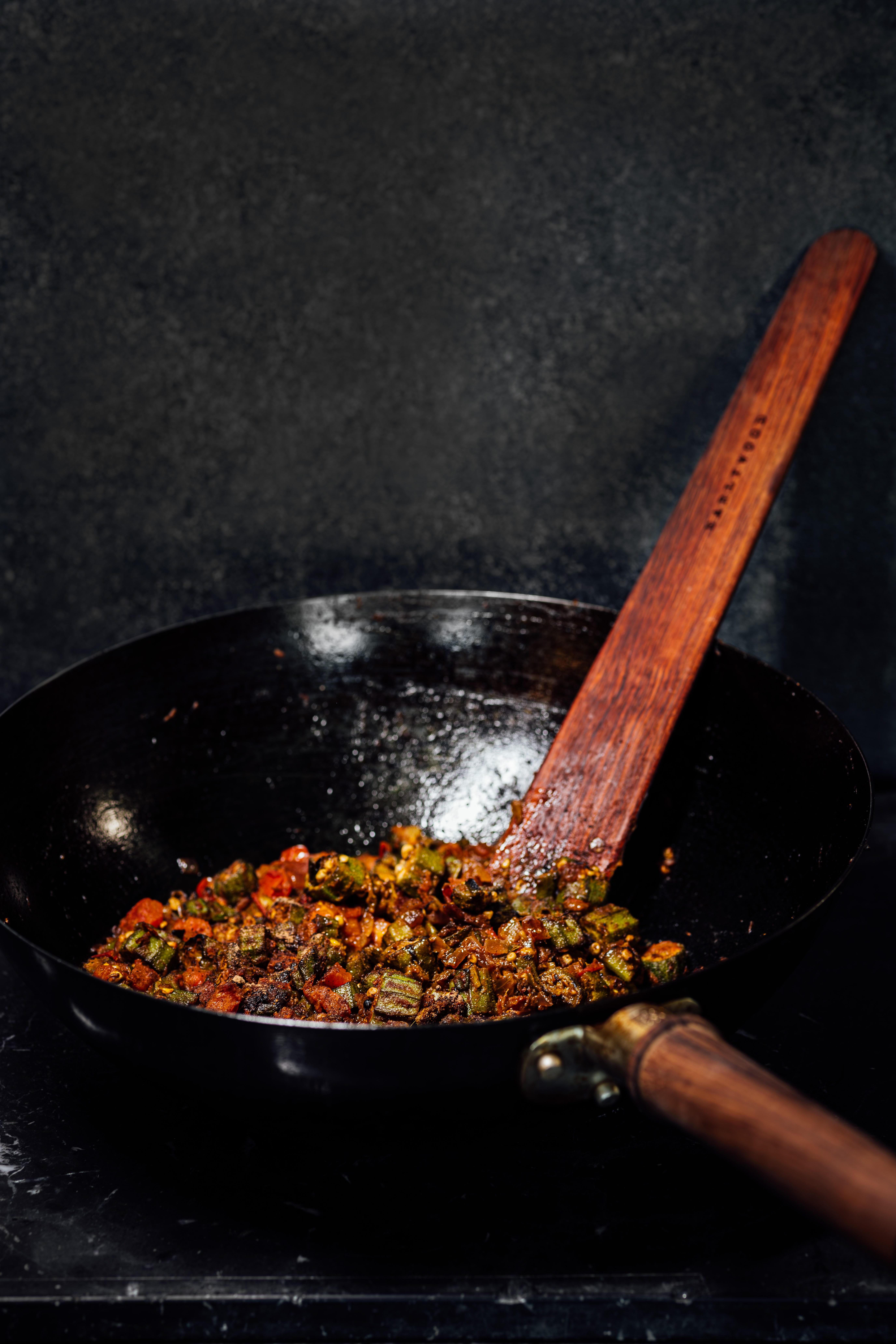
If you’d like to cook along, this week’s recipe is bhindi masala—a dish built around everything I love about okra, from managing moisture to layering spice with intention. The full recipe, with all the technique spelled out, follows below for paid subscribers.

Read more

Spring Roll Dipping Sauce

By: Judy
7 February 2026 at 08:21
Spring Roll Dipping SauceLooking for a spring roll dipping sauce to serve with your favorite spring roll recipe? Look no further! We have several options here—three of our favorites, as well as five alternative recipes so you can make the one that sounds tastiest to you!  Dipping Sauce for Spring Rolls? Chinese fried spring rolls are not to […]

The Crispiest, Crunchiest Baguette in Paris

4 February 2026 at 17:35

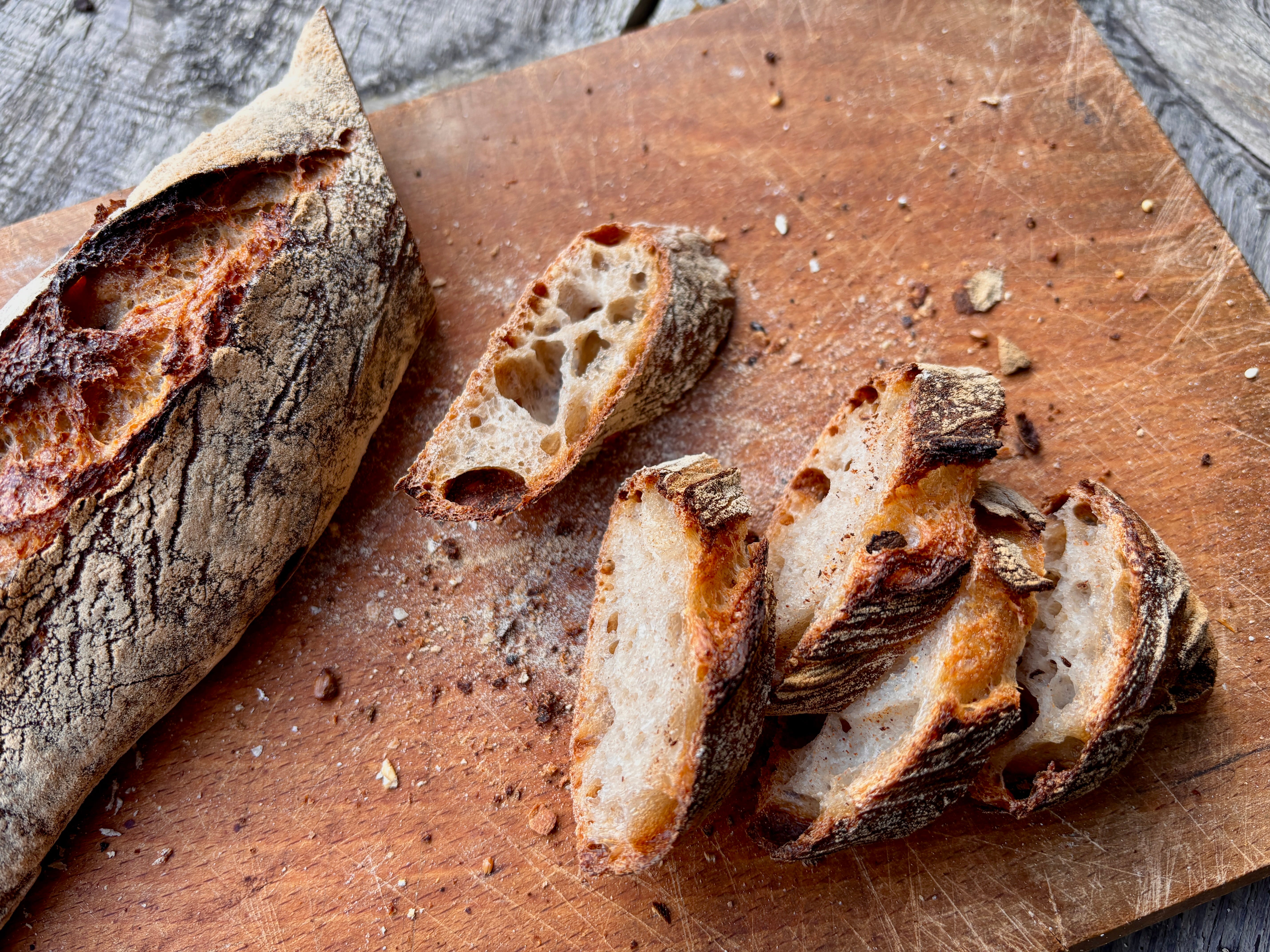
I don’t really subscribe to anything being called the “best” because, A) It’s subjective, and B) Things change, and what’s great today may be gone tomorrow.

As for the “experts,” I ran into a friend who’d judged the best baguette in Paris contest and shortly after, I stopped her on the street carrying a baguette from a different bakery. I asked why she didn’t go to the place she said was the “best” and she replied, “When you taste over a hundred baguettes, after the first few, it’s hard to taste the differences.” So even the experts don’t know - although I’ve never been asked to judge, so you might not want to listen to me either.

Read more

Chow Har Kew (Stir-fried Crispy Shrimp with Vegetables)

By: Bill
1 February 2026 at 21:18
Chow Har KewChow Har Kew is a luxurious version of a Chinese Shrimp and Vegetable stir-fry, with crispy, golden shrimp! Deep-frying meats or proteins—in this case large shrimp—and then tossing them in a velvety sauce makes a Chinese-banquet-worthy dish.  The name Chow Har Kew is the way this dish usually appears in English on Chinese restaurant menus, […]
Vietnamese pomelo salad, fit for royalty and doable from supermarket ingredients

1 February 2026 at 18:00

Hello there! I’ve been gearing up for this for weeks, buying ingredients and thinking through what I wanted to share with you about a delicious and under appreciated fruit. Galloping toward Lunar New Year on February 17 — the Year of the Horse, I’ll be offering menu and cooking ideas for your celebration.

This time of year, people tend to lean into oranges and mandarins but pomelo is wonderfully complex, multidimensional, and fun. When you peel pomelo, the oils release to pleasantly perfume your hands and the air. The pith is plushy and makes a funny sound when you pull it away from the ball of fruit inside. Better yet is when you bite into pomelo’s flesh, you burst its juice sacs to release its mildly acidic, sweet flavor that carries just a hint of bitterness.

Pomelo is wondrous in many more ways than I’ve described, and nowadays, we’re lucky to have access to many kinds. Depending on where you shop, you can find pomelo grown in America, Vietnam, and/or China, for instance.

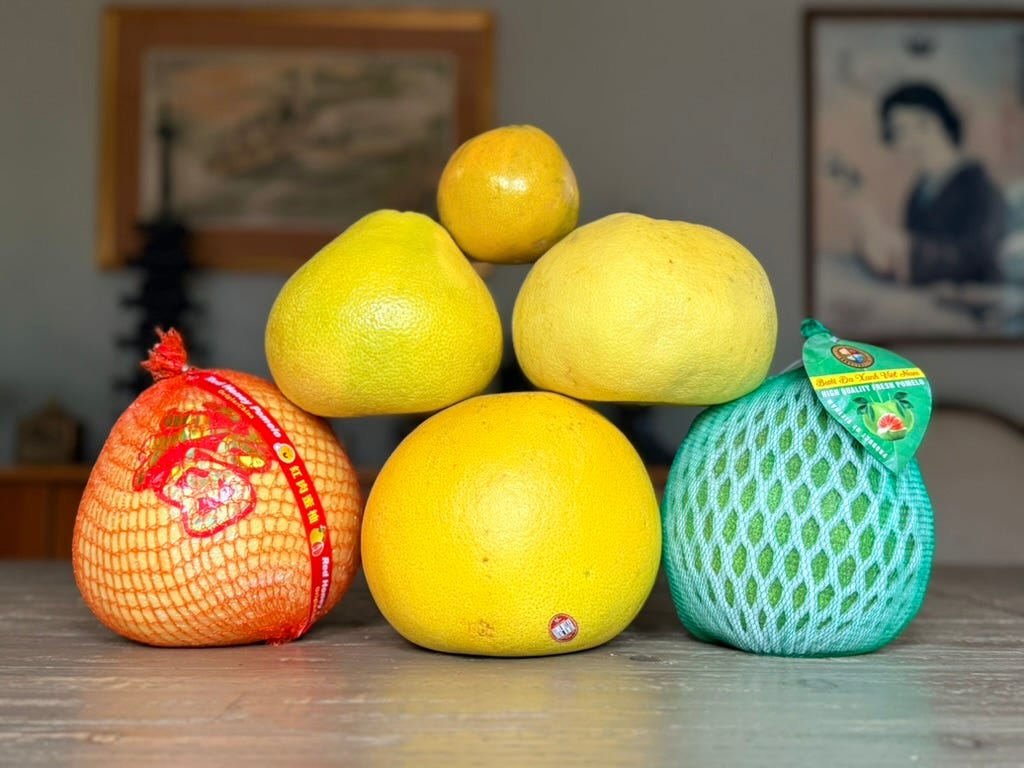
Three grapefruits atop three pomelos.

A lucky, healthful, royal fruit

The size of a volleyball, pomelos (Citrus maxima) symbolize many good things. They come into season in early autumn so Viet people often associate their big, round appearance with the Moon Festival, a time for gratitude and family reunions — completeness. When Lunar New Year rolls around, pomelo is further a regarded as a harbinger of prosperity. Many people include pomelo as an offering to their ancestors.

In Chinese, pomelo is yòu 柚, which sounds like the word to have 有 as well as the world for protection 佑. Combine all those homonyms and pomelo is win-win fruit. If you gift someone a beautiful pomelo, it’s like you’re presenting them with good luck.

In Vietnam, it’s more than just about homonyms. The Luận Văn pomelo grown in the central province of Thanh Hoa has deep rose colored flesh and skin. Its unique lucky red appearance and tasty flesh made it worthy enough to have been presented to royalty in the past. Nowadays, the Luận Văn pomelo is sold nationwide as the ‘royal tribute pomelo’; during Tet when people clamor for specialty foods, premium perfect pomelo can sell for as much as $10 each, which is pricey for Vietnam.

And, pomelo is pretty nutritious. It’s loaded with Vitamin C, fiber, antioxidants, and it may even help weight loss, fight anti-aging, and promote heart health. All that said, like with grapefruit, pomelo’s phytochemicals can cause some drug interactions so do be careful.

Leave a comment

What to do with pomelo?

To kickstart 2026, I gifted myself extra healthful luck by buying three pomelo (called bưởi in Vietnamese)! Along with some grapefruit, our dining table has been full of golden-green orbs of citrus. The pomelos I’ve been buying, whether it’s from Whole Foods or a Chinese or Vietnamese market, are big boys — at least 2 pounds (1 kilo) each!

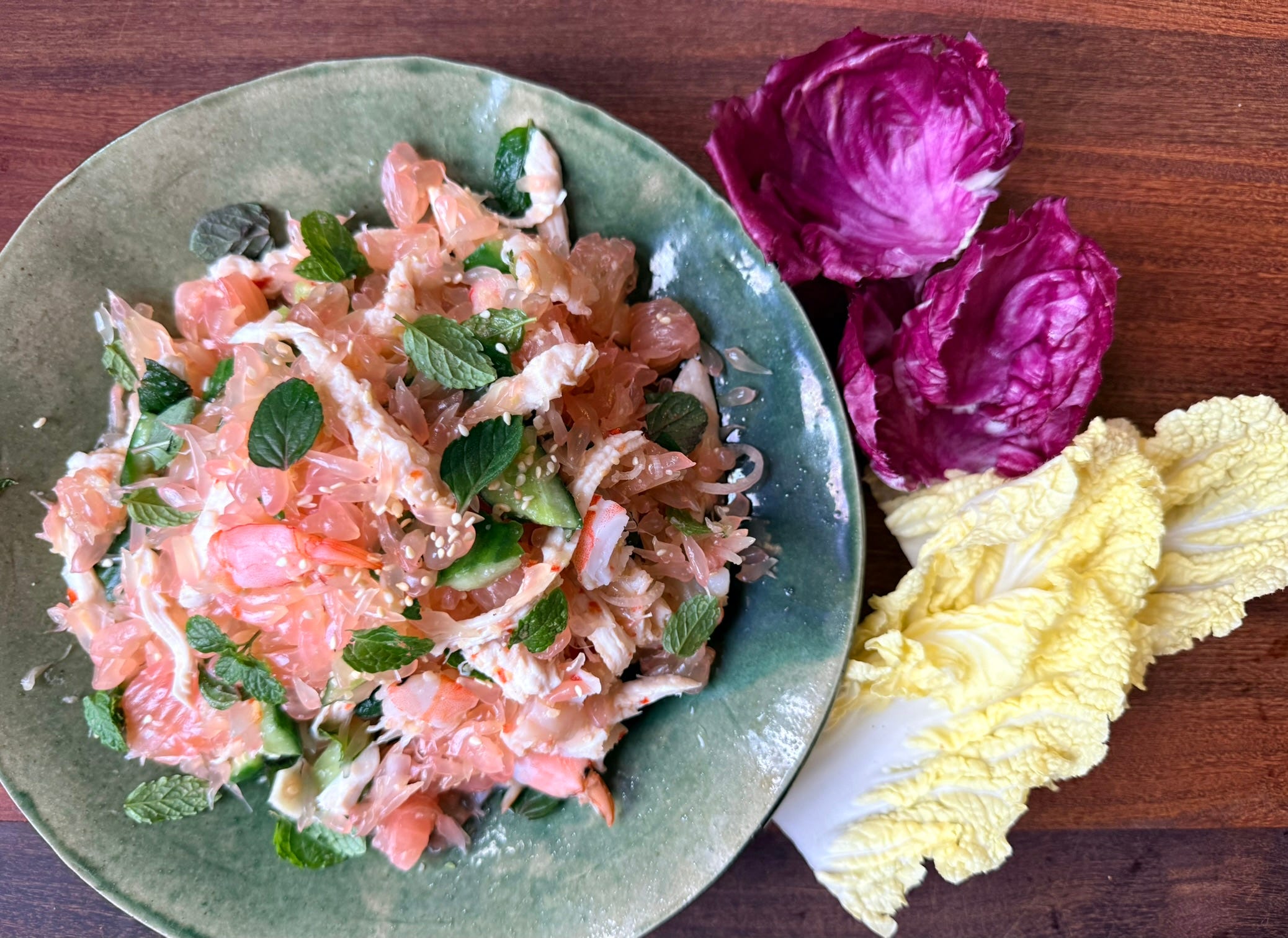
We eat pomelo as fresh fruit but I also make a Vietnamese gỏi bưởi salad. It’s a very special salad worthy of holiday celebrations and dinner parties. It’s easy to prepare and you can prep most of it in advance. However, you have to extract the pomelo flesh from the segments as clusters of juice sacs to allow pomelo to express its best flavors and textures. That’s what makes the salad unique.

Gỏi bưởi is not a salad of chopped or dressed leaves. Much of the prep is done with your finger to pull apart the juice sacs, which are jewel like. Prepping the pomelo requires about 30 minutes, but one pomelo yields enough to serve eigh people, though you could stretch it over the course of a couple days too! To encourage you, I made a how-to video to guide you along!

Made and served with ingredients sourced from Whole Foods, the farmer’s market, and my garden — just to prove that Viet food is doable! No Asian market required. This rendition with shrimp and chicken was dynamite.

Gỏi bưởi (“goy buoy”) used to be hard to prepare well because good pomelos were not available abroad. That has changed so I went to town to prepare the following for your success:

  • Detailed Vietnamese pomelo salad recipe (+ a downloadable PDF) that allows you to make it with or without meat

  • Video tips for prepping the pomelo

  • A pomelo buying guide so you can gauge the pros and cons between different kinds

  • A nifty quick way to cook shrimp and chicken breast so they’re flavorful and not overcooked (it’s fab for other dishes like shrimp cocktail!)

Pass the Fish Sauce connects cultures in the kitchen and at the table. The content of every dispatch is sponsored by paid subscribers so pitch in to make PTFS even stronger! In addition to this pomelo recipe and know-how, you’ll have access to a wealth of other recipes, tips, and travel information. No paywall will stand between us! Your support makes a big impact. 🙏

Read more

February 2026 Newsletter

1 February 2026 at 15:04

Lately we’ve felt like we needed to do some self-care and while every country has its good points and bad, Japan gets it right when it comes to the loo. So we finally bit the bullet and got a Japanese toilet, which — thanks to the magic of plumbing — upgraded our WC into a business class experience. These days it’s nice, and vital, to do things that make us feel better whenever and wherever we can, but I can only eat so many French pastries. So the Toto, it ‘tis.

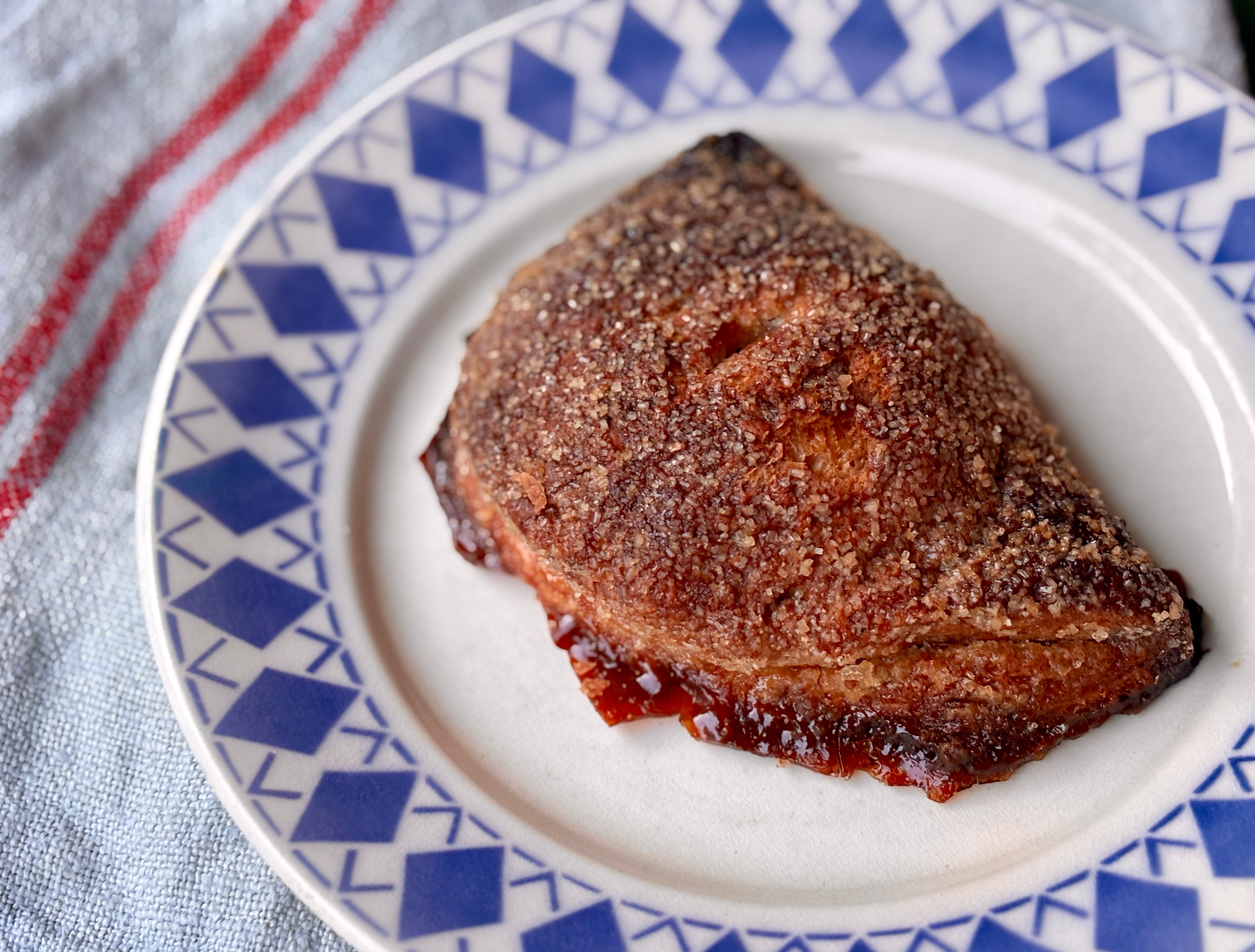
Chausson aux pommes, a caramelized apple turnover, from Sain bakery - one of my very favorite pastries in Paris.

For a little escapism (in the rest of our apartment), like a lot of you, I watch streaming shows - including a steamy show - although I’ve had to skip finishing Season 2 of The Last of Us because of the violence, in spite of the presence of Pedro Pascal, who was also in Eddington, which is a thoroughly disquieting movie. I wanted to join the “in” crowd and watch The Pitt, but a parental guidance website listed the violence and gore as “severe,” so that’s off my watch list. And I did watch Heated Rivalry, which was hot and heavy, and I saw lot more action in those six episodes than I did during several decades in San Francisco.

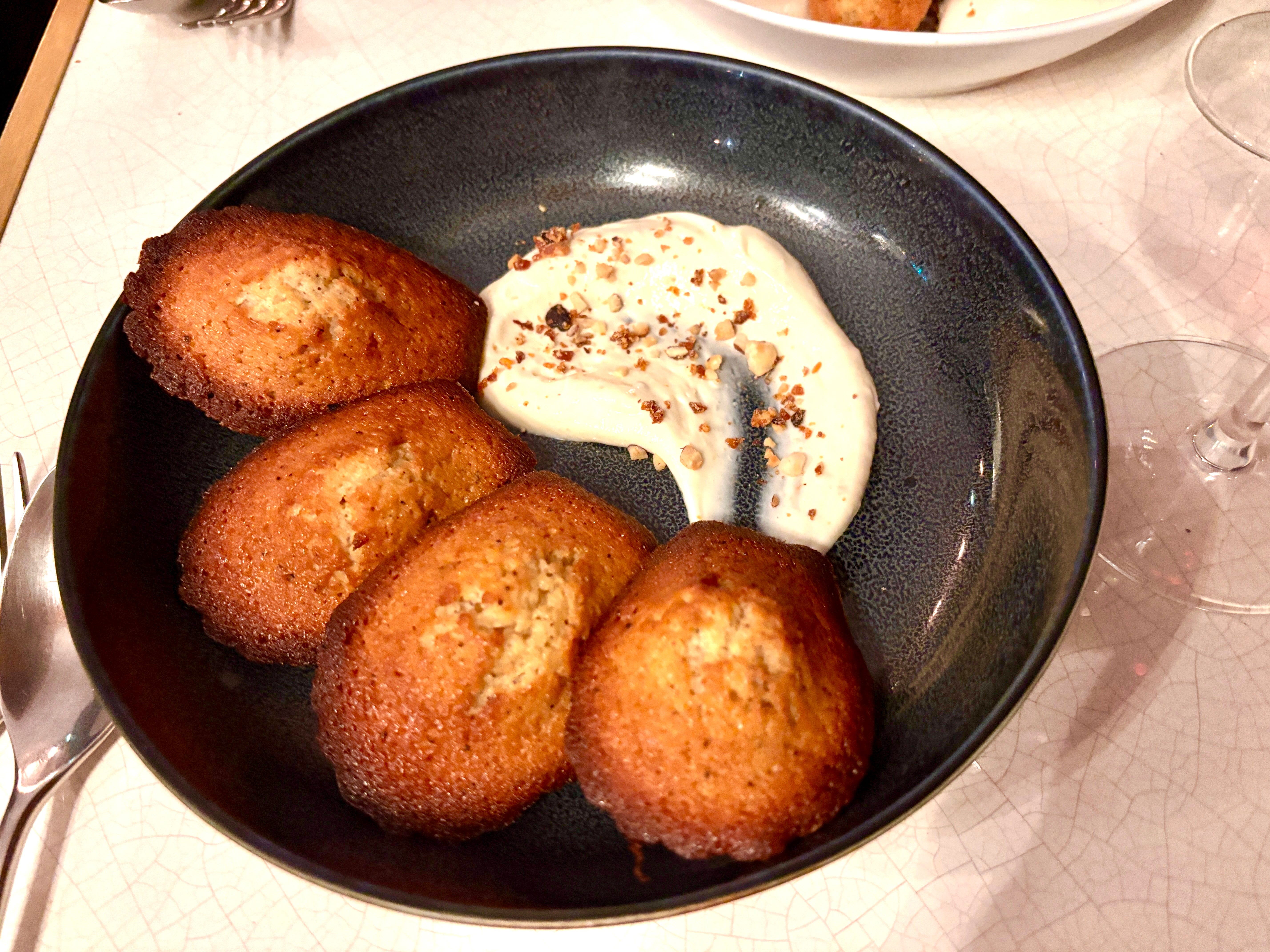
Warm madeleines with orange cream and praline for dessert at Jouvence.

I’ve also been trying to read more and have a stack of books I’m slowly making my way through. I’m in the middle of North Woods, which is brilliantly written, if a tad hard to follow if you put it down for a few days.

Subscribe now

Books I’ve recently finished were Impossible City, which takes a deep dive into the psyche of how Paris functions in the 21st century, and The Heaven and Earth Grocery Store, which the NYT described as “a murder mystery locked inside a Great American Novel.” I’ve got Quiet by Susan Cain on my docket as well as Picasso the Foreigner, a nearly six-hundred-page book about Picasso’s life in France and the conflicts he had with the country. Not to mention a bounty of new baking books that I’m anxious to start baking from.

I’ve also been revisiting some of my older cookbooks, especially classics that take me back to better times (gosh, I’m sounding old…) But reading Laurie Colwin, Richard Olney, and Marion Cunningham are a balm. That also goes for Edna Lewis, who I wrote about here…

Get newsletters sent right to your Inbox! Sign up here to get recipes, stories, Paris tips, and more…

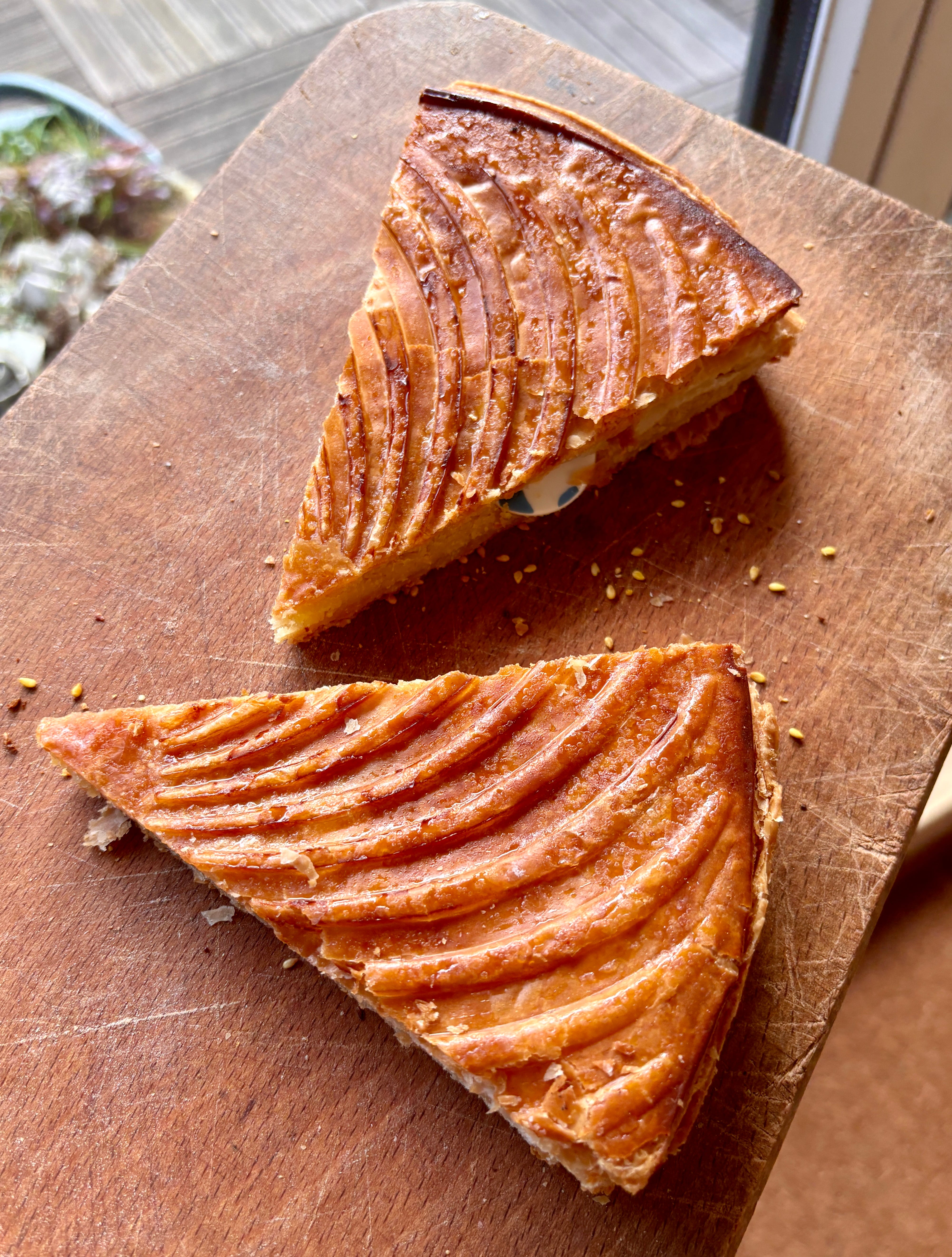
January was galette des rois season, the traditional King Cake in Paris, which is made with puff pastry and filled with almond cream. The other versions in the south of France are rings of brioche topped with crunchy pearl sugar, also called a brioche des rois.

Every year, we try to get galettes des rois from various bakeries. These are from Boulangerie Utopie.

Pâtissiers in Paris are going more and more “off script” and glowing up their galettes with everything from candied kumquats to roasted buckwheat groats, to pique people’s interest in them. Thankfully a lot of bakeries offer galettes by the part, as a whole galette for the two of us is a commitment. And if I’d ever hope to look like those dudes on Heated Rivalry, I’d need to dial down the galettes. But I’m afraid that bateau has passed…

Subscribe now

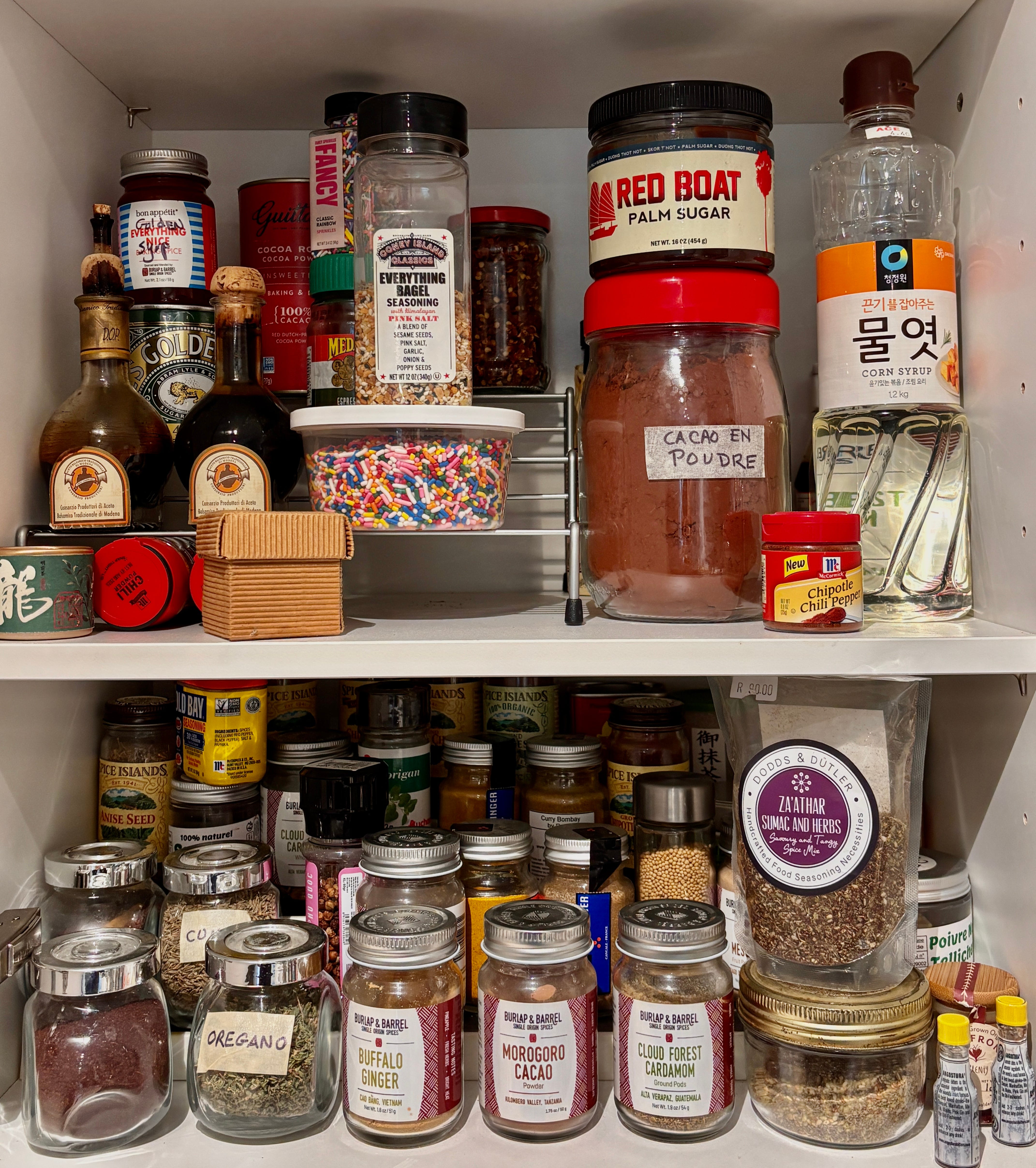
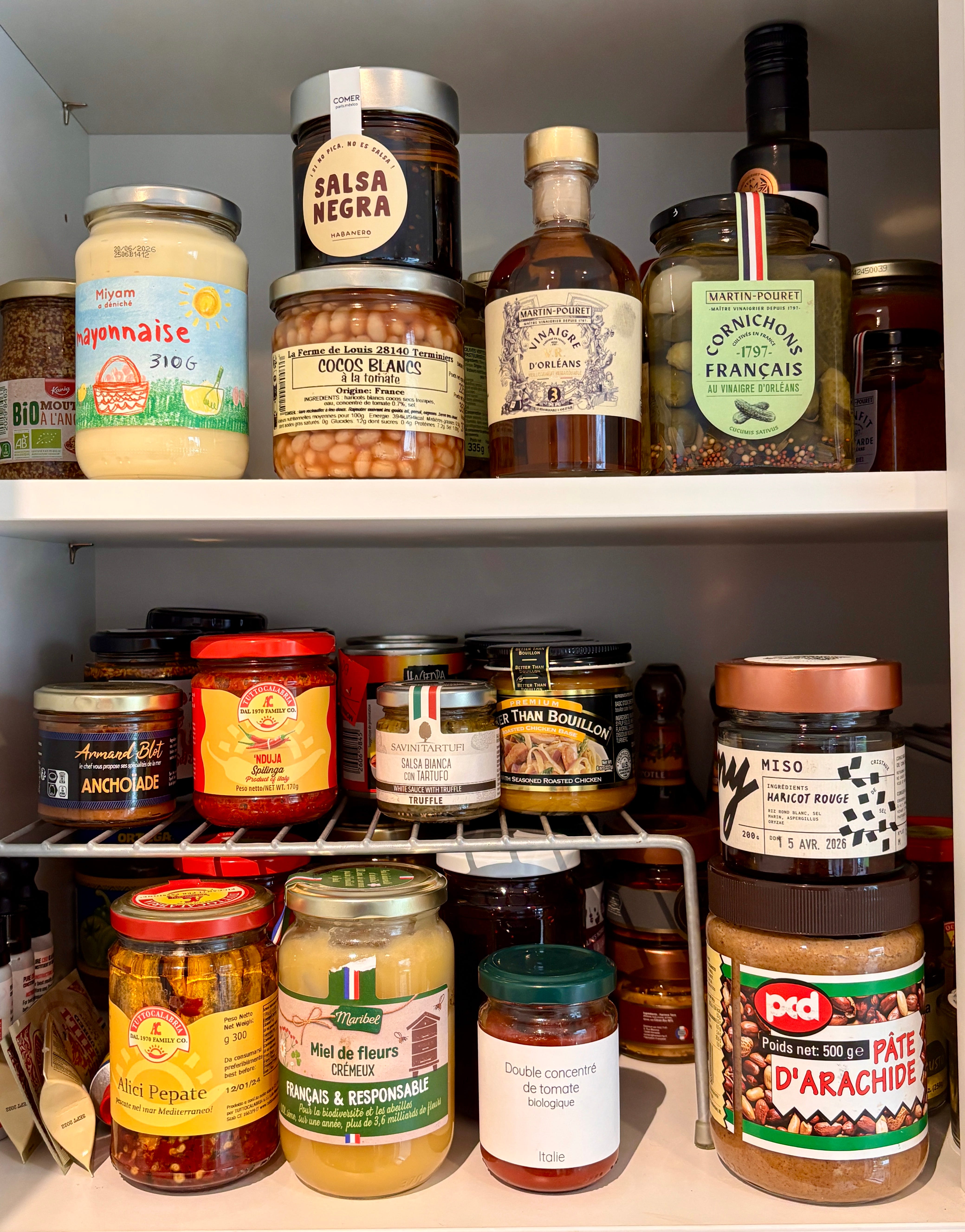
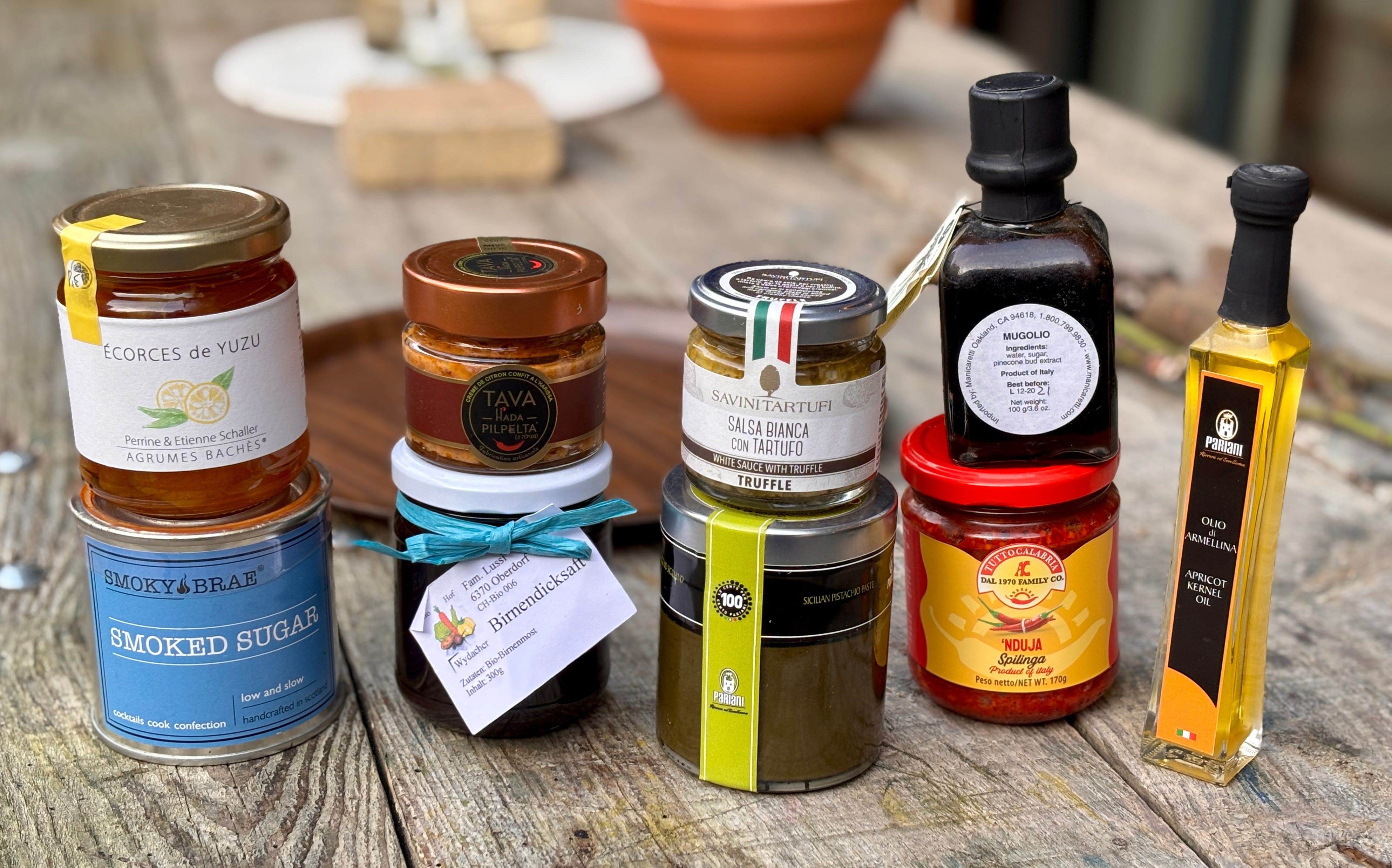
One thing about having plumbers come by is that it gives you a chance to discover, um…nooks and crannies that haven’t been cleaned in a while. The plumbers had to move our refrigerator, so I took that as an opportunity to take everything off the shelves, above and around it, and give them a good cleaning. A few weeks ago I cleaned out my freezers, which gave me the courage to tackle my kitchen cabinets, which are filled with condiments; honeys and oils, vinegars and salts, spices and seasonings, and vanillas, canned chiles, jars of chili crisp, misc. sauces from here, and more.

This cabinet has everything from rainbow sprinkles and saffron, to za’atar, aged balsamic, and cocoa powder.

Over the past few years, my kitchen has turned into a collection of cabinets of curiosities…

This cabinet has ‘nduja and spiced sardines from Calabria, French honey, salsa from Comer, anchoïade, peanut butter, and made-in-Paris miso, as well as vinegar and cornichons from a trip to Orléans, and a backup of Better Than Bouillon.

I don’t know what to do with everything — candied yuzu peels, Birnendicksaft (pear butter from Switzerland), smoked sugar that I got in Scotland - how could I resist?, apricot and plum kernel oils, pistachio paste, white truffle sauce, preserved lemon, and pine bud syrup, which I have two bottles of.

An Italian friend said a drop of the pine bud syrup is excellent in a Martini, but I haven’t made a Martini in a while, although considering the state of the world, I probably should start making them again. It’s hard to complain about having too much food, especially when others aren’t as fortunate to be in the same situation as many of us are, but figuring out how to use ‘em up adds more projects and recipes to my roster* and my goal for 2026 is to go outside at least once a week.

Leave a comment

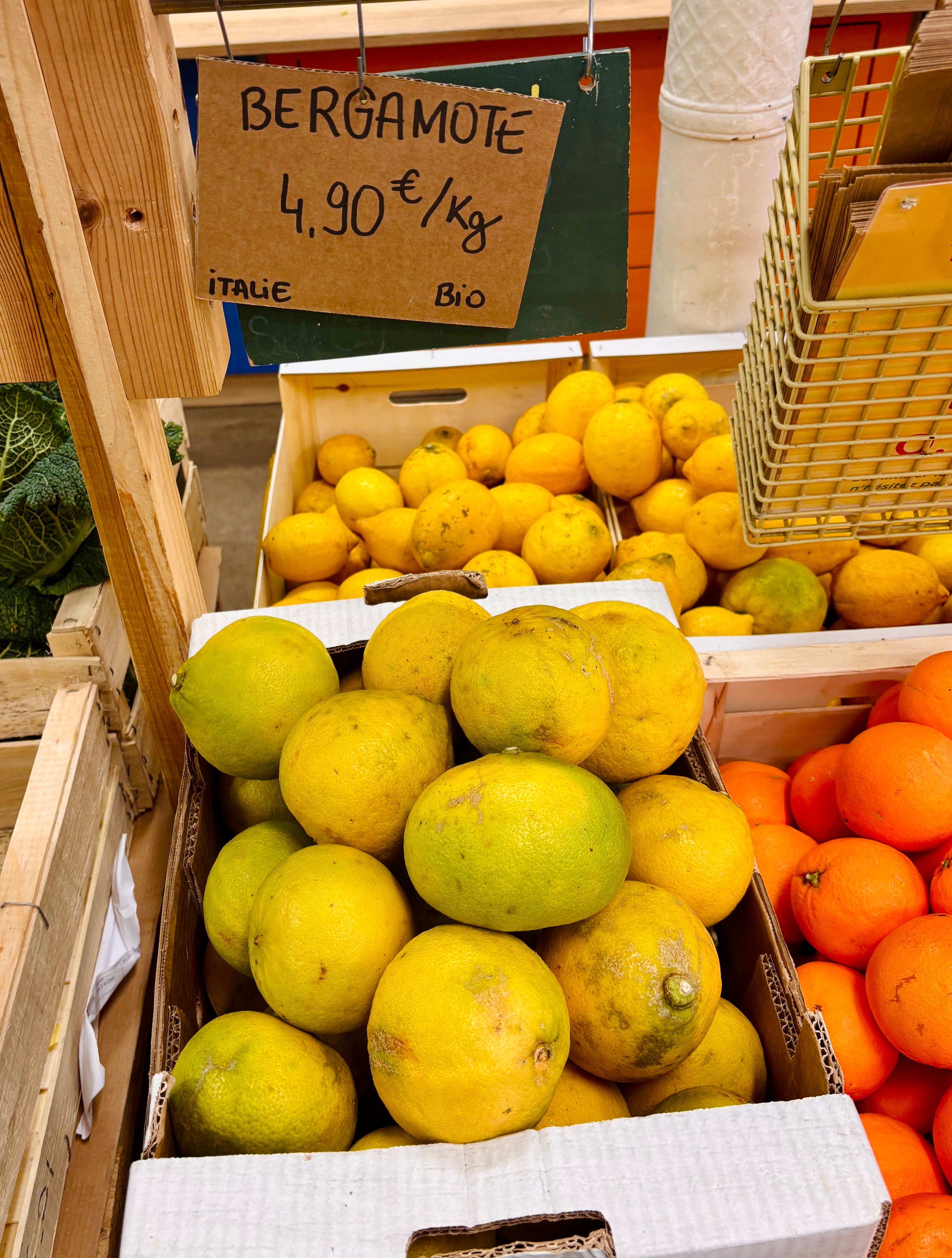
But one thing I never can have enough of is jam. So when I saw these bergamots at the store, I couldn’t resist buying some to (…yes, I know I don’t need any more projects…) make marmalade.

Bergamots at Miyam.

The name is a bit confusing in France as they often label sweet lemons as bergamots, which they’re not. True bergamots, likely a cross between a lemon or citron and Seville sour oranges, are highly perfumed and mostly valued for their aromatic peels. In the last few years, the variety of citrus available in Paris has greatly expanded. I used to comb the city looking for citrons, happy to find them wherever and whenever I could, and recently, I saw them in my local supermarket.

Candied Citron recipe

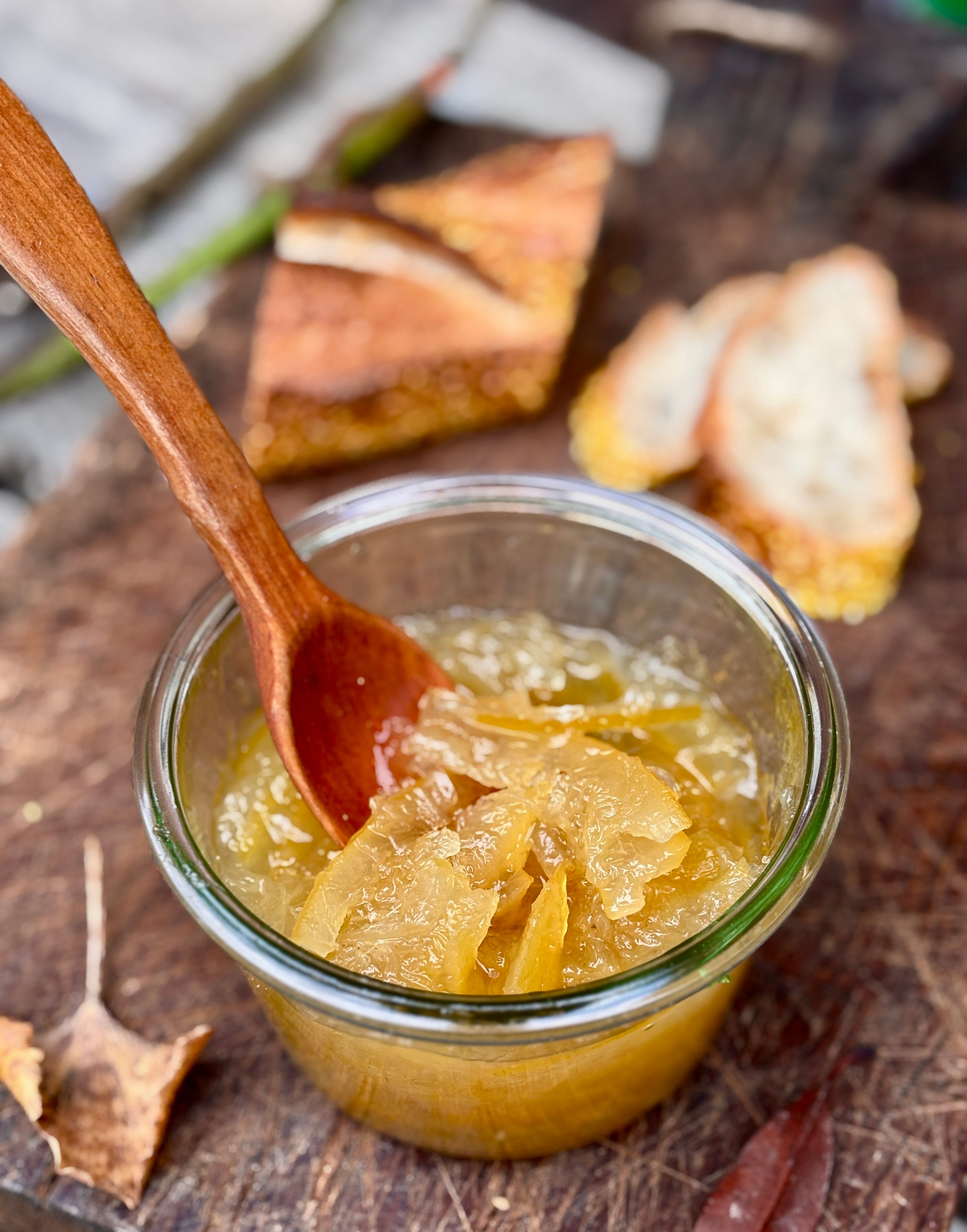
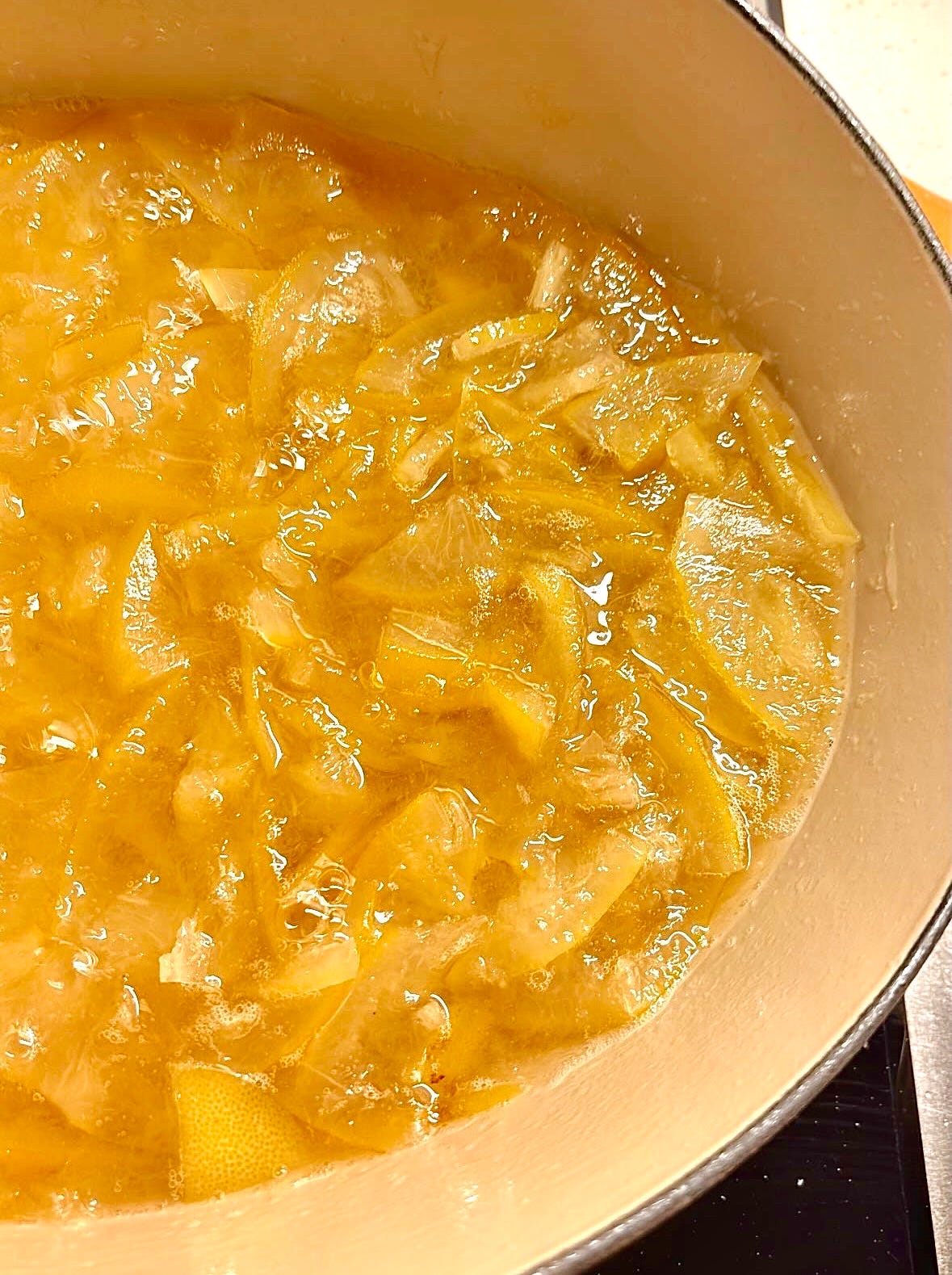
When I saw bergamots at my local produce store, I rifled through the box and plucked out three of the nicest-looking ones to make some marmalade. For those who say they “don’t like things too sweet,” bergamots lean toward the bitter side, so this marmalade is for you.

If you can find them, I rinsed and dried mine (which weighed 1 1/2 pounds/700g), trimmed off the stems, and quartered them. My bergamots had just a few seeds, but if yours have more, tie them up in a piece of cheesecloth, making a little sack full of seeds, and cook them with the marmalade, which’ll add extra pectin to help thicken the marmalade.

I don’t mind larger pieces of fruit in my marmalade but you can cut them smaller if you want.

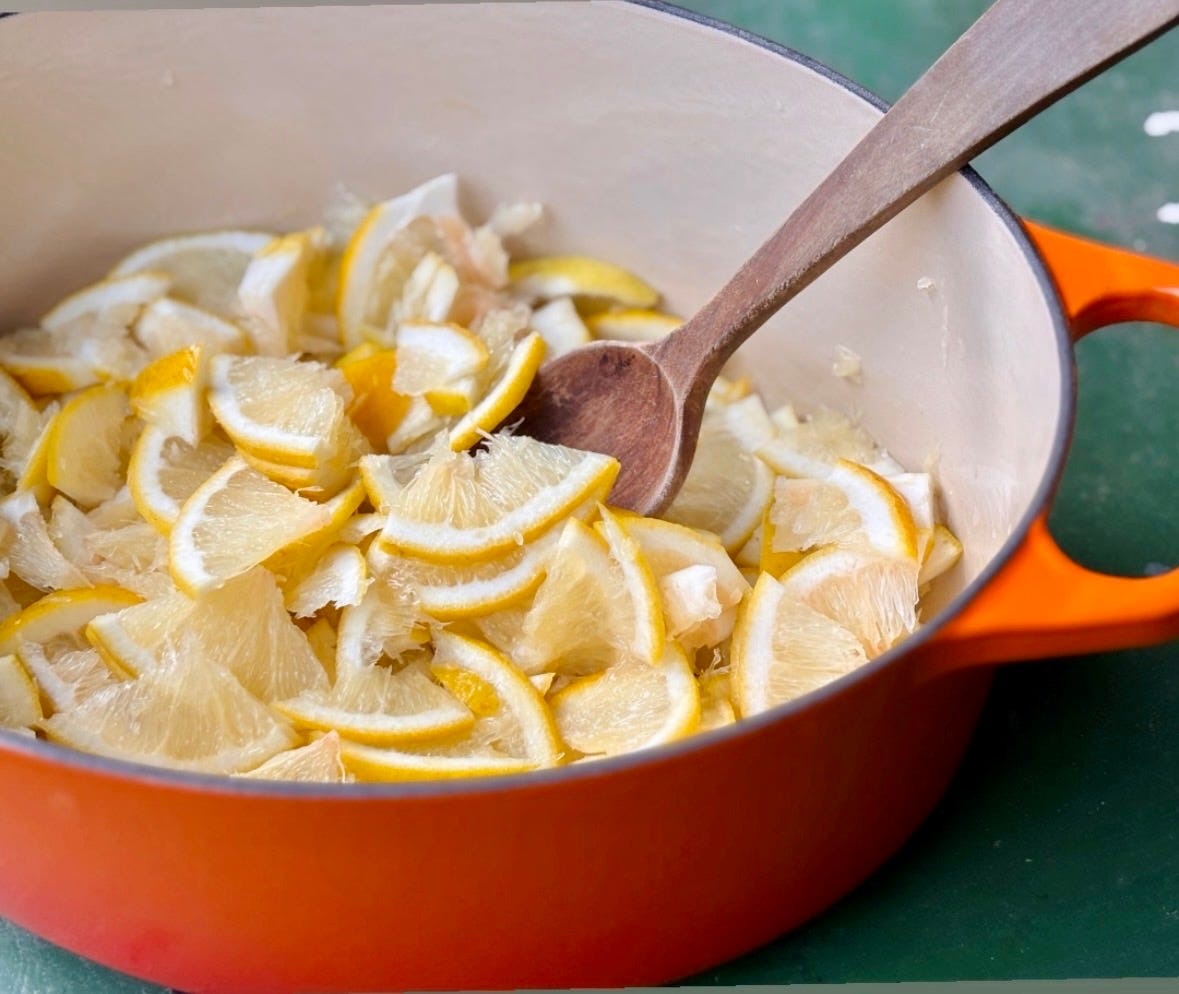
Slice the bergamots as thin as possible and put the pieces in a big nonreactive pot and cover with cold water. Bring to a boil, then reduce the heat and simmer until the pieces are translucent, about 6 minutes. Drain them and put the drained bergamot pieces back in the pot. Add 2 1/2 cups (500g) granulated sugar and 1 quart (1L) water, plus the little packet of seeds, if you have them, as well as a pinch of salt. Put a small plate in the freezer for testing the marmalade later.

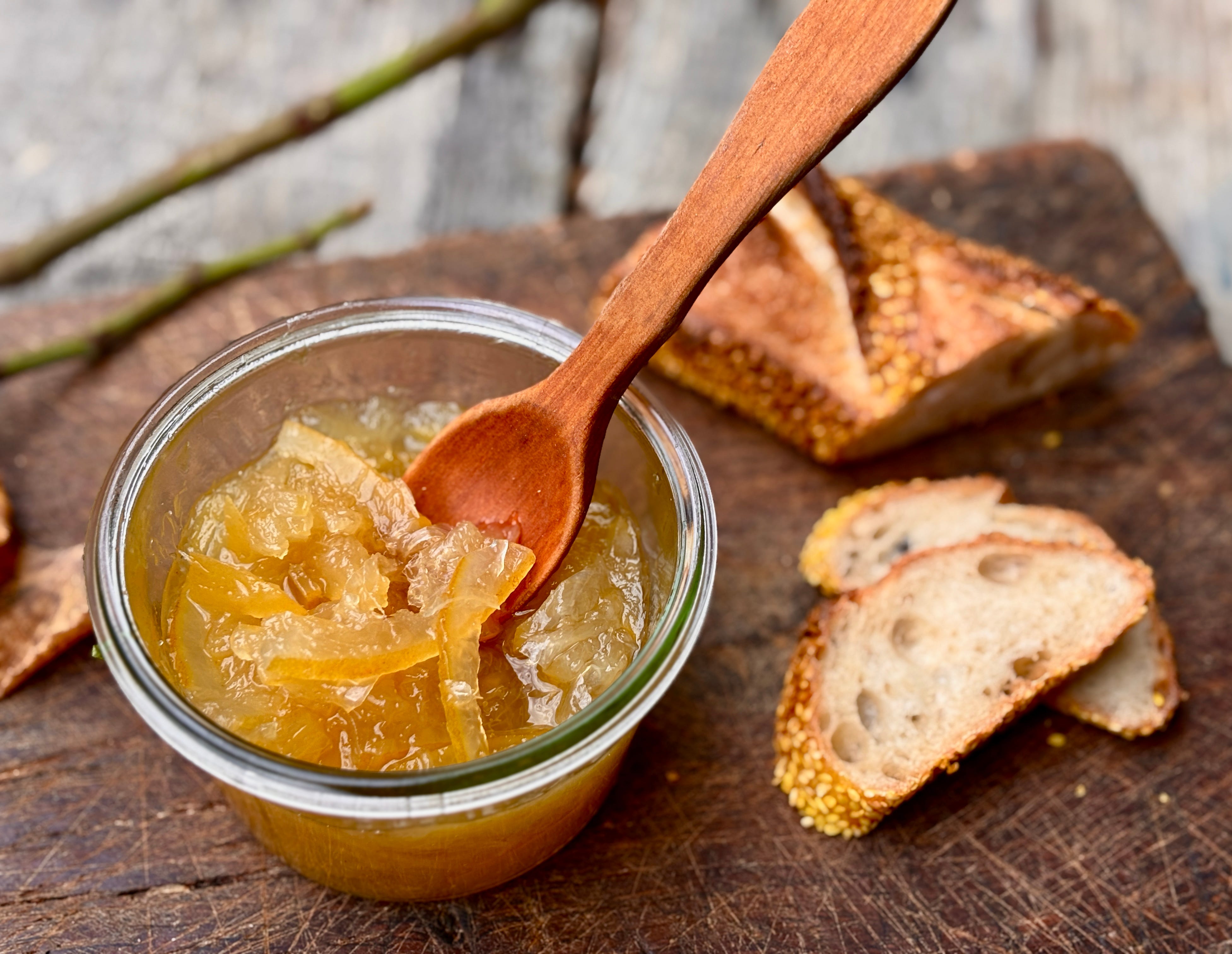
Bring the mixture to a full boil, then reduce to a low boil, cooking the mixture until the syrup between the pieces of bergamots are as thick as maple syrup. Remove from the heat and place a small spoonful of marmalade on the chilled plate, then return it to the freezer for a few minutes. Take it out and nudge the marmalade with your finger; it won’t wrinkle like other preserves but will be thick enough to stand up on its own. If not, cook the marmalade more, testing it again, until it’s the right consistency. Most preserves set between 218-220ºF (103-104ºC).

For this marmalade the temperature will be about 215ºF (101-102ºC) when done. Spoon the marmalade into jars and refrigerate until ready to eat. This’ll give you two jars of marmalade, which is what we’ve been eating for breakfast the last few weeks, and has certainly brightened up our winter mornings.

If you can’t find bergamots, there are other citrus marmalade recipes here:

My Jam and Preserves recipes

Romain and I did a little Made in France shopping this month, stopping by La Trésorerie, a store that’s fun to visit in Paris. If you’re into housewares, it’s a must-stop. (Note: I’ll be doing an event there next spring for the release of my new chocolate book. I can’t wait!)

Pre-order The Great Book of Chocolate!

We picked up an old-fashioned broom, a wood-handled bottle washing brush, and…while not French, I couldn’t resist this petite Toyo Japanese toolbox, since “someone” is always, um…borrowing my tools, and not returning them. The bright red metal makes it hard to swipe : )

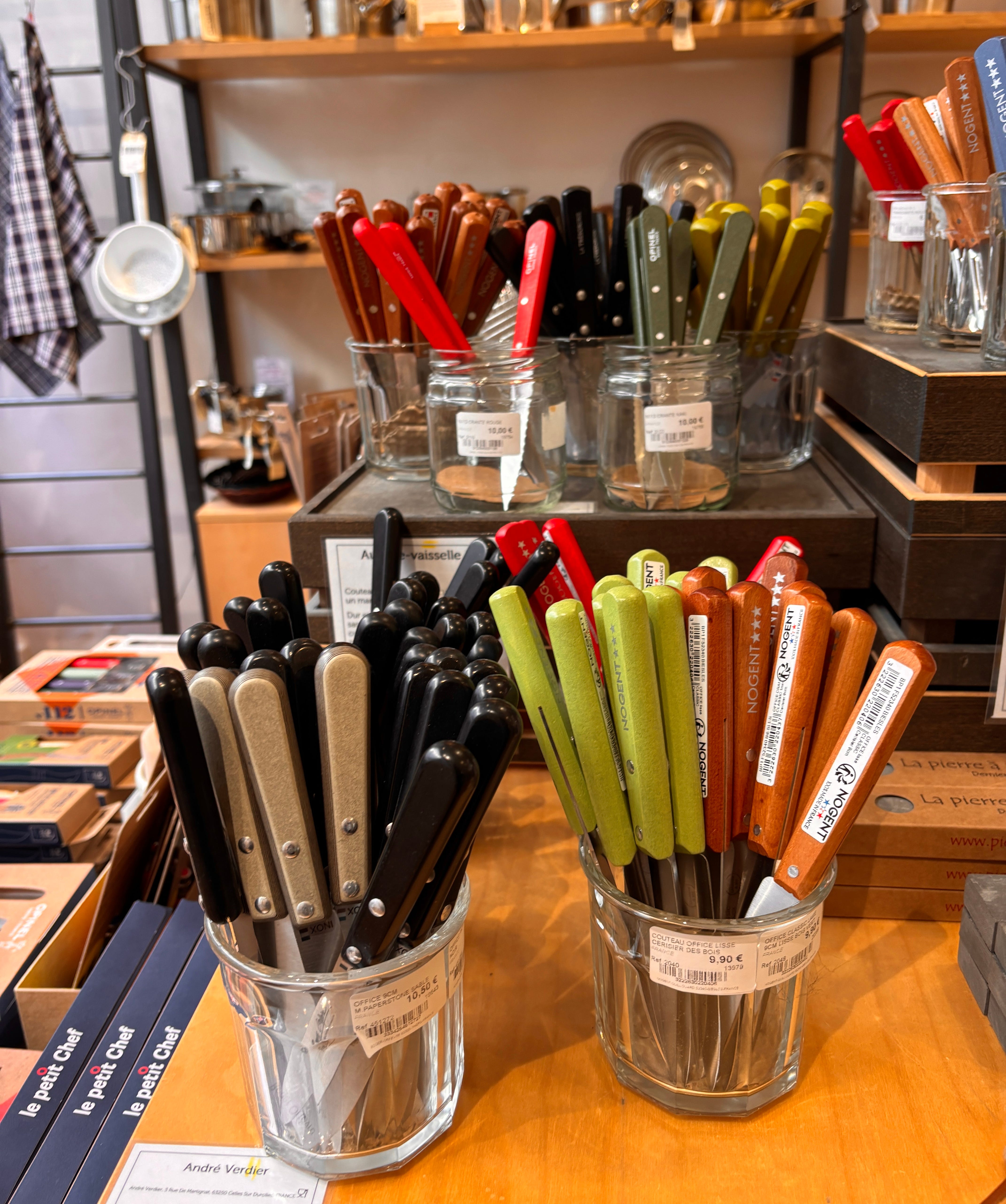
I’ve also been transitioning our storage containers to glass and want to support worker-owned Duralex, which has been struggling to survive. That’s what happens, I suppose, when your products are so well made that people don’t need to replace them. So I invested in new storage containers. The great thing about glass, while heavier and more expensive, is it doesn’t retain odors like plastic does.

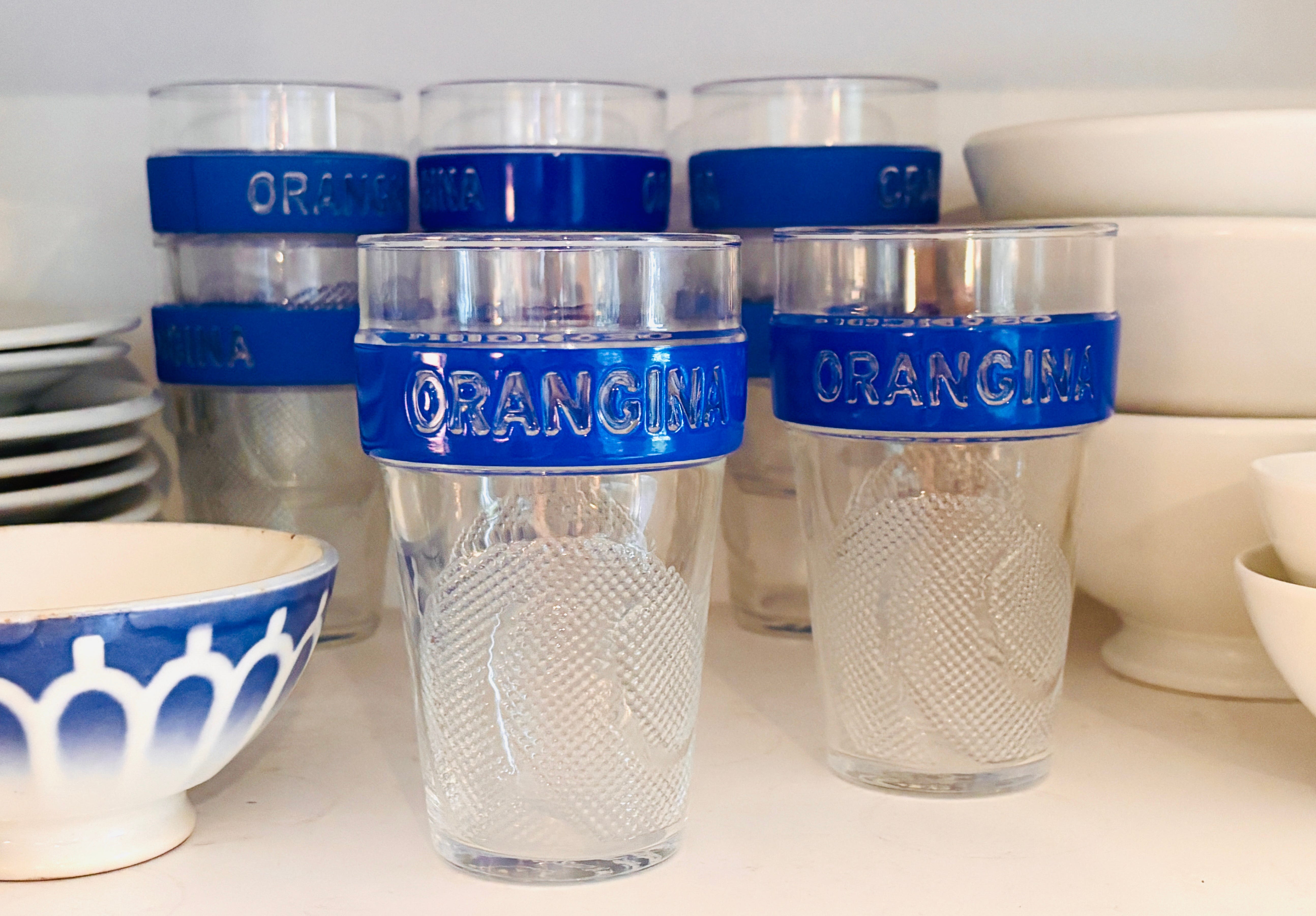
I want Duralex to succeed and wish they’d “think outside the box” and do some fun collaborations with French designers, like Orangina did with Matali Crasset.

Unfortunately they weren’t made by Duralex and break rather easily, so I pick them up whenever I see them at flea markets. But if Duralex wants to make some glasses with me, I’m up for it.

-David

Leave a comment

Links I’m Liking…

-How a BIC pen became a symbol of France. (Engelsberg Ideas)

-27% of French adults say they would like to move out of France. So if you want to come, there may be more room… (Gallup)

-I talked to Saveur for their Amused Bouche questionnaire and shared the Marjolaine recipe from Ready for Dessert. (Saveur)

https://www.davidlebovitz.com/book/ready-for-dessert-revised/

Get Ready for Dessert!

-20,000 pieces of tableware from top restaurants in Paris up for sale, Feb. 6 and 7. (La Vaisselle des Chefs)

-Lots of mixed feelings about a new documentary on the rise and fall of Jeff Smith, aka, The Frugal Gourmet. (I Bid You Peace)

-Is fleur de sel really worth its salt? (Taste)

-Need boxes in France? This organization in France resells used cartons and packing materials. (Carton Plein)

-Doesn’t look like alligator is on la carte, but clothing brand Lacoste opens a café in Paris. (Sortir à Paris)

-$25 million in debt, Food52 files for bankruptcy. (AdWeek)

-Speaking of money, it’ll cost you $1500 to eat at Noma in Los Angeles. Update: All meals are sold out. (Eater LA)

-”Jodie in Paris” - Jodie Foster’s connection to France goes all the way back to her childhood. (NYT/article unlocked)

-European cities start cracking down on rolling suitcases. (MSN)

Subscribe now

Things I Like

I’m okay not preaching to people about what produce to buy since most of you are adults and can make your own decisions. But I recently took notice of science finding a link between pesticides and Parkinson’s disease and thought that was worth sharing, and new findings say that high-fat cheese and cream may reduce the risk of dementia. So I can relax about all the cheese we eat in France. Whew!

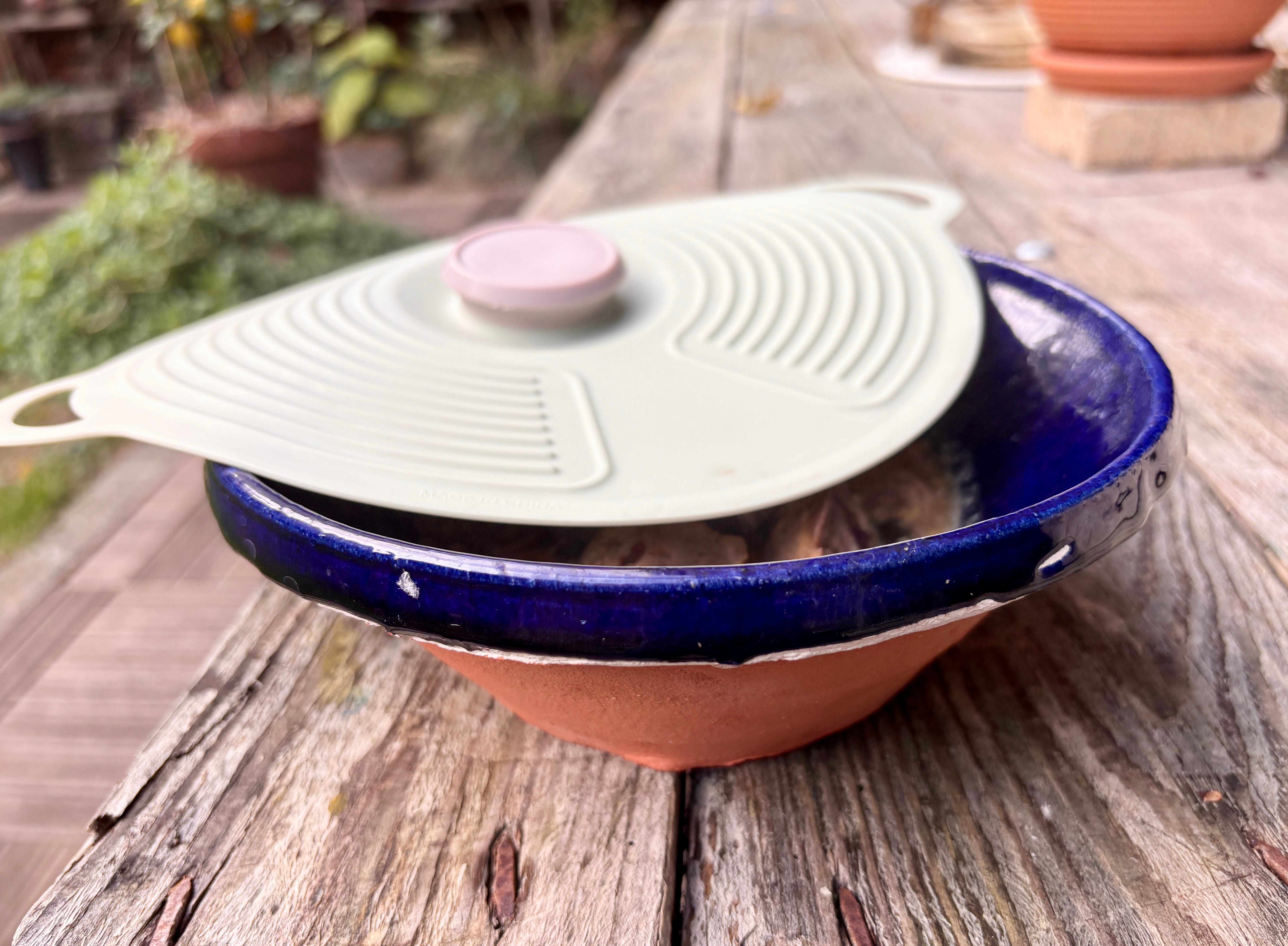
Plastic wrap is one of those necessary evils in the baking world. Fortunately there are more and more eco-friendly alternatives. Lately I’ve been using silicone covers that are microwave safe and many can even go in the oven. (Check the manufacturer’s advice. You don’t want your leftover macaroni and cheese served under a blanket of melted plastic or silicone.)

I picked up some silicone lids and have been loving them for covering bowls and reheating food. They’re wonderful and reusable, and mine (shown above) have a handle so you don’t get a steam burn peeling it off the bowl, as you can get with plastic wrap. I got mine at a kitchenware shop in Japan but I know they’re for sale in other countries. I use my lids almost every day and, like my new glass storage bowls, they’ve been a great investment.

Leave a comment

*A classic, and understandable, response might be to tell me to “Make ice cream!” which I do with lots of my baking projects when I’m testing recipes, and end up crumbling brownies that didn’t quite work, or candied nuts I’ve been working on, to fold into ice cream. However, I just cleaned out my freezer(s) and am not keen on filling them up again. But yes, I do have a recipe for plum kernel oil ice cream. So that’s on my docket…

The Cover

1 February 2026 at 11:01

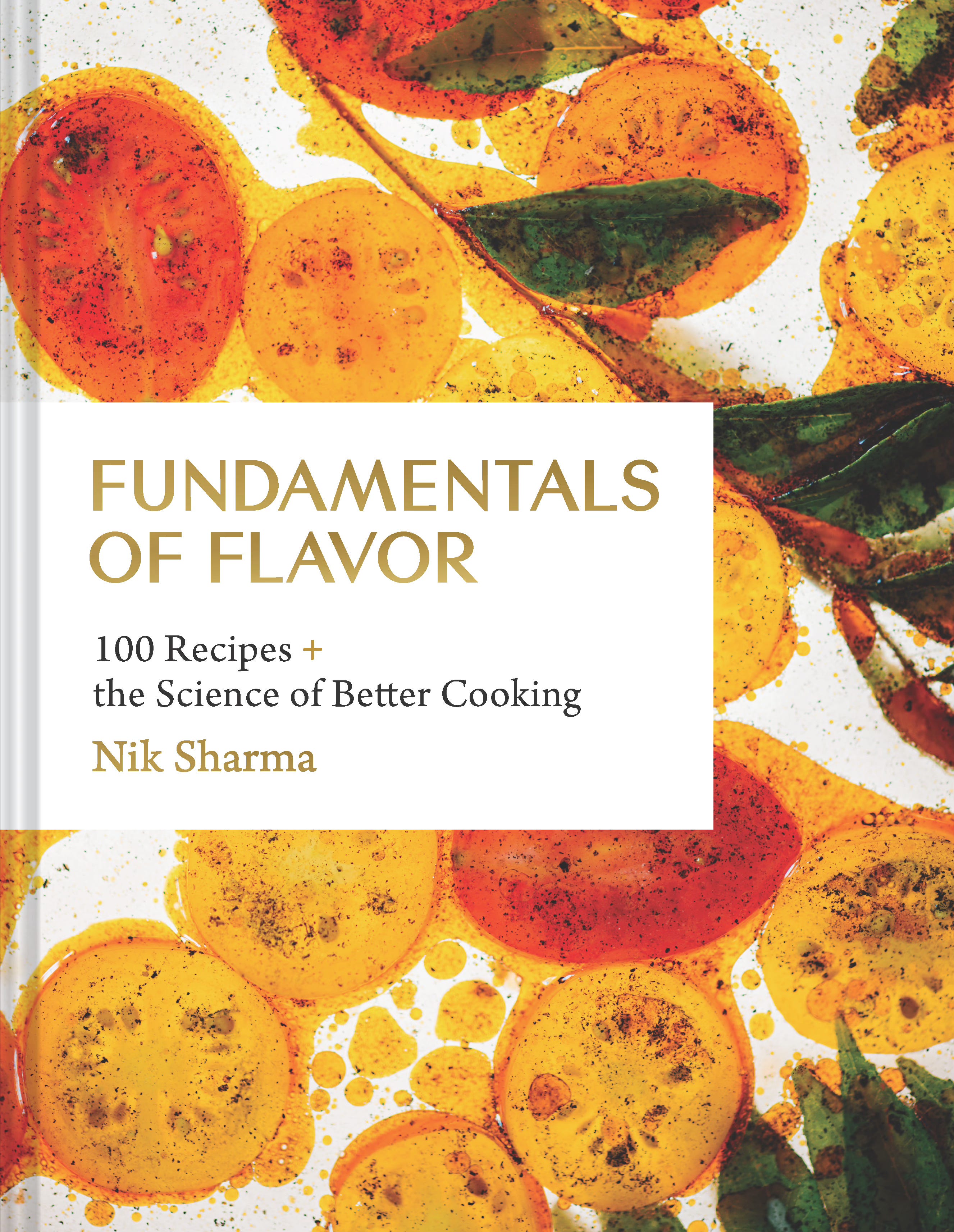
The secret is out…I have a new book! I’ve been working on this book since 2019.

Writing a cookbook means beginning years before you’re allowed to talk about it. Much of the work happens quietly, at my desk, in the kitchen, staying just ahead of the science as research evolves, testing and refining recipes that not only work but also explain why they work.

This book has lived through years of thinking, testing, rewriting, and refining. Today, I finally get to share the cover with you.

A first look at the cover.

Fundamentals of Flavor explores the intersection of nature, science, and cooking—and how those forces come together to shape flavor. It’s about understanding food not just as recipes, but as systems, patterns, and relationships.

If you’d like to take a look, preorders are now open.

Thank you, as always, for being here.
xx

Nik

Fajita Veggies (Chipotle-Inspired)

30 January 2026 at 18:02
fajita vegetables

These sizzling fajita vegetables will liven up your dinner table. The recipe features colorful bell peppers and red onion, seasoned and cooked to golden perfection. It was inspired by Tex-Mex fajitas and the veggies I always request on my Chipotle burrito bowls.

It took me quite a few tries to nail the texture that I had in mind—I wanted my peppers and onions caramelized on the edges, cooked until mostly tender, yet far from mushy. I finally figured it out, and I’m so glad to share this simple and foolproof method with you today.

Finished with a squeeze of lime juice, this vibrant side dish is ready in 20 minutes or less. You’ll find serving suggestions below to build your meal around it.

Continue to the recipe...

The post Fajita Veggies (Chipotle-Inspired) appeared first on Cookie and Kate.

midweek gems #57: Herbaceous basics for making Vietnamese food sparkle

29 January 2026 at 15:24

Hello there!

I’ve been digesting all the wonderful comments and suggestions you made in the recent subscriber survey and decided that I’m going to cut down from eight (8) to six (6) dispatches per month. My current pace has been hard to keep up with because I want to ensure quality content for you. Plus, it’s a lot for you to receive in your inbox.

This is what to expect:

  • Midweek Gems will come out twice a month.

  • Sunday Specials will remain steady. Most Sunday dispatches will be paid subscriber exclusives but there will be an occasional all-access dispatch that’s free for everyone.

Thank you so much for supporting my work at all levels!

These days, it seems as if the world is in a mad tailspin and full of precarity. While I pay attention to the news from sources I trust, I’m also carving out time to do things that ground me and give me hope.

Even in the depths of winter, thinking about and cooking with herbs me as I wait for the start of spring, the season for regrowth and the beginning of the bounty of flavors to come. One of the food ingredients that a number of you have expressed interest in are the herbs used for Vietnamese cooking so I’m going to share some essentials and a new ‘discovery’ with you.

💎 MVP herb for Vietnamese cooking

When my family first came to America, we were relieved there was cilantro at the supermarket. We enjoyed many herbaceous Vietnamese meals with just cilantro. Later on, when Dad started growing mint, we’d add it when there was enough. Otherwise, it was mostly cilantro. Survey Vietnamese recipes written in Vietnamese and English and you’ll see that cilantro comes up more than any other herb. In other words, you’ll go a very long way if you just have nice cilantro, which you can purchase at many markets.

If you regularly shop at a hardcore Vietnamese market, you’ll have access to a wide variety of herbs. However, in winter, the herb pickings are slim and spotty. To this day, I basically rely on cilantro during the colder months to make Viet food sing.

When you buy cilantro, you commit to a bunch of it but a recipe doesn’t need that much. How do you keep cilantro perky and ready for action?

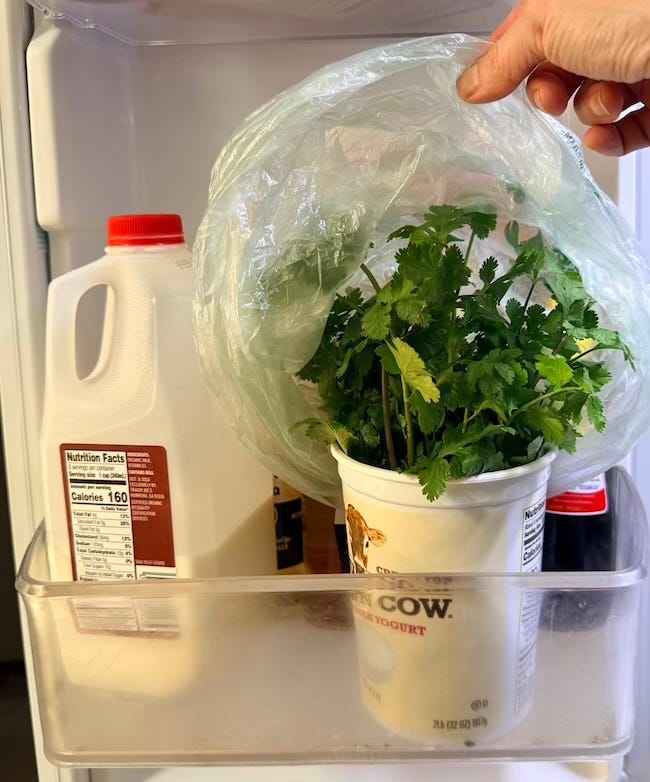
I find the freshest cilantro at our local indie market or farmer’s markets. When I get it home, here’s what I do: Trim the ends by about 1/2 inch (1.25cm), hold on to the stems (like a bunch of flowers), and then give the bunch a quick wash under running water. Then I spread all the sprigs out onto a clean dishtowel, then roll up the dishtowel to more or less dry the herbs.

Any frail short sprigs get put into a container or airtight bag to be used first. The remaining heartier sprigs go into a tub filled with 1 to 2 inches (2.5 to 5cm) of water, then I put a flimsy produce bag over the tub and put the tub in the fridge. The cilantro lasts for 1 to 2 weeks and is ready to use whenever I need it. No washing required. I change the water every few days, if I remember!

What’s in my fridge 90% of the time is a tub of ready-to-use cilantro!

Want to grow your own cilantro? My friends Alec and Michelle live in downtown Los Angeles in a loft and have long championed indoor, countertop gardens like the Aerogarden. My brother, Dan, who lives near Fresno and has harsh winter conditions loves those mini hydroponic gardens too.

Leave a comment

💎 What about Thai basil?

Most people assume that Thai basil is key in Vietnamese cuisine because restaurants serve it to them as a side for pho noodle soup. Truth be told, it’s only eaten with southern Vietnamese-style pho. Northern-style, Hanoi pho is basically about cilantro and a tiny bit of fresh mint on the side, if you want it.

For that reason, Thai basil is top of mind for many people when the think of herbs in Vietnamese cooking. Winter is not when Asian markets have great Thai basil (húng quế, literally cinnamon basil in Vietnamese). But two weeks ago when the weather was warmish here in California, I surprisingly scored two beautiful bags of them!

I ate some with pho and added lots to a chicken and mushroom pad gaprao (pad ka-prao), an iconic Thai stir-fry that’s one of my favorites. What to do with the rest? I needed to preserve it so I ended up turning some into a green herb oil and experimented with blanching and freezing the rest of the leaves.

I wrote up my experiences so you can play with making herb oil and freezing Thai basil. These two preservation methods are not going to yield you the same experience as the fresh herb. But, the oil and frozen leaves allow you to keep a precious herb for the long haul instead of letting go bad. I’ve used the oil to dress salads and to drizzle on silken tofu, creating what Rory described as a savory sundae! The frozen leaves are good added to noodle soup and the like.

And yes, you can make oil with other herbs. All the details and my learnings are available here:

I’m really happy to have both the oil and the frozen leaves on hand. Here in Santa Cruz, it’s rare to find nice fresh Thai basil, until summer when I can grow my own.

Support Pass the Fish Sauce! Join us as a free or upgrade to a become a paid subscriber to enjoy 125+ professionally developed recipes, seed new content, and get future class discounts. Thanks for your enthusiasm!

💎 2 Viet herb primers

While I have you here, if you’re dreaming about other more ‘exotic’ Vietnamese herbs, check out my Quick Guide to Vietnamese Herbs. For those of you who garden and or want to geek out on great details, head to my Mega Vietnamese Herb Primer.

Winter is citrus season and I have three kinds of pomelo and grapefruit looking at me in the kitchen as I write this dispatch. I’m curious about their flavor differences and how they’ll perform in a dish that’s perfect for Lunar New Year, which is coming up on February 17. That’s what’s in store for this coming Sunday Special.

Paris Restaurants & Dining

26 January 2026 at 15:28

We’ve been eating out more and more since so many new places, or at least new to me, are popping up. Some have been really good and others, not so much. When I’m eating out with friends, I’ll often ask at the end of the meal, “Would you come back?” That, to me, is one barometer of me recommending a place. Another is, “Would you have fun there?” Here’s a mix of restaurants I’ve been to recently in Paris that I liked. A few come with caveats, which are mentioned…

Read more

Check out what's in store for PTFS in 2026

25 January 2026 at 15:41

Pass the Fish Sauce is an evolving experiment to build a culinary community for exploring Asian cuisines and cultures. Very few people live and cook in isolation anymore. Many of us are looking to connect with others. We can do that in the kitchen and at the table — even if that’s done virtually. And, I truly believe all that effort will make us better humans. That’s why I started writing about food decades ago and with all of you as part of the PTFS crew, I don’t have plans to stop anytime soon!

Last week, I set up a survey to help me narrow down what kind of information PTFS subscribers want and how they want it delivered. Many took the paid subscriber survey and contributed great suggestions. I’m overwhelmed, to be honest!

A quick note: This is not a random sample but I reckon it’s better than a random sampling because my goal is to focus in on your interests. Paid subscribers weighed in because they comprise the staunch supporters who sponsor PTFS with extra kindness, generosity, and enthusiasm.

The PTFS survey asked folks to respond to multiple choice and open-ended questions. Below is a summary of the results.

1. What kind of content resonates well?

I grouped PTFS content into eight categories and respondents were able to cast votes in favor of content they found valuable. Here’s the breakdown:

People also expressed keen interest in discussions of whole Vietnamese meals including “what we ate for lunch this week”, the dives into Asian ingredients and Vietnamese ingredients, including substitutions, and my family’s personal history.

2. Cooking basics — what do you need help with?

This was an open-ended question. I led by suggesting knife sharpening, breaking down (cutting up) a chicken, and making perfect rice. I also asked for suggestions.

There was solid support for my three ideas above to help you deal with dull knives and knife selection, whole chicken, and cooking good rice. People offered up extra ideas, such as:

  • working with rice paper

  • how to create staples and building blocks for the freezer

  • quick (30-min?) Viet dinner ideas

  • Viet dishes you might not see in restaurants

  • basics specific to a given cuisine

I’ll re-review all the suggestions to help organize future content! Thanks to all who provided input, thus far.

3. What about healthy cooking?

I proposed certain cooking ideas and asked respondents to cast votes in favor of them. Here’s what appealed to people:

While some folks expressed that PTFS recipes are already healthy and that the current mix is fine as it is (🙏), others suggested more content on lowering sodium intake, baking with less sugar, gluten-free and dairy-free desserts, and Asian herbs and vegetables. There are way too many great responses to this question. I’m looking forward to making a thorough list of how we can tackle them this year!

4. What about PTFS livestreams?

Substack has a function to do livestream videos which are recorded and then sent out as a post so you have the recording, in case you cannot attend. PTFFS livestreams may include me demo-ing a technique or basic recipe, answering your questions in AMA (Ask Me Anything) sessions, interviewing people about Asian food and culture, etc. Would you watch or attend a PTFS livestream?

Alright, I’ll get plotting on this branch of PTFS!

5. Are you interested vintage cookbooks?

How do classic Asian cookbooks stand the test of time? Would you be curious enough to be interested in cooking from them? My thought is to recruit a couple of PTFS paid subscribers to cook with me from vintage books (I’d supply the books or recipes) and then we’d all report our feedback to everyone. Does this initiative interest you?

I’m thrilled that this idea got solid 👍.

Join us here at Pass the Fish Sauce! I welcome your support at any level.

6. What ingredient(s) are you curious about or want to figure out?

WHOA, such a wonderful collection of ideas came from this open-ended question. I’m stunned by all the suggestions.

A number of folks asked about tamarind and I realized that I need to better organize content so you can have a bird’s eye level view of what we’ve already covered. I’ve been negligent on that front. My apologies. I seem like an organized writer but I’m only semi-organized!

With regard to tamarind, you can mine the following content at my website and at PTFS for a ton of tamarind information — from basics to condiments to main dishes to one-dish meals.

7. Need advice on certain cooking appliances (small or major), utensils, or tools?

Respondents chimed in to suggest advice on slow cookers, rice cookers, woks, instant pots, and a wealth of other ideas. I’ve amassed an unusual collection of cooking equipment and am often pulled to test driving and learning about more of them. You’ve given me lots of assignments and I thank you!

Any additional suggestions?

Of course there were thoughtful, smart suggestions (how to understand a Viet restaurant menu! using prepared sauces well!). What I didn’t expect were all the big warm hugs and appreciation for what this newsletter offers.

I took this particular suggestion to heart: “You do a great job already. Maybe make life easier for yourself by doing one post a week? Or 6 per month rather than 8?”

You’ve given me so much to think and look forward to. And, if you haven’t done the survey, you can still take it. Your responses and ideas will be read.

I Have Chocolate on My Mind

25 January 2026 at 11:02

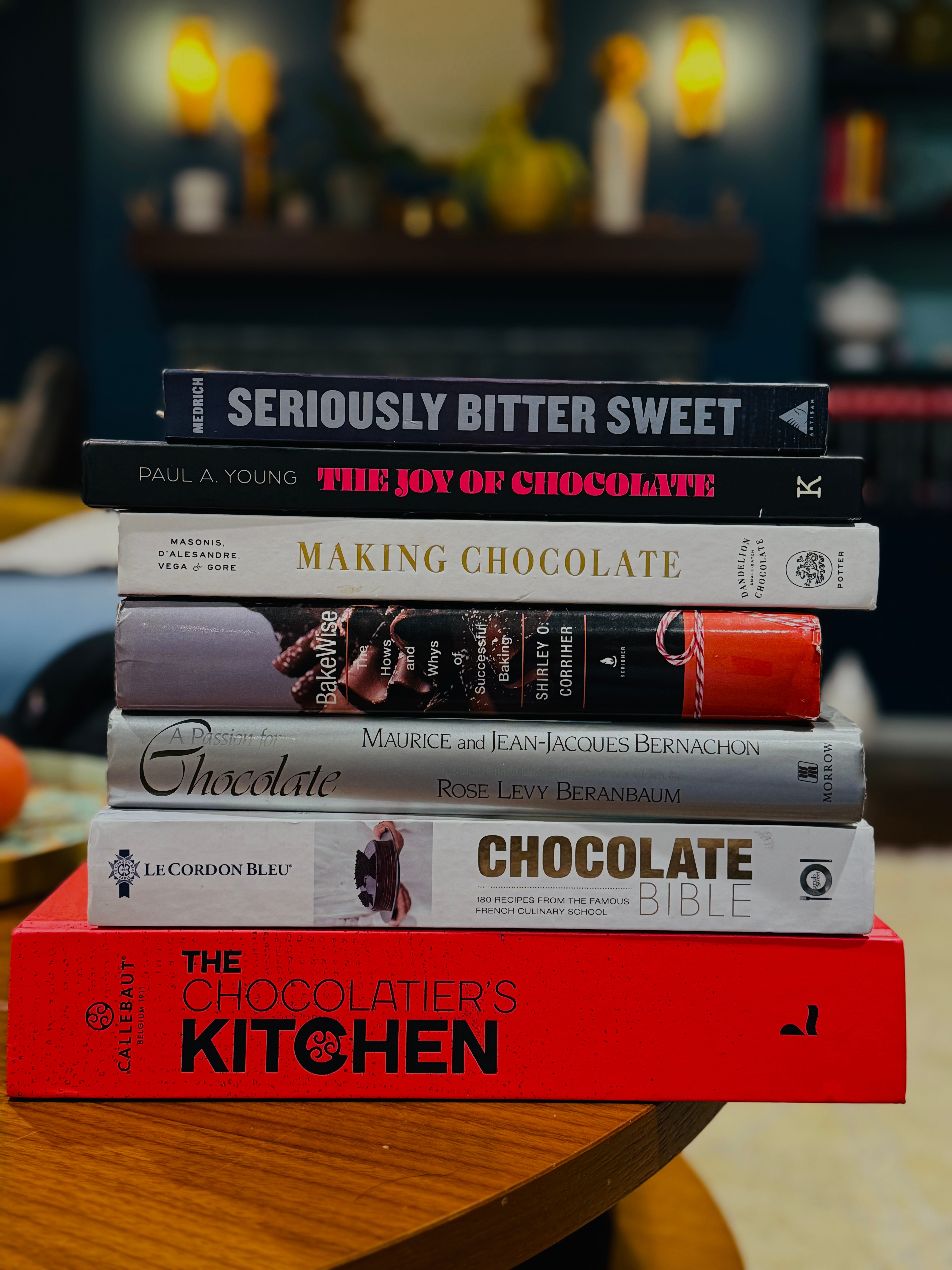
The other day, I found myself sitting in my office, pulling cookbooks off the shelves in search of every volume I own on chocolate. I usually keep my dessert books neatly sorted—pies in one place, ice creams in another, baking in its own tidy cluster—but for reasons I still can’t explain, my chocolate-focused books were scattered everywhere. My copy of Dandelion Chocolate: Making Chocolate was filed among the science cookbooks; Le Cordon Bleu’s Chocolate Bible had somehow ended up among the baking books.

I was, admittedly, a little annoyed with myself. I take an unreasonable amount of pride in keeping things organized. But what surprised me more was the small rush of excitement I felt each time I picked one up. Holding Paul A. Young’s The Joy of Chocolate instantly transported me back to Seattle’s Book Larder, where I bought it during a stop on my book tour a few years ago. A Passion for Chocolate by Rose Levy Beranbaum is David Lebovitz’s copy, passed on to me when he cleared out a storage unit of cookbooks in San Francisco. And then there’s the Callebaut book I’ve never actually cooked from, but adore nonetheless, simply for its wildly seductive combinations of fruit and chocolate—ideas I still want to eat every time I imagine myself as a chocolatier.

Much like a slab of chocolate itself—dense with mood-altering compounds like theobromine, phenylethylamine, and caffeine—spending time with these books flooded me with memories of things I’ve already done and things I still aspire to (and, if I’m being honest, might never get to). It’s why I love cookbooks so deeply, and perhaps why I own far too many for my own good.


This week, a chilly, icy front has settled in across much of the country, which feels like the perfect excuse to turn on the oven and bake a batch of chocolate chip cookies. To get you in the mood, I’ve put together three different versions—each with its own personality.

First, my go-to chocolate chip cookie: buttery, chewy in the center, and crisp around the edges.Then, the famous Salted Rye Chocolate Chip Cookie from the San Francisco Cooking School, with its deep, savory notes and just enough salt to keep things interesting. And finally, a Spiced Hazelnut Chocolate Chip Cookie from my cookbook Season, created with my gluten-free friends in mind, but beloved by everyone at the table.


And now for the really sweet news—I’m officially making my Netflix debut next month! 🎉 I’m co-hosting a brand-new show, In the Test Kitchen, with my pals (and brilliant colleagues) from America’s Test Kitchen—Lan Lam, Bryan Roof, and Lidey Heuck.

There are 23 episodes, and they start dropping on February 26 on Netflix. Expect a lot of food, strong opinions, spirited debates, and the kind of kitchen chaos that only happens when very opinionated test cooks are given a platform. I cannot wait for you to watch.

Energy Balls

25 January 2026 at 00:20
best energy balls recipe

These energy balls are lifesavers! When you’re hungry in between meals, running out the door without breakfast, or craving a wholesome little treat, these energy balls will come to the rescue. They’re the perfect healthy grab-and-go snack.

This recipe is made with oats, honey, nut butter, and toasted nuts and seeds, though it’s endlessly adaptable to suit your preferences. I designed it to offer sustained energy from the whole grains and nuts. One ball is just sweet enough to taste like a treat, and offers a healthy dose of protein and fiber.

This recipe was inspired by my husband’s mom’s interpretation of my no-bake granola bars. She always has a batch in the fridge for her grandkids, and they’ve become a staple in our house, too. I crumbled one over my yogurt just this morning, and they’ve kept my energy level up through this postpartum phase. They’re a perfect homemade gift for anyone who’s in a busy season of life, that’s for sure.

Continue to the recipe...

The post Energy Balls appeared first on Cookie and Kate.

midweek gems #56

22 January 2026 at 15:12

I’m not an overly woo-woo person but I do believe in the power of slowing down and taking deep breaths. In fact, when my doctor asked me how I dealt with acid reflux, one thing I listed was slow breathing, which helped to alleviate symptoms.

Rory has meditated for most of his life and nowadays, in social situations, someone ends up talking to him about his transcendental meditation (TM) practice. He’s no proselytizer. Meditation just comes up in conversation. We’re all looking for calm.

Cookbooks are considered works of service and we read them for different reasons. I’ve often likened mine to how-to manuals with recipes that are road maps and stories to lead you along from beginning to end. Hopefully, you’ve gotten some of that from my books.

I’ve read Nigella Lawson’s books for her literary phrasing, cadence, palate, and humor. Her works have often been packed with emotion but are not outright self-help books. That hasn’t been a trend until recently. There have been a handful of cookbooks released specifically about emotional well being. I spotlighted Samin Nosrat’s book in Midweek Gems #44. There have been others and I want to draw your attention to two standouts.

💎 Intentional cookbooks

Just released last week, Mind, Body, Spirit, Food by is designed around cooking with the seasons but also with our emotional needs. She has a vibrant Substack and podcast focused on mindfulness — a term that can seem trite when simply thrown around.

I was taken by Nicki’s book because of its clean design, meditations and versatile recipes, each one accompanied by an intention. Things are written in a concise enough manner so you can read the emotional support part of the equation fast enough and then slide into cooking and enjoying the results.

Nicki is a solid recipe developer and shares her own challenges about healthy eating. The book is healthful in a wholesome way. There are brownie and cake recipes, so it’s not a deprivation diet book. It’s not a cultural book about a cuisine. Rather, Mind, Body, Spirit, Food is filed with easy going recipes for you to practice and get you through the week — something that many of us need when we’re aiming for calm. Nicki’s doing a book tour with a stop in the Bay Area at Omnivore Books, in case you’re in San Francisco.

Remember Helen Goh’s Traveling Speckle Bread (Bara Brith)? The recipe was so delicious that JR made it twice already. I mentioned that I took the recipe for a spin to prep for a podcast interview with Helen about her debut book, Baking & the Meaning of Life. The episode just dropped so you can get the full low down. and I spoke to Helen about the salt, sweet and slightly bitter side of cookbook making, as well as how she combines her psychology training with her baking prowess in a distinctive book.

Leave a comment

💎 Banh pate chaud in Saigon/HCMC

For those of you traveling to Vietnam this year, do look for pâté chaud puff pastries in Saigon (HCMC). After I included a small list of pâté chaud spots in this dispatch about its unusual history, I asked Saigon-based chef Peter Cuong Franklin for extra local pointers. Born in Vietnam, Peter grew up in the U.S. but eventually returned to Saigon, where he opened Ănăn, the city’s only Michelin star restaurant. After dining there, I included it in my 2025 list of interesting spots for you to try while in Ho Chi Minh City.

Peter recently opened a high-end spot called Pot Au Phở 2.0 located at 91 Tôn Thất Đạm, Chợ Cũ (Old Market). Peter does tasting menus and for the pho shop, there are dishes such as Caviar Egg Phở, one-bite Molecular Phở, Pâté Chaud, Black Chicken Phở and a Le Pot Au Phở inspired by Paul Bocuse's legendary VGE truffle soup (my less expensive take on Bocuse’s soup is here).

What’s up with his fancy pate chaud? Peter sent photos. There’s foie gras in there! It’s fancy but I like how he’s gone all out to take a Viet street food to new heights.

There’s a certain cultural reclamation happening as he applies French ideas to craft his novel takes on Viet food. It is to say that Viet food is worthy of being on the world stage. Peter knows that his food is pricey and suggested nearby Nhu Lan deli and bakery for more affordable, traditional pâté chaud.

Can’t make it to Vietnam soon? Make pâté chaud (“pah-tey show”) yourself using my recipe, which includes a veggie option too!

💎 Japanese pickled ginger time?

Over the weekend, I found young baby ginger at Mitsuwa market in San Jose. It’s ridiculous to be able to buy it this time of year! It’s a warm weather thing but there it was in the produce department, staring at me. I had to buy a package for a batch of my stir-fried ginger-scallion noodles.

At an Asian market, you typically have to buy a good half pound of young ginger so I pickled the rest. In the process, I edited my longtime, evolving recipe to be a touch less sweet, though you can certain dial it up on the sweetness level if you’ve got extra spicy ginger. Just like magic, the ginger turned a lovely pink overnight and darkened more over the next 48 hours. Here’s the transformation in three photos:

The pink transformation doesn’t happen every time. Maybe it has to do something with the cooler temperature this time of year? Or, perhaps with the pinkiness of the skin in the raw ginger? It had unusually bright pink sections. It’s unclear and the flavor isn’t diminished if the ginger remains a buff color. If Mitsuwa has the ginger, I bet you can find some at other Japanese markets and Korean markets like H-Mart, plus Ranch 99.

Anyway, I now have a jar of pickled ginger to last for the year. I hope you get your paws on some young ginger so you can have a stash of your own. Get the Japanese pickled ginger (gari) recipe.

On Sunday, I’ll report on last weekend’s paid subscriber survey regarding 2026 content. If you have not had a chance, take the survey!

Or, if you haven’t joined us behind the paywall, this is a great time. There’s a little ⚡️ flash sale going on until Saturday night. ⚡️ I’d love as much input as possible and you’ll have open access to all content.

❌