Normal view

The better way to make tomato toast

1 August 2026 at 18:00

The mind keeps a strange little pantry of its own.

It shelves a photograph you paused over, a dish you ate three summers ago, a flavor combination you praised enthusiastically in public and then apparently continued discussing with yourself in private. Later, it sends an idea forward as though it has arrived whole.

Mine was miso-butter tomato toast.

A friend had recently posted photographs from Barcelona, including several enviable angles of pan con tomate. In one, it sat on a tiny plate beside a chilled vermouth cocktail garnished with a pearl onion on a spear. In another, it occupied an outdoor café table next to an exceptionally good pair of cat-eye sunglasses. I wanted the toast, the cocktail, the sunglasses and, presumably, whatever version of myself knew how to arrange all three so casually.

I had also recently waxed poetic about compound butter during a live discussion on summer entertaining. And after several weeks of 90-degree days, I had become devoted to grating tomatoes, an activity especially suited to weather in which chewing can seem like an unreasonable demand.

The name arrived before the instructions did. I knew it would involve sourdough. I knew the bread would be toasted in the oven, where its entire surface could become evenly crisp rather than merely acquire a few handsome skillet stripes. I knew I wanted unsalted butter and mild white miso. And I knew the finished thing would require some crunch.

It had, in other words, the certainty of a craving and the vagueness of a dream.

Toast is forgiving of this kind of thinking. It is the food of pantry rummagers and refrigerator foragers, and it exists on a curious emotional spectrum. One person says, with defeat, “All I managed today was beans on toast.” Another announces, with delight, “I made these incredible marinated white beans and put them on toast.” I am firmly in the latter camp. Toast is what happens when three unrelated things in the refrigerator agree to become lunch.


Want more great food writing and recipes? Sign up for Salon’s free food newsletter, The Bite.


This particular toast only looked improvised. Beneath its casual, slightly rumpled appearance was a specific bit of flavor logic: salt, fat, sweetness, acidity, glutamates upon glutamates.

There is a quiet kitchen principle I return to often: What wants to hold hands?

Spend enough time cooking — or leafing through cookbooks in bed — and you notice certain ingredients keep reaching for one another. Tomato already knows butter from ghee-rich curries, grilled cheese dipped in tomato soup and Marcella Hazan’s famously spare sauce. Miso and butter are just as comfortable together, whether in mashed potatoes or chocolate-chip cookies. The combination needed little persuasion. I only had to decide what shape it would take.

I considered whipping the miso into cold butter, making a compound butter to scrape over oven-hot sourdough before adding tomato slices and crystalline hunks of salt. But I wanted the miso butter to seep into the bread, not merely sit on top of it. I considered basting the tomatoes in butter and stewing them down with miso until soft and glossy. That version sounds wonderful, but it belongs to the first day the temperature slips below 70 degrees.

This was summer. The tomato needed to remain itself.

I melted the butter and miso together until fragrant and faintly nutty, then brushed it over sourdough and baked the slices until deeply golden. I grated a ripe tomato into a bowl, an operation I find disproportionately satisfying. When the skin has collapsed into your palm like a deflated balloon, you lift the box grater and discover an almost implausible amount of ruby pulp underneath it. Apparently, when it comes to shreds and zest, I possess the object permanence of a baby. Every time, the reveal delights me.

I seasoned the tomato with salt and a little garlic powder, which supplied savory warmth without the acridity fresh garlic can bring. I spooned it over the hot toast and finished it with scallions, sesame seeds, black pepper and olive oil.

I had my notebook open beside me, ready to catalogue the toast’s faults. Recipe development has trained me to distrust a dish that works on the first try; it is like meeting someone wonderful on a first date and spending the evening scanning for red flags. I have to be missing something, right?

Perhaps it needed acid. White balsamic, maybe, or a splash of the regular kind. Then I tasted it.

I took another bite before picking up my pen.

“This is a good toast,” I wrote.

Another bite.

“I’m glad I didn’t add vinegar.”

Miso-Butter Tomato Toast 
Yields
2 servings
Prep Time
10 minutes
Cook Time
15 minutes

Ingredients

  • 1 medium ripe tomato
  • ¼ teaspoon kosher salt, plus more for finishing
  • ⅛ teaspoon garlic powder
  • 1 tablespoon unsalted butter
  • 1 ½ teaspoons white miso
  • 2 thick slices sourdough bread
  • 2 teaspoons extra-virgin olive oil, plus more as desired
  • 2 teaspoons thinly sliced scallions
  • ½ teaspoon sesame seeds
  • Freshly ground black pepper


Directions

  1. Heat the oven to 350 degrees. Line a small sheet pan with parchment paper.
  2. Cut the tomato in half. Holding one half by its skin, grate the cut side against the large holes of a box grater set over a bowl. Continue until only the flattened skin remains; discard the skin and repeat with the remaining half. Season the tomato pulp with the salt and garlic powder, then set aside.
  3. In a small skillet or saucepan, melt the butter over medium-low heat. Add the miso and stir until smooth. Continue cooking for 30 seconds to 1 minute, until the mixture smells nutty and begins to deepen slightly in color. Remove from the heat before the miso darkens too much.
  4. Brush the miso butter generously over both sides of the sourdough. Arrange the bread on the prepared pan and bake until golden and crisp, 12 to 15 minutes, flipping halfway through.
  5. Transfer the toast to a plate. Spoon the grated tomato over the top, leaving behind any excess liquid if the tomato is especially juicy. Drizzle with the olive oil and finish with the scallions, sesame seeds, black pepper and another small pinch of salt. Serve immediately.


The post The better way to make tomato toast appeared first on Salon.com.

Kumquat Marmalade

By: David
19 January 2025 at 15:41

kumquat marmalade recipe

I’ve been on a marmalade bender lately. Well, it’s actually been for the last few weeks. Winter, of course, is marmalade season and the markets in Paris are heaped with citrus: Corsican clementines, pretty yellow bergamots, hefty pink grapefruits from Florida (although some infer appellations from elsewhere – namely, the Louvre), leafy lemons from Nice, and lots and lots of oranges.

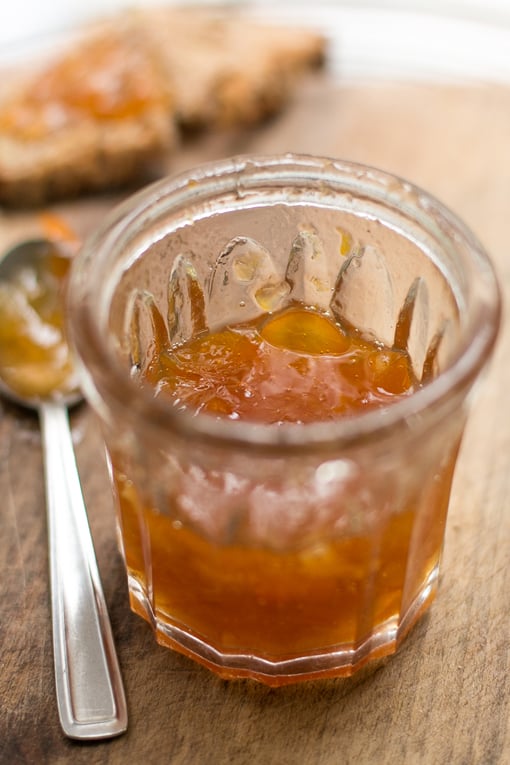
Kumquat marmalade

The stands are so piled up that it’s not uncommon to be walking down the aisle and have an orange roll off of the piles and land on your foot. (Which is why it is a good idea to wash any fruit before you use it.) This means I’ve got so many jars of marmalade, that when my friend Luisa stopped by and saw the jars piled on top of a shelf in my bedroom, she said “I’ve doing the same thing ” at her apartment in Berlin. Sometimes I think jam-making could be classified as an epidemic and if so, there’s ample evidence that I’m ready for an intervention.

kumquat marmalade recipe

While kumquats were once classified with their look-alike citrus brethren and sistern (admittedly, it can be hard to tell as it’s difficult to get a look under their navels), they are now placed in another genus category (Fortunella), even though they share many characteristics of citrus fruits.

Kumquat marmalade

One of those characteristics is that they are winter fruits. And another is that they are très bon pour la santé (good for your health), containing lots of vitamin C. And they also make you feel happier, since not only does their tangy-bitter flavor brighten up even the darkest of winter day, nothing makes me happier than to wake up in the morning and gaze at my shelf of marmalade first thing in the morning.

Kumquat marmalade

I was especially happy when I was doing my shopping at the outdoor market and came across a big bin of kumquats. I scooped up a nice-sized bag of them and brought them home, where they patiently waited in the refrigerator until I decided what to do with them.

Originally I’d considered giving them a quick-candying and strewing them over poached prunes with a scoop of ice cream. But I ended up sticking my fingers into the bowl of prunes a few too many times during the week and ended up with a small puddle of cinnamon-spiced dark syrup pooled in the bottom of a container in my refrigerator, which I didn’t think would go with anything.

Kumquat marmalade

So I decided to get out my little serrated knife, slice up my Fortunella fruits, and make marmalade. I added a couple of lemons not just to bulk it up, but because I thought with the added sugar, the marmalade would benefit from some extra acidity.

Kumquat marmalade

I normally spoon my marmalades on morning toast, but after I made this batch, I had cleaned up the kitchen and was going to reward myself to a nice bowl of split pea soup for lunch with some Comté cheese and – like most good ideas (and a few of the bad ones) – it suddenly occurred to me that the tart marmalade might be nice with the nutty cheese I was cutting into batons.

Kumquat marmalade

And sure enough, it was. Fortunately I have three nice jars of marmalade to add to my collection. So far this year I’ve made Seville orange marmalade (eight jars) and four jars of mixed marmalade, using the bergamots and citron that were plucked off a tree in Sicily. After all that slicing, seeding, and simmering, the last pot of marmalade has been jarred and stored; they’ll last me through the winter. And if I am prudent, a number of spring and summer mornings as well.

Kumquat marmalade

Print

Kumquat Marmalade

Many of the little rings of kumquats will, unfortunately, come apart as you cook the marmalade. The reward, however, is gorgeous jars of tangy marmalade that you’ll be happy to spread on your morning toast or serve with a bit of cheese after dinner. I served mine with Comté, but a nice goat cheese or another nutty mountain cheese, like Gruyère, would pair nicely with it. It takes a bit of patience to slice and pluck out all the seeds from the kumquats, but you can get 2 to 3 jars of marmalade for your efforts. I use a small serrated knife to slice off the stem end, then start slicing the kumquats crosswise, until I get close to the center. Finally, I stick the tip of the knife into the area where the seeds are and slip them into a small bowl. Because the seeds are rather large, any that you miss you can usually find just by doing a little scanning of your pile of sliced kumquats. I use oval Nagami kumquats, which are more puckery than the round Meiwi kumquats, which you sometimes come across. Do try to get organic or unsprayed fruit from your local market or natural food store. The kirsch is optional, but it does nicely round out the flavor of the marmalade. You can substitute another liquor, such as gin, Grand Marnier or Cointreau, light rum, or a dash of brandy. Or it can be omitted, if you wish.

Ingredients

  • 2 lemons stemmed, halved lengthwise, seeded, and very thinly sliced
  • 1 pound (450g) kumquats stemmed, seeded, and sliced
  • Reserve the seeds from the lemon and kumquats
  • 5 1/2 cups (1.3L) water
  • 2 cups (400g) sugar
  • pinch of salt
  • Optional: 1/2 teaspoon kirsch or other liquor

Instructions

  • Put the lemon slices in a large non-reactive pot. Cover with cold water and bring to a boil. Reduce the heat and simmer until the lemons are translucent, about 5 minutes. Drain. (Discard the water.)
  • Put the blanched lemons back in the pot. Tie the seeds from the lemons and kumquats securely in a piece of cheesecloth and add the seed sack to the pot along with the sliced kumquats and water. Bring to a boil; remove from heat, cover, and let stand 24 hours.
  • The next day, put a small plate in the freezer.
  • Add the sugar and salt to the pot, and cook the marmalade for 30 to 45 minutes over medium heat. Remove the bag of seeds and when it’s cool enough to handle, squeeze the seeds in the cheesecloth using your hands or place it in a ladle and press it with the back of a soup spoon (being careful not to break the fabric and release the seeds) over the jam pot to so the pectin goes directly into the marmalade mixture.
  • Continue cooking until it has reached the jelling point, about 220ºF (104ºC) degrees, if using a candy thermometer. To test the marmalade, turn off the heat and put a small amount on the plate that has been chilled in the freezer and briefly return it to the freezer. Check it in a few minutes; it should be slightly jelled and will wrinkle a bit when you slide your finger through it. If not, continue to cook until it wrinkles slightly on the chilled plate when you nudge it.
  • Remove from heat, then stir in the kirsch (if using), and ladle the mixture into clean jars.

Notes

Note: I store my jams and marmalades in a cool place, often the refrigerator if not planning to use them within a few weeks. if you wish to can or preserve them, you can check out these canning tips.

Related Recipes

Kumquat Marmalade (Recipe Girl)

Kumquat Marmalade with Star Anise (Drizzle & Dip)

Sunday Morning Kumquat Jam (Amateur Gourmet)

Small Batch Kumquat Marmalade (Food in Jars)

Maple Kumquat Marmalade (A Bloggable Feast)

❌