This beef udon noodle soup, or niku udon, is so easy to make, and it will make you feel like you went out to a Japanese restaurant—in your own home! BUilding on Our Popular Gyudon! Our Gyudon recipe (a beef rice bowl with tender fatty beef, onions, mirin, and soy sauce) is one of the […]
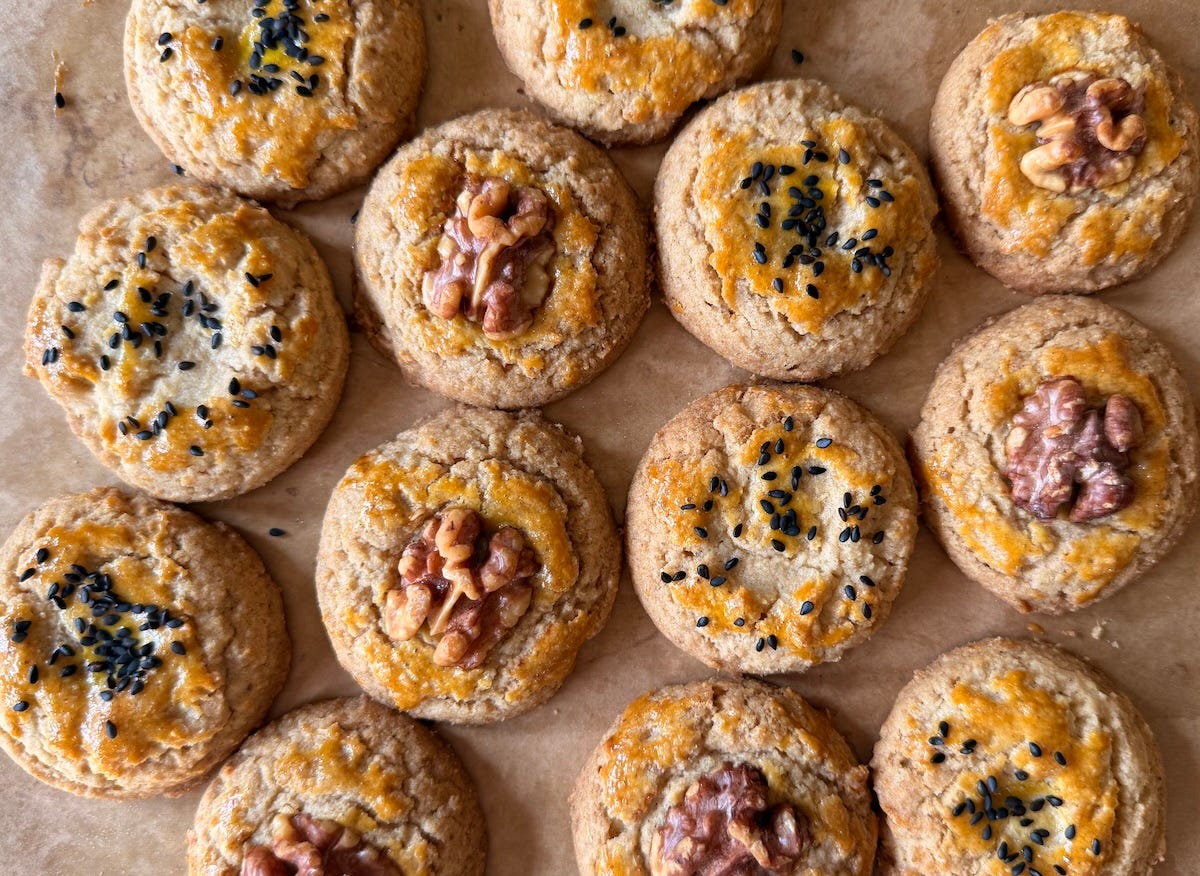
My idea of the perfect cookie is one that’s easy to make in small batches so that they can be enjoyed at freshly-baked peak perfection. And it ought to be light enough so that one or so cookies can satisfy your sweet desire without leaving you feeling weighted down or guilty. I think I found it in this not-too-sweet delightful Chinese walnut shortbread cookie that you can experiment with and take in many directions. Meeting a myriad of needs, it’s kind of a silver bullet.
I’ve been thinking about Asian sweets to share with you because in our 2026 paid subscriber survey, a number of you asked for healthy-ish sweets that are low in sugar and can be made gluten-free, vegan, etc. I thought about those requests and landed on this Chinese walnut cookie, which as you can see, may involve sesame seeds, if you like!
Walnut cookies are popular in northern and southern China, which explains why they are well known in Mandarin and Cantonese (and I’m sure other dialects):
Mandarin: 核桃酥 (Hétáosū) and 桃酥饼 (Táo sū bǐng)
Cantonese: 合桃酥 (Hup toh soh)
The second character, 桃. roughly means “shortbread,” rather than “cookie”. When Rory tried this cookie, he said, “Oh, it’s a yummy shortbread.”
He ate one and felt happily satisfied. This cookie tastes indulgent but it contains fiber and protein, and is relatively low in sugar and fat. Spurred on by his positive response, I experimented with small batches, changing up the nuts and toppings to yield a recipe that you can scale up for a party or freeze for future baking.
Why walnuts? What about almond cookies?
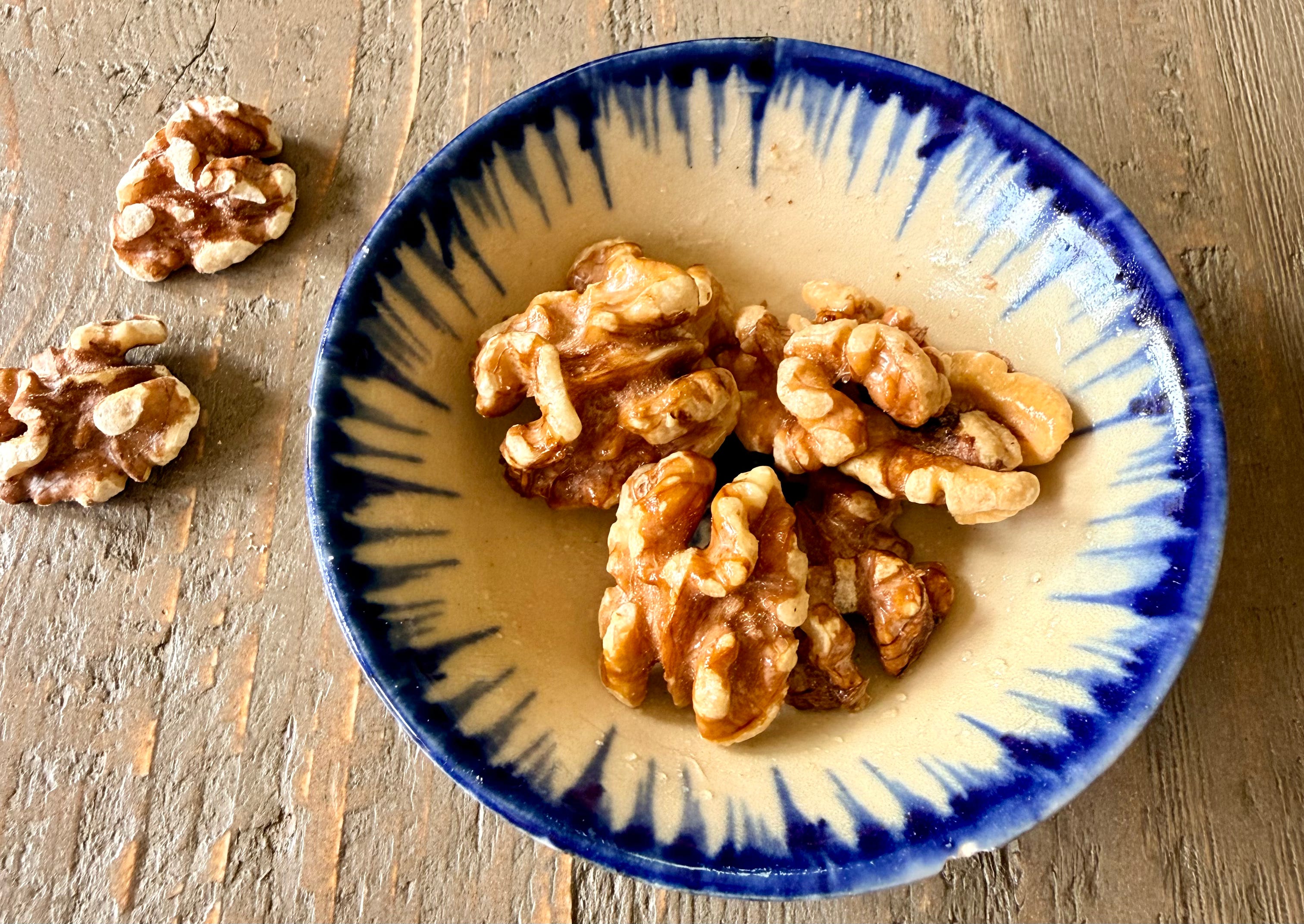
Most of us know of Chinese almond cookies which have been popularized abroad but the traditional Chinese Lunar New Year cookie features walnuts. These walnut cookies supposedly date to the Tang Dynasty (618–907 C.E.) and a guild of potters and ceramicists. As the story goes, one of the potters dealt with a persistent cough by eating walnuts, which he crushed and added to a biscuit-y dough and baked atop the hot kiln surface. The other potters picked up on the tasty, healthy idea and as their wares spread around the country, so did the cookie.
Walnuts are rich in symbolism. For instance, there’s a Chinese notion that eating walnuts ensures happiness in the new year. I’ve also read that because walnuts look like brains, they also symbolize knowledge and good health.
It all sounds like a joke but in actuality, walnuts have been scientifically proven to be good for many things, including heart and gut health. They also figure into the cMIND diet to fend off dementia. Walnuts are a win-win-win food.
At Chinese markets and online, you may spot walnut cookies but I assure you that baking them yourself from this easy recipe using fresh, quality ingredients will make you much happier than if you bought them. Your home will also smell divine and you’ll better ensure good luck, wisdom, and health in this Year of the Fire Horse!
Below you’ll find:
The walnut cookie recipe in full text plus downloadable PDF
A table of swap suggestions that enables you to plug and play to make the cookies gluten-free, vegan, without refined sugar, without nuts, with seeds, or with extra fiber
Lots of bonus ingredient and technical pointers in text and photos so you have plenty of guidance to easily make my recipe yours
A quick note: After this recipe is sent to you, it will be added to the PTFS recipe index. It’s not a perfect index and has to be manually updated. For instance, I just noticed that I forgot to add the Peking duck recipe! Thanks for your patience.
Pass the Fish Sauce is 100% supported by curious cooks, readers, and eaters. Join us at any level. Pitch in as a paid subscriber to help me drive this bus! Thanks for considering.
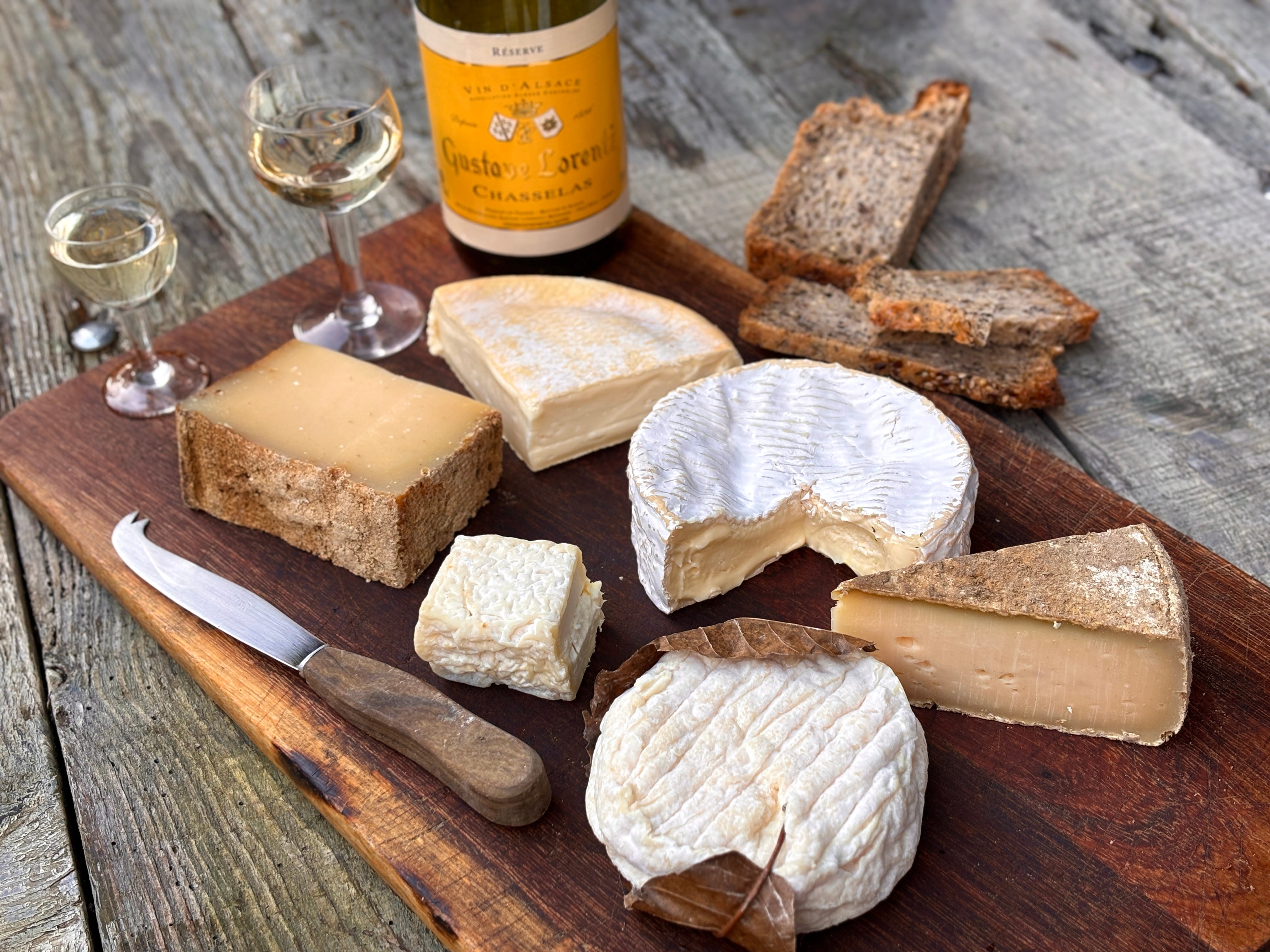
I’ve got a post coming up this month about all these AMAZING cheeses…
I had an official meeting last month to get my French ID card renewed. In spite of a reputation that doesn’t involve being efficient, the French government can surprise you as more and more public services go digital. Some of those services, however, now require a sleeker digital French ID card to access them. Unlike in places like the U.S., a driver’s license in France isn’t acceptable as an official ID. In most cases, you’ll need to present your French ID or passport as acceptable proof, and no one wants to carry around their passport all the time.
Things don’t always go smoothly, though. I’d been trying to renew and replace my card on the website since last April, filling out the lengthy information form with everything, which includes where your parents were born and on what date. A Swedish friend who moved here was perplexed when he had to do that for his Carte Vitale, the card for his health insurance. “Why does it matter when and where my parents were born? The card is for me.”
You kind of get acclimated to stuff like that and it vexes the locals, too. (Although they’re used to it.)
But every time I hit the “Send” button, I got an error message and had to start all over. I probably tried twenty times before finally giving up. At the beginning of 2026, I decided to start all over again. When it still didn’t work, I called and the woman on the phone said that I needed to use le navigateur Edge.
I knew of Chrome, Safari, and Firefox but never heard of Edge, and when I typed it into my computer, a spammy web page turned up. I was baffled that a website would only function if using a browser that no one’s ever heard of, that doesn’t even have its own website. After a thirteen-minute conversation, she offered to make an appointment for me. In a country where information is currency, and non is often the default, it was like the gates of heaven opened up and decided to let me inside. (I often think they make things hard on purpose so that when you do succeed, you forget about everything you went through before it and fall in love with the country all over again.)
I picked an early appointment, wisely, so the office wouldn’t be backed up when I got there. The convocation (appointment notice) I received said that if I was late, my appointment could be canceled…but also it could be canceled if I was early. (Yes, French people find these things funny, too.) Bakers are always on time but often, early. Which I was. However, they waived the penalty and told me to take a number and a seat.
In photos for official purposes in France, you need to look as unhappy as possible. If there’s any hint of happiness, your photos (and entire file) will be rejected, hence me doing my best to look like a hardened criminal.
I’ve been to enough of these meetings to know that one mistake - a stapler used instead of a paper clip, a bit of a tooth showing in a photo, you didn’t bring your mother’s birth certificate, professionally translated and stamped by the town hall where she was born, dated within 3 months of your meeting(VitalChek becomes your best friend, but you do hold your breath waiting for the documents to be mailed to you, only exhaling when they are actually in your hands) - your whole file, the one you’ve been working on for a year, can be rejected.
I am a pro right now and had everything in order. To make matters even better, the guy behind the desk was lovely. (And so was the woman at the front desk, who didn’t kick me out for being early. I felt like buying her a box of chocolates.) I did make one mistake, though: I thought Paris was a ville (city) but it’s also a commune. I thanked the fellow for correcting it, and he replied, “That’s what I’m here for.”
A friend later suggested he was an actor, but even though it was cold, grey, and rainy in Paris that day, I left my meeting that morning in a particularly heightened state of euphoria. I was going to celebrate by tackling the local Ikea, but then I thought about it and…nope, that would be pushing it.
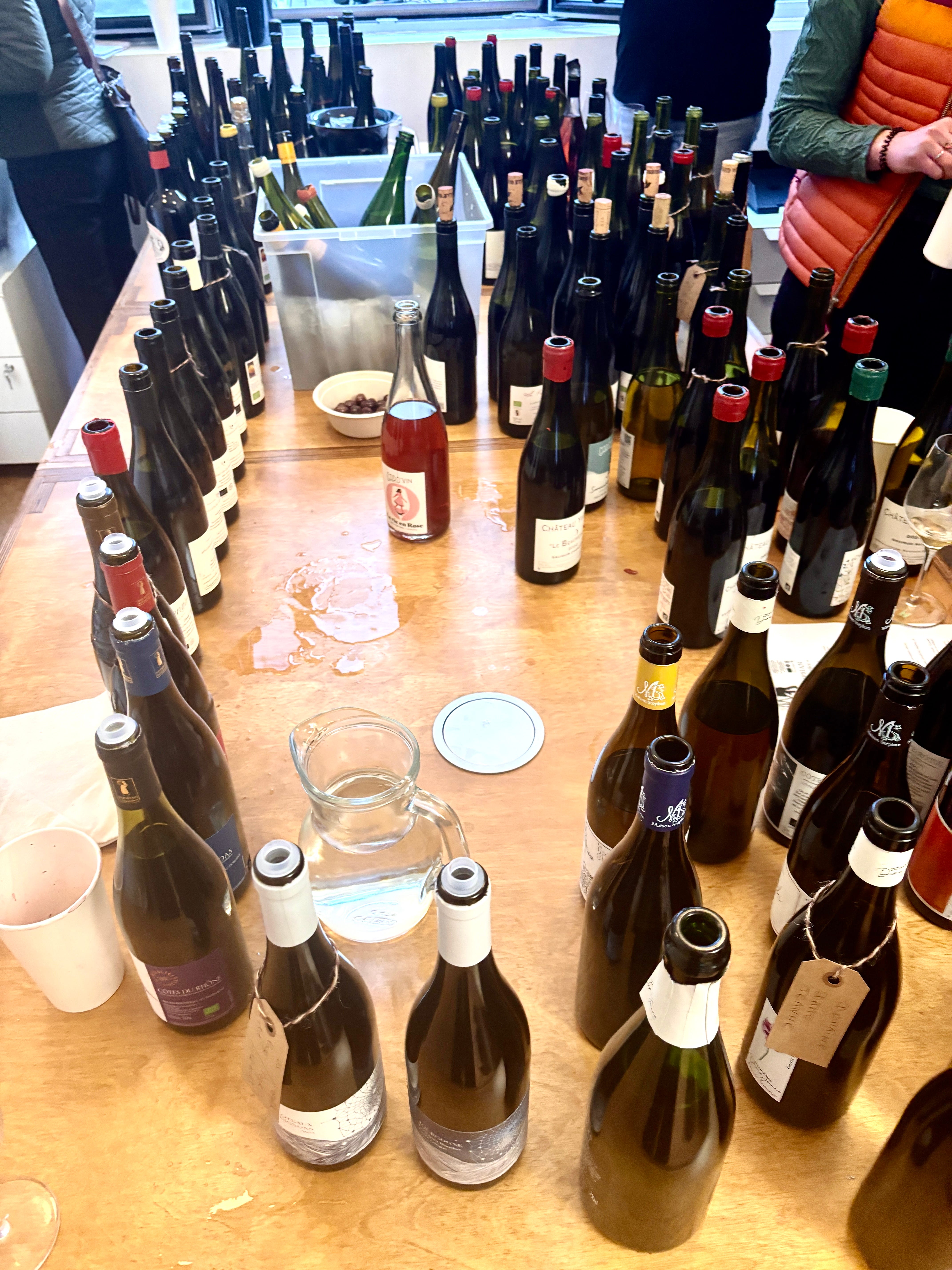
Last month a bunch of friends descended on the city for WineParis, a huge trade show for people in the wine and spirits industry. Not only did I get to see a lot of friends and make some new ones, I got to try a lot of wines. At one tasting (above), at Paris Wine Co., I think there were over two hundred bottles open for tasting.
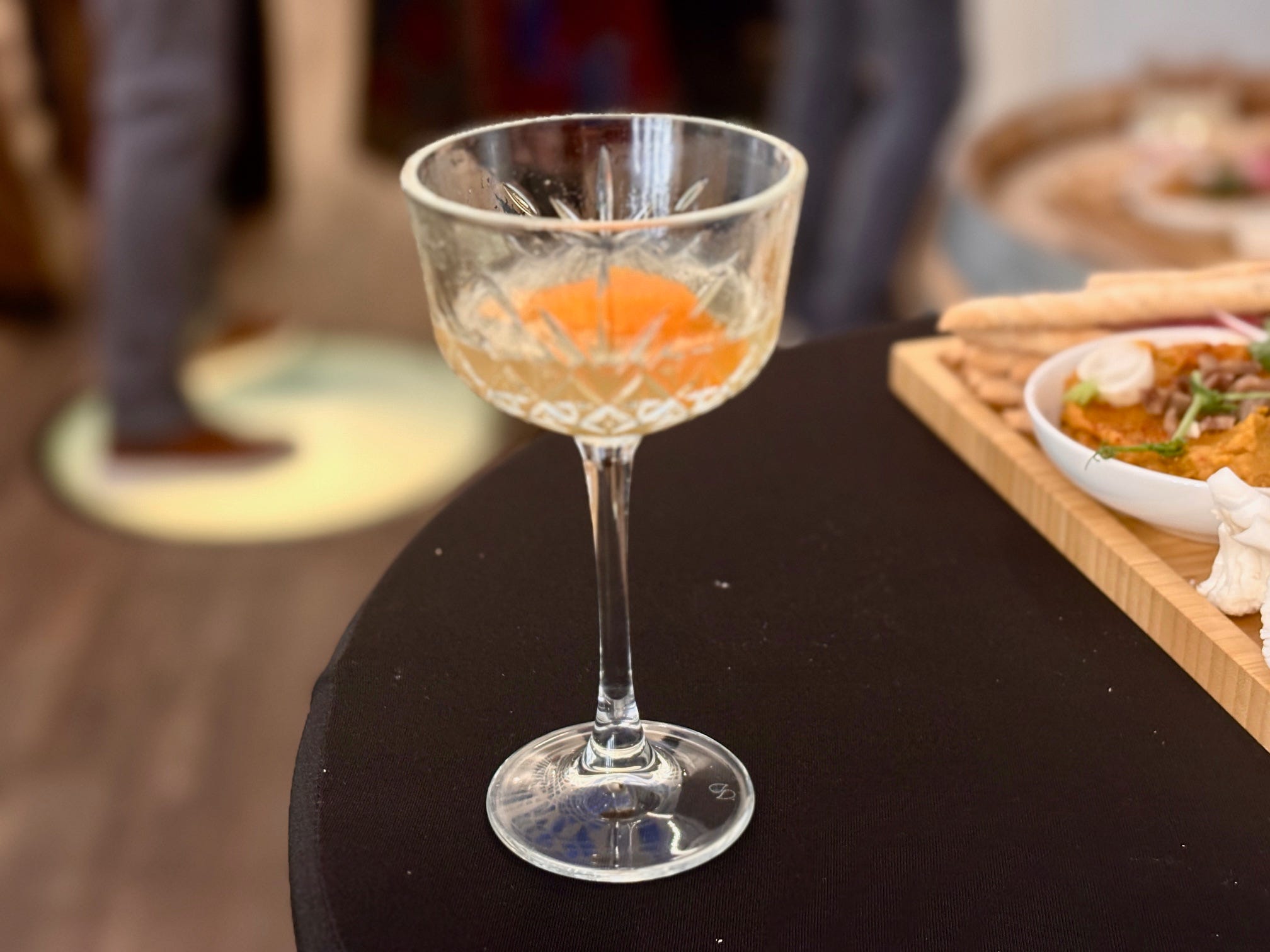
One of my favorite cocktails, a riff on the Martini called an Alaska.
I also went to an event at the Chartreuse store in Paris, a place that flies under the radar for some people. Located close to where the monks got the original recipe in 1605, which took them another hundred years to figure out how to make, the shop is a must-stop for Chartreuse fans and lovers. They have all the bottles you’re looking for in stock, plus a display of vintage bottles and herbal teas made from mountain herbs; guided tours, tastings, and cocktail workshops are also offered.
Last month was also Pineau des Charentes month, or as one might call it, “The French apéritif that more people should know about…but don’t.” It’s one of my favorite French apéritifs and was another reason I wrote Drinking French, to give lesser-known bottles a shout-out so people weren’t stuck on Lillet. (Which few people in France know about, or drink. The one time I ordered a Lillet at a café, I was brought a glass of le lait - of milk.)
I got to meet some really cool people and make new friends while working on that book, which is a bonus when you’re writing a book on a totally different subject than what you’re usually writing about. I’ve kept in touch with Amy and her husband, Jean Pasquet. He comes from a family that’s been making cognac and PdC for generations, and his wife, Amy, originally from North Carolina, was folded into the family business and now is the head of the organization, Comité National du Pineau des Charentes, which promotes the drink internationally.
So when we met up for dinner for pizza at Oobatz, I brought a vintage bottle of PdC (in the middle, below) that I found at a bric-a-brac store in the south of France.
A bottle of Pasquet’s 18-year-old Pineau des Charentes and their excellent organic Cognac, next to my bottle of vintage PdC.
Jean estimated my vintage bottle to be from the 60s, which didn’t seem that old, until I did the mental math and realized the bottle was sixty years old. I’d brought it to the restaurant and let the staff and sommelier taste it, since I think vintage spirits are meant to be shared.
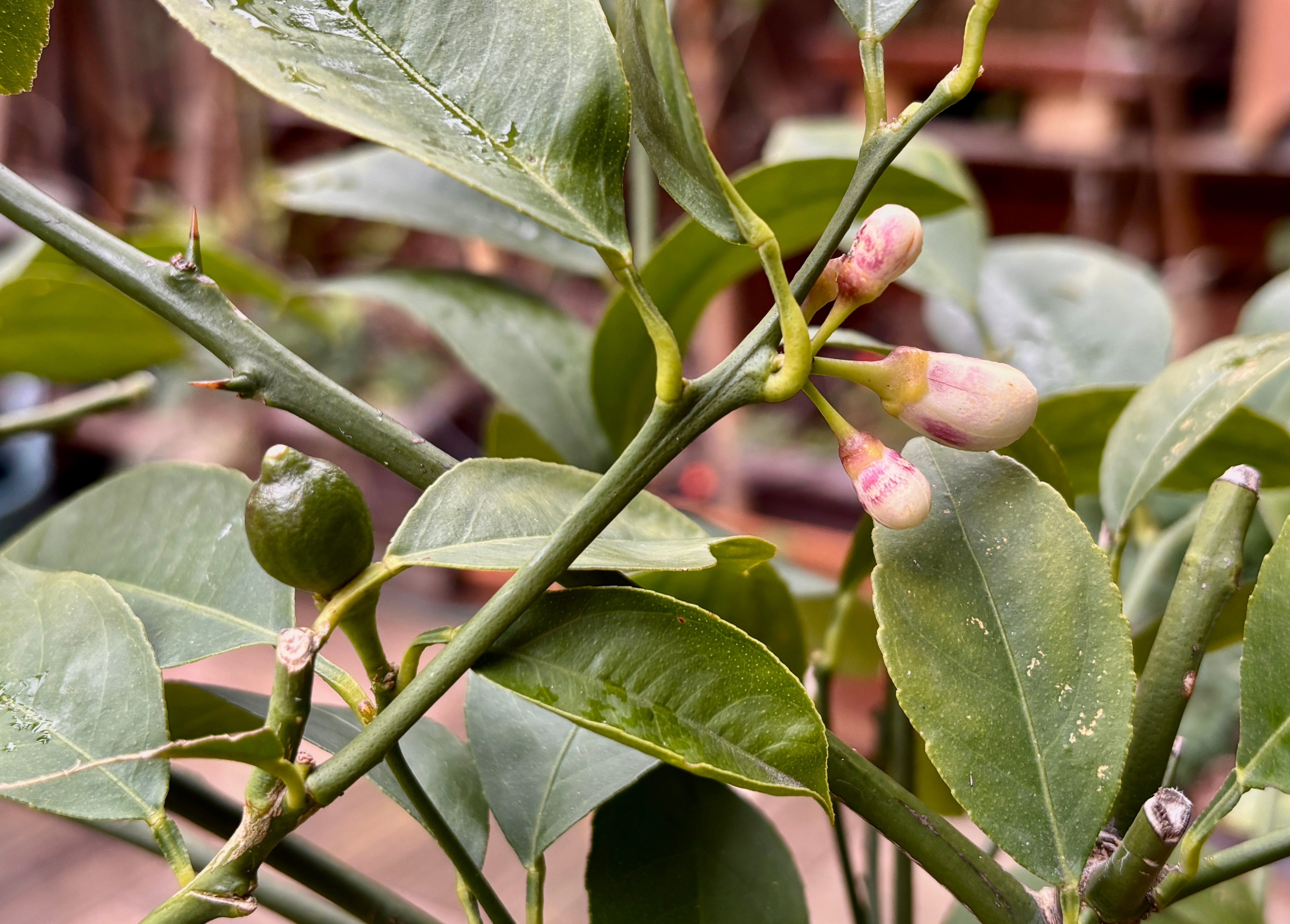
The rest of last month marked us getting closer to spring. February is always a crapshoot in terms of weather, and mood. January is the hardest in Paris since it’s grey, cold, and the days are short. But by the end of February, it gets lighter earlier, and days stay light longer. My Meyer lemon tree has a few flowers on it as well as a few little lemons poking through.
I got a lot of, um, conflicting input about how best to get the most fruit — pick off and discard one-third of the immature lemons to let the others mature, pick off two-thirds of the immature lemons to let the others mature, don’t do anything and let the tree decide, etc. I’ve tried different strategies over the years, and none seemed to be better than the other. In the end, I got two lemons last year but fingers crossed this year I’ll get a few more.
Everything else in the garden got attacked by slugs last year and thanks to an overload of input, I tried absolutely everything (yes, from beer to nematodes to copper to eggshells), but a fellow with a huge, mostly organic garden in the countryside admitted to me that the only way he found to kill slugs was via a non-natural solution. So I was relieved that it wasn’t just me.
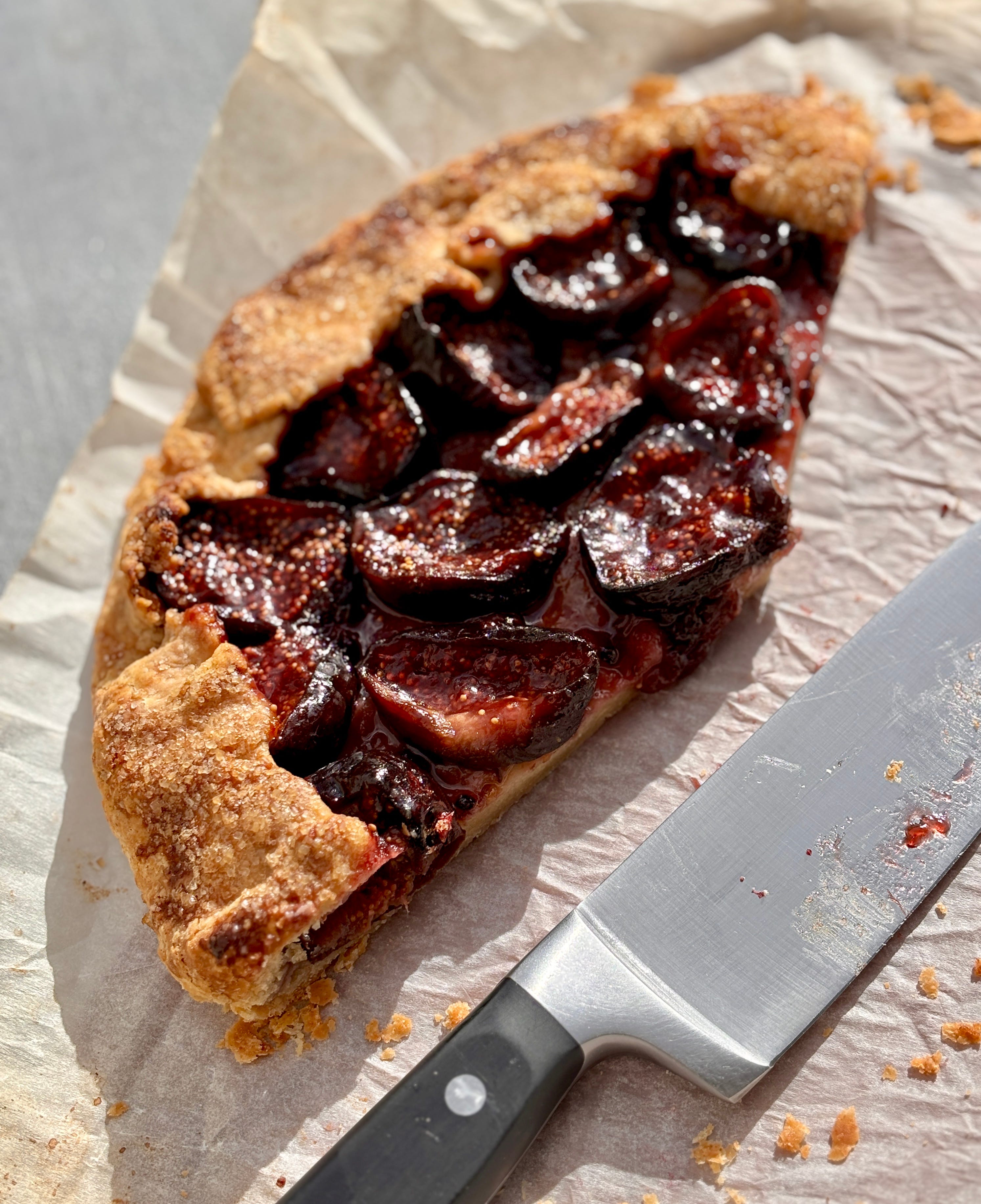
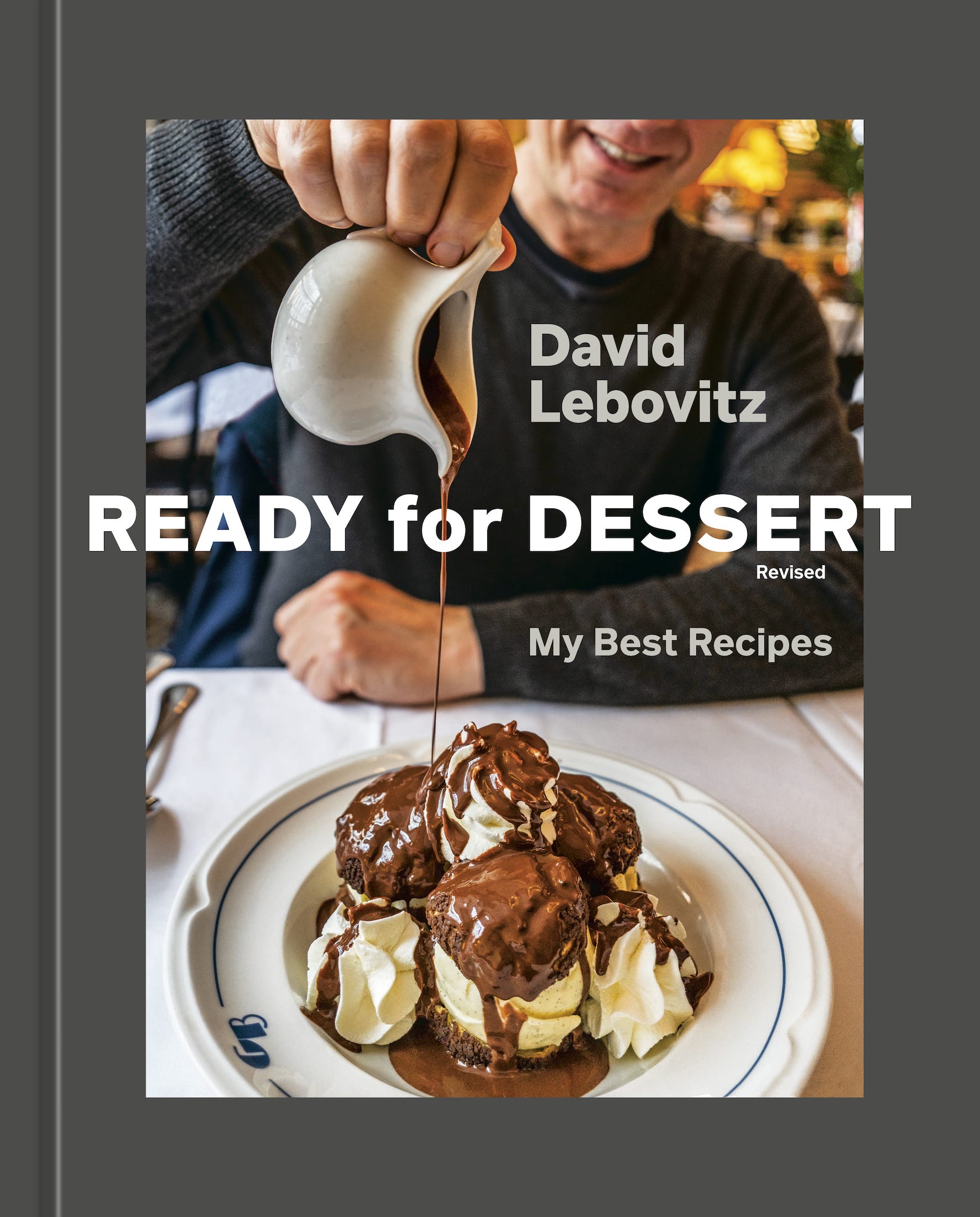
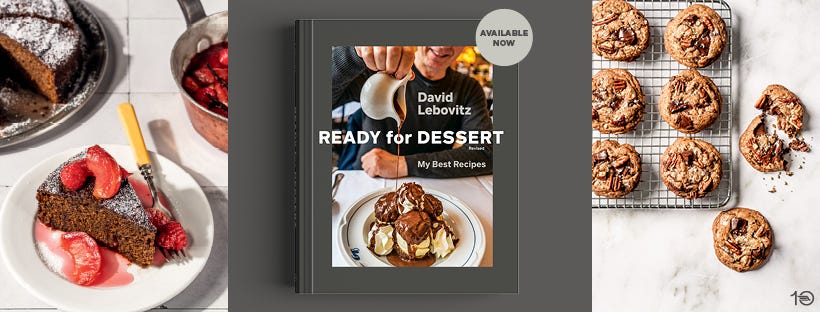
We’re not out of the woods yet, but as pears and fall fruits fade away at the markets, I pulled some figs out of the freezer and made a delicious fig galette with frangipane. I used the recipe from Ready for Dessert…
…swapping out the apples in the recipe in the book with fig halves.
Everyone who’s bought the book has been super happy with it - yay! - but if you haven’t joined the in crowd of people who’ve gotten their copy, there’s a recipe on my website that you can use.
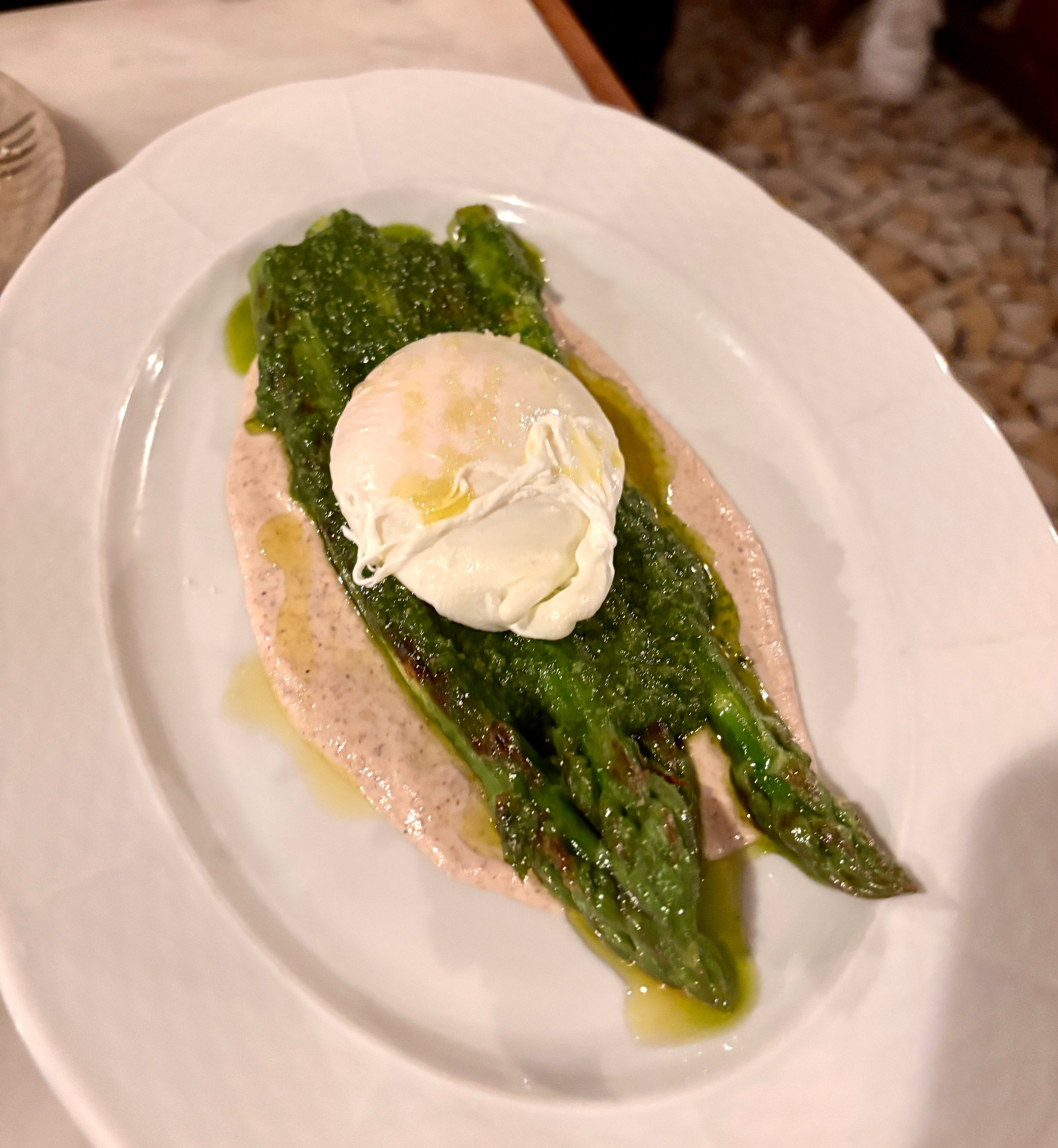
Yes! That was fresh asparagus, along with a poached egg, that I was served last night in a restaurant here in Paris.
While I patiently wait for strawberries and spring fruits and berries, and celebrate the arrival of asparagus, I’m going to cross another place off my bucket list: Taiwan, where I’m heading later this month.
A friend who has an ice cream shop in Paris filled myWhat’sApp with pins for places to go, and eat. I’ll be seeing a friend whose family lives there, so letting him take the reins, but looking forward to all the delicious foods I’ve been reading about in Taiwan — although I may pass on the stinky tofu. I do like durian, a fruit which has a particular fragrance that’s off-putting to some and revered by others, so maybe I’ll give the tofu a try…
Some of the differences between moving to and living in the UK vs. Netherlands vs. France, in terms of bureaucracy, health care, and finding an apartment. (via )
[Sidenote: I’d say that’s likely true outside of Paris, but quite a few updated bistros and brasseries have opened in Paris that are quite good. Unfortunately, some of the lower-pricedbistros andbouillons haven’t maintained their quality or standards.]
I am on Netflix. I am still wrapping my head around that sentence.
Right before Thanksgiving, I got a call from Dan Souza at America’s Test Kitchen asking if I’d be interested in co-hosting a new version of In the Test Kitchen. I said yes to the chemistry test, which is exactly what it sounds like: a chance to see if everyone clicks. A few weeks later, I flew to Boston to test it out.
In early January, I got the call. I was officially going to be part of this new show. And it was going to be on Netflix.
I was thrilled. And if I’m being honest, a little terrified too.
In the Test Kitchen is led by Lan Lam, alongside my fellow co-hosts Bryan Roof and Lidey Heuck. From the very first day of filming, everything settled into place in a way that felt easy and natural. Each episode takes a deep dive into a single food, using three recipes from the test kitchen to explore technique, preference, and perspective. We agree, we disagree, and we talk through why. The show is built on opinions, after all.
In the very first episode, we tackle chocolate chip cookies. A topic everyone thinks they know well, until you start pulling it apart. We each come to it from a different place, and that tension is where the conversation gets interesting.
I hope you enjoy watching the show as much as we enjoyed making it, and that you’ll keep tuning in as new episodes drop on Netflix.
The wildest part of all has been the messages. Hearing from family, friends, and readers who have watched the show in India, Australia, New Zealand, the U.K., and across Africa has stopped me in my tracks more than once. That kind of reach still feels surreal. The video is exclusive to Netflix, but you can also listen to the episodes on the Apple and Spotify podcast apps.
Thank you for being here and for sharing in this moment with me.
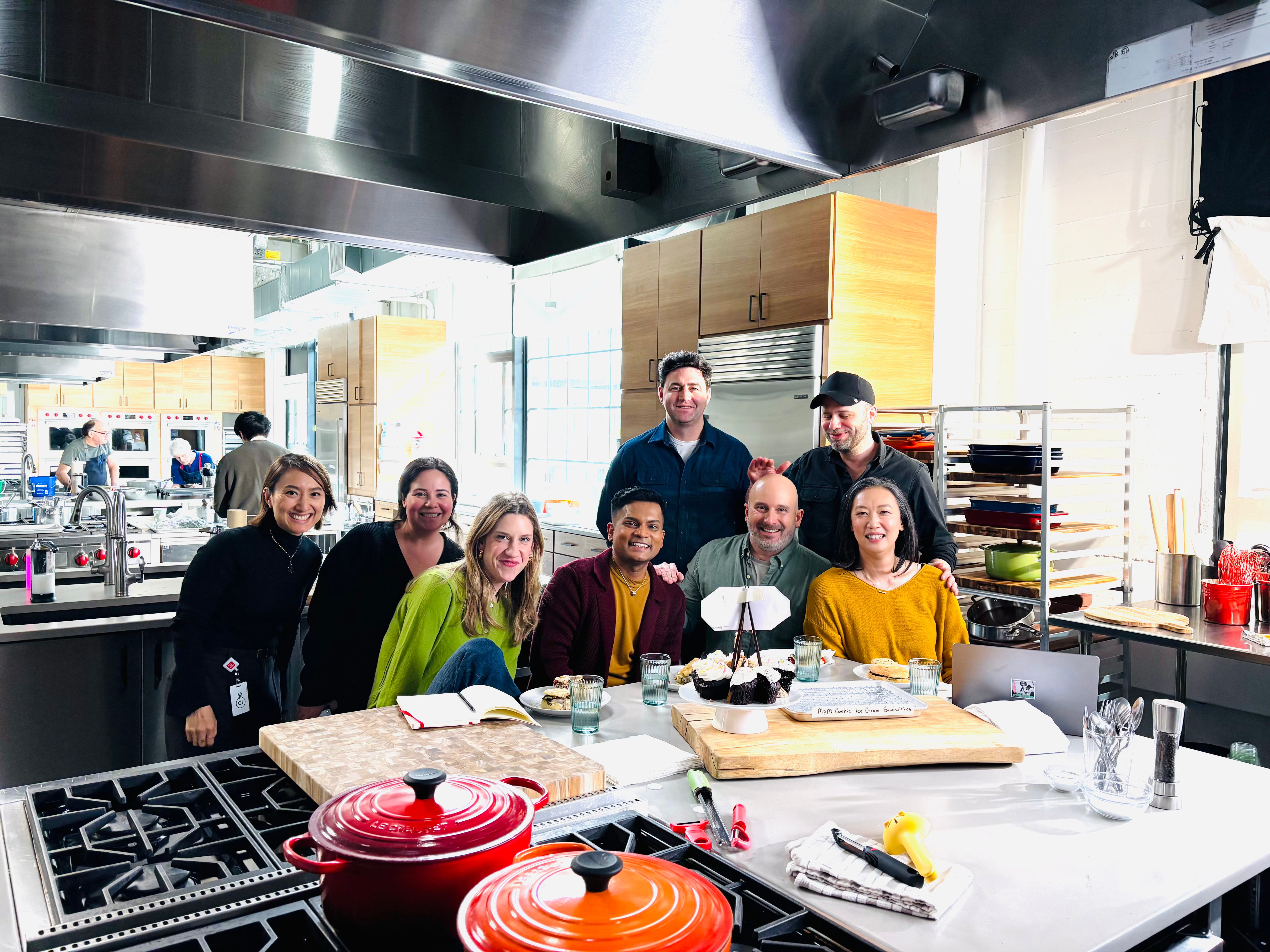
A glimpse of the wonderful team who make this show possible and take such good care of us, plus a little extra behind the scenes.
The Quiet Failure of One-Pan Chicken Dinners (and How to Fix It)
Roasting a chicken with vegetables feels efficient. It looks sensible on paper. In practice, it is where optimism goes to die.
There are too many variables. The size of the chicken. Its awkward shape. The mix of vegetables. And the bigger question. How do you get everything to cook at the same temperature, at roughly the same rate?
The breast cooks faster than the legs. The vegetables release water. The oven turns into a compromise machine. Nothing quite fails, but nothing really succeeds either. You end up in a murky middle where everything is fine, and nothing is great.
The fix is not better ingredients or more skill. It is sequencing.
Chicken and vegetables want different things from heat. When they share a pan too early, both lose. This recipe solves that by coordinating when and how each component meets the oven, without adding extra steps or requiring you to hover.\
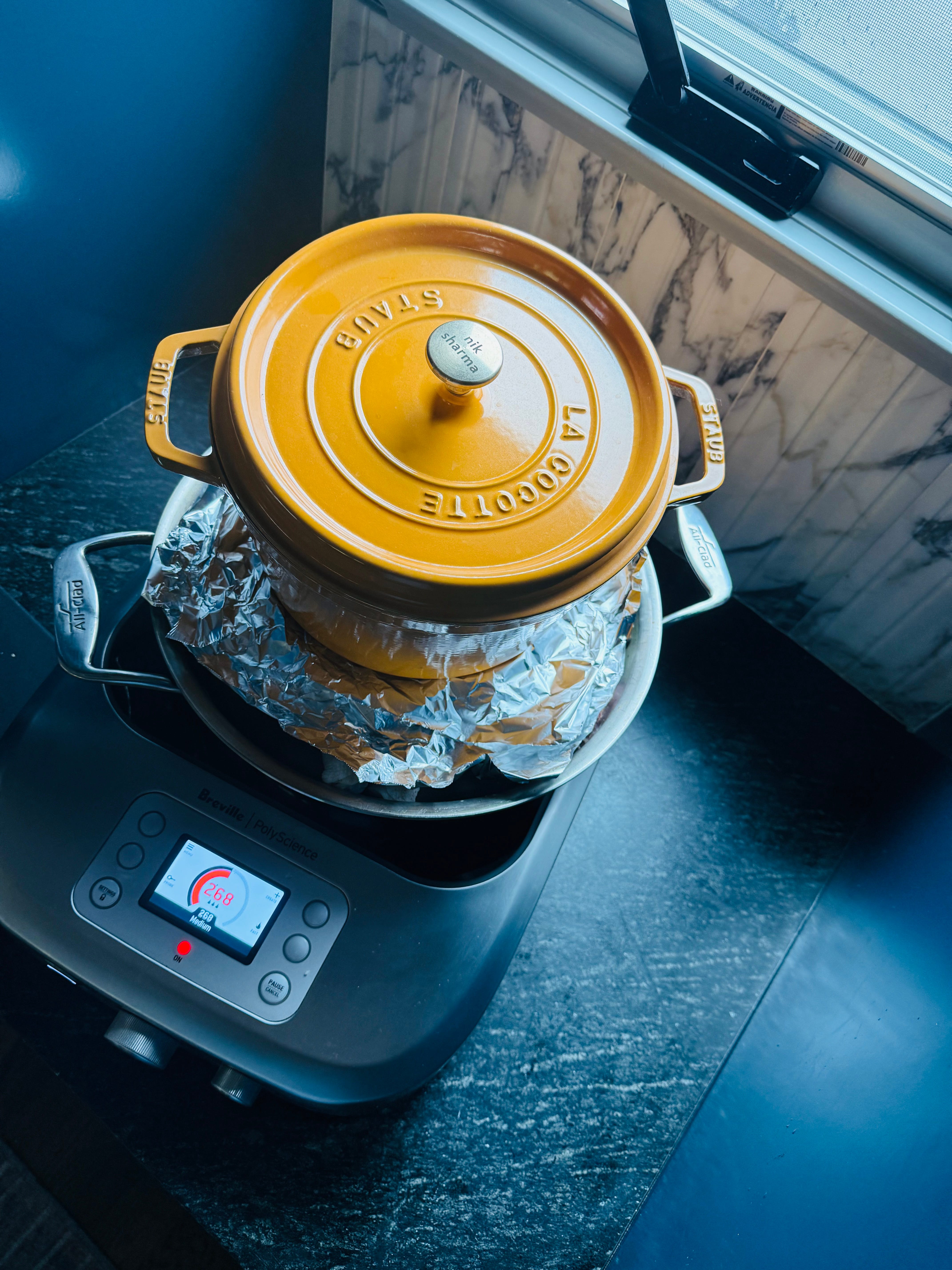
By flattening the chicken and controlling its contact with the pan, you let the oven do the boring work. Instead of a heavy brick, which I do not have at home, I fill my Dutch oven with water — it’s much heavier. The extra weight applies enough pressure to flatten the bird evenly. The chicken browns properly. The vegetables roast in rendered fat. Everything finishes at the same time, calmly, and it’s a win.
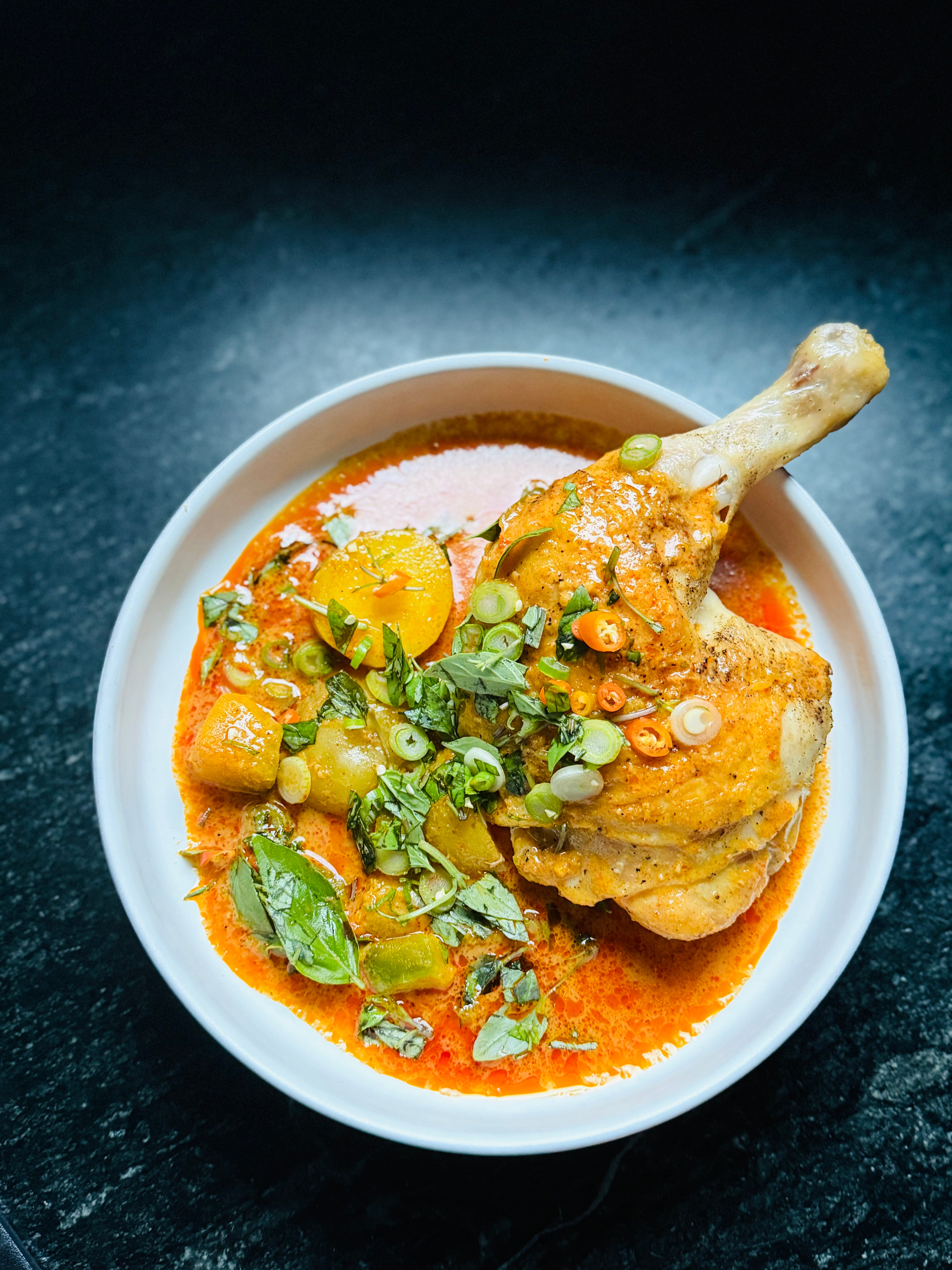
The flavors here are Thai-inspired, one of my favorites. Bold, aromatic, and built on fat, heat, and acid.
This sheet pan Peruvian chicken thigh recipe is a weeknight-friendly spin on our beloved Peruvian Roast Chicken with Green Sauce—all the flavor, way less fuss. Marinate the night before, and dinner practically makes itself the next day! An easier version of an iconic dish Okay, let me take you back. Growing up, my dad used […]
Somehow, despite how impossible it seems (to me, a person who has neither aged nor matured a day), it’s been almost twenty years since I first told you about my family’s favorite coffee cake. It’s tall, plush, crisp with a flaky layer of cinnamon sugar on top, studded with a quilt of chocolate chips and is downright, well, adorable when cut into cubes because they’re a little wobbly. When one tumbles, it shakes off a little pfft of cinnamon sugar, like a pup coming in from today’s blizzard. It’s perfect. It needs no changes or updates.
Last weekend, I took my very first bánh chưng class at Alma Backyards in Compton with my friend Rie McClenny, hosted by the Bánh Chưng Collective, to celebrate the Lunar New Year. Until now, I’d never eaten bánh chưng—let alone tried making it.
If you’re unfamiliar, it’s a Vietnamese steamed rice cake filled with sticky rice, mung beans, and a generous slice of fatty pork, all wrapped into a neat little parcel using banana leaves. The wrapping is meditative. The tying? Absolutely terrifying. Releasing the bundle from the mold felt like letting go of a newborn. I was convinced the whole thing would collapse the second I loosened my grip.
Thanks to some very patient, very wise instructors, nothing fell apart—and I somehow walked away with four little cakes. I brought them home and steamed them in my electric pressure cooker, which felt like a small personal triumph.
Elsewhere on the internet, the algorithm decided I needed to learn about a tiny baby monkey in Japan named Panchi-kun. He was abandoned at birth, given an IKEA monkey for comfort, and initially rejected by the rest of the troop. I don’t know if I’m so invested because he reminds me of my own cat, Drogy (also abandoned, also tiny but a little terror), or because I am deeply susceptible to cute animals with backstories. I adore him and want nothing but success for his tiny monkey life.
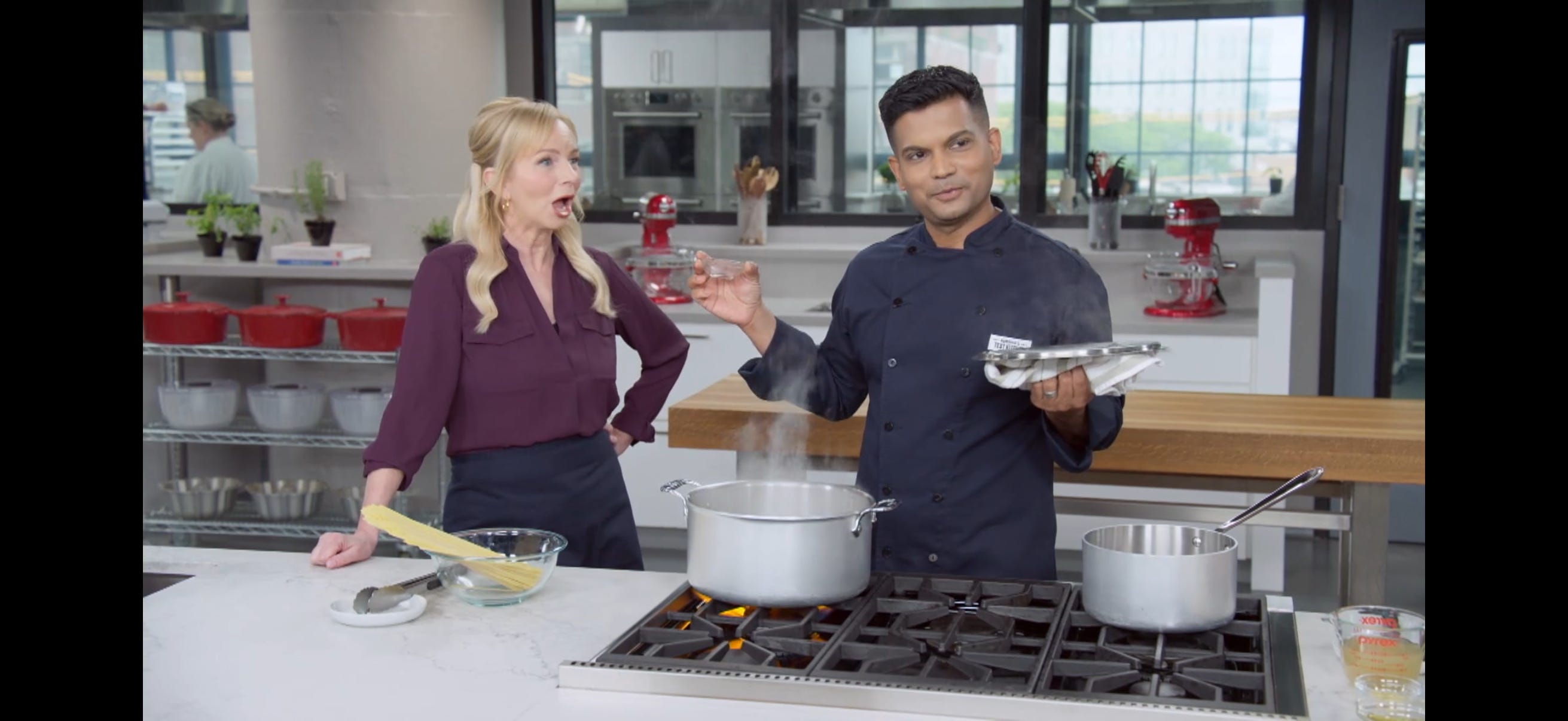
While I am not, sadly, a viral internet sensation like Panchi-kun, I did have a pretty special moment of my own last weekend: I made my debut on America’s Test Kitchen’s flagship show with Bridget Lancaster on PBS. A true full-circle moment for me. If you missed the episode, you can watch it online—though if you’re outside the U.S., you may need to get a little creative with a VPN.
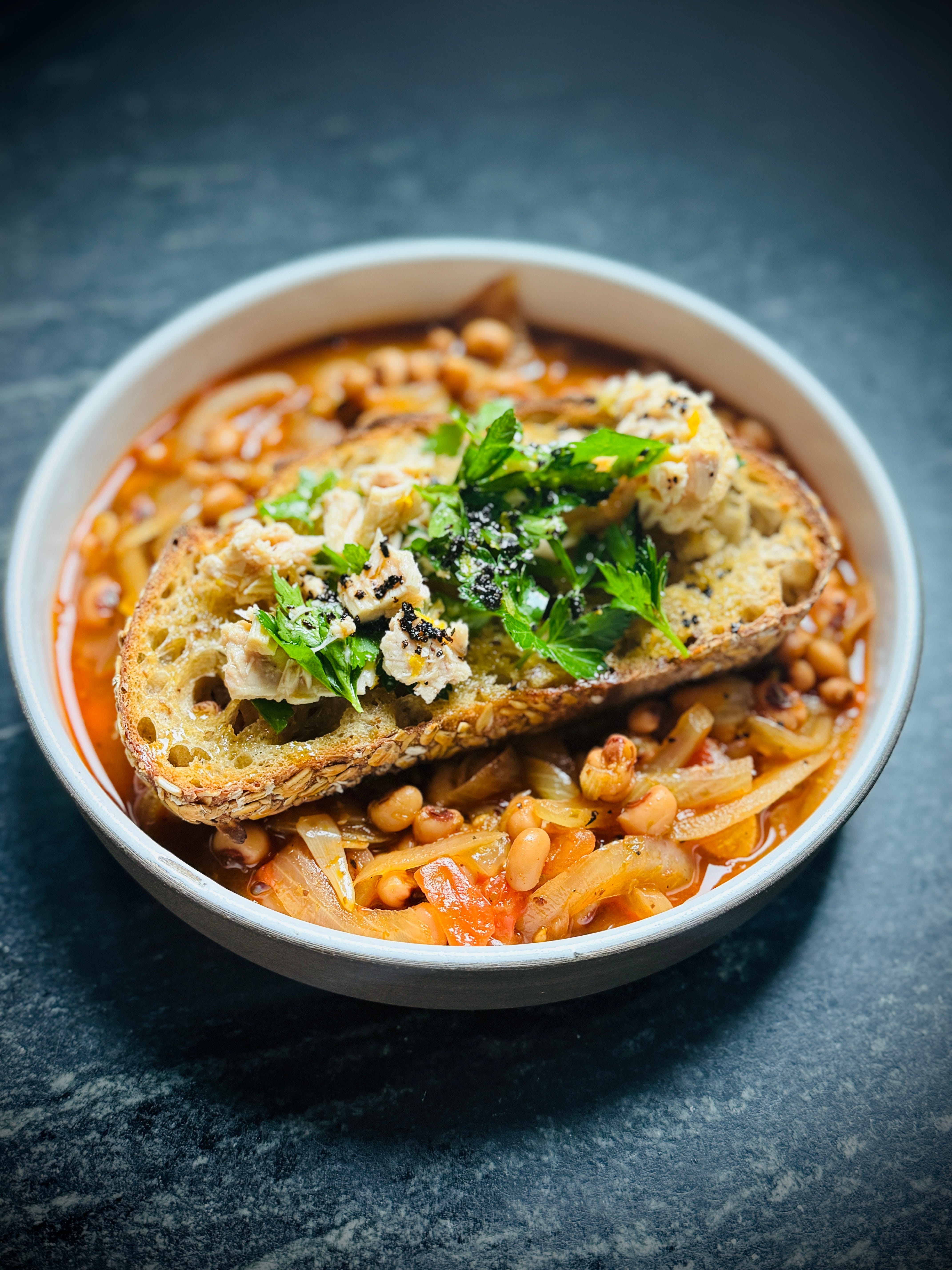
This week’s recipe is what I jokingly call “a pantry meal that doesn’t taste like cat food.” (I say this with love—and with canned tuna.)
We start with black-eyed peas. Garlic and onion are sautéed until sweet, then chopped tomato, smoked paprika, and Urfa pepper firmly move things into grown-up dinner territory. A splash of sherry vinegar snaps everything awake just when it needs it.
The beans get spooned under crunchy sourdough toast, which does an excellent job of making this feel intentional. On top, olive-oil-packed tuna is tossed with lemon zest and parsley—rich, bright, and very much not for the cat. A final drizzle of good olive oil and another pinch of Urfa pepper, and pantry cooking suddenly feels deliberate, confident, and worthy of a plate.
The recipe is available on America’s Test Kitchen and is free to access.
I love seeing you share your excitement! America’s Test Kitchen makes several recipes from the residency available for free. You might need to enter your email so they can send you more great content, but you can always opt out at any time. I’ve been a longtime subscriber to their newsletters and have found them super valuable. I hope that helps clarify how to access these co-created recipes—we put a lot of love into them, and I’d love for you to check them out! I appreciate your support!
Happy cooking—and if you also find yourself emotionally invested in obscure internet animals, know that you’re not alone.
The Meaning of Life, these days, it’s a pretty loaded topic. Watching life unfold, it’s hard not to wonder why people do things to each other. Unless I’m missing something, we’re all in this together and it seems in everybody’s best interest to try to make things work, which is how recipes are: You take a bunch of disparate ingredients, mix them all together, and the result is better than the sum of its parts.
Most baking books follow a familiar pattern—a mix of baking tips, recipes, and in some cases, headnotes before the recipes, and chapter openings that explain the recipes and give some background about them. (Except in France, where recipes don’t have headnotes, which may be true elsewhere?)
Helen Goh is a trained psychologist who became a baker and pastry chef, and in addition to being one of the principal recipe developers for Yotam Ottolenghi, co-authored the books Sweet and Comfort with him. Helen has talked about the way baking has helped her manage her anxiety - and unlike other anti-anxiety prescriptions, baking has no unpleasant side effects. Others know her as the creator of what’s been dubbed the World’s Best Chocolate Cake…
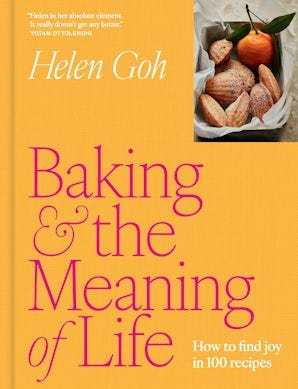
That, and over a hundred other recipes, are in Baking & the Meaning of Life: How to find joy in 100 recipes, a book about sharing, giving, and receiving. I’ve got my eye on the Favorite Orange Cake (page 159) made with whole oranges and topped with a dreamy-looking, zesty orange icing, an airy Pandan & Coconut Chiffon Cake (page 185), and Crisp & Chewy Chocolate Chip Cookies (page 70).
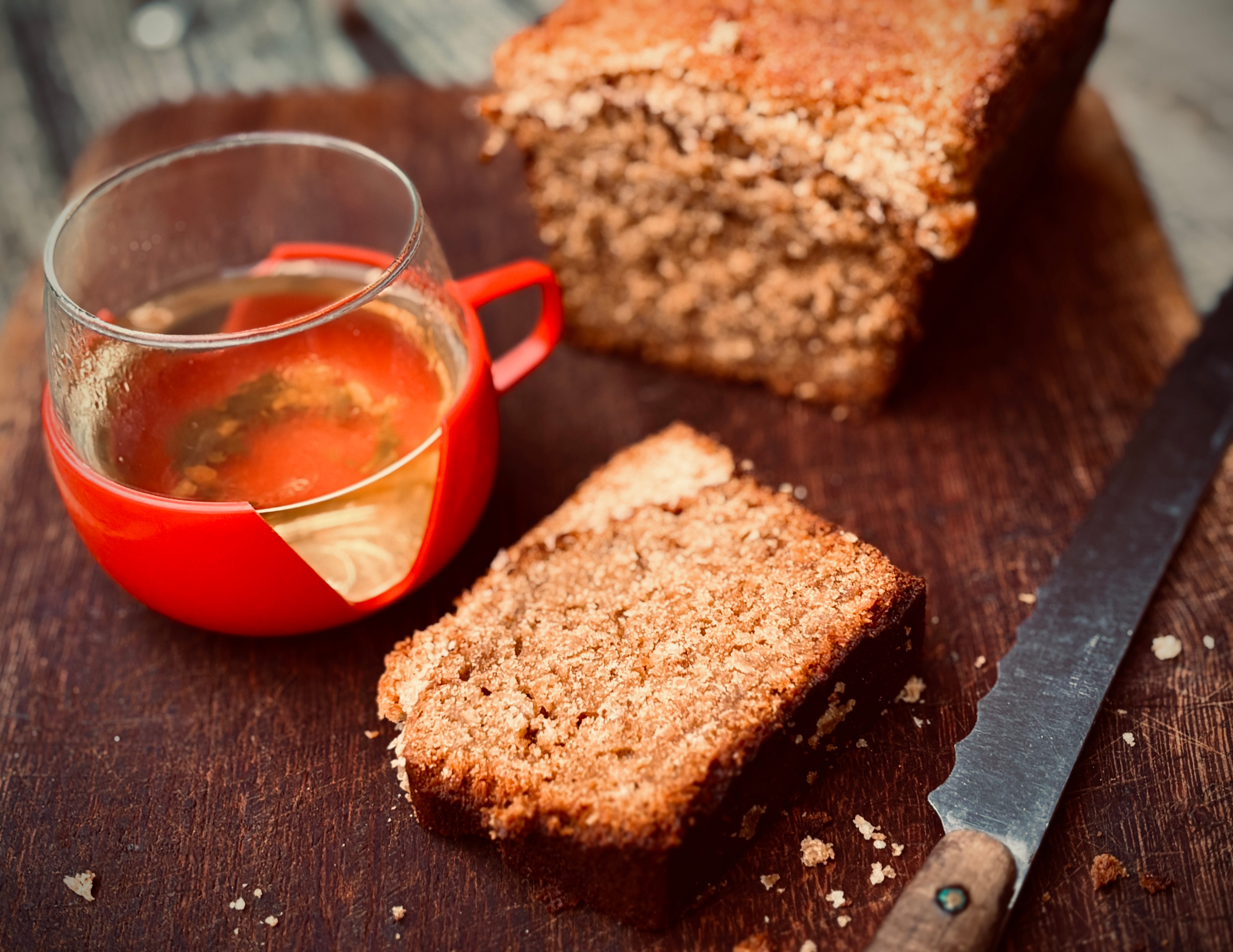
The book also prompted me to make Helen’s Anzac Cake, which appeared in a newspaper a number of years ago, and I never got around to making it. Topped with the flavors of Anzac Biscuits—coconut, oatmeal, and golden syrup—how could one not?
Helen’s Anzac Cake
As readers may have read in a recent newsletter (Feb 2026), I’ve been on a tear, cleaning out my freezers and kitchen cabinets…
I’m pretty sure that’s another anti-anxiety activity that doesn’t have any bad side effects, except maybe some guilt that you’ve let so many things get ignored or pushed back to the rear of your cabinets.
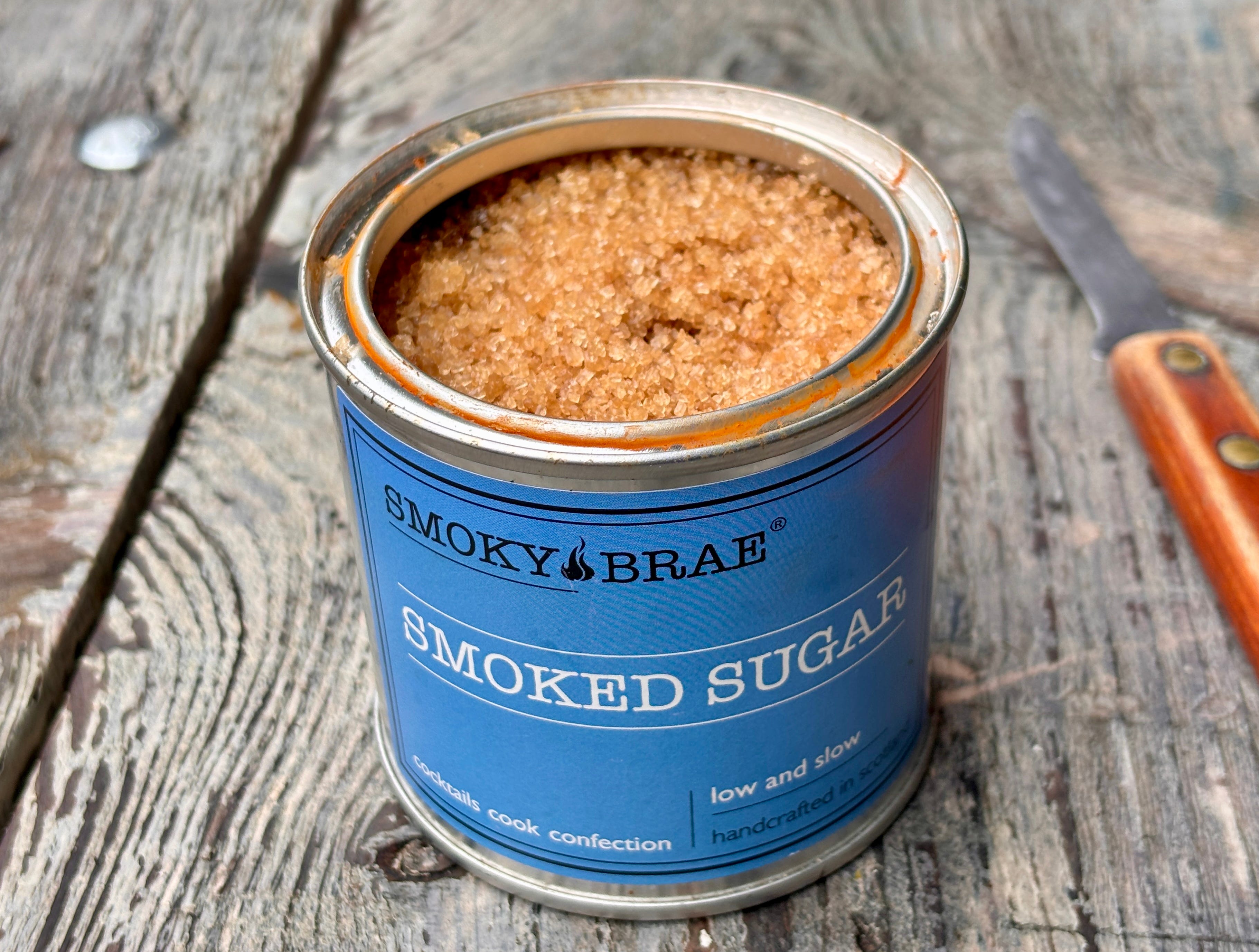
Back there, I found all sorts of odds and ends that I’d amassed over the last few years, including this smoked sugar I bought in Scotland. At the time, I wrote about it - “How could I not?” Then it languished in my kitchen cabinet for a couple of years before I finally found a place to use it.
In addition to everything from Sicilian pistachio paste to salsa negra in my cabinets, I’ve also got a problem with preserving things. I just can’t let anything go to waste. (If anyone knows what I can make with a quart jar of pickled samphire, let me know!)
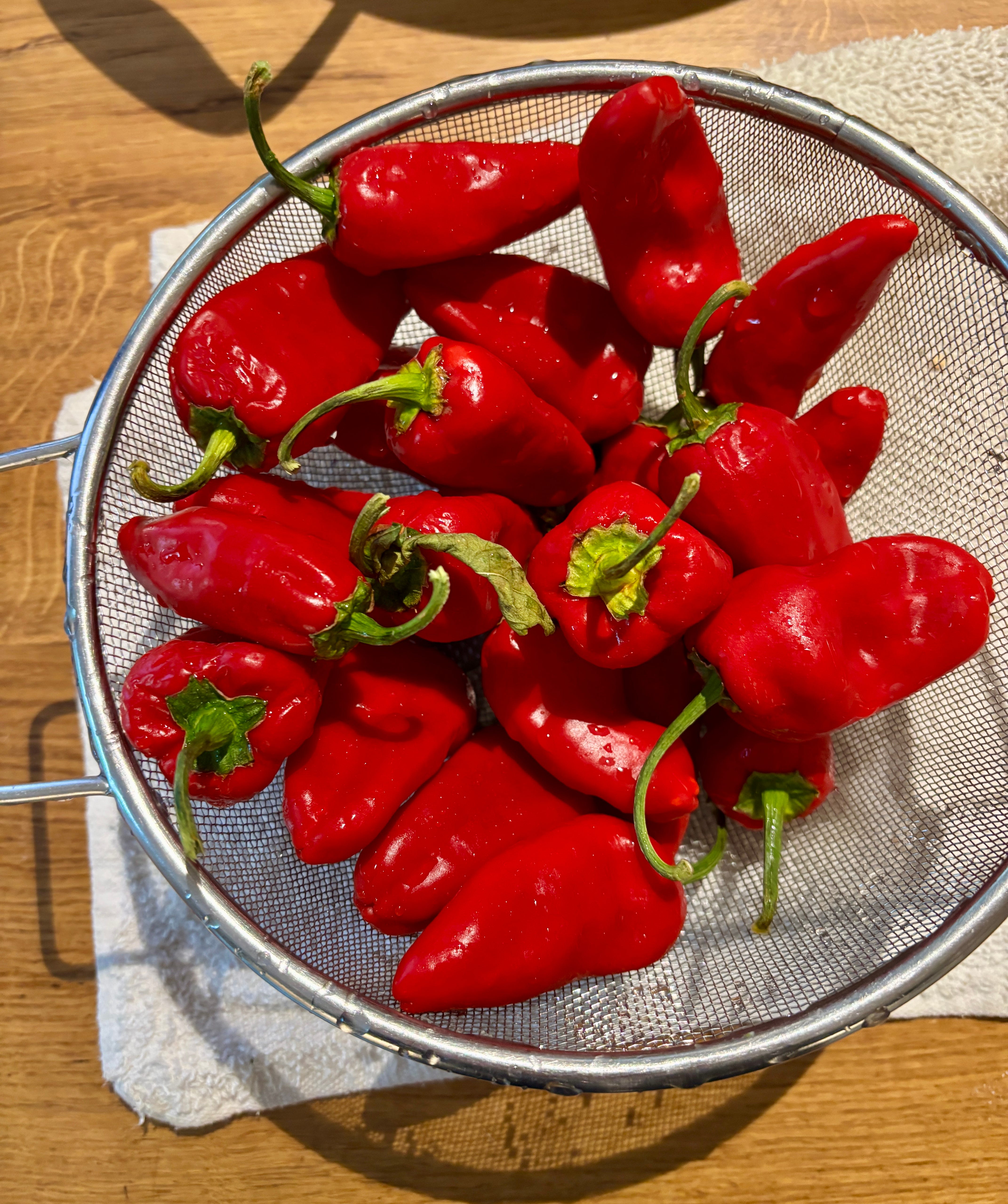
Often in the summer we’ll head to the south of France and this year, the woman who runs the farm stand in the village had a wooden crate filled with chile peppers. Almost everything else was sold out by the time we got there. Her produce is beautiful and it’s popular, but you need to have patience because once it’s someone’s turn, they need to spend some quality time catching up with her :) So you can’t be in a hurry.
While most of the other crates were empty when we got there a bit too late one morning, it looked like no one had touched the chiles. When I expressed interest, she put them all in a paper bag and gave them to me.
Score!
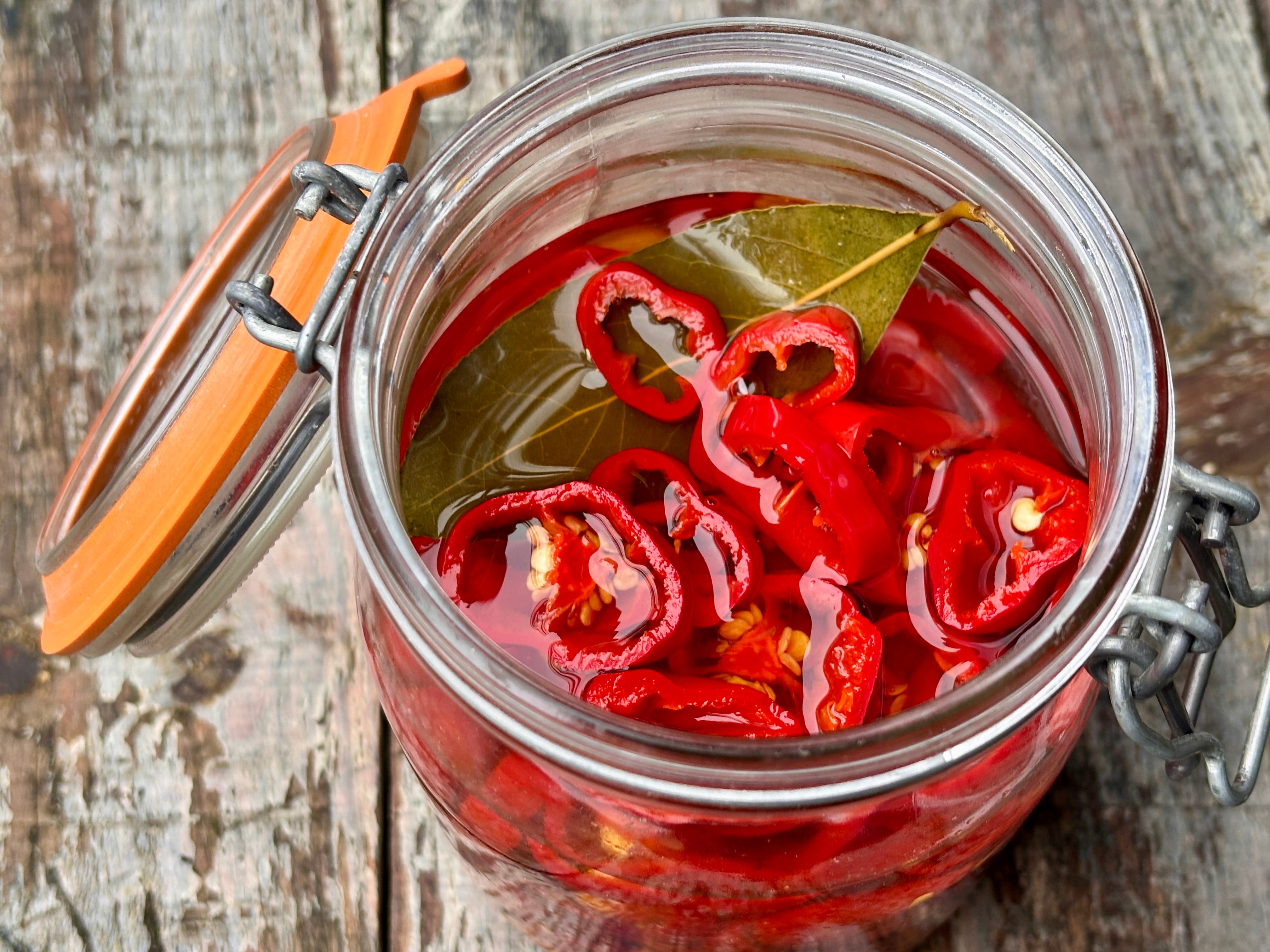
There were so many that I ended up pickling them, using my pickled jalapeño recipe, minus the carrots, red onions, and dried oregano.
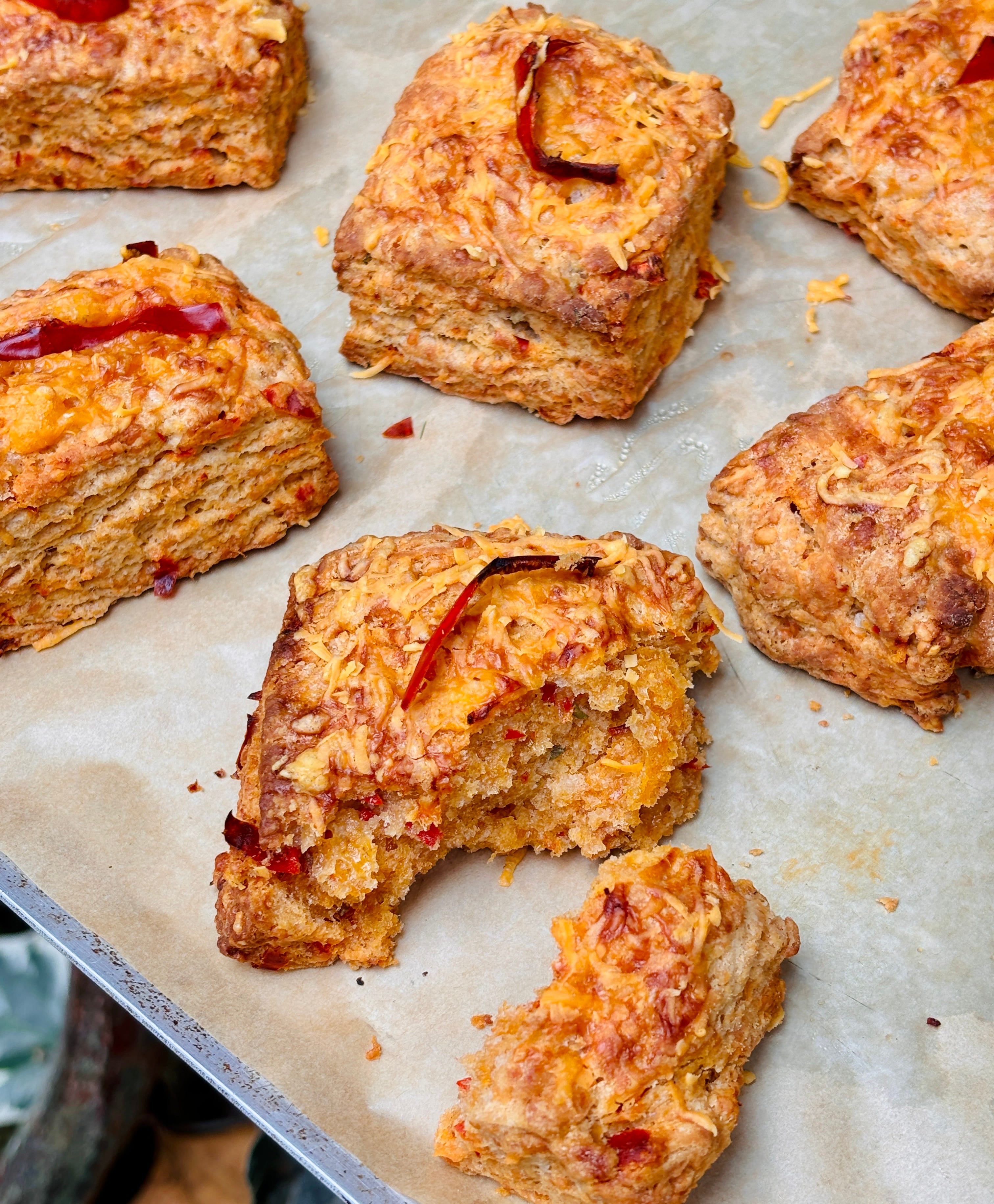
The jar of pickled peppers has been in my refrigerator for a few months, and when I spotted a recipe in Helen’s book for Pickled Jalapeño & Cheddar Scones, I realize that this was their destiny. The recipe called for a generous amount of pickled chiles, and her recipe had come to the right place. (I also used that smoked sugar here, too.)
Living in France, I often have to modify recipes for what we can get here. I was emailing with a friend who wrote a Thai cookbook and mentioned how important substitutions are, when possible, because you want your recipes to be accessible to as many people as possible (or at least I do), while still preserving the basic integrity of them.
The original recipe called for cheddar, but I decided to keep it French, since I was using French-grown chiles, and grated some mimolette, a cheese that was briefly banned in the U.S. but is now available.
As Helen notes, these scones are close to American biscuits, and let me tell you, they were soooo good. Even before baking, when I was mixing and rolling the dough, they already smelled amazing.
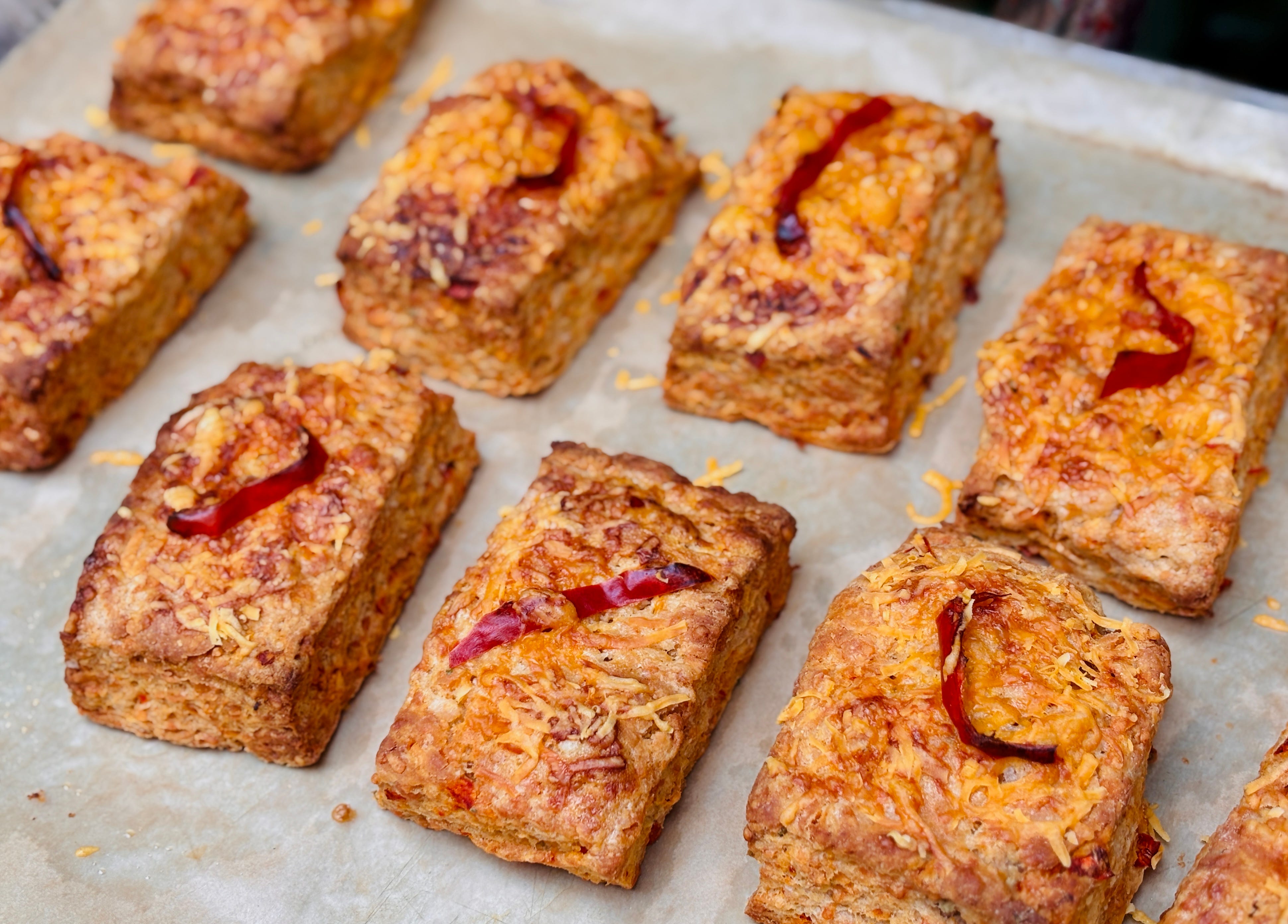
And after I baked them, the taste blew me away. They were spicy and cheesy and crispy and flaky. It was hard to resist breaking into one right when they came out of the oven because my kitchen smelled so good. Letting them cool slightly allows the cheese to firm up a bit, but they are absolutely heavenly eaten warm.
I’m sure there’s a snappier way of ending this post, but you’ll have to excuse me. I’ve got some biscuits to eat…
1 teaspoon flaky sea salt or 3/4 teaspoon fine salt
1 clove garlic, grated or finely chopped
1/2 teaspoon dried oregano
6 tablespoons (85g/3oz) cold unsalted butter
5 tablespoons (70ml) whole milk
1/3 cup (75g) plain full-fat yogurt, plus 1 additional tablespoon for brushing the tops
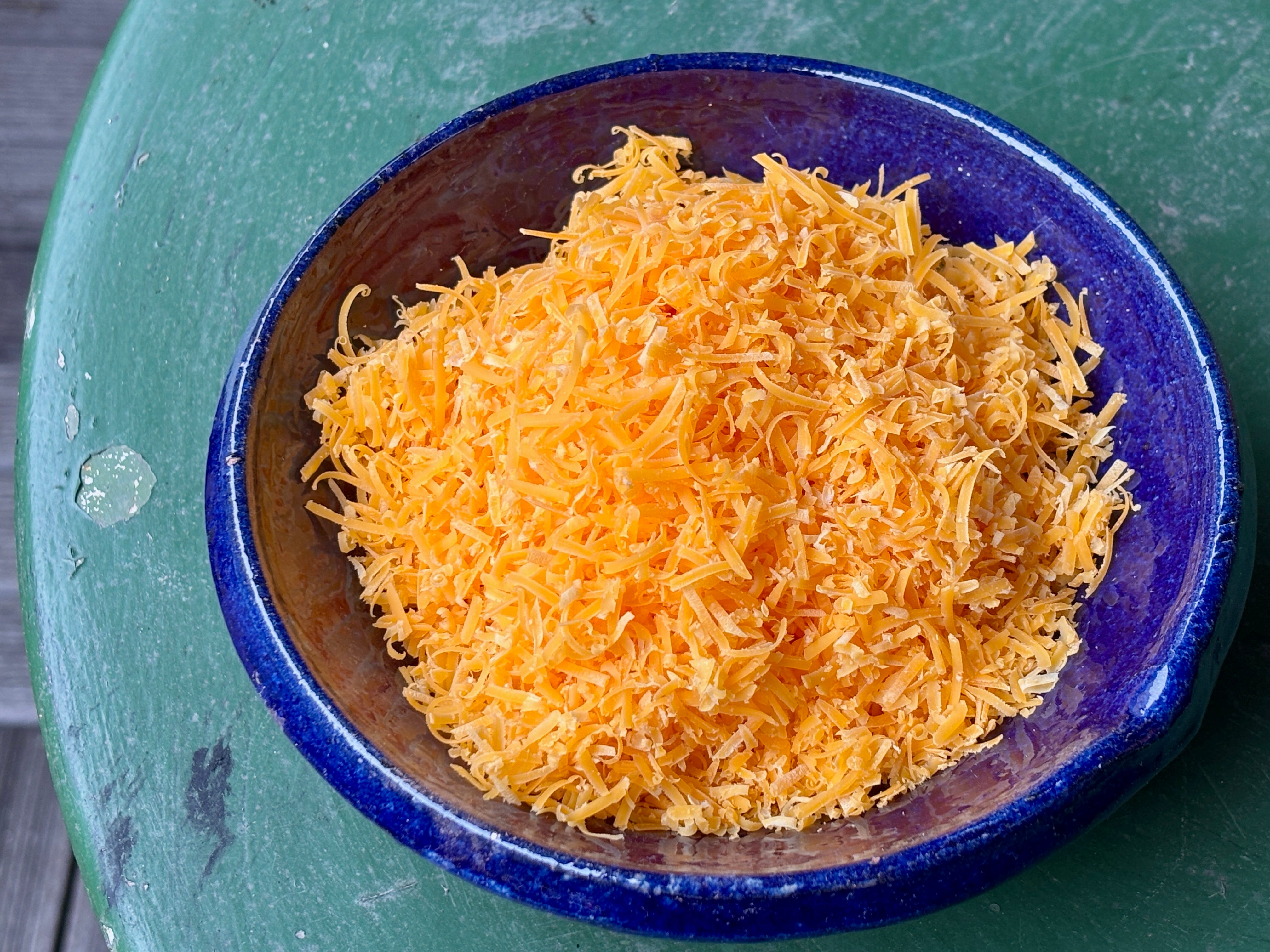
4 ounces (115g) grated cheddar or mimolette cheese, divided
1 1/2 ounces (50g) drained weight, pickled jalapeños, blotted dry with a paper towel and finely chopped (you’ll have about 3 tablespoons of chopped chiles), plus 10 slices of pickled chiles
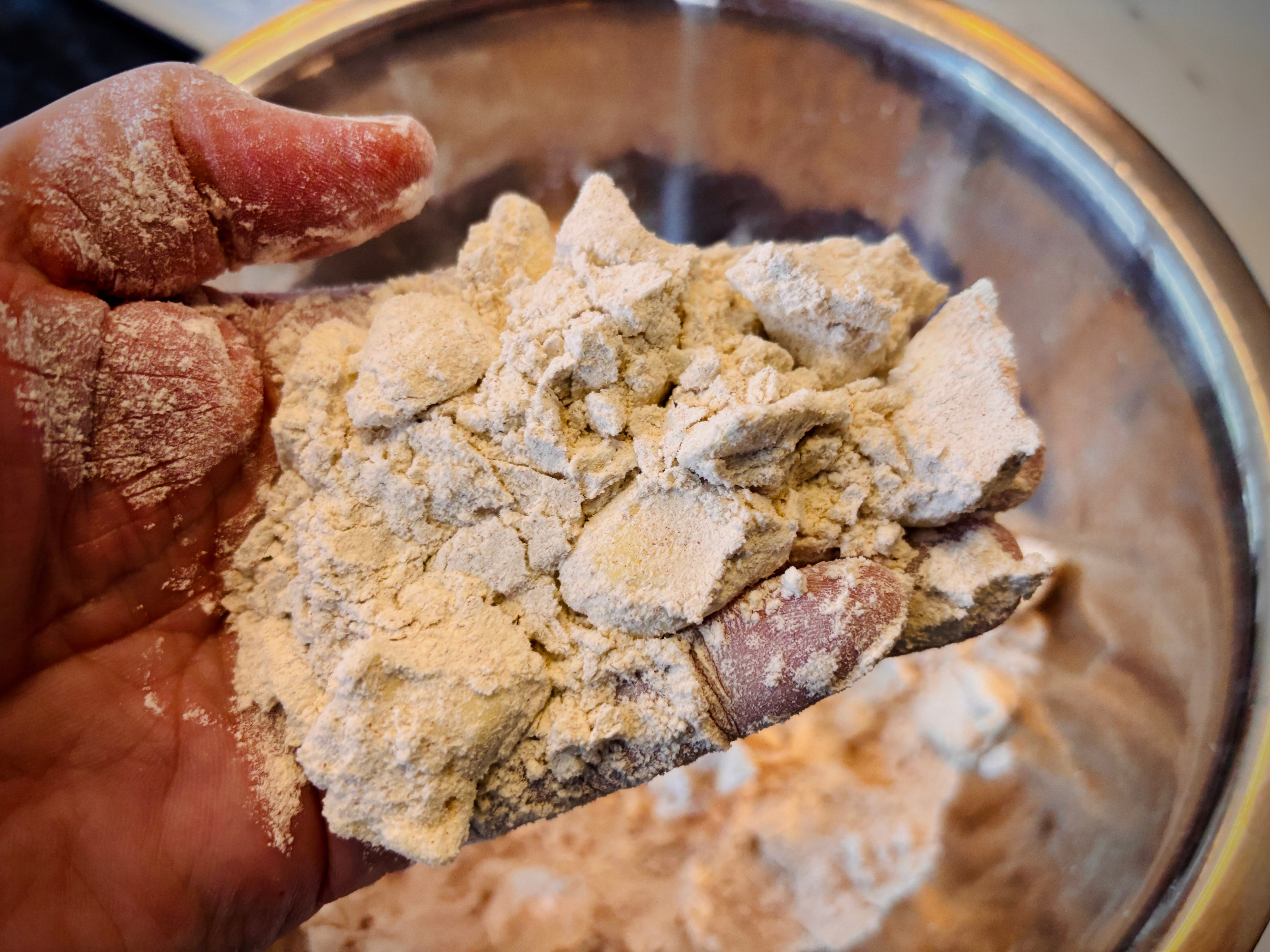
Whisk together the flour, baking powder, baking soda, paprika, sugar, salt, garlic, and oregano in a medium bowl. Put the cold butter between two pieces of parchment paper (or plastic wrap) and whack it with a rolling pin until it’s about as thick as your thumb. Unwrap it and rip the butter into pieces, tossing them in the flour mixture. Using your fingers, smoosh the butter into rough 1/2-inch (2cm) flakes.
Don’t overmix the dough. You want visible flakes and chunks of butter in there.
Refrigerate the bowl of ingredients for 30 minutes.
To assemble and bake the scones, preheat the oven to 400ºF (200ºC) and line a baking sheet with parchment paper. Remove the flour mixture from the refrigerator. Add the milk and yogurt, stir a few times with a flexible spatula, then add three-quarters of the cheese and the chopped chiles. Sprinkle the countertop lightly with flour.
Stir everything together until the dough starts coming together, then use your hands to gather the dough into a more-or-less cohesive mass. Transfer the dough to the countertop and shape it into a rough rectangle. Note: The dough will smell really good at this point.
Using a pastry scraper or chef’s knife, cut the dough into three rectangles (see the photos in the post). Pile the rectangles on top of each other, then press them down, forming a rectangle. Repeat the process, patting the dough into a rectangle, cutting it into thirds, piling them on top of each other, and pressing them down again into a rectangle.
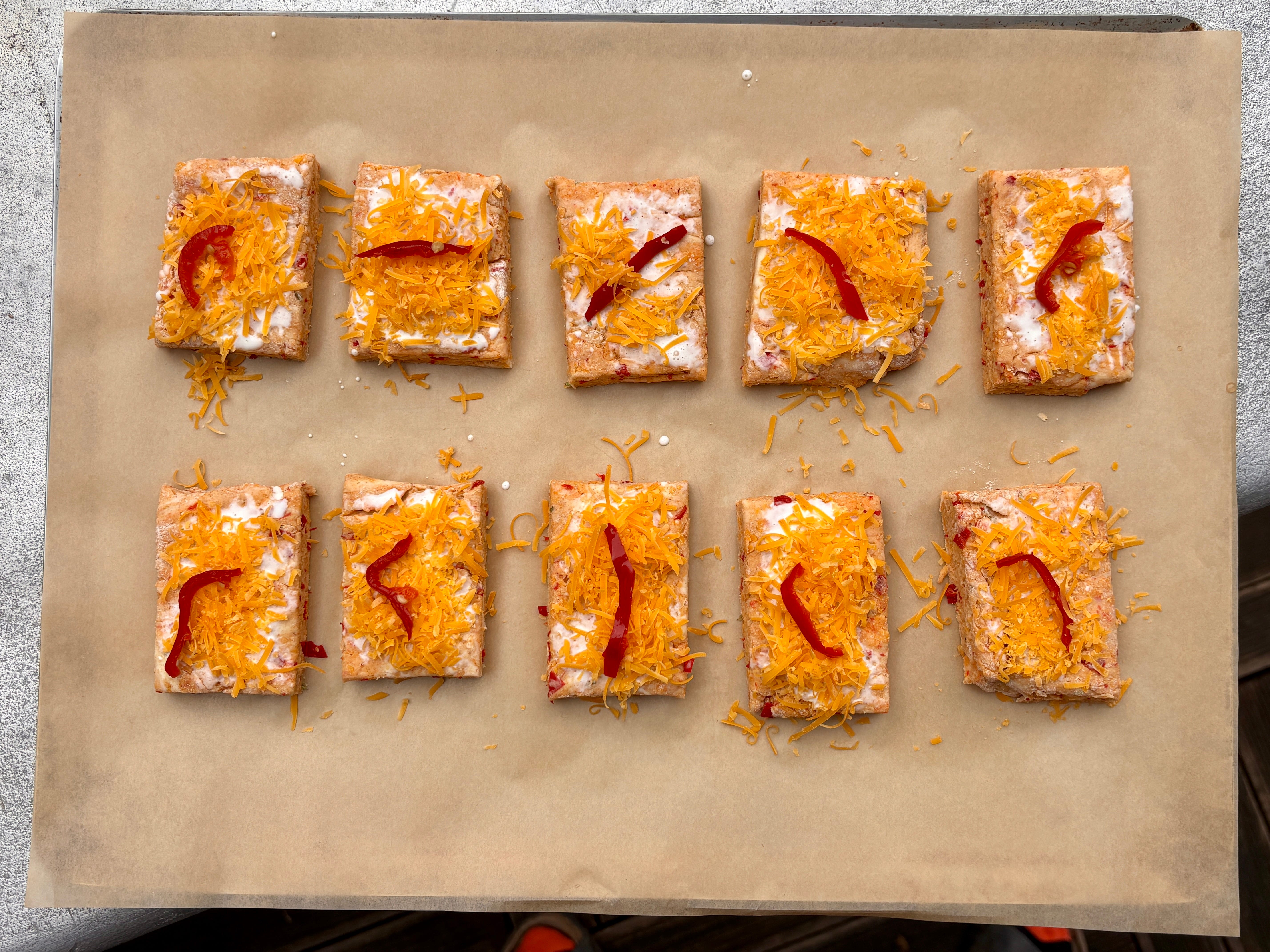
With a rolling pin, roll the dough into a long rectangle measuring 10 x 4 inches (24 x 10cm). Cut the dough lengthwise in half, then cut it vertically, creating ten individual rectangular scones. (You could trim the outside edges of the rectangle to straighten them out before cutting the dough, if you want the scones neater. If you do that, gather the scraps together into a small mound and bake that alongside the scones, which’ll be a baker’s snack.) Place the unbaked scones evenly spaced apart on the baking sheet. Brush the top of each with a little yogurt, then top each with grated cheese and a thin slice of chile pepper.
Bake until deep golden brown, 18 to 20 minutes, but start checking them a few minutes before.* They’re done when they’re browned across the top and up the sides, and feel almost fully baked when you press the tops.
Serving: The scones are delicious on their own, or split in half and buttered. They would also be great for breakfast, served with scrambled eggs. You could cut them smaller (and reduce the baking time) to serve as appetizers.
Storage: The scones are best the day they’re made. They can be stored in an airtight container overnight at room temperature.
*My oven has a silly (and annoying) feature: When you open the door to check something, the oven turns itself off unless you remember to press the "Start” button again. Whoever came up with that idea never developed or tested recipes. I’m now hyper-vigilant about it, since I’ve had to redo recipes while testing them.
I forgot to turn it back on while baking these but luckily I remembered less than a minute after I checked on them. Helen’s book says to bake the scones for 20 minutes, but you can check them a few minutes before. (And if you have the same oven that I do, don’t forget to turn it back on!)
Today’s Sunday Special dispatch is short because the real meat of what I have for you is elsewhere.
First, although I’m not one to praise Whole Foods much, I did notice at my local store that there’s still Lunar New Year signage for “fortune foods” like whole fish at the seafood counter. The store is still running sales on Chinese, Korean, and Vietnamese condiments — soy sauce, gochujang, and fish sauce, for instance. So, in the spirit of continuing the party, at my website, I assembled 25 recipes to help you further usher in the Year of the Fire Horse. Extend the holiday because that’s what Asian people traditionally do!
If you have a Vietnamese banh chung and don’t know what to do with it, I’ve got you covered with a primer and video! Ditto on pickles, noodles, sweets, and other foods to go along with the must-have Tet sticky rice cake (below, top left and center). Or if you just want to cook up a pan-Asian feast to celebrate the new year, the recipes will give you plenty of options. Head to 25 Recipes for Pan-Asian Lunar New Year Menus.
Second, I created a PTFS recipe index for you to more easily explore and find what you need. The index is one of my 2026 ,Year of the Horse goals!
The index includes all the exclusive PTFS recipes for paid subscribers as well as ones that are available for everyone. Since this newsletter started in September 2022, it has fostered a collection of about 150 recipes — the size of two modest cookbooks or one big one!
None of this would have happened if it wasn’t for your enthusiasm for Asian cuisines and cultures and my approach to them. Thank you! In particular, we wouldn’t have this robust, hardworking collection of recipes and audiovisual how-tos without paid subscribers pitching in. Seriously.
Before this newsletter, I thought my food writing career meant I had to deeply bow to the SEO algorithm gods in perpetuity. Pass the Fish Sauce liberated me and I thank you all for your kindness.
Now head over to the NEW RECIPE INDEX and start looking and cooking around.
Hey there, if you’d like to check out the newsletter recipe archive via an index, you’re at the right place. This listing of over 150 recipes covers the first three years of the newsletter from its inception in late 2022. You’ll find PTFS exclusives and free recipes in the newsletter and on my website.
The recipes are grouped in broad categories but are not listed in alphabetical order within the categories. I’ve done my best to cross list them but this is not a professionally done index.
How to use this index
You have 3 basic options: Browse the entire list from top to bottom, use the search function on your computer (⌘ + F on a Mac; Ctrl + F on a PC) to look for specific terms, or click on a link below to jump to particular categories.
It took me ten tries to get this cookie recipe just right, but it was worth the effort! These gluten-free chocolate chip cookies are made with just one wholesome flour—almond flour. They’re also sweetened with maple syrup instead of brown sugar, although you likely wouldn’t guess it. I love to use natural sweeteners when I can.
These cookies are golden and lightly crisp around the edges, and tender and chewy in the middle, which is exactly how I want my chocolate chip cookies to be. If you’re looking for a gluten-free cookie or a healthier take on a classic Tollhouse cookie, you’ve found a winner here. As a bonus, they’re remarkably easy to stir together by hand, with no chilling time required!
Beef with Mushrooms and Bamboo Shoots, or 双冬牛肉 (shuāng dōng niúròu) is a hearty Chinese dish. The literal translation is “double winter beef,” where “double winter” refers to two ingredients: winter shiitake mushrooms and winter bamboo shoots. While this is a seasonal dish, you can find winter bamboo shoots canned or in the freezer section […]
Welcome to the first day of the New Year of the Fire Horse! May the next twelve months shower you with blessings such as excellent health, life satisfaction, and abundant prosperity.
I made a special e-greeting for you and the Viet words say:
Chúc Mừng Năm Mới (say “Chook Moong Nahm Moy”) = Happy New Year
Well, la gastro got me again. Because la gastro is so common here in the winter, and French is so complicated to speak even for native French speakers, the name gets shortened from gastro-entérite, or gastroenteritis.
Being densely populated, Paris is a petri dish for it, although some guests were in the French Alps last week, and four out of six of them got felled by it. So escaping to the mountains doesn’t ensure that it won’t find you there.
I had it about a month ago, and just got it again, which doesn’t seem fair, although as I recently heard a doctor say, viruses don’t care about your feelings.
La gastro is very contagious and the best defense is washing your hands. (Hand sanitizers aren’t that effective against the virus.) Unfortunately, in a country where greeting someone involves shaking hands, and daily life entails holding onto poles in crowded métros, eating in restaurants and shopping at markets where multiple people have handled your food, and towels for drying your hands after washing them in some restaurants and cafés are shared with perhaps a hundred or more people*, you don’t need to look very far to see how (or where) you could have gotten it.
One thing about getting sick in France is that you have to plan for it. There’s no pre-prepared chicken soup, and supermarket soups are invariably veloutés or purees of vegetables.
I don’t know about you, but when I have an upset stomach, the last thing I want is a bowl of green soup, especially if you’re old enough to remember Linda Blair in The Exorcist. When things are coming out of you fast and furiously, you want a bouillon-based easy in, easy out situation. And certainly not anything green.
Newcomers to France, from America, are surprised to find that store-bought bouillon or stock isn’t readily available in liquid form, as it is in the States, where whole aisles of the supermarkets are devoted to a range of stocks sold in quart cartons. In France cubes of stock are commonly used, from brands like Knorr, and Maggi. Ultra-processed hasn’t become a keyword in France yet, but I’ve yet to make the transition to them.
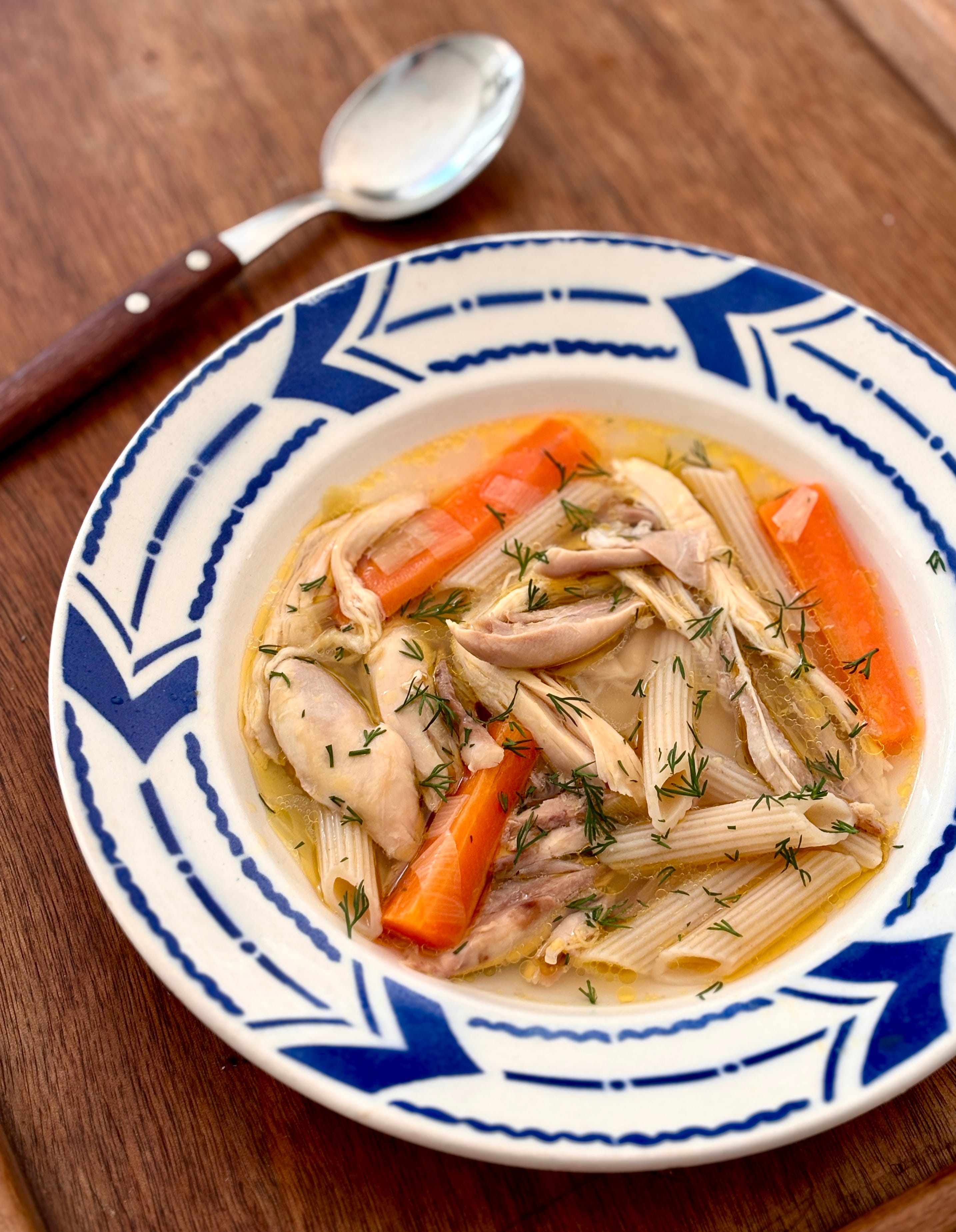
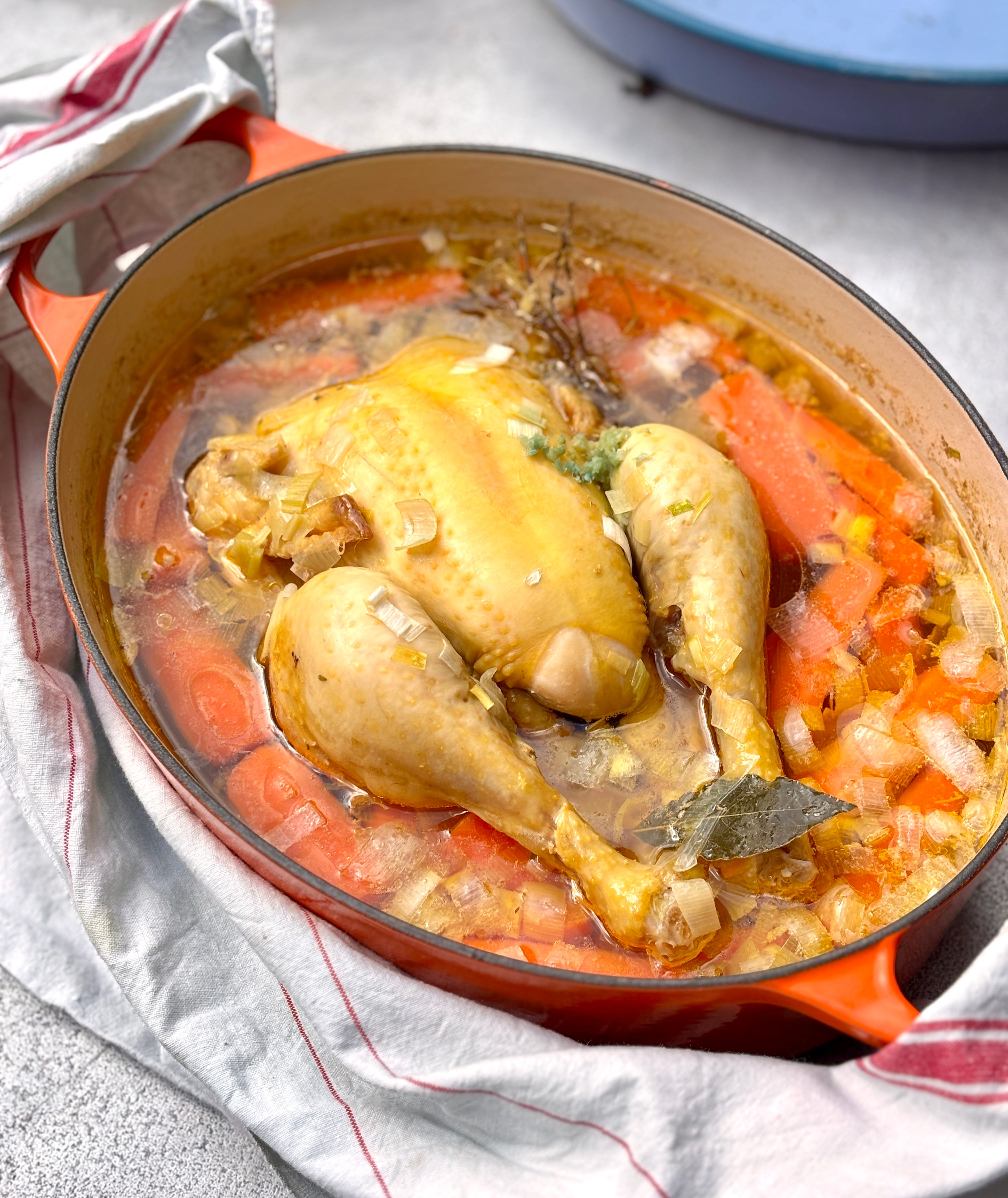
I’m not sure what people in France do when they get sick, but if you can drag yourself to the grocery store, or can manage a trip to both the butcher and the produce store, you can make a poule au pot.** This “chicken in a pot” requires little hands-on work, and is easy on the system, one that I’m doing my best not to upset any further.
Subscribe to my newsletter to get new posts sent right to your inbox…
There are fancy ways to make a poule au pot, such as one with a sauce suprême made with crème fraîche, egg yolks and butter, or this one, with 14 ingredients. Or this one with chicken stuffed with a farce (stuffing), which you’re welcome to tackle if you’ve got the fortitude for it.
There may be a definitive version of poule au pot, but I’m too zonked to track it down, nor am I up for a battle with the authenticity police. And I’m definitely not up for*** stuffing a chicken, or making or eating cream sauce.
The good thing about making this dish is that you don’t need store-bought stock as cooking a whole chicken gives you a lovely, rich broth. And while not part of the French culinary canon, since Manischewitz has not made it to France, there’s no matzoh meal at the supermarché.
Yes, you can buy pain azyme and grind it yourself, but that also takes strength, so it’s a no-go. My neighbor who owns a deli in Brooklyn is out of town. Otherwise I’d ask him to bring some matzoh balls over. I’d be pretty surprised if he didn’t have some matzoh meal squirreled away.
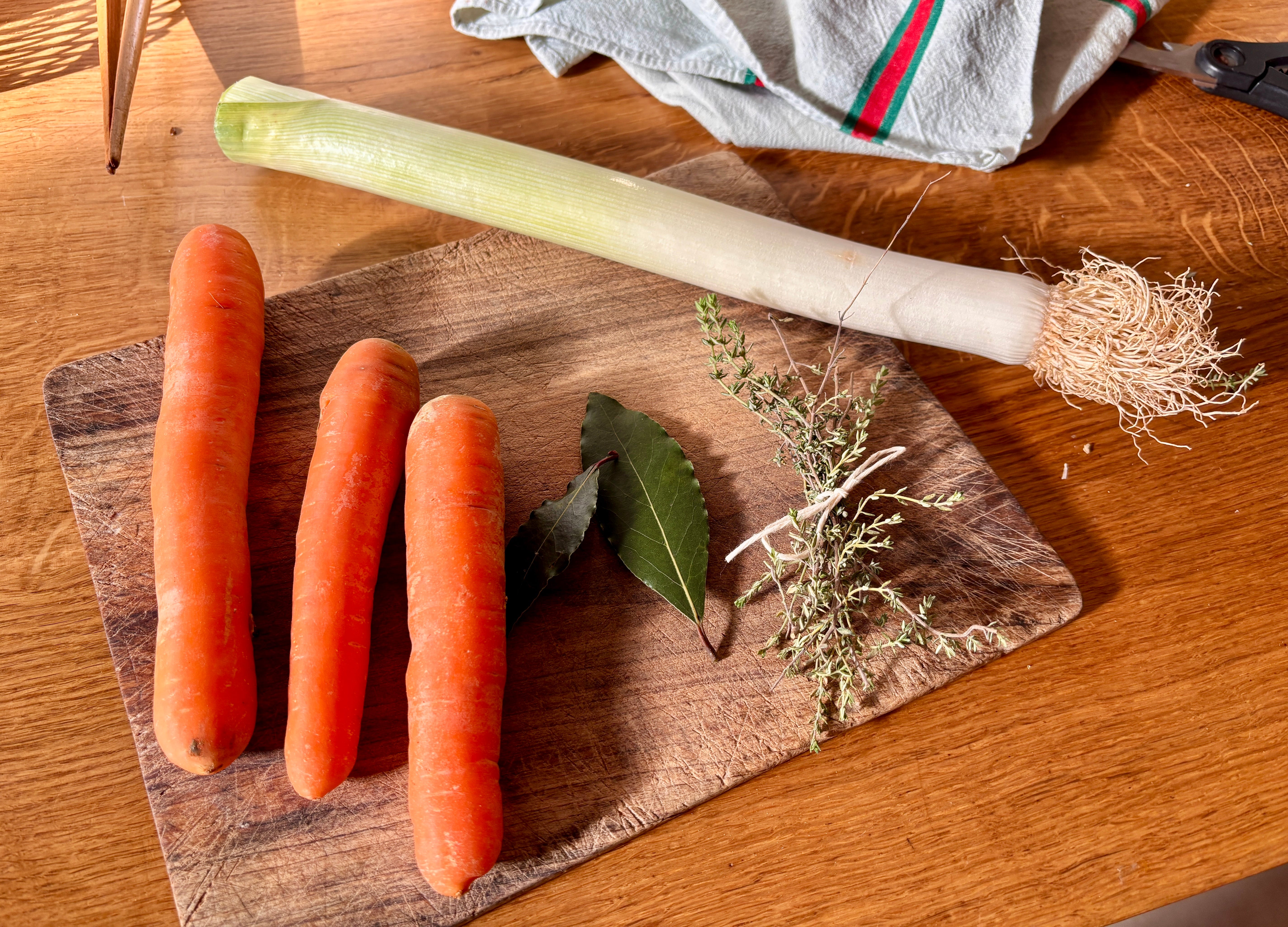
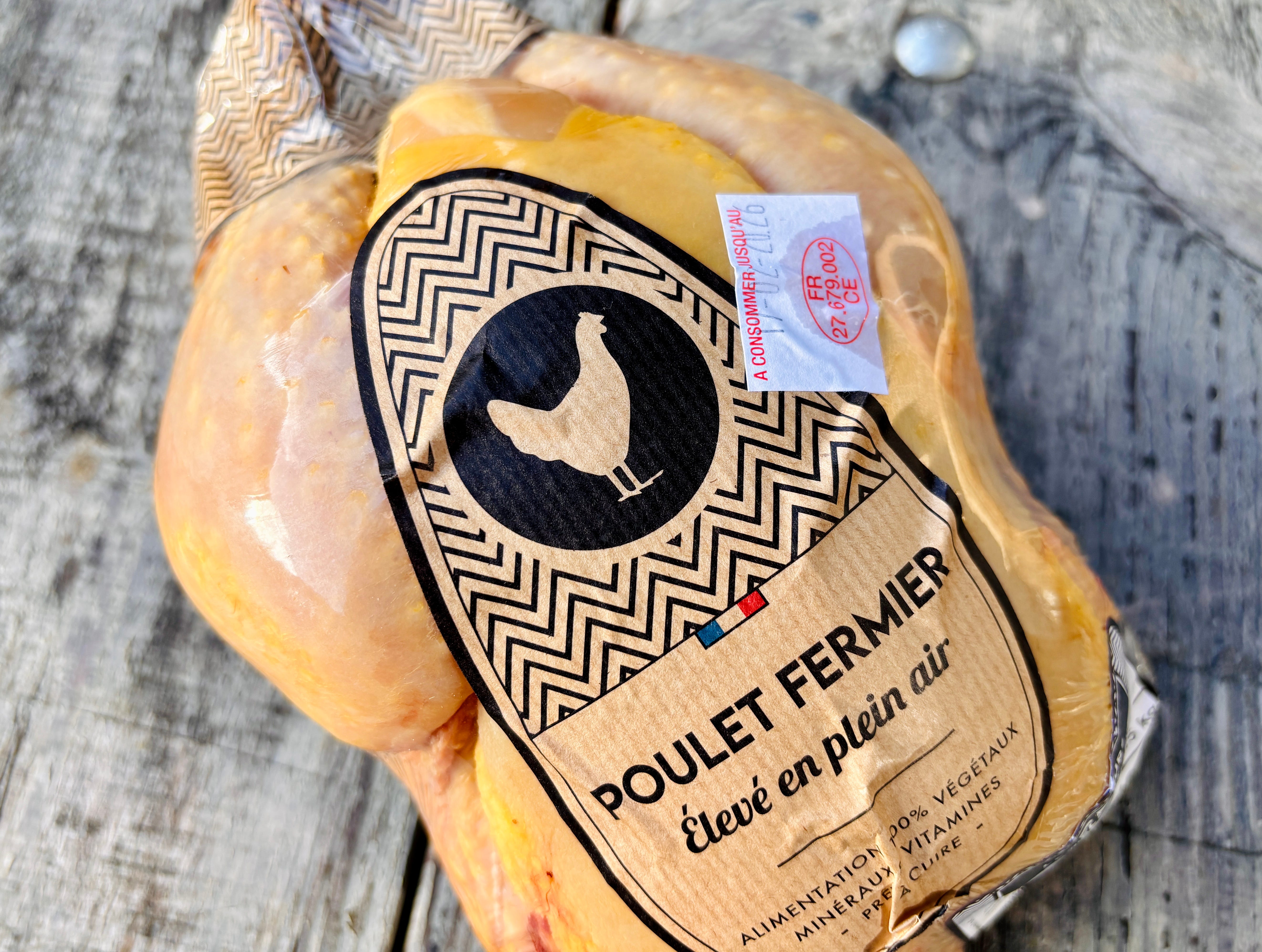
Armed with my shopping list, after Romain came back from the store, I placed the free-range chicken in a pot. I added enough cold water so it covered about three-quarters of the chicken, then added some salt as well as a chopped leek and three carrots cut into thick batons. Fortunately we have a garden so I grabbed a few sprigs of thyme and tied them in a bundle to add to the pot, as well as two bay leaves.
Garlic is used very discreetly in French cuisine; with the exception of aïoli, which technically is Provençal - and some in Provence may argue that that’s not French cooking, that it’s Provençal. (Once again, I’m not looking for a fight. I’m just being diplomatic.) Few, if any, poule au pot recipes in French call for ail — doing an online search, the only ail I found in poule au pot recipes was in the word volaille, which means chicken.
I added four minced cloves of garlic, which the authenticity police may not approve of, and even Claude AI was baffled by the request. And into the pot that went, as the health benefits of garlic outweigh any cultural conflicts.
Everything was simmered over very low heat with the lid ajar for about 90 minutes, until the chicken was very tender. About halfway through the cooking, I used tongs to pull the thighs away from the breasts to help the broth get more infused with flavor. (That may not be scientifically provable but I have a feeling that it does.)
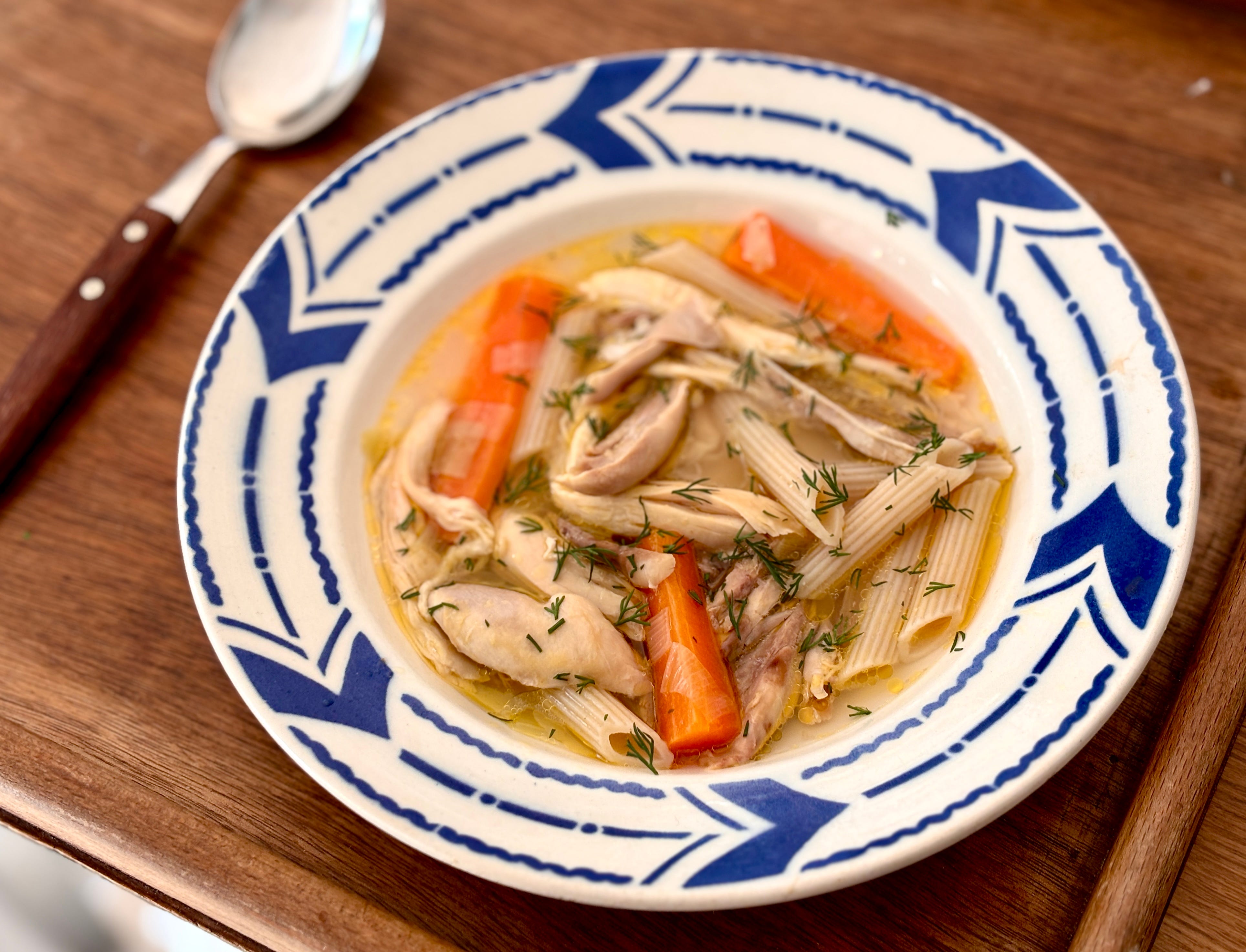
Once the chicken was cooked, I fished the pieces out with tongs and put them in a bowl to cool. When cool enough to handle, I shredded the meat and put it back in the pot. And that’s it.
If you want to add rice or noodles****, as I did, it’s best to cook them separately and add them to individual servings right before serving, or they’ll get soggy. Fresh dill is an add-on that’s no common in France, but Romain likes it (as do I), and picked some up at the store. It adds a nice flavor to the soothing soup.
*Many restrooms in France, such as those in restaurants and cafés, have a cotton towel on a hook for people to dry their hands on after washing them. That may save paper, but to me, seems to defeat the purpose of washing your hands. Although perhaps the feeling is that is everybody is washing their hands, before drying them on the towel, the towel isn’t harboring any germs or viruses.
**You’ll find recipes for soupe de poulet and soupe au poulet, that are basically variations on poule au pot, which further complicates things — especially the two different prepositions for the same soup. As mentioned, French is hard…even for the French.
***Sorry about any typos.
***Like Manischewitz matzoh meal, Goodman’s egg noodles haven’t made it to France yet. But egg noodles (pâtes aux œufs) are the best with this dish.
There are many great things about Lunar New Year but for me, the most important one is the idea that the holiday is not just one day. It’s more like a festival that lasts many days, weeks, or even a month, depending on how you want to celebrate. In Vietnam, people slow down for for at least a week to ăn Tết (literally “eat the New Year”) because at the center of the celebration is food. People work so hard during the rest of the year that they go home to visit family for rest, relaxation and special food.
Even though the Year of the Horse officially starts on Tuesday, February 17, you can get into the Lunar New Year spirit for weeks! There’s no need to rush. Just learn how to say Chúc Mừng Năm Mới (pronounced “Chook Moong Nahm Moy”) and repeat it to any Viet people you run into during the Tết season to make us extra joyous.
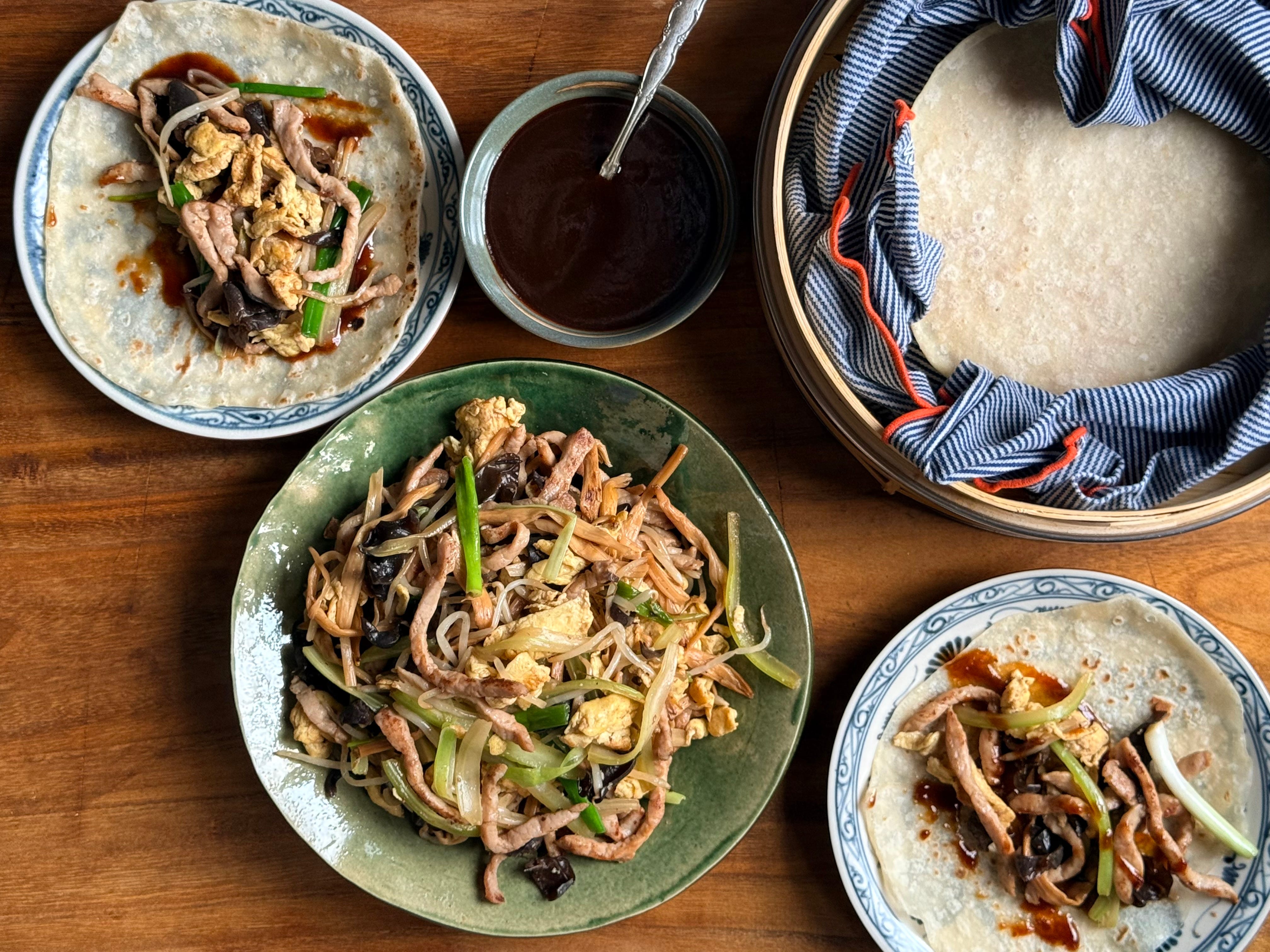
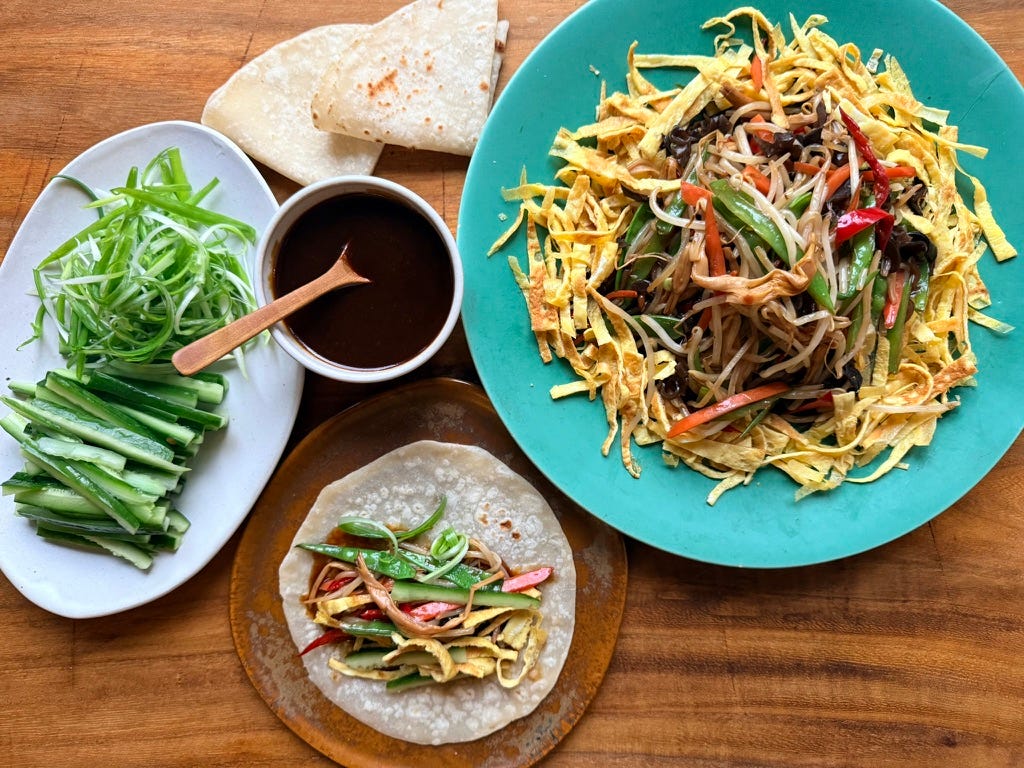
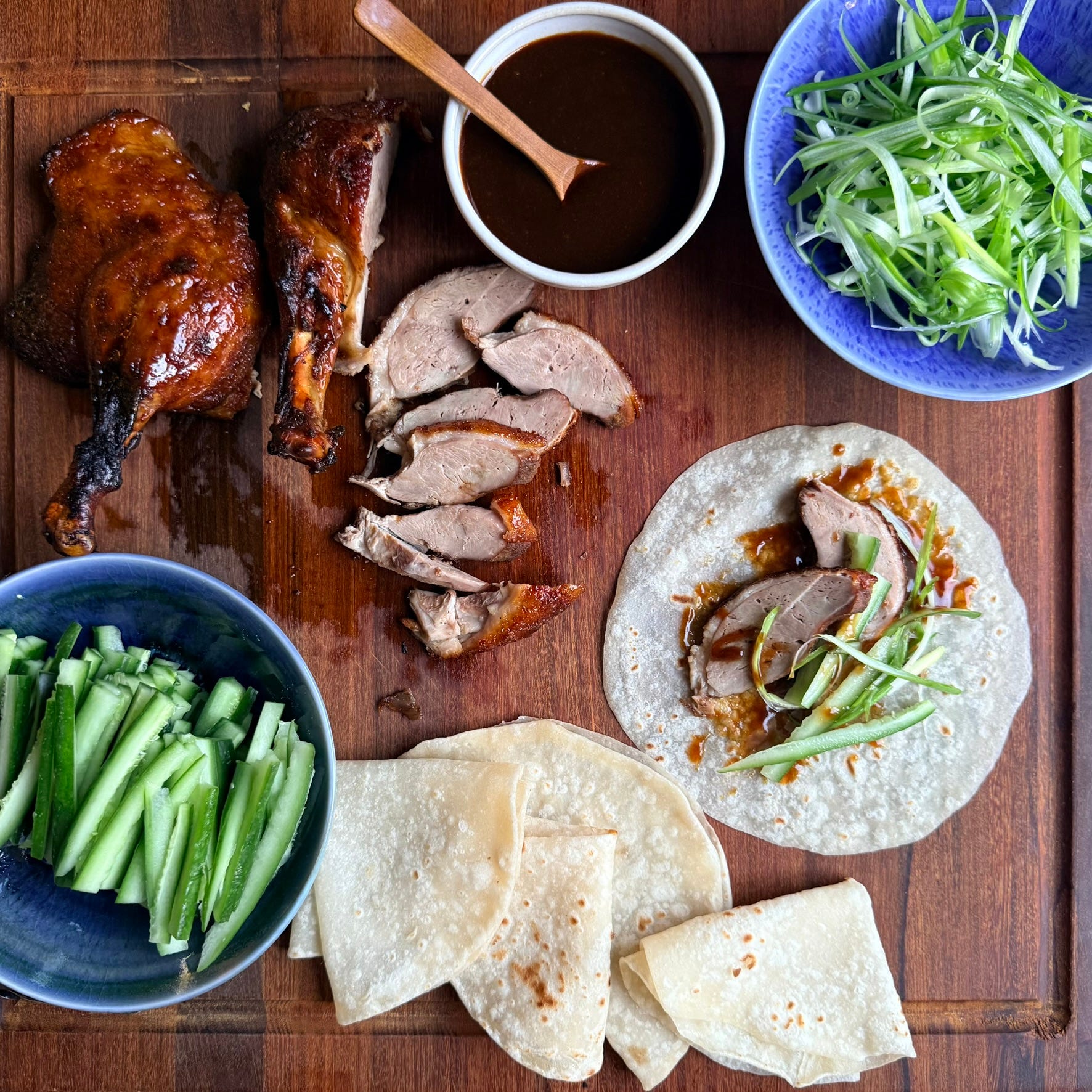
I’m at my mom’s house now for Tet and she’s asked if we were going to have Mandarin pancakes for something. Yup, I brought two stacks that I’d frozen so we can wrap up Chinese roast duck purchased from a barbecue shop and moo shu — a quick stir-fry full of flavors, color, and textures.
If you’ve ordered moo shu (aka mù xī ròu, 木樨肉), at a Chinese restaurant in America, you know that it can be made with different proteins. The dish originated as a simple stir-fry in Shandong, a coastal province in northern China. Shandong is southeast of Beijing and has a peninsula that pokes eastward. When I was studying Mandarin Chinese, a friend joked you can see Korea from the tip of the Shandong peninsula. Stir-fries are a hallmark of Shandong cuisine.
Moo shu usually contains some scrambled egg that are deftly prepared to mimic the delicateness of fragrant sweet osmanthus flowers (Osmanthus fragrans), a symbol of longevity and nobility in Chinese traditions. In the dish’s name, the characters 木樨 (mù xī) refer to the sweet osmanthus. There are folks who say the original characters referred to wood ear mushroom (木耳, mù ěr) which are also in the dish, but in the main, people explain the characters as referring to the flower.
You don’t have to decide. Both egg and mushroom are constants in my moo shu recipes to add harmonious-yet-varied textures and flavors.
Finally, the third character 肉 refers to ròu — meat, which in China and Vietnam, defaults to pork. Traditionally the dish was prepared with pork, egg, earthy bamboo shoot, frilly crunchy black fungus mushroom, and aromatics and simple seasonings. It was a homey stir-fry that people whipped up to eat with rice.
As moo shu was introduced to the U.S. by northern Chinese cooks, the simple stir-fry got wrapped up in Mandarin pancakes and served as an appetizer. That’s to say, moo shu got the Peking duck treatment! When did it happen?
Thanks to a number of women chefs and entrepreneurs in the 1950s and 60s, urban areas on the East Coast had boundary pushing Chinese restaurants. The movers and shakers included noteworthy Chinese restaurant owners like Emily Kwoh and Irene Kuo in New York City and Joyce Chen in Boston.
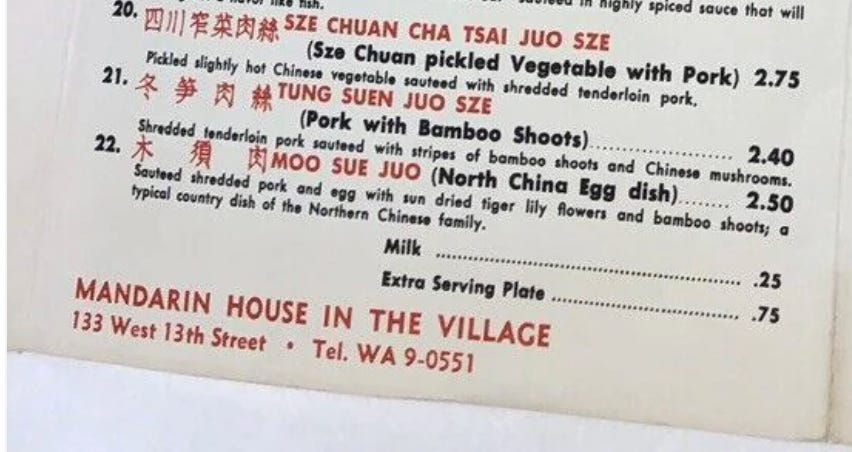
Kwoh opened Mandarin East and Mandarin House in the 1950s. Below is a vintage menu from Kwoh’s restaurant with “moo sue juo” (for moo shu rou) but without the pancakes — yet. The New York Times eventually credited Kwoh as being one of the first to serve moo shu with pancakes at Mandarin House.
Kuo opened Lichee Tree in Greenwich Village in 1960 and Gingko Tree in 1966. Joyce Chen operated restaurants starting in 1958. They were all likely monitoring one another’s menus. The first cookbook to include moo shu with the pancakes was The Joyce Chen Cookbook, published in 1962.
Kwoh, Kuo and Chen were talented chefs and business people. Kuo and Chen were on national TV, hobnobbed with celebrities, artists and intellectuals, and they were not Cantonese. Chen was born in Beijing and Kwoh and Kuo were from Shanghai. They favored northern Chinese over southern Chinese food. Like Cecilia Chiang in San Francisco in the 1960s, those East Coast Chinese women were looking to push the Chinese food envelope before Nixon set foot in China in the 1970s! (Chiang opened The Mandarin in San Francisco in 1960 or 1961; though she had Shandong cooks, I can’t find early mention of moo shu on her menu.)
This explains why if you go to mainland China and ask for moo shu pork, you’ll likely get a wonderful stir-fry of rich pork, tender eggs, earthy daylily buds or bamboo shoot, crunchy black fungus and perhaps some other vegetables. Mandarin pancakes are not probably going to be on the side for you to wrap up the stir-fry with a smearing of salty-sweet hoisin-ish sauce.
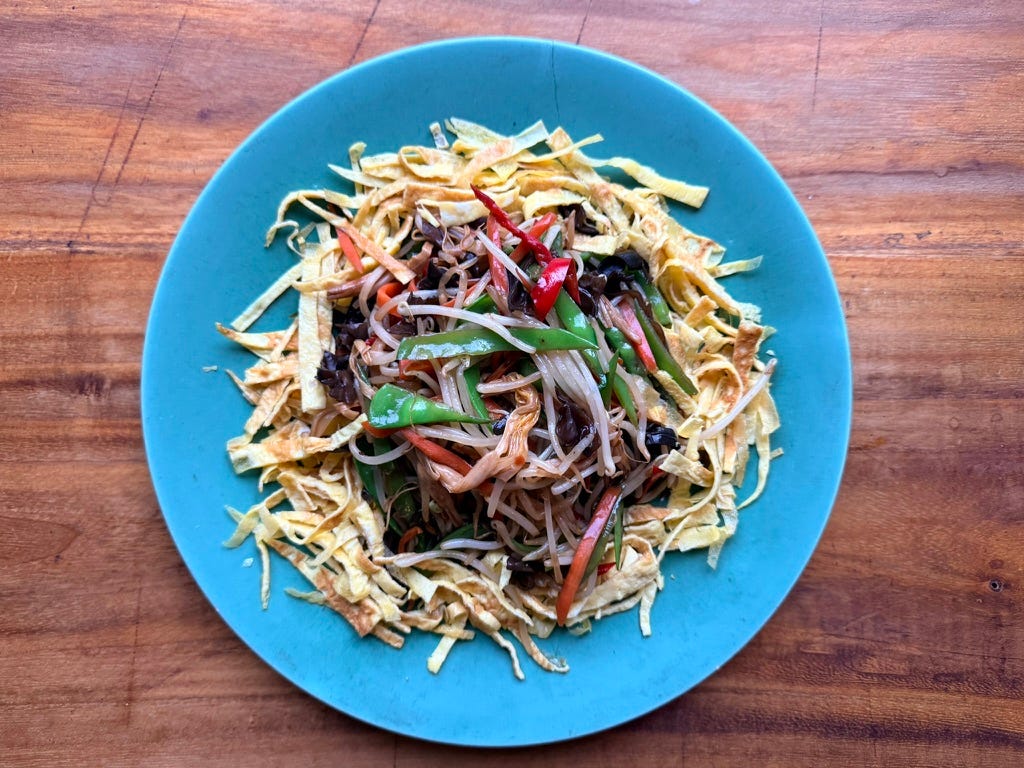
Go vegetarian with the other moo recipe, if you’re not feeling meaty. Yeah, I load mine up with extra raw veggies. Add roast duck or rotisserie chicken and you can have a wrap party! I sometimes add coarsely chopped cilantro for an herby lift.
But if you like moo shu with Mandarin pancakes, know that it’s legit. Kwoh, Kuo and Chen tweaked moo shu for American diners and over time, the dish became redefined and it became a winning idea. Now it’s part of the Chinese-American food experience. Food evolves.
I developed two moo shu stir-fries for you that are fabulous wrapped up in the pancakes or simply eaten with rice. Below you’ll find:
3 recipes + PDF for: Master Moo Shu Recipe Blueprint + Moo Shu Any Meat (feel free to vary the protein!) + Vegetarian Moo Shu (with a vegan option)
Audiovisual aids: 2 videos plus process shots to help you manage potentially tricky moves
Ingredient guidance and swap tips: Explainers are here for those who want to shop at an Asian market and substitutions are suggested if you just want to use more accessible ingredients
You can plate the Vegetarian Moo Shu with the egg mixed in or on the rim. It tastes great both ways. I couldn’t decide. Yes, there’s a vegan tip below for this recipe too. AND, you can just treat this and the Moo Shu Any Meat as a stir-fry to have with rice.
This culinary deep dive and threesome of Moo Shu recipes were sponsored by paid subscribers. Join us to gain access to these recipes and so many other professionally developed recipes. You’ll also seed new content and enjoy other benefits, including my deep appreciation. I value support at all levels.
Politics and economics aside, we’re in an unusual celebratory few weeks right now that’s filled with human physical achievements (the Super Bowl and Winter Olympics — Ilia Malinin! Yuma Kagiyama! ⛸️ 💥), passion (Valentine’s Day 💘), Presidents Day (civic pride, sales, and a long weekend), and Lunar New Year!
I also celebrated a birthday this past Monday. I turned 57. Rory asked what I thought about that and I said — and this is the truth, “I don’t really think about it.” Thankfully, I still have all my original parts and feel better now than I did when I turned 50 and had to endure perimenopause. Things are alright.
Besides, I have my mom as a role model. By her standards, I’m just getting started. Look at the birthday message she sent me. It’s rad. She’s a 91-year-old who didn’t even email until a few years ago.
Instagram reminded me that I had another birthday to celebrate: Vietnamese Food Any Day was released on February 5, 2019. I thought about the book because my friend said she spotted “VFAB” (sic) in the above Instagram post by actress and author Lauren Graham of Gilmore Girls fame. Lauren’s stack of cookbooks also include works by Ina Garten and David Chang. If you have VFAD, you’re in damn good company! Don’t have VFAD yet? Check with a local bookstore, Bookshop.org, the library, Amazon, Barnes & Noble, and Target.
💎 Winged victories
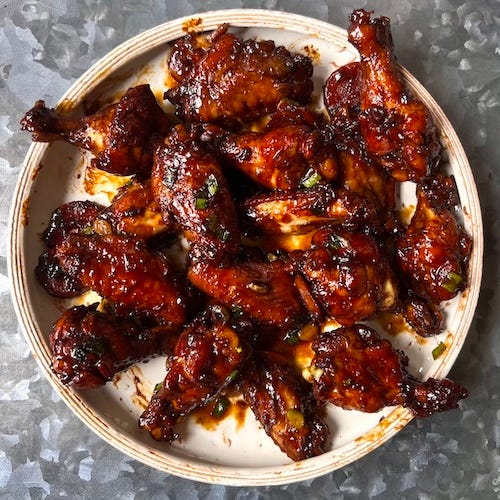
Some of you already jumped on the spicy ginger-orange chicken wings and reported great success. doubled the recipe and cooked the wings in a Dutch oven! The sauce didn’t reduce enough but they loved the wings so much they’re going to do a redo! A note on doubling recipes — not just when using my recipes. You always want to use a bigger pan if you want the same cook time as the original recipe. If that’s not possible, just expect a longer cook time because you’re dealing with a larger quantity of ingredients.
If you have VFAD, the chicken wings coated with chile garlic sauce on page 47 is outstanding too. AND, don’t forget the fantastic vegan Roasted Cauliflower “Wings” on page 48; one of the editors at America’s Test Kitchen said it’s in her rotation.
💎 Lava cakes for chocolate lovers
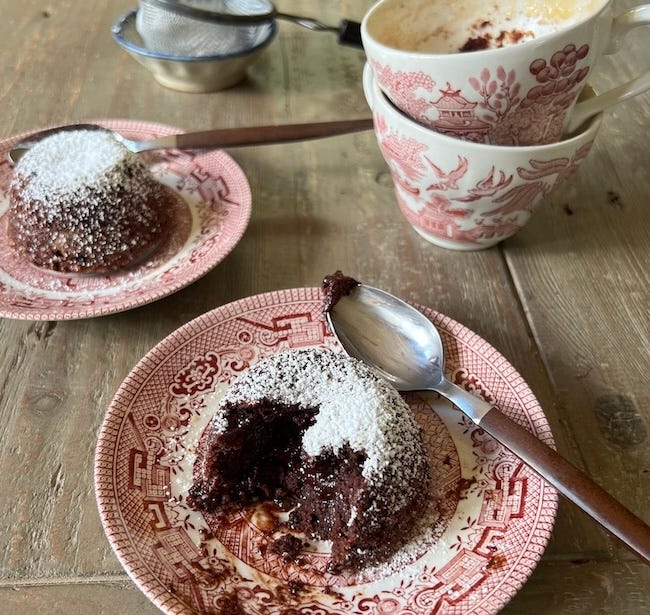
Bake a little something special for your honey for Valentine’s Day — a molten lava cake. My recipe is just for two (2) and you can use regular or gluten-free flour. You can bake them in teacups to get the mountainous shape with ease. The batter comes together pretty quickly too. Here’s the lava cake recipe for you!
💎 Mandarin pancakes follow-up
Susan asked about a gluten-free approach to the pancakes. I don’t have one yet because I’ve not tried a GF flour blend on the recipe; that’s where I’d start. The other suggestion I had for Susan was to offer radicchio, endive, or lettuce leaves instead of the Mandarin pancakes. When I did catering gigs in the 1990s, I made a tasty duck appetizer wrapped in radicchio.
Today, I received a great idea: Duy makes the honey-roasted duck legs from my first cookbook, Into the Vietnamese Kitchen, and wraps the result in rice paper. That is a GRRREAT gluten-free solution to wheat mandarin pancakes!
Additionally, in last Sunday’s post, the Mandarin pancake video summary that I shared didn’t have any audio. Where was my brain?! My apologies. I was trying to cram too much in and was tired after a week of intense book proofreading. So, I added audio to the video so you will have a better sense of what the heck I was doing. Here’s the updated video to go with the Mandarin Pancake Mini Class dispatch. (I also just added a Weee! link to the duck that Costco also carries.)
Support Pass the Fish Sauce! Join us as a free or upgrade to a become a paid subscriber to enjoy 125+ professionally developed recipes, seed new content, and get future class discounts. Thanks for your enthusiasm!
💎 Homemade Peking Duck Master Recipe and Plan for Success
What if roast duck shortcuts and hacks are not your jam? Also in response to the Mandarin pancakes and duck feast dispatch, Sunnie asked about roasting a duck from scratch. Sunnie lives in Europe and doesn’t have an Asian barbecue shop or Costco nearby.
To help Sunnie and any of you want to go the full distance, I put together materials for a Homemade Peking Duck Master Recipe. It’s project cooking that results in a very impressive, glorious meal. I’ve roasted Peking duck over a dozen times and even on the first try, it was darn good — crisp skin and tender flesh.
Lunar New Year is a time for fun cooking projects with family and friends. The end result is wonderful food and company. So, to help you make the most of the Mandarin Pancakes you have and will make, I’ll be offering two simple recipes on Sunday to go with those pancakes. Omnivores and vegans will be happy!
How do you cook when your kitchen isn’t available for kitchen-ing? On a Sunday last April, I awoke at the crack of dawn jet-lagged from an (excellent) trip to Amsterdam* to an email from my apartment building that ConEd had found a gas leak in the main line to the building and had shut down service for safety. With this, I was indoctrinated into a society of New Yorkers I previously hadn’t known existed, as NYC is apparently riddled with tales of people who lived without gas for (what seemed like the minimum of) 6 months and up to 18 months while their building trudged at a snail’s pace through rounds of repairs and inspections.
Since 2015, Lauren Collins, staff writer for the New Yorker, has called Paris home. The author of When in French: Love in a Second Language, Lauren moved from Switzerland to France with her French husband and stillwrites for the New Yorker, continuing their tradition, which includes writers such as A. J. Liebling, Anthony Bourdain, Calvin Trillin, John McPhee, and Adam Gopnick, of outstanding food writing and reporting on food-related topics.
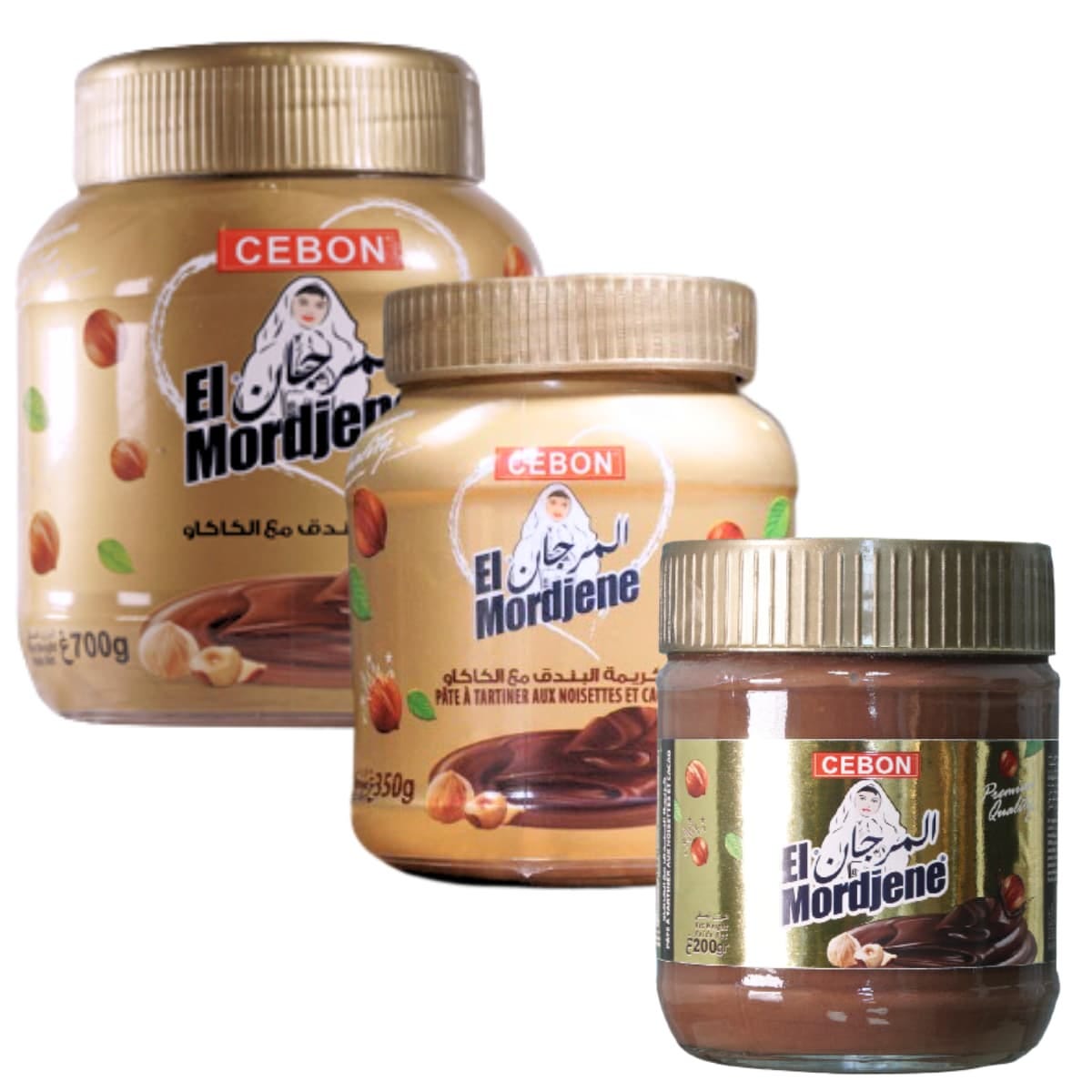
Her articles have ranged from subjects such as the controversial French tacos, spelled with an “s,” even though it’s just one; Les Grands Buffets, the all-you-can-eat buffet restaurant that’s the hardest reservation in France (in my experience trying, it’s the hardest in the world); and the elusive El Mordjene Algerian hazelnut spread, a cult favorite that’s nicknamed “beige gold,” which was banned in France.
Lauren has also written on the wonders of Japan’s fake foods, as well as “Where should I go?” a service that provides Americans and other visitors with “insider” French experiences, such as fulfilling the request of a client who wanted to be invited to a party in a French person’s home.
In the podcast, we discuss how these stories came to be, as well as how things have changed in France since Lauren’s moved here, and what it’s like being a journalist in France. As I do with Paris-based guests on my podcast, I asked Lauren to share some of her favorite addresses in the city for dining, which she was happy to do.
This past week, Super Bowl party wings sales led me to making a batch of wings that didn’t require deep-frying. They’re simmered in bold seasonings and end up tender, rich, and kinda sticky and messy-fun to eat — what we want from chicken wings, yes? If you’re a wing person get the Spicy Ginger-Orange Chicken Wings recipe at my website.
My week hasn’t been filled with Super Bowl preparations. I’ve been working with chef Pim to prepare the book to go to print in early March. We’re at proofreading phase two out of three. Cooking Thai is looking great and the early reviews and endorsements are remarkable. Phew.
I’m also gearing up for Lunar New Year. No matter how spent I am, I feel giddy about starting anew. Tuesday, February 17 will usher in the Year of the Horse. My dad was born in the Horse year so welcoming this new lunar cycle also honors and celebrates my father. My mom, siblings and I are going all in.
We’re gearing up for a mini family feast this coming weekend. Mom is already making bánh chưng (“baan choong”) sticky rice cakes, a must-have for Tết (“teht”), Vietnamese Lunar New Year. For my part, I’ve been practicing and planing an easyPeking Duck with Mandarin Pancakes, which is partly why today’s post arrived late. To guide I’ve created a mini Mandarin Pancake class for you in this dispatch!
Here’s a summary of my pancake practice plus the duckylicious payoff — which will soon be yours to enjoy too!
Why Peking duck for Tết?
Viet celebrations often combine Chinese traditions because the two cultures have rubbed shoulders for millennia. Pho was initially made and sold by Viet-Chinese cooks, for instance. Viet language used to be based on Chinese pictographs and there are many shared words. The border continues to be porous.
Plus, my Mom adores Chinese roast duck, especially when it is served with delicate, thin pancakes slathered with salty-sweet sauce and accented by cooling cucumber and pungent green onion. Unlike doughy steamed buns, Mandarin pancakes are not sweet; their delicate texture and flavor harmonizes well with roasted meats and many other dishes. We set out all the fixings and make our own roast duck wraps, like at a fancy Chinese restaurant but better because we can have plenty and the flavors are extra fresh. Along with Viet dishes on the table, the duck makes for a very tasty Tết celebration.
Why Mandarin pancakes for spring?
Mandarin pancakes go by two names. On a macro level, they belong to the Chinese food category of báo bǐng / bóbĭng 薄餅, which covers a myriad of thin wrappers used to encase or hold food. Spring roll and lumpia wrappers, rice paper, tortillas, pizzas, and naan can all fit into this category.
Many people also know Mandarin pancakes as chūn bǐng 春饼 because they’re a food often enjoyed to mark the beginning of spring — lichun 立春 in Mandarin, lập xuân in Vietnamese. The actual dates depend on astronomical moves so celebrating spring, aka celebrating the Lunar New Year, officially lasts weeks. This year, lichun goes from February 3 to 18.
Friends you’ve got time to add this pancake tradition to your repertoire. Actually, once you’ve mastered these pancakes, you can enjoy them year round. I made so many pancakes to write up this mini class for you that I’m going to freeze a bunch. And I know how well they’ll go with other roasted meats, stir-fries and many other foods!
The duck, sauce, and veggies are super easy. I’ve got shortcuts, hacks, and make ahead tips for you! The pancakes do not require any special ingredients or equipment — just a little skill practice.
Some Asian American cooks use flour tortillas as a sub for Mandarin pancakes, and I was going to for this dispatch but honestly, they’re always too thick and never as good as true Mandarin pancakes! I’ve tried Sonora flour tortillas but super thin ones are very hard to find and they’re not fresh. What about frozen? I’ve never enjoyed the taste of frozen doughy foods from overseas. The flour used isn’t as flavorful. I’ve carted back flour from China and was very disappointed.
Mandarin pancakes are a northern Chinese flatbread. You can use them to wrap duck like I do here, or go for quick char siu pork steak or char siu tofu. Stir-fried and sauteed items like chile crisp yuba skin would be glorious in these Mandarin pancakes. Rory even suggested using Mandarin pancakes instead of flour tortillas!
As I’ve worked through this recipe, I’ve noted insights and recorded videos to help you succeed in this too! Below you’ll find a Mandarin Pancake Mini Class containing:
Mandarin Pancakes recipe in text and PDF + 5 videos to guide your progress toward success + my mishaps and flubs to help you troubleshoot and create
3 Shortcut Roast Duck Hacks + a magical Glossy Glaze for that Chinese barbecue shop lacquered-look
Roast Duck Feast with Mandarin Pancakes recipe + an excellent sauce that you may want to double because it’s just that good
Suggestions for swapping out the duck, including going vegan
Ingredient sourcing and prep pointers in case this is unfamiliar territory
That’s a lot of content but I really want you to try this out on your own terms. Add a salad for a complete meal.
Paid subscribers sponsored the wealth of knowledge packed into this dispatch, which involved days of effort. To get all the recipes below — and many, many others in the archives, plus more to come — join us as a paid, premium PTFS subscriber. I welcome your support at all levels. 🙏 🧧 🧨

 Login
Login
 This beef udon noodle soup, or niku udon, is so easy to make, and it will make you feel like you went out to a Japanese restaurant—in your own home! BUilding on Our Popular Gyudon! Our Gyudon recipe (a beef rice bowl with tender fatty beef, onions, mirin, and soy sauce) is one of the […]