I know it’s spring and summer, and we’ve been enjoying the bounty of berries and stone fruits in Paris. But no matter what time of the year it is, I can always eat pineapple, which I did on a recent trip to Taiwan, where pineapples are a staple, either fresh or preserved.
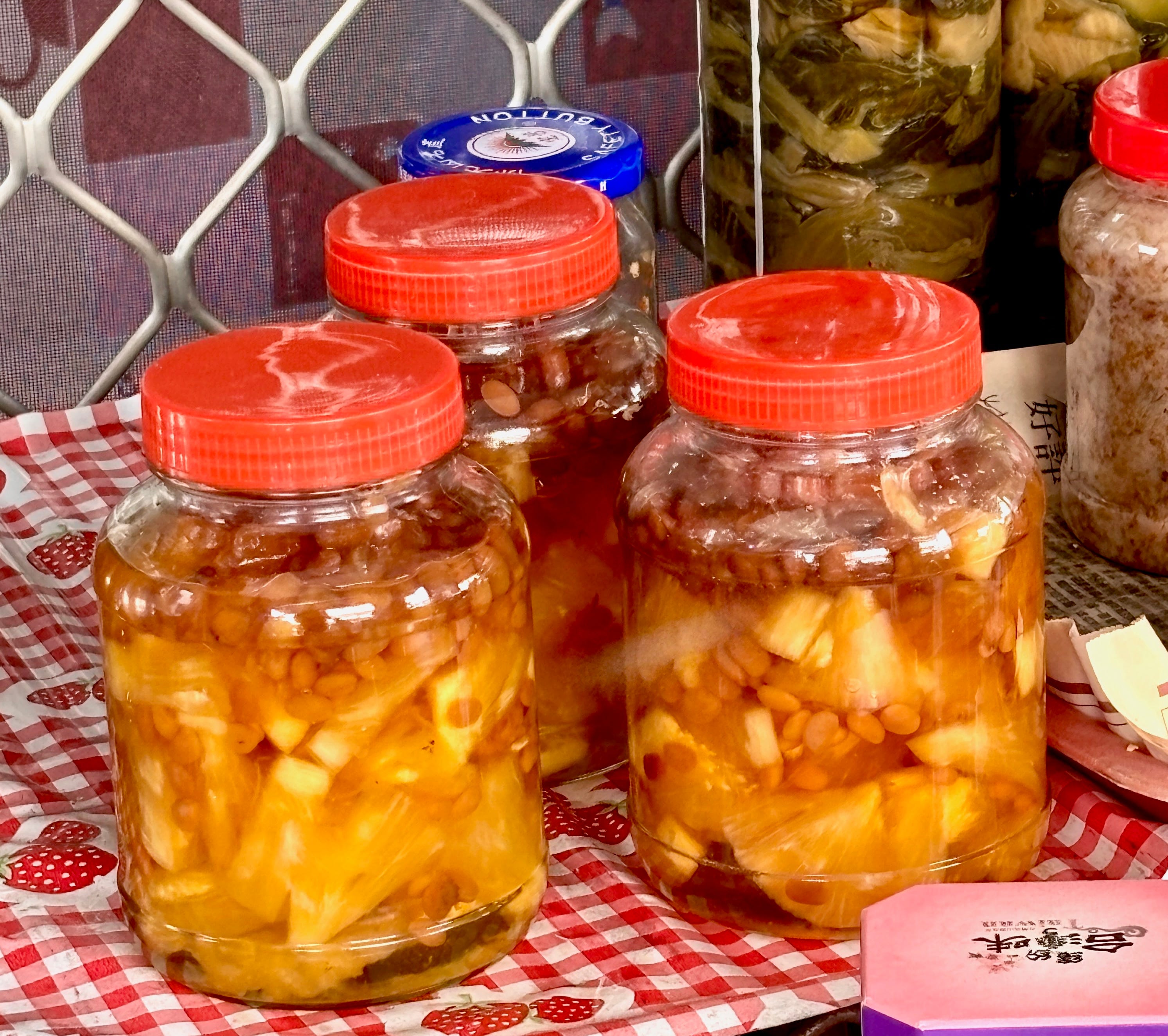
I was intrigued by the fermented pineapple I had while I was there, shown in the jars above, which was saltier than I had imagined. I liked the idea of fermenting the sweet, sturdy fruit, but when I asked my Taiwanese-American friend if he knew how that condiment was made, he asked around but never found out.
Natasha’s book explores the intersection between full-flavored foods and their beneficial properties, with recipes such as Hangar steak with dandelion green salsa, Potato and garlic pie, Farro power bowl with tahini-fig dressing, and Persimmon pudding, because persimmons are rich in carotenoids, an antioxidant that comes with a number of health benefits. I knew there was a reason I liked cake so much…
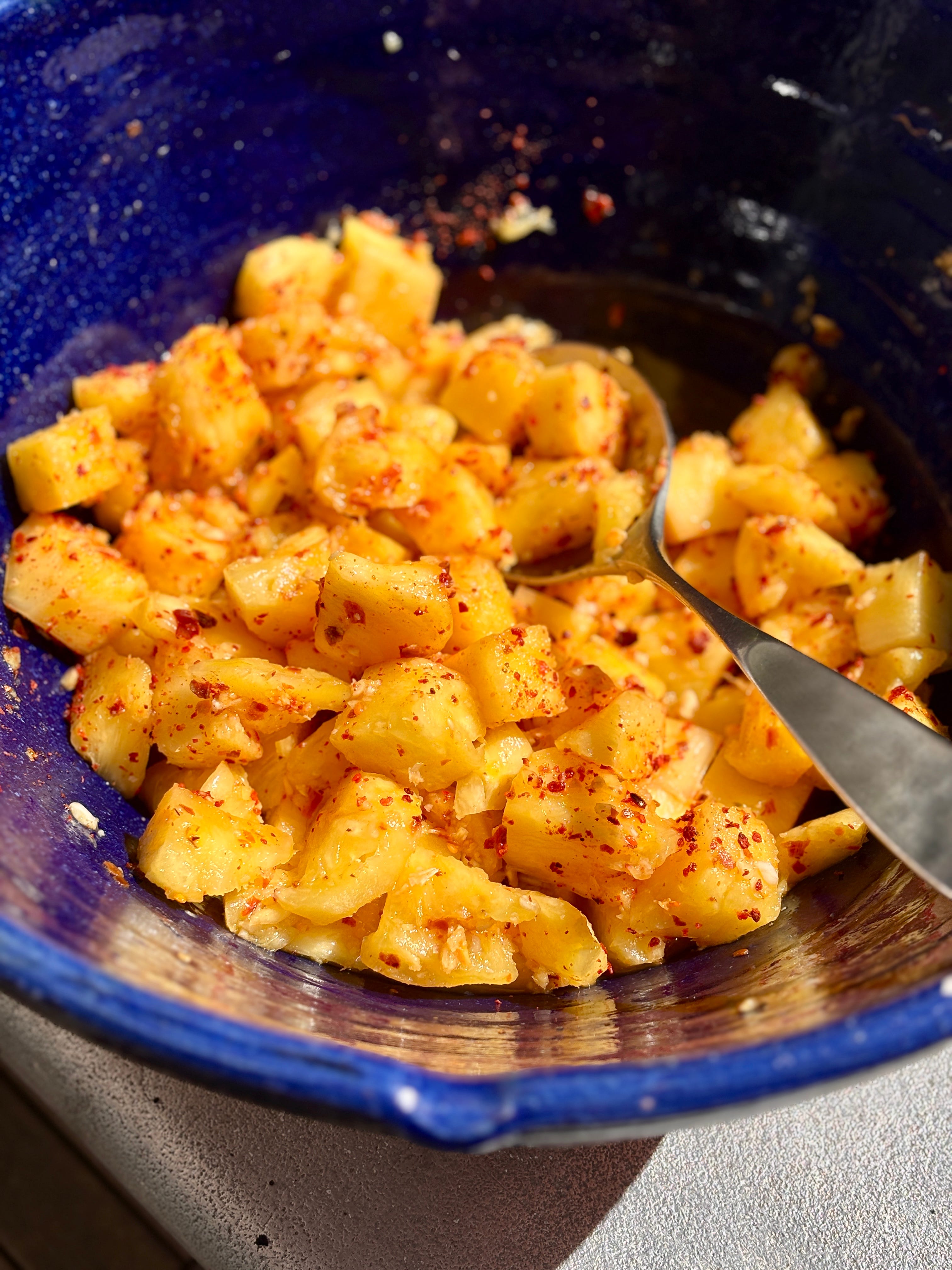
While reading the book, I came across this Pineapple kimchi recipe, which was adapted from another cookbook, Spicebox Kitchen, written by Linda Shiue MD, an internal medicine physician who studies cooking and plant-based nutrition. While my personal philosophy is to eat a wide variety of foods, making sure that I eat a lot of fruits and vegetables, as well as grains and proteins, I certainly don’t deny myself the pleasures of dessert. Otherwise, I wouldn’t have a career.
When I moved to France, way back when, I had trouble finding one of my favorite fermented foods, kimchi, so started making my own, sharing my trials and recipes on my blog. Years later, I wondered if I was going to get into trouble for the kimchi recipes that I’d posted.
Thankfully, the cancellation gods were smiling on me, no doubt realizing that I only had the best of intentions in mind, and to also let people who might not be familiar with kimchi to learn how wonderful it is, and that you can make it anywhere, even in a tiny rooftop Paris apartment.
Cancel me if you want, but I sometimes add pineapple to Thai curries, which lends a hit of cooling freshness against the coconut milk-rich, spicy sauce. But the good news is that I’m off the hook because I just looked it up and Thai people doaddpineapple to curries. Whew, that was close.
I did take a few liberties with this recipe, which called for 3 tablespoons of water, but I used the runoff of pulpy juices left on the cutting board after preparing the pineapple as part of that 3 tablespoons.
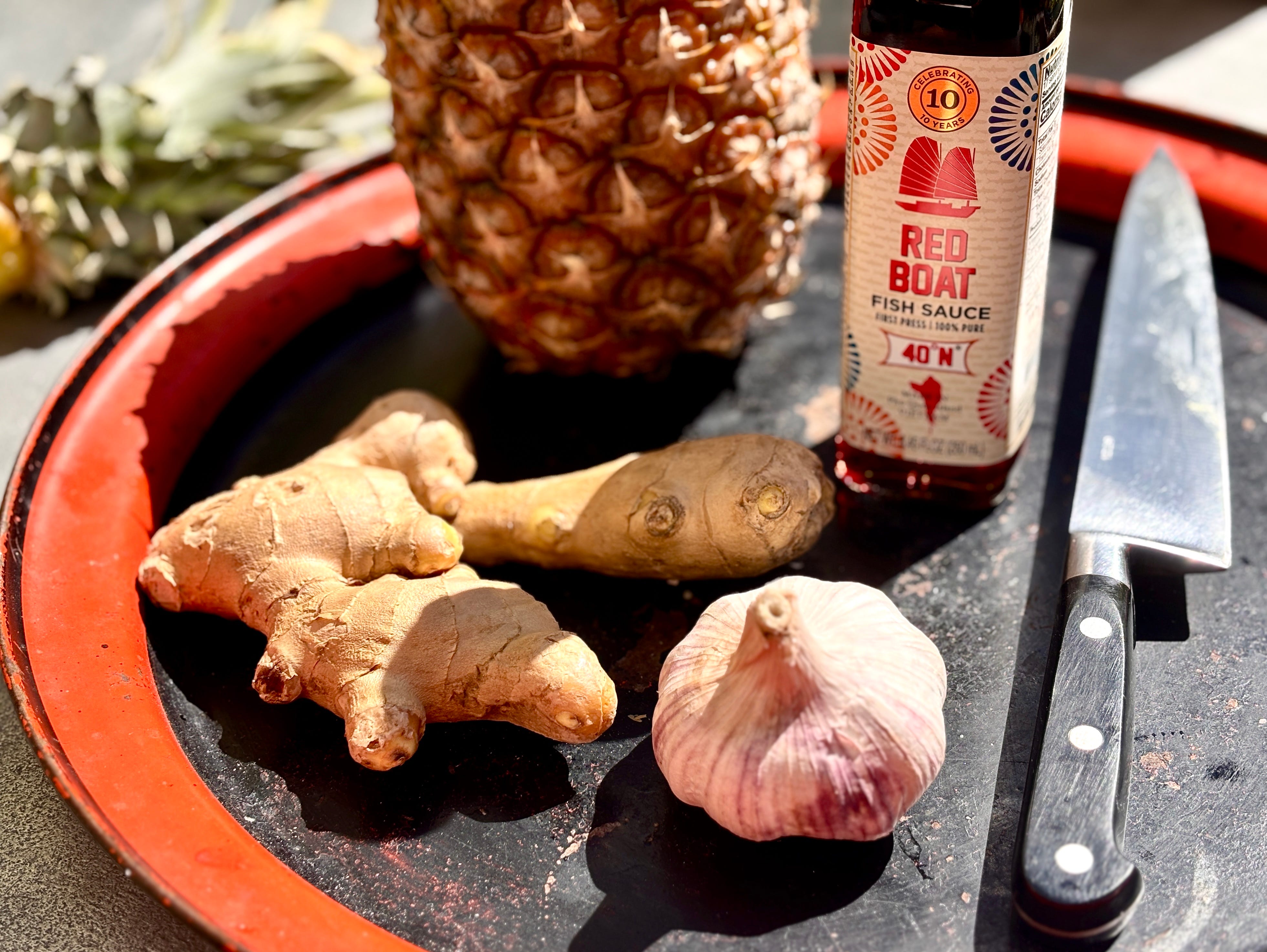
While the recipe doesn’t specifically call for it, I use Red Boat fish sauce. When I went to visit them in Vietnam, I learned that many fish sauces are made with all sorts of seafood. Cuong, who makes RB fish sauce along with his family, said that some sauces are prepared from fish that have been sitting on the boat for a couple of days, whereas the anchovies used in his fish sauce get salted right away to preserve them until they get back to shore. I’m not on their payroll, but his fish sauce is one of those quality ingredients that really does make a difference when you use it.
Speaking of quality, the theory that you can tell a pineapple is ripe ‘n ready is if you can easily pluck out a center leaf from the spiky top, which will only show you how to raise the ire of the people at the market who sell pineapples. The best way to tell if a pineapple is ripe is to sniff it near the base. It should smell sweet and like the tropics. Avoid pineapples with mold around the base or soft, mushy spots.
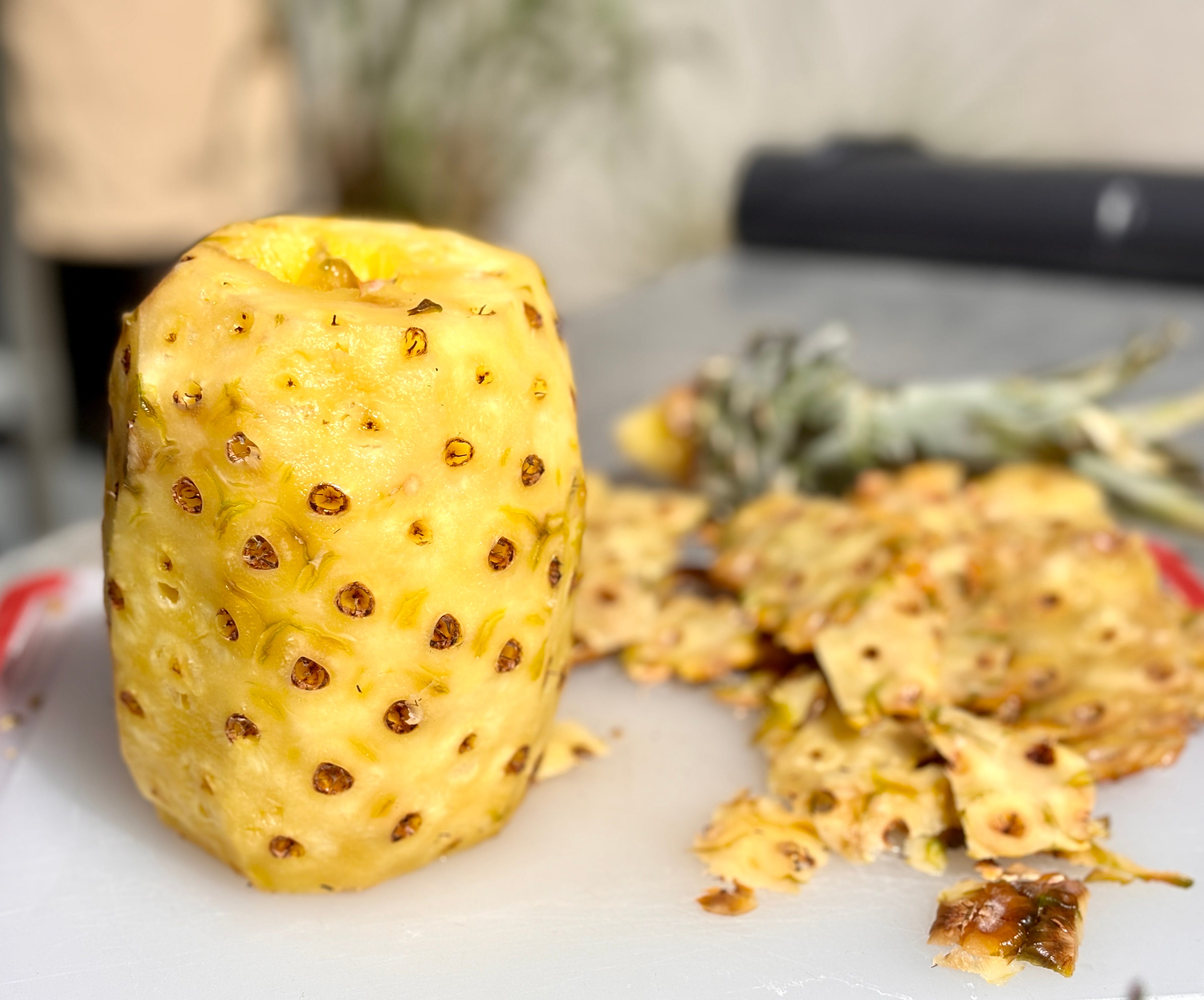
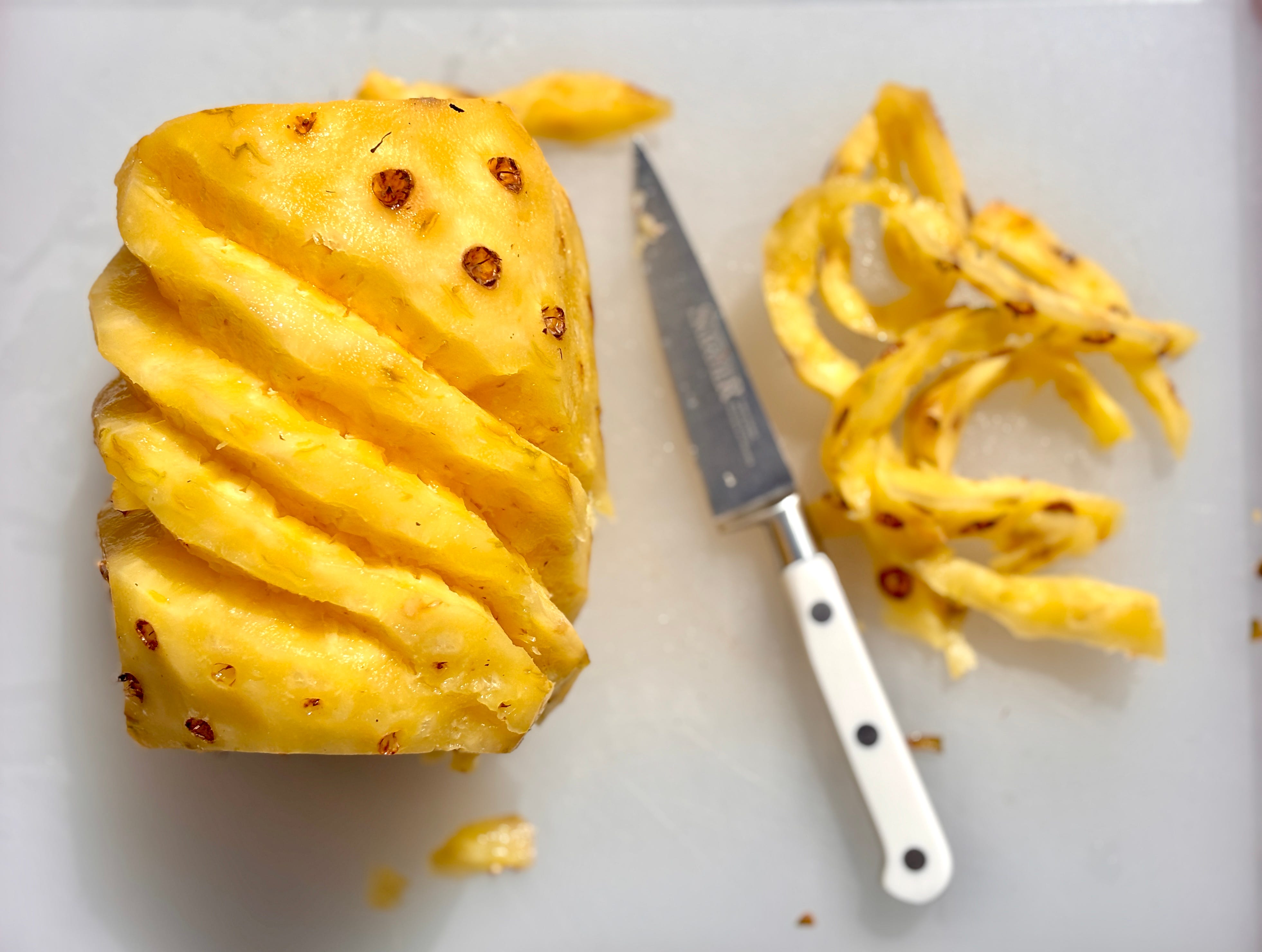
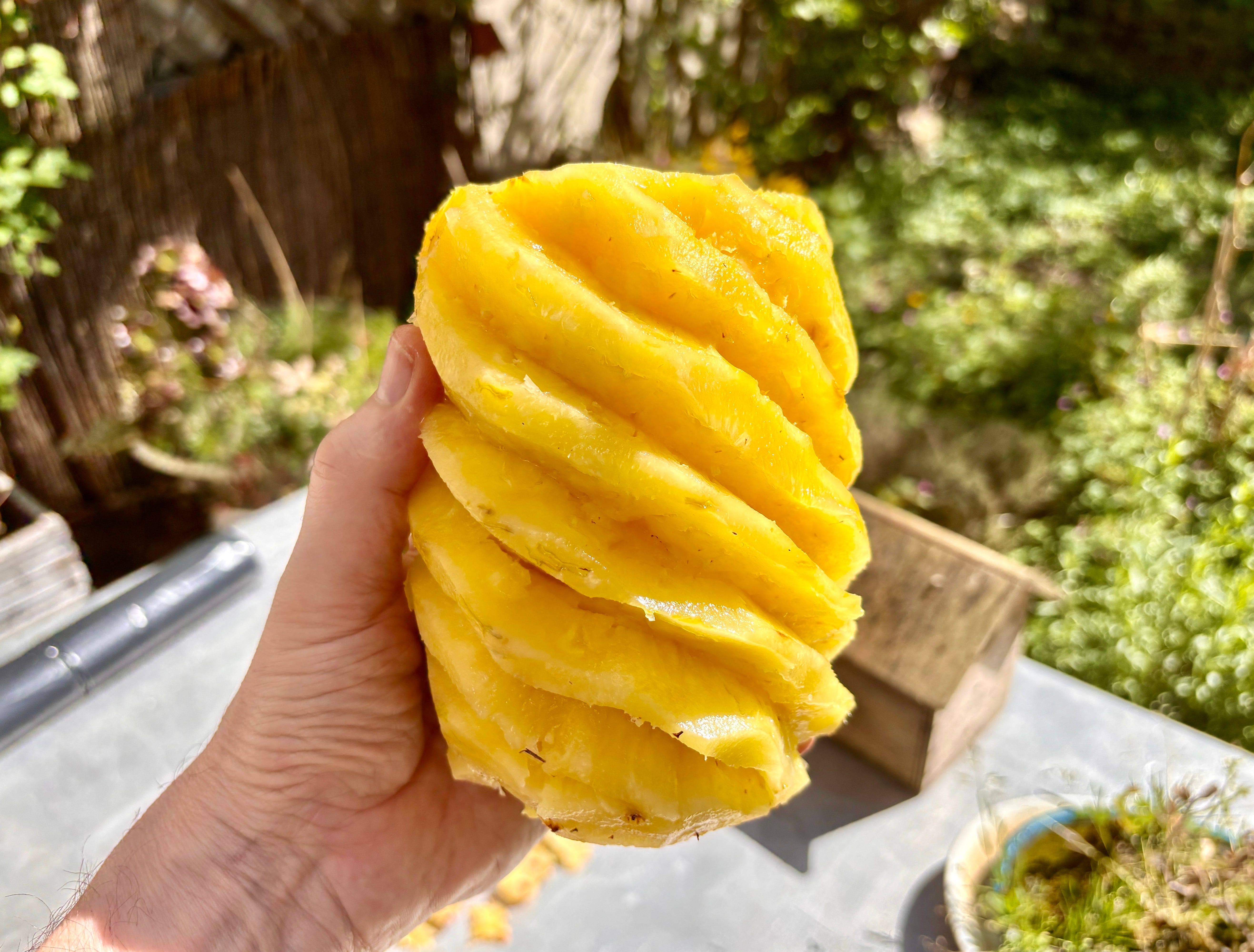
I’ve prepared a lot of pineapples in my time and my favorite way to do it is to lop off both ends, then trim off the skin with a chef’s knife. Then use a knife to cut around the line of the eyes, following them as they spiral around the pineapple, making a V-shape indentation on both sides of the eyes, to remove them. You can also pluck them out with the tip of a pointed vegetable peeler.
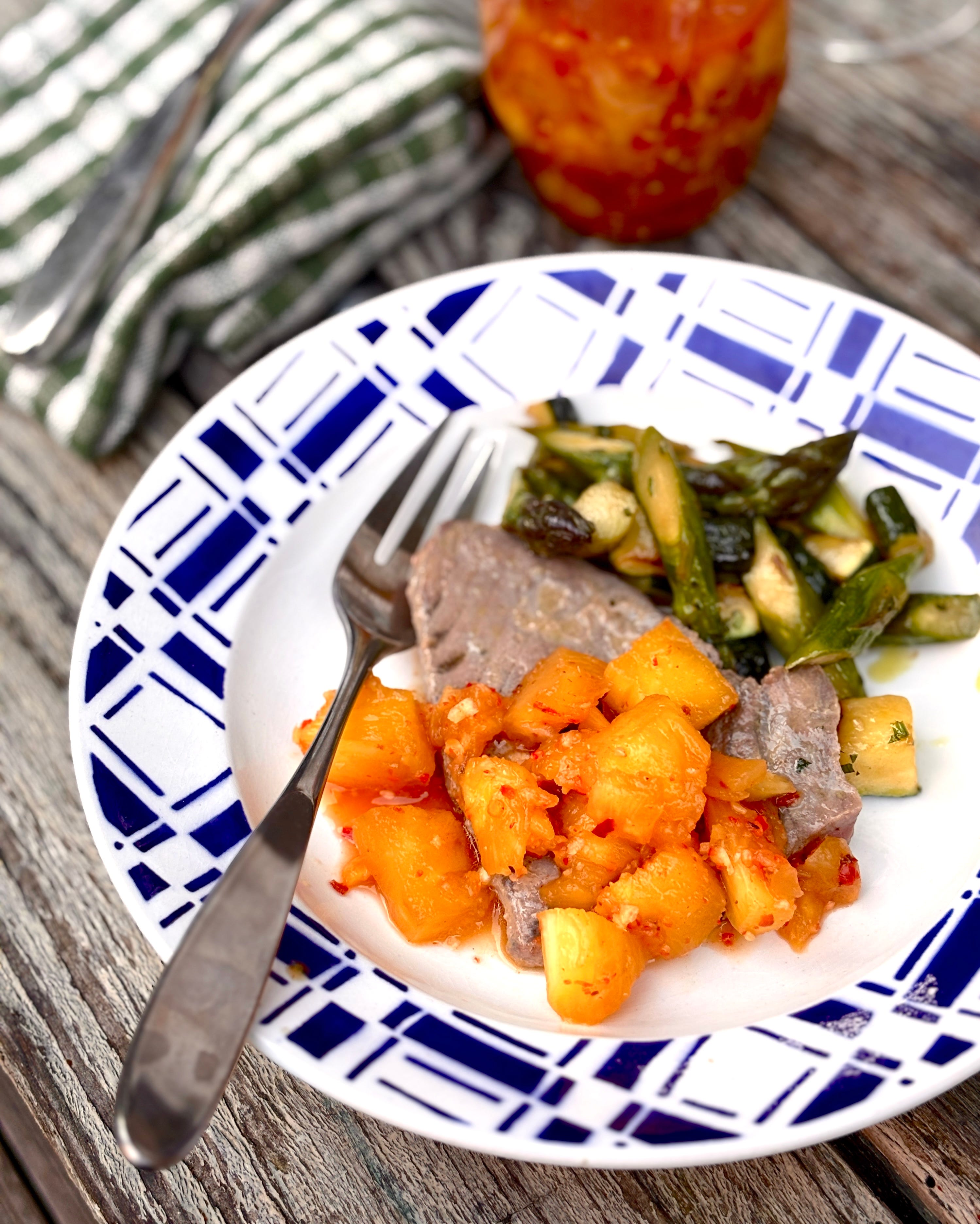
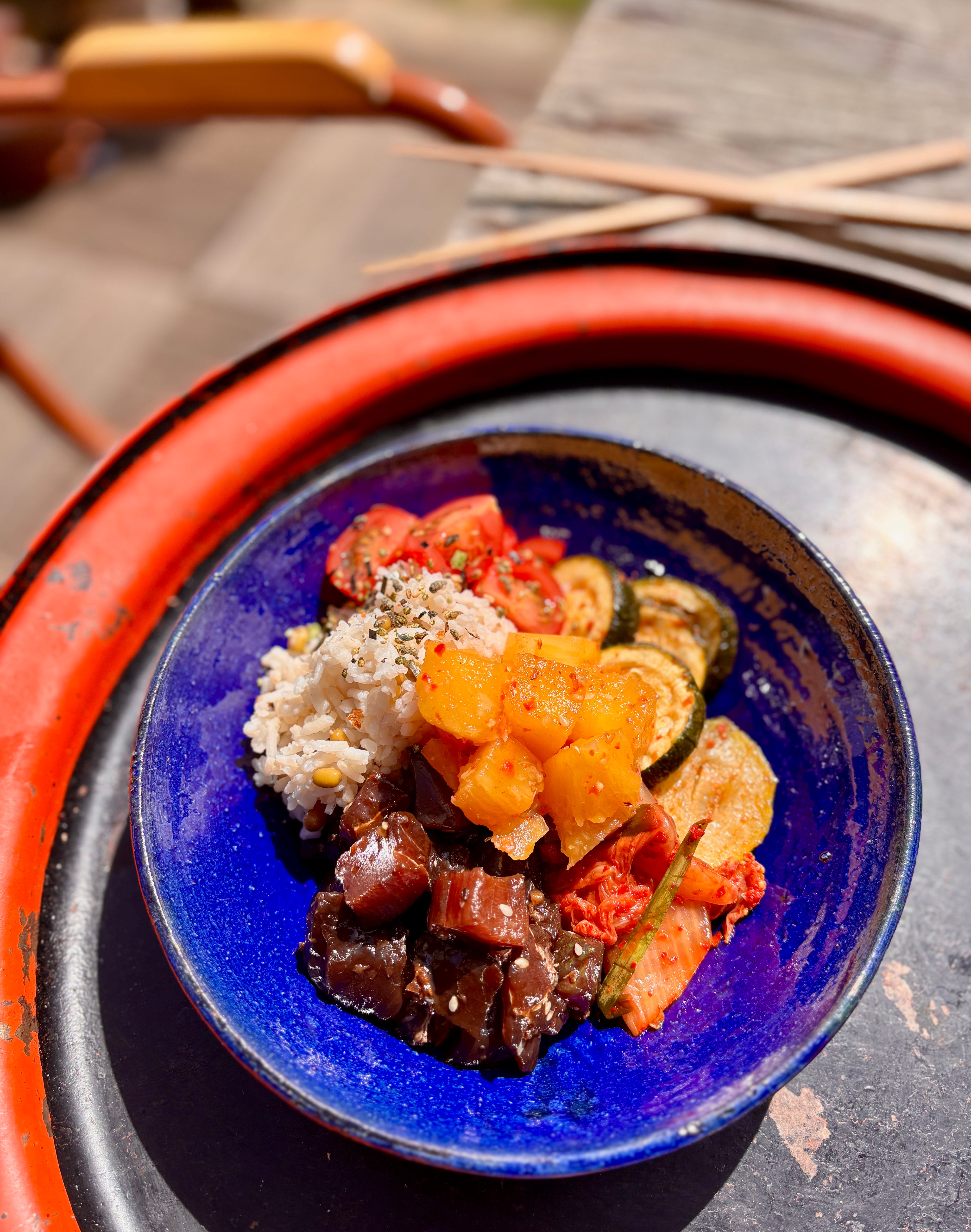
Romain loved this kimchi when I served it for dinner shortly after I made it. This is, indeed, a terrific and fresh condiment that goes well with fish or roast pork, or as a component in a rice bowl, along with tofu or shrimp, pickled vegetables, and whatever else you’ve got to add to the bowl.
While we ate some of this kimchi right away, I stored the rest in glass jars in the refrigerator, and it’s been a convenient condiment to have on hand.
Subscribe to my newsletter to get recipes, stories, Paris tips, and more — sent right to your Inbox! Free subscribers get most posts…and paid subscribers get all posts, as well as the ability to participate in the community of commenters.
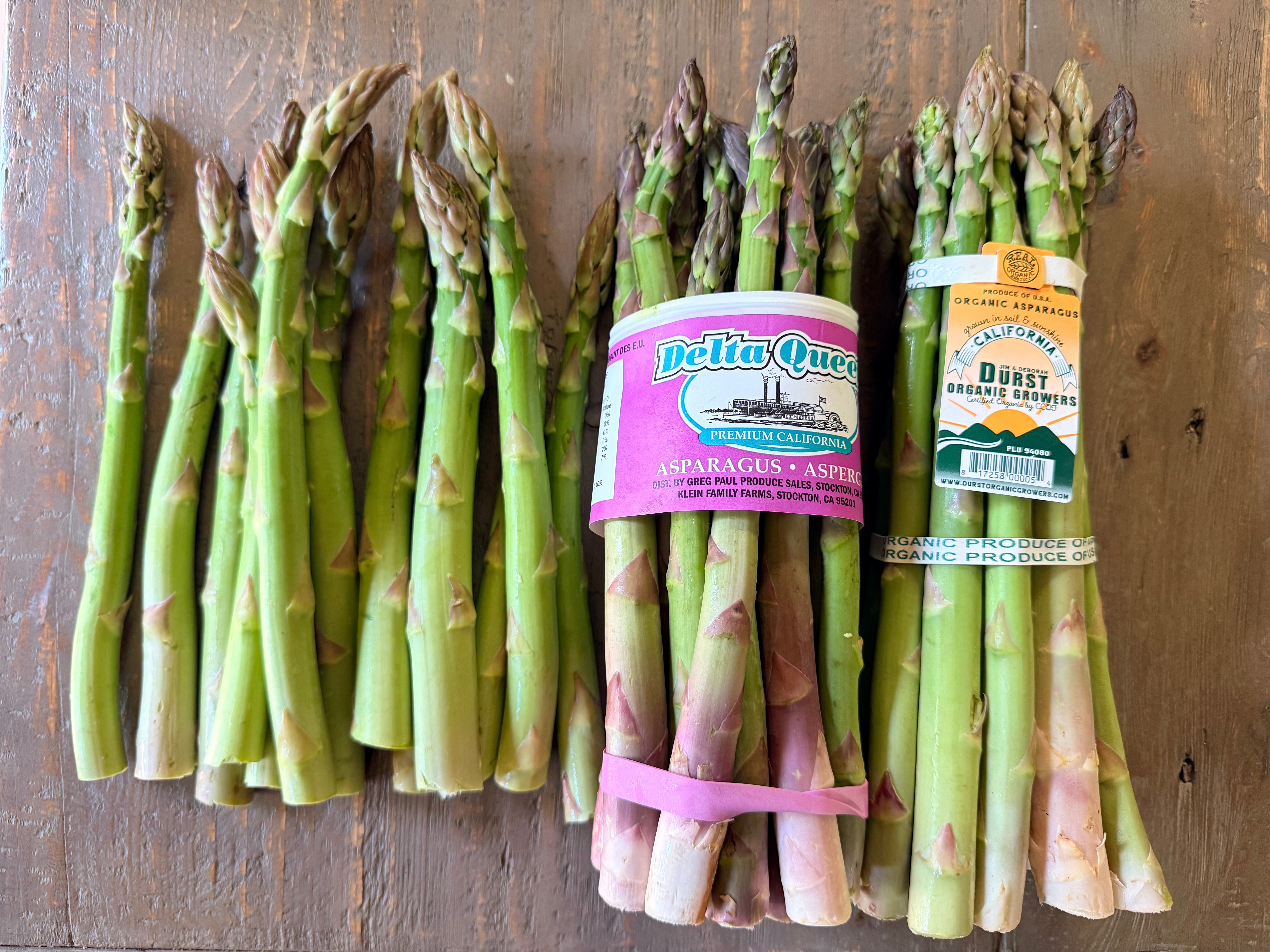
It happens every year. Asparagus appears at the farmer’s market and supermarket and I overbuy. My family loves asparagus, which was introduced to Vietnam by the French. Because asparagus spears shoot out from the soil like bamboo, Viet people called the vegetable măng tây (French bamboo). The disyllabic word is much easier to pronounce than ‘asparagus’.
Because asparagus requires particular conditions to thrive, it wasn’t widely grown in Vietnam. My mom didn’t see fresh asparagus in Saigon until the years close to when we fled in 1975. It was grown in Da Lat along with other Western crops like artichokes, she said. She recalls fat white asparagus that were delicious. For most people, if they could afford asparagus in Vietnam, it came from a can imported from far away.
Asparagus was a foreign ingredient for much of the 20th century. Given that, Viet asparagus recipes in the 1940s leaned mostly toward French-inspired dishes. One asparagus salad recipe called for reheating an unopened can of asparagus (to preserve its shape and texture, I suppose) and then tossing the spears with a simple vinaigrette. That doesn’t sound tasty.
An elegant delicate icon
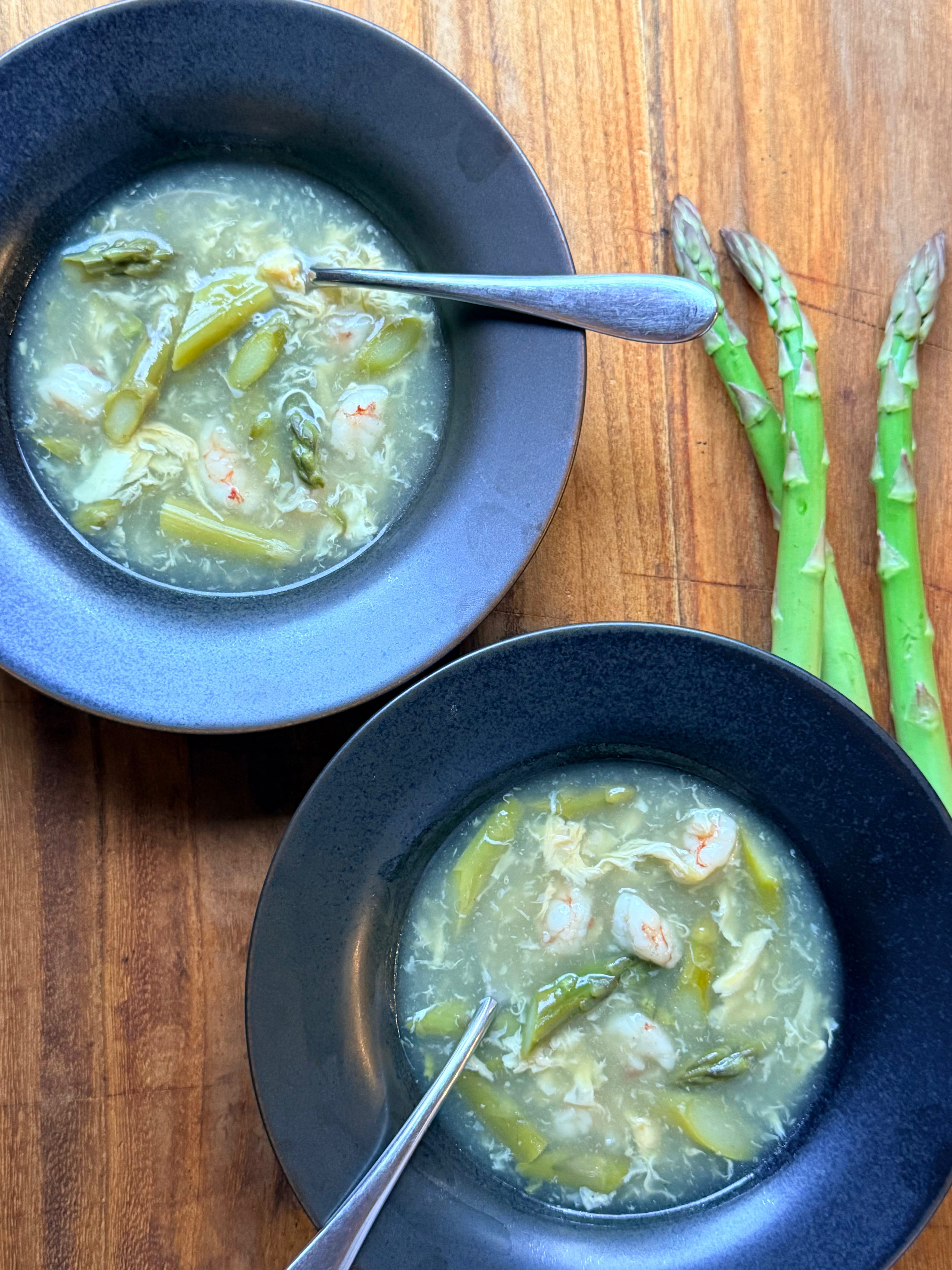
The better tasting asparagus dish that became a fixture in the Vietnamese repertoire was súp măng tây cua — an elegant soup loaded with asparagus and crab. It was and still is considered special-occasion fare because asparagus is a luxe, pricey ingredient.
People traditionally prepared the soup with canned asparagus. Resourceful cooks maximized the asparagus flavor by adding both the spears and their canning liquid to the soup. I know it sounds gross but it tasted good to us.
After we fled Vietnam and resettled in America in the 1975 where there’s fresh asparagus, my mom still made the soup with canned asparagus. She also used canned crab for convenience. We had it as our go-to soup for fancy parties but after indulging in fresh asparagus, I found the canned asparagus soup to be monochromatic in flavor. Over time, my mom just stopped making the soup.
Fresh asparagus is the better way to go for the soup and I’ve turned to making it with fresh spears for years. I’ve also converted my mother.
I thought my approach went against Vietnamese conventions but noticed that Vietnam has recently been growing asparagus to export to Taiwan, China, Japan and South Korea. Cultivating asparagus, a pricey vegetable, is building economic opportunities for impoverished parts of Vietnam. It’s been dubbed as the “king of vegetables” and “green gold”.
Exports are one thing but more cooks in Vietnam are experimenting with fresh asparagus recipes. Asparagus is healthful, which Viet people (like everyone else) dig. It’s low-cal, high-fiber, and antioxidant rich. Its high folate content is good for fighting cancer. I just eat the spears for flavor but heck, I’ll take the health boost too.
All of that cheered me to no end. It’s one thing for me as a recipe developer to adapt and evolve ingredients for my expatriate situation, but knowing that people in Vietnam are using similar ingredients means that my ideas jive with what’s going on in the motherland.
This past week, I experimented with my favorite asparagus soup recipe to make it super weeknight friendly. I had a lot of asparagus on hand and ended up devising two super flavorful recipes that you can take in many directions. You’ll be well covered by the contents of this dispatch, which includes:
2 flexible asparagus recipes to please omnivores, pescatarians, vegetarians, or vegans
A how-to video to walk you through the trickiest part of the recipe
No-waste cooking tips because asparagus and seafood are expensive
Explainer on how this umami-laden soup’s flavor comes together (so you can apply those ideas elsewhere)
Advance prep pointers that enable you to easily slide this recipe into your rotation
If you love the springtime vegetable as much as I do, now is our moment to fully enjoy their unique flavor, texture, and healthful benefits.
Thank you for being here. Paid subscribers sponsored this Sunday Special dispatch. Join us at any level to get in on the action. Become a paid subscriber for the full Viet asparagus soup plus many other recipes, insights, and benefits. Your support matters.
Use this granola recipe as a blueprint for countless batches of homemade granola at a fraction of the price of store-bought. It’s insanely easy to do (just 10 minutes of actual effort required), lower in sugar, and so much more affordable! Some Things Are a No-Brainer to Make Yourself Believe it or not, there are […]
If there’s anything that’s been consistent about this site in its near-20 years of beaming (babbling?) hypertext to servers and back to you, it’s that I’m very bossy when I get into something new, especially cocktails. When I fell in love with Porch Swings, I wanted you to as well. Ditto for Blood Orange Margaritas (but only when in season), a Perfect Manhattan era that spanned over a decade, Boulevardier that has been woven into almost every year since, and a Slushy Paper Plane phase last year. This past winter and spring still, it’s been Sidecars, 1920s-era cocktails with about as many conflicting stories as my kids regale us with when they didn’t do their homework.
This black truffle rice is an example of a “ban fan” (拌饭) or mixed rice dish. It makes everyday white rice delicious and elevated, and gives your meal a little extra oomph! Black Truffle is Trending in Chinese Restaurants Black Truffle has quickly become a regular fixture on Chinese restaurant menus. I’ve seen it used […]
Are you familiar with socca? If not, please let me introduce you! It’s basically a rich, savory and salted chickpea flour pancake cooked in piping hot olive oil. The edges are crispy and chewy, the insides are flaky and tender, and the bottom is lacy and golden. It is just so good. You’ll have to try it.
Socca is a street food popular in Nice, France, with origins dating back centuries (it’s closely related to Italian farinata). I had the chance to try the real deal on our honeymoon, and I’m obsessed with this homemade version.
To make socca, you’ll need a bag of chickpea flour (I like to use Bob’s Red Mill, which is available in well-stocked grocery stores). You probably have the remaining ingredients already—olive oil, water, salt, pepper and cumin. That’s it! You’ll find step-by-step photos and a brief cooking video below, followed by the recipe.
Among my 2026 goals is to try Substack’s live streaming function. Let’s do it next week:
When: Thursday, 4/30, 11-11:30am PST / 2pm EST / 7pm UK
What: Ask Me Anything (AMA) about Fish Sauce + uncommon fish sauce (I have some unusual fish sauce that I’ve never tasted before so why not register my opinion to you on the spot?!)
How to attend: You’ll get an email ping when I go live. I will also schedule it in Substack’s Notes app. Attend to ask your questions in the chat function. If you can’t attend and have a question, leave a comment in this dispatch. After the livestream, I’ll share the video so everyone will get the recording.
Now, as for my mom’s stove . . .
When you cook a lot, your stove is your BF (best friend). My parents bought a new tract house in the late 1980s and it came with an ok cooktop. By the early 2000s, my mom had put that cooktop through its paces and it was crapped out. She soldiered on because the first house she and my dad bought in the late 1970s still had had its original stove from the early 1960s. So anything was an improvement! Mom learned to cook using rice straw (really!) and can bake cakes using indirect coal heat and a flimsy metal box. My how times have changed!
Around 2010, a lady in the neighborhood was doing a kitchen renovation project and set her old cooktop out on the sidewalk with a “For Sale $100” sign.
That neighbor owned a swank home appliance shop, my mom said. The shop’s appliances were nice so my mom figured that the stove was good. After the cooktop languished for a few days with no takers, the sign changed to “Free”.
My dad promptly went over and brought the cooktop home. A handyman happened to be working for my parents that day, so within an hour, my mom had a “new” stove — a fancy-ish 36-inch, five-burner GE Profile.
The stove was well used before Mom got it but was reliable. She’s cooked on it for big family feeds, to prepare my dad’s last meals, and now, to cook for herself and her children whenever we’re around.
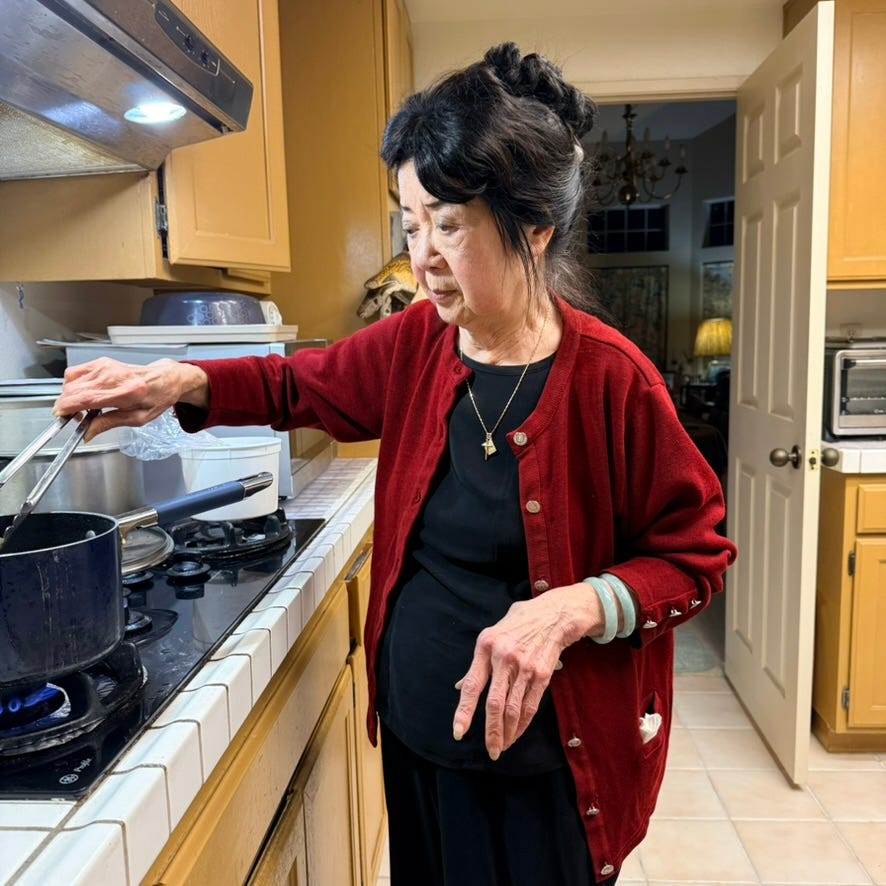
Mom at her very well used stove.
A couple weekends ago, we visited my mom and after we came back from a walk, Rory and I both smelled gas in the house. My mom was watching Viet shows on YouTube. I marched over to the stove and turned all the nobs to check. Sure enough, one of them was not fully turned off.
Thankfully, the smell dissipated right away.
“I smelled something and went to the stove to check but could not figure out how to stop it,” my mom said. “The same thing happened not long ago.”
The next morning, to my surprise mom said, “If you’re not busy today, would you take me shopping for a new stove?” Heck yes. I had lots of experiencing going back to when I selected my dream stove.
I’ll look online first to research, I told her. Her major caveat is that she wanted to touch the stove before deciding, she said.
Mom, Rory and I drove to Lowe’s where we considered the arrangement of the burners. Why were some curved and others straight? Thinking about how we cook and the pots and pans we have, my mom and I realized this: a curved arrangement of the burners means you can fit bigger pans along with smaller ones on the cooktop.
Additionally, the grates vary in weight and height. My mom lifted the grates of various cooktops and some were very heavy — even for 30-inch models. She had to get a 36-inch cooktop so she knew the grates would weigh more. “I will manage them,” she said.
The burners on her old stove were wimpy (none were more than 9,000 BTU but the cast iron grates heated up fast. The stove that Mom chose . . . a GE Profile was the priciest of the lot but she decided based on function and design. After 51 years of scrimping and saving, she bought herself a fancy new stove! I was so happy and excited for her.
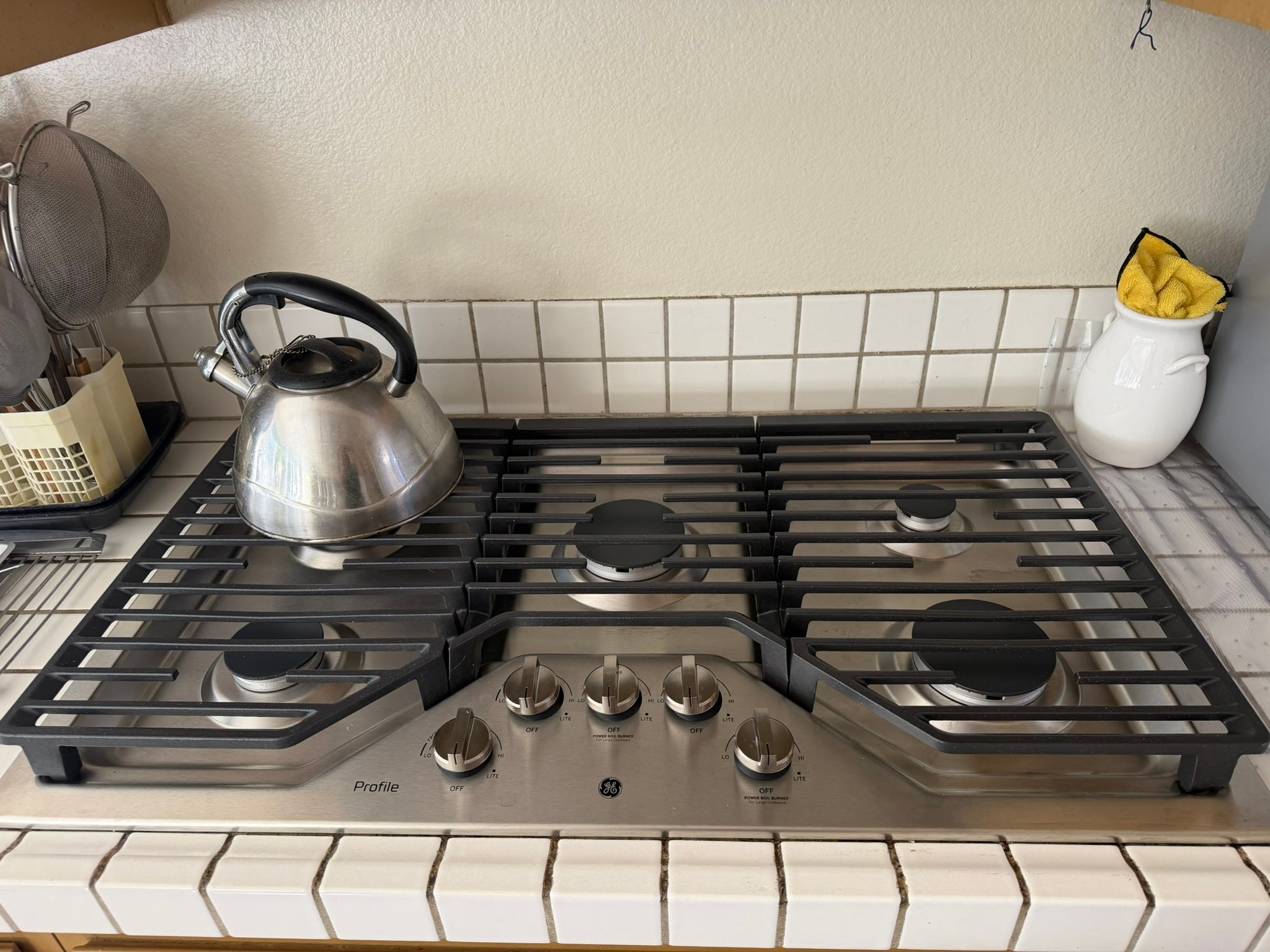
The new stove!
She and my niece dealt with the installer who arrived a few days later. The grates sit up pretty high, as you can see. The flatness of the grates allow her to drag heavy pots across the stove easily, if she wants.
HOWEVER, once she started “making friends with the stove” my mom said that the burners were taking longer to heat up the pans than her old stove. The new stove’s flames heat up the grates so it takes longer to conduct heat to the pans. But after everything heats up, things stay very hot for a long time.
Moreover, when the knobs are on, there’s a blue backlight. That’s a fabulous reminder to turn off the stove.
“Your sisters wanted me to replace the toilets in the house so we did. But this stove is a more important purchase for me,” she said.
My mom is in the autumnal season of her life. Decades ago we talked about beginnings and nowadays, discussions lean toward endings. This stove, however, energizes my mom. She’s excited about learning to use it well for her cooking needs.
I told her, “Well, you better stick around longer to teach me how to cook more dishes!”
Remember our discussion about aging and maintaining the Japanese notion of ikigai (生き甲斐) — a life purpose? Turns out, ikigai can come in the form of a new stove.
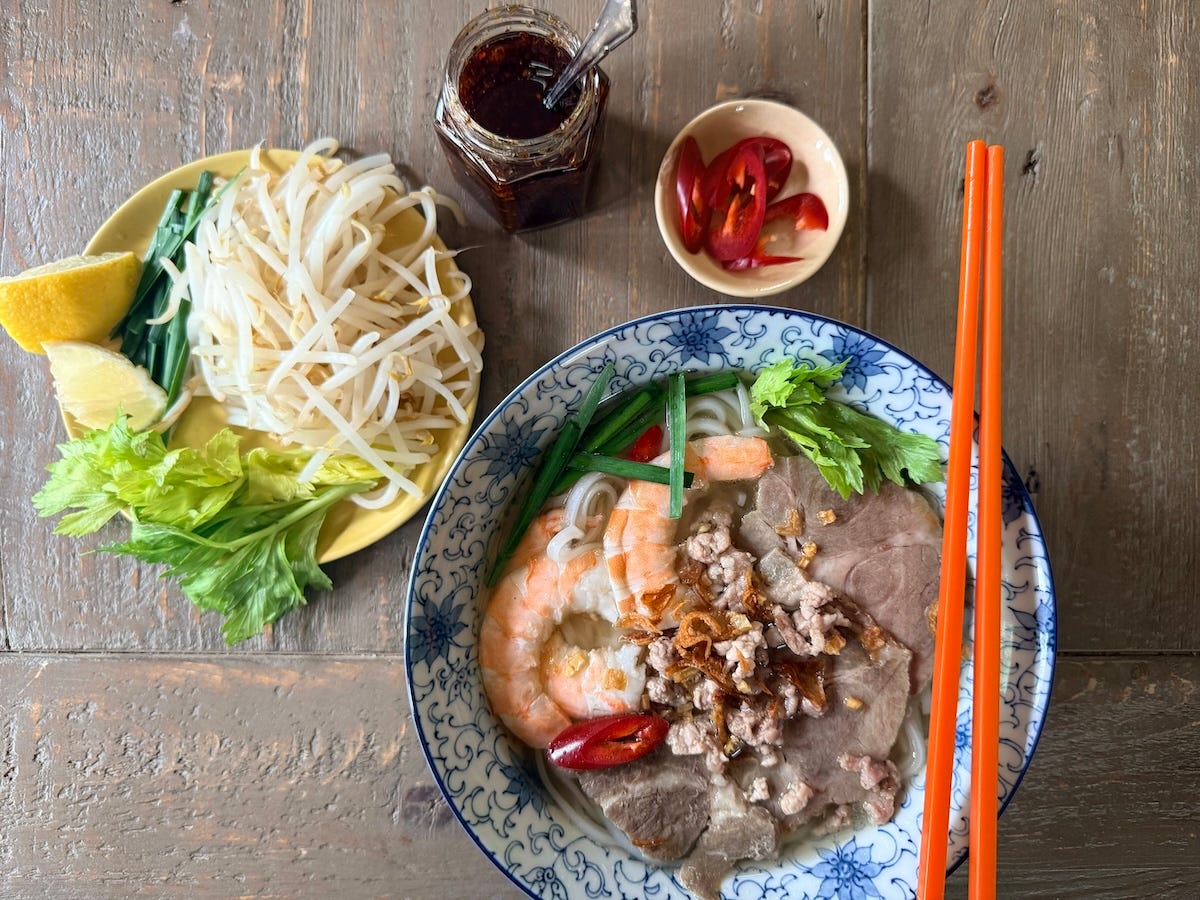
Even though my mom is northern Vietnamese to the core, she does appreciate a good bowl of hu tieu, the iconic southern Vietnamese noodle soup. There are many renditions but the one our family enjoys most it hu tieu Nam Vang — Phnom Penh-style hu tieu. It’s a Chinese-Cambodian-Southern Vietnamese surf and turf combo.
Hu Tieu Nam Vang — a surf-and-turf classic southern Viet noodle soup.
I don’t make it often but thinking about what I’d like to make for my mom on her new stove, I made hu tieu this past week from a recipe that my family has relied on for many years. Unlike pho, it’s very versatile. I updated the recipe to offer tips and pointers so you can plan ahead and tweak it as you like. Get the Hu Tieu Noodle Soup recipe at the website!
💎 Stress-testing lemongrass tofu
As a recipe tester, I leave food in the fridge to determine how long it stays fresh. That’s to say, I stress test my recipes. I’m happy to report that the crispy lemongrass tofu and its crispy lemongrass-y topping can be kept refrigerated for five days. I kept the stuffed tofu in one container and the topping in another. I finished the tofu in the pan and served it up for dinner on Wednesday. So, it’s extra handy for meal planning or even just to top a salad. Head to the PTFS Crispy Lemongrass Tofu recipe!
Support Pass the Fish Sauce! Join us for free or upgrade to a become a paid subscriber to enjoy 125+ professionally developed recipes, seed new content, and get future class discounts. Thanks for your enthusiasm!
Coming up for this Sunday Special are recipes and ideas to celebrate a precious springtime vegetable.
A comforting Korean beef noodle soup topped with tender beef and spicy seasoned buchu in a clear anchovy-kelp broth. A flavorful and nourishing one-bowl meal.
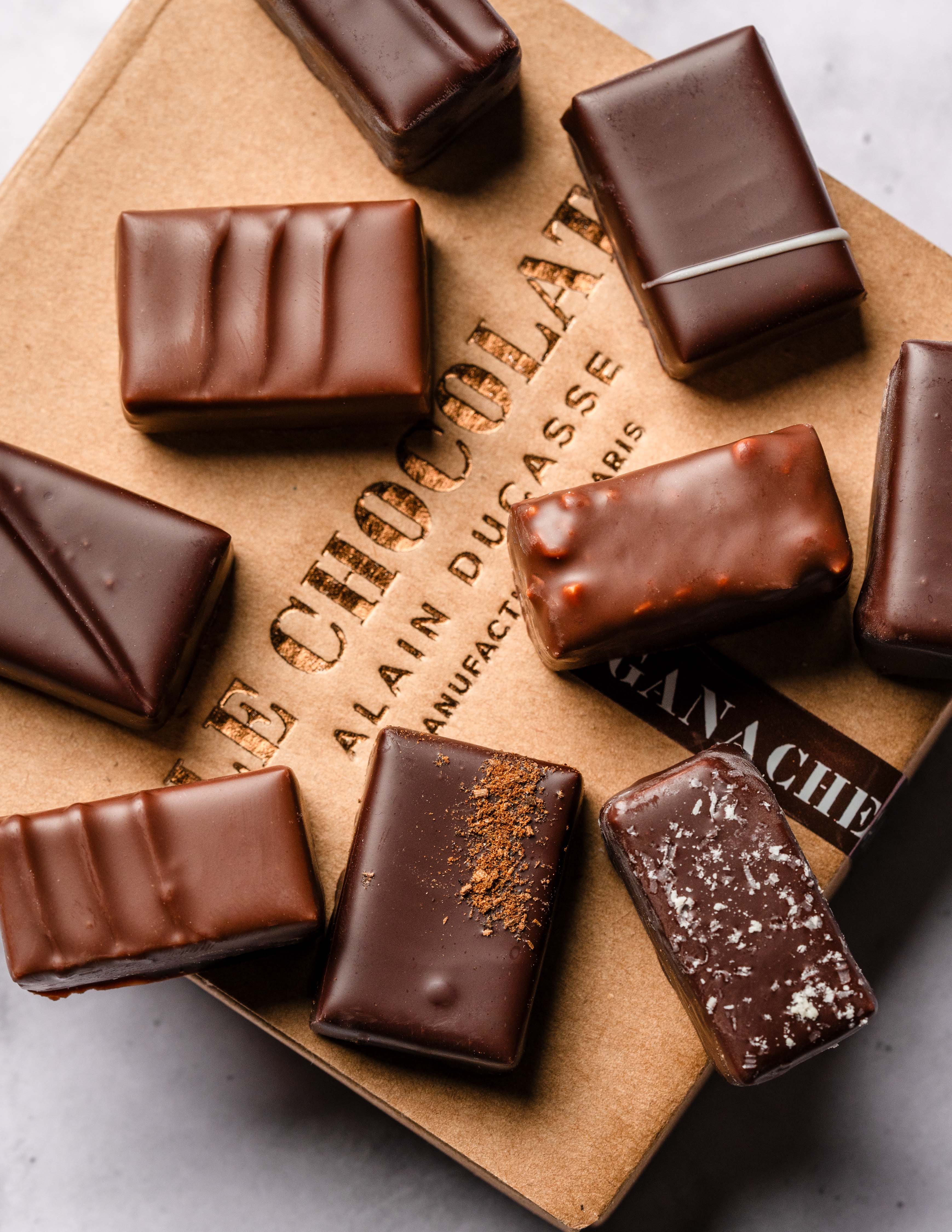
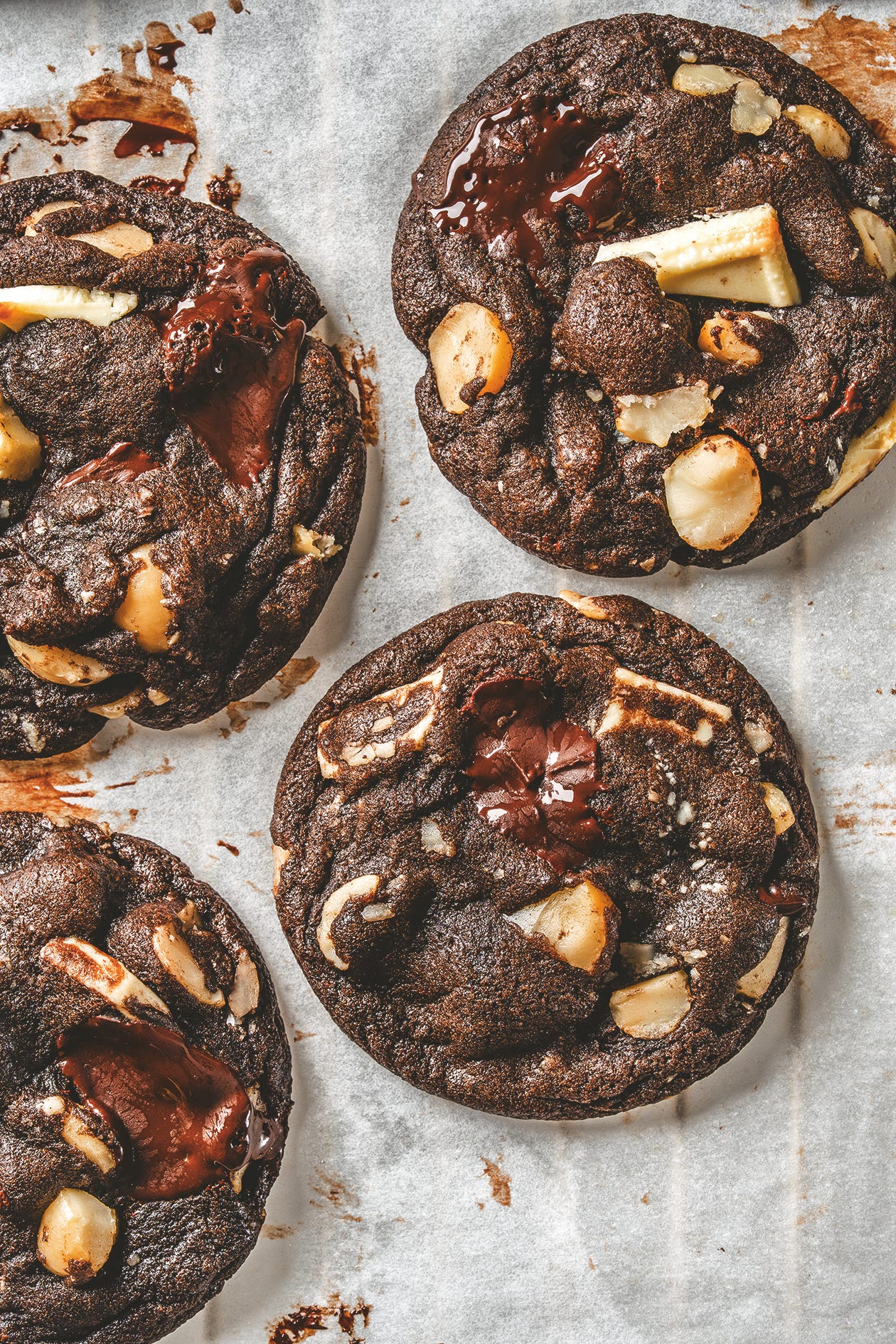
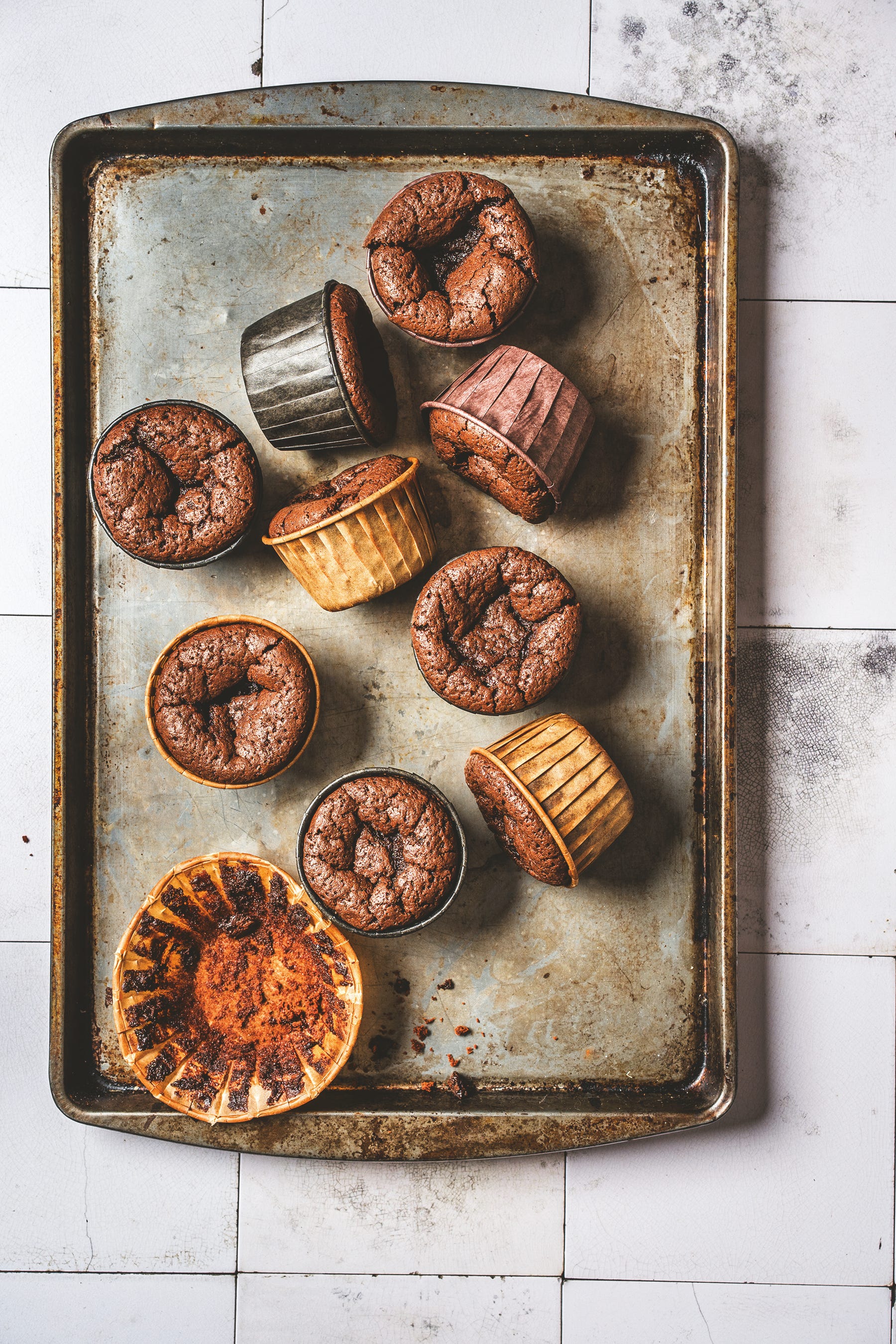
I’m very excited for the release of my newest book, The Great Book of Chocolate. This totally revised edition is filled with lots of new information about the world of chocolate, as well as a chapter on my favorite addresses for chocolate in Paris, and, yes, there are over 50 recipes that span the world of chocolate, including a chocolate cake from the late, great MaidaHeatter that she appreciated so much she sent me a letter about it…
Due to global events, it was a challenge planning an overseas trip, and some venues weren’t available on shorter notice. But I will be going to four cities — New York, New Jersey, San Francisco, and Los Angeles. Alas, I can’t visit all the places I wanted to go, but you’re welcome to come visit me wherever I am. And yes, I’ll be doing an event in Paris, in late May, if you fancy a trip to Paris! 😃
If we missed each other and you want a signed copy of The Great Book of Chocolate and Ready for Dessert, get in touch with Kitchen Arts & Letters, Omnivore Books or Now Serving LA, and they can send you a copy! -dl
Below are the dates for the events. Note that a number of them are ticketed, which usually includes the price of the book. Ticketed events also help support the bookstores and ensure that a book will be available for you. If you have questions about events, feel free to contact the venue directly.
May 5th: Release of TheGreat Book of Chocolate, which is now available for pre-order. Pre-orders will arrive on, or very close to, the release date. It’s available at these retailers, or order a copy at your local bookshop.
May 30: Booksigning at La Trésorerie Rive Gauche (48, rue de Grenelle, 7th, Paris), 3pm to 4:30pm. Copies of The Great Book of Chocolate and My Paris Kitchen will be available for sale and signing.
Please note that events are subject to change and revision (like everything these days…*sigh*), although we’re hoping that doesn’t happen. If anything changes, I’ll do my best to post about it but you’re welcome to contact a venue before an event to confirm the time and date, or if you need additional information.
Wor Shu Duck, also called Mandarin Pressed Duck or Almond Pressed Duck, was a popular Cantonese dish in Chinese and Polynesian-themed restaurants in the United States in the 1950s-1980s (right alongside the famous Pupu Platter). Known as wor shu opp in Cantonese, this dish is now seldom seen on menus. We’ve gotten countless requests for […]
My toe is healing up well and thankfully I wasn’t limping at last weekend’s Viet Book Fest in Orange County’s Little Saigon. Alas, I’m still not quite up for my usual long daily walks.
Not being as active as I’d like to, I’ve been trying to eat a bit lighter. I’ve been air-frying lots of tofu in the Ninja Combi oven, which excels at air-frying without leaving foods desiccated and chewy awful.
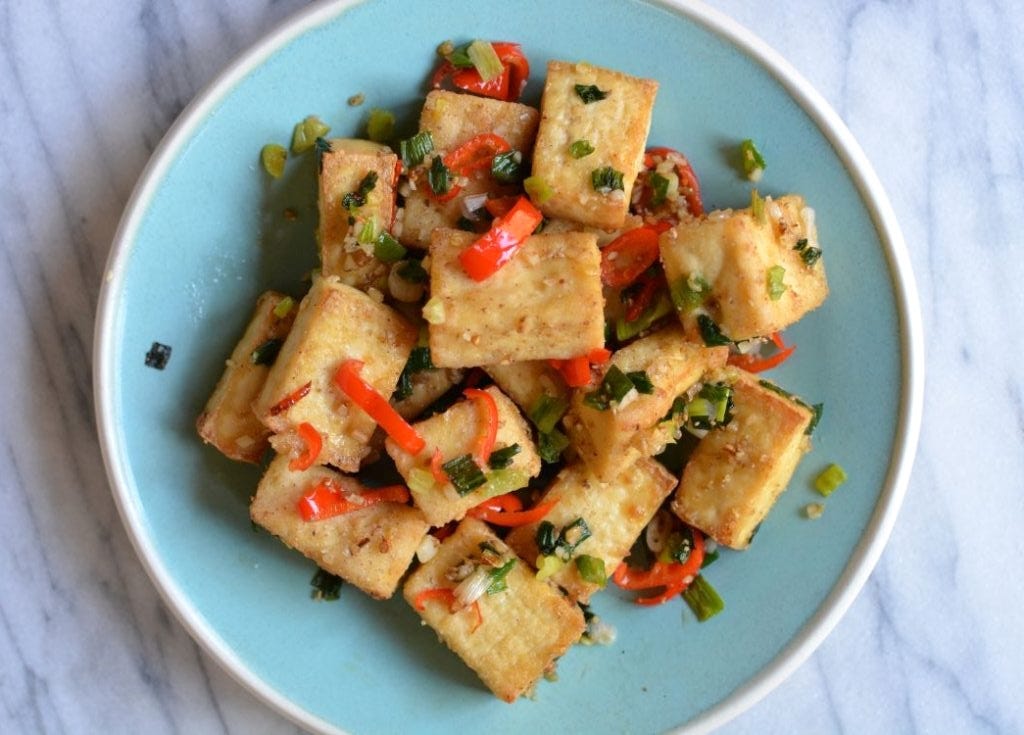
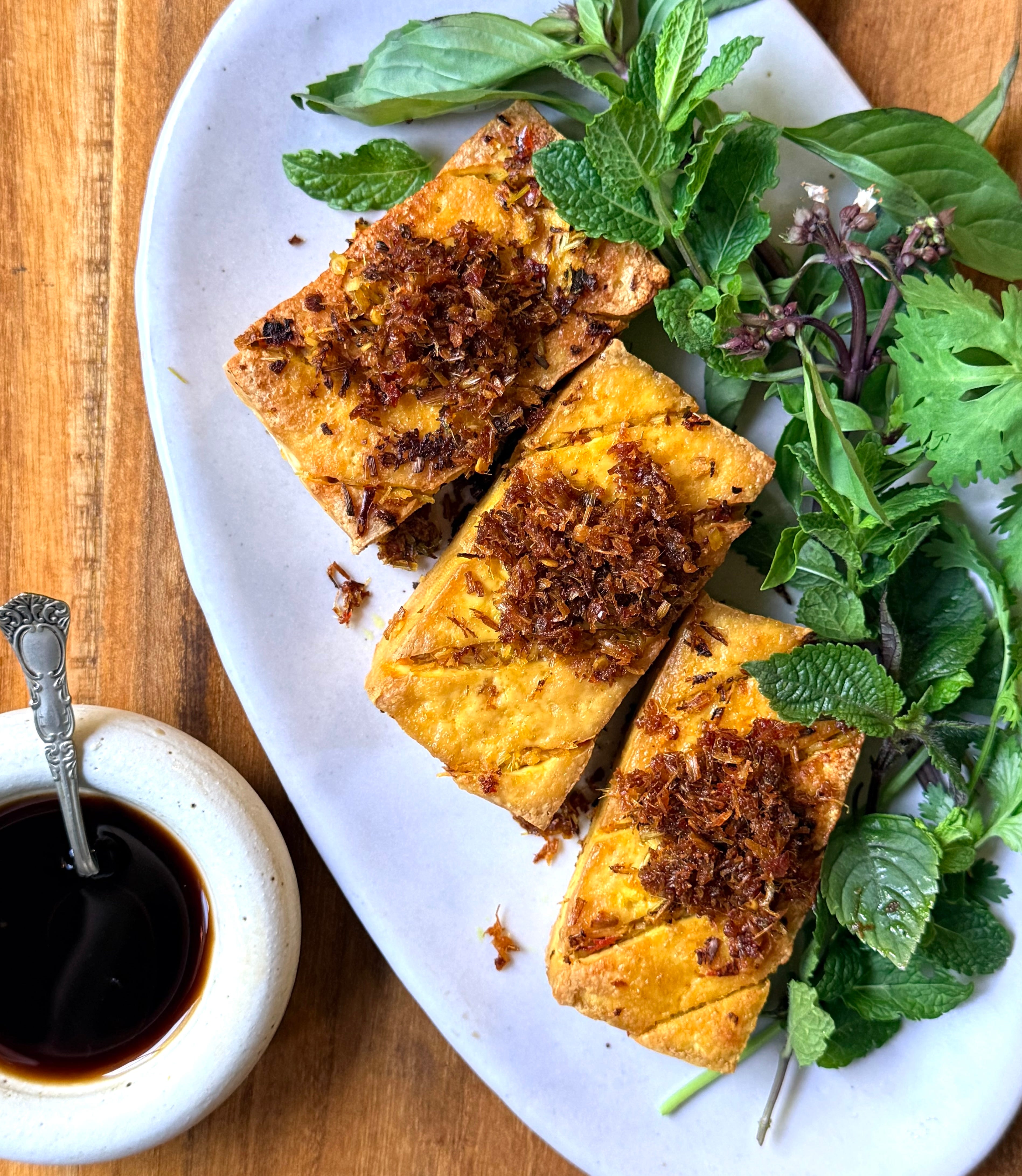
Feeling lucky, I reworked my Vietnamese chili-lemongrass tofu (đậu hủ chiên xả ớt) recipe so it’s prepped in the air-fryer. I love this dish, which I first ate as a deep-fried bar snack (món nhậu) in Ho Chi Minh City years ago. At the brewpub near our hotel, everyone sipped beer from utilitarian bowls. My travel buddy Karen and I joined in on the fun and ordered a bunch of snacks to make a dinner. This lemongrass tofu was the evening’s standout.
Even though I developed a recipe for this tofu several years ago, this past week, I retooled it to air-fry the tofu and make it easier and crispier! Shazam, it was even better. ⚡️
Make lots then dole it out over days! That’s the extra beauty of this recipe.
This fried lemongrass tofu tofu is so good that I made a lot, actually too much. In the process, I realized that it can be totally prepped in advance for easy meals during the week. Trot it out to enjoy with jasmine rice as a main dish, or feature it in a bun rice noodle bowl or grain bowls. Add Viet daikon and carrot pickle for refreshing crunch.
Like Rory, you probably worry about my crush on the Ninja Combi oven. I was skeptical about the steam oven but it’s does do a lot for your for $200. As I’ve played with it, I’ve discovered that one of its most outstanding functions is air-frying. In particular, it outperforms by trusty Cuisinart to air-fry tofu to a golden crisp.
The Ninja combi doesn’t just blow hot wind on food. It smartly air-fries food to circulate the heat and bit of oil that you put on the food. The result is wonderful crispiness. And, with no wiry air-fry baking tray to deal with, food doesn’t stick and clean up is so much easier.
Here’s the Ninja Combi air-frying tofu for today’s recipe:
Don’t have the Ninja Combi or an air-fryer yet? You can still make this terrific lemongrass tofu recipe. Use your regular air-fryer or use the conventional instructions in the recipe to cook the tofu on the stove! The crispness won’t be quite the same as with the Ninja oven. But either way, I’ve got you covered.
Lemongrass tofu for lemongrass 💘 and crispy tofu lovers
In this dispatch, expectthe following:
Lemongrass tofu recipe in full text and downloadable PDF with air-frying and pan-frying instructions
Two (2) videos on tofu butchering and potentially tricky steps
Make-ahead pointers so you can add this tofu into your rotation or make it for your next party
Ingredient sourcing tips
If you love lemongrass, this recipe highlights its citrusy flavor super well. It’s naturally vegan and appeals to omnivores like my mother who ate seconds and then guarded the leftovers!
Let’s make it.
Thank you for being here.Paid subscribers sponsored this Sunday Special dispatch. Join us at any level. Become a paid subscriber for the full lemongrass tofu lowdown plus many other recipes, insights, and benefits. Your support matters.
Fish Ball Soup is a point of pride in Taiwanese households. This one is super quick to make with lots of flavor from just a few ingredients that we always keep on hand. Most fish ball soups served in restaurants are just fish balls, broth, and maybe a sprinkling of scallions or cilantro. For this […]
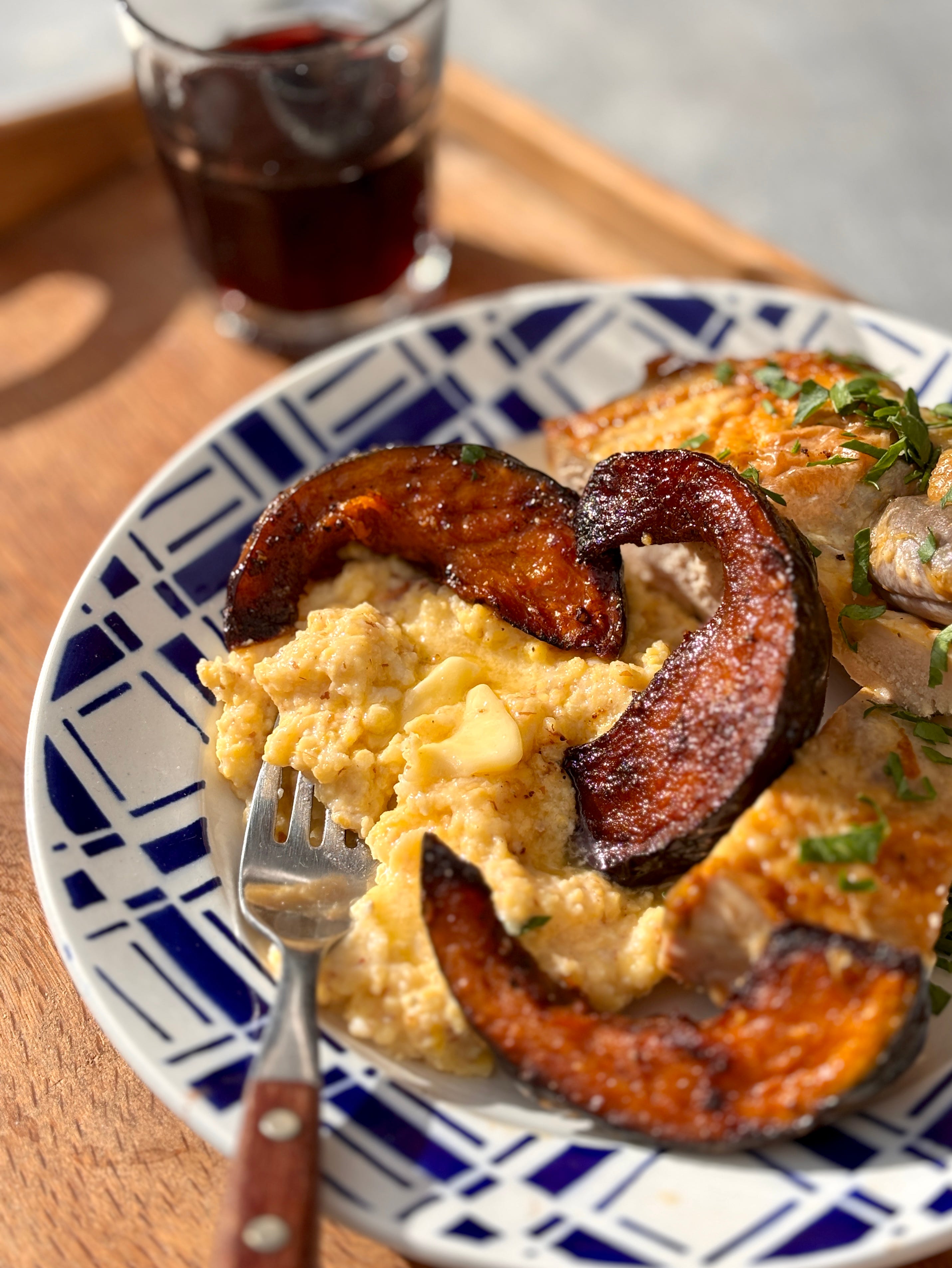
I love polenta, especially in the winter. It goes well with grilled or roasted meats, vegetables, fish, and poultry. It can be served for breakfast with butter. If made in advance and left to firm up overnight, it can be cut in slabs and grilled. And if you’re the kind of person who doesn’t mind firing up the deep-fryer, you can make polenta fries. (Which I love to eat, but not clean up after. Option B is to cut the polenta into batons and fry them in olive oil a skillet )
I keep a bag of polenta at home, and used to make it by stirring it on the stovetop, which took nearly an hour of constant vigilance, not to mention cleaning up the stovetop afterwards, and nursing a few burns on my arm from getting splattered by hot polenta.
When I arrived in France, I was surprised at the prevalence of instant polenta, which is polenta that’s finely ground so it absorbs liquid quickly. (There’s also precooked polenta grains, and precooked sliced polenta, which were new to me, too.) Admittedly, it’s very easy to make and is ready in about five minutes. People don’t seem to mind it, but I like the texture of traditional polenta, so stick with that.
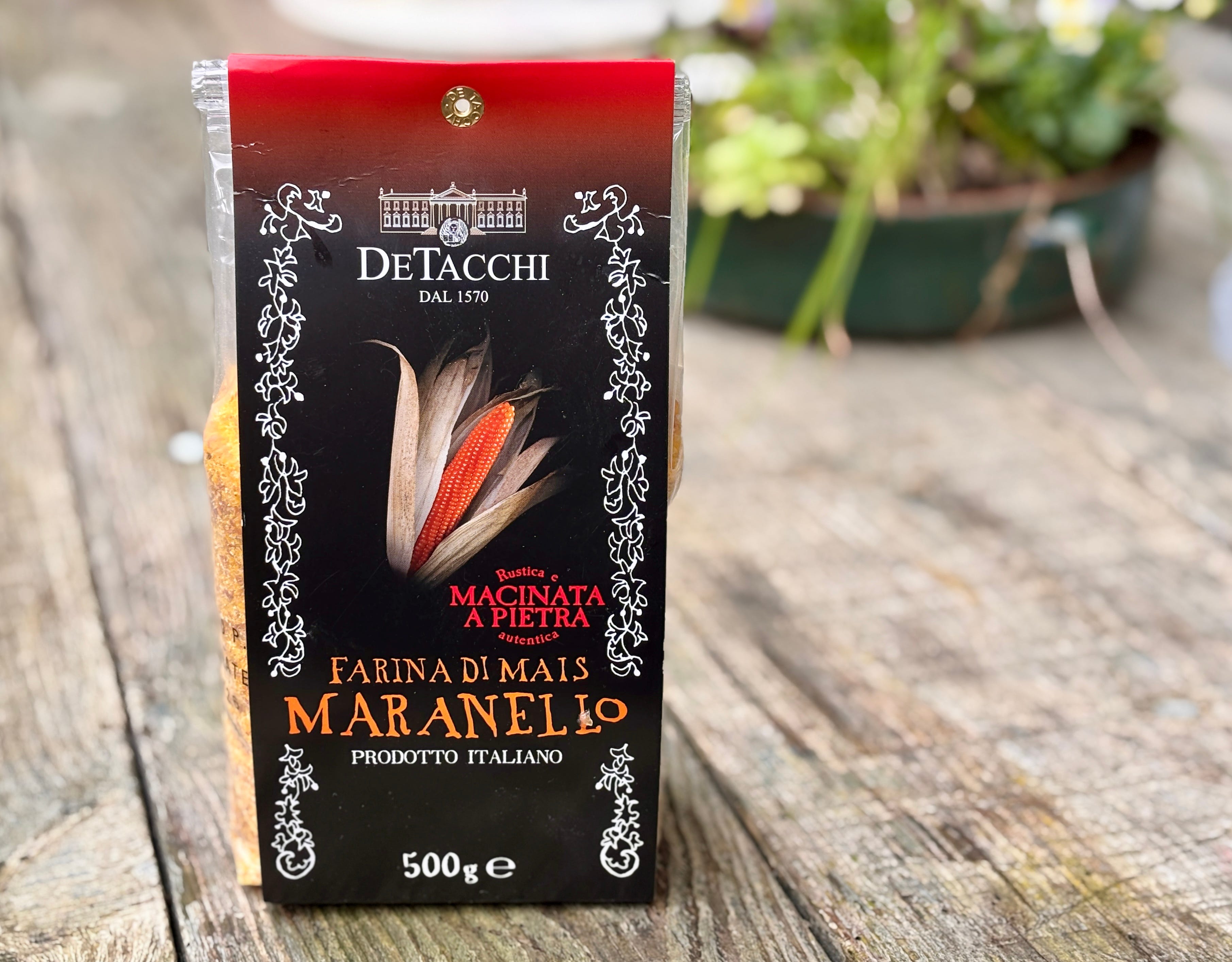
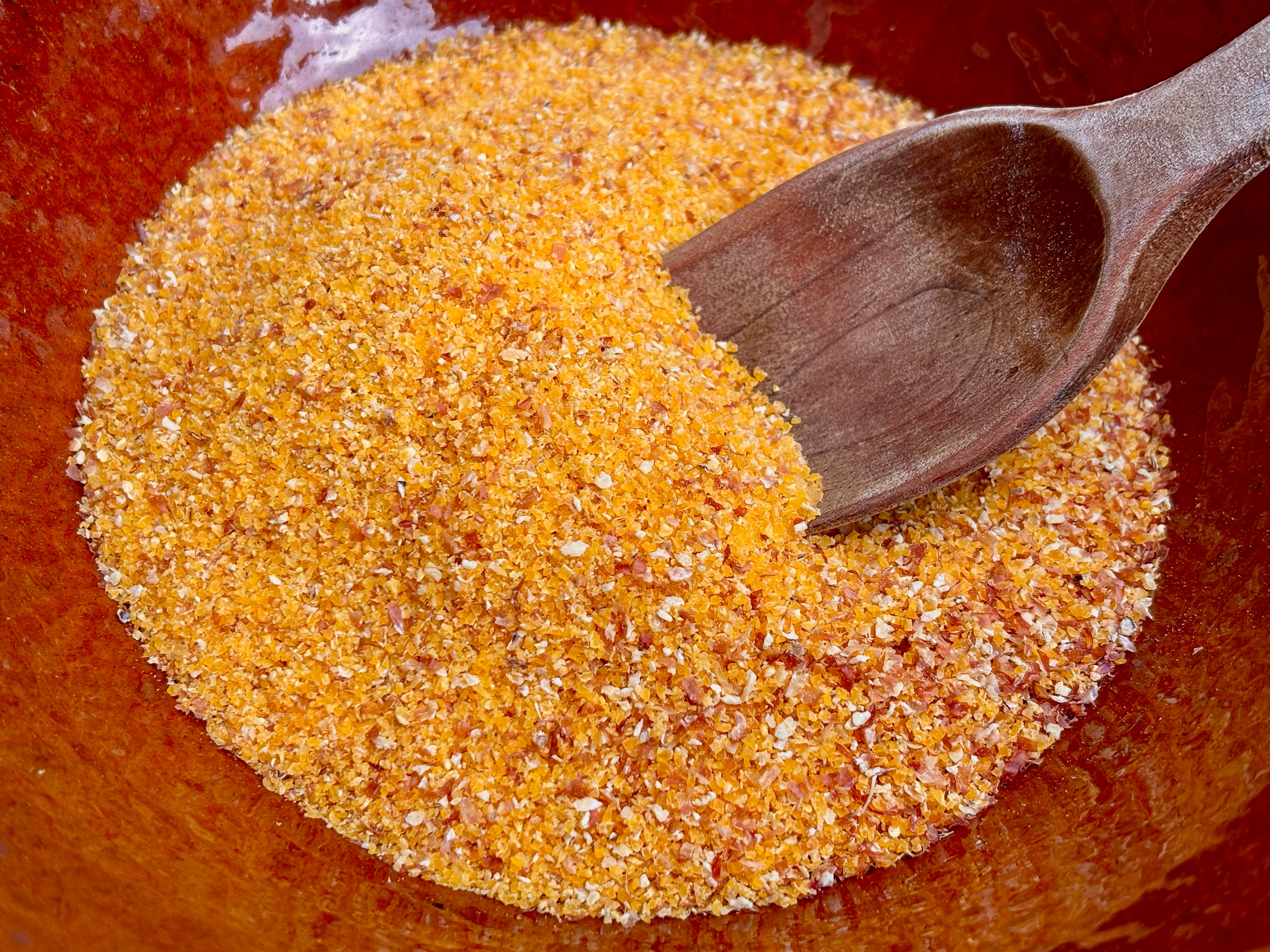
If you want to take your polenta to the next level, seek out stone-ground polenta. Stone-ground polenta (like stone-ground cornmeal) includes the whole grain, and contains the germ and the bran. It also has retains more of its flavor during grinding since the stones grinding the corn don’t heat it up, which can diminish its flavor. But I also like the irregularity of it. It looks like real corn, not like powder.
Stone-ground polenta.
I’ve been cooking polenta for years, stirring it on the stovetop, but recently I remembered this technique, which was introduced in the pre-internet days by the great Paula Wolfert. The recipe was in her book, Mediterranean Grains & Greens, a treatise I sadly had to leave behind in the States, but she attributed to a recipe on the back of a package of Golden Pheasant polenta, although the California-based company no longer seems to be in business. 😔
I’d made it way-back-when, but for whatever reason, I continued making polenta the traditional way. It reminds me of a quote from Judy Rodgers in the Zuni Café Cookbook, something along the lines of finding, and sticking to, a harder way of doing something. For better or for worse, that’s sometimes as I operate. Old habits die hard, I suppose.
I’ve been pining for a springy way to combine leeks and lentils in an unfussy, one-pot, weeknight-friendly meal but would get stuck on one thing: how annoying leeks are — and I say this from a place of adoration! I think leeks are one of the most stunning vegetables, an ombre of chromatic ringlets from buttery yellow to pea green and back to a pale shade of lima. They look exactly like spring (even though it’s climatically July outside but will be March again next week), and taste even better: Oniony but not harsh and silky, wonderful, and a little sweet when braised. They should be everywhere, but first we need to address the fact that if you go to the store or market for a bundle of leeks right now, you have no idea how much leek you’re getting.
This No-Sugar Banana Bread is flavorful with a tender crumb and a sticky top crust. In short, it’s got the key hallmarks of banana bread, with no added sugar OR dairy! Our Go-To Healthy Banana Bread It seems that avoiding added processed sugars has become everyone’s business. This healthy, sugar-free banana bread is here to […]
May 5th marks the release of TheGreat Book of Chocolate which is now available for pre-order from your local independent book seller as well as Bookshop, Amazon, and Barnes & Noble online. And I’m going on book tour! Due to global events, travel has become more challenging, especially internationally.
If you can’t make it to an event, and I’m not coming to where you live, and you’d like a personalized, signed copy of a book, you can order one from Kitchen Arts & Letters (before May 4th), Omnivore Books (before May 11th) or Now Serving LA (before May 14th), and they will send you a copy. Should you have questions, please contact the shops.
Note that a number of events are ticketed, which helps support the bookstores, and at places where books can be pre-purchased, that ensures that you’ll get a book. If you do have questions about events, please contact the venue directly as they are best equipped to answer your questions.
Hope you can make it!
May 4: Chat and booksigning with Matt Rodbard of Taste Live at RizzoliBookstore, New York City – tickets here
May 5: Booksigning at Williams-Sonoma, Columbus Circle, New York City – tickets here
May 6: Booksigning at Williams-Sonoma, Short Hills, New Jersey – tickets here
May 9: Markethall Foods, Oakland, CA – more info here (I’ll be signing books Noon to 1:30pm)
Note that this event is open to all, but books can be prepurchased from their website prior to event, and pastry boxes inspired by The Great Book of Chocolate and Ready for Dessert will also be available for pre-purchase. Prepurchasing a book ensures that you’ll get a book and also supports small, local businesses. Check the event page for details!
May 30: Booksigning at La Trésorerie Rive Gauche (48, rue de Grenelle, 7th, Paris), 3pm to 4:30pm. Copies of The Great Book of Chocolate and My Paris Kitchen will be available for sale and signing.
You can purchase or order the book at your local bookstore or online retailer from one of these links:
Events will be published and updated here as they are announced. Please note that events on this page are subject to change and revision. It’s suggested that you contact the venue before an event to confirm the time and date, as well as if a ticket or purchase is required, if you can bring books purchased elsewhere to be signed, or if you have any other questions or need additional information.
Beef chow mein is a delicious Chinese dish made with thin, chewy noodles, seared flank steak, and crisp-tender vegetables. Pull off restaurant-quality beef chow mein right in your own kitchen with our step-by-step recipe, all brought together by the rich savory depth of Chinese light and dark soy sauces! We also put together a YouTube video […]
Last Sunday I had a gardening accident. A large rock fell on my big toe as Rory and I were trying to maneuver a heavy pot. There was blood and pain and I also fainted from the shock of it all. Rory woke me with a gentle slap to my face.
X-rays showed I luckily had no broken bones or fractures. The kind Urgent Care folks sent me home with instructions for “wound care” and to take it easy.
The accident was caused by a very, very stoopid move, one that even a professional gardener would not do. We were rushing because that’s what we do nowadays – try to rush to squeeze everything in during our waking hours. Does that rush yield a better life? My toe and the rock reminded me to take time to unwind, learn new and fun things, but still focus on fundamentals.
That’s how I got to playing with rice. First, I experimented with adapting chef Ron Hsu’s chicken and rice casserole for the Ninja Combi oven. I was curious about its Sear/Saute function plus something called “Combi Crisp.” The little machine has its beeping quirks but surprisingly, it produced a casserole with an incredible rice crust at the bottom. The chicken skin was delicately crisp too.
What the Ninja Combi produced was was an excellent reason to indulge in lots of white rice! Instead of using the stove and oven to make the dish, I prepped and organized the ingredients, turned on the combi, and played with its various functions. It’s pretty amazing for a countertop appliance. Head to the website to grab the recipe and watch my video of how the dish comes together. (Ron’s conventional recipe for the casserole is also at the website.)
Rory asked me how I dialed in cooking the rice so well in the combi, an appliance that cooks fast and furious and sometimes seems to be out of control. The machine is forgiving but also, I know how to cook rice in a pot on the stove as well as in the microwave.
Why cook rice in a pot if a rice cooker is around?
When I’m in a hurry, I cook rice in my Cuckoo rice cooker. It’s a good machine but to be honest, the cooked, while good, is shy of great. When I take time to cook rice on the stove, I can coax the grains into tender-chewy, fluffy perfection. I don’t consider it a feat of daring do.
Cooking rice the old fashioned way is not only a survival skill (someday, you may lack electricity for that cooker!) but also an opportunity to practice the craft of making good food. What you learn from cooking rice on the stovetop is portable knowledge to apply elsewhere — for a paella, risotto, and sushi rice, for instance. No matter how fancy the rice dish is, cooking rice is simply hydrating and heating up grains. You just need confidence in manipulating the cooking process to meet your needs.
Every person has a cooked rice ideal based upon their cuisine, culture, and personal preference.
For my everyday eating, I like chewy tender grains of Thai jasmine rice that stick together ever so slightly. They’ll hold together as a mass when you’re dishing up the rice from the pot but when you look at them, you can clearly distinguish their shape. Such grains are more receptive to sauces and other flavors that hit them on the plate or in a bowl. (When I’m cooking Japanese, Korean, or South Asian dishes, I use different kinds of rice.)
In this dispatch, you’ll find:
Rice cooking myth busting to help you confidently cook rice
Pointers on rice and pan selection
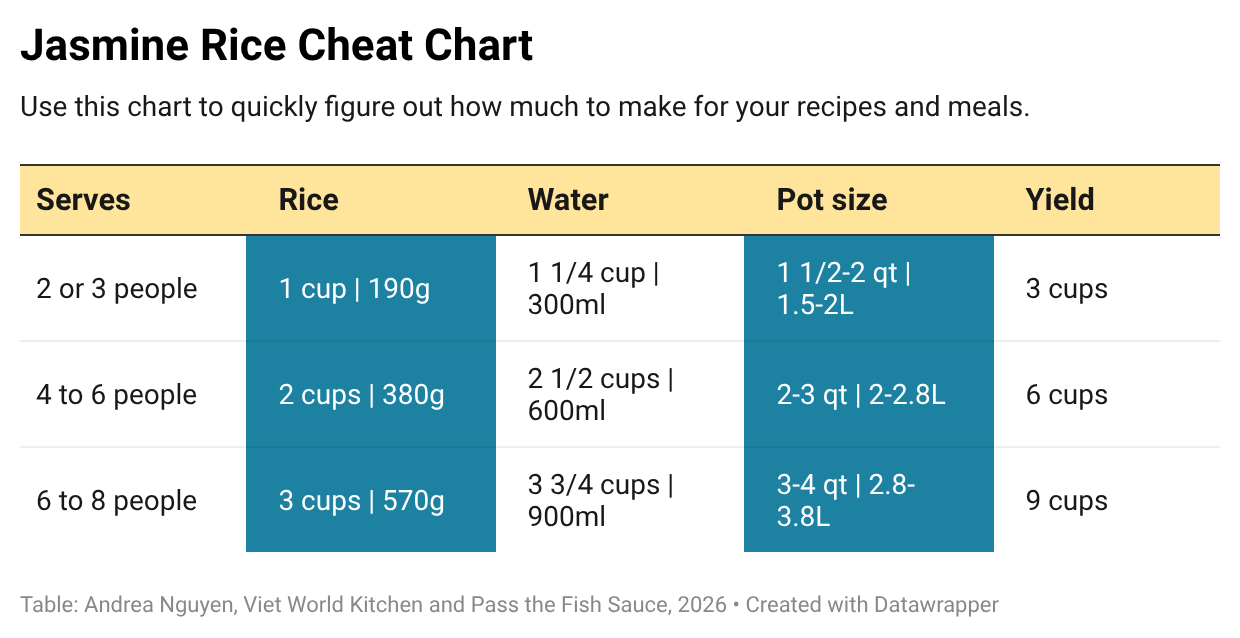
A scalable chart for you to make as much as you need
My perfect jasmine rice recipe in full text and downloadable PDF
Troubleshooting tips for you to craft your ideal pot of rice
Pass the Fish Sauce is 💯 reader-supported. Paid subscribers sponsored this dispatch, which is free to everyone. Join us at any level to satisfy your culinary curiosity. Become a paid subscriber to pitch in, gain extra insights, and enjoy extra perks. Your support matters.
Let’s bust 3 myths about cooking rice
My mom first taught me how to make long-grain rice in a basic National rice cooker. When I asked her about cooking rice on the stove, she told me about her unplugged another, which I followed before eventually developing my own recipe. When I’ve made rice with friends, they’re often surprised that I break the golden rules of cooking rice.
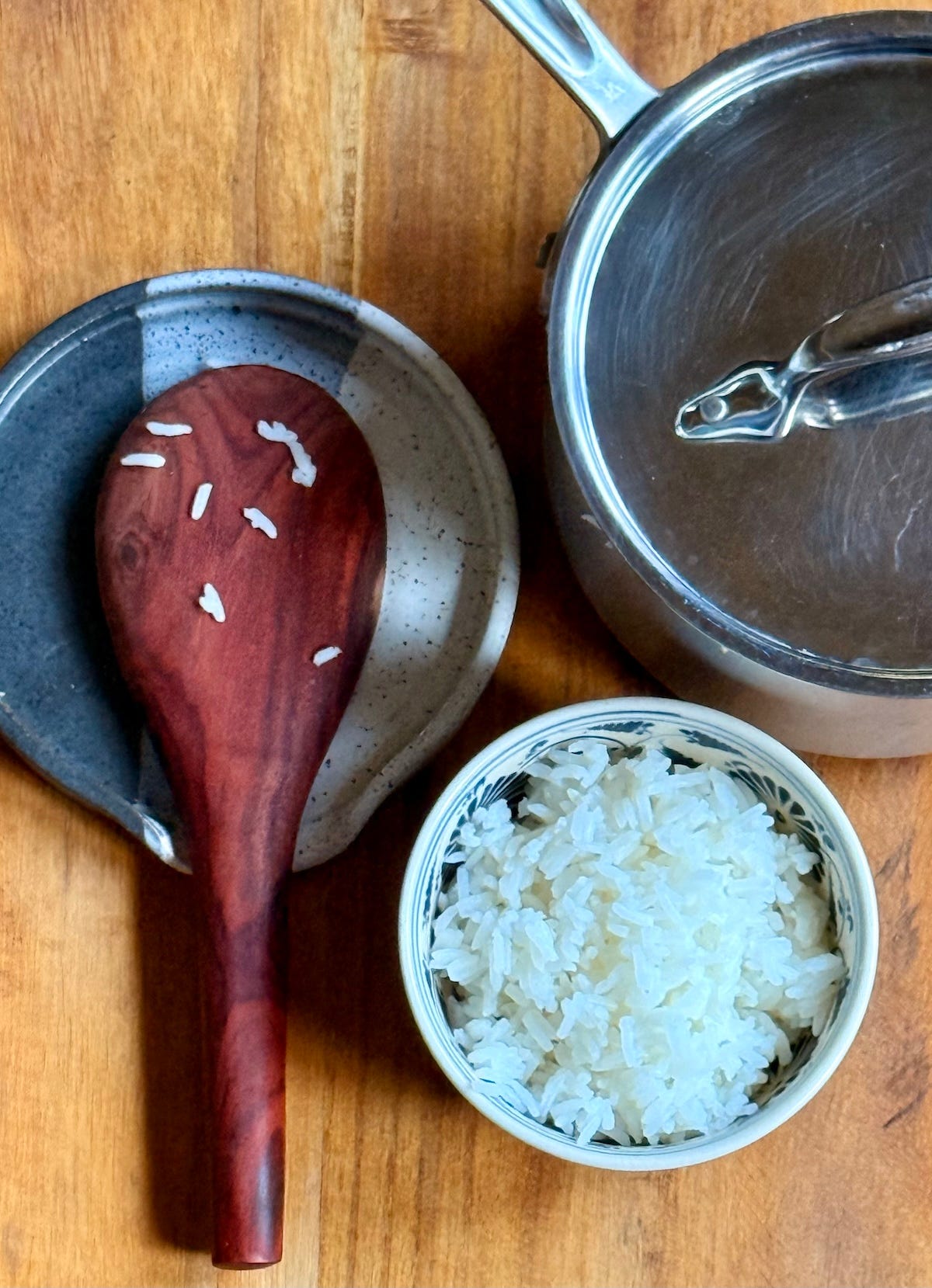
Wash the rice until the water runs clear. Washing the grains rids them of some starch so they taste fresh and clean. I wash and rinse white rice about three times and these photos show the progression. The water is never fully clear when you’re washing white rice. Just get close to it then move on to cook the rice!
Measure water by your knuckle. There is no universal knuckle and universal pot for all people who cook rice. The water level depends on the pot, the amount of rice you’re cooking, and your personal knuckle! Cook the same amount of rice in the same pot for a month or so to gauge the water level that works for you. Then try eyeballing the water level. Only you and your personal knuckle can truly know your equipment, ingredients, and taste preference.
Don’t lift the lid before the rice is done. Rice cooks by gentle steam action so a heavy pot with a secure lid helps. If you cook rice in a not-so-good pot with a loosey goosey lid, you’ll have a hard time retaining the heat if you open the pot up during cooking. With good modern pots, you can open and close the lid often without ruining the rice. Go ahead and peek!
My default rice for everyday eating is white or brown jasmine rice grown in Thailand. Usually, the rice is Three Ladies brand. Regardless of brand, look for handsome grains with a slight polished sheen, very few broken grains, and a good flavor, aroma, and texture. Private label supermarket jasmine rice is great too, so long as it’s from Thailand.
Jasmine rice grown in the United States is unfortunately not as aromatic or flavorful as Thai-grown rice. That said, cook up Lundberg jasmine or Jazzmen rice, if you like. When my family first came to America, we cooked Texas long-grain rice.
As for the pot, use a heavy one with a lid that will sit tightly on top. You want good heat circulation to cook the grains evenly. Choose your pot to be about twice as big as the yield. That ensures you have space to easily stir, fluff and cook the grains.
My 10-10-10 Rice cooking method
Some people boil and drain rice like pasta, but that rids too much of the sweet starches that define the grains’ comforting texture and flavor. I prefer an approach that involves a heavy pan and a gradual lowering of the heat.
To easily remember the method’s cooking and resting times, one of my friends and long-time recipe testers, Alex Ciepley, dubbed them the “10-10-10”. Use the mnemonic to cook rice in the same pot and eventually you’ll just eyeball the water level. And, after practicing this method and recipe, you’ll confidently apply it to cooking rice in claypot and donabe ceramic vessels.
💯 👌 jasmine rice!
Jasmine rice and water ratio
To yield grains that aren’t too firm or too soft, opt for a 4-to-5 ratio of rice to water. In the Asian kitchen, salt isn’t typically added to plain rice because other dishes will season it at the table. Use this chart for an easy rice cooking life!
When you wash rice, the grains absorb some water. That’s why my rice-to-water ratio may differ from that of people who do not wash their rice before cooking.
Hold on. When you fluff the finished rice, there may be a Goldilocks moment to manage. For instance:
If the grains are too firm and dryish, sprinkle on water, fluff to incorporate, then cover. Set the pot over low heat for 10 minutes to hydrate; let it rest about 5 minutes, then re-fluff.
If the rice is mushy, eat it up and tweak your next batch by decreasing the water by 1 tablespoon per 1 cup of raw rice.
If the rice smells burnt, you had the heat on way too high. I’ve accidentally done that a few times while trying to get a crusty bottom. If the rice smells and tastes acrid and burned throughout, I’m sorry. Start a new pot in a heavier pan and/or lower the heat.
Tinker to find the best rice-to-water ratio for your tastes. Jot down your ratio for future batches.
After reading all that, you’re definitely ready to cook a perfect pot of rice! There are extra pointers below so don’t scroll too fast.
RECIPE
10-10-10 Perfect Jasmine Rice
✅ Managing leftovers: Refrigerate leftover rice for up to 5 days, or freeze for a good month and thaw to eat. To reheat, sprinkle the rice with a little water, cover with a microwave splatter guard (or loosely cover with a silicone lid or parchment or wax paper), then microwave on high at 30 to 60 second blasts. If the grains compress, let briefly cool and fluff to serve. Always re-fluff before serving!
✅ Making rice for fried rice: When specifically making rice for fried rice, turn the cooked rice onto a rimmed baking sheet, spreading it out to allow the grains to dry quickly so they will fry up nicely. Let cool completely, uncovered, 1 to 2 hours at room temp (or freeze for about 20 minutes), before frying. Or, cover the baking sheet with plastic wrap and refrigerate overnight.
✅ CookingThai-grown brown jasmine rice: Use a 2-to-3 ratio of rice to water. Wash and rinse the rice once, drain and return the grains to the pan. (The bran is intact, so one rinse is enough; no starch release.) Add 1 1/2 cups (360ml) water for every 1 cup (190g) of raw rice. Bring to a boil, and then lower the heat to medium. Simmer briskly, partially covered, for about 5 minutes, stirring occasionally, until the liquid is opaque light beige and slightly thick. Turn the heat to low, completely cover, and cook for 20 minutes. The rest remains the same, with resting and fluffing.
1 cup | 190g white jasmine rice or similar type of long-grain rice
1 1/4 cups |300ml water
Instructions
Wash the rice: Putthe rice in a small (1 ½ to 2-quart | 1.5 to 2L) heavy pot and add water to cover by about 1 inch (2.5cm). Vigorously stir with your fingers to loosen surface starch then pour off the water (I save it to water our garden). Repeat two or three times, or until the water is nearly clear -- it will never be crystal clear. Dump the rice into a mesh strainer, shake to expel excess water, and return the rice to the pan.
Cook for 10: Add the 1 1/4 cups (300ml) water to the pan. Bring to a boil over high heat, stirring now and then with a silicone spatula or chopsticks to prevent clumping. Lower the heat slightly to maintain a brisk simmer for 1 to 3 minutes, stirring often to scrape bottom and circulate the grains, until glossy on top. (It’s normal for a few craters to form.) Decrease the heat to low, cover the pan, and cook for 10 minutes.
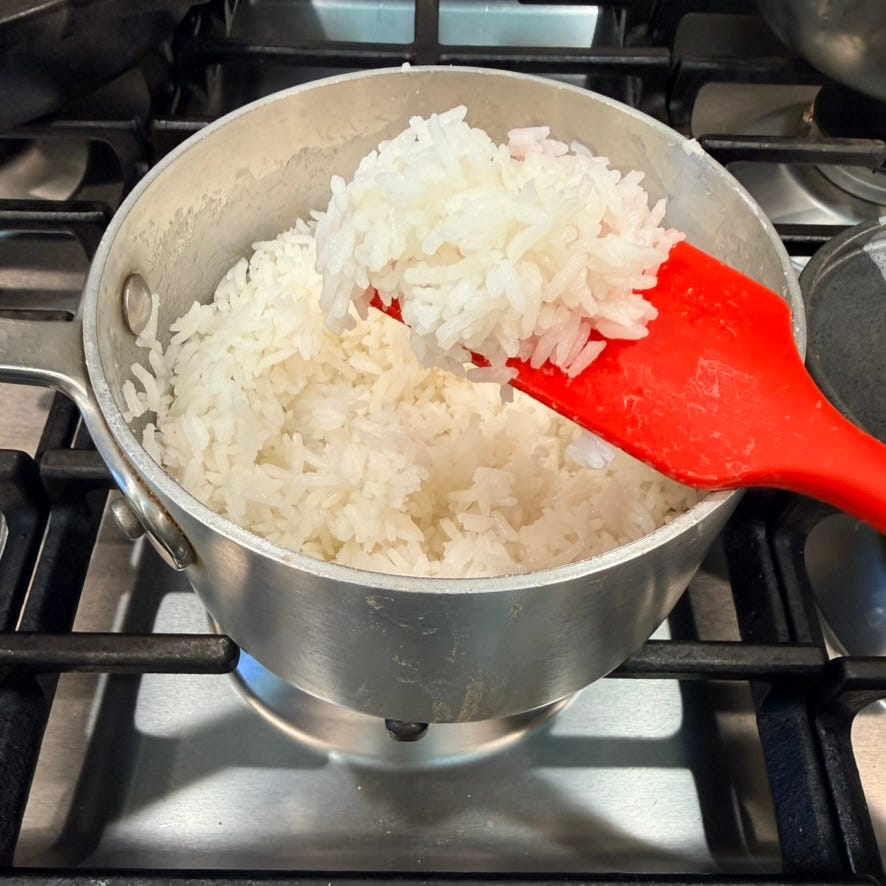
Rest for 10, fluff, rest for 10: Turn off the heat. Leave the rice to gently cook on the burner’s residual heat or 10 minutes. Uncover, fluff with chopstick, a fork, or spatula to circulate the grains. Re-cover and let rest again for 10 minutes to firm up the grains and finish cooking. Keep covered and cozy warm for up to 30 minutes. Re-fluff before serving.
One of my favorite parts about writing my chocolate book was getting to explore, and share, the world of chocolate. Chocolate is a pretty wonderful ingredient all by itself. But I wanted to feature friends in the chocolate world, so I culled recipes from bakers, pastry chefs, chocolatiers, cookbook authors, and even bartenders for the book.
For the revision of The Great Book of Chocolate, I completely rewrote the book (since so much has changed!) and wanted to include a chocolate marshmallow recipe. So I thought about Amanda Bankert of Boneshaker donuts in Paris, who taught me how to make vegan marshmallows, which were game-changers since many people have asked me about substitutions for the gelatin and egg whites that are normally used in marshmallow recipes.
Subscribe to my newsletter to get recipes, videos, stories from Paris, and more, sent right to your Inbox!
Amanda is one of the most fun people I know, and is also a graduate of the prestigious Cordon Bleu cooking school in Paris. So when revising The Great Book of Chocolate, I thought, “Why not veganize chocolate marshmallows?”
With the book coming out in less than a month, I then thought, “Wouldn’t it be fun to have Amanda come over and make them with me in my kitchen?”
So we made a video of us preparing them together. We had such a good time whipping them up, and it’s great that anyone - vegan or not - can enjoy these delicious marshmallows. And next time you’re in Paris, stop by Boneshaker for a donut and a cup of coffee. Like Amanda, her shop is one of the most fun things in Paris. And if you see her behind the counter, say hi for me, and enjoy the video!
You may have to do a bit of shopping to get the xanthan gum andagar-agar, a natural gelatin substitute, which, interestingly, is sold in French grocery stores. Natural food stores or online shops are good places to look where you live. In Paris, G. Detou sells them, as well as cream of tartar. The good thing is, you’ll have them on hand for next time : )
Aquafaba is the chickpea cooking liquid found in canned chickpeas, not jarred, nor is it the liquid from dried chickpeas that you cook at home. (Interestingly, aquafaba was “discovered” by a French opera singer.) In the U.S., generally one 15-ounce/425g can yields 3/4 cup (180ml) liquid, but you may want to get an extra can just to be sure. (You can use the chickpeas to make my really good hummus.)
It’s nice to have a helper in the kitchen to steady the bowl while you fold in the cocoa powder, as I did with Amanda. If you’re by yourself, resting the mixing bowl on a silicone baking mat will help keep the bowl in place.
And don’t forget to pre-order The Great Book of Chocolate - it’s out May 5th and you’ll be the first to get a copy!

 Login
Login