Hey there! If you want to watch me crack jokes, discuss cooking and travel in Vietnam with , here’s the playback of our livestream. He interviewed me on a wide range of topics but it always came back to how food makes a difference in our lives.
Among the people mentioned in the interview was my mom and her recipe notebook. Moms impact our nourishment from the get go.
And with that, Happy Mother’s Day to all the brave humans who’ve birthed and shepherded new life into this world. I am in awe of you all who have loved and nurtured your flock into adulthood, despite the odds.
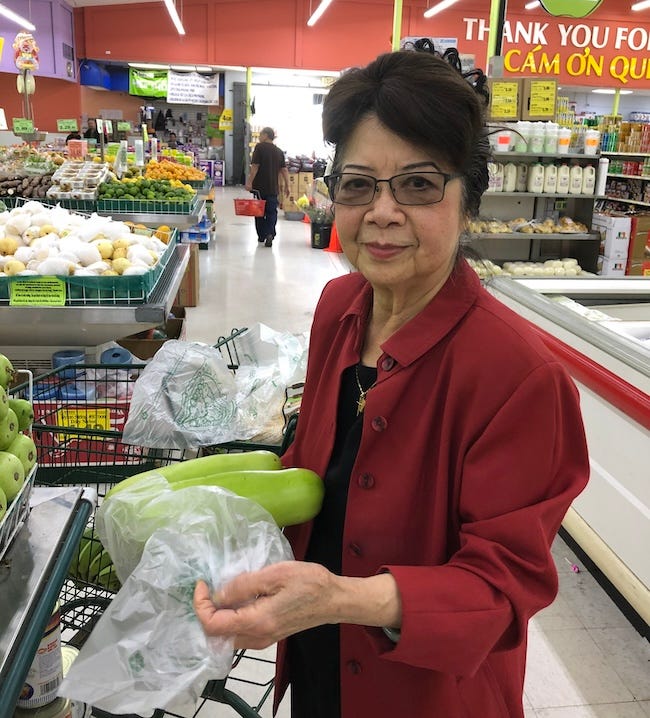
In the photo below my Mẹ Già (Elder Mother, a Viet term of endearment) is looking pretty 🔥. She’s in her element at a Viet grocery store! (We were at Green Farm in Garden Grove, CA, that day.)
💭 “These opo squash — I will turn them into a quickie canh soup when I get home!”
A few notes on my mom’s new stove: Before the stove arrived, I made sure she’d be ready to cook so I ordered her a welcome present: a 5-liter jug of premium fish sauce! She usually doesn’t like gifts but that was one she couldn’t refuse.
Speaking of fish sauce, I just published a mega fish sauce guide and FAQ that includes substitutes, brand suggestions, recipes, plus the video playback of our PTFS nuoc mam livestream. Head to “Fish Sauce: What is it? Plus, how to buy, store, use, and sub for it” at the website.
After delivery of her new stovetop, Mom set out to làm bạn (literally make friends) with it. She initially reheated leftovers and found out that her steamer didn’t need to go on the power burner, unless she wanted overcooked food. Then she deep-fried a batch of tofu to perfection, she reported.
“The stove designers have researched and thought all this through for years,” Mom said. “It all makes sense and works well.”
One of the things mothers do well is to remind us the importance of trying new things for a lifetime of learning.
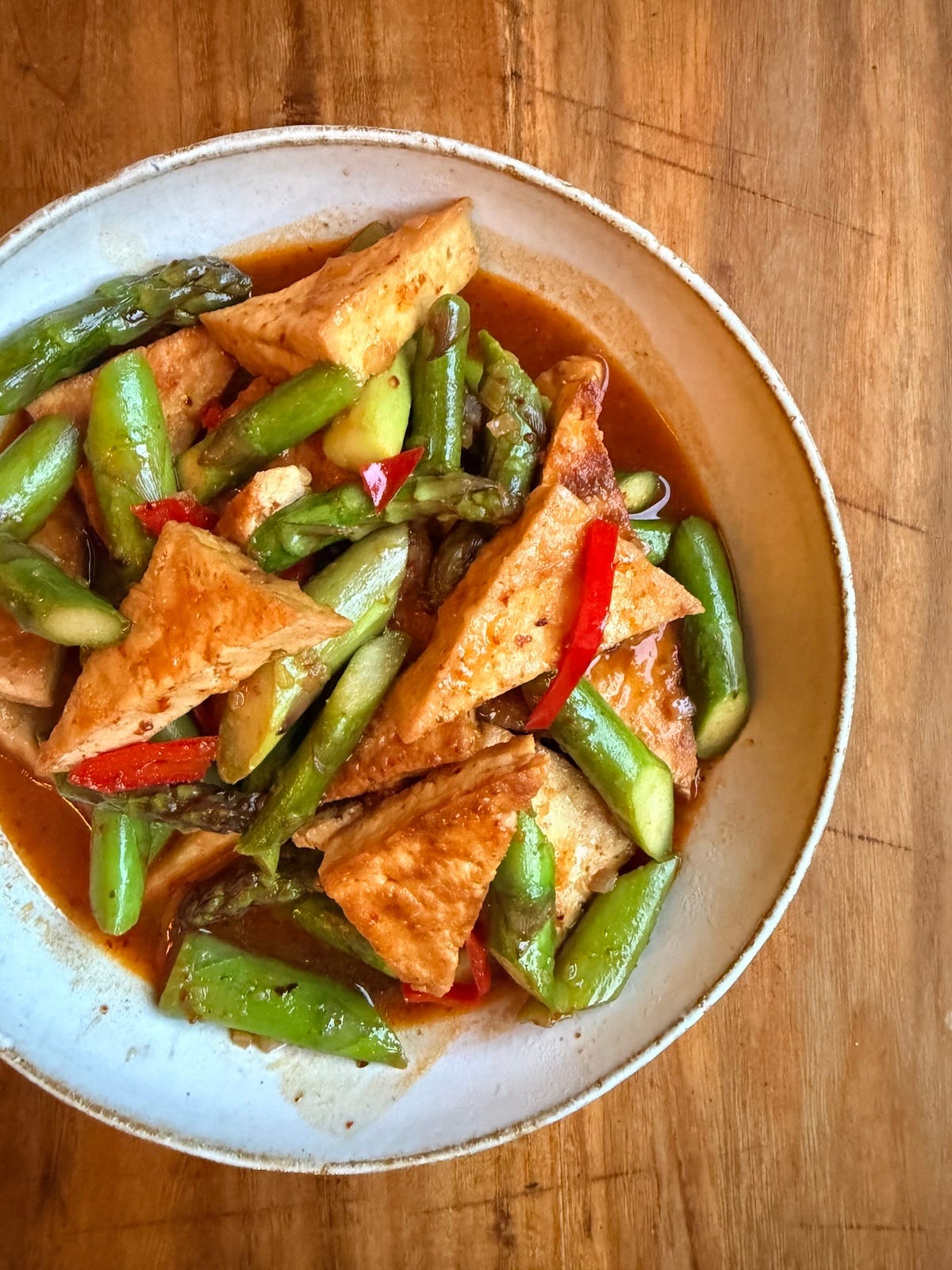
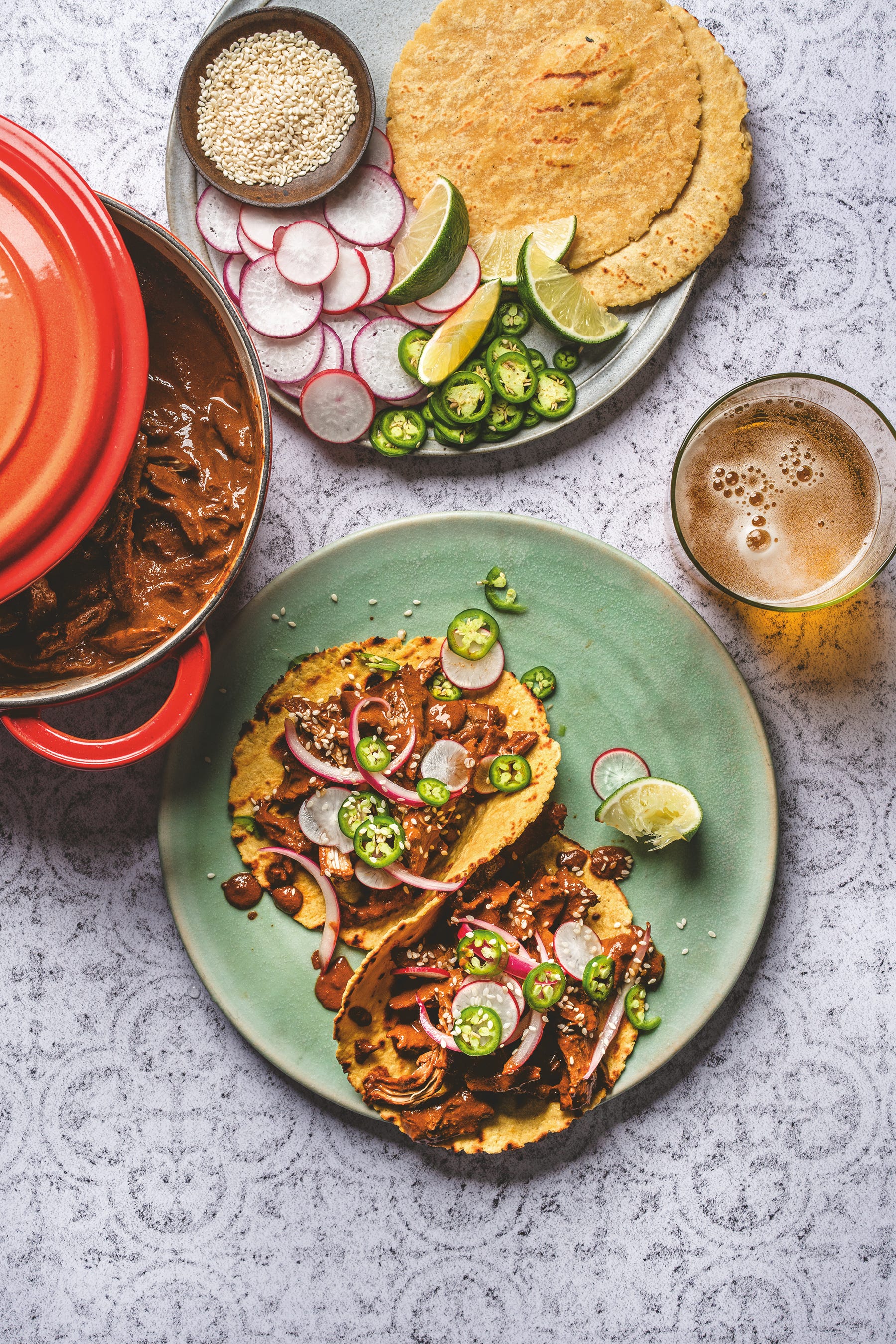
That, along with Mom mentioning fried tofu, inspired me to "‘get acquainted’ with a Vietnamese tofu dish that I’d never made before — Spicy Braised Tofu in Coconut Water (Đậu Hũ Khìa Nước Dừa).
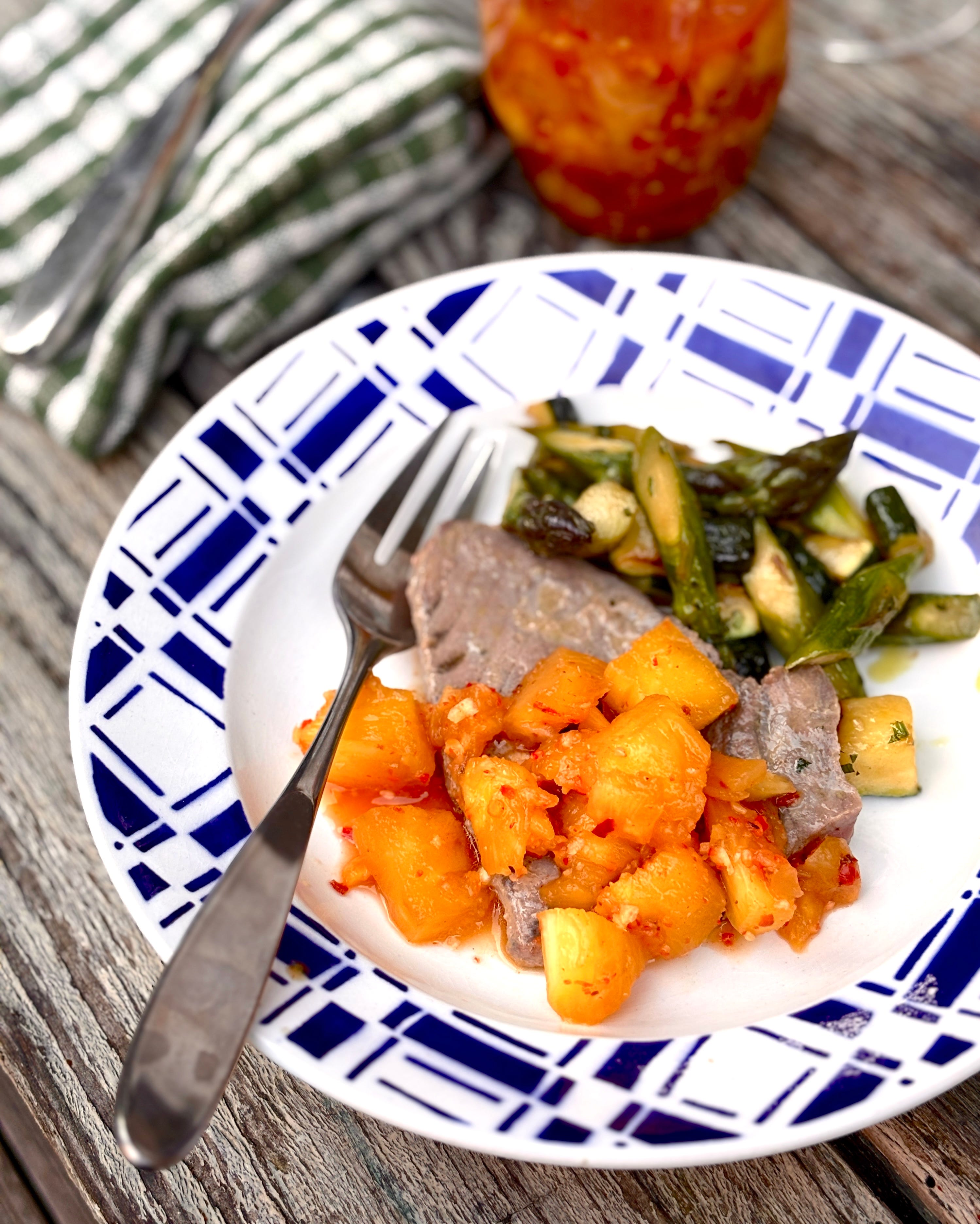
With chile heat and the sweet lilt of coconut water, this handsome main dish strongly reflects southern Vietnamese cooking. Though the tofu looks deep fried, a modicum of oil was involved.
Yep, you can make this with veggies other than asparagus! See my ideas below.
This tofu features an uncommon Vietnamese braising technique using the refreshingly sweet juice from a young (green) coconut — aka coconut water. Most people think of drinking coconut water. I’ve used it for nuoc cham dipping sauce and have used it in cooking too — just not in this delightful new manner.
There’s always a moment when you’re cooking a new dish when you ask yourself how is this going to taste? How does it work? I was kind of skeptical about this braise, called dau hu khia nuoc dua. There’s a lot of gurgling as things cook because it comes together fast. But after the mildish sauce cooked down and worked its magic, the tofu and veggies were absolutely delicious.
Unlike most Viet braises featuring caramel sauce, this one is very low sugar. It’s great for diabetics and anyone looking to cut back on refined sugar. Other reasons for praising this braise:
One batch serves four, which in our home means that Rory packs some for lunch with rice, and I enjoy the rest with a salad or turn it into banh mi!
The tofu is terrific hot, warm or at room temperature.
You can make this recipe with ingredients from the supermarket.
Ready the ingredients days ahead then braise when you need an easy, quick main dish for dinner
To equip you to make this tofu recipe, I’m providing the following:
A flexible braised tofu in coconut water recipe in full text and downloadable PDF (this tofu dish can be make vegan or not!)
Explainer on the tofu prep technique, which differs from my normal playbook
Vegetable swaps because we won’t be in asparagus season forever
Ingredient tips (what’s the best coconut water?)
Advance prep pointers
I hope you’ll get well acquainted with this Viet tofu winner!
Thanks for being here. Paid subscribers sponsored this Sunday Special dispatch. Join us at any level to get in on the action. Become a paid subscriber to enjoy the full braised tofu lowdown plus many other recipes, insights, and benefits. Your support matters.
While I’m not from a cheesecake family — it is never unwelcome, but we are more deeply devoted to things like pastry creams, chocolate pudding, and stellar coffee cakes — I married into one, which means that even though this site’s cheesecake archives are very well-populated, not a single peep of protest could be heard as far as my apartment walls reach (to be fair, a short distance) as I tinkered with these bars over the last few weeks.
This Lap Cheong Mei Fun is a deliciously simple way to enjoy mei fun, or thin rice vermicelli, with Chinese sausage and a bright variety of vegetables! We enjoyed a dish similar to this at a Chinese restaurant in Queens recently, and it snuck up on me how much I loved it. In a large […]
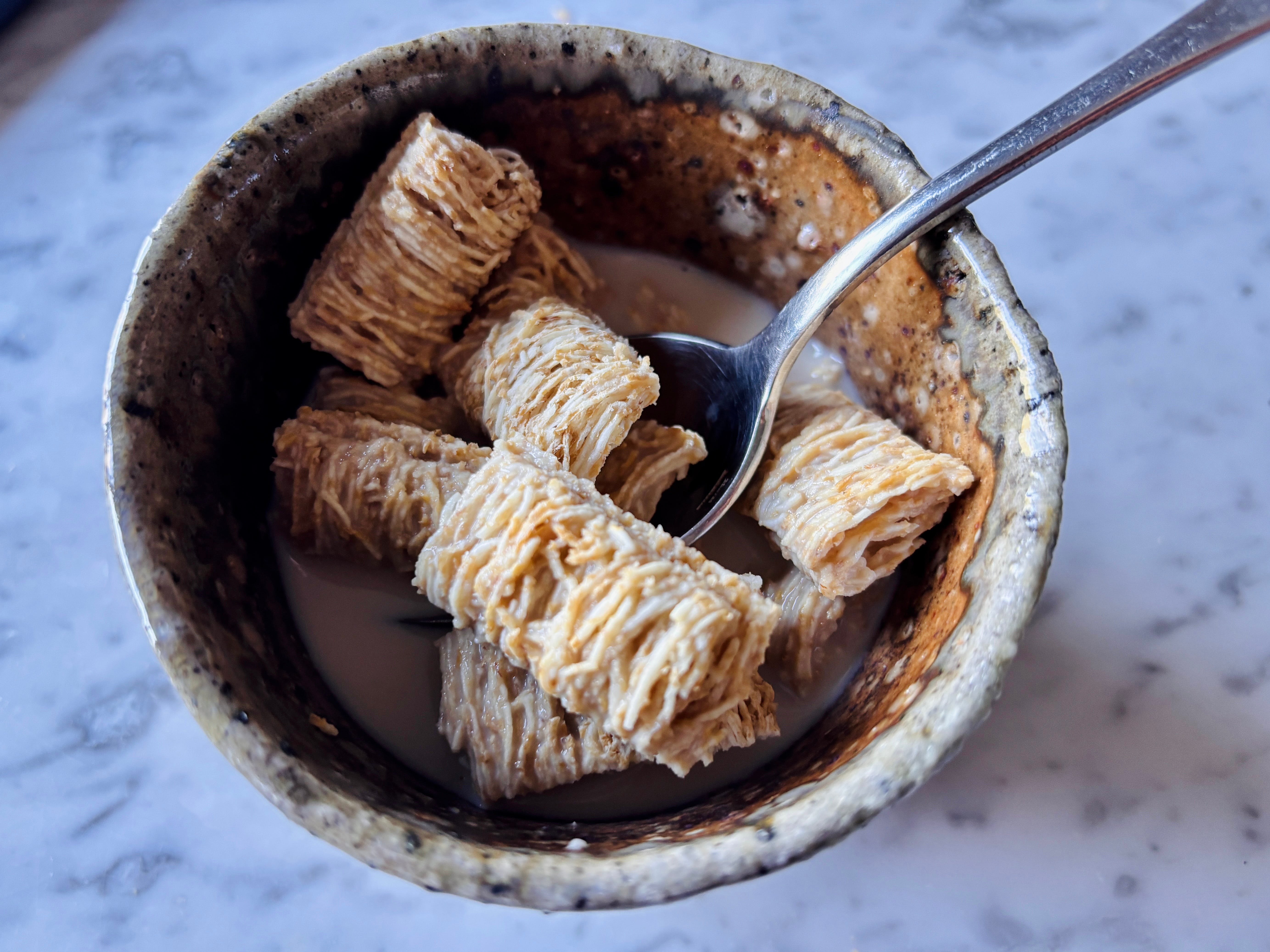
Sometimes when I travel, people point me towards Michelin-starred restaurants. I’m not sure why, since (hopefully) that’s not the vibe I put out. I’ve sat through those meals and honestly, I’m just as happy having a slice of pepperoni pizza, an incredible bánh mi sandwich, or even something as simple as a bowl of shredded wheat; spooning up those little woven squares of whole wheat, floating in a bowl of cold milk, is a Proustian moment for me.
One thing I was especially craving when I arrived in New York City was an everything bagel. CDG airport in Paris can be confusing, something they plan to address in 2027, so hopefully when you’re looking for gate 4, you’ll find it between gates 3 and 5, rather than way on the other side of another terminal, which you need to take a shuttle to.
JFK airport is doing what CDG should do: a complete and total overhaul. My taxi driver was swearing all the way through the tangle of roads that led to my terminal in Paris, and even almost came to blows with another driver. I’m pretty much used to that from living in France for so long, but I admire that French people get over altercations quickly…c’est normal, whereas I hold them in forever.) At JFK, I waited 45 minutes for my suitcase at baggage claim, my Lyft took nearly 30 minutes to arrive, and the drive to Manhattan added another 95 minutes. So while I appreciate people asking me to come to their city, travel is certainly a challenge these days, to put it mildly.
I was staying just down the street from Apollo Bagels, which is one of those places that always has a line. Their website describes their bagels as having a “shattering crisp exterior,” which is certainly truth in advertising. The surfaces, both top and bottom, are embedded with a thick layer of “everything” seeds, and they’re not too thick or puffy. (My other faves are Russ & Daughters, but that would’ve been a longer hike from where I was staying and time was of the essence.)
Even though my flight arrived at 12:30pm, by the time I got there two minutes before closing time, at 4:58pm, they were out of bagels. Apologies to the person who tried to talk to me on the street as I was on the verge of hysteria, but getting a bagel was my priority.
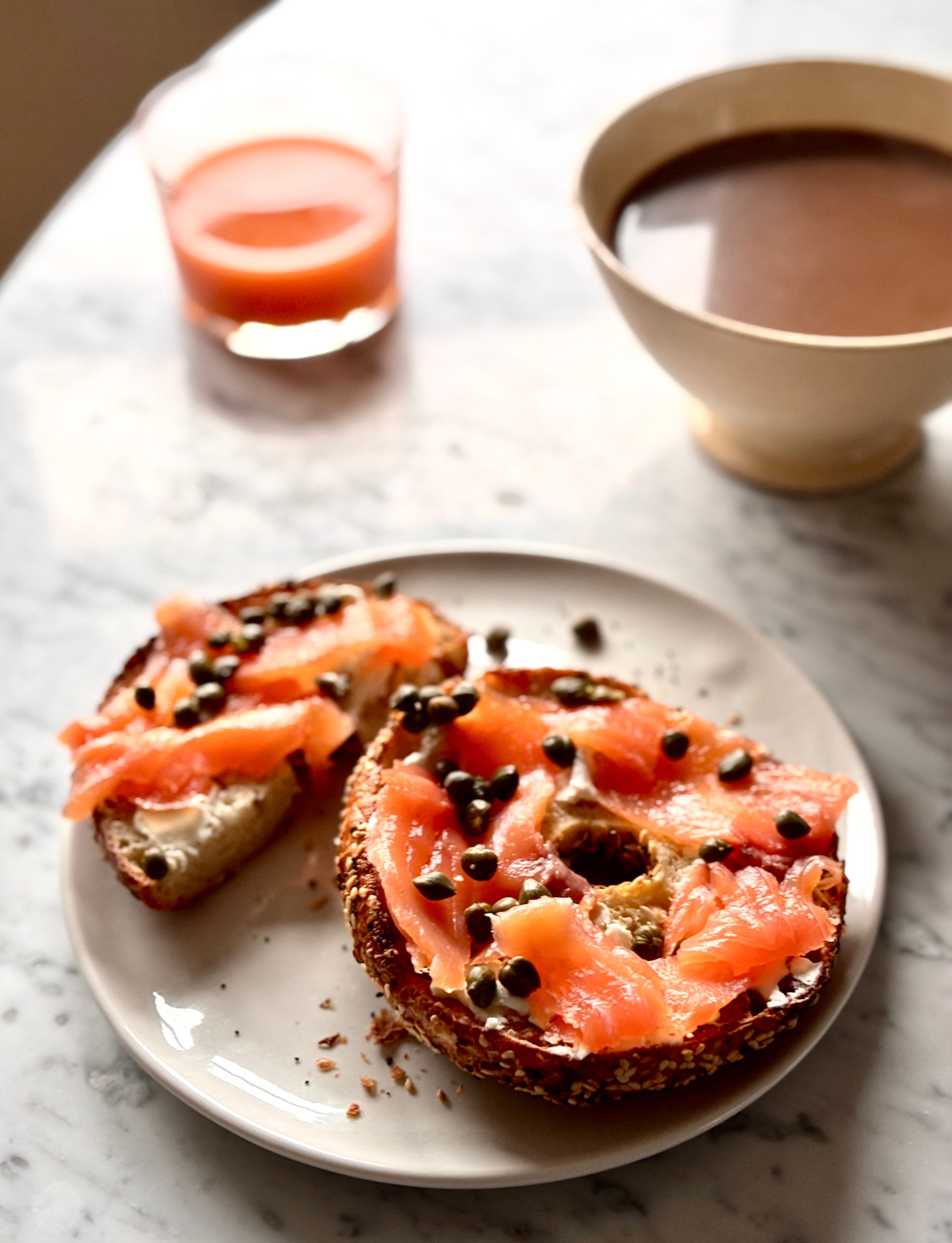
The next morning I was up at 2:30am, thanks to the décalage horaire (or, le jet-lag, as we call it in my dual language home), and took care of the cavalcade of emails and messages that piled up in my absence. I got a bagel when Apollo at 7:01am, right as they opened, and topped it with cream cheese, smoked salmon, and capers. I know there’s no red onion on it — and to me, I save the tomatoes for summer salads — but travel means that you take what you can get. As a French friend once told me: On ne peut pas tout avoir, You can’t have it all. But that bagel was darned good.
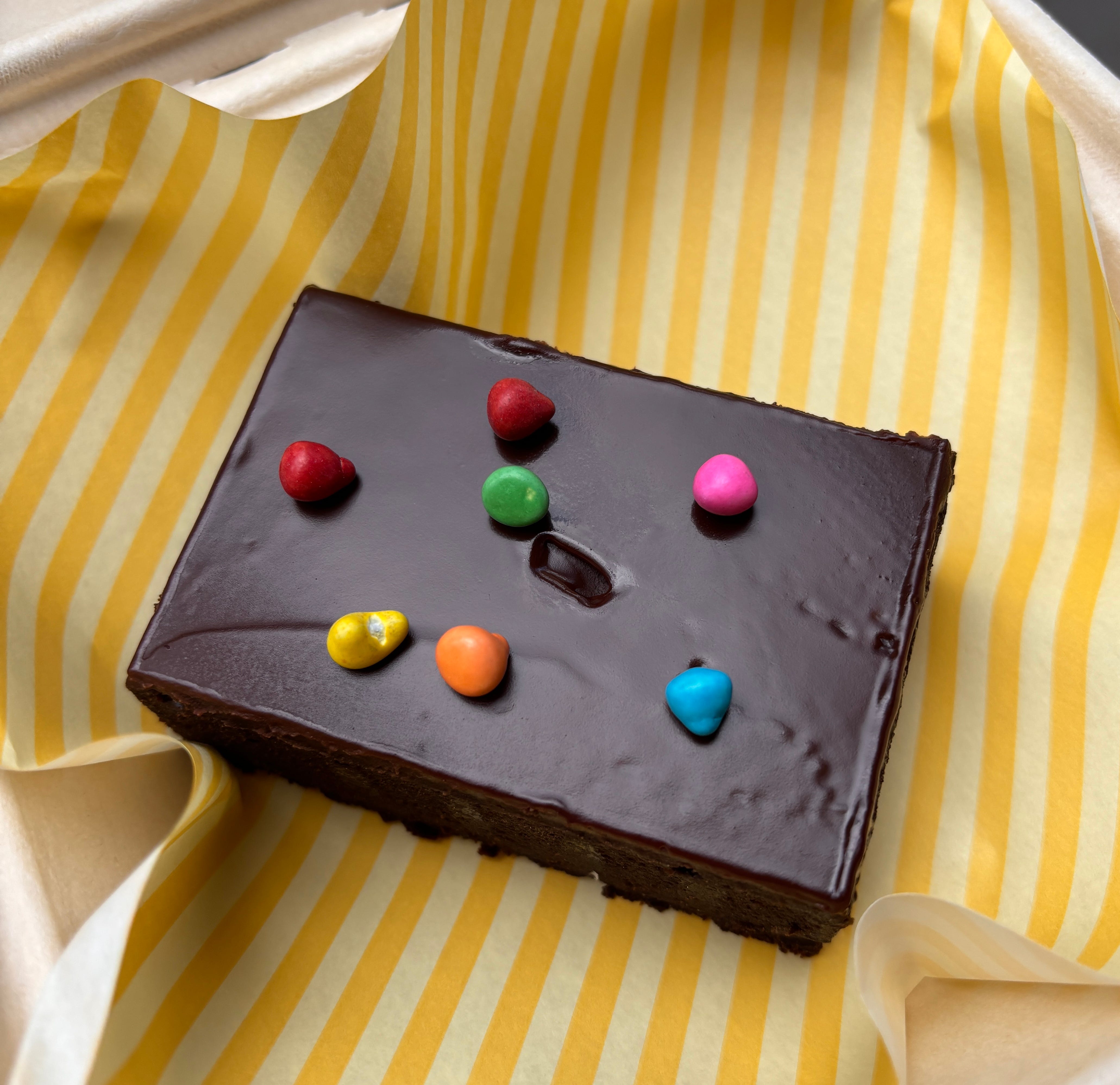
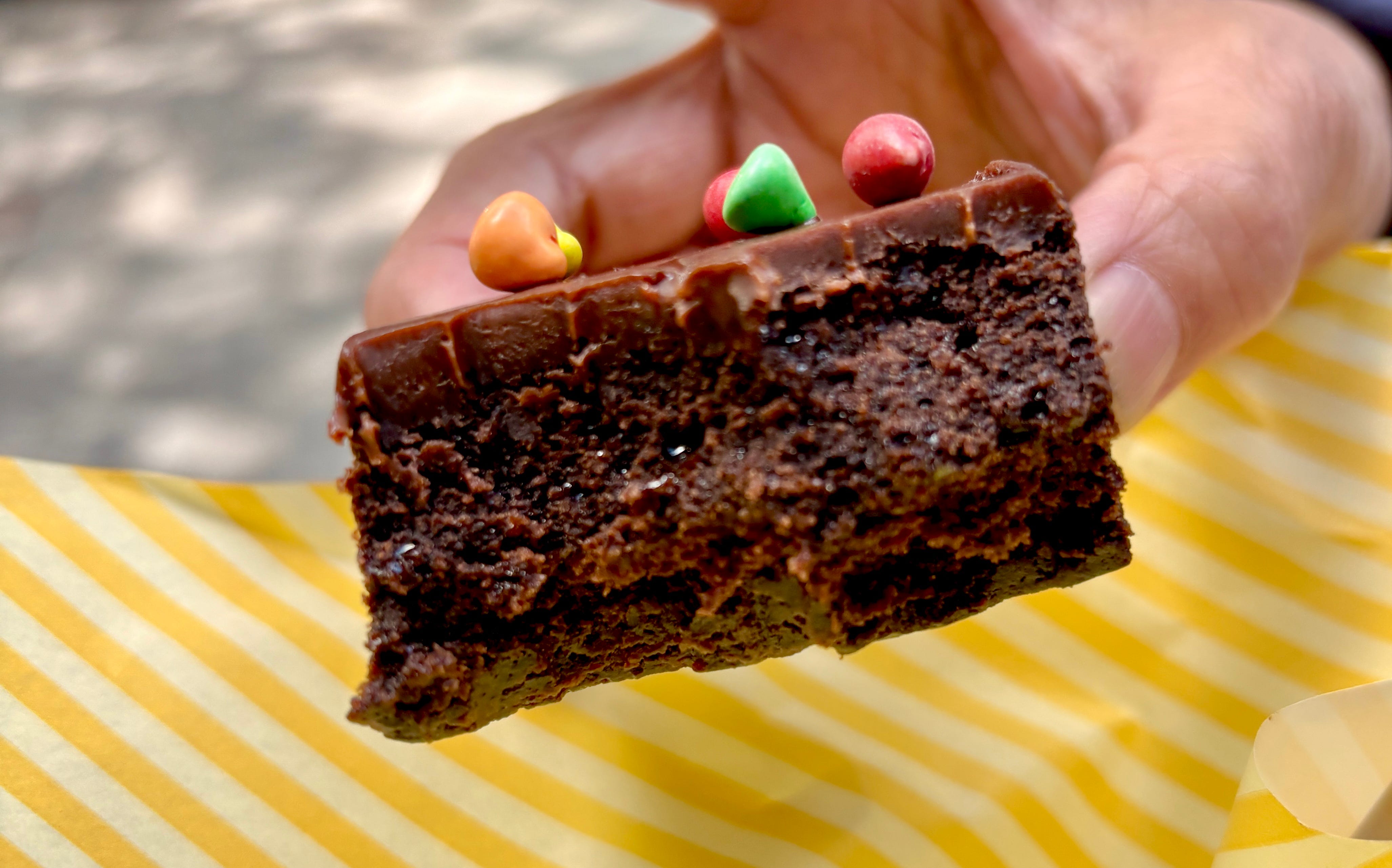
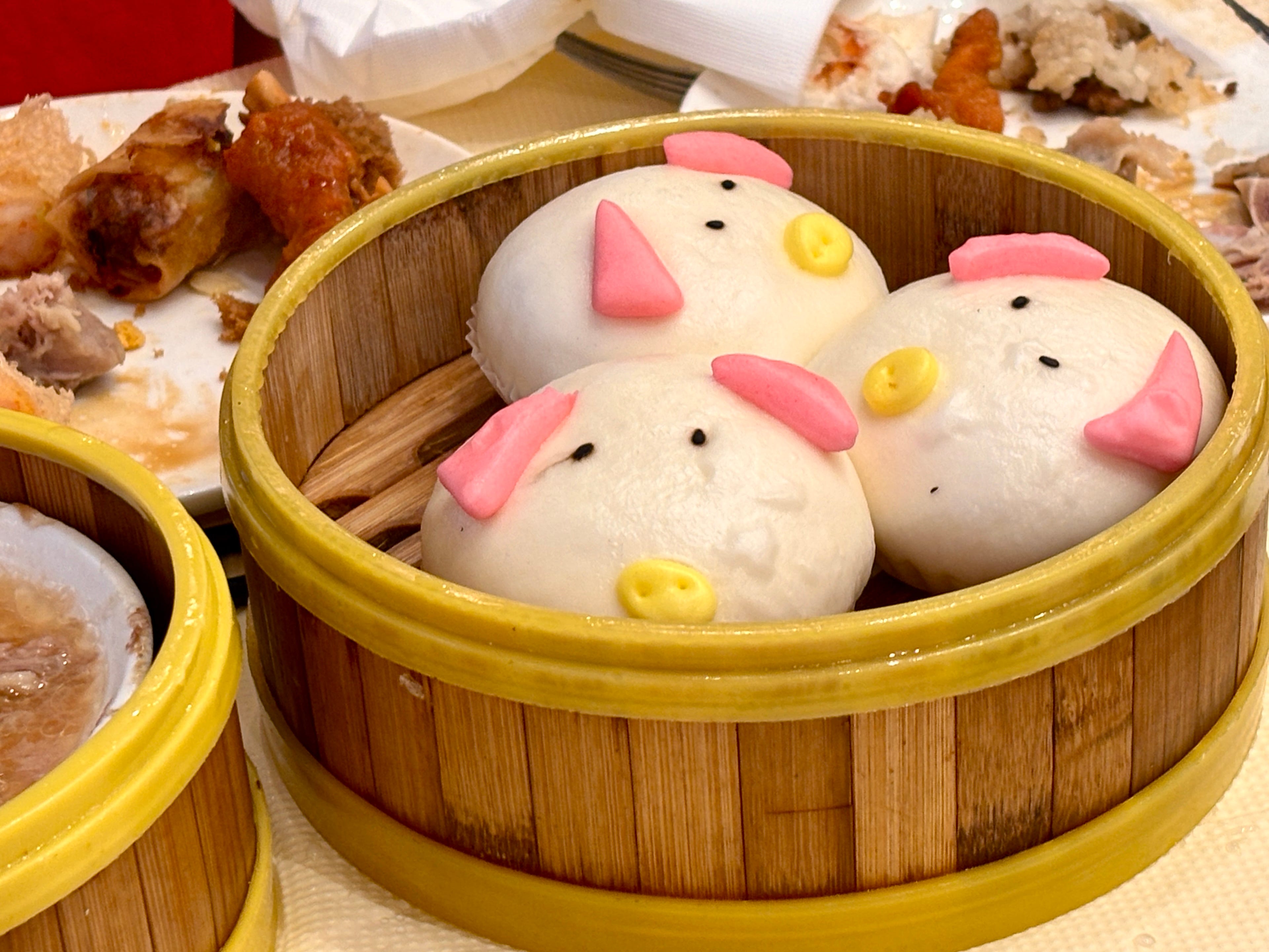
One thing that Paris still lags on is dumplings. After catching up with a good friend who I worked with at Chez Panisse, over dim sum at Tim Ho Wan, I told her about the remarkable brownies at Hani’s, just a few blocks away.
You don’t know how good a brownie can be until you’ve had one at Hani’s. They’re hard to describe, but it’s like a solid block of the densest, darkest chocolate one can imagine. Even I can’t imagine it. You just need to experience it.
The line was long since it was Sunday, but Miro, the super-friendly baker and owner, was manning the door, smiling as he ushered people in, anxious for one of their awesome cinnamon buns or tahini-pistachio Rice Krispies treats, which are also unimaginably good.
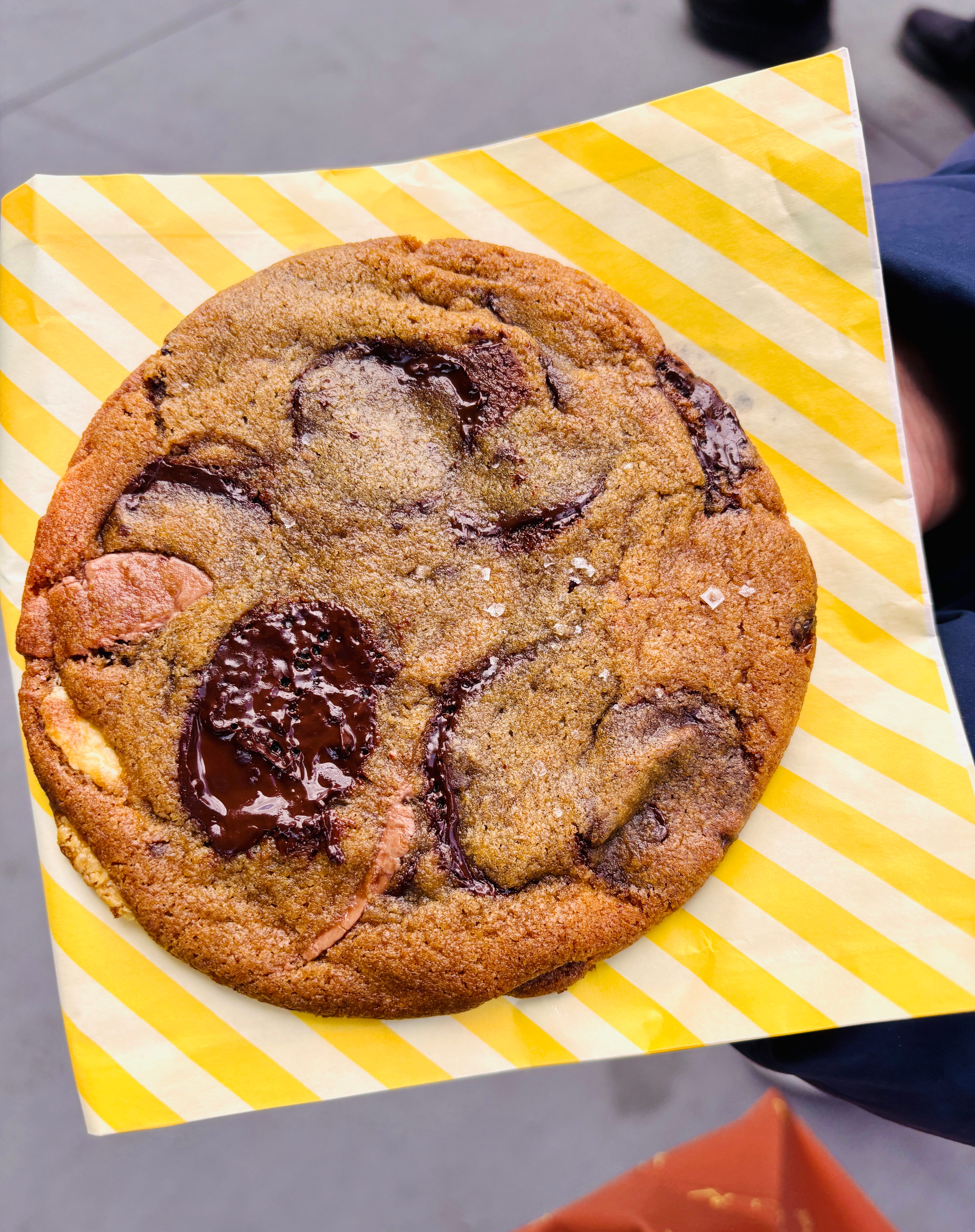
One perk of being a baker is that we look out for each other, and Miro kindly stepped inside and emerged with a brownie for us, with a chocolate chip cookie as an added bonus, which was the size of a toddler’s head.
My friend is très exigeante, meaning she has a very discerning palate, and she was also swooning over the brownie (and cookie) that we wolfed down on the sidewalk.
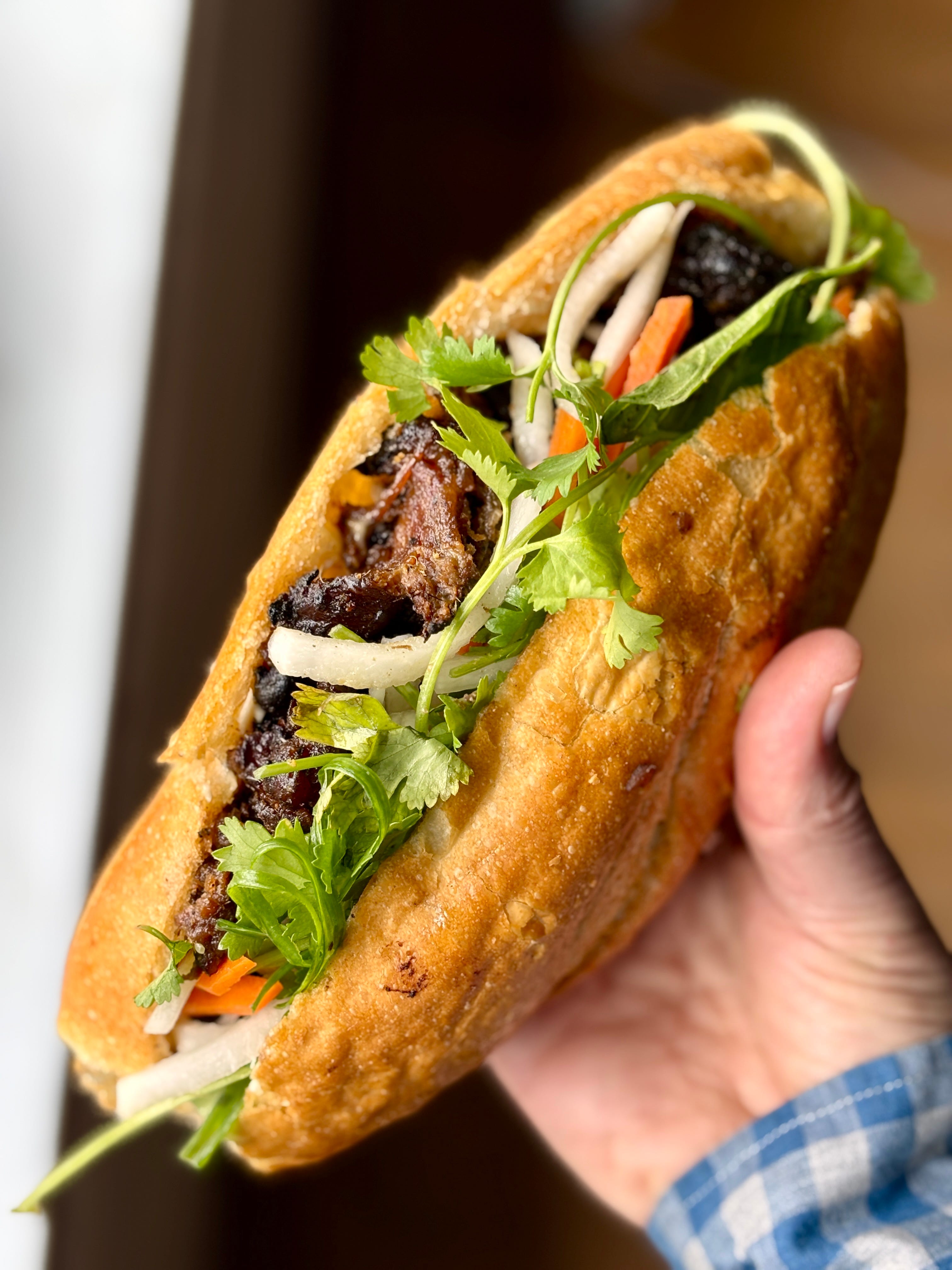
On another day, my friend asked me what I was doing for lunch. She was out of town but recommended the bánh mi sandwich at Bánh Anh Em. When she described the housemade bread as “so light and crispy…it just kind of melts as you eat the sandwich,” I was sold. And another sandwich was sold. Thankfully, you can order online and pick up your sandwich at a designated time. I ordered the char-fired barbecued pork belly with pickled vegetables, hoisin sauce, and scallion oil, and I have to say, it was one of the best sandwiches I’ve had in my life. (Thanks, Susan!)
It was also huge and was so big that I had a hard time eating the whole thing, but I also had a hard time stopping.
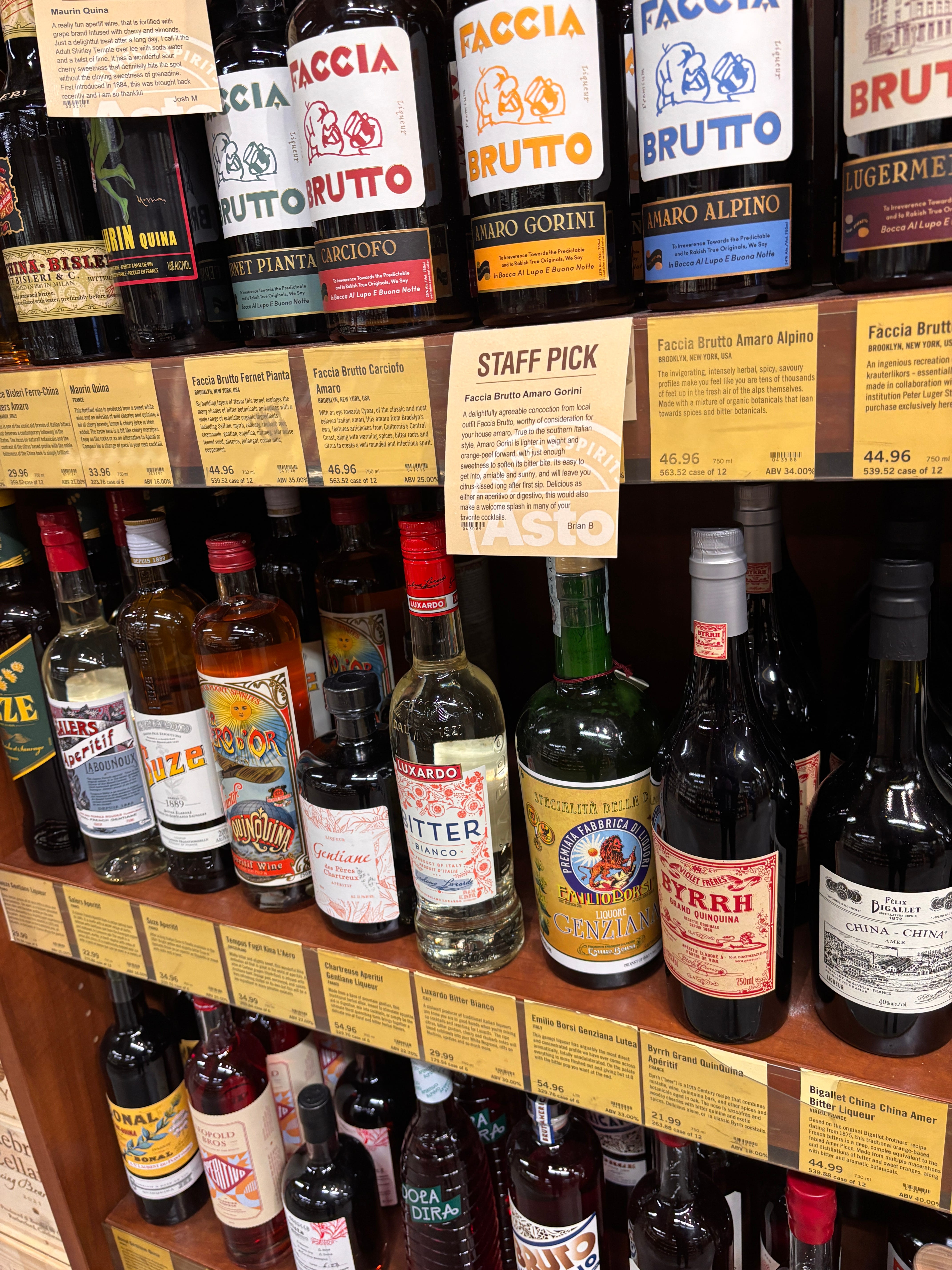
Not too far away is Astor Wines & Spirits, a place I used as a reference when I was writing Drinking French to see what French spirits and apéritifs were available in the U.S. In spite of tariffs and other shipping issues, it’s nice to see that Astor still has a great selection of French spirits and apéritifs at drinkable prices. Some bottles were less expensive here, and easier to find, than they are in France.
Astor has elusive bottles like Bonal, Salers, Avèze, Byrrh Grand Quinquina, Bigallet China-China, an even-better replacement for Picon Amer (which is unavailable in the U.S.), and cherry-flavored Maurin Quina.
Other finds include Dola Dira, made in Burgundy, a lovely low-sugar, bitter red apéritif flavored with rhubarb and bitter oranges, as well as Bruto Americano from St. George Spirits in California, a better swap-out for brash Campari, plus a lineup of Brooklyn-born spirits from Faccia Brutto. I was tempted to bring a few bottles home, but I’m still working on the 200+ bottles I amassed while writing Drinking French. Cheers!
I normally avoid French restaurants and French bakeries when I’m traveling, since I live in France. True, there are great French restaurants and bakeries outside of France, for sure, but I don’t need a macaron in Taipei, and would prefer to drink sake over Sancerre when I’m in Tokyo. But a friend reserved at Marcel, the new restaurant in the Breuer building, a brutalist masterpiece in New York City, and I didn’t want to miss a chance not only to see my friend, but also to dine in that building.
The restaurant is helmed by French chef Marie-Aude Rose, who’s cooking elevated French food, dishes rooted in classic French cuisine, but updated and spiffed up, with stiffer prices. (Although prices are similar to what you’d pay at an elevated bistro in Paris nowadays.) Between the five of us, we shared two endive salads ($28 each) that came with apples, bacon, and Gruyère cheese, then had mains. I had a very good steak hachée à la française ($48), a pan-fried patty of ground beef over slices of potatoes, topped with a perfectly poached egg. The restaurant is not inexpensive but it’s located in a swanky part of town and you’re paying to eat in that fabulous space designed by Breuer. The food was well prepared and more filling than it is in France, thanks for rich, well-made sauces.
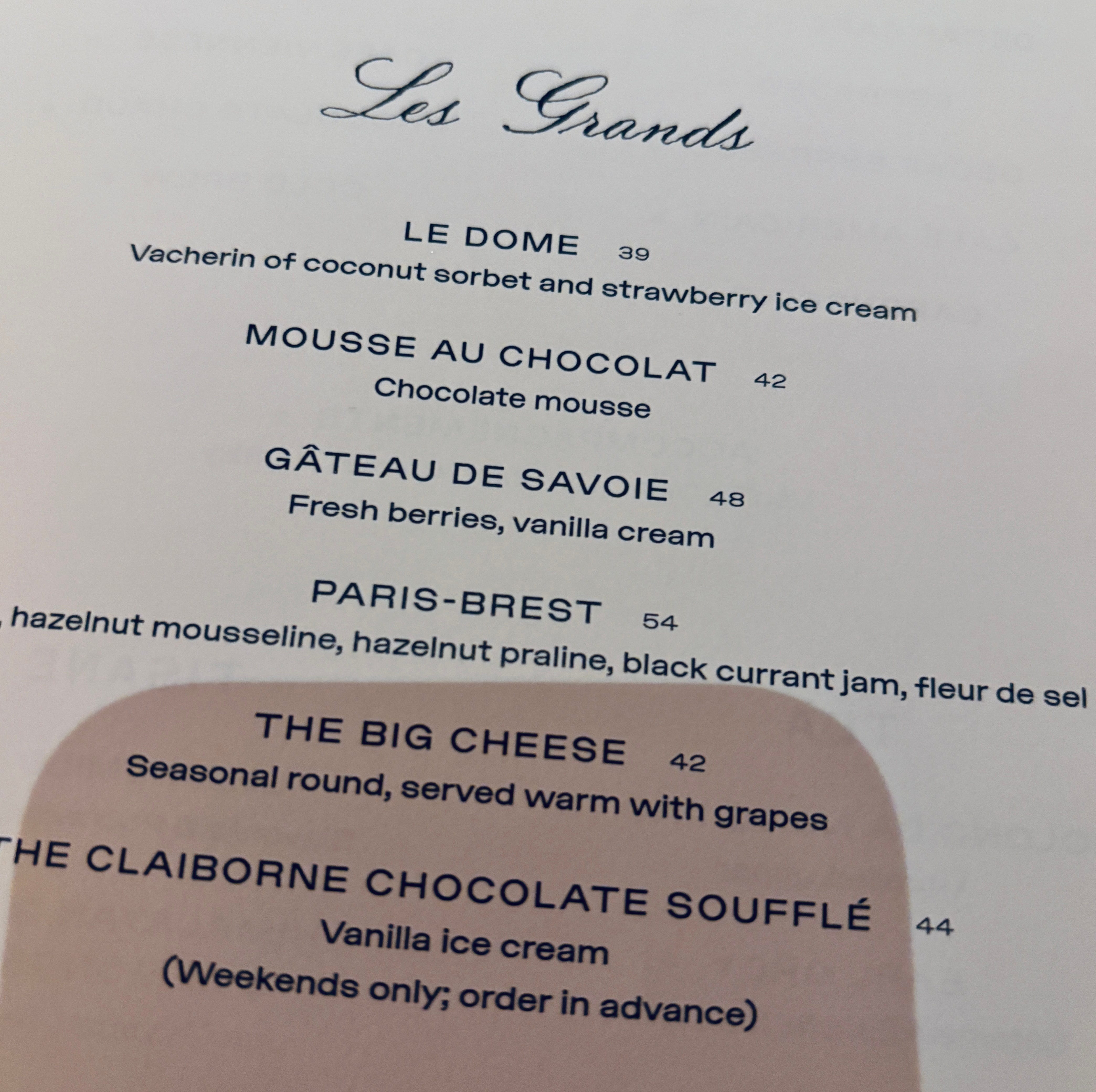
The dessert menu is divided into two parts, and the second part is called Les Grands. While the prices seem steep…
Half of the dessert menu at Marcel, the desserts that are meant to be shared
…they bring out a whole cake. As usual, everyone looked at me when it was time to order dessert, which happens…even though another guest at our table was a well-known pastry chef. The waiter had mentioned the soufflé needed to be ordered in advance, which I should have been more dynamic about ordering, but no one could decide, so we didn’t.
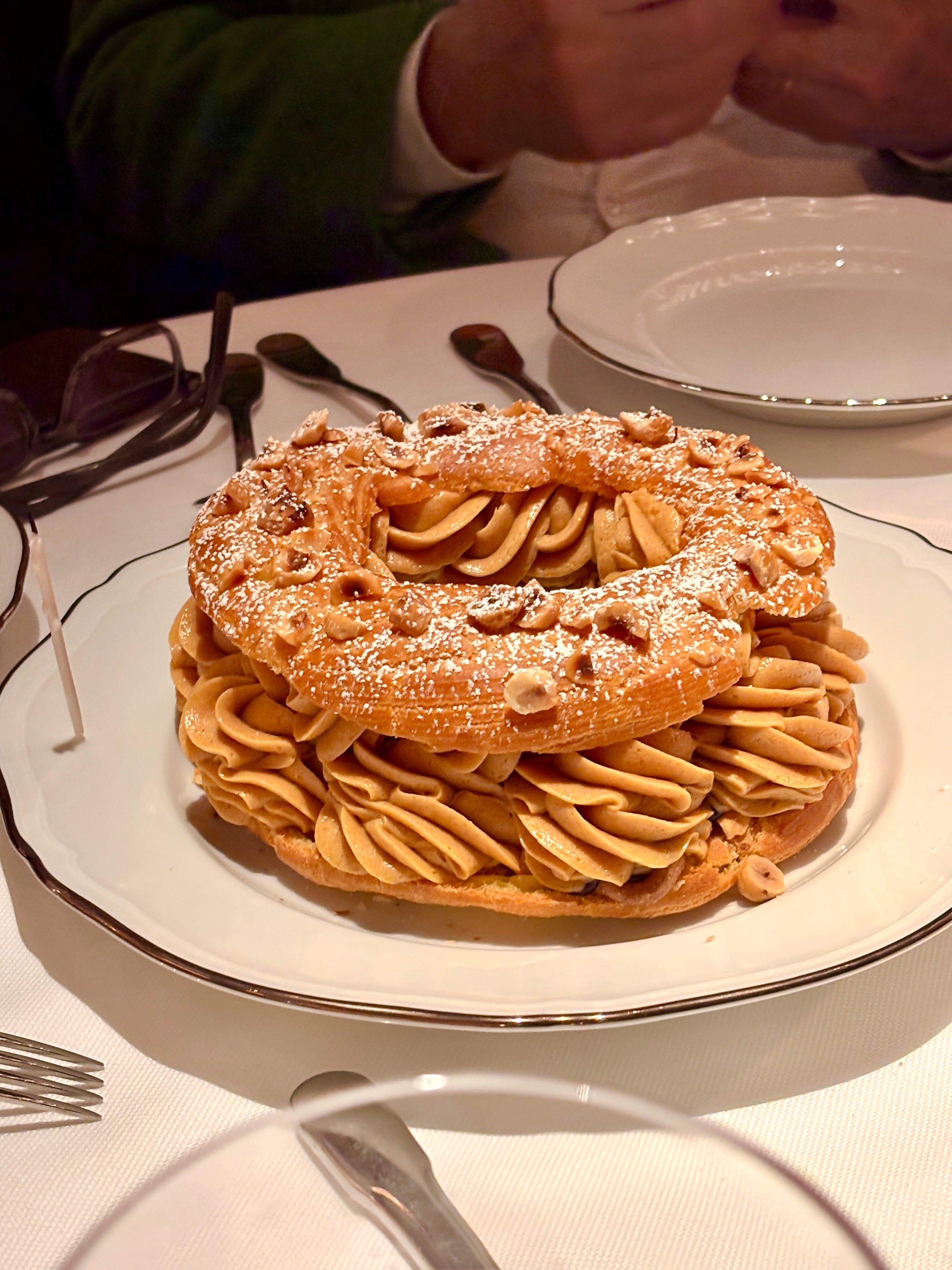
Instead we had this Paris-Brest, which was fabulous. Laced with a bit of black currant puree, it was filled with a rich caramelized hazelnut cream and was well worth it.
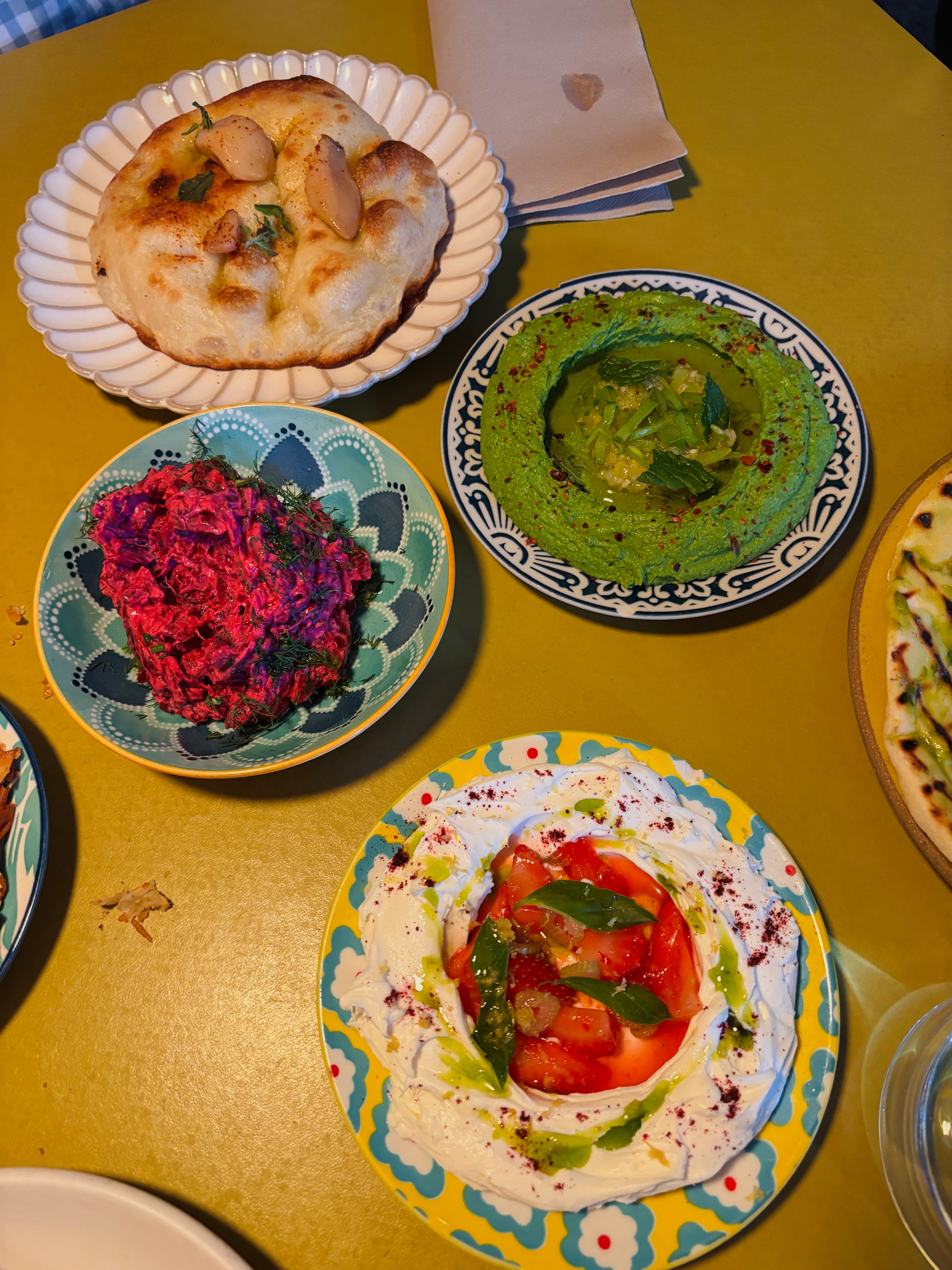
A must-stop for me in New York is Shukette. Even in the Middle East, I haven’t had food like this. That bottom dish is labneh with strawberries and basil oil, which sounds like a questionable idea. But wow — the strawberries on top were bright and slightly acidic, and melded perfectly with the rich labneh cream, along with a swirl of herby basil oil. I wasn’t thinking of ordering it, but , who I was dining with, added it to our order.
The spring pea dip was also a dream, with spring garlic and preserved lemon, and you can’t eat at Shukette without having a few things from the “Rip This” portion of the menu, which features housemade breads. The best was the frena, fluffy (yet crisp on the bottom) Moroccan bread topped with roasted garlic. Another, not shown, was lafa - a grilled flatbread liberally brushed with ramp butter.
There were also shawarma-spiced fries, toum (garlic spread), beet tzatziki, and tahini soft-serve ice cream for dessert, topped with halvah floss and pomegranate syrup. I don’t know how many recipes chef will be sharing in her upcoming book, Mediterranean All the Way, but I can’t wait to see it.
Speaking of books, while I can’t see everyone I want to when I come to New York - with apologies to Renato, Casey, , and , which makes me feel like a heel, I make time to seeSusan Friedland, who acquired and edited my first two cookbooks. If it wasn’t for her, I wouldn’t be writing cookbooks.
We met up at CheLi, and unlike everyone else I dine out with, she doesn’t reply to my asking what she wants to order with, “I don’t know, what do you want to order?” She knows what she wants, and she knows good food. She also spilled some tea when I had her on my podcast, talking the truth about the world of cookbook publishing:
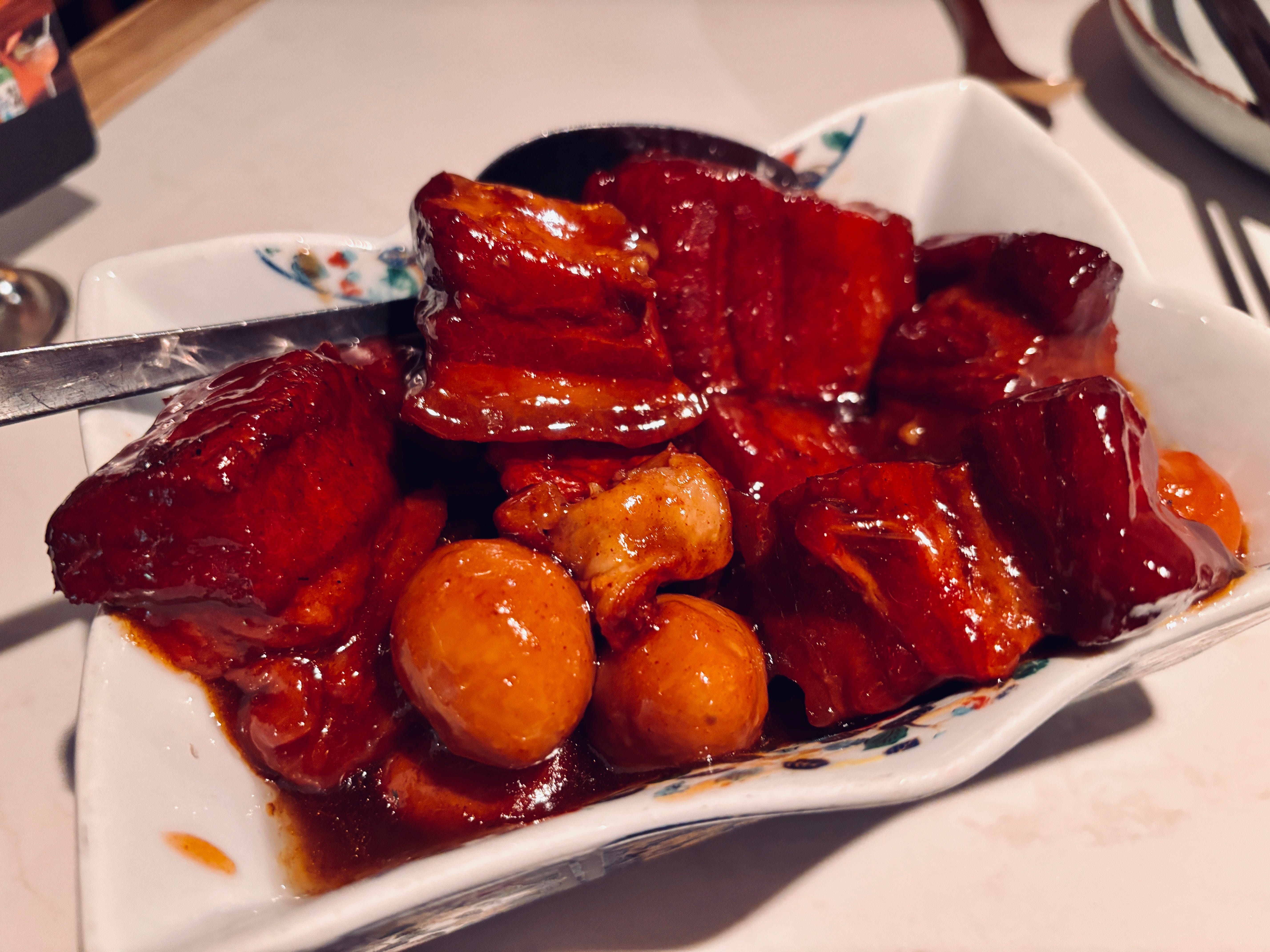
So I let her guide us through the menu and she was pretty insistent we order the pork belly with quail eggs, shown above. It was excellent as were the dry-fried green beans, a necessity when you travel since you never want to miss a chance to get some vegetables into your diet. One cannot live by brownies and pork belly alone, although it certainly feels like I’m giving it a try.
Yesterday I met with friends, ramen master Ivan Orkin, and cookbook author J. J. Goode, at 100 Feast & Lounge for more dim sum, then I hoofed it up to Kitchen Arts & Letters to sign copies of my book for folks who pre-ordered, and left a stack of signed copies for those who come into the shop or order online.
I also stopped in Wild Sorrel Cookbooks, a new cookbook store in the East Village, then headed to Williams-Sonoma to do a signing at their store in Columbus Circle. Whew!
Ayam kecap is a popular Indonesian chicken dish made with kecap manis — a sweet dark soy sauce — and a unique blend of spices including fresh ginger, garlic, shallots, makrut lime leaf, galangal, coriander, and clove. Although we have never been to Indonesia, we love the flavors of Indonesian food, and many Indonesian dishes […]
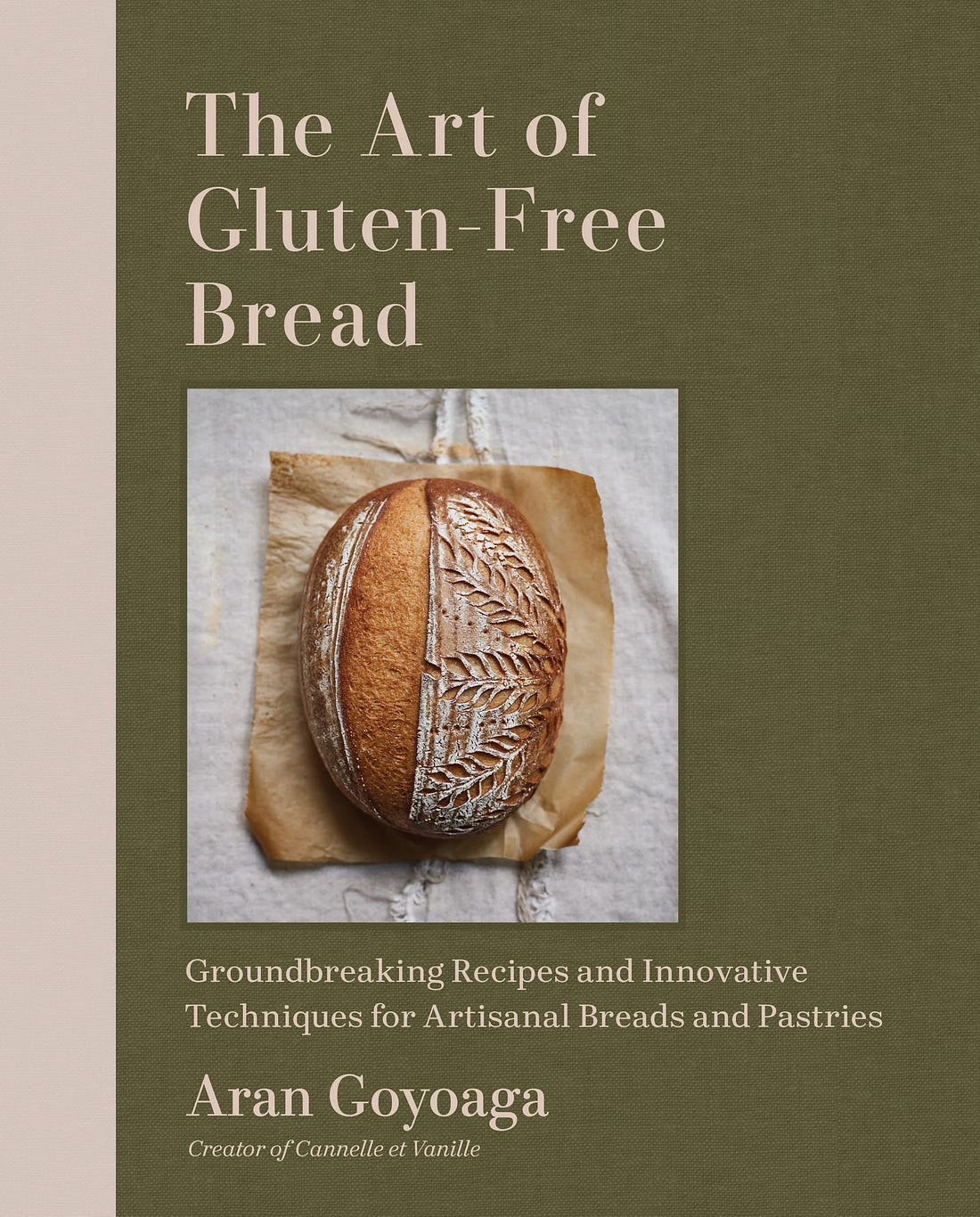
Baking bread is like alchemy, seeing something so delicious come of almost nothing, balanced delicately with the disappointment when it goes wrong for no discernible reason, but with Aran’s well-researched explanations, everyone can become a successful gluten-free baker. It’s written to help you succeed, suitable for all levels from beginner to expert, and is divided into eight logical chapters.
Alongside the groundbreaking recipes you’ll find equipment and technical explanations, pantry staples, instructions for making a starter and thoughtful ways to use the discard, and information on different flours, including how to mill your own at home. Aran also gives clear directions for buying psyllium husk and swapping out dairy, eggs, and different types of yeast (there’s even a yeast-free bread recipe).
I’ve so far made the Roscón de Reyes, popovers, soft pretzels, and vanilla-glazed donuts, and have a sourdough starter bubbling away happily. Although I’m handing David back his copy (admittedly with a few butter smudges - sorry!), I’ve already ordered my own to keep, and you can find yours here or in your local bookshop.
Open the book to any page and you will want to eat, so choosing just one project to share here was a challenge (Aran said the recipe she’s most proud of is the Danish). I eventually settled on pain de mie (pain means bread and mie refers to the soft interior crumb) because of its connection to France. It’s a square loaf that’s baked in a sealed pan to give it a thin crust and tight crumb. This bread is very popular for sandwiches and ideal for making croque-monsieur and croque-madame.
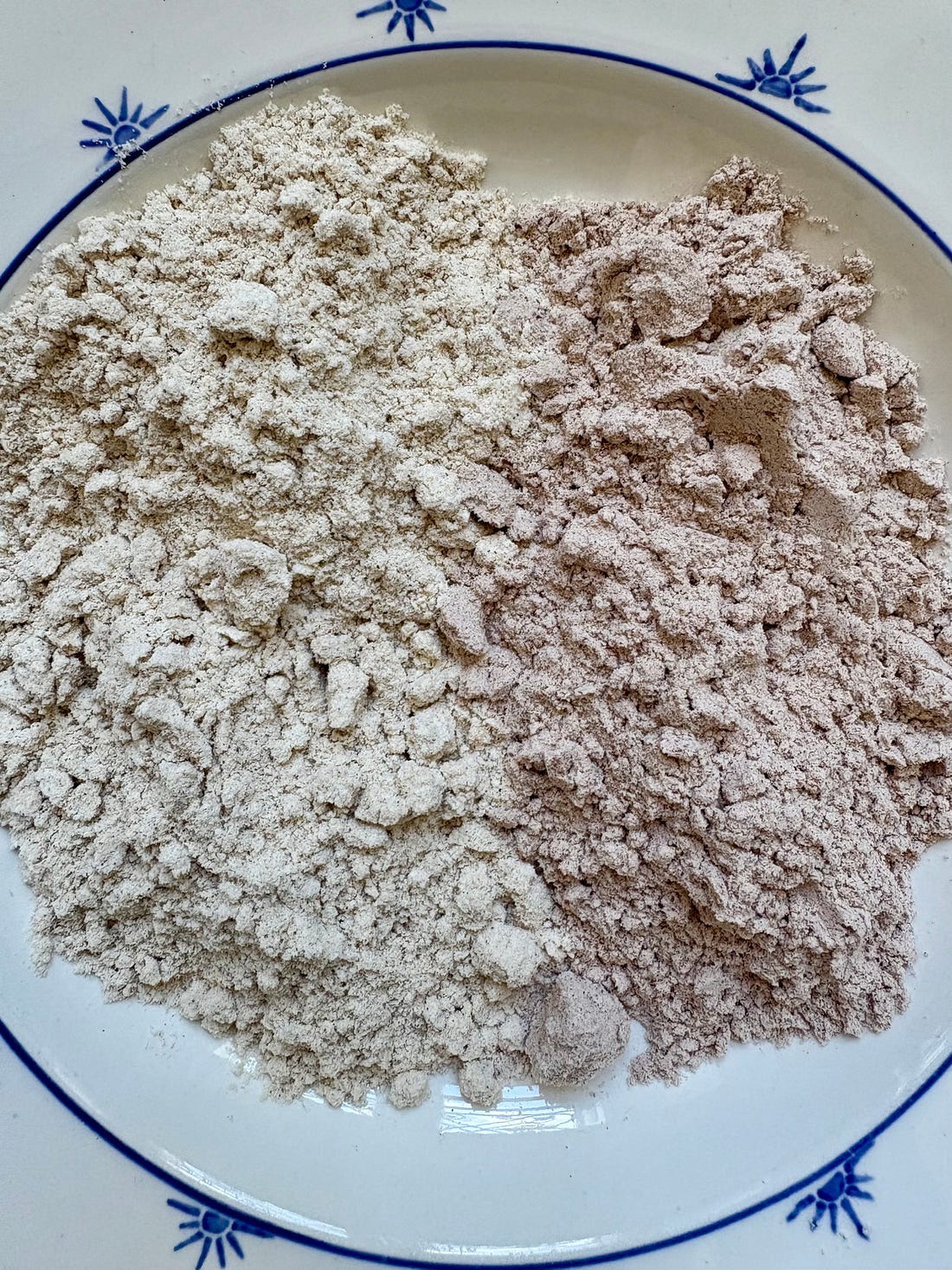
U.S. sorghum on the left and French sorghum on the right
Aran describes sorghum (the main ingredient) as “slightly sweet, wheat-y tasting and light yellow flour… grows well in the US, but it seems harder to find in parts of Europe” and suggests millet in its place if necessary. I found sorghum flour easily in France but it was quite dark, so my loaves came out looking slightly more rustic than the image in the cookbook. Then while traveling I found Bob’s Red Mill sorghum flour, which was a lighter color and baked very pleasing loaves.
Subscribe to David’s newsletter to get more recipes, Paris dining tips, and stories, sent right to your Inbox!
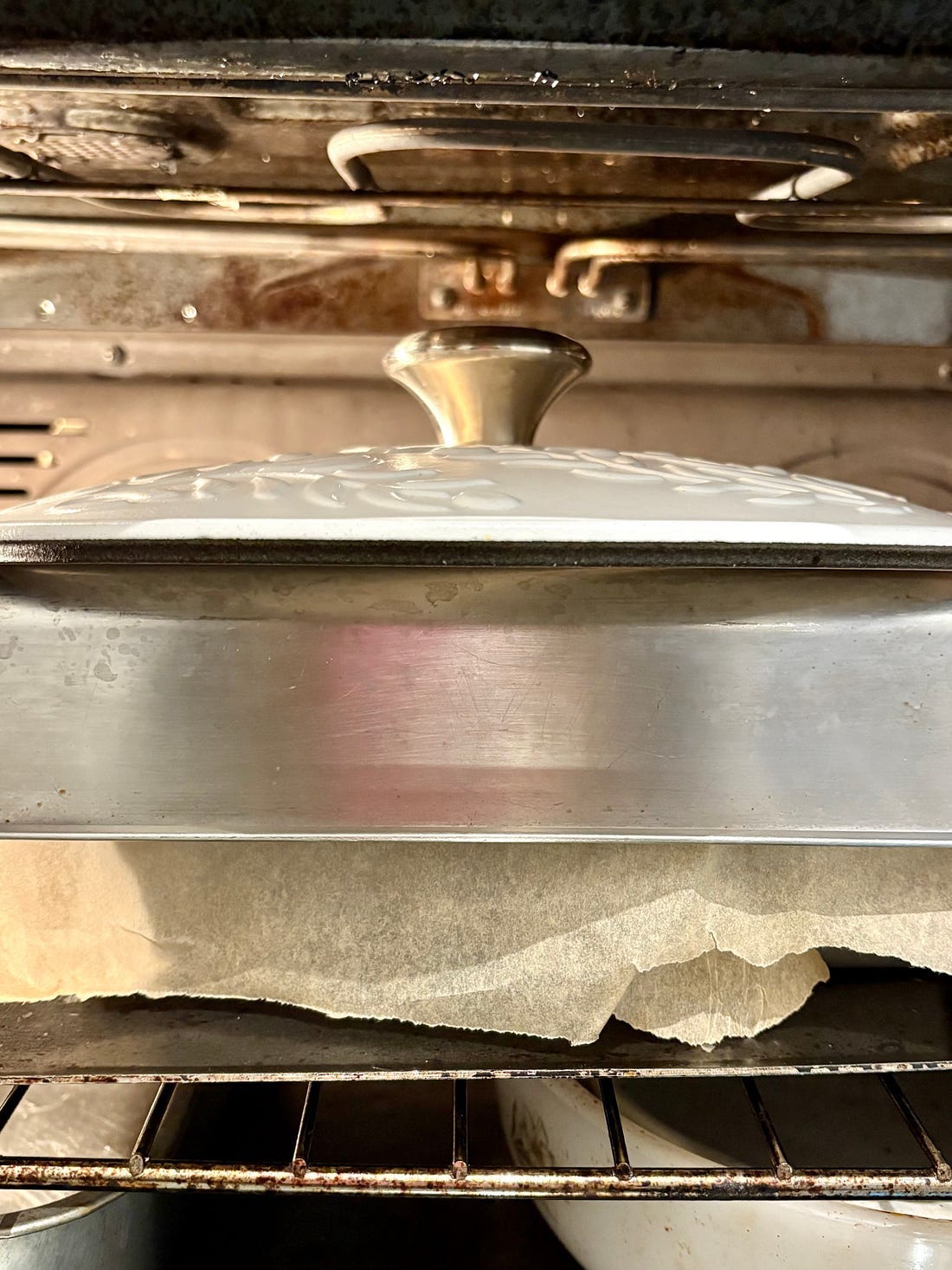
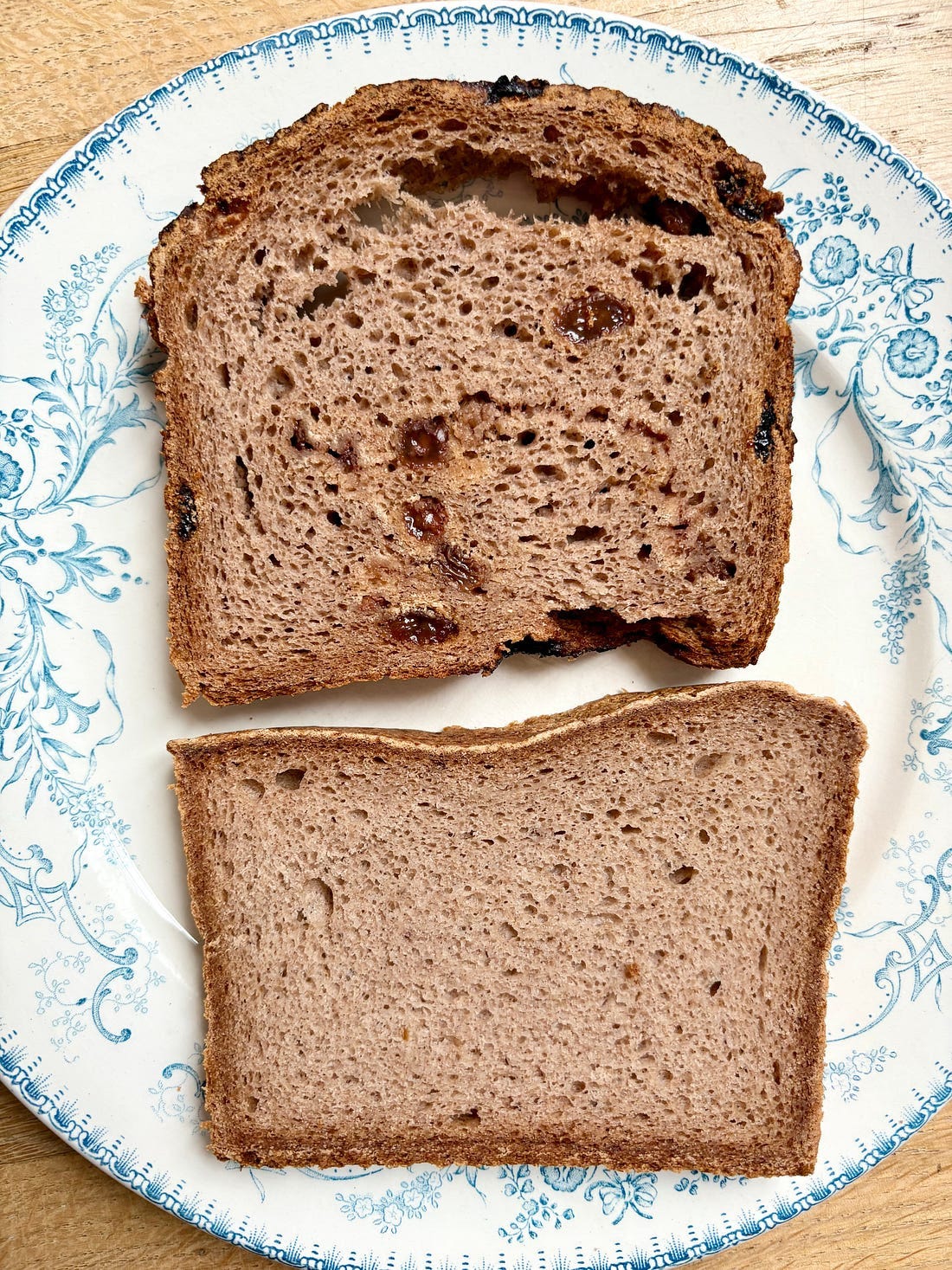
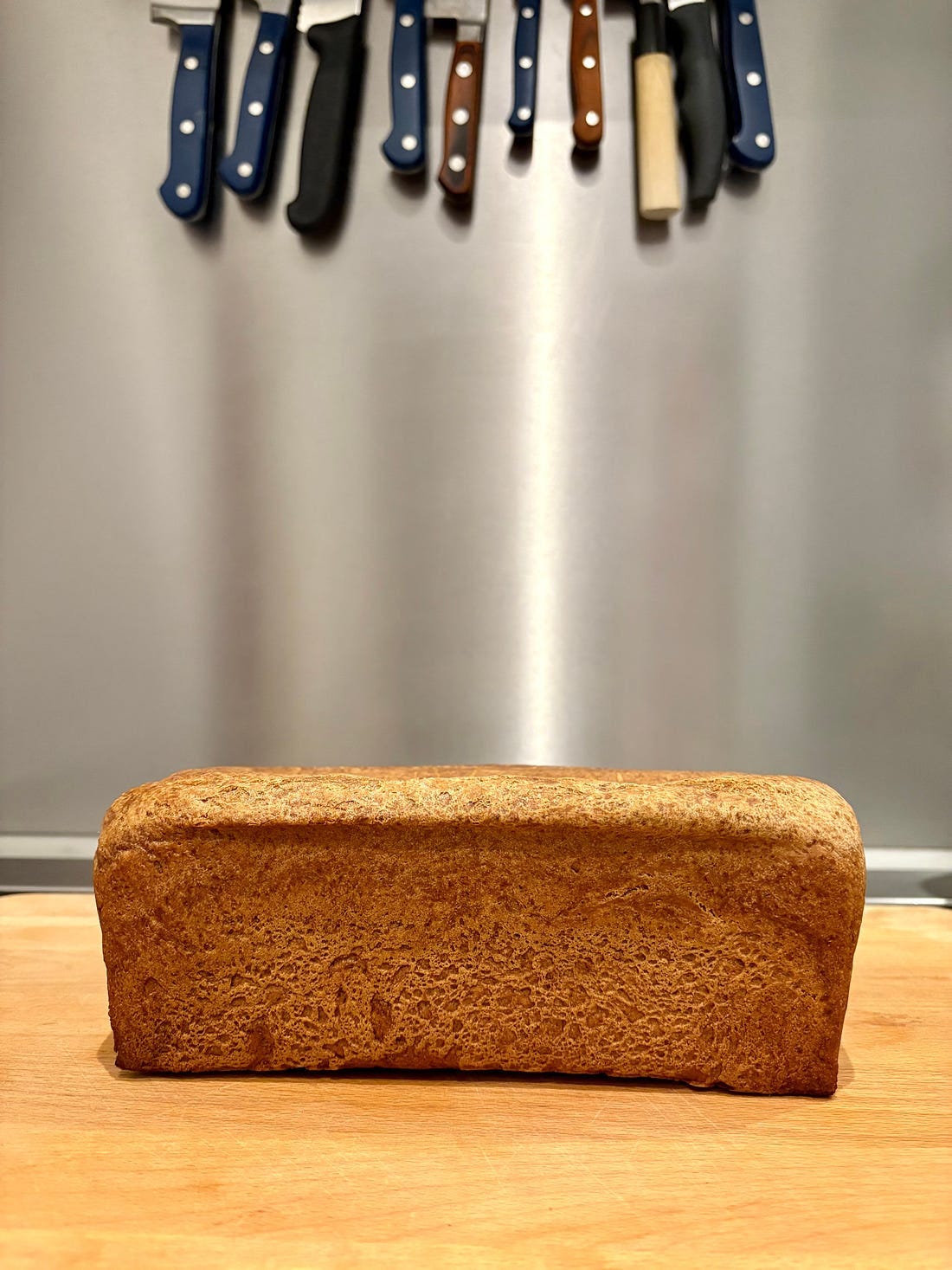
This recipe calls for a Pullman tin with a lid and I considered buying one but know I’ll use it once, lose the lid, and forever feel regret when opening the baking drawer. Instead I used a 9-inch (23cm) loaf tin and for my first bake MacGyvered a lid out of baking paper, a roasting tray, and a Le Creuset lid to weigh it down. This almost contained the bread into a rectangle and on the second try, I got it to behave. I also tried a version where I let it roam free with no lid and as promised by Aran in the notes, the crust was very slightly thicker and the crumb was less tight, but it was equally as delicious.
Unrestricted bread above and contained bread below. You can see the difference in the crumb tightness.
I used to be slapdash with baking but have learned that with gluten-free recipes, it pays to stick to them as precisely as possible (my heart sung when she presented the liquids by weight rather than volume), and I used my timer methodically at each step. It’s a long recipe (around three hours) but mostly done in 30-minute increments of waiting. While it takes patience to leave the bread in the cooling oven and then again on a wire rack for another half hour, these two steps had a noticeable effect on the finished structure of the loaf, exactly as promised in the instructions. Her writing may feel effortless, but it’s clear Arantakes recipe development seriously and has tested each one to the nth degree.
The first time I tried this recipe there were snowflakes dancing on the glass ceiling of our kitchen, so I allowed an extra 15 minutes proofing to make up for the cooler room temperature, but on regular weather days the dough was right on time at each step.
300 grams whole milk or oat milk, heated to 105°F (41°C)
40 grams honey or maple syrup
30 grams psyllium husk powder
280 grams sorghum flour
160 grams tapioca starch
100 grams potato starch
12 grams kosher salt
1 teaspoon (4g) baking powder
55 grams unsalted butter or vegan butter, at room temperature, plus more for greasing
Psyllium-yeast mixture: Sprinkle the yeast into a large bowl. Add the water, milk, and honey and whisk until dissolved. Let the mixture sit until frothy, about 10 minutes. Whisk in the psyllium. Let it gel for 5 minutes.
Make the dough: In a stand mixer, stir together the sorghum flour, tapioca starch, potato starch, salt, and baking powder. Add the psyllium-yeast mixture and the butter (cut into small cubes) to the dry ingredients. Snap on the dough hook and mix on medium-low speed until the dough comes together, 2 to 3 minutes. Make sure there is no loose flour under the dough ball. It will look quite wet but should hold together nicely and fall out in one big ball when you tip it onto the work surface.
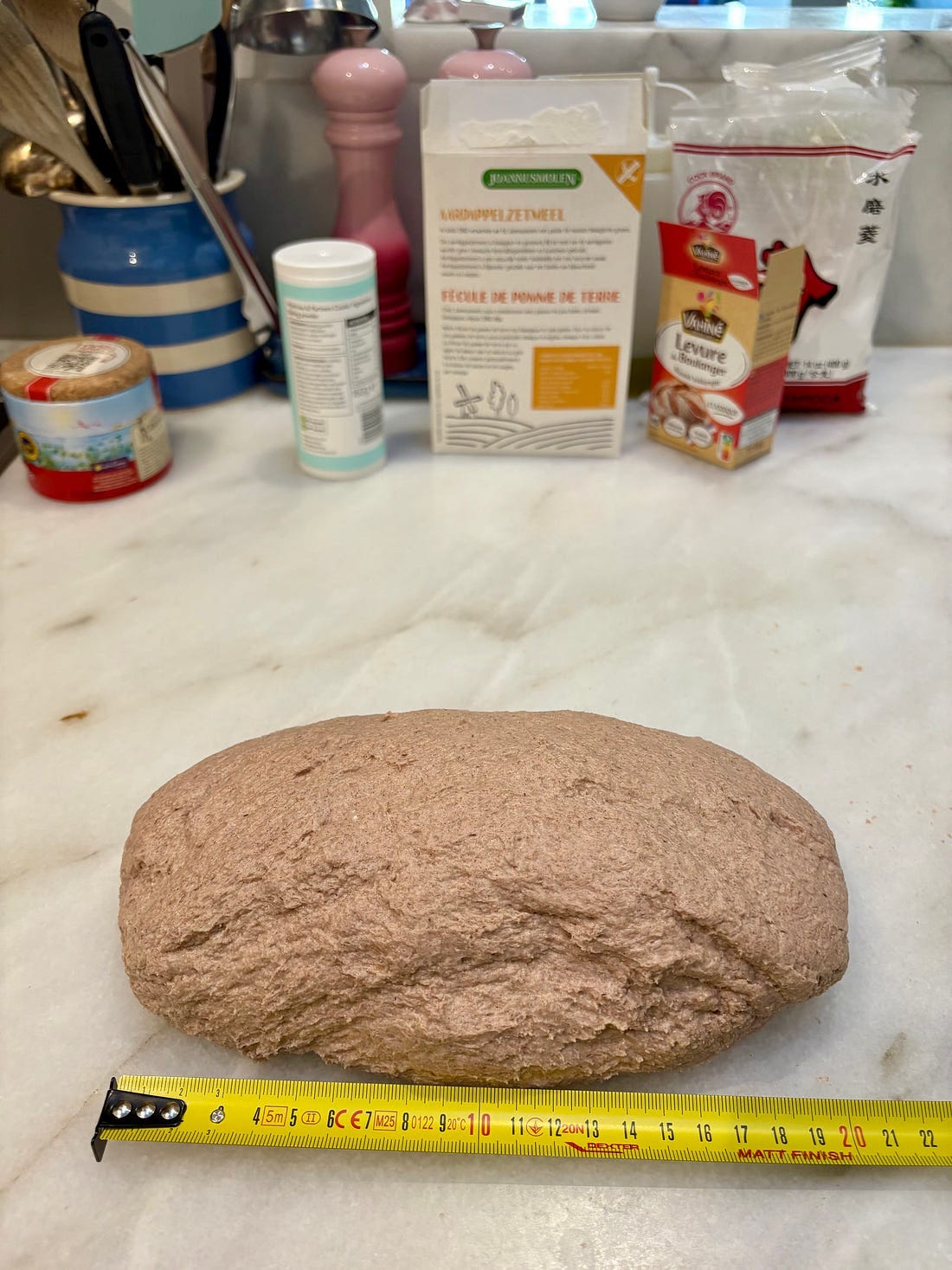
Shape and proof the dough: Transfer the dough to a work surface and knead a few times to shape into a tight ball. Roll this ball into an oval shape that is about 8 inches (20cm) long. Grease the bottom and sides of a 9-inch (23cm) Pullman loaf pan as well as the underside part of the lid with butter. Place the dough inside, cover the pan with a kitchen towel, and leave at room temperature. Proof the dough until it almost reaches the top rim of the pan, about 30 minutes. Don’t let it go past the top of the pan or it can overproof and collapse while baking.
Preheat the oven: Position a rack in the bottom third of the oven and preheat to 425°F (220°C).
Bake the bread: Cover the Pullman pan with its lid. Bake for 30 minutes. Reduce the oven temperature to 375°F (190°C) and bake for a further 30 minutes. Turn the oven off and remove the lid, but leave the pan in the closed oven for another 30 minutes.
Cool the bread: Invert the bread onto a wire rack and let it cool for at least 30 minutes before cutting. If the edges cave slightly, don’t despair; even the bread in the cookbook photo has a slightly concave shape.
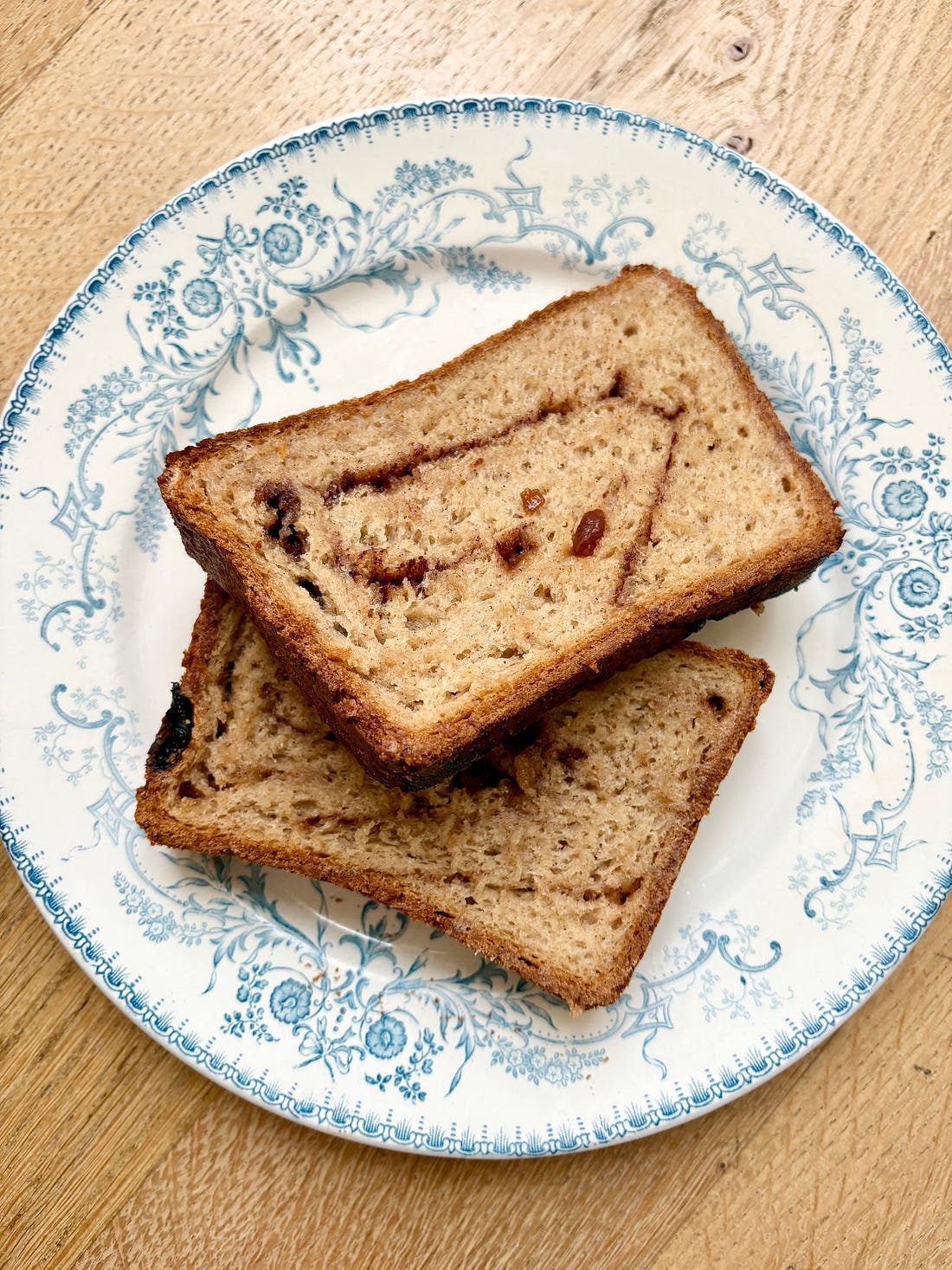
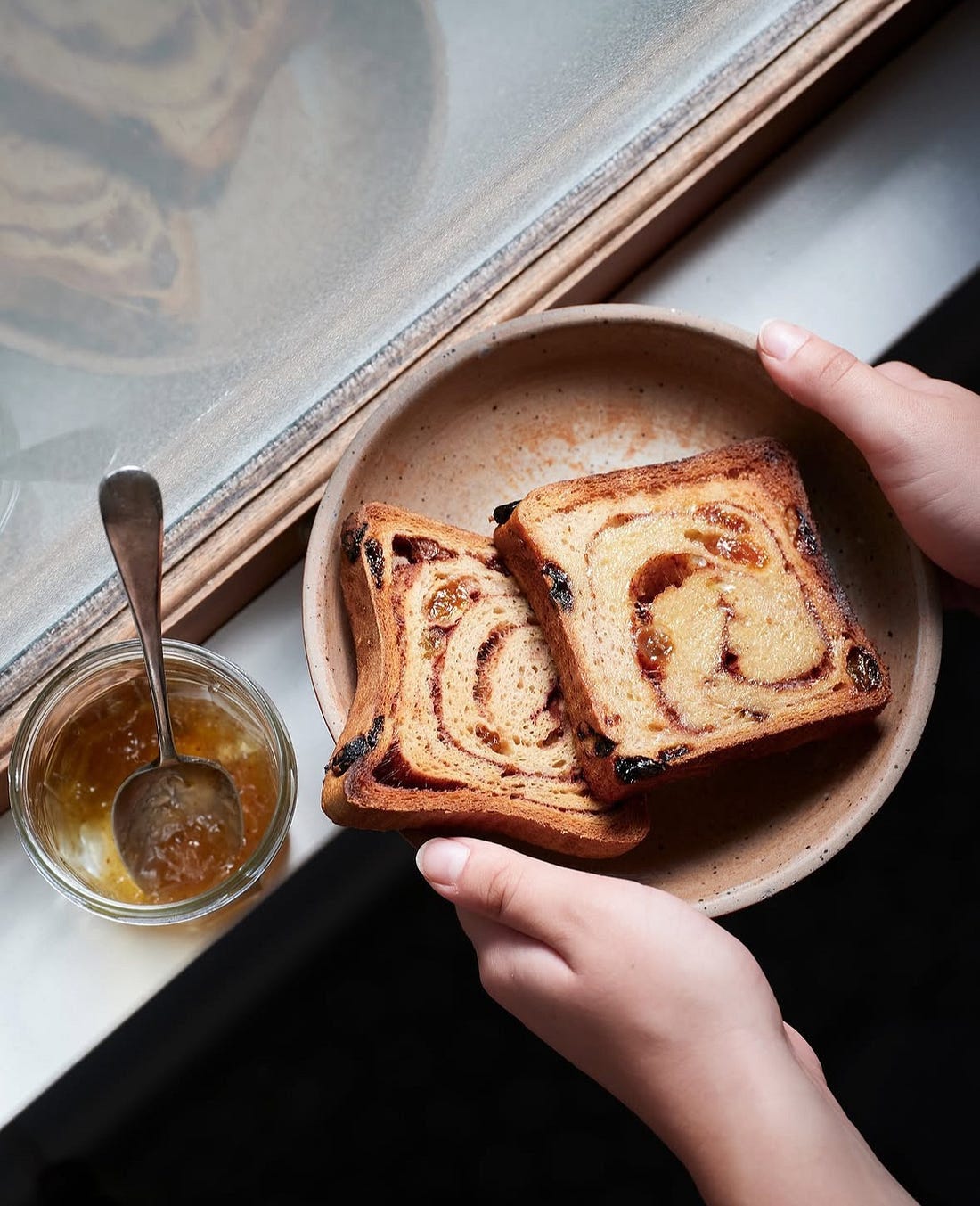
Cinnamon-Raisin Option: Add 1 1/2 teaspoons (4g) of cinnamon along with the dry ingredients when making the dough, then add 80 grams of raisins at the end of the mixing time. Dust a work surface with a bit of sorghum flour and knead the dough a few times until a tight ball forms. Roll into a rectangle about 12 x 10 inches (30 x 25cm) and 1/2 inch (1.3cm) thick. In a small bowl, mix 50 grams of sugar with 2 teaspoons (6g) of cinnamon.
Sprinkle the surface of the dough with half the mixture. With a short side facing you, fold the top third onto the middle and the lower third up over it, creating a letter fold. Turn the dough 90 degrees and roll again into a rectangle 13 x 8 inches (33 by 20cm). Sprinkle the surface with the remaining cinnamon sugar and roll from a short side into a tight log. Continue to roll a few times to seal the seam. Place in the greased pan, seam side down, then proof and bake as directed.
Tips: If you’re like me and not sure when you bought your baking powder, test some with a little acid (vinegar or lemon juice) to check if it still fizzes nicely.
As yeast in France can be hit or miss, I activate it in a small amount of warm water to be sure it’s alive before proceeding (make sure to keep the total amount of water in the recipe the same by subtracting the amount). Once you see bubbles forming, you know your yeast is working and can proceed.
Storage: Like most gluten-free bakes, this one is best eaten the day it’s made but freezes well and toasts up nicely. Aran suggests storing the bread at room temperature, wrapped in a paper bag, for up to three days, but by day two, mine was quite hard so best to eat it fresh, and freeze whatever you won’t eat. You can slice bread and freeze it in slices, then pop the frozen slices directly into the toaster.
Several follow-ups this week to last week, unbeknownst to me, my mother was among the folks who attended my fish sauce 101 livestream last Wednesday. I didn’t catch on my screen so she was a stealthy attendee! Mom got an email notification from Substack and clicked on the button to join. “It was so easy. Congratulations on your show!” 🥰 A mother’s love. I asked if she’d ever do one with me and she demurred.
That’s all good to know for next Wednesday, May 6, at 9am PST / 12pm EST, when my friend of Milk Street Kitchen will host me for a Substack Live. We have great chats about food, cooking, and culture; the upcoming livestream will last 45 to 60 minutes. When you get the email or app notification, hop on to watch and/or ask questions.
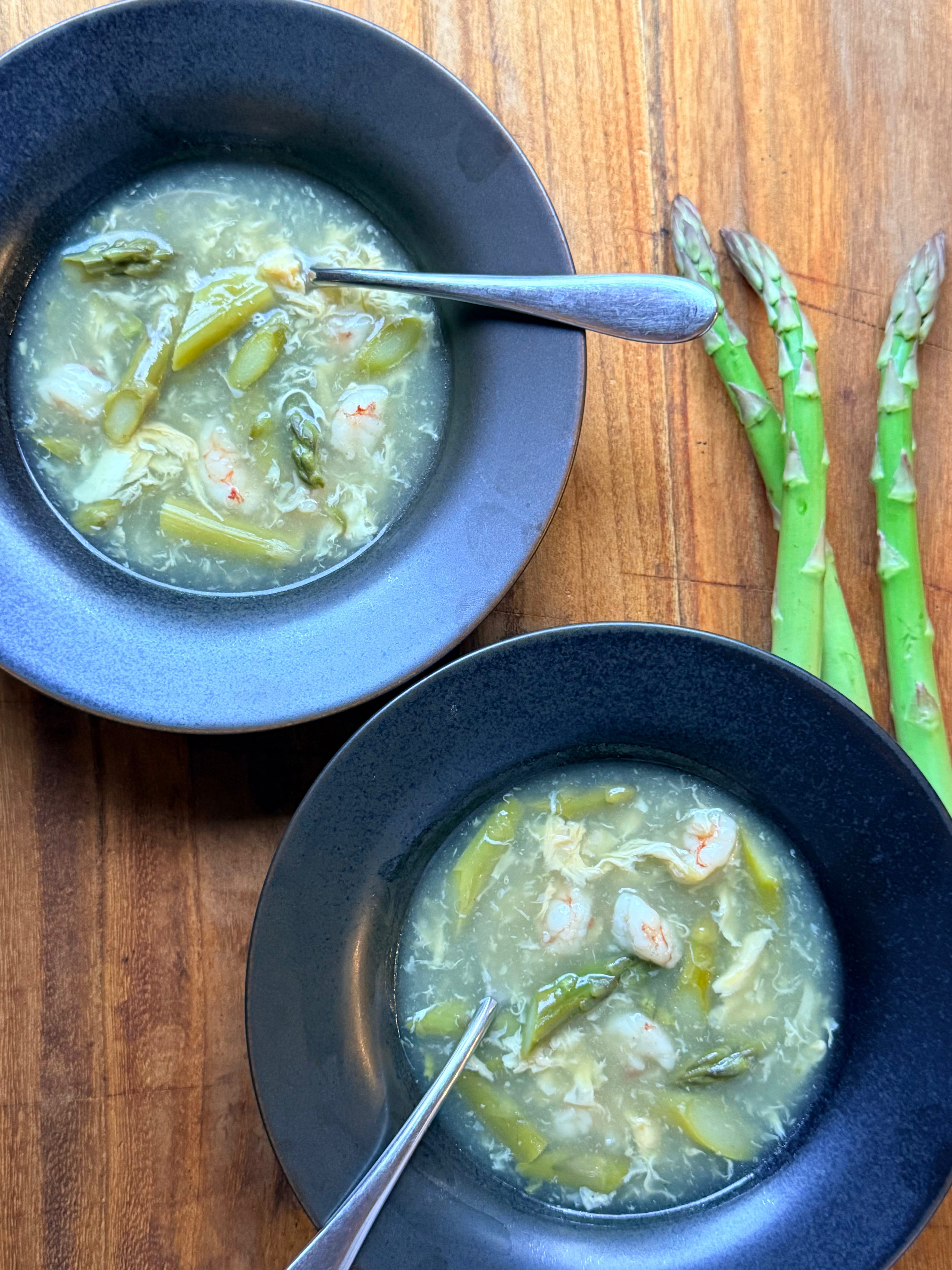
One thing I forgot to mention in last week’s súp măng tây (Viet asparagus soup) dispatch is that the term súp is the Vietnamization of French soupe. Viet folks consider any súp dish as special, high-end, and high-class. I presented two weeknight-friendly asparagus soup recipes to you but their silky, slinky texture and umami-laden flavors are suitable for entertaining!
Another favorite way that Viet people enjoy asparagus is in a stir-fry with beef – a luxe protein in Vietnam. In the main, the cattle in Vietnam tend to be lean and pasture raised. In the early part of the twentieth century, French colonialists ‘harvested’ lots of cows for their bifteck pleasures. They left the scraps for resourceful Viet and Chinese cooks to turn into new foods, as I wrote in the History of Pho article at my website. Steak was foreigner’s food.
Even nowadays, when Vietnam is wealthier, it’s rare for Viet people to sit down to a dinner of bít tết (beefsteak, from French bifteck) in which each person gets their own slab of tender beef cooked to their specifications. Moreover, domestically raised cattle in Vietnam tend to yield firm, lean meat because they are traditionally work animals.
I went looking for a fun stock photo of cows in Vietnam. I came up empty. Then I remembered I had a shot of some in a small town in Buon Ma Thuot during my 2024 trip to Vietnam.
That said, beef consumption is rising in Vietnam; in 2022, it was shy of 9 pounds, or 4kg per person! Here in the U.S. our annual beef consumption is approximately 50lbs per person!
If there’s a steak on the Viet table, it’s likely to be sliced up for sharing. After all, beef is expensive and in general, meat is enjoyed in small amounts.
I didn’t fully realize that until a few years ago. While I was writing my plant-forward book, Ever-Green Vietnamese, my mom shared that she only used 300 grams (10 ounces) of meat to prepare main dishes for our family. Our family of seven, was well fed, mostly on vegetables and grains, not on animal protein. It wasn’t until we arrived in America in 1975 that we’d have steak dinners on a weekly basis; and even so, we served it sliced up to divvy up and easily manage with chopsticks at the table.
Wanting to stretch the asparagus season and do a twist on a Viet classic, I made a delicious beef and asparagus stir-fry recipe. You don’t have to use fancy expensive steak to yield excellent results.
The marinade and seasoning employed yields tender, super flavorful results. In the recipe and video below, I’ll share how I pull certain levers to render small pieces of beef into supple flavorful morsels packing potent flavors. There are also certain techniques I use to ensure the asparagus express their best crispness and color.
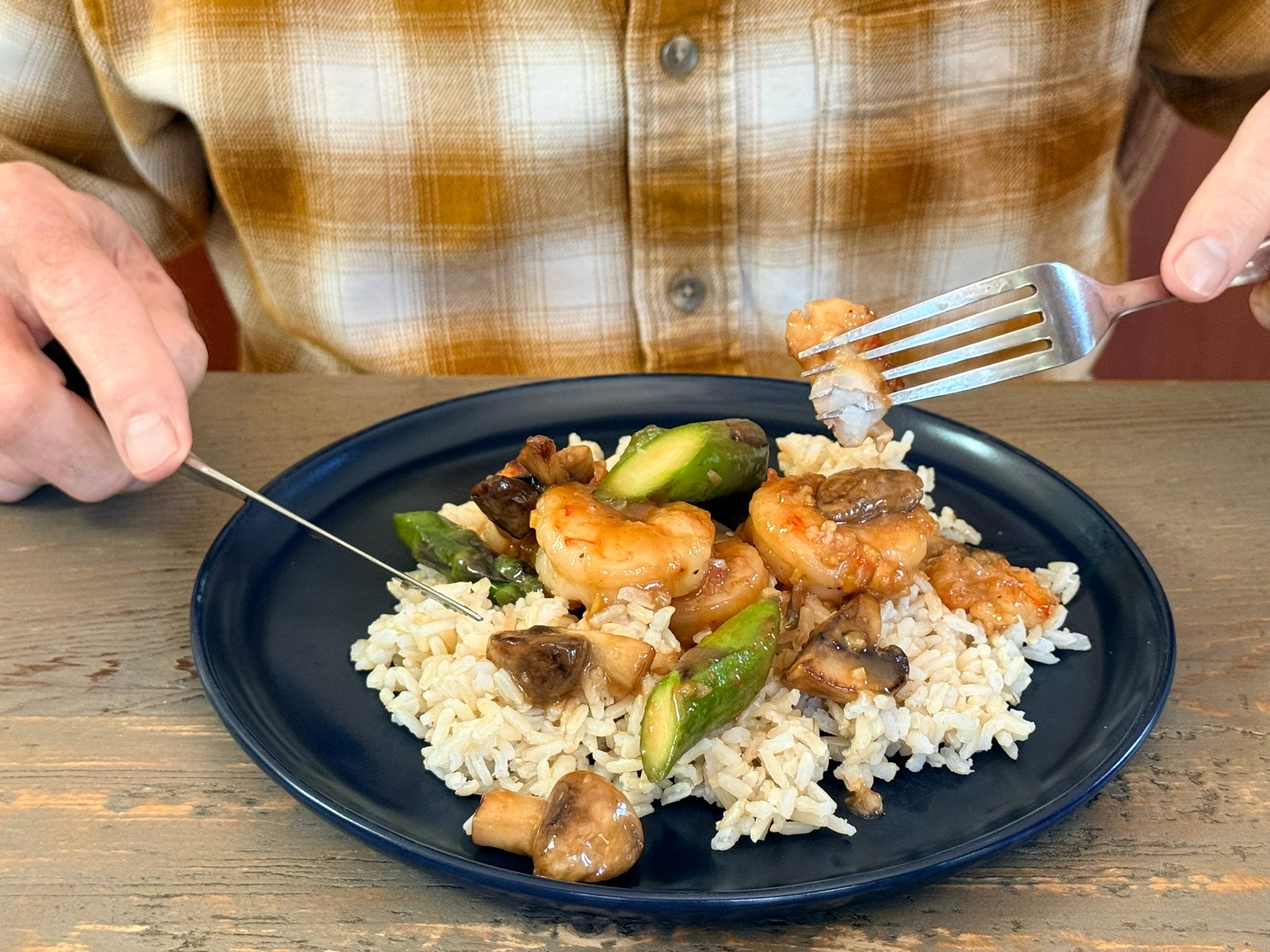
With lots of asparagus on hand, I prepared a rendition with shrimp. The flavors and texture were wowza terrific. Rory gobbled it up and said it was somewhat lobster-ish, which he never ever said about a cheffy asparagus and shrimp stir-fry I used to make.
Go ahead and enjoy the stir-fry with fork and knife! The big shrimp are easier to deal with. Ditto for the beefy stir-fry.
Beef or shrimp? It was hard to decide which is better so I’m offering you both this week. Below you’ll find:
Beef and Asparagus Stir-Fry + Shrimp and Asparagus Stir-Fry recipes in text and downloadable PDF
A how-to video to help you craft great stir-fries
What to look for in beef and shrimp that will stir-fry well
Ingredient swaps galore + advance prep tips too
Stir-fry both for a surf-and-turf feast that celebrates the season.
Thank you for being here. Paid subscribers sponsored this Sunday Special dispatch. Join us at any level to get in on the action. Become a paid subscriber for these two recipes plus many other recipes, insights, and benefits. Your support matters.
Mother’s Day is fast approaching (don’t forget it ya’ll!), and while getting mom some flowers or a gift is great, nothing says love like food! And not just any food––BRUNCH. Here are some of our favorite Mother’s Day Brunch ideas to show mom some love! Brunch: The Answer to The Gift Dilemma? It’s a big […]
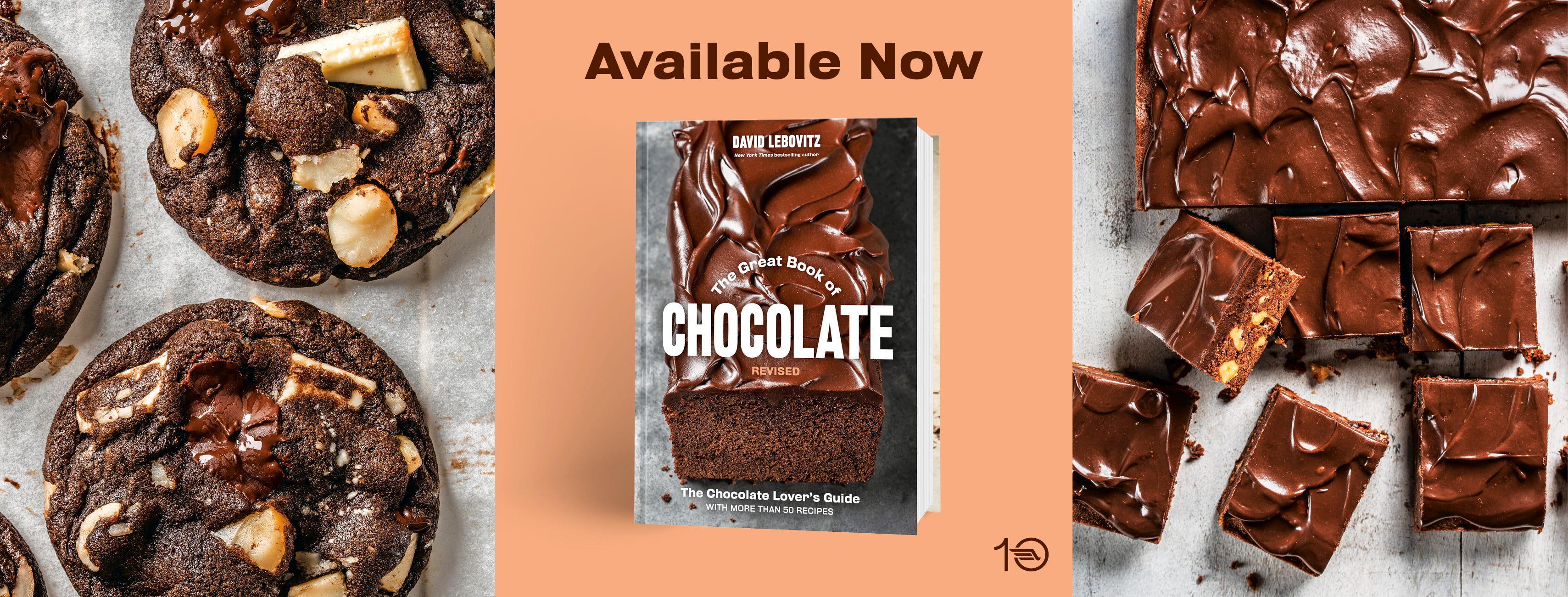
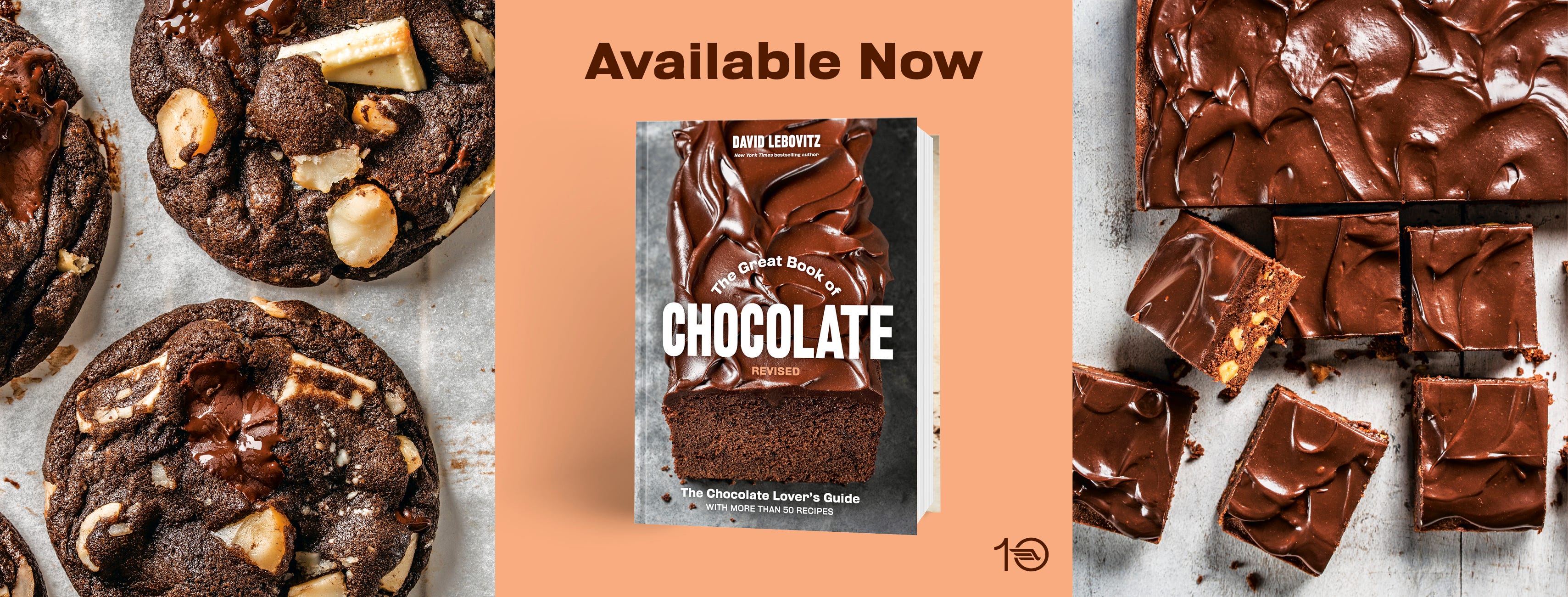
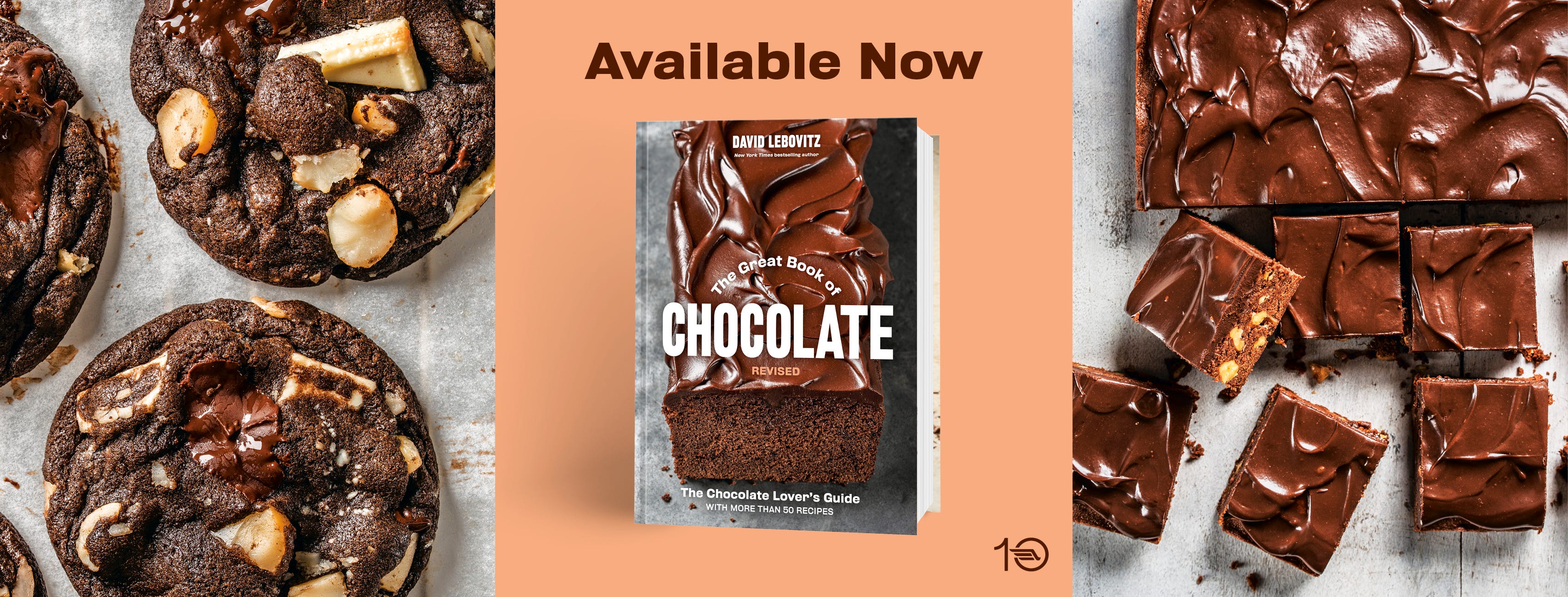
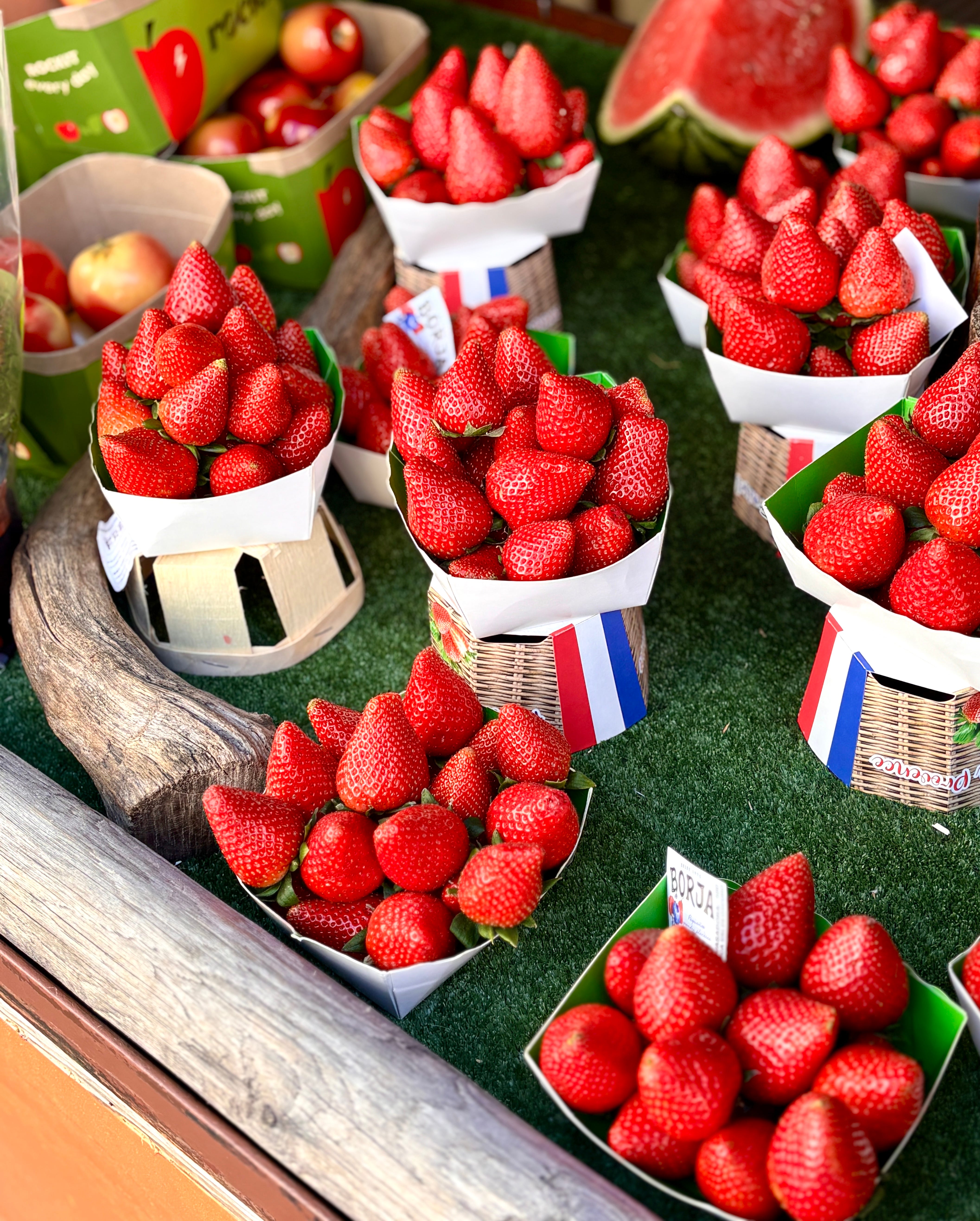
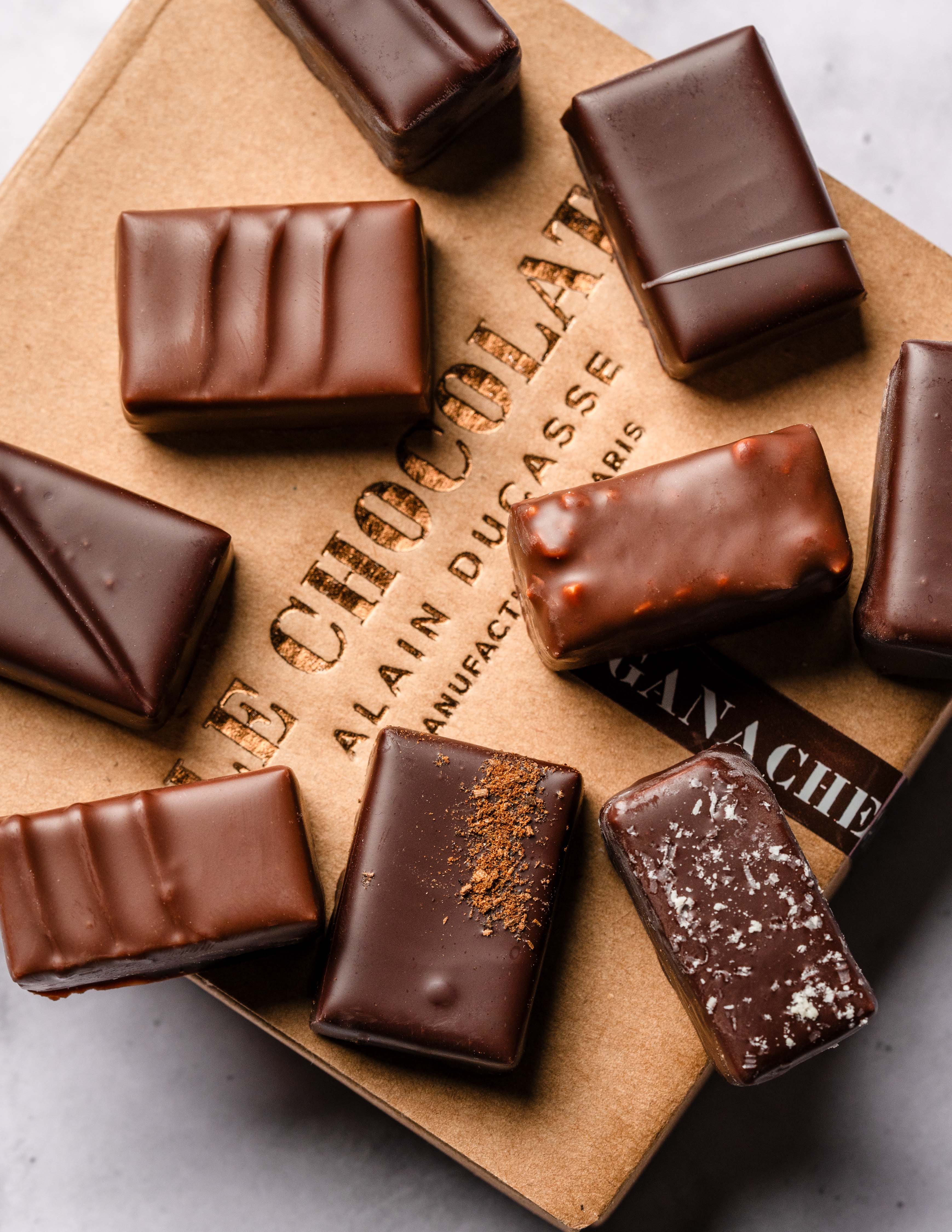
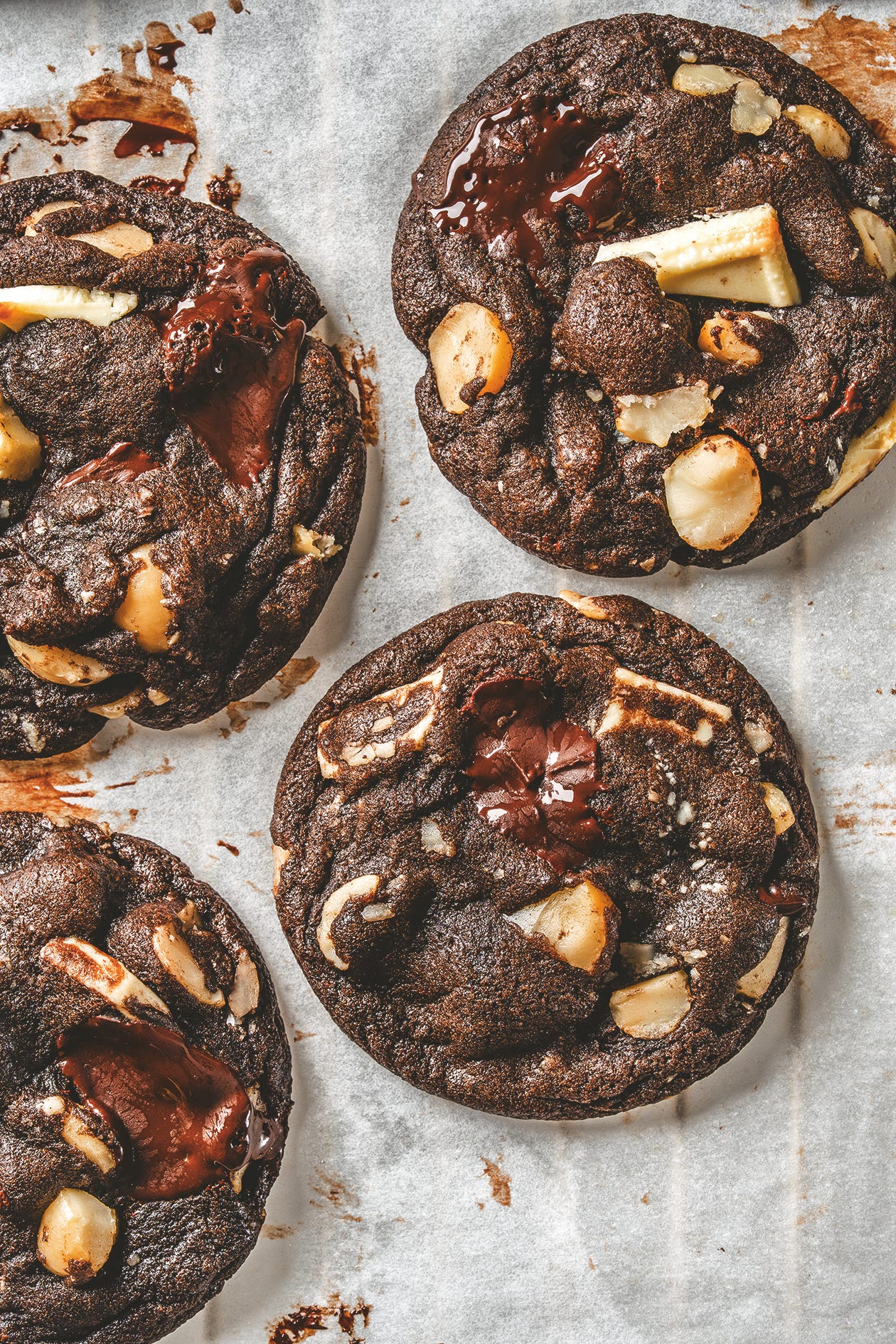
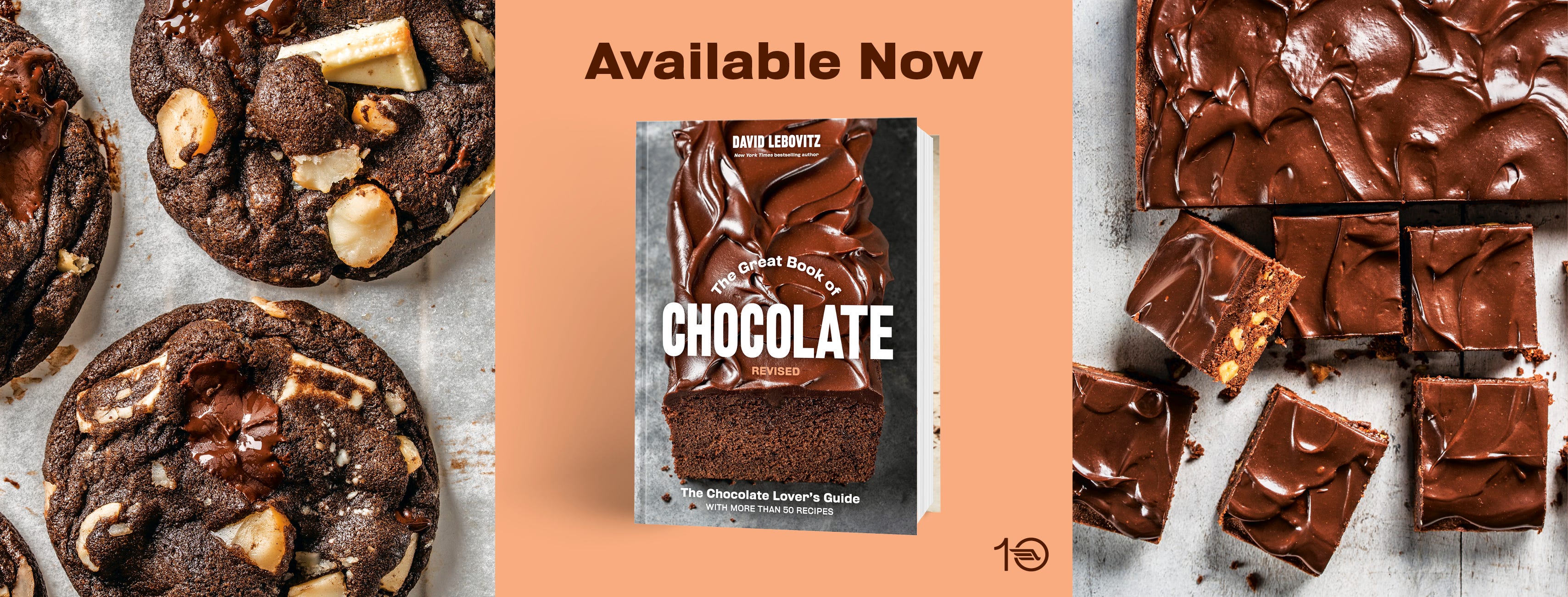
It’s a little difficult for me to leave Paris right now, especially since the weather has turned remarkably and unapologetically glorious, and the markets and food shops have been bursting with fresh strawberries, spears of white and green asparagus, sweet peas still in their pods, and bundles of fragrant wild garlic leaves, which are similar to ramps but botanically different. The upside is that I’m headed to the U.S. for a book tour to launch my latest book: The Great Book of Chocolate!
Of all the books I’ve written, this was definitely one of the most fun to write, since who doesn’t love chocolate? (But don’t worry if you don’t. I have a section in the book on the new “non-cacao” chocolate substitutes.) I’ve always been fascinated by chocolate, ever since my days as a professional baker and pastry chef. I loved it so much that I ended up going to two different chocolate schools, one in Belgium and the other in France, as well as doing an internship at a swanky chocolate shop in Bruxelles, Belgium, which I wrote about in the book.
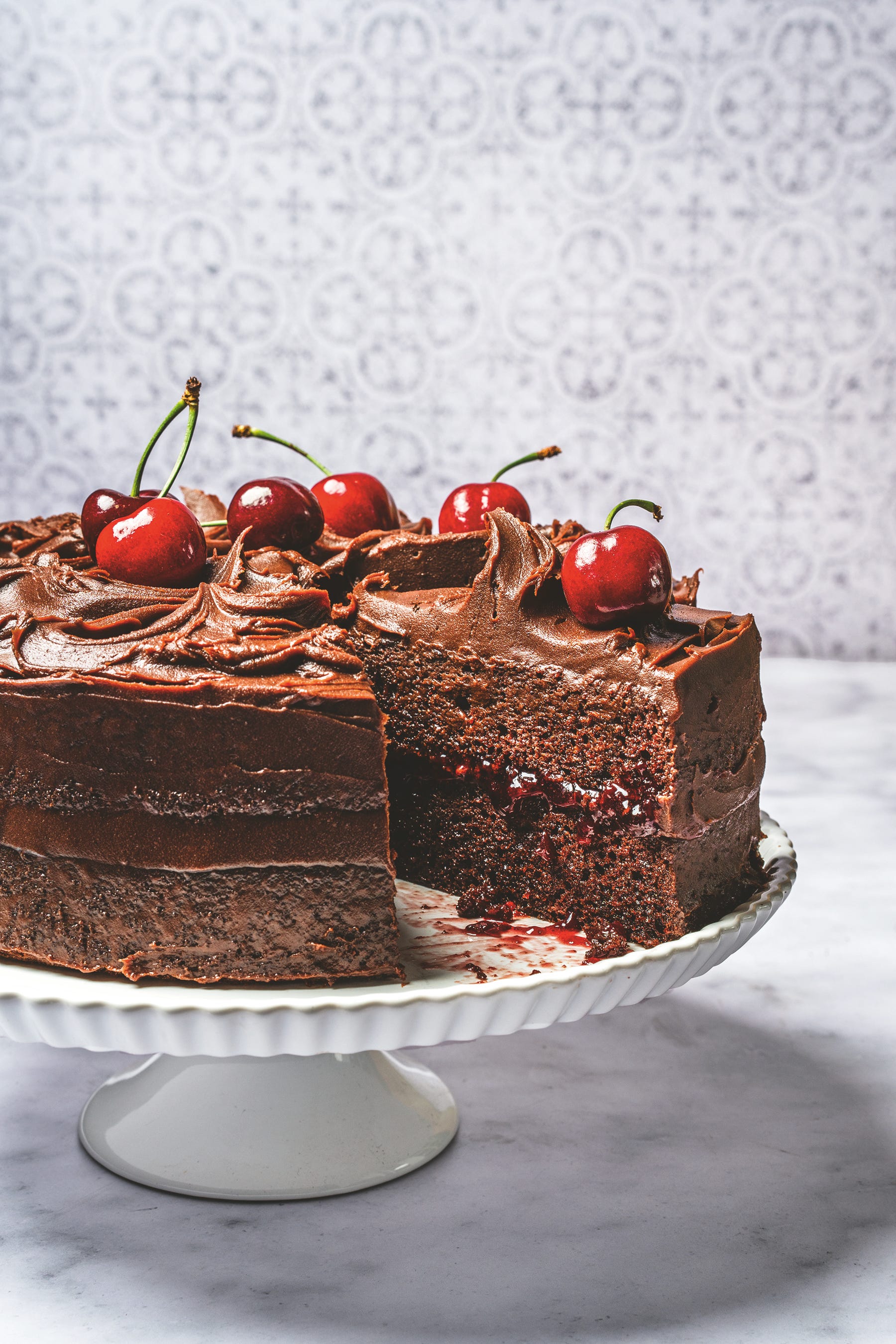
Chocolate, cherry, and vanilla cake with chocolate truffle frosting, page 131 (photo by Ed Anderson)
The Great Book of Chocolate is a guidebook to the wonderful world of chocolate. It explains how chocolate is made, where it comes from, and what to make with it, including over fifty of my favorite chocolate recipes, from sweet to savory. If you want to know what percentages on chocolate bars mean, which chocolates are best for baking, and where to get the best chocolates in Paris, which I’ve devoted an entire chapter to — pick up a copy at your local bookseller or online retailer.
This month I’ll be out and about on a book tour in the U.S. Due to global events, we were uncertain how international travel was going to play out, which was becoming a lot more challenging. While I wish I could go everywhere, here are the places that I’ll be:
If we can’t see each other, these independent bookstores are happy to send you a signed copy of the book, which I’ll personalize just for you: Kitchen Arts & Letters (order before May 2nd), Omnivore Books (order before May 11th), or Now Serving LA (order before May 14th).
If you’re in Paris at the end of the month, on May 30th, I’ll be doing a book signing at La Trésorerie Rive Gauche (48, rue de Grenelle, 7th) from 3pm to 4:30pm. Copies of The Great Book of Chocolate and My Paris Kitchen will be available for sale and signing…and there may be some chocolate treats to sample, too.
[Some Updates: The event at Dandelion chocolate in San Francisco is sold out but the Omnivore book signing and talk is open to all. The event at Now Serving in Los Angeles is also sold out, but you can come to my book event at Friends & Family bakery, which is open to all. For that, there’s a pre-order option to get a ticket for a book, if you want to ensure there will be one there for you.
There are just a few tickets left for the Rizzoli event with Taste Live in New York, but you can come to my events at Williams-Sonoma in New York and New Jersey here, which are open to all, but the stores request that you purchase a book, which you can pre-order from them at that link to ensure there’s a copy for you.]
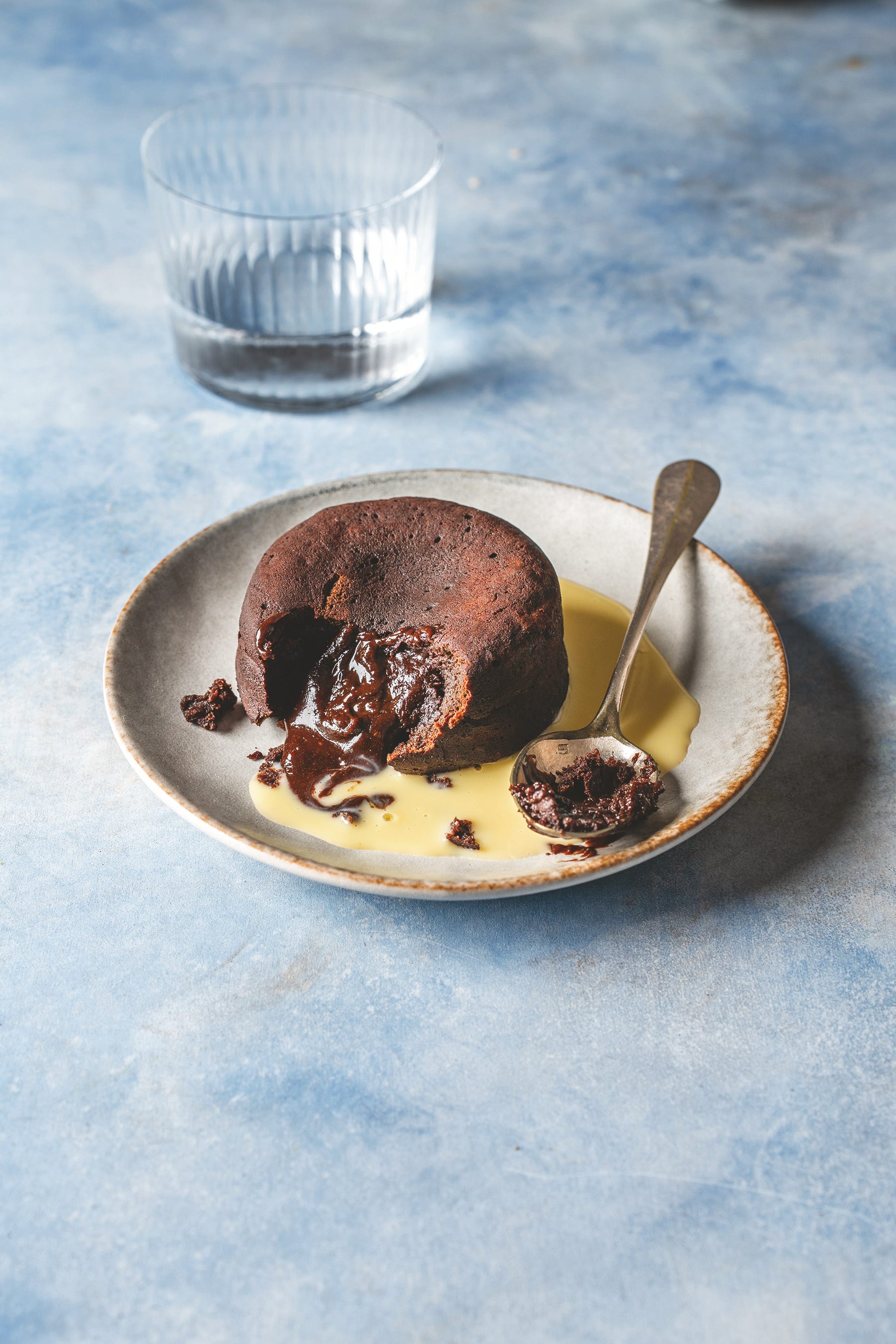
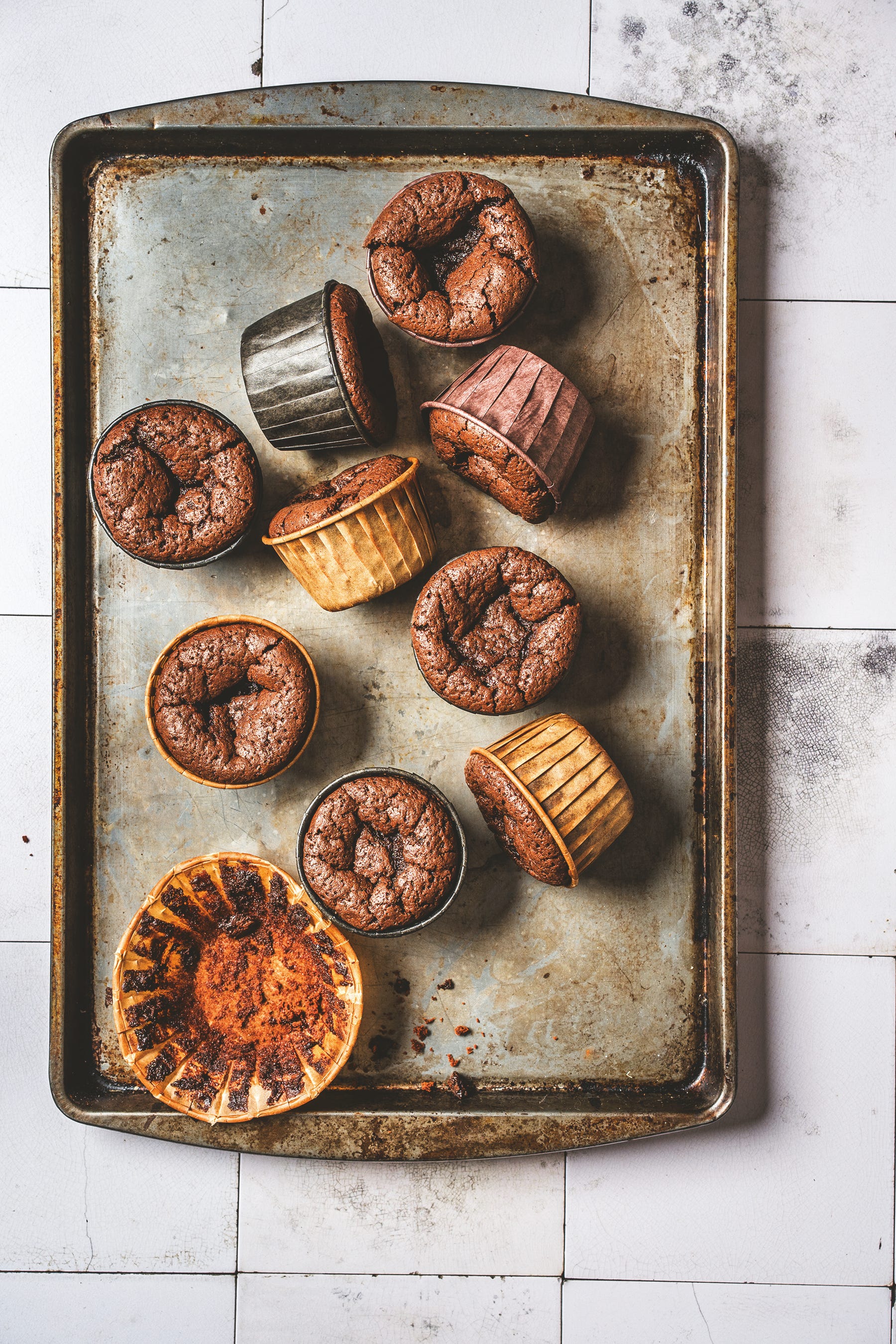
Fondants au chocolat: French melting chocolate cakes, page 103 (photo by Ed Anderson)
Shout out to the very talented Ed Anderson for doing such a great job photographing The Great Book of Chocolate, the incredibly talented food styling team of George Dolese and Elisabet der Nederlanden, and book designer Betsy Stromberg, for making the book even more beautiful than I imagined. And if you come to my book event at Omnivore Books in San Francisco, I’ll be in conversation with Kate Leahy, who helped edit, recast, reorganize, and test the recipes in the book, and you can ask her what it’s really like to work with me… 😬 😂
In addition to all the French chocolate, one of the joys of living in Paris is that I get to see a lot of friends. I guess everyone bought their tickets months ago, wisely, and I had a kaleidoscope of visitors, which was fun, but required a bit of planning and dexterity, as well as a hearty appetite for eating out more than I normally do. In the future, people need to find a way to stagger their visits out.
One visitor was my friend Bryce, an Australian who lived in Paris and met his equally wonderful wife here, who was a Lido showgirl. Once I learned that those gals needed calories, doing two strenuous shows a night, she stopped by my place on the way to work to pick up leftovers from recipe testing, to feed and fuel the ravenous showgirls between shows.
Circa: 2009
They liked me so much that when I went to visit them backstage, they tried to dress me up as a showgirl, but I decided it was best to leave the dancing and prancing to those lovely ladies and stick with my day job.
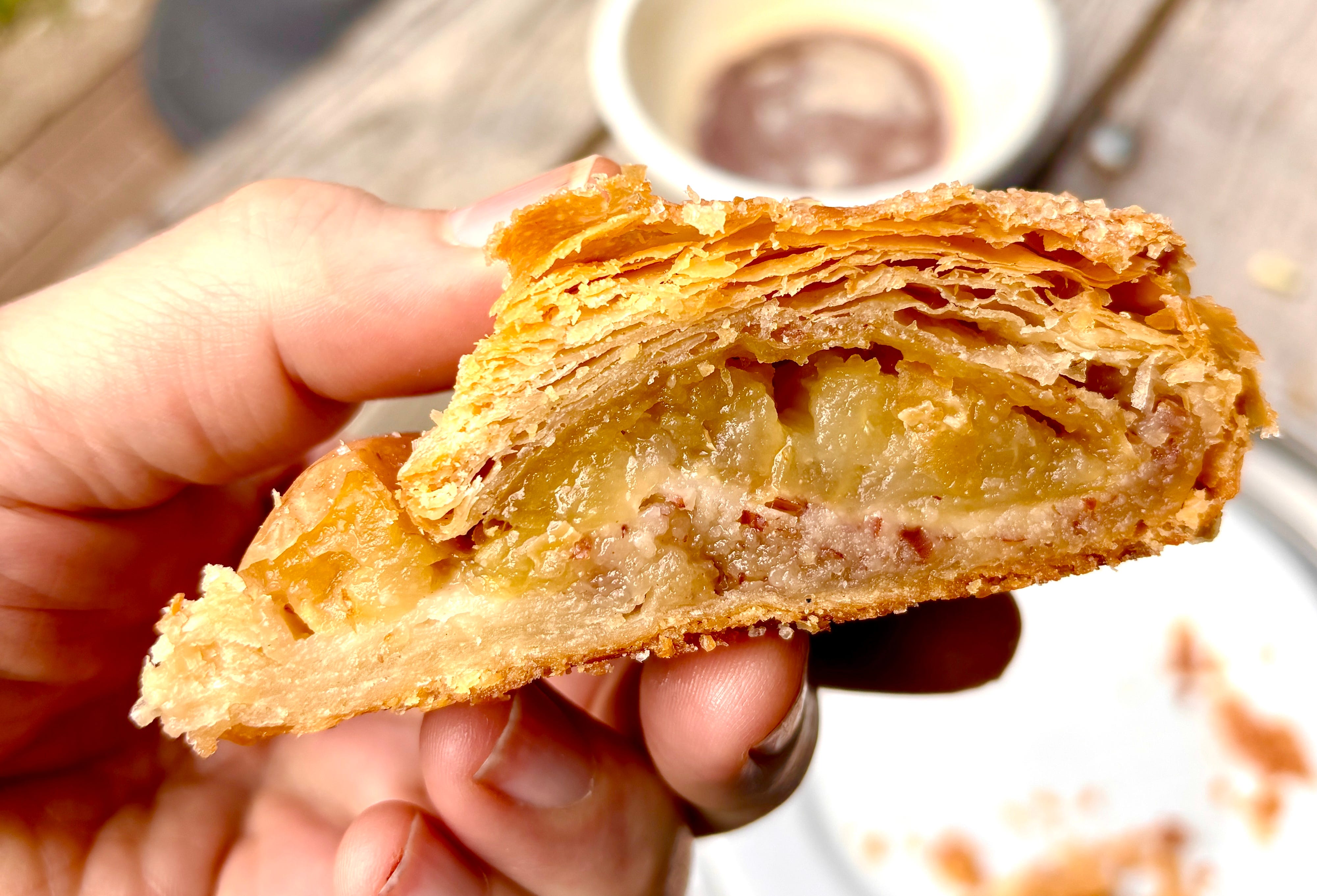
Being our houseguest, when Bryce told me he picked up a chasson aux pommes, a flaky apple turnover, at our local bakery, I chastised him for not picking one up from Sain. I should be used to it by now, but I often say around here, “No one listens to me…” (usually to Romain) but this time, someone did. Bryce woke up the next morning and hoofed it over to Sain bakery, and swooned over it as much as I swooned over being backstage with a gaggle of showgirls.
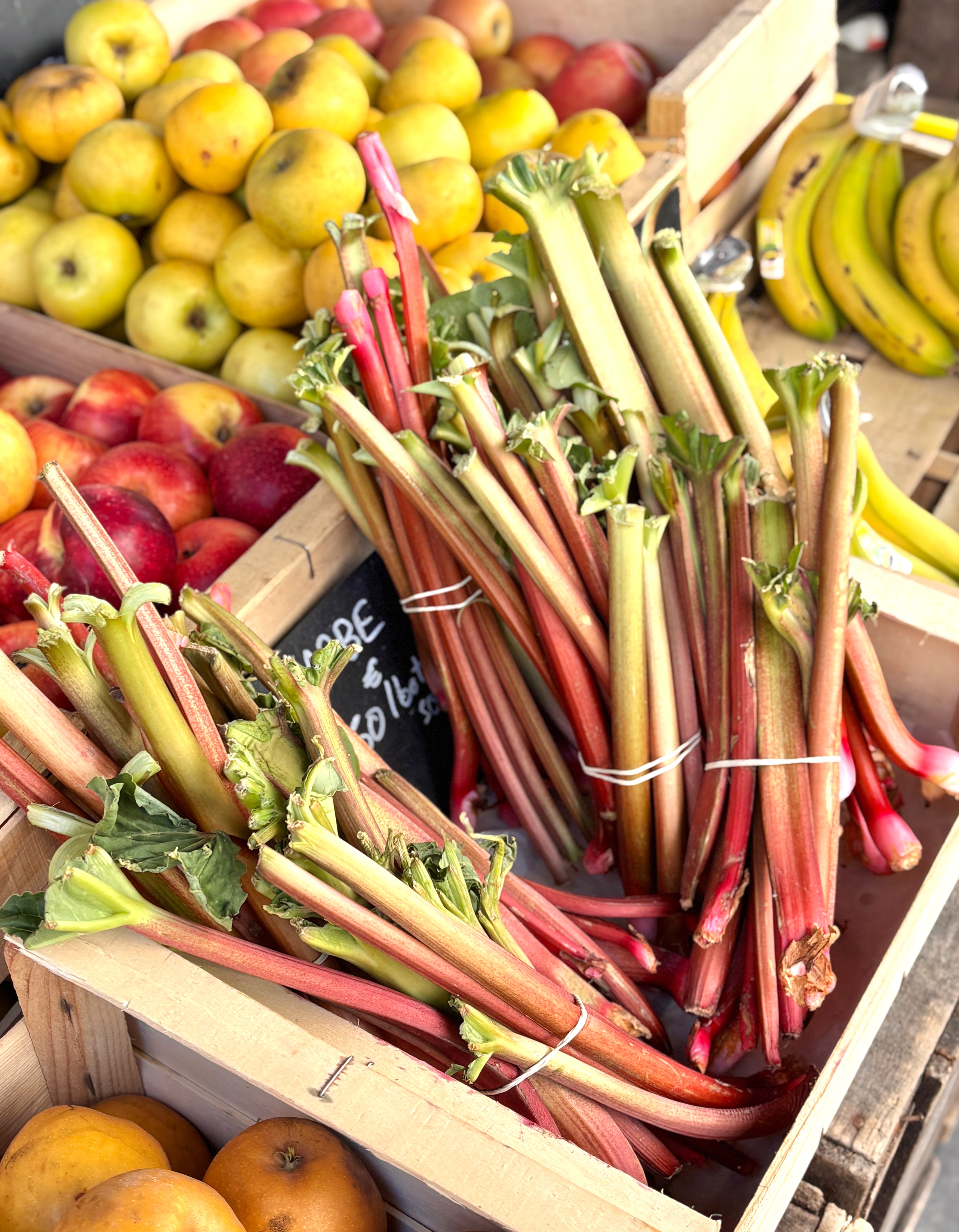
The bakery does change the fruit according to the season; soon, they told me, they’re going to switch the filling to rhubarb, which is coming into season right now. And in the summer, they generally go with apricots, which are heavenly baked between the layers of caramelized puff pastry.
While I was busy packing and planning (and panicking a bit) to leave on my book tour, I started feeling a little overwhelmed by everything and the world began to spin. I chalked my dizziness up to nerves. I figured putting a few extra things on my plate was perhaps harder than I thought.
Normally stuff like that passes, but it didn’t. A day later I was feeling especially off-kilter and decided to go to bed at 9pm to relax. But when I closed my eyes the world was spinning so hard, I felt like I was hallucinating, and even walking when I got out of bed was very difficult. My insides were beyond queasy, but I’ll spare you those details.
SOS Médecins is a helpful organization to know about, whether you live here or even if you’re just visiting and need help.
It was getting late, but Romain called SOS Médecins,an organization of doctors who make house calls 24/7, which are conventionnées, meaning the price is in line with what the French health care system lets them charge: €24. Although Romain said it might have been €25.
(I was in an altered state when the doctor left, but when I later looked it up, I found the current prices here, which are mostly reimbursed by the French health care system. You need to have a really sharp mind to understand all the complications of French administration, but the upside is that most native French people don’t fully understand them either, so you’re not alone. The other upside is that you don’t really need to.)
What I had was VPPB. Like most French terms, my vertige positionnel paroxystique bénin gets mercifully shortened to VPPB, which involved having a physiotherapist rearrange the crystals in my ears so they line up again. I don’t understand that either.
I thought VPPB may be one of those “only in France” things, like a bouffée délirante, which is described on Wikipedia as a “uniquely French psychiatric term” for teenagers who become delusional. I never heard of that one either. I had a particularly awkward adolescence, but that was a new one on me.
The kiné (therapist) put me on the table, held my head, and moved me and my head quickly from side to side, and up and down, to get things lined up again. Like the French health care system, I’m not sure how it works, but it does.
[Disclaimer: If you have a medical condition or similar symptoms, see a doctor or certified medical professional for advice and diagnosis. What you have may be different than what I had.]
Croissant sandwiches and quiche lined up at M. Jacques patîsserie
In addition to having visitors (and getting over the shock that we have crystals moving around in our ears), I made some videos in my Paris kitchen and garden for the newsletter, which I’ll be posting here. It was fun talking to shopkeepers and friends who bake or have restaurants in Paris, learning more about chocolate (and vanilla), and how they bake with chocolate.
By the time you read this, I’ll be on a plane heading west. I’m looking forward to a slice of New York-style pepperoni pizza, an everything bagel with lox and cream cheese, a bacon, egg, and scallion pancake and a fermented red rice donut at Win Son, pastries at Hani’s and Elbow, a Mission burrito at Pancho Villa (although I can no longer eat a whole one, in one sitting - I’ve lost my SF cred!), chicken and bread salad (and a martini) at Zuni, and hopefully some fresh corn on the cob from one of the incredible greenmarkets that have been flourishing in the U.S., although I may be a little too early for that. Which means I might have to come back.
It was fun being a guest on Things Bakers Know, the King Arthur Baking podcast with Jessica Battilana. Listen in! (King Arthur Baking)
In spite of the off-kilter title they gave it, the Washington Post spoke to me, and and , about how to find a good restaurant in Paris. (Washington Post/article unlocked, but they’ll prompt you sign up for a free acct.)
What happens when stops by your kitchen in Paris to make lunch with you…
Subscribe to my newsletter to get recipes, Paris tips, stories, and more, delivered right to your Inbox!
Things I Like
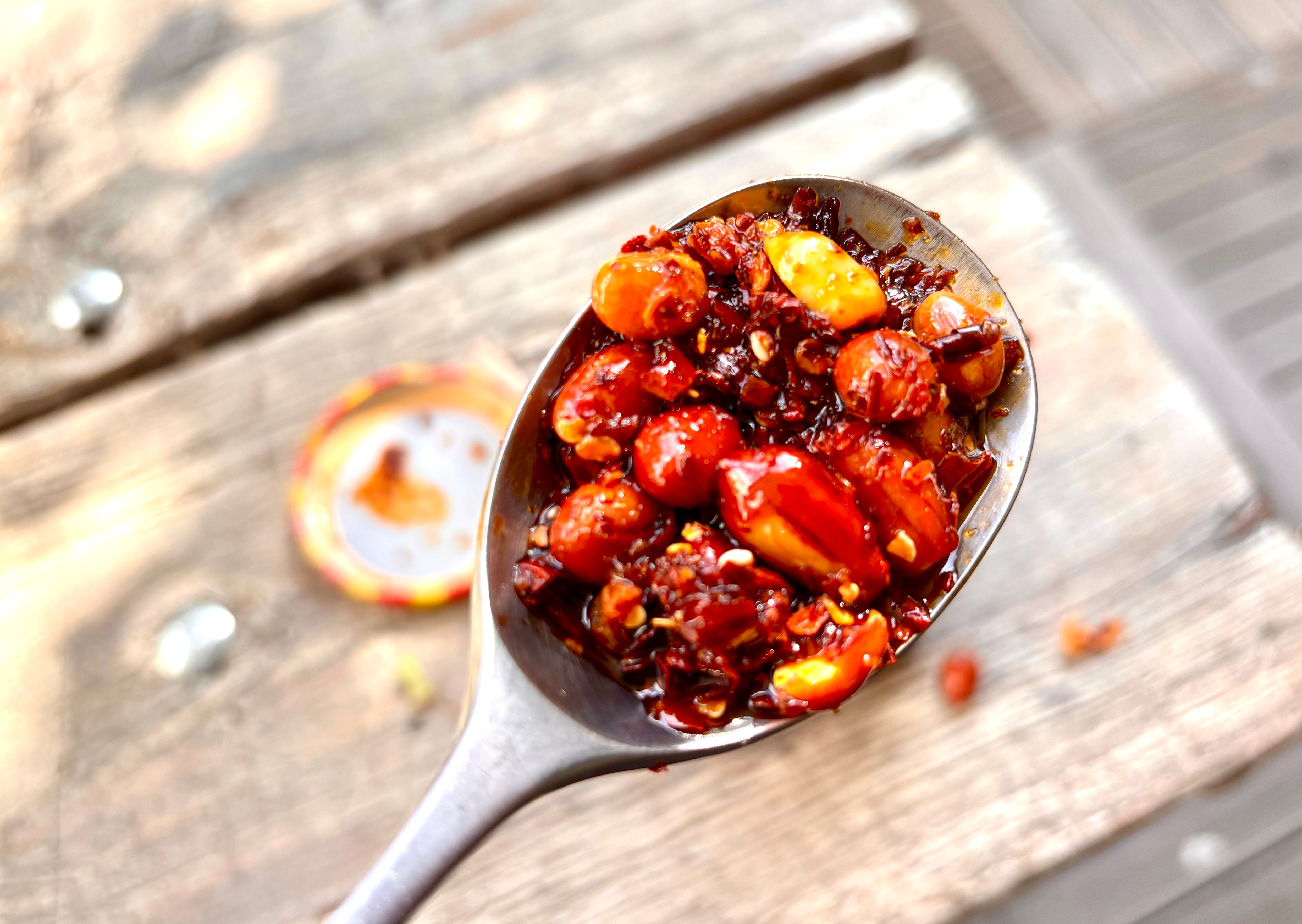
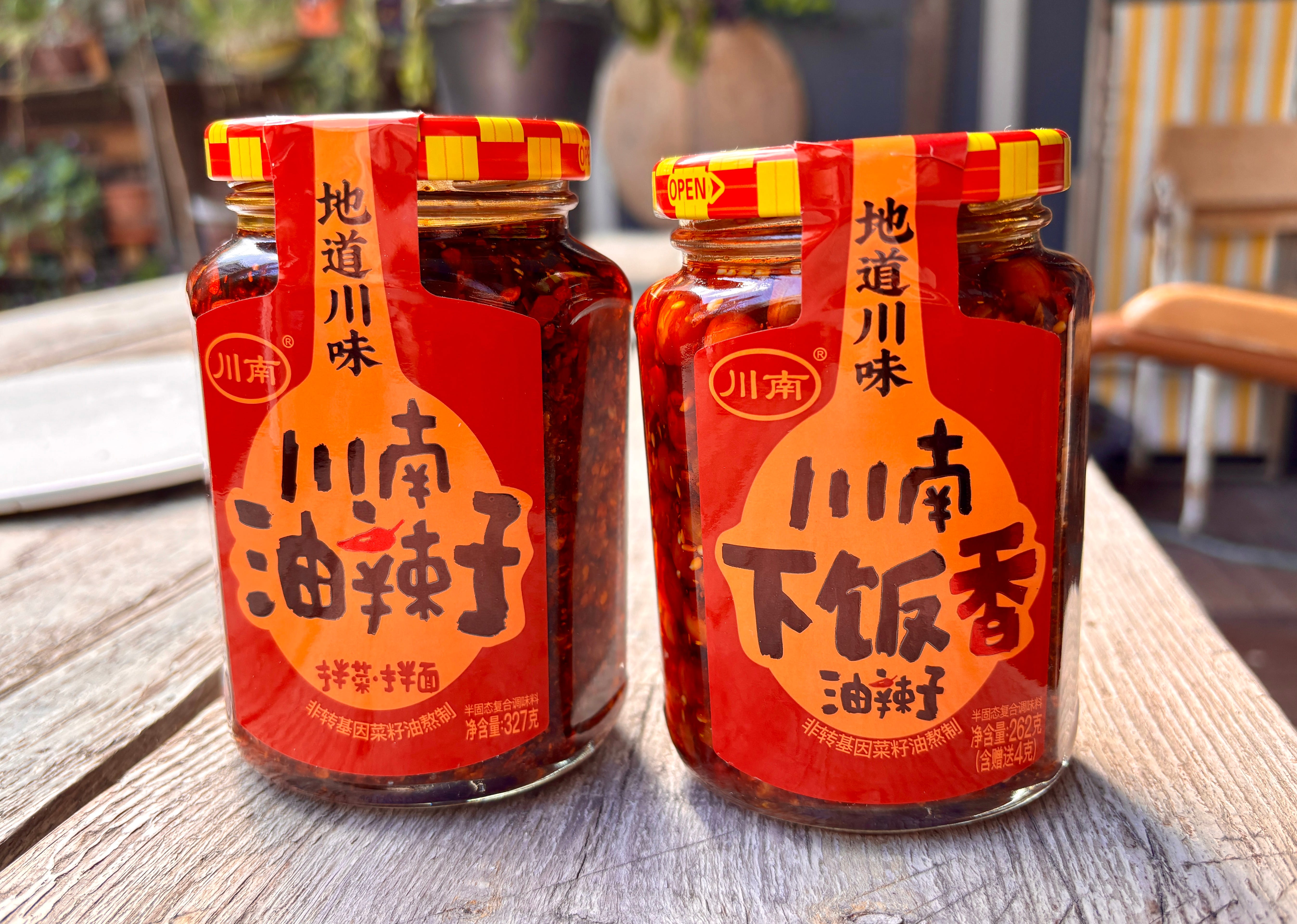
I may have bought this by accident, but when I opened the jar of Chuannan chili crisp I purchased a few months ago that was in my pantry, I was surprised to dig in and see it loaded up with crunchy roasted peanuts. I have a few chili crisps in my fridge, but this one was different. And now, it’s the one I reach for the most.
The company makes a few different types of chili crisps. The one in the smaller jar (on the right) has less oil and a higher concentration of peanuts than the one in the larger jar (above, left), which has soybeans as well as peanuts. My preference is the one on the right, which is packed with peanuts. With either one, you can tilt the jar and take a look at the inside of the jar, next to the label:If you see a lot of peanuts floating around in there, that’s likely the one I prefer, although if you like chili crisp, I don’t think you’ll be disappointed with either.
You can find this brand on Amazon in the U.S., but I’d check Asian markets in your neighborhood or city to find it. I love poking around the shelves there, and I always find jars and packages of other intriguing things. Plus it’s nice to shop locally if you can.
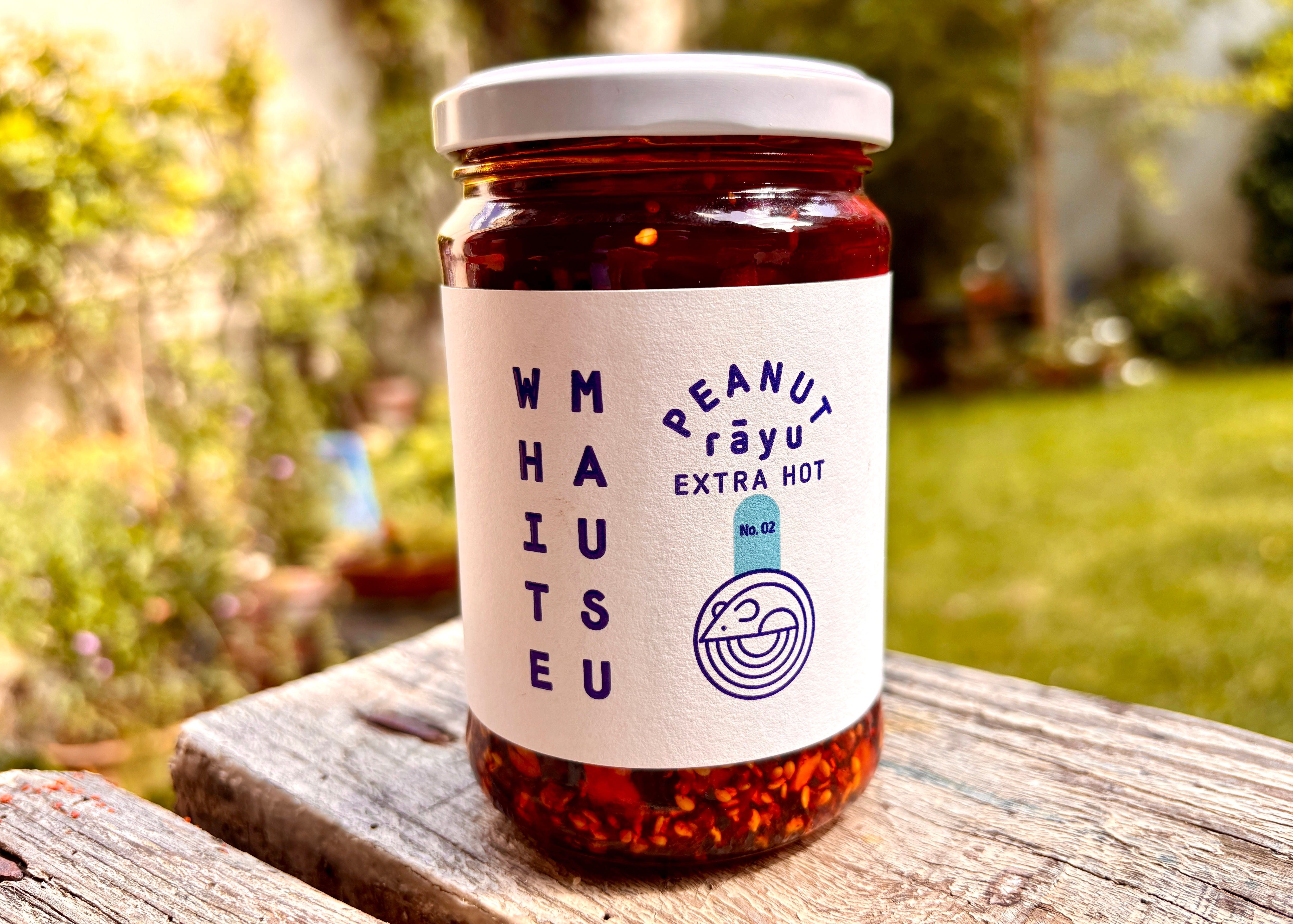
Speaking of which, I was delighted to find that my favorite coffee shop in my neighborhood, Early Bird Coffee, carries White Mausu chili crisp with peanuts (made in Ireland), so patronizing local businesses has its rewards. Another brand of peanut chili crisp that I see is Guiz, which I haven’t tried.
There are recipes here and here if you want to try making chili crisp yourself, but I just read there’s a book about a present-day tradwife influencer who wakes up and finds herself back in the 1800s, and has to fend for herself. It’s dizzying (again!) to think of waking up tomorrow and having to press my own oil, plant my own chiles, and dig up my own peanuts for chili crisp, so I’m fine letting someone else do that for me.
What are pizza beans? They’re hearty white beans that taste like pizza, of course, simmered in a marinara-like sauce and topped with bubbling mozzarella cheese. Deb came up with the concept, and I’m a huge fan.
Today, I’m sharing my spin with canned beans, optional spinach, and a rich tomato paste-based sauce that tastes like it’s been simmering on the stove for hours. It’s cheesy and satisfying like baked ziti, but more wholesome and easier to make.
These pizza beans are so good and simple that this dish kinda feels like cheating. It’s an easy weeknight meal for cooler days. I bet you already have the ingredients in your pantry!
Well, I’d never done a livestream on Substack until yesterday morning and it was fun. It wasn’t as nervous making as live cooking demos I’ve done on Instagram. Nor was it hair raising like the time my hairdresser taught me how to trim my bangs during the pandemic!
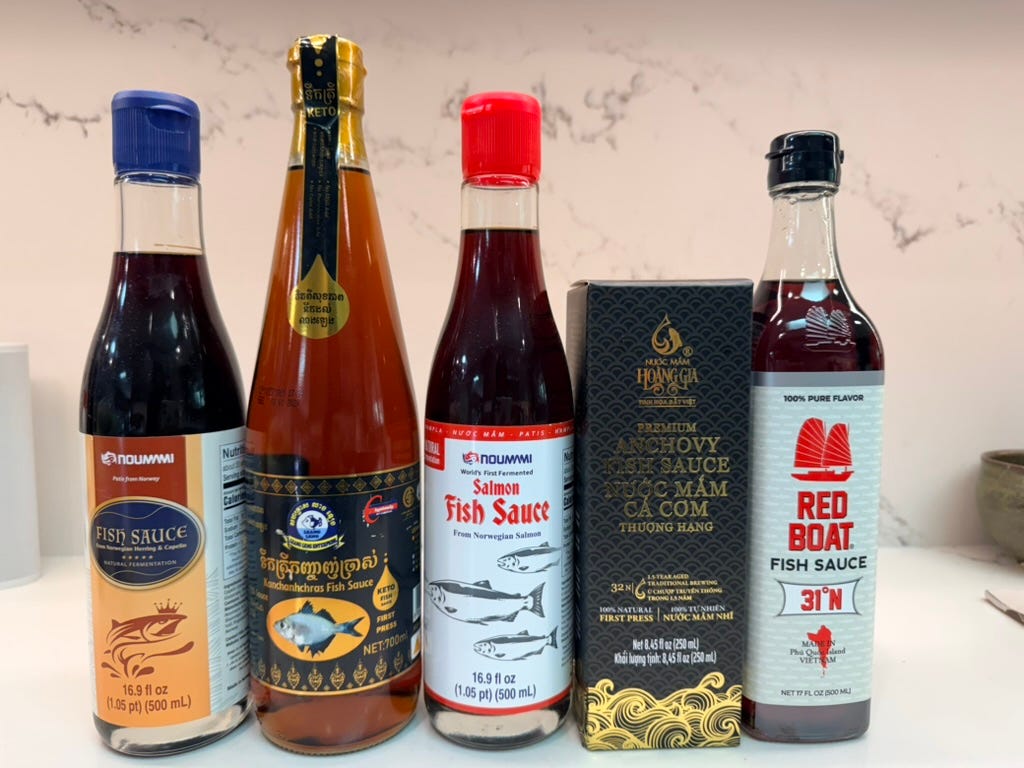
A big hug and thank you to , , , , , and the more than 80 other folks for tuning in for the fish sauce Q&A and virtual tasting. (Your nuoc cham Viet dipping sauce recipe may never the the same again!)
As I said at the top of the session, I didn’t know who would or could attend. With everyone’s busy lives and time differences, who knows when to schedule anything anymore? And what interests you?
Uncommon fish sauce from Norway, Cambodia, and Vietnam. I taste tested them during the live video.
I plan to do more and will keep you posted. Join me for my next live video in the app. If you don’t have the app yet, here’s a handy link.
Get more from Andrea Nguyen in the Substack app
Available for iOS and Android
💎 Stir-Fry your Collard Greens
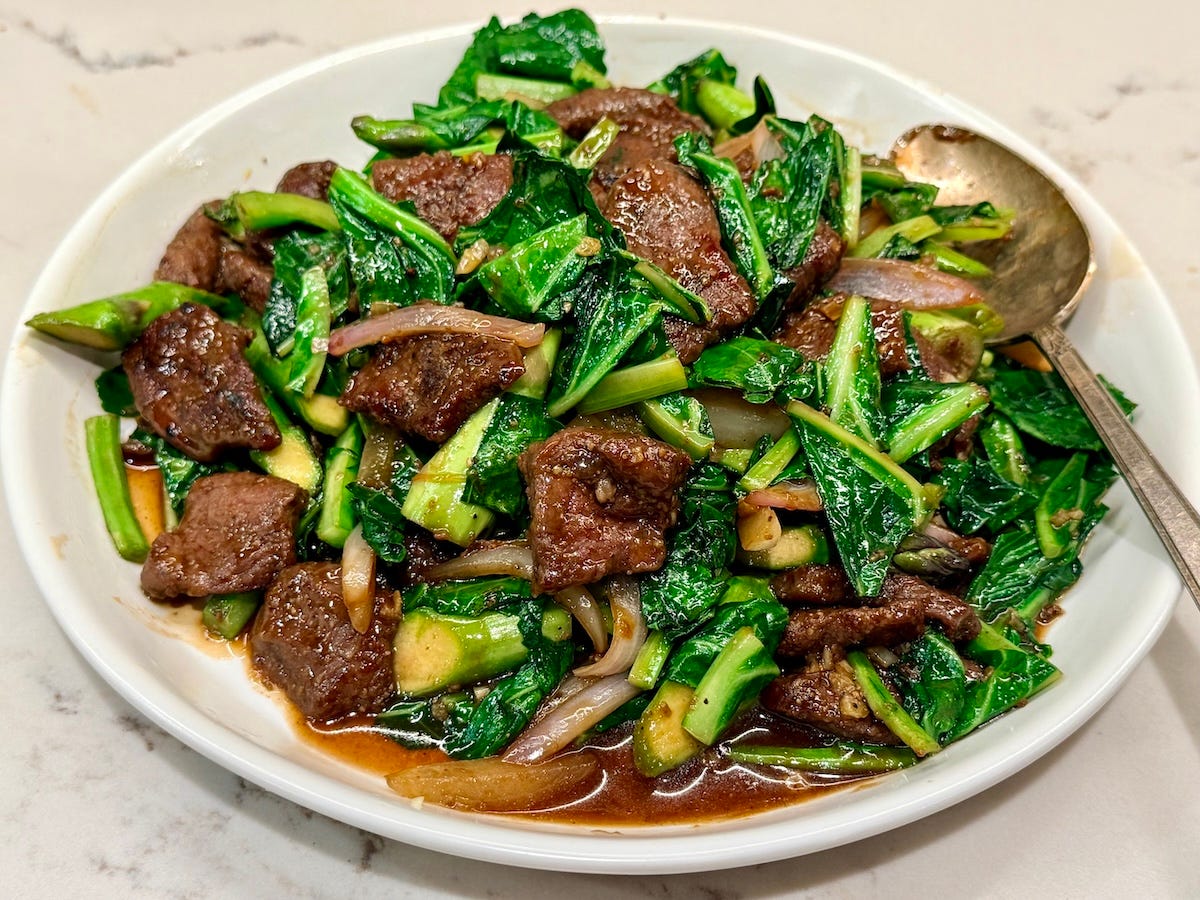
Another thing I did recently that turned out better than I thought it would was stir-frying collard greens! I thought they always needed a long simmer or prolonged steam saute. Turns out, as I learned from a recipe by Ronald Hsu (the scrumptious chicken-and-rice casserole chef in Atlanta with a new Chinese American cookbook), collards work swimmingly well in stir-fries. It all depends on how you treat them.
Pass the Fish Sauce exists for curious cooks, readers, and eaters. To receive new posts and support my work, become a free or paid subscriber.
💎 Food and Cooking in Poetic Form
Speaking of the American South, the Southern Foodways Alliance’s spring 2026 issue of Gravy is choc-a-block full of provocative poetry about what we cook and eat. If you’re an SFA member, you’ve received the recent quarterly journal. If you’re not in SFA, check out Gravy back issues here.
But right now, I’m highlighting a poem by the very talented Adrienne Su.
Coming up on Sunday are two more Viet ways to celebrate springtime asparagus. Some of you may have asparagus already and if you’re like Kate and Nate in Maine, you’re still waiting. Well, I hope last weekend’s recipes and this coming weekend’s recipes will figure into your cooking schedule sooner or later.
I know it’s spring and summer, and we’ve been enjoying the bounty of berries and stone fruits in Paris. But no matter what time of the year it is, I can always eat pineapple, which I did on a recent trip to Taiwan, where pineapples are a staple, either fresh or preserved.
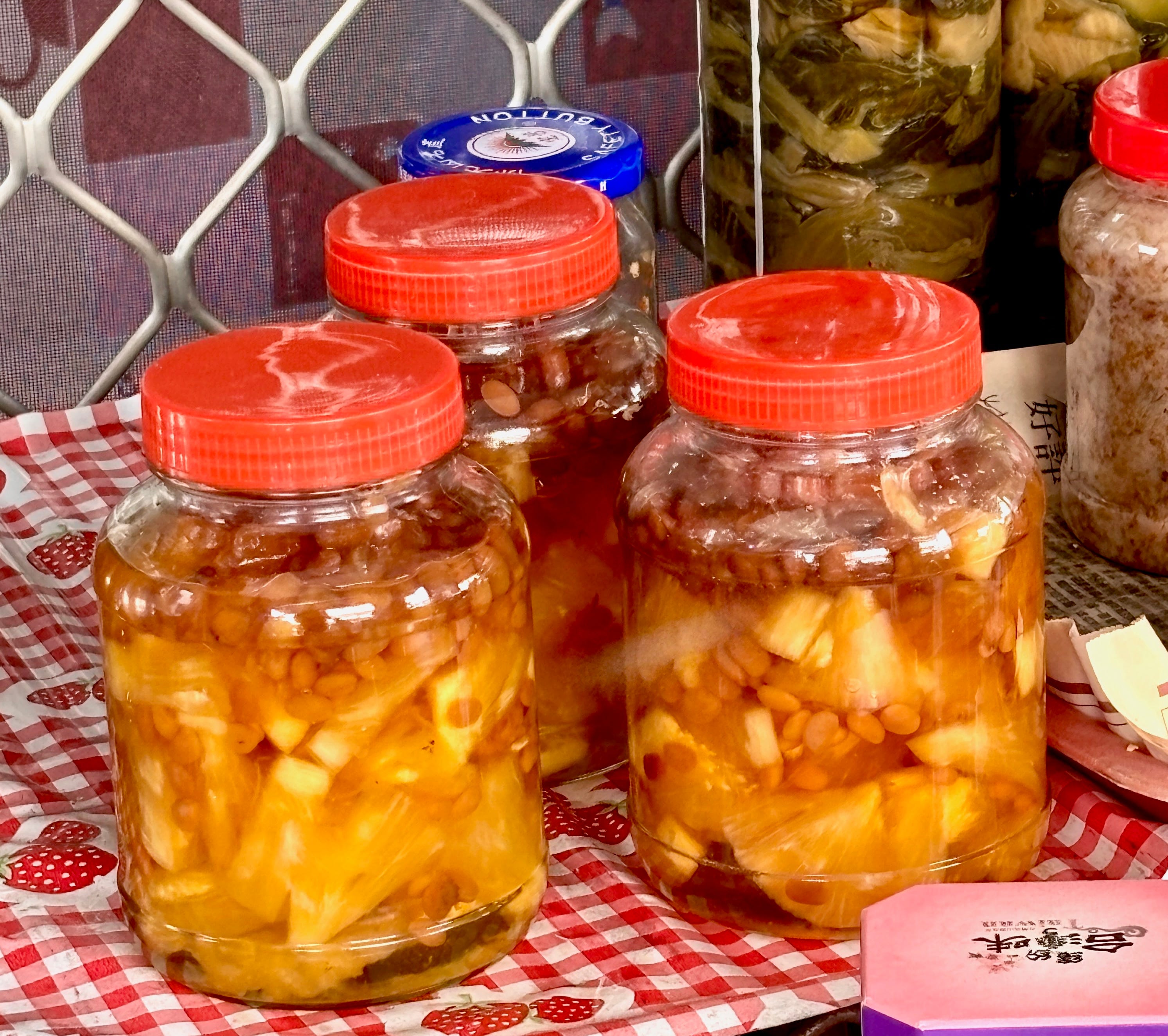
I was intrigued by the fermented pineapple I had while I was there, shown in the jars above, which was saltier than I had imagined. I liked the idea of fermenting the sweet, sturdy fruit, but when I asked my Taiwanese-American friend if he knew how that condiment was made, he asked around but never found out.
Natasha’s book explores the intersection between full-flavored foods and their beneficial properties, with recipes such as Hangar steak with dandelion green salsa, Potato and garlic pie, Farro power bowl with tahini-fig dressing, and Persimmon pudding, because persimmons are rich in carotenoids, an antioxidant that comes with a number of health benefits. I knew there was a reason I liked cake so much…
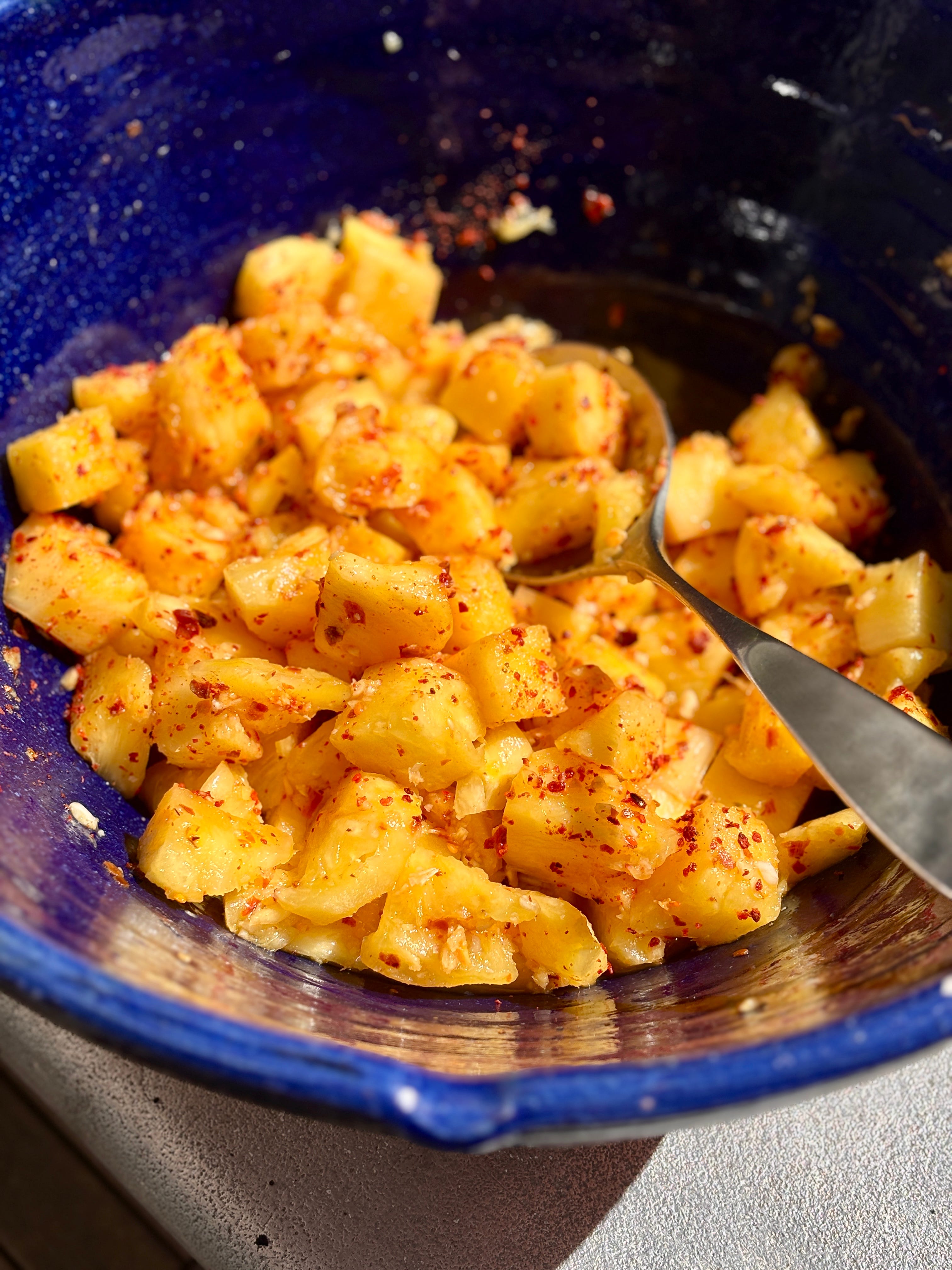
While reading the book, I came across this Pineapple kimchi recipe, which was adapted from another cookbook, Spicebox Kitchen, written by Linda Shiue MD, an internal medicine physician who studies cooking and plant-based nutrition. While my personal philosophy is to eat a wide variety of foods, making sure that I eat a lot of fruits and vegetables, as well as grains and proteins, I certainly don’t deny myself the pleasures of dessert. Otherwise, I wouldn’t have a career.
When I moved to France, way back when, I had trouble finding one of my favorite fermented foods, kimchi, so started making my own, sharing my trials and recipes on my blog. Years later, I wondered if I was going to get into trouble for the kimchi recipes that I’d posted.
Thankfully, the cancellation gods were smiling on me, no doubt realizing that I only had the best of intentions in mind, and to also let people who might not be familiar with kimchi to learn how wonderful it is, and that you can make it anywhere, even in a tiny rooftop Paris apartment.
Cancel me if you want, but I sometimes add pineapple to Thai curries, which lends a hit of cooling freshness against the coconut milk-rich, spicy sauce. But the good news is that I’m off the hook because I just looked it up and Thai people doaddpineapple to curries. Whew, that was close.
I did take a few liberties with this recipe, which called for 3 tablespoons of water, but I used the runoff of pulpy juices left on the cutting board after preparing the pineapple as part of that 3 tablespoons.
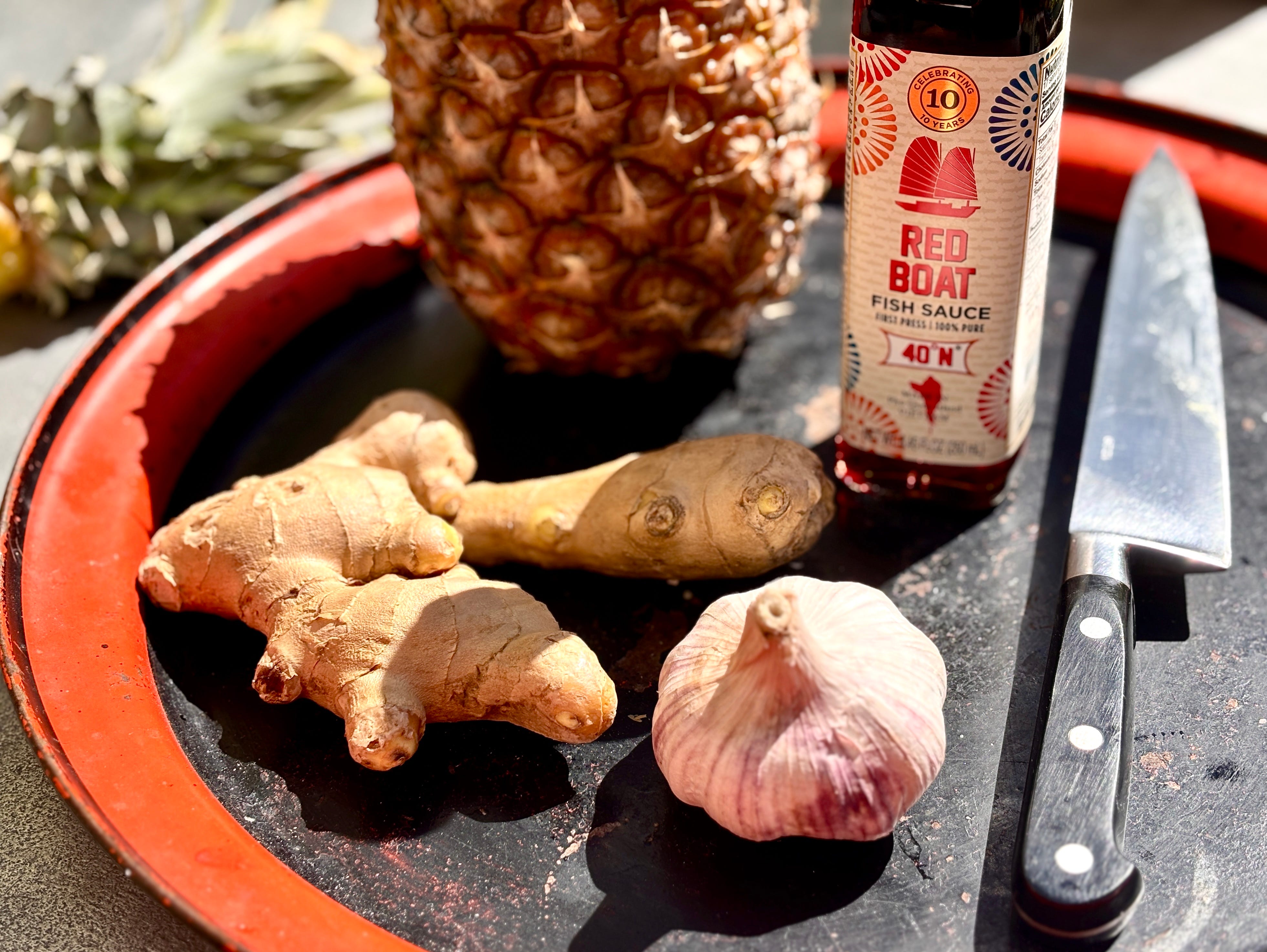
While the recipe doesn’t specifically call for it, I use Red Boat fish sauce. When I went to visit them in Vietnam, I learned that many fish sauces are made with all sorts of seafood. Cuong, who makes RB fish sauce along with his family, said that some sauces are prepared from fish that have been sitting on the boat for a couple of days, whereas the anchovies used in his fish sauce get salted right away to preserve them until they get back to shore. I’m not on their payroll, but his fish sauce is one of those quality ingredients that really does make a difference when you use it.
Speaking of quality, the theory that you can tell a pineapple is ripe ‘n ready is if you can easily pluck out a center leaf from the spiky top, which will only show you how to raise the ire of the people at the market who sell pineapples. The best way to tell if a pineapple is ripe is to sniff it near the base. It should smell sweet and like the tropics. Avoid pineapples with mold around the base or soft, mushy spots.
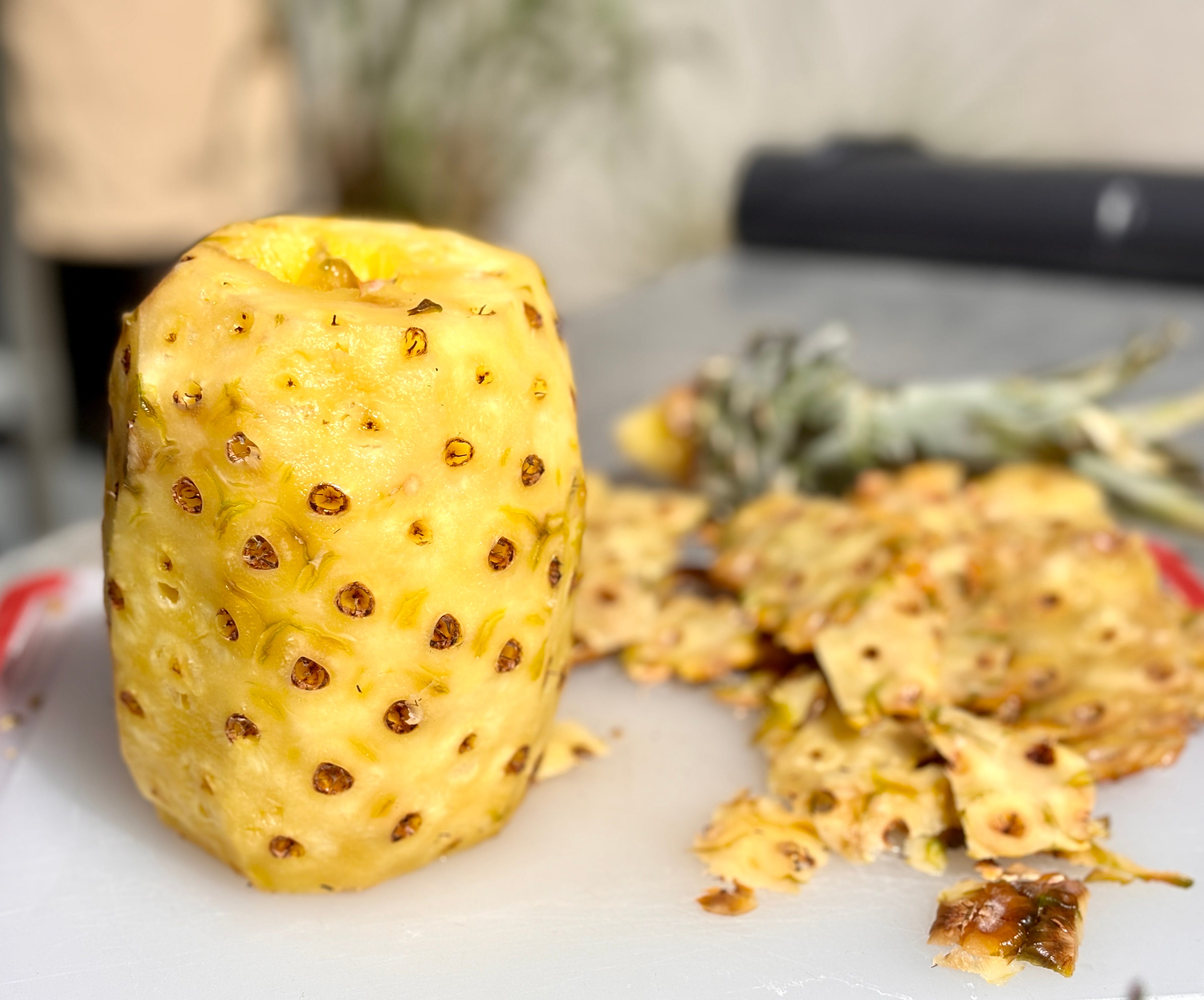
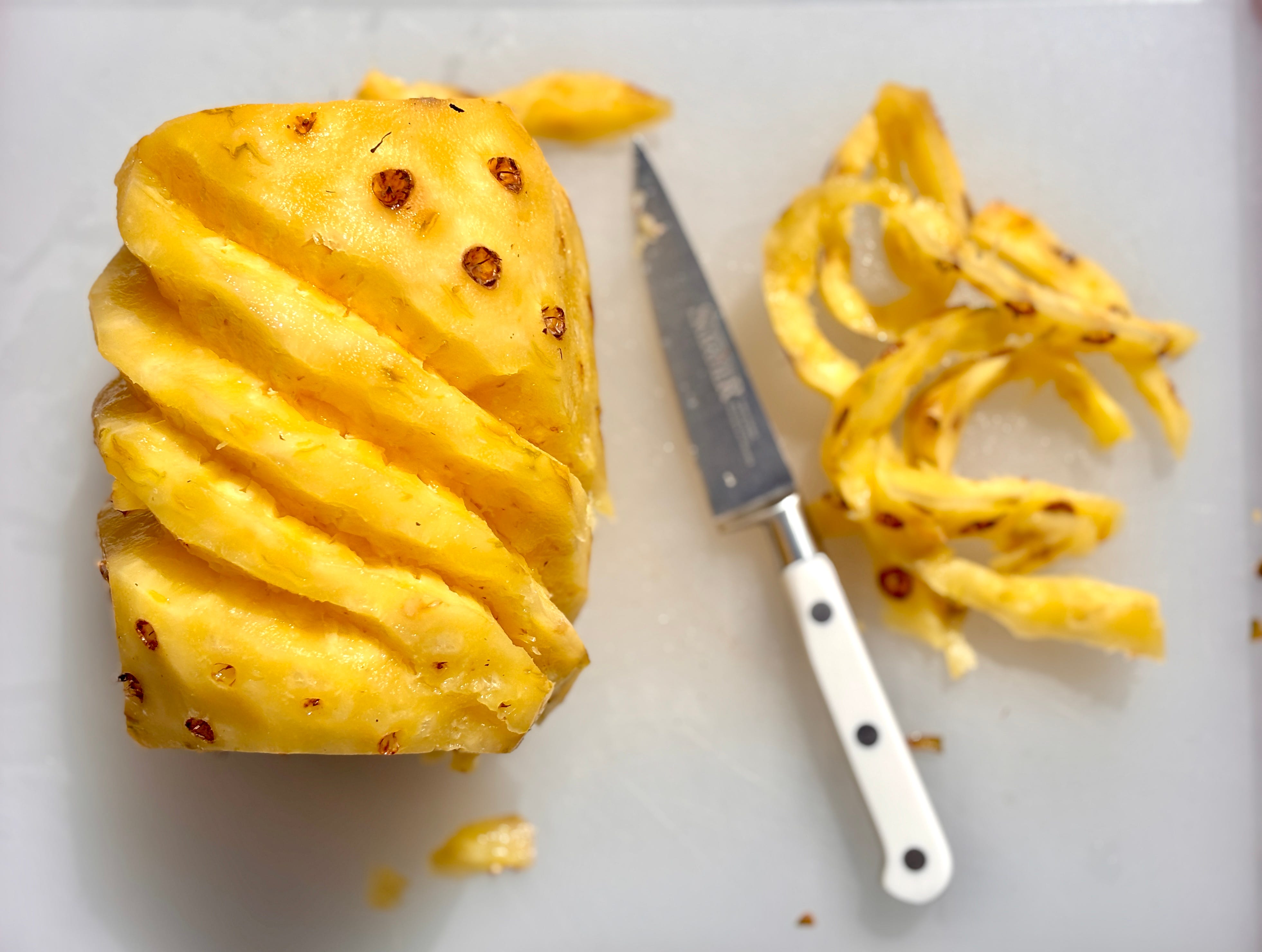
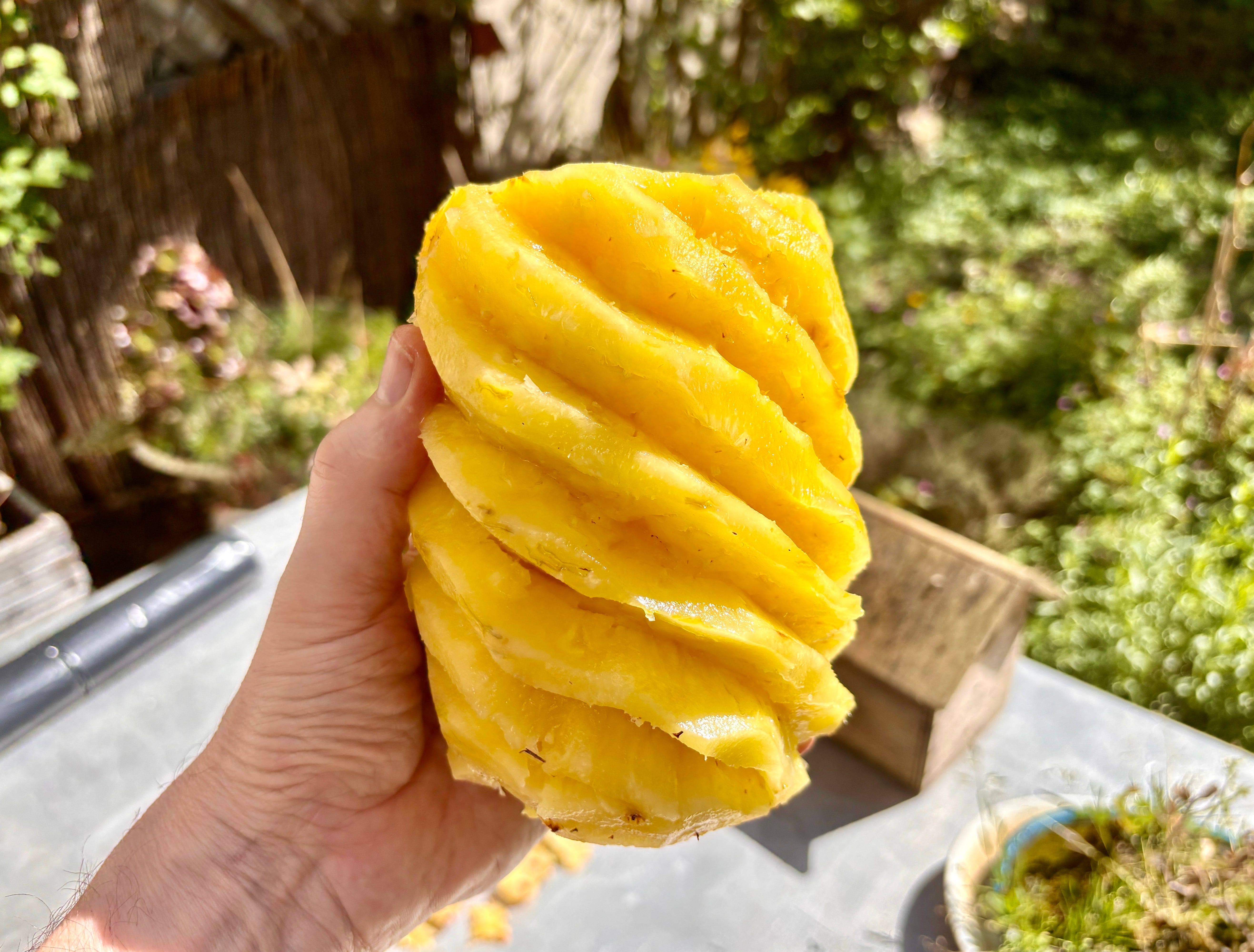
I’ve prepared a lot of pineapples in my time and my favorite way to do it is to lop off both ends, then trim off the skin with a chef’s knife. Then use a knife to cut around the line of the eyes, following them as they spiral around the pineapple, making a V-shape indentation on both sides of the eyes, to remove them. You can also pluck them out with the tip of a pointed vegetable peeler.
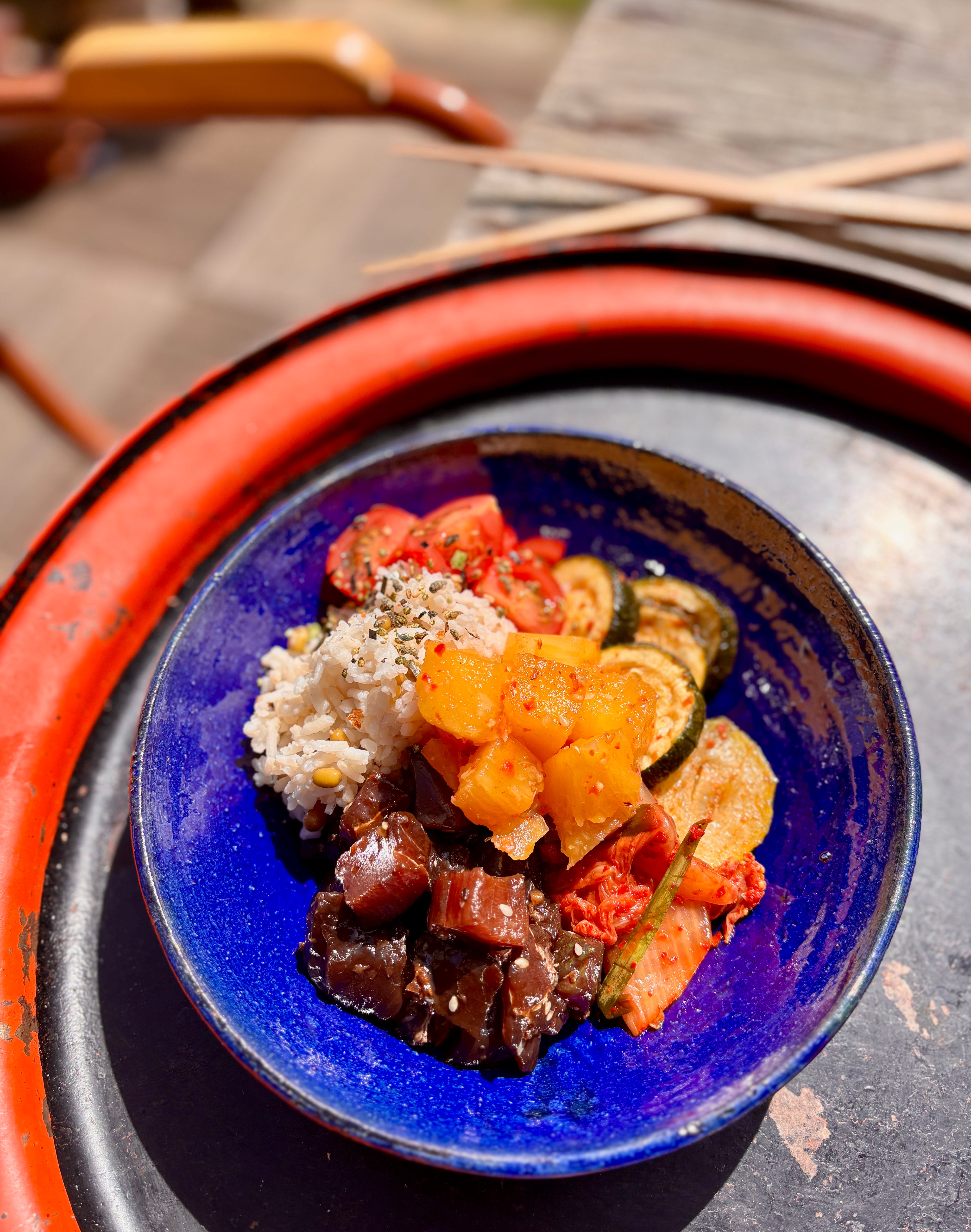
Romain loved this kimchi when I served it for dinner shortly after I made it. This is, indeed, a terrific and fresh condiment that goes well with fish or roast pork, or as a component in a rice bowl, along with tofu or shrimp, pickled vegetables, and whatever else you’ve got to add to the bowl.
While we ate some of this kimchi right away, I stored the rest in glass jars in the refrigerator, and it’s been a convenient condiment to have on hand.
Subscribe to my newsletter to get recipes, stories, Paris tips, and more — sent right to your Inbox! Free subscribers get most posts…and paid subscribers get all posts, as well as the ability to participate in the community of commenters.
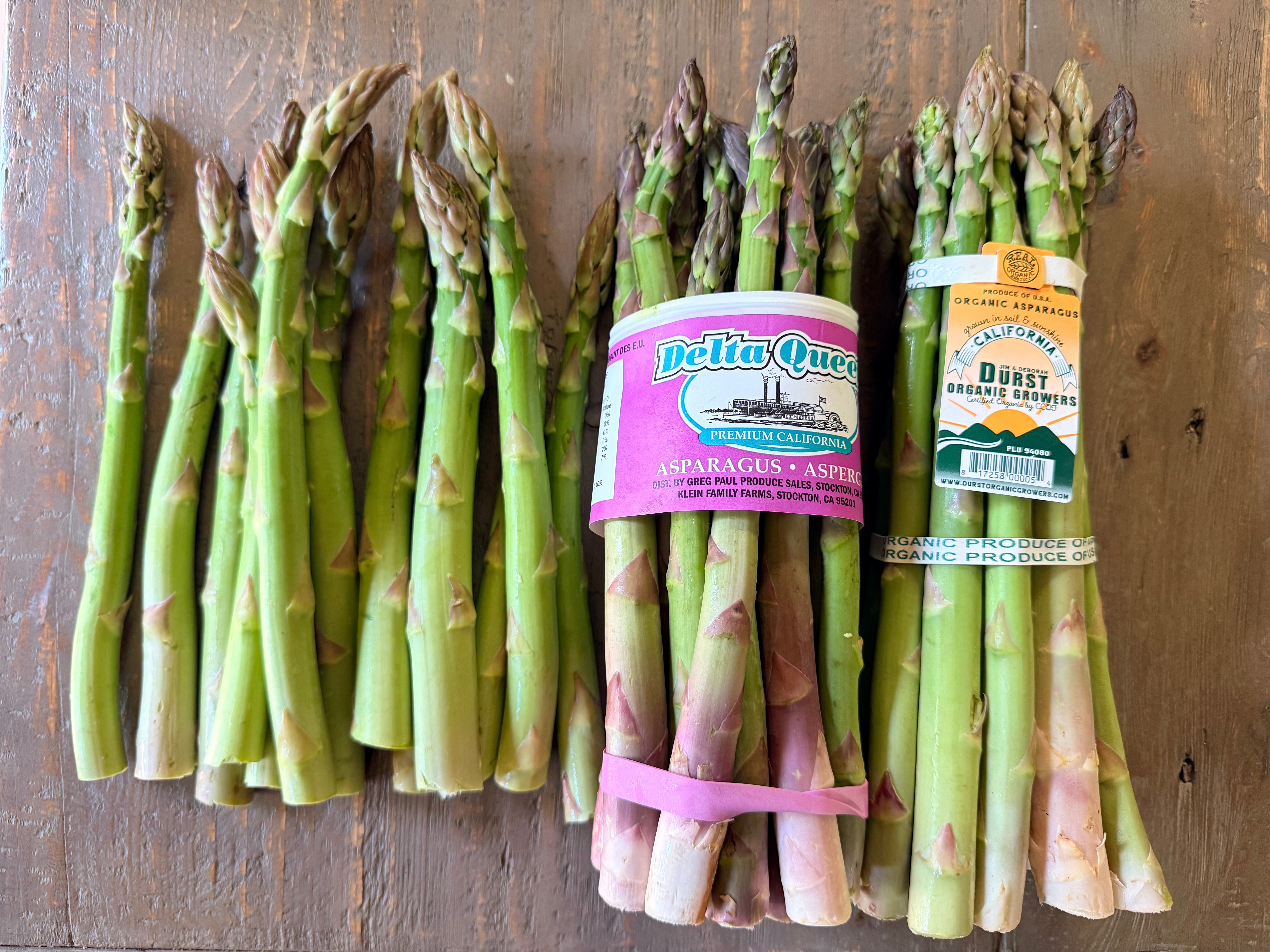
It happens every year. Asparagus appears at the farmer’s market and supermarket and I overbuy. My family loves asparagus, which was introduced to Vietnam by the French. Because asparagus spears shoot out from the soil like bamboo, Viet people called the vegetable măng tây (French bamboo). The disyllabic word is much easier to pronounce than ‘asparagus’.
Because asparagus requires particular conditions to thrive, it wasn’t widely grown in Vietnam. My mom didn’t see fresh asparagus in Saigon until the years close to when we fled in 1975. It was grown in Da Lat along with other Western crops like artichokes, she said. She recalls fat white asparagus that were delicious. For most people, if they could afford asparagus in Vietnam, it came from a can imported from far away.
Asparagus was a foreign ingredient for much of the 20th century. Given that, Viet asparagus recipes in the 1940s leaned mostly toward French-inspired dishes. One asparagus salad recipe called for reheating an unopened can of asparagus (to preserve its shape and texture, I suppose) and then tossing the spears with a simple vinaigrette. That doesn’t sound tasty.
An elegant delicate icon
The better tasting asparagus dish that became a fixture in the Vietnamese repertoire was súp măng tây cua — an elegant soup loaded with asparagus and crab. It was and still is considered special-occasion fare because asparagus is a luxe, pricey ingredient.
People traditionally prepared the soup with canned asparagus. Resourceful cooks maximized the asparagus flavor by adding both the spears and their canning liquid to the soup. I know it sounds gross but it tasted good to us.
After we fled Vietnam and resettled in America in the 1975 where there’s fresh asparagus, my mom still made the soup with canned asparagus. She also used canned crab for convenience. We had it as our go-to soup for fancy parties but after indulging in fresh asparagus, I found the canned asparagus soup to be monochromatic in flavor. Over time, my mom just stopped making the soup.
Fresh asparagus is the better way to go for the soup and I’ve turned to making it with fresh spears for years. I’ve also converted my mother.
I thought my approach went against Vietnamese conventions but noticed that Vietnam has recently been growing asparagus to export to Taiwan, China, Japan and South Korea. Cultivating asparagus, a pricey vegetable, is building economic opportunities for impoverished parts of Vietnam. It’s been dubbed as the “king of vegetables” and “green gold”.
Exports are one thing but more cooks in Vietnam are experimenting with fresh asparagus recipes. Asparagus is healthful, which Viet people (like everyone else) dig. It’s low-cal, high-fiber, and antioxidant rich. Its high folate content is good for fighting cancer. I just eat the spears for flavor but heck, I’ll take the health boost too.
All of that cheered me to no end. It’s one thing for me as a recipe developer to adapt and evolve ingredients for my expatriate situation, but knowing that people in Vietnam are using similar ingredients means that my ideas jive with what’s going on in the motherland.
This past week, I experimented with my favorite asparagus soup recipe to make it super weeknight friendly. I had a lot of asparagus on hand and ended up devising two super flavorful recipes that you can take in many directions. You’ll be well covered by the contents of this dispatch, which includes:
2 flexible asparagus recipes to please omnivores, pescatarians, vegetarians, or vegans
A how-to video to walk you through the trickiest part of the recipe
No-waste cooking tips because asparagus and seafood are expensive
Explainer on how this umami-laden soup’s flavor comes together (so you can apply those ideas elsewhere)
Advance prep pointers that enable you to easily slide this recipe into your rotation
If you love the springtime vegetable as much as I do, now is our moment to fully enjoy their unique flavor, texture, and healthful benefits.
Thank you for being here. Paid subscribers sponsored this Sunday Special dispatch. Join us at any level to get in on the action. Become a paid subscriber for the full Viet asparagus soup plus many other recipes, insights, and benefits. Your support matters.
Use this granola recipe as a blueprint for countless batches of homemade granola at a fraction of the price of store-bought. It’s insanely easy to do (just 10 minutes of actual effort required), lower in sugar, and so much more affordable! Some Things Are a No-Brainer to Make Yourself Believe it or not, there are […]
If there’s anything that’s been consistent about this site in its near-20 years of beaming (babbling?) hypertext to servers and back to you, it’s that I’m very bossy when I get into something new, especially cocktails. When I fell in love with Porch Swings, I wanted you to as well. Ditto for Blood Orange Margaritas (but only when in season), a Perfect Manhattan era that spanned over a decade, Boulevardier that has been woven into almost every year since, and a Slushy Paper Plane phase last year. This past winter and spring still, it’s been Sidecars, 1920s-era cocktails with about as many conflicting stories as my kids regale us with when they didn’t do their homework.
This black truffle rice is an example of a “ban fan” (拌饭) or mixed rice dish. It makes everyday white rice delicious and elevated, and gives your meal a little extra oomph! Black Truffle is Trending in Chinese Restaurants Black Truffle has quickly become a regular fixture on Chinese restaurant menus. I’ve seen it used […]
Are you familiar with socca? If not, please let me introduce you! It’s basically a rich, savory and salted chickpea flour pancake cooked in piping hot olive oil. The edges are crispy and chewy, the insides are flaky and tender, and the bottom is lacy and golden. It is just so good. You’ll have to try it.
Socca is a street food popular in Nice, France, with origins dating back centuries (it’s closely related to Italian farinata). I had the chance to try the real deal on our honeymoon, and I’m obsessed with this homemade version.
To make socca, you’ll need a bag of chickpea flour (I like to use Bob’s Red Mill, which is available in well-stocked grocery stores). You probably have the remaining ingredients already—olive oil, water, salt, pepper and cumin. That’s it! You’ll find step-by-step photos and a brief cooking video below, followed by the recipe.
Among my 2026 goals is to try Substack’s live streaming function. Let’s do it next week:
When: Thursday, 4/30, 11-11:30am PST / 2pm EST / 7pm UK
What: Ask Me Anything (AMA) about Fish Sauce + uncommon fish sauce (I have some unusual fish sauce that I’ve never tasted before so why not register my opinion to you on the spot?!)
How to attend: You’ll get an email ping when I go live. I will also schedule it in Substack’s Notes app. Attend to ask your questions in the chat function. If you can’t attend and have a question, leave a comment in this dispatch. After the livestream, I’ll share the video so everyone will get the recording.
Now, as for my mom’s stove . . .
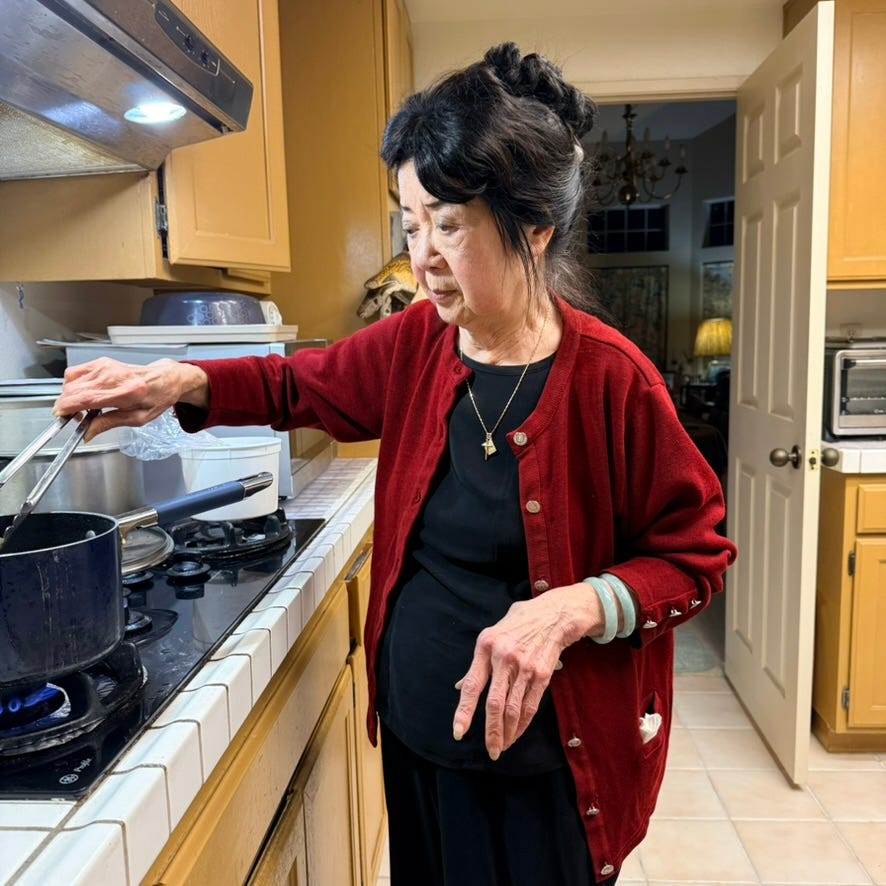
When you cook a lot, your stove is your BF (best friend). My parents bought a new tract house in the late 1980s and it came with an ok cooktop. By the early 2000s, my mom had put that cooktop through its paces and it was crapped out. She soldiered on because the first house she and my dad bought in the late 1970s still had had its original stove from the early 1960s. So anything was an improvement! Mom learned to cook using rice straw (really!) and can bake cakes using indirect coal heat and a flimsy metal box. My how times have changed!
Around 2010, a lady in the neighborhood was doing a kitchen renovation project and set her old cooktop out on the sidewalk with a “For Sale $100” sign.
That neighbor owned a swank home appliance shop, my mom said. The shop’s appliances were nice so my mom figured that the stove was good. After the cooktop languished for a few days with no takers, the sign changed to “Free”.
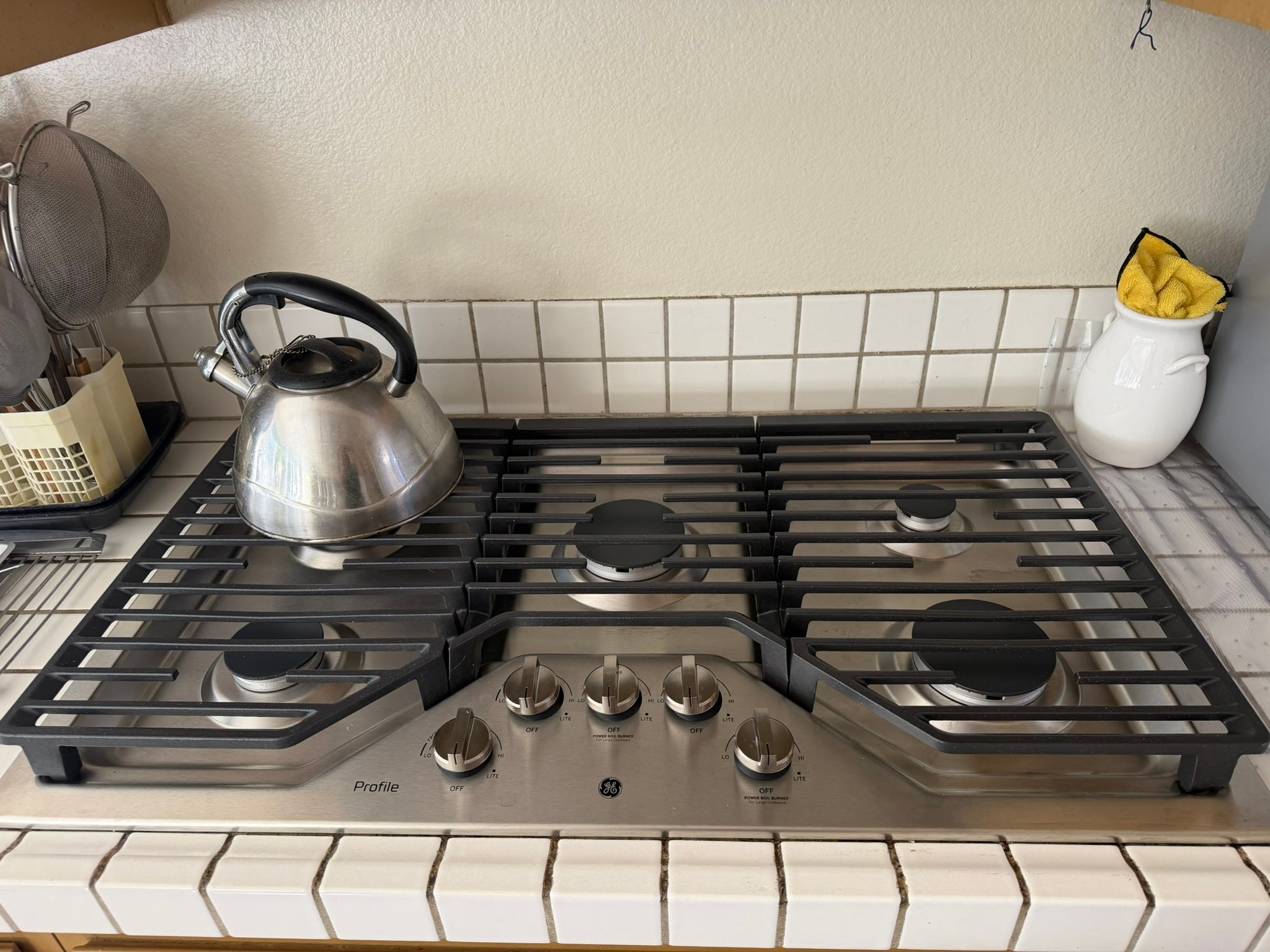
My dad promptly went over and brought the cooktop home. A handyman happened to be working for my parents that day, so within an hour, my mom had a “new” stove — a fancy-ish 36-inch, five-burner GE Profile.
The stove was well used before Mom got it but was reliable. She’s cooked on it for big family feeds, to prepare my dad’s last meals, and now, to cook for herself and her children whenever we’re around.
Mom at her very well used stove.
A couple weekends ago, we visited my mom and after we came back from a walk, Rory and I both smelled gas in the house. My mom was watching Viet shows on YouTube. I marched over to the stove and turned all the nobs to check. Sure enough, one of them was not fully turned off.
Thankfully, the smell dissipated right away.
“I smelled something and went to the stove to check but could not figure out how to stop it,” my mom said. “The same thing happened not long ago.”
The next morning, to my surprise mom said, “If you’re not busy today, would you take me shopping for a new stove?” Heck yes. I had lots of experiencing going back to when I selected my dream stove.
I’ll look online first to research, I told her. Her major caveat is that she wanted to touch the stove before deciding, she said.
Mom, Rory and I drove to Lowe’s where we considered the arrangement of the burners. Why were some curved and others straight? Thinking about how we cook and the pots and pans we have, my mom and I realized this: a curved arrangement of the burners means you can fit bigger pans along with smaller ones on the cooktop.
Additionally, the grates vary in weight and height. My mom lifted the grates of various cooktops and some were very heavy — even for 30-inch models. She had to get a 36-inch cooktop so she knew the grates would weigh more. “I will manage them,” she said.
The burners on her old stove were wimpy (none were more than 9,000 BTU but the cast iron grates heated up fast. The stove that Mom chose . . . a GE Profile was the priciest of the lot but she decided based on function and design. After 51 years of scrimping and saving, she bought herself a fancy new stove! I was so happy and excited for her.
The new stove!
She and my niece dealt with the installer who arrived a few days later. The grates sit up pretty high, as you can see. The flatness of the grates allow her to drag heavy pots across the stove easily, if she wants.
HOWEVER, once she started “making friends with the stove” my mom said that the burners were taking longer to heat up the pans than her old stove. The new stove’s flames heat up the grates so it takes longer to conduct heat to the pans. But after everything heats up, things stay very hot for a long time.
Moreover, when the knobs are on, there’s a blue backlight. That’s a fabulous reminder to turn off the stove.
“Your sisters wanted me to replace the toilets in the house so we did. But this stove is a more important purchase for me,” she said.
My mom is in the autumnal season of her life. Decades ago we talked about beginnings and nowadays, discussions lean toward endings. This stove, however, energizes my mom. She’s excited about learning to use it well for her cooking needs.
I told her, “Well, you better stick around longer to teach me how to cook more dishes!”
Remember our discussion about aging and maintaining the Japanese notion of ikigai (生き甲斐) — a life purpose? Turns out, ikigai can come in the form of a new stove.
Even though my mom is northern Vietnamese to the core, she does appreciate a good bowl of hu tieu, the iconic southern Vietnamese noodle soup. There are many renditions but the one our family enjoys most it hu tieu Nam Vang — Phnom Penh-style hu tieu. It’s a Chinese-Cambodian-Southern Vietnamese surf and turf combo.
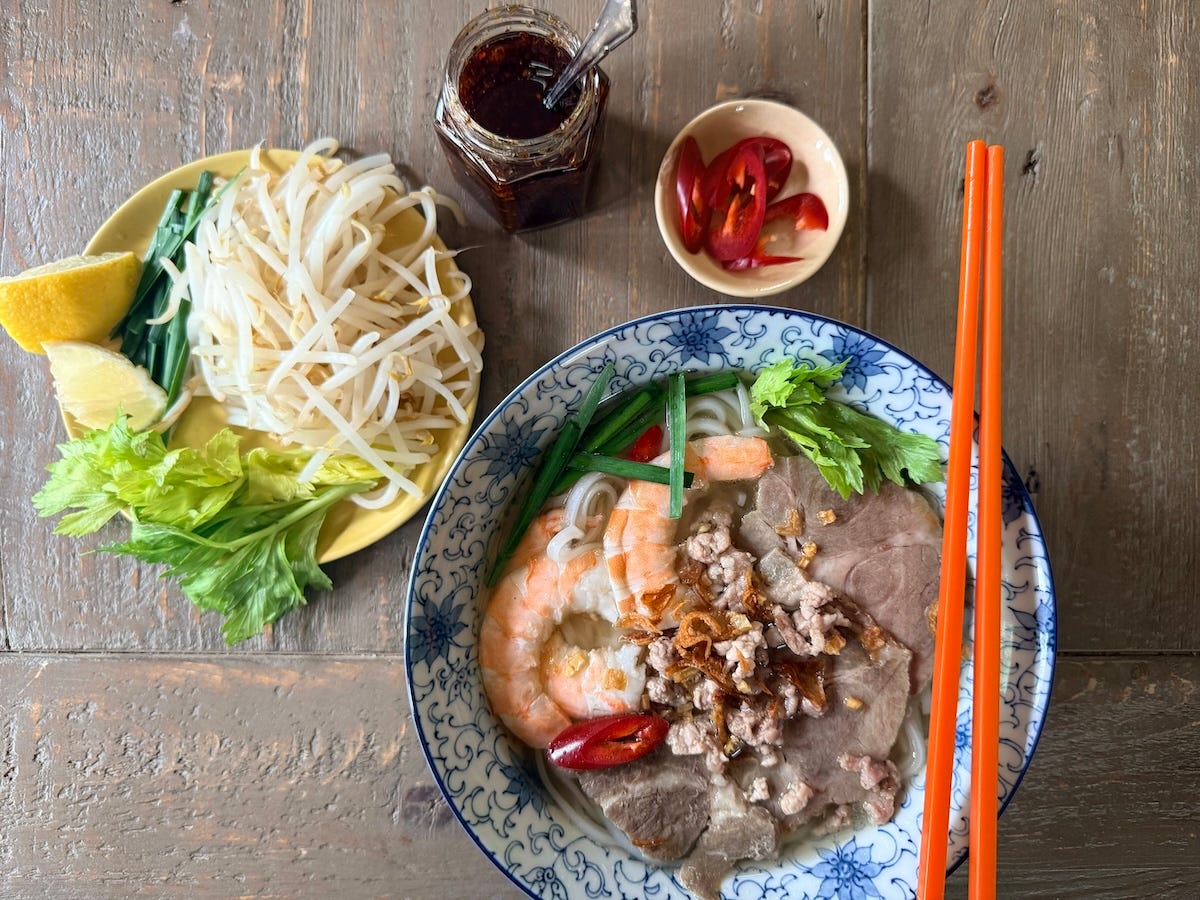
Hu Tieu Nam Vang — a surf-and-turf classic southern Viet noodle soup.
I don’t make it often but thinking about what I’d like to make for my mom on her new stove, I made hu tieu this past week from a recipe that my family has relied on for many years. Unlike pho, it’s very versatile. I updated the recipe to offer tips and pointers so you can plan ahead and tweak it as you like. Get the Hu Tieu Noodle Soup recipe at the website!
💎 Stress-testing lemongrass tofu
As a recipe tester, I leave food in the fridge to determine how long it stays fresh. That’s to say, I stress test my recipes. I’m happy to report that the crispy lemongrass tofu and its crispy lemongrass-y topping can be kept refrigerated for five days. I kept the stuffed tofu in one container and the topping in another. I finished the tofu in the pan and served it up for dinner on Wednesday. So, it’s extra handy for meal planning or even just to top a salad. Head to the PTFS Crispy Lemongrass Tofu recipe!
Support Pass the Fish Sauce! Join us for free or upgrade to a become a paid subscriber to enjoy 125+ professionally developed recipes, seed new content, and get future class discounts. Thanks for your enthusiasm!
Coming up for this Sunday Special are recipes and ideas to celebrate a precious springtime vegetable.
A comforting Korean beef noodle soup topped with tender beef and spicy seasoned buchu in a clear anchovy-kelp broth. A flavorful and nourishing one-bowl meal.
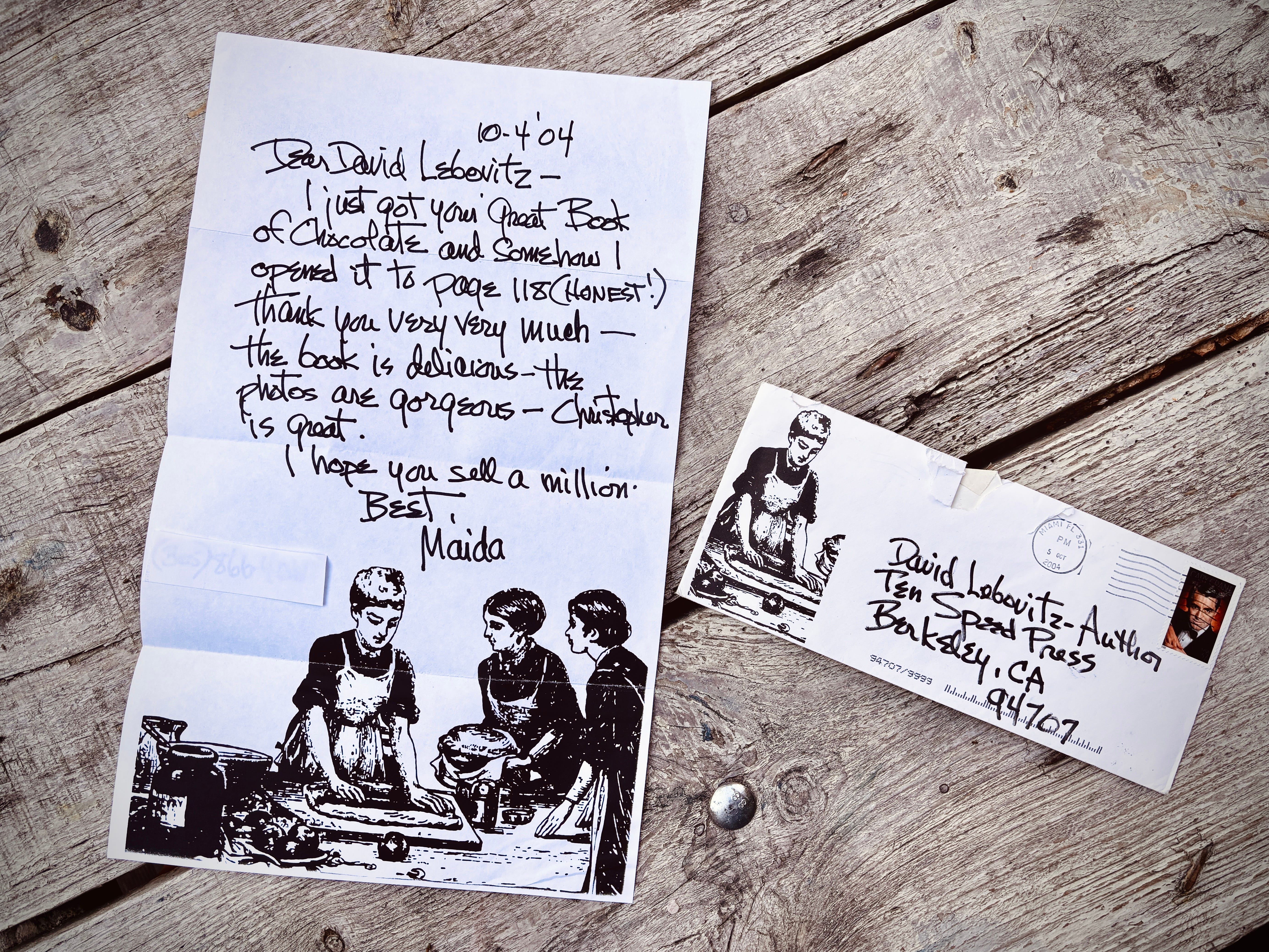
I’m very excited for the release of my newest book, The Great Book of Chocolate. This totally revised edition is filled with lots of new information about the world of chocolate, as well as a chapter on my favorite addresses for chocolate in Paris, and, yes, there are over 50 recipes that span the world of chocolate, including a chocolate cake from the late, great MaidaHeatter that she appreciated so much she sent me a letter about it…
Due to global events, it was a challenge planning an overseas trip, and some venues weren’t available on shorter notice. But I will be going to four cities — New York, New Jersey, San Francisco, and Los Angeles. Alas, I can’t visit all the places I wanted to go, but you’re welcome to come visit me wherever I am. And yes, I’ll be doing an event in Paris, in late May, if you fancy a trip to Paris! 😃
If we missed each other and you want a signed copy of The Great Book of Chocolate and Ready for Dessert, get in touch with Kitchen Arts & Letters, Omnivore Books or Now Serving LA, and they can send you a copy! -dl
Below are the dates for the events. Note that a number of them are ticketed, which usually includes the price of the book. Ticketed events also help support the bookstores and ensure that a book will be available for you. If you have questions about events, feel free to contact the venue directly.
May 5th: Release of TheGreat Book of Chocolate, which is now available for pre-order. Pre-orders will arrive on, or very close to, the release date. It’s available at these retailers, or order a copy at your local bookshop.
May 30: Booksigning at La Trésorerie Rive Gauche (48, rue de Grenelle, 7th, Paris), 3pm to 4:30pm. Copies of The Great Book of Chocolate and My Paris Kitchen will be available for sale and signing.
Please note that events are subject to change and revision (like everything these days…*sigh*), although we’re hoping that doesn’t happen. If anything changes, I’ll do my best to post about it but you’re welcome to contact a venue before an event to confirm the time and date, or if you need additional information.

 Login
Login