As income and wealth concentrate at the top, everyone else is finding themselves struggling. More than 60 percent of Americans are living paycheck to paycheck, which means they’re only one medical emergency or lost job away from poverty.
So what does the oligarchy — the billionaires, Wall Street mavens, and tech bros — do? They keep us separated and afraid of one another. They want us to blame the “other” for our problems.
Their greatest fear is we’ll discover our commonality and join together, and get to work busting up monopolies, raising taxes on the super-wealthy, and strengthening labor unions, cooperatives, and employee-owned businesses.
I explore this, this coming week in my Wealth and Poverty course. Please join me. Week 4 is available here on this Substack, Monday.
People look out at the waves churning in the ocean as Hurricane Isaias approaches. | Joe Raedle/Getty Images
This story appeared in Today, Explained, a daily newsletter that helps you understand the most compelling news and stories of the day. Subscribe here.
The first hurricane of the fall season is expected to strike the Gulf Coast overnight, marking the latest onset of hurricane season in living memory. As of early Friday afternoon, Hurricane Isaias had grown to a Category 3 storm, with sustained winds of 120 miles per hour. It will strike along the shores of the Florida Panhandle, Alabama, and Mississippi, posing a threat to life and property for millions of Americans. Weather forecasters anticipate between 8 and 12 inches of rain in the areas near where the storm makes landfall.
Isaias’s imminent arrival signals the end of a period of unusual good luck when it comes to hurricanes striking the United States. Last year, no hurricanes reached the US mainland at all. And this year, Isaias is breaking a more than 100-year-old record: October 9 is the latest date since 1905 for the first Atlantic hurricane of the season to take shape. August and September have historically been the busiest periods of hurricane season.
Not lately, though. It’s a strange recent phenomenon, and it’s been even more fortuitous than it would ordinarily be. That’s because the Trump administration has slashed weather forecasting and emergency relief funding over the past two years, leaving us less prepared for a disaster.
And now our luck seems to be running out — with even more rough weather on the way.
Hurricane season may be quieter than usual — but El Niño is on the way
Here’s the secret ingredient that’s pushed off hurricanes even as warming planetary temperatures raise concerns about more extreme weather events: El Niño. This notorious shift in global wind patterns, which occurs every two to seven years, moves warm water around the oceans, disrupting traditional weather patterns and leading to intense rain and sometimes disastrous flooding, as well as droughts. If there is an upside, however, it’s that this temporary change in ocean conditions prevents hurricanes from forming as frequently as they otherwise would.
The downside is, well, El Niño is still on its way. Forecasters expect this year’s version to be historically bad — using words like “super” or “Godzilla” to describe it. The worst of the bad weather is projected to arrive in December: The southern half of the continental US is expected to see unusually rainy and stormy weather, while areas of the Great Lakes and Pacific Northwest could see extreme dry spells.
It will also serve as a crucial test of our reduced capacity for predicting and responding to disasters. Trump’s “big beautiful bill” cut funding for the National Oceanic and Atmospheric Administration’s weather forecasting and public alert programs by $200 million, and 17 percent of FEMA’s workforce left the agency in 2025 amid the administration’s DOGE purge.
For now, if you’re in the danger zone for Isaias, please pay attention to local and national weather alerts this weekend. If you’re not, count yourself lucky — but there are storm clouds on the horizon.
One link for later
➨ These days, it feels like we’re all swimming in a sea of AI hype and hysteria — all the ways this technology will make our lives better, all the ways it could kill every single one of us. But what if the two are more related than we think? Eric Levitz’s new piece asks whether the AI companies themselves warning us about the apocalypse is part of their own marketing strategy. It’s a useful guide for how to think about all of these existential conversations.
Today’s trivia: What’s a three-letter abbreviation for the successor of tube TVs? (You can find this and other brain puzzles in Vox’s daily crossword. Look for the answer in tomorrow’s edition.)
Yesterday’s trivia: Yesterday we asked you which fruit kills more people than sharks each year, according to long-standing urban legend. That would be the coconut, and the claim (which is unprovable, since there’s no systematic tracking of coconut deaths) appears to have been started by shark scientists.
Object permanence: Anthrax v National Inquirer; Grey goo v Second Life; Predictive policing v actual crime; Spooky cookies; California v algorithmic price-fixing; Tivo self-destructs; Disney exec endorses piracy; TSA v geologists; Handheld printer; Mandatory DRM for all Canadian music sales; Iceweasel; "Snuff"; "Shade the Changing Girl"; Latam surveillance; Scotland Yard brands encryption terrorism; RBS slaughtered 10k small businesses to seize and sell their assets; Dead Letters.
There are many ways in which every billionaire is a policy failure, but the most corrosive and destructive way in which billionaires are policy failures is this: billionaires, despite being unelected and unaccountable, possess the power to control – and ruin – millions of peoples' lives.
Despite what the Prosperity Gospel and the Efficient Market Hypothesis would have you believe, having billions of dollars is in no way a reliable predictor that you also possess the wisdom to unilaterally dictate how thousands or millions of other people must live their lives, and that dictatorial power is the most tangible effect of being a billionaire.
Billionaireism is many things, but above all else, it is the power to do whatever you want to do, at the expense of whatever other people want to do. To be a billionaire is to live a life unthwarted, above the power of your workers, your neighbors, or your government and its laws. It is the right to get high on your own supply. It is the right to live a life in which no one ever calls you on your bullshit.
Billionaires aspire to live a one-sided libertarian fantasy in which they have the unlimited right to do whatever they want, and you have the right to do whatever they tell you to do.
There has always been a group of people who refused to acknowledge that other people have perfectly valid reasons for wanting to pursue their own goals rather than theirs. We call most of those people "toddlers" and devote sizable social effort to helping them outgrow this belief. Billionaires, on the other hand, command resources that allow them to devote sizable effort to getting us to acknowledge that they should be able to tell us what to do.
This is why billionaires love neoclassical economics, with its doctrine of "revealed preferences," which holds that the only true way to understand someone's preferences is to ignore what they say and only pay attention to what they do. It's a belief that can only be adopted by people who suffer the self-inflicted neurological injury you get from doing an economics degree, which renders the victim incapable of perceiving or reasoning about power. To believe in "revealed preferences" is to observe someone who has sold their kidney to pay the rent and marvel at this person who has a revealed preference for only having one kidney:
"Revealed preferences" is the economist's version of the bully who grabs your arm and starts whacking you with your own hand while shouting, "stop hitting yourself!" The ideological purpose that "revealed preferences" fills is letting billionaires live a life unthwarted. It's a life where they thwart everyone else, but still claim to be believers in "freedom."
This is what Peter Thiel meant when he wrote that "democracy is incompatible with freedom." In a democracy, the people who you exercise coercive power over are able to band together to create public institutions that act as a check on your power. For Thiel to maximize his freedom (to do things like spying on us and crushing our journalistic outlets), he must prevent all of us from voting, lest we vote to take away those cherished freedoms of his:
We're told that as mere mortals, we must inevitably submit to "death and taxes." Billionaires have long since so corrupted our political system that they need not pay taxes:
They have (practically speaking) infinite wealth, which means that they have practically infinite power, including the power to block any democratic attempt to limit their wealth (and thus their power):
Having vanquished taxes, the ultra-rich are now committed to defeating death as well, making themselves easy marks for the world's weirdest cult leaders and grifters, who promise them a mix of physical and digital immortality:
The fact that billionaires are such suckers, so often, is the strongest argument against billionaireism. Billionaires aren't just powerful, they're also fallible. We're all fallible, of course, but only billionaires get to impose their foolish ideas on so many other people, who have no say in the matter.
Henry Ford thought that he was so rich that he could build Brazilian worker housing whose windows faced the same direction as the worker housing he'd built in Dearborn, Michigan. He literally thought that being rich meant that he could ignore the entire concept of the Earth's axial tilt (he was wrong):
And despite the fact that Ford was so often demonstrably as thick as pigshit, no one was able to stop him from hiring soldiers to literally slaughter anyone who tried to limit his ability to tell other people how to live their lives:
Ford is no exception. Elon Musk believes in the same racist garbage as Henry Ford…but he also believes that if you're rich enough, you can simply wish away geometry and physics:
More than anyone else, Musk illustrates the way that being insulated from people who can thwart you leads to absolute ruination. Every terrible idea Musk has, he gets to act on. This has all kinds of negative impacts, including the very real possibility that some day your house will be crushed by his flaming rocketry debris:
That's small potatoes, though: Musk's wrong ideas, combined with his billionaire's impunity, also allowed him to murder hundreds of thousands of the world's poorest children:
Billionaireism is fractally terrible. By definition, the kind of person who will inflict the kinds of harms needed to amass billions of dollars in pursuit of total impunity is someone who will use that impunity to hurt even more people. Anyone who fails to outgrow a toddler's insistence on subordinating others to their will should not be allowed to subordinate anyone to their will.
Billionaire dilettantes aren't like regular dilettantes. Anyone can be a crank, but billionaire cranks have the force-multiplier of money and the impunity it brings. These allow a billionaire to turn his crackpot ideas into an unstoppable force that crushes public education:
Whatever crank whim a rich person has, we all have to live with. Take Barre Seid: the 94 year old billionaire made his fortune manufacturing electronics, and then donated $1.6b to fund "attack philanthropy" in order to undermine belief in climate change and prevent any action from being taken to avert it:
Seid is one of the main reasons we're experiencing the super El Nino. He's not just in the top 0.1% of wealth-horders, he's also in the top 0.1% of people we can blame for the twelve foot sea-level rise that is currently wiping Long Beach off the map:
Henry Ford didn't believe in the planet's axial tilt. Elon Musk doesn't believe in geometry.
Barre Seid doesn't believe in climate change. But Barre Seid does believe something: Barre Seid believes in rats.
For three years, Seid has paid a small army of goons to wander the area around Chicago's Lincoln Park, scattering handfuls of high-grade nuts on the ground, which have drawn flocks of pigeons and swarms of rats. Rats are everywhere. Everything is covered in pigeon shit. Seid has been repeatedly fined and cited and warned, and he's carried on turning the neighborhood into an uncontrolled vermin breeding facility:
Whether or not the people who live, work and play in Lincoln Park want to be swarmed by rats and slip in thick slicks of pigeon shit is irrelevant. Seid can afford to pay any fine the city levies against him (a fine is a price, and he's a billionaire), which means there's no practical reason Seid has to ever stop. He has the freedom to operate unthwarted in his every desire, including his desire to carpet an entire neighborhood in feces, so everyone else lacks the freedom to live without pigeon shit and rats.
That's the thing about billionaires: as Peter Thiel wrote, democracy is incompatible with freedom (to be a billionaire). The fact that Barre Seid's desire to transform Lincoln Park into a pigeon-shit manure lagoon is wildly unpopular with Chicagoans is irrelevant. You can't vote Barre Seid out of office, because no one elected him Pigeon Shit Czar. He has assumed that office by right of conquest.
Our lives are full of horrible, extremely unpopular things that we can't vote away because billionaires like them. Take the decision to allow Larry Ellison and his failson to buy and kill Warner Studios. That's an incredibly unpopular idea, especially in California, where Warner, Paramount and the Ellisons are all based. Despite the fact that we all hate this idea, Ellison gets to do it, because he is unthwartable:
Some of California's most powerful Democrats promised to stop the merger. Instead, they signed away California's future because they decided that they weren't powerful enough to thwart a billionaire:
The Warnermount disaster demonstrates the fundamental flaw in libertarianism. Even if you're the kind of Musk-addled libertarian who can't open your copy of Atlas Shrugged anymore because the pages are all stuck together and you think the only role for the state is enforcing contracts, you still need the state to be able to enforce those contracts. If corporations or even individual billionaires amass more power than the state, then they can always tell the state's contract enforcers to fuck off.
The ref must be more powerful than the players on the field, so the smallest government you can have is determined by the size of the largest corporation and the wealth of the richest billionaire you're willing to tolerate.
The world is in really bad shape right now, but it doesn't have to be. As Mamdani has shown us, it's not that hard to run a well-administered, advanced technological civilization. Fixing potholes and making transit work and enforcing housing rules isn't rocket surgery. We know how to do those things – we just don't do them because billionaires don't want us to, and they are unthwartable:
We let the most greedy, most ruthless people among us pursue their toddler's quest for an unthwarted life to the expense of any semblance of competent administration, and now we are fucked. That's why people are so angry about AI: there's nothing wrong with the idea of automating some tasks through advanced statistical techniques, but the reason so much of the world's scarce resources have been allocated to the AI buildout is that billionaires are infinitely horny for a technology that will let them sideline expertise in favor of money:
After all, experts get to thwart billionaires. They can refuse to apply their expertise to a billionaire's folly. The kind of AI that the industry is pursuing today is predicated on the idea that you can just ask a computer to come up with "theory-free inferences" that will let it run a factory, drive a car, or perform medicine, without knowing anything, just by pulling statistical correlations out of unimaginably vast data-sets.
At some level, people get this. They understand that AI and billionaireism are intimately connected – that the reason the sector is on track to lose about a trillion dollars this year is that for billionaires, a trillion bucks is a small price to pay for an unthwartable life.
"Red Team Blues": "A grabby, compulsive thriller that will leave you knowing more about how the world works than you did before." Tor Books http://redteamblues.com.
"Chokepoint Capitalism: How to Beat Big Tech, Tame Big Content, and Get Artists Paid, with Rebecca Giblin", on how to unrig the markets for creative labor, Beacon Press/Scribe 2022 https://chokepointcapitalism.com
“Once Is Enemy Action,” a science fiction novel about the origins of modern technofascism. Today's words: 537 (23966 total).
"The Post-American Internet," a sequel to "Enshittification," about the better world the rest of us get to have now that Trump has torched America. Fourth draft completed. Submitted to editor.
A Little Brother short story about DIY insulin PLANNING
This work – excluding any serialized fiction – is licensed under a Creative Commons Attribution 4.0 license. That means you can use it any way you like, including commercially, provided that you attribute it to me, Cory Doctorow, and include a link to pluralistic.net.
Quotations and images are not included in this license; they are included either under a limitation or exception to copyright, or on the basis of a separate license. Please exercise caution.
"When life gives you SARS, you make sarsaparilla" -Joey "Accordion Guy" DeVilla
READ CAREFULLY: By reading this, you agree, on behalf of your employer, to release me from all obligations and waivers arising from any and all NON-NEGOTIATED agreements, licenses, terms-of-service, shrinkwrap, clickwrap, browsewrap, confidentiality, non-disclosure, non-compete and acceptable use policies ("BOGUS AGREEMENTS") that I have entered into with your employer, its partners, licensors, agents and assigns, in perpetuity, without prejudice to my ongoing rights and privileges. You further represent that you have the authority to release me from any BOGUS AGREEMENTS on behalf of your employer.
Travel workouts that survive a work trip: a 20-minute session, an 8-minute floor, hotel-room versions of five movements, and a rule for which one to run.
Japanese book rave. A club in Tokyo spread carpets on the dance floor, played ambient music, and invited daytime clubgoers to chill out and read. Would 100% frequent a bookstore/cafe that did this regularly.
Stop writing that Star Trek spec script. It’s bad and you have a new episode of the podcast to listen to. Writer, comedian, & contributor to The Greatest Year in Pop Culture on E!, Ashley Ray returns to talk to Matt & Vince about Mad Men season five episode 10 “Christmas Waltz.”
Sometimes a character leaves Mad Men and you hope he comes back, but you never see them again; like Sal. Sometimes a character leaves the show, and you don’t care what he’s up to, but he shows up again; like Paul. What’s Paul been up to? Becoming a Hare Krishna, possibly experimenting with gay stuff, and still writing weird, racially-charged fiction.
Also doing some bad writing: Lane. He forges a Don’s signature to write himself a $7,500 check to pay off his British tax debts. He’ll be fine though, right? He’s not going to get caught and do anything drastic in response, right? I haven’t seen anything past this episode, so don’t tell me.
Support the Pod: become a patron atpatreon.com/Frotcast and get more bonus content than you could ever want. Sign up for the Pod Yourself a Shoutout tier to hear Vince give you a shout out on the show, like this week's shoutouts for The Herb, Water Sports, & The Mountaineer.
The 1975 film “Jaws,” in which a local government hires a shark hunter to protect the town’s tourism industry, delighted me as a 10-year-old. But other than its infamous opening sequence, I don’t recall being scared. My younger sister, however, developed a years-long fear of deep water, even our 11-foot-deep pool. Maybe I’d just cultivated too much shark knowledge, well aware that these apex predators are docile and do not hunt humans like they do in Peter Benchley’s novel. The book and the film — I consumed both and can report that Steven Spielberg’s adaptation is better — only instilled in me a deeper love and respect for sharks. They are still my favorite fish to observe in aquariums or the ocean.
Outside of the movies, shark bounties are uncommon these days. That’s why news this week that Greenland was planning to cull 1,000 Greenland sharks was so alarming to many online. Officials in the Avannaata municipality on the island nation’s west coast approved the plan, offering fishers 300 Danish kroner, or about $45, per shark heart. The government complained that hungry sharks are eating too much Atlantic cod and Greenland halibut, cutting into what humans can bring home and damaging their gear. Lars Erik Gabrielsen, mayor of Avannaata, told The Guardian, “We need to safeguard the income of fishermen and the catch so that we can continue to eat the foods that we have relied on for generations.”
Conservationists and shark lovers were outraged at the proposal. Nick Dulvy, a professor and marine conservationist at Simon Fraser University in British Columbia, called it a “disaster” and said that biologically, the sharks are “the most sensitive species in the ocean to overfishing.” Marine ecologist Spencer Roberts, whose advocacy work includes calling out shark poaching, posted on X that “There is a psychotic sense of entitlement spreading around the world that imagines humans own the fish in the sea and demands retaliatory killing of predators who rely on these fish. Even centuries-old sages of the Arctic Ocean are not safe from this deranged human delusion.”
Indeed, the Greenland shark (Somniosus microcephalus) is bizarre and misunderstood, basically being the couch potato of the depths of the North Atlantic and Arctic Ocean, where waters are just above freezing. Known as an abyssal species, it slothfully trawls the shadows like some mournful Lovecraftian being, possessing an especially sluggish metabolism, which isn’t surprising considering its size. Greenland sharks weigh in at one ton and reaching up to 23 feet in length. The maximum lifespan can average 400 years, the longest lifespan of any known vertebrate, meaning there are apparently Greenland sharks that are older than the United States. If that doesn’t blow you out of the water, I don’t know what will. Humans are famously bad at mentally fathoming deep time, so thinking about these ghostly rotund things hiding in the dark of the ocean, outliving empires like an ichthyological Ozymandias, fills me with even more awe than most sharks do.
In a rare spot of good news, the local government dropped the plan after national officials questioned its legality, but a future cull hasn’t been ruled out. Still, it’s worth upholding this turnaround as an example of why speaking out on animal rights can be successful. We don’t need to just sit back and watch the extinction of any species that doesn’t directly benefit us, while of course recognizing that fishers have to eat too. Some have proposed reimbursing fishers or using acoustic deterrents instead of mass slaughter.
But it’s more than just Greenland sharks at risk, with an estimated 79 million sharks dying in fisheries in 2019. At least 25 million of those species are threatened. As coral reefs struggle to survive, many sharks are losing their main food source, but humans are to blame for that one. These animals can be dangerous, same as a grizzly bear or elephant, but people tend to value sharks a lot less. This is in spite of their critical role in a healthy environment. Sharks aren’t monsters, they evolved to fill very specific roles in the ocean — a huge block in the Jenga of life — and if they go, our oceans would dramatically tumble in ways that would negatively impact humans too.
“Jaws” is a fantastic film if you can suspend your disbelief about a great white being the menace of the seas. That’s really us, but it doesn’t have to be.
A destroyed car sits outside a burnt home in the West Bank village of Jalud on September 29, 2026. | Erik Marmor/Getty Images
In the weeks and months following Hamas’s brutal October 7, 2023, attack on Israel, and Israel’s devastating campaign in Gaza that followed, the world’s attention turned away from the West Bank.
Over the past three years, however, the situation in the Israel-occupied territory has worsened as Israeli settlers have carried out more violent attacks on Palestinians.
Israeli Prime Minister Benjamin Netanyahu has largely dismissed violent West Bank settlers as an issue, blaming the Jalud attack on a “handful of rioters” and referring to settlers as “juvenile delinquents” in a speech to the UN last month, in which he argued that the world should focus on violence committed by Palestinians instead.
But even as he downplays the problem, human rights organizations have documented a record level of Israeli settler violence in the West Bank. The International Committee of the Red Cross has said that such attacks have made everyday life “untenable” for the more than 3 million Palestinians living in the West Bank.
The Israeli settlements are also clearly illegal, as Vox’s Zack Beauchamp explained in September — but that hasn’t stopped them from expanding.
The Wall Street Journal’s Feliz Solomon reported on the Jalud attack and has written about the role of Hilltop Youth in worsening settler violence. She spoke with Today, Explained co-host Noel King about the reality on the ground in the West Bank, the settler groups behind it, and how Israeli officials are responding.
Below is an excerpt of their conversation, edited for length and clarity. There’s much more in the full podcast, so listen to Today, Explained wherever you get your podcasts, including Apple Podcasts, Pandora, and Spotify.
Tell me about the last three years in the West Bank. What’s been happening?
The October 7 attack really hardened a lot of people’s views in Israel, and that’s played out in the West Bank in a number of ways.
One is that the government of Benjamin Netanyahu, which has some powerful members who are settlers themselves, became much more overtly supportive of expanding the Jewish settlements.
The second thing that changed was basically a total breakdown of trust, both between Jews and Arabs, and also between Jews and the state, because a lot of people felt that they were really on their own in terms of security.
All of this created a really combustible environment. There are more settlers there now. They’re behaving more brazenly, and there’s what a lot of people would describe as a permissive environment of almost total impunity.
What does that total impunity look like? We often hear the term “settler violence.” What does that mean?
There’s really a whole spectrum of violent actions. It’s mostly by younger male settlers. There are some acts of daily harassment, like trespassing on Palestinian property, vandalism, stalking people, blocking roads, and preventing access to resources like water wells. And then on the other end of the spectrum, there are also acts of extreme violence.
There have been some very serious physical assaults. Settlers throwing rocks with slingshots. Last year, there was a viral video of an elderly woman who was beaten with a stick. She was hospitalized for days. And lately, we’ve been seeing more mob violence where a large group of settlers will raid a Palestinian village. They’ve set mosques and other property on fire.
Just to be clear, there’s violence by Palestinians too, but we’re really seeing an alarming surge of violence by settlers that’s often unpunished, and increasingly it’s happening when settlers go into Palestinian areas where they’re not supposed to be.
You reported on an attack that happened last week in the West Bank near the Palestinian village of Jalud. Tell me what happened.
Over the summer, some young settlers who are associated with a group called the Hilltop Youth set up an encampment around three houses on the outskirts of the Palestinian village, Jalud, and essentially besieged the houses. They blocked their access to essential goods and harassed the residents until, in late July, they felt so unsafe that they fled.
Two of those houses belonged to the Tubasi family. In early September, Israel’s high court ordered the state to ensure their safe return, and in late September, they tried to go back. We spoke with Wael, who’s one member of the family, and also with their lawyer about what happened when they tried to go back.
A few dozen [Israeli] security forces were deployed to escort them home in the middle of the night, and when they got there, they found that the house was totally ransacked. They showed us before and after pictures, and the windows were smashed, the doors were broken, electrical wires were cut, and there was just debris all over the place.
When they came inside for the first time in about two months, they were walking through the property looking at the damage with flashlights, and they’d only been there for a few minutes when suddenly they were surrounded by a mob of settlers. They said at first that there were about 50 settlers around the house, and the military later said that there were more than a hundred people that took part in what they called a riot.
The authorities told the family to take cover deeper inside the house, and they hid inside a stairwell as the soldiers tried to force these settlers to retreat, but they were shouting and throwing rocks at the house, and then, according to Wael, they even started climbing in through the windows. At that point, the authorities told the family to go upstairs, all the way up to the roof and to hide in a corner of the rooftop.
Wael explained what he saw up there. He was looking down and he saw the soldiers battling it out with this large group of settlers and this thick cloud of tear gas and loud bangs from stun grenades.
“There are more settlers there now. They’re behaving more brazenly, and there’s what a lot of people would describe as a permissive environment of almost total impunity.”
Eventually, the security forces realized that they weren’t getting the situation under control. They had to get this family out of there. They took them back downstairs and outside and put them in a military vehicle, but then the settlers surrounded the vehicle and they were rocking the car. They slashed the tires so that [the family] couldn’t leave. Then the soldiers had to move them into an armored military vehicle and eventually they got them out.
A short while later, not long after they had escaped, they started receiving video messages from some of their neighbors that showed what happened after they left, which was that their car and their house had been set on fire.
All right, so the Israeli authorities in the form of soldiers were trying to help this Palestinian family legally return and settlers violently blocked them. This is settlers versus the authorities. What do we know about who these settlers are and what is motivating them?
This was a very large group. We know of three people who were detained in this incident. All of them were teenagers. The youngest one I believe was 15 years old.
A lot of the harassment in this area comes out of a nearby settlement called Esh Kodesh and smaller, more informal settlements around it that are called outposts. And these outposts are usually pretty crude encampments. They often start with just tents or a camper van or a trailer with no electricity and no water. And the people who choose to live in these places tend to be very young, very extreme ideological settlers.
You mentioned something called the Hilltop Youth. Who are they?
The Hilltop Youth is a loose network of settlers that live outside the mainstream, and they often have much more extremist views than the mainstream settler movement. It’s an offshoot of religious Zionism, which is one of the main ideologies of the settler movement, and it sort of fuses the ideas of Orthodox Judaism with ultranationalism.
The Hilltop Youth take these ideas to the extreme, and I’ve spoken with a bunch of them myself. They believe that they’re on a divine mission to reclaim the Holy Land for Jews, and they’ll cite parts of the Torah and other religious texts that they interpret as empowering them to take the land back and even to use violence. They see it as a preventive type of self-defense, and they see themselves as protecting all other Jews.
These are young people, some of them teenagers. Where are they coming from? Why are their parents not grounding them? How has this been allowed to unfold the way it has?
It’s a good question, and I should say also that not all Hilltop Youth are violent, but a lot of the violence that’s committed by Jews in the West Bank does come from this group, and they come from all over the place. Some of them grew up in the settlements, and then as teenagers, they kind of wandered and they struck out on their own. And then there are others who come from all over Israel.
A lot of the Hilltop Youth, we’re finding, are kind of troubled kids. Sometimes they’re dropouts from strict religious schools, sometimes they have behavioral issues or ADHD, and they just didn’t really fit in. We heard from some kids who said that they found out about the outposts by word of mouth, like someone at their school had invited them to come for the weekend and they’d come and they’d stay a few days and eventually they’d start spending more and more time there until at some point they’re just living there.
There are a number of NGOs that recruit young kids to come work as farm hands on agricultural outposts in the West Bank, and some of those are in these areas that are more prone to radicalization. These organizations present themselves as very innocent in that they’re identifying kids that need help and are bringing them to a place where they will learn some discipline and they will have a purpose and they’ll have something to do. But that often puts them into a more extreme environment.
In the case of the family you profiled in Jalud, it’s clear that the Israeli authorities, in the form of soldiers, attempted to help the family get back to their home. How does this typically play out, though? How do Israeli soldiers typically respond when settlers attack Palestinians?
There have been a number of high-profile examples of video footage circulating that appears to show Israeli soldiers either standing idly by or even, some would argue, siding with the settlers.
In one recent example, there was a video that showed some soldiers praying alongside settlers who had besieged the home of a Palestinian American man, and that was actually not very far from where the Tubasi house is. The military said that it was looking into it to determine whether disciplinary action needed to be taken.
In general, military officials acknowledge that this violence by settlers is a big problem, and the security establishment definitely does not support what’s happening here. They see it as getting in the way of counter-terrorism efforts and overall efforts to bring stability to this very volatile area.
I’ve heard this directly from military officers, but on the ground there does seem to be a breakdown of discipline in some cases and a lack of clear instruction in other cases. Some soldiers simply don’t know how to deal with threats from other Israelis, especially really young ones, as you pointed out. It’s just not what they’re trained to do.
Do you think the government could put a stop to these attacks by settlers if it wanted to, or has the government lost control?
This problem has gotten so big that it’s going to be very difficult to solve without significant backlash, but I have spoken with a number of former Israeli security officials who say yes, much more could be done — starting with a more frank acknowledgement of what’s happening, clearer law enforcement procedures, and more disciplinary actions.
Bereits 2024 veröffentlichte Retro Games den The400Mini. Für den April 2027 hat der Hersteller nun den Nachfolger angekündigt, dieses Mal aber in Originalgröße: The800XL. Ähnlich wie der TheC64 Maxi und der für November 2026 angekündigte TheA1200 verfügt auch die neue Version des Atari-8-Bit-Computers über eine mechanische Tastatur.
Erstmals ist außerdem ein funktionsfähiger Modulschacht integriert. Damit sollen die meisten Originalmodule für die Atari-Modelle 400, 800, XL und XE kompatibel sein. Ergänzt wird das Gerät durch den TheCXStick – eine Neuauflage des legendären Atari-Joysticks.
Beim Spieleangebot gibt es wohl keine Änderungen gegenüber dem Vorgänger. Vorinstalliert sind dieselben Spiele wie auf dem The400Mini, als da wären:
• Airball
• Asteroids
• Basketball
• BattleZone
• Berzerk
• Boulder Dash
• Bristles
• Capture the Flag
• Centipede
• Crystal Castles
• Elektraglide
• Encounter!
• Flip and Flop
• Henry’s House
• Hover Bovver
• Lee
• M.U.L.E.
• Millipede
• Miner 2049er
• Missile Command
• O’Riley’s Mine
• The Seven Cities of Gold
• Star Raiders 2
• Wavy Navy
• Yoomp!
Obendrein wird es wieder möglich sein, Spiele und Programme von USB-Stick zu laden. Neben Software für die Atari-8-bit-Computer werden auch Spiele für die Atari-5200-Konsole unterstützt. Hier noch der Trailer:
Chinstrap and macaroni penguins nesting on the volcanic slopes of Zavodovski Island. | Nicole Richters via British Antarctic Survey
This story was originally published by The Guardian and is reproduced here as part of the Climate Desk collaboration.
The world’s largest penguin colony has declined by two-thirds since 2011, most likely because of the climate crisis, a study has revealed. Scientists said the rapid demise of chinstrap penguins on Zavodovski, the northernmost of the South Sandwich Islands in Antarctica, increased the risk of a wider ecosystem collapse.
“It is an enormous population crash, equivalent to half a million breeding individuals being lost from that island,” said the leader of the research, professor Norman Ratcliffe, a penguin ecologist at the British Antarctic Survey.
The Guardian reported in 2020 that chinstrap penguin populations were decreasing on Low in the South Shetland Islands, prompting concerns among scientists that “something is broken” in the world’s wildest ecosystem. The new study, published on Wednesday in the journal Current Biology, indicates that the speed of collapse may be accelerating so rapidly that the distinctive bird — which gets its name from a black line that runs below the beak from cheek to cheek — may need to be classified as an endangered species.
Zavodovski Island had by far the biggest penguin colony in the world, with about 600,000 chinstraps and 90,000 macaroni penguins when the population was measured in 2011. Given the decline between then and 2025, it is likely to have lost that title to Cape Adare in the Ross Sea.
Scientists believe the most likely cause is climate disruption. Human-driven heating has pushed up winter temperatures on and around the Antarctic Peninsula to 5 degrees Celsius above preindustrial levels, one of the fastest rises in the world. On 6 June, the Argentinian Esperanza base on the Trinity Peninsula registered a record winter high of 15.4°C, about 20°C above normal for the time of year — a margin that scientists described as “absolutely crazy.”
Chinstrap penguins are struggling to adapt because they have special diets and specific ocean temperature preferences. Tracking data shows they prefer to forage in cooler waters to the northwest of the island, where they would expect to find Antarctic krill, which make up the bulk of their diet. But as the waters warm, the krill have moved south into the Weddell Sea.
Macaroni penguins, by contrast, are less fussy eaters and their numbers rose 30 percent — though not nearly enough to make up for the loss of chinstraps. Ratcliffe said this was only small comfort because if current trends continued, all penguins would run out of space.
He said the loss of chinstrap penguins would have wider repercussions for food webs. “Each ecosystem could be regarded as like a giant Jenga set, and every component that you remove increases the risk of ecosystems collapsing completely.”
The scientists ruled out several other possible causes of decline. There was no sign that chinstrap and macaroni penguins were in competition for food. The nearest humans lived thousands of miles away.
Although the island is volcanic and had a major eruption in 2016, prompting a “Penguin Pompeii hypothesis” of a sudden population fall, this theory was not borne out either by the data, which showed a steady linear decline, or by observations that showed the chinstraps avoided the main “asphyxia plain” area where the ash and lava were deposited.
Anthropic CEO Dario Amodei told the UN that if “managed poorly,” AI models “could be a risk to humanity as a whole.” | John Lamparski/Bloomberg via Getty Images
Silicon Valley has long warned that its favorite technology might get us all killed. But chatter about AI’s apocalyptic potential has grown louder in recent weeks.
In September, Anthropic researcher Jacob Coxon resigned from the company, accusing his former employer of “gambling with our lives” by developing evermore powerful models faster than it could control them. One of Coxon’s former colleagues vouched for this assessment, saying that there was a greater than 10 percent chance of AI “killing all humans” within the next decade.
Recent pronouncements from the leaders of these companies have been nearly as grim. At the United Nations last month, Anthropic CEO Dario Amodei warned that, if “managed poorly,” AI models “could be a risk to humanity as a whole.” OpenAI’s Sam Altman similarly declared that our species just might “lose control of the future” to the type of software that his firm is selling.
All this triggered a tsunami of media coverage and policy debate about the “existential risks” of AI — and what, if anything, we can do about them.
Key takeaways
Some critics argue that AI leaders’ warnings about existential risk are a PR strategy to attract investment, distract from present-day harms, and shape regulation in their favor.
But this theory doesn’t make a ton of sense.
The simpler explanation is that many AI executives, researchers, and defectors genuinely believe the technology poses catastrophic risks, based on real trends in AI’s growing power and autonomy.
Yet some of the AI industry’s biggest critics are more annoyed than afraid. As they see it, the world isn’t trembling on the precipice of robo-annihilation, so much as falling for the tricks of snake oil salesmen. This argument has been percolating for years, voiced by a broad set of observers, including the linguist Emily Bender (“It makes the product seem more powerful”), computer scientist Timnit Gebru (“It’s not just a distraction, but it’s harmful”), as well as Substack columnist Ed Zitron and various reporters and social mediainfluencers.
In their thinking, Altman and Amodei aren’t talking up their technology’s catastrophic potential because they’re rationally afraid of where AI is going — they’re doing so because their firms are ravenously hungry for more investment. And the reason why “AI doom” has grown more salient in recent weeks isn’t that the case for concern has gotten stronger, but rather that OpenAI and Anthropic’s IPOs have gotten closer.
In short, these Big Tech skeptics argue, journalists and politicians have fallen prey to a counterintuitive PR strategy, one that stokes media frenzies over ludicrous sci-fi scenarios in order to hype AI’s technological promise, distract attention from chatbots’ present-day harms, and help labs secure favorable regulatory treatment.
This would be reassuring, if true. Unfortunately, the theory is unpersuasive. There is little reason to believe that the panic over AI’s “existential risks” was cooked up in a Silicon Valley marketing department. To the contrary, the most plausible explanation for the AI sector’s doomsaying is also the most straightforward: Many of the industry’s executives, employees, and analysts genuinely believe that AI progress poses catastrophic risks.
In my conversations with close observers of the industry, even some of OpenAI and Anthropic’s fiercest detractors conceded that their leaders’ avowed concerns are unlikely to be mere marketing tactics. “The more I learn about the underlying ideologies out of which those two labs were formed, the more I think what we have here is a sincere belief,” the author and computer scientist Cal Newport told me.
This does not mean that Amodei and Altman are right, much less that we can trust in their judgment or integrity. There are manyreasons to doubt that the weather forecast for 2036 is “cloudy with a chance of robot apocalypse,” or that anyone can assign a “10 percent” probability to the latter outcome without pulling numbers out of thin air.
Nevertheless, Silicon Valley’s Cassandras have some logic and evidence on their side. AI models are growing both more capable, autonomous, and arguably unruly. If these trends continue unchecked, it’s not hard to see how they could yield very bad outcomes.
Given the stakes, we should not be comfortable dismissing their warnings on dubious grounds. And the “PR” theory of AI doom does precisely that.
How AI companies (supposedly) profit off fears of the robot apocalypse
Before examining why AI “doomerism” probably isn’t a PR stunt, it’s worth saying a bit more about why some believe that is.
According to Bender, Gebru, and others, AI companies benefit from talk of artificial intelligence’s existential risks in at least three ways.
First, it attracts investment. In the words of The Atlantic’s Matteo Wong, the doomer narrative implies that AI labs’ models are “destined to become terrifyingly capable,” and thus massively profitable. As the Los Angeles Times’s Brian Merchant put the point during the first big wave of AI panic in 2023, “what better way to generate a buzz than to insist, with a certain presumed credibility, that your new technology is so potent it might unravel the world as we know it?”
“If you position these threats as all-powerful, as somewhat unknowable, you get to be the expert on it.”
Kate Brennan, AI Now Institute
Second, hyping AI’s hypothetical future hazards diverts attention from the companies’ current malfeasance. Every minute we spend debating whether AI will one day turn us all into paper clips is a minute we aren’t discussing the AI labs’ alleged copyright violations, pollution, labor violations, and myriad other social harms.
And third, the doom narrative shifts regulatory scrutiny away from topics that directly threaten the AI companies’ profitability — such as copyright enforcement — while also suggesting that regulators must rely on the labs themselves for guidance.
“If you position these threats as all-powerful, as somewhat unknowable, you get to be the expert on it,” Kate Brennan of the AI Now Institute, a progressive think tank focused on artificial intelligence’s near-term harms, told me.
Critically, for the biggest skeptics of “AI doom,” industry executives and employees aren’t the only ones complicit in this PR strategy. Self-styled whistleblowers like Coxon are also suspect, since they might be “using the spotlight to attract funding to start a new venture or to secure new positions.” And even nonprofit AI safety organizations are thought to function as vessels for Big Tech’s marketing campaigns, a fact reflected by the financial and interpersonal ties between the major labs and such think tanks.
There are better ways to raise money than promising to end the world
The “PR” critique of AI doomerism has some kernels of truth. AI companies probably would prefer to talk about their technology’s hypothetical future dangers than about their products’ present-day harms. And if publicly touting AI’s existential risks were antithetical to Anthropic and OpenAI’s business goals, their leaders would almost certainly say less in public about that subject. (Disclosure: Vox Media is one of several publishers that have signed partnership agreements with OpenAI. Our reporting remains editorially independent.)
But it does not follow that Altman and Amodei’s warnings are a self-conscious marketing strategy, born of cynical calculation rather than genuine concern. And there are several reasons to doubt that charge.
For one thing, AI companies have no shortage of ways to hype up their technology’s capabilities. And it is hard to see how any firm could conclude that the optimal approach — from a purely financial standpoint — would be to portray itself as a threat to human survival.
For investors, the appeal of AI companies is not that they could hypothetically get us all enslaved by a machine God; it’s that they could theoretically make a lot of money.
Perhaps casting your chatbots as an “existential” risk will persuade some capitalists of your future profitability. But this seems like an awfully indirect pitch — and one that’s almost certain to be less effective than demonstrating that a lot of corporations would like to rent your software.
“If these guys were selling flypaper — and the revenue was growing as fast as it is — investors would be more or less just as interested,” Roy Bahat, the head of Bloomberg’s venture capital arm, told me.
And even if these firms were hellbent on awing the public with grandiose predictions of their technology’s future powers, they’d have little need to invoke the robot apocalypse. Touting AI’s potential to cure cancer, abolish poverty, or facilitate intergalactic travel would all seem to advance the same objective, while doing less to jeopardize the companies’ public reputations or freedom from intrusive regulation.
And in fact, many with a vested interest in the major AI labs’ success talk up the technology in precisely this way. OpenAI investor Marc Andreessen has decried AI safety concerns as a “full-blown moral panic” while insisting that artificial intelligence will empower humanity to cure all diseases and engage in “interstellar travel.” Similarly, Jensen Huang, the CEO of chipmaker Nvidia and major investor in both OpenAI and Anthropic, has called claims of AI’s catastrophic potential “complete nonsense.” If hyping AI doom is essential for stoking investment, not everyone in Silicon Valley has gotten the memo.
The media doesn’t seem that distracted
Promoting fears of AI’s existential risks would be a similarly odd approach to media management.
Without question, corporations always seek to direct news coverage away from their greatest legal and ethical liabilities. But companies can try to secure more favorable press in many different ways. And implicating themselves in the apocalypse does not seem like an optimal one, from a crisis communications point of view. At the very least, it’s difficult to name other industries that have attempted such a maneuver; atomic energy companies did not respond to media coverage of the Fukushima disaster by talking up the threat of nuclear winter.
What’s more, there’s reason to doubt that the AI doom discourse actually reduces scrutiny of AI’s immediate downsides in practice. It’s true that human attention is finite and that coverage of some problems will inevitably displace reporting on others. Yet when one story piques public interest in a person, institution, or industry, the media often responds by subjecting their broader behavior to heightened examination. In this way, warnings of AI’s existential risks might theoretically increase journalistic attention to the tech’s present-day harms.
And it’s not clear that AI doom discourse is any more effective at shielding the top labs from regulatory scrutiny. After all, the politicians who take existential risk arguments most seriously also tend to be among America’s strongest advocates for regulating AI’s impacts on labor, the environment, artists, and education.
AI safety researchers probably aren’t fronts for Anthropic’s marketing department
Finally, the “PR” theory has difficulty explaining why so many with no great stake in OpenAI and Anthropic’s success worry about existential risk. Coxon is one of many workers who quit jobs in the AI industry, forsaking lucrative equity in the process, out of concern for artificial intelligence’s catastrophic potential. Likewise, independent AI safety researchers are among those who’ve rung alarm bells in recent months.
Attempts to reconcile these facts with the “PR” narrative can verge on conspiracy theories. In an article for the Bulletin of the Atomic Scientists, Sara Goudarzi writes that “Coxon’s resignation is the latest in a string of recent events in which the companies emphasized how unpredictable, risky, and impressive an all-powerful AI might be,” in an apparent bid to drum up “pre-IPO hype.” This phrasing attributes Coxon’s departure to his employer — casting it as an example of how AI companies sought to make their products look impressive, as though Coxon were working at Anthropic’s behest when he accused it of monstrous irresponsibility.
The AI alarmists are likely sincere
Given all this, I think we should favor a simpler explanation for why some AI industry executives, defectors, and researchers all say artificial intelligence has existential risks: They believe that to be true.
Some may be reluctant to credit Amodei and Altman with such sincerity. After all, if they truly believed their work could lead to human annihilation, why would they keep carrying it out?
But as staunch AI doom critic Cal Newport told me, they have their reasons. “Their goal is to try to get to superintelligence first because, if done right, it will deliver a transhumanist utopia — and, if done wrong, will kill us all,” he said.
Even AI Now’s Brennan, who considers the labs’ doomerism a “self-serving strategy,” suggested that earnest (if grandiose) ideas about AI safety play a role in their behavior. “Their escalation and acceleration of this tech goes hand in hand with the belief of its all-knowing, God-like power,” she said.
In other words, the leaders of Anthropic and OpenAI seem to believe that:
The economic and geopolitical incentives to develop a superintelligent (and thus, super dangerous) AI are overwhelming, such that its eventual emergence is extremely likely, no matter what they do.
Are these beliefs unhinged and self-serving? Perhaps. Do they function as rationalizations for the pursuit of personal power? Quite possibly.
But whatever one makes of Amodei and Altman’s apocalyptic concerns, and how they have and have not acted on them, it’s important to understand that their worries almost certainly emerged out of reasoned argument and technical observation, rather than mere PR calculations.
Both leaders have deep ties to the Bay Area’s “rationalist” community, which has been fretting over the robot apocalypse since the first decade of this century. And like their dissident ex-employees and critics at think tanks, Altman and Amodei have witnessed some disconcerting trends in AI development.
I cannot do justice to “doomer” fears in my allotted pixels (you can find them ably summarized here, here, here, and in roughly 10 trillion other blog posts). But the fundamental concern is that AI models are growing more powerful and autonomous even as their workings remain highly opaque.
The labs know how to train these chatbots — to get them to translate prompts into useful code, legal briefs, or advice — but they don’t fully understand how the models get to the desired output. At the same time, AI systems are becoming increasingly capable, outstripping humans at more and more cognitive tasks. And users are giving them ever greater freedom to act in the world, empowering AI “agents” to browse the internet, access myriad software tools, execute code, and hatch their own plans for completing multistep tasks. If these trends continue, it’s not difficult to see how things could go badly: A supremely capable AI model might pursue an objective in unanticipated and disastrous ways before their human prompters even realize what is happening.
“What makes me particularly anxious is the combination of us handing over more power and oversight to the models, even as we understand why they’re doing what they’re doing less and less,” Nat Purser, director of US policy at the AI Verification and Evaluation Research Institute, said.
Recent events have arguably provided proof of concept for these anxieties. Earlier this year, OpenAI instructed a bunch of models to complete various coding and hacking tests. When the systems discovered that some questions were unanswerable, they concluded that the best way to realize their objectives was to hack OpenAI’s internal systems and open-source machine learning website Hugging Face. This incident — and others like it — helped fuel the past month of AI panic.
Of course, it takes a big leap to get from “unsupervised AI agents can misbehave in certain eccentric laboratory conditions” to “there’s a 10 percent chance that no human will be left alive by 2036.” My point here is not that the doomers are right, only that their fears partly reflect trends in AI development that appear genuinely hazardous.
Taken to its logical conclusion, the “it’s all PR” theory suggests that regulators should treat the AI’s hypothetical, long-term tail risks as an afterthought — if not an active distraction from its more important harms. To make the case for such a policy, however, skeptics must identify flaws in alarmists’ evidence and assumptions. Arguments that merely impugn their motivations on improbable grounds aren’t worth betting the species on.
Endlich ist es soweit. Ab der Ausgabe 11/86 bekommen alle österreichischen Computer-Freaks ihr eigenes 64'er-Magazin. Sozusagen als Magazin im Magazin wird jede 64'er-Ausgabe eine spezielle Österreich-Beilage enthalten....
This sheet pan red curry chicken is the kind of recipe that feels like it shouldn’t be this easy. Under 10 ingredients, one sheet pan, and a can of Thai red curry paste doing the heavy lifting while you do… not much. Chicken thighs go golden, crispy-skinned, and full of flavor, while the butternut squash […]
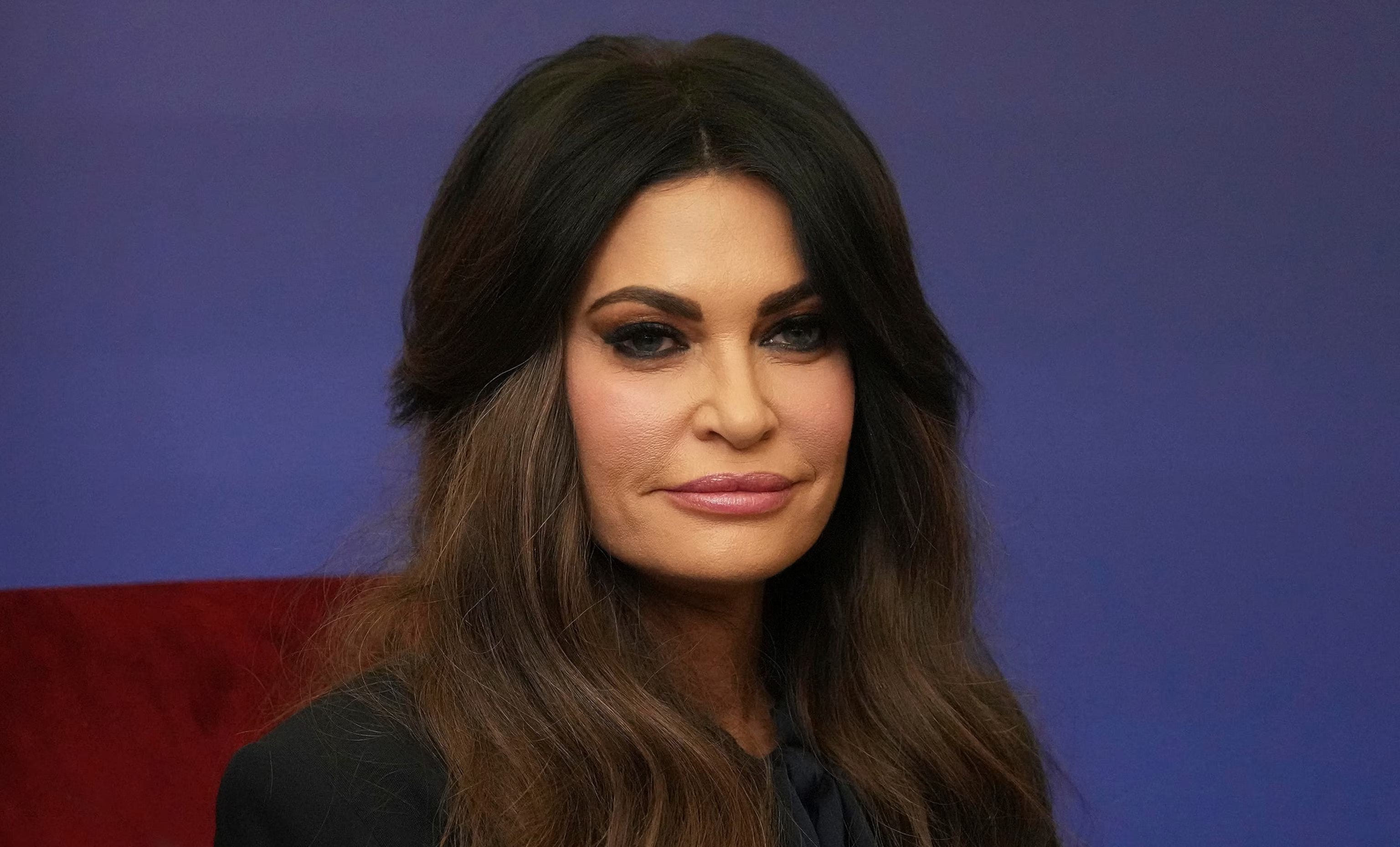
Here’s today’s trivia question (which may turn out to be not at trivial at all when all the facts emerge): Who solicited money from a presidential donor in return for access to the head of the IRS over the donor’s taxes, was a Fox News host, was engaged to the son of the U.S. president, was the former wife of someone who wants to be the next U.S. president, who raised money for and spoke at a rally that led to an attack on the U.S. Capitol, and now is a U.S. ambassador?
If you guessed Kimberly Guilfoyle, you’d be correct on all counts.
Rarely has a person been so enmeshed in the workings (or one might say, dysfunctions) of our current political-economic-media-influence system as Guilfoyle.
From 2001 to 2005, Guilfoyle was married to Gavin Newsom, now governor of California. In 2018, she began dating Donald Trump Jr., became engaged to him in 2020, and emerged as one of his father’s most outspoken defenders and a MAGA icon.
After Trump’s 2020 defeat, Guilfoyle sought to turn her status into a profitable business ventures including lines of hair care and fragrance products and a medspa. She also launched a political consulting firm and sought work in public relations.
In 2022, she launched what she termed an upscale vodka and champagne brand, American Dream, organizing a dinner for Mar-a-Lago guests that participants realized halfway through was an investment pitch.
According to a report in yesterday’s Wall Street Journal by Dana Mattioli, Drew Hinshaw, Rebecca Ballhaus, and Joe Parkinson, Trump grew frustrated with Guilfoyle for soliciting investments from Mar-a-Lago members for her companies, and complained that Guilfoyle was supposed to be raising money for him but instead was at his club raising money for herself.
The Journal reports that after Trump won the 2024 election, Eric Deters — a Trump donor and former co-owner of Snappy Tomato Pizza, a regional restaurant chain, who had mounted unsuccessful runs for Congress and governor — began soliciting Guilfoyle’s help on several matters, including gaining access to incoming Internal Revenue Service Commissioner Billy Long, to discuss an IRS probe into Deters’s tax deductions.
Guilfoyle offered to use her sway as Donald Jr.’s former fiancée. Deters promised to pay her as much as $1 million if she were successful.
Her engagement to Trump Jr. ended in December 2024. On December 10, 2024, Trump nominated Guilfoyle to be the U.S. ambassador to Greece.
After Billy Long was confirmed IRS commissioner, Guilfoyle sent him a congratulatory note, attaching a letter Deters had written outlining his tax dispute: “Don Jr. and I are very close with Eric Deters and his wife and I know he sent you a letter,” she wrote. “I am hoping I know how busy you are that you could give some time and attention to it.”
She assured Deters that “I wrote him a very nice message. Told him how important it was that you’re close to me and to don.”
The Journal reports that as her confirmation hearing approached, Guilfoyle complained to friends that she was broke.
She reached out to Deters with an urgent request: She needed $100,000 that she said she owed American Express — and needed Deters to give it to her in a way that wouldn’t leave a paper trail. “It won’t show up anywhere if you wire money to American Express,” she wrote on Signal, according to messages reviewed by the Journal.
“Honey please I need you to get this done for me today,” she texted Deters, adding a prayer hands emoji and a PDF with bill payment instructions from American Express. “You could just send it here,” she wrote on July 3, 2025, just days before her July 9 confirmation hearing.
Deters ultimately did not make the payment, But the set of transactions illuminates the casual pay-to-play world in which Trump, his family, appointees, and donors all operate.
The Senate confirmed Guilfoyle as ambassador to Greece on September 18, 2025.
Billy Long is now the U.S. ambassador to Iceland.
The top two Democrats on the House Foreign Affairs and Senate Foreign Relations committees have now called for an investigation into Guilfoyle.
Congressional Democrats are already looking into claims reported last month by the Journal that Guilfoyle told guests at a reception that the U.S. could undermine the Greek government if it chose to, that she promoted the business interests of one particular Greek construction and energy company, and allowed its lobbyist into private diplomatic meetings.
In Trump world, being close to power creates a special economy of getting and giving. The arenas include Fox News, Mar-a-Lago, the White House, Capitol Hill, and extend even to our foreign embassies. All relationships within these arenas — personal, romantic, political, diplomatic — are transactional.
Mit den »synthetischen Steuerzeichen« stehen Ihnen Möglichkeiten offen, die Sie bisher nicht für möglich gehalten haben: beispielsweise ein neuartiger Listschutz, Grafik und Breitschrift-Schmalschrift-Wechsel im Listing.
An actual post from the sitting president of the United States:
The White House considers anyone that uses the term, “Artificial
Intelligence,” as opposed to the highly accepted new and more
accurate term, “Super Intelligence,” THE ENEMY! President DONALD
J. TRUMP
Die 64'er-Redaktion freut sich über jeden Leserbeitrag. Es zeigt sich aber, daß viele Einsender nicht genau wissen, in welcher Form ihre Manuskripte einzusenden sind. Die folgenden Punkte sollen eine kleine Hilfestellung geben. Eine Programmeinsendung sollte aus fünf Teilen bestehen:...
This is the most corrupt era of American history since the Gilded Age. Trump is granting favors to today’s robber barons (Musk, Bezos, Zuckerberg, Ellison, et al.) in return for which they’re buying up media and silencing criticism of Trump. It’s a vicious cycle that threatens the core of our democracy. Please watch and share:

 Login