Login

These Michigan ‘Democrats’ Come With Republican Financing

Wait a minute, Doc. Are you telling me you built a Democratic PAC out of Republicans?
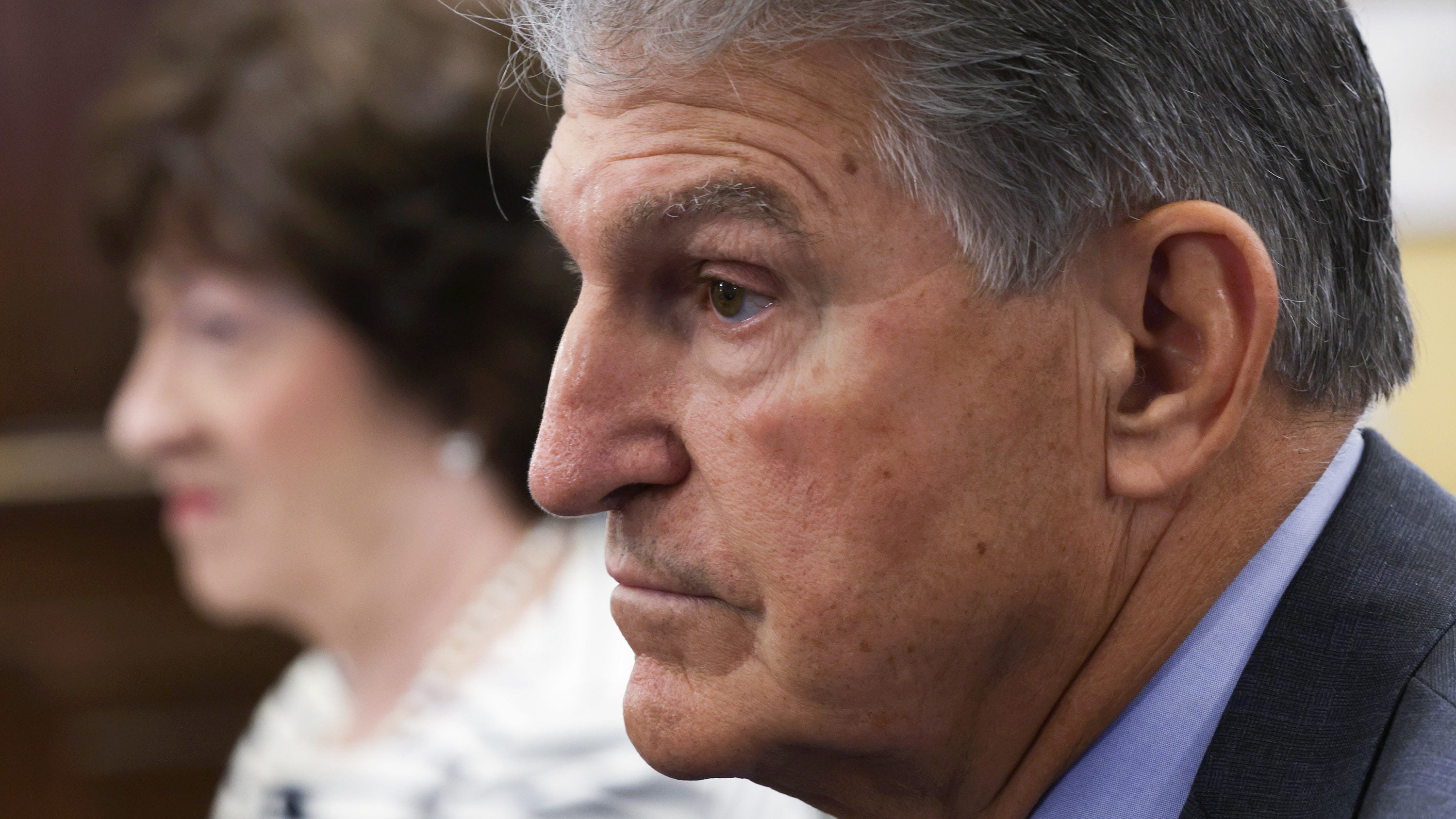
The “Democrats for Mike Rogers” PAC, which recently rebranded as “Together for Michigan” (TFM), has a straightforward pitch: It represents the interests of, well, Democrats who support Republican Senate candidate Mike Rogers.
The group launched to much fanfare after Abdul El-Sayed won the Democratic primary, playing up the idea that he would be undone in the general election because his candidacy would fracture the Democratic coalition. But the PAC’s latest Federal Election Commission filings indicate that, notwithstanding its original name or its primary political theme, the operation is predominantly Republican-backed.
The group’s two biggest donations came from GLCF, Inc. (Great Lakes Conservatives Fund) and American Unity PAC, which donated $50,000 and $25,000 to the PAC, respectively. GLCF is a super PAC dedicated to supporting conservatives, and it has already spent a lot of money to run pro-Rogers ads this cycle. American Unity PAC’s stated mission is “focused exclusively on protecting and promoting Republican candidates for U.S. Congress who support freedom for all Americans, including people of faith and the LGBT community.”
TFM’s roster of individual, non-organizational donors is rather short—and the filing it made with the FEC likely does not cover the donations and expenditures it made when it was operating previously as Democrats for Mike Rogers. But of the four people TFM did list as having donated, several have a history of Republican support.
Get Press Pass in your inbox every Tuesday and Thursday
Michael Sandler, a donor based in Michigan, contributed $1,000 to TFM. While Sandler has donated to several Democratic campaigns, he’s also contributed to Rep. Mariannette Miller-Meeks, one of the most vulnerable Republican House candidates this election cycle.
A $2,500 donation from William Orgel, a donor from Tennessee, fits a pattern of Republican contributions: Orgel gave thousands to Republican Sen. Bill Hagerty’s campaign, as well as Nikki Haley’s 2024 presidential campaign.
Fellow Tennessean Corey Trotz contributed a few hundred dollars to TFM in September; his mix of past support for the campaigns of members of both parties includes a donation to former Republican Rep. Steve Fincher in 2009.
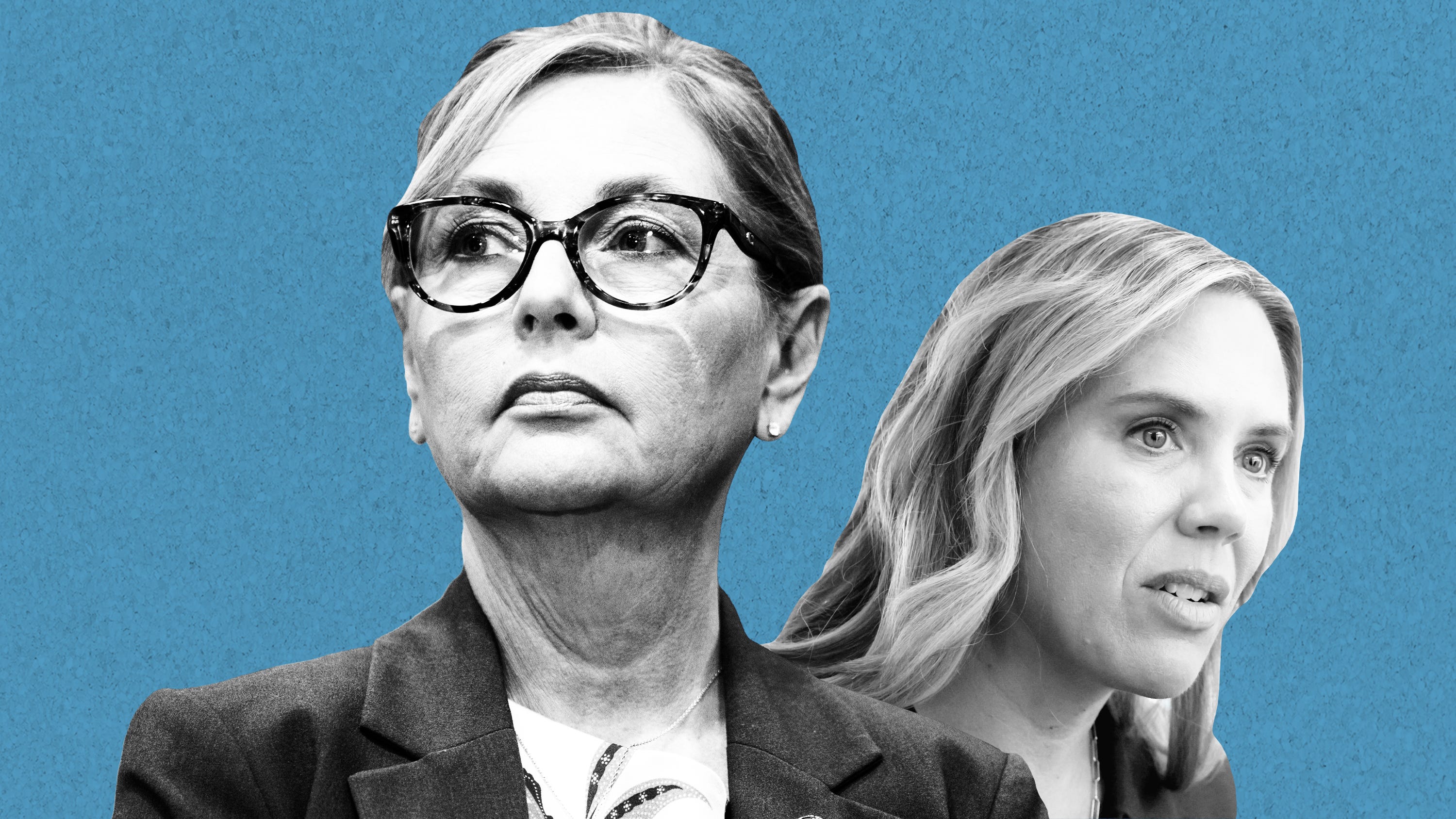
TFM’s treasurer is Karen Whitsett, a conservative-coded former Democrat in the state legislature who campaigned alongside Rogers at a Democrats for Mike Rogers event last month, before the PAC’s name was changed.
TFM has spent nearly $5 million in either support for Rogers or opposition to El-Sayed, according to their annual expenditure totals. The group has also paid $30,000 to former Pontiac, Michigan council member Melanie Rutherford for “Grassroots Consulting” services. Two weeks after receiving those payments, Rutherford appeared on Fox News, touting Rogers and attacking El-Sayed—a clip that was amplified by numerous MAGA accounts. During the segment, it was never disclosed that she had received those payments.
On X, the Democrats for Mike Rogers account regularly bashes Democratic Senate candidate Abdul El-Sayed, posting that he is “endorsed by the enemies of America,” that El-Sayed “would be Senator for U.S.-designated terrorist groups,” and that he “hates Black Michiganders.”
If those sound eerily familiar to the Republican attack lines against El-Sayed, well, now you have a good idea why.
I’ve seen this one. This is a classic.
Despite the Trump administration’s repeated efforts to undermine the security of American elections (to say nothing of what this president did last time an election didn’t go his way), the Democrats tasked with shoring up the legal protections in advance of next month’s midterms are confident that the elections will go smoothly. There are a few reasons for that.
In a call with reporters Monday, Rep. Joe Morelle (D-N.Y.), who is leading House Democrats’ election security agenda, said that after identifying a wide range of threats, Democrats have headed off a number of them, but many still remain active.
“I will say we started with about 150 threats,” Morelle said. “We’re down to about 70 because threats keep getting taken off the board. We talked about the postal service and [Trump’s] efforts to stop mail-in balloting—that’s gone away.”
Morelle’s confidence in the integrity of voting by mail isn’t something he shares with everyone in the party right now, but the courts have offered some reassurance in recent weeks.
“[Trump’s] efforts to try to invoke the SAVE Act and the SAVE America Act—those haven’t happened,” Morelle added. None of the several competing versions of the SAVE (America) Act passed.
Morelle also mentioned a post–Election Day strategy meant to make sure electoral processes remain fair and transparent through the first day of the new Congress on Sunday, January 3, 2027.
Morelle explained he has enlisted around 270 Democratic congressional staffers to function as election observers. They are being trained to take notes and provide evidence backups in the event of tampering.
“I will send them all across the country. They will be in their official capacities to be able to observe counts and recounts, to take firsthand accounts,” Morelle said of the House staffers. “We want contemporaneous notes should there be a challenge or a contest for anyone and we have to, in the Committee on House Administration, make a recommendation to the House about who to seat. But we’re on it.”
On the legal front, Democrats are preparing for the possibility of MAGA-related scheming to affect between forty and sixty of the more consequential congressional races. As Democrats have beefed up their legal rapid response and decided where to invest resources, they’ve had to put some thought into determining where local officials might engage in the kinds of election subversion that occurred in some precincts in 2020.
“Obviously, there are a lot of very good election officials, but there are also the Tina Peterses of the world,” said Marc Elias, a Democratic election attorney, referring to the Colorado elections clerk convicted of crimes related to her shenanigans trying to prove 2020 election conspiracy theories. (Her sentence was commuted by Colorado Gov. Jared Polis in May following a pressure campaign from Trump.) “There are also the bad election officials,” Elias said.
The attorney recalled the legal fights that followed the 2020 presidential election, when Trump used any ready-to-hand conspiracy theory or election-denying narrative he could find to make his case, and much of the Republican party felt bound to follow his lead. Elias expects a similar pattern to take shape if this year’s midterms result in overwhelmingly Democratic victories.
“I think that Donald Trump collects optionality of what he may find useful at any time, and then he sort of progresses through from the least preposterous to the most preposterous, and loses, right?” Elias said. “And that’s what we saw in 2020 when I was representing President Biden. We saw a series of cases in the days after the election—we won those—and then the cases got more and more preposterous, and then ultimately escalated to violence on January 6th.”
“So, I’m not saying there’s going to be violence,” Elias clarified. He added:
I do think, though, that we will see this escalation afterwards from the counties and what they can try to do there. Those will be defeated, but there’ll be a lot of activity, I suspect, and then they may try to create an uber-narrative around non-citizen voting that they use to argue that states shouldn’t certify results, that people shouldn’t get certificates of election at the state level . . . and then, ultimately, whether they take those to the floor and whether they take those to election contests under the Federal Contested Election Act—we’ll see.
Current polling strongly suggests the 2026 midterm elections could go very well indeed for Democrats. Trump and his administration have been seeking to preemptively undermine the results to maintain their power in Congress, but the House Democrats believe they are well positioned to prevent any further tampering or scheming that could compromise the results. In a particularly consequential-feeling election cycle, they hope they aren’t missing anything.
This is heavy… denim
While other American industries have recently contracted largely as a result of Trump’s tariffs or his continuing elective war with Iran, there are signs of hope within one industry in particular—one that once fostered and then neglected one of our nation’s greatest inventions.
That invention, of course, is American selvedge denim. We haven’t produced it at scale domestically for years. But a new factory is now up and running, and fans of high-quality jeans across the nation have greeted this news as a beacon of light in a dark time.
Jeremy Freed writes:
In early November last year, Mount Vernon Mills, a 180-year old fabric mill and America’s largest denim producer, posted an Instagram video of a semi truck backed into a loading bay, its cargo shrouded in a white plastic sheet. The video, set to the opening chords of AC/DC’s “Hell’s Bells,” didn’t reveal much, but for those attuned to the fate of American-made selvedge over the last few years, it marked a major milestone. Under that white sheet was one of 40-some Draper X3 looms salvaged from the legendary Cone White Oak denim mill in Greensboro, North Carolina. To those who worship at the altar of 20th century workwear, it represented nothing less than the salvation of American denim. A little less than a year later, that machine and 20 others like it are up and running, fabric samples are being shipped to clothing brands across the country, and a new chapter in a 120-year story is beginning.
To be clear, the reopening of a single stateside denim factory is not going to make the slightest difference in the larger economic outlook of the United States, which remains dim. But the Mount Vernon Mills story shows that at least some Americans still crave strong craftsmanship enough to be willing to pay extra to support production on U.S. soil. That’s objectively a good thing.