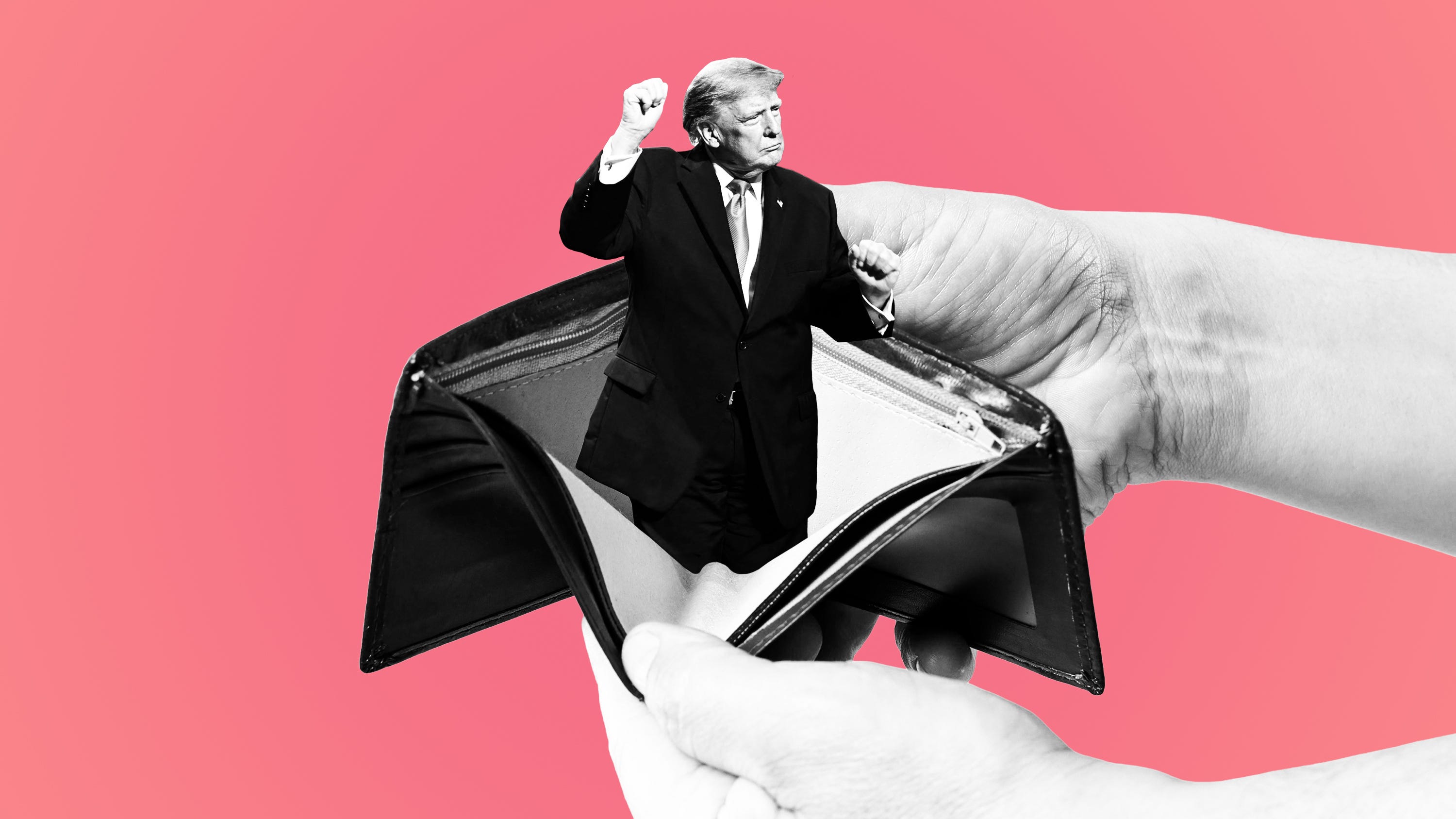
Today’s world would be a fascinating object of study if one weren’t also living in it. The price of energy isn’t the cause of Donald Trump’s deep unpopularity. But for months it’s been driving it to new depths. The price of oil plateaued in early October which seemed to blunt some of Democrats’ electoral momentum. On Friday though it jumped up again, with the Brent Crude price hitting $110 a barrel, the highest since May. That was the worst of all possible worlds for Trump and that clearly played a key role in his decision to waive sanctions against Russia. Reuters reports that the prospect of greater supply from Russia knocked oil off those highs in early Monday trading in Asia. That was clearly the main goal of that waiver. But just in the last hour reports have come out that Ukraine launched a massive volley of 1,000 drones targeting Russian energy infrastructure.
Ein mögliches rot-grün-rotes Bündnis in Berlin schlägt bundespolitisch hohe Wellen. Während z.B. Grünen-Chef Felix Banaszak vor radikalen Kräften warnt und die Tür zur CDU taktisch offen halten will, ist Friedrich Merz wiederum hart und unerbittlich im Ton gegenüber Grünen und der SPD, wenn es um die Gespräche mit radikalen linken Kräften geht. Rasmus Buchsteiner ordnet ein, wie nun auch in der SPD der Widerstand wächst und Parteichef Lars Klingbeil sich derweil zurückhält.
Die Junge Union fordert derweil drastische Konsequenzen: Eine künftige Berliner Landesregierung soll z.B. von Geheimdienstinformationen des Bundes abgeschnitten werden. Im 200-Sekunden-Interview erklärt der CDU-Abgeordnete Johannes Volkmann, warum er Teile der Berliner Linken als Sicherheitsrisiko sieht und eine politische Ächtung der Partei verlangt.
Auf internationaler Bühne sorgt die Kehrtwende der USA für Entsetzen, nachdem Donald Trump die Sanktionen gegen Russlands Schattenflotte auf Eis gelegt hat. Hans von der Burchard analysiert, wie dieser Schritt Europa sicherheitspolitisch erneut herausfordert und welche Folgen der Wegfall amerikanischer Unterstützung für die Ukraine im nahenden Winter haben könnte.
Das Berlin Playbook als Podcast gibt es jeden Morgen ab 5 Uhr. Rixa Fürsen, Maximilian Stascheit und das POLITICO-Team liefern Politik zum Hören – kompakt, international, hintergründig.
Für alle Hauptstadt-Profis: Der Berlin Playbook-Newsletter bietet jeden Morgen die wichtigsten Themen und Einordnungen. Jetzt kostenlos abonnieren.
POLITICO Deutschland – ein Angebot der Axel Springer Deutschland GmbH Axel-Springer-Straße 65, 10888 Berlin Tel: +49 (30) 2591 0 information@axelspringer.de Sitz: Amtsgericht Berlin-Charlottenburg, HRB 196159 B USt-IdNr: DE 214 852 390 Geschäftsführer: Christoph Eck-Schmidt, Carolin Hulshoff Pol, Mathias Sanchez Luna
POLITISCHE WERBUNG
**(Anzeige) Eine Nachricht der PKV:Wir sind die Besser-für-alle-Versicherung. Warum? Weil wir als private Krankenversicherung die medizinische Versorgung stärken, nachfolgende Generationen entlasten und den medizinischen Fortschritt beschleunigen. Das kommt allen Menschen in Deutschland zugute, auch den gesetzlich Versicherten. Mehr auf PKV.de**
Sponsor: Verband der Privaten Krankenversicherung
Diese Werbung steht im Zusammenhang mit der Debatte über Belastungen der privat Pflegeversicherten zugunsten der sozialen Pflegepflichtversicherung (SPV).
Deutschland muss Wachstum wieder stärker ins Zentrum seiner Wirtschaftspolitik rücken. Doch bevor wir darüber sprechen, wo wir 2030 sein wollen, sollten wir genau hinschauen, wo unsere Unternehmen heute stehen.
Seit mehr als zwei Jahren beobachten wir mit dem DATEV Mittelstandsindex eine wirtschaftliche Entwicklung, die weniger einem plötzlichen Einbruch als einer schleichenden Erschöpfung gleicht. Die Umsätze kommen nicht nachhaltig in Schwung, während Löhne und andere Kosten weiter steigen. Die Beschäftigung, lange ein Stabilitätsanker des Mittelstands, gerät zunehmend unter Druck. Der Mittelstand hält sich, aber er ist nicht im Aufschwung.
Wenn Erlöse über einen langen Zeitraum kaum wachsen und gleichzeitig die Kosten steigen, schrumpfen die Spielräume für das, was unser Land dringend braucht: Investitionen und wirtschaftliche Erneuerung. Deshalb müssen wir die Bedingungen verbessern, unter denen wirtschaftliche Dynamik entstehen kann.
Investitionen schaffen Zukunft
Viele Unternehmen konzentrieren unter den aktuellen Rahmenbedingungen ihre verfügbaren Mittel zunehmend darauf, den Bestand zu sichern. Investiert wird in Ersatz und Erhalt, während Erweiterungen, neue Technologien oder zusätzliche Kapazitäten schwieriger zu finanzieren sind. Das hat langfristige Konsequenzen. Digitalisierung, künstliche Intelligenz, klimaneutrale Produktion oder neue Geschäftsmodelle entstehen nicht allein durch politische Zielsetzungen. Sie müssen in Unternehmen konkret umgesetzt und finanziert werden. Dafür brauchen Unternehmen wirtschaftlichen Spielraum.
Wenn Erlöse über einen langen Zeitraum kaum wachsen und gleichzeitig die Kosten steigen, schrumpfen die Spielräume für das, was unser Land dringend braucht: Investitionen und wirtschaftliche Erneuerung.
Gerade aus kleinen, dynamischen Unternehmen können disruptive Innovationen und damit die großen Unternehmen von morgen entstehen. Doch Unternehmen können Risiken nur eingehen, wenn sie über ausreichende Reserven verfügen und darauf vertrauen können, dass sich langfristige Investitionen am Standort Deutschland lohnen. Statt unternehmerische Dynamik vor allem mit neuen Förderprogrammen erzeugen zu wollen, sollten wir Unternehmen wieder mehr Raum, bessere Rahmenbedingungen und mehr Planungssicherheit für eigene Entscheidungen geben.
Deutschland braucht einen schlankeren Staat
Zu guten Standortbedingungen gehört auch ein leistungsfähiger Staat. Genehmigungsverfahren, Berichtspflichten, Steuerverfahren und Verwaltungsprozesse kosten Zeit und binden Personal. Das trifft auch große Konzerne, kleine und mittlere Unternehmen aber besonders stark, weil sie regulatorische Anforderungen nicht auf große Fachabteilungen verteilen können.
Gleichzeitig ist der Staat selbst immer größer geworden. 2025 lag die Staatsquote bei über 50 Prozent. Das ist keine Kennzahl, mit der wir uns abfinden sollten. Deutschland braucht einen schlankeren Staat – nicht als Selbstzweck, sondern weil ein Staat, der immer mehr Ressourcen bindet, diese Mittel und Arbeitskräfte dem privaten Sektor entzieht. Wir sollten eine unbequeme Wahrheit aussprechen: Deutschland hat kein Einnahmenproblem. Die entscheidende Frage ist, was wir mit den vorhandenen Mitteln machen und welche Aufgaben der Staat tatsächlich übernehmen muss. Immer neue Einnahmen zu mobilisieren, während Unternehmen unter hohen Kosten und schwachen Umsätzen leiden, ist keine Wachstumsstrategie.
Das gilt auch für zusätzliche steuerliche Belastungen. Ein höherer Spitzensteuersatz trifft nicht nur gutverdienende Privatpersonen. Er trifft unmittelbar viele mittelständische Unternehmen. Für Personengesellschaften und Einzelunternehmen ist die Einkommensteuer die Unternehmenssteuer. Wer diesen Unternehmen zusätzliche Mittel entzieht, darf sich nicht wundern, wenn anschließend das Geld für Investitionen fehlt.
Europa darf deshalb nicht nur ein großer regulierter Markt sein. Es muss auch ein großer Markt für Wachstum werden.
Auch der Staat selbst steht vor dem demografischen Wandel. Digitalisierung und künstliche Intelligenz bieten die Chance, staatliche Aufgaben künftig effizienter zu erfüllen. Ein schlankerer Staat darf dabei kein schwächerer Staat sein. Er muss sich auf seine Aufgaben konzentrieren und diese schneller und verlässlicher erfüllen.
Europa muss Wachstum ermöglichen
Deutschland kann seine wirtschaftliche Stärke dauerhaft nur in einem wirtschaftlich starken Europa sichern. Der europäische Binnenmarkt ist einer unserer größten Vorteile. Im Alltag erleben Unternehmen Europa aber noch zu häufig als fragmentiert. Unterschiedliche Verfahren, zusätzliche Dokumentationspflichten und nationale Sonderwege erschweren grenzüberschreitendes Wachstum. Besonders sichtbar wird das bei jungen, erfolgreichen Unternehmen, die den nächsten Wachstumsschritt gehen wollen. Für sie muss Europa zum gemeinsamen Markt mit besseren Bedingungen werden, um zu wachsen und Kapital für die nächste Entwicklungsstufe mobilisieren zu können.
Europa darf deshalb nicht nur ein großer regulierter Markt sein. Es muss auch ein großer Markt für Wachstum werden. Es muss seine Größe auch als wirtschaftlichen Vorteil nutzen. Dafür müssen nationale Sonderwege abgebaut und Bedingungen geschaffen werden, unter denen aus erfolgreichen Gründungen globale Unternehmen werden können. Sonst riskieren wir, dass Ideen hier entstehen, die daraus resultierende Wertschöpfung aber anderswo wächst.
Widerstandskraft allein reicht nicht
Zwei Jahre DATEV Mittelstandsindex zeigen, wie lange Unternehmen Belastungen auffangen können. Aber eine Volkswirtschaft kann nicht davon leben, dass ihre Unternehmen immer nur widerstandsfähiger werden. Sie braucht neben starken Betrieben auch neue Unternehmen, aus denen die Mittelständler und Weltmarktführer von morgen wachsen können.
Der Mittelstand hat Arbeitsplätze lange gehalten, obwohl die Umsatzentwicklung schwach blieb und die Löhne weiter stiegen. Erst mit Verzögerung ist auch die Beschäftigung unter Druck geraten. Auch viele Unternehmerinnen und Unternehmer absorbieren Belastungen zunächst selbst.
Denn wirtschaftliche Dynamik entsteht in Unternehmen. Geben wir ihnen dafür wieder den nötigen Spielraum.
Gleichzeitig ziehen sich Betriebe aus dem Markt zurück, weil Nachfolge fehlt, Rentabilität sinkt oder die Perspektive nicht mehr ausreicht. Umso wichtiger ist ein Umfeld, in dem Menschen bereit sind, Verantwortung und unternehmerisches Risiko zu übernehmen.
Deutschland 2030 braucht einen Kurswechsel
Bis 2030 werden Digitalisierung, künstliche Intelligenz, demografischer Wandel und geopolitische Veränderungen unsere Wirtschaft tiefgreifend verändern. Die Antwort darauf kann nicht sein, Unternehmen immer neue Belastungen aufzubürden.
Deutschland braucht einen Kurswechsel: weniger Bürokratie und steuerliche Belastung, einen schlankeren und leistungsfähigeren Staat und ein Europa, das seine Stärke als gemeinsamer Markt ausspielt. Der Mittelstand hat in den vergangenen Jahren gezeigt, wie viel Belastung er tragen kann. Das sollte die Politik nicht als Einladung verstehen, ihm noch mehr zuzumuten. Denn wirtschaftliche Dynamik entsteht in Unternehmen. Geben wir ihnen dafür wieder den nötigen Spielraum.
Hinweis
POLITISCHE WERBUNG
Der Sponsor ist DATEV eG.
Diese Werbung steht im Zusammenhang mit der wirtschaftspolitischen Debatte über Bürokratieabbau, steuerliche Belastungen, die Rolle des Staates und die Rahmenbedingungen für Unternehmen in Deutschland und Europa.
BRUSSELS — NATO is beginning talks this month on the forces and weapons allies would need to defend against a Russian attack — and how they would pay for them.
The talks will set capability targets for 2029, requiring each of NATO’s 32 member countries to provide specific forces and equipment.
The deadline raises the stakes: European officials have warned that Russia could be ready to attack a NATO country by then.
At the same time, the Trump administration is weighing a sharp reduction in U.S. forces in Europe, which could leave the alliance short of troops and critical capabilities with fewer like refueling aircraft, long-range missiles and intelligence, surveillance and reconnaissance assets.
The negotiations will test how much each country is willing to spend, how much Europe can do without the U.S. and whether NATO’s military plans should make greater use of technologies such as robotics and artificial intelligence.
“It’s going to be tough,” said one senior NATO diplomat, who, like others, was granted anonymity to speak freely on the sensitive issue. “Burden sharing, the U.S., how to combine the level of ambition with political priorities … it’s huge.”
NATO allies will begin discussing the broad mandate for the new targets — known as Political Guidance — in the coming days. It’s the first step in a five-part effort called the NATO Defence Planning Process.
“The ambition … is for this to be a transformation cycle and not one that’s just off the shelf,” said French Adm. Pierre Vandier, NATO’s Supreme Allied Commander Transformation and the alliance’s chief for future warfare.
POLITICO spoke to 15 current and former NATO officials and diplomats to get a sense of the five key debates likely to define the negotiations.
1. Deciding on ambition
The most significant issue will be deciding exactly how many troops and military capabilities allies want to provide — known as the level of ambition.
Historically, NATO allies have agreed that beyond the forces needed for major operations, they should have 18 spare brigades — each a unit of about 5,000 soldiers — to carry out smaller crisis-management missions outside alliance territory, like Afghanistan or Kosovo.
But U.S. pressure to hand off more security responsibility to European allies — dubbed NATO 3.0 — could put pressure on allies to reduce or even eliminate requirements for any smaller operations.
Discussions will also cover whether to speed up the process itself in future in response to the furious pace of battlefield innovation, from AI to ground robots.
Allies are also likely to tackle how to provide conventional military support — like ground troops or aircraft — to nuclear-armed countries like the U.K. and U.S.
“Conventional support … capabilities are absolutely part of the NDPP process,” said Nassima Barrows, NATO’s nuclear policy director, “so that is one of the big messages that we underline as a part of the next [negotiations].”
The review lands in December, midway through the NATO talks, prompting concerns it may delay negotiations. There are worries that the U.S. could pull out assets Europe needs, like heavy transport aircraft.
Washington’s drive to curb its military presence in Europe will set off a scramble among allies to replace its capabilities. That will open discussions on how to share the burden fairly, likely to be very difficult as national budgets are increasingly squeezed.
“Not so long ago, the whole NATO process was … you do the math on what NATO needs, and then when you realize you don’t have everything, the U.S. fills in the gaps,” said Camille Grand, head of the ASD defense lobby and a former senior NATO official. “This is no longer the case.”
One way to tackle that is to shift away from specific weapons requirements to assigning objectives to countries, such as having their forces eliminate Russian command outposts. That could create more flexibility for European allies to who can’t access U.S. weapons like Tomahawk cruise missiles.
“We don’t have to have thousands of Tomahawks … but we can have thousands cheaper, low-cost alternatives,” said Fabrice Pothier, a former NATO policy planning director who is now CEO of the Rasmussen Global consultancy.
3. Regional divides
The focus on Russia is likely to cause friction with allies worried about other threats.
On paper, NATO espouses a “360-degree” approach to security. In practice, the alliance’s focus has shifted eastward since Russia’s full-scale invasion of Ukraine in 2022, and northward in the past year as it set up an Arctic mission (largely in response to pressure from Donald Trump over Greenland).
Some allies would like to see more attention given to the alliance’s southern and southeastern flanks. Issues include Russian mercenary presence in Libya, the potential for weaponized migration and increased submarine activity, alongside drone attacks on vessels in the Black Sea.
“There is too much north,” said a second NATO diplomat. “We should reset.”
4. More drones or more tanks
The drone warfare dominating the frontlines in Ukraine is likely to force a debate on the balance between adding unmanned capabilities and continuing to build up conventional military equipment like tanks and artillery.
Most allies are making plans to increase their use of unmanned systems.
The U.K. this year announced a “hybrid fleet” that leans on autonomous vessels like Type 93 uncrewed underwater vehicles. France has earmarked roughly €8.4 billion for drones and loitering munitions while Germany is establishing its first dedicated drone regiment next year.
Europe’s difficulties in recruiting soldiers also feed into the debate, said Grand. “One thing that is driving everybody in the direction of more unmanned [systems] is we have aging societies — we have a manpower issue.”
Countries also have to figure out how to match Russia’s technological developments without breaking national defense budgets.
Vandier said Russia produces 9 million drones a year, a figure that requires a “pretty radical effort” from the alliance. He suggested one fix could be a subscription-style model for hardware updates to keep weapons systems from becoming obsolete.
5. Learning from Ukraine
Most NATO allies agree that Ukraine contributes to their security thanks to its large and battle-hardened military and its rapid technological developments in air, sea and ground drones, air defenses, missiles, and its advanced Delta battlefield management system.
That has some countries calling for closer military and industrial cooperation, even as others urge caution because the war in Ukraine is different from NATO’s doctrine, which calls for rapid-maneuver warfare, air superiority and standoff precision strikes.
“There are tremendous lessons from the conflict that we need to capture,” NATO’s top commander, U.S. Gen. Alexus Grynkewich, told the European Parliament earlier this month. But “we do not want to fight that kind of war.”
The cyberattack last week that hit hundreds of French supermarket refrigerators had Europeans wondering if the nonstop warnings about AI risks had finally landed in the real world.
They hadn’t — at least, not yet.
Experts say the attack, which forced hundreds of retailers to throw away defrosted food and spoiled milk, was mostly a reminder of the importance of old-school cybersecurity in safeguarding essential goods and services.
The attack is a “typical example” of how “low-key cyber-enabled sabotage can affect very crucial supply for society,” said Ferdinand Gehringer, hybrid threats lead at FTI Consulting.
It’s arguably the most consequential hack in the European Union this year, with tangible, disruptive real-world repercussions. France’s Prime Minister Sébastien Lecornu personally managed the fallout, which prompted coordination and information-sharing at the EU level.
The perpetrators, whose identity and motives are currently unknown, hacked into digital systems to remotely raise the temperature of refrigerators in supermarkets including Intermarché and Carrefour.
One cybersecurity expert working with Lecornu’s office said the French government held meetings after the attack to try to map all the potentially affected sectors, beyond supermarkets. “We’re in the middle of the flu vaccination campaign,” he said, referring to vaccine storage, which also relies on temperature control solutions, though no such attacks have been registered.
To add to the fear and confusion, supermarkets in the Netherlands and Belgium experienced unrelated cyber incidents that same week. Though there was limited impact in those cases, they were a good example of “how big our reliance is in the food supply chain on IT and network systems,” Dutch food security minister Silvio Erkens told POLITICO.
The attacks come after citizens and policymakers have spent months being bombarded with warnings about scenarios in which unpredictable advanced artificial intelligence models escape human control.
While most good and bad actors on the internet are increasingly using AI models to increase speed and capacity, cyber experts say the hackers in question in the French case most likely used traditional methods to take advantage of devices needlessly exposed to the internet.
Connecting devices to the internet in this way is “an old-fashioned bad practice,” said Amir Preminger, chief technology officer at Claroty, a cybersecurity company that identified a software flaw in a product made by Danfoss, one of the refrigeration companies targeted by the French hacks. Danfoss fixed that flaw in 2025.
Food systems
The attacks come at a time when Europe’s food security is already under considerable pressure due to geopolitical insecurity and climate change. The continuing disruptions in the Strait of Hormuz are pushing up fuel and fertilizer prices at a time where farmers struggle with the fallout of extreme drought that caused lower yields in many parts of Europe. These problems are compounded by the blockade of the Black Sea which is fueling the rise of global food prices.
“It is very serious that cyber criminals attack our food systems,” said Else Groen, director general of trade body Independent Retail Europe. She nonetheless stressed that food supply chains are resilient, which reduces the chances that consumer food supply would be endangered — even if such attacks are already a “major blow” for retailers operating on razor-thin margins.
The incidents bring to the fore a long-running problem with so-called operational technology, meaning industrial devices with physical outputs, like refrigeration systems. Critical sectors are packed with these kinds of devices, many of which are old, poorly protected, unnecessarily connected to the Internet, or some combination of the three. They’re also obscure and sometimes forgotten, despite the ramifications if they’re tampered with.
And last week’s problems are far from solved. French and German cyber authorities warned that attacks were probably still ongoing, and the Greek cyber agency and an industry tracker said after the attack that there were hundreds of devices still connected to the internet.
Preminger too said there are still devices exposed, though he added that the number is declining, and not all are necessarily vulnerable to attack. Another research group found that the number of exposed Danfoss devices had significantly decreased.
Finding a fix
What’s changed with the widespread diffusion of advanced AI models is that cyber attacks are now faster and easier to replicate. Claroty reproduced the original flaws in Danfoss products in 28 minutes at a cost of $6, it said.
In broad terms, AI makes it easier to carry out many types of cyberattacks and enables attackers to pounce on software flaws more quickly. Financially motivated cybercriminals — who have already spent years extorting businesses and disrupting essential services like hospitals — can use AI to simultaneously launch attacks on multiple targets.
Though the motive for the attacks on French supermarkets remains unknown, it is notable that there was no reported attempt at extortion. The strike did come as Russia ramps up its campaign of hybrid warfare against Europe, and senior EU and European leaders have consistently warned that Moscow could use cyberattacks to disrupt real-world services. Beyond food supplies, AI-enhanced targeting could be aimed at banking, hospitals and the functioning of the internet itself.
Still, these fears of bad human actors using AI should be distinguished from the science-fiction scenarios pushed by so-called AI doomers, in which bots themselves are motivated and able on their own to wipe out humanity.
Digital security experts, including the EU’s own in-house cyber team, are also turning to AI for defense. But it’s not a silver bullet, said Rémi Enjolras, a chief technology officer at Splunk, part of Cisco. Critical industries need to stop “seeing AI as a magical tool that will solve everything and go back to the fundamentals,” he said.
The EU has passed laws intended to force critical industries and product manufacturers to get those fundamentals right. But France, for example, is lagging in implementing such national regulations, and there are few other incentives to get companies to do that difficult and costly work.
Still, the images of empty supermarket shelves could provide a new incentive. “It should serve as a kind of a wake-up call,” Enjolras said.
Last week’s summit gave Brussels a taste of how hard it’s going to be to get a deal on the budget — or anything else.
By SEBASTIAN STARCEVIC in Brussels
Illustration by Natália Delgado/POLITICO
The EU is already struggling with how to get its largest-ever budget agreed, plug a massive financial hole for Ukraine and navigate geopolitical pressure from the U.S. and China. Now, it also faces being paralyzed by domestic political strife in the countries that collectively make up around 60% of its GDP and population.
“Everybody used to understand that we need to finish … a political agreement by the end of the year,” Cypriot President Nikos Christodoulides told POLITICO in an interview on the sidelines of last week’s European Council, referring to the bloc’s fraught budget negotiations.
But the Spanish election means that will no longer be possible, he said. And next year, “it’s going to be France, Italy” and others going to the polls, Christodoulides added, predicting even more complications for the bloc.
The EU is facing an unprecedented dilemma: Its four biggest economies are all heading into elections or political upheaval, potentially hamstringing the bloc’s ability to get anything done.
Spain will go to the polls next month, with the center right and far right on track to take power. France is changing presidents in April, with polls favoring far-right figurehead Marine Le Pen. The Alternative for Germany is ascendant, putting Friedrich Merz’s chancellorship in doubt. And Italian Prime Minister Giorgia Meloni’s unusually long-serving government is also heading to an election in 2027.
The consequences are already becoming clear.
António Costa, Volodymyr Zelenskyy and Ursula von der Leyen arrive to attend an EU summit in Brussels on Oct. 16, 2026. | Nicolas Tucat/AFP via Getty Images
The bloc’s latest summit offered an early taste of what lies ahead: After two days of talks, leaders failed to make headway on the €2 trillion budget and instead became embroiled in an unexpectedly bitter row on energy policy. The summit’s conclusions notably omitted any mention of finding consensus on the budget before the end of the year, with member countries resisting a push by European Council President Antonio Costa for an end-2026 deadline, although there are summits scheduled for November and December.
If those meetings fail to produce a deal, then the already fractious talks will spill over into 2027, when electoral battles are likely to loom even larger over negotiations — and governments may be increasingly reluctant to make the compromises needed to reach agreement.
Triple assault
The paralysis Brussels fears as Europe’s election cycle gathers pace is already beginning to take hold, with last week’s summit exposing how difficult it is becoming to forge the compromises the bloc needs.
Rather than strike any big deals (a Franco-German accord on cars was the one exception), the leaders used the gathering to dig in on entrenched positions and seek tactical advantages over rival camps.
The pessimism was palpable, according to six diplomats and officials POLITICO spoke to, with several warning the EU faces sharp headwinds in the coming months. All were granted anonymity to speak freely.
“Next year, it will be worse,” said one senior EU diplomat.
“It’s true, because of this calendar for the elections … in the next year it’ll be much more difficult in the member states and inside the [European] Parliament,” said Carla Tavares, a senior MEP with the Socialists and Democrats and co-lead on budget negotiations.
The bloc’s internal malaise could hardly come at a worse time.
From U.S. President Donald Trump’s undermining of the transatlantic alliance to an ever-widening trade imbalance with China, the EU is facing mounting geopolitical and economic pressures on multiple fronts.
Costa, Bart De Wever, Emmanuel Macron and Rob Jetten speak during a European Council summit in Brussels on Oct. 15, 2026. | Nicolas Maeterlinck/AFP via Getty Images
“They seek our division. They want our division,” Belgian Prime Minister Bart De Wever told reporters at a late-night briefing during the summit, not mentioning names but referring to countries to the east and west of Brussels. “And they have, of course, points where they can hurt us.”
Former Lithuanian Foreign Minister Gabrielius Landsbergis, now a visiting fellow at Stanford University, was less circumspect. “Now we are under assault from three sides: from the U.S., Russia and China,” he said.
Washington is questioning the old alliances that have underpinned European security for generations. Moscow is waging a shadow war across Europe, from cyberattacks and sabotage to an attempted drone attack at Leipzig airport that Berlin blamed on the Kremlin. Beijing is tightening its grip on critical supply chains and flooding European markets with cheap exports.
Then there’s the Ukraine problem. The country is facing a budget shortfall of $30 billion to $35 billion next year, according to the IMF, with Russia battering its energy infrastructure ahead of a brutal winter. That’s despite the €90 billion the EU already agreed to stump up last year.
Landsbergis said the coming months are looking “extremely dire” for Kyiv. “Everything falls on European shoulders,” he said.
Ukrainian President Volodymyr Zelenskyy sounded a grim note at last week’s summit, telling reporters that if Ukraine falls, 20 million Ukrainians will flood into the EU. “Russia is killing us,” he said. “They don’t want to stop.”
One solution to Ukraine’s funding woes could be the €200 billion in Russian assets that have been immobilized indefinitely in Brussels-based financial depository Euroclear. But there is no sign of the EU finding common ground on that front either, with Belgium, which vetoed previous efforts to use the assets to help Ukraine, still refusing to budge.
“Nothing has changed,” Swedish Prime Minister Ulf Kristersson said as he exited last week’s summit early.
Other potential solutions, such as issuing more joint debt, will require messy compromises — just as Brussels finds itself with even less room to maneuver.
Who you gonna call?
The EU’s problems go beyond its budget or individual policy files. With the political futures of several of Europe’s most powerful leaders in question, Brussels risks losing the stable alliances and long-serving national heavyweights needed to broker compromises.
“We now have Europe with no obvious leader,” another EU diplomat argued. Commission President Ursula “von der Leyen is powerful. But we do not have a Merkel or Mitterrand.”
French President Emmanuel Macron cannot constitutionally serve a third consecutive term and will have to find new digs in Paris after leaving the Élysée Palace in April. During a closed-door discussion at last week’s summit, Macron admitted he wouldn’t have a political mandate to sign a deal on the budget in his final months in power, four European diplomats said.
Spanish Prime Minister Pedro Sanchez is on track for defeat after eight years in power, according to polls. Spaniards will vote on Nov. 29, meaning Sanchez will be in full election mode during EU leaders’ meetings on Nov. 13 and Nov. 26.
Costa, who has stressed the need to reach an agreement on the EU’s budget by the end of 2026 to make sure it’s ready to go by 2028, waved off fears that the bloc’s next spate of elections could get in the way.
“We are living in 27 democracies,” he said on Friday. “More or less every month we have one election. If it’s about elections, we never could approve a new budget.”
Regardless of the result, Madrid is not expected to form a government until January, which could derail the budget talks, according to two EU diplomats.
Photo-Illustration by POLITICO/source via Getty Images
It’s anyone’s guess how long German Chancellor Merz has left in office. While the next federal election is not scheduled until 2029, the AfD’s growing strength and his own nosediving popularity complicate how much Merz might be willing to compromise.
Italy, too, is set for elections in October 2027. Another EU diplomat said they did not expect Meloni to wait that long, arguing she could call a vote much earlier.
There could be a sweet spot in January to get the budget over the line, a senior EU official suggested. It may be the last chance to strike a deal before Europe’s political upheaval makes compromise even harder to come by.
So far, the EU’s leaders have simply been “too slow,” said Siegfried Mureșan, the European People’s Party’s co-lead on the budget. “Time is running out.”
BRUSSELS — Europe’s three mainstream political groups must strike a deal to keep out the far right ahead of an election year that could reshape the EU, the head of the liberal Renew Europe group in the European Parliament told POLITICO.
“I’m truly convinced that nobody can afford to let the coalition erode from a very practical point of view because this is the only way to deliver an ambitious and a stronger Europe for our citizens,” said Valérie Hayer, a close ally of French President Emmanuel Macron, adding that there’s “no other way.”
Since the 2024 EU election shifted the Parliament to the right, the conservative European People’s Party — the largest in the assembly — has passed legislation with right-wing and far-right groups, angering its traditional liberal and social democratic allies. Hayer said Renew’s priority ahead of the next EU election, in 2029, is to rebuild the centrist alliance.
Speaking by phone after a gathering of EU liberals ahead of a leaders’ summit on Thursday, Hayer said “we need a strong European platform from the center to deliver for Europeans” on issues such as competitiveness, defense, climate change and decarbonization, especially with major EU countries facing national elections, including Spain in November and Italy, France and Poland in 2027. “We should be prepared for this new cycle of elections.”
To lock in the centrist majority, Hayer wants the three groups to strike a detailed coalition agreement. The EPP has largely voted with its centrist allies during the first half of the current term, but has occasionally turned to the right to pass legislation when disagreements with its traditional partners proved too difficult to bridge.
Hayer said Renew would not back any candidate for Parliament president without first agreeing on a detailed coalition deal. “A majority needs a program before it needs a president, so we need a coalition agreement before any leadership agreement, and no coalition agreement would mean no leadership deal.”
That could force the EPP to the negotiating table, as the conservatives want to get Roberta Metsola reelected for a third term in January. However, the EPP has in the past been reluctant to sign a detailed coalition agreement.
Hayer and the leaders of the EPP (Manfred Weber) and Socialists and Democrats (Iratxe García) already signed a two-page agreement to work with each other after the 2024 EU election, but the EPP has nonetheless voted on laws with far-right groups.
To prevent this, Hayer wants not only leaders but all “key members” of the groups, including vice-chairs, whips and coordinators, to negotiate and endorse the agreement.
“I want us to be very concrete, I want a midterm agreement that binds us to delivery on the budget, on the IAA, for example, on EU Inc.” — referring to the Industrial Accelerator Act (a proposal to steer public procurement and subsidies toward European manufacturers) and a plan to give startups a single set of rules.
She also wants the far right excluded from powerful posts in the Parliament, including vice-presidencies.
Hayer said the centrist leaders had “already discussed” the agreement and expressed confidence it could advance. García has said she is ready to negotiate with the EPP to reach an agreement, although Weber hasn’t publicly commented on the idea.
Hayer wants any candidate for Parliament president to be hands-on to ensure the center holds, because “you can’t say I’ve been elected and then I don’t care about the majority and the people who elected me.” Metsola says she needs to represent the entire hemicycle, but has voiced a preference for majorities built “from the center out.”
Hayer also wants commissioners to “bring the groups together” before proposing new laws, in order that they have “a first discussion and first kind of agreement.”
Asked if she trusted Weber to comply with any deal, Hayer said“we are working together every day” and that any deal “should be done in a fair way and sincere way.”
As for the socialists, she urged them to be “constructive in the negotiations.”
Live from Charlotte, the gang welcomes Pete Buttigieg for a night of politics among friends. This recording of Bulwark LIVE is exclusively for Bulwark+ members.
(Photo illustration by Bill Kuchman/The Bulwark | Photos: Getty, Shutterstock)
IT DIDN’T TAKE LONG for Donald Trump to face accusations of corruption after he first arrived in Washington in 2017. In fact, within seventy-two hours of being sworn in as president, he got hit with a lawsuit alleging he’d violated the Foreign Emoluments Clause.
But while the Democratic political class was outraged by Trump’s corruption—even turning his failure to “drain the swamp” into a key pillar of their 2018 midterm strategy—the harsh reality was that voters didn’t really care.
Focus groups Bulwark publisher Sarah Longwell conducted at the end of Trump’s first term and in its aftermath showed wide ambivalence to the corruption charges. Many Trump supporters downplayed his immense wealth and refusal to show his tax returns by saying things like “he can’t be bought” and “what politician doesn’t do it?” As Carolyn, a disaffected 2016 Trump voter from Florida, put it in one 2020 focus group when asked about the various scandals: “It bothers me on a personal level, but I didn’t vote for him to be my friend.”
Or as Drew, a repeat Trump voter from Colorado, put it in 2023 when asked about Trump making millions selling t-shirts and other merchandise featuring his mugshot: “Well, more power to him then, right?”
Today, though, there’s reason to believe that the public’s earlier ambivalence has faded, and that Trump’s corruption is not only breaking through in a big way, but could sway the course of this year’s midterms. A recent Gallup survey found a record number of Americans believe government corruption is widespread, and a Reuters/Ipsos poll found that a majority of Americans believe Trump has inappropriately profited since returning to office. A Fox News poll released last week showed that corruption in government was the top issue for registered voters, followed closely by inflation and high prices.
Far from fearful that they’re re-running a playbook that proved relatively ineffectual in 2018, the Democratic officials and strategists I talked to say
Last call! Our 30 percent Bulwark+ discount ends in just a few hours.
The midterms are almost here. And whatever happens on Election Day, the fight for American democracy—and the need for independent journalism—won’t end when the votes are counted.
We’d love for you to be part of the pro-democracy community we’re building. And if you sign up for a new Bulwark+ membership before 11:59 p.m. Eastern tonight, you can get in for 30 percent off the normal price.

 Login